
Award: Best Holistic Healing Practice – Malaysia

George T and M. S.Baliga in their paper Generic Anticancer Drugs of the Jan Aushadhi Scheme in India and Their Branded Counterparts: The First Cost Comparison Study. Cureus 13 (11): e19231 (doi:10.7759/cureus.19231) wrote:
Indeed it is laudable for the Indian government to take such concrete steps to help the ordinary poor folks of the country.
In an article Unaffordable treatment (https://www.dandc.eu/en/article/people-developing-countries-most-cancer-drugs-are-unaffordable) Max Klein and Jörg Schaaber wrote:
Van Minh Hoang et al (https://www.ncbi.nlm.nih.gov/pmc/articles/PMC5585616/) analyzed the household financial burden and poverty impacts of cancer treatment in Vietnam. They wrote:
Wenqi Fu and many fellow researchers (https://bmjopen.bmj.com/content/11/6/e044322) studied the Effects of cancer treatment on household impoverishment in China. They wrote:
Alifah Zainuddin in an article The Real Cost Of Cancer In Malaysia (https://codeblue.galencentre.org/2022/06/03/the-real-cost-of-cancer-in-malaysia/) wrote:
In a paper Financial toxicity in Indonesian cancer patients & survivors: How it affects risk attitude
Stevanus Pangestu & Erwin Bramana Karnadi (https://www.tandfonline.com/doi/full/10.1080/2331205X.2018.1525887) wrote:
In a paper Catastrophic health expenditure and 12-month mortality associated with cancer in Southeast Asia: results from a longitudinal study in eight countries published in MBC Medicine (https://bmcmedicine.biomedcentral.com/articles/10.1186/s12916-015-0433-1) the authors wrote:
ASEAN Costs in Oncology study (https://www.tandfonline.com/doi/full/10.1080/2331205X.2018.1525887) discovered that:
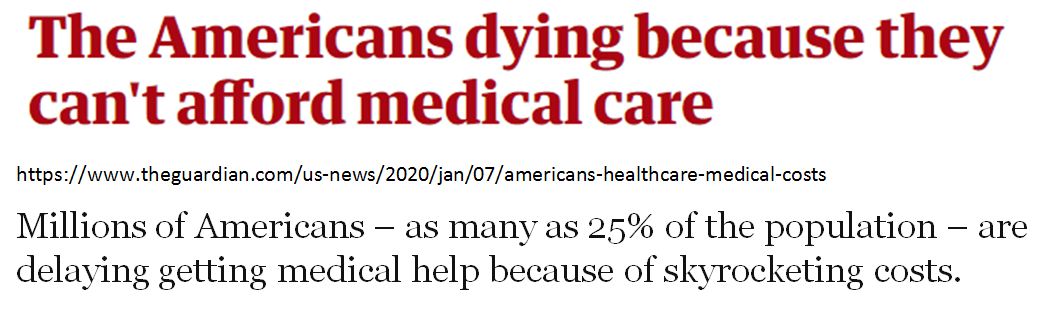
Cancer Situation In The United States Of American – The Richest And Most Advanced Country.
Lastly, let us have a look at what the situation is in the United States – supposedly the most advanced and richest country in the world.





Part 2: The Impact of High Cancer Cost on Patient & Family
When a person is diagnosed with cancer, his/her world is often turned upside down. A cancer diagnosis impacts the patient in various ways:
The financial toll of cancer is seldom publicly discussed although it is a very important issue indeed. Is this subject a taboo in our Asian culture?
But let us face reality. Why don’t we discuss this issue and try to understand how to mitigate the impact of this financial burden. So, in the coming weeks/months, I shall be presenting you with a series of articles on this subject.
Let us examine how cancer impact us financially. There are 4 main costs involved:
1. Consultation and Diagnosis.
Realizing that something is not right, it is important that you go and consult a competent doctor and find out what is exactly wrong with you. So be prepared to pay the following costs:
a. Consultation fee.
b. Blood test.
c. Imaging procedures like ultrasound, mammogram, CT scan, PET scan.
d. Biopsy.
A patient who had breast cancer did the above diagnostic procedures in a private hospital in Penang. It cost her RM 10,817. Take note, this is before any treatment is done yet.
2. Treatment Costs – outpatient and/or hospital stay.
The gold standard of medical treatment for cancer is: Surgery, Radiation and Pharmacological therapy.
Some patients receive all the three treatment modalities, while others receive one or two types. The cost to the patient vary depending on the type and extent of the treatment.
Some “advanced or modern” hospitals may offer other treatments such as:
The cost of any one of these therapies varies. So it is good to find out your financial obligation. Take note that for treatment in a private hospitals, every item used costs money. Every service provided costs money. Nothing is for free in there. For example:
A patient with prostate cancer was hospitalized for 8.5 days in a private hospital in Kuala Lumpur. The total hospital bills came to RM47,159. Just imagine what the bill would be like if the stay was extended to a month or more? A cool RM200K?
A breast cancer patient underwent a total mastectomy without reconstruction at a private hospital in Hong Kong. The total bill came to HK$257,298 or RM155,139.
So cancer treatment in a private hospital is not cheap!
Drugs for Cancer.
Medication is a very common part of cancer treatment.
Some of these drugs can be taken as pills while some others are administered intravenously (IV) in a doctor’s office, clinic or hospital.
Some drugs appear to be affordable to the ordinary folks but some others may cost a bomb. For example:
Generic Drugs from India.
One aspect on cost of chemo drugs that many of us may not know is that, we are lucky and need to grateful to have India and Bangladesh to supply generic chemo drugs for the world. Without these generic drugs the cost of chemotherapy would have shot up sky high!
What are generic drugs? The US-FDA said:
According to the Pharma Intelligence Center, as of 26 February 2021, there are currently 1,351 generic drugs available in India for the treatment of various cancers.
According to the US-FDA, generic medications can cost, on average, 80 to 85% less than the brand-name equivalents. That is a great saving indeed and would help the poor folks of the developing countries. Thank you India!
According to the website (https://www.clinicspots.com/cost/cancer-surgery/india):
A lung cancer patient had chemotherapy in one cancer hospital in Penang. The drugs used were:
He paid (as of August 2022) RM6,738 per cycle. Compare this to the costs in India!
3. Non-medical Cost. Besides the cost of treatment and hospital stay, there are some “invisible” costs such as:
4. Survivorship Care Costs.
We need to know that even when a patient has completed his/her surgery, radiation and/ or chemotherapy, the costs of care do not end immediately.
Many cancer survivors may have to deal with certain cancer symptoms and the side effects of treatment. That can last for months to years after finishing the treatment – sometimes for the rest of their lives.
The costs may involve:
Harry underwent surgery of his Stage 3B colon cancer in Hospital A in Penang. However, after the surgery he underwent 8 cycles of chemotherapy in Hospital B, also in Penang . Harry handed me his the medical bills for two cycles of chemotherapy that he received.
1.The chemo done on 20 January 2022 costs RM 6,624.50
2. The chemo done on 16 February 2022 costs RM 9,856.30
Based on the above, the average cost of a cycle of chemo is RM8,240.40. So we can guess that Harry had to spend a total of RM65,923 for the 8 cycles of chemotherapy to treat his colon cancer.
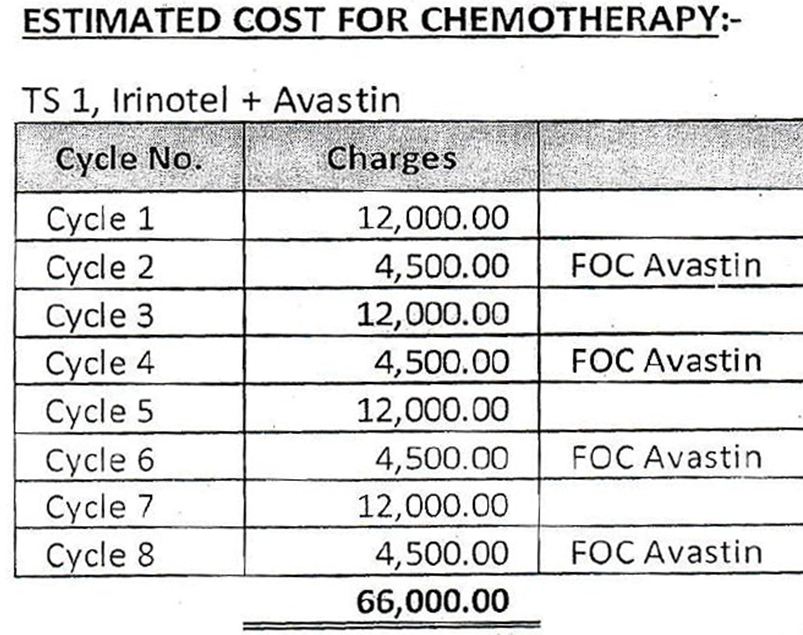
Unfortunately, the cancer did not go away. Six months after the completion of his chemo treatment, the cancer recurred in his lung. Harry was told to undergo more chemo. This second round of chemo is estimated to cost him RM66,000. Harry refused the treatment.
Let us try to understand what makes chemotherapy such an expensive treatment and why this is being promoted everywhere as the only “proven” treatment modality.
The itemized costs of chemotherapy are as below:

There are many things we can learn from the above table.
1. By wanting to “kill” the cancer, we need medicine to repair the damaged body as well.
There are 3 types of chemo drugs used for treating Harry’s cancer.
Since chemo drugs can cause damage to the body, patients are give drugs that can help “repair” that damage. These are not cancer drugs.
Other non-cancer drugs administered to Harry were:
Just ask yourself. Before going into the hospital for chemotherapy, do you have the above 11 conditions that need medication? If no, why do you need them when undergoing chemotherapy?
2. You help me, I help you! That makes everybody happy. Then the project will have the full support of all interested parties.
For each cycle of chemo delivered to a patient the doctor earned about 7.5% to 11.4% of the total cost of the treatment. The more chemo he/she gives to patients the money more he/she earns. Good – the oncologist is well rewarded and should be happy.
On the other hand about 88% to 92% of the treatment cost goes to the hospital. So all parties should be happy.
| Total cost of chemo treatment | Hospital’s earning | Doctor’s earning |
| Jan. chemo – RM 6,524.50 | 5,779.50 (88.5%) | 745.00 (11.4%) |
| Feb. chemo – RM 9,856.30 | 9,111.30 (92.4%) | 745.00 (7.5%) |
From the gross earning, the hospital needs to spend on cost of equipment, laboratory charges, room charges for treatment, nursing care , medical supplies and cost of drugs.
Other parties that are happy when you undergo chemotherapy are the companies that make the drugs and medical supplies. They too have a share of the pie.
| Hospital charges of each chemo treatment | Cost of chemo drug | Cost damage control drugs | Cost of other drugs and medical supplies |
| Jan. chemo – RM 5,779.50 | 3,043 (52.6%) | 102.70 (1.7%) | 193.00 (3.3%) |
| Feb. chemo – RM 9,111.30 | 5,793 (63.6%) | 666.50 (11.4%) | 211.00 (2.3%) |
3. Nothing is for free in the private hospital.
For everything that is used in your treatment, know that you need to pay for it. There is no free lunch, except the natural air that your breathe in! Yes, if you need oxygen while in the hospital, you have to pay for it.
In one institution, I learned that you need to pay for the chair that you sit on while undergoing chemotherapy.
A careful look at the medical bills, you will know that the alcohol swab, gloves, face mask, gown, plaster, etc. used during your treatment have to be paid for too.
There is one item that attracted my attention which I was not sure what it means – Cytotoxic/Chemo Reconstitution. A check in the internet gives this explanation.
For each chemo treatment a patient pays RM 95.00 for this process. So nothing is for free!
Let me come to the last point. Everyone involved in chemotherapy are happy! The oncologist earns good income. The hospital has a good share of the pie too (88% to 92%). Of course, the drug companies make good profit from the chemo treatment (52% to 63% of hospital’s earning). The important party that is not asked or forgotten, is the patient! Was Harry happy after receiving 8 cycles of chemotherapy? His metastatic lung cancer came back after six months. Do you think he was happy?
Harry (not his real name) felt breathless sometime in May 2021. An examination by the doctor in a private hospital indicated three of the heart blood vessels were blocked. In June 2021, Harry underwent coronary angioplasty – i.e., a procedure using a tiny balloon catheter that is inserted in a blocked blood vessel to help widen it and improve blood flow to the heart.
While in the hospital Harry also suffered altered bowel habits and rectal bleeding. A colonoscopy was done and showed transverse colon (hepatic flexture) tumour and hemorrhoid.
Harry underwent a right hemicolectomy and omentectomy on 28 June 2022.
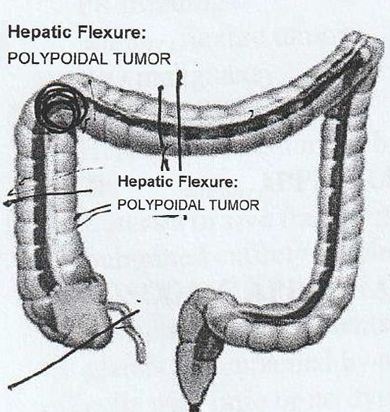
The histology report confirmed:
Comment: The combination of mucinous adeonocarcinoma, tumour in the right colon and presence of serrated adenoma in the appendix is uncommon.
Stage 3B – T3N1M0
Harry was told to undergo chemotherapy in the same hospital where he had surgery. However, he was not happy with what he had gone through in that hospital and decided to take a break and ask around for various opinions. Two months later, he decided to go for chemotherapy at another hospital.
Before starting chemotherapy a PET scan was done. The PET scan report dated 9 September 2021 showed:
Harry underwent 8 cycles of chemotherapy.
He did not suffer any severe side effect except a little numbness of his hands.
The chemo treatments was completed in April 2020. A PET scan done on 7 April 2022 indicated:
Six months later, Harry did another PET scan. PET scan report dated 13 October 2022 showed:
Harry was told to undergo another 8 cycles of chemotherapy using the regimen – TS 1, Irinotel + Avastin. The estimated cost of this second round of chemo would be about RM 66K as outlined below (a note given to by the hospital).
Harry declined to undergo further chemotherapy.
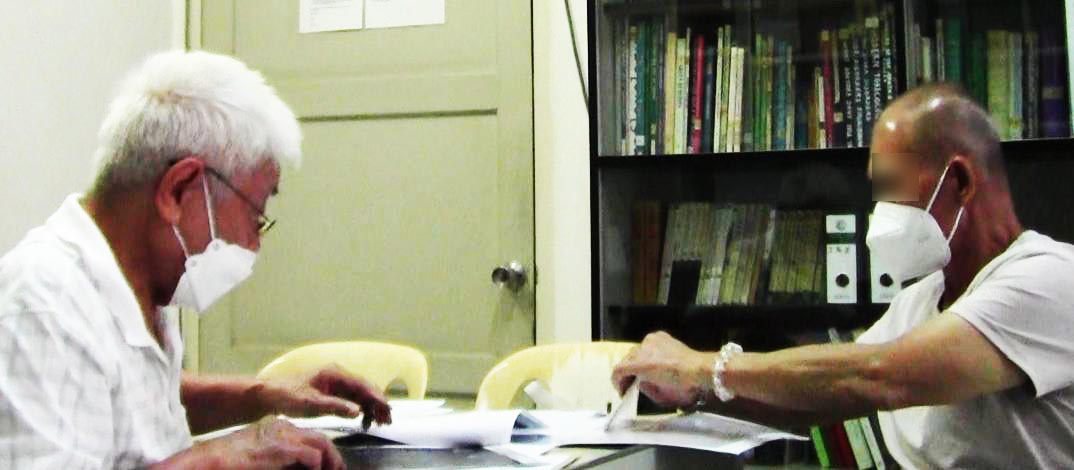
Chris: Why did you not want to go for more chemotherapy?
Harry: I have done that before and it did not work!
C: When you did the first round of 8 cycles of chemo, did you ever ask the doctor if the treatment is going to cure you?
H: No. I did not know anything. I just followed what I was told to do.
C: In all, including your heart operation, how much have you spent?
H: Roughly about RM200,000.
Comment
One big lesson we can learn from this case is that surgery and chemo did not cure Harry’s Stage 3B colon cancer.
After the completion of chemotherapy, Harry had a PET scan which showed everything was clear – no more cancer! So the treatment was effective. But that was just a …. (put in any word you like)!
About 6 months later, another PET scan showed that the cancer had recurred. Harry was asked to do more chemo.
Ask these questions:
1. What is the use of doing a PET scan when the result is so short-lived. A “success” had turned into a “disappointment” within 6 months.
2. Harry was asked to go for another round of 8 cycles of chemo which is going to cost him another RM 66K at least. Is that going to be a good investment for him?
Johnny (not his real name) is 73 years old. This is his story.
February 2020. His problem started with frequent (7 to 8 times) urination at night. There was no blockage of urine flow. Then he had backache. He did nothing about the problem.
Vaccination history.
Admission to Hospital B in Kuala Lumpur.
Johnny was eventually admitted into a private Hospital B in Kuala Lumpur on 19 September 2022. During the 8.5 days in the hospital he received the following:
1. Blood test.
| 19 September 2022 | 24 September 2022 | |
| Platelets | 502 (High) | 534 (H) |
| Alkaline phosphatase | 208 (High) | 190 (H) |
| PSA | 7,652 (High) | 7,292 (H) |
2. PET scan – 20 September 2022.

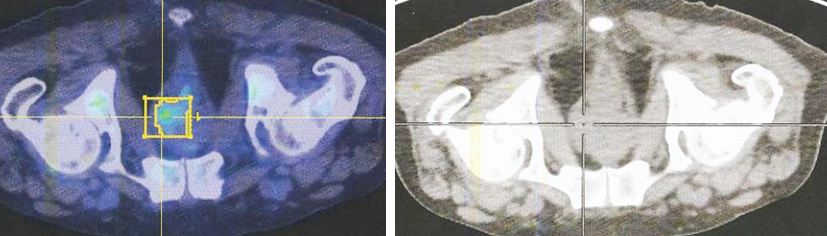
There is a FDG-avid lesion at the left prostate lobe measuring 1.8 x 2.2 cm.

There are multiple small lung nodules scattered in both lungs,
largest measuring up to 0.8 x 0.7 cm at the right lung base.

There are multiple FDG-avid bone lesions along: bilateral humeri, bilateral scapulae, bilateral clavicles, manubrium-sternum, multiple bilateral ribs, along the spine, pelvic bones (bilateral ilium, pubic bones) and along bilateral femur.
Some of the bone metastases have extraosseous soft-tissue components, particularly at thoracic vertebrae (T7, T8 and T 11 vertebrae) and left ilium.
Impression:
1. Lesion at left prostate lobe likely corresponding to primary prostate carcinoma.
2. Multiple bilateral lung nodules – suspicious for lung metastases.
3. Multiple bone metastases.
Treatment.
While in the hospital, Johnny received oral chemotherapy and five times of radiation treatment.
The Total Medical Bill

Let us look at the medical bills critically.
1. Doctor Charges
Of the RM47,150.70 paid, about 25% (RM11,880) goes to the doctor.
The first visit was RM230.
Subsequent 12 visits cost RM100 per visit.
Two other visits cost RM150 per visit.
2. Hospital Charges
The total hospital charges is RM35,279.70 and represents about 75% of the total cost of treatment.
1. Administration charges $45
2. Chemo drug
3. Equipment charges RM395.00
4. General medical supplies RM 554.10
5. Imaging procedures
6. Laboratory RM 802
7. Medical record RM18.00
8. Miscellaneous RM 110.00
9. Pharmacy – total cost RM5,667.10.
The drugs prescribed while in the hospital consist of antibiotic; steroid (dexamethasone) – for swelling and inflammation; nexium for gastrooesophageal reflux; senokot for costipation and Duodart.
Duodart cost RM132 while in the hospital and RM356.40 upon discharge (to bring home). Here is what it is used for (info from the internet): benign prostatic hyperplasia (BPH).
10. Room charge for 8.5 days amount to RM1,360 (two-bedded at RM160 per day).
11. Treatment and Procedure Services – RM 19,818.50. This include:
Lessons We Can Learn From This Case
1. Can the treatment be done on outpatient basis? Was he adequately treated while in the hospital? Johnny needs to treat his prostate cancer that had spread to the bones. From the information in the medical bills above, do you think he was adequately treated? Do you think he really needs to be admitted into the hospital just to receive 5 times radiation and swallow some cancer pills? Could these treatment be done or taken on an outpatient basis, to save cost?
During his 8.5 days in the hospital, Johnny received 5 radiation treatments. Then he was given Casodex. This is the medicine to treat prostate cancer. Then he was given Duodart. This is a drug to treat benign prostatic hyperplasia (BPH). But Johnny already had prostate cancer not BPH! Mind boggling indeed.
Even more mind boggling is, Johnny had extensive bones metastases and many tiny nodules in the lungs. This is revealed by the PET/CT scan that he did. Did he not need treatment for his bones and lungs? If that is the way it is, what is the whole idea of doing a PET scan? To just know if the cancer has spread and no treatment is needed?
2. Cancer treatment in the private hospital is not cheap! Johnny was treated in a private hospital for 8.5 days. This cost the family RM47,159.70. Many of us may want to ask – why so expensive? Others may say it is already cheap because there are many others who had to pay much more than that.
Anyway, for the rich RM47K is just peanut but for those who are poor or in the middle income group, that sum is a big deal indeed. One week’s hospital treatment cost about RM50K. What would have happened if it was extended to a month’s stay? RM200K? I know of many patients who had to spend that kind of money!
As I am writing this case, one patient told me he had colon cancer and underwent surgery and chemotherapy. He had already spent about RM200,000 ( I am not sure if this figure is corrrect or not. I did not see his medical bills). Many years ago, I knew of a medical doctor who spent about RM1.7 million for his wife’s cancer. In spite of that she died in less than a year while on treatment.
3. What if you have no savings? If you have no money, there is no choice – go to the government hospital or the university hospital. You may be able to receive similar treatments without having to pay through your nose!
4. Understand the reality. What could be the outcome after going to the expensive hospital? Can cure? Many people have the impression that expensive means better or the best!
I asked Johnny’s daughter. Can the treatment cure him? She replied: According to the doctor there is a high chance of recovery, to lower his PSA. Wow, is that the answer you are looking for? Lower the PSA only?
For the bone metastasis this was what the doctor said: Can’t be helped. Just maintain and don’t let it get worse. Wonder how when no treatment was given!
Well, you can interpret what the doctor said anyway you like!
Johnny’s PSA was 7,292 on 24 September 2022 (don’t be mistaken, it was 7.2 thousand plus not 7.2). To be “free or cured” of prostate cancer the PSA needs to come down to 6.50 ( yes, 6 point 5 for age 70 and above). When can that happen? Or can that ever happen?
5. Do you believe in alternative healling therapy? Johnny’s wrote me before sending her father to the hospital for treatment. It was the family’s decision so. I did not give any comment. Go ahead and find out the truth for yourself!
I am aware that what we are doing is considered by most “educated” people as hocus pocus, not proven, not scientific, etc. But let us see what happens now! Where can Johnny go after being discharged from the hosptial and after spending RM50K? Go on spending more money chasing the cancer?
Johnny Came To Seek Our Help
When Johnny came to seek our help, he was on a wheelchair and was not able to walk on his own (this is after being treated in the hospital).
He was prescribed the following herbal teas for his:
. In addition he was given herbs for his:
Let me reproduce the whatsapp messages between me and Johnny’s daughter as we monitored the progress of Johnny’s healing.
Chris: Your pa took the herbs? Any problem drinking them? Did he find any changes to his condition?
Daughter: Ya, he followed everything . He said the taste of the herbs is bad but he can take it. He feels fine so far. He told me he has less pain. Only if going to lie down can feel a bit pain. So far others ok.
C: Your dad had taken the herbs for about one month already. How is he progressing? Any improvement?
D: I noticed he is doing well with your herbs. Ya, much better. Many thanks. During sleep pain only on the right side of his back. When sitting no pain. I noticed his leg feel stronger than before.
C: Still cannot walk?
D: This morning he tries to walk using the walker … around 15 steps, he felt legs were weak.
C: You need to keep trying because if you don’t use the legs, then you cannot use them anymore after too long.
D: We are just scared he falls unless we are there to help him. Will take your advice and let him keep trying .
C: Two more questions . Gastrovit — for his stomach gas — did he take it and did he get better?
D: That day he took but now no more pain, so he takes only when needed.
C: I gave A-Kid-6 for his frequent urination (before he urinated 7 – 8 times at night), now what happen?
D: Ya, already reduced to 3 to 4 times at night.
D: The other day, the hospital called to go for his appointment, but we rejected the appointment.
C: Your dad does not want to go to hospital again? Why?
D: He said, because he is already taking your herbs and feels better. So just concentrate on your treatment.
Up date: My Pa looks better. Leg stronger.
Think hard:
Lian (not her real name) is a 65-year-old lady from one of the Riau islands of Indonesia. I received an email from her son Henry (not real name):
Her full blood picture, liver function test and tumour markers were all within normal range.

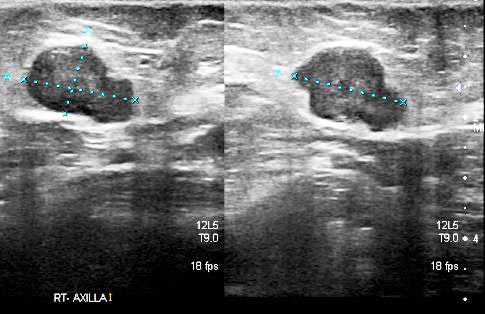
Ultrasound Right Breast:

Lian was told that due to the “big” size of the tumour, she had to undergo chemotherapy first before her surgery. The family was unhappy with the idea of undergoing chemo before surgery. So they decided to go home without any further treatment!
Costs Of Diagnostic Procedures
Henry said:
Before and after the surgery Lian needs to undergo chemotherapy and immunotherapy.
Told About CA Care
Henry wrote:
At this point I received an email from Henry.
Good evening, Doctor,
The biopsy indicated the cancer is a triple negative and it is a Stage 2 cancer.Hopefully you can give us some advice on what we must do to cure her disease.
The reason why we are trying to find other alternative is because we can’t afford to do the chemo and immunotherapy which is very expensive. If we need to see you in Penang, I will try to arrange the time to meet your schedule.
Reply: Any woman who has breast cancer — had biopsy but refused to remove the whole breast is just STUPID — AMAT BODOH. You must remove the breast now. You cannot just keep it there. Do a total mastectomy i.e., remove the cancerous breast totally.
This is a triple negative cancer type — dangerous! After you remove the breast, come and see me after 2 weeks. I would not see people who do not remove their cancerous breast.
Hi Doctor,
Thank you for the quick response doctor. Do you have any recommendation for the hospital to do the mastectomy? Because if we go back to Hospital A, we would be asked to do chemo and immunotherapy first, then do surgery after that.
Reply: Okay, go to Dr. B in Hospital B and see what he has got to say.
Hi Doctor,
We took action very quickly after we got your advice. I tried searching for some hospitals which are reachable by sea and bus from our hometown.The first option is hospitals in JB. However, there is no breast cancer specialist in JB. Then I found in a breast cancer specialist in Hospital M in Melaka. We did teleconsultation by video at the beginning. The doctor said that the tumour seems not so big from the report I sent to her.Therefore, she asked us to meet her in Melaka to see whether or not we can do the surgery without chemo first.
The first estimated cost for mastectomy in M Hospital RM 12,000. Since my mom also needs to remove another tumour in her left breast then the cost will come to around RM 15,000.
The estimated cost of surgery in Hospital A in Penang is RM 20,000. This is only the cost for surgery excluding room charges.
Again, thank you so much for your quick response. Really appreciate it.
Oct 19, 2022. Hi Doctor, Good afternoon.
My mother has done the mastectomy yesterday Oct 19th without chemo in Melaka.
Oct 21, 2022. Hi Doctor,
My mom was discharged from hospital this afternoon and everything seems to be okay. Herewith I attached the hospital bill for your reference.
Total cost of mastectomy + lumpectomy RM 16,538.98
Lessons We Can Learn From This Case
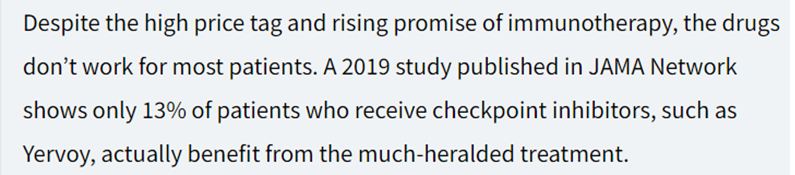
You may want to ask: How effective is immunotherapy? This is answer that I got from the internet:

o
From the very beginning Lian and her son were given some idea of what the total cost of the treatment is going to be like. Surgery would come to about RM30,000, chemo RM40,000 and immunotherapy would cost her at least RM255,000 or a quarter million ringgit. The family could not afford that. This is indeed sad.
Over the years many patients who came to seek our help told me that they had to sell a house or a piece of land to pay their medical bills. I also had patients who spent RM30K and had no more money. They just packed off and went home – giving up the idea of receiving medical treatment in Penang.
Dr. Norah Lynn Henry wrote an article Immunotherapy for Breast Cancer Treatment: Is It an Option? (https://www.cancer.net/blog/2020-09/immunotherapy-breast-cancer-treatment-it-option). She said:
Just a few months ago, one patient had a total mastectomy at Hospital B in Penang. In total she spent only RM15,000. Take note, Hospital B is said to be a non-profit (privately funded) hospital. But be reassured the surgeon who did the mastectomy is just as competent and well known as others in Penang. In fact, this surgeon is one of the two doctors I would recommend that you go to if you have breast cancer. Remember again, expensive does not necessarily mean it is better!
Shannon Brownlee et al in an article Evidence for Overuse of Medical Services Around the World (https://www.ncbi.nlm.nih.gov/pmc/articles/PMC5708862/) wrote:
Kelsey Chalmers et al (https://jamanetwork.com/journals/jamanetworkopen/fullarticle/2779118) wrote:
In an article Understanding over-imaging (https://www.mdanderson.org/publications/conquest/understanding-over-imaging.h37-1589046.html) Laura Sussman wrote:
 CANCER STORY
You must be logged in to post a comment.