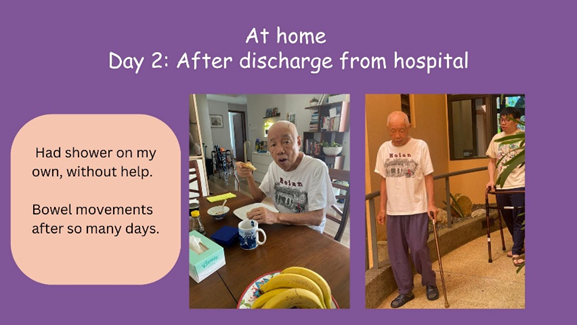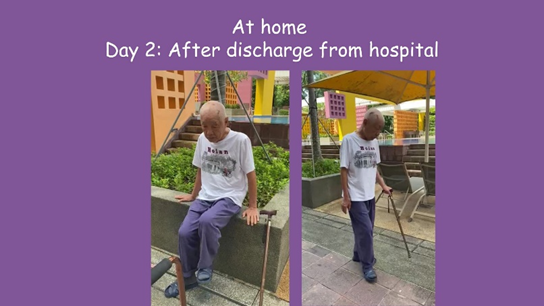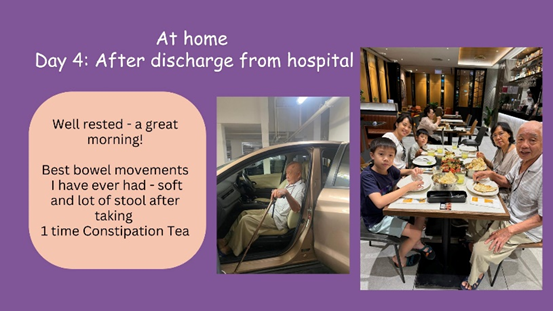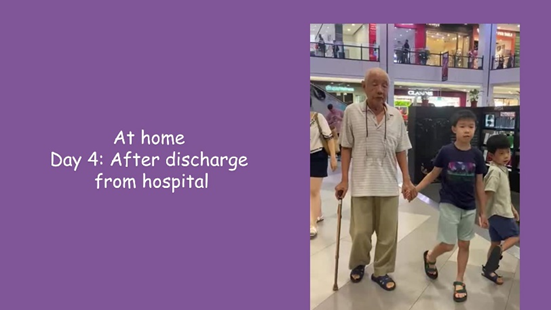
Lessons I Learned While Warded in the Hospitals! Part 7: My Last Word – I am recovering, OK!

Over the years dealing with cancer patients, I come to realize that to know the truth you need to see and search for truth yourself. Don’t expect everything to be served on a silver platter for you. Don’t have the misconception that the final decision you made (based on what you “like or don’t like”) would be the best and right decision you have made.

In my case, I have made my final decision, based on my own personal beliefs and practical experiences. I know that there is no such thing as a right or wrong decision. With due respect, I follow what my heart says not what others around me say or want me to do.

When I had the fall, my 2 children wanted me to be treated in Singapore. I did not want to argue with them. My two loving children wanted to take care of me – so that is the only reason why I came to Singapore!

At first, we were very concerned about my newly discovered diabetes. According to MedicalNewsToday (https://www.medicalnewstoday.com/articles/317074#is-it-curable)

  • No cure for diabetes currently exists, but the disease can go into remission.

When diabetes goes into remission, it means that the body does not show any signs of diabetes, although the disease is technically still present.

  •  A person with type-2 diabetes can make relatively simple lifestyle and dietary adjustments to bring their blood sugar levels back into the natural range.
  •  Dietary intake and obesity both play a critical role in developing type-2 diabetes. As such, people can reverse the symptoms of type-2 diabetes by adhering to specific lifestyle changes – improving their diet and exercise regimen.

(Note: Can this is an empty dietary advice? For the past 25 over years, I have been on a “healthy diet” like above. We don’t take sugar! There is NO sugar in my house! I spent at least an hour a day exercising. Thirty percent of my daily diet consists of fruits and vegetables.

My Final Words – Medical Costs

A total of 7.5 days in 3 hospitals cost my family RM 51,963. In addition, a similar amount for the follow-up surgery. So, it needs RM100,000 plus, just to repair the damage caused by a simple fall in the early morning of June.

You may wish to ask if this cost is cheap or expensive? Is it worth? I would NOT try to answer this question!

As I was writing this article, a friend forwarded me an article written by Fina Leong, a daughter of a Singaporean lady who had cancer. Read carefully what she wrote:

  • At the end of the day…there are a ton of what ifs and grey areas. What is right? What is wrong?”
  • 10 doctors,
  • 58 days in the ICU,
  • SGD1,018,469.29 medical bill,
  • SGD350,000 in medication,
  • Over a thousand doses of drugs.
  • I felt so helpless when mum’s kidneys failed.
  • Looking back, it is all a lack of the right knowledge that cost my mum’s life.
  • The painful unknown is … whether we did the right thing … to send mum (for suchtreatments).

Read more: HEALTHCARE OR NIGHTMARE https://www.youtube.com/watch?v=smdPx8UuFbg&t=72s         https://theindependent.sg/healthcare-or-nightmare-one-singaporeans-s1-million-medical-bill/

As for my case, the doctors prescribed me many drugs, 5 of them have toxic side effects.

  • My concern is how are these supposed to help me?
  • What happen if I turn out to be an unfortunate victim of those side effects?
  • Are we here for real or in the business of selling drugs?

Now the truth is: I am off these medications, and my situation has improved after the surgery. How long can I last? No one knows! But this I know. I don’t want to be another Fina Leong.

My sincere apology: I have written 7 articles on my hospital experiences. Most of you may conclude that I am a very fussy and difficult patient. I do not want to dispute that, but  I wrote all these to share my own experiences with you all.

I am not trying to be difficult – I went into the hospital to get help, and I must be out of my mind trying to pick a “fight” with the very people who were trying to help me to get well. My problem is I have read far too many books written by medical experts themselves, and I am made aware of the many dangers which many people do not know about.

For example, read what Dr. Richard Smith, former Editor-in-Chief of the prestigious British Medical Journal wrote. I have great respect for this man.

  • Science can be corrupted in order to advance particular argument and how money, profits, jobs and reputation are the most potent corrupters. 
  • Many people are killed by the industry … indeed hundreds of thousands are killed every year by prescription drugs.
  • The benefits of drugs are exaggerated … the drug industry has systematically corrupted science to play up the benefits and play down the harms of their drugs.
  • The industry has bought doctors, academics, journals, professional and patient organisations, university departments, journalists, regulators and politicians. These are the methods of the mob (or mafia).

 Here are more quotations for you to reflect on.

  • Hospitals can be dangerous places – protect yourself at all times ~ Edward Creagan, Mayo Clinic cancer specialist (in: How NOT to be my patient).
  • (Our) perception of a hospital is that it’s a safe place … we are surrendering ourselves to the loving care of substitute mommies in an all-protective environment where we will be treated for a disease and make well again. The reality is that hospital-related errors in treatment kill an estimated 180,000 Americans each year and injure hundreds of thousands moreSheldon Blau, professor of medicine, SUNY Stony Brook (in: How to get out of the hospital alive). 
  • Robert Medelsohn said:

When I first read the opening pages of this book, I was taken aback. I wondered if I was reading the correct book. The author, Dr. Robert Mendelsohn was a senior medical doctor – known to millions of Americans. He was an associate professor at the University of Illinois Medical School and the director of Chicago’s Michael Reese Hospital. He was also chairman of the Medical Licensure Committee of the state of Illinois. Read what he wrote.

  • I believe that …the greatest danger to your health is the doctor who practices modern medicine…
    • I believe that more than ninety percent of Modern Medicine could disappear from the face of the earth – doctors, hospitals, drugs and equipment – and the effect on our health would be … beneficial.
    • I believe that modern medicine’s treatments for diseases are seldom effective and that they’re often more dangerous than the diseases they’re designed to treat.

Be aware of the following:

1) Beware that you may be used for purposes other than your own. You may be subjected or asked to undergo certain procedures for the doctor’s own good.

2) Beware of the doctor’s self-interest.

3) If you are given drugs to take, ask questions and study the side effects of the drugs. Take note that there are numerous documented side effects related to the drugs. Dr. Mendelsohn asked: what kind of person will take that drug after reading the information? 

Unfortunately, many of us feel helpless. We are frightened to death. In haste, we just don’t think long or far enough. We swallow anything that is given to us. We do not have the slightest inkling of what these chemicals are going to do to us.

4) Dr. Mendelsohn gave this amazing advice, If you are sick … your first defense is to have more information about your problem … You’ve got to learn about your disease and that’s not very hard. You can get the same books the doctor studied from. Read them. It is most likely that after reading you will be more informed than the doctor himself.

5) Dr. Mendelsohn said, Ask the doctor questions. In some cases, he’ll answer the questions. That’s the rare exception. It seems that doctors are extremely busy people and if you ask too many questions, he may just throw you out of his office.

Patients told me these were what they got if they asked too much: Why do you want to know so much? I am doctor or you are the doctor? 

Dr. Mendelsohn said, Ask questions anyway. From his attitude and his response, you can judge him as a human being and get an idea of his expertise.

6) This advice is indeed hard to swallow. Dr. Mendelsohn said – Doctors in general should be treated with about the same degree of trust as used car salesman. Whatever your doctor says or recommends, you have to first consider how it will benefit him. 

Make no mistake these words came from an experienced and senior doctor – chairman of the Medical Licensure Committee of the state of Illinois. The privilege was his to say. In his book he even said that if you don’t like the drug prescribed but you still need to be goody-goody with your doctor, then dump the drugs in the waste chute on the way home!

Some of you may want to accuse me of having evil motive by trying to “bad mouth” the doctors and the medical profession. No, I am sharing what I know with those who want to know! If you don’t want to know – it is ok.

As I am writing this, 13 August 2024, K. Parkaran posted a report in FMT – Private hospital called out over questionable consent, billing. https://www.freemalaysiatoday.com/category/nation/2024/08/13/private-hospital-called-out-over-questionable-consent-billing/#:~:text=been%20diagnosed%20 with%20a%20medical%20condition%20that%20could

Right on the dot! You don’t want to go to such surgeon no matter how good or famous he is.

On the other hand, I was indeed blessed to be able to meet a very compassionate and caring surgeon to operate on me. He was humble and honest and was prepared to answer all my questions. He did not “push” me to go for surgery. He left it entirely to me to decide. Thank you again doctor!

Lessons I Learned While Warded in the Hospitals! Part 6: What Is Wrong with Me Doc.? I am confused!

My Overall Health Based on Blood Test Results

After being discharged from hospital C, I did a more detailed blood tests in a private clinic. This is to give me an idea of what other problems I could have. Below are the results:

16 June 2024

Cardiac Profile:          Creatine Kinase   35   U/L  (46-171)

  • Creatine kinase (CK) is an enzyme that’s found in the skeletal muscle, heart muscle and brain. When any of these tissues are damaged, they leak creatine kinase into the bloodstream. Elevated CK levels may indicate muscle injury or disease (from Cleveland Clinic).

Liver Profile:     Alkaline phosphatase, Total bilirubin, SGPT(ALT), SGOT(AST), GGT – all of these are within normal limits. My liver is healthy.

Renal Profile:

    16 June23 June13 JulyNormal range
Urea10 mg/dL14189.23
Creatinine       0.55 mg/dL0.620.700.70 – 1.30
Sodium127 mmol/L130133134 -145
Potassium3.4 mmol/L3.73.93.5 – 5.1
Chloride93  mmol/L 9610089 -108
Bicarbonate  22 mL/min232420 – 31
eGFR94.5 mL/min97.293.7> 90
  • Creatinine is a reliable indicator of kidney function. Elevated creatinine level signifies impaired kidney function or kidney disease.
  • Normal sodium levels are usually between 136 and 145 mmol/L Blood sodium levels below 136 mmol/L means hyponatremia, i.e. low blood sodium. Blood sodium levels greater than 145 mmol/L means hypernatremia – highblood sodium levels.

Hypernatremia typically causes thirst. Severe hypernatremia can lead to confusion, muscle twitching, seizures, coma, and death.

Symptoms of hyponatremia include: weakness, fatigue, confusion, seizures. Without treatment, extremely low levels of sodium may lead to a coma and become life threatening.

  • eGFR (glomerular filtration rate) measures the level of kidney function and determines how well the kidneys are working. In adults, the normal eGFR number is more than 90.

Lipid Profile 13 July:         Cholesterol     323  mg/dL     (up to 200)

                                              Triglycerides   282 mg/dL      (up to 200)

                                              HDL cholesterol  48 mg/dL    (39 – 58)

                                              LDL cholesterol   219 mg/L    <130

  • LDL (“bad”) cholesterol can contribute to the formation of plaque buildup in the arteries (atherosclerosis). This is linked to higher risk for heart attack and stroke.
  • High cholesterol has no symptoms. A blood test is the only way to detect if you have it.
  • Because of my high cholesterol level, I was started on a low dose cholesterol drug, Rosuvastatin starting 17 July 2024.

Rosuvastatin works by blocking an enzyme that is needed by the body to make cholesterol, thus reduces the amount of cholesterol in the blood.

What are the most common side effects of rosuvastatin? The most common side effects are: headache, nausea, muscle aches and pain, weakness, constipation, stomach pain

Other more serious side effects of rosuvastatin are: low energy levels or feeling easily tired, especially with activity, dark coloured urine, fever, liver damage or hepatotoxicity, severe allergic reactions. 

Am I really a sick man?

For decades, since I started CA Care, I have been asking patients to take care of their health mainly by taking care of their diet. Eat healthy food. Diet is very important for your healing and for you to stay healthy all your life! That was what I taught my cancer patients and that was what I personally believe and practise at home. Indeed, I was well and healthy (looking from the outside). Everyone who met me had expressed the same opinion – you look healthy and strong! But in early June 2024, this turned to be a myth

Based on medical reports:

  1. I am a diabetic. My Hemoglobin A1c was at 13.6%, which was a very high value indeed. An ideal HbA1c level is not more than 6.5%. My glucose was at 20.5 mmol/L. The healthy range is 3.9 – 5.8 mmol/L.
  2. My cholesterol was 323 mg/dL The maximum level for a healthy person is 200 mg/dL.
  3. My blood sodium was 133 mmol/L which was critically low. Normal range is 138-146 mmol/L. I have a condition called hyponatremia.
  4. Blood tests on 17 July 2024 confirmed that my PSA was at 7.35 ng/ml. Healthy person should have a value not more than 4.0.

If you were to ask me (before my fall in June 2024) if was going to end up a diabetic or a person with high cholesterol, my reply was probably — You must me joking! I am a healthy man!

For the past 25 years I have been on healthy diet.  I rarely eat meat. I rarely eat the famous Penang hawkers’ food. I prefer home-cooked food. There is NOT a grain of sugar in my house because we never buy such stuff.

We minimize our intake of oil in our cooking. We also reduce / avoid fats and meat in our daily food intake. Our diet consists mainly of rice, fish, vegetables, soup, etc. About 30% of my diet consists of a variety of fruits – papaya, apples, grapes, bananas, etc. I don’t drink any alcohol. I don’t smoke either.

Almost every day my wife and I spent about an hour walking in the park, besides doing tai chi.

That leads me to wonder, where does the cholesterol come from?

The website of Johns Hopkins posted the following:

  • The cholesterol in your blood comes from two sources:
  • The food that you eat.
  • Your liver makes all the cholesterol your body needs.

According to Mayo Clinic website the factors that can increase the risk of unhealthy cholesterol levels are:

  • Poor diet. Eating too much saturated fat or trans fats can result in unhealthy cholesterol levels. Saturated fats are found in fatty cuts of meat and full-fat dairy products. Trans fats are often found in packaged snacks or desserts.
  • Obesity. Having a body mass index (BMI) of 30 or greater puts you at risk of high cholesterol.
  • Lack of exercise. Exercise helps boost your body’s HDL, the “good,” cholesterol.
  • Smoking. Cigarette smoking may lower your level of HDL, the “good,” cholesterol.
  • Alcohol. Drinking too much alcohol can increase your total cholesterol level.

You may want to ask, where do I go wrong here? I learned from this June episode that what I did all these years was right, there is nothing wrong.

According to Singapore Heart Foundation (https://www.myheart.org.sg/health/risk-factors/familial-hypercholesterolemia/)

  • Familial Hypercholesterolemia (FH) is a genetic condition in which high LDL cholesterol levels are passed down in families, increasing the risk of premature heartdisease (i.e. chest pain, heart attacks, strokes) by up to 20 times over people without the condition.

So my condition is a genetic problem, inherited from either farther or mother. My brothers and sister also had this condition. My two sons also have familial hypercholesterolemia.

What do I do now?

According to Health Department of Victoria State, Australia https://www.betterhealth.vic.gov.au/health/conditionsandtreatments/genetic-factors-and-cholesterol

  • There is no cure for familial hypercholesterolaemia.
  • Treatment aims to reduce the person’s risk of coronary artery disease and heart attack, and may include (a protocol which I have practising for years):
  • Dietary changes – recommended dietary changes include reduced intake of saturated fats and cholesterol-rich foods, and increased intake of fibre.
  • Plant sterols and stanols – corn, rice, vegetable oils and nuts – can substantially reduce blood cholesterol. These substances are structurally similar to cholesterol, but aren’t absorbed by the cells.
  • Exercise – regular exercise has been shown to reduce blood cholesterol levels.
  • Weight loss – obesity is a risk factor.
  • Avoid smoking. 


Do I have prostate cancer?

The website of the National Cancer Institute (

https://www.cancer.gov/types/prostate/psa-fact-sheet#:~:text=There%20is%20no%20specific%20normal,have%20prostate%20cancer%20(1)) had this message:

  • There is no specific normal or abnormal level of PSA in the blood.
  • In the past, PSA levels of 4.0 ng/mL and lower were considered normal. However, some individuals with PSA levels below 4.0 ng/mL have prostate cancer and many with higher PSA levels between 4 and 10 ng/mL do not have prostate cancer. 


Mayo Clinic issued this statement:

  • Misleading results. The (PSA) test doesn’t always provide an accurate result. An elevated PSA level doesn’t necessarily mean you have cancer. And it’s possible to have prostate cancer when you have a normal PSA level.
  • Overdiagnosis. Some prostate cancers detected by PSA tests will never cause symptoms or lead to death. These symptom-free cancers are considered overdiagnoses — identification of cancer not likely to cause poor health or to present a risk of death.

Despite the negative data against me, I don’t panic but at the same time I would not ignore my elevated PSA test result. When I am home in Penang I shall start taking my herbal tea for Prostate. I shall keep you posted in the months to come. Let the truth be told!

There are 2 more issues to be addressed.

  • My blood sodium was 133 mmol/L which was critically low. Normal range is 138 – 146 mmol/L. I have a condition called hyponatremia.

After undergoing intravenous (IV) sodium solution and taking sodium chloride pills I believe the problem is almost resolved. It is almost back to normal.

  • My glucose was at 20.5 mmol/L – frightening high!

After receiving treatment in the hospital C and at home (without medical drugs) I am inclined to believe that I don’t have this problem anymore. I have written what I did in Part 3 of this story.

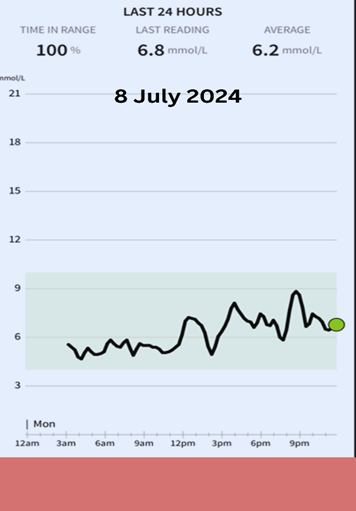
Let me give you an example of how my glucose levels fluctuate each day. This case was recorded on 10 June Wednesday to 11 June Thursday. The average glucose of the day was 7.3 mmol/L. The previous day was 6.2 indicating that I was normal.

However,  I need to remind myself that even though “blood wise” I have almost overcome my problems, I need to be careful and need to monitor my situation every day. Things may turn worse instead of better.

In general, food that cause blood sugar level to rise are those that are high in carbohydrates, such as rice, bread, fruits and sugar – which are quickly converted into energy,  Next are foods high in protein, such as meats, fish eggs, milk and dairy products, and oily foods.
(https://www.otsuka.co.jp/en/health-and-illness/glycemic-index/glucose-level/#:~:text=In%20general%2C%20foods%20that%20cause,dairy%20products%2C%20and%20oily%20foods.0).

  • Glucose levels vary throughout the day. They tend to be lower before eating (A, C) and after exercise and are higher (B,D) an hour or so after meals.
  • A blood sugar level less than 7.8 mmol/L is normal.
  • A reading of more than 11.1 mmol/L after two hours means you have diabetes.
  • A reading between 7.8 mmol/L and 11.0 mmol/L means you have prediabetes.

Lessons I Learned While Warded in the Hospitals! Part 5  Monitoring My Progress

Use of Free Style LibreLink

I have reminded my cancer patients – when you are getting well, let the healing process goes on.  Spend time to help yourself get well. Monitor your progress.

In my case, I have 3 things that need to monitor.

  • Blood glucose for my diabetes. Remember the first reading I had showed a glucose level of 20.5. My HbA1C was at 13.6% which was very high. Now, my blood sugar level is within normal range – without taking any mediation! What is going on?
  • Sodium level – my reading went down to a critical low level of 118. Now, it is okay after taking salt pills.
  • My blood pressure and cholesterol were also high.

I have never been admitted into the hospital for years, and I felt “uncomfortable” to think that the nurses would prick my finger with a needle to withdraw blood for testing. Doing it once a day is ok, but what if this done a dozen times a day? Would be unbearable? Scary.

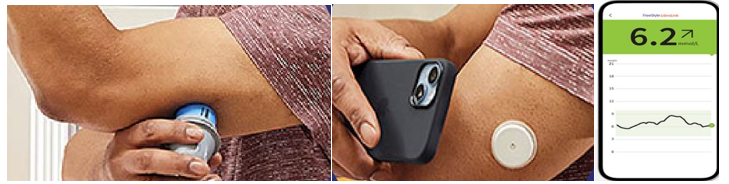
Fortunately, today we can buy a computer-link device which can be “installed” on the arm (see “white circular patch” below). You can use the handphone to monitor the glucose level anytime of the day and as many times as you like!  A great device indeed – discreet and convenient.

Discharged from the Hospital

After taking the drugs prescribed by the doctors for some days, I gave up on the drugs. This is because the drugs did not seem to bring any physical benefits to me. My physical conditions did not improve (or got worse?). You may say I am biased. OK, accepted!

Although I am a practising herbalist, be rest assured that I am not a dumb-narrow-minded person. I will give credit where credit is due. I started life as a scientist and I value and uphold genuine scientific data. This is the basic principle I always uphold when dealing with cancer patients.

Like in my case, my advice to anyone is. Go to the doctors / hospitals and find out exactly what is wrong with you (like I did in my case here). Do not go to the alternative medicine practitioners because most of the time, they may not get it right.

After knowing the cause of the problems, it is something else if you want to totally follow the doctor’s advice or not, with regards to the medications prescribed to you. Let this be your own personal decision after taking into consideration the effectiveness and side effects of the drugs.  Sometimes you need a lot of your own common sense to decide to accept anything that is fed to you.

Here are some brief notes of what happened to me after I started to gradually stop the doctor’s medications one by one.

  1. While on these medications I vomited quite often. What was the reason?
    1. After 4 days on Metformin, I stopped taking it. The vomiting subsided and eventually stopped.
    1. For 2 weeks, since my hospitalization, I was not able to move my bowels. On the night of 20 June, for the first time I started to take my herbal Constipation tea. To my surprise, the next morning I was able to move my bowels. I continued to take Constipation tea for a few more times and I was back to normal.
    1. On 21 June – the next medication to go was paracetamol. I was really concerned why I had to take so many paracetamols each day. I decided to try my luck with my Pain Tea (free of narcotics or pain drugs). Bravo, whatever little pain and discomforts I had disappeared by taking the Pain Tea.
    1. By 24 June, I was off most of the medications. The only one left was Sodium chloride. I continued to take this common salt for some more days before I fully stopped it

The Results that Matter!
One possible comment anyone would say is: Chris Teo, you are arrogant. You want to show off that you are “smarter” than the doctors. I am sorry, when it comes to trying to restore my own life, I don’t have to “show off”. Winning a brownie point just to boost my ego is not worth it. I am not a fool!
I must say it loud and clear, without taking those medications with ‘toxic” side effects, I was far better off. I could walk slowly by myself and had minimal discomforts. Is this not what you want?

With this comment, I wish to apologize to the doctors and nurses in the hospitals that I went to. I don’t mean to “insult” and be “ungrateful” to you all for helping me. I am sure my stay in the hospitals did help in my recovery in many other ways. Thank you, doc!

Let’s examine the data!

My wife used her handphone to record my glucose levels day and night. She ended up with “lots of boring” data which I believe no one is interested to know. It is more fun to watch TikTok la!

  1. Monitoring of glucose level

For a quick and easy understanding of the data collected, let me present the essence of my message in the form of slides below:

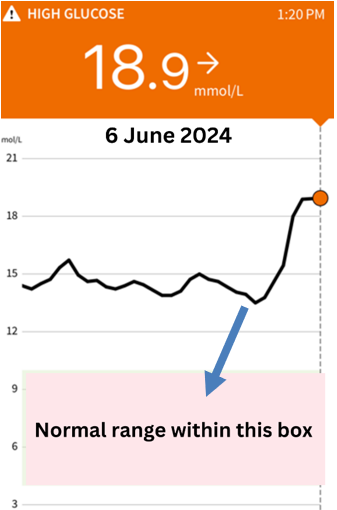
On 6 June 2024, my glucose level was very high, at 18.9 mmol/L.

Low or high blood glucose results can indicate a potentially serious medical condition. According to Freestyle LibreLink:

  • low glucose reading 3.9 mmol/L.
  • high glucose reading 13.9 mmol/L.

 After taking the medications prescribed for me, the blood situation gradually improved – the glucose dropped to 10.8 and 8.7 after 4 days.

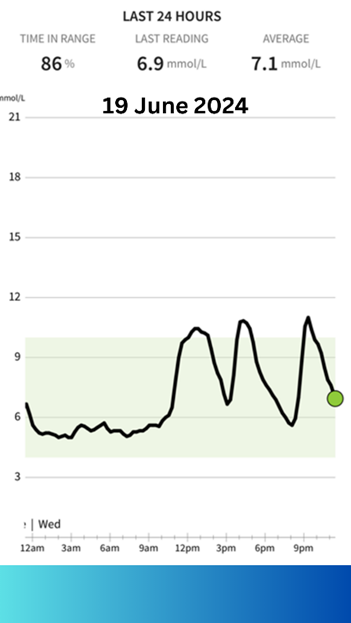
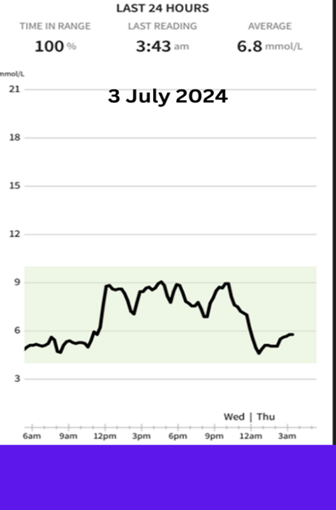
The situation improved further – the average glucose level dropped to 7.1 on 19 June; and eventually to 6.8 by 27 June, i.e. within the normal range.

In an individual, the glucose levels fluctuated from morning to mid-night within the body.
That is normal, provided the range is within normal limits. So it appeared that my diabetes was under control after taking the medications. So, why are you Chris Teo against taking the medicatons? Aare you trying to create a disharmony? My answer: I am more concerned with the side-effects the drugs. Five the  drugs prescribed have dangerous, documented side-effects. You may argue that this fear of side-effects are hived-up or an imagination of my mind.  Ok, I rest my case. Do what you think is right for you. I am asking you to discard your  medication!

For one month I was not on any medications. My average levels of glucose were maintained at 6.8 and 6.2. The situation seemed to return to normal. Am I crazy to believe this?

To the “scientific mind” I used the data that my wife had collected, analysed them and came to my own conclusion. This is how to find “truth” – the data speaks for you, not what other people tell you.

Now, let me present to you the data that my wife had collected in the form of “boring numbers”.

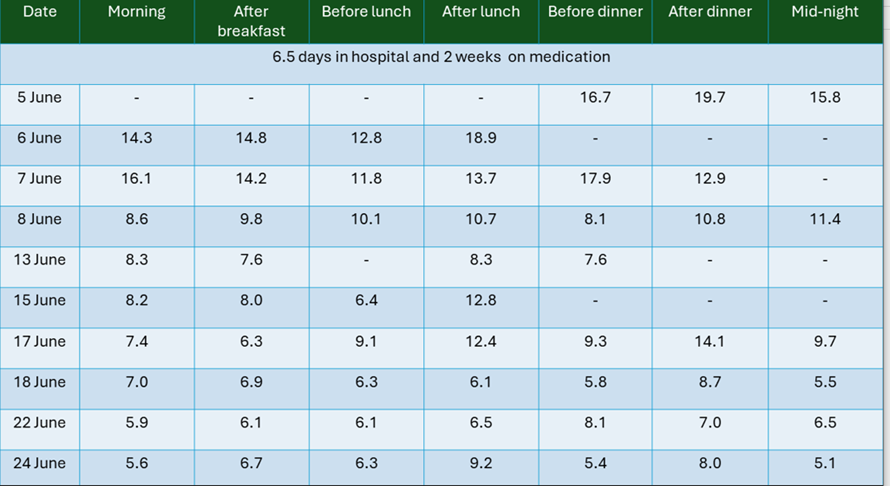
On 5 and 6 June, my sugar levels were high! I was hospitalized and put on various medications. By 13 June, things seemed very encouraging. I was discharged from the hospital, and I continued to take the prescribed medications while at home.

The conclusion: the doctor’s medications worked but at a hefty price tag (a topic I shall mention later).

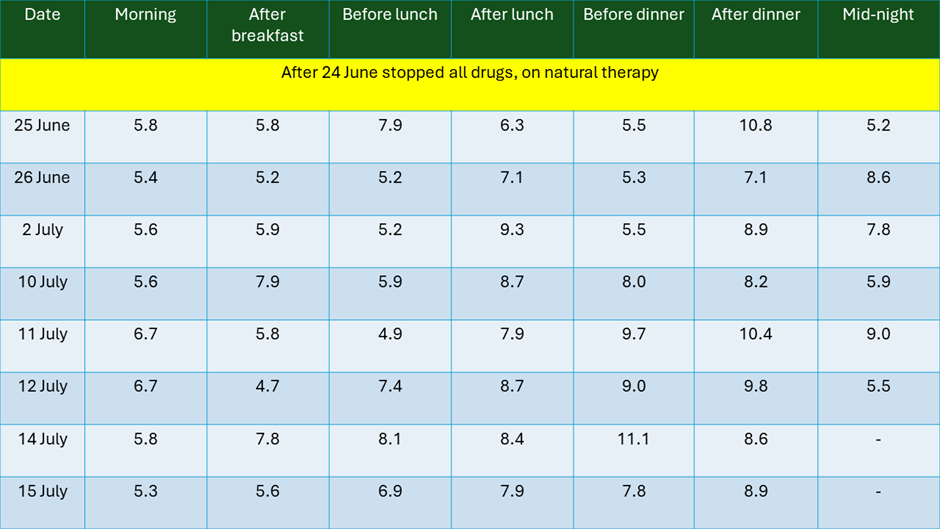
For one month, from 25 June to the whole of July, I started to take herbs and used my e-therapy machine to help me with constipation, insomnia, muscle aches and spasm, itchy skin, etc. My good friend specially formulated protein supplements to help restore my energy.

I felt better, had more energy and most important my glucose level is normal.

  • Boosting of Sodium level in the blood

When I first did a blood test, it was shocking that the sodium level was critically low at 118.

In Hospital C,  I was given iv3% saline infusion twice. Serum sodium increased to 124mmol/L

11 June 2024 @14.44   Sodium  118 (critical)   

11 June 2024 @19.58   Sodium  120 (critical)   

11 June 2024 @23.45   Sodium  124 (critical)   

12 June 2024 morning  Sodium  124 (critical)   

!3 June 2024 @6:31      Sodium  123 (critical)   

!3 June 2024 @11:53    Sodium   125 (critical)   

14 June 2024 @ 8.10    Sodium    123 (critical)   

14 June 2024 @ 14:12  Sodium    127  Low

15 June 2024 @ 6:34    Sodium     126 Low   

I continued to take sodium chloride capsule, one per day. Yes, the treatment in Hospital C was effective. And I have to NO hesitation with this sodium chloride treatment because it has no “drastic” side effects. Thank you.

Lessons I Learned While Warded in the Hospitals! Part 3: Undergoing surgery – was that a correct decision?

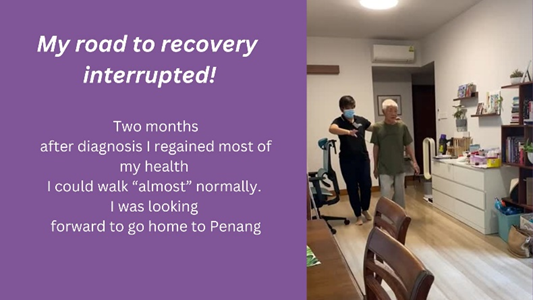
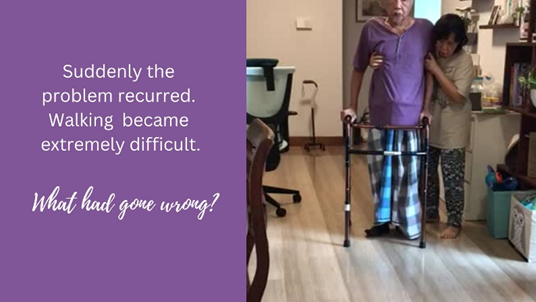
I was recovering from my fall for about 2 months. I almost fully regained my health, and I was looking forward to going home to Penang. Suddenly I had a relapse. My left leg was very weak and painful. I could not stand up. I was not able to walk again.

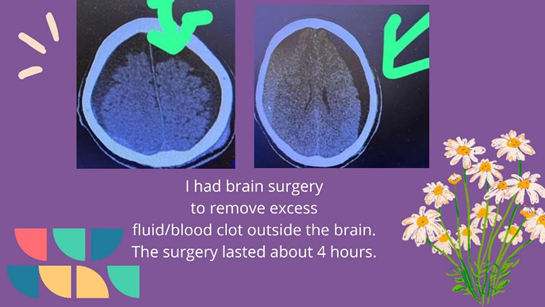
I was taken to hospital C (in Johore) which is about 1 hour’s drive from Singapore. The doctor did a scan of my head. The swelling had grown bigger. The next morning, the neurosurgeon, my wife and daughter sat down for a discussion. What option do I have now?

The surgeon laid out only one possibility – undergo an operation immediately. I asked the doctor some questions.

  1. Can the surgery “kill” the patient? Like during the surgery, the patient just died. While this is possible, it is not likely it will happen in my case.
  2. Can surgery cure me? Not likely. There is NO cure. The fluid may come back again.
  3. Looking at my case, can surgery help me to regain some aspects of my health? Most likely but there is no guarantee.
  4. Do I need to do more surgeries in the future? Surgery after surgery? May be, no one can predict this.

Based on the answers I got, I have decided there and then that I would proceed with the surgery. I have no other choice. I don’t know if there is any non-medical alternative to my problem either. In other wards I am ignorant like most cancer patients. Yes, over the years, I have helped many patients with CANCER of the brain, and they recovered. But my case I don’t have brain cancer!

My only request to the doctor and my family members is do not try to be a super hero. If my chances of survival or recovery is remote, please don’t try to save me at any cost. Let me go in peace. I don’t want to suffer – drag on and on until I die. It is not worth it. I am ready to die.

A friendly anaesthetist visited me to explain what is involved in the surgery. I was to be given a general anesthesia injection. This anesthestics will gradually make me “go to sleep”.  The surgeon shall then work on me. There will be no pain!

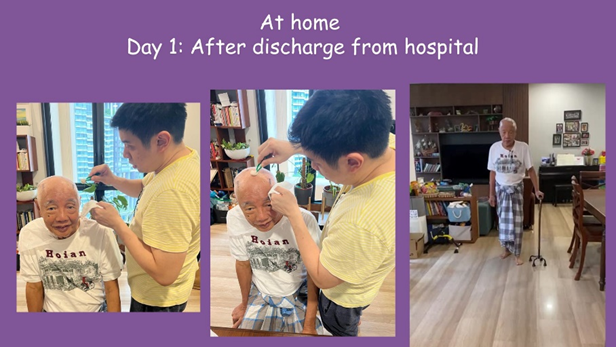
So, the question – did I make the right decision to undergo this emergency operation? Let me say that I received a “miraculous healing” immediately after the operation. Before the operation, I could not move my left leg – no strength and painful. After the operation, my left leg immediately had more strength and all pain disappeared. In fact, my left leg is now much stronger than the right leg. Thank you, doc, for your help. The operation did a lot of good for me.

Let me be clear. I am not anti-doctor, although I am critical with what some doctors do or tell their doctors to do. I have read enough books written by medical experts themselves who warn readers about being taken for a free ride by their doctors. So be careful.

The mani reason why I agreed to the surgery was because I fully trusted the neurosurgeon who is operating on me.

  • He is humble and caring person. I could “see” the sincerity in hm in wanting to help his patients under his care. I am aware that all “humans” can only try their best but they cannot guarantee or promise a cure! Yes, the surgeon did admit to that – but he was willing enough to do his best. He did NOT tell me – Ah, your case is easy, I can cure you (like a certain famous oncologist told his patients!). I have heard enough of such “fake” assurance! The surgeon’s honestly is the prime factor that made me trust him. Great doc., thank you for your concern and willingness to give your best! I understand, the final outcome, is in God’s hands, not ours.

The surgery was scheduled for 8 p.m. or slightly later. This would take about 4 hours!

God’s Blessing!

By mid-night, I received a message: Operation successfully completed.

When I agreed to the surgery, I accept the fact that before mid-night, that is in the next 5 hours I may die. So, I was calm and was not worried or stressful. Let Your will be done, Lord.

Thank God I am still alive! And am able to share my story with you all. 

Lessons I Learned While Warded in the Hospitals! Part 2 Medications

Based on the “data” obtained from the scans and blood tests, it was clear that my problems arose due to high glucose and low sodium in my blood. My blood pressure was also high. In addition, I had a big swelling in my head due to the fall. Unfortunately there don’t seem to be any “magic” pills for these problems.

I was admitted into Hospital C to closely monitor my blood parameters at the same time take medications in the hope of restoring these deficiencies.

Let us examine the drugs that I was prescribed by the doctors.

  1. Omeprazole. This is to treat heartburn, gastric and duodenal ulcers, erosive esophagitis, and gastroesophageal reflux disease (GERD). etc.

The most common omeprazole side effect is headache, nausea, vomiting, or diarrhea.

Taking omeprazole at high dosages, or for longer than a year, raises the risk of more serious side effects. These can include bone breaks and pneumonia (a lung infection). 

The main question I have is, why do I have to take omeprazole (3 capsules per day) when I have  never suffered any gastric problems in my life?

  • Metformin is for type-2 diabetes. I took 1 tablet, once a day, @ 8-9 pm. It is important to note that metformin does not cure diabetes. It only helps lower the blood sugar levels to a safe range.

Metformin can cause side effects such as nausea, vomiting, and diarrhea. Unfortunately for me I had no diarrhea but I did not move my bowels for about 2 weeks while on the drugs.

Other known side effects of metformin: heartburn, stomach pain, bloating, gas, constipation, weight loss, headache, metallic taste in the mouth.

Metformin can cause Lactic Acidiosis – a rare but serious problem that must be treated immediately.

Metformin carries FDA black box warning. A boxed warning is the most severe warning the FDA issues.

Symptoms of Lactic Acidiosis can include:

  • Celebrex. This drug is usedto treat pain or inflammation caused by conditions such as arthritis, ankylosing spondylitis, and menstrual pain.

Celebrex is the drug that triggered the most serious warning alarm in me. I was asked to take 1 capsule, twice a day.

Many years ago, celebrex was a common pail killer that was dished out to most cancer patients! Then it just “disappeared” from the scene. Celebrex was found to increase risk of heart attacks and strokes in patients. Now, the drug has reappeared!

The questions I asked myself: Why do I need a pain killer drug that can cause heart attacks and strokes? I just had a mild stroke! Is that not enough?

 Another point is, I don’t have any serious pain to justify me taking such a dangerous drug. I can use my Pain Herbal Tea to solve this problem easily. Why do I need celebrex?

  • Paracetamol. I took this painkiller 4 times a day, each time 2 tablets. Paracetamol is used to treat headaches, migraine, toothaches, sore throats, period (menstrual) pains, arthritis, muscle aches, and the common cold.

I don’t have any severe pain. Mind bogging – take it whatever for? What is more, taking 8 tablets per day!

Taking 1 or 2 tablets of paracetamol each day is unlikely to harm. But taking more than 8 tablets in 24 hours is not advisable and can be dangerous. Too much paracetamol can cause liver damage.

The most common side effects of paracetamol: drowsiness and tiredness. rashes and itching.

  •  Metoclopramide (maxalon) Or domperidone (motilium) isfor nausea, vomiting, heartburn. One capsule is taken 3 times a day.

Again, I would like to ask. Why do I ever need this medication? Do I really need to take 3 times a day when I don’t have problems with nausea or vomiting? Or do I have to take it for “prevention”? I have never taken these drugs before!

Let us look at some the side effects of Maxalon:

Maxalon has a boxed warning. Boxed warnings are the most serious warnings from the U.S. Food and Drug Administration (FDA). They alert doctors and patients about drug effects that may be dangerous. 

  • Taking Maxalon may lead to muscle problems called tardive dyskinesia, resulting in unusual face muscle movement. You will not be able to control or stop these movements.
  • Other side effects may include involuntary limb movements, facial grimacing, torticollis, oculogyric crisis, rhythmic protrusion of the tongue, bulbar type of speech, trismus, opisthotonus (tetanus-like reactions), and, rarely, stridor and dyspnea, which possibly result from laryngospasm.
  • Maxalon can make you feel sleepy and lack of energy, low mood, feeling dizzy or faint (low blood pressure), diarrhoea.
  • In rare cases, Maxalon may cause a serious allergic reaction (anaphylaxis). The lips, mouth, throat or tongue suddenly become swollen, breathing becomes very fast or you are struggling to breathe (become very wheezy or feel like you’re choking or gasping for air), the throat feels tight or you’re struggling to swallow, your skin, tongue or lips turn blue, grey or pale. Suddenly become very confused, drowsy or dizzy
  • Nervous system disorder warning: Maxalon may cause neuroleptic malignant syndrome (NMS). NMS is a rare nervous system disorder that may be fatal. Symptoms include a high body temperature, stiff muscles, confusion, abnormal pulse or blood pressure, fast heart rate, and sweating.
  • Uncontrolled spasms warning: This drug may cause muscle spasms in your face, neck, body, arms, and legs. These spasms can cause irregular movements and body positions. These are more likely to happen during the first 2 days of treatment.
  • Depression warning: This drug may cause depression. This can occur even if you don’t have a history of depression. The symptoms may be mild to severe and may include thoughts of suicide.

What is the maximum days for taking Maxalon? The maximum recommended treatment duration is 5 days. The recommended dose is repeated up to 3 times daily by oral route.

What is the “danger” for Motilium?

Motilium may be associated with an increased risk of heart rhythm disorder and cardiac arrest. This risk may be more likely occur in those over 60 years old or taking higher doses. The risk also increases when Motilium is given together with some other drugs.

The side-effects of Morilium are:

  • Headache, trouble sleeping, nervousness, depression, dizziness, tiredness or irritability
  • Sleepiness or drowsiness, fits or seizures, agitation
  • Dry mouth or thirst
  • Regurgitation, diarrhoea, constipation, nausea, changes in appetite or heartburn
  • Rash or itchy skin.

Is it OK to take Motilium everyday?

  • It is recommended for short-term use only. It is associated with an increased risk of heart rhythm disorder, particularly in older people. If you faint or feel that your heart is beating quickly, you must speak with your doctor as soon as possible.

Can you stay on Motilium long term?

  • You’ll usually take Motilium for up to 1 week. This is because it can cause an irregular heartbeat (arrhythmia) if you take it for longer or at a high dose.
  • Motilium should start to work in about 30 to 60 minutes. It works best if taken before meals. The most common side effect of Motilium is a dry mouth, but this is usually mild and goes away by itself.

Why is Motilium banned in US?

  • Motilium has been banned in the United States for years because of fatal cardiac arrhythmias among cancer patients who had been prescribed the drug to prevent nausea and vomiting.

Besides the above drugs, I also took 1 tablet every day of the following:

  • Sodium chloride – common salt. Sodium also plays a part in nerve impulses and muscle contractions. Salt is also used to treat or prevent sodium loss caused by dehydration or excessive sweating.
  • Potassium. Potassium helps cells, kidneys, heart, muscles, and nerves work properly. Potassium levels can be low due to a disease or from taking certain medicines, or after a prolonged illness with diarrhea or vomiting. Potassium chloride is used to prevent or to treat low blood levels of potassium (hypokalemia)
  • Neurobion to treat and prevent symptoms of vitamin B deficiency and strengthen the nervous system.

I agreed to take these drugs …

While in Hospital C, I took the above medications. I have decided to comply FULLY with what I was told to do. If you don’t try you don’t know! If you don’t trust others how can others help you?

Unfortunately, I did not stay on these drugs for long.

  • I stopped taking metformin after 4 days due to vomiting.
  • 2 days later, I was off paracetamol.
  • 1 day later, I was off celebrex and neurobion.
  • I was only on sodium and sodium tablets.

Lessons I Learned While Warded in the Hospitals!

Part 1: Imaging procedures & Blood Tests

In my earlier 3 articles, I have written on what happened in the 3 hospitals that I went to for my problems following a fall. In those articles, I have promised not to offer my opinions. Let the “treatment” process takes its natural course.

In this article, I change my approach. I am writing about what it was like to be a patient in the hospitals. I must emphasize that what I wrote here are just my own opinions and you need not have to agree with me. By writing this, I am not trying to criticise the medical profession. I salute you – doctors and nurses – for your dedication in helping the sick based on what you know or are trained to do.

  1. Imaging procedures

4 June 2024: On admission to Hospital A in Penang, I did an X-ray and learned that my bones were all intact – no fractures and my shoulder joints were normal.

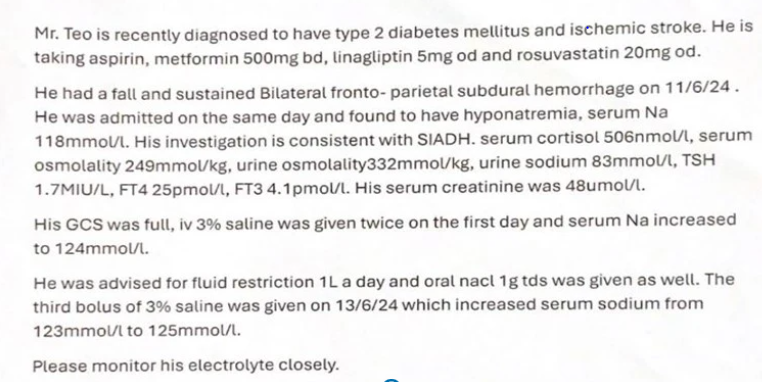
A CT scan of my brain showed no acute intracranial bleeding and no skull fracture. The swelling of my head was outside the skull. According to the doctor this episode does not pose any immediate danger or the need for surgery. However, there is bilateral chronic subdural hematoma (CSDH).

6 June 2024: CT was done in Hospital B (Singapore) and demonstrated evidence of bilateral subdural hygromas. A subdural hygroma (SDG) is a collection of cerebrospinal fluid (CSF), without blood, located under the dural membrane of the brain. They are commonly seen in elderly people after minor trauma (https://en.wikipedia.org/wiki/Subdural_hygroma).

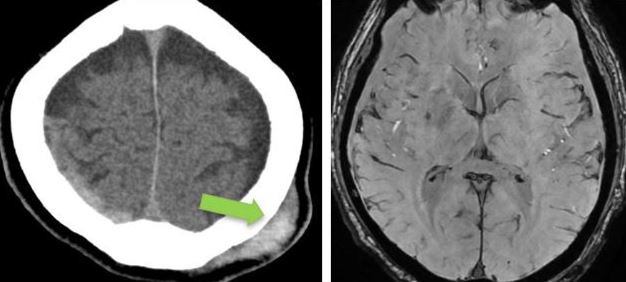
MRI Stroke Screen was done on the same day. The result confirmed that the fall was due to a mild stroke.  There is a small acute infarct at the right lentiform nucleus. Multiple foci of susceptibility are seen in both cerebral hemispheres, worse at the frontal regions, likely representing hemosiderin deposition.

11 June and 12 June 2024: I was admitted into Hospital C in Johor. I did an X-ray to my lumbar to confirm once again that the bones in my lower back were okay.

I did a CT scan of the brain. And this was repeated the next day as a way of monitoring my progress. My situation had stabilized and there was no more bleeding (this was after my second fall).

  • Blood tests

4 June 2024: I did two blood tests in Hospital A (Penang) that gave me an indication of what had gone wrong with me:

  1. My HbA1c (Hemoglobin A1c) was at 13.6%, which was a very high value indeed. If you have diabetes, an ideal HbA1c level is 6.5% or below. If you’re at risk of developing type 2 diabetes, the target HbA1c level should be below 6%.
  • i-Stat Chem8. This is a single-use cartridge and requires 2 to 3 drops of blood. The cartridge measures sodium, potassium, chloride, total carbon dioxide, anion gap, ionised calcium, glucose, urea nitrogen, creatinine, lactate, haematocrit and haemoglobin.

The results of my blood were:

  • Na = 133 mmol/L – range138-146 mmol/L
  • K = 3.9 mmol/L – range 3.5 – 4.9 mmol/L
  • Glucose = 20.5 mmol/L – range 3.9 – 5.8 mmol/L
  • Urea = 4.6 mmol/L – range 8.0 – 26.0 mmol/L
  • Creatinine = 51 umol/L – range 53 – 115 umol/L

A note from the American Stroke Association of US said:

  • Over time, excessive blood glucose can result in increased fatty deposits or clots in blood vessels. These clots can narrow or block blood vessels in the brain or neck, cutting off the blood supply, stopping oxygen from getting to the brain and causing a stroke.

Here are some facts about the effects of low sodium in the blood:

  • Normal sodium levels are usually between 136 and 145 (mmol/L). Blood sodium levels below 136 mmol/L means I have low blood sodium (hyponatremia). Blood sodium levels greater than 145 mmol/L may mean you have blood sodium levels that are too high (hypernatremia).
  • Symptoms of hyponatremia can include nausea and vomiting, loss of energy and confusion. Serious hyponatremia can cause seizures, coma and even death. 

6 June 2024

Blood test results done in Hospital B in Singapore returned the following results:

  • Troponin T  14.6 High Sensitive.  Result is critical.
  • Sodium  133  Low                           (135 – 150 mmol/L)
  • Uria, serum  8.1   High                   (2.8 to 7.7 mmol/L)
  • Glucose, fasting   13.4   High        (3.6 to 6.0 mmol/L)
  • C-Reactive Protein    14.38 H        (<=9.99 mg/L)

Take note of the following:

Heart attack – Troponin T blood test

  • In general, a troponin level of 0.40 ng/ml or more can indicate a heart attack. Wow. I had mild stroke and this test showed I had a heart attack.
  • According to Apollo Diagnostics, the normal value of troponin T in the blood is generally less than 0.04 ng/ml. A value above 0.40 ng/ml may indicate elevated risks of an individual having a heart attack.

Relax! MedlinePlus (https://medlineplus.gov/lab-tests/troponin-test/) cautioned us that: 

Low in Blood Sodium – Hyponatremia

  • Hyponatremia can range from an asymptomatic condition to a life-threatening condition. There are many causes for low sodium level – including consumption of too many fluids, kidney failure, heart failure, cirrhosis, and use of diuretics.
  • Chronic hyponatremia can lead to neurological complications that affect a person’s gait or walk as well as their ability to pay attention …. these effects lead to a reduced reaction time and an increased susceptibility to falls and injuries.
  • According to Mayo Clinic, the most common reason for hyponatremia is having too much fluid (water) in the body. This dilution (watering down) effect on the blood makes the amount of sodium seem low. Another common cause is when the body loses too much sodium in the urine and/or sweat.

Grandmother Therapy: A Common-Sense Approach to Health and Wellness

Erik Peper, PhD and Angelika Sadar, MA wrote this article Grandmother Therapy: A Common-Sense Approach to Health and Wellness https://peperperspective.com/2024/07/24/grandmother-therapy-a-common-sense-approach-to-health-and-wellness/.

The lead write Erik Peper is a professor at the Institute for Holistic Health Studies San Francisco State University. Let me reproduce some parts of the paper which I believe apply to us living in this part of the world.

  • In today’s fast-paced world, college students and young adults often struggle with various health issues. From anxiety and depression to ADHD and epilepsy, these challenges can significantly impact their daily lives. But what if the solution to many of these problems lies in something as simple as “Grandmother Therapy”?
  • Grandmother Therapy is all about going back to basics and establishing healthy lifestyle habits. It’s the common-sense approach that our grandmothers might have suggested: regular sleep patterns, balanced nutrition, increased social connections, and regular physical activity.

The Problem: Many college students:

  • Skip breakfast before their first class
  • Rely on fast food and sugary stimulants
  • Have irregular sleep schedules
  • Spend excessive time on gaming and social media

The Medical Approach: Often, the quick solution is medication – swallow those magic drugs!!!!!

  • Depression? Take antidepressants.
  • Insomnia? Use sleeping pills.
  • Anxiety? Try anti-anxiety medication.
  • ADHD? Prescribe Ritalin or similar drugs.

While these treatments may help manage symptoms, they often overlook the underlying lifestyle factors contributing to these issues.

The Grandmother Therapy Approach:

  1. Establish regular sleep patterns
  2. Adopt healthy eating habits
  3. Increase social connections
  4. Incorporate regular physical activity
  5. Reduce gaming and social media use

Summary

 By addressing fundamental lifestyle factors, we can often improve our health and well-being significantly. Remember, sometimes the most effective solutions are the simplest ones.

The Challenges of Simplicity: While Grandmother Therapy may seem straightforward, its simplicity can make it challenging to implement. It requires commitment and a willingness to change long-standing habits.

Implement many LifeStyle Changes at once: Recommending one change at the time is logical; however, participants will more likely experience rapid benefits and are more motivated to continue when they change multiple lifestyle factors at once.

Call to Action: Are you struggling with health issues? Try implementing some aspects of Grandmother Therapy in your life. Implement changes and see how they impact your overall well-being.

After a fall I landed in three hospitals – road to my recovery! My Story Part 3

Hospital C in Johor

After my discharge from Hospital B in Singapore, it appeared that the doctors knew what had gone wrong with me, as outlined in their reports. Another hospital which is about one hour drive from our home (in Singapore) is Hospital C. It is in Johor. We moved to Hospital C for 5 days from 11 June @15:18 to 15 June 2024 @10:31.

The great difference between B and C is that in Hospital C, you pay in Malaysian ringgit – indeed a huge difference compared to Singapore dollars!

In Hospital C, I underwent these procedures and treatments:

  • Lumbar X-ray

There is reduce lumbar lordosis. The alignment is preserved.

No fracture or dislocation.

Impression: Lumbar spondylosis with likely L2/L3 disc bulge.

  • CT brain – 11 June. Day 2 post mild head injury (after second fall).

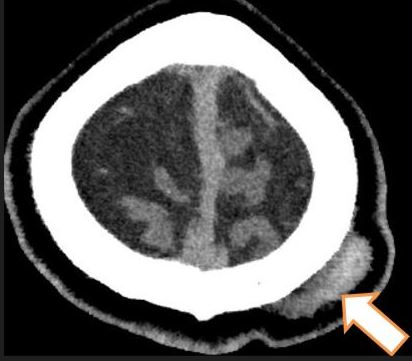
Bilateral fronto- parietal hypodense subdural hemorrhage / effusion widest at frontal region, right measures 10 mm keft measures 13 mm in thickness.

There is hyperdense component seen at right parietal region (9 mm in thickness). Mild enhancement of the sulci bilaterally.

Gray-white matter differentiation fairly preserved.

No hydrocephalus.

No skull fracture.

Left parietal scalp swelling.

Impression: Bilateral fronto-parietal subdural hemorrhage as described.

  • CT brain. Comparison made with CT brain yesterday – 12 June 2024.

Impression: Right parietal extra-axil haemorrhage, stable in size compared to previous.

Bilateral fronto-temporo-parietal subdural hygroma.

No new intracranial haemorrhage.

Blood- Tests

11 June 2024 @14.44

White Blood Cells                      12.0  H   (4.0-11.0)

Neutrophils                                 82.0 H  (40 – 75.0)

Lymphocytes                              11.2  L    (20 – 45)

Neutrophils (absolute value)   9.8 H   (2.0-7.5)

Lymphocytes (absolute value)  1.3 L  (1.5-4.5)

Sodium                                          118 (critical)    (135-145)

Potassium                                        3.6     (3.5-5.1)

Chloride                                            91  L   (98-109)

Creatinine                                        48   L   (62-115)

Calcium                                            2.14   L   (2.18-2.60)

Adjusted calcium                            2.1  L    (2.18-2.60)

11 June 2024 @19.58

Sodium                    120 (critical)   

Potassium               3.4 L 

Chloride                   92 L

Serum osmolality  249 L   (280-301)

Free T4                    25.4 H   (12.2-22.4)

11 June 2024 @23.45

Sodium                 124 (critical)   

Potassium             36 

Chloride                95 L

Urea nitrogen     2.4 L  (2.5-6.5)

!3 June 2024 @6:31

Sodium              123 (critical)   

Potassium           36 

Chloride              92 L

Urea nitrogen    2.3 L

!3 June 2024 @11:53

Sodium            125 (critical)   

14 June 2024 @ 8.10

Sodium          123 (critical)   

Potassium     38 

Chloride        94 L

Urea  nitrogen  2.5

14 June 2024 @ 14:12

Sodium          127  L

15 June 2024 @ 6:34

Sodium          126 L   

Potassium     3.7 

Urea nitrogen  2.2 L

Staying in Hospital was about taking the following medications and monitoring of blood as above.

8am
1. Omeprazole x 1 capsule
2. Metoclopromide (maxalon) / domperidone (motilium) x 1 tab (either or)
3. Celebrax x 1 capsule
4. Paracetamol x 2 capsule

9am – 10am (breakfast timing)
1. NaCl x 1 capsule
2. Potassium Cl x 1 tablet
3. Neurobion x 1 tablet

1- 2pm (pre lunch)
1. Metoclopromide (maxalon) / domperidone (motilium) x 1 tab (either or if papa feels nauseated)
2. Paracetamol x 2 capsule
3. NaCl x 1 capsule

6pm
1. Omeprazole x 1 capsule
2. Metoclopromide (maxalon) / domperidone (motilium) x 1 tab (either or)
3. Celebrax x 1 capsule
4. Paracetamol x 2 capsule

8pm-9pm (after dinner)
1. Metformin XR x 1 tablet
2. NaCl x 1 capsule

11pm-midnight (before sleep)
1. Paracetamol x 2 capsule

In the morning of15 June 2024, I was discharged and returned to Singapore. Was I fully recovered? I am sorry, the answer is NO. I was still unable to walk by myself and had to use a walking frame.

Cost of Hospitalization in Hospital C for 5 days

The total cost of hospitalization is RM 14,308.05, covering the following items:

  1. Hospital Charges RM 12,197.04

Medication                                       1,970.64

Medical & surgical suppliers             890.00

Nursing procedure                              663.68

Imaging                                              1,561.60

Rehabilitation services                       880.00

Laboratory investigation                2,391.68

Nursing care                                         525.52

Administrative charges                         56.56

House supply                                          48.80

Miscellaneous                                         97.52

Medical officer fee                                 42.96

Room and board                                1,724.00

Equipment /instrumentation           1,333.08

  • Doctor Charges RM 2,111.00

Dr. A – consultation & assessment. First consultation     235.00

Gen Ward visit (Weekday 8 am to 6 pm)                            840.00

Dr. B – Rad Fee            60.00

Repeat Fee – Brain      120.00

Repeat Fee Xray           21.00

Dr. C; Imaging – repeat fee – CT brain    120.00

Rad fee – on call surcharge                         60.00

Dr. D – consultation & assessment. First consultation     235.00

Gen Ward visit (Weekday 8 am to 6 pm )                          420.00

When you are in the hospital, remember that everything you used or was provided with has a price. So don’t be surprised. Take for examples:

  1. Vomit bag. This costs RM12.80 each. I needed this bag when vomiting. Worse is, the vomit was induced by the consumption of the prescribed medications.
  2. Every time I urinated, the disposable bottle costs me RM7.84 each.

After a fall I landed in three hospitals – here is more of my story! Part 2

Hospital B in Singapore

On 6 June 2024 my children got me admitted into the Urgent Care Centre, Hospital B in Singapore. I was there for 1.5 days. We did the following:

  1. CT scan of the head. No contrast.Had fall with occipital haematoma. The scans demonstrate evidence of bilateral subdural hygromas slightly more prominent on the left side. This is associated with evidence of an acute subdural collection in the right parietal region. There is no associated midline shift noted. The 3rd and 4th ventricles are central in position.

  • MRI Stroke Screen which showed a small acute infarct at the right lentiform nucleus. Multiple foci of susceptibility are seen in both cerebral hemispheres, worse at the frontal regions, likely representing hemosiderin deposition.
  • Bilateral fronto-temporal cystic hygromas are note, measuring up to 1.0 cm in thickness.
  • No intracranial space occupying lesion.
  • No hydrocephalus or midline shift.
  • MRA: There is a mild narrowing and irregularity in the A1 segment of the right anterior cerebral artery and the M2 segment of the left middle cerebral artery (MCA). These may represent atherosclerotic changes or sequalae of a prior insult.
  • The rest of the MRA of the circle of Wilis demonstrates no other significant aneurysm, stenosis or vascular malformation. Normal vascular variations are present. Bilateral posterior communicating arteries are hypoplastic
  • Stenosis is demonstrated.
  • Final conclusion –  normal pulmonary artery pressure.
  • No intra thrombus or pericardial effusion.
  1. Blood test results on 6 June 2024:

Troponin T   14.6 High Sensitive. Result is critical.

Creatine Kinase-MB  1.2 (0.0 to 6.0 ng/mL)

Potassium   3.8   (3.3 to 5.0 mmol/L)

Sodium    133  Low  (135 – 150 mmol/L)

Uria, serum  8.1   High  (2.8 to 7.7 mmol/L)

Glucose, fasting   13.4   High  (3.6 to6.0 mmol/L)

Est GFR   86  Expected range >=60 mL/min/1.73 square metres

C-Reactive Protein    14.38   H (<=9.99 mg/L

Reason for admission: Stroke on 6 June 2024                                                                                                                            

Secondary diagnosis: Type 2 diabetes mellitus without complication.

Discharge date: 7 June 2024

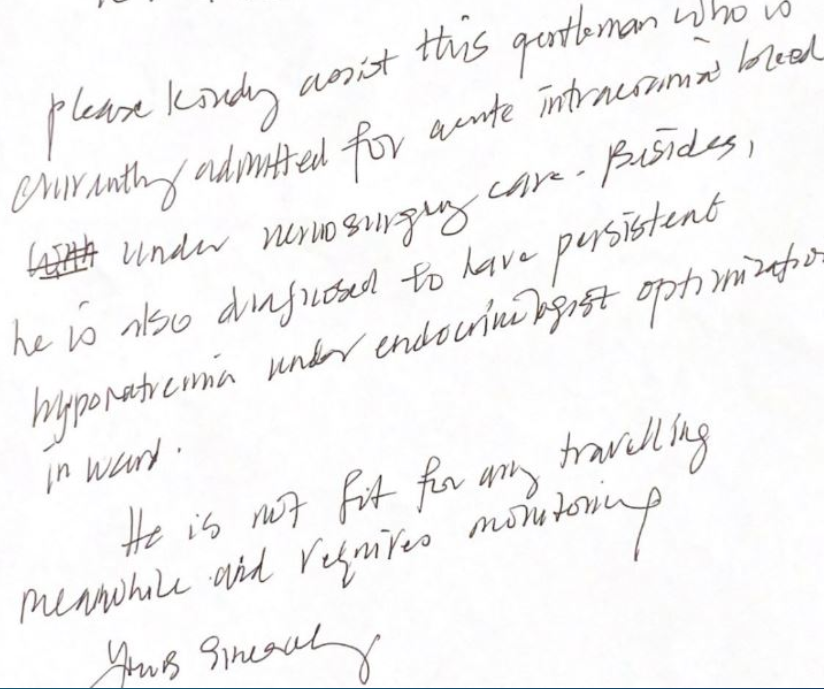
A note from the neurosurgeon stated: He is not fit for any travelling meanwhile requires monitoring.

The total costs in Hospital B in Singapore, was SGD 10,346.58 or RM 36,112.51

Admission date: 6 June 2023, 20:16, Discharge date: 7 June 2023, 17.41

  • MRI Stroke Screen                                 GD 1,177.20
  • CT Brain                                                              698.99
  • Observation bed – 3hs                                    286.76
  • Single room                                                       787.16
  • Single room – half day                                    393.58
  • Consultation – office hour                             125.69       
  • Consultation – after hour                               148.62       
  • Hospital charges                                           1,790.74
  • Ultrasound                                                        905.80
  • Daily treatment fee                                         325.69
  • Doctor’s attendance fee                                436.00
  • General follow-up screen                              420.68
  • After hours surcharge                                    196.40
  • Physiotherapy                                                  205.25
  • Speech Therapy                                               350.37

From Hospital B, I learned the following:

  1. The reason why I fell could be due to a mild stroke.
  2. For the first time in my life, I have been told, once again, that I have diabetes – and it is a serious one at that!
  3. My blood was low in Sodium, this could be related / a contribution to the mild stroke.
  4. My blood pressure was also high.

It seems that an elderly man with no pain or any “health problems” can suddenly get “sick”!

So please careful.

After a fall I landed in three hospitals – here is my story! Part 1

In May 2024, my life was really “drained!” Too many patients with too serious problems wanted my help. As usual I tried my very best to help, unaware that I was at the same time just “digging my own grave!” Let me share what happened to me.

But first, in writing this story, let me be up front with you. I am not against medical science. I went to the hospitals believing that medical science can help me – although I am an herbalist. Understand that no one has the monopoly to make fellow-citizens well again. It is either you believe in what you are doing, or you don’t.

From the beginning, may I tender my sincere apology to anyone who reads this article and finds it “offensive or crude” for the comments that I made. I was just giving my frank opinions. Please forgive me!

All the doctors and nurses who helped while I was in these hospitals were very nice and friendly. A big thank you to you all.

The Fall – A big lump in the head

In the early morning of 4 June 2024, I woke up to rush to the toilet to pass urine. While half way doing this, I felt dizzy and wanted to lie down but it was too late. I passed out and knocked my head resulting in a big bump. The next days, I fell one more time!

Life has many lessons to teach us as we age awaiting our final departure. I failed my first test. My first fall did not teach enough about the seriousness of a fall – I shouul have learned and should have prevented the repeat of such a fall.

Hospital A in Penang

After the fall, on 4 June 2024, I went to a private hospital in Penang , for check up.

  • X-ray for done to check if I suffered any broken bones. My ribs and bones of the pelvic region were okay!
  • Alignment of shoulder joint was normal.

  • CT of brain showed bilateral small chronic subdural hematoma (CSDH) noted. There is no acute intracranial bleed. There is no area of infarct seen. Brain stem and basal cisterns are normal. There is no skull fracture seen. There is scalp swelling in left occipital region.
  • Venous blood test: Hemoglobin A1c(HbA1c)- 13.6% – High. Normal = <5.7
  • I-Stat Chem8

Na = 135 mmol/L – range138-146 mml/L

K = 3.9 mmol/L – range 3.5 – 4.9 mmol/L

Glucose = 20.5 mmol/L – range 3.9 – 5.8  mmol/L

Urea = 4.6 mmol/L – range 8.0 – 26.0 mmol/L

Creatinine = 51 umol/L – range 53 – 115 umol/L

The total costs in Hospital A = RM 1,543 :

  • Physician Consultant 1– first consultation RM 70.00
  • Laboratory tests 1 – RM 198.00
  • Pharmacy – RM 93.00
  • Physician Consultant 2 – first consultation RM 70.00
  • Lab tests 2 – RM291.00
  • CT Brain – RM 370.00
  • X-ray – RM 195
  • Medical officer charges – RM 30.00
  • ECG Consultant – RM 35.00

From Hospital A I learned the following:

  1. The swelling of my head was not in my brain but at the external area outside the skull. The doctor told me it does not pose any immediate danger. This is very good news indeed.
  2. From the blood test results, I was told that I have diabetes. The sugar reading was 20.5 while the normal range was 3.9 to 5.8. This is rather shocking news! More of such unexpected news later.

Sadly, what had happened to me caused a lot of distress to both Albert and Irene who are living in Singapore. The same day I fell, Irene flew back to Penang.

Fighting lung cancer with chemotherapy, radiotherapy and immunotherapy failed. One billion rupiahs gone. Herbs helped him!

Aman (not his real name), fifty-five years old, had been a smoker for the past thirty years.  His problems started with fevers, loss of appetite and loss of energy. There was no cough. He consulted a doctor in his hometown (Indonesia) and was told he had tuberculosis (TB).  He was prescribed TB medication but it was not effective.

    Not satisfied, Aman came to a private hospital in Penang for further management. A CT scan on 22 October 2019 showed a lung mass measuring 4.6 x 4.8 x 6.0 cm. A biopsy indicated a Large Cell Lung Carcinoma.

    Aman underwent the following treatments:

1. Nine cycles of chemotherapy.  The drugs used were: Cisplatin + Eptoposide.

2. Thirty-three times of radiotherapy.

3.Twenty-four injections of immunotherapy. The drug used was Imfinzi or durvalumab. Each dose of Imfinzi cost IDR40 million. This was given every two weeks. This means Aman was on Imfinzi for two years.

Did all these medical treatments cure Aman? Unfortunately, the answer is NO.

A PET scan on 26 July 2022 showed a 2.1 cm metabolic active lesion seen in the lobe of right lung (see image above). This showed the tumour did not go away! Aman was told to do another biopsy to reconfirm that this mass is still a cancer! However, the oncologist told Aman that there would be NO more chemo or immunotherapy for him. The only option left is surgery.

The family was disappointed having spent more than one billion rupiahs for the above treatments that failed.     Aman came to seek our help. He gave up further medical treatment and was started on our herbs. It has been almost two years now – Aman is still healthy and leads a normal life (see photo below taken in May 2024).  He plays golf regularly. I once asked him, Is there any other problems? He jokingly answered: Just money problem!

Ask this question: Aman spent three years undergoing chemotherapy, radiotherapy and immunotherapy. The family spent more than a billion rupiahs for these treatments. What did he get?

The tumour shrunk from 4.6 cm to 2.1 cm. The oncologist gave up – no more treatment – and asked Aman to go for surgery! Is that a good answer? Take note, is this all the scientifically proven cancer treatment can offer?

Undergoing immunotherapy (the state-of-the-art treatment that is being promoted today) creates NO “magic”? But a change of diet and lifestyle plus taking of herbs restored Aman’s health! And more important, at a cost of peanuts!

Good bye Ina – Rest in Peace

When I woke up on the morning of 2 April 2024, Im told me that she had a dream. Ina, our cancer patient and a good friend, came to her in a dream.

In my dream, Ina was wearing a bright dress with many colors, and

everything looked bright and cheerful. I felt happy.

Chris was busy working at his computer – his back facing us.

Ina and I were happily sharing something on another computer when

she took out a cartridge and inserted it into a gadget and told me that we may have duplicates of some pictures. She said: There is no need to make copies of everything. I said something (that I cannot remember).

Then she turned to the left and picked up two babies, one on each arm and showed them to me.

I told her not to strain herself. She smiled and said it is okay.

That was when I woke up suddenly. I looked at the clock in my room – it was 7:30 a.m. I felt very afraid – my heart was very troubled. For a long while, I dared not check my handphone for fear of receiving any bad news about Ina.

There was a message in our whatsapp:  Aunty  passed on early this morning.

To be honest, this sad news came as no surprise.  When you have metastatic cancer, we know that there is no cure. There will be a day when we need to accept that death will come. That is the final cure for cancer. But while we are still alive, let us pray that there is no suffering and we go in peace. This is the message I would like to share with you.

That same evening, Im and I went to pay our last respect  to Ina and got to meet some members of her family. Although the mood was sober no one showed any feeling of desperation – everyone in the family did their best and Ina’s time was up and she left without any suffering. Amazingly after (or before?) she left Ina visited Im in her dream.

There is no denying, this is a good death.

Let me recall what happened to Ina – whom I wrote about in our book Breast Cancer – Sharing our 25 years of experience.

Her Tango with Breast Cancer

Ina was 51 years old when she was diagnosed with Stage 2 left breast cancer with nodal metastases. This was 12 years ago – around July 2012. She underwent surgery to remove the cancerous breast but refused further medical treatment – no radiation , no chemo and no tamoxifen, etc. She opted for our therapy – i. e., herbs and change of diet.

Why did she not want to go for chemo, radiotherapy, etc.? Unfortunately, Ina came from a family with cancer problems. She once told me that 50% of her family members got cancer. Both her father and mother died of cancer and she saw how they suffered. No, she would not want to go through all those tortures.

For 8 years (2012 to 2020), Ina was doing well and led a perfectly normal life. She took care of her diet very well and was serious about taking care of her health. She once told me that she hoped to live for “another 30 years”.

But it was not to be. The world was struck by the Covid-19 epidemic. During this lockdown period we did not get to see much of Ina. She was out of our radar. During this time, something was brewing up.

  1. Ina had her Sinovac vaccination:
  2. First dose: 9 July 2021
  3. Second dose: 30 July 2021
  4. Booster dose: 12 December 2021
  • Her blood test results on 17 September 2022 showed “good health, nothing abnormal”, as below:

ESR = 10

Platelet count = 271

Liver function tests = all values within normal range.

Alpha fetoprotein = less than 1.3

CA 125 = 4.8 (normal)

CA 15.3 = 14.9 (normal)

CA 19.3 = 28.7 (normal)

CEA = 0.9 (normal)

  • Ina was infected with Covid-19 on 25 September 2022 – in spite of the vaccination received earlier.
  • Ina became breathless and came to seek our help. She was given Lung Tea. After taking Lung Tea she felt okay.
  • Blood test on 10 May 2023 showed deteriorating results:

ESR = 52 High

Platelet count = 275

CA 125 = 4.7

CA 15.3 =  65.5 High

CA 19.9 = 48.8 High

  • PET scan on 14 September 2023 showed more serious condition.
  • The metabolically active left lung mass with multiple neck, axillary and mediastinal nodes. Left pleura and bone lesions are likely due to primary lung malignancy.
  • However, metastatic breast cancer recurrence cannot be excluded.
  • Ina continued to take the lung herbs. In view of the above PET scan results (now suggesting that she might have lung cancer besides breast cancer!) I suggested that Ina seek medical opinion and help in addition to taking our herbs. Ina made it clear to me that whatever it is, she was not prepared to go for chemotherapy or radiotherapy.
  • Ina still managed to lead a normal life but many times she felt breathless to the point of  not being able to walk much. Another problem she faced was wind or gas in her stomach which made her uncomfortable.
  • One day in early 2024, Ina, her husband, son and daughter came to our house for consultation – What to do now? This was my advice to Ina.
  • Yes, by all means go and consult the doctor and see what the cancer expert(s) can offer you.
  • I have done my best for you –  for the pasts 12 years – and now, I don’t have any more herbs to make your problems go away.
  • Ina said the oncologist wanted her to do a biopsy and PET scan and most probably follow up with oral chemo or immunotherapy drugs.
  • To be fair to Ina, I told her I am not going to give my opinion on this – she will have to make that decision herself.  If that is the only route to take, just give it a try.
  • I may give my thoughts but you and your family must come together, discuss and decide what to do.
  • I asked Ina to take Lung Phlegm tea together with the Lung tea. This was to help her with the laboured breathing. It was indeed surprising that Ina told us she became normal again after taking this tea. I talked to her over the phone. Her voice was strong like any healthy person.
  1. I received these messages:
  • 28 March 20240:  Agreed to go for scan today. Letrozole + ribociclib. She still felt breathless the whole day. Couldn’t sleep the whole night again. I think she’s going to give it a try.
  • 29 March 2023: Started on Letrozole and abemaciclib tonight. Biopsy confirmed hormone positive breast cancer.
  1. 2 April 2023: Im and I visited the Funeral Parlor to pay our last respect to Ina. We were told the following by various family members.
  1. Before Ina went to the hospital for the biopsy and treatment she was still okay. She was in her shop giving instructions to her staff on what to do.
  • Ina was prescribed 2 oral drugs.
  1. Letrozole or Femara. This is a commonly prescribed oral drug for breast cancer patient. If you wish to know what this drug can do to a patient, click this link: https://cancercaremalaysia.com/2019/12/30/rotten-breast-suffered-after-three-weeks-on-letronat/
  •  A targeted therapy cancer drug (either abemaciclib (Yulareb or Verzenios) or ribociclib (Kisqali). I am not able to confirm which drug was being used. Anyway, these are new drug that are not readily available in most hospitals in Malaysia. This is the second time I have heard of abemaciclib being used on breast cancer patients. The first time was from a Indonesian lady. She had many cycles of this drug in Jakarta. Unfortunately, the result was disappointing. As for ribociclib, this is the first time that I heard of this drug.
  • According to Ina’s husband Ina was given a cycle of these drugs (plus other pills) and that costs RM90,000 (ninety thousand ringgit). The family was also told that should Ina needed to be admitted in the ICU, it would cost the family at least RM5,000 per day.
  • Ina took the targeted therapy drugs:
  • Day 1, Ina took 1 pill.
  • Day 2, she took 2 pills.
  • Day 3, she took 1 pill.
  • Ina developed difficulties and she died early morning the next day, about an hour after the family had left the hospital for home.

Comments

Probably the first question anyone may want to ask is:Why did Ina die so fast? Three days after swallowing these scientifically proven drug, she was dead.

Can this be due to the following?:

  • Her breast cancer which she had been living with for the past 12 years without any problem  suddenly turned aggressive and killed her within 3 days. Can this ever happen?
  • It is because of lung complications arising from her covid-19 infection.
  • It is because of the scientifically proven targeted chemo drugs that she took?
  • Oh, it is just her fate – just that her time is up.

I would not wish to give my comment on the above reasons. It is up to you readers to come to your own conclusion based on your belief. I cannot and would not want to change your belief system either. So be it.

By bringing up the above question, I am also not trying to ask you to find a scape goat either. The doctors did  their best based on the knowledge that they had learned. All family members gave advices, rightly or wrongly, in the hope that what they said might help Ina.

To me, by sharing with you Ina’s story, is to highlight some lessons we can learn from Ina’s experience. Do you learn anything after reading her story?

Let me tell you what I learned. I thought, throughtout these 12 years, I have done my best to help Ina. But I must admit, upon reflecting on Ina’s case again, I would say I could have done better. I did not prescribe her the covid herbs that we have – especially the tea to deal with long covid symptoms. Yes, I gave Ina the lung herbs to help her with her lung problems but I wondered, could the covid herbs be better for her?  To me,  I believe the problem that Ina was facing was not breast cancer – she had been living with this for the past 12 years!. Yes, the lung has breast cancer cells but what mattered most was that her lungs needed help – she had severe breathlessness, lack of energy or strength, etc. Could these be caused by the covid infection she had earler – the monster referred to as long covid?

To understand more, visit the NHS, UK website: https://www.nhs.uk/conditions/covid-19/long-term-effects-of-covid-19-long-covid/

  • How long does fatigue last after COVID-19? Your recovery from COVID-related fatigue will likely depend on how severe your illness was. After a mild case of COVID-19 your fatigue may clear up after about 2-3 weeks. But if you had a severe case, it’s possible to feel sluggish and tired for months.

Ina “recovered” from her covid infection but her problems did not go away for many months. After recovering from covid, Ina took time off to visit South Korea. When she came home (according to her husband), she was still coughing.

More from the internet ….

  • Long COVID still worrisome 2 years after infection – even two years after infection with the virus, fallout from COVID-19 may persist.
  • COVID-19 can cause lasting lung damage.
  • Covid-19 continues to harm the body even months after a seeming recovery
  • Long COVID Has Caused Thousands of US Deaths: New CDC Data
  • COVID-19 can cause lasting lung damage.

What’s the link between coronavirus and lung cancer? COVID-19 disproportionately harms frail persons, including the elderly, and those with comorbid conditions, including cancer patients who are immunocompromised. 

Some people with cancer are at increased risk of serious illness if they get COVID-19, because their immune systems have been weakened by the cancer and/or its treatments.

What happens if cancer patients get COVID? Studies show that having a history of cancer may also increase your risk of serious illness and death from COVID-19.

Why is COVID bad for your lungs? After a COVID infection, the immune system can inflict remote damage on other organs by triggering serious inflammation throughout the body – and this is in addition to damage the virus itself has directly inflicted on the lung tissue.

Is there a problem with lung after COVID? If COVID-19 pneumonia progresses, more of the air sacs can become filled with fluid leaking from the tiny blood vessels in the lungs. Eventually, shortness of breath sets in, and can lead to acute respiratory distress syndrome (ARDS), a form of lung failure.

What organs are affected by COVID? The virus that causes COVID-19, can damage the lungs, heart, brain, kidneys, and blood vessels. Inflammation was first thought to be the main source of this damage.

Does Covid stay in your body forever? Scientists at the University of California San Francisco have discovered that remnants of the COVID-19 virus can linger in blood and tissue for more than a year after a person is first infected.

Does COVID weaken your immune system? In a small study supported by the National Institute of Allergy and Infectious Diseases (NIAID), severe cases of COVID-19 were shown to cause long-lasting changes to the immune system.

What are long Covid lung symptoms?

  • Difficulty breathing or shortness of breath.
  • Cough.
  • Chest pain.
  • Fast-beating or pounding heart (also known as heart palpitations)
  • Trouble breathing.
  • Persistent pain or pressure in the chest.
  • Inability to wake or stay awake.

Death is Not a Failure

Many people often time believe that to die is a failure. This idea is notoriously perpetuated in medicine.

Dr. Robin Kelly (in Healing Ways) said: Fear of death is seen as a necessary part of modern medicine … This idea stems from a materialistic view about life.

Dr. Bernie Siegel wrote: I experienced being unhappy as a doctor. I was uncomfortable with the mechanical approach that we are taught in medical school. My success is measured by whether or not I saved your life. If I can’t save your life, I’m a failure. But now I don’t feel like a failure. I can help you live. After all you’re not going to live forever, no matter what I do.

Those who are spiritually orientated understand that life on earth is only transient and therefore view life and death in a different light. There is an Indian saying: When you are born, you cried and the world rejoiced. Live your life in such a manner that when you die, the world cries and you rejoice.

To me, this is the secret of how we can triumph and give meaning and beauty to our own death. We can leave this world with a sense of pride and dignity knowing that we have done our best to make it a slightly better place for those we leave behind.

I saw Ina lying in the coffin and was told that the white blouse that she wore was specially designed by her.  I believe Ina was well prepared for this day. I am sorry I cannot make her live for the next “thirty years” but she had done 12 years very well.  Being a business woman Ina had many customers who had cancer. They went through surgery, chemo, radiation, tamoxifen, etc. Many suffered from the treatment and some died.

I recall what Ina told me after she went to consult the oncologist for her problems. Ina said something to this effect: The doctor was surprised. He said: You have stage 4 cancer and you can walk into my office like a normal person! Generally, stage 4 patient come in a wheelchair looking very sick. You walk in like a healthy lady with no problem!

No, Ina’s death is not a failure.

Let me end with what Dr. Bernie Siegel wrote in Peace, Love & Healing:

  • It is important that we realize that we can never cure everything. We will never find … cure for all the diseases. Dying can be a healing, ending a full, rich life for someone who is tired and sore and in need of rest.

Colorectal Cancer: Part 2: CA Care Therapy helped her!

In the first part of this story, I presented the case of Rose, a 62-year-old Indonesian lady. She was diagnosed with metastatic cancer of the sigmoid colon. She underwent the following treatments:

1. Surgery with colostomy bag.

2. Chemotherapy – 11 + 5 cycles

3. Oral drug Xeloda, TS 1

4. Immunotherapy (Avastin)

5. Radiotherapy

The treatments did not cure her. After being told about CA Care while receiving her chemo treatment in Penang, Rose decided to give up further medical treatment. She wanted try our therapy.

Rose and her daughter came to consult us and was prescribed herbs for her problems. One month after taking the herbs, beside changing her diet, her daughter came and reported her progress. Amazingly, Rose benefited from our therapy.

Her scale of suffering (from 0 to 10) was 8 before the herbs and 4 after taking the herbs!

Watch this video.

Colorectal Cancer: Part 1: Surgery, chemo and chemo. Where is the cure?

Rose, 62 years old, had been having heart problems for the past 3 years. She is currently on heart medication. About 2 years ago, Rose was not able to move her bowels for 5 days. She was admitted into a hospital in Medan. Indonesia.

A CT scan indicated a mass in the sigmoid colon and multiple adenopathy.  A biopsy confirmed malignant metastatic adenocarcinoma.

  1. Rose underwent an operation, the cancerous colon removed, and was fitted with a colostomy bag.

Histology report indicated: Low grade adenocarcinoma of colon-rectum.

  • After the surgery, Rose underwent the following treatments.
  • Chemotherapy
  • Oral drug with Intacape (or Xeloda)
  • Immunotherapy (with Avastin)
  • Radiotherapy

Rose had her chemo treatment in Medan. She received the following:

Cycle 1 – 29 Aug 2022: Oxaliplatin injection + Intacape.

Cycle 2 – 19 Sep 22:     Oxaliplatin injection +  Intacape.

Cycle 3 – 14 Oct 22:      Oxaliplatin injection.

Cycle 4 – 3 Nov 22:       Oxaliplatin injection.

Cycle 5 – 23 Nov 22:     Oxaliplatin injection.

Cycle 6 – 20 Dec 22:     Oxaliplatin injection.

Cycle 7 – 13 Jan 23:      Oxaliplatin injection.

Cycle 8 – 24 Mar 23:    Oxaliplatin injection.

Cycle 9 – 11 May 23:    Oxaliplatin injection.

Cycle 10 – 20 Apr 23:   Oxaliplatin injection.

Cycle 11 – 5 Oct 23:      Avastin

According to the Kartu Kendali Kemoterapi (Chemotherapy Record Card), Rose received 5 more chemo injections from 13 November 2023 to 11 January 2024. The drugs used were:

  1. Uracil
  2. Iritero (or Irinocetan)
  3. Leucovarin
  4. Bevagen (or Avastin).

Since these treatments did not show improvement, Rose decided to come to Penang for further treatment.

  1. A CT scan on 22 January 2024 done at a private hospital indicated:
  2. Hypodense cystic lesion in right liver suspicious of post treatment changes, residual disease or tumour.
  3. Herniation of bowel loops into left lumbar.
  4. Previous rectosigmoid surgery with stoma seen in left lumbar region.
  • Rose underwent two cycles of chemotherapy in Penang, in January and February 2024.  The drugs used were: Irinotecan and the oral drug, TS-1 (instead of Xeloda as in the previous treatment).
  • The cost of the first visit in January 2024 was RM4,917.55
  • The cost of the second visit in February 2024 was RM5,170.25
  • The following are 2 blood test results done on January and February 2024.
 22 Jan 202421 Feb 2024
CEA20.1 High15.9 High
Neutrophils4.12.4 Low
Lymphocytes1.7 Low1.4 Low
Red blood cell count2.89 Low2.64 Low
Haemoglobin10.5 Low10.4 Low
Platelet count149   Low148 Low

How did Rose get to know CA Care?

While in Penang, Rose and her daughter went to a pharmacy store to buy some medications. While in the shop, they met Jaya (not real name) and his wife. This couple is also from Indonesia. Jaya shared his cancer experience with them. Eventually, Jaya recommended that Rose come to seek our help!

Who is Jaya?  He is our patient! Jaya was also diagnosed with colon cancer and underwent an operation in October 2014. After surgery, he received 2 cycles of chemotherapy with oxaliplatin + Leucovarin + 5-FU.

Jaya developed serious infection. He was rushed to Singapore and was hospitalised for 17 days. While in the hospital he remained unconscious for 3 days. The doctor had asked the family members to “get ready.” Fortunately, Jaya recovered from this ordeal.

Jaya refused further medical treatment –  no more chemo! Jaya and his wife came to seek our help and was started on our herbs. He was told to take care of his diet. It has been almost 10 years and Jaya is very much alive and kicking! More of his story below:

Questions to Ask

  1. Rose did what her doctors in Medan wanted her to do. She went through surgery and 11 + 5 cycles of chemotherapy. Did these treatments cure her? Unfortunately, NO. She ended up with a bald head, dark palms and feet.
  • What is more disappointing is that CT scan on 22 January 2024 showed there is a cystic lesion in her right liver. According to the report it could be due to post treatment changes, residual disease or tumour. Does this mean that the treatment causes metastasis to the liver?
  • No satisfied with the treatment in Medan, Rose came to Penang for more chemotherapy. Did the treatment help her? It is too early to say. After all, she had just received 2 cycles of chemo. But what is most baffling is that the chemo-drugs used were Irinotecan and TS-1.

Rose just had 5 cycles of Iritero – that is Irinotecan! In Penang she was given more of the same stuff. What is the whole idea? What can you expect from this treatment?

Rose was on Xeloda during her treatment in Medan. In Penang, she was given TS-1, another oral drug. Can TS-1 be better than the oral Xeloda?  Agreed, currently the popularity of Xeloda is fading and TS-1 is starting to “shine” as of now.

Let me end with this quotation.