The Cancer Odyssey: Discovering Truth and Inspiration on the Way to Wellness

Cancer Odyssey

If you are brave enough to leave behind everything familiar and comforting… and set out on a truth-seeking journey, and if you are truly willing to regard everything that happens to you on that journey as a clue,
and if you accept everyone you meet along the way as a teacher,
and if you are prepared … to face … some very difficult realities about yourself …
then truth will not be withheld from you. (From the movie Eat, Pray, Love).


The Author: Margeret B. Bermel, MBA

She lives on Long Island with her husband and cats. She graduated from Marywood University with a B.A. in Psychology and a minor in Music. She is an MBA from Hofstra University, a First Degree Black Belt, and an avid golfer.

In 2009, Margeret was diagnosed with ovarian cancer and her world suddenly changed.  She started to chronicle her discoveries.  She stumbled upon the dirty secret of the cancer industry:  chemotherapy does not work.  As her research progressed to the discovery of the truths about conventional treatment, she also opened up to the inspiration that life offers to us all on a daily basis, if only we pay attention.  She started blogging about her discoveries.  The book unfolded as her journey unfolded.

Her Book

In October 2009, the surgeon leaned over me in the recovery room and shouted, “It was malignant.”  My husband then leaned over me and whispered gently, but with conviction, “We WILL grow old together.”  That day was the start of my journey through the labyrinth of the cancer industry.  The Cancer Odyssey: Discovering Truth and Inspiration on the Way to Wellness chronicles my journey, searching both for truth about the cancer industry, and for inspiration about the purpose of life.  

  • This is a book of survival, a book of encouragement to show others in this situation how to live and how not to die.
  • This book is about how to be brave enough to resist the pressure of the medical “standard of care”, how to explain to well-meaning family and friends that you are going against conventional medicine, how to be open enough to find inspiration in life and to achieve happiness.  This is the only way to survive cancer.
  • This book is a blueprint to help others to overcome the fear of cancer and to return to wellness, by finding their own truth and their own inspiration.
  • This book offers an approach to dealing with cancer from a new viewpoint – to empower people to challenge the medical advice of chemotherapy that most people have unquestioningly accepted as the only option.  It encourages people to question and research, and to take their health care decisions into their own hands, because survival depends upon making the right decision.
  • The author is a survivor by choice, sheer luck, profound faith, and determination.  She is an ordinary person who was called upon to do the extraordinary:  overcome cancer and live to tell the story.

Why She Wrote this Book

  • To raise enough reasonable doubt about the motives and ineffectiveness of the cancer industry in approaching this disease so that people will start to question the “standard of care” treatment—chemotherapy.
  • To challenge the readers to suspend their belief system in the traditional approach to cancer.  At one time or another, everyone will hear a doctor tell them that they or a loved one have cancer and that they need chemotherapy.
  • To help others who suddenly find themselves caught in the same situation that I suddenly found myself in over a year ago:  the cancer trap.
  • My mission is to encourage people to ask questions and receive answers that are satisfactory to them.  I think it is important to both listen to your gut and to learn about various options.  I am not a medical practitioner and I cannot offer any medical advice or recommendations.  I can only encourage people to find the treatment that is right for them.  Although I am a strong proponent of natural treatments, in some circumstances the conventional treatments may be appropriate.  My intention is to help people set their fear aside to enable them to approach this challenge with the strength to ask the questions that need to be asked, in your situation, “How will this treatment help ME?

 The Message She Wants You to Know

  • We must stop going along with the conventional “inside the box” thinking, that chemo is the correct knee-jerk reaction to cancer.  It is not, and we must challenge it.  Chemotherapy is NOT the solution that people believe it is.
  • The cancer industry is complacent. There is no motivation to improve the product line because business is booming.  With ‘early detection’ marketing, more and more people are diagnosed with cancer every day.  People are buying what they think they need.  There is no reason to make “a better mousetrap.”
  • Big Pharma is the driving force behind the millions of futile treatments and resultant deaths … people should finally start asking questions and demand answers, and stop dying.
  • Chemotherapy is the greatest fraud ever perpetrated upon the American public.   The Big Pharma-FDA complex must be exposed as a cartel colluding, not on curing cancer, but on generating profits.
  • Cancer treatment is the Rolls-Royce of the medical profession.  This is where the real money is.  Oncologists are the Rolls-Royce sales team of the cancer industry.  What will it take to get you into this car today?  What will it take to get you to sign up for chemotherapy today?  Very strong sales tactics. A sense of urgency.  Scare tactics.
  • It is not about altruism.  It’s about “show me the money.”  People need to hear this message before making the very real life and death decision about chemotherapy.  The war against the cancer industry is the real “battle for truth, justice and the American way.”  Think of chemotherapy as kryptonite.  It is toxic.  It can harm healthy cells and organs.  It can kill the cancer.  It can also kill the patient.
  • Does chemotherapy work?  Maybe, sometimes, with some specific cancers.  But very often, it does not work. Some cancer cells may die, but the collateral damage is the patient’s life.
  • Approximately 600,000 Americans die each year ostensibly from “cancer”—but are they actually dying from the treatment?  A very provocative question.
  • Everything we thought we knew about chemo didn’t come from data sources, it comes from media sources fed by the pharmaceutical companies selling their wares.
  • Chemotherapy may be the correct choice in a particular situation, but it should be a “choice” and not a “given.”  The choice should be made only after a thorough review of all facts and all options.  The oncologist, much like a salesman, will try to create a sense of urgency in order to make the sale.  Recognize this as a sales tactic and don’t succumb to it.  Insist upon taking the time to do your research.
  • Who is the FDA protecting us from?  If no one was dying in this country from cancer and cancer treatment, then it might be appropriate for the FDA to block other treatments from the marketplace.  We would say that cancer treatment is efficacious.  There would be no need to search for an alternate treatment.  There would be no need for this book.  But 600,000 deaths annually?  These people all took the treatment, and we know that they took the treatment because the statistics don’t track the people who decline treatment.  Something is very wrong here.  It doesn’t add up.  It must be challenged.  The actions of the FDA must be scrutinized.

 Words of Advice

  • Over a year ago, I had major surgery and was diagnosed with ovarian cancer. I wrote the first story on January 1, 2010 … On that date, I was only 2 months out from receiving a diagnosis, and on that date, I stopped reeling from the fear, panic, dread, despair, and anxiety, and took control of my life.  What you are feeling today, I also felt.  It is a scary place to be, but feel that I am holding your hand to guide you through this storm.  You will be able to follow the progress I made by making discoveries about treatment options (what works and what doesn’t work) and discoveries about life options (what we can do to save our own lives).
  • This has been a tremendous effort, a change in lifestyle, a change in eating habits, and a change in mental and emotional patterns–eliminating stress from my life, even in stress-producing situations.
  • The key to recovery from cancer is the awareness of truth; this will lead to making informed choices.  I learned the truth about chemotherapy and so I avoided it.
  • Hopefully, you may find that some of my discoveries will help you through your own process.  My focus is on healthy living, and on natural alternatives to toxic treatments.  In some situations, some type of treatment may be the correct choice; however, it is very important that you ask questions and know exactly what your options are.
  • Find a medical professional who fits your comfort level.  If your gut is telling you something is wrong with what you are hearing, then it probably IS wrong for you.  Don’t be afraid to get a 2nd, 3rd, 4th opinion.  Do not just go along with recommendations without question.
  • Chemotherapy is the big killer, not cancer per se, but chemotherapy.  Chemo is not all that it’s cracked up to be.  Learn everything you can before you or your loved one agrees to it. Choose the right path for you to return to wellness.
  • Listen to your gut, listen to your heart, think this through.  You are your own best resource.  You are your own best healer.  Do your research, read a lot.  Do not panic.  You have time.  Take a deep breath and you will get through this.  Trust.  BE WELL! You can do this.
  • Through my own health circumstances, I was forced to research this issue.  I am grateful every day that I was able to sift through the deception and misleading statistics, and decline the highly toxic “standard of care” which I believe would have led to certain death.  Many people do not do this; they succumb to the scare tactics; they are too afraid not to go along with the conventional recommendation.
  • Read this (book) first before taking chemo.  Once it is understood that the cancer industry is driven by the profit motive, and not by altruism, then you have empowered yourself to ask the questions that need answers.  Find out specifically HOW chemo will help YOU in your specific situation.  Find out if taking chemo will make you BETTER.  This is key.  Most people taking chemo think that if they go through with it, if they take their medicine, that they will emerge healthy.  Many people do not emerge from chemo.  It turns out to be a slow, painful death.
  • The point is: find out exactly what you are getting into, BEFORE you get into it.  Keep an open mind as you read through this.
  • Start to notice what people say at funeral services for family and friends who died from ‘cancer’.  People will whisper in hushed tones that they think that it was the ‘chemo’ and not the ‘cancer’ that killed the deceased.  Pay attention.
  • People are starting to realize that chemo doesn’t work, and that the cancer industry has to come up with something better than this. Demand answers. Demand better options.

More about The Cancer Odyssey click these links:

http://www.thecancerodyssey.com/

http://www.just-say-no-to-chemo.blogspot.com/

https://www.facebook.com/pages/The-Cancer-Odyssey/110880959001636


Prostate Cancer: When All Is Well Health Deteriorated – Severe Pains and Walking Difficulty – WHY?

CN (H878) is a 61-year-old male. For the past four or five years he suffered urine blockage.  The doctor prescribed Xatral, a medication to treat the symptoms of enlarged prostate (benign prostatic hyperplasia or BPH). No one bothered to check his PSA. Xatral apparently helped resolve his problem.

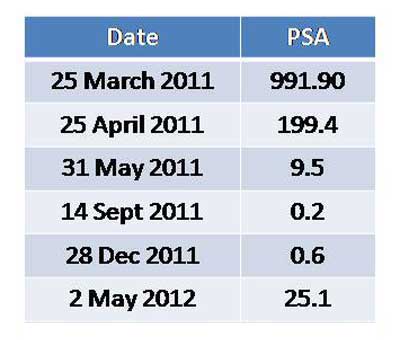
In October 2009, he started to have backpain in addition to urine blockage. On 25 March 2011 his PSA was at 991.90. This alarmed his doctor. The doctor told him that CN had prostate cancer.

A biopsy was done on 29 March 2011 but the result indicated no malignancy. A second biopsy was done on 5 April 2011. Again it was negative for malignancy although benign prostatic hyperplasia was indicated.

Due to the severe backpain, MRI was done and showed L4 vertebra was more sclerotic than the other vertebrae. A biopsy was done of the L4 and the result indicated metastatic carcinoma consistent with a primary from the prostate. His PSA then was at 1018.

1 Biopsy-reports

2 Bone-MRI

3 PSA-values


CN was subsequently treated with Lucrin injection (RM 1,300 per month per injection). He also took the oral drug, Casodex (RM 21 per tablet /day).  The treatment brought down his PSA level from the initial level of 991 to 0.2 within six months. Unfortunately, after six months, the PSA started to rise again from 0.2 to 25.1 in May 2012 (Table below).

CN was asked to undergo chemotherapy. He refused. CN came to seek our help on 11 May 2012.


Declined Chemotherapy and Radiotherapy

Chris: The doctor asked you to go for chemo and radiotherapy – you want that?

Patient: No, don’t want. No point.

C: Why no point?

Daughter: No meaning!

C: Why no meaning?

Daughter: He is taking these medications that the doctor gave and he already suffered.

C:  Do you have friends or relatives who had gone for chemo or radiotherapy – were they cured?

D: Cannot cure.

P:  I know of two friends. About two months ago one of them, aged 67, had colon cancer. After operation he did chemo for four times. The doctor asked him to go home – six months later, he died. There was another one, 51 years old. He had skin cancer. He received radiation but there was one more tumour which could not be treated. He had chemo – four times, he also died.

C: So two friends went for chemo – they all died. So you don’t want to follow them?

When CN came to see us on 11 May 2012, he presented with the following:

  1. He was unable to sleep – remaining awake till 4 to 5 a.m. each night.
  2. He had backache.
  3. He had no strength and found it difficult to even bend forward.
  4. He had difficulty moving his left arm.
  5. He suffered hot flushes and felt “heaty” in his body.

CA Care Therapy

CN was prescribed Capsule A, deTox tea, Prostate A, Prostate B, Bone and Pain Tea. He was also given Menopause Pill for his hot flushes.  He was told to abide by our recommended diet. After two weeks, he returned and told us that he was happy!  Look at the video – he could walk normally!

Chris:  When you came you said the doctor gave  you the injection and also the oral drug, Casodex. Because of that you said you could not sleep, had hot flushes. I gave you the Menopause Pill. After taking the Menopause Pill – still has problem?

Son: Much less now.

C: And you said you could not sleep at night – you were still awake until 4 a.m. or 5 a.m. Only then you could sleep. What happen now?

Patent: Can sleep. Better, very good.

C: You feel good already – so no need to take herbs!

P: No, no, cannot. I feel very happy.

(Note: Since patient could not speak / understand much English, our conversation was very limited).

He returned home with a month’s supply of herbs but he never came back after that.

Crash!

To our surprise, CN and his son and daughter turned up on 10 August 2012. He was in severe pain and could hardly walk into our centre. His son had to support him to slowly walk into our centre – watch the video to see how he suffered.  In short, his health had deteriorated – WHY?


Chris: I asked you to come back and see me in July – you did not come. Why?

Son: When taking the herbs, he was okay already.

C: So when you were on the herbs, everything was okay? No pain?

S: Just a bit of pain only.

C: So you were happy. Then now there is this pain – what did you eat wrong? Tell me what did you eat that I say you cannot eat?

Patient: Fish head curry!

C: Okay, very good. (Pointing to the daughter) You took care of him?

S: No, me, me! I brought him to Kuala Lumpur the last two weeks.

C: Before that he was not in Kuala Lumpur? In your hometown, did he eat  anything he liked?

Daughter: A little bit la!  Went out to eat outside.

C:  But still okay?

D: Under control.

C: So the past two weeks he went to KL. And what did he eat?

S: Eat outside lor.

C: Everyday eat outside? Aya, you want to die la. Can die one you know!

S: Every night we went outside to eat – like pan mee.

C: You see I have told you before. One day eat, okay. Two days eat outside, okay. And one week, was he still okay?

S: One week still okay but after that he started to have pains.

C: Where is the pain?

P: From the stomach radiating to the back.

C: Before this bad food, do you ever have this problem?

S: No, no, never have this kind of problem.

C: This is my experience. Patients – when they eat bad food for a day, never die. Two days also never die but after two weeks they begin to see the bad effects. Only two days ago, I asked my wife why you did not come. I was wondering why – either you are already well or you are already dead. Now you are here.

S: (Everyone laughing).  Ya, now want to die already. The past few days he could not walk much and his condition became more serious.

Why did he suffer again? Two reasons:  He stopped taking our herbs for the past one month and on top of that started to eat any food he liked.

e-Therapy Restored Him


We immediately put CN on the e-Therapy. His condition improved after one session. And after four sessions of the e-therapy (i.e. four days)  CN felt he had recovered and did not feel it was necessary to travel (one and a half hours drive) to Penang to undergo more sessions of the e-therapy. When CN left he gave me a hug!  After that CN mysteriously disappeared (again!). Since then we did not get to see him again!

Comments

Since CN felt well with the herbs – no more pains and he could sleep well – he decide to forget taking the herbs. Since preparing herbs is indeed a chore and he is feeling great, CN decided not take the herbs for a while. So he did not take the herbs for a month. In addition, he went to stay with his youngest son in Kuala Lumpur for two weeks. His son is a bachelor and does not cook at home. Father and son went out for outside food every evening. After two weeks on bad food CN started to have pains. He had to return to his hometown and immediately drove to see us in Penang.  CN was in severe pains. His son had to support him to slowly walk into our centre. The video would be able to convey the agony he suffered. And this was on 10 August 2012. Compare this situation to what he was like some ten weeks ago, 25 May 2012.

To us at CA Care, things like this happen very often. When patients get well, they will not come and see anymore. When they get into trouble they will show up. Some patients do not take their herbs or they go out to eat anything they like once they feel well.  They want to believe they are cured!

For CN’s case, I really empathize with him. What happened is understandable – but NOT excusable because he cannot get away with what he did wrong. CN’s wife died in an accident some twenty two years ago, so CN lives alone in his home. His children are married and they live their separate lives while the youngest who is close to him, works in another town. My guess is that life to CN could be boring and probably meaningless as well. My favourite author, Harold Kushner  – a Jewish Rabbi, in Who Needs God wrote: More than any other human problem, loneliness, the absence of meaningful human connection, drains the joy and the sense of purpose from our lives … in my experience, more die of loneliness. There is perhaps nothing sadder than experiencing intense joy or intense grief and having no one to share it with.  At CA Care we understand this message. We try our best to treat patients like a human being.  As I have often said cancer is not only about a tumour in your breast, lung or liver. It is about you as a person.

Having seen CN in severe pain, we immediately put him on the e-Therapy. His condition improved after one session. And after four sessions, CN felt he had recovered enough and did not feel it necessary to undergo more sessions of the therapy. The sad part of the story is, up to this day we do not know what has happened to him. Since our last hug, we never get to see CN again. We are more than happy to help him or any other patients, in any way we can – that is, if the patient is willing or needs our help!

The following are the side effects of Lucrin and Casodex, as obtained from the internet.

Side effects of Lucrin: Approximately 52 percent of lucrin users report hot flashes and fluid retention under the skin occurs in at least 8 percent of users. More than 5 percent of patients experience dizziness, pain throughout the body, headache, nausea and vomiting. Some patients experience diarrhea, loss of appetite, anxiety, tingling in the extremities, forgetfulness, sour taste and insomnia. Fever and fatigue, breast tenderness and impotence in men are also possible.

Source: Lucrin Side Effects | eHow.com http://www.ehow.com/about_5306460_lucrin-side-effects.html#ixzz24XoOrKCa

Side effects of Casodex:  The very common side effects are: dizziness, hot flushes, feeling sick, abdominal pain, constipation, blood in the urine, abnormal enlargement of the breasts, breast tenderness, chest pain, weakness or loss of strength, fluid retention. the less common side effects are: sleepiness, decreased sex drive, impotence, depression, loss of appetite, weight gain, anaemia, indigestion, wind (flatulence), hair loss (alopecia), excessive hair growth, dry skin, itching (pruritis), rash and liver problems.

Sourcehttp://www.netdoctor.co.uk/cancer/medicines/casodex.html


Colon-Liver Cancer You Cannot Find Healing On Your Own Terms

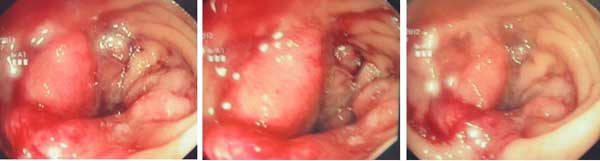
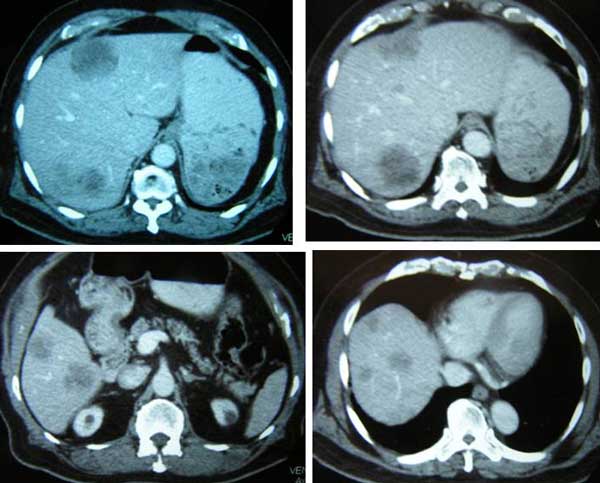
Sometime in April 2012, a 79-old-man came to Penang to seek our help. Let’s refer to him as Peter, a successful professional well known in our Malaysian society.  He had cancer of the transverse colon that had spread extensively to his liver. These are his CT scan images.

Composite-1-April-2012 Composite-2-April-2012 Composite-3-April-2012

CT-scan-report

Peter refused further medical treatment in spite of the seriousness of his illness. According to him: I would not be able to endure all these treatments. Presented with such a situation, what could I do?

There were two realities we must face in this case.

  • One, there was a tumour in the rectum and this had not been removed. And as the scan showed, it was almost blocking the passage way. I pointed out to Peter, if the tumour grew bigger and block the passage of stools then he would be done. Peter understood the message. But he was told by his doctor that even if he was to go for an operation, his life could be prolonged by another three to four months only. Peter categorically told me he would not want to go through the hassle. Okay, this was my bargain with him. Take the herbs and change your diet and lifestyle and if the stools become smaller and smaller (meaning the passage way is blocked) then he has no choice but to go for surgery.  There is nothing much I can do to help if this happened.
  • Problem number two is obviously more serious. The cancer had spread to his liver. I make it clear to Peter that no one on earth can cure liver cancer (for that matter any cancer!).

From my reading of medical literature, this is what you get:

  1. The median survival time for patients with synchronous liver metastases was 4.5 months.  http://www.sciencedirect.com/science/article/pii/000296108190057X
  2. In a series of 156 patients operated on for colonic and rectal carcinoma, 38 were shown to have hepatic metastases. Twenty-four of them died within 6 months, 30 within 12 months, and all except one within 18 months. http://onlinelibrary.wiley.com/doi/10.1002/1097-0142(196901)23:1%3C198::AID-CNCR2820230126%3E3.0.CO;2-J/abstract
  3. Bower & Waxman (in Lecture Notes – Oncology, pg. 113) wrote: The median survival of patients who are not treated with curative intent is six to seven months. The median survival of patients in the Far East is much poorer, and the vast majority die within two to three months of diagnosis.

To all those reading this article, let me say this clearly:

  • It would be a great mistake if you come to me hoping to find a cure for your cancer. I cannot offer you any magic bullet because I don’t have any. My experience over the past sixteen years tells me that those who come to CA Care for help are those with late stage cancer or those who have undergone all medical treatments. Let me say again, If you are seeking for a cure, please consider going somewhere else or find someone else who can promise you that!
  • At CA Care we teach you how to cope and in the process heal yourself. In other words, we try to make your life more bearable and in the process many of our patients live much longer and free of problems – provided of course, they follow what we tell them to do.

Let me briefly outline what happened to Peter during the time that he was taking our herbs and following our therapy.

  • We often get his phone calls. One time he asked if he could continue to enjoy his cigar after dinner. He said he had “sacrificed” enough forgoing all his favourite food when he was invited out for dinners. Then he wanted to know if he could still drink his wine since he had a good collection of wine at home. To that I remember saying, No – why don’t you have just give those wine to your friends. He answered, But you know each bottle cost a few thousand ringgit.
  • Surprisingly,  Peter  was doing fine. Once he called me to say that according to his medical doctor-relative it was dangerous not to remove the tumour in his colon. The tumour would grow bigger and bigger and eventually  block the passage way. According to theory or textbook knowledge the tumour will grow if not removed but my experience shows that with herbs and change of diet, this does not necessarily happen! I have seen a similar case before.  I asked, But can you pass your stools? Are the stools getting smaller and smaller? He answered, No. Then I said, In that case the tumour has not grown in size yet. We can still wait – but of course you can go for surgery if you like. So we waited, from April to September. Six months had passed and Peter was alright – no problem of blockage.
  • In early September, Peter came to Penang with a friend, requesting that I also help his friend too. Then Peter decided to buy the e-Therapy machine which had just arrived from the US.
  • On 12 September I was down in Subang Jaya and Peter came to have lunch with us. Peter said: I am happy.  Actually I only need to spend less than a thousand ringgit a month for the herbs and all (note: much less than the cost of a bottle of his favourite wine!)  If I were to go for medical treatment it would have cost me a lot more.  Thus far Peter was doing just fine.
  • But not long after this happy lunch together, I got a phone call from his brother.  I was told that Peter was not doing well. His stomach was bloated and he felt uneasy, had no strength, etc. Problem like this cropped up very often with cancer patients. Without asking further, I related a story of a similar colon-liver case in which the doctor told the patient he had only 6 months to live. This patient was on our therapy for almost 3 years and was well. After that, the day before one Chinese New Year – succumbing to the suggestions of friends and relatives – he decided to “celebrate” the CNY occasion by eating fried chicken. A few hours after his fateful meal, he suffered severe stomach pain and had to be rushed to the hospital. His stomach was bloated and he died soon afterwards.
  • So without hesitation, I asked: What did your brother, ate the past few days?  I was told – pulut and salted fish. Well, was that all? I was not sure and I did ask further. After this my advice to Peter’s brother was:  There is nothing I can do now. We have to take it easy and see if the problem would go away. It is very difficult now.
  • Not long afterwards Peter himself called. In his frail voice told me that he was not going to take our herbs anymore. These  herbs are not helping me anymore. I went for the blood test and the results showed the liver function were all high. I am now tired and have no strength. My friends invited me for dinner but I can’t accept their invitation anymore. I want to return the-Therapy machine and you pay me back half its original price.  Without hesitation, I replied: Yes, Datuk,  no problem! (One week after buying back this machine, one patient from Indonesia decided to buy it at that half-price! I am glad that I can help another patient in need through the generosity of Peter for wanting to sell off his useless machine.)
  • I did not ask Peter what went wrong. He did not offer to explain what went wrong either. So I left it at that.
  • One early morning of November 2012, I received an email from another patient informing me that Peter had passed away. In the evening of the same day, Peter’s brother called to convey the same sad news. This was what his brother told me: Please tell all your patients. Do not eat pulut and pulut kacau (all that sweet stuff laced with brown sugar). After my brother took that food, his stomach became bloated immediately after he went home. Surprising there was no problem about his colon being blocked. My response: Yes Datuk, for the past 16 years I have been shouting from the top of the mountain telling patients to take care of their diet!

Comments

There is no need for me to make further comments on this case. I only hope that some patients do learn from this story.

Let me share with you what I learn about life.

Over the years dealing with cancer patients, I have come to accept that we cannot help everyone. We can only help those who want to help themselves.  So there is no need to be upset if we fail once in a while. This thing happened most of the time. I often tell patients:  If you can eat, can sleep, can move around and have no pain – what else do you want? Learn to be grateful for what you are each day. Unfortunately not all patients have that virtue. Once they feel well, they demand to eat what they like! Unfortunately most patients have to pay a heavy penalty of this violation.

To me, the secret of happiness in life is to cultivate a sense of gratitude. Be grateful for what we are. Be thankful for what we have and what we are blessed with.  This virtue on its own breeds a sense of contentment and satisfaction in life. That is healing. We learn to live with the cancer but at the same time we live in peace with ourselves.

BOOK REVIEW: THE TOPIC OF CANCER

By Yeong Sek Yee & Khadijah Shaari

The Topic of CancerRecently, we came across an article by Jessica Richards, a specialist in personal transformation and leadership. The title of the article was most intriguing. “I refused drugs and chemo to battle my breast cancer with fresh vegetable.”  You can read the article at the following links: –

a) http://www.thesun.co.uk/sol/homepage/woman/health/health/4467643/Jessica-Richards-on-why-she-refused-drugs-for-breast-cancer-to-have-vegetables-and-vitamin-C.html#ixzz23hCAAjZD

b) http://www.naturalnews.com/z036830_breast_cancer_dietary_changes_recovery.html

Alternatively, you can just Google the title of the article.

Subsequently, we bought her book “The Topic of Cancer” which is an inspired and practical guide that will help you take control when faced with cancer. Summarised below are Jessica’s main points of her cancer journey this far: –

Why she refused conventional treatment:

  • In May 2007, Jessica was diagnosed with breast cancer with a relatively large tumour up to 3.5cm and was advised that it would require 5 months of aggressive chemotherapy, a partial or total mastectomy, removal of lymph nodes and radiotherapy followed by five years of drugs.
  • Jessica visited 3 hospitals…..”I was recommended surgery, chemotherapy, radiation and drugs by three consultants at two different hospitals, but I chose an alternative route”.
  • At each hospital, “I found I was automatically booked in for chemotherapy. This is mainly the case with cancer treatment and I understand that it works this way because most people don’t question anything; they just assume that it’s the right way and for the best. Personally I felt like I was just being “processed” like everyone else and was no longer an individual. Most people accept treatment in the belief that it’s the only way. It was assumed that I would just allow it all to happen as if I was part of a computerised process, where my details had been entered and the treatment programme spat out and I was duly expected to sleepwalk through the whole thing.

In the following paragraphs, Jessica described how she decided against chemotherapy:

  • I was recommended AC accelerated Taxol chemotherapy
  • I asked the Oncologist how my treatment would benefit me, how would it increase my chances of survival. He said it would only increase it by up to 7% compared with the survival chances of not having chemotherapy at all.
  • The oncologist also told me that they don’t really have the figures to give accurate answers which surprised me, considering that chemotherapy has, to my knowledge, been used for about fifty years! I then asked how they had decided on my treatment programme, and he told me it was a computer programme. Then I asked him what details were fed into the programme and he told me it was my age, whether I was pre or post-menopausal, and the size and grade of my tumour.

(Please read the addendum at the end of this review for comments by another M.D. on how chemo drugs are selected for patients).

  • I asked him why chemotherapy was recommended for me, given the only slightly better chance of survival and the appalling risks associated with the ‘therapy’. He answered that at that particular time where they were trailing the effectiveness of using chemotherapy before surgery rather than after it, in order to shrink the tumour and necessitate less extensive surgery. Apparently, they were hoping to find out whether this increased overall survival levels. In fact, I have since found out that shrinking a tumour with chemotherapy prior to surgery has no impact on survival levels. I need to mention here that in medical terms, ‘survival’ is taken to mean still being alive five years after diagnosis. It doesn’t mean, as one would like to think, that survival means you’re cured and will live happily ever after.
  • It seemed I was supposed to accept what I considered to be unreasonable risks to my health simply to keep more of my breast, a purely cosmetic issue, as I saw it. These risks included a depleted immune system, possible tissue damage from chemotherapy leaking out of veins, memory and serious blood disorders such as leukaemia and many other shorter term horrors such as tiredness, muscle aches, eye irritation and hair loss. I told the oncologist that although I didn’t relish losing most of or my entire breast, I was 50 years old and not a 19 year old page three girl, or even death in the hope of ending up with a better pair of jugs was hardly my priority.
  • He (the oncologist) agreed that I should think about it very carefully. I then asked the ‘six million dollar question’. “If you were in my situation” I said, “would you accept chemotherapy?  “No” was his reply.

(To read more Why Doctors Refuse Chemotherapy, visit the following link: http://www.scribd.com/doc/14150181/Why-Doctors-Do-Not-Take-Chemo or just google the title).

  • I walked out of the hospital hugely relieved having made the decision that I was in no way going to submit to chemotherapy, and no-one had given me what I would consider a reasonable or rational explanation as to why I should. The numbers simply didn’t add up and I had no interest in being part of that “trial”.

On researching further, Jessica discovered further information on chemotherapy :

  • What are longer term side effects of chemotherapy? This is a very important question, as you can be left with long term health issues. In my case, I was leaving myself open to a small but nonetheless possible risk of leukaemia associated with Taxol chemotherapy.
  • Toxic agents like chemotherapy have to be metabolised by the body in order to eliminate them and this means that they have to be processed by either your liver or kidneys or both, depending on the type of chemotherapy used. This can cause permanent damage to those organs.
  • Chemotherapy, in most cases, is designed to bring you to the point of death in order to destroy as much of the cancer as possible.
  • Chemotherapy is never recorded as a cause of death. Death of cancer patients is always attributed to cancer.
  • After refusing chemotherapy before surgery, Jessica started on the metabolic therapy, which meant an alkaline diet. Within 3 weeks, the tumour changed from an impenetrable, hard, calcified lump to a soft, jelly like mass. Later when they (the doctors at one hospital) completely changed their recommendation from a lumpectomy to a mastectomy with lymph nodes dissection (even though there is now new research to which suggests that lymph node removal does not extend life.) Jessica was particularly pissed when the senior surgeon just told her “Oh, why don’t you just have a mastectomy and get it over with.”

As her father had been a radiographer in a nuclear power station, Jessica learned from an early age of the dangers of radiation, the main one being that “radiation causes cancer” besides : –

  • radiation can kill cancer cells but will also cause damage to healthy tissue,
  • radiotherapy could cause heart damage, lymphedema (a build-up of lymphatic fluid which is painful, compromises the immune system, and makes one susceptible to infections should that area be scratched in some way) in that arm.

On the subject of Diet and Nutrition, the writer is equally vocal as well. In her opinion and experience, diet and nutrition play the biggest part in recovery from most illnesses.

  • When she visited the 3 hospitals…she was told that they didn’t know anything about nutritional advice. One hospital told her that “it made no difference what you ate or drank”
  • How can diet be recognised as having an impact on some disease and not others? If you have diabetes, you must address your diet, if you have a heart condition, you will be given dietary advice….but if you have cancer, no such thing happens.” WHY??
  • The idea of a specialist cancer diet is to support the immune system and at the same time create a hostile environment to the cancer within the body.
  • If you make your decision to use diet as part of your treatment, then take full responsibility and stick to it wholeheartedly. Don’t mess around with it, there are no half measures.

 Jessica recommends Ten Things Not to Eat & Why

  • Sugar-cancer cells are anaerobic and glucose-receptive which basically means that cancer cells are dependent on sugar rather than oxygen for growth.
  • Alcohol--it is actually toxic to the body and is a highly refined form of sugar and may cause DNA damage, which in turn can cause cancer.
  • Tea-black tea has an acidic effect on the body
  • Yeast cause fermentation in the gut, which in turn creates an acidic environment in the body. Cancer cells as well as yeasts love an acidic environment.
  • Fizzy
    •  drinks and squashes–these are basically sugar and chemicals. These drinks are often recommended to cancer patients who, because of chemotherapy and other treatments have a much compromised immune system, because there is nothing live contained in them. The thinking behind it is that with such a compromised immune system, a microbe from fresh food or drink could prove life threatening so patients are advised to eat and drink only dead substances.
    • Dairy products create acidity. Not only do milk and cheese create acidity but cheese is also full of microbes which add to the gut problems and acidity. It’s especially not a good idea to ingest dairy products if you have hormonally driven cancer, such as breast or prostate, as dairy products are full of hormones including growth hormones which all milk has in order for the baby animal to grow.


  • Jessica recommends Ten Things to Begin Eating and Drinking 
    • Water dehydration can have long term devastating effects on health. During some forms of chemotherapy, it’s very important to drink plenty of fluid as the chemotherapy agent is metabolised through the kidneys and therefore the kidneys need to be flushed out with fluid throughout the treatment.
    • Vegetable juice is alkalising, releases and eliminates toxins and provides antioxidants and nutrients directly into the body system.
    • Green leafy vegetables–they are alkalising and full of chlorophyll as well as other nutrients and enzymes. Chlorophyll acts as an oxygen carrier of your blood and therefore your red blood cells.
    • Whole fruits – which still contain all the fibre. Some are acidic or very high in sugar. Stick to fresh pears, pineapples, papaya and banana.
    • Short grain brown rice
    • Nuts & seeds, apricot kernels – choose fresh, raw nuts. Avoid roasted, salted or any other kind of processed nuts such as dry roasted. Steer clear of peanuts as they contain microbes which are something to be avoided on a cancer recovery program.
    • Lentils & pulses such as beans and chickpeas.
    • Green, white & herbal teas.
    • Onion and garlic, herbs & spices are packed with powerful antioxidants.
    • Fish & meat – choose any fish except farmed fish.

ADDENDUM…. How chemo drugs are decided for cancer patients:

a)      In another book, DEFEAT CANCER edited by Connie Strasheim, a medical doctor, Dr Juergen Winkler, MD who practises integrative oncology, has this to say:

“There’s a strong fraternal order among doctors and it’s especially strong among oncologists.  Most oncologists are very ‘cookbook like’ in their treatments of patients. They have a  regimented way of doing things, with no in-betweens. They have a book that they use to  look up chemotherapy treatments for their patients, called the “ Guide to Chemotherapeutic  Regimens.” When prescribing a regimen, they just calculate their patients’ weight and body surface area, and from those, determine what their treatments should be. That’s how  conventional medicine treats patients” (page 153)

b)      In the same book, Dr Martin Dayton, MD, DO  licensed and Board Certified osteopathic physician and surgeon in Florida, has this to comment: “Chemotherapy drugs selected empirically and based on the results of clinical trials, using  limited patient specific data (tumour size, site, and metastasis) induce positive responses  (in patients) only 30 percent of the time” (page 206)”

NB: Dr Dayton quoted the above from the book PHARMACOGENICS by Dr Kalow Werner  published in 2001.

In summary, Jessica Richards (diagnosed in 2007) did not submit herself to surgery, chemotherapy, radiotherapy or hormonal therapy at all. Is she still alive? Yes, very much so. Would you have done the same thing? We would like to hear from you.

 ISBN NO: 978-0-9570644-0-9

Website: www.jessicarichards.co.uk

Email: jessica@jessicarichards.co.uk

FURTHER REFERENCES:

Jessica Richards obviously did a lot of reading and research before she decided against chemotherapy, radiotherapy or hormonal therapy.  For further reading on breast cancer and its treatment, we recommend the following books:-

1)      Breast Cancer: The Herbal Option by Dr Chris Teo  (ISBN NO. 978-983259-0231)

2)      Breast Cancer: What You Should Know (But May Not Be Told) About Prevention, Diagnosis and Treatment by Steve Austin, N.D.  and Cathy Hitchcock (ISBN NO: 1-55858-362-2)

3)      What Your Doctor May Not Tell You About Breast Cancer by Dr John Lee, M.D.
(ISBN NO: 0-446-67980)
4)      The Truth About Breast Health, Breast Cancer by Dr Charles B. Simone, M.D.
(ISBN No. 0-9714574-0-9)
5)      The Complete Natural Medicine Guide to Breast Cancer by Dr Dharam Kaur, N.D.
 (ISBN No. 0-7788-0083-0)
6)      Waking The Warrior Goddess by Dr Christine Horner, M.D. (ISBN No. 1-59120-155-1)
7)      My Healing From Breast Cancer by Dr Barbara Joseph, MD
(ISBN 0-87983-711-x)
8)      Your Life in Your Hands by Professor Jane Plant (ISBN 1-85227-809-9)
9)      Choosing to Heal by Janet Edwards (ISBN 978-1-905857-00-5)
10)   A Cancer Battle Plan by Anne Frahm and David Frahm (ISBN: 0-87477-893-x)
11)   Knockout – Interviews with Doctors who are Curing Cancer by Suzanne Somers
 (ISBN NO: -978-0-307-58746-6)

12)   The Breast Cancer Wars by Dr Barron H. Lerner, MD (ISBN No: 0-19-516106-8)

13)   Enough Already – The Overtreatment of Early Breast Cancer by George Goldberg
(ISBN No: 0-9651453-3-8)
14)   You Did What? Saying No to Conventional Cancer Treatment by Hollie and Patrick Quinn
(ISBN No: 978-0-692-00904-8)

15)   A Lighter Side to Cancer by Sandra Miniere (ISBN NO : 978-0615642710)

WHEN YOU ARE ONLINE, YOU MAY WISH TO READ THE FOLLOWING: 

1)      www.drday.com (This is the website of Dr Lorraine Day, MD….read why she refuse chemotherapy and radiotherapy after the removal of her cancerous breast tumour). 

2)      Does Chemo for Breast Cancer cause more harm than good?

Link: http://articles.mercola.com/sites/articles/archive/2008/01/01/does-chemo-for-breast-cancer-cause-more-harm-than-good.aspx 

3)      Chemotherapy can make cancers more resistant to treatment and even encourage them to grow.  Link: http://www.dailymail.co.uk/health/article-2184277/Chemotherapy-
 encourage-cancer-growth.html

 4)      Taxol can cause Tumour Cell Release  Link : http://forums.imaginis.com/viewtopic.php?f=1&t=459

 5)      Taxol Doesn’t Treat Common Breast Cancer  http://her2support.org/vbulletin/showthread.php?t=30492

 NB: THERE ARE A LOT MORE OF SUCH INFORMATION ON THE INTERNET….BE MORE CREATIVE IN YOUR GOOGLING LIKE:

a)      Chemotherapy Spreads the Cancer.

b)      Anti-Cancer Drugs make Tumours More Deadly.

c)       Why Chemo Kills.

d)      How effective is Chemotherapy/Radiotherapy.

e)      How toxic is Chemotherapy/Radiotherapy.

 OF COURSE, YOUR ONCOLOGIST/DOCTOR WILL ADVISE YOU NOT TO TRUST THE   INTERNET…. (ONLY THEIR ADVICE/INFO CAN BE TRUSTED). HOWEVER THERE ARE A LOT OF   OTHER BOOKS WRITTEN BY DOCTORS/ONCOLOGISTS….SOME OF THESE ARE:

        1) THE COMPASSIONATE ONCOLOGIST by Dr James W. Forsythe, MD, HMD…..read what cancer specialists don’t want you to know.

       2) MONEY DRIVEN MEDICINE by Dr David K Cundiff, MD…..read about the effectiveness of  chemotherapy for Non-responsive cancers

      3) NATURAL STRATEGIES FOR CANCER PATIENTS by Dr Russell Blaylock, MD…..Chapter 3 is  entitled Chemotherapy: Poisoning Cancer (and You).

      4) WHAT YOU REALLY NEED TO KNOW ABOUT CANCER by Dr. Robert Buckman in collaboration with specialists at The MD Anderson Cancer Centre, Texas. (read                            Chapter 9–With So Many Breakthroughs, Why is There No Progress?) .

       5) THE END OF ILLNESS by Dr David B Agus, MD…..read about the effectiveness of         chemotherapy by this prominent oncologist.

6) THE ENZYME FACTOR by Dr Hiromi Shinya, MD….read why anti- cancer drugs do not  cure cancer

       7) FIGHTING CANCER WITH KNOWLEDGE AND HOPE by Dr Richard Frank, MD….read an oncologist’s explanation on why chemotherapy and targeted therapies may not  work.

       8) A WORLD WITHOUT CANCER by Dr Margaret L Cuomo,MD…..read her expose on Poisons: The Limits of Anti-Cancer Drugs.