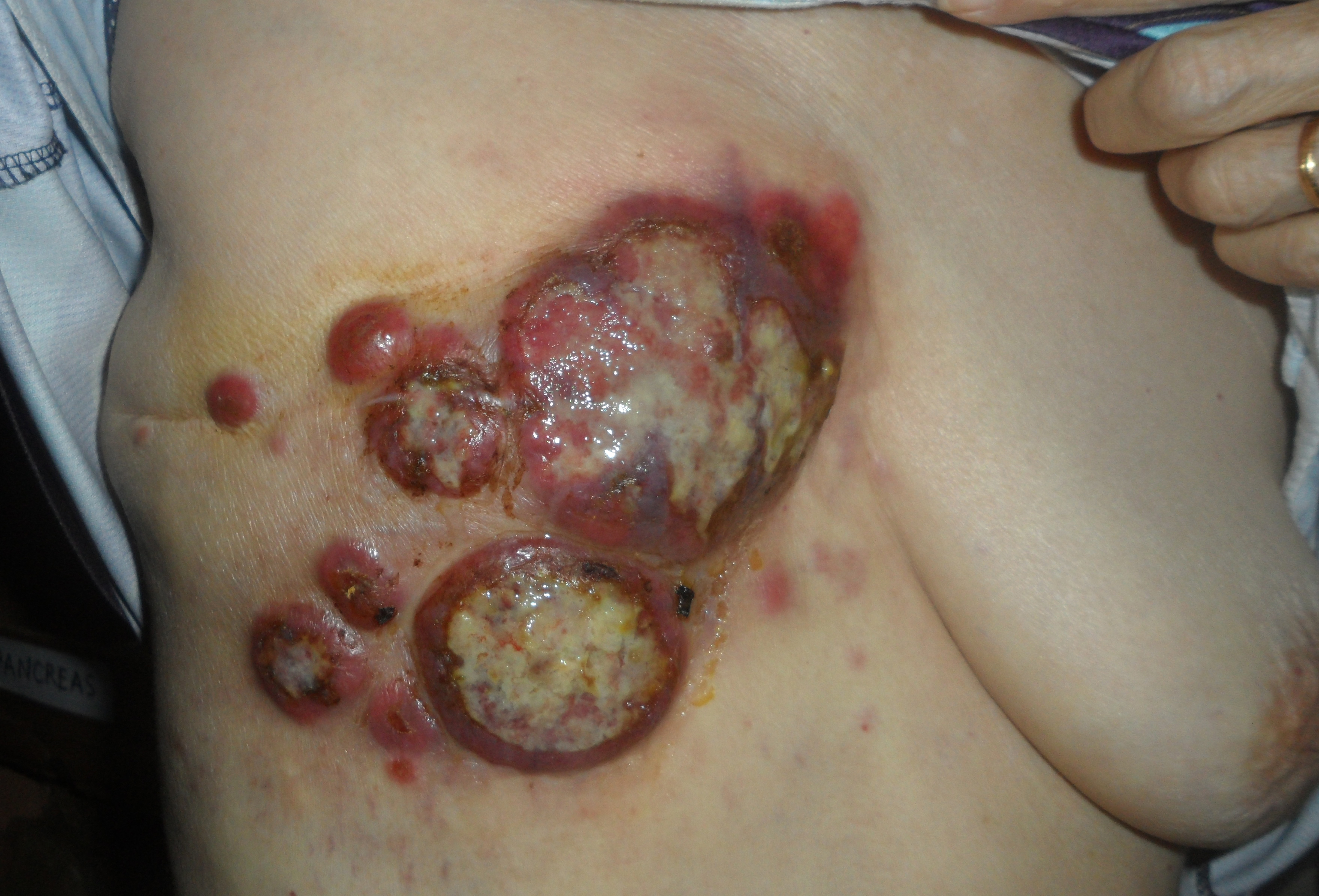
Rotten Breast: Suffered after three weeks on Letronat

LAH had breast and underwent a mastectomy but refused chemotherapy. She turned to a sinseh for help instead. After about one and a half years on herbs and a US-made supplement, she had a recurrence. Her breast turned “rotten”. LAH went to the hospital for help. The doctor told LAH she only has three months to live. No operation or chemotherapy was indicated at this late stage. It was at this point in time that LAH came to seek our help.

We prescribed herbs. LAH’s condition improved after taking the herbal teas for about two weeks. I told LAH that if she continues to do what she is doing that makes her well, I don’t think she is going to die within three months!

About one month later, LAH and her daughter came to our centre again. This time, LAH appeared half-dead to me. This is what happened.

Chris: During the last visit, the doctor told you that you will die within three months. And he also asked you to take an oral drug.

LAH: Letronat – a hormone. I took one tablet a day.

C: How much do you have to pay for this drug?

L: It’s for free (from government hospital).

C: After taking the drug for one week – what happened? Are you okay?

L: Okay.

C: After two weeks?

L: Still okay.

C: After three weeks?

L: I started to have problems –  not feeling good.

C: Now, are you still taking this drug?

L: No, I stopped taking this drug two days ago. In total, I was on this drug for more than three weeks.

C: What are the problems you suffered?

L:       1. I became breathless.

  1. Weak, lack of energy. I just like to “sleep” or lie down all day. When I am down, I don’t feel like waking up. While on the herbs, I was not fatigue.
  2. Fevers. This usually comes in the evening. While of the herbs, I did not have any fever.
  3. Unable to sleep at night – while on the herbs, I slept well.
  4. Pain in certain part of the body. While on the herbs, I had no pain.
  5. Swelling of hands and legs. No such swelling while I was on the herbs. This swelling happened just a week ago.

C: When you started taking the doctor’s medication, did you stop taking the herbs?

L: Yes. I stoped taking your herbs and switched to Letronat.

C: Now you know the truth — the doctors medication gave you many problems. When you came to see about a month ago, I did warn you NOT to take this medication. You heard what I told you, right?

L: I did not follow your advice. I believed and trusted the doctor! My son insisted that I follow the doctor’s advice. So I took the medication.

C: Yes, you believe the doctor. Good. Remember, the doctor also said you will die within three months. Now, do you believe you are going to die within three months? When you came to see me after taking the herbs, I saw your face and you looked so good. I never believe you are going to die within three months. But now, you are so breathless – looks like you are half dead.

L: I did not believe you. Now, I am blow … blow. Did not know what I am doing.

C: Does your son still insist that your continue taking the  doctor’s medication?

L: Yes.

C: (To the daugther). Seeing your mother in this condition, do you still want her to take the doctor’s medication?

Daughter: It is up to her whether she wants to take the medication or not.

C: You still want her to take the drug? Just a few weeks ago, she looked so well. Now her health had deteriorated. She is not like before.

L: I have stopped taking the Letronat two days ago.

C: Okay, go home. Continue to take the herbs again (since you have already stopped taking the doctor’s medication). I shall give Lung Phlegm to be added to the Lung Tea. I hope this will help you with your breathing. Come and see me again after a week.

Comments

  1. This is indeed a sad story. I have come across many similar stories. After the patients get well – they misbehaved, believing that they or their friends know better. They started to eat what they like or they stopped taking the herbs. Since this problem is nothing “new” there is nothing to be “excited” about. I have since accepted this reality. To get well or to die is the patient’s choice and responsibility.

LAH heard me saying very clearly that she should not take that Letronat. Yes, she heard it, but she believed the doctor more! That is okay – it is her choice.

  1. My advice to all patients. Before undergoing any treatment, it is better that you go into the internet and find out more about the side effects of the treatment or medication. In this case, just google side effects of Letronat and you get the answer like below:

Letronat is a generic form of letrozole, an aromatase inhibitor (lowers estrogen production). Letrozole is  commonly known as Femara, used to treat breast cancer in postmenopausal women.

Letronat or Femara is often given to women who have been taking tamoxifen (Nolvadex, Soltamox) for five years.

Some of the known and documented side effects of Letronat are:

  • dizziness, drowsiness, weakness, tired feeling
  • hot flashes, warmth in your face or chest
  • bone pain, muscle or joint pain, back pain, chest pain
  • bone fracture
  • hot flushes – flushing (warmth, redness, or tingly feeling)
  • headache
  • increased sweating
  • edema or swelling
  • weight gain
  • constipation
  • increased cholesterol level in blood
  • increased thirst
  • anxiety and nervousness.
  1. If you want to know more, read what others say about taking Letronat / Femara or Tamoxifen. I have read enough. That is why I told LAH not to take the drug. Let me share with you what happened to some of our patients.

Case 1: Dewi was a 33-year-old Indonesian lady who worked in Macau. After her breast cancer diagnosis she underwent a mastectomy in Hong Kong. After the surgery, Dewi underwent six cycles of chemotherapy and  thirty sessions of radiation treatment. Everything was okay after that. But three years later, Dewi started to have back pain. PET scan showed her cancer had spread extensively to her bones.

Dewi was prescribed Xeloda and Tamoxifen. After taking the drugs, Dewi was not able to sit down or walk. She had to be hospitalised and later had to use the wheelchair. Xeloda / Tamoxifen gave her problems, right?

Case 2: Lenny was a thirty-seven-year-old lady from Surabaya. She had a lump in her breast but initially refused to undergo any medical treatment. She relied on her shallow knowledge that a certain  supplement would solve her problem. The tumour started to grow bigger. She had no choice but to seek medical treatment and was started on radiotherapy. I can’t believe this — Lenny had a total of one hundred and six sessions of radiation! The cancer spread to her bones and other parts of her body.

The doctor then prescribed Tamoxifen (same story like LAH except the drug is called Letronat). Two weeks after taking Tamoxifen her fingers became painful and she was unable to move her fingers. One month on Tamoxifen Lenny was unable to walk. Her throat muscle became tight and cramped.

  1. One important question which patients do not ask is, What is the use of taking Tamoxifen or Letronat? Can this type of drug cure you? The answer is NO. To add more salt to the injury, in such advanced cases like LAH, Dewi or Lenny, this drug can cause you more problems. I don’t see any reason or wisdom in taking such drug.

Read this critically: Letronat or Femara is often given to women who have been taking tamoxifen (Nolvadex, Soltamox) for five years. It never say it is of any good to those with advanced metastatic breast cancer.

The question you may want to ask is: If it is that “bad” as your claimed, why did the doctor prescribe such drug to the patient? Exactly, because the doctor prescribed it – LAH and her family members believed the doctor was doing the best for her! Read carefully what these two doctors and a professor wrote about Tamoxifen.

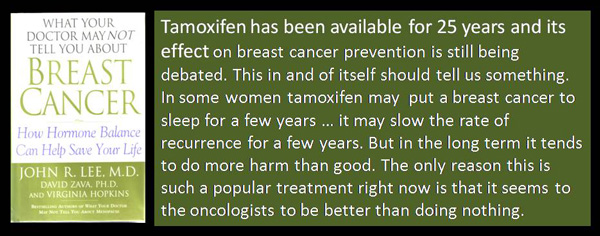
These two doctors are conveying this message to us — Doctors have nothing else to offer you after surgery, chemo and radiotherapy. And in cases like LAH, Dewi and Lenny – there is nothing else they can offer after the cancer has spread widely. In the face of not being able to offer you anything else, doctors have no other choice but to offer you something (otherwise you may thing they are not “good” doctors). So they ask you to take Tamoxifen / Femara or Letronat. Unfortunately this so called “scientifically proven bullet of last resort” do not bring any benefit. On the contrary they can cause more problems.

Professor Jane Plant was also a breast cancer patient. Perhaps you may want to reflect on what she said below.

Perhaps there is a better option than just “blindly” swallow any drug what your doctor recommended you!



Rotten breast: You have three months to live!

Sixty-two year-old LAH came to seek our help after her breast turned “rotten.” As usual, my first question was, Who asked you to come here? Her reply, A staff working at a Buddhist healing centre. The reality is that LAH’s condition is beyond “repair.” The doctor said neither surgery nor chemotherapy is indicated. Her cancer has spread extensively to the lung, liver, bone and lymph nodes.

My initial advice to LAH is, Go home and think first. What do you want to do? LAH had already decided. She wanted me to prescribe her some herbs. Okay –  let’s try.

LAH was given Capsule A, C, D and M. In addition, she had to drink four types of tea: Breast-M, Lung + Lung Phlegm; Live-1 + PLM and Lympho + SAP. These teas have to  be brewed and they are not good tasting. LAH assured me that she would be able to tolerate their awful taste and smell.

To my surprise, LAH’s health improved after two weeks on the herbs (more detail to be discussed in the next posting). She was in a happy mood when she came to see us. Her radiant face showed it all. I did not expect she would benefit from our herbs so soon.  In fact, she told my wife that the breast wound had started to dry up. And she was healthy enough to came to our centre riding the motorbike by herself.

About a week later, LAH showed up at our centre again. And this time she came with her son. We came to understand that LAH had kept her cancer recurrence secret. None of her children know about this problem. One son lives in Kuala Lumpur. When he came home to visit his mother, he was puzzled to see so many herbs in the house. It was only then that he learned about her mother’s illness. So this son came to seek more information from us.

Watch this video:

The following are the gist of our conversation that morning. I hope many of you can learn something from this story.

  1. The doctor said I only have three months to live – cannot operate, cannot chemo.

In her excitement, before we could even settled in our seats, LAH said, The doctor said I only have three months to live. I must quickly get my affairs in order. This is something I often hear from patients. So I was NOT taken aback at all by such statement. Instead, I laughed aloud as if it is a good joke! My response: Very good!

LAH: Doctor said cannot operate, cannot chemo.

Chris: That is okay! Since you cannot operate, cannot chemo and you are going to die within 3 months; then you cannot blame me if you die after seeing me. What else can I do? (Both patient and Chris laughed).  I shall explain later why I behaved like this that morning.

  1. Will you die within three months?

C: Let me ask you. In your heart, do you believe that you are going to die within three months? I don’t think you will die within three months! But if you believe what the doctor told you, yes — you will die within three months.

There was one cancer patient from Sungai Petani. He was also told the same — you die within three months. He went home and put X, X, X in his calendar. This is a countdown to the day when he was supposed to die. And every he took note of the number of days he still have left. This patient came to seek my help but there was nothing much I could do to “break up” his belief. I never get to see him again after his first visit.

  1. The herbs have helped you. So continue taking them and be patient.

Chris: When you first came to see me, you were in bad shape — right? You were half-dead (more of this in the next posting).

LAH nodded in agreement.

C: Looking at your face now, it is different (laugh). You are much better off after taking the herbs. I don’t think you are doing to die within three months. I am not trying to mislead you by making you feel good so that you can continue to take my herbs. It is just that when I see your face, I feel happy. You look healthy enough. You are not going to die within three months.

LAH: The doctor told me so. I just listen.

C: Now that you are okay. Be patient – don’t be in a hurry trying to get well. Healing takes time. After the three months are up, then we can say we have won – you win, I win.

LAH: I want to live – waiting to see his (pointing to her son) child.

I have seen many patients who are like you. They were told they only have three to six months to live. But they don’t die as predicted.

Case Study 1: This was a man with metastatic bone cancer. Let’s call him Raju.  In spite of chemotherapy and radiotherapy, the oncologist told Raju to go home and get his affairs in order. He only had six months to live. At home he was unable to sleep. He had to take morphine many times a day due to the pain.

His son came to seek our help. After two weeks on the herbs Raju was able to come to our centre. When he got well he travelled to India to show his son the “property” he has there. Raju did not die within six months. He was still healthy after ten years.

Case Study 2: Nancy had lymphoma and underwent six cycles of chemotherapy. A few months after the completion of her chemo, she suffered a relapse. The oncologist told her to undergo a BMT (bone marrow transplantation) which would cost RM100,000. The oncologist told Nancy, If you don’t do BMT, you will die within four months! (that would be in December). Nancy refused further medical treatment because she said she almost died during her initial chemo treatment.

Nancy came to seek our help and was prescribed herbs. Three months later, I asked Nancy if she had picked a date in December to die, since this was what her doctor said was going to happen to her! Nancy blared out, No, no. I am not going to die yet! I was glad to hear that and replied, Wonderful that you have decided not to die yet. If you believe what you doctor told you, then you die in December!

Nancy lived for another two plus years. Later in this article, you will learn that Nancy died after indulging in a “bad diet”.

Case Study 3: Ama is a 59-year-old lady with ovarian cancer that had spread to her lung. She underwent chemotherapy. On completion of her treatment the doctor told her daughter. Your mother may die tomorrow, may be next week but at most she has three months. When Ama came to see me with her family, she was having difficulty breathing. I prescribed Ama some herbs and she took them without any problem. Surprisingly, Ama became well. It has been more than 12 years now and Ama is still very much alive and well. Her son came to collect Ama’s herbs last week. She is doing well!

Case Study 4.Henny was diagnosed with a sarcoma in her lung. This is indeed a rare cancer – the first of its kind that I ever encounter in my two decades helping cancer patients. Henny went to Singapore for consultation. The oncologist told her to undergo chemotherapy. Without chemotherapy you have only six months to live. If you undergo chemotherapy, you have two years to live. Henny did not see the wisdom of undergoing chemotherapy. She came to seek our help instead. After taking our herbs, Henny’s condition improved and she could lead a normal life.

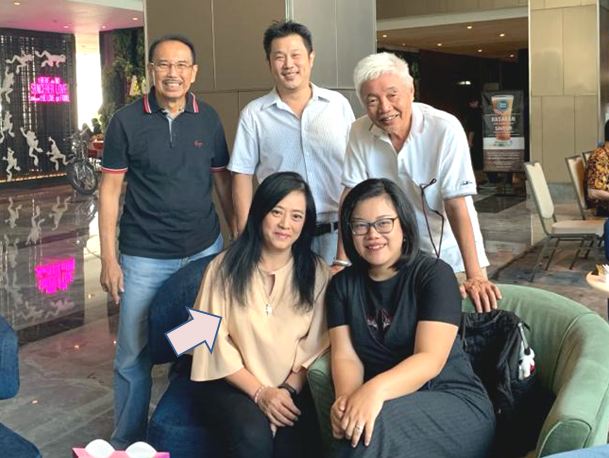
Seven years later, in mid-2019,  we met up with Henny (arrow) in Surabaya, Indonesia. See, everyone was smiling!

Lessons we can learn from these stories:

  1. When you die – God decides not men.

You have three months or six months to live! I have heard this a thousand times. The truth is, no one of earth can tell you when you would die or how long you can live. So in CA Care we refrain from playing God. Medically and scientifically someone may be right to tell his/her patient that he/she is going to die soon. By saying that it makes you feel like a god who knows everything. What is the purpose of telling your patient such an “unhelpful and damaging” prognosis? Is that statement going to help or “destroy” the patient?

Sadly, many people don’t understand or learn about the nocebo effect. Search the internet and this is what it says,  Nocebo effect is said to occur when negative expectations of the patient regarding a treatment cause the treatment to have a more negative effect than it otherwise would have.

The doctor is not helping his/her patient by such negative prognosis. In actual fact, the doctor is causing more “damage” to his/her patient. My advice to everyone: If you have come to a stage where you cannot offer any more treatment to the patient, the last act of kindness or responsibility is for you to keep your mouth shut if you have nothing good to tell your patients.

When LAH told me about dying within three months, I made it out like it was a funny joke and we laughed it out together! My reason is this – we have to break that voodoo curse. If you believe in that curse, the patient may just die believing that what is said is true. So, when talking to LAH I related to her some extra-ordinary examples of patients who were similarly “cursed”. But they did not die as predicted. So my message is, Don’t believe in the prognosis.

  1. To live or to die – it’s your choice!

Patients have a choice. When December was around the corner, I asked Nancy (Story 2) if she had fixed the date when she was going to die. I did this to indirectly tell her that if she wanted to die as predicted, she better get prepared. But Nancy had a choice to live if she wanted to live. I was glad to hear her response, No, no, I want to live! That is it! Patients, if you want to live you will do whatever it takes to make you live. But if you say, it is no use helping myself because after all my doctor said I am already going to die already – so why take care of myself anymore? If you harbour that attitude you will die!

  1. Stay alive and continue to do what is right.

Don’t be kuai ku (trying to be funny) and start doing what you like, forgetting what I have told you!

I have seen cases of patients who started to go back to their old ways after becoming well. Some started to eat what they like. Some others stopped taking the herbs. If you do these, you are going to die!

I told you the story of Nancy earlier (Story 2). She was supposed to die within four months. After she took the herbs she led a healthy life for two plus years. In her third year, before the Chinese New Year (CNY) celebration, I warned Nancy about taking “bad food.” Nancy broke down and cried. She told me she had missed all the good foods the pasts two years – not being able to eat this or not. Now she said, for this coming CNY, I am going to eat. I am going to dig my grave with my fork and spoon. Sad indeed – a few months after this, I was told Nancy died.

  1. Don’t be afraid – everyone has to die.

I told LAH. By telling you all these, I am not promising that she is going to live for years to come. No, I am not implying that at all. But I want everyone one to realize that, We all have to die one day. So, don’t be afraid. At CA Care we remind all our patients to be grateful and be happy. As cancer patients, let us pray that while we are still alive, let us not suffer. If you can eat, can sleep, can move around and have no pain, please be grateful and don’t ask for me. No one lives forever.

On the other hand, what is the use of being alive but becoming a “vegetable”. There is no meaning if we have to suffer – can’t eat, can’t talk, can’t walk, can’t sleep and always in pain. You want that?

  1. Don’t take this drug!

Chris: The doctor said he would not give you chemo. Neither would be recommend that you go for surgery. So what did he want you to do?

LAH: The doctor wanted me to take this oral drug — Letronat.

(Note: This is a letrozole, a non-steroidal aromatase inhibitor. Many patients know it as Femera or Tamoxifen).

C: Oh no. I don’t think you should take this drug. I have patients who suffered badly after taking Tamoxifen or Femara. So if I were you, I would not take this oral drug. You could suffer many side effects.

  1. Be careful. Don’t simply listen to the advices of those around you.

Friends and family members want to help you. I can understand that. Unfortunately, before you get cancer, they know nothing about cancer. But now that you have cancer, all of them become  “professors” overnight – they will tell you to take this and to take that. Be careful. Don’t simply follow everything they say. I also have patients, after becoming well, will forget what we told them. They start to go for this supplement and that supplement just because their friends recommend them to take them. Well, that is their choice!

  1. Take care of your diet!

This is my plea to all patients. Please take care of your diet. You cannot eat anything you like even if you think you are already well or “healed.” Of course, if you are already tired and want to “go home” sooner, go ahead and eat what you like. Enjoy your food to the fullest. And go in peace!

I recalled the case of a colon cancer patient whom I called Penang Hill uncle. After his surgery, he refused chemo and took our herbs. His doctor had no objection because Uncle was already old – past his 80s. He was well for more than two years. Then he started to join the company of his old buddies. They frequented the coffee / eating shops every morning. Uncle started to eat fried bee hoon, and chicken rice (according to him he took on the rice, not the meat). He suffered a relapse. The cancer spread to his lungs and he died. I can tell a hundred more stories like this. So be careful with your diet.

  1. My final advice: You are now on the right path – continue to do what make you well.

I told LAH, You have taken the right path and you are doing well. Continue to do what you are doing. Take the herbs and take care of your diet.

This advice appears logical, right? You don’t need to have much “brain” to understand why I give this advice. In my next posting, you will learn that this is not the case with LAH and other patients like her! Sad.


Rotten breast: Paying the Price of Ignorance?

LAH is a 62-year old lady from Penang. In January 2017, she felt a lump in her breast. She went to see a doctor and did a mammogram. The result was not good. LAH was referred to the general hospital for further management. A biopsy was done and confirmed it was cancerous.

On 24 April 2017, LAH underwent a mastectomy to remove her right breast. Histopathology report confirmed an invasive carcinoma. Two of 2 nodes removed were positive for cancer. Immunohistochemical study confirmed  the cancer was strongly positive for oestrogen and progesterone receptors. It was also positive for c-erb B2 oncoprotein.

After the surgery, LAH was told to undergo chemotherapy or take oral drug. She refused further medical treatment. LAH went to a Chinese sinseh instead. She was prescribed herbs which cost her RM100 per month.

I asked LAH, Did the sinseh read your medical report and understand what had happened to you? LAH said the sinseh read the report and told her to take care of her  diet. But he did not give any detail about what food to eat and not to eat – the advice was: take care of your diet.

After one and a half years consuming the herbs, LAH said she did not “feel anything”. After her condition started to get worse, the sinseh asked LAH to see his friend who sells a certain supplement for cancer. This product is from the United States costing about RM500 per month.

This is what happened to LAH when she came to seek our help one morning in September 2019.

The medical report dated 6 September 2019 stated the following:

  • Patient clinically asymptomatic.
  • Local recurrence with infiltration – mass in right chest wall.
  • Nodal, lung, pleural, liver and bone metastasis.
  • Uterine lesions.

Unfortunately, at this stage the doctor said there is nothing much he could do. Another operation or chemotherapy is not indicated.

Watch this video:


The following are what I told LAH that morning. I hope others can learn some lessons from reading this case study.

  1. No rush. Go home and think first what you want to do now?

Most patients who come to us are like LAH! They have failed to find their “cure”. They have no other option. I have to  be absolutely honest with all of you. What can I do for you? Do you expect me to do magic? I shall try to help you the best I know how but I cannot promise to cure you!

I am not going to mislead or cheat you by asking you to buy this or buy that. I am also not going to threaten you in anyway so that you feel compelled to do what I want you to do. No, we don’t do such thing at CA Care.

So, listen to what I have got to say. There is no need for you to rush to make your decision. Go home and think first, what do you want to do? That was what I told LAH.

  1. No cure for cancer – don’t be misled! Surgery did not cure her, herbs / supplement did not cure her either!

From my years of experience, I learned that there is no cure for cancer. When you come here – desperate – do not have the impression that I do not want to help.

LAH’s case is not a unique case. There are many others who are in the same situation like her. After surgery they do not want to do anything else. They think their cancer is already gone after the breast is removed. And that they are cured. Perhaps because of that they refuse to undergo chemotherapy as suggested by their doctors. Some other patients have heard from friends and relatives that chemo do more harm than good. So they “fear” chemo and prefer to go for herbs or take supplements.

I told LAH about a lady who had a lump in her breast. She went to a herbalist for help. The herbalist told her not to go for surgery – just use his herbs which cost RM5,000 per month. After one and a half years, the lump grew bigger and burst. It was only then that the herbalist told her to go and see a doctor to remove the rotten breast. A lesson to learn: don’t be misled by such people!

  1. LAH’s cancer had spread extensively. She had taken the wrong path!

The medical report says LAH’s cancer has spread extensively – to the lymph nodes, liver, lungs, bone, etc. But surprisingly she appeared to be alright, although not in perfect health. This is a serious case. There is not much I can do. Yes, I can help but I told LAH up front that I cannot cure her.

To all patients who come here. Take note that you need to take many types of tea for your cancer. You may want to ask, Can the herbs cure you? The answer is, No. Then the next question you want to ask is, Why take the herbs if these cannot cure! The teas may help you with your quality of life. It is for this reason that I asked LAH and every patient who come and see us to go home and think first – what do you want to do now?

  1. Please take care of your diet.

This is my advice to all patients who come and see me – Take care of your diet! I have written about this in our books — Food & Cancer and Healthy Cooking. Cancer patients cannot eat what they like! There are certain foods that you can eat and there are certain foods that you must avoid. So take care.

I know many people do not agree with me on this – they will say. Eat anything you like. Cancer has nothing to do with your diet. Well – over the past twenty over years, I have been reading and seen how what you eat will affect your well being as a patient and how diet helps in the healing of cancer. And I stand by what I said.

I also know that this advice is the most unpopular among cancer patients. But what can I do?

There was this lady who told me, If I cannot eat laksa, life is not worth living. I told her to go and eat as much laksa as she liked. It is not worth dying over a bowl of laksa. That’s her choice.

There was another lady who told me, How to take care of my diet? I have to clean my apartment, and do all the house chores, etc. etc. I have no time to cook my own food. Again, what can I do?  This is my message to all patients. You need to learn how to take care of your health. Your health is your responsibility. If you don’t want to take care of yourself, there is nothing much I can do to help you.

  1. Ladies, why do you allow your breast to rot?

I have seen many cases of rotten breasts. So LAH’s case one of the many. I just wonder why these ladies allow such thing to happen? Why allow your breast to rot like that?

To all ladies, please remember this:

  1. a) If you happen to find / feel a lump in your breast, go and see a doctor to find out exactly if it is cancerous or not. There is no two ways about it. Don’t go to any sinseh or alternative healer. They cannot give you that answer. Don’t let such people take you for a ride. The medical imaging procedure is more definitive. Don’t ever believe that by taking his herb or supplement the cancerous lump will go away. Don’t gamble with your life!
  2. b) If the lump is cancerous, have it removed by lumpectomy or mastectomy. No two ways about this. I would not see you if you come to me with a cancerous lump and do not want to remove it. Period.
  3. c) After the surgery, your problem becomes more tricky. The doctor will ask you to go for chemotherapy and/or radiotherapy. In addition you may have to take oral drug. That is the standard recipe.

But some patients, due to bad (even fatal) experiences of friends and relatives, would NOT want to go for further medical treatments. I have helped many such patients. I understand your concern. If you need my help, we shall work this out together.

Of course, if you want to follow your doctor’s “prescription”, go ahead and do what he wants you to do. You need to make the decision yourself. And one day, if the medical treatments failed and you need my help, then come.

  1. d) Know that even if you have undergone surgery, chemotherapy, radiotherapy and take drug like Tamoxifen or Femara, there is no guarantee that the cancer is cured and never come back again. I have seen many patients who failed to find their cure after spending RM100K to RM500K on their medical treatments. Money gone and patient dying. That is the reality. And it is at this point that these people come to seek our help. OK come and if I can help you, I will help.
  2. e) As for the case of LAH, after surgery, she refused chemo or oral drug and decided to take herbs. Yes, I have patients who are LAH. They come to seek my help after their surgery, don’t want chemo or radiation.

I have made it plainly clear to all patients, herbs cannot cure (just like chemo / radiation do not cure). While you are taking our herbs, you must also take care of your diet, change your lifestyle and personal attitude towards life. We would monitor your progress by blood test (or USG or mammography if you like). Sometimes, we encourage you to go back to your doctor for routine check-up. Some doctors will be “mad” at you because you don’t follow their advice. But I know of doctors who do not object you taking herbs. So, my advice is avoid those who are “hostile” to what you are happily doing. Remember what Dr. Susan Love said:

In the event that the herbs fail to help you, you should stop taking the herbs. There is no dilly dallying here. At the first sign of recurrence, it is best that you see a doctor and find out what it is. Sometimes it could be just a non-cancerous growth or keloid scar. Or it could be a cancerous recurrence. If it is a recurrence, this is the time you need to face reality and try chemotherapy. You don’t wait for one or two years until your “breast rot beyond repair” before you admit that what you have done is not effective. So patients, don’t be dumb and in denial for too long. Learn to call a spade a spade early.

Let me end by reminding you this. When you go  to medical doctors and undergo all the treatments that they have suggested, it is called scientific and proven method of treatment. Never mind if patients die during or after the treatment. That is medically accepted norm. Remember, before you undergo these treatments you are asked to sign a bunch of papers. Do you know what these are?

If you go to the herbalists, sinsehs or alternative practitioners – these people are called quacks or snake oil peddlers. Their methods are considered pseudo-scientific, and not proven. Your health insurance does not cover such expenses.

So, think carefully what you want to do! For more than twenty years, I have helped cancer patients. Almost all of them who come to us are those who have undergone the so called scientific medical treatment but failed. To most of them, we are the last stop for hope. May be at times, the world needs quacks as well.


Diagnosed with colon cancer – What to do now?

In my earlier posting, I wrote about two Indonesians who came to seek our help after surgery and chemotherapy failed to “cure” them. The next day, Tai – another Indonesian from Pontianak came to seek our help. He was also diagnosed with colon cancer. This is another story.

Tai is 56 years old. His problem started about two months back when he had diarrhoea. Sometimes he passed out blood. He went to a hospital in Pontianak. A colonoscopy was done. The doctor said he has colon cancer and has to undergo an operation.

Not satisfied, Tai went to Kuching (Sarawak) to seek a second opinion. Blood test and CT scan were done.

Tai’s CEA level was at 15.36 (high). His liver function enzymes were all within normal limit. CT scan showed:

  • Irregular wall thickening narrowing of the recto-sigmoid.
  • There is a 25 mm hypodense lesion in segment 8 of the liver. There is no evidence of liver cirrhosis.
  • Bronchiectasis (walls of the bronchi are thickened from inflammation and infection) in the right middle and lower lobes of lung.

Tai was told to undergo surgery. This is to be followed by 6 to 10 cycles of chemotherapy.

Listen to our conversation that morning.

Below are some of the main points we discussed that morning. I hope patients who want to come and seek our help will learn from this conversation. We talked for over an hour. And this consultation is free of charge!

  1. Tai has not undergone any treatment yet after his diagnosis of colon cancer. He came to know about CA Care through a friend. Then his daughter went into the internet and read more about us.

Yes, this is the way it is. Many people know us through words of mouth. From there they go to the internet and read. After reading as much as they can, they come and see us. Spot on, patients please READ. Unfortunately, many patients don’t want to read! Or they prefer to hear and follow what others tell them.

  1. I asked Tai if he asked the doctor if surgery and chemotherapy that he was told to undergo would cure him.

Tai’s daughter said she did ask this question. The doctor replied that surgery has its own risk, and there is no guarantee of a cure.

Yes, this is what I always tell patients to do. Ask questions. Don’t be afraid. You go to the doctors hoping to find a cure — is that not what you want? So at least, ask if you can be cured! Learn to know the “truth” by yourself.

  1. Tai’s daughter then asked the doctor, Why treat if you cannot cure?

The doctor did not answer that question. His only reply was, You must undergo the surgery and chemotherapy.

From the two questions above, Tai understood the “hidden” message. His cancer cannot be cured. Surgery and chemo will not do the job! But whatever it is, Tai was told he must undergo the standard treatment protocol — everyone who gets cancer gets operated and then chemo-ed! That is the way it is.

Some doctors may get angry and give you sarcastic answer – but in this case, Tai’s doctor was not “aggressive”. He just kept quiet.

  1. The family was not convinced and refused to undergo further medical treatment.

Tai and her daughter and the son’s friend, flew to Penang and seek our advice. Patients you need to learn how to make your own decision about your health. You don’t need to be a rocket scientist to be able to do this. From the answers given by the doctor and also stories of “bad “experience of others before him, Tai hesitated to join the “crowd” in the hospital. He wanted to find another option.

  1. What do you want me to do for you? Cure you? No, go for surgery first before taking our herbs.

Tai’s daughter said her father was hoping to find another alternative. Of course, like everyone else, he hopes that the herbs can cure him.

This was my reply. We know that surgery and chemo do not cure cancer. So when you come here wanting us to cure your cancer, it is really not right. My experience showed me that no one on earth can cure any cure! So don’t be misled.

Let me tell you a story.

There is this lady from Batam. She has a lump in her breast. She went to a Chinese herbalist in Kuala Lumpur who told her not to go for any surgery. She was told to just take herbs which cost RM5,000 per month! She took the herbs for almost one and a half years. The lump did not go away. It grew bigger and eventually burst. When this happened the herbalist told the lady, I cannot help you anymore. Go and see a doctor and have the lump removed.

What do you think of such a herbalist or sinseh? Don’t be misled or be cheated by such people. The same can happen in Tai’s case. There is a “rotten” tumour in his colon. It can slowly grow and block the passage in the colon. Since Tai is still young, 56 years old and the cancer has not spread extensively, I suggested that he goes for surgery to remove the tumour.

If patients come to me with extensive spread — say from the colon to the liver, lung, etc, I would generally say there is no need for surgery. Surgery is not going to cure such a serious case. But in Tai’s case, after seeing the CT scan, I am a bit unsure. Yes, there is a mass in the liver. Don’t operate that liver mass. But it is better to remove the mass in his colon. Please don’t believe that herbs can make the tumour in the colon go away.

  1. If I operate, do I need to wear a colostomy bag?

You need to ask the doctor who is going to operate on you. Generally if the tumour is very near the anus, you will need to wear a colostomy bag all your life. But if the tumour is higher up in the colon, the surgeon can just remove a section of the colon. You may need to wear a colostomy bag for a while. Later when everything is alright you need to undergo another operation to rejoin the colon and the bag is done with.

  1. To operate or not to operate: You need to make that decision. I cannot tell you what to do.

Tai said he was not prepared to undergo surgery, if possible. To this my response was: I am really concerned if you reject surgery altogether. If I have a “rotten” mass inside my colon, I would go for an operation and remove it, provided there is no extensive metastasis.

Tai explained that he is reluctant to go for an operation because for the past month a herbalist in Pontianak prescribed him some herbs. This helped him. Tai said, Before taking the herbs I have severe stomach pain. After taking the herbs, the pain was gone!

My reply. I understand. But I am afraid of what can happen to you in the future. Feeling better or good after taking herbs does not mean the cancer is cured! One day in the future, like a dormant volcano, it may explode.

From my years of experience, I know that the tumour would not go away just by taking the herbs. Yes, you may be able to live for one or two years with that rotten mass. But I am not sure what is going to happen after that.

Some alternative healers may tell you not to operate – just take their (alternative) treatments  and you will be alright. I am not sure if they are right in telling you such thing. Where is the proof or evidence that their herbs can cure?

You also need to understand that undergoing surgery to remove the tumour does not mean that the cancer will be gone forever. Surgery cannot guarantee a cure at all. But by removing the main source of the cancer, it can make the management of your cancer with alternative therapy easier.

Let me share with you the story of one VIP patient. He was an old man, past his 80s. He had colon cancer that had spread extensively to his liver. He refused any medical treatment (either surgery or chemo) in spite of the fact that his niece (a medical specialist) urged him to do so. His younger brother (a minister in the government) brought him to see us.

Based on his age and extensive metastasis, I agreed with the patient that surgery or chemo might just give more problems instead of helping him.  The patient was prescribed herbs and he was “well”. He could move his bowels normally and he continued to live his normal life. Was he cured? NO. About nine months later his stomach became bloated after eating glutinous rice laced with sugar plus salted dish. He was rushed to the hospital and died not long after the “forbidden meal”. In this case, herbs helped him but it did not cure him!

In case of Tai, it is still worth taking a gamble by undergoing surgery before taking our herbs. He is still young – just 56 years old and his cancer has not spread so extensively yet.

  1. Find the right surgeon to operate on you!

When you come and seek our help, we would try our best to help in any way we can. It is NOT just about prescribing herbs. The question that comes to mind is who is a good surgeon to go to. From the experiences of our patients, we know that Dr. X in Hospital Y is the surgeon to go to. So colon cancer patients, Go to him if you want my advice. Let me say up front, I don’t get an referral fee by doing this! In fact, I don’t know him personally. But I know he has a good reputation.

I told Tai the following:

  1. Before the operation, ask him to give your the estimated cost of the surgery.
  2. Ask the surgeon if you need to wear a colostomy bag — forever or just temporarily.
  3. There is no need to ask the surgeon if he can cure your cancer. By now you should know the reality of the situation.
  4. It is most likely that the surgeon will ask you to go for follow up chemotherapy. No need to rush into this yet. Tell the surgeon you need to go home first and discuss with your family and figure out where to find more money to pay for the treatment.
  5. No need to take herbs yet!

Take one or two weeks to decide what you want to do after considering my advice. There is no need to take the herbs now. You would be just wasting your money. If you need my help after the surgery come back again with the medical reports two or three weeks after your surgery. Then we shall decide what further treatment you need.

More stories …

While I am writing this story about Tai, I received an email from Singapore.

Dear Dr Chris Teo,

We would like to seek your advice for my mother, age 78. She suffered constipation (4 Dec to 8 Dec) and was in pain for 5 days with a huge bloated stomach.

With all investigations done in a hospital, she is diagnosed  with colon cancer on 9 Dec 2019. There is a tumour found in the large intestine that block the passing of the stools. She had undergone blood tests, CT scans and colonoscopy.

The immediate attention given by doctor was to release the gas in her body and to aid the passing of stools asap with the help of a stent insertion to the intestine. A tube was also inserted into her nose. This was done on 9 Dec 2019.

Her stomach has subsided since the insertion of stent, some stools and gas were passed out with the help of the stent. However, today (12 Dec) she did not pass out any stools.

The investigations shows:

Her CEA is 32.5. From the scan report: “There is an obstructing short segment concentric mural thickening of the mid descending colon, a primary tumour , approx 5.1cm in length with upstream dilatation of the rest of the large bowel.” CT scans shows no  spread of cancer cells to other part of the organs.

The next procedure urgently suggested by the specialist is to remove the tumour the soonest. As informed by the specialist, she would have to live with stoma bag after the removal of the tumour as the success rate of joining the intestines back is low.

We would like to seek alternative medical treatment for her, keeping in mind of my mother’s age to undergo the stress of a major surgery, as well as the quality of life after the operation.

May we check on the possibility of meeting you for a consultation.  We would greatly appreciate if we could meet up with you somewhere next week. Looking forward to hear from you. Thank you.

I have not met with the patient yet. But based on the email above, I am in full agreement that putting in a stent to help with her bowel movements was the right thing to do — a procedure alternative healers cannot do!

What about an immediate surgery as suggested by the doctor? The family members seem skeptical due to the patient’s old age (78 years old) and the prospect of having to permanently wear a colostomy bag after that.

I tend to agree with the family’s logic for not wanting the surgery. Why? Because I have come across a similar case like this before. This is the story and see if you can learn anything from this case.

Chai and his wife came to our house one day, on behalf of their 82-year-old mother who was diagnosed with colon cancer. The doctor was adamant that the patient be operated on immediately. At that point in time, I too agreed that Chai’s mother-in-law had to undergo the surgery immediately. But Chai and his wife did not want their mother to undergo the surgery.

They asked me, What if she did not undergo surgery? My answer then was: Well, the stools will be blocked and accumulate within the colon. With time the intestine may just burst. They then asked, Can your herbs do something? My answer was, I just don’t know. I cannot see how the herbs can ever clear the blockage at all.

Since Chai and his wife insisted that they would not go for the surgery, I had NO choice but to make a deal with them. I shall prescribe her some herbs. If the patient was not able to move her bowels after a week or so, they MUST bring her back to the hospital for immediate surgery. Amazingly, after taking the herbs, the patient was well. Her bowel movements became normal.

Watch this video:

About two years later, the patient died. According to Chai it is not due to cancer, probably due to old age.


Colon Cancer: Surgery and chemo did not cure them – ended up in a more dire situation.

One morning in November 2019.

Two Indonesians came to seek our help. One of them is from Medan and  the other from Jakarta. Both of them had colon cancer. They had surgery followed by chemotherapy. The treatments did not cure them. Let us examine each case in detail. And let us hope we can learn something from their experiences.

Case 1: SPW is 53 years old. He is from Jakarta. About eight months ago, SPW passed out blood-stained stools.

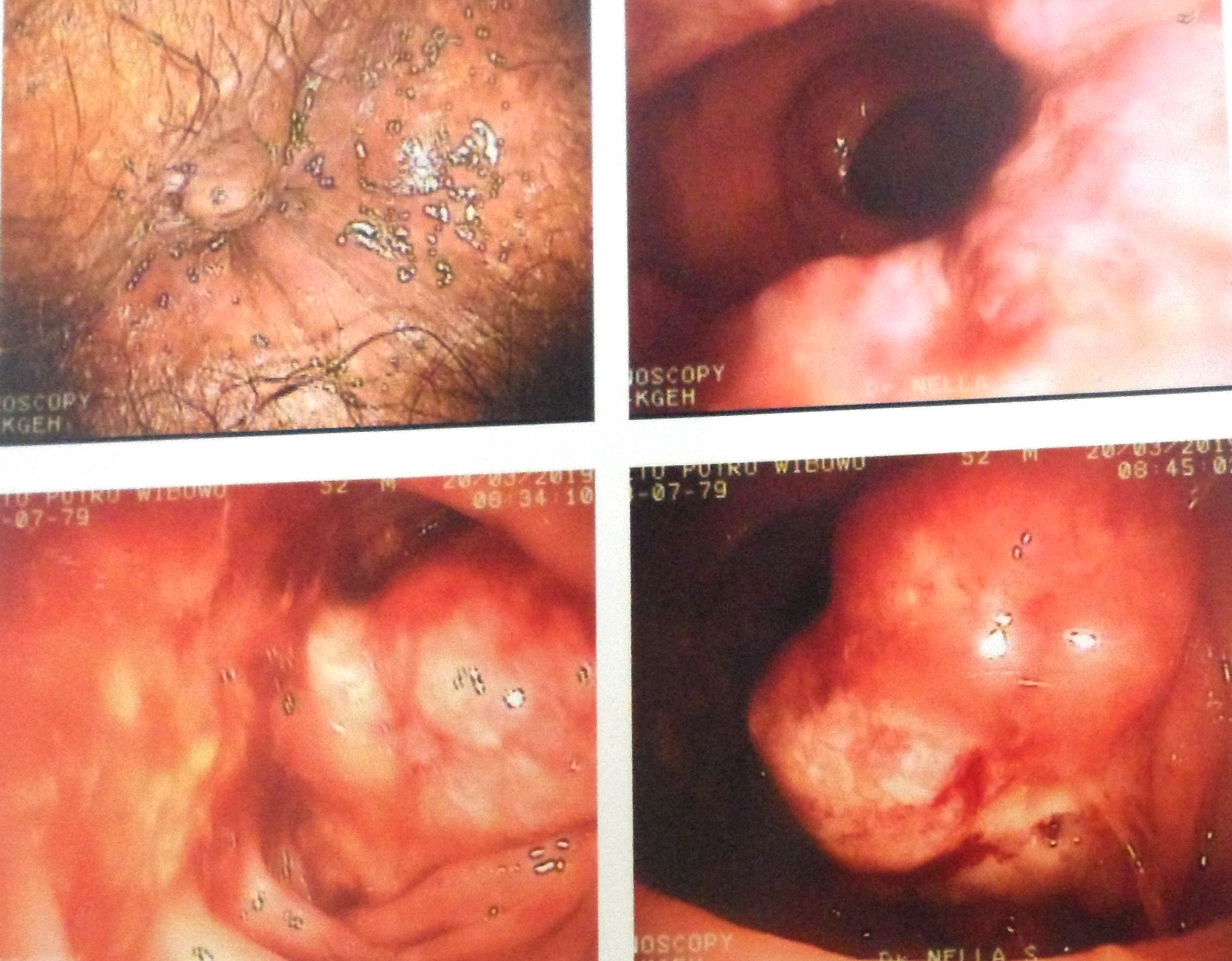
A colonoscopy indicated tumour in his colon.

A CT scan done on 20 March 2019 showed gallstones, in addition to a tumour in the colon.  SPW underwent surgery to remove the mass in his colon and the gallbladder stones.

Pathology report confirmed cancer,  adenocarcinoma, pT3NxMx.

After the surgery, SPW was sent home without further treatment.

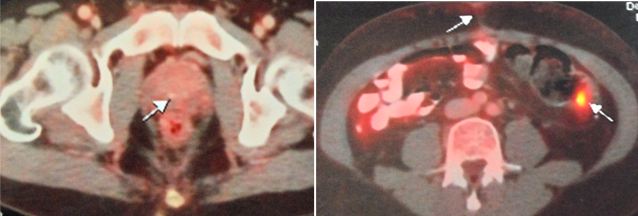
About two months later (Jun 2019), a PET scan was done. The result showed the cancer had recurred at the previous operation site. There was NO spread to the liver, lung, lymph nodes or bone.

PW underwent 6 cycles of chemotherapy, at a private hospital in Jakarta. The chemo was given every two weeks. The regimen used was FOLFOX-4, consisting of  Eloxatin (or oxaliplatin) + 5-FU + Leucovorin (folinic acid).

About five months later, in November 2019, another PET was done. The results were disappointing.

  1. The doctor suspected the cancer had spread to the liver.
  2. Metabolic activity of the recurrent mass in the colon was less intense but the cancer did not go away.
  3. PET scan showed reactive lymph node.

The oncologist asked SPW to undergo more chemotherapy but he refused further treatment. Why?

SPW said he suffered severe side effects during the chemo.

  • He lost 15 kg of body weight within that few months of treatment.
  • He was depressed.
  • He suffered severe fatigue.
  • He lost his appetite.
  • He could not sleep at night, and had to take sleeping pills.
  • His fingers were numb.
  • He had difficulty walking.

Current condition: He has to urinate four times during the night.

Case 2: Wongso is a 67 year-old from Medan. In March 2018 he passed out stools with blood. A colonoscopy was done in a hospital in Medan. There was a mass in his colon.

Wongson underwent an operation to remove the tumour in his colon in April 2018. The pathology report confirmed cancer – adenocarcinoma, pT4N1Mx. One of the two lymph nodes was affected. A CT scan on 9 May 2018, showed the cancer had spread to his liver.

Wongso underwent chemotherapy at the government cancer hospital in Jakarta. He received 6 cycles of chemotherapy. The regimen used was FOLFOX-4,  consisting of oxaliplatin, folinic acid and 5-FU.

A CT scan on 5 September 2018 showed that the tumour in his liver had shrunk from 2.49 cm to 2.06 cm. But it did not go away.

Wongso was prescribed an oral drug – Xeloda. He took the pill for two weeks followed by a week of rest. This constitutes a cycle. Wongso took a total of 12 cycles of Xeloda. His CEA was initially at 2.6 but this increased to 79.8 in November 2019.

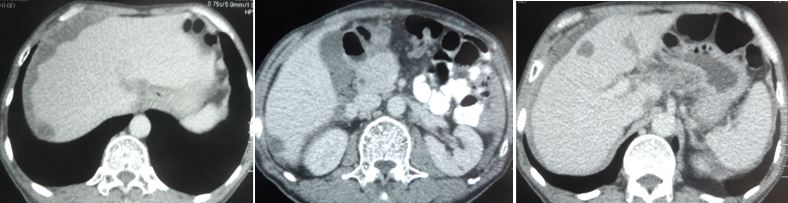
CT scan on 29 October 2019 showed:

  • Mild ascites around the liver.
  • Multiple cyst in both lobes of liver.
  • Fractured compression at L4 vertebrae.

In spite of this failure, the oncologist still insisted that Wongso continues to take the Xeloda. Wongso was still on Xeloda when he came to seek our help. His complaints were: stomach pain, probably due to “wind”. He moved his bowels 3 to 4 times a day. He had to urinate 3 to 4 times each night.

Comments

The standard treatment recipe for colon cancer is: surgery, chemotherapy and oral drug such as Xeloda. Sometimes patient is also asked to go for radiotherapy before surgery. This is the cases where the tumour is too large.

If you have cancer, you have to go through these treatments no matter where you are – in the most famous  and expensive hospital or in just any ordinary cancer hospital. Yes, you need to undergo this so called proven method of treatment. But, the question you need to ask is: does this proven and scientific method of treatment works for you? I cannot answer that question! But if you come to see after being diagnosed with colon cancer, my only advice is to go for surgery to remove the tumour, that is if the cancer has not spread extensively elsewhere. If there is a widespread metastasis, the value of surgery is questionable. So, that is as far as I would go. In fact, after I met with the two patients above, the next day, there was another Indonesian who also had colon cancer. He has not undergone any treatment yet. My advice to him was: Go and have the tumour removed. Go to this surgeon X in Hospital Y in Kuala Lumpur. He is a good doctor. I think he would be able to help you.

Looking back over the past twenty plus years helping colon cancer patients, I could recollect many sad experiences. In the early years, I have a few patients who underwent chemotherapy with 5-FU after surgery. At that time the only drug deemed effective was 5-FU. One patient went all the way to Sydney for his 5-FU treatment.  He died while undergoing the treatment. Then there was this building contractor. He too had colon cancer and underwent chemotherapy after his surgery. He did not make it. Before he died he told his daughter to not forget CA Care and she should try to help us whenever we need to do any renovation work. Over the years, I lost many good friends.

Now, the chemo regimen for colon cancer has been “updated.” In the case of SPW and Wongso, the oncologists treated their colon cancer using FOLFOX-4 regimen, which consists of a combination of  fluorouracil, leucovorin, and oxaliplatin.

In fact, besides FOLFOX, there are other variations such as:

  • FOLFIRI – consisting of folinic, 5-FU and irinotecan.
  • CAPOX – consisting of capecitabine or Xeloda and oxaliplatin.
  • XELOX – consisting of Xeloda (trade name) and oxaliplatin.

If you study the above carefully, these are merely different combinations of the same five drugs below:

  • 5-FU.
  • Folinic acid or
  • Oxaliplatin
  • Irinotecan
  • Capecitabine or Xeloda.

One important question which most patients want to ask is: Can chemotherapy cure colon cancer? Or What is the success rate of chemotherapy for colon cancer. I tried to search the answers from the internet and these are what I got.

  • Chemotherapy is used after surgery in many colon cancers which are stage 2, 3, and 4. It has been shown that it increases the survival rates. This is not the case in stage I cancers, and therefore chemotherapy is rarely used in this setting. The vast majority of stage I cancers are cured with surgery alone.
  • Although clinical trials have demonstrated that adjuvant chemotherapy improves survival for stage-III colon cancer, the benefits remain controversial for stage-2 lesions. Stage-2 colon cancer patients receive adjuvant chemotherapy despite its uncertain benefits.
  •  Surgery is the primary curative modality in 70–80% of colon cancer patients who present with a non-metastatic disease. However, recurrence is common and is seen in nearly 30% of stage 3 cases after 5 years.
  • Nearly a quarter of all colon cancer cases are stage 3 at diagnosis.
  • Chemotherapy does not cure metastatic colorectal cancer, but it can improve symptoms and prolong life. 
  •  Upon diagnosis, 20% of newly diagnosed colorectal cancer patients present with metastatic disease (Stage 4) with no curative treatment options currently available. 
  • The overall five-year relative survival of colorectal cancer patients in the US is 64% and in England it is 50.7%.
  • Below is the survival rate in England, based on the stage of disease at diagnosis.
Stage at diagnosis Number of cases 5-year relative survival (%)
Dukes A / Stage 1 26,727 93.2
Dukes B / Stage 2 74,784 77.0
Dukes C / Stage 3 72,806 47.7
Dukes D / Stage 4 28,377 6.6


  • The above data are obtained with patients in the US and England. We need to take note that survival rate does NOT mean cure. Unfortunately many patients are told that if they can live five years and more you are considered “CURED”. Unfortunately this is a wrong advice.
  • Take note also that the above result need not apply to you. You may respond differently from these people. The above result should be treated as just an indicator of what can happen to you.
  • In summary, if you are diagnosed with advanced or Stage 4 cancer, you chance of survival is probably 10 to 15%, no matter what you do. On the other hand, if you have a Stage 1 cancer, you don’t need chemotherapy at all after surgery. Even for Stage 2 cancer, chemotherapy is of doubtful benefit.
  • Overall, that data tells that for colon cancer, you have a 50:50 chance with chemotherapy if your cancer is at Stage 3.

Most patients believe that surgery and chemotherapy can cure their cancer. Unfortunately this is often not the case. In the case of SPW and Wongso, were they ever told the truth about their chances? Unfortunately, they had to learn the hard way.