Are Medical Bills Killing Patients?

Again please?

Medical bills are killing patients?

Yes, medical bills are killing you!

Do I hear it right?

Medical bills are killing you?

But I am sick! Should it not be the disease that is killing me?

You bet!

Times Magazine of 20 February 2013, carried a lengthy article by Steven Brill: Bitter Pill – Why Medical Bills Are Killing Us. I printed out this article – there are 46 pages in all!

You can read the original article here: http://healthland.time.com/2013/02/20/bitter-pill-why-medical-bills-are-killing-us/#ixzz2MjdpIcGO

These are some mind-boggling things that are happening in the hospitals in America today (passages extracted from the said article).

  • 1. Initial Lymphoma Treatment at MDA: $83,900 (approx: RM 251,700)

Sean Recchi, 42-year-old, was diagnosed with non-Hodgkin’s lymphoma. He went to MD Anderson (MDA) Cancer Center in Houston, Texas.

  • Just to be examined for six days so a treatment plan could be devised:  $48,900 to be paid in advance.
  • Sean’s treatment plan and initial doses of chemotherapy was $83,900.
  • Every time a nurse drew blood, the charge was $36.00, accompanied by charges of $23 to $78 for each of a dozen or more lab analyses performed on the blood sample. In all, the charges for blood and other lab tests done amounted to more than $15,000.
  • An injection of 660 mg of a cancer wonder drug called Rituxan was $13,702.
  •  “ALCOHOL PREP PAD” $7 each. This is a little square cotton used to apply alcohol to an injection area. A box of 200 can be bought online for $1.91.
  • Room charge:  $1,791-a-day.

Sean Recchi’s dose of Rituxan cost the Biogen Idec–Genentech partnership as little as $300 to make, test, package and ship. MD Anderson paid  $3,000 to $3,500 for this medicaton, whereupon the hospital sold it to Recchi for $13,702.

As 2013 began, Recchi was being treated back in Ohio because he could not pay MD Anderson for more than his initial treatment. As for the $13,702-a-dose Rituxan, it turns out that Biogen Idec’s partner Genentech has a charity-access program that Recchi’s Ohio doctor told him about that enabled him to get those treatments for free.

2.  False Alarm due to Indigestion: $21,000 (approx: RM 63,000)

Janice is a 64-year-old former sales clerk. She felt chest pains. She was brought by an ambulance to the emergency room at Stamford Hospital about four miles awa. After about three hours of tests and some brief encounters with a doctor, she was told she had indigestion and sent home. That was the good news. But the bad news were her medical bills …

  • The ambulance ride (four miles) came to $995.
  • $3,000 for the doctor and
  • $17,000 for the hospital.
  • In total she had to pay $21,000 for a false alarm.
  • An “NM MYO REST/SPEC EJCT MOT MUL” was billed at $7,997.54. That’s a stress test using a radioactive dye that is tracked by an X-ray or CT scan.
  • An additional $872.44 just for the dye used in the test.
  • The cardiologist in the emergency room gave Janice a separate bill for $600 to read the test results on top of the $342 he charged for examining her.

The regular stress test patients are more familiar with, in which arteries are monitored electronically with an electrocardiograph, would have cost far less — $1,200.

Stamford probably paid about $250,000 for the CT equipment in its operating room. It costs little to operate, so the more it can be used and billed, the quicker the hospital recovers its costs and begins profiting from its purchase. According to a McKinsey study of the medical marketplace, a typical piece of equipment will pay for itself in one year if it carries out just 10 to 15 procedures a day. That’s a terrific return on capital equipment that has an expected life span of seven to 10 years. And it means that after a year, every scan ordered by a doctor in the Stamford Hospital emergency room would mean pure profit, less maintenance costs, for the hospital. Plus an extra fee for the doctor.

The costs associated with high-tech tests are likely to accelerate. McKinsey found that the more CT and MRI scanners are out there, the more doctors use them. In 1997 there were fewer than 3,000 machines available, and they completed an average of 3,800 scans per year. By 2006 there were more than 10,000 in use, and they completed an average of 6,100 per year. According to a study in the Annals of Emergency Medicine, the use of CT scans in America’s emergency rooms has more than quadrupled in recent decades.

The dynamics of the medical marketplace seem to be such that the advance of technology has made medical care more expensive, not less. First, it appears to encourage more procedures and treatment by making them easier and more convenient.

  • 3. A Fall Cost Her $9,400 (approx: approx: RM 28,200) in Medical Bills

Emilia Gilbert is a school-bus driver.  In June 2008 she slipped and fell on her face one summer evening in the small yard behind her house. Her nose was  bleeding heavily and she was taken to the emergency room at Bridgeport Hospital. Gilbert said: I was there for maybe six hours, until midnight and most of it was spent waiting. I saw the resident for maybe 15 minutes, but I got a lot of tests. In fact, Gilbert got three CT scans — of her head, her chest and her face.

  • The CT bills alone were $6,538.
  • A doctor charged $261 to read the scans.
  • Gilbert’s total bill was $9,418 (approx. RM 28,200).

4. One-Day Outpatient Bill, $87,000 (approx: RM 261,000)

Steve, a blue collar worker, was in his 30s at the time and worked at a local retail store. He spent the day at Mercy Hospital in Oklahoma City getting his aching back fixed. He was told that a stimulator would have to be surgically implanted in his back. The good news was that with all the advances of modern technology, the whole process could be done in a day.

  • The Medtronic stimulator cost  $49,237.
  • Basic medical and surgical supplies was $7,882.
  • Bacitracin cost $108. This is a common antibiotic ointment.
  • His total bill was $86,951 (approx. RM 261,000).

Steve ’s bill for his day at Mercy contained all the usual and customary overcharges.

  •  “MARKER SKIN REG TIP RULER” for $3. That’s the marking pen, presumably reusable, that marked the place on Steve’s back where the incision was to go.
  •  “STRAP OR TABLE 8X27 IN” for $31. That’s the strap used to hold Steve onto the operating table.
  • Yet another item, “BLNKT WARM UPPER BDY 42268” for $32. That’s a blanket used to keep surgery patients warm. It is, of course, reusable, and it’s available new on eBay for $13.
  • “GOWN SURG ULTRA XLG 95121” for $39, which is the gown the surgeon wore. Thirty of them can be bought online for $180.

5. Medical Treatment for Stage 4 Lung Cancer: $902,452  (approx: RM 2.2 million)

This is a case of Steven and his wife Alice. Alice makes about $40,000 a year running a child-care center in her home. In January 2011, Steven was diagnosed with Stage 4 lung cancer. The couple knew that they were only buying time now. The crushing question was: How much is time really worth?

Steven died after 11 months of medical treatment at Seton Medical Centre in Daly, California. His wife, Alice had collected his medical bills totaling $902,452 (approx: RM 2.2 million). Alice said:  [Steven] kept saying he wanted every last minute he could get, no matter what. But I had to be thinking about the cost and how all this debt would leave me and my daughter.

Among the items charged in the bills were:

  • $18 each for 88 diabetes-test strips that Amazon sells in boxes of 50 for $27.85;
  • $24 each for 19 niacin pills that are sold in drugstores for about a nickel apiece.
  • Four boxes of sterile gauze pads for $77 each.
  • Intensive-care unit for two days at $13,225 a day.
  • 12 days in the critical unit at $7,315 a day and
  • Total room charges totaled $120,116 over 15 days.
  • $20,886 for CT scans and
  •  $24,251 for lab work.

As 2012 closed, Alice had paid out part of the bills and still owed $142,000 —I think about the $142,000 all the time. It just hangs over my head, she said in December. One lesson she has learned, she adds: I’m never going to remarry. I can’t risk the liability.  In early February, Alice told TIME that she had recently eliminated most of the debt through proceeds from the sale of a small farm in Oklahoma her husband had inherited.

  • 6.  Pneumonia Treatment for $474,064 (approx: RM 1.42 million)

Rebecca and Scott are both in their 50s. On March 4, Scott started having trouble breathing. By dinner time he was gasping violently as Rebecca raced him to the emergency room at the University of Texas Southwestern Medical Center. Both Rebecca and her husband thought he was about to die, Rebecca recalls.

Scott was in the hospital for 32 days before his pneumonia was brought under control. Rebecca recalls that “on about the fourth or fifth day … the medical bill was over $80,000! When Scott checked out, his 161-page bill was $474,064.

  • The top billing categories were $73,376 for Scott’s room ( at $2,293 a day).
  • $94,799 for “RESP SERVICES,” which mostly meant supplying Scott with oxygen and testing his breathing and
  • $134 per day  for supervising oxygen inhalation
  • “SODIUM CHLORIDE  9%”  cost  $84 to $134. He used dozens of this. That’s a standard saline solution probably used intravenously in this case to maintain Scott’s water and salt levels. (It is also used to wet contact lenses.) You can buy a liter of the hospital version (bagged for intravenous use) online for $5.16.
  • $132,303 charge for “LABORATORY,” which included hundreds of blood and urine tests ranging from $30 to $333 each.
  • $24 per 500-mg tablet of niacin. In drugstores, the pills go for about a nickel each.

7.  Immune Booster Shot That Cost $ 7,346 (Approx: RM 22,000) Every 6 Weeks

About a decade ago, Alan  was diagnosed with non-Hodgkin’s lymphoma. He was 78, and his doctors in New Jersey told him there was little they could do. Through a family friend, he got an appointment with one of the lymphoma specialists at Sloan-Kettering. That doctor told Alan he was willing to try a new chemotherapy regimen on him. The treatment worked.  A decade later, Alan is still in remission. He now travels to Sloan-Kettering every six weeks to be examined by the doctor who saved his life and to get a transfusion of Flebogamma, a drug that bucks up his immune system.

  • Sloan-Kettering’s bill for the transfusion is about $7,006.
  • In addition he had to pay the doctor $340 for a session.
  • Each  visit cost a total of $7,346.
  • Assuming eight visits (but only four with the doctor), that makes the annual bill $57,408 (This is approximately RM 172,224) a year to keep Alan alive.

Two basic Sloan-Kettering charges are $414 per hour for five hours of nurse time for administering the Flebogamma and a $4,615 charge for the Flebogamma.

According to Alan, the nurse generally handles three or four patients at a time. That would mean Sloan-Kettering is billing more than $1,200 an hour for that nurse.

Flebogamma’s Profit Margin:  Made from human plasma, Flebogamma is a sterilized solution that is intended to boost the immune system. Sloan-Kettering buys it from either Baxter International in the U.S. or a Barcelona-based company called Grifols.

  • The Flebogamma dose for Alan — “can’t cost them more than $200 or $300 to collect, process, test and ship.”
  • Sloan-Kettering bought this dose from Grifols for $1,400 or $1,500 and charged Alan $4,615 for it!

These are some questions posed by the author:

  • What are the reasons, good or bad, that cancer means a half-million- or million-dollar tab?
  • Why should a trip to the emergency room for chest pains that turn out to be indigestion bring a bill that can exceed the cost of a semester of college?
  • What makes a single dose of even the most wonderful wonder drug cost thousands of dollars?
  • Why does simple lab work done during a few days in a hospital cost more than a car?
  • And what is so different about the medical ecosystem that causes technology advances to drive bills up instead of down?

Read more: http://healthland.time.com/2013/02/20/bitter-pill-why-medical-bills-are-killing-us/#ixzz2MjdpIcGO

My Last Word

This is American – the land where people have great dreams!  In the 1970s, I did my Ph.D. in that great country with the generosity of the US government. Then my two children went to the US to do their Ph.Ds – also courtesy of the American people.  Thank you!

America is a great country – to study and to work in, but it sadden me to know that it is not a great country for the sick – especially if one is not adequately covered by medical insurance as this article tells us.  In my next article on medical bankruptcy the situation is even more depressing.

You may ask me why I try to poke my nose into the “domestic” affairs of the US.  The reality is, what is happening in the US today can also happen in this part of our world! Better that we know now what is going on and be well prepared for a rude shock!

One patient with pancreatic cancer went to see an oncologist. She spent about 10 minutes consulting him and was charged S$700 (that is RM 1,700 – the pay of an average worker for a month!). What was she told during that ten-minute-encounter? Read her story here: https://cancercaremalaysia.com/2012/05/29/part-1-an-encounter-with-an-oncologist-a-great-disappointment/

But S$700 is already cheap! Read this story: Breast cancer: She died even after a multi-million dollar medical bill  https://cancercaremalaysia.com/2011/03/01/breast-cancer-she-died-even-after-multi-million-dollar-medical-bill/

The question under discussion is, what is a fair and reasonable fee a renown doctor can charge his/her patient? These are the figures given by the various medical doctors of Singapore:

  • Dr. Hong Ga Sze  said a reasonable daily fee is $1,000 to $2,000 per day.
  • Dr. Tan Yew Oo, oncologist at Gleneagles Cancer Centre said $10,000 to $20,000 per day.
  • Professor Soo Khee Chee, head of the National Cancer Centre said $100,000 a day is fine and agreed that on a day Dr. Susan Lim could have charged as much as $450,000 per day.

The husband of a patient spent about 2 billion rupiahs for the treatment of his wife’s cancer without success. During our conversation he told me that he was billed S$120 (RM 300) each time his wife sat on the chair in the clinic to receive the chemotherapy drip.

You can read more stories here:

  1. Fancy gadget and half a million ringgit failed to cure her https://cancercaremalaysia.com/2011/01/29/breast-cancer-fancy-gadget-and-half-a-million-ringgit-failed-to-cure-her-%E2%80%93-what-now/
  2. She almost died after spending two billion rupiahs on chemotherapy in Singapore https://cancercaremalaysia.com/2011/12/27/utero-ovary-lungs-cancer-part-1-she-almost-died-after-spending-two-billion-rupiahs-on-chemotherapy-in-singapore/
  3. Surgery-27 cycles of chemo and S$100,000 did not cure her https://cancercaremalaysia.com/2012/01/11/colon-lung-cancer-surgery-twenty-seven-cycles-of-chemo-and-sgd-100000-did-not-cure-her/

Let me close with this quotation by Daniel Taylor:  Medical tyranny is here, and we can’t say we weren’t warned http://www.oldthinkernews.com/2012/11/benjamin-rush-medical-freedom/  Benjamin Rush, one of the signers of the Declaration of Independence, warned in 1787 that medical freedom needed to be included in the American Constitution. Without this protection, Rush warned that the medical establishment would naturally progress – as many of mankind’s institutions do – into an oppressive dictatorship. His words, echoing from over 200 years ago, ring strikingly true today: The Constitution of this Republic should make special provision for medical freedom. To restrict the art of healing to one class will constitute the Bastille of medical science. All such laws are un-American and despotic. … Unless we put medical freedom into the constitution the time will come when medicine will organize into an undercover dictatorship and force people who wish doctors and treatment of their own choice to submit to only what the dictating outfit offers.

Breaking News

As I was about to post this article, someone sent me the link to this article: 

NY, NJ AREA CARDIOLOGIST ADMITS RECORD $19M FRAUD

NEWARK, N.J. (AP) — A cardiologist with offices in New York and New Jersey has admitted taking part in a scheme that subjected thousands of patients to unnecessary tests and treatment and resulted in $19 million in bogus bills, what authorities call the largest case of health care fraud ever by a practitioner in either state.

Read more: http://hosted.ap.org/dynamic/stories/U/US_CARDIOLOGIST_MASSIVE_FRAUD?SITE=AP&SECTION=HOME&TEMPLATE=DEFAULT


Part 1: The High Cost of Staying Alive in a Private Hospital

This case study consists of three parts.

Part 2: Eleven to Nineteen Drugs A Day Could Not Cure Her – Rather Die Than Suffer More   

Part 3:The Last Option: CA Care Therapy After Chemotherapy Had Failed

This is a tragic story of MS, a single, 41-year-old lady from Jakarta.

In early May 2012, MS felt uncomfortable in her abdomen. She felt something moving inside. She went to see an internist in Jakarta. A blood test showed elevated CA 125 – more than 1400. MS was asked to go and see a gynaecologist. A ultrasound was done and the gynecologist told her to go home and pray. She was told consult an oncologist. MS went to see a doctor who treated her with semi—chemo injection.

I was rather curious and enquired more about this treatment! This treatment was provided by a “retired” medical doctor who sees many patients a day. MS was given a concoction of “semi-chemo’ injection every day for two months. For her diet, MS was allowed to take only broccoli juice, egg white (albumin) – 12 eggs a day (4 eggs, thrice a day), banana and pears. MS felt better for the first month of treatment. But in the second month she felt the food rather boring. Her abdomen became bloated.  In short, her condition worsened.

MS and her elder sister (MM) came to a private hospital in Penang for treatment in mid-August 2012. She stayed two weeks in Penang and received two cycles of chemotherapy.  She went home to Jakarta but did not get any better.

After three days in Jakarta her condition deteriorated (drop!) She was admitted into a hospital in Jakarta due to low albumin. Her abdomen became bigger in size.

On 28 August 2012 MS and MM came back to Penang again and was admitted into the same private hospital.  And she has been in this hospital up to this day – almost one and a half months.  While in Penang she received seven cycles of chemotherapy. According to MM, the family had already spent RM 100,000 but the patient was not getting any better – in reality MS’s condition had worsened.

Since the current chemo regimen failed, the oncologist suggested switching to another regimen consisted of Caelyx and Topotecan. She was told that this would not cure her, but could prolong her life by about six to eight months. This information shocked MM and triggered here to try and look for another option. MM told me that after a short prayer that night she went off to sleep. The next morning she went to the internet and searched for kanker ovarium. This was her first attempt to find information for herself.  There she found CA Care on the YouTube.

MM came to see us on 16 October 2012. She brought along a stack of medical bills but not much medical reports!

From her medical bills, I get to learn many things about staying in a private hospital.

1.  It is not cheap to stay alive

The total cost for a 41-day-stay in a private hospital in Penang is almost RM 86,000. This works out to about an average of RM 2,000 per day.

Daily Cost in Hospital RM (Ringgit Malaysia)
28 August 2012 3,932.70
29 August 2012 1,568.50
30 August 2012 1,436.20
31 August 2012 1,590.80
1 September 2012 2,065.20
2 September 2012 1,917.50
3 September 2012 2,006.00
4 September 2012 1,355.70
5 September 2012 1,723.90
6 September 2012 1,804.30
7 September 2012 1,609.80
8 September 2012 1,663.00
9 September 2012 1,618.30
10 September 2012 1,859.60
11 September 2012 2,459.80
12 September 2012 1,592.50
13 September 2012 1,220.50
14 September 2012 2,999.70
15 September 2012 1,264.50
16 September 2012 1,531.50
17 September 2012 1,178.00
18 September 2012 4,000.80
19 September 2012 2,389.80
20 September 2012 1,479.50
21 September 2012 4,041.70
22 September 2012 2,055.30
23 September 2012 1,856.60
24 September 2012 3,016.20
25 September 2012 2,826.20
26 September 2012 2,312.20
27 September 2012 3,036.10
28 September 2012 2,642.50
29 September 2012 2,164.60
30 September  2013 2,038.50
1 October 2012 2,108.10
2 October 2012 2,922.70
3 October 2012 2,605.40
4 October 2012 1,418.70
5 October 2012 1,664.80
6 October 2012 1,394.20
7 October 2012 1,014.40
Total cost of 41 days in hospital       85,386.30
Average cost  of hospital per day  2,082.59

 2.  The Most Expensive and Cheapest Seven Days in Hospital

At certain days the cost could be as high as RM 4,000 and the cheapest day is about RM 1,000

The most expensive 7 days in hospital  
21 September 2012 4,041.70
18 September 2012 4,000.80
28 August 2012 3,932.70
27 September 2012 3,036.10
24 September 2012 3,016.20
14 September 2012 2,999.70
2 October 2012 2,922.70
The cheapest 7 days in hospital  
4 October 2012 1,418.70
6 October 2012 1,394.20
4 September 2012 1,355.70
15 September 2012 1,264.50
13 September 2012 1,220.50
17 September 2012 1,178.00
7 October 2012 1,014.40

 3. What Makes A Hospital Stay Expensive?

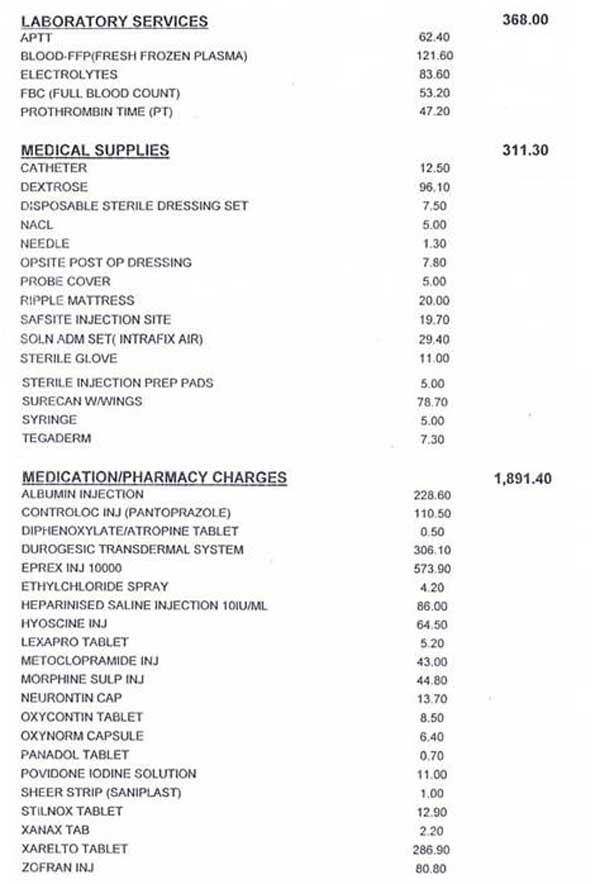
The cost of a hospital stay consist of: room charge, doctors’ fees, nursing care, laboratory services, medical supplies, medication / pharmacy charges, procedures – dressing or nursing, X-ray and CT scan charges.

Laboratory services RM (Ringgit Malaysia)
CA 125 85.20
CA 19.9 85.20
Full blood picture 53.20
Liver Function Test 47.20
Creatinine 39.60
Prothrombin time (PT) 47.20
Cancer Treatment Monitoring Profile 220.40
Blood-screening and processing 304.00
Blood transfusion 100.00
 Imaging 
CT scan 880.00
X-ray Charges 800.00
Professional Services 
Doctor attendance fee 80.00
Dietetic for follow up 35.00
Nursing care 60.00
 Lodging & Physical Facilities
Lodger 20.00
Room – single 310.00
Regular meal – single room 60.00
Clinical waste 10.00
Ripple mattress 20.00

 4.  The Week of Chemotherapy in Hospital

The Week of Chemotherapy  
18 September 2012 4,000.80
19 September 2012 2,389.80
20 September 2012 1,479.50
21 September 2012 4,041.70
22 September 2012 2,055.30
23 September 2012 1,856.60
24 September 2012 3,016.20
Total cost for the week 18,839.90


On 18 September 2012 MS underwent chemotherapy.  The drugs used were Carboplatin and Intaxel (generic Indian paclitaxel). And these are the drugs that matters – trying to “kill” the cancer. Take note that the cost of Carboplatin and Intaxel are only RM 363.30 + RM 363.30. But the total cost for the day in hospital was RM 4,000.80. Just imagine, it would be most wonderful if Carboplatin + Intaxel were not toxic – treating cancer would be cheap and everyone could afford it! But the problem is, chemo drugs are toxic, i.e. poisonous! Because of that a lot of other drugs are needed to support and keep the patient alive! Study the details of the costs and types of drugs used for that day.

Itemised bill of 18 September 2012

After receiving the chemo injection, patients generally suffer side effects. Three days later the situation had probably become severe and the patient needed more support.  The total bill for the day shot up to RM 4,041.70. Then three days later, further support was needed and this time the bill came to RM 3,016.20

Itemised bill of 21 September 2012

Itemised bill of 24 September 2012

(For information on what these drugs are for, go to Part 2 of this story)

From the above, I learned that to administer a drug to “kill cancer” which costs only RM 363.30 + RM 363.30, patient had to spend more than RM 18,000 in the form of supporting drugs and services. Again I say, how nice it would have been if that RM363 + RM 363.30-chemo-drugs were not toxic to healthy cells. Then we don’t need all those supporting drugs and don’t have to incur all those additional costs.

Can someone “invent”, synthesize or make a drug for cancer that is entirely safe? Or it is AGAINST their vested interest to look into such a proposition? I am not naïve when I ask these questions.  Read the quotations below:

When you get into the hospital, know this ….

Pancreatic Cancer: Severe Pains and Died After PET Scan

Yoke (not real name, H-469) was a 54-year-old female. Sometime in October 2010, she had on and off pains in her abdomen. Later, the pains extended to her lumbar region. The pains deprived her of sleep. Yoke went to a private hospital for a checkup. Ultrasound, CT scan and blood tests were carried out.

Blood test showed CEA = 38.3 (high); CA 19.9 = 40,003.44 (high); Total bilirubin = 4.6 (low) and GGT = 72 (high).

Ultrasound done on 22 November 2010 showed: “hypoechoic lesion in the pancreatic body … measuring 5.8 x 4.4 x 2.6 cm. There are multiple, well-defined hypoechoic nodules in the liver – the largest seen in the right hepatic lobe, measuring 2.5 cm. Impression: pancreatic body hypoechoic mass is likely a neoplastic lesion with metastases in the liver.”

For confirmation, a CT scan was performed the next day, 23 November 2010. The report indicated: “hypodense mass on the body / tail of the pancreas – measuring approximately 6 x 3 cm. The second hypodense nodule … is also seen more distally in the pancreatic tail. There are a number of hypodense lesions in the liver – the largest lesions are in segment 8, measuring 2.5 cm each. Other lesions are in the caudate lobe, segment 7 and segment 5.

Impression: Carcinoma of the body and tail of pancreas with infiltration of the splenic vein, encasement of the roots of the portal vein and multiple hepatic metastases.

Surgery was not indicated in this case, since the cancer had already spread to her liver. The only option left was to undergo chemotherapy. Yoke was told that she needed to receive seven weekly cycles of chemotherapy. With such treatment, Yoke was told there would be a sixty percent chance of suppressing the cancer (whatever that means?). The oncologist also said that the smaller tumours would not spread after the chemo-treatment.

Yoke refused chemotherapy. She came to seek our help on 20 November 2010. She presented with the following:

  • Pain in the abdomen and lumbar region. She had to take the painkiller, Tramadol.
  • Unable to sleep if there were pains.
  • A bit tired.

She was prescribed Capsule A and B, LL-tea, Liver 1 and Liver 2 teas, Pancreas 1 and Pancreas 2 teas, and Pain Tea.

A week on the herbs: Yoke felt more “cheng sin” (more energetic). Her sleep improved. In the first four days taking the herbs, Yoke suffered the healing crisis. She had intense pains. But the pains gradually subsided and by the fifth day the pains were gone.

Two weeks on the herbs, 10 December 2010: Yoke informed us that she had totally stopped taking the Tramadol prescribed her doctor.  She did not have any more pains but she continued taking the Pain Tea. Her sleep was good. Her appetite improved.

Three weeks on the herbs, 17 December 2010: Yoke stopped taking the Pain Tea. And she did not suffer any pain. She said she was always felt hungry after taking the herbs. Our answer to this “problem” –  go ahead and eat!

Yoke appeared to be doing well with the herbs. She was then busy making arrangements for her daughter’s wedding. We did not get to see much of Yoke for some months even though we knew that she still continued taking our herbs.

About six months later, May 2011: Yoke came to our centre and she was in severe pains. Why and what had happened?

Yoke said her friend encouraged her to go for a PET scan in order to know what was going on inside her. After all she had been doing well. So Yoke went for a whole body PET/CT scan without seeking our advice. This procedure cost her RM 4,662.

Immediately after the procedure, Yoke suffered severe pains in her abdomen and lumbar region. It was back to the same old problem again.

Let Yoke explain what had gone wrong.

Our conversation

Chris: You went to do a PET scan?

Yoke: Yes and the doctor asked me to eat meat for two days.  I was told not to eat rice, fruits, juices and vegetables. I must eat only meat, egg, mushroom and porridge. I was asked to eat these for two days before I went for the scan.

Did he tell you why you need to do that?

So that the pictures would come out clearer.

Did you suffer after taking all these food?

Yes after I took meat, I started to have pains – more pains.

How much did you have to pay?

I put in RM 5,000 and I got back RM 338 (so the cost of her PET scan was RM4,662). If I knew  all these, I would not have gone for the scan. They asked me to eat meat for two days – damn it!

But why did you go and do it in the first place>

I have a group of cancer friends. They too went for PET scan. They told me CT scan is not clear and PET scan is clearer – you will know if the cancer is active or not.

So, you follow their advice?

Yes, I was real dumb and went for it.

There is no” meaning” for you to do that!

As you had said. I had pains after that and they could not “repair” me. I had more pains and I was also not able to sleep. More problems for me.

Daughter: They said the cancer had spread to the liver.

Yes, we already knew that anyway. And they asked you to take meat?

That was why the cancer became more active.

They Asked Me to Go for Chemotherapy

They asked me to go for chemo.  But the doctor said this was not going to cure me – only maintain. The doctor also said only 25 percent of patients who had chemo lived for two years. So I asked what happened to the remaining 75 percent – “went off”?  When the cancer recurs, I would need to do more chemo.  No, no – I told the doctor I do not want any chemo. When I told him that, he ignored me – not interested to talk to me anymore.

Let me ask you this – let’s assume that you have two years to live with chemo, and you only have one year if you take herbs. Why one would you choose?

I want to take herbs. May be I might just die sooner with the chemo. I told the doctor, “I might just die while undergoing chemotherapy.” He said, “No, no such thing. I would give you the drug bit by bit.” But I did not want to hear from him anymore.

She Died Soon Afterwards

After the PET scan, Yoke had pains and these got worse by the day. She was unable to sleep or walk by herself, and became weaker. Her stomach was bloated and she was in severe pain. Finally she died not long afterwards.

Information about PET scan from the Internet

  • X-ray, CT scan and MRI show the anatomy and structure of the organs examined. In contrast, PET scan reveals the metabolic activity and function of the organs. So, X-ray. CT and MRI scans assess the size and shape of different organs in the body. They do not assess function. While a PET scan looks at the body or organ function.
  • When we go for an X-ray, x-rays are generated from a machine and these rays go through our body and an image is formed on a film. In PET scan a radioactive material, called a radiopharmaceutical or radiotracer, is injected into our bloodstream. The commonly used radiotracer is fluorodexoyglucose (FDG). This is a glucose molecule which has been tagged with a small amount of radioactive element. The radioactive glucose is taken up by cancer cells. Tissues that are active accumulate a large amount of the radiotracer and they show up as “hot spots.” Thus, hot spots indicate high level of chemical or metabolic activity. Less intense areas, or “cold spots,” indicating a smaller concentration of radiotracer and less chemical activity.
  • PET scan is now considered a new technology. It helps doctors to locate the presence of cancer/infection anywhere in the body. Because cancers are multiplying and require energy for growth, PET scan is designed to detect any mass that is growing fast. The PET scan can also detect the spread of cancer in other parts of the body.

Do you learn any lesson from Yoke’s story?

Yoke learnt her lesson the hard way. Unfortunately it was too late. But can you learn any lesson from Yoke’s experience?

Ask these questions:

  1. The doctor asked Yoke to eat meat, eggs, etc., so that the “picture” will come out clear and nice? Do you know the reason for this after reading the information above? Was he not trying to “wake up the sleeping cancer cells” to make good pictures? It is good for him but this caused more harm to the patient.
  2. What is the “useful” purpose of doing the PET scan anyway – in this case?
  3. To have supportive friends is great but some can lead you to your doom. So before you embark on something, read first. If you cannot read – ask those who really know! 

Reflect on the quotations below:

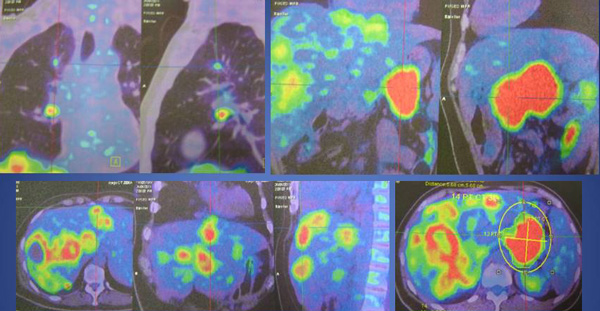
When the Results of PET and CT Scans Do Not Tell the Same Story

About a year ago, a lady from a neighbouring country urgently flew to see me. She came to discuss the CT scan results of a VIP (very important personality).  The CT scan clearly stated that this VIP had tumours in his lungs and liver. His doctor suggested immediate surgery. This lady wanted my advice.

Just to be on the safe side, I suggested that it might be a good idea to know the extent of possible metastases – if at all there is any spread – before undergoing surgery. Towards this end, I suggested that he goes for a PET scan. At that time, my impression was that the PET is the state-of-the-art imaging procedure. It is more accurate and reliable than the CT scan.

After a few days, I was informed by phone that the PET done did not show any malignancy – no cancer!  Nevertheless, I hesitated to believe the result. At that time, I “interpreted” the message differently. I had the impression that this VIP wanted to avoid any dealing with me and therefore the only polite “save face” strategy was to tell me that there was no cancer. So he does not need my help anymore!

Some months later, I got to know through another person that this VIP had undergone a liver surgery. This planted the first seed of doubt in my mind about the reliability of PET scan.

Patient from Kelantan

In October 2011, I received a fax from a patient in Kelantan.  This 47-year-old male patient did a CT scan on 22 August 2011. The results indicated:

  • Three well-defined heterogenously hypodense small liver lesions in segments 2, 7 and 8. The largest in segment 2 measuring 0.7 x 1.0 cm. Foci of non-enhancing calcification seen in segment 8 with no mass effect, likely to represent old infection.
  • Small, well-defined lung nodule seen in the anterior segment of right upper lobe of 0.3 cm in diameter. A small pleural-based nodule is also seen in the posterior segment of left lower lobe measuring 0.3 cm in diameter.
  • Well-defined small sclerotic bony lesions see in at right acetabulum, left ilium and left neck of femur likely to represent bony island. Multilevel degenerative of the visualized spine.

Impression: Known case of sigmoid colon carcinoma with liver and lung metastases.

This same patient went to do a PET scan in Kuala Lumpur on 5 October 2011. The PET scan result indicated the following:

  • There is normal uptake in all the organs examined, in particular the colon, liver, lungs, lymph nodes, spleen, pancreas, kidneys, adrenal glands, brain and bones. There is no pleural effusion or ascites.

Impression: No malignant lesion is detected.

This was the second alarm bell. However, I did not take this episode to heart because the patient did not come to see me personally and I did not get to see the images of both the scans. As such I do not have any “solid” evidence to back up what I say – although I did have the faxed reports of both the procedures.

Patient from Penang

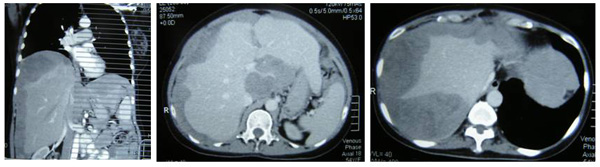
The third alarm bell – on 5 February 2012. A man came to our Centre with the medical reports of his wife who has ovarian cancer. She underwent surgery – TAHBSO (Total abdominal hysterectomy with bilateral salpingo-oophorectomy) – on 15 September 2010. This time I had the opportunity to examine the images of both the PET and CT scans.

Six months after the surgery, a PET scan was done at a private hospital in Selangor on 19 April 2011. 

Technique: PET scan was performed from the vertex of the skull to the thighs after intravenous administration of 8.5 mCi of F-18 Fluorodeoxyglucise (FDG). Oral gastrograffin, oral bromazepam and intra-venous lasix were given. Fasting blood glucose – 6.9 mmol/l/

Findings:

  1. Head – There is normal physiological localization of the FDG in the cerebrum and the cerebellum. The uptake and the distribution of the radiotracer in the posterior nasopharyngeal tissue, salivary gland and tonsils are within normal physiological limits.
  2. Neck –The thyroid gland displaces normal FDG upake. There is no FDG avid cervical lymphadenopathy. 
  3. Thorax – Normal FDG uptake is seen in both breasts. There is no FDG avid axillary lymphadenopathy, bilaterally. There is no FDG avid mediastinal lymphadenopathy. Thre is no pleural effusion seen.
  4. Abdomen – There is no suspicious FDG avid lesion see in the liver. U[take and distribution of the radiotracer in the gallbladder, spleen, adrenals, pancreas, kidneys and bowels are within normal physiological limits. There is no FDG avid abdominal lymphadeopathy. Ascites is not present.
  5. Pelvis – TAHBSO noted. There is no definite abnormal FDG lesion seen in the pelvic floor and vaginal stump. There are some superficial subcentimetre size non-FDG avid inguinal nodes which are likely to be reactive nodes. There is no FGD pelvic lymphadenopathy.
  6. Musculoskeletal – There is symmetrical FDG avid activity seen in the acromioclavicular joints bilaterally, probably due to imflammation. There is no suspicious FDG avid lesion seen in the visualized skeleton.

Conclusion;

  1. There is no evidence of residual hypermetabolic disease in the vaginal stump and pelvic floor.
  2. There is no evidence of hypermetabolic loco-regional or distant metastatic disease at present.
  3. Although there is no evidence of macroscopic disease at present, the presence of microscopic disease cannot be excluded.

The above report was signed by the Consultant Nuclear Medicine Physician.

Three months later, 25 July 2011, this same lady did an ultrasound of her abdomen and pelvis at the same private hospital in Selangor. The results indicated:

  • Mild ascites is seen.
  • A thick layer of lobulated parietal pleural masses are seen subdiaphragmatically, around the liver edges superiorly and laterally.
  • It measures up to 6 x 3.5 cm around segment 8 of the liver and 4.5 x3.7 cm superior to segment 2.
  • Intrahepatically, a hypoechoic nodule measuring 15 mm is noted in segment 3.
  • There are also intraperitoneal mesenteric deposit, measuring up to 3.6 x 2.8 cm in the right lumbar territory.
  • The uterus and ovary absent.

Impression: Extensive intraperitoneal metastases with ascites. Significant progression of the metastasis is seen.

On 16 November 2011, a CT scan of this same lady was done at a private hospital in Penang. The results indicated:

  • Extensive lobulated hypodense mass noted in the peritoneum and mesentery of upper abdomen.
  • The mass measured approximately 25 to 65 mm in diameter each.
  • The mass creep in between the diaphragm and the dome of the liver with marked subcapsular compression of liver.
  • Masses also noted in the lesser sac and the para-splenic space.
  • Moderate ascites.
  • Previous hysterectomy.

Impression: In view of the clinical history, features are consistent with relapsed of carcinoma of ovary with extensive peritoneal and omental metastasis.

Let me end with another story. There was this man who had stomach cancer. After surgery he came to seek our help and was started on the herbs. According to him, he felt good. He liked gardening and used to bring a lot of hot “cabai burung” whenever he came to our centre. He knew that I like hot chilly. One day this patient came and told us that he just had just done a scan and his doctor told him he had no more cancer – everything was clean. So he did not want to take any more herbs – after all the doctor said he was already cured! Although I did warn him that there is no such thing as a cure! No, his doctor’s words were more powerful and after all this was what every cancer patient wants to hear anyway.

A few months later, someone showed me his obituary in the newspaper. Besides learning that he was dead, I also learned that this man was a Datuk – a titled, respected personality in the community.

From the above stories, I learned that we can cause grave danger to patients by telling them things that they only want to hear. Or sending them for test that can give results that they are looking for –  of course, the more high-tech the equipment involved, the more convincing it would be.  So danger is not only confined to giving them the “wrong kind” of medication – the more toxic the more dangerous.

In this case the lady patient above had a choice – to believe that she had NO cancer after her surgery. What a great relief and welcoming news when the high tech state-of-the art technology similarly confirmed this belief. The lady also had another choice – to believe that surgery did not in any way cure her cancer and actually there were a lot more of the cancer cells left behind after the surgery! High tech gadget was unable to detect that but intuition and plain old-fashion experience is able to decipher that possibility.

Incidentally, while writing this article, I was also reading this humorous, oft-quoted all-time favorite book written by Dr. Oscar London, M.D., the pseudonym of an internist practising in Berkeley, California.