Lessons I Learned While Warded in the Hospitals! Part 5  Monitoring My Progress

Use of Free Style LibreLink

I have reminded my cancer patients – when you are getting well, let the healing process goes on.  Spend time to help yourself get well. Monitor your progress.

In my case, I have 3 things that need to monitor.

  • Blood glucose for my diabetes. Remember the first reading I had showed a glucose level of 20.5. My HbA1C was at 13.6% which was very high. Now, my blood sugar level is within normal range – without taking any mediation! What is going on?
  • Sodium level – my reading went down to a critical low level of 118. Now, it is okay after taking salt pills.
  • My blood pressure and cholesterol were also high.

I have never been admitted into the hospital for years, and I felt “uncomfortable” to think that the nurses would prick my finger with a needle to withdraw blood for testing. Doing it once a day is ok, but what if this done a dozen times a day? Would be unbearable? Scary.

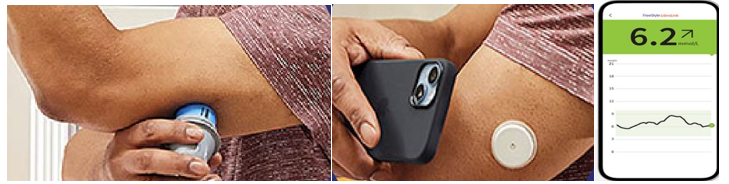
Fortunately, today we can buy a computer-link device which can be “installed” on the arm (see “white circular patch” below). You can use the handphone to monitor the glucose level anytime of the day and as many times as you like!  A great device indeed – discreet and convenient.
Discharged from the Hospital

After taking the drugs prescribed by the doctors for some days, I gave up on the drugs. This is because the drugs did not seem to bring any physical benefits to me. My physical conditions did not improve (or got worse?). You may say I am biased. OK, accepted!

Although I am a practising herbalist, be rest assured that I am not a dumb-narrow-minded person. I will give credit where credit is due. I started life as a scientist and I value and uphold genuine scientific data. This is the basic principle I always uphold when dealing with cancer patients.

Like in my case, my advice to anyone is. Go to the doctors / hospitals and find out exactly what is wrong with you (like I did in my case here). Do not go to the alternative medicine practitioners because most of the time, they may not get it right.

After knowing the cause of the problems, it is something else if you want to totally follow the doctor’s advice or not, with regards to the medications prescribed to you. Let this be your own personal decision after taking into consideration the effectiveness and side effects of the drugs.  Sometimes you need a lot of your own common sense to decide to accept anything that is fed to you.

Here are some brief notes of what happened to me after I started to gradually stop the doctor’s medications one by one.

  1. While on these medications I vomited quite often. What was the reason?
    1. After 4 days on Metformin, I stopped taking it. The vomiting subsided and eventually stopped.
    1. For 2 weeks, since my hospitalization, I was not able to move my bowels. On the night of 20 June, for the first time I started to take my herbal Constipation tea. To my surprise, the next morning I was able to move my bowels. I continued to take Constipation tea for a few more times and I was back to normal.
    1. On 21 June – the next medication to go was paracetamol. I was really concerned why I had to take so many paracetamols each day. I decided to try my luck with my Pain Tea (free of narcotics or pain drugs). Bravo, whatever little pain and discomforts I had disappeared by taking the Pain Tea.
    1. By 24 June, I was off most of the medications. The only one left was Sodium chloride. I continued to take this common salt for some more days before I fully stopped it

The Results that Matter!

One possible comment anyone would say is: Chris Teo, you are arrogant. You want to show off that you are “smarter” than the doctors. I am sorry, when it comes to trying to restore my own life, I don’t have to “show off”. Winning a brownie point just to boost my ego is not worth it. I am not a fool!

I must say it loud and clear, without taking those medications with ‘toxic” side effects, I was far better off. I could walk slowly by myself and had minimal discomforts. Is this not what you want?

With this comment, I wish to apologize to the doctors and nurses in the hospitals that I went to. I don’t mean to “insult” and be “ungrateful” to you all for helping me. I am sure my stay in the hospitals did help in my recovery in many other ways. Thank you, doc!

Let’s examine the data!

My wife used her handphone to record my glucose levels day and night. She ended up with “lots of boring” data which I believe no one is interested to know. It is more fun to watch TikTok la!

  1. Monitoring of glucose level

For a quick and easy understanding of the data collected, let me present the essence of my message in the form of slides below:
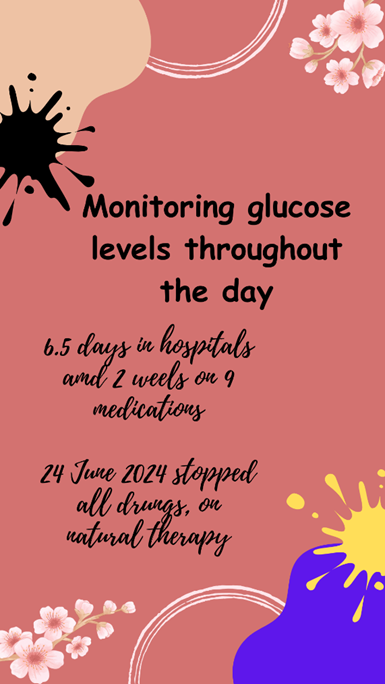
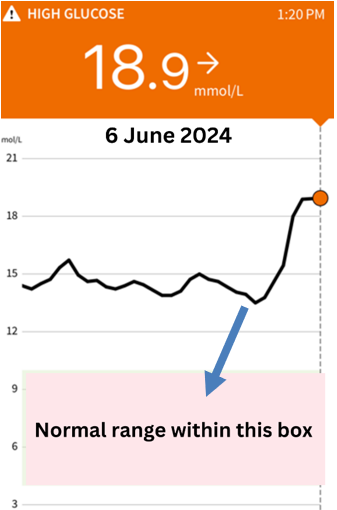
On 6 June 2024, my glucose level was very high, at 18.9 mmol/L.

Low or high blood glucose results can indicate a potentially serious medical condition. According to Freestyle LibreLink:

  • low glucose reading 3.9 mmol/L.
  • high glucose reading 13.9 mmol/L.

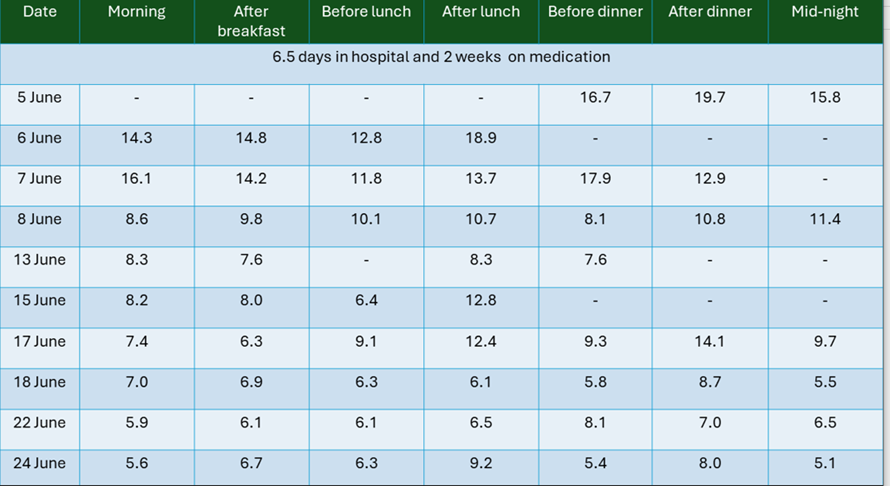
 After taking the medications prescribed for me, the blood situation gradually improved – the glucose dropped to 10.8 and 8.7 after 4 days.

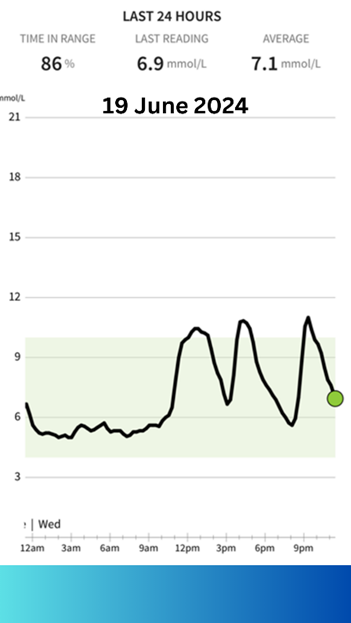
The situation improved further – the average glucose level dropped to 7.1 on 19 June; and eventually to 6.8 by 27 June, i.e. within the normal range.

In an individual, the glucose levels fluctuated from morning to mid-night within the body.
That is normal, provided the range is within normal limits. So it appeared that my diabetes was under control after taking the medications. So, why are you Chris Teo against taking the medicatons? Aare you trying to create a disharmony? My answer: I am more concerned with the side-effects the drugs. Five the  drugs prescribed have dangerous, documented side-effects. You may argue that this fear of side-effects are hived-up or an imagination of my mind.  Ok, I rest my case. Do what you think is right for you. I am asking you to discard your  medication!

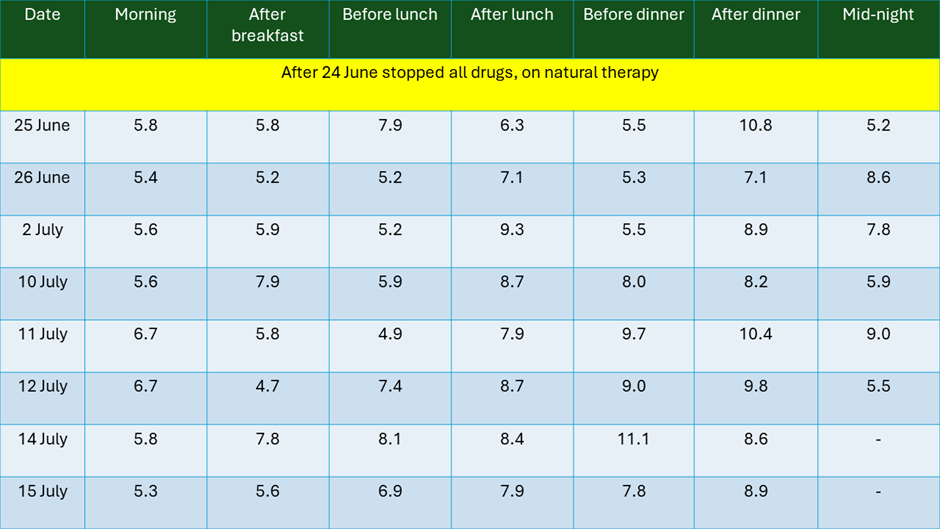
For one month I was not on any medications. My average levels of glucose were maintained at 6.8 and 6.2. The situation seemed to return to normal. Am I crazy to believe this?
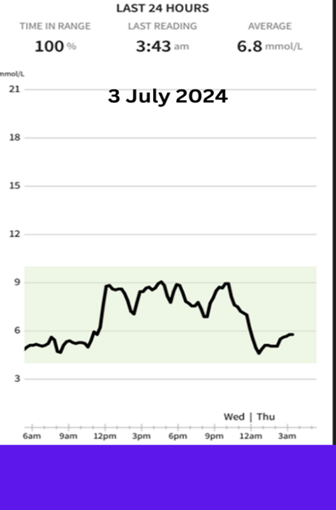
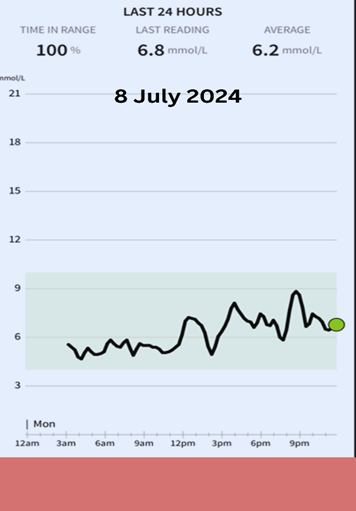
To the “scientific mind” I used the data that my wife had collected, analysed them and came to my own conclusion. This is how to find “truth” – the data speaks for you, not what other people tell you.

Now, let me present to you the data that my wife had collected in the form of “boring numbers”.

On 5 and 6 June, my sugar levels were high! I was hospitalized and put on various medications. By 13 June, things seemed very encouraging. I was discharged from the hospital, and I continued to take the prescribed medications while at home.

The conclusion: the doctor’s medications worked but at a hefty price tag (a topic I shall mention later).
For one month, from 25 June to the whole of July, I started to take herbs and used my e-therapy machine to help me with constipation, insomnia, muscle aches and spasm, itchy skin, etc. My good friend specially formulated protein supplements to help restore my energy.

I felt better, had more energy and most important my glucose level is normal.
  • Boosting of Sodium level in the blood

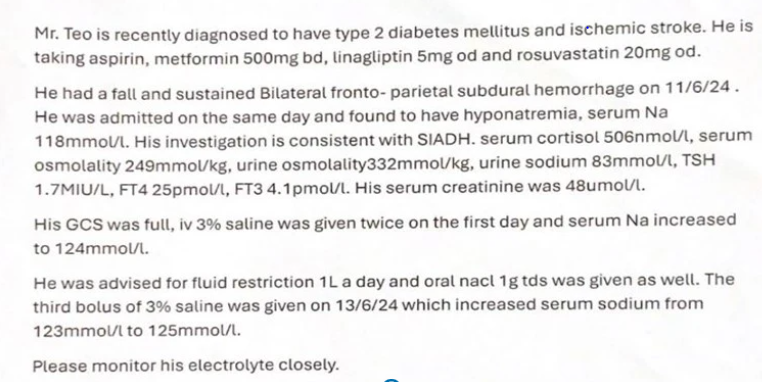
When I first did a blood test, it was shocking that the sodium level was critically low at 118.

In Hospital C,  I was given iv3% saline infusion twice. Serum sodium increased to 124mmol/L

11 June 2024 @14.44   Sodium  118 (critical)   

11 June 2024 @19.58   Sodium  120 (critical)   

11 June 2024 @23.45   Sodium  124 (critical)   

12 June 2024 morning  Sodium  124 (critical)   

!3 June 2024 @6:31      Sodium  123 (critical)   

!3 June 2024 @11:53    Sodium   125 (critical)   

14 June 2024 @ 8.10    Sodium    123 (critical)   

14 June 2024 @ 14:12  Sodium    127  Low

15 June 2024 @ 6:34    Sodium     126 Low   

I continued to take sodium chloride capsule, one per day. Yes, the treatment in Hospital C was effective. And I have to NO hesitation with this sodium chloride treatment because it has no “drastic” side effects. Thank you.
Lessons I Learned While Warded in the Hospitals! Part 2 Medications

Based on the “data” obtained from the scans and blood tests, it was clear that my problems arose due to high glucose and low sodium in my blood. My blood pressure was also high. In addition, I had a big swelling in my head due to the fall. Unfortunately there don’t seem to be any “magic” pills for these problems.

I was admitted into Hospital C to closely monitor my blood parameters at the same time take medications in the hope of restoring these deficiencies.

Let us examine the drugs that I was prescribed by the doctors.

  1. Omeprazole. This is to treat heartburn, gastric and duodenal ulcers, erosive esophagitis, and gastroesophageal reflux disease (GERD). etc.

The most common omeprazole side effect is headache, nausea, vomiting, or diarrhea.

Taking omeprazole at high dosages, or for longer than a year, raises the risk of more serious side effects. These can include bone breaks and pneumonia (a lung infection). 

The main question I have is, why do I have to take omeprazole (3 capsules per day) when I have  never suffered any gastric problems in my life?

  • Metformin is for type-2 diabetes. I took 1 tablet, once a day, @ 8-9 pm. It is important to note that metformin does not cure diabetes. It only helps lower the blood sugar levels to a safe range.

Metformin can cause side effects such as nausea, vomiting, and diarrhea. Unfortunately for me I had no diarrhea but I did not move my bowels for about 2 weeks while on the drugs.

Other known side effects of metformin: heartburn, stomach pain, bloating, gas, constipation, weight loss, headache, metallic taste in the mouth.

Metformin can cause Lactic Acidiosis – a rare but serious problem that must be treated immediately.

Metformin carries FDA black box warning. A boxed warning is the most severe warning the FDA issues.

Symptoms of Lactic Acidiosis can include:

  • Celebrex. This drug is usedto treat pain or inflammation caused by conditions such as arthritis, ankylosing spondylitis, and menstrual pain.

Celebrex is the drug that triggered the most serious warning alarm in me. I was asked to take 1 capsule, twice a day.

Many years ago, celebrex was a common pail killer that was dished out to most cancer patients! Then it just “disappeared” from the scene. Celebrex was found to increase risk of heart attacks and strokes in patients. Now, the drug has reappeared!

The questions I asked myself: Why do I need a pain killer drug that can cause heart attacks and strokes? I just had a mild stroke! Is that not enough?

 Another point is, I don’t have any serious pain to justify me taking such a dangerous drug. I can use my Pain Herbal Tea to solve this problem easily. Why do I need celebrex?

  • Paracetamol. I took this painkiller 4 times a day, each time 2 tablets. Paracetamol is used to treat headaches, migraine, toothaches, sore throats, period (menstrual) pains, arthritis, muscle aches, and the common cold.

I don’t have any severe pain. Mind bogging – take it whatever for? What is more, taking 8 tablets per day!

Taking 1 or 2 tablets of paracetamol each day is unlikely to harm. But taking more than 8 tablets in 24 hours is not advisable and can be dangerous. Too much paracetamol can cause liver damage.

The most common side effects of paracetamol: drowsiness and tiredness. rashes and itching.

  •  Metoclopramide (maxalon) Or domperidone (motilium) isfor nausea, vomiting, heartburn. One capsule is taken 3 times a day.

Again, I would like to ask. Why do I ever need this medication? Do I really need to take 3 times a day when I don’t have problems with nausea or vomiting? Or do I have to take it for “prevention”? I have never taken these drugs before!

Let us look at some the side effects of Maxalon:

Maxalon has a boxed warning. Boxed warnings are the most serious warnings from the U.S. Food and Drug Administration (FDA). They alert doctors and patients about drug effects that may be dangerous. 

  • Taking Maxalon may lead to muscle problems called tardive dyskinesia, resulting in unusual face muscle movement. You will not be able to control or stop these movements.
  • Other side effects may include involuntary limb movements, facial grimacing, torticollis, oculogyric crisis, rhythmic protrusion of the tongue, bulbar type of speech, trismus, opisthotonus (tetanus-like reactions), and, rarely, stridor and dyspnea, which possibly result from laryngospasm.
  • Maxalon can make you feel sleepy and lack of energy, low mood, feeling dizzy or faint (low blood pressure), diarrhoea.
  • In rare cases, Maxalon may cause a serious allergic reaction (anaphylaxis). The lips, mouth, throat or tongue suddenly become swollen, breathing becomes very fast or you are struggling to breathe (become very wheezy or feel like you’re choking or gasping for air), the throat feels tight or you’re struggling to swallow, your skin, tongue or lips turn blue, grey or pale. Suddenly become very confused, drowsy or dizzy
  • Nervous system disorder warning: Maxalon may cause neuroleptic malignant syndrome (NMS). NMS is a rare nervous system disorder that may be fatal. Symptoms include a high body temperature, stiff muscles, confusion, abnormal pulse or blood pressure, fast heart rate, and sweating.
  • Uncontrolled spasms warning: This drug may cause muscle spasms in your face, neck, body, arms, and legs. These spasms can cause irregular movements and body positions. These are more likely to happen during the first 2 days of treatment.
  • Depression warning: This drug may cause depression. This can occur even if you don’t have a history of depression. The symptoms may be mild to severe and may include thoughts of suicide.

What is the maximum days for taking Maxalon? The maximum recommended treatment duration is 5 days. The recommended dose is repeated up to 3 times daily by oral route.

What is the “danger” for Motilium?

Motilium may be associated with an increased risk of heart rhythm disorder and cardiac arrest. This risk may be more likely occur in those over 60 years old or taking higher doses. The risk also increases when Motilium is given together with some other drugs.

The side-effects of Morilium are:

  • Headache, trouble sleeping, nervousness, depression, dizziness, tiredness or irritability
  • Sleepiness or drowsiness, fits or seizures, agitation
  • Dry mouth or thirst
  • Regurgitation, diarrhoea, constipation, nausea, changes in appetite or heartburn
  • Rash or itchy skin.

Is it OK to take Motilium everyday?

  • It is recommended for short-term use only. It is associated with an increased risk of heart rhythm disorder, particularly in older people. If you faint or feel that your heart is beating quickly, you must speak with your doctor as soon as possible.

Can you stay on Motilium long term?

  • You’ll usually take Motilium for up to 1 week. This is because it can cause an irregular heartbeat (arrhythmia) if you take it for longer or at a high dose.
  • Motilium should start to work in about 30 to 60 minutes. It works best if taken before meals. The most common side effect of Motilium is a dry mouth, but this is usually mild and goes away by itself.

Why is Motilium banned in US?

  • Motilium has been banned in the United States for years because of fatal cardiac arrhythmias among cancer patients who had been prescribed the drug to prevent nausea and vomiting.

Besides the above drugs, I also took 1 tablet every day of the following:

  • Sodium chloride – common salt. Sodium also plays a part in nerve impulses and muscle contractions. Salt is also used to treat or prevent sodium loss caused by dehydration or excessive sweating.
  • Potassium. Potassium helps cells, kidneys, heart, muscles, and nerves work properly. Potassium levels can be low due to a disease or from taking certain medicines, or after a prolonged illness with diarrhea or vomiting. Potassium chloride is used to prevent or to treat low blood levels of potassium (hypokalemia)
  • Neurobion to treat and prevent symptoms of vitamin B deficiency and strengthen the nervous system.

I agreed to take these drugs …

While in Hospital C, I took the above medications. I have decided to comply FULLY with what I was told to do. If you don’t try you don’t know! If you don’t trust others how can others help you?

Unfortunately, I did not stay on these drugs for long.

  • I stopped taking metformin after 4 days due to vomiting.
  • 2 days later, I was off paracetamol.
  • 1 day later, I was off celebrex and neurobion.
  • I was only on sodium and sodium tablets.

After a fall I landed in three hospitals – road to my recovery! My Story Part 3

Hospital C in Johor

After my discharge from Hospital B in Singapore, it appeared that the doctors knew what had gone wrong with me, as outlined in their reports. Another hospital which is about one hour drive from our home (in Singapore) is Hospital C. It is in Johor. We moved to Hospital C for 5 days from 11 June @15:18 to 15 June 2024 @10:31.

The great difference between B and C is that in Hospital C, you pay in Malaysian ringgit – indeed a huge difference compared to Singapore dollars!

In Hospital C, I underwent these procedures and treatments:

  • Lumbar X-ray

There is reduce lumbar lordosis. The alignment is preserved.

No fracture or dislocation.

Impression: Lumbar spondylosis with likely L2/L3 disc bulge.

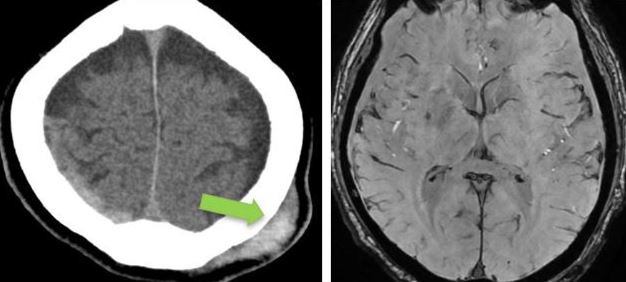
  • CT brain – 11 June. Day 2 post mild head injury (after second fall).

Bilateral fronto- parietal hypodense subdural hemorrhage / effusion widest at frontal region, right measures 10 mm keft measures 13 mm in thickness.

There is hyperdense component seen at right parietal region (9 mm in thickness). Mild enhancement of the sulci bilaterally.

Gray-white matter differentiation fairly preserved.

No hydrocephalus.

No skull fracture.

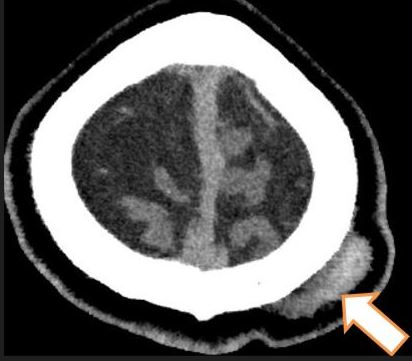
Left parietal scalp swelling.

Impression: Bilateral fronto-parietal subdural hemorrhage as described.

  • CT brain. Comparison made with CT brain yesterday – 12 June 2024.

Impression: Right parietal extra-axil haemorrhage, stable in size compared to previous.

Bilateral fronto-temporo-parietal subdural hygroma.

No new intracranial haemorrhage.

Blood- Tests

11 June 2024 @14.44

White Blood Cells                      12.0  H   (4.0-11.0)

Neutrophils                                 82.0 H  (40 – 75.0)

Lymphocytes                              11.2  L    (20 – 45)

Neutrophils (absolute value)   9.8 H   (2.0-7.5)

Lymphocytes (absolute value)  1.3 L  (1.5-4.5)

Sodium                                          118 (critical)    (135-145)

Potassium                                        3.6     (3.5-5.1)

Chloride                                            91  L   (98-109)

Creatinine                                        48   L   (62-115)

Calcium                                            2.14   L   (2.18-2.60)

Adjusted calcium                            2.1  L    (2.18-2.60)

11 June 2024 @19.58

Sodium                    120 (critical)   

Potassium               3.4 L 

Chloride                   92 L

Serum osmolality  249 L   (280-301)

Free T4                    25.4 H   (12.2-22.4)

11 June 2024 @23.45

Sodium                 124 (critical)   

Potassium             36 

Chloride                95 L

Urea nitrogen     2.4 L  (2.5-6.5)

!3 June 2024 @6:31

Sodium              123 (critical)   

Potassium           36 

Chloride              92 L

Urea nitrogen    2.3 L

!3 June 2024 @11:53

Sodium            125 (critical)   

14 June 2024 @ 8.10

Sodium          123 (critical)   

Potassium     38 

Chloride        94 L

Urea  nitrogen  2.5

14 June 2024 @ 14:12

Sodium          127  L

15 June 2024 @ 6:34

Sodium          126 L   

Potassium     3.7 

Urea nitrogen  2.2 L

Staying in Hospital was about taking the following medications and monitoring of blood as above.

8am
1. Omeprazole x 1 capsule
2. Metoclopromide (maxalon) / domperidone (motilium) x 1 tab (either or)
3. Celebrax x 1 capsule
4. Paracetamol x 2 capsule

9am – 10am (breakfast timing)
1. NaCl x 1 capsule
2. Potassium Cl x 1 tablet
3. Neurobion x 1 tablet

1- 2pm (pre lunch)
1. Metoclopromide (maxalon) / domperidone (motilium) x 1 tab (either or if papa feels nauseated)
2. Paracetamol x 2 capsule
3. NaCl x 1 capsule

6pm
1. Omeprazole x 1 capsule
2. Metoclopromide (maxalon) / domperidone (motilium) x 1 tab (either or)
3. Celebrax x 1 capsule
4. Paracetamol x 2 capsule

8pm-9pm (after dinner)
1. Metformin XR x 1 tablet
2. NaCl x 1 capsule

11pm-midnight (before sleep)
1. Paracetamol x 2 capsule

In the morning of15 June 2024, I was discharged and returned to Singapore. Was I fully recovered? I am sorry, the answer is NO. I was still unable to walk by myself and had to use a walking frame.

Cost of Hospitalization in Hospital C for 5 days

The total cost of hospitalization is RM 14,308.05, covering the following items:

  1. Hospital Charges RM 12,197.04

Medication                                       1,970.64

Medical & surgical suppliers             890.00

Nursing procedure                              663.68

Imaging                                              1,561.60

Rehabilitation services                       880.00

Laboratory investigation                2,391.68

Nursing care                                         525.52

Administrative charges                         56.56

House supply                                          48.80

Miscellaneous                                         97.52

Medical officer fee                                 42.96

Room and board                                1,724.00

Equipment /instrumentation           1,333.08

  • Doctor Charges RM 2,111.00

Dr. A – consultation & assessment. First consultation     235.00

Gen Ward visit (Weekday 8 am to 6 pm)                            840.00

Dr. B – Rad Fee            60.00

Repeat Fee – Brain      120.00

Repeat Fee Xray           21.00

Dr. C; Imaging – repeat fee – CT brain    120.00

Rad fee – on call surcharge                         60.00

Dr. D – consultation & assessment. First consultation     235.00

Gen Ward visit (Weekday 8 am to 6 pm )                          420.00

When you are in the hospital, remember that everything you used or was provided with has a price. So don’t be surprised. Take for examples:

  1. Vomit bag. This costs RM12.80 each. I needed this bag when vomiting. Worse is, the vomit was induced by the consumption of the prescribed medications.
  2. Every time I urinated, the disposable bottle costs me RM7.84 each.

After a fall I landed in three hospitals – here is more of my story! Part 2

Hospital B in Singapore

On 6 June 2024 my children got me admitted into the Urgent Care Centre, Hospital B in Singapore. I was there for 1.5 days. We did the following:

  1. CT scan of the head. No contrast.Had fall with occipital haematoma. The scans demonstrate evidence of bilateral subdural hygromas slightly more prominent on the left side. This is associated with evidence of an acute subdural collection in the right parietal region. There is no associated midline shift noted. The 3rd and 4th ventricles are central in position.

  • MRI Stroke Screen which showed a small acute infarct at the right lentiform nucleus. Multiple foci of susceptibility are seen in both cerebral hemispheres, worse at the frontal regions, likely representing hemosiderin deposition.
  • Bilateral fronto-temporal cystic hygromas are note, measuring up to 1.0 cm in thickness.
  • No intracranial space occupying lesion.
  • No hydrocephalus or midline shift.
  • MRA: There is a mild narrowing and irregularity in the A1 segment of the right anterior cerebral artery and the M2 segment of the left middle cerebral artery (MCA). These may represent atherosclerotic changes or sequalae of a prior insult.
  • The rest of the MRA of the circle of Wilis demonstrates no other significant aneurysm, stenosis or vascular malformation. Normal vascular variations are present. Bilateral posterior communicating arteries are hypoplastic
  • Stenosis is demonstrated.
  • Final conclusion –  normal pulmonary artery pressure.
  • No intra thrombus or pericardial effusion.
  1. Blood test results on 6 June 2024:

Troponin T   14.6 High Sensitive. Result is critical.

Creatine Kinase-MB  1.2 (0.0 to 6.0 ng/mL)

Potassium   3.8   (3.3 to 5.0 mmol/L)

Sodium    133  Low  (135 – 150 mmol/L)

Uria, serum  8.1   High  (2.8 to 7.7 mmol/L)

Glucose, fasting   13.4   High  (3.6 to6.0 mmol/L)

Est GFR   86  Expected range >=60 mL/min/1.73 square metres

C-Reactive Protein    14.38   H (<=9.99 mg/L

Reason for admission: Stroke on 6 June 2024                                                                                                                            

Secondary diagnosis: Type 2 diabetes mellitus without complication.

Discharge date: 7 June 2024

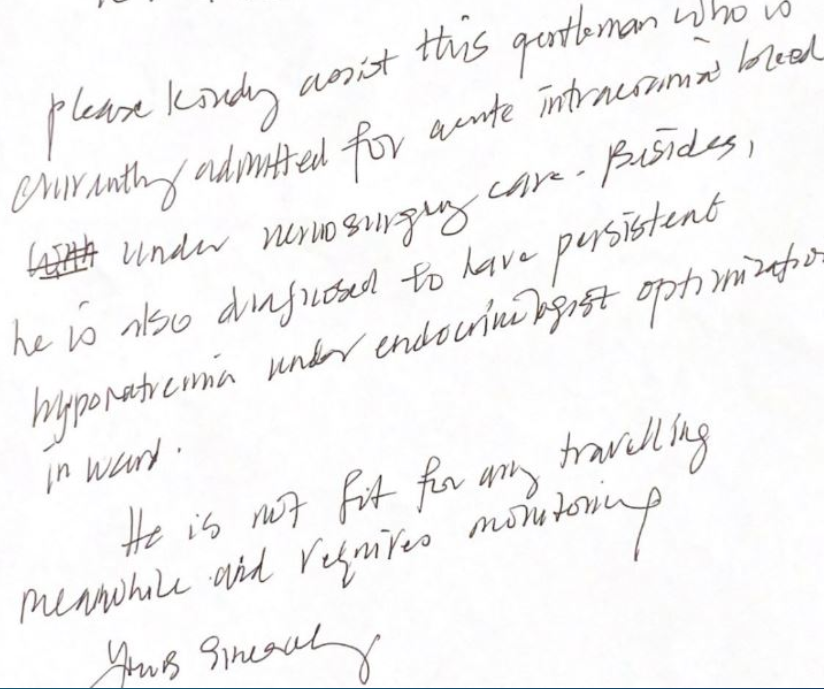
A note from the neurosurgeon stated: He is not fit for any travelling meanwhile requires monitoring.

The total costs in Hospital B in Singapore, was SGD 10,346.58 or RM 36,112.51

Admission date: 6 June 2023, 20:16, Discharge date: 7 June 2023, 17.41

  • MRI Stroke Screen                                 GD 1,177.20
  • CT Brain                                                              698.99
  • Observation bed – 3hs                                    286.76
  • Single room                                                       787.16
  • Single room – half day                                    393.58
  • Consultation – office hour                             125.69       
  • Consultation – after hour                               148.62       
  • Hospital charges                                           1,790.74
  • Ultrasound                                                        905.80
  • Daily treatment fee                                         325.69
  • Doctor’s attendance fee                                436.00
  • General follow-up screen                              420.68
  • After hours surcharge                                    196.40
  • Physiotherapy                                                  205.25
  • Speech Therapy                                               350.37

From Hospital B, I learned the following:

  1. The reason why I fell could be due to a mild stroke.
  2. For the first time in my life, I have been told, once again, that I have diabetes – and it is a serious one at that!
  3. My blood was low in Sodium, this could be related / a contribution to the mild stroke.
  4. My blood pressure was also high.

It seems that an elderly man with no pain or any “health problems” can suddenly get “sick”!

So please careful.

After a fall I landed in three hospitals – here is my story! Part 1

In May 2024, my life was really “drained!” Too many patients with too serious problems wanted my help. As usual I tried my very best to help, unaware that I was at the same time just “digging my own grave!” Let me share what happened to me.

But first, in writing this story, let me be up front with you. I am not against medical science. I went to the hospitals believing that medical science can help me – although I am an herbalist. Understand that no one has the monopoly to make fellow-citizens well again. It is either you believe in what you are doing, or you don’t.

From the beginning, may I tender my sincere apology to anyone who reads this article and finds it “offensive or crude” for the comments that I made. I was just giving my frank opinions. Please forgive me!

All the doctors and nurses who helped while I was in these hospitals were very nice and friendly. A big thank you to you all.

The Fall – A big lump in the head

In the early morning of 4 June 2024, I woke up to rush to the toilet to pass urine. While half way doing this, I felt dizzy and wanted to lie down but it was too late. I passed out and knocked my head resulting in a big bump. The next days, I fell one more time!

Life has many lessons to teach us as we age awaiting our final departure. I failed my first test. My first fall did not teach enough about the seriousness of a fall – I shouul have learned and should have prevented the repeat of such a fall.

Hospital A in Penang

After the fall, on 4 June 2024, I went to a private hospital in Penang , for check up.

  • X-ray for done to check if I suffered any broken bones. My ribs and bones of the pelvic region were okay!
  • Alignment of shoulder joint was normal.

  • CT of brain showed bilateral small chronic subdural hematoma (CSDH) noted. There is no acute intracranial bleed. There is no area of infarct seen. Brain stem and basal cisterns are normal. There is no skull fracture seen. There is scalp swelling in left occipital region.
  • Venous blood test: Hemoglobin A1c(HbA1c)- 13.6% – High. Normal = <5.7
  • I-Stat Chem8

Na = 135 mmol/L – range138-146 mml/L

K = 3.9 mmol/L – range 3.5 – 4.9 mmol/L

Glucose = 20.5 mmol/L – range 3.9 – 5.8  mmol/L

Urea = 4.6 mmol/L – range 8.0 – 26.0 mmol/L

Creatinine = 51 umol/L – range 53 – 115 umol/L

The total costs in Hospital A = RM 1,543 :

  • Physician Consultant 1– first consultation RM 70.00
  • Laboratory tests 1 – RM 198.00
  • Pharmacy – RM 93.00
  • Physician Consultant 2 – first consultation RM 70.00
  • Lab tests 2 – RM291.00
  • CT Brain – RM 370.00
  • X-ray – RM 195
  • Medical officer charges – RM 30.00
  • ECG Consultant – RM 35.00

From Hospital A I learned the following:

  1. The swelling of my head was not in my brain but at the external area outside the skull. The doctor told me it does not pose any immediate danger. This is very good news indeed.
  2. From the blood test results, I was told that I have diabetes. The sugar reading was 20.5 while the normal range was 3.9 to 5.8. This is rather shocking news! More of such unexpected news later.

Sadly, what had happened to me caused a lot of distress to both Albert and Irene who are living in Singapore. The same day I fell, Irene flew back to Penang.

A Great Pioneer of Nutrition – Prosecuted and Forgotten: Dr. Royal Lee

Do you know who Dr. Royal Lee is? No? I understand. I have never heard of his name either, until a few days ago! Let me share with you what I have read about this great man.

Dr. Royal Lee was the pioneer researcher in the field of whole food vitamins. When Dr. Royal Lee died in 1967, he was hailed as the greatest nutritionist of the 20th century. Yet today his name and work go largely unknown. This is no coincidence. Dr. Lee’s basic message—that the ultimate cause of most modern disease is malnutrition brought on by industrially produced foods—threatened some of our country’s mightiest institutions. These powers actively suppressed Dr. Lee’s message. Dr. Lee would spend his life fighting this suppression. http://www.drroyallee.com/

Lee’s views put him at odds not just with organized medicine and the FDA but also with the food manufacturing industry.  His work threatened the security of these commercial interests.  Due to their prompting (and lobbying monies), governmental agencies like the FDA were assigned to discredit him. Throughout his life, Dr. Lee would endure perpetual legal prosecution and character assassination at the hands of these governmental agencies.  Fortunately for us, Lee did not back down from telling the truth; no matter the cost.  With Americans increasingly consuming heavily processed foods, he carried on his work in spite of the constant lawsuits.  It is easy to find those still vilifying his work online.

Ask anyone who has done it, battling the government and their infinitely deep pockets is almost impossible.  Unfortunately, Dr. Lee lost a lawsuit with the FDA in 1962 and was ordered to stop accompanying his food supplements with literature describing their therapeutic value.  He was also forced to destroy all the educational nutritional literature produced by his companies that the government deemed “misleading.”  Within five years, at age 72, Dr. Lee died from a stress-induced stroke. http://www.doctorschierling.com/blog/the-forgotten-genius-of-dr-royal-lee

Let us reflect on some of the ideas of Dr. Lee

One of the biggest tragedies of human civilization is the precedence of chemical therapy over nutrition. It’s a substitution of artificial therapy over nature, of poisons over food, in which we are feeding people poisons trying to correct the reactions of starvation — Dr. Royal Lee, 1951

 Candy, all white sugar and its products, and white flour, including its products such as macaroni, spaghetti, crackers, etc., should be absolutely barred from the diet of the child. All these are energy-producing foods that contain no building materials for the body. The consequences of their toleration are susceptibility to infections, enlarged tonsils, carious teeth, unruly dispositions, stunted growth, rickets, maldevelopment, and very often permanent damage to many organs of the body (especially the endocrine glands) that depend on the vitamin supply for their normal function and development — Dr. Royal Lee, 1938., 1938 

Sugar and flour are the first things to throw out in the diet because they are pure calories and don’t contribute anything but fat to the body. Starch goes into fat. Sugar goes into fat. If you want to fatten a pig what do you give them? You feed them a lot of corn, cornstarch — Royal Lee – 1955 

We have drifted into this deplorable position of national malnutrition quite inadvertently. It is the result of scientific research with the objective of finding the best ways to create foods that are non-perishable that can be made by mass production methods in central factories, and distributed so cheaply that they can sweep all local competition from the market. Then, after these develops a suspicion that these “foods” are inadequate to support life, modern advertising steps in to propagandize the people into believing that there is nothing wrong with them, that they are products of scientific research intended to afford a food that is the last word in nutritive value, …and the confused public is totally unable to arrive at any conclusion of fact, and continues to blindly buy the rubbish that is killing them off years ahead of their time —  Dr. Royal Lee June 1943 

In countries where ‘civilized,’ adulterated foods are not used, there is no cancer, no tuberculosis, no pneumonia, no heart disease, no diabetes, no arthritis to speak of…It seems that only a liberal use of white flour and white sugar can cause the extraordinarily high death rate so obvious wherever these foods are common — Dr. Royal Lee, 1958 

A vitamin is: … a working process consisting of the nutrient, enzymes, coenzymes, antioxidants, and trace minerals activators  – Royal Lee “What Is a Vitamin?” Applied Trophology, Aug. 1956

Vitamins are not individual molecular compounds.   Vitamins are biological complexes.   They are multi-step biochemical interactions whose action is dependent upon a number of variables within the biological terrain.   Vitamin activity only takes place when all conditions are met within that environ-ment, and when all co-factors and components of the entire vitamin complex are present and working together.   Vitamin activity is even more than the sum of all those parts; it also involves timing. Vitamins cannot be isolated from their complexes and still perform their specific life functions within the cells.   When isolated into artificial commercial forms, like ascorbic acid, these purified synthetics act as drugs in the body. They are no longer vitamins, and to call them such is inaccurate.

“The Lee Principle of Nutrition states that a vitamin as it appears in nature is never a single chemical, but rather it is a group of interdependent compounds that form a ‘nutrient complex’ so intricate that only a living cell can create it. And just as no single component of a watch keeps time, no single compound in a vitamin complex accounts for the vitamin’s nutritive effect in the body. Only through whole, unprocessed foods can the synergistic effect of a true vitamin be delivered.” — Mark R. Anderson 

“No structure can be any better than its foundation.  Good nutrition is the foundation of health.  What we eat today becomes our body of tomorrow.  The mysterious ailments we develop by reason of carelessness in choosing our food is the inevitable result of our trying to make something out of nothing.  Heart disease, arthritis, cancer, tooth decay, pyorrhea all appear to be end results of our own carelessness and neglect to eat honest food.” 

“The American people have been humbugged into digging their graves with their own teeth!” – Dr. Royal Lee

Digging Your Own Grave

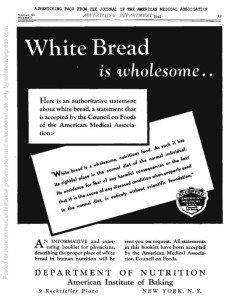
bread

Milk is natural

Cigerattes

Cigerattes 2

Can we eat to starve cancer?

When you have cancer, you are told: Eat anything you like. Cancer has nothing to do with your diet!

And you believe that this a a great advice? Based on science facts or research?

Hang one, listen to Dr. William Li,  head of the Angiogenesis Foundation, a nonprofit that is re-conceptualizing global disease fighting.

Click this link:  http://www.ted.com/talks/william_li

This video has 3,286,376 hits. So don’t miss out. Listen to what a “real scientist” has got to tell you!

The following are some important points you may want to remember — check with your doctors if you like!

  1. There’s a medical revolution happening all around us, and it’s one that’s going to help us conquer some of society’s most dreaded conditions, including cancer. The revolution is called angiogenesis, and it’s based on the process that our bodies use to grow blood vessels.
  2. The human body is literally packed with them (blood vessels): 60,000 miles worth in a typical adult. End to end, that would form a line that would circle the earth twice. The smallest blood vessels are called capillaries; we’ve got 19 billion of them in our bodies. And these are the vessels of life, and, as I’ll show you, they can also be the vessels of death.
  3. We get most of these blood vessels when we’re actually still in the womb, And what that means is that as adults, blood vessels don’t normally grow. Except in a few special circumstances: In women, blood vessels grow every month to build the lining of the uterus; during pregnancy, they form the placenta, which connects mom and baby. And after injury, blood vessels actually have to grow under the scab in order to heal a wound.
  4. The body has the ability to regulate the amount of blood vessels that are present at any given time. It does this through an elaborate and elegant system of checks and balances, stimulators and inhibitors of angiogenesis.
  5. When we need a brief burst of blood vessels, the body can do this by releasing stimulators, proteins called angiogenic factors that act as natural fertilizer and stimulate new blood vessels to sprout. And when those excess vessels are no longer needed, the body prunes them back to baseline using naturally occurring inhibitors of angiogenesis.
  6. For a number of diseases, there are defects in the system where the body can’t prune back extra blood vessels or can’t grow enough new ones in the right place at the right time. And in these situations, angiogenesis is out of balance. When angiogenesis is out of balance, a myriad of diseases result … there are more than 70 major diseases affecting more than a billion people worldwide, that all look on the surface to be different from one another, but all actually share abnormal angiogenesis as their common denominator.
  7. Now I’m going to focus on cancer because angiogenesis is a hallmark of cancer, every type of cancer … a tumor: dark, gray, ominous mass …. under the microscope, you can see hundreds of these brown staining blood vessels, capillaries that are feeding cancer cells, bringing oxygen and nutrients.
  8. But cancers don’t start out with a blood supply. They start out as small, microscopic nests of cells that can only grow to one half a cubic millimeter in size; that’s the tip of a ballpoint pen. Then they can’t get any larger because they don’t have a blood supply, so they don’t have enough oxygen or nutrients.
  9. In fact, we’re probably forming these microscopic cancers all the time in our body. Autopsy studies from people who died in car accidents have shown that about 40 percent of women between the ages of 40 and 50 actually have microscopic cancers in their breasts, about 50 percent of men in their 50s and 60s have microscopic prostate cancers, and virtually 100 percent of us, by the time we reach our 70s, will have microscopic cancers growing in our thyroid. Yet, without a blood supply, most of these cancers will never become dangerous.
  10. So the body’s ability to balance angiogenesis, when it’s working properly, prevents blood vessels from feeding cancers. And this turns out to be one of our most important defense mechanisms against cancer. In fact, if you actually block angiogenesis and prevent blood vessels from ever reaching cancer cells, tumors simply can’t grow up.
  11. But once angiogenesis occurs, cancers can grow exponentially. And this is actually how a cancer goes from being harmless to deadly. Cancer cells mutate and they gain the ability to release lots of those angiogenic factors, natural fertilizer, that tip the balance in favor of blood vessels invading the cancer. And once those vessels invade the cancer, it can expand, it can invade local tissues.
  12. So, if angiogenesis is a tipping point between a harmless cancer and a harmful one, then one major part of the angiogenesis revolution is a new approach to treating cancer by cutting off the blood supply. We call this antiangiogenic therapy, and it’s completely different from chemotherapy because it selectively aims at the blood vessels that are feeding the cancers.
  13. Now, obviously, antiangiogenic therapy could be used for a wide range of cancers. There’s 12 different drugs, 11 different cancer types. But the real question is: How well do these work in practice?
  14. I started asking myself, “Why haven’t we been able to do better?” And the answer, to me, is obvious; we’re treating cancer too late in the game, when it’s already established and, oftentimes, it’s already spread or metastasized. And as a doctor, I know that once a disease progresses to an advanced stage, achieving a cure can be difficult, if not impossible.
  15. So I went back to the biology of angiogenesis and started thinking: Could the answer to cancer be preventing angiogenesis, beating cancer at its own game so the cancers could never become dangerous?
  16. What could we be adding to our diet that’s naturally antiangiogenic, that could boost the body’s defense system and beat back those blood vessels that are feeding cancers? In other words, can we eat to starve cancer?

Well, the answer’s yes.

  1. So let me show you what happens when we put in an extract from red grapes. The active ingredient’s resveratrol, it’s also found in red wine. This inhibits abnormal angiogenesis by 60 percent. Here’s what happens when we added an extract from strawberries; it potently inhibits angiogenesis. And extract from soybeans. And here is a growing list of our antiangiogenic foods and beverages that we’re interested in studying.

So here are four different teas that we’ve tested. They’re all common ones: Chinese jasmine, Japanese sencha, Earl Grey and a special blend that we prepared. And you can see clearly that the teas vary in their potency from less potent to more potent. But what’s very cool is when we actually combined the two less potent teas together, the combination, the blend, is more potent than either one alone. This means there’s food synergy.

And here are the dietary factors going head to head against these drugs. You can see, they clearly hold their own and, in some cases, they’re more potent than the actual drugs. Soy, parsley, garlic, grapes, berries; I could go home and cook a tasty meal using these ingredients.

  1. Now, I’ve shown you a bunch of lab data, and so the real question is: What is the evidence in people that eating certain foods can reduce angiogenesis in cancer? Well, the best example I know is a study of 79,000 men followed over 20 years, in which it was found that men who consumed cooked tomatoes two to three times a week had up to a 50 percent reduction in their risk of developing prostate cancer. Now, we know that tomatoes are a good source of lycopene, and lycopene is antiangiogenic.

But what’s even more interesting from this study is that in those men who did develop prostate cancer, those who ate more servings of tomato sauce actually had fewer blood vessels feeding their cancer. So this human study is a prime example of how antiangiogenic substances present in food and consumed at practical levels can impact on cancer.

  1. If we’re right, it could impact on consumer education, food services, public health and even the insurance industry. For many people around the world, dietary cancer prevention may be the only practical solution because not everybody can afford expensive end-stage cancer treatments, but everybody could benefit from a healthy diet based on local, sustainable, antiangiogenic crops.
  2. Albert Szent-Gyorgi once said that, “Discovery consists of seeing what everyone has seen, and thinking what no one has thought.” I hope I’ve convinced you that, for diseases like cancer, … there may be a great power in attacking their common denominator: angiogenesis. And that’s what I think the world needs now. Thank you.

Great minds think alike, and fools seldom differ: Eat anything you like!

Quoted from Never Fear Cancer Again by Raymond Francis, pages 112-113 & 145

Never-fear-cancer-again


Unfortunately, conventional physicians have almost no training in nutrition and biochemistry and give patients advice that makes matters worse. Most oncologists will tell their patients that cancer has nothing to do with nutrition and that it doesn’t matter what they eat.

Typical is the case of Stacy, a forty-eight-year-old cancer patient who was suffering a recurrence of metastasized melanoma. Stacy questioned her physicians about diet. She was told she could eat whatever she wanted. One doctor told her that nutrition had absolutely nothing to do with cancer. He told her to eat whatever made her happy, and he jokingly said he would write her a prescription for ice cream. Like most doctors, he was simply unaware of the critical role nutrition plays in causing disease.

Stacy’s oncologist actually served candy to the cancer patients in his waiting room, oblivious to the fact that sugar drives cancer like gasoline drives fire.

Stacy’s recurrence of melanoma was diagnosed as a “significant metastasis …”  She was advised to undergo immediate surgery – she refused. Her oncologist was adamant. He followed her out of the office into the hall saying, “Schedule the surgery now! Schedule the surgery now!” Stacy was sufficiently well informed to know that her metastasized melanoma was a death sentence. Given the grim statistics on that type of cancer, she knew that conventional medicine could not save her. If she wanted to live, Stacy would have to take charge of her own health.

Stacy purchased organic vegetables, juiced them, and took vitamin supplements. Three months after the “significant metastasis” diagnosis, all testing showed her to be cancer free. After her radiologist called her with the good news of her test results, she told him what she had done to rid herself of the cancer. He simply stated “Well, whatever it is you are doing, keep doing it.” He didn’t ask her any questions and was not curious about how she had accomplished this incredible feat.

Seven years later, with no medical treatment, she is still in robust health.

Since Stacy’s original melanoma diagnosis in 2003, four family friends were diagnosed with melanoma. Despite pleading with them to take a more natural approach to healing … they all chose conventional treatment with surgery, chemo, and radiation – they were all dead.

Dairy

When I tell people not to drink milk, they often ask, “Where will I get my calcium?” I inform them that 70 percent of the world’s people do not drink milk. Where do they get their calcium? They get if from plant foods. Green vegetables, such as kale, broccoli and collard greens, are loaded with calcium.

Comments:

Why don’t you ask the cows where they get their calcium from? They only eat grass but only drank their mother’s milk when there were calves … they don’t drink other people’s milk! The  only animal species that drink other people’s milk is the Homo sapiens (i.e. human being).

The above story happened in the United States. It also happened in this country … exactly! Perhaps the quotation … great minds think alike, and fools seldom differ … is true?

Quotations from other people

1 deVita

2-Medical-profession-which-

5 Oncologsit-harm-patients

8-Diet-must-be-integral-par

6 Pig-knows-better-nutrtion