Book Review: Money Driven Medicine – Chemotherapy for Non-responsive Cancers – Denying Reality

This book has 612 pages organized into 24 chapters. It was published in 2006. The full title is of the book is, Money Driven Medicine – Tests and Treatments That Don’t Work. Readers will be surprised to know that among those dubious treatments discussed include unnecessary Caesareans, cholesterol lowering pills, high blood pressure treatment, invasive cardiology treatment, blood thinners for clots, antidepressant medications, etc., and etc. In Chapter 16, the author discussed chemotherapy – the subject of this review.

The author of the book is Dr. David K. Cundiff, M.D. He wrote:  “Shortly after President Nixon signed the “Cancer Act” in 1972, I decided to become a medical oncologist … I was a third year medical student at the University of California, San Diego … I felt that many of my cancer patients were neglected.   After internship and residency in internal medicine at the University of Pittsburgh Hospitals, I took a fellowship in medical oncology at the Cancer Control Agency of British Columbia in Vancouver, BC. I returned to San Diego in 1977 for another fellowship combining further medical oncology training with hematology …. I became an Assistant Professor in medical oncology at the Harbor-UCLA Medical Center in Los Angeles.”

Dr. Cundiff later left oncology and became a hospice doctor. He wrote, “It helped me to be able to critically analyze claims about the effectiveness of cancer treatment based on clinical research trials. I can now better spot the numerous potential biases in chemotherapy trials.”

Dr. Cundiff shared some of his experiences. Below are statements quoted directly from his book (pages 217 to 243). All these words are his. I took the liberty to present them in point by point form.  I hope this makes the delivery of  his messages, one shot at a time, more precise.

Chemo for the sake of doing something heroic or a way to earn more money?

  1. I would not recommend chemotherapy if I did not think that the benefits outweighed the risks. I was so out of step with the other practicing medical oncologists that it became clear that I could not make a living with such a conservative treatment philosophy.
  2. Medical oncologists are paid almost nothing for talking with patients and their families. Their income depends entirely on the number of chemotherapy treatments that they order and how much they charge for each treatment. Unlike other specialists, the government allows them to also profit by selling chemotherapy drugs to their patients.

 On chemotherapy clinical trial

  1. While about 60% of all newly diagnosed cancers are in people over 65, they make up only 36% of patients in drug studies. Many chemotherapy drug trials do not accept patients over age 70. This bias is troubling because younger patients tend to respond and tolerate side effects better than older patients.
  2. Older patients that do volunteer for drug trials may be healthier than older patients that do not volunteer or who are not recommended for research studies by their oncologists.
  3. Evidence-basis of cancer chemotherapy, is much less established than in other areas of medicine.
  4. Randomized trials with untreated control groups are hard to do.  (My comment: how can you say for sure that chemo is better? Perhaps without chemo patients are better off?).
  5. Clinical responses are divided into complete response (absence of all measureable tumor and freedom from tumor symptoms lasting at least three months); and partial response (reduction in size of the volume of all tumor masses by at least 50% lasting at least three months). Most chemotherapy clinical trials report the response rate (complete and partial) as the main endpoint.
  6. Shrinking tumors may not mean that patients live longer or have a better quality of life. (My comment:  They are not talking about cure at all, only response! Patients hope or expect to find a cure!).
  7. The unresponsive tumors have response rates of less than 50%. For patients with these unresponsive tumors, claims of increased survival become statistical exercises of researchers financed by drug companies, with nebulous parameters of measurement wide open to wishful thinking and biases. (My comment: They will manipulate and massage the data to get what they want. Ever heard of this saying – Lies, damned lies and statistics?)
  8. Clinical endpoints that matter to patients – survival and quality of life – often lose out to the endpoint that is important to medical oncologists, drug companies and cancer researchers – tumor shrinkage.
  9. Researchers, paid by drug companies, may harbor biases in favor of new experimental treatments when reporting the results of clinical trials.
  10. Patients, clinging to any thread of hope for a cure, hear what they want to hear from the oncologist. If their medical oncologist does not offer them chemotherapy, they may shop for another oncologist.
  11. Survival of people with identical malignancies varies widely due to factors that are not always well understood and often have nothing to do with chemotherapy given by medical oncologists.
  12. Consequently, by treating enough cancer patients with drugs, chemotherapy advocates can always find some patients with unusually long survivals.

FDA approval

  1. To approve new drug … the FDA does not require evidence that the drug prolongs life or improves the quality of life. Dr. Robert Temple, FDA Director of Medical Policy describes this policy that favors drug company profit over patients and the public as follows: “… our accelerated approval rule allows us to rely on a reasonable surrogate, a surrogate end point reasonably likely predict clinical benefit.”  Dr. Temple said, surrogate endpoints (My comment: Tumor shrinkage for example does not have to be shown to correspond with clinical endpoints like living longer and feeling better).
  2. Pharmaceutical companies used endpoints other than survival as the basis for 73% of all cancer drug approvals between 1990 and 2002. Consequently, just one cancer medicine in five has ever proved that it extends patients’ lives. For drug companies and health care providers that are “money driven,” this very vulnerable patient population is ripe for exploitation.

Dr. David Cundiff provided a brief review of the present practice of chemotherapy and the effectiveness of the drugs used.

Chemotherapy for Advanced Non-small Cell Lung Cancer (NSCLC)

  1. Unfortunately, we do not have chemotherapy that significantly increases survival chances for non-small cell lung cancer (NSCLC) patients (about 75% of those with lung cancer).
  2.  In my days as a medical oncologist, I never liked to recommend chemotherapy to people with NSCLC because of poor results and distressing side effects. The fact that there is no evidence-basis to support chemotherapy for NSCLC hasn’t stopped drug companies and the FDA from encouraging its use.
  3. Cisplatin (Platinol) has been the acknowledged standard of practice in NSCLC … the average survival with cis platinum chemotherapy added to radiation therapy was 7 months versus 4 months with radiation alone. However, lung cancer patients not receiving chemotherapy probably have more quality time since they do not have to endure the potential toxicities of cis platinum.
  4. Vinorelbine (Navelbine). In 1994, the FDA approved Navelbine on a 6 to 4 vote … to treat advanced NSCLC. What evidence supports this FDA decision? In the first trial, they compared patients receiving vinorelbine given alone with patients receiving the combination of cisplatin with Navelbine. The combination of the two drugs gave a much higher response rate (43% versus 16%) and considerably more side effects. However, the average survival  was virtually equal (32 versus 33 weeks). Quality of life comparisons were not reported. Since untreated control groups were not included … these results do not show that either one of these drugs improves survival or benefits patients.
  5. Etoposide. Despite the lack of evidence showing efficacy, etoposide and cisplatin became the acknowledged combination as the standard for treatment of NSCLC in the mid 1990s. One well-designed Italian trial … survival in the  drug treatment group averaged 8.5 months versus 5 months without chemotherapy.
  6. Taxol, Gemzar and Taxotere. In 1998, the FDA added Taxol to the list of “safe and effective” drugs for NSCLC. Shortly after …. Gemzar … and Taxotere …. Became FDA approved for NSCLC in combination with cisplatin … Non-inferiority trials served as the evidence basis. These are not medical breakthrough medications ….. (they) used the same kind of purposefully mangled science, poorly designed studies and skillful lobbying to win FDA acceptance. (My comment: Non-inferiority means the effect of a new treatment is not worse than that of an active control by more than a specified margin).
  7. Iressa. Of all the undeserved FDA approvals of chemotherapy drugs for NSCLC, the most irresponsible was the approval of Iressa for patients. The FDA approval of (Iressa) based on a 11 to 3 vote … based on one uncontrolled trial in which 10% of 216 patients receiving the drug had 50% or more shrinkage of tumors lasting for one or more months …. Researchers did not show increased survival or quality of life in these patients. People may die faster with (Iressa) for all we know. (Iressa) should be withdrawn from the market. (My comment: Yes, Iressa was later withdrawn after many deaths in Japan. Currently, it is being replaced by a sister drug called Tarceva).

Colon cancer chemotherapy

  1. In my training and practice as a medical oncologist in the late 1970s and early 1980s, I treated few colon cancer patients with chemotherapy. I did not believe that benefits exceeded risks.
  2. Dr. Charles Moertel’s uncontrolled colon cancer trial in 1960 had made national headlines. He reported an 85% complete and partial response rate in patients with advanced colon cancer who received chemotherapy drug 5-FU. This led to the FDA approving 5-FU for metastatic colo-rectal cancer in 1962. However, when other investigators reported their results in a few years, the response rate rates dropped to the 60% range. After further studies, the average response rates fell to the 40% range. Finally, about 20 years after his initial glowing report, Dr. Moertel wrote, “… lack of beneficial effect of 5-FU on survival.” The response rates around the country ranged from 12% to 20% and overall survival of chemotherapy patients was not proven better than for those not taking chemotherapy drugs.
  3. Leucovorin. In 1991, on a 5 to 4 vote, the FDA approved leucovorin in combination with 5-FU … trials showed only little if any effects on survival. The Mayo Clinic reported marginally significant survival data … and the results from … Canada … showed no statistically significant survival benefit. Mucositis (destruction of the gastrointestinal lining cells from the mouth to the anus) and diarrhea were both more severe with high dose leucovorin added.
  4. Irinotecan (Camptosar). While it may shrink tumors, there is no scientific evidence that irinotecan benefits people with colo-rectal cancer. Despite this lack of evidence, the FDA voted 9 to 0 to approve irinotecan.
  5. Xeloda. In 2001, the FDA approved (Xeloda) … for colorectal cancer. Again, no randomized trials with placebo treated or untreated control groups to show efficacy of (Xeloda) in prolonging or improving quality of life.
  6. Oxaliplatin (Eloxatin) obtained FDA approval in 2004 for colorectal cancer. This approval was based on randomized comparisons showing equivalence (non-inferiority) with other chemotherapy agents – no untreated or placebo control group was included.
  7. Avastin…. FDA  approval (was) … based on one small trial comparing two strengths of (Avastin) added to 5-FU + leukovorin. Patients taking the higher does lived 16.1 months on average compared with 21.5 months for those taking half the higher dose. Those taking 5-FU + leukovorin alone averaged 13.8 months of survival. A subsequent trial comparing 5-FU +leukovorin + irinotecan with and without (Avastin) also showed about a 5 month survival advantage with (Avastin).
  8. Erbitux. In February 2004, the FDA approved (Erbitux) ….”although treatment with (Erbitux) has not been shown to extend patients’ lives, it was shown to shrink tumors in some patients and delay tumor growth, especially when used as a combination treatment.”

Pancreatic cancer

  1. From my days as a medical oncologist, I remember pancreatic cancer as the most refractory tumor to chemotherapy.
  2. Gemzar.  The FDA approved (Gemzar) for advanced pancreatic cancer patients in 1996. This approval was based on a randomized comparison with 5-FU in which none of the 126 patients in either group had any significant tumor shrinkage. The FDA justified its approval on a new criterion that they called “clinical benefit,” defined as a reduction in pain or pain medication consumption, weight gain or improved functional status. This very subjective endpoint can easily lead to biased reporting by drug company funded investigators.

Brain cancer

  1. Because of the so-called “blood brain barrier,” most drugs do not penetrate well from the blood stream into the brain tissue. With the exception of childhood neuroblastoma, brain cancers respond poorly to chemotherapy.
  2. For over 30 years, the standard chemotherapy drug for adult patients with the most common types of brain cancers (gliomas and astrocytomas) have been BCNU, CCNU and Matulane. These drugs cure no one, are not shown through scientific evidence to prolong survival and are not FDA-approved for brain cancer.
  3. In 1999, the FDA granted accelerated approval status to Temodar for treatment of adult patients with aggressive form of brain cancer. Only about 10% of brain cancer patients had tumor shrinkage in studies that had no untreated or placebo control groups. No meaningful assessment of survival or quality of life could be made.

Conclusion

  1. The direct cost of treating cancers in 2007 in the U.S. (physicians, drugs, hospitals, etc.) will be about US$89 billion. About $52 billion will be for chemotherapy drugs.
  2. Chemotherapy for non-small cell lung cancer (NSCLC), metastatic colon cancer, pancreas cancer and brain cancer are but a few examples of FDA-approved drugs for which there is no convincing evidence of benefit.
  3. Inappropriate chemotherapy treatments cause incredible suffering. Most of the 550,000 Americans who die of cancer each year receive chemotherapy despite of the fact that only about 20% to 30% of them have tumors that respond well to drugs.
  4. Chemotherapy cures many children and some adults that would have otherwise died. However, for most people with advanced cancers of the lung, gastrointestinal tract, kidneys and brain, chemotherapy increases suffering and cost without significantly prolonging life.
  5. Cancer chemotherapy is lucrative for medical oncologists, hospitals, pharmaceutical companies and stock market investors.
  6. Patients and their families hope for miracles despite all odds. Many times their vulnerability leads them to accept treatments uncritically that are not in their best interests.
  7. Medical oncologists are paid well for giving chemotherapy and hardly at all for counseling and supporting their patients.
  8. The economic forces in the current medical marketplace work to patients’ disadvantage.

Comments

Let me stress again, the above 44 statements are words written by Dr. David Cundiff, a medical oncologist turned hospice doctor. Dr. Cundiff left oncology perhaps because he couldn’t “stomach” what he saw and practised. He has now joined the list of those brave souls who have enough conscience and guts to speak up. Einstein once said, The world is a dangerous place, not because of those who do evil. But because of those who look on and do nothing. I am sure, in the years to come, the world would say “thank you” to Dr. Cundiff for what he had said and done. Dr. Julian Whitaker, another medical doctor said this, I am convinced that the best protection against evil that lurks among us – and make no mistake that it lurks among us – is information. I believe Dr. Cundiff shared similar vision – to provide information to those who need it. It is for this reason that the front page of his book has this unique message, “Photocopy authorization policy: Authorization to print or otherwise reproduce items for internal or personal use, the internal or personal use of specific clients or for review is granted by David K. Cundiff, M.D., provided that the source is cited.”

Today, Dr. Cundiff is not alone in trying to call a spade a spade. In his book, The War on Cancer – an anatomy of failure, Dr.  Guy Faguet – cancer researcher and medical doctor, wrote, “An objective analysis of cancer chemotherapy outcomes over the last three decades reveals that … the cell-killing paradigm has failed to achieve its objective …. a model based on flawed premises with unattainable goal, cytotoxic chemotherapy in its present form will neither eradicate cancer nor alleviate suffering” (pg.89).

Dr. Nicholas Gonzalez, a medical doctor from New York, USA (in Knock Out by Suzanne Sommers) put it more blatantly when he said, “It is hard for me to believe that an oncologist who has gone through four years of college, four years of medical school, three years of residency, and then three years of oncology post-residency training can’t connect the dots. You have to be an idiot not to be aware that for most of the cancers chemo isn’t doing anything. It’s in all the journals. It’s not like it’s a secret. The fact of the matter is that 95 percent of the patients who call my office have been brutalized by the orthodox system … my staff just sits there dumbfounded by their stories, story after story, over and over again. Everyday. Spend a one day in my office listening to the dozens of people who call in with these horror stories about the conventional therapies that were pushed on them with false hope, then you will see why we get upset when we are criticized as alternative guys offering false hope. These people come to me half-dead because they were promised that these treatments could work …”

I am aware that what is being presented here may not be palatable to some readers. Truths are always bitter. What is more, as Dr. Cundiff said, “Patients, clinging to any thread of hope for a cure, hear what they want to hear from the oncologist.” If they don’t hear what they want to hear, they go away disappointed!

History has shown that bearers of such truths are castigated and condemned – there is no exception, as we sometimes experienced in CA Care.  The practitioners of alternative medicine are labeled as charlatans, quacks and snake oil peddlers. That is the way the world operates. Professionals on each side of the fence, throw mud at each other’s face and unfortunately leaving cancer patients with not much choice – having to choose between the devil and the deep blue sea. That is the reality of today.

So I say to all of you reading this, Try, if possible, not to get cancer! How? you may ask. That unfortunately again is another long and debatable subject.

Breast Lump: Different Surgeons, Different Approaches and Different Costs of Surgery

CR (S-19) is a 73-year-old female from Indonesia. Sometime in June 2011, she felt a lump in her left breast. In August 2011, she came to a private hospital A in Penang for consultation. A breast specialist saw her, did an ultrasound and told her that she had a 3 cm mass in her breast. CR had to undergo a biopsy to determine if it was a cancer. CR was not agreeable to the biopsy, paid RM 60 for consultation and walked away.

In the same afternoon, CR and her two daughters came to CA Care. We were unable to say much because the doctor did not give her anything apart from saying that she has a mass in her breast.  On this visit, we could see they were rather desperate and were at a loss as to what to do next.

Second Opinion

We suggested that CR go and consult another doctor. We gave three names of surgeons in the private hospitals here. It is up to her to choose which one to go to. We also suggested some questions that she might want to ask the doctors.

The next day, CR and her daughters came back to report what had happened the previous day.  Apparently CR went to private hospital B and asked to see surgeon X but someone at the reception desk diverted her to surgeon Y of the hospital.

Dr. Y did an ultrasound of her breasts. Lumps were found on both the left and right breasts.  Subsequently, CR did a mammogram. There were pleomorphic calcifications in an area of 7 x 4 cm at the upper outer quadrant of her left breast suggestive of carcinoma.

Dr. Y told CR that she had to undergo a biopsy. But CR said she would rather have the lump removed right away without having to undergo a biopsy first. Dr. Y replied: “Saya tidak mahu bunuh payudara anda (I don’t want to unnecessarily kill your breast).” The biopsy costs RM 2,800. If it is found to be cancerous, a mastectomy follows later, at an additional cost of RM 12,000.  Dr. Y also asked CR if she has taken any herbs or supplements for her problem. Dr. Y said, “Don’t take all these. They are not effective.”  Then Dr. Y asked CR, “Why do you have to come to Penang. You can go home and do the surgery in Indonesia.” For consultation CR paid RM 46.00 while the mammogram cost her RM 383.00. Obviously, CR and her daughters were not at all satisfied with this consultation.

Third Opinion

CR came back to CA Care again the next day. We suggested that they go to hospital C and consulted with Dr. Z. The next day they came back to tell us what had happened. They showed the USG and mammogram reports to Dr. Z. As expected Dr. Z said CR has to undergo a biopsy. The daughter suggested that her mother would rather have the breast removed without having to go through a biopsy first. Dr. Z laughed aloud! He was in a jovial mood in spite of having to see many other patients. Dr. Z said: “It is fine. I would have the lump removed totally. Then we will send it for testing immediately. We’ll wait for about half an hour. If it is cancerous I would remove the whole breast. If it is benign I would close it back without having to remove your breast.” Dr. Z also said it is good that CR has not done any biopsy before. Dr. Z said, “It is not good to poke here and there.” The total cost of the mastectomy is RM 6000. If only the lump is removed the cost is RM 2000.

CR’s visit to the third doctor seemed most satisfying. She said, “Dr. Z seems to be more humane and he answered my questions unlike Dr. Y who would not want to talk much.”

We asked CR, “When you first came here you appeared rather lost. After coming here three times, do you now know how to handle your problem?” The answer was, Yes! In fact, by looking at their faces we knew that they were pleased and were more confident.  And costwise CR will have to decide to do the same kind of surgery that cost RM 14,800 or RM6,000!

Comments

Dr. Donald Murphy in his book, Honest Medicine wrote, “Medical science is very subjective … which does not provide clear cut, black and white answers.” Unknown to many patients doctors differ in their opinions and approaches to doing things, so patients ended up being treated different by different doctors even though the disease is the same.

In this case, CR would not have been a satisfied patient if she were to just do what the first two doctors asked her to do. She found the third doctor to be more suitable and sensible in approach. I always tell patients, “Go for a second or third opinion. Find a doctor who you think can provide you with the comfort and confidence to allow you to go through your ordeal. What is the point of going to the famous if he does not have time for you?  You may end up talking only to  his nurse most of the time while you pay his fees through your nose.” So if you are not happy with a doctor, go find another one to help you.

Dr. William Untereker at Penn Presbyterian Medical Center said, “One of the biggest mistakes patients make is not getting a second opinion. People’s life goals are different and treatments are different. If there is any serious risk to a recommended treatment, the patient should seek a second opinion.”  (http://penn-medicine-advances-in-medicine.blogspot.com/2011/02/it-pays-to-get-second-opinion.html).

Dr. Paul Turek (http://www.theturekclinic.com/urologist-san-francisco.html) said, “the discussion that you have with your doctor should make sense to you, and you have a right to have all of your questions answered so that it does make sense to you. I always tell patients that if it doesn’t make sense to you, then don’t do it.

Liver Cancer Part 2: After chemoembolization and Radiofrequency Failed, He Turned to Herbs and e-Therapy

TD (S21), 67-year-old Indonesian male had a 7.8 x 6.5 x 8.4 cm mass in his liver. He underwent He underwent six cycles of chemoembolization (TACE) and one radiofrequency ablation procedure. In addition, he received six monthly injection of Zometa. About six months after the completion of the treatments, new growths were found in his liver, around the right and left adrenal glands and T12 of his backbone.

TS decided to give up further medical treatments and came to seek our help on 14 August 2011. He was prescribed Capsule A and B, Liver 1 and Liver 2 tea, Bone Tea and Pain Tea. For his pain, TG underwent the e-Therapy.  Since he has four stents in the arteries of his heart, he was started on Ray therapy, followed by Detox 2 program the next day. Since there was no side effect, TD continued with the e-therapy from 17 to 21 August to 2011. He was happy with what he was doing.

Listen to his conversation.

Gist of our conversation.

TD had lower back pain and was not sleeping well. Otherwise he had no other symptoms.

  1. Since TD has four stents in his heart arteries, we had to be careful. We initially used the Ray e-Therapy using the Ray #29 – Lumbago program. As a result of this treatment, he had 20 percent less pain.
  2. On the second day, TD received e-Therapy using the hand paddle. The program used was Detox #2. As a result of this treatment, there was 50 percent less pain.
  3. On the third day, TD received Detox # 3. His pains and discomforts were reduced by 70 percent.
  4. On the fourth day, TD received Detox #3 and Lumbago # 98 programs. His pains and discomforts were further reduced by 90 percent.
  5. Five days on herbs and e-Therapy TD has less pain, felt better, could sleep well and bowel movements were good. It was time for TD and his wife to go home to Jakarta.
  6. TD was reminded to take care of his diet, take the herbs as prescribed, do the e-Therapy, be happy and think of best possible things that can happen and pray!

We also reminded TD that he is welcome to go to his doctors for more chemotherapy or radiotherapy if he wishes. The decision has to be entirely his.

Comments

No one cure can cure liver cancer – that is what we believe after seeing so many tragic cases that come to see us. Coming to CA Care does not mean we can offer a cure either. And patients are told this fact clearly. But what we can do is to offer relief and perhaps an ability to live a normal life. And for how long? No one can tell.

Read full medical history:  Liver Cancer Part 1: Tumour shrunk after chemoembolization (TACE) and radiofrequency ablation (RFA) but new growths after six months.

Liver Cancer Part 1: Tumour Shrunk After Chemoembolization (TACE) and Radiofrequency Ablation (RFA) But New Growths After Six Months. What has gone wrong?

TD (S21) is a 67-year-old male from Indonesia. Sometime in May 2010, he suffered chest pains while visiting Shanghai, China. He subsequently underwent an angioplasty with (four) stent placement. While in the hospital, a CT scan showed a 8.5 x 7.0 x 4.5 cm mass in his liver. After TD was discharged from the Chinese hospital, he went back to Indonesia. On 2 June 2010,he went to Singapore for treatment of his liver cancer.

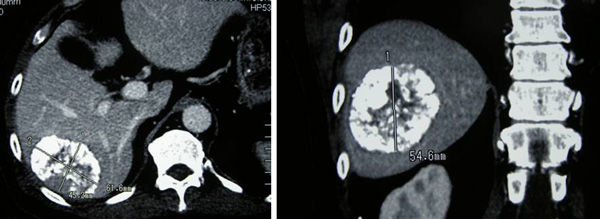
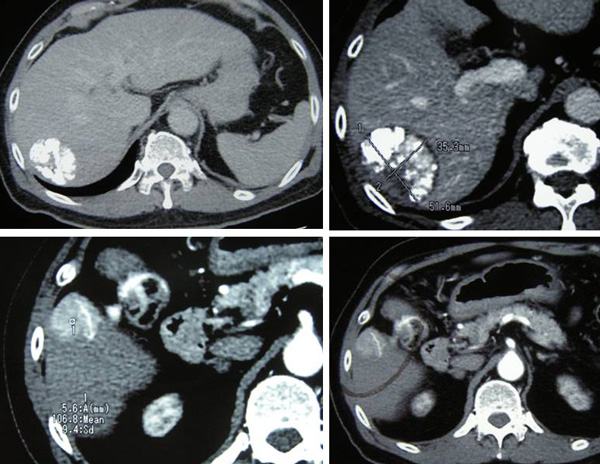
CT scan on 2 June 2010 showed a solitary mass in segments 6 and 7 in the right lobe of his liver, It  measures 7.8 x 6.5 x 8.4 cm. This is compatible with a hepatoma. There is no involvement of the hepatic or portal veins. There is no definite extension beyond the liver capsule. No enlarge lymph nodes were seen in the para-aortic or portahepatis region.

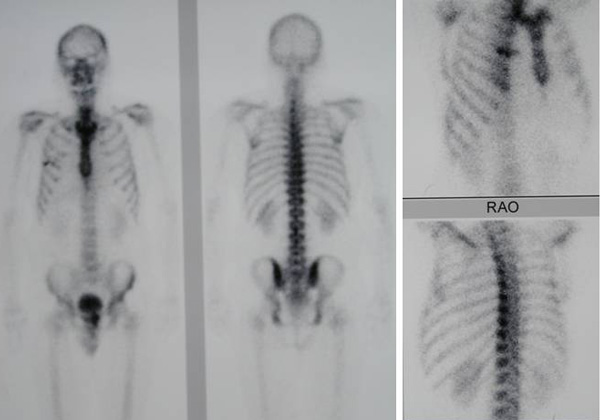
 Bone scan on 2 June 2010 showed a mildly increased tracer activity in the mid to lower cervical spine, T4 and T5 vertebrae. No conclusive scan evidence of bone metastasis.

 On 3 June 2010, TD underwent transarterial chemo-embolization (TACE). This procedure cost about S$9,000 each time.

 After two cycles of TACE, CT scan on 5 August 2010 showed the tumour has shrunk. The entire mass now measures 6.2 x 4.5 x 5.5 cm. The response was good with no evidence of metastasis.

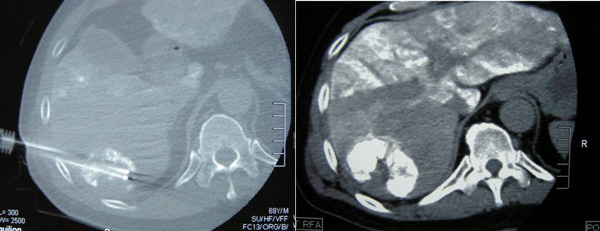
TACE was continued and on 16 September 2010, radiofrequency ablation (RFA) of the liver tumour was performed using a 2.5 x 20 cm cluster Cool-Tip RF electrode system. Two cycles of ablation were performed with repositioning of the cluster electrode in-between each cycle.

CT scan on 6 October 2010 showed the tumour was significantly smaller in size, 4.7 x 5.4 x 4.6 cm. There was no evidence of recurrent or new lesions in the rest of the liver. No evidence of pulmonary metastataic deposits and no enlarged mediastinal or lymph nodes.

A bone scan was also performed on 6 October 2010.


TD was told that there was nothing to worry about. The total cost of his treatment came to about S$60,000.

During the routine checkup TD was asked to receive Zometa injection for his bone. Each injection coast S$1,200 and he received a total of 6 injections.

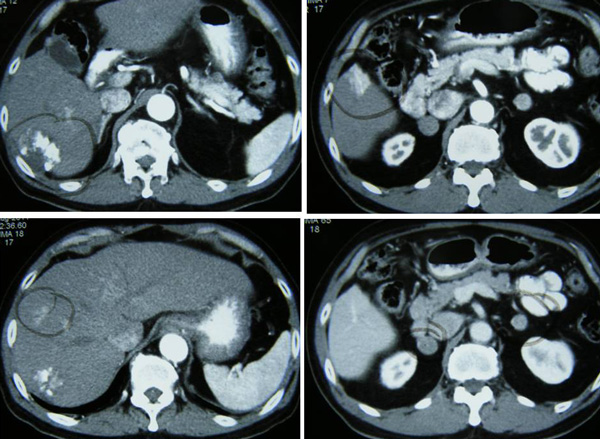
On 6 April 2011, a CT scan was performed. The previously treated mass in the right lobe of his liver measures approximately 3.5 x 5.1 x 4.8 cm in size. There is no associated hypervascularity seen with this mass. However, there is a new lesion in segment 5 of the right lobe of his liver. It is 3.1 x 2.3 x 3.6 in size.  This mass was not present on the previous scan of October 2010 and is suspicious of recurrent disease.


TD was told to come back in two months’ time for another scan. Disappointed, TD did not want to see his Singapore oncologist any more.

TD came to a private hospital in Penang and underwent a CT scan of his brain, neck, thorax, abdomen and pelvis on 12 August 2011. The results showed:

  1. There is a 5.1 x 4.2 x 4.8 cm mass in segment 6 of the liver.
  2. There is a 2.7 x 2.8 x 3.3 cm enhancing lesion in segment 5 of the liver.
  3. There is an ill-defined enhancing lesion measuring about 2.3 cm in segment 8 of the liver.
  4. There is a 2.5 x 2 x 2.1 cm mass just inferior to the right adrenal gland. Metastasis?
  5. There is a 1.9 x 1.6 x 2.5 cm mass just inferior to the left adrenal gland. Metastasis?
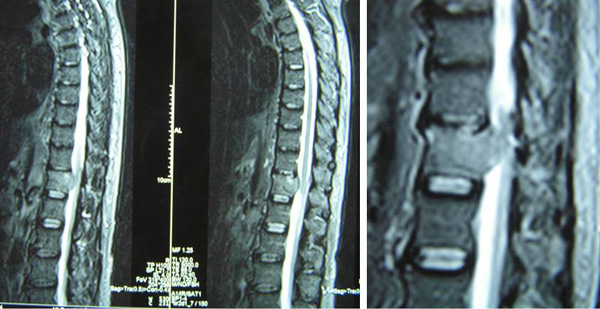
  6. There is a lytic lesion in the vertebral body of T12. Fracture of the superior endplate of T12 is noted. This probably represents a bony metastasis.

On 13 August 2011, MRI of the thoracic spine was carried out. The result confirmed a lesion measuring 3.5 x2.4 x 2.2 cm in T12 vertebra. The mass extends into the spinal canal and displacing the nerve roots. Findings are in keeping with a metastatic lesion.

TS was referred to an oncologist who suggested that he undergo 10 times of radiation treatment to this back. This is to relieve the minor pains he complained about.

TS came to CA Care on 14 August 2011. Listen to his story.

Comments

How does chemoembolization (trans-arterial chemoembolization or TACE) work? Chemoembolization attacks the cancer in two ways. First, it delivers a very high concentration of chemo-drugs directly into the tumor, without exposing the entire body to the effects of those drugs. Second, the procedure cuts off blood supply to the tumor, trapping the chemo-drugs at the site and depriving the tumor of the oxygen and nutrients it needs to grow. (http://www.radiologyinfo.org/en/info.cfm?pg=chemoembol)

Can chemoembolization  cure liver cancer?  It is not a cure and can only control the cancer for a limited time. TACE can help to keep patients alive longer.  Although the tumor may shrink up to 70% of the time, the associated liver damage can cause pain, fever, nausea, infection, fluid accumulation, and rarely, death. TACE is not suitable for people with very sick livers (http://www.medicinenet.com/liver_cancer/page10.htm)

Benefits of chemoembolization:  Left untreated, patients with primary liver cancer who are ineligible for transplant or surgical resection have a life expectancy of three to six months.

Recurrence: Even when chemoembolization eliminates existing tumors in the liver, new ones may appear.  (University of Washington – http://www.rad.washington.edu/clinical/radiology-clinics/interventional-radiology-clinic/chemoembolization-of-liver-tumors).  In about two-thirds of cases treated, chemoembolization can stop liver tumors from growing or cause them to shrink. This benefit lasts for an average of 10 to 14 months. Chemoembolization is a treatment, not a cure (http://www.radiologyinfo.org/en/info.cfm?pg=chemoembol).

Risk of chemoembolization: Serious complications from chemoembolization occur after about one in 20 procedures. Most major complications involve either infection in the liver or damage to the liver. Reporting indicates that approximately one in 100 procedures result in death, usually due to liver failure. (http://www.radiologyinfo.org/en/info.cfm?pg=chemoembol)


What is Radiofrequency Ablation (RFA)?  RFA is an image-guided technique that heats and destroys cancer. Heat is generated locally by high frequency radio waves that are channeled into metal electrodes. A probe is inserted into the center of the tumor and the non-insulated electrodes, which are shaped like prongs, are projected into the tumor. The local heat that is generated melts the tissue. The probe is left in place for about 10-15 minutes. The ideal size of a liver cancer tumor for RFA is less than 5 cm. Larger tumors may require more than one session.  (http://www.medicinenet.com/liver_cancer/page10.htm).

Benefits of RFA: In most studies, more than half of the liver tumors treated by radiofrequency ablation have not recurred. The success rate for completely eliminating small liver tumors is greater than 85 percent.

(http://www.radiologyinfo.org/en/info.cfm?pg=rfaliver)

What RFA cannot do: Only lesions which can be seen on ultrasound are ablated. Undetected cancer cells, due to the technical limitations of ultrasound, are not treated. Ultrasound cannot detect cells. Therefore there is a chance that some tumor cells will not be killed during ablation and that new lesions in the liver can occur later (http://www.clevelandclinic.org/general/rfa/indication.html).

Can RFA cure liver cancer? RFA of liver tumors is not considered a cure from cancer disease (http://www.clevelandclinic.org/general/rfa/indication.html).  This treatment should be viewed as palliative (providing some relief), not curative (http://www.medicinenet.com/liver_cancer/page10.htm).

A few years ago, I had a chance to visit a hospital in China and discuss with a doctor specialized in cryoablation (low temperature ablation). One concern about this treatment is recurrence or new growths found in other parts of the liver  after the ablation procedure has been done.

What then has gone wrong in this case? Nothing wrong actually! Recurrence or new growth can be expected. If that happens, do more of the same treatment again.  The problem lies with TD and his wife. They are not computer savvy enough to be able to surf the net and find out the truth for themselves. And they are not  knowledgeable enough to ask this all important question, “Can the treatment cure my cancer?” They took it for granted that it would.

Indeed, patients need to be forewarned about this. Again, let me repeat, the procedures are palliative not curative. Patients may be disappointed if they expect that chemoembolization and/or RFA can cure their liver cancer.

Follow up report, Liver Cancer Part 2: After chemoembolization and Radiofrequency Failed, He Turned to Herbs and e-Therapy 

Hepatitis C: Medical Treatment or Herbs – Your have a choice!


Asma is a 67-year-female from Indonesia. In 2005, she felt lethargic and had pains in the sternum (chest). She came to Penang and was diagnosed with chronic hepatitis C infection (HCV – subtype 1b). She was subsequently put on interferon therapy and at the same time, on Copegus, an oral medication. Asma received a total of 16 interferon injections. Each injection cost RM 800.00.

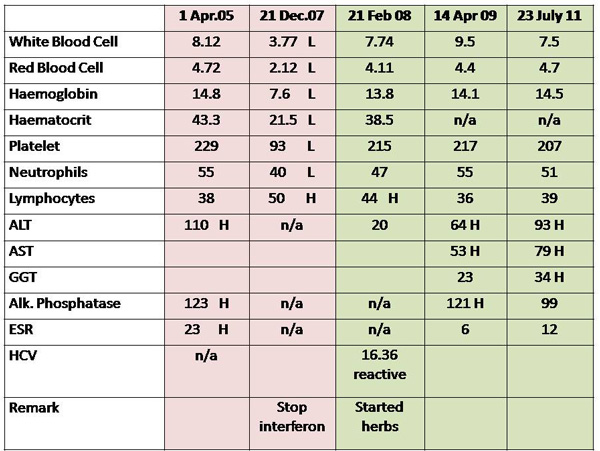
The following are the results of her blood test from 2005 to 2011.

After the interferon therapy, Asma’s condition deteriorated. The levels of her haemotcrit, platelets and neutrophils decreased while the lymphocytes increased. With continued treatment, blood test on 21 December 2007, showed the levels of her white and red blood cells, haemoglobin, haemotocrit, platelet and neutrophils tumbled down further while the level of lymphocyte remained high –  a greater deterioration of blood conditions.

The doctor terminated the therapy after four months although the treatment was scheduled for six months. The doctor wrote: I have advised her to continue regular checkup with a view to resuming interferon therapy perhaps at a lower dose. Meanwhile she is only on Revicon. I suggest a repeat of her viral titre in three months’ time.

(Note: Revicon Forte Tablet is a nutritional supplement that provides essential vitamins, minerals and amino acids to maintain general good health).

Asma came to seek our help on 22 February 2008 but did not bring any medical reports. She was unable to explain what was wrong with her. We requested that she go back to her doctor and ask him to write her medical history and treatment. On 27 February 2008, Asma and two friends came to see us again. She was then started on herbs: Capsule A and B, Liver P and LL-tea.

The following are excerpts of our video-taped conversation on 27 February 2008.

Chris: Comparing the time before you had this treatment and the time when you were having the treatment (sixteen injections) – did you feel any difference about your health?

Asma: Yes. After I received the injection I felt lemah (weak – lack of strength).

C: So from your point of view, did the treatment bring you any benefit?

A: No.

C: It now appears that the virus is still there – not killed. Ibu (Mama), you need to take care of your diet. Avoid all forms of meat, oil, white sugar, dairy products and fine table salt. After this you can try some herbs that I am going to prescribe to you. There is NO medicine for me to kill the virus in you. But if the herbs can suppress the virus in you, that would be good enough.

Female friend: Can she eat fish?

C:  Yes, but avoid the toxic type of fish. But remember again to avoid proteins from animals and eggs. These are not good for you.

C:  Ibu, three years ago (before the treatment), you said you were tired. Did you suffer from any other problem?

A: I felt pulling pains on my chest. After the treatment, the pains were gone.

Female friend: Now there are no more pains but the doctor said there is still virus in her.

Male friend: Initially the doctor said the treatment would be for six months. After four months of treatment the doctor said she could not proceed with the treatment anymore.

C: Why?

A: According to the doctor, if I continue with the treatment I can either die or become “lumpuh” (lack of strength and would be unable to walk).

Male friend: If she continued with the treatment she might die or become lumpuh.

C: Was that what the doctor said?

A: Yes.

Male friend: After the four months, the doctor was afraid to continue with the treatment. The blood was no good.

C: Oh, now I understand. You come here because the doctor told you that he could not treat you anymore. When did he tell you that?

Female friend: Last Thursday. The next day, Friday (22 February 2008), we came to see you.

Male friend: The doctor said, “Just go home first”.

A: The doctor said I am already old.

Female friend: But four months ago, before the treatment, her age was not a factor. At that time the doctor said she was not old and she could undergo the treatment.

On 30 August 2008, Asma came to see us again with her blood test results.  All parameters were within normal limit. The numbers are a far cry from the time when she was under treatment.

We asked Asma the following questions:

Chris: You came to see us on 22 February 2008 and now it is 30 August 2008 – essentially that is six months ago. Are you on the herbs all this while?

Asma:  No, in total I took for about three months only. This is because I could not find anyone to come and collect herbs for me. (Note: the patient is from Aceh, Indonesia).

C:  Tell us frankly, how do you feel now compared to those days before you were on the herbs?

A:  I feel much healthier now. Before I took your herbs I felt lethargic – no energy. My appetite was poor and I was not able to sleep well. I was also constipated.

C: One interferon injection cost RM 800 and you have done a total of 16 injections. Were you getting any better than before you started with this treatment?

A: I was not better at all. I felt tired. But the pulling pains at the chest had disappeared.

C: Now after taking the herbs are you better?

A: Yes, I am better. I am more energetic. I have good appetite and I sleep well. My bowels movements are good.

C: You have just gone to see your doctor. What did he say?

A:  He wanted me to continue with my interferon therapy again in November 2008. No, I am not going to go for this treatment anymore.

On 17 April 2009, Asma came to CA Care again. She was still doing well although she had not been taking herbs regularly.  We reminded Asma that there is no such thing as a permanent cure for hepatitis. She has to take care of her diet and also continue to take the herbs. She should be responsible for her own well being.

On 22 July 2011, Asma came back to see us again, after almost one and a half years of absence. Since the past  three and a half years, she has been taking the herbs off and on.

C: You took herbs since 2008 – more than three years ago. You came in February 2008 and it is now July 2011. Okay, how have you been doing?

A: I am well. No problems.

C: Not tired?

A: If I work too much, I felt tired, otherwise I am okay. My son just passed away and I felt tired.

C: Sleep well?

A:Yes, before the herbs it was not good.

C: Before you said your appetite was not good?

A: Now, it is good.

C: Before you had pains in the chest?

A: No more pains but if I am tired I will feel the pains.

C: After coming here and starting to take the herbs, did you ever go back to your doctor? Took any medication from the doctor?

A: No, never seen any doctor and I did not take any doctor’s medication.

C: Tell me again, are you really healthy? You started to take the herbs three over years ago.

A: I am healthy and better off today than when I was on doctor’s medication. I am a lot better now.

C: What do you mean by better?

A: I don’t feel lethargic anymore. And I feel healthy.

C: Thank God for this. I did not expect such healing. You are indeed blessed. If you wish to continue taking the herbs, go ahead. Take care and know that this illness will not go away completely.

Comments:  According to Dr. Gabriel Ionescu, physician in the Division of Gastroenterology at St. Luke’s-Roosevelt Hospital Center in New York City, USA,  the decision to start treatment for hepatitis C must be shared by doctor and patient. While this advice is most commendable, it is unfortunate that it did not happen in this case. Asma is a soft spoken and timid lady. Even to this day she is totally ignorant of what is going on or what is happening to her. She just accepted what was “dished” out to her without having the slightest clue of what the treatment is all about. Often we would say to patients: Patients educate yourselves! But this message has no meaning to such a person as Asma.

Unknown to Asma, a diagnosis of HCV doesn’t necessarily mean she needs any treatment. According to the Mayo Clinic website: If you have only slight liver abnormalities, your doctor may decide against medical treatment because your long-term risk of developing a serious disease is slight, and the side effects of treatment can be severe. (http://www.mayoclinic.com/health/hepatitis-c/DS00097/DSECTION=treatments-and-drugs).

Even if when treatment is deemed necessary, patients may not know that the treatment helps some, but cure remains elusive. Once HCV is contracted, treatment or the body’s defenses can cure a small portion of patients. In most others, however, HCV’s frequent mutations allow it to evade the immune system, defeating attempts to develop a cure. Some treatments are available, but they don’t work for all patients.  (FDA Consumer, http://www.fda.gov/fdac/features/1999/299_hepc.html).

Let me quote the Australian Prescriber, Not everyone infected with the virus requires drug treatment. Hepatitis C itself is often not going to cause severe liver disease. It is the combination of the viral infection plus factors such as alcohol excess, obesity, diabetes … that leads to more severe liver disease. Addressing the secondary factors will lead to significant changes in liver function (http://www.australianprescriber.com/magazine/29/2/36/9/).

From this statement it appears that a change of lifestyle and diet is even more important than the treatment itself. But in this case, Asma was given the treatment but the doctor did NOT tell her to address the “secondary factors” that are so important for her protection.

In this case, there is no doubt at all that the interferon treatment made her worse. Her blood parameters deteriorated; compelling her doctor to stop the treatment, otherwise she might just die or become “lumpuh”.  She was told, After all you are already old. But the irony is that, according to the doctor’s letter, when Asma’s blood had improved or returned to normal, the doctor wanted to resume the interferon therapy again. And this time at a lower dosage – is this REALLY necessary or wise? Why use a drug that did not work anyway?

Based on the natural history of the virus, only 5% to 20% of infected patients would go on to develop liver cirrhosis over a period of 20 to 30 years. And 1% to 5% of them would develop liver cancer and die. Noting that Asma was already 64 years old then, could it be that she would develop liver cirrhosis when she is 84 or 94 years old? Even with cirrhosis she would not die yet. Even more so if she takes care of her diet. But the doctor did not tell her about the need to take care of her diet!

This story was left unfinished for many months. It was only when Asma came in again in July 2011 when we thought there is a good reason to finish it and publish! Now, let us get to the crux of the case.

Asma was on medical treatments for her hepatitis for three years. She spent a good amount of money for that treatment. What then was the result? She ended worse off than before receiving the interferon injections. The doctor prematurely terminated her treating saying that she just might die or become paralysed from it.  It was only then that Asma came to us for help. She was on the herbs. It has been more than three years and Asma is still healthy.  Asma said she is better off today than when she was on medical treatment.

Take and pause and reflect of the following:

  1. If herbs are harmful, what could have happened to Asma after her medical treatment was abandoned? Given at that time, the blood parameters were “bad.” If the herbs were harmful, the numbers would have become worse! But she got better instead.
  2. They say medical treatments – the Interferon or the Copegus are FDA-approved, scientifically proven. Proven to do harm or proven to cure in this case?
  3. One amusing advice which I gathered from the internet is this (see notes below). We are told that patients can help keep the hepatitis from getting worse by not taking any herbal supplements unless the doctor tells it is okay.  What do you think of such advice? What do doctors know about herbs? Can doctors give a knowledgeable and unbiased opinion about herbs?

What you need to know about Hepatitis C (information obtained from the net)

What is hepatitis C infection?

Hepatitis is a Latin word for inflamed liver. In this case, the inflammation is due to virus. Currently five viruses, A, B, C, D and E have been identified to have the ability to attack and damage the liver. Of these five, Hepatitis C virus (HVC) is viewed as the most serious.  It can cause irreversible scarring or cirrhosis of the liver which later can lead to liver cancer or liver failure.

Hepatitis C infection is often referred to as a “silent epidemic” and is a worldwide problem. Millions of people are infected with this virus for years. The virus may just lie dormant and many people may not experience any symptom – no symptoms of liver damage and the liver enzymes are at normal levels. In other cases, HCV can be detected in their blood and the liver enzymes are elevated.

It is said that of every 100 people infected with the hepatitis C virus about 75 to 85 people will develop chronic HCV infection. Of those with chronic HCV, 60 to70 people will go on to develop chronic liver disease, 5 to20 people will go on to develop cirrhosis over a period of 20 to 30 years and 1 to 5 people will die from cirrhosis or liver cancer.

In severe cases of HCV, patients show symptoms of liver damage such as:

  • yellowish eyes or skin (jaundice),
  • fatigue, or an extreme feeling of being tired all the time,
  • pain or tenderness in the right upper quadrant of the body,
  • persistent nausea or pains in the stomach,
  • lingering fever,
  • loss of appetite,
  • diarrhea,
  • dark yellow urine or light-colored stools.

Treatment of Hepatitis C.

A diagnosis with HCV does not mean that you must receive treatment. This is not necessarily the best option because the drugs used to treat HCV have serious side effects, are expensive and do not work for everyone. That being the case you need to “wait and see” and monitor your liver function enzymes to know how well your liver is working.

Studies have shown that current drugs are effective in up to 50% of patients with genotype 1 and up to 80% of people with genotype 2 or 3.

The drugs for treating HCV are:

  • Pegylated interferon alfa-2b (Peg-Intron) or pegylated interferon alfa-2a. In Malaysia pegylated interferon alfa-2a is sold as Pegasys (by Roche) and comes in a pre-filled syringe with fine gauge needle. Patients can bring the syringe home and inject the drug him/herself once a week.
  • Ribavirin. This oral drug is available in Malaysia as Copegus (by Roche) and comes as a 200 mg tablet. Patients generally take 3 tablets, twice a day. Taking Copegus alone without Pegasys is not effective for the treatment of chronic HCV infection.

The length of treatment depends on the type of the hepatitis C virus or genotype. For genotype 1 generally the treatment lasts for one year, while genotypes 2 and 3 are treated for six months.

If the drug is ineffective after three months, the treatment is usually discontinued.

Patients are advised to avoid this treatment if they drink alcohol, have advanced cirrhosis or liver damage, have severe depression or other mental health problems, are pregnant or might become pregnant, have autoimmune diseases such as lupus, rheumatoid arthritis, psoriasis, and advanced diabetes, heart diseases or seizures.

Dietary habit and life style change and NO herbs:

According to medical advice as found in the internet, patients can help keep the disease from getting worse by:

  • Stopping the use of alcohol.
  • Eating well.
  • Not taking any herbal supplements unless the doctor tells it is okay.
  • Seeing a doctor regularly.

Side effects of drugs

Interferon can cause severe flu-like symptoms (chills and body ache), irritability, depression, concentration and memory problems, skin irritation, decreased thyroid function, constant fatigue, headaches, fevers, nausea, and insomnia.

Ribavirin can cause a low red blood cell count (anemia), itchiness, nasal congestion, skin irritation, and fatigue. Ribavirin accumulates in the testicles and ovaries and causes birth defects. Combined therapy of pegylated interferon and ribavirin may cause suicidal behaviour in some patients. Patients may also suffer from nausea, cough, shortness of breath, rash, itching, insomnia, and loss of appetite.


Dissecting Chemotherapy Part 8: Chemo for Colon Cancer – Only Three Percent Benefit

DL is a 47 year-old-male. Sometime in September 2010, he had uncomfortable feelings in his stomach. He went to see a GP who thought it was a food poisoning or gastric problem. He was told not to worry about it as the problem would just go away in a day or two.  Unfortunately it was not to be. The problem persisted and in early February 2011, DL felt there was lots of air/gas in his stomach.  In the early morning of 8 February 2011, DL went to see the same GP again. This time the doctor took his blood sample for analysis. An ultrasound was also done.

The blood test results of 8 February 2011 showed ESR = 40 (high), GGT 67 (high) while the cancer markers were all within normal range; CEA = 0.7, CA19.9 = 7.7, and Total PSA = 0.5.

Ultrasound of the abdomen showed “thickened loop of bowel, suggestive of colorectal malignancy”. He was advised to undergo a colonoscopy and CT scan of the abdomen.  A follow up CT scan confirmed thickening in the colorectal region.

On 10 February 2011, a colonoscopy was performed. There was a caecal polyp, and ulcerated growths in the transverse and sigmoid colon.

Biopsy report confirmed the following:

  1. Caecal polyp:  tubule-villous adenoma with high grade dysplasia, along with suspicious foci of infiltration.
  2. Transverse colon: malignant transformation of a tubule-villous adenomatous polyp with foci of infiltration.
  3. Sigmoid colon: malignant tubule-villous adenoma with foci of infiltration. Grade 2 adenocarcinoma with infiltration.

DL was referred to the government hospital for surgery.  A second colonoscopy was done at the government hospital and on 1 March 2011, DL underwent an operation to remove the cancer. According to the pathology report, the descending colon, part of ileum of appendix, caecum, ascending colon and descending colon and mesocolon were resected.  Histology indicated:

  1. Mycinous adenocarcinoma, well differentiated, pT3NoMx
  2. Tubular adenoma with invasive adenocarcinoma at caecum, well differentiated.
  3. Intramucosal adenocarcinoma (at caecum) forming small polyp.
  4. Inferior mesenteric lymph node: no malignancy.

DL was in the hospital for seven days.  He was told that it was a Stage 2 cancer. DL was subsequently referred to an oncologist in the same government hospital. The oncologist offered chemotherapy and this is what DL was told:

“With chemotherapy, the chance of recurrence would be 17 percent, without chemotherapy the chance of recurrence would be 20 percent.” DL would have to undergo thirty cycles of chemotherapy.

Listen to what DL told us when he came to CA Care on 15 July 2011.

Comments

DL was indeed lucky to have met an honest oncologist who told him the “reality” of what chemo is all about.

  • In exchange for thirty cycles of chemotherapy, DL would stand to cut recurrence rate by 3 percent.
  • An equally important   point not said but implied is that even with chemotherapy there is no certainty that DL would remain cancer free. There is a 17 percent chance of recurrence.

So in dealing with cancer, no one will know with certainty its ultimate outcome.  Patients need to be honestly told the odds against them. The cards must be laid out openly on the table. Patients must be the ones to make the decision since this involves their life.

It is most unfair for those in the know to tell only the “good things” about chemo treatment, downplaying the many “bad things.” Patients are sometime “threatened” and “pushed” or “cheered” into taking a path that they are reluctant to take. We salute DL’s oncologist for being honest with DL. Even more so, when he told DL that should DL decids to do chemotherapy in the future, he is welcome to come back to receive the treatment. Many patients tell us, “If we defy our doctors, we will not be able to go back to the hospital again.”  This fear is real and has “cowed” patients into following what their doctors want them to do.

Dissecting Chemotherapy Part 7: Avastin + Alimta Nearly Killed Me

Avastin belongs to the group of chemo-agents called the “Smart Bomb” or Targeted Drug. It is used in combination with the conventional chemo-drug for metastatic colorectal, non-small cell lung cancer, metastatic kidney cancer and glioblastoma (brain cancer).

The drug is not only expensive but also comes with a variety of scary side effects. Patients receiving Avastin may suffer from the following:

  1. Serious, and sometimes fatal, side effect called gastrointestinal (GI) perforation. Perforation is the development of a hole in the stomach, small intestine, or large intestine.
  2. Serious and sometimes fatal bleeding, such as coughing up blood, bleeding in the stomach, vomiting blood, bleeding in the brain, nosebleeds, and vaginal bleeding.
  3. Nervous system and vision disturbances. Symptoms may include high blood pressure, headache, seizure, sluggishness, confusion, and blindness.
  4. Stroke or heart problems, which can be fatal. Heart problems include blood clots, mini-stroke, heart attack and chest pain.
  5. Abdominal pain
  6. Nausea,
  7. Vomiting
  8. Constipation
  9. Fever
  10. Slow or incomplete wound healing
  11. Too much protein in the urine, which may lead to serious kidney problems
  12. High blood pressure.

Alimta is used in combination with the conventional chemo-drug for the treatment of non-squamous non-small cell lung cancer and malignant pleural mesothelioma. Alimta is not indicated for squamous cell lung cancer.

Patients may be allergic to Alimta and suffer from hives, difficulty breathing; swelling of face, lips, tongue, throat, pale skin, easy bruising or bleeding and unusual weakness.

The side effects of Alimta include:

  1. Fever, chills, body aches, flu symptoms
  2. White patches or sores inside mouth or on lips
  3. Urinating less than usual, or not at all
  4. Chest pain, trouble breathing
  5. Swelling, rapid weight gain
  6. Skin rash
  7. Numbness or tingling
  8. Depressed mood
  9. Sore throat
  10. Tired feeling
  11. Nausea, vomiting, diarrhea, constipation, indigestion, loss of appetite
  12. Muscle pain.

The most important question which patients want to know:

Can Avastin cure cancer? Try type this question on Google search and see what answer you get? You get nothing. No one is talking about cure at all. They only talk about prolonging life! And that too is amazingly ridiculous.

Q: Does Avastin cure colon cancer?

A: No.

Avastin (Bevacizumab): Good or Bad Cancer Treatment? http://yalepress.typepad.com/fightingcancer/2011/07/avastin-bevacizumab-good-or-bad-cancer-treatment.html

Dr. Richard Frank, M.D. wrote:  “The cost of cancer medicines is breaking the banks of Medicare and patients (private insurers continually raise their rates to cover costs) as well as forcing the closing of many oncology practices across the country. Access to basic cancer care and medicines is being jeopardized because of the exorbitant costs of the new biologic medicines. Unless these medicines can show at least a meager, repeatable improvement in survival for patients battling cancer, then they should not be approved and patients should not be given them in false hope.”

Q: Can Alimta cure lung cancer? This is the answer I got.

A: Alimta does not cure mesothelioma or lung cancer. 

Having understood the risks and the potential benefit (but what benefit are we talking about?) let us watch this video on what Alimta + Avastin did to a patient with lung cancer that had spread to his liver.


Note: We received a message on 18 September 2011 that this patient died.

When a lawyer makes a mistake, he loses his case in court; When an engineer makes a mistake, the building collapses; But when a doctor makes a mistake, it gets buried in his patient’s grave  ~ A Cancer Patient


Comments

In his website, http://www.utopiaawaits.com/index.php?option=com_content&task=view&id=53&Itemid=2

Dr. Carlos Garcia, M.D. wrote, “Many patients and support individuals … get incensed when I state that chemotherapy has a FAILURE RATE of ninety-seven percent (97%), or a cure rate of a mere three percent (3%).  They are usually shocked and then appalled by this statement.  Their body posture changes, their mood becomes more confrontational, in short this statement touches the very core of their belief structure.  That is if I am correct, as I will attempt to corroborate with the attachments herein, then why were they not told this prior to being told that chemotherapy, along with surgery and radiation are the ONLY ways of treating cancer and furthermore that alternative practitioners are mere quacks.

The FACTS are that after years of trying, and FAILURE and trillions of dollars in research with no improvement in success why is chemotherapy still being used?  Are the oncologists just mindless heartless doctors in it for the buck?  How do they justify just recommending chemotherapy, radiation and surgery, while ignoring dietary changers, and emotional issues?  How do they justify the continued endorsement that was first known to be ineffective in 1985 and remains ineffective with a ninety-seven percent (97%) failure rate today?

Let’s be honest, spontaneous remission, has a higher success rate than chemotherapy.  So potentially one could reach the logical and perhaps factual conclusion that doing nothing when diagnosed with the symptom of cancer is a better medical choice than opting for chemotherapy, with definitely a higher quality of life than that presented by chemotherapy.”

Breast Lump: Two Experts, Two Different Opinions – you like that?

Pet (not real name, H621) is a 42-year-old female. Sometime in early 2011 she felt a lump in her right breast. She did not see a doctor until May 2011. An ultrasound on 24 May 2011 showed:

  • An irregular hypoechoic mass at 12 o’clock position of her right breast. The size is 4.4 x 3.0 cm. The margin is irregular.
  • Another  three hypoechoic nodules noted at 8 and 10 o’clock position of right breast and behind the nipple (0.5 x 0.7 cm, 0.5 x 0.5 cm and 1.7 x 1.8 cm)
  • A right axillary node is also seen, 0.9 x 0.8 cm.

Impression: Findings in keeping with Ca breast.

Trucut biopsy was performed. The histopathology report indicated: Invasive ductal carcinoma, NOS; grade 3.

Pet met a surgeon of a private hospital who told her that she needed a mastectomy. However, before surgery, she has to undergo chemotherapy first. This is to shrink the tumour. She may need 2 cycles of chemo or more, depending on the outcome.

Not satisfied, Pet went to see a breast surgeon at a government hospital. She was told there is no need for chemo. The surgery can be done right away.  Confused?

Pet came to see us on 3 June 2011. Watch this video and listen to our interesting conversation.

Comments

It is hard enough to be told that you have cancer – that applies to everybody! Then, you have the high hope that the experts know how to cure you. You met the surgeon. Oh, he said, the lump was too big. Go for chemo first. So there you are having to shuttle to the oncologist. The oncologist said you might need two cycles of chemo to shrink the lump. But you may need more. It all depends.

You wondered aloud, even if you had surgery or chemo, the cancer may come back again?  You make known this concern to your oncologist, hoping to get some reassurance. Imagine the answer he gave you – Do you have any disease that medicine can cure you?  Then he equated that with diseases like diabetes or hypertension. See, there is no cure. Instead you will get hooked to the drugs until you die! But you may wonder, is the analogy correct or logical? Is it logical to believe that you will need to depend on chemo all your life? Chemo drugs are toxic – they night just kill you after a while unlike the diabetes or hypertension pills.

Not satisfied with the first surgeon and the oncologist, you decided to seek a second opinion. Indeed a correct thing to do, so they say. So you went to see a breast surgeon – after all, a breast specialist is supposed to know more than other experts about the breast. Furthermore he is from a government hospital. In your mind, you tend to trust doctors in government hospitals than those in the private hospitals. You know la, these days.  At least those in the government  are there not for money – rather, as a national service to the country.

To your surprise, this breast expert said there is no need to do chemo first. Go straight for surgery! Now, you are at the cross road – another confusion in your mind.  How is that, two experts tell you two different stories. Who is right? Who is a better expert then? Whom to listen to now? They say, medicine is based on scientific fact – but in this case, one expert must have got his fact mixed up! Both experts cannot be right in trying to solve your “simple” problem. Or is it truly simple?

Since both doctors say different things, why not turn to a “quack” – the non-medical doctor and let’s see if he can pull out another trick. So, there it is – you went to CA Care and met with a Dr. Chris, a Ph.D. not a M.D. You had a chat with him. You were confident and hoping that he would say – No surgery, just take herbs and you shall be well. But you were disappointed. He wanted you to have your breast cut off as well – like those two doctors. The only consolation is that after surgery, you could see him again if you decided not to undergo chemotherapy or radiotherapy.

In your discussion with him you also learned that doctors are basically disease- and drug-orientated. The job of the surgeon is to cut. The job of the oncologist is to chemo. They have nothing else to offer more than that. You will be left on your own to fend for yourself after you leave the hospital.  This is like what Barry Boyd, M.D., wrote in his book, The cancer recovery plan, “Many doctors don’t bother to counsel their patients after treatment. Once cancer treatment is completed, most patients are left on their own to cope with the rest of their lives. This is what I call falling off the cliff. Patients are left in free fall.”

Of course, you are told: “There is nothing else to do. Go home and do what you want to do. Eat what you want to eat.” You just did exactly that – followed what the experts told you. And if the cancer comes back again, there is nothing to worry. Go back to the hospital again. You can go through the entire procedures again – the devastating regimen you did before. There is still hope –  that’s the saving grace!

Perhaps that is why you don’t get well? Do they ever teach you how to get well? Do they teach you how to increase your odds against recurrence of the cancer? No, only the “quacks” in the alternative medicine do that.  You may now wonder – are those in the alternatives really “quacks”? Who are the real quacks in this case?

In this video, Pet was trying to understand or defend her doctor – to be fair, we cannot blame the doctors if they are not sure if they can cure your cancer or not, in spite of the chemo.  After all everything depends on the patients themselves. Yes, exactly, that is true but such thinking is not scientific! When experimenting with the chemo drug to see how effective it is, factors like diet, lifestyle, personality, lifestyle, etc., do not count. They are not supposed to exist. You get cured by that drug – nothing else count. So to say that it all depends on the patients whether you get cured or not is “scientifically flawed” thinking. And in CA Care,  it is this flawed thinking that is important and must not be ignored!

Two questions are always in the minds of most cancer patients. One, is the chemo doing going to be effective? Two, will the cancer come back again after the surgery, chemo or radiation? Every cancer patient is seeking for a cure. Unfortunately, scientific medicine cannot give you any definitive answer to these all-important questions. One renowned oncologist of Singapore put it this way: “Oncology is not like other medical specialties where doing well is the norm. In oncology, even prolong a patient’s life for three months to a year is considered an achievement. Achieving a cure is like striking a jackpot. Not all cancers can be cured.”

We wonder, how many newly diagnosed cancer patients have gone through such a dilemma. If that is the situation you are in, take comfort, you are not the only one feeling lost, disappointed, frustrated or helpless. Many are just like you too.

Penelope Williams, a Canadian breast cancer survivor, was diagnosed with breast cancer in late 1988. She had surgery, chemotherapy and radiation – a treatment referred to as “slash, poison and burn”.  In her book, New Cancer Therapies – the patient’s dilemma, she wrote in detail the issues facing a cancer patient after being diagnosed with cancer.

She reasoned, “There had to be a better way. Why, in these days of modern medicine, was the treatment for cancer almost as bad as the disease?”

In spite of all these treatments which they claim to be scientific, “there is no certainty of a cure for cancer, the specter of recurrence is always lurking.”

Surgery “is invasive, disfiguring, often unnecessary, and rarely gets all the cancer despite the frequent claim by the surgeon that “we got it all”; according to some, surgery actually encourages the proliferation of cancer cells.”

Chemotherapy “ Is the cornerstone of modern cancer therapy… it kills  more patients than it cures, is useless for many cancers, causes secondary cancers, and is so toxic it destroys the immune system, leaving  the body susceptible to other diseases, including new cancers. To find a chemical that will make cancer disappear and leave normal tissues unharmed would be like finding a drug that you can take by mouth that will make one ear disappear and not the other.”

“Radiation therapy was at best an inexact science, at worst, highly dangerous to patients. Fifty years later, this observation still applies. Even in low doses, it can cause cancer and is highly invasive, painful and disfiguring. It can only be successful in curing cancer in dosages so high as to kill the patient. It damages body organs and tissues and actually increases death rates when used as adjuvant treatment for such diseases as breast cancer.”

“For many people, the anguished struggle to sort out treatment options comes down to a decision whether to go with the heart or the mind.  Ultimately, it must be your call because it is your body and your mind that are in danger of becoming the casualties, not of cancer, but of the cancer wars. So what to do? How to choose? “

Breast Lump: Sister died – And did she ever learned from this tragedy?

PG (M995) is a 50-year-old Indonesian. For the past ten years, she had been living with lumps in her right breast. She went for massage hoping the lumps would go away. They did not. The lumps grew bigger instead. In early 2011, PG had pulling sensation. She took medication from a Chinese sinseh. This did not help. She finally came to a private hospital in Penang.

USG of her right breast done on 5 July 2011 showed:

  1. An irregular, 2.3 x 1.9 cm soft tissue mass at 8 o’clock position. Two small satellite lesions (0.4 cm and 0.9 x 0.3 cm) were noted adjacent to the mass.
  2. An irregular, 1.5 x 1.3 cm mass at 10 o’clock position.
  3. Two axillary nodes, 0.9 x 0.6cm and 1.3 x 0.7 cm.

Impression: Two irregular masses at 8 o’clock and 10 o’clock are suggestive of Ca breast.

PG came to seek our help on 8 July 2011.  Watch this video.


Transcription of our conversation:

Chris: Your sister had similar problem – breast cancer?

PG: Yes, same problem.

C: She had lumps in her breast – did she go for operation?

PG: No. the lump burst. There was wound. It was painful. Then she had an operation.

C:  That was a bit too late. What happened after the operation?  Did any radiation or chemo?

PG: No. She died – today operate, tomorrow died.

C: So if you follow the same path that your sister took – you do not do anything now – your lump will also burst. You will have a lot of pain. That will be too late. Even if you operate after that, you will die like your sister. Do you understand what I am trying to tell you? What I am trying to tell you is – you have to remove the lumps in your breast before they grow bigger and burst. It is best that you remove the whole breast.

PG: You want to have it removed totally?

C: Yes, remove everything. There are many lumps in your breast. 1 + 2 + 1 lumps in the breast and 2 lumps in the arm pit. In total you have 6 lumps. I don’t believe that you can make them disappear by just taking herbs.  Later, these lumps will grow bigger and bigger and then burst. If you come when that happens it will be too late. So if I were you, I would operate the whole breast now. You don’t die by removing you breast.

PG: When I operate, it will come back again?

C: Yes, for some people that can happen. That is why doctors ask you to do chemo and radiation. (Knowing that patients are scared of chemo or radiation. Chris added). Let me tell you this. After the operation, if you are afraid of chemo or radiation, you can come back and see me again. I shall teach you how to take care of yourself. You can take herbs, take care of your diet, etc. If you don’t want to do chemo, I am not going to force you to do it.

The reason why I ask you to go for operation is that I am afraid as the lumps start to grow bigger and bigger they will burst. There will be a hole in your breast. It is going to be difficult. Then you have to have it removed anyway. So why wait for this to happen? It would be too late if that happens.

Son: What if she does not the operation and just takes your herbs?

C: Oh, if I can do that, I would not have asked you to go for surgery! Everyone who comes here wants to do that. Better still – why not ask me to just “blow” on you and your lumps disappear? That is the best way! But I cannot make your lumps disappear. I am here not trying to mislead anybody. I am here to help you because I am afraid you will die if you don’t have the lumps removed. Many patients from Indonesia come to me. I ask all of them to go for surgery.

Son: Okay, after surgery, we shall tell the doctor that we don’t want any chemo or radiation.

C: You don’t have to talk much or go into such detail. The first thing to do is get it removed. The one who cuts you is not the same person who is going to give you the chemo or radiation. Take note of whatever suggestions your doctor gave but first thing is to get the breast removed. One or two weeks after surgery, you can come back and see me, if you like. Bring all the medical reports.

PG: I am going home to Indonesia tomorrow.

C: What do you want to do in Indonesia? If I were you, delay your return trip for a day or two. Go and consult these two doctors in the hospitals. Make preliminary preparation for your surgery. Ask them how much it would cost, etc. Then you go home.  If the doctor insist that you do the operation immediately, let him know that you need to go home first to prepare your money for the treatment.

As it is now, you fly home tomorrow.  Then you come back again? Ask around and then go home again? And then fly back again for the operation? Why not spend a day or two now to go to Lam Wah Ee Hospital and Loh Guan Lye Hospital and ask the doctors there about the cost of the operation and what else to do?

Comments:  There is a saying, Only fools learn from experience, the wise learn from the experiences of others. Granted, by the way she presented herself, PG is not an “educated” woman. But a wise person need not be educated!  Her sister suffered the same problem like her – and did PG ever learn anything from that tragedy? It is yet another tragedy if she does not.

Each of us lived our lives differently. Some see the glass half empty, while others see the glass half full. When faced with a problem, we have that choice to be negative or positive. If we want to do something, we have all the reasons to do so but if we don’t want to do something we can also find all the reason not to do it.

There is one mind-bogging fact that I learn when dealing some patients from Indonesia. Many of them come to Penang in search for a cure for their cancers. They checked into the hospitals and undergo scanning procedures, biopsies, etc. When all are done the doctors suggested a treatment regimen.  They back out. They refuse surgery, chemo, radiotherapy or medication. The pack off and go home the next day! I often ask aloud – why spend all the money and time to go through all these preliminary investigations if you don’t want any treatment?  PG went to see a doctor who did the preliminary investigation. Then she came to see us. The next morning she wanted to go home without wanting to do anything. What is the whole idea? It baffles me. And such case happens very often.

Breast Lump: Get It Out

Let me reproduce an e-mail which I received from a lady in Italy on 26 June 2010.

Dear Dr. Teo,

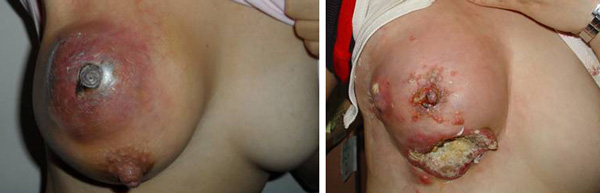
My sister has a lump in her left breast. She found out about this lump, it was the size of a dollar coin, three years ago. Last year when she finally decided to tell us, her family, about it, it was already one breastful, 8cm in diameter. But she has decided not to do any surgery. It’s hard to accept her decision. My parents are very sad, but I’m trying to live with this. I know she’s very afraid but tries to act as if nothing’s happening.

I succeeded to bring her to a hospital to have a breast USG while I was home last year. I live in Italy and she lives in Jakarta, and it’s a bit complicated when you’re far from each other.

I’m writing to ask whether we could consult you. Reading from your website, I haven’t found anyone who hasn’t done any surgery prior to taking your herbs. Is it necessary that we do a complete blood test and bring it to you? The only medical record we have is the USG result done last year.

If you could give us some of your time, I’d like to arrange a visit with you for my sister in August 2011.

Thank you very much,

Yours truly,

YL, Italy

Reply: She has to remove the tumour. It is too big. Herbs cannot make the tumour go away.

Once in a while over the years, we have ladies coming to us with tumour(s) still in their breasts, like the case above. They had these tumour(s) for some months or years and did not do anything about it (them).  Okay, some did something like going to see certain alternative practitioners who assured them that there was nothing to worry about. They were told, Take this or do this and the lump will go away! And they believed these practitioners. Sad tragedy follows.

If you are one such lady, let me tell you this: Don’t be dumb! If you have a lump or lumps in your breast, please go and see a doctor and have it determined if it is malignant or not, i.e. whether it is a cancer or not.  If it is a cancer, my next advice is: Have a surgeon remove the tumour or your whole breast.

After surgery, it is a different “ball game” whether or not you want to undergo chemotherapy or/and radiotherapy. But to me, surgical removal is a wise option in dealing with a breast tumour. I recall many instances of ladies who came and “asked me to agree” that they don’t go for surgery. I told them: There is no way I would agree with that.   You come to me for advice and I give you my advice free of charge, based on my years of experience dealing with breast cancer. Some of them were disappointed because I insisted that they go for surgery. Some became  angry with me for not “supporting” them.

These are two main reasons why I thought the tumour has to be removed surgically.

  1. It is better to have the tumour removed for psychological reason. After the surgery, the lump is gone. You don’t have to see or feel it is there in your breast anymore. But if the lump remains in your breast, every day or perhaps every time of the day, you are being reminded of your “fatal disease”. Would that not make life miserable for you?
  2. There is no guarantee that herbs, change of diet, exercise, prayer, supplements, etc., can make a malignant tumour disappear. The bigger the tumour, the chance of it disappearing is even more remote. A lady told me that after taking herbs for some months the tumour in her breast “burst.” Another lady said her tumour “dropped” out and left a hole in her breast! All these do not solve the problem. Some patients say the herbs seemed to stop the tumour from growing but in other instances, the tumour kept growing in size. See the pictures below and decide for yourself if this is what you want.


We hope we have made CA Care’s position clear. Please go for surgery and have the cancerous lump removed. After this is done, we can discuss whether or not you want to undergo chemotherapy, radiotherapy or take tamoxifen, etc. You have the option to make that decision.

We shall present you with two more reports on breast lumps – so, stay tuned.


Cancer: What It Takes To Be A Winner

Anne (not real name) is from Indonesia. She was diagnosed with lymphoma and underwent eight cycles of chemotherapy. She suffered severe side effects. The treatment did not cure her. About five months after the completion of her chemotherapy, the cancer recurred. There was a 2x2x3 cm mass in her left cheek and a swelling in her left neck. The doctor asked her to undergo radiotherapy and chemotherapy again. She refused.

She came to CA Care for herbs and changed her diet. After two months, Anne came back to Penang and reported that her health had improved tremendously. We then put Anne on the e-Therapy for a week. Her health improved further. A detail account of her healing is reported in another write-up, Lymphoma: Herbs and e-Therapy Brought Her Back to Good Life Again After Eight Chemos.

At the end of her stay in Penang, we pointed out to Anne that her improvement is all about herself. It was her attitude and her choice that made her well! We and people around her can only help but ultimately her success or failure depends entirely on herself – the patient.  Listen to our conversation that day.

There are three important lessons we can learn from this case.

1. Enough is enough. Eight cycles of chemos did not cure her cancer. She was asked to go for more chemos plus radiation. Anne took a step back and re-evaluated her path. What could more chemo do for her given that eight cycles did not help? Do you want to say enough is enough, or do you want to allow yourself to be led like a lamb to the slaughter? Of course, you and you alone will have to make THAT CHOICE  and bear the consequences of  your decisioin.

After the chemos Anne suffered pains. The only thing the doctor could do was to prescribe her painkillers and gastric medication for her bad stomach. She started to read the websites. She heard horror stories from friends about how patients died after the chemos, and she reflected on her own experiences. To Anne, chemotherapy had adverse side effects. It did not cure her. So she decided not to go through it again. She was afraid. Her husband said, She decided to go for Dr. Chris’ herbal therapy.

2. Get your priority right. Help yourself first before others can help you. Anne came to seek our help. She benefited tremendously from the herbs and change of diet. We did not expect Anne’s healing to happen so soon. But it did. We thank God for this blessing. On the night of her second visit here, we asked Anne if she would stay a few days longer in Penang so that she could do the e-Therapy. Anne readily agreed – I would stay here for as long as you want me to do so. It was indeed a positive attitude that brought more healing to her.

Many patients come to Penang. They would go shopping or go elsewhere first. On the last day of their stay, they would drop by CA Care. The next day they are booked to go home. Given such a situation, there is nothing much we could do to help them. Where and what is their priority? We told Anne, That night when you came, we did not plan to put you on the e-Therapy at all. If you had decided to go home the next day you would have missed your healing! But you made the right choice of wanting to stay back. And you benefited from the e-Therapy.

3. Read and gather information for yourself.  A friend gave Anne our book. She read it. Then she went into our websites. She read the healing stories. She was inspired by the story of a lawyer who had lymphoma like herself. Anne said, I read her story and I prayed and ask God if this was the way to go. Then I decided to go for herbs. I don’t want more chemo.

Unfortunately not many people are like Anne.  We receive many e-mails every day from almost every corner of the globe. Most of them expect information to be dished out to them on a silver platter. It becomes obvious to us that they don’t read. All that they wanted to know are already written in our websites – www.cacare.com or www.CancerCareMalaysia.com . They just need to read them.

Of course, there are those who just like to sit in front of the computer in the comfort of their home and expect us to send them herbs. And then want to know answers for every problem that might crop up. They seem to throw their problems at us and expect us to do the chores for them.  Go to our website: www.ADayWithChristeo.wordpress.com and these are examples of such e-mails.

This e-mail just came in while I was writing this article:

Dokter  Chris, kenapa dada pak sakit sampai kepunggung. Sudah beberapa hari tidak bisa tidur. Miring ke kanan sakit, miring ke kiri juga sakit. Saya R, anaknya di Jakarta (Doctor Chris, why is that my father has been having pains in the back for the past few days until he was not able to sleep. Could not turn to the right or left).

My reply: Before this no pain? What did he do wrong? Bad diet? Before this he was doing fine. The question you need to ask is: What did he do wrong just before the pains occurred?

Iya dokter, makan makan papa sedikit salah. Karena sebelumnya kondisi tubuhnya lemah tidak ada tenaga. Jadi dia ada makan sedikit pantangan untuk memulihkan kondisi tubuhnya. Apa yang harus kami lakukan dokter? (Yes doctor, a bit of wrong diet. He felt he did have energy. So he ate foods that were “forbidden”. What do we do now?)

I did not want to be cruel by telling him to go and jump into the sea. So my answer was, Take it easy. Let us hope that the pain will go away with time. Try the Pain Tea. Hope it helps. I did not remind him to stop taking the bad food, believing that he has learned it the hard way.

Let us remind you this. Cancer is not just about a tumour in your breast, lung or liver. It is about you, as a human being. There is this quotation, There is no incurable disease, only incurable people.

Unfortunately our experience tells that only 30 percent of patients who come to us benefit from our therapy, the remaining 70 percent cannot. We emphasize the word again, CANNOT. You may wish to ask us why cannot. We hope patients know that one of the most important criteria for success is the person himself. It is not just about the herbs. Many patients come to us with a very high expectation for finding a magic bullet. There is none here.

We have refrained from giving advice or prescribing herbs through the net. It is just a futile effort. If your problem is serious enough, or if your loved one is precious enough, come and see us face to face. Bring along your medical reports and we shall try to help you out. By doing this, we would be able to assess the patient (or those taking care of the patient) as a person.

After knowing the medical history, we would then prescribe the herbs. Prescribing herbs is a very simple thing to do. We often tell patients, After talking to you for five minutes, we would probably know if we can help you or not. Perhaps, most patients don’t even understand what we meant by this. Patients come looking for a magic bullet. They want to find a cure on their own terms. They carry so much baggage and they don’t realize that.

Our experience tells us that if you want to heal yourself, one most important thing you must do is CHANGE – change your attitude, your lifestyle and your diet. There is no two ways about it.

We can only guide you, but patients must take care to heal themselves!

Lymphoma — The Patient from Hell: A Review

I decided that I am not going to buy any more books when we were in the US this time. But it was not to be. My daughter drove me to two bookshops in Houston, Texas and Durham, North Carolina. I ended up buying nine books instead of the usual 30 to 40 books while on a trip like this. But I am glad that I did this.

One of the books I bought has an interesting title, The Patient from Hell. This 300-page book was written by Professor Stephen Schneider, Professor for Interdisciplinary Environmental Studies, Professor of Biological Sciences, Professor (by courtesy) of Civil and Environmental Engineering, and a Senior Fellow in the Woods Institute for the Environment at Stanford University. Dr. Schneider was the world’s leading expert on climate change and global warming. He had consulted with federal agencies and/or White House staff in the Nixon, Carter, Reagan, G.H.W. Bush, Clinton and G.W. Bush administrations.

In 2001, Dr. Schneider was diagnosed with mantle cell lymphoma, a rare type of non-Hodgkin’s lymphoma. He was treated by Dr. Sandra Horning, a leading expert on lymphoma – “the best person in the world for treating what you have”. Dr. Horning is also from Stanford and is a professor of medicine.

This book gives a blow-by-blow account of Schneider’s journey with cancer. It documents how a great mind – a climatologist, discussed, debated or argued with another leading light of medical science, the oncologist – Professor Sandra Horning. From the questions and answers during their consultation sessions, we can decipher the many truths about lymphoma and its treatment, done at a world-class hospital.

Mantle Cell Lymphoma and Treatment

  • A perfectly healthy Schneider noticed a star-shaped black and blue mark on the inside of his upper right arm while bathing. Further evaluation revealed “a few swollen lymph nodes, and they didn’t really hurt, but I knew I couldn’t continue to deceive myself … (I) was going to be poisoned. And I had agreed to it.”
  • CT and PET scans were done followed by a biopsy of the lump. It was a mantle cell lymphoma. Before chemotherapy, Schneider underwent a bone marrow biopsy to know the extent of the spread.

“Sandra explained that the fact that I had lumps both above and below my diaphragm was a good indication that I had cancer in my marrow and that it was already a stage 4 cancer … for mantle cell, reaching stage 4 is pretty common.”

  • Schneider received the “new” Stanford’s chemotherapy regimen using  CHOP + Rituxan (C = cyclophosphamide, H = hydroxyl daunorubicin or Andriamycin, Oncovin or vincristine and P = prednisone)” This treatment is also available here.

“Before Stanford’s new protocol had been implemented, 50 percent of her (Dr Horning) mantle cell lymphoma patients were dead within two years, and 90 percent didn’t make it past the five-year mark. With the new protocol, however, she hadn’t lost a patient in four years.”

  • After three cycles of chemo, CT scan showed that the lumps had disappeared. Sandra said,” You’re in full remission after only three chemos; it’s a remarkable achievement.” Schneider continued with chemotherapy and in total had six cycles.
  • Although in remission Schneider was told that the cancer cells might still be hiding somewhere in the body – perhaps the bones and behind the eye balls. To be sure, Schneider had to undergo a bone marrow transplantation (BMT).
  • BMT required that the whole body be treated with radiation followed by two lethal chemo treatment using megadoses of Cytoxan and another drug known as VP-16. Then “nearly all my blood would be sucked out … put into a centrifuge machine that would spin it until the medium- to heavy- weight particles were trapped and removed, and then the amount needed to keep me alive would be injected back into me.”
  • “Of course, there was the ever-present concern about what was going to come next, how quickly my cancer was being brought under control, and most important, if I would ever completely get rid of it.
  • Sandra said, “We never use the word ‘cure’ just remission. We’re very hopeful you will have a long and strong remission.”

Final Outcome

I was extremely happy to read this book, especially how the best brains pally against each other. I am seeing experts arguing in a cool and civilized way. What a great treat. I would like to say this to both the medical and alternative practitioners: Let us not insult each other, instead let us try to consult each other for the good of our  patients.

To know what really matters,  I “googled” Stephan Schneider lymphoma, hoping to get the latest updates. It is sad to say that in spite of all the best efforts, Dr. Schneider died on 19 July 2010, after an apparent heart attack on an airplane while en route to London from a scientific conference in Stockholm. He was 65.

In short, Schneider survived for nine years after his cancer diagnosis and treatment.  Did medicine really cure his cancer? Is this not something like people use to say, The operation is a success but the patient died of complications?  “Cytoxan had its dangers; it was known to deteriorate heart and lung condition, the cost-benefit calculus was not going to see me getting away scot-free.” Schneider received a lot of that drug and he knew the odds.

 Comments and Advice

Throughout the book, Schneider expressed his opinions about medical treatments –  based on what he had gone through. Let me quote some of his observations:

  • “ As a patient, I also gained firsthand experience with the system in which these professionals must maneuver, and I learned that the bureaucracy and hidebound attitudes embedded in that system are far from optimal – for doctors or for patients.”
  • “Too often, a patient’s treatments are performed “by the book” rather than being tailored to the patient’s specific needs. To put it more bluntly, much of the care that today’s patients receive is medicine by the numbers.”
  • “Most physicians – and patients – act as if the patient’s role is simply to take orders and be cooperative. Tradition suggests that only medical experts should decide on what treatment course to take; patients are presumed both incapable of material contribution to such decisions … But sometimes the patient knows better, at least about how the patient feels and what the patient needs.”
  • “Medicine entails ascertaining what might happen with or without intervention – what various treatments might do to alleviate certain conditions; what side effects might be generated by the treatments; and how the roulette is set up – that is, what probability of success can be assigned to each alternative.”
  • “It is up to you to decide with your doctors what treatment options are best for you and whether or not the side effects of the ‘cure’ are worth it given the probability of success; it’s not just an expert judgment. “
  • “Let me repeat: Choosing what risks to take is not a medical decision. You will be qualified to make choices about how you wish to face these risks. After all, it is you who, for better or worse, will be cured, become sicker and suffer side effects … That decision should be the patients’ choice because the trade-offs are personal value judgments, NOT medical science. All medicine can do is tell us the numbers – probabilities – but to make the choice is the patients’ right.”
  •  “Many important things in life… are a gamble. I often think of life as a roulette wheel containing both happy and nasty outcomes. No matter what we do, sometimes the roulette wheel presents us with lousy results. While we can’t always prevent undesirable events from occurring, I do think there is always something we can do to narrow the width of the slots that represent poor consequences and widen those that imply good outcomes. “

Our success stories with lymphoma: Click this link:  https://cancercaremalaysia.com/category/lymphoma/

 1.       Lymphoma Recurred Two Years After Intensive Chemo – Took Herbs and Remained Well

Siew (A948) was 20 years old when he suffered high fevers on and off in 1996. On CA Care Therapy 2002.  As of 2011, in perfect health.

2.       NHL-Kidney: Cancer-free after Six Months On the Herbs

Peter (not real name) shared his story with us in July 2000. He was diagnosed with lymphoma at 50 years old.  He started to take our herbs in 1999, and up to this day (2011) he is still doing fine. He was asked to undergo bone marrow transplantation and he said no! What could have happened if he had the BMT?

3.       The Story of Devi: A lady lawyer about 40 years old, afflicted by Non-Hodgkin’s lymphoma.

(Reproduced from our book:  Cancer Yet They Live).   Devi was diagnosed as having lymphoma. After finishing all medical treatments she came to CA Care on 18 August 1998 and started on the Cancer Care Therapy. It is 2011, and she is in perfect health and still taking the herbs!

Lymphoma Recurred Two Years After Intensive Chemo – Took Herbs and Remained Well

Siew (A948) was 20 years old when he suffered high fevers on and off in 1996. There was also a lump on the left side of his neck. He consulted a Chinese sinseh who told him that this was due to heatiness. Since the problem persisted,

The treatment consisted of the following:

Induction Phase

  1. Vincristine on days 1, 8, 15, 22 and 29.
  2. Daunorubicin on days 1, 8, 15, 22 and 29.
  3. Prednisolone on days 1 to 22.
  4. L-asparaginase on days 15 to 28.

After the induction phase, treatment rested for 2 weeks and phase 2 started as follows:

Phase 2

  1. Cyclophosphamide on days 26 and 50.
  2. Ara C (andriamycin) on days 13 to 16, 43 to 46, 50 to 53 and 57 to 60.
  3. 6-MP, throughout cranial irradiation.
  4. MTX
  5. Cranial irradiation for 15 times.

After completion of Phase 2, treatment rested for 2 weeks and continued with:

Phase 3

  1. Mitoxanthrone on days 2 and 3.
  2. Ara C on days 1 to 4.

On 31 July 1997, Siew’s liver enzymes were elevated and HbsAg was reactive. His   doctor thought this was probably due to blood transfusion related hepatitis. Further chemotherapy was withheld. Siew’s liver function returned to normal and the ultrasound of his abdomen was also normal. A Bone Marrow Aspiration (BMA) done on 17 September 1997, showed no evidence of infiltration.

From 1 October 1997, Siew was treated with MTX, L-asparaginase, folinic acide and methotrexate. On 29 October 1997, another BMA was performed and the result was negative. More chemotherapy treatments followed on regular basis until May 1998.

Siew was on oral medication in 1999. In 2000 he seemed to be well and was not on any medication. In July 2000, Siew came to seek our help. He was prescribed some herbs but that first visit was also his last visit to us.

About 2 years later, in March 2002, Siew came back to see us again. He presented with:

  1. Feeling of heaviness in his head.
  2. Tiredness.
  3. Swellings on the right side of his neck. There were pulling sensations with slight pains.

We suggested that Siew go back to his doctors at the hospital for further medical treatment. Siew flatly refused. He told us that the doctor wanted to do a biopsy of the lump. He also knew that he would most likely have to undergo chemotherapy again. Siew said that in the past he had been very lucky to get out of the hospital alive. While in the hospital receiving treatment, he saw many patients in similar situation did not make it and died.

We respected Siew’s decision to opt for herbs instead of chemotherapy. We cautioned him that the lumps in his neck may not go away. And there would be no guarantee that he would be better either. Siew and his wife understood the risks he was taking.

Siew felt better after one week on the herbs.  His head did feel heavy anymore. The lumps in his neck seemed to loosen up and there were no more pulling sensations. However, he still felt tired.

After about two months on the herbs, Siew noticed that the neck swelling seemed to increase in size. Also, there were additional lumps. However, Siew’s health was good.

After about a year on herbs, Siew reported that he had less episodes of fevers compared to previous time. However, sometimes he felt heaty. Our Heat Flu herbs helped him resolved this problem. At an earlier occasion, Siew showed us there were 3 lumps forming a loose cluster in his neck. But by then, two lumps had disappeared. The size of the remaining lump has gone smaller.

As of this writing, April 2009, it has been 7 years since Siew decided to abandon medical intervention and came to see. During this period, he took our herbs very religiously and kept to our recommended diet. Siew appeared well and did not suffer any problem. He is well to this day.

On 12 April 2009, we had a short chat with Siew and his wife. Following are excerpts of our conversation.

Chris (C): You look good.

C: You had cancer in 1997?

S: Yes. There was a lump at my neck. I went to GH for my chemo.

C: How long was your chemotherapy?

S: About 2 years, in and out of hospital.

W: After that it came back. In one and a half years, there was a big lump again.

S:  Now there is also a lump.

W:  But it is very small, so very tiny.

C: Let me see. Why is it red?

S:  I touched it.

W: Cannot feel it any more. Last time, I could easily feel it. It was much bigger.

S:  Last time, I can feel it as soon as I place my hand on the neck. Now, I have to really feel for it. I have to press into the neck to find it.

W: Like you say: Live with it.

C: In these seven years, do you have any problems?

S:  Not really. Sometimes I may have a bit of fever.

W: Very seldom now. Last time, it was very often.

C:  I remember, you used to have fevers very often.

W: In agreement.

S:  When I get a headache, the fever will also come.

W: But it is nothing serious.

C: So, after the chemo, there was a recurrence?

W: The doctor wanted him to go for biopsy. But he ran away.

(Everybody laughing)

C: The doctor recommended chemo?

S: But they wanted to do a biopsy first.

W: I brought him out of the hospital.

S: She brought me home. She helped me run away.

C:  What made you do that?

W:  We already know that it is cancer. What is the point of doing another biopsy? It does not make sense.  That was how I thought then. So, I brought him here. I don’t like the idea of disturbing the lump.

S:  To me it is alright to do the biopsy. But after that, they want me to do chemotherapy. I do not want to do anymore chemotherapy. My wife’s way of thinking gave me a way (a choice) to refuse chemo.

W:  He did not want to do any more chemotherapy as he suffered badly when he had his chemo before.

C: Was chemotherapy so terrible?

W: He even fainted on the road at one time.

S:  It was a black out – but it was only for a short period of time. It was during my chemotherapy days.

W: And his liver was also affected. There was nothing wrong with his liver before the chemotherapy. The doctor said he had hepatitis and all sorts of thing. They wanted him to take more medications. Since he had a choice, he chose to come here. We did exactly what you told us to do. He drank apple juice and juice extracted from the leaves of seven needles plant and all that.

C:  I remember. When you first came, I was also worried for you.

S:  At that time, I was only twenty plus years old.  Now I am already thirty plus years old.

W: But the most important thing is the food he eats.

S: If I were to go for chemo, I cannot do any work.

C: You mean, the two years during your chemotherapy, you did not work?

S:  Yes, I did not work.  You see, I cannot eat well. I vomited. I felt weak.

C: What about your memory?

S: Not bad.

W: You forget very easily. You do not have good memory.

S: Of course I can remember whatever happened a day or two ago. But for things that happened too long ago, I don’t remember very well.

W: He does not remember faces. Cannot recognize people he met.

C: Compare to the time before your chemo. Is there a difference in your memory?

S & W: Yes. There is a difference.

S: I forget more easily. I am not as sharp as before.

W: He is quite slow.

S: (In agreement) Yes. When I talk, it is not like before. I do not speak as fluently as before. Sort of become a bit blunt. Not as sharp as before.

W: And his hair is not as much as before. It had thinned a lot. And it had not grown back to as much as before.

S: When I talk, at times I cannot express myself well. I could not find the words to say whatever I wanted to say.

C:  Before your chemotherapy, do you experience this?

S:  No, never.

W: The only thing is he cannot eat what everybody else eats.

C:  Don’t think so much about eating.

S:  That is not important, that I am alive is good enough.

Comment

We have documented a similar case with Devi. She had a relapse soon after chemotherapy was completed. She took herbs and regained her health. It has been 12 years and Devi is still doing fine, leading a normal life. So Siew’s healing is not a fluke shot! It is a repeat of Devi’s case. Repeatability and this is what science is all about!

As of 2011, Siew is in perfect health and still taking the herbs. He has a very caring and supportive wife.

The Story of Devi: A lady lawyer about 40 years old, afflicted by Non-Hodgkin’s lymphoma.

(Reproduced from our book: Cancer Yet They Live)


Sometime in June 1997
Devi was diagnosed as having lymphoma. After finishing all medical treatments she came to CA Care on 18 August 1998 and started on the Cancer Care Therapy. On 18 March 1999 we met up with Devi and documented her conditions on video tape. The following are excerpts of our conversation.

Q:  What happened to you?

 A:  I was diagnosed as having lymphoma two years ago.  There was a conflict over the treatment I was to receive.  One oncologist said I could be cured by radiation. A few others felt that chemotherapy was the best solution.  I opted for chemotherapy.

After my first dose of chemotherapy, my entire digestive system was badly affected.  I spent two weeks in hospital, dosed with morphine.  They could not discover why I was reacting that way. 

Q:  Why were you on morphine?

A:  Because I was in pain.  The moment I consumed food, I had very severe pain.  I was lying in the hospital for two weeks until one day I went berserk because I had an overdose of morphine…I was not getting any better.  I have a nice surgeon who performed the operation and when he visited me I told him that I was not getting any better.  He agreed. It doesn’t look like you are.  Do you want to be discharged?, he asked. So, I discharged myself. 

I went to a clinic that practised chelation therapy and the doctor asked me what sort of diet I was on? I was told to stop taking solid food and to go on fruits, vegetables, semi-solids and fluids. Within two days on the recommended diet, the pain was gone.

Q:  Did you take any other medication? 

A:   No. I was only on the diet, no medication whatsoever. I was on fruits, vegetables and semi-solids.  Within a month, my digestive system was back to normal.  After that month,  I had to decide whether I wanted to go back for my next course of chemotherapy. I was really afraid of even considering chemotherapy.  The doctor thought that it was best that I went back for radiotherapy.  I went for 30 cycles of radiotherapy and then an extra five cycles.

Q:  You stopped chemotherapy totally?

A:  Yes.  I did not want any chemotherapy. The radiotherapy was done five days a week, continuously. 

Q:  After the radiation, what happened to you?

A: Comparatively,  I handled the radiation quite well.  After radiation, I was sent for a scan and the doctor said there was no evidence of cancer.  That was it, I thought that was the end.  I never even conceived that the cancer (was) coming back again.  I thought I was cured. Exactly a year later, I had a relapse of the lymphoma. 

Q:  After the radiation, you thought you were cured.  Did you go back to your old diet?

A:  Yes, I went back to my old lifestyle. I forgot about the fruit juices.  I had a relapse of the cancer, this time in the abdominal region. There was no pain, but a feeling of uneasiness in the abdominal region.  I was sent for a CT scan.  They detected tumours in the abdominal region.  The doctor said radiation was out.  I went for six cycles of chemotherapy.   The problem I faced during the chemotherapy was that after each session of the chemotherapy, even for the first dose, my white blood count used to drop to 0.7 … really rock bottom.

Each time my blood count went down, I was in the hospital for at least five days.  I was given a series of injections to boost the blood count. The chemotherapy I had was one session every three weeks.  

After six sessions of chemotherapy, I went for a scan.  There was no sign of cancer. I was alright.

However, I  was feeling lost again after the chemotherapy. There was a fear in me, like what would happen if the cancer comes back.  It had come back the previous time.  Would there be any drug or anything that I could go on taking that could keep the cancer at bay? The doctor said there was really nothing that I could do. Go for a check-up, look out for signs and if there was anything, go for a scan.

Q: Did you go for check-up regularly?

A:  Yes.  Firstly, it was every month.  Then every two months. 

Q:  Why then, do you go for the herbs?

 A:  As I said earlier, after the chemotherapy that is the end of the road.  Medically, they have nothing else to offer you. When I was in the hospital I heard patients talking about the rodent tuber. But nobody had really tried it out.  So, I told myself that if medical science had nothing to offer me after this, the only other option available to me would be to move to nature. I had this feeling in me —  we are so busy trying to develop things to cure ourselves that very often we overlook that the answer to all our cures is actually out there in nature.

I felt that I had nothing to lose by trying the rodent tuber.  And that was when I came to see you.

Q:  When you came to see me, were you feeling alright?

A:  No, when I came to see you, I had just finished my six cycles of chemotherapy and I was feeling very weak. 

Q:  When you first started taking the herbs, what was your initial reaction?  Were you sceptical about it? 

A; Quite honestly, I was a bit sceptical.  But at the same time, I thought it was my only hope. When you have an illness like cancer, you would grasp at any straw that is being held out to you.

Q:  After taking the herbs, did you find confidence or get any help at all?

A:  As time went on, I could actually feel my body recovering much faster. I felt much better. I was healthier and much more alive.  I used to be half-dead.

Q:  Do you really feel better or is it just a placebo effect?

No, no, no.  I could really feel my body responding. For one thing, I could really feel, I had more energy.  When I was undergoing my chemotherapy, and when I had finished my chemotherapy, there were times when I feel like I did not want to get out of my bed.  I just got up to eat and then went back to my bed again.  But after taking the herbs, I could feel myself building up energy and I was more active.  And right now, I am healthy enough and I have even gone back to work. 

Q:  Before you took the herbs and while you were on medical treatments, did you go back to work? 

A:  No …  for seven months. 

Q:  When you were on the herbs you began to pick yourself up?

A:  Yes, I had more energy.  I was more alive and hope started to build up.  It affected me psychologically as well.  I began to feel I was getting better.  I went back to life the way it should be instead of just lying in bed. So, I started work and I am back full-time.

Q:  How many months have you already been on the herbs?

A:  About six months. 

Q:  What about your diet?

A:  I am more of a vegetarian now, I keep off red meat and sea food except for fish. I eat fruits and vegetables.  

Q:  Some people say that if I cannot take my favourite food, life if not worth living. What is your comment to that ?

A:  What I have to say to those people is, life is worth more than just your favourite food.  It is a very small sacrifice to make.  Life is much more that just food. 

Q: You were a meat eater before and now you are a vegetarian.  Many people say that if you don’t  eat meat, you have no strength.  What have you got to say about that?

A;  No, not really.  In fact, I feel much healthier now that I cut meat out of my diet.  I have not lost energy at all.

On the subject of spirituality, Devi has this to say:

Many people are sceptical about God. … You ask a lot of people and they say they do not believe in God. But one thing I do know. I noticed that what really helps me out, apart from the diet and  the herbs were religion and prayer.  They gave me a lot of inner strength and belief.  I found that it made a world of difference when I started praying, Before, I wasn’t an atheist, nor was I praying regularly. At times when I hit a real low, I would pray and I would meditate. That really helped to alleviate me out of my depression.  Sometimes, I find the relief quite instantaneously. 

Q: What kind of relief?

A: When you are talking about depression.  It just hits you.  When I was undergoing chemotherapy and my blood count dropped,  I would be so listless, I could hardly eat anything. I had a feeling that I was not going to make it. It was then that I started going into prayer and meditation.  When I finished I was more calm and the “I am not going to make it feeling” wasn’t there anymore.  You feel that you can handle this kind of thing.

Q:  You have been taking the herbs for the last six months, do you find at any one time during this period that  you feel depressed and that you are not going to make it?

A:  No.

Q:  You are confident that you are going to go through it?

A: Yes.

Q:  Do you go for your medical check-up?

A: Yes.

Q: So far so good?

 A: Yes.  I told my doctor that I was on herbal treatment, meditation and prayer.  And during the last check up, he asked me if I am still on the herbs, prayer and mediation ? … I said, yes, very religiously.  And he just laughed!

Note: As of this writing – 2011, Devi is still doing fine and is still taking the herbs!

CANCER: How to Make Decisions to Increase Your Odd of Winning

We make decisions every day. Some decisions are just over trivial matters. For some people, their decisions can be a “mother” of all decisions – especially if you or your loved one is being diagnosed with dreadful diseases like cancer.  The consequence of your decisions can be a matter of living or dying.  I always say this to cancer patients, Listen to whatever comments or advices others give you, but remember that at the end of it all, you and you alone are going to bear the consequences of that decision. YOU suffer or you die, NOT them. 

Out of curiosity, before setting out to write this article I “googled”, How to make decisions to increase your odd of winning. The returns obtained were about roulette, blackjack, poker, betting, slot machine and investment, nothing about cancer!

The reality is that obtaining a cure for cancer is just like “striking the jackpot” (quoting a well known oncologist in Singapore).  His statement implies that undergoing cancer treatment is not much different from going to a casino.  The outcome is as uncertain as rolling the die. There would be losers and winners. And we know the odd of winning is very low indeed.  In fact, any honest and seasoned oncologist would not even use the word “cure” for cancer treatment – they only talk about remission.

Researchers, scientists, doctors, etc. follow different protocols when making decisions. But the essential element is the same – it must be based on research data. By studying the data we hope to be able to increase our odds to win.

Theorist Versus Frequentist

Professor Stephen Schneider (in The Patient from Hell) explained this very well.

“In every course I teach I like to demonstrate the difference between two ways of thinking by using the example of a coin toss. I flip a coin onto the back of my hand and cover it. “What is the probability of the coin under my hand is heads?” “One-half”, someone always shouts out. “How do you know?” “Well, the coin has two sides”. You’re a theorist!

“Suppose you didn’t understand the coin toss theory and didn’t realize that there was an equal chance of flipping heads or tails? You just keep flipping it and count the number of heads and tails. You’re a frequentist! You want to put together a frequency chart … make a table with a column for heads and a column for tails and them you want to flip the coin multiple times. If you flip it often enough and the coin is unloaded, you’ll end up with frequency statistics showing an approximately 50 percent chance of flipping heads or flipping tails.”

“This is how scientists like to work: They like to have masses of data they can use to create probability distributions that depict the likelihood of potential outcomes… then scientists can make estimates that have high confidence levels. It’s the same in medicine. Doctors like looking at data from clinical trials performed on hundreds of patients over many years, which can provide clear evidence as to whether certain treatments are effective, on average.”

“Unfortunately, the questions … can’t be solved using … frequency data, because they involve many components of deep uncertainty.”

Professor Schneider concluded:

“Some scientists, including many medical doctors, still seem to be living in the nineteenth century in this respect, thinking that for any question, infinite sets of replicable experiments should be performed, providing them with data from which they can calculate probabilities … and “scientifically” tackle the problem at hand. Unfortunately, in the real world, as topics of inquiry become increasingly complex and involve questions about the future, scientists do not always enjoy the luxury of extensive, comprehensive and reliable frequency data when they need them.”

Intuition and Commonsense

At CA Care, I have a different view about how to solve problems.  While data based on clinical trial is a good way to indicate our chances of obtaining certain benefits or survival, etc., the data need NOT apply to you as a patient. For example, if you undergo chemo, the 5-year survival rate is 30%. You may belong to that 30% who survived or you may belong to the 70% who don’t survive. Nobody can tell for sure which group you belong to. So research data like that only provides you with a confidence level, saying that what you are going to do has a certain degree of probability that you are right.

So at CA Care I tell cancer patients to make decisions based on intuition and common sense.  Experiences show that at times certain thing happens beyond the understanding of science, yet the “heart” seems to “sense” it. Patients come to me asking if they should undergo chemotherapy or not. My answer is: What does your heart say? I do not ask, What did your doctor say or what did your relatives or friends say. My advice is, Follow your heart or the Inner Voice within you.

This does not mean that I ask you to ignore scientific data. Bear in mind that I was once a researcher and a scientist. But I also know that science deals only with the physical realm. You and I and life are made up of the sum total of the physical and spiritual realms.  The spiritual realm is superior to the physical realm. The spiritual realm impacts the physical realm. Science believes the opposite – the physical is everything and the spiritual does not exist and is totally ignored.

So for any life and death decision, I believe you cannot ignore your spiritual self. Also, I urge you to use your commonsense. There is a saying, Educated men need not be wise, and wise men need not be educated. Each of us is capable of making wise decision – you don’t need to be a scientist to make wise decisions. In order to guide you to make decisions, I say you need to consider the pros and cons –  a more scholarly term is to carry out a Cost-Benefit Analysis. Count your costs and weigh them against the benefits. Decide for yourself what you really want out of this life. Doctors have their own perspectives of what is good for you. Their value judgment may differ greatly from yours or may be even opposite of yours.  Following totally the doctors’ advice means you totally agree with their value judgment. Is this what you really want?

The function of CA Care is to provide you with honest, unbiased information of the various options available to you. Having done that, it is up to you to make your own decision based on what you think is right for you. We do NOT talk the language of doctors. We don’t think like them too. But this does make us anti-doctors. CA Care is not anti-doctors.  Everyone who comes to see us is advised to consult his/her doctor first.  If you want to do chemo, radiotherapy, etc.  and etc., go ahead and do it. The only thing we tell you is, You are responsible for the consequences of your decisions. Don’t use our herbs your scapegoat. If is most unfair to come back and blame us when things go wrong. Unfortunately some patients do that.

I am not alone in advocating such practice.  Let me quote Professor Schneider again:

“What is “dangerous” is a value judgment …  It is the policymakers  who need to decide whether risks are acceptable … or should be ignored …. We scientists can provide policymakers with information on which they can better make these decisions. In a medical setting, the science comes from medical research studies and doctors’ opinion based on their experience with data on, and knowledge of the subject. The “policymakers” are the patients, who, working together with their doctors, must make value judgment about what health risks to take.”

Experience of a Near-Missed Flight

Let me relate what happened to us a few days ago while wanting to fly home from the US. Our flights involved Delta 1097 from Raleigh-Durham (RDU) to Los Angeles (LAX) – Taipei – Penang. It does not take a scientist to know that if Delta 1097 is delayed, we would have missed the other connecting flights. I knew where the “weakness” was. And we must be well prepared for it.

From the Airline’s website, we studied the history of Delta 1097. For the past eight days (Table below) DL 1097 had always left RDU at about 8 pm and arrived LAX by about 10 pm.  Since we have to be at the check-in counter of China Airlines by about 12 midnight for the connecting flight to Taipei, I figured out I have ample time. So our risk of missing the connection is very slim. There would be no problem!   So my daughter bought the Delta ticket with full confidence that everything would be alright.

27-June
Raleigh-Durham (KRDU)
Los Angeles
09:56PM EDT
11:35PM PDT
4:39
26-June
Raleigh-Durham  (KRDU)
Los Angeles
08:15PM EDT
09:59PM PDT
4:44
24-June
Raleigh-Durham  (KRDU)
Los Angeles
07:51PM EDT
09:54PM PDT
5:03
23-June
Raleigh-Durham  (KRDU)
Los Angeles
08:39PM EDT
10:31PM PDT
4:52
22-June
Raleigh-Durham (KRDU)
Los Angeles
08:48PM EDT
10:38PM PDT
4:50
20-June
Raleigh-Durham  (KRDU)
Los Angeles
08:12PM EDT
10:22PM PDT
5:10
19-June
Raleigh-Durham (KRDU)
Los Angeles
08:07PM EDT
10:04PM PDT
4:57
17-June
Raleigh-Durham (KRDU)
Los Angeles
07:52PM EDT
10:07PM PDT
5:15
16-June
Raleigh-Durham (KRDU)
Los Angeles
08:12PM EDT
10:12PM PDT
5:00
15-June
Raleigh-Durham (KRDU)
Los Angeles
08:10PM EDT
10:04PM PDT
4:54

Somehow on the evening of 25 June, I did not feel good about our flight home on 27 June. Something in me – my intuition – was saying that something was going to go wrong.  I requested our daughter to find an alternative flight – probably taking the flight a day before or a flight in the morning on the same day. This would mean we could be in Los Angeles well ahead of time. I was fully aware that my request made my daughter “go crazy.” Daddy must be mad to cook up something like this. Why push the panic button unnecessarily? This is what they call “borrowing worry.” But anyway, we tried to “fix” my concern the next day. Unfortunately we could not find any slot in spite of the many possible flights out of RDU.

Looking at the flight data above, the worse delay that had ever occurred so far was on 22 June. The flight was delayed by about an hour due to poor weather in Atlanta – thus causing a chain reaction. My son (in training to be a scientist too, doing Ph.D. in Cancer Biology at M.D. Anderson!) assured me that based on the above data, there should NOT be any reason why I should lose my sleep. He predicted the flight would go as schedule. The previous delay was due to weather condition. But in my case, the weather was fine.  Disruption by weather condition in summer is rare.  So in theory the odd against serious flight delay is minimal in my case.  So, we made a “scientific decision” just like oncologists do when they give patients chemotherapy or radiotherapy.

Before going to the airport, I was tracking the flight schedule at home. Everything seemed to be okay. With confidence, on 27 June, we drove to the airport to catch our DL 1097. It was about 5 pm then and we were about to arrive at the airport. My daughter’s mobile phone rang. She picked it up. Then there was a sober silence.  I asked,  Delta called? Flight delay?   Irene (a Clinical Psychology Ph.D. intern at Duke University), being a very gentle lady that she always is, said, Papa, please don’t panic. Yes, the flight was delayed until 9.15 pm! In actual fact, it was not really 9.15 pm. The flight only took off at 10 pm.  This was the worst delay ever recorded. I told my daughter, My intuition turned out correct. We will take it easy. This thing happened for a reason. But it  not as critical as those cancer patients whose lives have been turned upside down and inside out after being told they have cancer. Take it positively.

In theory this delay put the probability of us missing our connecting flight as extremely high. I remember thinking what would happen to all those cancer patients who wanted to see me on Friday, I July afternoon. They had bought their tickets to fly in from Indonesia and Singapore hoping to see me.  They would be disappointed.

Our “fighting” instinct took over.  We were supposed to go for our dinner first before arriving at the airport. We had already checked in on-line. Because of what had happened we drove straight to the airport. We talked to the Delta people and asked for possible alternative routing or airline. Unfortunately, there was no other option left. We still have to take Delta 1097 and bet on our luck.

Imagine the predicament I would face – what was I to do after landing in Los Angeles in the middle of the night? Where to go? How to find another flight to come home?

To cut the story short, we did not miss our connection! On Wednesday 27 June we landed home safely in Penang as scheduled. How did we pull this off?

These are the reasons why.

  1. We did not panic and kept our cool. Instead of cursing Delta, we accepted the situation.
  2. We started to take positive actions to solve the problem – taking the bull by the horn! We drove to the airport right away instead of going to dinner first. We had to find the solution to our problem and did not allow the problem to revolve by itself or taking it “lying down.”
  3. We talked to the Delta staff. David, the gentleman who handled our case, was very helpful but he could not offer any alternative flight. They were either all full or not suitable.  But one thing David did right, which I believe helped increased our odd at “winning”. David offered to transfer our baggage from Delta to China Airlines without us having to wait at the baggage area and collect it personally. This is something the airline does not normally do because we have separate tickets for both flights from different airlines. No doubt about it, if we have to wait to collect our baggage, we would definitely miss our connecting flight.
  4. Then, we worked out a back-up plan, should we miss the connecting flight. This provided us with peace of mind. We knew exactly that we would have to do. The fear of being left stranded in the big Los Angeles airport in the middle of the night evaporated. After this was sorted out, we went for our dinner. I ordered an extra-large bowl of Vietnamese noodle – and there were no butterflies in my stomach!
  5. Looking at my watch before the plane was about to land in Los Angeles, I felt we would miss the connecting flight. I made another move.  I relayed our problem to the flight attendants and asked for help.  I requested to pick up my hand-on and let us be the first ones to get out of the plane. The male steward listened to my request and shrugged his shoulders. Either he did not understand me or he was dumb or was not the helpful type. I then talked to the female attendant in charge and she understood me.  She made an announcement requesting other passengers to hold on to allow us to leave first.  I looked at my watch again. We only had 10 minutes to get out of the plane and rushed from Terminal 5 to Terminal 3 where China Airlines is. That was a big deal.
  6. My daughter took another positive step. She informed the China Airline counter about our problem. So when we arrived at the check-in counter at 12 midnight, we were attended to right away.
  7. Three weeks earlier, when my wife and I arrived at the Los Angeles airport, I did my homework. In preparation for such anticipated problem, I took time and walked around to study the layout of the airport. I made sure I know how to get to the International terminal from the Delta terminal.  I had to turn left not right! So I have done my homework well ahead of time.

What a relief after being given the boarding pass by China Airlines. There was no more fear that we would miss our flight!  My wife and I went through the security check.

Feeling relieved, I became complacent. I blindly followed other passengers to the boarding gate and couldn’t careless to check what our depart gate was, as printed on our boarding pass. After all the planning and rushing, you believe that Chris Teo would do such a silly thing? We ended going to the wrong end of the terminal. The China Airline boarding gate was on the opposite end of the terminal.  I should have checked first and turned right instead of left. I did not do that and was complacent. I should not have followed other passengers blindly! Again, it was a mad rush. The plane took off about 30 minutes late, not because of my fault though – it was a full-load and that took time to get everyone on board.

Lessons We Can Learn

I have never been in such a predicament before. But I must say, my predicament was not anywhere near what cancer patients experience after being told that they have cancer. I am also not saying that the way I solve my problem is the best way. You may have your own way – so be it. Nevertheless, I believe there are some basic ingredients in every successful endeavor – whether missing a plane flight or having cancer.  These are some important points to remember.

  1. Don’t panic when confronted with a problem.
  2. Everything in life happens for a reason. Later on you may want to find that reason but for the moment, it is not the time to find that reason. No need to ask why. No need to find a scapegoat.
  3. Take positive actions to resolve the problem. Give your best shot. This is your problem. If you do not show much interest to help yourself, don’t expect others to help you.

I receive e-mails from patients every day. Indeed I felt disappointed reading some of them. Many like to throw their problems at me and expect me to solve their problems while they sit in front of their computers at home! My answer has always been: If I can help you, please come and see me. If you cannot come and see me, how do you expect me to give you my full attention?

Please read the e-mails below.

  • Hi Dr Teo, Thank you for your prompt response. I am from Singapore. In fact, I had placed an order for Rodent Tuber capsules from one supplier in Malaysia as my mother had problem taking the grinded fresh rodent tuber plant since she complaint of biting on the tongue and throat. Besides this plant, she is constantly seeking TCM treatment.

Reply: That stuff cannot possibly be from CA Care. We don’t do things like that. Patients need to come and see me with all the medical reports before we give out our herbs.

  • Thanks for your reply. I had gone into your homepage. In my mom’s case, there was no biopsy done. It’s merely from the X-ray done that the doctor concluded that it’s advanced stage lung cancer (both sides). If I can get hold of the X-ray results and emailed to you, is it possible for you to give some recommendation?

My reaction: How serious or valuable is her mother’s life? Sitting in front of a computer is not going to help much.

 4.    Formulate a back-up plan in case the first plan fails. This is the reason why I often tell patients, If you do not get any better or benefit after two weeks of taking the herbs and changing your diet, please go to someone else for help.  

Goh is a 58-year male with multiple myeloma. He received 22 cycles of chemo and suffered a relapse. He was asked to undergo 32 cycles more of chemo. After 6 cycles of the second round of chemo, he gave up due to severe side effects. What does commonsense tell you about such a case?

5.    Share your problems with others. There may be opportunities that you may not know about.  If presented courteously, those in the position to help may offer extraordinary help to solve your problem. In my near-miss flight, David at the RDU airport and the female flight attendant had contributed positively. Without their help I am sure we would have missed the connecting flight.

6.    Do your homework. This again is one thing that upset me after reading e-mails from patients. People who wrote me did not read our website carefully enough. Most of the things you need to know about cancer and how to go about it, can be found in our website. What you need to DO is just read them – and I know most of them don’t read. They want me to serve them the information on a silver platter. Remember that knowledge is power. There is a Chinese saying: Dig your well before you become thirsty. Do that if you are wise.

7.    Don’t be complacent. I almost had to pay for my own foolishness. Many cancer patients become complacent after they get well – they think they have already solved their problem. Such people would then go back to their old ways and fall into the same hole again. Cancer can recur. To me, there is no such thing as a permanent cure for cancer.  So don’t be misled.

Let me give you one example. There was this elderly lady with colon cancer. She refused chemotherapy and was with us for more than three years now. She was doing very well. Lately, she told her family that she was fed up taking the herbs besides having to take care of her diet. She and her family came to see us. I gave her a big smile and laughed. And I said, It is fine with me. It is your life and if you wish to “go home early” that is okay too.  After all many of us believe that living in this world is nothing else but suffering. But if you want me to agree to what you want to do, I must say you are foolish. Why do you want to change something that has made you well in the first place? Anyway, if the cancer comes back, you can always go for chemo. You have not done that yet!  The problem with cancer is that we do not know when it will strike back again. There is no room for complacency.