BOOK REVIEW: YOUR MEDICAL MIND–HOW TO DECIDE WHAT IS RIGHT FOR YOU

Medical mind


by Yeong Sek Yee & Khadijah Shaari


The authors, Dr Jerome Groopman, MD and oncologist together with his wife, Dr Pamela Hartzband, MD and an endocrinologist, are both on the faculty of Harvard Medical School and also on the staff of Beth Israel Deaconess Medical Center, in Boston,USA. They also wrote “HOW DOCTORS THINK.”

This book explores medical decision-making and emphasizes the role of various biases that affect our decisions, usually unconsciously. Even the youngest among us have had to make difficult medical decisions. Perhaps we’ve had to choose between two doctors with very different opinions, or decide whether to treat a condition with a pill or with diet, exercise and natural remedies. Some of us have had to make even bigger decisions and help loved ones do the same.

In a country (US) where medical treatment is seldom free and often expensive, deciding how to treat a health condition can be nearly as taxing as the condition itself. Adding to the pressure is the fact that many of us are seen by doctors who don’t have the time to properly help us weigh our options.

This is further compounded by the fact that, “despite many scientific advances, the unsettling reality is that much of medicine still exists within a gray zone where there is no black and white answer about when and how to treat. Often there are several differing approaches to treatment, each with its own risks and benefits. The best choice for an individual may be anything but simple or obvious.”

The quest of the authors is to shed more light on how our minds approach medicine and, using real patients’ stories, to help us make appropriate choices when it’s demanded of us.  The authors’ own philosophy is borrowed from the early 20th-century physician Sir William Osler, who believed that “when trying to unravel a complex medical diagnosis, you should listen carefully to the patient, because he is telling you the answer.” In other words, Groopman and Hartzband’s desire is for doctors to be more patient, and for patients to be better informed.

According to the authors, the mindset of patients can be divided into the following categories – “believers and doubters; maximalists and minimalists; a naturalism orientation or a technology orientation.”  Briefly, these are explained as follows:

  • Believers approach their options with the sense that there is a successful solution for their problem somewhere. A believer can have strong naturalism orientation, trusting in the healing power of nature and shunning high-tech interventions. Or a believer can have a technology orientation, relying on the promise of modern medicine. A believer who is a maximalist feels that more treatment is the best approach and doing less is shortsighted, whereas a believer who is a minimalist is certain of the opposite strategy. 
  • ·Doubters approach all treatment options with profound skepticism.  They are deeply risk-averse, acutely aware of potential side effects and limitations of drugs and procedures. They question how much benefit a therapy really offers them and whether there might be deleterious consequences. Doubters are typically minimalists.
  •  A naturalism orientation or naturalism bias holds the notion that the body can often heal itself if given the proper environment, harnessing the mind-body connection and supplementing with herbs, vitamins, and other natural products. It is the firm belief that there exists smarter and safer ways to prevent and treat illness without resorting to synthetic solutions.
  • On the opposite end of the spectrum is the technology orientation, the belief that cutting-edge research yielding new medications and innovative procedures holds the answers.

Our backgrounds predispose us towards taking varying general approaches to making decisions, such as:

  • A minimalist who holds to the notion that “less is more,” that risks and unintended consequences may over shadow apparent benefits.
  • A maximalist who believes that more treatment is the best approach and doing less is dangerous.
  • And a pragmatist who chooses from the whole range of treatment options as each particular situation warrants.  

The authors also introduced several other concepts to help patients decide…such as “health literacy, availability bias, framing, numbers needed to treat, number needed to harm, net benefit and best practice.” We shall briefly explain these concepts:

  • “Health literacy” means understanding statistics and the risks and benefits of a treatment.
  • “Availability bias” is the most powerful and prevalent force shaping how patients initially assess their options. Certain tales and testimonials, especially those that are dramatic or unusual, become firmly imprinted in our minds; we remember them easily, and they are readily “available” to us when we ponder difficult choices in anxious moments.
  • “Framing” is a key aspect of health literacy—knowing how the same information can be presented as either positive or negative. For example, stating that 35% of people with a serious illness are cured by a certain treatment has a hopeful resonance, while stating that 65% of people die despite that therapy has a pessimistic sound. But both statements are factually correct and describe the same data. For that reasons, it is always valuable to “flip the frame” in your mind, to view information in both its positive and its negative forms.
  • In the “numbers needed to treat,” patients musk how many people with a condition similar to yours need to receive a therapy in order to improve or cure one person. For example, in A WORLD WITHOUT CANCER, Dr Margaret Cuomo, a radiologist, quoted a study that found that 2,970 women must be screened (mammography) once in order to save one life.
  • Similarly, in the “numbers needed to harm,” how many people typically must receive the treatments in order for one to suffer a side effect, more clearly reveals the risk of the therapy. Decision aids often contain these numbers, or your physicians may give them to you.
  • “Net benefit” means the potential gains from the treatment minus the downsides. After seeing all the data, particularly the “number needed to treat,” patients have to decide whether the net benefit is worth it.
  • “Best practice”….Committees of specialists are convened to draw up guidelines that aim to identify “best practice” for a certain medical condition. The principle is that guidelines should be drawn from the “best” evidence and crafted by the “best” scientific experts in the field. These guidelines are a key component of so called evidence-based medicine, the idea that clinical practice should be based solely on the results of scientific studies. 

Unfortunately, there are a number of pitfalls that Dr Groopman and Dr Hartzbrand advise patients to be aware of:

  • “Best Practice” guidelines aren’t strictly “scientific”….some experts who write guidelines are consultants to drug and device companies. Different groups of experts can disagree significantly about what is best practice.
  • For many treatments there exists a substantial “gray area of indeterminate net benefit”
  • Patients should be aware that doctors and experts may “frame” information in a way that reflects their own preferences. As physicians, we (the authors) have found ourselves at times too quickly telling our patients which treatments we prefer rather than working with them to understand their own thinking. Of course, patients may want, and often ask, what their physicians think is best. But that should occur after information is presented in a neutral way. 

In conclusion, the authors admit and reiterate 2 core fundamentals:

  • We (the authors) believe that all patients should be fully informed about their condition and then asked about their preferences. To be truly informed, patients should be aware of the gray zones in medicine. They must keep in mind that guidelines are not purely scientific and have a significant subjective component.
  • In our role as doctors, our aim is to help patients understand what makes sense for them, what treatments are right given their individual values and goals. We are especially mindful not to impose our preferences about our own health on our patients.

After reading this article, share with us who and where you are—whether a believer or doubter, a minimalist or maximalist in respect to your cancer treatment. Did your doctor guide you or did he frame you?

Watch the 2 doctors explain some of their concepts on YouTube at the following link: https://www.youtube.com/watch?v=qSrJcyeMLB0

HOW DOCTORS (and others) DESCRIBE THE EFFECTIVENESS AND TOXICITIES OF CHEMOTHERAPY DRUGS–PART 1

by Yeong Sek Yee & Khadijah Shaari

As we browsed through various books, publications written by medical doctors and oncologists, patients, etc we were particularly amused but impressed by the courage and the way some of them describe the effectiveness or toxicities of chemotherapy drugs. Some of these descriptions can really stretch your imagination. Below is just a sampling:

A most unique description is made by Dr Margaret Cuomo, MD, a board certified radiologist in her book, A WORLD WITHOUT CANCER, in which she said…..”chemotherapy is like taking a stick and beating a dog to get rid of fleas”

(Comment: How many times do you have to beat the dog to get rid of all the fleas before the dog dies?)

Similarly in TAKE CONTROL OF YOUR CANCER, Dr James Forsythe, MD and an oncologist, described (very imaginatively), the art of choosing chemotherapy drugs for the different types of cancer as….”often it is akin to entering a dark room with a handful of darts and hoping to hit the center of the dart board” Dr Forsythe strongly feels that….without knowledge of the genetic markers for specific tumours to guide them in composing an effective chemo drug protocol (i.e. chemosensitivity testing), an oncologist is truly “shooting in the dark”

(Comment: How many darts do the oncologists need before they can hit the center of the  dartboard?)

NATURAL STRATEGIES FOR CANCER PATIENTS, Dr Russell Blaylock, a neurosurgeon named Chapter 3 of his book as Chemotherapy: Poisoning Cancer (and You). A most apt title because chemotherapy drugs, especially when used in combination, can cause immense injury to numerous organs and tissues such as the liver, gastrointestinal tract, kidneys, lungs and heart—this is described as cancer’s collateral damage.

The concept of cancer’s collateral damage is best articulated by Dr David Levy, MD and former president of the British Columbia Cancer Agency, Canada as summarized below:

  • “In fighting the war on cancer, there is, like in any war, unwanted collateral damage. There is no silver bullet, but in many ways, a refined shotgun, blasting the tumour while pellets hit other vital organs.
  • ·         “The bone marrow, liver, and nervous system get their share of hits, but the heart and vascular system are certainly at risk depending on the weapon used, particularly because the vascular system and blood supply are intimately involved in any treatment delivery.

Link:http://blogs.vancouversun.com/2010/09/25/the-heart-collateral-damage-from-cancer-treatment/

Some doctors feel that the conventional treatment is worse than the disease itself. One such doctor is Dr Keith Block, MD and an integrative oncologist who, in the introduction of the book, LIFE OVER CANCER, posed this question….” What is it about cancer that enables it to survive despite surgery to excise it, radiation to burn it and chemotherapy to poison it?” Additionally, Dr Block also mentioned….”most patients die not from their cancer but from the consequences of the cancer”….meaning the conventional treatments.

Another oncologist and Professor of Medicine, Dr David Agus, MD admitted in his book, THE END OF ILLNESS that….” It’s human nature to want to find magic bullets in medicine, but they happen once in a blue moon, and we may already have had all of our blue moons. We haven’t found many new pills lately that really cure diseases. This is why the pharmaceutical industry is somewhat broken right now; it has run out of low-hanging fruit, a magical chemical that cures the disease. I don’t think we’re likely to find a lot more of these; it seems like a waste of time, money, and resources to keep looking for these magic bullets. We need a new approach—a new model.”

(Comment: Will there ever be a new approach/new model when there is so much at stake  in the present cancer industry?) One baffling statement by Dr Agus in the book is….”Despite chemotherapy’s being a widely used treatment for cancer, nobody has ever shown that most chemotherapy actually touches a cancer cell. It’s never been proven” Can anyone help here?

Although Dr David Servan Schreiber, MD and a neuroscientist, survived 19 years with brain cancer with 3 surgeries and several chemotherapy sessions, he had this to say about chemotherapy in his best seller ANTICANCER—A NEW WAY OF LIFE :

  • “one of the great mysteries of chemotherapy is that sometimes you can make tumours melt away and have very little effect on survival time”

The late Dr John Lee, MD who was an expert on the subject of HRT for women wrote very blunt comments about chemotherapy in WHAT YOUR DOCTOR MAY NOT TELL YOU ABOUT BREAST CANCER. Some of these comments are:

  • Chemotherapy is an attempt to poison the body just short of death in the hope of killing the cancer before the entire body is killed. Most of the time it doesn’t work.
  • The women who agree to try new chemotherapies are guinea pigs for a type of treatment with a notoriously poor track record. Like most other aspects of the breast cancer industry, there’s little agreement about what constitutes chemotherapy.
  • Some chemotherapy does prolong life for a few months, but generally at the high price of devastating side effects, and if a woman does happen to get lucky and survive that bout of cancer, her body is permanently damaged; recurrence rates are high.

(COMMENT: Dr Lee’s comments on breast cancer are equally applicable to other cancers).

In THE WAR ON CANCER: ANATOMY OF FAILURE, A BLUE PRINT FOR THE FUTURE, Dr Guy B. Faquet, a Professor of Hematology and Oncology at Medical college of Georgia and the University of Texas Medical Branch likened cancer treatment as:

”medical treatment of cancer for most of the past century was like trying to fix an automobile without any knowledge of the internal combustion engine or, for that matter, even the ability to look under the hood.”

In his latest book, WHOLE–RETHINKING THE SCIENCE OF NUTRITION, Dr Colin Campbell, PhD (Professor Emeritus of Nutritional Biochemistry at Cornell University) firmly believes that “there is no such thing as a targeted strike when it comes to biochemistry.” So the strategy of using chemicals to treat disease is akin to the infamous Vietnam War strategy of “burning the village to save the village.” Just as in actual war, it leaves in its wake a predictable killing field of collateral damage.

We all know what Russian roulette is….a lethal game of chance in which a person, using a revolver with one bullet, spins its cylinder, points the muzzle at his or her head, and pulls the trigger. Walter Last, a science and health writer described Chemotherapy as Medical Russian roulette. You can read his full comments from his article, HOW SCIENTIFIC ARE ORTHODOX CANCER TREATMENTS? at the following link:

Link: http://www.whale.to/a/last.html

In another article, CANCER THERAPY—A NEW DIRECTION (Link: http://www.health-science-spirit.com/cancerdirection.htm), Walter Last hit the nail squarely on the head when he highlighted at the top of the article that…..”Cancer is so difficult to cure because it is so profitable to treat.”

This reminded us of a comment by a cancer patient recently when he said that….”the current medical set-up does not want cancer patients to get well, nor do they want them to die so soon…that period when they are still alive is their window of opportunity (to rake in the money).”

We have one last quotation that is often touted at scientific conferences………this will definitely prick your conscience…..” the treatment was successful, but the patient died.”

Watch out for Part 2….and learn what is “bottled death”

WHY SENATOR HUBERT HUMPHREY DESCRIBED CHEMOTHERAPY AS “BOTTLED DEATH”

by Yeong Sek Yee & Khadijah Shaari

In our previous articles, “FALSE HOPE IN A BOTTLE (https://cancercaremalaysia.com/2014/01/26/false-hope-in-a-bottle) and “HOW RONALD REAGAN HEALED HIS COLON CANCER” (https://cancercaremalaysia.com/2014/01/29/how-ronald-reagan-healed-his-colon-cancer), we briefly mentioned how the late Senator Hubert Humphrey died a very painful death from chemotherapy treatment which he personally described as “bottled death” just shortly after he started treatment. Let us tell you a bit more how he was treated for his bladder cancer.

From 1976 to 1978, the American public had a dramatic illustration of the unpredictability of the “proven” methods of diagnosis and treatment. Senator Hubert H. Humphrey (Democrat Minn.) was treated for bladder cancer and died in full view of the media.

Humphrey did not die because he lacked knowledge about the disease. He was, in fact, one of the staunchest supporters of orthodox cancer research on Capitol Hill.

Nor did he fail to get early diagnosis. Doctors found tiny, apparently nonmalignant growths, no bigger than pinheads, on his bladder in 1966.

By 1973, however, Senator Humphrey had cancer of the bladder. This was treated, with apparent success, by X-ray therapy. He then underwent urologic examinations every six months. In May 1976 Humphrey’s physician, Dr Dabney Jarman, declared that he found no reason to prescribe further treatment for the condition (New York Times, May 6, 1976). A few months later the cancer was back with a vengeance.

On October 6, 1976, Senator Humphrey was operated on by a team of doctors at Memorial Hospital, the treatment wing of Memorial Sloan-Kettering. His surgeon, Dr Willard Whitmore, appeared before the press and television cameras at a crowded news conference and declared, “As far as we are concerned, the Senator is cured “(New York Times, October 8, 1976). He added that 70 percent of patients who undergo this operation have no recurrence of their cancer.

Merely as a preventive measure, to “wipe out any microscopic colonies of cancer cells that may be hidden somewhere in the body,” his doctors began treatment with experimental drugs. Within about a year, Senator Humphrey was dead. In that short time he had withered from a vigorous middle-aged man to an old, balding, and feeble cancer victim. Humphrey himself blamed chemotherapy for at least contributing to his demise, calling it “bottled death” and refusing in the end to return to Memorial Hospital for more drug treatments (New York Daily News, January 14, 1978).

Senator Humphrey, the 38th Vice President of the US died on Jan 13th 1978…just barely less than 2 years after surgery and chemotherapy……..the “proven” methods.

Humphrey was certainly not alone in his experience with orthodox therapy. In Humphrey’s case, as in many others, the orthodox strategy of early detection and early treatment with surgery, radiation, and chemotherapy proved ineffective. Many cancer patients have their cancers detected in an early stage, receive proper treatment and skillful care–and yet they still die shortly after treatment.

FOOTNOTE: Other personalities who died a short, painful “bottled death” after undergoing scientifically tested and FDA approved cancer treatments included:

  • King Hussein of Jordan, 63 (lymphoma—8 months)
  • Jacqueline Kennedy Onassis, 65 (lymphoma—5 months)
  • Dana Reeve, 44 (lung—7 months)
  • Freddy Fender, 69 (lung—9 months)
  • Jo Ann Davis, 57 (breast—2 years)
  • Heather Clarke, 39 (breast –2 years)
  • Luciano Pavarotti, 71 (pancreas—11 months)
  • Michael Landon, 54 (pancreas—2 months)
  • Tony Snow 51 (colon—2 years 6 months)
  • Archbishop Christi Doulis, 69 (colon—1 year 6months)

The above is just a sampling. The list is extremely long and it gets longer by the month.

The above story is largely extracted from the book, THE CANCER INDUSTRY by Dr Ralph Moss, PhD. It is a classic expose on the cancer establishment which your doctor/oncologist will not dare to mention to you.

Other books which mentioned about “bottled death” are THE CANCER ODYSSEY by Margaret Brennan Bermel, MBA and HEALING CANCER FROM INSIDE OUT by Mike Anderson

Watch out for our next story: DEATH OF A FIRST LADY……how Jacqueline Kennedy Onassis was treated to death.


Malignant Peripheral Nerve Sheath Tumour: She can walk after herbs

Julia (not real name) came to seek our help on 20 September 2013 on behalf of a patient who was hospitalsed in a Medan hospital. The patient, JS, is the sister-in-law of Julia’s brother, who do not believe in alternative therapy!

First Visit 20 September 2013

Listen to what Julia has got to say when she first came to CA Care.


JS is a 29-year-old lady and for the past 8 months was unable to walk and needed a wheelchair to move. She was “treated” with alternative therapies which did not help her. About 3 weeks ago, she was hospitalised in a Medan hospital and was diagnosed with a malignant peripheral nerve sheath tumour at C4-C5. While in the hospital for 3 weeks the doctor did not provide any treatment – she just “eat and sleep” while waiting to undergo radiotherapy.

Any pain? No

Can sleep: Yes

Can eat: Yes

Tired? No

Any swelling: No

Any gastric problem? No

No diabetes or hypertension? No

Bowel movements and urination? Good

No coughs.

The only problem she has is difficulty in walking. In addition there is “humming” sound in her ears.

Second Visit 1 November 2013

After a month on the herbs, Julia came to CA Care again and reported the following:

1. Patient felt better – her body felt “lighter” and “enak (good)”.

2. There was no more humming sound in her ear.

3. She could walk better.

4. She could stand up by herself.

These improvements were observed 2 weeks after taking the herbs when the patient was still in the hospital (without any other medication). JS was discharged from the hospital and was started with radiotherapy (scheduled for 20 treatments).


Julia: I did not bring her (patient) along. She is now able to walk better. You gave me herbs for one month. Now, I am back again.

Chris: When she was in the hospital, she took herbs. At that time she did not receive any radiation treatment yet?

J: Correct, no radiation yet. Now she has so far received 9 times of radiation. She took the herbs for 2 weeks while in the hospital before she was started on radiation.

C: When taking the herbs (before the radiation) did you see any improvements?

J: Yes.

C: Can I say that she improved and is now able to walk because of radiation treatment?

J: No, no! It is because of your herbs. That  is why I am back here again for more herbs.

C: She was “drinking” the herbs while she was in the hospital?

J: Yes, but no one knows about this. We cooked the herbs at home, put them in the thermoflasks and brought them to the hospital.

C: The doctors did not know about this?

J: No, not even until now.

C: After taking the herbs while still in the hospital, she felt better – improved? Didn’t the nurses or doctors ask what you did?

J: No one asked!

Third Visit 28 February 2014


It was indeed a great surprise and also a blessing that Julia and JS came to CA Care. This is because earlier on Julia promised to bring the patient to see us if and when she gets better! She is now honoring her promise by bringing JS this time!

Listen to our conversation that day.

Julia:  I bring along the patient with me now!

Chris: You took the herbs and you can now walk?

Patient: Yes. Before taking the herbs, I was not able to walk normally. I was not even able to sit up without help. I just have to sleep on my back all day.

J: Yes, correct Doc!

C: Can you recognise people?

P: Yes, I can.

C: Any headache?

P: No.

C: When you were in the hospital, what did the doctor want to do?

J: The plan was for her to undergo an operation. But this was not done. We took your herbs instead.  Then she went for radiotherapy.

C: When you took the herbs, did the doctors not get angry?

J: We did not tell them. Actually the doctors did prescribe some medications but we did not take them. We took the herbs instead.

P: After taking the herbs for a month, I improved. I went home and we started radiotherapy after that. But I continued taking the herbs. In total I had 20 times of radiation on the back of my neck.

C: You continued taking the herbs and you can walk now?

J: Yes. In the airport, she walked out of the plane and went through the immigration and customs walking on  her own.

C: You first came here in September 2013. It is now February 2014 – about 5 months on herbs?

P: No, only 4 months on herbs.

C: And you really feel better?

J: Can walk! She walked so much and had no problem. She did not want to use the wheelchair.

C: Before this, you had to use the wheelchair?

P & J: Yes. Before the herbs.

P: Now I don’t need the wheelchair anymore. I can even wash clothes now and do the house chores like cleaning the house. Before I could not do all these.

J: Four months ago, when I first came here, I could not bring her but I did tell you that when she gets better I am going to bring her to see you!

C: Thanks so much for coming. It is amazing and I cannot believe this. Thank God for this blessing. He heals you.

Cervical Cancer: Look Up To God For Guidance

Part 1: Cervical Cancer: Oncologist said 70 percent cure if you do chemo and radiotherapy.

WD, 39-year-old, was diagnosed with Stage 2A cervical cancer. She declined chemotherapy and radiotherapy as offered by her oncologist. She came to seek our help instead. Yes, I was ready to help her through this ordeal but at the same time, this case bothered me very much. In an earlier article, I have discussed why there is no right or wrong answer for cervical cancer. WD did not want to undergo further medical treatment and she came with full hope that we at CA Care would be able to offer her an alternative method of healing.

The following are excerpts of our conversation that day:

Chris: I understand. And it is difficult for me to tell you to go or not to go for medical treatment. What can happen if you don’t go for medical treatment? It is indeed difficult for me to answer that. This is because I know that there is no cure for cancer. Of course, if you go for surgery the doctor can remove the “rotten tissue” away. But as it is the doctor did not think it was the right thing to do for you. In such a situation, I suggest that you be patient and pray. To whom do you pray?

WD: I pray to Buddha.

C: Ask Buddha what you need to do now.

WD: I have already done that. And Buddha told me to let go of my problems. Don’t harbour negative thoughts, be positive in my thinking. I would be healed.

C: Did you ask Buddha specifically if you should go for chemo and radiotherapy?

WD: Yes, I did ask that question. Buddha asked me to come and see you. I told Buddha I have 2 options – chemo or herbal therapy. Buddha told me to go for herbal therapy.

Husband: We presented the medium with two name cards – the oncologist’s name card and your CA Care name card.

WD: After meditation on the name cards, the medium said I should go to CA Care. This is because you (Dr. Teo) is my guardian angel.

C: Did you know if the medium knows about CA Care before?

WD: No, no. The medium does not know about CA Care.

Husband: We were confused and did not know what to do next. That was why we went to pray to Buddha (in Medan) and asked for his guidance. After chanting and mediation for some time the medium gave us the answer.

WD: The medium picked up your card and asked us to see you.

C: Where did you get our name card?

WD: A taxi driver gave us your card. We were waiting for the bus after coming out of the hospital. We were not going to take any taxi but somehow we met a taxi driver by the roadside and he started to talk to us. He suggested the we go to CA Care if we wanted to look for another alternative instead of chemo or radiotherapy. He then searched his taxi and found your card and gave it to us.

Comments

In life, I have always respected Spirituality. Although I am a Christian I also have high respect for other religions. So, all those who come and see us, I have this to say: Go and seek the help of your God if you need guidance. There is only that much any human being can do to help you with your cancer. At the end of it all, it is just our hands but God who really heals you.

Along the way in life, I also learned that things happen for a reason. God answers prayers, but the answer given may not be what you want to hear or understand. Over the years, I have seen patients being healed for reasons that I cannot explain. And I say – you DON’T need an explanation. What matters is it happened and that is enough. Let us turn to Spirituality for guidance.

In the case of WD. I felt I have a heavy burden on my shoulder. She was so full of hope and trust when she came to us. As much as I feel she has a fighting chance to heal herself, I cannot be sure that she will be healed because no mortal can decide that. This then becomes my nightmare. What if I mislead her? Either way, the path does not seem to be right. In the earlier article I have related some messed up cases of medical treatment for cervical cancer. I don’t want WD to end up like those unfortunate patients. Even if WD were to do nothing, I believe, based on my experience she would not be any worse than those messed-up medical cases which I have come across (see Part 1: Cervical Cancer: Oncologist said 70 percent cure if you do chemo and radiotherapy). .

I reflect on some of the cervical cases I have helped. I am glad that we could help these people. With much respect  I pray that Buddha had given WD the correct guidance when she was told to come and seek our help.

Let me share with you some of our success stories.

1.    Cervical Cancer Stage 2A –Survived Five Years With Herbs Only, Refused Radiotherapy

This was a 70-year-old lady. She was diagnosed with cancer of the cervix, Stage 2A, in May 2000. She declined medical treatments and came to seek our help. She was on herbs. Unfortunately, in November of 2004, this patient had to take care of her grandchild, was under a lot of stress and decided  not to take her herbs that kept her alive all these years. Then she started to take all the “bad food.” About two months later, she suffered a relapse. Later we learned that she died.

2. You Can Give Me Anything But Not Chemotherapy or Radiotherapy

Yin was diagnosed with cancer of the cervix in 1999. This was followed by an operation. Since everything was clean, no further treatment was indicated. Barely four years later, in August 2003,Yin suffered severe pains in her backbone. The CT scan indicated a small right thyroid nodule and bilateral pleural effusion (fluid in both lungs).

Yin was 67 years old when she suffered this recurrence. Consultation with three oncologists in Kuala Lumpur yielded the same opinion – Go for chemotherapy and radiotherapy.  However, the treatment would be only palliative. It would not cure her. At best it was only to promote her quality of life. The prognosis by these cancer experts was six months to live! Yin said she would rather die than undergo chemotherapy and radiotherapy. She had seen how two of her brothers suffered and died while undergoing these treatments.

Yin’s son decided to bring his mother to see us on 23 September 2003. Yin was started on Capsule A, Cervical Tea, Utero-ovary Tea, Bone Tea, Lung Tea and C-Tea. Within six months after taking these herbs, Yin’s life was restored to normalcy and she was free of pains.

Yin died in 2011 because of a heart attack, not because of her cancer.  She had been taking the herbs for EIGHT years.

3. Melisa Abandoned Medical Treatments, After Much Damage Being Done

Melisa as discussed in Part 1 of this article had a hysterectomy for her Stage 1b cervical cancer. This was followed by radiotherapy and chemotherapy. She ended up having to go in and out of the hospital due to pains, fevers and temperatures due to pus in her abdomen. The cancer had spread to the lungs and liver.  She went to Singapore for more chemotherapy. After the third shot of chemo she “preferred to die rather than complete the treatments.” Melisa came to seek our help and regained her health and lived for a few more years without any pain, etc. She suffered a relapse after her husband left her for another woman. She died soon after that.

4.  Cervical Cancer Stage 3B: Health Restored After Taking Herbs and Giving Up Chemo-radiation Treatments

The Ai Hoa (TAH) is a 78 year old lady from Indonesia. In May 2008 she had chocolate-coloured vaginal discharge. She consulted a gynaecologist and was told there was nothing wrong. In February 2009, the discharge recurred. She consulted another gynaecologist and was again told the same thing – nothing was wrong. (Reflect, this is the same story like WD!) Later in Singapore TAH was diagnosed with cervical cancer. She underwent concurrent chemo-radiation. TAH received 28 times of radiation treatment and 3 times of brachytherapy (internal).  Each chemo treatment was repeated weekly. The drugs used were cisplatin and 5-FU. After four doses of chemo (to receive a total of 8) TAH developed significant myelosuppression (lowering of white and red blood cells).  Chemotherapy was suspended temporarily.Her daughter read our book, Kanker: Mengapa Mereka Hidup (the Indonesian version of Cancer: Why They Live).  This led her to CA Care. After four weeks on the herbs TAH felt better.  Her facial expression improved. She could sit in her daughter’s bread shop for one whole morning. Previously she could not do so even for half an hour and had to go upstairs and lie down. TAH regained her health and decided to give up chemo and radiotherapy.

The-Ai-Hoa.Birth-Day.

                                                    Here is The Ai Hoa – 11 January 2014.                                 She has been taking CA Care’s herbs for almost 5 years now after giving up chemotherapy and radiotherapy.

Cervical Cancer: Oncologist said 70 percent cure if you do chemo and radiotherapy

Part 2: Cervical Cancer: Look Up To God For Guidance

WD (S-536) is a 39-year-old lady from Indonesia. Sometime in May 2013, she had a routine Pap smear and was told that everything was alright. Three months later, she had bleeding after sex. In November 2013, she did another Pap smear. Again WD was told there was nothing wrong! Unfortunately, the bleeding did not go away.

In February 2014, WD came to a private hospital in Penang for further check up. The gynaecologist did a biopsy and the result indicated an invasive non-keratinising moderately differentiated squamous cell carcinoma, large cell variety. It was a Stage 2A cervical cancer.

A CT done on 14 February 2014 (below) indicated cervical carcinoma with no evidence of local infiltration or distant metastasis.

1-Composite

According to the gynaecologist, surgery was not indicated and there was nothing he could offer her. WD was then referred to an oncologist. WD was told she had to undergo 25 to 28 times of radiation treatment and 5 cycles of chemotherapy.  Chemotherapy would cost RM 2,500 per cycle while the total cost for radiotherapy would be RM7,500.

WD came to seek our help on 20 February 2014. The following are excerpts of our conversation that day.

Chris: You have been asked to go for chemo and radiation. Did you ask if these treatments are going to cure you?

WD: Seventy percent cure. The oncologist said, “if you want 100 percent then go to God.” (Pointing up) ha, ha.

C: Did you ask about the side effects?

WD: I shall have menopause. Apart from that there would be no other problems. I would be given “good” medicine that does not cause vomiting or hair loss.

C: It looks like the treatment is not going to cause you any problem then.

WD: Yes, but yesterday after talking to the oncologist, I saw patients in the waiting room. Some of them had difficulties and had to be fed. So I told my  husband I do not want to be like that.

C: You were told you would be okay, but what you saw in the waiting room was a different picture!

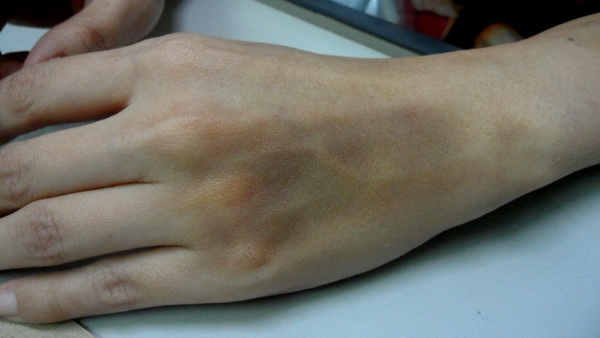
WD: There is another reason why I did not want to go for chemo. Before they did the CT scan for me, they gave me an injection (contrast agent). Look at my hand now – blue black and it has been like this for already a week.

Blue-black-hand

I was not able to eat for 2 days after the CT scan. I had non-stop diarrhoea.

My friend had breast cancer and she went for chemo in Singapore. After 2 years the cancer spread to all over her body. She just died a few months ago.

Comments

WD is a sweet, upbeat lady with a positive attitude. It is indeed sad that she ended up with cancer at 39. When she came to ask for help, I was dumbfounded – wanting to offer her another option but not knowing what the outcome could be. Either way, there is no right or wrong answer. Let me explain my dilemma.

Sweet Statistics:

I started to read Chapter 3 – Invasive Cervical Cancer of the book, Clinical Gynecologic Oncology by Philip Disaia and William Creasman.

  • The cause of cervical cancer is unknown but its development seems related to multiple insults and injuries sustained by the cervix. Squamous cell carcinoma of the cervix is virtually nonexistent in a celibate population.
  • Currently, greater attention is being paid to the human papillomavirus (HPV) infection of the cervix as a link to etiology.
  • Some 85 to 90 percent of cervical cancers are squamous cell and the majority of the remaining 10 percent are adenocarcinomas.
  • The earlier tumors are detected and treated, the better the chances of cure.

How best to treat the patient?

  • The choice of treatment demands clinical judgment …the choice lies between surgery and radiotherapy.
  • In most institutions the initial method of treatment for locally advanced disease is radiotherapy, both intracavitary (cesium or radium) and external x-ray therapy.
  • Of 2,000 patients treated with radiotherapy at MD Anderson Hospital. Fletcher reports the following 5-year cure rates:

Stage 1    –  91.5%

Stage 2a  –  83.5%

Sage 2b   –  66.5%

Stage 3a  –  45.0%

Stage 3b  –  36.0%

Stage 4    –   14.0%

  • Currie reported the results of 552 radical operations for cancer of the cervix.

Stage 1    –  86.3%

Stage 2a  –  75.0%

Sage 2b   –  58.9%

Other stages – 34.1%

  • In general, in early stages, comparable survival rates result from both treatment techniques – surgery or radiation.
  • Among the disadvantages of radiation therapy:

One must consider the permanent injury to the tissues of the normal organ bed of the neoplasm and the possibility of second malignancies developing in this bed.

Many  lesions were not radiosensitive and some patients had metastatic disease in regional lymph nodes that were alleged to  be radioresistant.

  • Among the disadvantages of radical surgery:

Postoperative bladder dysfunction.

Formation of ureteral fistulae and lymphocysts, pelvic infection and hemorrhage.

  • Chemotherapy:

Various regimens have been used. Most of the regimens have been platinum-based combinations, often including bleomycin and vincristine.

Dramatic reductions in the size of the neoplasm have been documented after as little as 3 courses or 3 weeks of therapy.

IT HAS YET TO BE LEARNED WHETHER  THIS TECHNIQUE EVENTUATES IN BETTER SURVIVALS OR IS YET ANOTHER TECHNIQUE THAT DEMONSTRATES GOOD RESPONSE BUT OFFERS NO IMPROVED OUTCOME.

The oncologist told WD she has a 70 percent chance of cure if she was to go for chemo and radiation therapy. What is said is consistent with medical literature … for Stage 2A the 5-year cure rate is 75 to 83 percent. Very impressive statistics indeed except that these figures are based on the results of what others did in other parts of the world. What about the results in Penang hospitals? What is this oncologist’s personal experience? Is it the same? Many cases has he treated and at what success rate?

The oncologist also said that if you want a 100 percent cure rate, you have to turn to God! Oncologist can only cure 70 percent! The oncologist did not tell WD what happened to the 30 percent who did not make it. And more relevant still, is which group WB belongs to … the 70 percent success or 30 percent failed group? Nobody can answer that.  WD may  just belong to the failed group like these cases below.

I started to wonder about the stand taken by the gynaecologist. After the biopsy he sent WD to the oncologist. This is just a Stage 2A cancer yet he did NOT consider surgery beneficial? Why? Medical literature says surgery is as effective as radiotherapy for early stage cervical cancer. Why did he not suggest surgery? Is it because he knows from experience that surgery does not work? My guess is not a “wild guess.” Melissa had only Stage 1B cervical cancer and had surgery at this very same hospital. She followed up with chemo and radiotherapy and it turned out to be a great disaster.

As I am writing this story, there is another case of cervical cancer.  This is a 62-year-old lady. She was diagnosed with Stage 1B cervical cancer and had undergone a radical surgery. Unfortunately the pathology report after surgery showed the cancer had spread to her pelvic nodes, right ovary, myometrium and endometrium.   Ask this question: in this case, is this RM15,000-surgery really beneficial for the patient. It does not appear to be so — perhaps just a futile effort. The daughter asked the doctor, “Can surgery cure her?” The answer given was, “Not sure but it is better to have it removed.” Based on the above statistics, surgery for Stage 1 cervical cancer had a 86 percent chance of cure. Do you believe that?

Let me share with you some of the cases I came across over the years.

1. Cervical Cancer: Eighty-nine Percent Chance of Cure Vanished With the Collapse of Her Right Lung Four Months After Radiotherapy and Chemotherapy

BH underwent radiotherapy. She was told that there was a eighty-nine percent chance that she would be cured. BH had 25 sessions of external beam radiation and 3 sessions of brachytherapy (i.e. internal radiation).  In addition BH received 2 cycles of chemotherapy. BH said she was well after the treatment.  She came back for a check up on 25 November 2011 and was told everything was alright. She “believed” she was cured. However, barely four months later, 15 February 2012, a CT scan showed the cancer had spread to the lymph nodes and lungs.

2. Cervical Cancer, Stage 2B Gone Wild Within Six Months – Why?

Amy (not real name) was a 39 year old lady from Indonesia.  Amy came to a private hospital in Penang for further investigation. Physical examination showed presence of a huge mass arising from the.  The doctor indicated it was a cervical adenocarcinoma, Stage 2B. Amy underwent 25 sessions of radiotherapy and at the same time received 5 cycles of chemotherapy. The drug used was cisplatin given at weekly interval.  Amy   also underwent 2 sessions of brachytherapy (internal radiotherapy). The treatment did not cure her at all – within 6 months the cancer had gone wild!

3.  Cervical Cancer Stage 2A – After Chemotherapy and Radiotherapy, She Died Within 1 year 8 months

Mother, an Indonesian, was 64 years old. She was diagnosed with cancer of the cervix, Stage 2A in December 2000. She underwent 26 times of radiation and 6 cycles of chemotherapy. The cancer recurred after a year. She had radiotherapy again for 11 times. Her health deteriorated and she was in severe pain. Mother died 1 year and 8 months after being diagnosed with cervical cancer.

4. Melisa Abandoned Medical Treatments, After Much Damage Being Done

Melisa was a 44-year old female.  She underwent a hysterectomy for her cancer of the cervix, Stage 1b.  After the operation, she underwent 25 times of radiation treatments and one time of brachytherapy (internal therapy). Melisa ended up having to go in and out of the hospital due to pains, fevers and temperatures. Later, a scan showed there was pus in her abdomen and the cancer had spread to the lungs and liver.  Melisa ended up in a hospital in Singapore – in search for a cure. The doctor at first suggested that she undergo surgery to remove the infected parts. Melisa questioned how surgery could help her when her entire liver and lungs were infected with cancer? She declined surgery but went ahead with chemotherapy. The first shot of chemotherapy was tolerable but the second and third shots were real bad. She preferred to die rather than complete the treatments.

5. The Biggest Mistake I Have Ever Made

Jonathan Chamberlain’s wife, Bernadette, was diagnosed with cervical cancer in 1993. She had surgery, radiation and chemotherapy and was dead exactly a year later. There is no doubt that she died as much from the treatment as from the cancer itself. Looking back, Chamberlain feels that the biggest mistake they have ever made was to do what the doctors advised because Bernadette could not have died sooner if they had done nothing.

In his book: Cancer Recovery Guide, pg. 28, Jonathan Chamberlain wrote: When my wife Bernadette learned that despite all the surgery, radiation and chemotherapy her tumour had returned, she was informed that she had three months to live. She was told this on 17 January. She died on 16 April. Three months  exactly.

In our conversation (Jonathan-Chris, in Penang), Jonathan said: From my own experience with my wife, we were in awe of the doctors …. We were in awe of our ignorance. We assumed that the doctors were best … I realized that was the biggest mistake I have ever made – to do what the doctors advise. You learn the hard way. She (wife) suffered from chemotherapy and it killed her. She died not just from cancer. She died from cancer plus chemotherapy. She died within one year because she did everything that the doctor advised her. 

Based on the above experience, it is hard for me to “encourage” anyone to do what their oncologists want them to do. To all patients I have this to say: Do what you think is right for you. But to WD, I told her: Turn to your God for guidance (read our next article).

Let me end by quoting Professor B.M. Hegde, an internationally recognised cardiologist (in his book, What Doctors Don’t Get to Study in Medical School):

  • Doctors start believing in all that they are told and what they get to read. Most of what comes out in the plethora of biomedical journals is fake and doctored, but it is difficult to convince the readers about it (pg.3).
  • Most of what come out in medical literature is not the truth. Medical literature is doctored, tutored and “sexed up” by the powers-that-be before being allowed to be published (pg.274).