BOOK REVIEW : DEFEAT CANCER

(15 DOCTORS OF INTEGRATIVE AND NATUROPATHIC MEDICINE TELL YOU HOW).

defeat cancer


Review by Yeong Sek Yee & Khadijah Shaari

In her book (released May 2011), author and medical researcher Connie Strasheim provides the reader with an informative overview of some new and innovative cancer treatments. She identified 15 top cancer healers from the United States and five other countries and then spent the better part of the 2010 interviewing them. The 15 physicians interviewed included medical doctors, osteopaths and naturopaths who treat cancer either exclusively or as a major part of their practice.

Most people, when confronted with cancer in our society, are quickly shunted into typical surgery, chemotherapy and radiation protocols. Standard medical treatment offers little variation from person to person, and after chemotherapy or radiation, patients are left with impaired immunity, toxicities, fatigue and emotional uncertainty. As substantiated by several of the doctors in the book, these conventional treatments don’t have a great long-term track record despite all the money spent on cancer therapy and research.

Strasheim’s interviews with these fifteen different doctors focus on integrating the best conventional wisdom with nutritional supplements, Traditional Chinese Medicine, diet, lifestyle and a wide variety of modalities that help balance body, mind and spirit. Although each doctor employs his or her own set of techniques and protocols, the reader soon understands that there are some common themes among their approaches.

The doctors interviewed present a solid perspective on what options are available to a person facing cancer. They have been trained in a variety of medical disciplines including, but not limited to, allopathic (conventional), naturopathic, homeopathic, biological, and Traditional Chinese medicine. Some of the tools like Insulin Potentiation Therapy (IPT) and specific tumor drug testing (chemosensitivity tests) make so much sense that it is a pity they fall short of the “Standard of Care” procedures followed by the medical establishment. There is a wealth of information for anyone who is interested in pursuing a kinder and gentler cancer therapy.

Each chapter of the book focuses on the treatment approach of a single physician. All aspects of treatment are covered, from anti-neoplastic (anti-cancer) remedies and immune system support, to dietary and lifestyle choices that result in the best outcomes for patients. The book also offers unique insights into healing, such as the pros and cons of different treatments and how to intelligently use chemotherapy. It discusses patient and practitioner challenges to healing, factors that affect healing, treatment outcomes and how to effectively combine multiple medical strategies to obtain the best results. Finally, it offers helpful insights to the friends and families of those coping with cancer.

In this short review, it is impossible to summarize the contents of the 15 interviews. The list of questions asked by the author is sufficient to fill the book with 443 pages of well documented information. Here are some of the questions asked:

  1. What is cancer? What causes it?
  2. What is your treatment approach? How effective is it for different types and stages of cancer?
  3. What are your treatment outcomes and can you provide statistics on your success for treating late-stage cancers?
  4. What are your dietary recommendations for those with cancer?
  5. What lifestyle recommendations do you suggest for people with cancer?
  6. Describe the role of emotional trauma/emotions in healing from cancer. Do you recommend that your patients do any type of spiritual/psychological therapies as part of their healing process? How integral are these to their healing?
  7. Do you recommend detoxification therapies to your patients? If so, which ones?
  8. What supportive treatments do you recommend, besides those described in your main protocol? Do you believe that supporting the hormones, for example, should be an important part of treatment?
  9. Are there any treatments, either within conventional or natural medicine, which are dangerous and/or ineffective
  10. How can friends and family support their loved ones with cancer?
  11. What do you wish that more people with cancer knew when seeking    out treatments?
  12. How does medical politics influence the availability of effective treatments?
  13. What else do you want readers to know about your work as a cancer practitioner?
  14. What factors influence healing?
  15. What are your final words of wisdom for cancer patients?

And the 15 physicians interviewed are:

  • Stanislaw Burzynski, MD, PhD, Houston, Texas
  • Robert Zieve, MD, Prescott, Arizona
  • Nicholas Gonzalez, MD, New York, New York
  • Finn Scott Anderson, MD, Humlebæk, Denmark
  • Juergen Winkler, MD, Oceanside, California
  • Dr. Rivera-Celaya, MD and his assistant Steven Hines, Ciudad Acuña, Coahuila, Mexico
  • Colleen Huber, NMD, Tempe, Arizona
  • Robert Eslinger, DO, Reno, Nevada
  • Dr. Dayton, DO, Sunny Isles Beach, Florida
  • Dr. Reis, MD, Bad Mergentheim, Germany
  • Julian Kenyon, MD, London, England
  • Constantine Kotsanis, MD, Grapevine, Texas
  • Joe Brown, ND, Tempe, Arizona
  • Keith Scott-Mumby, MD, Reno, Nevada
  • Chad Aschtgen, ND, Seattle, Washington.

To find out more about the book and Connie Strasheim, visit her website at http://cancerbooksource.com/defeat-cancer-book/

On YouTube, you can view two videos on the subject:

1)   New Cancer Book Interviews 15 Doctors from 5 Countries

Link: http://www.youtube.com/watch?v=IhxdeJbUyyU

2)   Medical Book Review: Defeat Cancer: 15 Doctors of Integrative & Naturopathic Medicine Tell You How

Link: http://www.youtube.com/watch?v=MsbL7YHZgsQ

This book very clearly indicates to cancer patients that there are many healing choices for cancer…the conventional modalities of surgery, chemotherapy and radiation is just one of the many choices. Some other books you may want to refer to are:

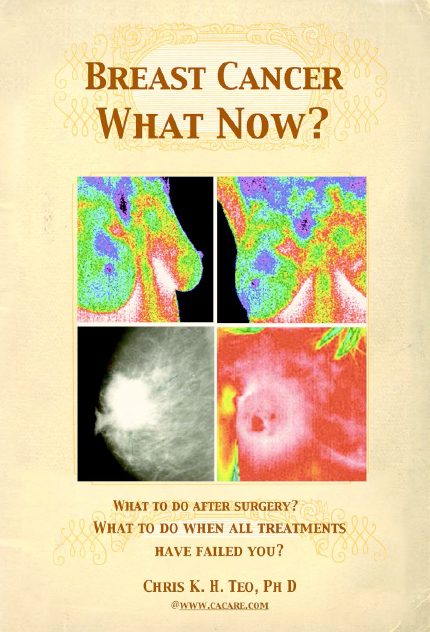
1)   CANCER: IS THERE ANOTHER OPTION? by Dr Chris K.H.Teo, PhD

2)   CANCER: WHAT NOW? by Dr Chris K.H.Teo, PhD

3)   DEFINITIVE GUIDE TO CANCER by Dr Burton Goldberg

4)   CANCER THERAPY by Dr Ralph Moss, PhD

5)   CANCER: INCREASING YOUR ODDS FOR SURVIVAL by David Bognar

6)   KNOCKOUT: INTERVIEWS WITH DOCTORS WHO ARE CURING CANCER by Suzanne Somers.

Besides the above (which your doctor/oncologist will advise you not to read), there are many other books on complementary and alternative healing modalities for cancer. But invariably, your doctor/oncologist will gun you down if you ever mention any of them….not scientifically tested, proven, etc, etc, etc.  Amen.

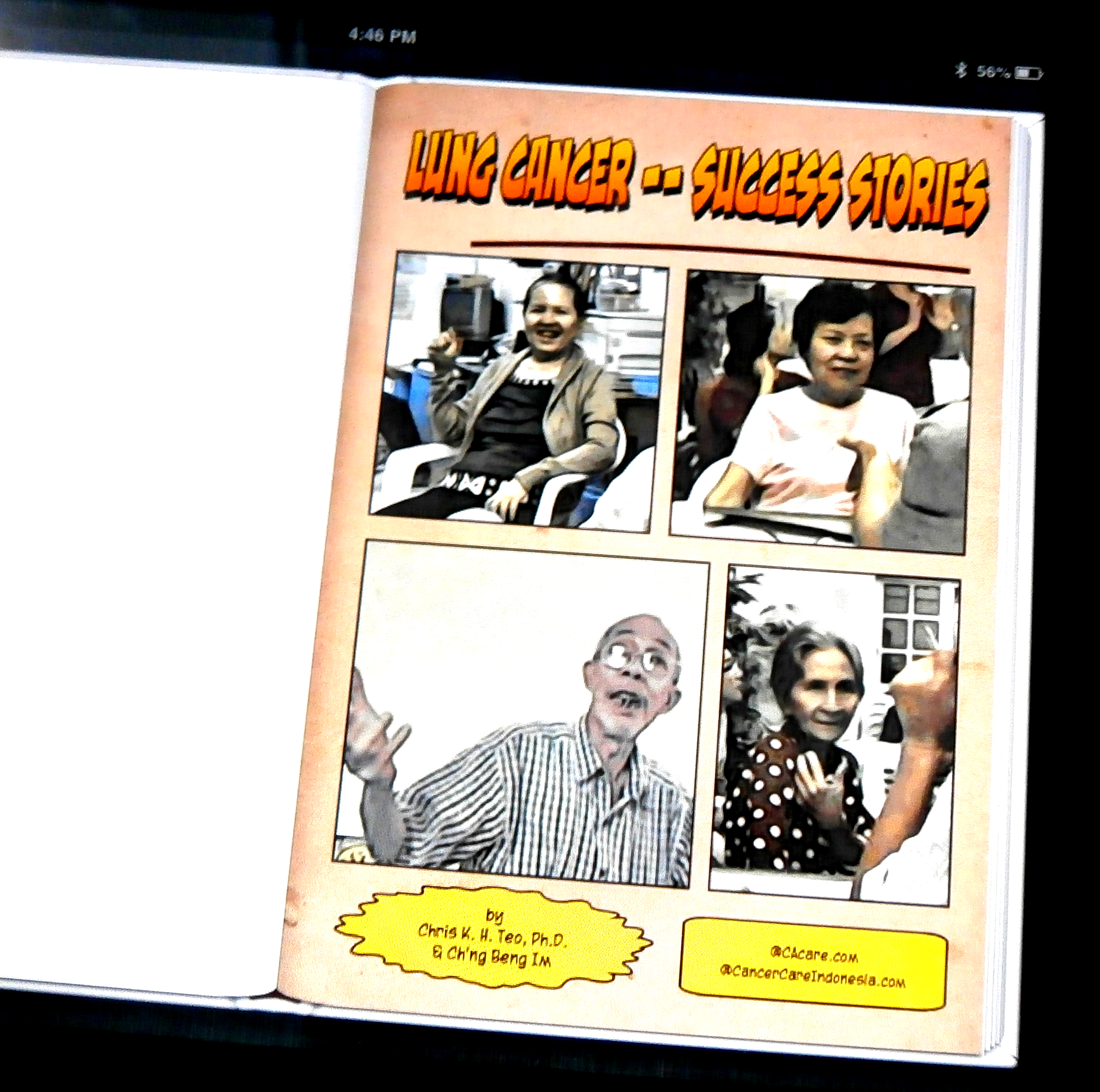
Lung Cancer Success Stories

by  Chris K H Teo & Ch’ng Beng Im

1 cover


Available at:

http://www.bookoncancer.com/productDetail.php?P_Id=73 (This is in PDF format)

http://www.bookoncancer.com/productDetail.php?P_Id=74 (This is in EPUB format)

Price: US$  2.99

This is how it looks like if you download it into your iPad

OLYMPUS DIGITAL CAMERA


4-iPad 5-Ipad 6-iPad 7-iPad


This is what it would look like if you download it into your handphone

1-handphone2--handphone


Available at:

http://www.bookoncancer.com/productDetail.php?P_Id=73 (This is in PDF format)

http://www.bookoncancer.com/productDetail.php?P_Id=74 (This is in EPUB format)

Price: US$  2.99

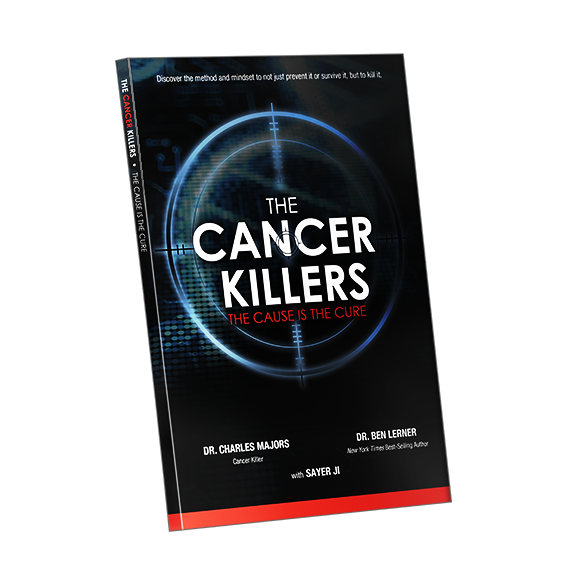
BOOK REVIEW: THE CANCER KILLERS—THE CAUSE IS THE CURE

by Yeong Sek Yee  & Khadijah

cancer-killer


Written by Dr. Charles Majors, Dr. Ben Lerner and Sayer Ji, The Cancer Killers book aims to help you understand more about the disease of Cancer, the business of Cancer and the risks of conventional Cancer treatments.

Dr Charles Major has a doctorate in Chiropractic. In September 2010, Dr Majors was diagnosed with advanced Plasmacytoma, a form of Multiple Myeloma that had metastasized to his brain. He chose to leave conventional medicine (but he did surgery) and applied the same principles he had been teaching for years to reverse his own cancer and not only survives but thrives.

You can listen to Dr Majors explaining the book at the following YouTube video: http://www.youtube.com/watch?v=xn69pHP_n8A

In addition, you can listen to Dr Major’s cancer journey at a Webinar at the following link: http://www.youtube.com/watch?v=YRlegoDXdHs

The other authors, Dr Ben Lerner, is the co-founder of the Maximized Living Foundation and Sayer Ji, is the founder and editor-in-chief of GreenMedInfo.com

In the book, you will learn and begin to see how you have it within you to fight off all diseases and help your immune system do what it is designed to do—to keep you healthy! You will also learn what foods are good for you, which ones need to be avoided and even how much exercise is optimum for health.

According to the authors, your body is a cancer killing machine. Equipped with a high powered immune system and intracellular anti-oxidant defense system, you have the ability to prevent and reverse cancer. They believe that there is one cause for cancer and the cause is anything that interferes with your body’s ability to kill cancer and fight off any disease. Likewise, there is one cure—remove the interference and maximize the potential.

Your goal is to develop a cause-addressing lifestyle that is no longer a destructive force in your life, but rather a force to help your body protect itself now and in the future. The following are the authors’ 5 main cancer-killing essentials:

1)    Maximized Mindset—the mind has great influence over the body…constant stress and negative thinking suppresses the body’s immune system, alters digestive functions, and causes the continual production of negative, stress hormones.

2)    Maximized Nerve Supply—spinal correction care re-aligns the spine, restores the curves, and make sure the skull and pelvis is aligned…this corrects the cause, removes the interference and maximizes function. With spinal correction, the nerve supply can be restored.

3)    Maximized Quality Nutrition—bad eating leads to insulin insensitivity, hormone imbalance, thyroid dysfunction, poor bowel movement, toxicity and cell inflammation. Today’s commercial diets contain endless toxins and lack the nutrients, fiber and antioxidants, etc.

4)    Maximized Oxygen and Lean Muscle—oxygen has been shown to stymie the growth of cancers. The lack of exercise causes malfunction and interferes with the body’s ability to kill the enemy.

5)    Minimized Toxins—toxic materials cannot be effectively metabolized by the body…these poisons are accumulated or built up in your system and create a “toxic burden.”

Dr. Majors also described his own personal experience with Stage IV cancer and how he found his path to recovery through simple (yet obviously effective) ways of living (listen to the Webinar by Dr Majors). When diagnosed in September 2010, he declined the conventional Cut, Poison and Burn procedures (read Chapter 4). The opening paragraph of the chapter summed up his reasons:

  • Conventional cancer treatments are the medical equivalent of fighting fire with fire. To kill a cancerous growth, medicine employs something equally hazardous. It bombards the patient with toxic chemicals and radiation, both of which are considered lethal….the doctors hope that the cancer cells will be more susceptible to their potent wallop than the healthy cells. The reality, however is that “collateral damage” from the treatments is inevitable. It is not a matter of “if,” but to what degree the damaging side effects will take their toll.
  • The DNA damaging effects of chemotherapy and radiation are actual causes of cancer initiation and promotion. Therefore the standard of care in cancer treatment is also a cause of cancer.

In summary, Dr Majors reiterated that “you cannot poison yourself back into health”

Cancer, like all illnesses, is a symptom. It is a result of something weakened and not working right in your body. You have to learn how to strengthen your body and make things right, so that illnesses cannot grow and thrive within you.

That is the ultimate cancer killer in you.

FURTHER REFERENCES:

1)    Website of Sayers Ji….GREENMEDINFO…..http://www.greenmedinfo.com/

(Lots of information on cancer which your doctors will not tell you)

2)    Visit them on their FACEBOOK page at….https://www.facebook.com/BeACancerKiller


Breast Cancer: What Now?

What to do after surgery? What to do when all treatments have failed you?

Breast Cancer What Now cover  US$3.99  Click here to buy: http://www.bookoncancer.com/productDetail.php?P_Id=70

 Introduction

This book in a continuation of my earlier book Your Breasts What to do if you find a lump and What to do if it is cancerous. The main problem at CA Care is not dealing with patients with breast lumps. Our main problem is dealing with patients who have already gone to see their doctors, undergone all the necessary medical treatments and failed. Now, they come to us for help.

Chapter 1: Pressure From Those Around You

In my first book Your Breasts – What to do if there is a lump and What to do if it is cancerous, I told the story of Ina, our friend. She had a lump in her breast which later was found to be cancerous. She underwent a mastectomy. After the surgery, her doctor referred her to an oncologist who recommended that Ina undergo chemotherapy and radiotherapy. Ina was also told to take Tamoxifen, a hormone drug, for five years. Ina refused all these and she opted for our CA Care Therapy. Ina had been on CA Care Therapy for the past one year. So far so good. She has been taking life easy, exercises regularly and takes care of her diet. Let me get back to Ina’s case. I knew she was not at ease after the last meeting with her surgeon. So,  I took time to explain one issue after another. 1. Ina is not the only one who opted for CA Care Therapy. 2. Medical treatment is not necessarily the best option. 3. Tamoxifen can cause cancer! 4. Medical radiation can increase cancer risk! 5. Cancer-free or not cancer-free. 6. You are now cancer-free, eat whatever you like! Of all the follies, I told Ina this one is the greatest of them all. Dr. Russell Blaylock (in Natural Strategies for Cancer Patients) wrote: “Oncologists harm their patients by giving them cancer-promoting nutritional advice.” I have learned that if you want to be popular with your patients or make them happy, tell them what they want to hear. Ask them to go back to their old ways of life after you have  treated them. When they get sick again, they will surely come hunting for you. Indeed this is a good way of ensuring that you are always in business.

Chapter 2:  Recurrence

Ina, our friend and our breast cancer patient, has been on our CA Care Therapy for more than a year now. She is doing fine. There is nothing else I can offer her. If she is happy and is doing fine she should continue to do what she is doing and stay on course. I am aware that deep down  in every patient’s heart,  there is the feeling of fear, i.e. the fear of recurrence.  The possibility of recurrence is real. Patients have to learn to live with it. Only time can tell if you are cancer-free or not. At CA Care we do not intend to mislead you. We want you to know that there is no cure for cancer. Living your life chasing after a permanent cure for your cancer could be miserable. We urge you to learn how to live with your cancer. That is more realistic. The only way that I know how to reduce the chances of recurrence is to make sure that you lead a healthy, happy and stress-free life. I tell patients to take care of their diet. Avoid foods that cause inflammation to the body. Of course this advice is not welcomed by many people. But take it from me. Food plays a major role in whether your cancer comes back or not. Very often I can trace recurrences back to bad diet. So you have a choice to help yourself! According to medical literature, recurrence  occurs in the first three to five years after initial treatment. The highest risk of recurrence is said to be during the first two years following treatment. Recurrence is never zero but as time passes the risk goes down.

Chapter 6: Insanity

The only difference between doctors and lawyers is that laywers merely rob you, whereas doctors rob and kill you too

~ Anton Chekhov, Russian physiciain, dramatist and author

 Dr. Jerome Groopman of Harvard Unviersity (in How Doctors Think) wrote: “If you do an experiment two times and you don’t get results, then it doesn’t make sense to do it the same way a third time. You have to ask yourself: What am I missing? How should I do it differently the next time?” “It is much easier both psychologically and logistically, for a doctor to keep treating a serious disease with a familiar therapy even when the disease is not responding.” “How an oncologist thinks through the value of complex and harsh treatments demands not only an understanding of science but also a sensibility about the soul – how much risk we are willing to take and how we want to live out our lives.” Life on earth is a living experience. Let the death of these patients be a useful lesson for many of those who come after them. The Story of Amy Cohen Soscia I learned about Amy Cohen from the Internet. She had breast cancer in 1998 when she was forty-three years old. Amy underwent a mastectomy, reconstructive surgery, chemotherapy and radiotherapy. She received treatments in one of the world’s outstanding cancer hospitals – Dana-Farber Cancer Institute, Boston, USA. In spite of all the treatments, Amy’s cancer spread to her liver and spine. The doctor tried Herceptin on her. Liz Kowlczyk of The Boston Globe wrote, “Miraculously, her cancer began to shrink, and Soscia began to let herself think that she would conquer the disease.” But it was not to be. In January 2003, an MRI showed the cancer had spread to her brain. ”I hate this disease, I was so discouraged that I was on treatment for five years and I still got brain lesions.” Amy had twenty times of radiation to her  brain.  The treatment was exhausting. She lost her hair. The treatment seemed to wipe out one tumour, shrunk another but one tumour grew back. Amy took a new  drug, lapatinib or Tykerb. Amy later stopped taking Tykerb because the brain tumour grew bigger indicating that the drug was not effective. Amy was not the only one who ended up with brain tumour after Herceptin or found that Tykerb was useless for them.  Salvia, Fransiska and Yee also suffered a similar fate. Amy received more treatment with high-intensity beam radiation that focused just on the tumor in her brain.  All said, Amy lost her battle and died on 2 September 2001.

Chapter 7:  Disaster

Doctors are blindly giving chemotherapy  … while the cancer cells smile.

Doctors give chemo, chemo, chemo. And patients die, die, die.

~ Dr. Frank Daudert, Pro Leben Klinik, Austria

 Death from chemotherapy is acceptable.

Each oncologist is truly shooting in the dark.

Hope is that the chemotherapy kills the cancer before it kills the patient.

~ Dr. James Forsythe (in The Compassionate Oncologist)

Reflect on the quotations above and the stories below. Ask yourself – what has gone wrong? 

Chapter 8  Let The Truth Be Told: No Cure for Cancer

 As doctors, we generally don’t tell outright lies. We just don’t speak the truth fully

~ Dr. Allan Hamilton (in The Scalpel and the Soul)

 “I am no longer shocked by his fakery …. Fake science, fake researchers,

fake subjects … is what American medicine has become.

Without actually intending it, we have constructed a medical system

in which deception is often not just tolerated but rewarded …

You can see the same patterns of misconduct emerging again and again.”

~  Carl Elliott, Professor of Bioethics, University of Minnesota, in White Coat Black Hat.

Most of what you have heard over your lifetime about cancer treatments

is not the truth. At the very least, you have received an incomplete picture.

If you believe that propaganda you have been fed when you develop cancer,

it can cost you your life ~ Burton Goldberg


The Story of Rose As I am writing this chapter, Rose, an Indonesian, came to our centre and related her story. Perhaps, we can learn many lessons from her experiences.

 Chapter 9  What Now?

In this book, I present to you real stories of breast cancer patients. It is up to you to learn from their experiences. Dr. Barbara Joseph was also a breast cancer patient. She said in her book, My Healing from Breast Cancer: “Breast cancer brings with it a clear and very personal message. Something is not working in our lives. Something needs to be changed. Let’s not be afraid of this message … just allow yourself to take the message in. Our diagnosis can be a wake-up call, alerting us to alter our diet, our lifestyle, our relationships.” Unfortunately, not all patients realize this. They come to us and they expect us to cure their cancer, and if possible to do it quickly. I am sorry, I cannot do that. Not all patients who come to seek our help find their healing. Our data showed us that only thirty percent benefited in one way or another, the remaining seventy percent do not. I stress, DO NOT. I don’t want to mislead you. There is this quotation, “There is no incurable disease, only incurable people.” By talking to patients for five to ten minutes, I can more or less know whether I can help them or not. How patients present themselves would indicate to me if they can make it or not. Their attitude, facial expression, emotional problem, lifestyle, commitment, family support, etc., all play important roles in helping patients overcome their cancer problems. Healing cannot be found in a “magic bullet.” Patients need to be committed and work hard towards their own healing.

 This book, in pdf format,  is available at US$3.99  Click here to buy: http://www.bookoncancer.com/productDetail.php?P_Id=70

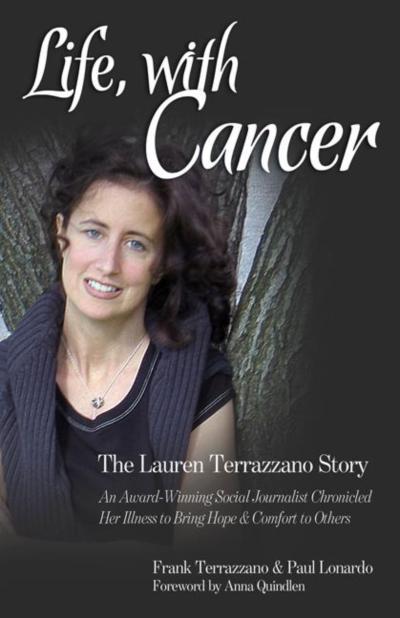
BOOK REVIEW: LIFE, WITH CANCER THE LAUREN TERRAZZANO STORY

Reviewed by Yeong Seek Yee & Khadijah Shaari

Life with cancer LaurenTerrazzano


Lauren Elizabeth Terrazzano was an American journalist best known for her “Life, With Cancer” Newsday column and other writings about her battle with cancer. Lauren graduated from high school in Tewksbury, Massachusetts. In 1990, she earned a bachelor’s degree from Boston University and later, after graduating from the Columbia Graduate School of Journalism in 1994, she worked at The New York Daily News and The Record before joining Newsday in 1996.

Lauren Terrazzano had two goals in life: firstly, to win a Pulitzer Prize and secondly to write a book.

In 1996, the fearless young journalist shared the Pulitzer Prize with her team at Newsday for their coverage of the TWA Flight 800 crash. Unfortunately, she was not able to achieve her second goal. At age thirty-nine, Lauren’s life was cut short by lung cancer just 30 months after her diagnosis.

Despite being a non-smoker, Lauren Terrazzano was diagnosed with lung cancer in September 2004 at age 36.  She endured chemotherapy and continued her work as the cancer went into remission.  When the cancer returned in 2006, she developed a Newsday column called “Life, with Cancer” in which she explored and dispel the stigma living day to day with lung cancer.  She wrote the column for eight months before her death in May 2007.

However, that goal (of writing a book) did not die with Lauren.

Her father, Frank Terrazzano picked up the torch and, with the help of co-author Paul Lonardo, wrote Life, with Cancer: The Lauren Terrazzano Story. In writing this book, Frank wanted to honor his daughter’s memory as a dedicated and well-respected social journalist who was a voice for the voiceless.

With the help of co-author Paul Lonardo, devoted father Frank Terrazzano tells his daughter′s compelling life story through the eyes of the many people whose hearts and lives Lauren touched. Lauren′s friends, colleagues, coworkers, doctors, and even her college professors, collectively paint a touching portrait of Lauren the person and the journalist. Reflecting on his daughter, Frank writes of Lauren as “A beautiful young lady who believed that ′The Pen Is Mightier than the Sword′ and chose to use her pen as a light–a light to shine in dark places exposing society′s many shortcomings.”

In the fall of 2006, the cancer returned, but Lauren decided to fight it with words. After receiving a weekly column entitled, Life, with Cancer, she shared her experiences in the hope of erasing the stigma associated with lung cancer. She wrote with humor when she discussed “the dumb things people say to those who are ill” and with anger as she wrote about the complicity of tobacco companies.

Each chapter in Life, with Cancer is a heartfelt tribute from father to daughter and begins with Lauren’s voice taken from actual excerpts of her Newsday column.

The following are the main points in Lauren’s cancer journey as told by her father in the various chapters:

  • Diagnosis—there was a large mass on the right side of her chest, pressing directly against her lung…there were also three smaller masses in the same area, along the lining of her right lung. The tumour that had attached itself directly on her lung was the most threatening and was probably responsible for her difficulty in breathing—it was pressing on her lung.
  • With that scenario, she consulted with the top thoracic surgeon at the Memorial Sloan Kettering Cancer Center (MSKCC) who recommended chemotherapy, then possibly surgery and then radiation therapy. (Lauren’s husband flatly refused to consider alternative therapies…because insurance does not pay for it).
  • Lauren then underwent 4 rounds of chemotherapy and this was what happened to her each time:
    • After the first round of chemo at MSKCC, Lauren was unable to work…she was just too sick. It was hard for her to eat, and she became weaker by the day. Nothing tasted right. She even lost her love of chocolate. What little she ate she had trouble keeping down.
    • After her second round of chemo (this time at the Massachusetts General Hospital in Boston), the complications from the side effects landed her in intensive care due to life-threatening infections.
    • After the third round of chemo (back at MSKCC), she developed a blood clot in her left leg and then for the rest of the treatment, she had to give herself daily injections of blood thinners.
    • After the fourth round of chemo, the result was the same: no improvement.
  • Despite the poor prognosis, the thoracic surgeon managed to persuade the board of MSKCC and Lauren to perform surgery known as “extrapleural pneumonectomy…i.e. to take out her right lung along with its lining, part of her diaphragm, and the outer lining of her heart. He removed all the cancer that he could see, and the surgery was considered a success.
  • Just three weeks later (after surgery),she started a six-week course of radiation therapy
  • After Lauren completed her treatment in early March (2006), she started to feel a little better and tests showed that she was, indeed, cancer free. For the first time since she had been diagnosed with lung cancer, Lauren truly felt good for an extended period of time.
  • Lauren lived cancer-free for the next six months, the culmination of which was an unexpected wedding (her second marriage). Just a week before the wedding, her oncologist told her that something had been detected in her chest midsection…they had found some cancer near right ribs…and they needed to perform surgery on her right away to remove two of her ribs.
  • Just before Easter, Lauren underwent another surgery to remove the tumours, along with several ribs where tumours were located. She got through that surgery, and again they thought they had gotten all the cancer (successful again?).
  • When tumours began appearing in different parts of her body, Lauren’s cancer was considered inoperable, at least as far as the recommendation of any further surgeries was concerned.
  • Also any further chemotherapy would not be effective and would only make her sicker. Her hope was fading fast when she decided to put her faith in a trial drug.
  • Just after Halloween in 2008, Lauren’s oncologist informed her that her body was not responding to the treatment. When Lauren asked what they could try next, her doctors told her that they had done everything they could: conventional treatment had failed.
  • When Lauren inquired about alternative therapies they could recommend, she was advised that if there any nontraditional medicines or treatments she wanted to try, it was up to her: but there was nothing more they could do for her at Sloan-Kettering.

Lauren Elizabeth Terrazzano passed away on May 15, 2007 despite being treated at the most renowned cancer hospital in the world, the Memorial Sloan Kettering Cancer Centre (MSKCC), in less than 3 years from diagnosis (Sept 2004).

OUR PARTING COMMENTS:

  • It was so considerate of MSKCC to advise Lauren to seek nontraditional medicines or treatments after her body has been totally wrecked after all the chemotherapy, surgeries, and radiotherapy. Probably by then her their insurance cover has been exhausted as well.
  • At the time of reviewing this book (early October 2013), a friend of ours had already undergone numerous chemotherapy and radiotherapy (to the brain as well) for his lung cancer which was diagnosed less than 3 years ago. Recently, his oncologist “consoled” him with a comment that “you are very lucky to have lasted nearly 3 years, etc.” And it was that same oncologist who advised him to irradiate his brain first before the cancer spreads there. Our friend did so obediently but six months later, the lung cancer did metastasize to the brain. Yes, he did further radiotherapy sessions. Now, one year later there are two tumours in the brain  as big as a 50-sen coin.

Anyone for evidence-based medicine, scientifically tested and proven??


Lung Cancer: Some Success Stories With CA Care Therapy

KL-Conference-Program

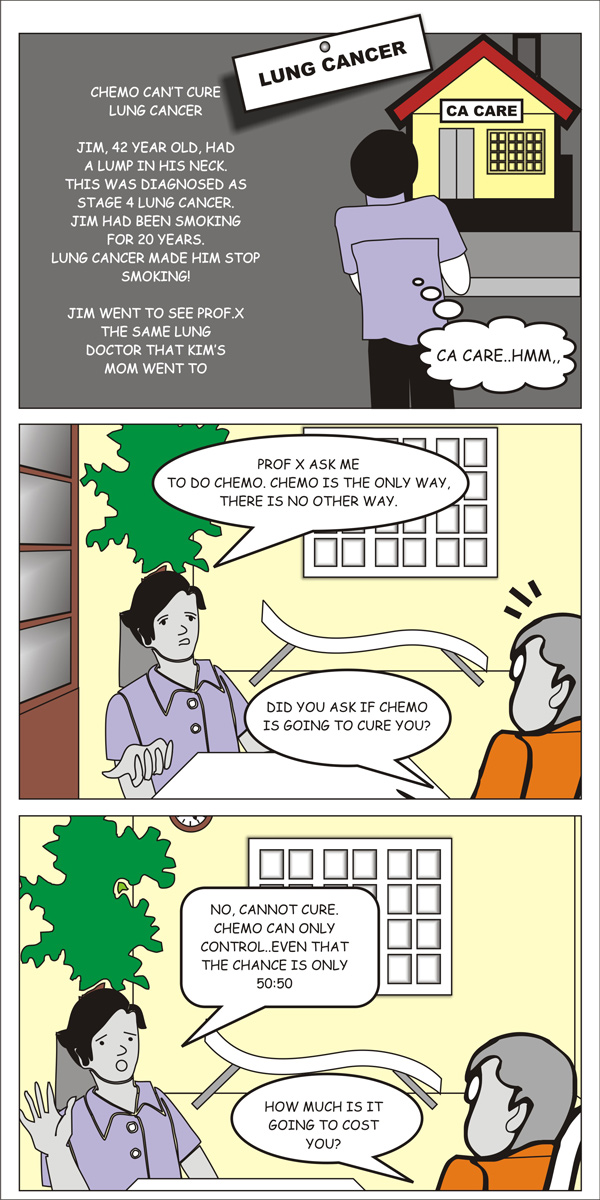
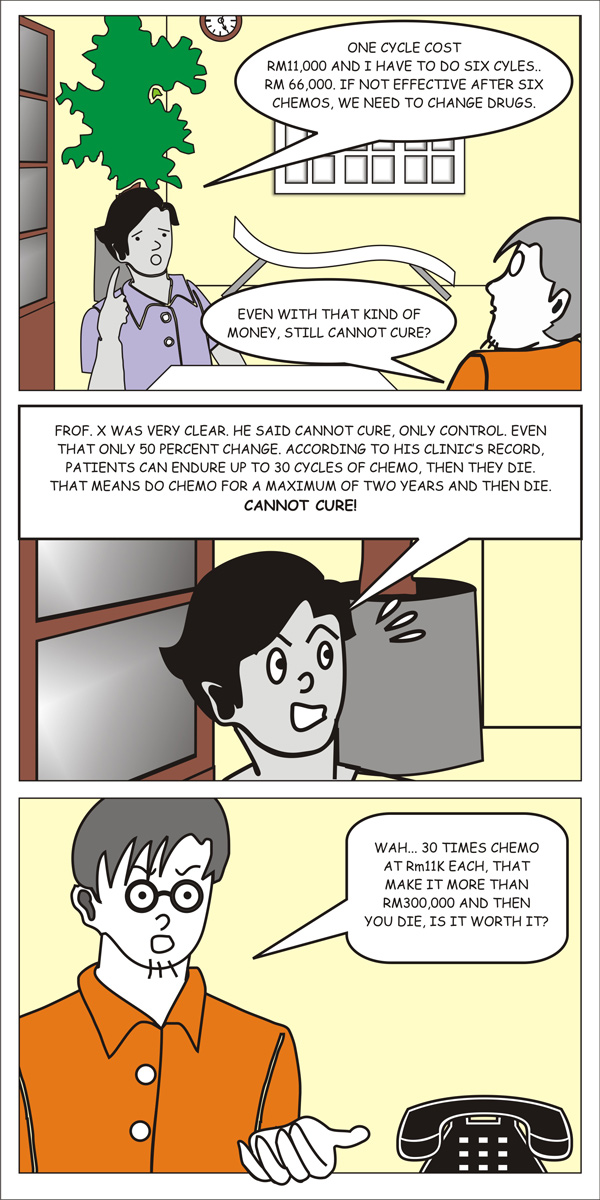
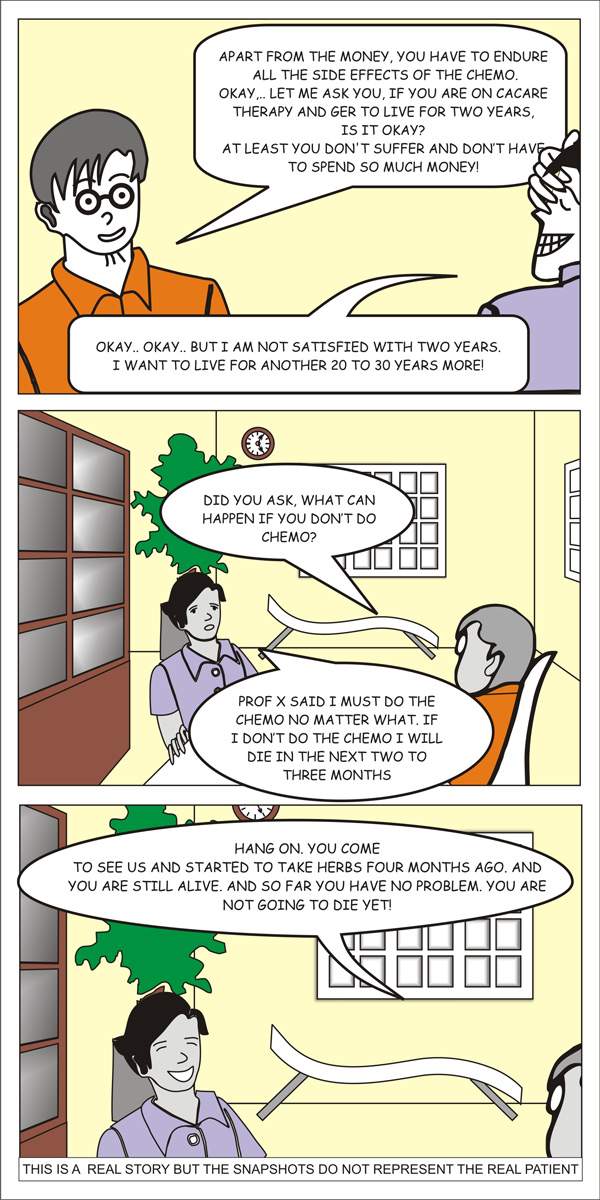
A 42-year-old lung cancer patient consulted Professor X. He was told to undergo chemotherapy. There would be no cure. The treatment would provide a 50 percent control (whatever that means). The cost of chemo would be about RM 11,000 per cycle. According to this honest professor patients die in two years or after receiving a maximum of thirty cycles of chemo. However, patients must undergo chemotherapy because there is no other option. According to the professor, chemo is the only way!

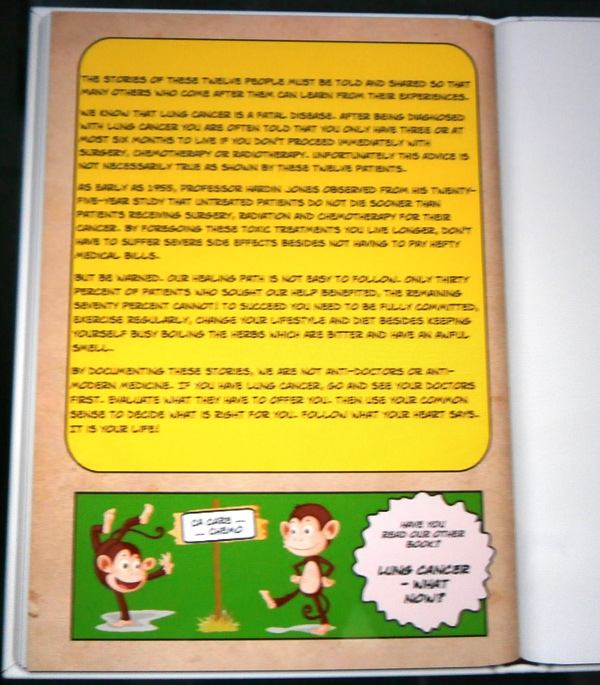
In this talk, lung cancer patients shared their experiences. These patients opted for CA Care Therapy instead of chemotherapy. They lived a normal life — free from the side effects of treatment — besides not having to pay hefty medical bills. Your life is your choice!

Part 1

Part 2

Part 3

Part 4

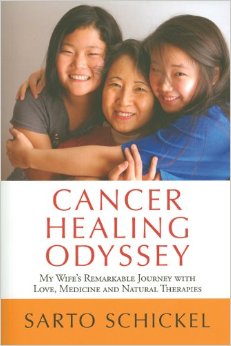
REVIEW: CANCER HEALING ODYSSEY

by Yeong Yek Yee & Khadijah Shaari


Cancer Healing Odyssey

The author, Sarto Shickel is a graduate of Cornell University with a Bachelor of Science degree and the University of Pennsylvania with Masters in Architecture. He is a partner in Philadelphia architecture and design firm and a passionate advocate of natural healing through organic, whole foods nutrition. Sarto grew up on a dairy farm but later embraced a healthy plant-based diet about 27 years ago.

The book, Cancer Healing Odyssey, tells the story of a Korean woman Sun Hee Lee, married to Sarto, who was suddenly diagnosed with ovarian cancer stage IV, and already with malignant pleural effusion. In September 2007, Sarto Schickel’s wife, Sun Hee Lee, had a bad cough that which she hoped was bronchitis and not something more serious. She also had a bloated abdomen and some shortness of breath. At the time of diagnosis, the ovarian cancer had already spread from the abdominal cavity to the chest cavity, where she had a large fluid build-up called a malignant pleural effusion, and a partially collapsed right lung and it has spread to the liver as well. It was the shock of a lifetime.

Sun Hee is the mother of two young daughters and wanted desperately to live. Sun Hee looked at all her options and decided to have surgery, and later agreed to the Gerson therapy, to chemotherapy (she did 8 sessions of Carboplatin + Taxol) and to some macrobiotic dietary influence. In essence, she created her own unique integrative program for cancer, with her husband’s guidance, after visiting and consulting with conventional and alternative doctors and a macrobiotic counselor.

In fact, Sun Hee began an alternative nutritional and detoxification therapy the very next day after confirmation of diagnosis on 27 Sept 2007. On October 15, she had abdominal surgery to remove the primary ovarian tumour and she continued her nutritional and detoxification therapies for six weeks after surgery. She then continued an adjusted alternative nutritional program while receiving a total of 8 chemotherapy infusions over the next seven months.

Four and a half years later (the book was released in 2011 with second printing in 2012), Sun Hee is living a normal life, a rare outcome in medical history. (Stage 4 Ovarian cancer with malignant pleural effusion carries a poor prognosis). This combined integrative approach was critical in Sun Hee’s recovery. Sun Hee did not ever consider relying solely on conventional cancer care as the statistics seemed to indicate that the result would almost certainly be death.

However, after having surgery and 8 sessions of chemotherapy, Sun Hee declined her oncologist’s suggestion to undergo another 12 additional maintenance chemotherapy treatments…”to keep the cancer from re-growing.” The oncologist did admit that…”eventually the cancer would come back even if more chemo was used.”  When Sun Hee pressed what would come after the maintenance chemotherapy, the oncologist then indicated that they would keep giving chemotherapy until the body could no longer take it.

The above proposal and comments by her oncologist left Sun Hee in a state of shock and more so when he retorted to her….”Now is not the time for alternatives.” The very thought of further chemotherapy was most undaunting to her. During each of her previous 8 chemotherapy sessions; she was devastated physically and emotionally. She suffered side effects such as exhaustion, hair loss, tingling in her hands and feet, leg heaviness between ankle and knee, black and blue spots on the legs, chest pains, nausea and general heaviness in the chest region.

Sun Hee is a living example of what progress can be achieved when nutritional and detoxification therapy is combined with conventional treatments. According to Mr. Sarto, the logic of embracing an alternative and detoxification program….regardless of what essential treatments one may choose from the field of conventional medicine—one must still eat and drink—so why not eat and drink the ideal food and drink that one can to help the body’s immune system. This can help to fight the cancer—from the inside out—to achieve authentic healing.

Sarto’s final advice to all cancer patients is….”do not wait until you have been through two years of conventional-only medicine, and are on your death bed, before trying  nutritional approach or other therapies.” Most cancer patients are never told that careful nutritional change may save their life.

In addition to a very compelling personal story, the book includes medical reports, four x-rays showing the complete disappearance of the pleural effusion, a summary of CA-125 blood test results (the ovarian cancer tumor marker) as well as the recipes she used during the various phases of her recovery. The book is meant to give hope to others by showing how one woman overcame the odds through love, medicine and natural cancer therapies, including a lot of time in the kitchen preparing the organic whole foods and juices that were the backbone of her integrative nutrition.

Our concluding comments:

Sun Hee’s healing from Stage 4 ovarian cancer is very similar to Olivia Newton-John’s recovery from breast cancer. This clearly shows that one can carefully combine conventional medical treatments, such as surgery, and even some chemotherapy, with alternative dietary and detoxification methods, together with positive mind and spirit practices.

Where does all the oncologists’ theory of “clashing” comes in? A lot of bull isn’t it? We welcome your comments.

Further References:

1)    There are a lot of information on the Gerson therapy and the macrobiotic dietary system—just google them.

2)    YouTube Interview with Mr Sarto—the Cancer Healing Odyssey

Link: http://www.youtube.com/watch?v=0wHYgOqXjfQ


No Cure for Lung Cancer

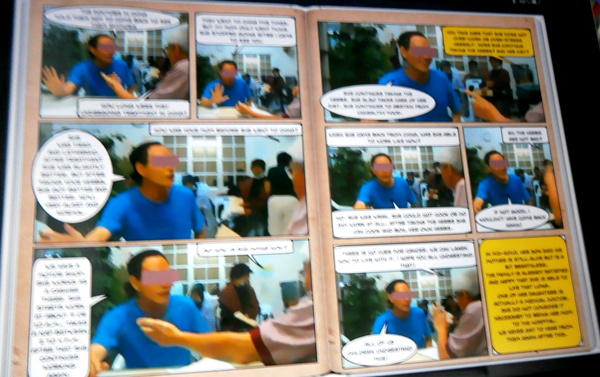
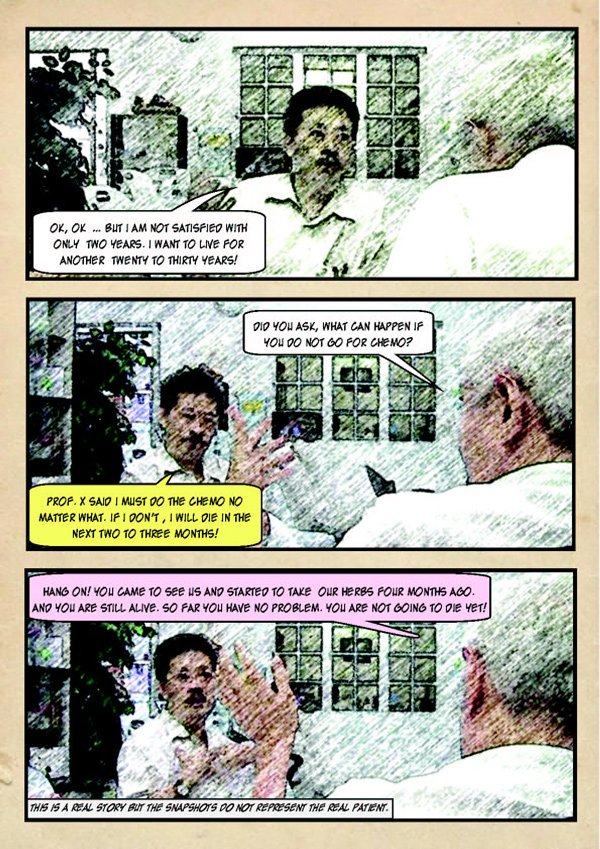
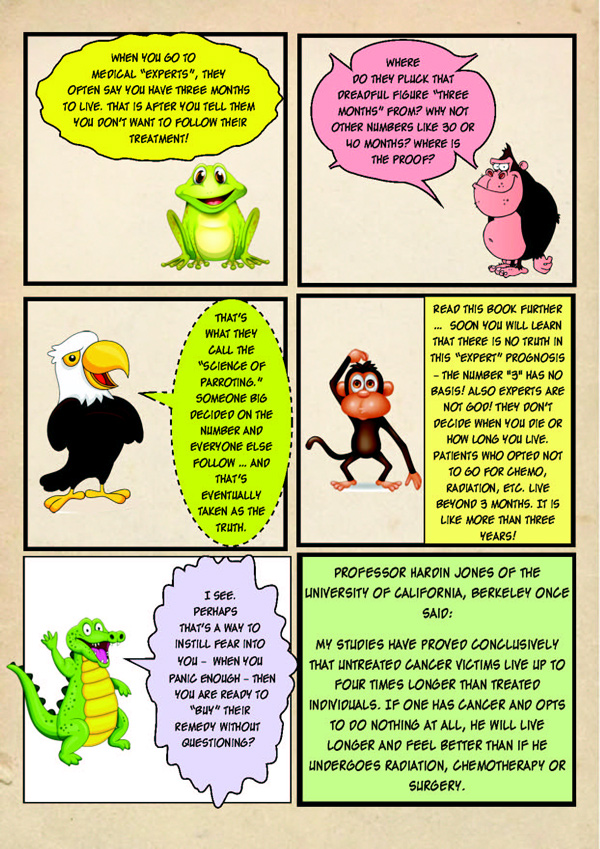
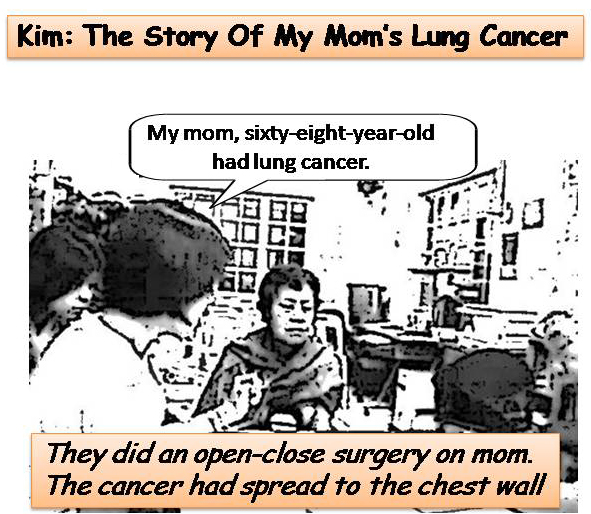
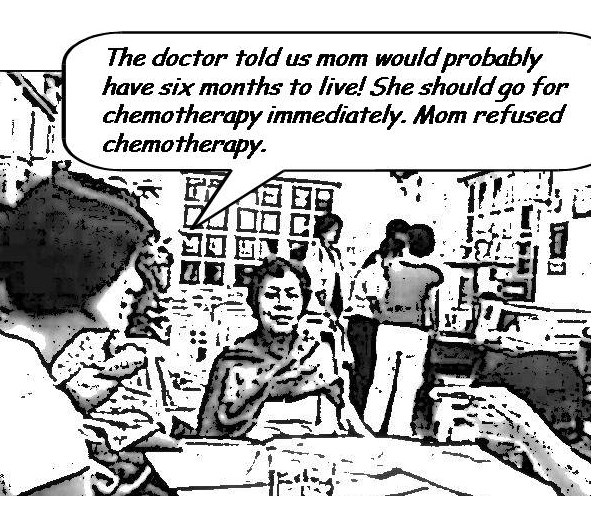
Hello friends out there … You are been reading our articles in the form of lengthy writing …now, one idea struck me is to try out another way of communication through comics … So this is my second trial. Bet you, it takes a lot more time and effort! But it is fun.

Below are two styles .. one, we used cartoon characters, while the second  style is using real life pictures but converted into pencil sketches.

Okay, which style do you prefer? And why? If you can spare a minute please let me know your preference by emailing me at chriskhteo@gmail.com  Thanks so much for your input.


Style 1

KOMIK-CACARE-1-a

KOMIK-CACARE-2-b KOMIK-CACARE-3-b KOMIK-CACARE-4-b …… Below is Style 2 — using real life pictures


Lung-comic-Story-2_1-600 Lung-comic-Story-2_2-600 Lung-comic-Story-2_3-600 Lung-comic-Story-2_4-600

Kim: The Story of My Mom’s Lung Cancer

y 1 y 2 y 3 y 4 y 5 y 6 y 7 y 8


(Note: For the past few days I was toying with the idea of presenting our message in the form of cartoons, sketches, etc. Since I can’t draw the only way is to use video snapshots … etc. Later I shall venture into clip arts (to make things less serious!). Oh, this is the time when I wish I know how to draw! But when I was in school, I never get any score beyond D in drawing! Anyway, let me know how you like this type of presentations. Chris)

HOW OLIVIA NEWTON-JOHN HEALED HERSELF FROM BREAST CANCER

by Yeong Sek Yee & Khadijah Shaari

Oliver newton

This is a short story about how Olivia Newton John healed herself from breast cancer. She has been one of our favourite country singers whose songs are very meaningful and will really touch your soul. As we are writing this, we are listening to one of her top hits “I Honestly Love You.” If you have not heard this song for some time, take a breather from reading this article and listen to the song at the following link (and hum the tune to your loved one):

https://www.youtube.com/watch?v=Kn6tBYUiWKQ

Throughout her singing and acting career Olivia has exuded a positive personality and a soulfulness that have infused each of her projects with warmth and spiritual energy that for many of her fans have become her signature. Her passion for her work has translated into not only her creative projects but also the many advocacy efforts she has undertaken—ranging from environmental causes to health issues—to effect positive change in her own life and in the world around her.

In the summer of 1992, Olivia felt a lump in her right breast. “I had found lumps before,” she says, “but this particular time I wasn’t feeling well, and I didn’t feel good about it.” Her doctor recommended a mammogram, which did not turn up anything unusual, yet Olivia’s instinct told her that what she was feeling was not right. Her doctor listened, and he performed a needle biopsy. Again, the result was benign. Still convinced that something was very wrong, Olivia and her doctor agreed that they would proceed with a surgical biopsy. Their final biopsy did indeed find cancer (Stage 3). Tragically; the diagnosis was confirmed on the weekend her father died of liver cancer.

Following her diagnosis, Olivia underwent a modified radical mastectomy and one year of chemotherapy before her treatment was finished. She endured the side effects of treatment, which included headaches, fevers, and fatigue; and she still remembers with a shudder the anti-nausea “cocktail” she was given at the time. However, it was her decision to integrate complementary therapies into her treatment plan that Olivia says really helped her through.

Working with her oncologist to ensure that none of the alternative treatments would interfere with the standard treatment protocol, Olivia had regular massage therapy as well as regular acupuncture sessions, which were especially helpful in alleviating her nausea. She also practiced yoga, meditated regularly, and consulted a doctor who was an herbalist.

Each of these additional steps that she took to care for her health and her spirit, Olivia says, was integral to her healing. “It had to be more than slash and burn for me,” she says, of integrating a complementary approach.

Olivia’s journey from diagnosis and treatment in 1992 to recovery was a long and winding road. Ironically, that was the title of one of her chart topper” A Long and Winding Road” in 1971. Listen to the song at the following link (and ponder upon the lyrics):

https://www.youtube.com/watch?v=TV6_x0Iv15I

Since her diagnosis and treatment, Olivia has been a crusader for all things alternative and spiritual. The comfort Olivia found in alternative therapies when she had cancer is her reason for establishing the Olivia Newton-John Cancer and Wellness Centre in Melbourne, Australia. The Centre replaced the cancer wards at the Melbourne-based Austin Hospital and also collaborates with the New York-based Ludwig Institute for Cancer Research. In addition to traditional cancer therapies, the Centre offer patients and their families support and cancer education programs, as well as complementary therapies focusing on meditation, relaxation, massage, art and music, nutrition, exercise and aromatherapy.

In a recent interview, Olivia, when asked how she has survived so long since 1992, attributed her successful cancer journey to the following:

  • I owe my good health to several things particularly my wonderful doctors! A positive attitude, which is essential to ones ultimate survival, good nutrition both emotionally and in a dietary sense are invaluable.
  • I balanced my western chemotherapy and surgery with eastern philosophies and practiced meditation, yoga and prayer.
  • I complemented my treatments with herbs; homeopathy and acupuncture to combat my nausea and to help me stay centered and focused.
  • Equally important were my conversations with other women who have gone through the same treatment. It helped me to understand what was ahead of me.
  • I realize that I am blessed to be alive and every day I acknowledge and affirm that life is a gift–so live in the present! I see it as a gift,” 
  • Last but not least, the support of my family and good friends was priceless and lots of laughter–the best medicine of all!!!

Olivia Newton-John has very successfully combined both Western and Eastern healing modalities and has survived 20 years already. Obviously the 2 healing methods did not clash at all. This “clashing” talk by our oncologists is certainly a lot of bull. Don’t you think so? We welcome your views.

Below are some YouTube videos on Olivia Newton-John and her breast cancer journey:

1)    Olivia Newton John Opens Up About Breast Cancer

Link: http://www.youtube.com/watch?v=QSonDCBRU3I

2)    Olivia Newton- John overcomes Breast Cancer!

Link: http://www.youtube.com/watch?v=4NrWV0lDgO8

3)    Healing Quest: Olivia Newton-John Embraces Natural Wellness

Link: http://www.youtube.com/watch?v=WzuJA827iNc

4)    Olivia Newton-John Easterling about breast cancer

Link: http://www.youtube.com/watch?v=KMGc0yQ5GmE

Your Breasts: What to do if there is a lump? What to do if it is cancerous?

Your-Breasts-Cover

Available in either pdf or epub formats for only US$2.99 (approx. RM 10) 

PDF format: http://bookoncancer.com/productDetail.php?P_Id=68

EPUB format: http://bookoncancer.com/productDetail.php?P_Id=69

 What Do You Do If You Find A Lump In Your Breast? 

Since the subject matter of breast cancer involves extensive discussion I propose to write two books on this subject. This first book addresses the concerns of people who have found lump(s) in their breast(s) and what they need to do. Let us tackle the problem one step at a time and get it right from the beginning.

At CA Care we ask you to go and see your doctor and get your problem diagnosed first. And if it is cancerous, we take the position that you need to go for a mastectomy (remove the whole breast) or lumpectomy (remove only the lump). This is exactly what any doctor will also tell you to do. So why do you need to read this book then? You can get it all from the doctors you have consulted! But the similarity ends there.

As a patient you expect your doctor to explain everything you want to know before he/she proceeds to cut you up. But in reality this never happens. At most you are given 10 minutes to consult your doctor. What can you learn in 10 minutes?

Ina, the lady who we shall be talking in great detail in this book went to see an oncologist. She was given 10 minutes. The doctor did not even look up to see her. He looked at the medical report and keyed in some data into his computer and then rattled out some number. Ina was not impressed or happy. Her husband said, “He talked about money first.” Much of the consultation was about the cost involved and Ina was left with little time for questions that she wanted to ask. This consultation cost RM106.

Our distant relative, the late Corrina had pancreatic cancer. She consulted the “best” oncologist in town. The conversation lasted about 10 minutes. The oncologist asked, “Oh, you stay in Sea View. What are you working as? Do you buy health insurance?

Corrina said, ” He asked me to lie down. Checked here and checked there.  He saw the scans. He put on his computer and showed four patients. One was a miracle case – he survived 6 years with no sign of cancer coming back. He said there are 3 types of people that he treated. The one type is completely cured. The second type is in remission and the third type is just wasting his time. He is suggesting that I am type that is wasting his time. He said, “I can’t cure you.” But he asked me to go back and think and decide. He then said, “I can start you on chemo. Chemo is every week, for 8 times. (My husband) asked about the side effects. He replied, “Nothing.”

If you only have 10 to 15 minutes with your oncologist – and have to pay SGD 700 (about RM 1,774) for that – you probably need to be more organized before meeting him – so as to get the most of his valuable time.  Unfortunately, what you want from your oncologist differ greatly from what your oncologist wants from you!

Take it from me, all these information and guidance you need cannot be found in the hospital setting! Over

the years, I have seen how faces full of anguish and fear turned to bright smiles after consulting with us. What is more, we do this without any charge!

Now, I thought I would help many more people if I put my thoughts into a small “how to” guide book.

In this book, I take you through this first part of your cancer journey, one step at a time. In Chapter 1, I tell all patients, “Don’t panic.” Let us go through your problem together.

In Chapter 2, I ask you to go and find out if the lump is benign or malignant. Most of the time, the doctor would want you to do a biopsy first. “Do you need to do a biopsy?” is discussed in Chapter 3. If the lump is big, there is no reason to keep it in your breast – irrespective of whether it is cancerous or not.

In Chapter 4, I explained why you should not keep the cancerous breast anymore. There are situations when you can save the breast by doing a lumpectomy instead of a mastectomy. I explained these procedures in Chapter 5.

In the event that losing a breast is beyond acceptance, you can consider breast reconstruction surgery. Get a plastic surgeon to “make” you a new breast. This is explained in Chapter 6.

I hope the information in the first part of the book would be enough to provide some comfort and guidance on this first part of your journey. Also with this information you are better prepared to face your doctor and would be knowledgeable enough to be able to ask important and sensible questions.

Then in Chapter 7, it is time to put your knowledge into action. I addressed the issues of how to find the “right” doctor – and where? For those who have to pay the medical bills from their own pockets, I teach you how to “save” some expenses. You may benefit from my practical advice. Imagine, a mastectomy done in a certain hospital by a certain surgeon costs 9 times LESS than if you do the same operation in Singapore, or two or three times LESS if you do in other “normal” hospitals.

What comes after surgery is discussed in Chapter 8, the last chapter of the book. Surgery is just one “small challenge” you have to go through. The next “bigger challenge” is yet to come. In Chapter 8, I discuss one possible option which you may wish to consider if you don’t want to go for chemotherapy or radiotherapy. Unfortunately this is a big issue to tackle. Since I intend to make this book small enough for you to be able to read within a few hours, I shall leave the issue of chemotherapy / radiotherapy for my next book.

I am aware that most of you do not have the time to read too much while you are under such a “stressful” situation. So, I have tried to be precise and concise in my advice here.

This book will give you some advice that you need to at least keep you calm and get you through the first step of your cancer journey.

I am also aware that I have to keep up with this age of modern information technology. I have made the book available in both Pdf or ePub formats which can be down loaded into your hand phone (iPhone or Android), iPad, and tablet besides your computer. So this book can be read with just a click of a button wherever you are – even in the waiting room while waiting to see your doctor.

select-iPadThe book in iPad

select-iPhone

The book in your palm using the iPhone

select-Android

The book in your palm, Android handphone

Screenshot

Screenshot from Android

Buy your book at:

PDF format: http://bookoncancer.com/productDetail.php?P_Id=68

EPUB format: http://bookoncancer.com/productDetail.php?P_Id=69

BOOK REVIEW: Your Brain After Chemo

A Practical Guide to Lifting the Fog and Getting Back Your Focus 
by Dan Silverman, MD, PhD and Idelle Davidson

Silverman_BrainAfterChemo_mech.indd

Reviewed by Yeong Sek Yee & Khadijah Shaari

As we were reviewing this book, we had a firsthand encounter with an old classmate with “chemo-brain.” This lady has undergone 8 cycles and is currently undergoing another series of 18 cycles of chemotherapy treatment for cancer of the pancreas which has spread to the liver. Recently we (and some other old classmates) made arrangements to visit her on Sunday 18th Aug at 3.00 pm, but this was subsequently changed to Tuesday at 11.00 am. When the group arrived at her house on Tuesday at 11.00 am, this lady insisted that our rendezvous was supposed to be at 3.00 pm and not 11.00 am

The above is a good illustration of what “chemo brain” is. The mental fog and forgetfulness are no figment of the patient’s imagination. It is very real.

The book is co-authored by Dr. Daniel Silverman, head of neuronuclear imaging and Associate Professor of Molecular and Medical Pharmacology at the David Geffen School of Medicine at UCLA and award-winning journalist and breast cancer survivor Idelle Davidson.

This book validates what cancer patients and survivors have been telling doctors for a long time and that is, chemotherapy can cause significant cognitive dysfunction – even years after treatment. Until recently, oncologists often discounted or trivialized “chemo brain.” The authors gave 2 clear examples:

  • Barbara, unemployed related the following story….”my oncologist said there are no data out there about chemo brain. He discounted it, saying I’m fifty, the whole menopause thing. He patted me on the back, made me feel like I’m an idiot.”
  • Jessica, an office manager related….I was halfway through my chemo regimen, and I felt dull, like I was running on all cylinders. My oncologist said…”well, we’ll put you on an antidepressant; that should take care of everything.” Jessica was so taken aback that she remarked to the oncologist….”I am not crazy or deeply depressed.”

But the authors present plenty of evidence to the contrary. This well-researched book provides alarming-but-necessary information on chemotherapy’s effect on patients’ cognitive abilities. A significant number of patients reported concentration losses, multitasking problems, attention deficits, as well as many types of memory loss.

However, Dr Silverman and Davidson do acknowledge that there is a fine line between a patient who has cognitive impairment and one who has depression, pointing out that mood can also affect cognitive functioning and vice versa. The book highlights that depression, anxiety, and cognitive impairment are sometimes all intertwined. For example, according to the authors, when people are depressed, “they also struggle with memory, attention, and concentration problems.”

The authors also guide readers through the kinds of questions about chemotherapy that patients can ask their doctors. Silverman and Davidson also provide excellent information on methods that might work to alleviate depression – such as cognitive therapy, yoga, acupuncture, and meditation.

The book also covers foods that can help foster a healthy mind, as well as ways of coping with insomnia, fatigue, inattention, and problems concentrating. The authors devoted CHAPTER 6 to explaining the type of BRAIN FOODS that cancer patients should avoid/consume in order to improve their brain functions. Briefly, these are:

  • Avoid all saturated and trans fats—cheese, whole milk, butter, lard, etc all can cause a “brain attack” or the death of brain cells caused by poor blood flow.
  • Also avoid all Omega 6 products besides the above—these are essentially fried foods, mayonnaise, cookies, cakes, chips, crackers, cereals, seeds and nuts and refined oils such as soybean, safflower, sunflower, cottonseed and corn oils.

(Omega-6 promote inflammation and causes chronic inflammation)

  • Omega-3 fatty acids are crucial to brain development and in maintaining optimal brain function and vision….main sources are oily cold-water fish and plant sources like flaxseed, flaxseed oils and walnuts.

(Omega -3 fatty acids help promote healthy mental processing)

  • Consume some “brain-friendly antioxidants” such as beta-carotene, lycopene, Vitamin E, selenium and Vitamin C. Other phytochemicals recommended are Vitamin D, Vitamin B12, Coenzyme Q10 and gingko biloba.

Good nutrition is not just about the body. What we consume has a direct relationship to our cognitive well-being. Omega-3 fats are linked to good brain (and heart) health and protect against neurodegenerative diseases and may help with mood, learning and memory. When we nourish the brain, we feed the mind.

Did your doctor/oncologist recommend to you any of the above or did he just prescribe you some anti-depressants just like Jessica??

Filled with personal stories from many cancer survivors, the authors present many long-term strategies that anyone can use to start recovering from chemobrain. Included is a daily nine-step program that should boost your brain functioning over time. You will learn how and why to sleep well, watch your diet, be careful of what you drink, do regular exercise, monitor your mood, and stay healthy. As your memory and other strategic thinking processes return, you will feel better about yourself and regain confidence.

For further information, do visit the authors’ blog at:

http://yourbrainafterchemo.blogspot.com/

Another book in the same category as this one reviewed is ChemoBrain: How Cancer Therapies Can Affect Your Mind by Ellen Clegg (Author), Dr. Steward Fleishman, MD .

The brain fog that afflicts many people who have undergone standard or high-dose chemotherapy is known as “chemobrain.” In this clear, concise guide for cancer patients, survivors, families, friends, and caregivers, journalist Ellen Clegg provides the latest information on this much-discussed but poorly understood side effect of chemotherapy treatment.

Based on interviews with physicians and scientists who have treated and studied this problem, Clegg explains in understandable terms how chemotherapy works at the most basic biological level and also provides practical tips for coping with the aftermath of chemotherapy treatment. Website: http://www.chemobraininfo.org/

If you are keen on more information on chemobrain, just follow the following links:

RELATED REFERENCES:

1)    Scientists Find ‘Chemo Brain’ No Figment Of The Imagination

Link: http://www.sciencedaily.com/releases/2006/10/061006072544.htm 

2)    Scientific Basis for Cognitive Complaints of Breast Cancer Patients

Link: http://www.sciencedaily.com/releases/2013/04/130419132613.htm

3)    Neuroscientist Sheds Light On Cause for ‘Chemo Brain’

Link: http://www.sciencedaily.com/releases/2013/02/130221115922.htm

4)    ‘Chemo Brain’: Researchers Identify Physiological Evidence of Chemotherapy-Induced Changes in the Brain

Link: http://www.sciencedaily.com/releases/2012/11/121127003324.htm

5)    Breast Cancer Survivors Struggle With Cognitive Problems Several Years After Treatment

Link: http://www.sciencedaily.com/releases/2011/12/111212093738.htm

6)    Chemobrain: The Flip Side Of Surviving Cancer

Link: http://www.sciencedaily.com/releases/2009/09/090917111518.htm

SOME VIDEOS ON CHEMO BRAIN

1)    WHAT IS CHEMO BRAIN?

Link: https://www.youtube.com/watch?v=EbKYn4ZtQcA 

2)    Chemo brain after cancer treatment – Dana-Farber Cancer Institute

Link: https://www.youtube.com/watch?v=iK1UqTnD5GI 

3)    Cure for Chemo Brain / Brain Fog

 Link: https://www.youtube.com/watch?v=PXKbYaYk3ys 

4)    Deanna’s Discovery: Chemo brain

https://www.youtube.com/watch?v=GRa_LvBZjS4 

5)    Chemo Brain

Link: https://www.youtube.com/watch?v=Q5NPh1u4N9U


CANCER’S COLLATERAL DAMAGE: PART 1 A LYMPHOMA STORY

By Yeong Sek Yee & Khadijah Shaari

 Conventional cancer treatments, especially the chemotherapeutic agents are toxic and can cause a great deal of collateral damage to the body besides the nausea, vomiting and hair loss that your doctor tells you about. Collateral damage is damage to things that are incidental to the intended target and this is best illustrated by Dr. David Levy, former president of the British Columbia Cancer Agency, Canada:

  • “In fighting the war on cancer, there is, like in any war, unwanted collateral damage. There is no silver bullet, but in many ways, a refined shotgun, blasting the tumour while pellets hit other vital organs.
  • ·         “The bone marrow, liver, and nervous system get their share of hits, but the heart and vascular system are certainly at risk depending on the weapon used, particularly because the vascular system and blood supply are intimately involved in any treatment delivery.

Link:http://blogs.vancouversun.com/2010/09/25/the-heart-collateral-damage-from-cancer-treatment/

Dr Russell Blaylock, a neurosurgeon, described other more serious collateral damage such as depressed production of blood-forming cells, cardiac toxicity, pulmonary complications, gastrointestinal complications, liver injury, kidney and neurological complications in Chapter 3….Chemotherapy: Poisoning Cancer (and You) in the New York bestseller, NATURAL STRATEGIES FOR CANCER PATIENTS. 

In 2012, Dr Margaret I. Cuomo, MD, a board- certified radiologist, published A WORLD WITHOUT CANCER. In Chapter 7, “Cancer’s Collateral Damage,” Dr Cuomo described the cancer journey of Toni, a 50 year old artist and her husband Doug, a golf professional and how the couple saw “the darkest side of our current cancer care paradigm” The couple endured Toni’s frequent hospitalizations, the debilitating side effects of one cancer drug after another, false hope, and a mounting pile of bills. Their ordeal ended with Toni’s death less than 4 years later after her diagnosis of lymphoma.

Below is Toni’s sad story as told by Dr Cuomo in her book:

In late November 2007, Toni, was diagnosed with diffuse large B-cell lymphoma, a common form of non-Hodgkin’s lymphoma. Scans revealed Toni had an especially aggressive cancer with tumors scattered across her abdominal area and elsewhere. Still, her oncologist spoke optimistically about the package of treatment options available, and she was co-operative and prepared for the fight.

After surgery to remove the tumors, Toni began a six-cycle regimen of chemotherapy, receiving an eight-hour infusion every few weeks. By the third round, she could barely move from her bed between infusions, but she persevered, and at the end of June 2008, Toni and her husband Doug, received good news. “We got it” her doctors proclaimed. Everyone believed the cancer was gone.

Toni was told she would have to return for scans every three months for the first year, and then less frequently. Doug remembers the doctor saying, “After five years, you won’t have to come back at all.”

Weakened by the chemotherapy, Toni spent much of the summer and fall regaining her strength. Life for the couple was good again. Until March 2009, that is, when a post-treatment scan showed that the cancer had recurred and had spread. Toni’s oncologist suggested that she would be a good candidate for a bone marrow transplant, which had to be done at a cancer center about 100 miles from their home.

After learning more about the rigorous and difficult procedure – including claims (by their oncologist) that it had a 95% success rate – Toni agreed to begin treatment.

Additional potent chemotherapy had to come first. This time, Toni was admitted to the local hospital, where she received chemotherapy around the clock for three days every three weeks. A post-chemo scan again showed no evidence of cancer, and the couple headed to the cancer center, ready for the bone marrow transplant. Their insurance company had already said yes to the US$400,000 treatment. It was July 2009.

The first step was to harvest Toni’s bone marrow stem cells, which took eight hours a day over five consecutive days. Another week of chemotherapy came next, and then the stem cells were infused back into her body during a four-hour procedure.

She remained hospitalized for the next three weeks, as the stem cells started to grow again. Once, her blood pressure plunged and her platelet levels dropped to dangerously low levels, bringing her perilously close to death.

Although she recovered, Toni’s health had been compromised, and remained so after her release from the hospital. Shortly afterward, her temperature spiked to 105 F, a fungal infection was found in her lungs, and she was readmitted for further treatment. The fungus might have been there for a long time, held in check until her immune system was weakened by chemotherapy and could no longer fight the latent infection. Her antifungal medicine cost US$5,600 a month.

Toni was finally able to return home in late October 2009, although the demands of continuing treatment and follow up meant the couple had to make weekly four-hour round-trip drives to the hospital.

In February 2010, Toni returned for a scan, expecting it to show that the bone marrow transplant had worked. The couple thought this would be their moment of triumph, a second chance for a longer life. Instead, they learned that Toni still had evidence of cancer. A year of suffering had been in vain.

Her doctors suggested another transplant. Nothing else will work, they said. Toni balked. “No,” she said. “You didn’t have to go through what I went through. You didn’t almost die. You’re not the ones who didn’t have any quality of life for almost a year.” Then, she added quietly, “I don’t know whether or not we can afford it”

The doctor’s response: “You don’t have to worry. Your insurance company paid for everything the first time. It will pay for everything again.”

That wasn’t quite true, of course. “Insurance didn’t pay for us to live away from home for eight months,” Doug recalls. “It didn’t pay for a lot of the drugs Toni needed, It didn’t pay for the fact that both of us were out of work for quite some time. The insurance company covers the medical cost, but it doesn’t cover the costs of the disease.”

Even so, they decided to try another transplant. Over the next few months, more health problems intervened. Toni’s spleen swelled to five times its normal size, her white blood cell count plunged and she developed pneumonia. Meanwhile, scans showed that her cancer kept surging.

Still, the doctors insisted she remained a candidate for the transplant. The procedure was scheduled, canceled, rescheduled, and canceled once more.

As many patients do when they have exhausted all other options, Toni entered a clinical trial, this one assessing a new combination drug treatment. Beginning in April 2011, the couple began making regular trips to the hospital for the protocol. With the tumors shrinking, the punishing treatment schedule seemed worth it. The second bone marrow transplant again seemed possible.

Then, new obstacles arose. When Toni complained of headaches, invasive tests revealed that lymphoma cells had invaded her cerebral spinal fluid. The cancer was in her brain.

Yet another drug treatment option was put on the table, but this time her oncologist was finally ready to advise against it. “You can do this if you want, but I don’t recommend it”, he said bluntly. “You will be in the hospital for six months. It’ll be hell, and then you will die.”

Toni’s fight was over. The doctor said that she would probably survive until Thanksgiving but doubted that she would make it to Christmas. On September 29, 2011, Toni’s courageous four-year battle came to an end. She was 54.

When illness first occurred, Toni and Doug had steady jobs, good insurance, and friends willing to help. The couple incurred US$50,000 in out-of-pocket medical costs and another US$150,000 in living expenses, including bills for hotels, food, and gas. After long periods without a regular income, the couple couldn’t meet their monthly obligations. Decades of careful savings vanished.

Doug wondered now if they were given false hope. Had we known the full extent of what was ahead, I don’t think we would have gone through what we did,” he says. Was what we went through done to teach somebody else? Or was it done for the revenue?

It is hard for him not to feel cynical about the agenda of those in the cancer industry and the influence of money on decision making. In my heart, I believe if we wanted to find a cure for cancer, we would have done so a long time ago,” Doug said. “I don’t believe the medical profession wants to find a cure. They would like to find effective treatments for cancer, but a cure? No. There would be too many people out of work.”

I truly believe,” he adds, “that if our insurance hadn’t paid the doctors as well as it did, they wouldn’t have encouraged us to keep on with treatment.”

Dr Cuomo’s concluding remarks:

Understandably, Doug may be a bit harsh in his judgment of Toni’s physicians. Treating people with cancer is a delicate and tricky process, with oncologists trying to keep their patients alive by staying one step ahead of the disease. It is hard to know just how much extra gain can be achieved, at what price, and exactly when the struggle becomes futile. Right now, most therapy buys patients with advanced cancer only a little more time.

Postscript

Another sad story is that of Jacqueline Kennedy Onassis who was diagnosed with NHL in Jan 1994. She received chemotherapy and radiation treatments at the prestigious New York Hospital-Cornell Medical Centre. The New York Times reported that she “initially responded to therapy, but it (the cancer) came back in her brain and spread through her body.”

For the unrelenting pain in her neck, Mrs. Onassis received more drugs. For the acute pneumonia she developed in her weakened state, she received more drugs. Steroids were part of the mixture in her chemotherapy, which caused a perforated ulcer in her stomach. In the middle of her ordeal, she had to be operated on to sew up the hole in her stomach.

She went from bad to worse, and as a final assault on her body, she was subjected to even more radiation and chemotherapy, only this time it was shot directly into her brain. The cancer spread to her spinal cord, her liver, and throughout the body. She became weak and disoriented, lost weight, developed shaking chills, her speech slowed, and she had difficulty walking.

Mrs. Onassis passed away in May 1994…..just 5 months after diagnosis.

Similarly, King Hussein of Jordan was diagnosed with NHL July 1998 and began 6 months of chemotherapy and 2 bone marrow transplants. King Hussein passed away in Feb 1999 at age 63……..just 8 months after diagnosis.

FOOD FOR THOUGHT

In the stories of Jacqueline Kennedy Onassis, and King Hussein of Jordan, was it a case of excessive collateral damage or did the chemotherapy drugs spread the cancer? How come scientifically tested, evidence-based medicine could not save them then or was the lymphoma too aggressive?

We welcome your thoughts.

BREAST CANCER — A NINETEEN-MONTH TIMELINE

by Yeong Sek Yee & Khadijah Shaari

Allow us to share with you the sad news of the recent demise of a close relative who was diagnosed with breast in December 2011.  To us, this is a classic case of a lady who did not die because of the breast cancer – she died due to the breast cancer treatments that she diligently underwent since diagnosis.

This 65-year old lady was a very staunch and caring Christian and very much loved and admired by her siblings, relatives and friends.  Perhaps her weak point in her journey with cancer is her unquestioning loyalty to her doctors/oncologist (her son is also a medical doctor).  From Day One, she listened very faithfully to her oncologist who advised her not to consume antioxidants, herbs or other complementary treatments as these will “clash” with her chemotherapy and subsequent radiotherapy, and hence the efficacy of her conventional treatments will be compromised.

Briefly, in December 2011, when she was diagnosed with a 3.8 cm lump in her left breast, she was told by an oncologist (in Singapore) that the lump is too big for surgical removal.  She was then advised to have at least 8 sessions of chemotherapy “to shrink the tumour” before surgery could be performed.  She followed the doctor’s advice and underwent chemotherapy during the whole of 2012 – 6 sessions of EC (Epirubicin + Cyclophosphamide) followed by 5 sessions of docetaxel, which ended in January 2013.

Come January 2013, instead of the tumour shrinking, the condition of her breast became more inflamed, with a few more new lumps appearing at the sides the breast. She was then advised by her hometown oncologist to consider radiotherapy.  So she came to KL for that purpose as the radiotherapy machine in her hometown was not working.  Whilst in KL she consulted with two prominent breast surgeons, who advised that (as at January 2013), surgery was definitely not an option based on the condition of the breast after 11 sessions of chemotherapy. She subsequently did 33 sessions of radiotherapy from January to March 2013, with the intention of shrinking the five lumps.  Again, while she was undergoing radiotherapy she was warned by her oncologist and radiologist not to take any herbs or antioxidants until everything is over.  At the end of the 33 sessions she was referred back to her hometown oncologist, with a report that the cancer has metastasized to her bone.

Back in her hometown, her oncologist recommended a new drug, Eribulin, which was only currently available in Singapore (as at April 2013).  She flew to Singapore and bought 4 doses of the drug from an oncologist there at the cost of S$8,000 per dose.  However, after three jabs, her hometown’s oncologist determined that Eribulin was not suitable for her.  He subsequently recommended Cisplatin + Gemzar and she underwent four cycles of this, the last one being around mid-August, after which she was told that further chemotherapy would not work for her.  She was totally devastated.  However, as some form of hope for her to cling on, she was given oral Xeloda.

All the while during her chemotherapy treatments in 2012, radiotherapy and further chemo in 2013, this tough lady was in pain most of the time and the pain became more and more intense in the months of April through August 2013.   From April 2013 her lungs started accumulating fluids…this is usually a confirmation of metastasis to the lungs. In the month of August till her demise on Sunday, 25th August, she had to be on oxygen most of the time (in addition to morphine).

She did try some herbal treatment off and on in between her chemotherapy/radiotherapy sessions in 2013.  Obviously this could not help her much as by that time her body was a total wreck.  Further, she only changed her diet in 2013. During 2012 she “ate anything she liked” as advised by the oncologist in Singapore and from her hometown.

When I attended her wake on 27th August 2013, the first thing that her eldest son said to me was “Uncle, see – only 19 months!”  Of course her oncologist and other doctors attributed this to her triple negative breast cancer which is supposed to be an aggressive form of breast cancer. Anyway, it is always about the cancer being aggressive, and never about the toxicities and ineffectiveness of the conventional cancer treatments which is always marketed and touted as evidence-based, scientifically tested, etc.

Lately, we noticed a new current trend in breast cancer treatment very similar to this case –more and more patients are advised to have pre-surgery chemotherapy – to shrink the lump before surgery.  We are very perplexed by this – why do you need to shrink the lump first before surgery when the breast, an “external” organ, can be wholly removed by mastectomy?  We know of a lady who recently had a 5 cm lump removed by lumpectomy and is recovering well and she has refused any form of chemotherapy or radiotherapy.

This trend of pre-surgery chemotherapy first is a huge business (if you catch my drift) for the medical/cancer establishment.  This unfortunate lady paid RM80,000 for the EC and Docetaxel in 2012.  Imagine how much the drug companies/and oncologists would make if they can persuade a million ladies to do so annually, world-wide.

It is mind-boggling, and the damage to the body, and the suffering, is also mind-boggling.

Just to conclude, this is the lady’s 19-months timeline summary:

a)    December 2011 – diagnosis

b)    December 2012 – commenced EC x 6 sessions followed by Docetaxel x 5 sessions

c)     January to March 2013 – 33 sessions of radiotherapy + oral cyclosphomide.

d)    April/May 2013 – 3 sessions of Eribulin

e)     July to August 2013 – 4 sessions of Cisplatin/Gemzar.  When Cisplatin/Gemzar was stopped after the 3rd session, she was given Xeloda

f)     25th August 2013 – passed away.

Undoubtedly, she has found peace with the Lord now but you do not have to follow her timeline. Follow Olivia Newton John’s cancer journey….she was diagnosed with breast cancer in 1992, did one year of chemotherapy and complemented her treatments with good nutrition, herbs, homeopathy, acupuncture and practiced meditation and prayer….and Olivia is still very much alive today (22 years later)…..watch out for her more detailed story soon.