Why Patients Refused to Undergo Chemotherapy, Part 2

A continuation from Part 1: Why Patients Refused to Undergo Chemotherapy, https://cancercaremalaysia.com/2011/04/19/why-patients-refused-to-undergo-chemtherapy-part-1/

Case 5: Mother died after the fifth cycle of chemotherapy for lymphoma

M604 is a 33-year-old male from Jakarta, Indonesia. He was diagnosed with Hepatitis B in 2005 and was put on medication. After six months on the drug, he gave up. In September 2008, he had pains with a bloated stomach. His HBV DNA (real time PCR) was 450,468,000 copies/ml. He was put on medication for three months.  In June 2009, another test showed HBV DNA (real time PCR) was 321,264,000 copies/ml. His ALT on 8 June 2009 was 71 (high). The doctor suggested weekly interferon injection for a period of 48 weeks. The total cost would come to RM 50,000. He refused further medical treatment and came to CA Care on 19 July 2009.

Why he refused interferon injection:  Mother was 55 years old when she was diagnosed with lymphoma. She received five cycles of chemotherapy. In addition, the doctor gave her “Mahtera injection” together with the first four cycles of chemotherapy. After the fifth cycle of chemotherapy, her condition “drop” or deteriorated. She had pains in her liver. The latent Hepatitis B virus in her flared up. Before the chemo treatment she was normal. Mother died while in the ICU in the hospital. The total expenses for her treatment came to about RM55,000.


Case 6:  Sister died in China after one cycle of chemotherapy

The son of M620 came to see us on 23 August 2009. His father, 63-years old from Medan, Indonesia, had difficulty opening his bowels. He also had pain in the back. The doctor in Medan said he had hypertension and prescribed him medication for  that. It was not effective. He came to a private hospital in Penang for further management. A CT scan showed nodules in the lung suspicious of underlying lung carcinoma. Some lymph nodes were enlarged. There were numerous nodules in the liver, ranging from 2 to 20 mm, suggestive of metastatic deposits. The doctor suggested a biopsy but he refused. He was given medication but his health did not get any better. His platelet count was low.

Why he refused a biopsy:  The next logical step after a biopsy is chemotherapy, which he would not want to do. Therefore, doing a biopsy is meaningless in this situation. He was indeed a wise man!

Why he refused chemotherapy: This is what his son said. “My aunty (father’s younger sister) had ovarian cancer. She underwent six cycles of chemotherapy. The tumour recurred after the treatment. She went to China for further treatment.

Before she went to China, she already had her chemo? Yes, six times done in Penang. It was not effective. My father accompanied my aunty to China. In China she received only one chemo and she died.


Case 7: Brother-in-law died after six cycles of chemotherapy

M930 is a 47-year-old female from Indonesia. She had vaginal bleeding in December 2010. There was no pain. Her menses was normal. She went to Melaka and had a biopsy done. The histopathology report dated 17 January 2011 indicated a moderately differentiated squamous cell carcinoma.  The doctor suggested chemotherapy and radiotherapy. She was told that most patients had good results from the treatment (whatever that means!).

Not convinced and not satisfied, she went to Singapore for a second opinion. The MRI of her pelvis indicated a 7.5 x 7 x 7 cm mass bulging down the uterine cervix. It involved the lower third of her uterus and also extended towards the vagina.  The doctor offered the treatment:  thirty-five times of radiation and chemotherapy. The cancer is inoperable. She was told that with these treatments she would have 60% to 70% cure. We asked  – Cure?. Yes, cure.

She was not convinced and refused further medical treatment. Her blood test done on 7 March 2011 indicated CEA = 39.0 and CA 125 = 964.0.

Why she refused chemotherapy and radiotherapy? When asked – Why don’t you want to go for chemo? She replied: No, no I don’t want. My sister in Singapore was really mad at me for not wanting to follow the doctor’s advice. Since childhood, I was skeptical. I have friends who had chemo and they were well for the while, then their conditions “drop” and they were gone. My husband’s brother-in-law (i.e. husband of his sister) had a lump in his neck. After six cycles of chemo, he died. He received the treatment in Penang. His whole body was dark. He was bald and his skin peeled off. Oh, I have seen so many cases like this and I am very afraid.


Case 8: Uncle died six months after operation and chemotherapy for his prostate cancer

M 935 is a 54-year-old female from Sumatera, Indonesia. In July 2010, she had difficulty moving her bowels. She came to Penang for consultation. A CT scan on 22 July 2010 indicated a 4.94 cm x 2.63 cm mass in the proximal sigmoid colon with  severe luminal narrowing consistent with carcinoma. Her tumour makers were elevated: CEA = 211.1 and CA 125 = 91.5.

She underwent an operation. It was a moderately differentiated adenocarcinoma, Duke Stage C. The tumour extended into the mesorectal lymph nodes. Three of five lymph nodes were affected.  She was asked to undergo chemotherapy. However, the oncologist was not able to say if chemotherapy would cure her or not. But she was told that chemotherapy would check the spread of the cancer.  She and her husband was not convinced and refused chemotherapy.

Why she refused chemotherapy:  The husband said: “My uncle, 75 years old, was dead after six months. He had prostate cancer. He underwent an operation followed by chemotherapy. Then he died after six months. He could not stand the treatments – could not eat, could not sleep and every day he had fevers. It was a difficult life for him.

How do you know all these? He is my uncle – my father’s younger brother. He lived just two doors away from my house. His life was really difficult. Money gone and then,  painful and difficult.


Quotation

If we didn’t kill the tumour, we killed the patient ~ William Moloney

Chemotherapy is an attempt to poison the body just short of death in the hope of killing the cancer before the entire body is killed. Most of the time it doesn’t work ~ Dr. John Lee, author of What Your Doctor May Not Tell You About Breast Cancer.

Most cancer patients in this country die of chemotherapy. Chemotherapy does not eliminate breast, colon or lung cancers. This fact has been documented for over a decade. Yet doctors still use chemotherapy for these tumours ~ Alan Levin, professor of immunology, University of California Medical School, USA.

In oncology, even prolonging a patient’s life for three months to a year is considered an achievement. Achieving a cure is like striking a jackpot. Not all cancers can be cured ~ A renowned oncologist of Singapore, The Straits Times, Mind Your Body Supplement, Page 22, 29 November 2006:
Why Patients Refused to Undergo Chemtherapy, Part 1

Surgery, chemotherapy, radiotherapy and the newly introduced targeted drugs are the “gold standard” of cancer treatment.  The sacred cow in the paddock is still chemotherapy.  Yeong Sek Yee and Khadijah Shaari have written four extensive review articles on chemotherapy. Therefore we would not repeat what they have written. If you have not read these articles, here are the links:

1.       Effectiveness or Ineffectivenes of Chemotherapy, Part 1: What Some Oncologists Say. http://ejtcm.com/2011/03/17/effectiveness-or-ineffectivenes-of-chemotherapy-part-1-what-some-oncologists-say-%E2%80%A6/

2.       Effectiveness or Ineffectiveness of Chemotherapy, Part 2: What Some Oncologists Say.  http://ejtcm.com/2011/03/17/effectiveness-or-ineffectivenes-of-chemotherapy-part-2-what-some-oncologists-say-%E2%80%A6/

3.     Chemotherapy Effectiveness or Ineffectiveness, Part 3: What Other Medical Doctors Say. http://ejtcm.com/2011/03/20/chemotherapy-effectiveness-or-ineffectiveness-part-3-what-other-medical-doctors-say/

4.       Chemotherapy Effectiveness or Ineffectiveness, Part 4: What Other Medical Doctors Say. http://ejtcm.com/2011/03/20/chemotherapy-effectiveness-or-ineffectiveness-part-4-what-other-medical-doctors-say/

The reason why we post these articles is because we believe it is our duty to inform those who want to know the truth. Let us clarify that we are NOT anti-chemo or anti-modern medicine. We are not pro-chemo either. We take the middle path. Accept what is good and beneficial and reject what is useless and harmful. When you have cancer, this is not the time to follow any “ideology” blindly.

Whether you do chemo or not is entirely your decision.  Follow what your heart says and take a path that brings peace to yourself. Because it is YOU, and you alone, who will benefit or suffer from whatever you do. Whatever is the consequence, others can only look on – helplessly or happily.

Ponder and take heed of the following quotations:

  • My people are destroyed for lack of knowledge ~ Hosea 4:6
  • Lack of knowledge is the cause of suffering ~ Swami Krishnananda
  • The root cause of illness is ignorance to our mind and body ~ according to Ayurveda
  • The main cause of every type of suffering or illness, is ignorance ~ Tibetan medicine
  • There is only one good, knowledge; and one evil, ignorance ~ Socrates
  • The road to health is the road of knowledge. Ignoring knowledge is sickness ~ Chinese wisdom

If you have read what we have written, at least you can take comfort that you have been informed and are no longer ignorant.  You can also take comfort that you made your decision, on whether to do chemo or not, based on some kind of knowledge; and that you are not being blindly led to the slaughter!

Some people find reading tedious and they don’t like to read. For such people perhaps watching videos is preferable? In the review articles mentioned above, you read what oncologist and doctors say about chemotherapy.  Unfortunately the most important players – the patients – are missing! So to make the picture complete, we shall be presenting you with a series of articles on what patients themselves say about chemotherapy.  In these articles, there will be minimal writing. Instead, you listen to the patients themselves talk! This article is our first in the series.

So, now there is no more excuse to say that you don’t know!

CASE PRESENTATION

Case 1: Cousin died after chemo for his lymphoma.

Gu (M956) is a 59-year-old male from Medan, Indonesia. In early March 2010, he had coughs with blood in his sputum. He was also breathless. A CT-scan of the thorax on 25 March 2010 indicated right pleural effusion, associated with collapse of right lower lobe of his lung. Gu underwent a pleural tapping. After the removal of the fluid, he felt better. Gu was scheduled to go for endoscopy to further define his problem.  The family was told it could be a Stage 4 cancer. In which case, he would be asked to undergo chemotherapy. Since, everyone in the family  was against chemotherapy, Gu decided not to continue with further medical examination.

Why he refused chemotherapy?  His cousin had lymphoma and underwent chemotherapy. After “successfully” completing the chemotherapy, he died.


Case 2: Forty-three-year old son-in-law died after eight cycles of chemotherapy for colon cancer.

M 918 is a 71-year-old female from Aceh, Indonesia.  In early 2010, she had coughs. With doctor’s medication, the coughs came on and off. Then in November 2010, she coughed with blood. In February 2011 she came to Penang for further checkup. A CT scan in a private hospital indicated nodularity and haziness in the left lung with pleural thickening.  She was told it was cancerous. Not satisfied, she went to another private hospital for a second opinion. A repeat CT scan was done followed by a biopsy. It was confirmed she had lung cancer. She was asked to undergo chemotherapy. She refused and came to CA Care on 20 February 2010.

Why she refused chemotherapy:  She said: “I don’t want chemotherapy … I am afraid. My son-in-law, he was alright but after the chemo, he was gone.  He had colon cancer. He looked healthy. This was in 2006. He had eight cycles of chemotherapy after that he died. He was healthy, strong … could carry heavy things when working. He was only 43 years old. That is why I don’t want to do chemo. I am afraid.”


Case 3: Mother died after chemotherapy for breast cancer.

H561 is a 35-year-old Malaysian female. In February 2011, she found a lump in her right breast. She underwent  a lumpectomy.  It was an invasive ductal carcinoma, NOS with ductal carcinoma in situ (comedocarcinoma). Four of four lymph nodes removed were infected with cancer.  The tumour was positive for p53, C-erbB-2,  oestrogen and progesterone receptors.  She was asked to undergo chemotherapy and radiotherapy. She refused and came to CA Care on 15 March 2011.

Why she refused chemotherapy:  My mother, because of breast cancer, had already passed away. I looked at her lying on the bed, could not wake up … This is not I want.

My mother was 56 years old. She had breast cancer and went for an operation. Her whole breast was cut out. Then she did chemotherapy in Singapore. After that came back to Johor Baru and did more chemo … then to Kuala Lumpur and did chemo again. Then she came back to Johor Baru, waited for her time and died.

When first diagnosed, the cancer did not spread to any other organ. She was still strong and okay. But after the chemo in Singapore the cancer spread to her liver. After three years of chemo – in and out of the hospitals – she died.

Excuse:  The very famous oncologist in Singapore said: “The cancer cells were very aggressive type. I have not seen such an aggressive one like this one!”

Now for you, the doctor asked you to do chemo and radiotherapy – you don’t want?

I don’t want. I don’t want to follow my mother!


Case 4: Sister died after chemotherapy for colon cancer.

H574 is a 40-year-old Malaysian male. He was diagnosed with Stage 3 colon cancer in 2007. He was asked to undergo normal i/v (intravenous or injection) chemotherapy. He opted for oral drug, Xeloda, instead. He took a total of eight cycles of Xeloda and suffered various side effects such as: feeling heaty, unable to sleep, pain in the throat, loss of appetite and feeling weakness or lack of strength. The Xeloda treatment was completed in February 2008. After that he felt sick and had difficulty breathing. He resorted to taking supplements. He was asked to undergo i/v chemotherapy but refused. He came to seek our help on 3 April 2011.

Why he refused chemotherapy:  “Doctor asked me to go back and do chemo. I don’t want. My sister had the same case – colon cancer, did chemo, then spread to the liver and died.”

“ My sister was 50-years old, she had cancer two years ago. It was colon cancer, operated on, did chemo and the cancer spread to the liver. Before the operation the cancer was not in her liver. After six times of chemo, then spread to the liver. The doctor wanted to operate the liver. She refused. After a few months she died.”

“I also had colon cancer, three years ago – a few months earlier than my sister …”


Quotations

  • Learn all you can from the mistakes of others.  You won’t have time to make them all yourself.  ~Alfred Sheinwold
  • Everything has been said before, but since nobody listens we have to keep going back and beginning all over again.  ~Andre Gide, Le traite du Narcisse, 1891
  • A wise man learns from the experience of others; a fool by his own.~ Ancient proverb

The Agony of Chemotherapy

Naga (H568) is a 46-year-old male. In July 2010, he lost his voice. He went to a government hospital for a check-up. He was told that nothing was wrong with him. Later, he went to another government hospital. A scope was performed and again he was told nothing was wrong with him.

In November 2010, Naga had breathing difficulties. A CT scan done at a private hospital indicated lung tumour. A biopsy was performed and confirmed it was a cancer. Naga was asked to undergo six cycles of chemotherapy. He received the first cycle of chemotherapy on 17 February. His wife said since then he suffered severe side effects.  On 3 April 2011, he came to our centre asking for help. This was three days after receiving the third cycle of chemotherapy.

The side effects he suffered were:

  • Unable to eat
  • Unable to sleep
  • Vomiting
  • No energy to even walk
  • Difficulty breathing and breathlessness
  • Severe stomach pain

The following video recording on 3 April 2010 demonstrated how Naga, his wife and I, agonized over the issue of chemotherapy.  There is nothing much I could do to help. That is the way it is. The only thing I could offer is for Naga to take the Chemo-Tea which generally helps patients in a situation like this.

Comments

Surgery, chemotherapy, radiotherapy and the newly introduced targeted drugs are the “gold standard” of cancer treatment.  But the success of this standard treatment remains controversial.  Reynold  Spector wrote: “The war on cancer has not gone well. Although there has been some progress in the war on cancer initiated by President Nixon in 1971, the gains have been limited”  (1). After conducting much research on cancer Guy Faguet came to the conclusion that “the current cancer treatment is based on flawed concept. The cell-kill approach has failed to achieve its objectives” (2).

The sacred cow in the paddock is chemotherapy which seems to be losing its luster. Chemo-drugs are designed to kill cancer cells, but being non-selective and non-discriminating, they also kill the actively dividing healthy cells of the body. For this reason the bone marrow cells, hair cells, cells lining the mucous membrane and the digestive system, reproductive cells of the testes and ovaries, etc., are also destroyed by the chemo-drugs. In fact, all anti-cancer drugs approved by the US-FDA are toxic and they compromise or destroy a patient’s immune system, thus reducing its ability to provide natural resistance to the body (3).

Let me invite you to some take time and ponder on the wisdom of the following quotations:

  • Everybody knows that our present cancer drugs are lousy ~ Wolfgang Wrasidlo, director of drug development, Scripps Clinics, La Jolla, California (4).
  • Drugs for cancer are only effective in 25% of the patients ~ Allen Rose, worldwide vice-president, Glaxo-SmithKline (5) .
  • Chemotherapy is an attempt to poison the body just short of death in the hope of killing the cancer before the entire body is killed. Most of the time it doesn’t work ~ John Lee et al (6).
  • Chemotherapy has been misused to just prolong the dying process and enrich the drug companies and “health care industry” ~ Philipp Shepard, M.D. (7).
  • If we didn’t kill the tumour, we killed the patient ~ William Moloney.

References

  1. Reynold Spector. The war on cancer- a  progress report for skeptics. 2010.    http://www.csicop.org/si/show/war_on_cancer_a_progress_report_for_skeptics
  2. Guy Faguet. The war on cancer: an anatomy of failure – a blueprint of the future. Springer, 2005.
  3. Chris K. H. Teo. Cancer: what you need to know about surgery, chemotherapy, radiotherapy, pharmaceutical drugs and the politics of medicine. 2003. CA Care Publication.
  4. Barry Sears. Enter the zone, pg.164. Regan Book. 1995.
  5. Daily Express, UK. 8 Dec. 2003, The Sun, Malaysia. 9 Dec. 2003.
  6. John Lee, David Zava & Virginia Hopkins. What your doctor may not tell you about breast cancer. Wellness Central. 2003.
  7. http://ejtcm.com/2011/03/17/effectiveness-or-ineffectivenes-of-chemotherapy-part-1-what-some-oncologists-say-%E2%80%A6/ Comment, 11 April 2010.

Breast Cancer: Ilani’s Message – Learn from my mistake, do not go for chemo

KUALA LUMPUR (Feb 24, 2011): The chairman of the Committee to Promote Inter-Religious Understanding and Harmony, Datuk Ilani Isahak, died today after fighting against breast cancer for the past five years. Ilani, 58, breathed her last at about 6 a.m. at the Universiti Kebangsaan Malaysia Medical Centre (PPUKM).  Source: http://www.sun2surf.com/article.cfm?id=57980

The Star reported: Interfaith Relations Working Committee chairman Datuk Ilani Isahak died after a three-year battle against breast cancer.  Ilani had been in hospital since Jan 23. The entire family was with her when she took her last breath,” her brother Dr Amir Farid Isahak said.  Source:  http://thestar.com.my/news/story.asp?file=/2011/2/24/nation/20110224105738&sec=nation http://www.thestaronline.com/news/story.asp?file=/2011/2/25/nation/8137635&sec=nation

HER BROTHER EXPLAINED

On 2 March 2011, I received an e-mail from Dr. Amir Farid.  I requested Dr. Amir’s permission to reproduce his e-mail (minus his name of course). This was his reply: “Yes you can quote me, with my name. That will provide credibility compared to an anonymous quote.” So here it goes, his e-mail to me. Salam, Thanks for the sharing, and also the many articles which you have written that have been invaluable resource for me. My articles to the Star are censored when it comes to criticizing chemotherapy. Fortunately they cannot censor everything, so some still get thru. I am especially upset because my own sister Dato Hajjah Ilani just died last week after undergoing three years of chemo. She followed everything the oncologist prescribed. Each time, after discussing with me, she would decide “no more chemo”, but after the next visit with the oncologist, she would tell me “the oncologist said it is absolutely necessary that I go for the chemo, so I agreed”. In three years she had many courses of chemo. She also had many doses of Herceptin, which was wrongly given because they later told her that her report was wrong. She had several doses of Avastin, which was withdrawn for use in breast cancer by US FDA in Dec 2010 because the damage outweighed any potential good. You can imagine what devastation all these did to her body. She had chemo till Dec 2010. Only when she was in bad shape in Jan 2011 did she decide no more chemo. By that time the oncologists also decided that she was a hopeless case and good for palliative care only. At her death bed, she told me “learn from my mistake, do not go for chemo”. Do you think Star will ever print if I relate this? No way. Unfortunately, many more will be convinced by their oncologists that chemo is “absolutely necessary”.

Dr Amir

(Note: Dr. Amir Farid Isahak is a senior medical consultant/gynecologist. He is also a Qigong Master and Reiki Master. He was the Founding President of Guolin Qigong Association Malaysia and was also the Vice-President of the Malaysian Reiki Association).

A  RESPONSE FROM A READER

Dear Dr Amir, Sorry to hear about your sister Ilani’s passing.  Having also lost a sister to breast cancer (helped by chemotherapy, of course) I can imagine how you feel … all I can tell you is that it will not be easy for you from now on, especially from your “privileged” position as a doctor who believes in complementary medicine.  And because we are in the “bizness of helping people with cancer” be prepared for being quizzed … How come, you couldn’t help your own sister uh?  Welcome to the club. Personally, I learned a lot from my sister’s experience which I use freely to motivate other cancer patients.  I guess you will be doing the same with your sister’s “amanat”.  They have moved on from their sojourn here on earth and may Allah bless their souls and grant them peace. K

COMMENTS

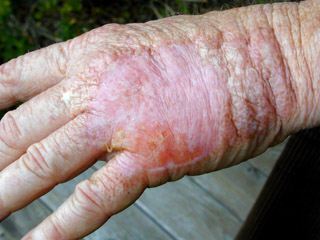
Thanks Doc. for sharing with us. Dato Hajjah Ilani was not the only person who died after a failed war. There were (and are going to be) many more patients like her.  My only response to this episode is to lift up my hands in despair. But of course, I am not going to give up! Dato Illani’s message was: Learn from my mistake, do not go for chemo. And we are going to tell the world just that! But first let me say this loud and clear: It is not for me or CA Care to tell you, cancer patient, what to do – to go or not to go for chemo. It has to be your own decision. Our responsibility is to provide you with credible information. Read them and then make your own decision. It is your life and it is you and only you who will benefit or suffer from the decision that you have made. This is what it looks like if a chemo-drug spills onto your unprotected hand. What happens when a bottleful of this drug is pumped into your body?

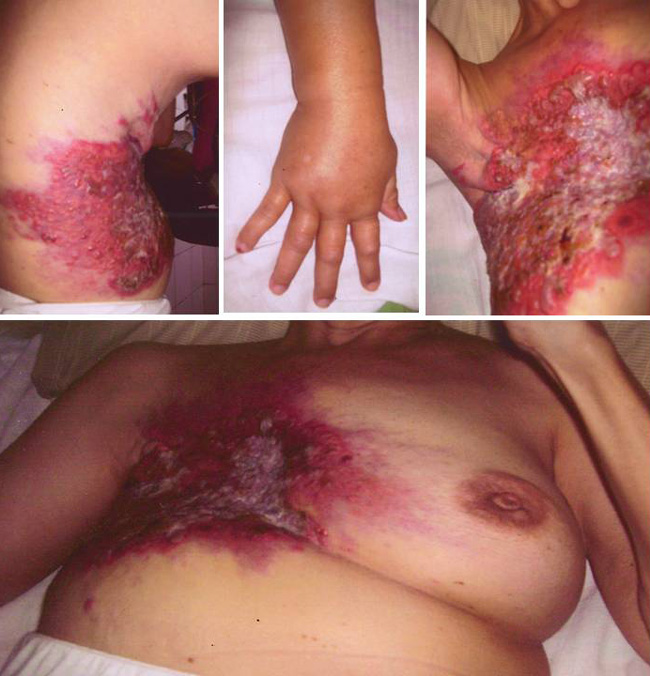
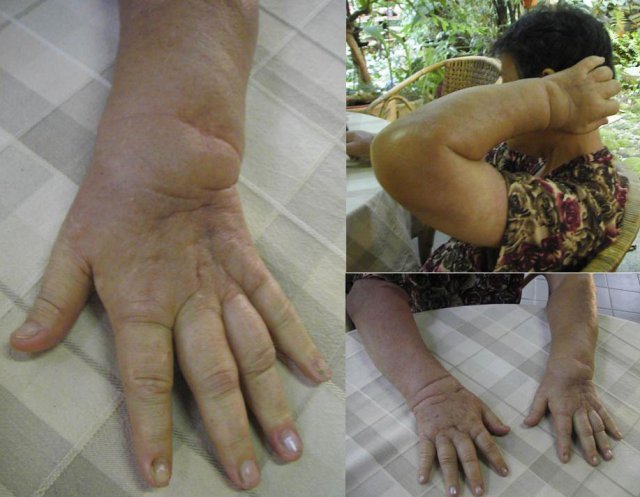
This is what it looks like if doctors “messed” you up.

Picture below: Seventy-three-year-old Indonesia underwent a mastectomy. Three months (not years!) later her cancer recurred. She underwent chemotherapy and radiotherapy. The treatments were stopped half way because she was weak and was unable to walk. Is this the so-called scientifically proven method? Better than snake oil?  What if you just DO NOTHING?

Some of you may tell me: “But you are biased. You only write about the bad things … what about the good side of chemo? “Perhaps you may be right! After all the patients who come and see me are generally the failed cases – after the chemo or radiation could not save them anymore! The successful patients do not come and see me anyway. Excuse me, I get to see only the ugly side of medical treatments.

However, my question is: “Why are there so many bad cases?” Can’t the so-called scientific medicine do better than that? Then again I want to ask: “How wrong or skewed am I – if at all I am biased?”

EVIDENCE AND EXPERT OPINION

I suggest that you visit our website:  https://cancercaremalaysia.com/category/breast-cancer/ before you cast the first stone. Read and hear for yourself what many others with breast cancer have got to say.

Then read books about breast cancer. Let us start off with the following:

In my book, CA Care Experience with BREAST CANCER, I have answered this most important question: How effective is chemotherapy? Let me quote what I wrote:

Graeme Morgan & Associates (Clinical Oncology 16:549-560; 2004) wrote:

  • The overall contribution of curative and adjuvant chemotherapy to 5-year survival in adults was estimated to be 2.3% in Australia and 2.1% in the USA.

In Australia, of the 10,661 people who had breast cancer only 164 people survived 5 years due to chemotherapy. This works out to 1.5% contribution of chemotherapy to survival.

Eva Segelov in an editorial (Australian Presciber 29:2-3; 2006) suggested that:

  • Chemotherapy has been oversold. Chemotherapy has improved survival by less than 3% in adults with cancer.

M. Veroort & Associates (British J Cancer 19:242-247; 204) concluded that:

  • Breast cancer mortality reduction caused by present-day practice of adjuvant tamoxifen and chemotherapy is 7%.

Guy Faguet (The War on Cancer: An anatomy of failure …) wrote:

  • An objective analysis of cancer chemotherapy outcomes over the last three decades reveals that, despite vast human and financial expenditures, the cell-killing paradigm had failed to achieve its objective … and the conquest of cancer remains a distant and elusive goal.
  • Chemotherapy for cancer is based on flawed premises with an unattainable goal, cytotoxic chemotherapy in its present form will neither eradicate cancer not alleviate suffering.

In my book, Understanding Cancer War and Cure, I quoted the following experts:

Dr. John Lee, author of What Your Doctor May Not Tell You About Breast Cancer, wrote:

  • Chemotherapy is an attempt to poison the body just short of death in the hope of killing the cancer before the entire body is killed.
    • Most of the time it doesn’t work.

Alan Levin, professor of immunology, University of California Medical School said:

  • Most cancer patients in this country die of chemotherapy.
  • Chemotherapy does not eliminate breast, colon or lung cancers.
  • This fact has been documented for over a decade.
  • Yet doctors still use chemotherapy for these tumours.
  • Women with breast cancer are likely to die faster with chemotherapy than without it.

In the book, Enter the Zone, Dr. Barry Sears wrote:

  • Everybody knows that our present cancer drugs are lousy ~ Wolfgang Wrasidlo, director of drug development, Scripps Clinic, La Jolla, California, pg. 164
  • The existing treatments for cancer are probably the most barbaric in modern medicine, pg. 166.

Nearer home, a renowned oncologist of Singapore wrote this in the The Straits Times, Mind Your Body Supplement, Page 22, 29 November 2006:

  • Oncology is not like other medical specialties where doing well is the norm. In oncology, even prolonging a patient’s life for three months to a year is considered an achievement.
  • Achieving a cure is like striking a jackpot.
  • Not all cancers can be cured.

For a patient to receive a cure is like striking a jackpot. Get that? But, take a pause and ask: Who is more likely to hit the jackpot first? Patients or oncologists? Read this story: https://cancercaremalaysia.com/2011/03/01/breast-cancer-she-died-even-after-multi-million-dollar-medical-bill/

My final comment, Beware of the Propaganda by the Mass Media

Do you think the newspapers, magazines and TV news reports present medical information fairly and objectively? Think again.

  • Medical propaganda is rampant. Its goal is to mislead, confuse and coerce you into supporting conventional medicine and enhancing the cancer industry’s spoils of war ~ Burton Goldberg, An alternative medicine definitive guide to cancer.

Stomach Cancer: After Three Biopsies She Declined Medical Treatment: Where is the logic?

DS-M906, is a 69-year-old female from Indonesia. Sometime in July 2009, DS had problems with her stomach. She consulted an internist at a private hospital in Medan. A biopsy was performed and the result indicated an adenocarcinoma, i.e. cancer of the stomach. After this examination, DS decided not to do anything. Her problem escalated and she suffered more pains.

In December 2010, DS went to see another doctor in another private hospital in Medan. A biopsy was again performed. The histopathology result indicated a moderately differentiated adenocarcinoma. Not satisfied, in January 2011, DS came to a private hospital in Penang for further consultation. A CT scan did not show any focal lung lesion. Her abdominal organs were normal. A colonoscopy showed simple haemorrhoids while the rest of the bowels were normal.  A biopsy of the pre-pyloric region was performed. The result indicated signet ring-type adenocarcinoma. There was also Helicobacter pylori associated chronic active gastritis. In short, for the third time, DS had been told that she had stomach cancer.


The doctor in Penang suggested two options – DS take medications or undergo an operation. DS declined further medical treatment and came to seek our help on 21 January 2011. Below is the video recording of our conversation.

Comments: Since DS and her children had already made the decision not to undergo any surgery, DS had no other choice but to take our herbal teas. We cautioned her to reconsider her decision to decline surgery. She was adamant that she did not want any medical treatment. One of her children said: “After surgery, she has to undergo chemotherapy. And we know that is not the thing we want to do.”

We posed this question to DS – and for that matter, to all patients. If she has already decided not to undergo surgery after a biopsy, why does she do one biopsy after another? It is understandable if only one biopsy is done – to determine what has gone wrong. But what does she expect to get by doing three biopsies?

This is one peculiarity we often notice among Indonesian patients. They come to Penang – bring all the money that they have. They spend their money on blood test, X-ray, CT scan, PET scan, biopsy, etc.  When they are told that they have cancer and need to medical treatments, some of them just pack off and go home the next day.  Is this not wasting money unnecessarily? Is there any logic in doing such thing?

This is our message to patient: Iif you don’t want to proceed with medical treatments recommended by your doctor, there is no need to do a biopsy. A biopsy is done to confirm if you have cancer, so that you can move to the next step – be it surgery, radiotherapy or chemotherapy. If you did not want to do any of these, why do a biopsy?

Again we say – before doing a biopsy, ask yourself first: If it is cancer, do I want to undergo surgery / chemotherapy / or radiotherapy? If you agree to such treatment, go ahead with the biopsy to be sure that it is really cancer. But if you do not wish to undergo further medical treatment as in the case of DS, why do you spend so much of your money doing the biopsy in the first place?

Granted – some patients say, the medical treatments are expensive and they cannot afford it. Or,  some may say they decline medical treatments because the doctors cannot guarantee a cure.  If these are your concerns, why don’t you ask the costs first or ask for a guarantee first before doing anything?

Herbs are Effective for Pain and Side Effects of Chemotherapy

At the Seminar on Integrative Oncology: Cancer Care Beyond Boundaries, organised by the Department of Nuclear Medicine, Radiotherapy & Oncology, School of Medical Sciences, Health Campus, Universiti Sains Malaysia, Kota Bharu, Kelantan from 20- to 21 August 2008; Chris told the seminar participants that:

  • Herbs can mitigate the side effects of chemotherapy.
  • Herbs are also effective to alleviate pain.

Listen to this video.


Liver Cancer: Surgery and Chemo Did Not Cure Him

Surgeon told him three years too late that nine out of ten patients whom he operated on died anyway

KB (H467) is a 57-year-old male. In 2006, he suffered back pains. CT scan of the abdomen on 23 June 2006 indicated: “a hypervascular lesion in the right lobe of liver in Segment 6/7 measuring 3.5 x 5.2 x 4.5 cm. This has ill-defined margins. Features suggestive of an underlying hepatoma.”  In short, KB had liver cancer and without hesitation and in haste due to fear, he underwent liver surgery in a private hospital in Penang. This cost him RM35,000.

As a follow-up treatment, KB underwent seven times of  chemoembolisation. Each treatment cost RM5,000. The first five treatments were well tolerated but the last two caused severe side effects. It was a difficult experience and KB said he was “half dead”.

About three years later, KB felt a lump in his abdomen. CT scan on 23 June 2009 report is a follows:

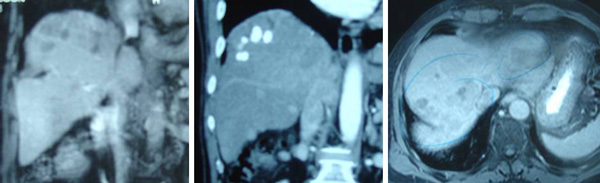
“There is a previous segment 6/7 and 7/8 wedge liver resections. There are multiple foci of lipiodol uptake in the liver post chemoembolisation in keeping with multicentric hepatomas.  These range from 2 – 20 mm in size. There are several recurrent hypervascular foci noted scattered in the subdiaphragmatic region of the right lobe of liver ranging from 5-15 mm. Absent gallbladder (previous cholecystectomy). No evidence of abdominal lymphadenopathy.”

Another CT scan was done on 4 September 2009. The imaging report appeared exactly the same as the one written on 23 June 2009 with the following exception:

“There are several hypodense foci in the right subdiaphragmatic region ranging from 2-15 mm. Impression: several  hypodense lesions scattered in the subduaphragmatic region of the right lobe of liver, ? generating nodules, ? early hepatomas.

MRI was also done on 3 October 2009. The report appeared exactly the same as the CT scan reports of 23 June and 4 September 2010, with the following exception:

“There are multiple irregularly enhancing nodules scattered in both lobes of the liver with clustering in the right subdiaphragmatic regions ranging from 3- 20 mm. These are suspicious of multicentric hepatomas.”

It was a real disappointing result for KB and his family. At that time he was still undergoing chemoembolisation. KB complained to the surgeon that the treatment was making him sick. The surgeon said this: “Out of ten patients I operated on, nine died.” KB and his family were also told that KB was already lucky that he is still alive. “Most of others patients have all died. If you do not wish to continue with the chemo, you would be waiting to die.”

Listen to our video conversation below.

The son told us: But he only told us this fact three years after the operation. The surgeon should have told us before he did the operation.  Disappointed KB decided to see another doctor in Ipoh. A total body CT scan was done on 10 August 2010. The report is a follows:

“There are multiple hypodense lesions seen within the liver affecting nearly the entire parenchyma, with clustering seen in the subdiaphagramatic region. This is suggestive of multicentric hepatoma. The area of involvement is worse than that seen in previous scans.

In the private hospital in Ipoh, KB received three i/v chemo treatments. Unfortunately the treatment was not effective.  The family was told about CA Care and KB and his family came to see us on 26 November 2010.  Take a look as his blood test results.

  4 Oct 10 15 Oct 10 4 Nov 10 19 Nov 10
Direct bilirubin 7.3 6.7 5.9 7.4
SGOT/AST 116 103 112 132
SGPT/ALT 66 49 55 74
GGT 882 723 649 790
Alkaline phosphatase 179 157 138 179
Alpha-fetoprotein 2480 2419 3185 3208

Comments:

This is indeed a sad story. Talking to KB and members of his family that night, made me realized how vulnerable we all are. KB trusted the expert to cure him. He was willing to spend so much money to find the cure for his liver cancer. He did not doubt about what he was doing  – for that matter he probably took it for granted that he would get his cure. Like most people believe, after the operation the cancer is gone.

Then came the bombshell three years too late. He was told that nine out of ten patients who underwent liver surgery died anyway! I asked him: “Before you had the surgery, did you ever ask the doctor if surgery would cure you?” The answer was NO. Well, most patients never ask such a question. They took for granted that surgery would be the “magic tool”. His wife said: “We were ignorant”. KB said: “I was in fear.”

Dr. Hamilton, a neurosurgeon, in his book: The scalpel and the soul, wrote: “As doctors, we generally don’t tell outright lies. We just don’t speak the truth fully.”

So, here it is. If you don’t ask you get no answer. There is a Malay saying: Segan bertanya, sesat jalan (Shy to ask, you lose your way).

This is what I always tell patients. Before you do anything – be it surgery, chemotherapy, radiotherapy or even taking drugs – ask the doctor first of the possible and expected outcome. Why the rush to get things done? Ask if what he is going to do or giving you is going to cure you or not. Then evaluate his answer or response. What he says, how he says it and how he addresses your concern (including his body language) will tell you where you are heading for.

I was a bit baffled that night. I asked KB and his family – what made the surgeon say that damaging “confession” – nine out of ten patients whom he operated on died. In what context or under what circumstance did he say such a thing? I got this answer. KB was unhappy because the chemo was “killing” him and he complained to the surgeon about it. He was reluctant to go on further with the chemo – in spite of having received seven “shots” already. In an effort to make KB comply with his instruction, perhaps “threatening” KB with a possible death would do the trick?

But then why come out with such damaging statement? One is tempted to speculate that this “truth” has been lying buried in his heart all these days of his professional life but he could not share this truth with his patients. But once a while, things have to “explode” and be let out. Unfortunately for KB, this truth is revealed three years too late. What if KB was told that he had only a 10 percent chance of survival before he underwent the surgery? Would he go ahead with the surgery?

Why must doctors adopt the attitude that “we just don’t speak the truth fully”?

At CA Care we lay out our cards on the table – clearly and fully. When KB came to see us, I have made it clear that I would not be able to cure him at all. But I promise to do my best to help him – the way that I know how. I told him to keep to the good diet. Cancer patients cannot eat anything they like. I am aware that most patients are disappointed and they never come back again after hearing my “lecture.” That is okay – it is better to be honest and become unpopular with patients than misleading them.  The wise words of Rabbi Harold Kushner came to mind. In this world we have a choice on how we conduct our affairs:  “There is the morality of cleverness and wit, in which success means getting the better of the other person by means of a slick business deal or a clever answer. Then there is the morality of righteousness, in which the highest good is thoughtfulness toward others. The worst sin is hurting another person.”

In his book, Never to be lied to again, Dr. David Lieberman wrote:

  • In an ideal society there would be no need for lies. But we live in a world of deception. And whether you want to play or not, you’re in the game.
  • And there’s one undeniable truth about lying – everybody does it.
  • Some of these lies can be “subtle that they can be easily missed unless you pay close attention”. Others may be glaringly obvious. In some instances, you’ll be looking for lies of omission – what’s missing that should be there.

Dr. Lieberman offered numerous tips in his book on how to detect lies and deception. Here are some examples:

  • Body language – the truth can be always silently observed. No or little direct eye contact is a classic sign of deception. Feeling guilty a lier does not want to look you in the eyes. Liers tend to be less expressive with his hands or arms. Arm movements and gestures seem stiff and almost mechanical – not natural.
  • Someone who is lying rarely points a finger, either at others or straight up in the air. Finger pointing indicates conviction and authority.
  • Watch out for the good old Freudian slip or slip of the tongue.  This is a subconscious leak when a person’s misspoken words reflect and reveal his true feelings, thought or intentions.
  • He doesn’t want to respond to a question. He may imply an answer but never answers  it directly.
  • When asked a question, he depersonalizes his answer by offering his belief on the subject instead of answering directly.

Here are something we can do and need to be aware of:

  • When you’re desperate, you’ll be apt to do what you never should do – make a decision out of fear.
  • Just because you’re told that something is the latest, best, hottest or biggest seller does not make it right for you.
  • A white lab coat does not make anyone an expert.
  • Evaluate a person’s integrity based upon what is being presented not what is promised.
  • Often we don’t stop and ask ourselves, “Does this make sense?” A dash of common sense can go a long, long way.
  • We certainly can’t stop people from trying to lie to us, but we can keep them from being successful.

Read the following related posts:

A Great Failure and Let Down

Surgery for Liver Cancer: Eighty Percent Success?

Liver Cancer: He Died After a RM 10,000 Open-Close Surgery

The Doctor Said: “No More Hope” After a 60-Million-Rupiah Operation for Bile Duct Cancer

Healing of Metastatic Liver Cancer


The World’s Most Well Fought Battle Against Colon Cancer

I give this article the title – the World’s most well fought battle… Why? This is because the man involved in this battle against colon cancer, Tony Snow, used to walk along the corridor of power in the most powerful political office on earth. For many of us in Malaysia, what happened in the United States of America is always the greatest and the best. What America says we agree or have to agree and what America does we follow or eventually have to follow. I would imagine that the most powerful man on earth would be able to do something great to help his beloved staff and fellowman who was in great distress. I believe that Snow would have gotten the best – the best advice, the best doctor, the best drugs and the best hospital – for him to fight his war against cancer. So, to me, this battle against cancer would probably be the most well fought battle ever waged in America– the world’s most powerful nation.

Also in almost all countries in the world and most of the time, those with wealth and/or political power are All-Powerful – they can get anything they want or they can get away with anything they do. Oop – except of course, as this story will show; they cannot (always) win the war against cancer.  The lesson we can learn from this story is: No one on earth should take cancer for granted.

The facts:

  1. Tony Snow was the press secretary of President George Bush – the current (2008) president of the United States of America.
  2. He was married and had three school-going children. His mother also had colon cancer and died when Snow was 17.
  3. Snow was first diagnosed with stage three colon cancer in 2005.
  4. After surgery he underwent six months of chemotherapy.
  5. He was said to be cancer-free after the medical treatments. He was appointed President Bush’s press secretary in May 2006.
  6. In late March 2007, Snow’s cancer reappeared in his abdomen and also his liver.
  7. He underwent a surgery in April 2007 followed by more chemotherapy.
  8. Slightly more than a year later, Snow died at the Georgetown University Hospital – on a Saturday morning in July 2008. He was 53 years old.

The following are quotations from the press about his battle against metastatic colon cancer:

The Associated Press. 27 March 2007.

He had recently reached the two-year mark of being free of cancer. The White House deputy press secretary said: He told me that he beat this thing before and he intends to beat it again.

Dr. Allyson Ocean, a gastrointestinal oncologist at Weill Cornell Medical College said: This is a very treatable condition. Anyone who looks at this as a death sentence is wrong.

USA Today 27 March 2007: Robert Mayer, former president of the American Society of Clinical Oncology… suggests surgeons won’t be able to cure it with surgery but may be able to control it with chemotherapy. When cancer returns in multiple organs, the goal is not cure, but maybe control for a good long time, which can be measured now in years as opposed to months.

Daniel Laheru, a colorectal cancer specialist and assistant professor at the Kimmel Cancer Center at Johns Hopkins University in Baltimore, said patients a decade ago with widely spread tumors survived an average of 12 months. Now, new chemotherapies have doubled that to about 24 months.

The Cheerful Oncologist. 28 March 2007 wrote:  Chemotherapy plus targeted therapy, however, does have a chance to prolong the lives of patients with metastatic colorectal cancer. The average survival of patients who receive no anti-cancer therapy … 4 to 6 months, while those with treatment 20 to 21 months and hopefully more. This is an example of why medical oncologists give treatments designed to kill, disable and humiliate cancer cells.

The Washington Post – 28 March 2007. reported:  Snow, who beat cancer two years ago, suffered from colitis for 28 years and in February 2005 he was diagnosed with colon cancer. Snow said: seventeen days after the diagnosis, we go in and take the whole colon out and throw it in a garbage bag. After the treatments, Snow got a clean bill of health from a doctor and he went on to take the job at the White House.

Snow called Bush about 7 a.m. to tell him about the recurrence. Bush later told the press: He is not going to let this whip him and he’s upbeat. The blood test and other scans turned up negative for cancer. Anyway, Snow decided to have the growth removed to be followed by chemotherapy.

People 14 May 2007. In an article: Fight of His Life, Sandra Westfall wrote:

6:30 a.m.: National Security briefing;  10 a.m.;  Press briefing;  Noon: chemotherapy, hospital;  3:30 p.m.: Pick up kids from school

That was the typical every-other-Friday schedule for the President’s press secretary Tony Snow.  The cocktail of drugs he’s taking to keep his cancer in check includes one he took when first treated for stage III colon cancer. Snow said: I’d be exhausted for two or three daysThe pace of innovation is breathtaking.  Anyone who can survive a few years has automatic hope.

The Associated Press. 30 April 2007.  Tony Snow was back on the job Monday, five weeks after doctors discovered a recurrence of his cancer. He said he would soon undergo chemotherapy just to make sure we’ve got the thing knocked out.

Slate 4 September 2007.  Snow said: I finished chemo two weeks ago todayWe did CAT scans and MRIs in the last week and it indicates that the chemo did exactly what we hoped it would do, which is hold serve. The tumors that we’ve been tracking have not grown. … We’ll be doing what’s called a maintenance dose of chemotherapy just to keep whacking this thing. He also noted that he’d be having scans every three months, just to stay on top of everything.

Snow conceded: I’ve been lucky I work at the White House. Snow noted that oncologists and patients have made heroic strides in turning cancer into a chronic disease rather than a fatal disease.

The Washington Post. 12 July 2008. After the relapse, Snow said he would undergo an aggressive regimen of chemotherapy followed by further treatment, and hope to throw it into remission and transform it into a chronic disease. If cancer is merely a nuisance, for a long period of time, that’s fine with me. He had lost considerable weight and his thinning hair had turned white during several months of chemotherapy and other cancer treatments.

Comments:

I am writing this article with a sense of deep respect for the deceased and also for the living. I do not want to add more grief or hurt to anyone. I respect what the patient and his family had done and would not wish to give my opinion about this case except to say that everyone had tried their best to help Snow but the inevitable had happened – the battle was lost.

Even if the battle was lost, it would be a great tragedy if we in Malaysia or those in the developing countries do not take this opportunity to learn something from this episode.

If you have not read my book: Understanding Cancer War & Cure, you can download it for free by clicking this link. We at CA Care manage cancer in a much different way than what is currently practised in the advanced countries of the Western world.

Allow me to pose some questions regarding the media propaganda and spin with respect to this case. You can use your own commonsense to answer these questions.

1. This is a very treatable condition. Anyone who looks at this as a death sentence is wrong.

What does the reality of this story tell us? Slight more than a year after the second battle, Snow died – dead wrong or dead right?

2. What do you think is the real cause of his death?

3. The recurrent tumour in the abdomen has been taken out. Only some cancer could have been left in his liver. Could this kill Snow? Or was it the treatments used to treat the cancer that killed him?

4. This is a treatable disease. What do you think of such a statement? Surely, any disease is treatable but can it ever be cured? Treatable does not mean curable at all.

5. Cancer patients should take note of this medical claim: Patients a decade ago with widely spread tumors survived an average of 12 months. Now, new chemotherapies have doubled that to about 24 months. Is survival for two years with new chemotherapies is enough or sufficient for cancer patients? Most patients who undergo chemotherapy have the misconception that the treatment is going to cure them.

6. CAT scans and MRIs … indicates that the chemo did exactly what we hoped it would do … The tumors that we’ve been tracking have not grown. If that is the good news and result, why was the battle lost? Is the temporary shrinkage or stoppage of tumour growth just a meaningless, false security?

7.  Oncologists and patients have made heroic strides in turning cancer into a chronic disease rather than a fatal disease. How true is still statement? Death, after a year of chemotherapy is not fatal?

8. Snow got a clean bill of health from a doctor and his first surgery and chemotherapy. What is the worth of such a statement? In one hospital, cancer patients are given a Certificate of Achievement after completion of their six cycles of chemotherapy. Is such certificate worthy of the paper it is printed on?

9. Snow had lost considerable weight and his thinning hair had turned white during several months of chemotherapy and other cancer treatments. What is your say about this? Is this not what most cancer patients suffer before they eventually die?

10. Medical oncologists give treatments designed to kill, disable and humiliate cancer cells. Is that so? The reality is: who gets humiliated? The cancer cells got killed or the patient?

Surgery and Chemo But Her Breast Cancer Remains Incurable

This is an e-mail I received in late November 2010.

Dear Dr. Teo,
My mom is 68 years old. She got breast cancer stage 3 B in June 2008, after a checkup done in Bandung, Indonesia and confirmed by the National Cancer Centre, Singapore.Due to my working place in Singapore, she was willing to come here to do the treatment (2 times surgery and 18 times chemotherapy) where I can take care and accompany her through this painful treatment. But after 2 years with 18 times chemotherapy, the cancer was not cured.

Last week the chemo doctor mentioned that there is no need for her to take the chemotherapy again because there is “NO HOPE TO CURE and CAN ONLY PROLONG HER LIFE A BIT.” The cancer now spreads to the skin and made her left arm swollen. She felt very uncomfortable due to hardness, redness, hot and pain at her skin.Last 2 weeks, my Indonesia’s friend introduced me to keladi tikus (founded by you). She felt better and the wet skin was getting dry without bad smell under her left arm.I am very sad and keep praying that she has the strength to go through this. I believe that God will cure my mom if I have faith and trust HIM. I really hope to receive your help and great support for my mom treatment.On 7 November 2010, Intan (not real name) and her daughter came to see us in Penang. It was indeed a sad and depressing night for me to see Intan struggling to walk into our centre. In this age of science and technology, we are made to believe that we have all the answers to our problem. But the case of Intan, that I saw tonight, testified to the reality of the present situation. The words of Amy Cohen Soscia, a breast cancer patient from the US, came to mind: “There is no cure for metastatic breast cancer. It never goes away. You just move from treatment to treatment.”

Medical History: Sometime in 2008, Intan fell and felt pain in her left breast. An USG and mammography in Bandung indicated a lump in her breast. She subsequently went to Singapore and underwent a mastectomy. The histopathology report confirmed the 5.5 cm tumour was an invasive carcinoma, grade 3. Twelve out of the 15 lymph nodes were  infected with cancer.  The doctor told Intan she has only three months to live. Since modern medicine could not offer her much hope, her daughter turned to a Chinese sinseh for help. She was started on herbs. Intan pulled through for nine months after which she became breathless. She was admitted into the Changi General Hospital. The doctors tapped 3.5 litres of fluid from her lungs. She was then sent to the Singapore General Hospital for follow up treatment.
In June 2009, she was started on oral chemotherapy – using Xeloda for 2 months. This treatment was not effective. The doctor switched her to intravenous chemo using Vinorelbine. After 2 cycles, this treatment was deemed not effective. Intan underwent another 4 cycles of chemo with Vinorelbine + Gemcitabine. This combination was also not effective. The doctor switched drug to only Doxorubicin. Intan received 7 cycles of this mono-drug therapy. This too was not effective. The doctor switched to Taxol and Intan received 2 cycles of this treatment. Again the result was not good. Intan was put on Xeloda again for a month and after that she was switched to another hormonal therapy (which the daughter forgot the name). The cancer still spread. Intan was again put on Taxol for another 2 cycles. After Taxol, the doctor suggested Herceptin. Intan declined further medical treatment.

All said, it was a bitter and frustrating experience for Intan.