| It is possible that after taking the recommended herbs, you may experience discomforts such as diarrhea, fatigue and even intense pain. Your condition seems to be worse than before. If this is what you experience, DO NOT WORRY. What you are experiencing is called healing crisis. CONTINUE TAKING THE HERBS! However, if the problem continues for too long and you are getting worse each day, it is advisable to stop taking the herbs first and seek advice. Generally, after a few days, the intensity of such discomforts decreases with each day. You will gain strength and your condition will improve after some days.
A healing crisis occurs as a result of the body engaging in the process of eliminating the toxins that it has accumulated over the years. Now the toxins are being liberated from their storage places within you and they are affecting the body in full force, resulting in rashes, boils, itchiness, swelling, phlegm and even intense pain. When the process of elimination has been sufficiently accomplished, your health improves. During this detoxification process, do not take any drugs or medication to suppress the symptoms. Allow the healing process to proceed without hindrance. For example, you may experience diarrhea for three days. You should allow this to happen and take more fluid to aid the cleansing process. Perhaps on the fourth day, the diarrhea may just stop automatically. Of course you must not be too complacent as well. If your health deteriorates with each day or the problem persists for too long, then stop taking the herbs and seek professional advice or see your doctor immediately. The healing crisis is recognized in all systems of natural healing. In traditional Chinese medicine, it is known as the law of cure.
|
Month: January 2012
Healing Ways – A Doctor’s Guide to Healing
The Author: “I grew up in a medical household. My father was a family doctor in suburban London… I feel comfortable at the thought of being a doctor.” Robin Kelly went to a medical school in the UK. “After my (intern) year, I pursued my interest in paediatrics and oncology.” In 1977, he emigrated to New Zealand and worked in a hospital. In June 1981, “I was content to settle into the life of a general practitioner in the comfortable seaside suburb of Takapuna on Auckland’s North Shore”.
Dr. Kelly eventually “was drawn to the holistic Taoist philosophies, the Laws of the Five Elements, the macrocosm expressed in the microcosm of the body, the focus on natural healing.” And he said, “What’s more it seemed to work.”
His focus is on integrating these holistic models into a modern contemporary environment — blending the best of the East with the best of the West.
A past and current co-president of the Medical Acupuncture Society (NZ) and a founding trustee of New Zealand’s MindBody Trust, he studied Acupuncture and Chinese medicine in the 80s running teaching workshops for health professionals and doctors. Since the 90’s his overriding interest has been in researching the roles consciousness and quantum theory play in the deep healing process.
“I feel fortunate to have been able to watch the progress of “chronically ill” patients as a doctor, without the pressure to prescribe. In this setting, I have been free to explore the meaning of symptoms, seeing them in the overall context of healing. I have been able to observe the subtlety of healing, as patients leave behind the controlling chaos of chronic illness and embark on their journeys of self-discovery. It continues to be a privilege to accompany them along the way.”
You can visit Dr. Kelly’s website, http://www.robinkelly.co.nz/About+Us.html
In the foreword of this book, Dr. Steven Aung, Clinical Professor, Department of Medicine of the University of Alberta, Canada wrote:
- Healing is not merely a technical phenomenon, but a holistic process of facilitating peace, happiness and harmony. Physicians are not superior to their patients. Both must work together with an attitude of mutual honour and respect.
- Medicine should not have any divisions, east, west, north or south. It should always be aimed toward the total health and wellbeing of all our dear patients.
- The essence of this sacred quest is to honour and respect our patients as our best friends and honoured teachers.
The following are quotations from the book.
- Healing is re-emerging as a medical term, meaning more than the healthy resolution of a physical wound. It means returning to a state of joy, harmony and health; a state of being where life has meaning and purpose.
- The existing model of disease often sees the body in a state of war, under attack from a foreign invader. But there are many others who remain unwell despite the best efforts of “mainstream” treatments. Some cannot tolerate their medication; some are even made worse by their treatment or develop new conditions as a result. Many more feel awful, tired or pained without a reasonable diagnosis let alone a cure. I have been asked to treat people who have failed to become well despite the best medical care available. The chronically ill, the perpetually stressed and those in constant pain appear at my home.
- In the population of chronically ill people “the most common ingredient missing from their health care … is themselves”. Often the good intentions of medical professionals attempting to manage a condition lead to a lack of participation by the sufferer. By interfering with this personal responsibility, the patient’s confidence and ability to heal are often eroded. These patients feel failures, incurable and despondent.
- Our bodies continually talk to us. If our bodies continue to be ignored, the messages can become more complex and difficult to fix.
- I have had a close connection with cancer sufferers over the years. There are no strict ground rules for someone to follow when diagnosed with cancer. No universally correct way to deal with the uncertainties, the confusion and the distress. Every person, once properly informed, must find their own way, and it is our job as friends and professionals to stand alongside them. We all have the potential to heal even when there is no cure.
- Some of the barriers to healing – repressed feelings, and a lack of loving support, loom large as potential blocks. Blocks, once understood, can be cleared. Ask yourself: How much peace is there in my life? Peace is valued from the cradle to the grave.
- Humans worry. So we must come to terms with the fact that we are born worriers. But health requires balance. Too much worry blocks our quality of life. The pace of modern life and our many responsibilities prevent us from achieving the ultimate mindful state. Meditation – in its broadest context, is a pure state of mindfulness – a time when we can step outside our worries and fears. A place where we ourselves exists, unburdened and free.
- Humour is often cited as a vital ingredient of a healthy, long-term relationship. The medical literature is short on laughs. Try entering “laughter” into any medical internet search engine; you’ll find it a sobering experience. Up comes paper after paper on “pathological laughter” – the inappropriate expression of joy in the psychiatrically unstable!
- Prayer has an important part to play in health – despite the apparent separation of medicine from spiritual issues over the past 300 years.
- Most of us have to relearn how to breathe. It is our most vital subconscious activity, and yet modern living conspires to interfere, conditioning us into bad breathing habits.
- For something so essential to our survival, modern medicine has surprisingly little to say about love. Maybe there are good reasons for not analyzing love too closely. No sooner have we studied and measured something than we start to want to control it. We set up guidelines, protocols and conditions for its use. For the moment then, perhaps it is better for love to remain mysterious and unconditional.
- Doctors and patients can talk at cross-purposes. My experience with terminally ill adult cancer patients in London – junior doctors … were not trained to talk of death. The dying were prescribed cocktails of heroin, major tranquillisers and cocaine in increasing doses; no doubt a compassionate attempt by us to help drown the sorrows of terminal illness. On many occasions since, I have witnessed terminally ill children teaching their parents and families about matters of life and death. Children have shown me how healing can occur through the dying process; and why adults frequently find it so difficult to let go of life. Once the dying person has let go, a peaceful calm follows. I have felt the most relaxed in my life sitting alongside the bed of a dying person – no need to talk or plan, no better place to be.
Chinese Medicine and Holistic Healing
- We are not simply isolated islands of human tissue closed off to the outside world. Healing involves interchange between ourselves, others and our environment; we are part of an open system. I believe that an understanding of these principles is in itself an important healing step. It allows a person seeking healing an opportunity to be involved, and thereby take responsibility for his or her healing. It also opens patients up to receiving the messages from their bodies, thereby gaining perspective and control of their health.
- It is this open model of healing that forms the basis of Chinese medicine. The Chinese have studied the body in this way for thousands of years; it is their insights that have helped me reach a deeper understanding of healing. They have provided us with a working model of healing.
- This (the above) challenges the very basis of the traditional, 20th century healthcare model, which sees our bodies as closed systems manipulated back to health from within. Medical science has progressed by studying each small part in increasing detail, with the assumption that this reductionist approach will provide us with all our answers.
- Healing involves more than just the mechanical repair of the body. Once healed, a world previously denied opens up. Opportunities present themselves, relationships improve, as a new focus develops on the outside world. The healed have an improved “sense of self”, often better than before the illness.
- We must consider other models of health that have withstood the test of time. Models based on centuries of empirical evidence and meticulous recording. Models that are as free as possible from being tarnished by commercial self-interest or political gain. I will use Chinese medicine as an example of this as it has been an area of intense interest to me over the years.
- When I started to study Chinese medicine in the early 1980s, I was in two minds about it. On the one hand I was excited because it seemed to provide a valid and logical reason why acupuncture worked. It also linked physical diseases holistically with emotions and environmental conditions, which made sense to me. However, it was taught as a dogma with poorly constructed “scientific” trials always claiming a 98 percent success rate. This part didn’t ring true to me.
- According to Chinese tradition, in the state of perfect health qi flows evenly through all the meridians, which interconnect and connect the organs (liver, heart, spleen, lungs & kidney) to the outside world. Symptoms such as pain represent a block in the flow of qi somewhere in a meridian.
- “Orthodox” medicine still struggles with the philosophies of Chinese medicine and concepts such as qi. Canadian neuroscientist Professor Bruce Pomeranz … is of the many who advocate a shift away from the narrow thinking that tries to explain the healing arts in solely chemical terms.
- For a therapist and health professional, acupuncture is a marvelous tool with which to facilitate healing. Acupuncture uses needles to conduct a state of harmony and connection in the body.
The Healer
- To be a healer you have to be involved.
- To be a healer you have to know the person.
- To be a healer you have to listen.
- To listen you have to know yourself.
- Honestly and humility are valued above perfection and pride.
- Quiet confidence is important in all healing arts – a mindful state, away from fear and insecurity. This does not mean over-confidence, an inflated ego, or a gung-ho approach. It is the confidence that comes of knowing one’s self, warts and all. It is the confidence to say, I don’t know but I’ll look it up.
Toxic Reactions from the Sceptics
Despite our more enlightened times, it seems that the path of the modern healers is no easier than their predecessors throughout history. The wise words of Mother Teresa of Calcutta provide comfort and perspective to healers whose intentions and skill are so misunderstood: “If you do good, people may accuse you of selfish motives; do good anyway.”
- By definition all living creatures are creative. Knowing that creativity is our natural state should free us into pursuing our dreams and passions. And whatever these are is not for others to judge. The most important scientists in history have been passionate and creative people, lateral thinkers who were prone to leaping out of their baths, yelling “Eureka”.
- One would think that medical doctors, with their scientific training, would be more convinced about acupuncture from all the evidence now to be found in the medical journals and textbooks. However, over my years of teaching acupuncture to doctors, it is the experience of the changes they feel themselves in response to a single tiny needle on their foot that really “hooks” them in. I have also noticed that many hanging on to a purely materialistic world view – whose lives are focused mainly on issues of control, power and conflict – remained unconvinced of the existence of a world beyond their senses (living in a “fool’s paradise” where the only reality is the one formed and conditioned by our five senses). No seasoned argument, no scientific advance seems to be able to jolt them out of this fixed mindset.
- I have learned this lesson over the years running teaching courses for doctors and health professionals … I no longer try to convince others, doctors in particular, of the benefits of holistic healing; this is a journey they can only make of their own free will, when they are ready.
- Twenty years ago, it would have been difficult for a doctor to write a book on healing. In those days many health professionals felt the future lay solely in the chemical and surgical correction of deficits detected by increasingly sophisticated and accurate diagnostic machines. Medicine was becoming efficient but somehow less personal, colder. The public started to explore natural and “alternative” health in an attempt to maintain control and understanding of their bodies. They were also seeking true caring and compassion, instinctively knowing that this was a vital ingredient missing from their prescriptions. Quite simply they were seeking ways to heal.
- Most of the people I see in my practice come to me because modern biomedicine has not provided them with relief…. For those it has failed, we, as doctors should ask ourselves whether the “mechanical” model is appropriate. For those who continue to suffer day in day out, there is a wealth of such wisdom that can be applied. It is wrong for us to expect them to wait until “all is proven”.
Book Review: Severed Trust by Dr. Geoge D. Lundberg, M.D.
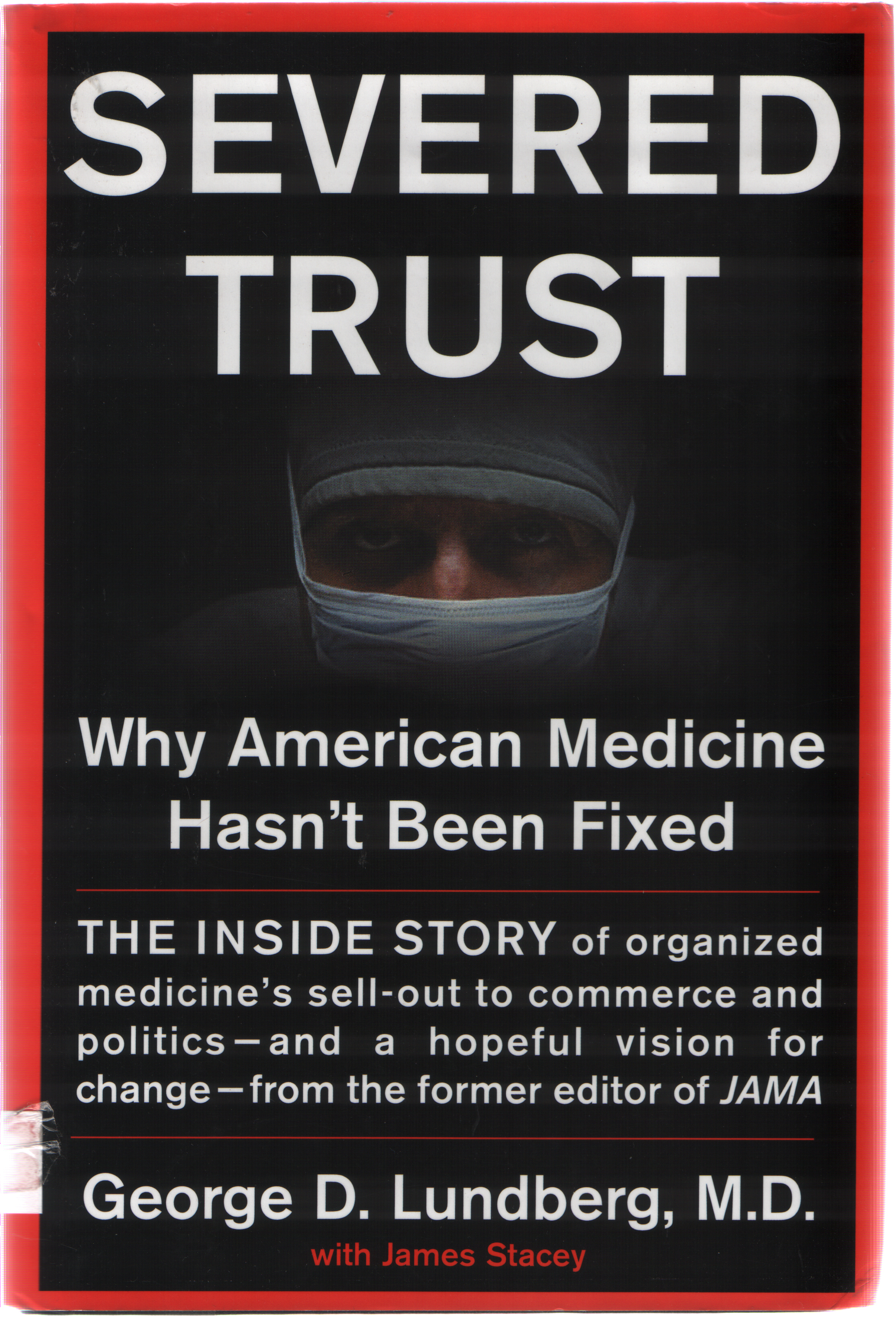
The author was 17 years the editor of the respected Journal of the American Medical Association (JAMA). In January 1999, Dr. Lundberg was sacked by the JAMA leaders. He is now editor-in-chief of the international health information company called MedScape. The following are quotations (in italics) from his book.
US Medicine – Before and Now
In the early 1950s, medicine was a caring profession.Medical technology was relatively primitive and inexpensive. Cure were elusive – care services were essentially directed toward compassionate care for the people in need. Today, medical technology has become enormously complex and expensive – it largely neglects giving attention, comfort and reassurance to patients. Americans spent billions for cures and peanuts for care!
Physicians have the means to perform any expensive technical procedures and yet they all too often fail to perform the service that medicine was created for. We doctors do not care for our patients, as we ought to.
Where is the cure? Chasing after dreams and illusions?
For all our progress CURES REMAIN ELUSIVE for a wide range of chronic disorders and life threatening diseases. At the moment, there is no cure for diabetes, multiple sclerosis, arthritis….Despite decades of intense research the cures are all TOO UNCOMMONLY achieved for the major cancer killers – colon, lung and breast cancers.
I would suggest that we are putting too many resources into a heroic, almost irrational chase for impossible cures. We’re too often investing in hopes, dreams and illusions instead of therapies that have been proven effective.
Medicine is only about money?
When the American Medical Association talks about quality, what it really means is letting doctors do and order whatever they wish and thereby letting them make as much money as they can.
When patients talk about quality what they mean is getting whatever they think they need as long as the insurance company pays for it.
When members of Congress talk about quality, what they mean is providing billions into research aimed at curing all the ills that make their constituents (and themselves) unhappy.
The profession of medicine has been bought out by business and unless physicians take it back, it will develop into a business technology in which faceless patients will be treated by faceless technicians. The doctors, patients, hospitals, drug companies, health insurers, government officials, etc – everyone wanted the best but unhappily everyone’s self-interest led them on to the worst.
Medicine – based on science?
The second most common (surgical) procedure, HYSTERECTOMY…doctors practising it tend to continue to recommend hysterectomy over less drastic treatments EVEN THOUGH SOLID STUDIES of patients’ outcome HAVE BEEN INCONCLUSIVE.
BONE MARROW TRANSPLANTATION became a standard treatment for Stage 4 breast cancer while it is still an experimental procedures more than a decade BEFORE STUDIES SHOWED THAT IT IS NO MORE HELPFUL THAN CHEMOTHERAPY.
No matter how great the talent, expertise and daring behind innovative, high-tech interventions, THEY DO NOT CONSTITUTE QUALITY medicine. We need to base medicine on science, not on hopes and dreams of cure and profit.
Futile care – what does that mean?
One particularly onerous deviation from quality standard is so-called futile care – the practice of subjecting terminally ill patients to painful, costly, debilitating treatments that offer little or no hope of any meaningful recovery.
Patients in their nineties who display symptoms of multiple organ system failure do not need to have another operation or to undergo another round of chemotherapy. What they need is more attentive care.
The Best of All Medicines!
In the end, we have to wonder whether LESS isn’t sometimes MORE in medicine. Sometimes the best medicine may be to advise cautious waiting. Often as Archie Cochrane (a renowned British physician of the early 1970s) so eloquently pointed out – the recuperative powers of the body are indeed more powerful than medications. Sometimes the very best therapy comes not from pills or procedures but from professional attention to a patient’s distress.
Do Unto Others as You Would Have Them Do Unto You
When I attended medical school in the 1950s, I had ONE LECTURE ON ETHICS, at the end of which the professor said it wasn’t all that complicated. It’s mainly a question of applying the Golden Rule, do unto others as you would have them do unto you.
Why Medicine is Under Attack?
Why is there a general perception that physicians cover up, close rank and sometimes even bury their mistakes? Unhappily, these perceptions exist because TOO OFTEN THEY ARE TRUE.
The sad state of affairs is that the profession of medicine seemed to lose its way… it lost its overriding commitment to care for the poor…and it lost its responsibility to self-govern its ranks … (the American Medical Association) was perceived as solely concerned with protecting physcians’ income and the perception TOO OFTEN WAS THE REALITY.
What disturbs me even more today, is that the balance between business and professional values has tipped dangerously toward the business side…if the rocking horse rocks too far toward the business side…all trust and respect will disappear. Doctors will be fancy technicians and patients faceless cases. That would be bad for patient health.
Errors in medicine kill more Americans per year than would THREE JUMBO JET AIRCRAFT CRASHES EVERY TWO DAYS at O’Hare Field (Chicago Airport).
It is difficult for doctors to change their culture. PHYSICIAN EGO IS ENORMOUS. The God image has been around for ages, largely because physicians have to make God-like decisions and offer God-like services. They don’t like to make mistakes. IT IS EVEN HARD FOR THEM TO ACKNOWLEDGE THAT THEY ARE CAPABLE OF MAKING MISTAKES.
Every year 45,000 people apply for the 16,000 slots available in US medical schools. These are young people who typically made straight As in college. By the time the 16,000 reach medical school, they are accustomed to being the cream of the crop and recognised for doing things right. It is very diffucult for someone like that to admit a mistake, to say: How could I cut off the wrong leg? How could I be so stupid?
In a Nutshell – Our Advice to Cancer Patients
I know it is very confusing when people start giving you all kinds of “expert advices.” There would be well-meaning relatives and friends who come and give their opinions. I use to tell patients, Yesterday these people know nothing about cancer, but today they turn “experts” telling you what to do. Instant experts are just like instant noodle – are junks.
When I first started CA Care, I must admit I know nothing about cancer. My knowledge about cancer was “absolute zero.” With time, and with lots of reading and listening to many patients, I learn a lot.
Let me share with what I know briefly.
- If you have cancer KNOW that no one on earth can guarantee a cure. At best, it is a remission and the cancer can come back again – months or years later.
- What seems a realistic aim is to be able to live a quality life – to be as normal and healthy as possible knowing that cancer cells may be still in your body. Let us learn to live with our own cancer cells.
- In general, it appears that neither modern medicine nor alternative medicine can claim great success – at most a 30 to 40% success rate. What do I mean by success rate? I don’t know and I don’t think anyone honest enough would also know. Anyway, 60 to 70% of cancer patients would, unfortunately, be left high and dry – often abandoned. I see many of such cases.
- You have THREE options for your cancer management:
OPTION ONE: seek only treatments offered by modern medicine i.e. surgery, chemotherapy, radiotherapy, etc. Good bonus: YOU CAN EAT WHAT YOU LIKE and also continue with your old lifestyle. Literature says some people suffer badly from the side effects – vomiting, botak (bald) and later suffer possible damage to liver, kidney, heart, etc. Some people may even die from the treatments themselves rather than the cancer. There are the so-called scientific methods – the path that many would follow without questioning or thinking.
Listen to the video of our patient and also our friend.
OPTION TWO: seek alternative medicine without aggressive procedures. This is just as good or bad as there are good and bad apples. If the healer promises you a cure or you need to spend plenty of money for the procedure – be careful! He may be after your money not your cancer. For reasons only known to themselves most doctors consider this QUACKERY.
OPTION THREE: seek complementary therapy. This is marrying one and two above. Adopt the best of both worlds. Reject procedures what do not make sense to you or are too aggressive. This is what we do at CA Care. Unfortunately taking this path is no honeymoon. You need to work for your healing. You need to change your diet and your old lifestyle. It does not make sense to continue polluting and abusing your body further after it has been cleanse. We advocate this path and we also end up being called a QUACK. We hear comments like: Cancer patients can eat anything they like except herbs. Some even told their patients – Take herbs only after all the medical treatments that we give you do not work! You see Chris Teo – you die because you cannot eat what you like. So be it.
Ignorance kills! Kiasus don’t always win either. Make your choice and please yourself.
Don’t Be Complacent – When can I stop taking the herbs? Or go back to my favourite food?
We rejoice with patients when they get well. We hope they continue to get well. However, we would like to remind those involved – please don’t be complacent. The cancer may come back. If you think you are done with cancer – remember cancer may not be done with you yet. As such as we advise you to relax and be positive, we also hope that your healing experience has changed your lifestyle and attitude towards life permanently and positively.
Often people ask this question, When can I go back to my old favourite food? Some people learn easily, some others learn the hard way, yet many others don’t seem to want to learn at all. Our answer to such question is well known, Never go back to your old unhealthy habits. Later, for some reasons if you decide that you are bored or tired with life – then indulge in whatever you want to do, and pray that you go quickly and peacefully.
There was a man with liver cancer and was doing well after taking the herbs. When he tookthree pieces of lor bak + a plate of char-o-fan his alpha fetoprotein liver shot up three times to 40,000 plus. Is that worth it? You have a choice to stay healthy or to get sick! My advice to him and many others was, Take more of the lor bak so that it is worth the misadventure. It is not worth getting into trouble just because of three pieces. Take a lorry-load of it. Then it is worth it.
The second question often asked of us is, When can I stop taking the herbs? Honestly, we don’t know – nobody in the world knows for sure either. If you are willing to take the risk – then do what you wish. If you value life more and do not mind that extra chore of cooking and drinking the herbs, then continue. When people take vitamin pills or supplements they do it willingly – without fuss. It is hard for us to tell you to stick to our herbs for life – which is like trying to hook-winked you into buying the herbs forever and ever.
We know of many who are on the herbs for the last many, many years. They are still on them and are doing well. On the other hand they are those who took the herbs and stop after they get well. Then they go back to their old lifestyle.
- A lady with breast cancer was responding very well to the herbs. After she was done with her chemo, she stopped taking the herbs as well. Barely six months later her father brought her in a car – half-dead, lying in the car and was unable to walk. The cancer had spread and was too far advanced to do anything.
- Another lady with breast cancer was doing very well on the herbs – including no side-effects while on chemo. After the chemo treatments she stopped taking the herbs. Two weeks ago, she came back and told us that the cancer has spread to the lung and brain. We asked the husband why she did not continue taking the herbs – the answer, We thought that the cancer was already gone.
- While on this, our mind went back to a pretty lady – our friend called Su, a matron in one hospital. She had thyroid cancer and was one of our earliest patients. The doctor said that she would not be able to get back her voice – she was in bad shape indeed. She took Cap. A and fresh rodent tuber juice plus radio-iodine treatment. With God’s grace and mercy she became well and could even sing with a beautiful voice. One evening she came to Centre with a nice cake as a present to us. That cake, loaded with lots of sugar really disappointed me (hi, be careful what you give to us!). A few months later, we learnt that Su was not well again – we called Su’s husband and asked if we could be of any help. Too late, the cancer has gone to the lungs; she was breathless and died soon afterwards. We went to her house and talked to her husband (also from a Health Department) and we asked him this frank question, Why did you stop taking the herbs? The answer was, We thought that the problem as over. We were over confidant because she recovered so well. So we stopped the herbs and went on eating our “catered food” again.
Dear friends, you have a choice – choose wisely. Reflect on the above examples – they are true accounts. We never attempt to dramatize or exaggerate them. If at all there is a lesson to learn or an advice to give, let not Su die in vain – she has a message for you.
|
Do Not Be Complacent One most misinformed or misunderstood idea that many patients believe is that cancer is cured after one has undergone surgery, chemotherapy or radiotherapy. This is often further compounded by the doctors’ pronouncement that everything is alright! The patient goes home and continues to live their previous lifestyle. Unfortunately, soon afterwards, the patient suffers a relapse i.e., the cancer comes back. We know of cased in which a relapse occur even after 10 to 15 years in remission. This implies that there is no certainty in the complete cure of cancer. Perhaps cancer patients are not aware or have not been told of the disturbing fact that conventional medical treatments can only help (not cure) 40% of all cancer cases. Unfortunately, 60% of the cancer cases do not respond to these medical procedures. In her book, The Activist Cancer Patient, Beverly Zakarian said that one of the few things known with certain about (ovarian) cancer is that it is uncertain. Do not be misled. If you think that you are done with cancer, cancer may not be done with you yet. So, do not be complacent. We take the view that patients need to consider the change to healthy lifestyle and diet as permanent. From our experience, we know that most patients would ask for their unhealthy and forbidden food the moment they feel well enough to talk and eat. This is indeed most regrettable and disappointing. It makes no sense to revert back to an old lifestyle or habits at the first sign of regaining health. Also, patients may need to continue taking the herbs and cleanse the body for a long time yet. There are people who would reduce or stop totally, taking the herbs after the initial signs of recovery. The risk of a relapse is too great to take any chances.
|
View Your Misfortune as a Blessing
Very often we take good health for granted – especially when we have never landed in the hospital before! I have seen faces of the sick and shared their pains – I imagined what it was like, though I have not experienced it myself before.
On 9th February 2000, it was my turn to get sick. That morning, I tried to shift a packet of herb, which blocked the door. “Cluck” came a sound from my backbone and I was almost immobilized. The whole of that Wednesday I was confined to the chair, unable to pick things from the floor, could not walk properly, etc. Mentally, I felt frustrated for not being able to do all that I had always taken for granted. Of course, such problem is nothing compared to the ordeal the cancer patients suffer.
Take painkiller to relief the pain was one advice. No, thank you. Why cut off the signal that tells me that something was not right with my back?
Rush to the hospital? My past experience with an orthopedic regarding the same problem was enough bad lesson. So, no thanks too!!
Deep down in me, I know, however, that God will help me. I visualized that I would be well the next morning! It was not to be. I was unable to bring myself up from bed.
I thought of calling a friend who knows of one person who is good at massaging. At about 11 a.m. this very friend called us instead. She wanted to drop by our house with her brother-in-law from Singapore who has been taking the herbs. What a “coincidence”.
About noon, my cousin dropped by and told us of a chiropractor in town who has done a wonderful job for her friend. She called the chiropractor’s office for appointment but was told that there was no slot free until a week later. Aya! Mana boleh – can’t wait that long! Anyway, after an explanation my cousin was told that the doctor might be able to squeeze me in the next day. Hai, but what about this very afternoon? Ha, ha, come immediately was the answer! So, by about 3 p.m. I was on his table “for repair”.
At home Im boiled the herb we bought earlier which was supposed to be for backache and muscle pain. Then, I applied a wine herbal extract that my Auntie gave us that had proven to be good for my sprained toes.
The morning of Friday, 11 February, I was back on the chiropractor’s table again for another fix. By 3 p.m. I was back at my table in the Cancer Centre for the regular Friday session. By Saturday morning, I felt rather well. I was able to walk up the stairs, bend down, etc, etc. Sunday night was the usual routine and I don’t think anybody noticed that I had a problem.
God does answer prayers but He does so in His own way, that man often cannot understand or see. Does a miracle happen only when the wind blows and someone gets well for no apparent reason? In a more subtle way, God works miracles by “opening doors and opportunities” at the correct time and brings you to people whom you need. Some may like to call that coincidence. We call it miracle.
More importantly is that when we call Him in despair, He provides us with the courage to face reality like never before. Deep down in my heart I know that I will be alright. I could sense that feeling – the optimism that is so vital for healing.
Often we interpret sickness as a misfortune. Why not look at the positive side of things. When I was immobilized, I decided that the best use of my time was to write and I worked on the book: Food & Cancer. By the time I became well, I almost finished writing the whole book. Then, I researched to find herbs to cure my ailing back, I “discovered” two things – the Pain Solution and the Backache Wine. These two helped me tremendously. And that’s besides having the opportunity to know the chiropractor! So, could my sprained back be a blessing rather than a curse?
I have no doubt, it was a blessing!
Listen to Your Body
A 43-year old lady had constipation problem. She went to the hospital. The doctor did an operation on her and discovered that cancerous tumours had invaded the ovaries, pelvic cavity, omentum, part of the colon and the surface of liver. This was classified as Stage 4 (T3bNxM1) cancer.
Can cancer just appear like that? It is not likely. Perhaps there are early signals or signs that were being presented years before – could you recognise these signals? Do you care or are you not bothered?
In the desire to climb the career ladder it is worth realizing that health is most important. Take time to BE. In silence learn to know what the body is telling you.
As for this lady, there were some signals but she just took them for granted, referring to take Panadol to silence them all. To you ladies take note that irregular, painful, periods indicate imbalances in the body, especially the liver. This 43-year-old-lady had been having pains but ignored them. In addition she did not have her periods for up to six months, then when her periods came it was a very heavy flow, with dark coloured blood clots.
According to the Chinese, blood clots indicate stagnation. Absence or irregular period, etc., all indicate stagnation or poor qi circulation. Stagnation leads to blockage of blood and qi flow leading to pain. If stagnation is allowed to persist, over a long period it transforms into mass which later manifest as tumours.
So, please learn to listen to your body.
Cervical Cancer, Stage 1B spread to her lungs and liver. She was given three to six months to live
Melisa (a61) was a 44-year old lady.
1997. Melisa’s problem started when she had severe pains in the shoulder muscles. At night she had muscle cramps in the legs. She went to see a doctor who told her that nothing was wrong and that she had been working too hard. She should take a holiday and relax. Some months later she did her annual pap smear. Her doctor said everything was alright.
A few months later, she suffered severe, heavy bleeding. The blood discharge had clots and it flowed out rather suddenly and wet the entire floor of the bathroom.
October 1998. She went to see a gynaecologist at a private hospital. A biopsy confirmed she had cancer. She underwent a hysterectomy. The pathology report dated 2 October 1998 stated the following:
Hysterectomy specimen: uterus and cervix including short vaginal cuff and parametrium together with both appendages weighing in toto 160 grams.
The cervix showed a whitish fleshy friable tumour invading almost the entire length and thickness of its wall measuring 5 x 2 x 1.5 cm. The ectocervix and lower uterine segment were also found to be invaded. The vaginal cuff and parametrium were grossly free from any tumour invasion.
Interpretation: 1. Adenosquamous cell carcinoma of cervix with micrcoscopic invasion of parametrium but vaginal cuff was clear. Figo Stage 1b. 2. Metastatic involvement of one left internal iliac node.
Remark: altogether twelve right pelvic node and eight left pelvic nodes were received.
After the operation, she underwent radiation treatments in a hospital in Penang. She suffered badly from the radiotherapy. Barely two months afterwards, Melisa ended up having to go in and out of the hospital due to pains, fevers and high temperatures. Later, a scan showed that there was pus in her abdomen. The doctor extracted out the pus. She was well for a while. Then, a scan revealed that the cancer had spread to her lungs and liver.
Melisa ended up in a hospital in Singapore – in search for a cure. The doctor at first suggested that she underwent a liver surgery to remove the infected parts. Melisa reasoned out how surgery could have helped her when the entire liver and lungs were infected with cancer? She declined surgery but went ahead with chemotherapy. The first shot of chemotherapy was tolerable but the second and third cycles were really bad. She preferred to die rather than complete the entire regimen.
One of her employee told Melisa to seek the help of a Dr.Teo. On 19 March 2000, Melisa came to see us. At that time she could hardly walk.
We requested to have an interview with Melisa so that we can share her healing experience with others. She agreed. On 14 June 2001 at 4 p.m. a video-taped interview was conducted. Let Melisa herself tell you of her healing experience.
Tell us about your experience of radiotherapy that you had in Penang.
I underwent 25 times of radiation treatment and one session of “internal treatment”. For this internal treatment, three long probes were inserted into me and I had to lie on the bed for 72 hours in a special room – immobilised. During that treatment the doctor visited me once. This was an experience that I would not wish to go through again.
I suffered badly from the radiation treatments. I had sore mouth, was constipated and the anus bled. Sometimes I had diarrhoea. I felt like having a fire inside me. I could not eat or sleep. I vomited. Every morning when I woke up, I dread the thought of having to go through the radiation treatment again.
After the radiotherapy, were you cured or did you feel better?
No. Barely two months past, I spent time in and out of the hospital. I had pains, fevers and high temperatures. The doctor did not know exactly what was wrong with me. Then later, another doctor in the same hospital took a scan and detected that I had pus in my abdomen. I was hospitalised for eight days and the doctor extracted out some 600 ml of pus from my abdomen. He did it three times. Then I was alright. A few months later, during a follow-up visit, a scan showed that the cancer had spread to both my liver and the lungs.
What did the doctor say about the cancer that had spread? How serious was it?
The doctor told me that both these organs had numerous dots and at least thirty spots were visible. They were the sizes of five, ten and twenty cents coins.
There was nothing the gynaecologist could do for me. I went to consult a doctor at the cancer hospital. He told me that I could do chemotherapy as a palliative measure but in my case there was no hope for a cure. This was the last stage cancer. I was told to go and make out my will. My gynaecologist was a nice person – he tried to find doctors elsewhere for me to proceed further with my treatments. At last, I landed in Singapore.
Tell us about your treatment in Singapore.
The oncologist at first suggested that I had surgery to remove those infected parts. On consultation with my Penang doctor, I asked the oncologist how surgery could remove all those spots in the liver. The oncologist replied: Who is the cancer doctor, I or your doctor in Penang? I refused to have the surgery but agreed to go along with chemotherapy.
Before doing the chemotherapy, were you told what this treatment is all about? The side effects and benefits.
No. I had all along believed that the treatment was to kill and get rid of the cancer cells. I was not told that the treatments would be difficult and I had to suffer such side effects. The doctor did not carry out any further test or diagnosis. The appointment was fixed and chemotherapy started the next day “otherwise the cancer cells would spread more” (that was what the doctor told me). I was scheduled to do six cycles divided into 12 shots, i.e. 2 injections represent one cycle. I did not know what drugs were used on me.
(It is indeed most regrettable that Melisa was not able to produce the scan of her metastatic condition. Her Singapore oncologist kept the medical report and scan films. She requested that these be returned to her. Unfortunately, the oncologist refused telling Melisa that she had not completed her chemo-treatments and that he would not be able to return those films and report. This same oncologist also did not disclose the chemo-drugs used on her (many patients also told similar things about this same doctor. This was not an isolated case experienced by Melisa alone).
Point to ponder: The report and films rightly belong to Melisa. She brought them along to Singapore. How could it become the property of the oncologist? Why did the doctor want to keep her record? We wonder if such conduct is humane/ethical or what? Informed consent means that the doctor is supposed to explain the consequences of the treatment plan to their patients – telling them of both the good and the bad).
Tell us what was it like to be on chemotherapy?
It is very difficult to put in words the sufferings I had to endure.
The first chemo-short was tolerable. I felt sleepy, tired and groggy. I did not vomit but I could not sleep.
The second and third shots were really bad. Everything seemed not right. Sitting down was also not right, standing up was also not right. I could not sleep. In whatever position I was in, I just did not feel right. I could not eat. I felt something was blocked in the chest. The stomach felt bloated and there was wind trying to push out. Sometime I vomited. It was difficult to breathe. My hair dropped off every time I bathe and it blocked the drainage hole of the bathroom. When I stood up I felt like falling down. I could not get into the car – felt giddy and the world spinning around me.
Under such a situation I felt I would rather die. Remaining alive had no meaning any more.
Having got to go through that agony, what did the doctor say about the chances of your cure?
He said it all depends on me. He did not know what my chance was. He said I should be lucky if I could live for three to six months. If I survive then he would give me more chemos. I came to understand that I was given chemo to prolong my life for three to six months. The doctor also told me that if I die I would not die in pain if I had chemotherapy.
(Point to ponder: Chemotherapy was given to Melisa just to prolong her life for three to six months? And when she dies, she is NOT supposed to die in pain, if she had chemotherapy. Right? Is that logical? What about the sufferings she had to endure while on chemotherapy? Also, if she survived – she would need to have more chemos? Where is the cure? When is the chemotherapy going to stop – when she dies?)
How much did it cost you to get your treatment?
One shot of chemotherapy (given over two times) cost me S$6000, i.e. RM 12,000. In addition I have to pay for other costs – like blood test, hospital, hotel, travel etc. So, all in all, each visit to the hospital cost me about RM 15,000 to 20,000.
After all these sufferings and expenses, did your health improved?
No. I was not better at all. I felt miserable. I could not work. I could not do what I like. I had to stay home. I could not even walk out to the gate of my house for lack of strength. I could not sleep and I could not stand up for long. I felt heaty inside. When I put on the air-con full blast, my head felt cold. When I put off the air-cond, I felt I was on fire. In the middle of the night I stood or sat by the window looking out into the darkness and felt the cool air. I wondered if life is worth living. Life has no more meaning – to be alive like this. I knew I was dying.
Did you gave up chemotherapy?
No. Not yet. Then, one nice worker of mine, who worked in the factory came and told me about CA Care which is right in Penang and which I did not even know about. Since I have NO other avenues – To do chemo also die, not to do chemo also die – I then decided to come and see you.
What happened after you came to see us and took the herbs? This is what happened after I took the herbs that you prescribed.
The first day, nothing spectacular happened. I only started to urinate a lot and felt a bit better. The urine was smelly. Before the herbs the urine was always heaty.
The second day on the herbs, I vomited. Anyway, I kept telling myself. This was to get rid of something in me. I still urinated a lot.
The third day was great. I felt the muscle in the neck had loosened up. I was able to put on my dress and went to my office. Before the herbs I was not able to go to my office. Also I was not able to sit in the car. Now I could do all these. Even my office worker was surprised and asked me if I was already well. I felt elated and confidence grew within me. I knew I was on the right path to healing. From that day on I felt better and better.
Then, did you continue with your chemotherapy?
I felt better with the herbs. I was in a dilemma – not sure if I should continue with the chemotherapy or not. I asked your opinion but you (Dr. Teo) were non-committal. I went to consult my gynaecologist and seek for more information. It was then that I learnt that chemo-drugs are actually poisons. They not only kill the cancer cells, but also kill the good cells and may destroy the vital organs in my body. All along I thought that chemo-drugs kill only the cancer cells and they would cure me. If this was what it is, I reasoned that all these treatments would damage the organs in my body. How could my body recover from the cancer? I could NOT sleep the whole night and was unsure of what to do. My husband also told me that I had to make up my own mind and decide for myself. At last, I came to the decision NOT to continue with the chemotherapy.
When you decided to stop the chemotherapy – were you under pressure to change this decision? Yes. Many people said many things to me. The problem is that all these comments came from people who NEVER experience the sufferings – they did not know what it was like to suffer from those chemo-drugs. Then the nurse from the Singapore oncologist called me THREE times asking me to come back and complete my treatments. In addition, the oncologist personally talked to me TWICE over the phone telling me to come and complete the treatment. They told me that it would be dangerous if I did not complete the treatment. However, I was firm in my decision. In the last conversation with the oncologist, I told him that I have NO MORE MONEY to pay for the treatments. With that, no more calls came from his office. My ploy to get him off my back worked!
After you gave up chemotherapy and were on the herbs – did you take any other herbs as well?
No. I was firm with this. There were many kind-hearted and well meaning people who came and told me about who is good or what is good for me. I listened to them but I was firm on taking your herbs only. Some people commented that I have been taking the herbs for so long and I should change them for something else. There is no reason to. The herbs helped me and l kept taking them.
Now, Melisa – you have been on the herbs for about 1 year 3 months now. Did you at any one time experience any difficulty?
No. I felt better with each day. Before I had cancer I was very active – running around like a horse. Then when I was sick I could not do anything – could not even walk to the toilet. Now, I am back to almost normal like I was before – running around again like the same horse before. I drove by myself to Johor Baru, Kelantan, Trengganu, etc. I flew to Hong Kong. I drove my four-wheel drive into the hills. I visited my durian plantation. I played golf and carried my own golf bag. I worked in my factory and office from morning till night. I felt normal and I did not worry about my illness at all. I know I am alright now.
Did you go back to see your doctor for any check up?
No. I used to meet my doctor and he asked me to go back to the hospital and do a scan every six months. He also called me in the office. I said, yes, yes and smiled. Once, I asked my doctor: what would you do if the scan shows that I have a tumour inside me? He said, well go for chemotherapy. No, another chemotherapy is not the answer for me.
Melisa, tell us what do you think is the secret of your healing success?
I believe three factors had contributed to my healing. One – 30 percent was due to my full confidence and faith in the healer. If I have difficulty and if it concerned medical procedures, I went to see my gynaecologist and if I have problems related to my cancer I come to see you (Dr.Teo).
Two – 50 percent, was due to the herbs. They helped me from day one of my taking them. I felt the effects almost immediately. From day three I was able to go to my office. From then on I knew that the herbs were good and right for me. I have no doubt about that.
Three – 20 percent was due to my mental attitude. After I came and see you I knew that I have found my way to healing. I was happy and I did not worry any more. I took life positively. I became well. I look forward to living another 20 years and more. For now, I am hoping to build up my company – bigger and bigger. And I shall continue to take the herbs without fail. In fact, I need to tell you this. I took the capsules A and B five times a day instead of three. I kept the herbs in the office, in the car and by my bed. I took the teas using ten spoonfuls instead of six spoonfuls as you told me to take. I took MORE herbs and never less. Some friends said that the herbs were smelly, tasted so awful and I should look out for better alternatives. I must say I should thank the herbs for helping me. In fact, I figured that I hope to be able to take the herbs for the next twenty years or more. I have my hope. I have my vision and my dreams. I know where I am going.
Melisa related to us two interesting episodes.
A nurse in the gynaecologist’s office called Melisa’s office one day. She discretely asked the operator if Melisa was still alive. Her staff replied that her boss was still around and had gone to Hong Kong. The nurse asked if she went to Hong Kong for medical treatment. No, no….on business.
Melisa told us that many of her friends never believed that she had cancer in the first place! On day, one medical doctor came into her office and asked her husband if there was a lady in his office who had cancer and was supposed to die but had recovered instead. Her husband said it was his wife. At the time Melisa walked into the office and the doctor burst out: Who said that people who had cancer need to die?
Comments
We rejoice in this healing. We pray that God will show Melisa His grace and blessing for many more years to come.
It was with sadness that about two years later, Melisa’s urinary track failed and she had stents installed. She was told that this was caused by her earlier radiation treatment. Then her husband found another woman and this led to a divorce. Melisa died soon afterwards.
Cervical Cancer: My wife died
Jonathan Chamberlain’s wife, Bernadette, was diagnosed with cervical cancer in 1993. She underwent surgical investigation, radiation and chemotherapy and was dead exactly a year later. There is no doubt that she died as much from the treatment as from the cancer itself. Looking back, Chamberlain feels that the biggest mistake they made was to do what the doctors advised because Bernadette could not have died sooner if they had done nothing.
In his book: Cancer Recovery Guide, pg. 28, Jonathan Chamberlain wrote:
When my wife Bernadette learned that despite all the surgery, radiation and chemotherapy her tumour had returned, she was informed that she had three months to live. She was told this on 17 January. She died on 16 April. Three months exactly.
I had a chance to talk with Jonathan when he visited CA Care in 2009. In our conversation one evening by the beach, Jonathan said:
- From my own experience with my wife, we were in awe of the doctors …. We were in awe of our ignorance. We assumed that the doctors were best … I realized that was the biggest mistake I have ever made – to do what the doctors advise. You learn the hard way.
- She (wife) suffered from chemotherapy and it killed her. She died not just from cancer. She died from cancer plus chemotherapy. She died within one year because she did everything that doctor advised her.
Link to Jonathan’s website: http://www.fightingcancer.com/biography.htm
Cervical Cancer, Stage 2: Died 1 year and 8 months after her diagnosis
RAM was a 64-year-old lady from Indonesia. She was diagnosed with cervical cancer in December 2000. According to her daughter, the tumour was only the size of a green pea and was visible. RAM was referred to the cancer hospital for treatment. In January 2001, she was started on radiotherapy. Altogether she had 26 radiation treatments and this was followed by HDR brachytherapy (i.e., internal radiotherapy). She also underwent chemotherapy at the same time.
After the medical treatments, RAM was alright for a while. In March 2002, RAM started to have pains in the backbone and the abdomen. A CT scan done on 13 March 2002 showed the presence of at least three hypodense foci in segment 6 of right lobe of her liver suspicious of either cysts or metastatic deposits. Her uterus was distended with fluid within the endometrial cavity. There was mild thickening of the uterine cervix, post radiotherapy. Multiple sclerotic foci scattered in the lumbar vertebral bodies, iliac bones and right head of femur. These were suggestive of sclerotic bony metastasis.
RAM went back to the same cancer hospital. She again underwent 11 times of radiotherapy. After the treatment, RAM’s health started to deteriorate. Disappointed, she went to another private hospital in Penang. The medical report dated 22 June 2002 stated, “She consulted me for the first time on 17 June 2002 with complaints of severe pain in the back and right side of the face. X-rays confirmed secondary sclerotic lesions in the ribs, clavicles, scapulae, skull vault, upper cervical spine and lumbosacral spine suggestive of metastases”. This meant the cancer had spread extensive to her bones. The doctor prescribed RAM a three-month supply of artificial saliva, amitriptylline, morphine sulphate and maxolon.
RAM stopped coming to Penang for treatment. She stayed home. Her entire right side of the body was in pain. She was not able to eat. She breathed with difficulty. Her daughter came to see us on 30 August 2002.
Comments
A small pea-sized tumour in the cervix had created havoc within a year. Are we made to believe that this is a natural course of event in cervical cancer – a pea-sized monster suddenly becoming ferocious and invaded the liver, ribs, skull and bones all over the body?
How could that be? Think carefully and calmly. Could it be due the chemo-drugs or the deadly radiation? If RAM was to take it easy – if she were to do NOTHING, would she be in her current situation? Would NO treatment at all make her worse off? What could have been worse than the current situation?
Her daughter told us that RAM was a healthy lady and weighed 65 kg when she started with medical treatments. After the treatment she became a vegetable. In June 2002, the doctor told her family that RAM had only THREE months to live. RAM eventually died, 1 year and 8 months after her diagnosis.
Dr. Robert Mendelsohn – A medical heretic and his shocking revelation
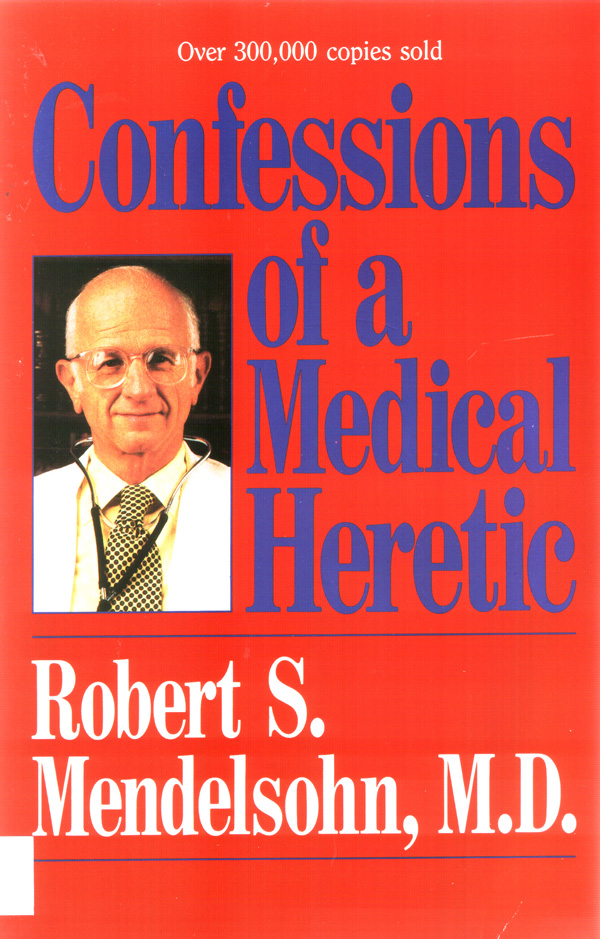
When I first read the opening pages of this no-holds-barred book, The Confession of a Medical Heretics, I was taken aback, amused and wondered if I was reading the correct book. The author, Dr. Robert Mendelsohn was an experienced, senior medical doctor – known to millions of Americans through his nationally syndicated column The People’s Doctor. He was an associate professor at the University of Illinois Medical School and a director of Chicago’s Michael Reese Hospital. He was also chairman of the Medical Licensure Committee of the state of Illinois. Read what he wrote.
Dr. Mendelsohn confessed that:
· I once believed in modern medicine … But, I no longer believe in modern medicine.
· I believe that …the greatest danger to your health is the doctor who practices modern medicine…I believe that more than ninety percent of Modern Medicine could disappear from the face of the earth – doctors, hospitals, drugs and equipment – and the effect on our health would be … beneficial.
· I believe that modern medicine’s treatment for disease are seldom effective and that they’re often more dangerous than the diseases they’re designed to treat.
The following are Dr. Mendelsohn’s advices to you and me:
· I don’t advise anyone who has no symptoms to go to the doctor for a physical examination. For those with symptoms, it is not such a good idea, either. Unless of course it is an emergency like accidents, etc.
Dr. Mendelsohn reminded us that, If you are foolish enough to make yearly visit for a routine check-up, to be aware of the following:
1) Beware that you may be used for purposes other than your own. You may be subjected or asked to undergo certain procedures for the doctor’s own good.
2) Be reminded that doctors are unable to recognize wellness. They are trained to treat diseases and most likely he will always find something wrong with you.
3) As long as the doctor is in control, he can define and manipulate the limits of health and diseases anyway he chooses. Of course, not all are that dishonest. But the worse scenario is when he has vested interest in something or procedure. Dr. Mendelsohn said: beware of the doctor’s self-interest.
4) Doctors almost always get more reward and recognition for intervening than not intervening. A good analogy to this advice is., ask a barber what to do with your hair. Invariable you will get your hair snipped off for one reason or another. If there is not much chance to snip anything off, then you may end with a different coloured hair.
5) If you are given drugs to take, ask questions and study the side effects of the drugs. For example, if you are given pills for high blood pressure. Take note that there are numerous documented side effects related to the drug – from rashes, muscle cramps to loss of sex drive in both men and women. Dr. Mendelsohn wrote: I wonder just how much of the middle aged population suffers from impotence, not from any psychological cause but simply from their blood pressure medication.
Again, Dr. Mendelsohn asked: what kind of person will take that drug after reading the information? Unfortunately, many of us feel helpless. We are frightened to death. We fear after being told that something has gone extremely wrong with us. In haste, we just don’t think long or far enough. We swallow anything that is given to us. For this reason drug companies sell thousands of tons of pills each month just to pacify those instilled fears – real or perceived. We do not have the slightest inkling of what these chemicals are going to do to us.
6) Dr. Mendelsohn gave an amazing advice, If you are sick … your first defense is to have more information about your problem … You’ve got to learn about your disease and that’s not very hard. You can get the same books the doctor studied from. Read them. It is most likely that after reading you will be more informed than the doctor himself.
In this respect, I urge you to read more than one book. Go into the net and you will be amazed as to how much information you can get – all for free. Let me also ask you to consider this. How long do you get to talk to your doctor when you see him/her? Is it one minute, five minutes or half an hour? I got only a minute for my skin problem and I was shown the door after that. He did not answer any of my questions. Do you think, within that time span the doctor knows what is going on with you? Indeed, the best defense is not to abdicate the responsibility of your health to someone else. Your well being is your responsibility. The bottom line is, if you read and when you get to see your doctor, you can ask sensible questions.
7) Dr. Mendelsohn said, Ask the doctor questions. In some cases, he’ll answer the questions. That’s the rare exception. It seems that doctors are extremely busy people and if you ask too much questions, he may just throw you out of his office. Patients told me these were what they got if they asked too much: Why do you want to know so much? I am doctor or you are doctor? But read what this good doctor wrote, Ask the questions anyway. From his attitude and his response you can judge him as a human being and get an idea of his expertise.
8) This is indeed a hard advice to swallow when Dr. Mendelsohn wrote, Doctors in general should be treated with about the same degree of trust as used car salesman. Whatever your doctor says or recommends, you have to first consider how it will benefit him. Make no mistake these words come from an experienced and senior doctor – chairman of the Medical Licensure Committee of the state of Illinois. The privilege was his to say. In his book he even said that if you don’t like the drug prescribed but you still need to be goody-goody with your doctor, then dump the drugs in the waste chute on the way home!
9) If you have a decision to make, this is one advice that Dr. Mendelsohn gave which again amazed and shocked me to the core. He said, You should seek out and talk to people you regard as having wisdom. Doctors tell you – don’t listen to the untrained, the quacks or pseudo-scientists. But Dr. Mendelsohn wrote, They are wrong – they are protecting their sacred authority. You may find that you can do without the doctor!
There are a few more shocking advices that he gave. Being a director of a Chicago hospital, Dr. Mendelsohn wrote,
- A hospital is like a war. You should try your best to stay out of it, and if you get into it you should … get out as soon as you can…. For the hospital is … one of the most dangerous places on earth.
- Overall, your chances of getting an infection in the hospital are about one in twenty … Half of the infections in hospitals are caused by contaminated medical devices … sheets, pillow cases, linens … Just because it’s white doesn’t mean it’s clean … the linens may be washed but the mattresses and pillows are not.
- Everything gets mixed up in hospitals – including patients. Mix-ups occur … all the times. Surgeons operate on the wrong leg. Medicines are given to the wrong patients…wrong food is served to people … even babies are mixed up.
- There are many more shocking points eloborated in Dr. Mendelson’s book. Just try to get a copy of this book and read for yourself. Let me end by this remark made,
- I believe that my generation of doctors will be remembered for two things – the miracles that turned to mayhem, (that is the abuse of penicillin and cortisone); and for the millions of mutilations which are ceremoniously carried out every year in the operating rooms.
- Don’t just read one or two books and pronounce yourself saved. Read 100 books! Read every book you can find on the subject of health, especially those that expose the dangerous inadequacies of Modern Medicine. Get use to the idea right away that NO SINGLE system can or should claim to have an exclusive fix on the dynamics of health.
Psoriasis and Myelodysplastic Syndrome: After chemo with Decitabine he has to undergo bone marrow transplantation
This is an e-mail I received from Singapore.
Dr Chris,
I am writing on behalf of a neighbour of mine who is suffering from a type of cancer that I have never heard of until now. It is called Myelodysplastic Syndrome (with AML transformation). He went on a clinical trial treatment using a drug called Decitabine.
He has gone for five cycles of the drug now and due for the last one in November 2011. His name is DT.
DT seems to be responding to this treatment because his blood count has gone back to normal. Only problem is this is only short term as the root cause of the problem is in his bone marrow. His doctor is recommending that he goes for a bone marrow transplant, which will cost him SGD 40,000. The current treatment would have cost him SGD 48,000 but since he does not have money, they offered him for free. Apparently in Singapore past clinical trial using this drug indicated that only 1 out of 20 responded positively to this drug. In this trial, he is the only ‘rat’ and seems to work on him.
He does not wish to go for the bone marrow transplant because he does not have the money and doctor told him the procedure is very risky and he may die during the process. So he called me and I am writing to you.
From talking to DT, I think he has poisoned his body from his past occupation working with chemicals in pest control, etc., which may be the cause of MDS.
I am checking your availability this week and next week so I can bring him to see you. He is still weak but at least he can walk now. The last time I saw him four months ago, he was in terrible shape. He is also suffering from psoriasis which was how they discovered his MDS during the psoriasis treatment.
Rgds, KG
DT came to see us on 11 November 2011. Listen to our conversation that day.
Comments
Doctors are men who prescribe medicine of which they know little, to cure diseases of which they know less, in human beings of whom they know nothing ~ Voltaire, author and philosopher, 1760
My first advice to patient, after having seen a doctor and been diagnosed with a disease, is to take care of yourself. Empower yourself with knowledge – meaning you have to do a lot of “homework” and read about your problem yourself. In this way you can understand what your doctor is doing to you. There are times when you need to make your own decisions.
Indeed we are lucky living today in an information technology era. Whatever you want to know can be obtained and answered with a “click of the mouse”. This is exactly what I did with the internet to learn more about the problems faced by this patient. So before we start to ask questions, let us know first.
About Psoriasis
Psoriasis is an autoimmune chronic disorder of the skin caused by accelerated speed of skin reproduction. It manifests as scaly spots on the skin. One of the major symptoms of psoriasis is joint inflammation. Psoriasis is not a contagious disease.
The treatment for psoriasis includes the use of creams and ointments, oral medicines such as thioguanine, hydroxyurea, cyclosporine, methotrexate, etc. Phototherapy – artificial or natural ultra violet light – is another method used to treat psoriasis.
In spite of a range of options, there is no known cure for this disease. The disease is unpredictable, going through random cycles of improvement and worsening. The effectiveness of psoriasis treatments can be unpredictable. What works well for one person might be ineffective for someone else.


About Myelodysplastic Syndromes (MDS)
MDS is formerly known as preleukemia. The prefix “myelo” means spinal cord or bone marrow, while “dysplastic” means abnormal development. So MDS is a diverse collection of blood-related medical conditions that involve ineffective production of the myeloid class of blood cells when something goes wrong in the bone marrow. The bone marrow does not make enough normal blood cells for the body
Patients with MDS often develop severe anemia and require frequent blood transfusions. Patients may also develop low blood counts due to progressive bone marrow failure.
Some types of MDS are mild and easily managed, while other types are severe and life-threatening. Mild MDS can grow more severe over time. About one third of patients with MDS may end up with acute myelogenous leukemia (AML). This can happen within months to a few years.
Treatment: There is no cure for MDS. But there are three treatment options.
- Supportive care – patients with low-risk MDS are usually treated with supportive therapy such as blood transfusion, use of blood growth factors and antibiotics to fight infection.
- Chemotherapy – the chemo-drugs used include Lenalidomide (Revlimid), Decitabine (Dacogen), Azacitidine (Vidaza, Mylosar), Cytarabine (Cytosar-U, Tarabine PFS), Idarubicin (Idamycin), and Daunorubicin (Cerubidine, Rubidomycin).
- Bone marrow transplant (BMT) – this is a procedure to replace damaged or destroyed bone marrow with healthy bone marrow stem cells.
In the case of this patient, DT first went to the doctor because of his long-standing skin problem, psoriasis. Although he was give a certain cream to apply it did not work for him. This is not unexpected because medical science cannot cure psoriasis.
From psoriasis, the doctors diagnosed DT with MDS – a preleukemia condition. DT was admitted into a chemotherapy clinical trial using the drug, Decitabine or Dacogen. After six cycles of Decitabine his blood parameters became normal. And here we can ask a few questions:
1. Chemotherapy normalised his blood but did it cure his MDS? The answer is probably not. The doctors told him that the disease will recur within a few months if he does not undergo a bone marrow transplantation. So, one dangerous treatment leads to yet another dangerous treatment.
2. Patient had psoriasis and he was treated for MDS. Okay, but did chemotherapy helped his psoriasis? The answer is also no. His psoriasis still persists (see photos).
3. How effective is the chemo-drug Decitabine? And what are the side effects? Let’s go into the website and learn more.
Decitabine is a US-FDA approved drug for treating myelodysplastic syndrome. Before I was able to read the information on this drug from the company’s website, http://www.dacogen.com/, the following Safety Information popped out. I needed to click this “safety button” first before I could get to read the rest of the information in the website: Yes, I have read the DACOGEN Important Safety Information (below).
- Treatment with DACOGEN is associated with neutropenia and thrombocytopenia – neutropenia (87%), thrombocytopenia (85%), febrile neutropenia (23%), and leukopenia (22%).
- DACOGEN may cause fetal harm when administered to a pregnant woman. Men with female partners of childbearing potential should use effective contraception during this time.
- Bone marrow suppression was the most frequent cause of dose reduction, delay, and discontinuation. Six patients had fatal events associated with their underlying disease and myelosuppression (anemia, neutropenia, and thrombocytopenia).
- Of the 83 DACOGEN-treated patients, 8 permanently discontinued therapy for adverse events compared to 1 of 81 patients in the supportive care arm.
- In the single-arm study, hematologic toxicities and infections were the most frequent causes of dose delays and discontinuation. Eight patients had fatal events due to infection and/or bleeding. Nineteen of 99 patients permanently discontinued therapy for adverse events.
- Other commonly occurring reactions include fatigue, pyrexia, nausea, cough, petechiae, constipation, diarrhea, and hyperglycemia.
- Because there are no data on use of DACOGEN in patients with renal or hepatic dysfunction, DACOGEN should be used with caution in these patients.
The following are the side effects of Decitabine:
Low blood counts, Fatigue, Fever, Nausea, Cough, Petechiae, Constipation, Diarrhea, Hyperglycemia , Headache, Difficulty sleeping, Swelling , Low albumin, Low magnesium, Chills, Low potassium, Bruising, Rash, Low sodium, Dizziness, Generalized aches and pains, Cardiac murmur , Poor appetite, Sore throat, Abdominal pain, High bilirubin blood level, High potassium, Mouth sores, Drowsiness, Abnormal liver function blood tests, Confusion, Anxiety, Itching, and Heartburn.
The overall response rate is only 17% consisting of 9% Complete Response (CR) and 8% Partial Response (PR).

That is the message I would like to impart to cancer patients. Before you go into any invasive treatments, read first and know what you are up against. Know the risks and make your decisions accordingly. In cancer treatment, it seems there is no such thing as right or wrong answer. Take your risks and hope for the best.
After enduring the discomforts and “danger” of chemotherapy, DT came out of this experience rather well but the treatment did not solve his problem at all. He still has psoriasis and he was told that without BMT (bone marrow transplantation) he would suffer a recurrence of his MDS. DT did not want to proceed with BMT – in other words he wanted to give up medical treatment.
This is another message I would like patients to think about. Why abandon your medical treatment half way? To achieve medical success DT has to undergo BMT and if he does not do that the purpose of him having chemotherapy earlier becomes meaningless. If you do not wish to proceed with BMT would it be wise for you to undergo chemotherapy in the first place? I have encountered similar situations very often. Patients went to the doctors. They did CT scan, scoping, biopsy, etc. When asked to undergo an operation or chemotherapy, they backed out. It is good to do the CT scan or the scope to know what has gone wrong. But to do a biopsy? There is no need to do a biopsy if you have already decided not to proceed with surgery or chemotherapy or radiotherapy. It is meaningless.
About Bone Marrow Transplantation
Let me be clear. I am not saying DT should undergo BMT after his chemotherapy. I know the risk and danger of such procedure. Let’s have a closer look of what BMT is all about first.
There are three kinds of bone marrow transplants:
- Autologous bone marrow transplant: “Auto” means “self.” Stem cells are removed from you before you receive high-dose chemotherapy or radiation treatment. After these treatments are done, your stems cells are put back in your body.
- Allogeneic bone marrow transplant: “Allo” means “other.” Stem cells are removed from another person, called a donor.
- Umbilical cord blood transplant: Stem cells are removed from a newborn baby’s umbilical cord immediately after being born. The stem cells are stored until they are needed for a transplant.
Before the transplant, myeloablative chemotherapy and / or radiation are given to kill any cancer cells that may be present. This allows new stem cells to grow in the bone marrow. In some cases, reduced intensity (or nonmyeloablative) treatment is done before a BMT. It is hoped that the newly implanted bone marrow will “match” and go to produce healthy cells.
Risks
- Infections, which can be very serious
- Bleeding in the lungs, the intestines, brain, and other areas of the body
- Anemia
- Stomach problems, including diarrhea, nausea, and vomiting
- Pain
- Inflammation and sorenes in the mouth, throat, esophagus, and stomach, called mucositis
- Damage to the kidneys, liver, lungs, and heart
- Cataracts
- Early menopause
- Graft failure, which means that the new cells do not settle into the body and start producing stem cells
- Graft-versus-host disease, a condition in which the donor cells attack your own body
Prognosis
- A bone marrow transplant may completely or partially cure your illness.
- Complications or failure of the bone marrow transplant can lead to death.
From my experience, I know of patients who went through BMT and died. And I know of Peter (not real name) who was asked to under a BMT so that he could live ten or more years longer. He refused. Peter was on our herbs and it has been fifteen years now, and Peter is healthy. Click this link to read more, https://cancercaremalaysia.com/2011/09/18/nhl-kidney-cancer-free-after-six-months-on-the-herbs-2/.
But let not my experience influence you. Let us ask the computer these two questions:
- What is the risk of dying while undergoing BTM? There is no clear cut answer. The following are some indirect answers:
- Two- to 5-year survival rates after transplantation plus chemotherapy range from 40 – 80%.
- Complications or failure of the BMT can lead to death (with no percentage given). BMT carries a risk of treatment-related death.
- The high-dose chemotherapy and total body irradiation required for BMT can have serious side effects. Before undergoing BMT, you will be asked to sign a consent form indicating that you have received verbal and written information to understand the risks and benefits of the proposed treatment.
- Organ toxicity — The lungs, liver, and bones are at greatest risk of damage as a result of treatments used with BMT.
- What is the long-term survival of BTM patients?
- Although most were apparently well, survivors at 10 years and 15 years after BMT continued to have an increased risk of death. Causes of death were related to relapse of the underlying cancer, development of a second cancer, chronic GVHD, or transfusion-acquired viral infection.
- In patients who receive an allogeneic BMT as treatment for acute myelogenous or lymphoblastic leukemia, chronic myelogenous leukemia, or aplastic anemia and who are free of their original disease two years later, the disease is probably cured.
- Results of recent studies of allogeneic BMT for CML report long-term survival rates of 55%-80%, with median survival of more than 10 years.
- 3,788 patients had been observed for 10 or more years. The probability of being alive 10 years after HCT was 85%. The chief risk factors for late death included older age and chronic graft-versus-host disease (GVHD). For patients who underwent transplantation for malignancy, relapse was the most common cause of death
Having done all the reading, it is up to cancer patients themselves to make up their minds – to go for BMT or not. At CA Care we always say this, This is your life. It is you and only you, who can decide what you want to do with yourself. Others around you can only help but ultimately it is you and only you who will have to bear the consequences of your decision. So decide wisely.
Colon-Lung Cancer: Surgery, Twenty-seven Cycles of Chemo and SGD 100,000 Did Not Cure Her
Sar (S12) is a 63-year-old lady from Indonesia. She was diagnosed with Stage 3 colon cancer in 2008. Her daughter wrote, “ It was a shocking news. We decided to bring mom to Singapore to get the best possible treatment.”
Sar underwent a laparoscopic anterior resection for localized rectal cancer in April 2008. Four of 15 nodes were infected with cancer. Histopathology report confirmed a moderately differentiated adenocarcinoma – pT2N2. Sar did not receive any chemotherapy after the surgery.
About a year later, in June 2009, during a follow-up, the doctor detected her CEA was rising. Further investigation showed the cancer had spread to her lungs. Sar underwent chemotherapy. The regimen used was Xelox-Avastin (Capecitabine or XELODA +Oxaliplatin + Bevacizumab or AVASTIN). Sar received 6 cycles of this treatment. According to her doctor, the treatment helped stablised her disease. Unfortunately, such “fortune” did not last long. In less than a year, the cancer showed progression.
In January 2010, Sar underwent more chemotherapy. This time the regimen used was FOLFIRI + Avastin (Irinotecan + 5-FU + Lecovorin + Bevacizumab). She received a total of 8 cycles of this chemo. Again, according to her doctor, the treatment stablised her disease. But the doctor also suggested another new drug, Cetuximab (or Erbitux) to be added to the treatment regimen. But Sar could not afford the extraordinary high cost of this drug.
FOLFIRI + Avastin did not help Sar. The cancer continued to progress. In October 2010, a clinical trial comparing Cetuximab (or Erbitux) and panitumumab (or Vectibix) opened at Johns Hopkins Singapore. Sar participated in this trial from November 2010 to June 2011. She received a total of 13 cycles of the treatment at Johns Hopkins. Sar had initial response. But that turned out to be meaningless because later the cancer started to progress.
A PET scan evaluation on 26 July 2011 showed lung metastases as well as lymph node involvement in the mediastinum and para-aortic region. The conclusion: “Overall findings indicate disease progression on comparison with the previous PET study.”

Sar was asked to undergo more chemotherapy. On 29 July 2011, she and her two daughters came to seek our help. We prescribed her some herbs for her colon and lung. Unfortunately we do not get to see them again after this.
The only news we got was what we read in her daughter’s blog, “In total she (mom) has undergone 27 x chemo with three different drugs plus almost a SGD 100,000 loan. The debt is really pressurizing for her and her family who are average income earners. As for mom, she is still surviving in a fairly good condition and now taking herbs since the last chemo had stopped responding.”
Comments
It is indeed sad to hear such a story. Patients and their family went to the “best” for their medical treatment but the “best” failed them. But such a story is not an exceptional story – or is it a norm that happens most of the time? The conclusion is yours to make.
What saddened me most when dealing with cancer patients is their “lack of knowledge.” We can understand if patients are illiterate and therefore have to depend entirely on others – the “experts” to help them deal with their problems. But if you are able to read what I am writing now – then it would be most unfortunate indeed if you still choose to remain “uneducated”, ignorant or “blind”.
Let me pose some questions for you to ponder on.
- Her daughter wrote, “We decided to bring mom to Singapore to get the best possible treatment.” The patient received the best treatments alright – and the most expensive treatment as well? But what about the outcome? Did she get the best outcome?
- Do you still believe that money can “buy” the cure for cancer? I am reminded of what I wrote in the website earlier. Click this link, https://cancercaremalaysia.com/2010/11/20/the-world%E2%80%99s-most-well-fought-battle-against-colon-cancer/ and you can read about the case of Tony Snow. I gave that article the title – the World’s most well fought battle… Why? This is because the man involved in this battle against colon cancer, Tony Snow, used to walk along the corridor of power in the most powerful political office on earth. He lost his battle against colon cancer and died. Did he not get the best – the best doctors, the best hospital and the “best” support from the most powerful man on earth? Why did he die? And if you have time, browse through the same website and learn for yourself why many patients who did not get the “best” still survive their colon cancer.
- Did it ever occur to you that before you undergo invasive treatment such as surgery, chemotherapy or radiotherapy that you should ask your doctors if these treatments would cure you cancer? Most people don’t ask – they assume that since they get the best, the treatment outcomes would also be the “best”. I always remind patients – ask what the chances of you getting a “cure” are before you undergo any treatment. If you want make sure that you speak the same language like your doctor. Cure means getting rid of your cancer altogether, not just “remission” or buying of time. If the “expert” you are dealing with do not give you a clear cut convincing answer, you might want to seek a second or third opinion from different sources. Weight out the pros and cons before you decide on the path to take.
- In this case, Sar was given 6 cycles of Xelox-Avastin. Did it ever occur to you to check with reliable sources what these drugs can or cannot do for patients with lung metastases? Does Avastin ever cure lung metastasis? How effective is the Xelox regimen for metastatic colon cancer?
You can get all these answers if you spend enough time at your computer. Or do you prefer to remain blind and ignorant. For some the easy way out is to be ignorant – after all this is what they often say, ignorance is bliss.
If you have some money to spare, why not get some books and read. Take for example this one, https://cancercaremalaysia.com/2011/09/02/book-review-money-driven-medicine-%E2%80%93-chemotherapy-for-non-responsive-cancers-%E2%80%93-denying-reality/. Read what the author, a medical doctor said about chemotherapy for colon cancer.
- After Xelox-Avastin had failed. Sar underwent more chemo. But this time following the FOLFIRI + Avastin regimen. Is this not doing the same old thing over and over again? Different combination of poisons but the mindset remains the same. This is what Einstein said, “Insanity is doing the same thing over and over again and expecting different results.”
- Avastin seems to be popular. And it is also expensive. Exclusive and expensive stuff must be good, right? If you read this article, https://cancercaremalaysia.com/2011/12/27/utero-ovary-lungs-cancer-part-1-she-almost-died-after-spending-two-billion-rupiahs-on-chemotherapy-in-singapore/ you will learn that a cycle of Avastin plus another drug cost about S$12,000. But is Avastin effective for cancer? You judge for yourself.
- From the internet, information on the effectiveness of Avastin and other expensive chemo-drugs are readily available. To get you started, just click the links below. From there, I wish you a happy journey – go, read more!
- Avastin Does NOT Cure Cancer https://cancercaremalaysia.com/2011/05/27/dissecting-chemotherapy-part-6-avastin-does-not-cure-cancer/
- Contribution of Chemotherapy to Survival of Colon Cancer Patients https://cancercaremalaysia.com/2011/05/27/dissecting-chemotherapy-part-5-contribution-of-chemotherapy-to-survival-of-colon-cancer-patients/
- How Much Is Life Worth? Erbitux for Lung Cancer https://cancercaremalaysia.com/2011/05/27/dissecting-chemotherapy-part-4-how-much-is-life-worth-erbitux-for-lung-cancer/
- Let me end by asking you if you can learn anything from another colon cancer case – a Singaporean lady? https://cancercaremalaysia.com/2011/09/15/colon-cancer-oncologist-said-chemotherapy-would-not-cure-her-or-make-any-difference-%E2%80%93but-cea-declined-after-herbs/.
This is what her son wrote,
“My mom’s oncologist told us her cancer had recurred and if she does chemo it will extend her life by another six months, and if lucky another twelve months. But the oncologist does not recommend chemo and thought the treatment would make her worse. He suggested waiting until her condition becomes painful or other symptoms appear. He told us chemotherapy does not cure her cancer and it does not make much difference.”
Breast-Bone Cancer: e-Therapy Relieved Pains of Her Backbone
Ati (S-71) is a 44-year-old lady from Aceh, Indonesia. Sometime in early 2011, the nipple in her right breast retracted. There was no discharge but she felt pulling pains. Although Ati is a staff in a hospital, she refused medical treatment. She went to seek the help of a sinseh in Medan and was on his herbs. Since this did not help her, she came to a private hospital in Penang in February 2011.
Ati underwent a mastectomy. The histopathology report indicated an infiltrating ductal carcinoma, Stage 2 (T2bN1Mx). One of the five axillary lymph nodes was positive for metastatic cancer. The tumour was positive for ER, PR and c-erbB2 receptors.

After this Ati returned to Aceh. She started to take the tea made from sour sop leaves for about one and half months. She came back to see her surgeon again for a follow up. MRI done on 8 April 2011 indicated multiple ill define mixed lytic and sclerotic lesions involving the spine – predominantly at the lower thoracic and lumbar spine as well as in the pelvis. These are likely bony metastases.
At was asked to undergo chemotherapy. She refused.
In December 2011, Ati came back to Penang again. MRI done on 5 December 2011 revealed extensive vertebral metastasis involving the thoracic and lumbar spine. There was a fracture at L4 vertebra and bilateral neuroforaminal narrowing at L4/5 and L3/4.
Blood test done on 7 December 2011 indicated elevation of the liver function enzymes.
| Alkaline phsophatase | 109.88 |
| GGT | 142.45 High |
| ALT | 74.1 High |
| AST | 66.44 High |
Unfortunately her doctor said there was nothing wrong with her liver. Instead Ati was asked to undergo a colonoscopy. She refused.
Ati and her husband came to seek our help on 8 December 2011. She presented with severe pains in her backbone and wind in her abdomen. We prescribed herbs and told her to come back and see us if the pains still persisted.
On 1 January 2012, Ati came back again. We put her on the e-Therapy to help with her pains and restricted mobility. After four days on the e-Therapy her pains had almost disappeared and her movements improved by more than 50 percent. Watch the videos below and see for yourself the wonderous healing that took place.
Permission to use these videos without having to mask their faces was granted by the patient and her husband.
Gist of our conversation
Video 1: Life is hard with cancer in her backbone, but life was good after the e-Therapy
- Her mobility was torturous because of the extensive bony metastases. There was also a fracture at L4 vertebra.
- She had pains along the backbone and raising her arms was painful.
- Ati underwent the e-Therapy from 1 January to 5 January 2012. After just one session of the e-Therapy, she experienced some improvements. She felt better. She could turn her body to left or right when sleeping. The winds in her stomach had improved. However, she still felt tightness along her backbone. With more sessions of the e-Therapy her conditions improved further. She could stand up by herself without any more help.
- She did not suffer any side effects of the e-Therapy.
- After 5 days, she and her husband decided she was well enough to go home to Aceh.
Video 2: An interview with her husband
- After 4 days here, her condition had improved a lot. Before the therapy she had to be supported when walking, but after the first day of the e-Therapy, her condition had improved by about 30 percent.
- Then the next day, her conditions improved further. She had less pains and her body felt lighter. By the fifth day, she felt real good. Over all, her conditions had improved by at least 50 percent.
- Before she came here, she urinated standing up. Now she can squat down. At home, her mobility was restricted. She moved by sitting on the floor and pushed herself forward bit by bit. Then she had to push herself up slowly. She slowly took a step at a time to walk.
- At home she slept most of the time because she had to lie down. I had to carry her to the toilet. Now after the therapy she can sit up and watch the TV – but not for too long.
- Actually my wife is a staff in the hospital.
- The oncologist asked her to go for chemotherapy but we refused. Even my friends in Indonesia who are doctors advised us not to go for chemo. They asked us to go for alternative treatment. They told us, “Find someone whom you can trust and feel comfortable with.”
- When we came to Penang, we have already made up our mind not to go for chemo even if the oncologist in the hospital here told us to do so.
- After much thinking during the night and after talking to many friends we decided to seek the help of Dr. Chris. We have confidence in Dr. Chris.
- We would like to express our gratitude to Dr. Chris for whatever help he had given us for the past few days. We remain grateful and do not know how to repay you for this kindness.
- Chris: We are here to help you. There is no need to repay for what we have done for you. Don’t worry we do this not expecting to get anything in return. It is God who helped you! (Note: e-Therapy for this patient is done without any charge. But we decide who needs the e-Therapy. It is not patient’s right to demand this therapy). My main concern is to know if what we are doing here really helped you or not.
- Certainly Doctor, the therapy worked and it helped my wife. Since we came here last Sunday and it is now Thursday – 5 days, my wife’s condition had improved by a least 50 percent. Her pains are very much less and she can walk by herself. She can now turn her body and swing her legs. Before I had to hold and support her and she felt pain. Now when I hold her there is no more pain.
- As a Muslim, I pray that God bless you and let you live longer to help others like us.
- Chris: God bless you and I am really happy to see you getting well.
AcuGraph Study
As in the videos, the AcuGraph readings taken on 1st , 3rd and 5th January 2012 showed improvements. Her total qi was higher and the energy of the various meridians was more balanced on 5th January compared to her first day, 1st January 2012 (below).

Comments
Indeed we started 2012 with a great story! But let me confess – it was a near miss.
I remember reading what a Red Indian chief said, “Two dogs live in us – one Good Dog and one Bad Dog. And they always fight with each other.” After reflecting on what we saw of Ati when she first came on 1 January, the Bad Dog said to me in the middle of the night, “Just send her home. She might just die here and that would create a lot of problems for all of us.“ Unfortunately the two dogs did not “fight”. The Good Dog remained silent. When I woke up the next morning, I conveyed this feeling to Im – we might just have to do that.
But when we saw Ati’s face and also the way she walked the next morning, we knew that the Bad Dog was wrong!
I have written an article earlier about my experience with back pains – something that I have to live with for many years now (see, http://painandwellness.org/2011/11/08/lower-back-pain-resolved-after-e-therapy/). This video clearly documented the suffering anyone with back pain has to go through. Every moment and every step represent a struggle. I know from experience that it is hard. I can understand the suffering that Ati had to endure.
The Bad Dog in me might be right but I am glad that it did not win.
Hospital was Hell – My first cycle of chemo failed and my friend died after thirty cycles of chemos
Lan (not real name) came to see us on 14 November 2011. She had leukemia and had undergone one cycle of chemotherapy without success. Her doctors wanted her to undergo more chemos with more potent drugs. She declined. Listen to her conversation that day.
After having heard her story, I could not help but remember what Dr. Remen wrote in her book, Kitchen Table Wisdom.
“I have always assumed that a hospital was a healing environment. The first twenty years of my work with sick people was in hospitals, and by the time my training was completed I had worked in hospitals all over the United States.
All hospitals look, feel, and even smell the same. Once you are inside a hospital you cannot tell whether you are in Maine or in Mississippi.
I had always thought that this was an example of high standards and quality control. I now know that it is the reflection of the lack of connection between most hospital environments and the natural world around them.
This sort of disconnection from the natural world weakens everyone.
In 1988, during my last surgery, every plant that anyone brought to me in the hospital died. Day by day I would watch these plants dying all around me and worry: If plants could not seem to make it here, was this a good place for me to be?
One of the most common things people with cancer tell me is that experiences of hospitalization and treatment are profoundly isolating. I suspect that this sense of aloneness may even undermine the will to live.”
Dr Rachel Naomi Remen is one of the earliest pioneers of the mind/body medicine and was one of the first to develop a psychological approach to people with life-threatening illnesses and educate their physicians about their needs. She is cofounder and medical director of the Commonweal Cancer Help Program and is a Clinical Professor of the University of California San Francisco School of Medicine.
The title of her book does not sound “scientific” at all but for sure its content is not intended for house wives who mind the kitchen! Her book is for medical doctors and alternative healers – they should read it. Listen to her wisdom and her perceptions of what a holistic, honest and compassionate medicine is all about.
As a closing remark, let me quote what some doctors say about hospitals.
- Hospitals can be dangerous places – protect yourself at all times ~ Edward Creagan, Mayo Clinic cancer specialist (in: How NOT to be my patient).
- (Our) perception of a hospital is that it’s a safe place … we are surrendering ourselves to the loving care of substitute mommies in an all-protective environment where we will be treated for a disease and make well again. The reality is that, hospital-related errors in treatment kill an estimated 180,000 Americans each year and injure hundreds of thousands more ~ Sheldon Blau, professor of medicine, SUNY Stony Brook (in: How to get out of the hospital alive).
- Robert Medelsohn, chairman of Medical Licensure Committee, State of Illinois, USA; associate professor at University of Illinois Medical School and director, Michael Reese Hospital, Chicago. This was what he said:

 CANCER STORY
You must be logged in to post a comment.