Breast Cancer: A War Lost After Mastectomy, Reconstructive Surgery, Chemo and Radiation

Cellulitis After Breast Reconstruction Surgery and Chemo

The file of EC laid buried on my table for almost four years. At first I thought I wanted to write her story but then perhaps it was not necessary – let her secret go away with her, buried in her grave! But on 13 August 2012, a lady came to our centre for help. She too had breast cancer. And her story resembled EC’s case. This make me think again – I should write this story!

EC – an Indonesia female, was 40 years old when a mammogram on 29 August 2003, showed the following results:

Following further evaluation, EC was diagnosed with breast cancer. She subsequently underwent a biopsy leading to a right mastectomy with axillary clearance. At the same time she had a right breast reconstruction with latissimus dorsi flap and saline implant.

The histology reported a Grade 3 ductal carcinoma measuring 2.5 x 2 x 1 cm. Three of 17 dissected lymph nodes showed metastatic disease. None of the 2 lymph nodes in level 2 showed metastatic disease.

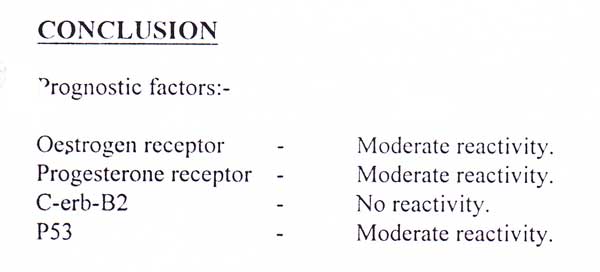
The immunohistochemistry showed the tumour had hormonal receptors as below:
Taking into account of the 3 involved lymph nodes, EC was started on adjuvant chemotherapy with Cyclophosphamide and Andriamycin (A + C) for 4 cycles. Another 4 cycles of taxol was schedule after the AC. However, the use of taxol had to be aborted due to severe reaction and complications as explained by her oncologist’s report dated 6 January 2004:

She tolerated chemotherapy fairly well with growth support using Granocyte. Although she is not diabetic on repeated measures, she unfortunately developed repeated episodes of skin infection following the last dose of Cyclophosphamide and Andriamycin. 

There was substantial celulitis over the implanted right breast. For that reason, EC is finding it difficult to proceed with further chemotherapy with the fear of recurrent flare of cellulitis. 

Since there is a fear of further exacerbation of her cellulitis with ongoing chemotherapy, Tamoxifen  for 5 years was proceeded instead.  As she has already achieved post menopausal status, there is no further recommendation for ovarian ablation at this stage.

EC took Tamoxifen from 2003 to 2005. She received Zometa injection (for bone) ever six-monthly.

Her progress was monitored regularly.

  1. 3 April 2004: Mammogram and ultrasound of her left breast and CT of thorax and abdomen showed everything in order. A bone scan on 5 April 2004 showed no specific evidence of bone metastasis.

21 March 2005:  Mammographic findings are unchanged. On the four-quadrant ultrasound examination, there are two hypoechoic nodules demonstrated within the left breast. These are benign looking lesions. These ultrasound finds are already present in a previous examination dated 3 April 2004 and allowing for technical differences, are essentially unchanged. CT scan of the thorax does not reveal any mediastinal lymphadenopathy or pulmonary nodules. Two hypodense lesions demonstrated in the liver were also seen previously with no significant interval change in size or in character. These may represent small hepatic cysts.  Bone scan showed no specific evidence of bone metastasis.

(Note: Tamoxifen was stopped and changed to Arimidex in 2005 until 2008).

27 March 2006: No suspicious lesion is seen in the left breast. A small cyst is seen at 9 0’oclock position. The other cyst demonstrated previously is not seen today.  Ultrasound of abdomen showed liver is normal in size and there are two small cysts present. These are likely to correspond to the hypodense lesions seen in previous CT scan done in March 2005. No solid mass seen. No pulmonary nodules demonstated. No hilar masses seen. No specific evidence of bone metastases.

5 July 2007: No mammographic evidence of malignancy. Tiny left breast cyst. No focal solid mass lesion is visualised. Ultrasound of abdomen showed a 1.9 x 1.7 x 1.5 cm anechoic cyst in segment 7 of the liver. This appears to have shown slight interval increase in size. The previously noted subcentimetre cyst in segment 6 is no longer seen. No other abnormality is seen.

17 December 2007: Bone scan showed no specific evidence of any new bone metastases. Ultrasound of liver showed no sonographic evidence of hepatic metastases apart from a 1.9 x 1.8 x 1.6 cm anechoic cyst in segment 7 of the liver.

15 January 2008: Due to rising tumour markers, PET was ordered to assess for recurrent disease. The cancer had spread to her brain.


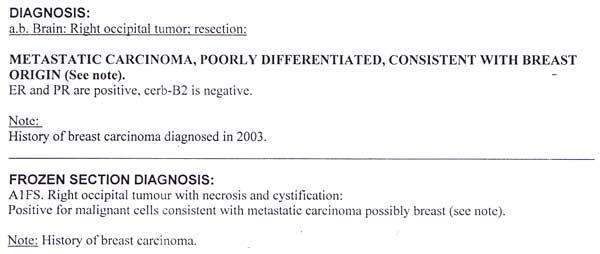
EC underwent a craniotomy or brain surgery to remove the tumour.  Her tumour was consistent with metastatic carcinoma, possibly breast.
Oral drug Arimidex was abandoned and EC was given Aromasin instead. Zometa injection was continued as usual – every six-monthly.

11 February 2008: EC received 5 times of stereotactic radiotherapy to her brain.

17 July 2008: The cyst in her liver seemed to grow bigger.

EC received another 5 times of stereotactic radiotherapy to her brain.

20 October 2008: Her brain surgery and 10 radiation treatment did not cure her brain cancer. The tumour recurred.

24 October 2008: EC and her husband came to Penang to seek our help. EC was prescribed Capsule A, Brain 1 and Brain Brain 2 teas and Breast M, C-tea plus Brain Leaf Tea.

Comments

Unfortunately EC was not able to follow our therapy properly. We always tell patients – our herbal teas are smelly and taste awful. They have to be brewed and this could be a great chore indeed. And if you have undergone chemo and radiation, the chances are that you will suffer when you first start taking the herbs.  Well, but that could not be as bad as the chemo or radiation side effects. Nevertheless, some people are less tolerant when they come to us. The reality is – they expect magic even if medical science has failed them.

We did not get to meet EC and her husband again after their initial visit to us. They had decided to continue with more medical treatments. When nothing worked, EC decided to give up and turned to God for a miracle. She then died.
EC and her husband told us that after the reconstruction surgery and chemotherapy, her breast became red, swollen and painful. I wondered what could have caused this. If you read the oncologist report above, an innocent-sounding terminology was used –cellulitis. What doesthis actually mean? The word cellulitis means inflammation of the cells.  Specifically, cellulitis refers to an infection of the tissue just below the skin surface.

The following are information from the internet when I searched for breast reconstruction and cellulitis,and breast implant infection.

Someone posted this question – Is cellulitis of a reconstructed breast (after breast cancer) common?and she wrote: I have gotten cellulitis of my reconstructed breast three times in the last six months. The first time I was hospitalized for a week. I was very sick and it was very painful. Is this a common occurrence? http://www.medpedia.com/questions/1823-is-cellulitis-of-a-reconstructed-breast-after-breast-cancer-common

The Answers:

  • Cellulitis is an inflammatory reaction involving the skin and underlying subcutaneous tissue. Patients who undergo surgery for breast cancer, whether in the setting of breast conservation or mastectomy, are at risk of developing infection at the surgical site and in soft tissue. Surgical trauma predisposes patients to skin infection. Postoperative skin infections develop after 2%–7% of all surgical procedures. The incidence of surgical site infections is 12.4% following mastectomy with immediate implant reconstruction.
  • Infection following breast implants is an uncommon event. This is somewhat surprising, since the human breast is not a sterile anatomical structure. Treatment of the periprosthetic infection usually involves implant removal, but salvage by systemic antibiotics is sometimes possible. ( http://www.ncbi.nlm.nih.gov/pubmed/2663982)
  • Infection can occur with any surgery. Most infections resulting from surgery appear within a few days to weeks after the operation. However, infection is possible at any time after surgery. Infections with a breast implant present are harder to treat than infections in normal body tissues. Toxic Shock Syndrome has been noted in women after breast implant surgery, and it is a life-threatening condition. Symptoms include sudden fever, vomiting, diarrhea, fainting, dizziness, and/or sunburn-like rash. A surgeon should be seen immediately for diagnosis and treatment for this condition. http://www.lookingyourbest.com/info/breastimplant-complications.php 

Complications of Breast Implants 

  • After having breast implant surgery, about 30% of women will require further surgery within 10 years of their initial operation.
  • Additional surgery may be needed as a result of complications such as capsular contracture (hardening of the scar capsule around the implant, see below), age-related changes to the breast or the shell of the implant rupturing (splitting).
    • If you are having an implant fitted for breast reconstruction following a mastectomy (breast removal) you may have a greater risk of infection and bleeding.
    • Most infections can be treated using antibiotics. But if your breast becomes severely infected, you may need to have the implant removed to prevent further complications developing. You should be able to have the implant re-inserted once the infection has cleared up. http://www.nhs.uk/Conditions/Breast-implants/Pages/Complications.aspx 

Why not solve one problem at a time?

I am fully aware that for some ladies losing a breast is most traumatic. Many patients come to us with rotten breast and they still harbour the hope that I would say herbs can cure their breast cancer. When I suggested removal of their breast, they hesitated. To get the message across I said this: You choose – you life or your breast. In the 16 years dealing with cancer patients, I rarely come across patients who had breast reconstruction after a mastectomy.  I also understand some ladies are very sensitive about their body image. They want their breast replaced immediately after losing one.

One lady told us, she only agreed to undergo a mastectomy after her husband promised that she could go for a breast reconstruction. While writing this article, one lady came. She has just had a mastectomy. I asked her: How is it like – the mastectomy? She replied:  I don’t know. I went in and when I came out I felt one breast was gone. Then I knew that it was cancerous. This lady just laughed after that! To her saving her life comes first. She and her surgeon had made an agreement that she would not want a needle biopsy but rather the tumour be removed and tested immediately. If it was found to be malignant, the surgeon would proceed with the mastectomy right away.

I just wonder – why does someone want to rush into trying to fix problems all at once – immediately? Removal of the cancerous breast is not a cure. The cancer can recur. Would it not be sensible to wait until everything looks promising first before you move to the next problem of the missing breast? If there is a flare up of cellulitis as in the above case, are you not making your problem more complicated? Why not solve one problem at a time?

Breast Cancer: Herceptin and Brain Metastasis

She Might Have Won Many Battles But Ultimately She Lost Her War

The thick file of SA laid buried on my table for the past three years. Perhaps I should write her story. May be some patients can learn some lessons from her tragic experience.

SA’s problem started in 2006 when she felt a pea-sized, painless lump in her left breast.  She went to Singapore for evaluation.

Bilateral mammograms on 6 March 2006 showed an irregular solid mass, measuring 29.4 x 17 x 23.2 mm  with abnormal blood flow within it. Ultrasound of the liver showed normal size, configuration and echnogenicity. No focal lesions seen. Whole body bone scan was normal with no specific evidence of bone metastasis.

SA subsequently underwent a total mastectomy on 10 March 2006. The pathologist report indicated a poorly differentiated invasive ductal carcinoma with lymphatic and vascular infiltration. This was classified as T2NoMx (Stage 2A).

The tumour was negative for oestrogen and progesterone receptors. It was strongly positive for C-erb-B2 and moderately positive for P53.  These imply that the breast cancer is unlikely to show any response to tamoxifen / hormonal therapy.

After surgery SA underwent six cycles of chemotherapy with FEC (5-FU + Epirubicin + Cyclophosphamide).  No radiation or oral medication was indicated.

SA was well after the chemotherapy. She went back to her doctor every six months for routine checkup. Nothing was amiss.  But about two years later SA started to have coughs for about a month. SA went to Kuala Lumpur and underwent a whole body PET CT scan on 28 April 2008,

  • Her brain and neck showed no abnormality.
  • There were multiple nodules in both lungs.  Possibility of lung metastasis.
  • A 2.5 x 2.6 x 3.2 cm FDG-avid lesion was seen in the right lobe, segment of liver. Possibility of liver metastasis.
  • Extensive hypermetabolic nodal involvement in the thorax and left supraclavicular region.

SA was then advised to have chemotherapy but she decided to return to consult with her Singapore doctors.  An ENT surgeon detected vocal cord paralysis.  Another cancer specialist performed a biopsy of her left supraclavicular lymph node on 6 May 2008. It showed metastatic adenocarcinoma consistent with a primary from the breast.  The tumour was strongly positive for HER-2. SA’s Stage 2 cancer had turned into a Stage 4.

SA consulted another oncologist.

Subsequently SA underwent another round of palliative chemotherapy with Herceptin + Vinorelbine and Xeloda.

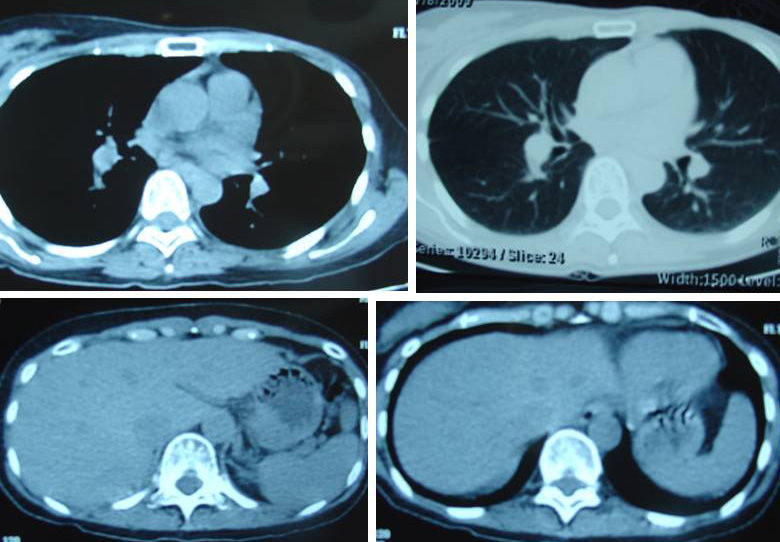
A repeat CT was done on 9 July 2008. The result showed a reduction in size of the pulmonary and liver masses and resolution of the mediastinal and hilar lymphadenopathy (see below).

SA continued with her chemotherapy, as usual (from 8 May 2008 to 20 October 2008).

SA was again evaluated. X-ray, MRI and PET / CT scan done on 12 November 2008 indicated the following:

  • Chest X-ray showed lungs were well inflated. No focal mass lesion, lobar collapse or consolidation was seen. Normal chest radiograph.
  • CT brain is normal. No intracranial bleed or space-occupying mass lesion.
  • MRI of thoracolumbar spine showed no evidence of enhancing mass lesion in the distal spinal cord and conus medullaris. No bone metastasis was detected. However, there was abnormal soft tissue enhancement seen in the interspinous space from L2-L3 to L4-L5 levels. Mild disc protrusions were present at L3-L4 and L4-L5 levels.
  • PET / CT scan showed:

SA remained well and she continued to receive her Herceptin injections in Indonesia.  However, in the early morning of 2 January 2009, she fainted and was unconscious for a few hours. She was sent to a hospital where she  regained her consciousness.

SA suffered generalised epilepsy with dizziness. She had memory loss, confusion and vomiting. SA went back to her oncologist in Singapore on 12 January 2009. MRI of her brain showed the cancer had spread to many parts of her brain. The biggest of these multiple lesions was 3.5 cm x 3. 5 cm.

MRI Report 13 January 2009

As a result of the above, the neurologist started SA on Keppra (leveticetam) – an anti-epileptic drug to treat seizures. She was also referred to the radiation oncologist for whole brain radiotherapy.

This was what her oncologist wrote:

Impression: Metastatic HER 2 positive breast cancer with multiple brain metastases.

SA was started on Xeloda and Tykerb

Tentative Chemotherapy Schedule  1 April 2009

A PET / CT scan was done on 8 July 2009. Unfortunately the nodules in her lung showed increase in FDG activity. And some of the lung nodules had grown in size.

PET / CT Study  8 July 2009

In July 2009, SA fainted again while at home. This time it took a longer time for her to regain her consciousness. Nevertheless she continued taking her medications.

SA and her husband came to seek our help on 24 August 2009. She was unable to walk straight. She could not focus her eyes and her angle of vision was narrow.

She was prescribed herbs: Capsule A, Breast M, Lung and Brain Teas. Unfortunately, no long after her visit, SA died.

Comments:

SA was diagnosed with Stage 2 breast cancer in March 2006 and about two years later, it progressed to Stage 4 – with metastases in her lungs and liver. How and why could this happen? Perhaps her breast cancer was of an aggressive kind?

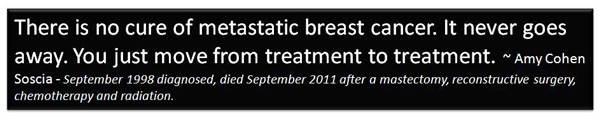
Treatment of Stage 4 is just palliative as stated by her oncologist’s report. Do patients understand what palliative means? Perhaps patients need to take note of what Amy Cohen said:

Herceptin and other drugs were used after the discovery of SA’s metastases.  The treatment probably cost a lot of money. And this was just to keep her alive for a while more? Not to cure her, of course. Please understand that!

SA was on Herceptin from May 2008 to December 2008 – a three weekly treatment.  A CT scan of her brain on 12 November 2008 did not show any abnormality.  However, less than two months later, 2 January 2009, SA fainted and was unconscious.  The cancer went to her brain. The multiple lesions in her brain were mind boggling. How could this happen so fast?  Why did the cancer spread to the brain in no time?

I must admit I feel a chill in my spine whenever patients come to me after being treated with Herceptin for their breast cancer.  I have two patients like SA before this.

Fransiska, an Indonesian lady, was thirty-two years old when she found a 1.6 cm lump in her breast. She underwent a lumpectomy in a Singapore hospital in November 2004. Some lymph nodes in her arm pit were also infected. After surgery, Fransiska received 35 radiation treatments. She was well after the treatment. About two years later her cancer spread to her lungs. She underwent chemotherapy and received six cycles of Taxol plus eight injections of Herceptin. A bone scan showed the cancer had spread to her spine. In January 2008, a scan showed a  8 x 7 mm mass in her brain and a 1.4 x 9.0 cm mass in her liver. She was prescribed Xeloda and Tykerb (lapatinib). The last email I received from Fransiska was on 30 October 2008. Soon after this, Fransiska slipped into coma and she died in mid-December 2008 – four years after being diagnosed with breast cancer.  https://cancercaremalaysia.com/2010/12/09/fransiska-died-after-surgery-radiotherapy-chemotherapy-herceptin-tamoxifen-xeloda-and-tykerb/

Yee was 40 years old when she was diagnosed with breast cancer in October 2005. She underwent a mastectomy. It was a Stage 2 disease with no lymph node involvement. The tumour was 3 x 2 x 2 cm in size. After surgery, Yee received six cycles of FAC chemotherapy (5-FU, Andiamycin and Cyclophosphamide). No radiotherapy was indicated. After chemotherapy she was started on tamoxifen. Yee was well for about 9 months. In January 2007, she noted a swelling in the right side of her neck. The cancer had spread to her lungs. Yee was given eight cycles of taxane-based chemotherapy but the treatment was not effective. Yee received more chemotherapy – six cycles of Navelbine + Herceptin. Yee was also on the oral drug, Tykerb. The treatment failed again. Yee received 28 times of radiation treatment while at the same time continuing with Tykerb. A CT scan done on 19 December 2008, indicated multiple brain metastases. Yee diedin early February 2009. https://cancercaremalaysia.com/2010/12/08/yee-died-after-extensive-and-costly-medical-treatments/

Doing the Same Thing and Expecting Different Results?

Study the three tragic cases above. Do you see a common trend?  Fransiska – with Stage 2 breast cancer with some node involvement – underwent surgery and received chemotherapy, radiotherapy, Herceptin, Tykerb and Xeloda. The cancer went to her brain. Fransiska died.

Yee had Stage 2 breast cancer without lymph node involvement. She underwent chemotherapy – FAC,  and later taxane- based drugs, and lastly Navelbine + Herceptin – at different stages of disease progression. She also took Tamoxifen and Tykerb. The cancer spread to her brain. Yee died.

In this case, SA had Stage 2 breast cancer with node involvement. She had chemotherapy, Herceptin, radiotherapy, Xeloda and Tykerb. She too had brain metastases and died.

Einstein once said:  Insanity: doing the same thing over and over again and expecting different results.

Herceptin and Brain Metastasis

The analysis of 231 patients who received trastuzumab as first-line therapy and 61 who did not receive the drug showed that patients who received trastuzumab  (Herceptin) had nearly a threefold higher risk of developing CNS (central nervous system) metastases  compared with patients not receiving trastuzumab. http://www.cancernetwork.com/display/article/10165/61283

A posting in the internet by Gregory Pawelski said: In regards to Herceptin, you might want to note that past studies have suggested a potentially very serious weakness in the drug, the problem with central nervous system (CNS) metastasis. Patients receiving Herceptin as first-line therapy for metastatic disease frequently developed brain metastases while responding to or stable on Herceptin at other disease sites.

Herceptin combined with standard chemotherapy will have as many as 4% of women who take the regimen develop symptoms of congestive heart failure, compared with less than 1% of women given chemotherapy alone. Herceptin has been in use only a few years. We don’t know what will happen 10 or 20 years from now. http://www.medicalnewstoday.com/opinions/10503/

Japanese researchers wrote this: A high rate of brain metastases has been reported among patients with human epidermal growth factor receptor (HER2)-over-expressing metastatic breast cancer who were treated with trastuzumab (Herceptin).

In their research they found that patients with HER2-overexpressing breast cancer treated with trastuzumab had a high incidence of brain metastases (36.3%). http://www.springerlink.com/content/t377q1587m66n0m3/ Brain metastases in patients who receive trastuzumab-containing chemotherapy for HER2-overexpressing metastatic breast cancer.

Brain metastases are increasingly reported as a site of first relapse in breast cancer, particularly among women receiving trastuzumab (Herceptin) for HER2-positive metastatic breast cancer. http://www.uptodate.com/contents/management-of-brain-metastases-in-breast-cancer

This is a write up in the website of City of Hope  (a well known cancer hospital in California, USA):

Physicians know it. Researchers know it. Breast cancer patients learn it quickly after diagnosis. Cancer isn’t one disease with one cure for everyone. That helps to explain why some treatments don’t work against breast cancer, even when they seem like they should.

A patient whose breast cancer is HER2-positive is often treated with the drug Herceptin. But some HER2-positive patients don’t respond to Herceptin. There’s currently no easy way to tell in advance whether the drug will work for each HER2-positive patient. So how can a woman avoid the side effects and cost of the drug if it’s unlikely to work?  http://breakthroughs.cityofhope.org/tag/herceptin/

Look At the Big Picture

After the mastectomy and chemotherapy, SA was well for two years. Ask this question: Even WITHOUT chemotherapy could she not be well for two years? Anyway, let us give everyone the benefit of the doubt (let’s say that you need chemo to live for two years, without chemo you are dead right away). In this round one, SA won a battle.

SA’s cancer recurred and spread to her lungs and liver. Why?

Dr. Barry Boyd (in The Cancer Recovery Plan) said: Once cancer treatment is completed, most patients are left on their own to cope with the rest of their lives. This is what I call falling off the cliff. Patients are left in free fall. I would call this MISMANAGEMENT or BAD MANAGEMENT. Often patients are told to go home – eat anything they like and live the old-lifestyle that had brought about their cancer. In short, patients are not taught to change and live a healthier life.

After the metastasis, more chemos were given. The tumours in her lungs and liver decreased in size. Again another battle appeared to have been won. The idea that after treatment the tumour has shrunk in size is very attractive indeed – to both doctors and patients alike. The point not clearly told to patients is that the shrinkage of tumour may   eventually turn out to be meaningless. Shrinkage may not translate into cure or prolonged survival. It is true in this case – and it is equally true with many other cases that I have seen. A PET scan in July 2009 unfortunately showed that the lung nodules had increased activity and had grown in size. The earlier good and encouraging results are just meaningless.

In the earlier stages of treatment, SA seemed to have won some battles but she lost the war against her cancer. Not long after her apparent victory SA died.

Healing of Cancer is About You As A Person

The author of this book, Tami Boehmer is a Stage 4 breast cancer patient. She wrote: I fought off depression and was haunted by the sinking feeling I was going to die. I felt useless and empty. I was searching for meaning in life. On one of my daily morning walks, an idea popped into my mind. “Why not write a book about other advanced stage cancer patients and how they beat the odds?” I thought it would not only be therapeutic for me, but it could help others. I knew from experience that people needed to hear success stories and the importance of hope in fighting cancer.

These miracle survivors taught me cancer doesn’t have to be a death sentence. From them, I learned cancer was the beginning of a new way of life filled with appreciation, hope and discovering my potential.

Common attributes of “miracle survivors”

My biggest question was: What sets people apart who beat the odds of a terminal or incurable prognosis? As I was putting the stories together, I noticed many similarities among survivors. Rather than passively accepting their circumstances; they decided to transform them by:

  • Refusing to buy into statistics and the death sentences.
  • Never giving up, no matter what.
  • Relying on support from family, loved ones or support groups.
  • Choosing to look on the bright side and see the gifts that cancer brings.
  • Giving back and making a difference in other people’s lives.
  • Having a strong faith in God or something larger than themselves.
  • Being proactive participants in their health care.
  • Viewing their lives as transformed by their experience.

There are 27 chapters written by 27 outstanding cancer survivors. Let me quote what some of these champions said.

Greg Barnhill, 56 years old, intraocular melanoma and mesothelioma

I’ve had two rare diseases. Now to be alive and well – it’s a miracle. From the fall of 2001 to December 2006, I’ve had seven surgeries. I have no gallbladder, spleen, omentum, or left eye, but thanks to the man upstairs taking good care of me, I’m here. I believe it’s for a reason. My faith had a lot to do with my survival.

I’ve read we all have gifts and we should use them. Mine is compassion, and until now, I didn’t realize I had it. If this building burned down, I could tell you what you’d need to rebuild it. That’s not a gift, it’s skill. Compassion is a gift. I know what it’s like to lie there wondering if you’re going to live or die. Some of the patients I see don’t get any visitors because they’re from out of town. I can be there and let them know someone cares and understands.

Deb Violet, 55 years old, stage 3A lung cancer

I feel there was a reason I had lung cancer. Why did I get it, and why did I survive? I think it was so I could give back to society, help people with this disease, speak up and give them encouragement that they, too, can survive.

I wake up in the morning and thank God for the day because every day is a blessing. And when I crawl in bed at night, I thank God for the day, no matter how good or bad it was. Cancer has blessed me to be able to do that.

If I have inspired others and given them hope, I know my work is well worth it.

Cathy Winebrenner Wolfe, 38 years old, ovarian cancer

This experience has changed forever who I am as a person. It makes the little things seem nonexistent. I know what the big obstacles can be; I’ve already climbed that mountain. I am thankful for each and every day.

Bob Kiesendahl, 39 years old, chronic mylogeneous leukemia (CML)

It wasn’t a matter of IF I was going to survive, it was WHEN I survived. And I knew when this was all over; I wanted to do something to help others affected by cancer.

By sharing my story, I can say, “Cancer rearranges your priorities in life and puts things in perspective. I tell them how my cancer has never left me. It may have left my body, but it is always in the back of my head. I have chosen to embrace how the experience has changed me for the better, not what it has taken from me.

Brenda Michaels, 60 years old, cervical and breast cancer

I began to look at the emotional and spiritual components of disease. It opened my eyes, and I had a profound awakening as a result … and I wanted to share that with others. I never prayed, “God help me with this.” I always prayed from the position that, “Okay God, this is what’s happening. I am asking for guidance, and I’m open to receive.”

I started feeling grateful for all the good in my life, including my cancer. In that moment, cancer was the right thing for me to be experiencing because it was part of my waking-up process.

I was always trying to control everything. It’s incredibly fatiguing to try to control everything in life when in actuality there’s no control. I realised that while I couldn’t control events in my life, I COULD control my response to them. I could learn from it. I used to always have to be right as opposed to letting my spirit guide the ship. I’m not about being right anymore.

People think if you surrender to cancer, it will kill you. But that’s not true.

Paul Falk, 32 years old, acute myeloid leukemia

They gave us the choice of standard treatment protocol or an experimental one called the Denver Protocol. We chose the latter.

To kill the cancer, you have to prune the tree severely without killing it.

Lisa (mother): But when he was going through that, I started praying the rosary. I dozed off and woke up at 2 a.m. There was a beautiful lady dressed in white and she was sponging Paul’s head … and murmuring to him softly. The next morning … we knew that he (Paul) was going to be all right. We didn’t discuss it for a year because I thought I was nut. The woman in white obviously wasn’t a nurse. I have a friend who prays to Mary … (My friend) said, “… Mary has been here.”

We asked the doctor what happened to the other kids in the Denver Protocol. She told us ninety-seven had died, two were close to death, and one made it – that was me.

I believe I survived because I fought the disease and stayed positive. I understand now that even in grief and sorrow, God works through all our experiences.

Ann Fonfa, 61 years old, Stage 4 breast cancer

One of the things I like least about the medical establishment is when a doctor says, “You have two months to live.” They can’t know absolutely, so don’t believe it. Don’t accept it. Spit on it! Stomp on it! They’re wrong.

People used to call me and say, “I’m dying from cancer.” I’d say, “Wait, let’s have an attitude adjustment. You’re LIVING with cancer. Get that dying stuff out of your mind.

It is all how you look at it, not what is happening.

The big thing for me is to be able to help people in a meaningful way. I have that joy in my life ever day. Making a difference in people’s lives; that’s what keeps me going. It’s an incredible feeling.

Evan Mattingly, 43 years old, Stage 4 neuroendocrine cancer

One oncologist said I had three to five years to live; another said five to eight. I thought, “They’re both liars; I’m going to live longer than that!”

Steve Scott, 48 years old, Stage 4 colon cancer

You can talk to friends or relatives all you want, but they aren’t in the same orbit. You need to talk with others who are going through it. I saw other people going through this, and found there was something I could learn from each one of them.

We need to make a difference in the world. We understand now material things aren’t what we need in life. Connections to other people, empathy, and helping others are what’s important.

My advice to people who are going through a similar diagnosis is to never let a doctor take your hope away.

Jonny Imerman, 34 years old, Stage 4 testicular cancer

Cancer has taught me to live one day at a time. If you wake up happy and go to bed happy knowing you’re helping people, you can be grateful for that.

There is no question in my mind I had cancer because I was supposed to figure out a way to make the system better. I think people go through certain things because there’s a larger purpose. They see a gap and get passionate about filling it. I’m one of those guys. That’s what gets us stoked and motivated: knowing we’re making a difference.

Dave Massey, 51 years old, Stage 4 germ cell cancer

When my cancer was first discovered, my fate seemed sealed. The doctor told me if I wanted to live even six months, both my legs would need to be amputated at the hip … The doctor didn’t even determine what type of cancer I had. His motto appeared to be, “When in doubt, cut it out.”

Thankfully, I found another doctor who disagreed. I was successfully treated with legs intact.

The doctors told me they could save my legs, but the chemo would be very harsh. At times it felt as though they would figure out how much chemo would kill me, dump a little bit out, and give me the rest. In fact, the chemo almost killed me twice.

Once you’ve had cancer, everything else seems easy. It’s amazing how when you change the way you look at the world, the world changes. You just have to have faith it’s going to work out, and it always does. 

Charlie Capodanno, 10 years old, Stage 4 chroid plexus carcinoma (CPC)

Mother (Deirdre Carey): We believed in miracles and the power of prayer and held on to that one glimmer of hope. If his chances were one in a million, our thought was, there’s no reason he can’t be the one. We had our faith, which absolutely carried us through.

Attitude is the driving force of every action you take. You can live in a world of doom and gloom or you can rise above it.

Daniel Levy, 50 years old, oligodendroglioma

From my experience and from talking with other cancer survivors, I realize you must accept that you may die before you can do what’s necessary to go on living. Otherwise, you may freeze and not do everything you can to beat this or any other “terminal” illness.

The mind has a tremendous capacity to heal. I believe the act of participating in getting well helps make that happen.  I discovered I have to be my own primary care physician. You go to the doctors for their expertise, but they are fallible. I knew I need to make the final decision about what happens to me. I took charge of my own health and my treatment. That’s why I’m here today.

Mary Jocobson, 55 years old, adenocarcinoma

Actually, you have a 5 percent chance of surviving. When we cut you open, it’s going to spread. You already have about forty tumours all over the area. If we don’t do the surgery now, you’re not going to make it.

I didn’t die on the table, but I didn’t wake up from the surgery either. I was in a coma for two years. Doctors and nurses at San Diego Balboa Hospital kept me alive with feeding tubes, while treating the cancer with chemo, full-body radiation and hormones.

While doctors were studying my case, they found fifty other women with my type of cancer. But most women had died because they didn’t know how to treat it.

With all the hormones they gave me, I had gained a whopping 152 pounds. I was 160 pounds when I was admitted and left weighting 302. (My daughter told me) “Mom, the cancer didn’t kill you, but the weight will.”

… I went to the gym…within six months I slimmed down to 180 pounds … by the end of it … my body weight was down to 165 pounds.

Over the years, I made a name for myself. People thought it was a joke … I became the first woman to pull a 250-ton (500,000 pounds) train.  Today I hold the title as the world’s Strongest Woman in my age group.

It’s not a matter of how strong I am. I’m a normal, everyday woman. We’re all strong if we put our minds to it.

Buzz Sheffield, 59 year old, Stage 4 carcinoid cancer

I don’t wake up and fear dying; I don’t even think of dying. We’re all going to die. I know with Spirit guiding me, I’m strong enough to survive anything. If there’s a will, God always has the way. That’s what motivates me to keep going. Even when I’m in pain, I know it’s serving a purpose – usually it’s a reminder to slow down because I’m a very active person.

How long I’m here, it’s up to Spirit. I think there is one reason why I’m doing so well: God does not want me yet.

Denny Seewer, 60 years old, Ewing’s sarcoma

I began to vomit just driving to the office for the next chemo. The smell of the place made me nauseous. Everyone in the waiting room looked like I did – emaciated.

There were times when I felt totally alone. Even my wife could not truly understand how I felt since I was the one with cancer. I didn’t understand why it happened to ME. Most days I doubted that I would ever survive.

I remember a turning point … but it was not a pleasant one. I felt so utterly ill from treatments, I didn’t know if I wanted to live any longer. I was sitting on the toilet and vomiting into a bucket at the same time when I specifically asked God to either heal me or take me home. I had enough.

My advice to anyone facing a grim cancer diagnosis is to please never give up. God didn’t create you to go through this life and its unexpected turns all alone.

A word from Bernie Siegel, M.D.

Self-induced healing is not an accident or a spontaneous lucky occurrence. It takes work, and the work is learning to love ourselves, our lives, and our bodies. When we do that, our bodies do the best they can to keep us alive. Remember life is uncertain, so do what makes you happy and eat dessert first.

Foreword by Doug Ulman, survivor of chondrosarcoma  – President and CEO of Lance Armstrong Foundation

If all you do is share your story, you are doing a great deal. It is such a powerful testimony … its significance can’t be measured. Sharing your experience is almost always therapeutic for you, and the benefits to others are far-ranging … Knowing others have been down the same road is very powerful. People want to be inspired and hopeful.

Comments

These are stories of exceptional people. We honour them. Science cannot explain why they survived their terminal cancer. Neither can science hope to duplicate or replicate these successes. Theirs are stories about the resilience and endurance of the human spirit. Success is more than just undergoing surgery, chemo or radiation.

What strikes me most about these survivors is their desire and willingness to share – to give rather than to take all the time. This is indeed a rare human quality.

How many of us appreciate that at times it is more blessed to give than to receive?

At CA Care we receive many phone calls and emails every day. It is all people asking for help all the time.  We choose to set up CA Care to help others, so we have no complaints. We understand our role – most of the time being a doormat.

Let me share with some of my thinking about what cancer is all about.

Ovarian Cancer: “After chemo, 99 percent of cancer will be gone!” Do you believe that? How much truth has to be told?

SK came to see us on10 August 2012. This 64-old, Indonesian lady looked frail and timid and did not seem to know what was going on. Her abdomen was distended like a pregnant lady. She handed us her CT scan report (dated 9 August 2012).

  • There is left pelvic mass, measuring 5.3 x 3.6 x 3.6 cm, in keeping with dermoid cyst.
  • There are multilobulated soft tissue lesions in the pelvis – the largest measures 4 x 2.7 cm.
  • There are multiple peritoneal nodules.
  • Impression: Likely ovarian carcinoma with moderate ascities, associated with peritoneal, omental and mesenteric metastases.

The gynaecologist suggested surgery and this costs RM 16,000. SK came to seek our advice. We told SK to go ahead with  the surgery. There is NO way the herbs can help her with such an advanced stage cancer. The tumours have to be removed first, then she can come and take the herbs.

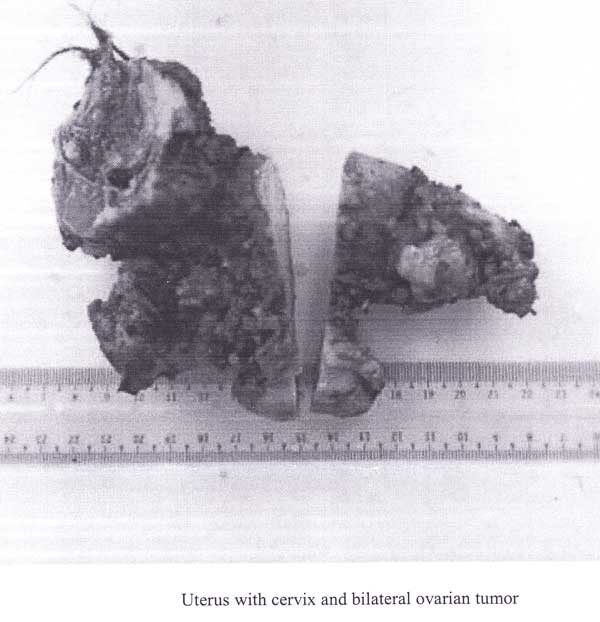
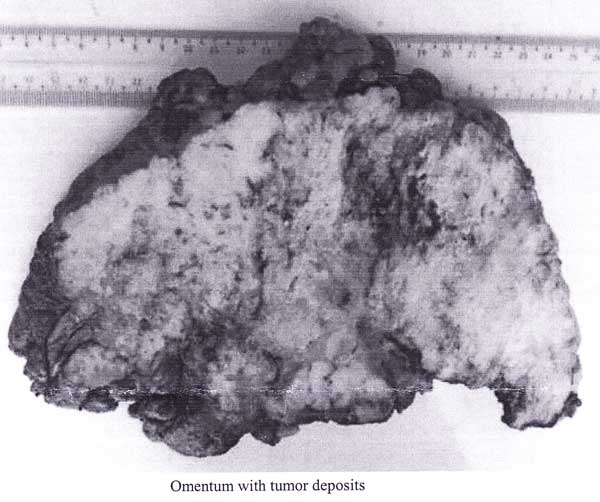
On 24 August 2012, SK came back to see us again, accompanied by her daughter.  SK had undergone a surgery – TAHBSO (Total Abdominal Hysterectomy and Bilateral Salpingo-Oophorectomy ) with omentectomy + appendectomy.  She was hospitalised for five days. She had the surgery at another hospital where the cost of the operation was only RM 12,800.

SK felt better after the surgery. It was a Stage 3B cancer.

SK was asked to return to the hospital on 25 September 2012 for chemotherapy.  She and her daughter consulted an oncologist and below is an account of what happened during their meeting.


Chris: What did the doctor want you to do after the operation?

Daughter: Must do chemo – six times. I asked the oncologist if this can kill all the cancer cells in the body. He replied very confidently – Definitely, 99 percent of the cancer cells will be gone.

C: He said 99 percent will be gone?  You asked him that? And this is his answer? Did he really understand your questions?

D: Yes, he understood me. I asked him if chemotherapy is the only best option for my mother. He said: Chemo is the only option – there is no other way.

C: You asked him in Bahasa Indonesia or in English?

D: In English – the cancer cells will be gone? Will it be 100 percent gone? He said: 99 percent gone.

C: Meaning, 99 percent can cure?

D: Yes.

C: How many times did you ask him this question?

D: Two times. He was so sure about what he said. He said: Yes, you do six times of chemo, 99 percent of the cancer will be gone.

C: When you asked him this question – did he get angry?

D: No, not angry.

C: For six chemos, how much do you have to pay?

D: RM 3,000 each time. I also asked him if the treatment is going to be painful. He said: No, not painful at all.

C: Oh, chemo is not going to be painful? That is going to be good!

D: But he also said there will always be some side effects. There will be loss of hair and nausea. Then mama asked the doctor: Will I be strong enough to withstand the chemo treatment? The oncologist said: Sure, you are strong enough for the treatment.

C: How long did you talk to the oncologist?

D: About 15 to 20 minutes. And he said: Go back home and eat whatever you want – KFC, McDonald and anything.

C: Oh, you can eat KFC, McDonald and also anything?

D: Yes.

C: What else did he tell you?

D: Cannot take herbs while on chemo. You cannot mix – chemo and herbs. Only after completing six times chemo, then we can take herbs if we want to.

C: How much did you pay for talking to him?

D: RM 100.

C: After he said chemo will give you a 99 percent cure and then you can  eat anything you like when you go home, do you believe him or not?

D: I really want to believe him!

C: Go home and think carefully what you want to do now. Did you mother understand what you and your doctor were saying?

(Daughter broke down and cried)

C: Don’t worry. I understand. It is a difficult situation. Everyone who come here are really lost. Don’t worry. It is okay to cry. What is important is that after the surgery your mother feels better now.  The doctor asked you to do chemotherapy – do you want to do that? It is difficult for me to say what you should do – to go for chemo or not to go for chemo.

But what the doctor told you – to eat what you like when you go home – that is not right. My advice is – Don’t eat anything that walks or has legs! Also avoid oil and sugar. Please listen to my advice. Again, other than that, whether you want to do chemo or not, I cannot say anything.

The doctor said you can’t take herbs while on chemo – that is also not true.  Many of my patients take herbs while they are on chemotherapy. They came out better – they felt better. But I am not going to ask you to believe me. If you believe your doctor, go ahead and believe him.

Have you read or really understand what chemotherapy is?

D: I have heard about it from other people.   I saw people going for six times of chemo and they never come back (die).

C: Honestly, tell me – when the oncologist said there is a 99 percent cure after the chemo – do you really believe him?

D: (shaking her head) No.

CA Care Therapy

 C: Ibu (mom), when you go home please take care of your diet. Take time and go for exercise. Don’t just stay home and think too much about your problem. That will not be good for you. Try to be happy always. You are a Christian? Pray to God for help and guidance. God knows that you are sick. Pray that you have the strength to overcome this.

Comments

You may want read a related story: Cervical Cancer: Eighty-nine Percent Chance of Cure Vanished With the Collapse of Her Right Lung Four Months After Radiotherapy and Chemotherapy  This patient underwent radiotherapy and chemotherapy.  She was told that there was a 89 percent chance that she would be cured. However, barely four months later the cancer recurred.

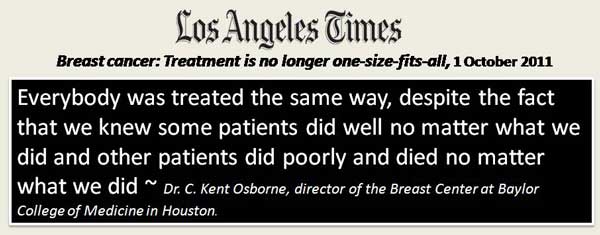
Let me ask you this question: Should patient be told the truth?  Some people would say yes, some people would say no. So, you decide for yourself the acceptable level of truth that you want.  Then, let me ask another question: How much truth can you expect from your doctor? Let me ask you to reflect on the following quotations:

In the case of SK above, her daughter wanted very much to believe what the oncologist them – after six cycles of chemo 99 percent of the cancer will be gone! But will it come back again soon? That is not told! Anyway, the patient and her daughter did not have the peace of mind to believe what they heard. Otherwise they would not have come and sought our help.  At this point let me quote what Dr. Walker wrote about his own experience:

Side effects of Treatment

Some patients suffer seriously from the side effects, others don’t. I wonder if it is all about luck (and not science)? Retired US Air Force Colonel, Thompson wrote:

Read what Rose Kushner said:

Cancer Patients – Eat anything you like! At CA Care we say this is not right! We are not alone in this. Read what some outstanding doctors in the US said about the importance of diet and cancer.

What You Need to Know About Ovarian Cancer

The information and data below are obtained from the internet and oncology text books:

http://emedicine.medscape.com/article/255771-overview#aw2aab6b2b5aa http://www.acancer.net/ovarian_cancer/stage3.php

http://health.nytimes.com/health/guides/disease/ovarian-cancer/chemotherapy.html http://www.webmd.com/ovarian-cancer/features/ovarian-cancer-chemo-options?page=2

http://www.malaysiaoncology.org/article.php?aid=10

  • Around the world, more than 200,000 women are estimated to develop ovarian cancer every year and about 100,000 die from the disease.
  • According to the National Cancer Registry, ovarian cancer is the fourth most common cancer among women in Peninsular Malaysia, making up five per cent of all female cancer cases.
  • Epithelial tumors represent the most common histology (90%) of ovarian tumors. This type of cancer often spreads on the peritoneal surfaces –  e.g.,  undersurface of the diaphragms, paracolic gutters, bladder, surface of the liver,  mesentery and serosa of the large and small bowel, omentum, uterus, and para-aortic and pelvic lymph nodes.
  • Most ovarian cases are diagnosed in an advanced stage and their prognosis is closely related to the stage at diagnosis. Overall, prognosis for advanced-stage patients remains poor. Overall 5-year survival of ovarian cancer is 45 percent. In the case of SK, who has Stage 3B, the 5-year survival is about 29 percent (Table below).
  • As I have always told patients – we don’t have to believe this statistics but we also don’t want to bury our heads in the sand and pretend that everything will be okay. We need to know the reality and then try hard to beat the odds.

Source: DiSaia, P.J & W.T. Creasman. Clinical Gynecologic Oncology, pg. 298, Mosby.

 Treatment:

  • Currently, the standard treatment for stage 3 ovarian cancer consists of both surgery (surgical debulking) and chemotherapy.
  • Unfortunately, less than 40% of patients experience long-term survival following standard treatment.
  • Approximately 60-80% of patients with stage 3 cancer will experience a recurrence of their cancer, even after complete surgical removal of cancer.
  • Nearly all patients with stage 3 disease have small amounts of undetectable cancer that have spread outside the ovary and were not removed by surgery. These cancer cells cannot be detected with any of the currently available tests and are referred to as micrometastases. The presence of micrometastases causes cancer recurrence.

Chemotherapy for Stage 3 Ovarian Cancer

  • The chemotherapy drugs used to treat ovarian cancer are fairly standard. Typically doctors combine a platinum-based drug such as carboplatin or cisplatin with a taxane such as paclitaxel (Taxol) or docetaxel (Taxotere).

Perez, C.P. et. al, (in Clinical Oncology, 8th Edition, Health Science Asia, pg. 489) wrote:  The combination of paclitaxel plus a platinum compound is considered by most to be the first-line adjuvant chemotherapeutic regimen in patients with advanced ovarian cancer.  The pathologic complete response is only 20 to 26 percent (Table below).

Source:   Thigpen, J.T. (in Clinical Oncology Pt.2, 2nd Ed., Harcourt Asia, pg. 2026)

  • Ovarian cancers are very sensitive to chemotherapy and often respond well initially. Unfortunately, in most cases, ovarian cancer recurs.
  • Fewer than 20% of patients treated with a platinum compound and paclitaxel survive without evidence of cancer recurrence 5 years following treatment.
  • Unfortunately, even in patients who respond, the disease eventually becomes resistant to the first-line drugs, and the cancer returns. Some ovarian tumors are resistant to platinum drugs. Once cancer recurs or continues to progress, the patient may be treated with more chemotherapy.
  • Despite the development of several new chemotherapy drugs over the past few years, there is no substantial evidence that any of the treatments have increased the number of women cured of ovarian cancer.
  • Gemcitabine (Gemzar) is also used in combination with carboplatin for women with advanced ovarian cancer that has relapsed. Other drugs include doxorubicin (Adriamycin, Doxil), etoposide (Vepesid), and vinorelbine (Navelbine).

Side Effects of Chemotherapy

  • Chemotherapy can cause side effects during and after treatment. The type and severity of these side effects depends upon which chemotherapy drugs are used and how they are administered.
  • The most common side effects are nausea, vomiting, mouth soreness, temporary lowering of the blood counts, and hair loss.

Surveillance After Treatment

  • At the end of treatment (both surgery and chemotherapy), a patient is considered to have a “complete response” if her physical examination is normal; there is no evidence of cancer on imaging studies (such as a CT scan); and the blood level of the tumor marker like CA-125 is normal.
  • However, even when all of these criteria are met, microscopic amounts of residual cancer (i.e., not visible on imaging studies) can still be present. Growth of these microscopic tumor cells is probably responsible for tumor recurrence at a later date.
  • To monitor for the possibility of recurrence, blood tests, physical examinations, and imaging tests are to be done.

Signs of Recurrence

  • The likelihood of a tumor recurrence is highest in women with more advanced-stage disease at diagnosis, particularly if the initial debulking surgery was unable to remove all visible tumor.
  • The earliest evidence of recurrent ovarian cancer can be indicated by a rising blood level of one of the tumor markers (CA-125)  and symptoms such as abdominal pain or bloating with or without back pain, or presence of pelvic mass.

What Can I Expect After Chemotherapy Treatment?

  • Surgery plus chemotherapy drugs can get rid of ovarian cancer, but often they can’t keep it away forever.
  • Surgery and chemotherapy are usually effective in treating the cancer so it will go away for a while, but in most cases the cancer ends up coming back.
  • Often, the cancer will return within one to two years after treatment is finished. If  the cancer does return, another round of chemotherapy is necessary.

Some Cases of Ovarian Cancer at CA Care

Over the past two years, some patients came to CA Care for help after medical treatments have failed them. Unfortunately, we did not get to see most of these patients after one or two visits. We are not sure what had happened to them. The cases below will portray the reality of ovarian cancer. Compare the facts of these cases with the readily available information found in the internet above.

Case 1:  H297 was a 66-year-old female. She was diagnosed with ovarian cancer, Stage 1C. She underwent an operation followed by six cycles of chemotherapy. Three months later, the cancer spread to her liver. She was asked to undergo more chemo. She refused. 

Case 2: H256, 34-year-old lady, had pains associated with lower abdominal mass in December 2008. She had bilateral ovarian tumours. Her left ovarian tumour invaded the sigmoid colon. There were extensive small nodules all over the peritoneal cavity. The undersurface of diaphragm was also extensively involved by the tumour nodules. She underwent TAHBSO, omentectomy, appendictomy and resection of the sigmoid colon. All significant sized tumour nodules were debulked.

She received six cycles of chemo – carboplatin + paclitaxel. And this completed in June 2009. A repeat CT scan did not show any evidence of recurrent or residual tumour. Her CA 125 which was in the range of 11,000 pre-op normalised after three cycles of chemo and remained below 10 after that.

However, six months later, December 2009, she had severe pains and was hospitalised. There were tumour nodules in her pelvis and she had extensive recurrence of her cancer. Overall her prognosis appears poor. Her surgeon wrote: Nevertheless, I believe we should make one final attempt at chemotherapy. 

Case 3:  H394, 40-year-old lady, underwent an operation to remove a malignant ovarian cyst in 2007. This was followed by a hysterectomy.  It was a Stage 3 cancer. Not satisfied, she went to Singapore for consultation. She was told her cancer was a Stage 4. H294 underwent six cycles of chemotherapy with carboplatin + taxotere. In addition she received 25 radiation treatment and 2 brachytherapy (internal radiation treatment). All treatments were completed in October 2007. She was well for a while.

But two years later, October 2009, her CA 125 started to increase. A CT scan showed the cancer had recurred and spread. She received another three cycles of chemotherapy with cisplatin. The treatment was not effective. Her CA 125 increased further and the tumour grow bigger by 1 cm. She went to China for further treatment. This too was not effective.

Case 5:  H284, 50-year-old lady, had ovarian cancer and underwent a surgery – TAHBSO in February 2006. In addition she received 3 times brachytherapy (internal radiation) and six cycles of chemotherapy. Two years later, in September 2008, CT scan showed lesions in her liver and soft tissue mass in her pelvis. Her CA 125 was in a rising trend.

In April 2009, she felt pains in her abdomen. A PET scan confirmed cancer recurrence. The soft tissue nodule in her pelvis was 2.9 x 2.6 cm in size. Nodule in Segment 6/7 of her liver was 2.2 c x 2.5 cm in size. She underwent 6 cycles of chemotherapy. The pains were gone but three months later, the pains came back. The doctor said more chemotherapy!

Case 6: H813, 54-year-old lady, went for a general checkup. The doctor found something in her uterus. Subsequently she underwent an operation, TAHBSO. It was a Stage 3 ovarian cancer. She underwent 12 cycles of chemotherapy with Gemzar + Carboplatin. All treatments were completed in August 2009. Everything was okay.

About two years later, September 2011, the doctor found lesion in her pelvis. In January 2012, CT scan showed the lesion was still there. A biopsy was done and was found to be malignant. She was asked to undergo another 18 cycles of chemotherapy with Taxol + carboplatin. 

Case 7. Dying In the ICU After Surgery for Ovarian Cancer and Chemo for Lymphoma.Wan went to see a doctor in a private hospital. She was told that she had ovarian cancer and needed an operation. Wan then moved on to another private hospital believing that another doctor was better able to handle her case. On 16 February 2009, Wan underwent an operation to remove her so-called cancer in the ovary. It was a total hysterectomy. But Wan’s condition did not improve in spite of the surgery. Read more of her story here: https://cancercaremalaysia.com/2010/12/11/dying-in-the-icu-after-surgery-for-ovarian-cancer-and-chemo-for-lymphoma/

Success Stories of Ovarian Cancer with CA Care Therapy

Case 1: Siti was 48 years old when she was diagnosed with ovarian cancer Stage 4. She underwent a total hysterectomy in 2005 followed by three cycles of chemotherapy. She gave up chemo. At first Siti and her husband did not believe in what we at CA Care are doing. Many times, they were “pushed” by a friend to come and see us. Eventually Siti and her husband relented and came to Penang. From then on it was no turning back. Siti’s health improved.  It has been seven years now and she is going well.

Read more:  https://cancercaremalaysia.com/2012/01/31/ovarian-cancer-part-1-she-gave-up-chemotherapy-and-turned-to-herbs-still-healthy-after-seven-years/

Case 2: June (not real name) was 42-years old when she was diagnosed with ovarian cancer in December 2006. A TAHBSO surgery was performed. The histopathology report confirmed a bilateral ovarian adenocarcinoma with metastasis to the omentum. June underwent chemotherapy and took herbs. Unfortunately the cancer recurred. The doctors wanted her to undergo more chemo. She refused and continued with the herbs. This time June’s spleen became swollen and caused severe pains. She had no choice but to undergo more chem. She was well up to this day.

Read more: https://cancercaremalaysia.com/2010/12/11/june-regained-her-health-after-8-days-on-e-therapy/

Related Cancer: The Endometrium

Case 3: GS (T791) is a 54 year-old lady.  A cervical biopsy and endometrial curetting indicated a moderately differentiated adenocarcinoma of the endometirum. Subsequently, GS underwent a surgery – TAHBSO at a private hospital. The pathology report confirmed a well differentiated adenocarcinoma of the endometrium, classical endometrioid type, Stage 3B (T2bNxMx), tumour invades into cervical stroma.

Read more: https://cancercaremalaysia.com/2012/02/08/cancer-of-the-endometrium-stage-3b-no-chemo-no-radiation-only-on-herbs/ 

Case 4: Ella was diagnosed with endometrial cancer. She underwent a TAHBSO and resection of the omentum and left and right pelvic nodes. After the surgery, her surgeon told her: No chemo, you have three months. With chemo, it would be two-and-a-half years. She asked: What? Ella was started on herbs right away – and NO chemo of course. As of this writing, it is about four years now and Ella is well and healthy.

Read more: https://cancercaremalaysia.com/2012/01/28/cancer-of-the-endometrium-no-chemo-you-live-only-three-months-with-chemo-two-and-a-half-years-with-herbs-she-is-still-having-fun-after-more-than-three-years/

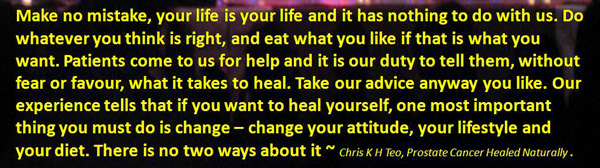
Let me conclude by quoting a wise man who I have much respect for –  Jewish Rabbi Harold Kushner. His words have always been my moral compass whenever I deal with patients who come to us for help.

Lung Cancer: After One-and-half Years of Iressa, He Moved to Tarceva

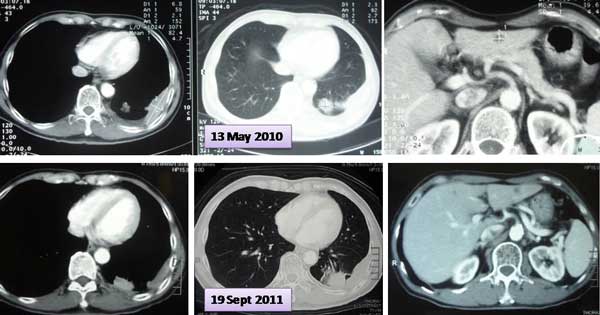
SS is a 73-year-old male from Johor. He was a casual smoker of about 20 plus years. Sometime in early 2010, he experienced weight loss and lack of energy. There was no cough. He went to the general hospital and fainted while there. A CT scan on 13 May 2010 indicated lung cancer, as below.

SS was subsequently referred to the university hospital in Kuala Lumpur. He was started on the oral drug, Iressa, on 21 February 2011.

On 22 June 2011 another CT scan was done and the results showed:

  1. The mass in the left lower lobe has increased in size from 2.3 x 2.7 x 1.0 cm to 4.0 x 2.2 x 3.1 cm.
  2. The adjacent pleural base mass has increased in size from 6.8 x 2.1 x 8.0 cm to 6.9 x 2.1 x 6.7 cm.
  3. New lung nodule in the right upper lobe.

Impression: Comparison with the previous CT scan there is progression of the disease.

SS continued taking Iressa and was monitored regularly by CT scan.

CT scan done on 19 September 2011 showed the following:

CT scan on 12 December 2011 showed:

  1. A slight reduction of the pleural base mass.
  2. No significant changes in the size of the left lower lobe mass.
  3. Multiple liver lesions and solitary right lung nodule, no significant changes compared to previous study.

A comparison study with CT was done on 26 March 2012. The results showed:

  1. The lung mass in the left lower lobe is still seen and appears slightly increase in size – measures 3.9 x 2.9 cm (previously 2.6 x 2.5 cm).
  2. The adjacent bronchiectatic change remains.
  3. Three lung nodules seen in left upper lobe each measures 2- 5 mm; previously only one seen in the right apex.
  4. Multiple persistent hypodense lesions in the liver in segments 8, 5, 2, 3, and 4 remains similar in sizes and appearance.
  5. Underlying generalised osteopenia and degenerative spine changes.
  6. Left thyroid lobe hypodense lesions remain similar.
  7. No suspicious lytic bone lesions.

Scans on 13 May 2010 & 19 September 2011 (top) and 26 March 2012 (below)

SS came to seek our help on 19 August 2012. He was told by his doctor that Iressa was not effective and about a week ago he was asked to stop Iressa and this was replaced with Tarceva.

SS had been taking Iressa for almost one and half years at a cost of about RM 7000 per month. Tarceva costs him RM 8,900 per month.

SS said he wanted to try out herbs and would not wish to continue with his doctor’s medication.

SS’s  meridian bioenergy was read using the AcuGraph (below):

There is a marked energy imbalance between the upper   (left) and lower part of his body (right). We prescribed herbs to correct the imbalance of his LU and BL energy.  SS also told us that he has problems with his prostate. Unfortunately, no one has addressed this problem. For this, we prescribed Prostate A tea. In addition we prescribed SS Capsule A, C-tea, Lung 1 and Lung 2 teas, for his cancer.

Comments

As I was writing this article, a lady from Singapore wrote:

Dear Chris,

I am thinking of going up to Penang to consult you … I was diagnosed in December 2010, with lung cancer (adenocarcinoma), with metastasis to the brain, adrenal glands, lymph nodes and bone. I took Iressa for 1 year, then switched to Tarceva when the CEA started climbing up again. CEA went down from 400+ to 28 within the first few months of taking Iressa, then plateaued for a few months and then started climbing again from December 2011. I am currently on Tarceva.

The case of SS happened in Kuala Lumpur. Now you see a similar story repeated in Singapore! I am reminded by what was supposed to be said by Einstein below:

If you are following and reading this website you will know that cases like the above are not rare or exceptional! May be the results are and can be expected to happen to you! Read: https://cancercaremalaysia.com/category/lung-cancer/

Please don’t get me wrong. I am not suggesting anyone is insane here. What I am suggesting here is: Why don’t you be a bit WISER?

I remember my friend SK. He did not go to any university but he was wise. You don’t have to be a university graduate to be a wise person! SK had lung cancer that had spread to his liver. He said: I saw the oncologist. He told me to do the chemo. When I saw everybody do chemo, everybody do radiotherapy, I told myself this must be the only way. I went back to the doctor and asked him to do the chemo on me. So SK underwent both chemo and radiotherapy. He did not get well but instead ended up with three more tumours in his liver. And they were growing in size. SK told me: I knew then that I had taken the wrong path. I started to find other ways. You can listen to his story here.

Why do people keep repeating the same, old “mistake”? Perhaps ignorance! Perhaps they are just being stubborn or even arrogant – believing that they know better! But often it is just plain powerlessness, being placed in a situation that a person does not know what else to do. SK knew he had a choice – to find other options and not repeating the same “mistake” which Einstein said is insanity

Like SK, you should know that you too have a choice. But for some people it is better to choose the devil that you know than the angel that you don’t know!

I have no problem with what you choose. My responsibility ends after telling you the truth the way I know it. So, be wise and make your choice.

What Your Need to Know About Iressa (or gefinitib)

  • The US-FDA approved Iressa for lung cancer based on the results of a study of 216 patients with non-small cell lung cancer (NSCLC), including 142 patients with refractory disease, i.e., tumors resistant or unresponsive to two prior treatments.
  • The response rate (defined as at least 50% tumor shrinkage lasting at least one month) was about 10%.
  • On September 24, 2002, the Oncologic Drugs Advisory Committee (ODAC) recommended that where there are no viable treatment options, a 10% response rate was reasonably likely to predict clinical benefit and recommended that Iressa be approved. Source: http://www.medicinenet.com/script/main/art.asp?articlekey=23250 

If you understand this statement correct, it just means this: Iressa does not cure lung cancer. Iressa  caused shrinkage of tumours for at least a month in only 10 percent of patients.  Many alternative practitioners (including me) will tell you that shrinkage of tumour is just plain meaningless. Ask yourself: Why do I take Iressa? Is it to cure my lung cancer? Is it to only shrink by lung tumour for a few months and then it grows back again? 

Possible side effects:  Each person’s reaction to any drug is different. Some people have very few side effects, while others may experience more:  Diarrhoea, acne-like rash, loss of appetite, feeling sick (nausea) and being sick (vomiting), tiredness, eye problems, change in blood pressure, breathing problems and it is potentially very serious, and a small number of people have died because of the lung problems they have developed while taking Iressa.  Source:  http://www.andygaya.com/chemotherapy/chemotherapy-gefitinib.html 

Cost:  About RM 7000 per month

What Your Need to Know About Tarceva (or erlotinib)

Between August 2001 and January 2003, researchers enrolled 731 patients with advanced non-small cell lung cancer (NSCLC) whose disease had progressed after one or two courses of chemotherapy. The patients were divided randomly into two groups. One group (488 patients) received Tarceva and the other group (243 patients) received a placebo.

Results 

  • Those who took Tarceva has a median survival of 6.7 months compared to 4.7 months for those on placebo.
  • At one year, 31 percent of the patients taking Tarceva were still alive compared to 22 percent of those taking the placebo.
  • The time it took before the cancer progressed was also longer in the Tarceva group – 2.2 months compared to 1.8 months in the placebo group.
  • Researchers found certain subsets of patients were most likely to respond to Tarceva: Asians; women; patients with adenocarcinoma; and those who had never smoked.
  •  Patients receiving Tarceva experienced more toxic side effects. For example, 9 percent of the Tarceva group suffered from moderate-to-serious rash while none of the placebo group did. Overall, 5 percent of patients stopped taking Tarceva because of toxic effects as compared to 2 percent of those taking placebo. Source: http://www.cancer.gov/clinicaltrials/results/summary/2004/lung-and-erlotinib0604

If you understand the results of the above research, you will know that Tarceva does not cure any lung cancer. Those who took Tarceva lived longer by 2 months (median survival 6.7 months vs 4.7 months). After one year, 31 percent of patients were still alive – meaning 69 percent of patients died even if they took Tarceva. If you take Tarceva, your lung cancer progression is delayed by 0.4 months — 0.4 months? What does that mean – the disease slowed down by just about 2 weeks only?

Study the numbers carefully. Ask yourself again: Why am I taking Tarceva? Is it going to cure me? And it is proven that Tarceva produced toxic effects on patients – 9 percent of patients in the study gave up taking Tarceva because of the side effects.

Possible side effects: Skin changes, tiredness (fatigue) and a general feeling of weakness, feeling sick and being sick, eye problems, changes in hair growth, sore mouth and ulcers, loss of appetite, and breathing problems. Source:  http://www.macmillan.org.uk/Cancerinformation/Cancertreatment/Treatmenttypes/Biologicaltherapies/Cancergrowthinhibitors/Erlotinib.aspx

 Cost:  RM 8,900 per month.

As a conclusion, you may ask: But what choice do I have?  There is no choice if you choose to remain deaf, dumb and blind to what is going on around you!  At least to start with read what I have written in here:  https://cancercaremalaysia.com/category/lung-cancer/