Pancreatic Cancer: No Cure After Surgery, Gemzar and TCM Herbs

This is an e-mail I received lately.

Dear Dr Teo,

I happened to chance upon your blog while doing some searches online on cancer and read about the many success stories of cancer patients under your care.

My mum was first diagnosed with pancreatic cancer in May 2010 and had undergone the Whipple’s procedure to remove the cancerous cells at the head of her pancreas.

In July 2010, she started her chemotherapy, and was put under 6 cycles of Gemcitabine. After completing 6 cycles, at the end of December 2010, CA19-9 has decreased from 5204 to 106.9. About 2 weeks later, CA19-9 value rose to 224.2. The doctor then suggested for my mum to go for a CT-scan. CT-scan result showed that there were several tiny nodules in her lungs. Apart from that, there were no other abnormalities.

Based on the CT-scan result, the doctor told us that he’s sorry and that he is unable to cure my mum anymore as the cancer cells have spread to her lungs. He then asked us to go for a 2nd round of chemotherapy, this time using the combination of 2 drugs with strong side effects to control the growth of the cancer cells. Since there is no guarantee on the success of the treatment and taking into account the stronger side effects, my mum rejected the treatment and has been consulting a Chinese physician specializing in cancer. After taking the herbs prescribed by the Chinese physician for 7 months, the CA19-9 did not decrease but rose exponentially to a value of 66,490 in late June.

My mum has been feeling fine at the start of the year, but somewhere in April 2011, she started having backache and bloatedness in her stomach. At around mid June, she started having diarrhea, followed by serve pain at her back, causing some difficulties in her movement. She has also started coughing about a week ago.

We know that the herbs prescribed by the Chinese physician are not working. But I know my mum has a strong will to live on. It would be really great if you can help us and I look forward to hear from you soon.

Thank you.

Reply:  Well, if you think we can help you, come and see me in Penang with all the medical reports and scan.

Daughter’s First Visit

On the afternoon of Friday 12 August 2011, the daughter of this patient came from Singapore. The following are additional details about her mother’s story.

  1. Her problem started with jaundice and after two weeks the patient went to see a doctor. She was diagnosed to have cancer of the pancreatic head with obstructive jaundice. Histology showed pancreatic ductal adenocarcinoma with lymph node metastasis.
  2. She underwent six cycles of chemotherapy. Each cycle consisted of three injections split over a period of one month. So patient received a total of 18 injections. Each cycle cost about S$2,500.
  3. Before the treatment the doctor told patient that she had a high chance of cure. Things worked out rather well from Chemo 1 to Chemo 17. Her CA 19.9 was dropping. At Chemo 5, CA 19.9 dropped from 5204 to 106.9 plus. But a week after Chemo 18, CA 19.9 started to rise from 100 plus to 224.2. The oncologist said, “Something has gone wrong.”
  4. A CT scan on 18 January 2011 showed several new tiny pulmonary nodules in both lungs. The oncologist said she has to do more chemo. There was no guarantee, but just to test out if it works. Patient refused further medical treatment.
  5. While undergoing medical treatment, patients also took herbs from the TCM section of the hospital and she has been under the care of the TCM practitioners from the beginning until the present. TCM consultation cost S$80.00 each time and the herbs cost S$10 per packet – to be brewed into tea as a dose each day.
  6. The CA 19.9 now stands at 66,490.

Our advice: We told her it is indeed a difficult case to handle and please don’t expect us to cure her mother. We at CA Care believe that no one can cure cancer in the first place. But we can try our best to help.

Latest Update

Hi Dr Chris,

My mum has been taking cough No.5 & 6 and the diarrhea and indigestion tea since last Saturday (27 August 2011) until Wednesday (31 August 2011). However, her condition has not improved. Nevertheless, she’s still taking Capsule A, Pancreas 1, Pancreas 2 and Stomach Function Tea daily. I did check with her about how she felt after taking your pain tea, but she’s also not too sure if the pain tea is working on her as her back pain is on and off. Therefore, I still continue to give her the pain tea 3 times a day.

The hospice home care team came to visit my mum on Thursday (1 September 2011) and started her on the painkiller, hoping to give her some relief, allowing her to have some good rest since she has not been able to sleep since her back pain started. They tried Panadeine on her initially but it only managed to reduce her pain by half, so they started her on Tramadol and Durogesic. Apart from the pain, she’s suffering from the side effects of the painkiller now, feeling dizzy and has also been vomiting since this morning. But the doctor mentioned that the side effects will go off in a week’s time as her body tries to adjust to the painkiller. I’m feeling rather lost now and not sure what to do…

Hello Ying Lee,

It is a difficult problem — as I have told you earlier. You have done your best. I have tried to give you all that I have here. If it still does not work, you need to rely on the Hospice … and go on the painkillers. Yes, with all the side effects but what else can we do?If the herbs are not helping — no use taking them. I am sorry I cannot help you much at this point. If you are in Penang perhaps it would be bit different.

You can hear more details by watching this video clip.


Comments:

Can surgery cure pancreatic cancer? I typed this question for Google search. Read what it says:

From the American Cancer Society: Potentially curative surgery is used when imaging tests suggest that it is possible to remove all the cancer. Whipple procedure: For patients to have the best outcomes, they should be treated by a surgeon who does many of these operations … at least 20 Whipple procedures per year. At the time of diagnosis, only about 10% of cancers of the pancreas appear to be contained entirely within the pancreas. Only about half of these turn out to be truly resectable once the surgery is started. Still, even if all the visible tumor is removed at the time of surgery, some cancer cells may have already spread to other parts of the body. These cells may eventually grow into new tumors and cause many problems — even death.

From the Seena Magowitz Foundation – the Face and Voice of Pancreatic Cancer:  Whipple surgery is often a surgical option when pancreatic cancer is found in the head of the pancreas. It involves removal of the pancreas head, most of the duodenum (small intestine), a portion of the bile duct, gallbladder, part of the jejunum and the lymph nodes located near the pancreas. Sometimes a portion of the stomach may also be removed. The Whipple Operation does not cure pancreatic cancer. It is an option that has been positively demonstrated to extend survival with a better quality of remaining life. There are risks during surgery that includes chances of not surviving the operation. Chemotherapy and radiation treatments following surgery can increase life-span by about 10%. http://www.seenamagowitzfoundation.org/whipple-operation.html

Dr. Nicholas Gonzalez (http://www.dr-gonzalez.com), of New York, USA, in the book, Knock Out written by Suzanne Somers, said,

“It is hard for me to believe that an oncologist who has gone through four years of college, four years of medical school, three years of residency, and then three years of oncology postresidency training can’t connect the dots. You have to be an idiot not to be aware that for most of the cancers chemo isn’t doing anything. It’s in all the journals. It’s not like it’s a secret.”

“The fact of the matter is that 95 percent of the patients who call my office have been brutalized by the orthodox system … my staff just sits there dumbfounded by their stories, story after story, over and over again. Everyday.”

“Spend a one day in my office listening to the dozens of people who call in with these horror stories about the conventional therapies that were pushed on them with false hope, then you will see why we get upset when we are criticized as alternative guys offering false hope. These people come to me half-dead because they were promised that these treatments could work, and we see this in particular with patients diagnosed with pancreatic cancer because we are known for treating pancreatic cancer.”

“They have compared Gemzar … Median survival improved from 4.2 months to only 5.7 months – about one extra month of life for this expensive drug. Not a single patient out of 126 in the study lived longer than 19 months. But Gemzar has been considered such an advance that the FDA approved it … Gemzar is used all over the world. One month improvement in survival and not one patient in the clinical study lived longer than 19 months, and that has been considered a major advance.”

In the same book by Susan Somers, Dr. Ralph Moss, a highly respected advocate of non-conventional cancer treatment, said,

“Gemzar … is relatively benign and also has minimal effects. You rarely hear about people having major side effects with Gemzar … (it is) a mild form of chemotherapy. (It is) given as a kind of placebo, meaning when they have nothing else to give and they don’t want to burden the patient with a lot of side effects, they give this drug and everybody is happy. The patients feel that something is being done for them, and the doctors gets paid for administering or prescribing something. Then the patients expire and the families feel that at least they tried.”

Response from Susan Somers:

“This is the part I don’t understand – the patient is given drugs that don’t do much and at the end the family is grateful. Recently a young friend of mine died of pancreatic cancer, stage IV. I have never seen such destruction of a human body as I watched him disintegrate and die in four months. Then a few weeks after the death, his wife called and asked if I would come perform for a fund-raiser for his doctor. And I thought, They just killed your husband.”
 

Liver Cancer Part 1: Tumour Shrunk After Chemoembolization (TACE) and Radiofrequency Ablation (RFA) But New Growths After Six Months. What has gone wrong?

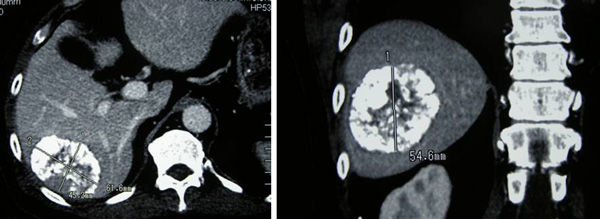
TD (S21) is a 67-year-old male from Indonesia. Sometime in May 2010, he suffered chest pains while visiting Shanghai, China. He subsequently underwent an angioplasty with (four) stent placement. While in the hospital, a CT scan showed a 8.5 x 7.0 x 4.5 cm mass in his liver. After TD was discharged from the Chinese hospital, he went back to Indonesia. On 2 June 2010,he went to Singapore for treatment of his liver cancer.

CT scan on 2 June 2010 showed a solitary mass in segments 6 and 7 in the right lobe of his liver, It  measures 7.8 x 6.5 x 8.4 cm. This is compatible with a hepatoma. There is no involvement of the hepatic or portal veins. There is no definite extension beyond the liver capsule. No enlarge lymph nodes were seen in the para-aortic or portahepatis region.

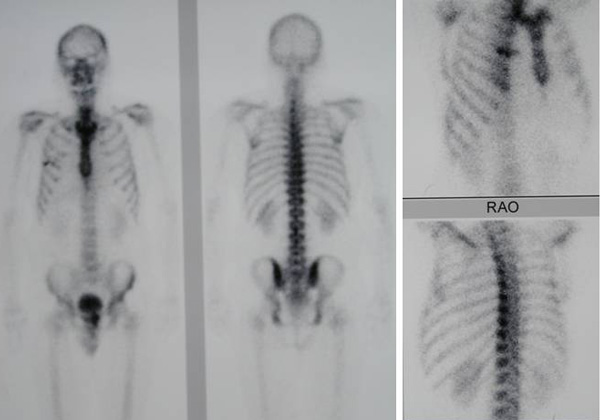
 Bone scan on 2 June 2010 showed a mildly increased tracer activity in the mid to lower cervical spine, T4 and T5 vertebrae. No conclusive scan evidence of bone metastasis.

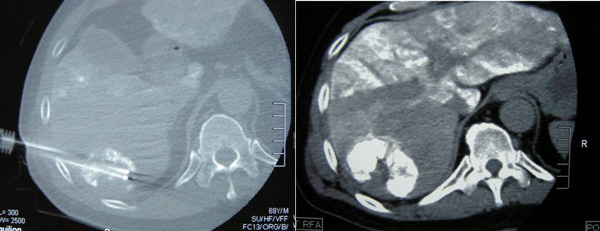
 On 3 June 2010, TD underwent transarterial chemo-embolization (TACE). This procedure cost about S$9,000 each time.

 After two cycles of TACE, CT scan on 5 August 2010 showed the tumour has shrunk. The entire mass now measures 6.2 x 4.5 x 5.5 cm. The response was good with no evidence of metastasis.

TACE was continued and on 16 September 2010, radiofrequency ablation (RFA) of the liver tumour was performed using a 2.5 x 20 cm cluster Cool-Tip RF electrode system. Two cycles of ablation were performed with repositioning of the cluster electrode in-between each cycle.

CT scan on 6 October 2010 showed the tumour was significantly smaller in size, 4.7 x 5.4 x 4.6 cm. There was no evidence of recurrent or new lesions in the rest of the liver. No evidence of pulmonary metastataic deposits and no enlarged mediastinal or lymph nodes.

A bone scan was also performed on 6 October 2010.


TD was told that there was nothing to worry about. The total cost of his treatment came to about S$60,000.

During the routine checkup TD was asked to receive Zometa injection for his bone. Each injection coast S$1,200 and he received a total of 6 injections.

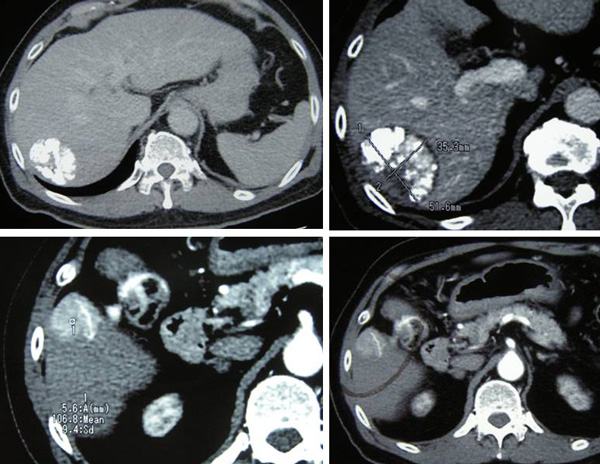
On 6 April 2011, a CT scan was performed. The previously treated mass in the right lobe of his liver measures approximately 3.5 x 5.1 x 4.8 cm in size. There is no associated hypervascularity seen with this mass. However, there is a new lesion in segment 5 of the right lobe of his liver. It is 3.1 x 2.3 x 3.6 in size.  This mass was not present on the previous scan of October 2010 and is suspicious of recurrent disease.


TD was told to come back in two months’ time for another scan. Disappointed, TD did not want to see his Singapore oncologist any more.

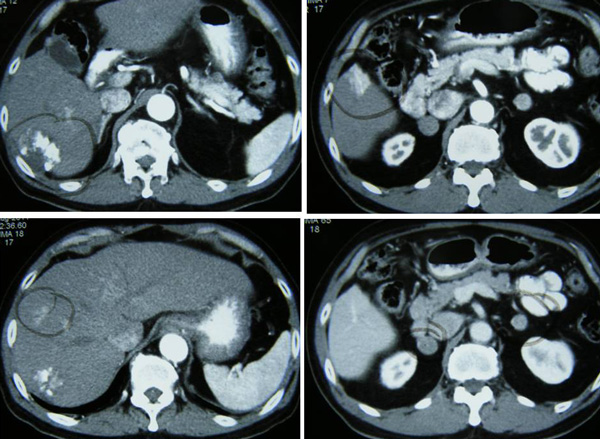
TD came to a private hospital in Penang and underwent a CT scan of his brain, neck, thorax, abdomen and pelvis on 12 August 2011. The results showed:

  1. There is a 5.1 x 4.2 x 4.8 cm mass in segment 6 of the liver.
  2. There is a 2.7 x 2.8 x 3.3 cm enhancing lesion in segment 5 of the liver.
  3. There is an ill-defined enhancing lesion measuring about 2.3 cm in segment 8 of the liver.
  4. There is a 2.5 x 2 x 2.1 cm mass just inferior to the right adrenal gland. Metastasis?
  5. There is a 1.9 x 1.6 x 2.5 cm mass just inferior to the left adrenal gland. Metastasis?
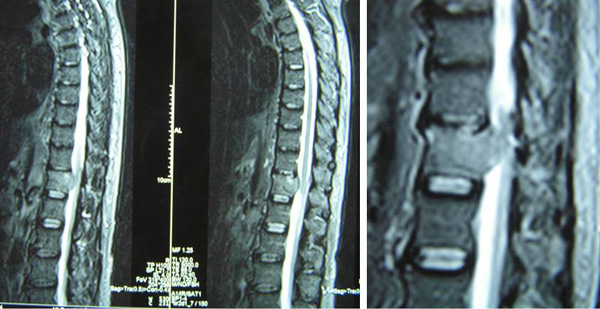
  6. There is a lytic lesion in the vertebral body of T12. Fracture of the superior endplate of T12 is noted. This probably represents a bony metastasis.

On 13 August 2011, MRI of the thoracic spine was carried out. The result confirmed a lesion measuring 3.5 x2.4 x 2.2 cm in T12 vertebra. The mass extends into the spinal canal and displacing the nerve roots. Findings are in keeping with a metastatic lesion.

TS was referred to an oncologist who suggested that he undergo 10 times of radiation treatment to this back. This is to relieve the minor pains he complained about.

TS came to CA Care on 14 August 2011. Listen to his story.

Comments

How does chemoembolization (trans-arterial chemoembolization or TACE) work? Chemoembolization attacks the cancer in two ways. First, it delivers a very high concentration of chemo-drugs directly into the tumor, without exposing the entire body to the effects of those drugs. Second, the procedure cuts off blood supply to the tumor, trapping the chemo-drugs at the site and depriving the tumor of the oxygen and nutrients it needs to grow. (http://www.radiologyinfo.org/en/info.cfm?pg=chemoembol)

Can chemoembolization  cure liver cancer?  It is not a cure and can only control the cancer for a limited time. TACE can help to keep patients alive longer.  Although the tumor may shrink up to 70% of the time, the associated liver damage can cause pain, fever, nausea, infection, fluid accumulation, and rarely, death. TACE is not suitable for people with very sick livers (http://www.medicinenet.com/liver_cancer/page10.htm)

Benefits of chemoembolization:  Left untreated, patients with primary liver cancer who are ineligible for transplant or surgical resection have a life expectancy of three to six months.

Recurrence: Even when chemoembolization eliminates existing tumors in the liver, new ones may appear.  (University of Washington – http://www.rad.washington.edu/clinical/radiology-clinics/interventional-radiology-clinic/chemoembolization-of-liver-tumors).  In about two-thirds of cases treated, chemoembolization can stop liver tumors from growing or cause them to shrink. This benefit lasts for an average of 10 to 14 months. Chemoembolization is a treatment, not a cure (http://www.radiologyinfo.org/en/info.cfm?pg=chemoembol).

Risk of chemoembolization: Serious complications from chemoembolization occur after about one in 20 procedures. Most major complications involve either infection in the liver or damage to the liver. Reporting indicates that approximately one in 100 procedures result in death, usually due to liver failure. (http://www.radiologyinfo.org/en/info.cfm?pg=chemoembol)


What is Radiofrequency Ablation (RFA)?  RFA is an image-guided technique that heats and destroys cancer. Heat is generated locally by high frequency radio waves that are channeled into metal electrodes. A probe is inserted into the center of the tumor and the non-insulated electrodes, which are shaped like prongs, are projected into the tumor. The local heat that is generated melts the tissue. The probe is left in place for about 10-15 minutes. The ideal size of a liver cancer tumor for RFA is less than 5 cm. Larger tumors may require more than one session.  (http://www.medicinenet.com/liver_cancer/page10.htm).

Benefits of RFA: In most studies, more than half of the liver tumors treated by radiofrequency ablation have not recurred. The success rate for completely eliminating small liver tumors is greater than 85 percent.

(http://www.radiologyinfo.org/en/info.cfm?pg=rfaliver)

What RFA cannot do: Only lesions which can be seen on ultrasound are ablated. Undetected cancer cells, due to the technical limitations of ultrasound, are not treated. Ultrasound cannot detect cells. Therefore there is a chance that some tumor cells will not be killed during ablation and that new lesions in the liver can occur later (http://www.clevelandclinic.org/general/rfa/indication.html).

Can RFA cure liver cancer? RFA of liver tumors is not considered a cure from cancer disease (http://www.clevelandclinic.org/general/rfa/indication.html).  This treatment should be viewed as palliative (providing some relief), not curative (http://www.medicinenet.com/liver_cancer/page10.htm).

A few years ago, I had a chance to visit a hospital in China and discuss with a doctor specialized in cryoablation (low temperature ablation). One concern about this treatment is recurrence or new growths found in other parts of the liver  after the ablation procedure has been done.

What then has gone wrong in this case? Nothing wrong actually! Recurrence or new growth can be expected. If that happens, do more of the same treatment again.  The problem lies with TD and his wife. They are not computer savvy enough to be able to surf the net and find out the truth for themselves. And they are not  knowledgeable enough to ask this all important question, “Can the treatment cure my cancer?” They took it for granted that it would.

Indeed, patients need to be forewarned about this. Again, let me repeat, the procedures are palliative not curative. Patients may be disappointed if they expect that chemoembolization and/or RFA can cure their liver cancer.

Follow up report, Liver Cancer Part 2: After chemoembolization and Radiofrequency Failed, He Turned to Herbs and e-Therapy 

Dissecting Chemotherapy Part 7: Avastin + Alimta Nearly Killed Me

Avastin belongs to the group of chemo-agents called the “Smart Bomb” or Targeted Drug. It is used in combination with the conventional chemo-drug for metastatic colorectal, non-small cell lung cancer, metastatic kidney cancer and glioblastoma (brain cancer).

The drug is not only expensive but also comes with a variety of scary side effects. Patients receiving Avastin may suffer from the following:

  1. Serious, and sometimes fatal, side effect called gastrointestinal (GI) perforation. Perforation is the development of a hole in the stomach, small intestine, or large intestine.
  2. Serious and sometimes fatal bleeding, such as coughing up blood, bleeding in the stomach, vomiting blood, bleeding in the brain, nosebleeds, and vaginal bleeding.
  3. Nervous system and vision disturbances. Symptoms may include high blood pressure, headache, seizure, sluggishness, confusion, and blindness.
  4. Stroke or heart problems, which can be fatal. Heart problems include blood clots, mini-stroke, heart attack and chest pain.
  5. Abdominal pain
  6. Nausea,
  7. Vomiting
  8. Constipation
  9. Fever
  10. Slow or incomplete wound healing
  11. Too much protein in the urine, which may lead to serious kidney problems
  12. High blood pressure.

Alimta is used in combination with the conventional chemo-drug for the treatment of non-squamous non-small cell lung cancer and malignant pleural mesothelioma. Alimta is not indicated for squamous cell lung cancer.

Patients may be allergic to Alimta and suffer from hives, difficulty breathing; swelling of face, lips, tongue, throat, pale skin, easy bruising or bleeding and unusual weakness.

The side effects of Alimta include:

  1. Fever, chills, body aches, flu symptoms
  2. White patches or sores inside mouth or on lips
  3. Urinating less than usual, or not at all
  4. Chest pain, trouble breathing
  5. Swelling, rapid weight gain
  6. Skin rash
  7. Numbness or tingling
  8. Depressed mood
  9. Sore throat
  10. Tired feeling
  11. Nausea, vomiting, diarrhea, constipation, indigestion, loss of appetite
  12. Muscle pain.

The most important question which patients want to know:

Can Avastin cure cancer? Try type this question on Google search and see what answer you get? You get nothing. No one is talking about cure at all. They only talk about prolonging life! And that too is amazingly ridiculous.

Q: Does Avastin cure colon cancer?

A: No.

Avastin (Bevacizumab): Good or Bad Cancer Treatment? http://yalepress.typepad.com/fightingcancer/2011/07/avastin-bevacizumab-good-or-bad-cancer-treatment.html

Dr. Richard Frank, M.D. wrote:  “The cost of cancer medicines is breaking the banks of Medicare and patients (private insurers continually raise their rates to cover costs) as well as forcing the closing of many oncology practices across the country. Access to basic cancer care and medicines is being jeopardized because of the exorbitant costs of the new biologic medicines. Unless these medicines can show at least a meager, repeatable improvement in survival for patients battling cancer, then they should not be approved and patients should not be given them in false hope.”

Q: Can Alimta cure lung cancer? This is the answer I got.

A: Alimta does not cure mesothelioma or lung cancer. 

Having understood the risks and the potential benefit (but what benefit are we talking about?) let us watch this video on what Alimta + Avastin did to a patient with lung cancer that had spread to his liver.


Note: We received a message on 18 September 2011 that this patient died.

When a lawyer makes a mistake, he loses his case in court; When an engineer makes a mistake, the building collapses; But when a doctor makes a mistake, it gets buried in his patient’s grave  ~ A Cancer Patient


Comments

In his website, http://www.utopiaawaits.com/index.php?option=com_content&task=view&id=53&Itemid=2

Dr. Carlos Garcia, M.D. wrote, “Many patients and support individuals … get incensed when I state that chemotherapy has a FAILURE RATE of ninety-seven percent (97%), or a cure rate of a mere three percent (3%).  They are usually shocked and then appalled by this statement.  Their body posture changes, their mood becomes more confrontational, in short this statement touches the very core of their belief structure.  That is if I am correct, as I will attempt to corroborate with the attachments herein, then why were they not told this prior to being told that chemotherapy, along with surgery and radiation are the ONLY ways of treating cancer and furthermore that alternative practitioners are mere quacks.

The FACTS are that after years of trying, and FAILURE and trillions of dollars in research with no improvement in success why is chemotherapy still being used?  Are the oncologists just mindless heartless doctors in it for the buck?  How do they justify just recommending chemotherapy, radiation and surgery, while ignoring dietary changers, and emotional issues?  How do they justify the continued endorsement that was first known to be ineffective in 1985 and remains ineffective with a ninety-seven percent (97%) failure rate today?

Let’s be honest, spontaneous remission, has a higher success rate than chemotherapy.  So potentially one could reach the logical and perhaps factual conclusion that doing nothing when diagnosed with the symptom of cancer is a better medical choice than opting for chemotherapy, with definitely a higher quality of life than that presented by chemotherapy.”

Breast Cancer: After Chemotherapy and Radiotherapy Cancer Spread to Her Liver

LP (H588) is a 34-year-old mother of two. During her second pregnancy (sometime in July 2009), she felt a lump in her left breast. She ignored it. She gave birth on 5 September 2009. She breast-fed her baby for a month. Her left breast produced little milk. The doctor thought it was due to infection and prescribed her antibiotics. The lump became more prominent. Her gynaecologist suggested removal of the lump.

LP was referred to a breast surgeon. A excision biopsy was performed on 26 October 2009. The specimen revealed features of an invasive ductal carcinoma. Lymphatic invasion was noted. The tumour was less than 1 mm from the surgical margins.  The tumour was negative for oestrogen and progesterone receptors but strongly positive for C-erb-2. DNA Probe Kit detection confirmed HER-2/neu gene amplification. The surgery cost RM 6,000.

In view of the above, a mastectomy was recommended but LP refused. She, however, agreed to a second surgical intervention to remove more margin and the lymph nodes.  A report on 12 November 2009 indicated that all the margins were free of cancer. All the left 26 axillary lymph nodes were free of metastasis. At the same time, her right hookwired breast lump specimen showed lactating adenoma. A chemo-port was installed on the right side above the breast.  The entire surgical procedure cost RM 20,000.

A CT of her thorax, abdomen and pelvis on 11 November 2009 showed NO metastasis in the chest, abdomen or pelvis. A total body bone scan on 12 November 2009 showed no evidence to suggest any osseous metastasis.

LP subsequently underwent chemotherapy. The first three cycles was with FEC (5-FU, epirubicin and cyclophosphamide).  This three-cycle treatment cost RM 12,000. The fourth, fifth and sixth cycles consisted of Taxol plus Herceptin. The total cost of these three cycles was RM 46,000. The last chemo-treatment was in May 2010.

From June 2010 to August 2010, LP received thirty sessions of radiotherapy. She was “well” after that.

Unfortunately, a whole body PET-CT scan done on 29 December 2010, showed a solitary liver metastasis. The lesion was 3.4 x 3.0 x 3.0 cm in size.  There were also multiple non-specific uptake of FDG in the vertebrae but no bone destruction was seen in the CT.

LP was asked to undergo surgery for her liver metastasis. She declined. Desperate, LP took Tian Xian Liquid for a month. The she and her husband went to Cambodia to undergo a treatment using Marijuana oil (MO). She stayed in Cambodia for two months.

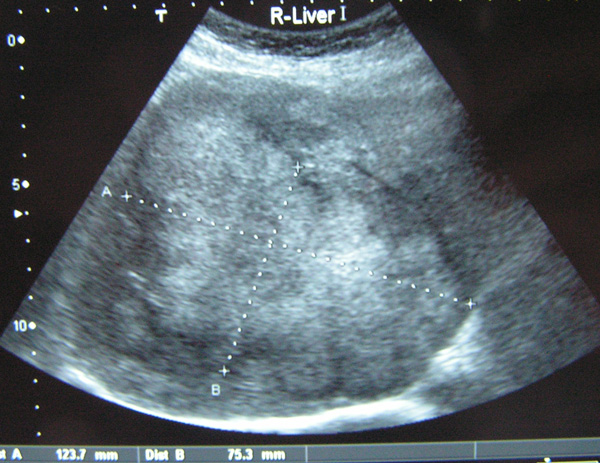
An ultrasound on 11 March 2011 however showed that the right lobe liver lesion increased in size from 3 cm a few months ago to 7 cm.  In addition, the radiologist report indicated: “there is suggestion of a small lesion adjacent to this measuring 9 mm and ? another lesion in the left lobe measuring 8.5 mm.” Impression: liver metastasis increasing in size and number.

An ultrasound done on 15 April 2011 showed multiple liver metastases with progression of disease. The radiologist report said: “The previously seen metastatic lesion in the right lobe was significantly larger measuring 12.3 x 7.5 cm occupying almost half of the right lobe. In the left lobe there are at least 4 – 5 lesions, the largest measuring approximately 1 cm.”

  Figure 1: Ultrasound and PET scan showing the liver tumour

LP again took Tian Xian Liquid – this time it was the Super variety with triple dosage costing about RM 12,000 per month. Not satisfied, LP and her husband came to seek our help on 21 April 2011.

After hearing her story, we proceed to read her meridians using the AcuGraph 4. We then prescribed LP Capsule A and B, Liver 1 and Liver 2 teas, Breast M and LL-teas. Due to her low Spleen meridian energy we also asked LP to take A-Sp-7 herbs.

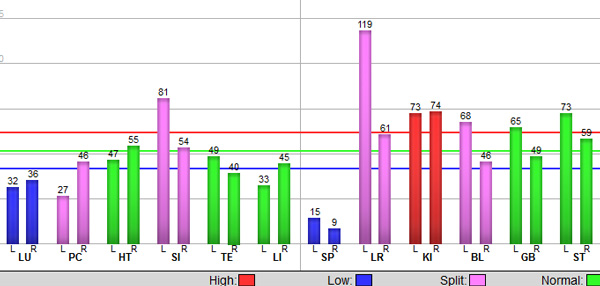
LP came back to see us again on 23 May 2011, i.e. after a month.  According to LP, she did not feel any change in herself after taking the herbs. Below is a comparison of her AcuGraph readings (Figure 2 and 3).

Figure 2: First visit, 21 April 2011

 Figure 3: Second visit, 23 May 2011

During her first visit on 21 April 2011, her meridians showed disharmonies of the LU, PC, SI, SP, LR, KI and BL meridians.  After being on herbs for a month, her meridian reading was very much improved. Only SI, SP, KI and ST meridian showed disharmonies.

Comments

This is indeed a sad and tragic case.  Before we ask some hard, searching questions, let’s listen to the conversation we had on 21 April 2011.

Journey to Disaster

Like most patients, LP and her husband totally believed in medical science. Doctors are the “experts” and what they advised, LP and her husband followed without a slightest sense of doubt. After the surgery, chemotherapy and radiotherapy, LP was apparently well for a while. She went back to her old way of life – and eating everything “under the sun.” This was what her doctor told her she could do – “Eat anything and everything you like!” As her husband said: “We would only listen to the doctor’s advice.”

When LP was asked to undergo surgery, she did not ask her doctor if surgery would cure her breast cancer. There is no reason to ask such question. Because she and her husband had total confidence in the doctors – they will do the right thing and cure LP!

Can chemo cure her cancer? LP did not ask her oncologist that very important question either.  Her husband said: “We were given the impression by undergoing chemotherapy all her problems would be settled – using the best chemo drugs, etc.  In fact the doctor said LP would be better off if she would continue receiving Herceptin for another two years! Take note, LP paid about RM 15,000 for a cycle of Taxol and Herceptin. Perhaps if LP could afford the Herceptin treatment for two more years she would have done it not realizing that Herceptin does not cure anything!

Asking the Hard Questions

I asked LP: “What was your health like before and after treatment? Which one was healthier? The husband replied: “Before receiving all the treatments.” LP said: “With a large tumour in my liver, I am not any better at all.” In simple language, by going to the hospital and spending all the money and receiving all the so-called “scientifically proven” treatments, LP was worse off in health than if she were to do nothing. That was the impression I got from the replies of LP and her husband. Is this not a tragedy?

Let me zero down on the CT scan report dated 11 November 2009. This was the CT scan done before LP underwent chemotherapy. It said: “The liver is enhancing homogeneously with a few small cysts within less than 5 mm in diameter. Impression: No metastasis in the chest, abdomen or pelvis.”

From this report, as far as the oncologist was concerned, the cancer had not spread to her liver or any other parts of the body. A few months after LP had chemotherapy and radiotherapy, a 3-cm tumour was found in her liver.  What had gone wrong? What had caused that tumour to appear so soon?

I proposed two possibilities – you decide which possibility makes sense.

  • The CT scan done in November 2009 somehow was wrong somewhere! The scan did not detect the tumour in LP’s liver. Alternatively, could the person who interpreted the CT scan was incompetent or negligent? Could it be that the “few small cyst within less than 5 mm in diameter” were actually metastases? That is to say, the cancer had already spread and this was misinterpreted? If you disagree with this proposal then what about another possibility?
  • Could it be that the treatments – FEC, Taxol and Herceptin or radiotherapy – might have caused the cancer to appear in LP’s liver? Meaning, the treatment itself was the cause of her liver cancer. LP paid a hefty sum for her chemo and radiation treatments and she ended up with a liver metastasis.

Some important questions to ask: Oncologists tell patients that after surgery, chemo is necessary to “mop up” all the remaining bad cells left behind floating in the blood stream. As a result LP was given 5-FU, epirubicin, cyclophosphamide, Taxol and Herceptin. If the cancer cells were already in the liver, obviously these expensive drugs   did nothing at all! If the cancer cells were not yet in the liver before the chemotherapy, did it not imply that the liver was weakened or damaged to the extent that cancer cells were able to make a new home in her liver? For the radiation treatment, the fact is obvious. The radiologist used the “gun and fire power” but they aimed “blindly” at the breast while the cancer cells might have already been in the liver! Target missed.

When the PET-CT scan in December 2010 showed a 3.4 x 3.0 x 3.0 cm lesion in the liver, the doctor advised surgery to remove it – only surgery, no chemotherapy was indicated. LP refused. I asked her why she refused to follow her doctor’s advice this time. She and her husband had lost faith in her doctor.

Unfortunately, LP and her husband had learned a bitter lesson the hard way – and probably a bit too late.

A Romanian proverb said this: “Only the foolish learn from experience — the wise learn from the experience of others.”

I recall what my dear friend, the late Mr. Chew, said: “I went to the oncologist. I saw so many people doing chemotherapy, and so many people doing radiotherapy. In my mind, this must be the correct way. So I went back to the oncologist and asked him to do chemo for me. Later, when I suffered a recurrence and the tumour grew in size, I then realized that I was on the wrong track.”

I told LP this: “Don’t worry – we will do our best to help you. You are not the only one who got into such a mess. Many others are like you too. So take it easy.” I said these words because I understand that spiritually all of us are here on Earth to learn certain experiences. In this learning process, we do make mistakes. At the end of it all, whether we do it right or wrong, we still die.

Seeking Alternative Therapies

CA Care was started in 1995 – we’ve been around for sixteen years now. Almost all people who came to seek our help were medically written off or were in a similar situation like LP – where medical treatments had failed them.  Our experience showed that there are two types of people. One, the desperate but sincere ones who came to seek another avenue out of their predicament – like my good friend Chew mentioned above or for that matter, LP. After talking to her and her husband I felt she was the kind of patient we like to work with. Unfortunately, there is another group of people who come “shopping” for instant “magic bullets’. In spite of the fact that they have spent thousands and thousands of dollars paying their medical bills, they want healing on their own terms.  Our statistics showed that 70 percent of those who come to us fall into this category.  We find it extremely hard to help this group of people.

What we teach our patients about diet is in direct collision course with what oncologists tell their patients.  We have written numerous articles about this matter and you can read some of our articles by clicking this link:  http://ejtcm.com/category/dietnutrition/

In his book: Weather warfare – the military’s plan to draft Mother Nature, Jerry Smith wrote: “In order to change, science (and individual scientists) must admit fallibility – something that most people of education are reluctant to do. Who wants to admit they were wrong? How much harder would it be to admit being wrong if advancing your career depended on your being right? Also, position within the scientific community (and grant money) does not go to mavericks. This institutionalized resistance to new theories has resulted in it routinely taking from 50 to 100 years for new discoveries to move from ridiculed “nonsense” to revered facts.”

In spite of the thousands and thousands of research showing that diet plays a vital role in cancer cure, doctors are telling their patients to eat anything they like! Perhaps it will take another 50 to 100 years more for the medical community to fully appreciate this fact and come to terms with it.  For now we need to be content with the voices of some brave souls who dare to speak up.

Russell Baylock, neurosurgeon and clinical assistant professor at the Medical University of Mississippi wrote:

  • During my four years in medical school we did not have a single class on nutrition.
  • In fact, to provide your patients with nutritional supplements opened up to ridicule from your colleagues.
  • Oncologists HARM their patients by giving them cancer-promoting nutritional advice.

In his book, Alive and well, Dr. Philip Binzel Jr. wrote:

  • There is nothing in surgery that will prevent the spread of cancer.
  • There is nothing in radiation that will prevent the spread of the disease.
  • There is nothing in chemotherapy that will prevent the disease spreading.
  • The only thing known to mankind today that will prevent the spread of cancer within the body is for the body’s defense mechanisms to once again function normally. That is what nutritional therapy does – it treats the defense mechanism, not the tumour.

A Sad Update

Hi Chris, 

I would like to informed u that my wife has pass away yesterday night. I would like to thank u for all the valuable advices and help.

Thanks       30 July 2011


Dissecting Chemotherapy Part 6: Avastin Does NOT Cure Cancer

The Story of Avastin That You Need to Know

On February 26, 2004, the FDA approved Avastin (or  bevacizumab) as a first-line treatment for patients with metastatic colorectal cancer, i.e., cancer that has spread to other parts of the body. Avastin  was shown to extend patients’ lives by about five months when given  as a combination treatment along with standard chemotherapy drugs for colon cancer (the “Saltz regimen” also known as IFL). IFL treatment includes ironotecan, 5-fluorouracil (5FU) and leucovorin.

Source: http://www.cancer.gov/cancertopics/druginfo/fda-bevacizumab#Anchor-Approva-23287

Take note of this fact carefully and serious ly – nowhere in the medical literature does it say Avastin cures cancer. It does not. When given with IFL, Avastin made patients lived longer by about five months. That was all. And the average time before tumors started regrowing or new tumors appeared was four months longer than patients receiving IFL alone.

Avastin Approved As Second-Line Treatment of Metastatic Colorectal Cancer

On June 20, 2006, the FDA granted approval for Avastin for use as second-line treatment of metastatic carcinoma of the colon or rectum. This recommendation is based on the demonstration of improvement in  overall survival  (OS) of patients receiving Avastin plus FOLFOX4 (5-flourouracil, leucovorin, and oxaliplatin) when compared to those receiving FOLFOX4 alone.

Mean overall survival of patients receiving Avastin + FOLFOX4 was 13.0 months while those receiving FOLFOX4 alone was 10.8 months.

Source: Source:  http://www.cancer.gov/cancertopics/druginfo/fda-bevacizumab#Anchor-Approva-51277

Take note again. Patients receiving Avastin + FOLFOX4 lived longer by only 2.2 months. Avastin did not cure. It only extended life by 2.2 months. Is that what patients want? Do oncologists clearly tell this fact to patients before they give them Avastin?

 Each Avastin injection cost a lot of money. It is NOT cheap for most people. Money is one point, Avastin comes with a bunch of devastating side effects. The most serious, and sometimes fatal side effects of Avastin are:

  • gastrointestinal perforation,
  • wound healing complications,
  • hemorrhage,
  • thromboembolic events,
  • hypertensive crisis,
  • nephrotic syndrome and
  • congestive heart failure.

The most common adverse events in patients receiving Avastin are:  asthenia (fatigue or weakness), pain, abdominal pain, headache, hypertension, diarrhea, nausea, vomiting, anorexia, stomatitis, constipation, upper respiratory infection, epistaxis (nose bleed), dyspnea (shortness of breath –SOB), exfoliative dermatitis and proteinuria (excess proteins in the urine).  Source: http://www.avastin.com/avastin/patient/crc/index.html#/crc/treatment/

Avastin for Colon Cancer – Any good?

A posting on 19 September 2010 has this heading:  Second Avastin Trial Shows No Benefit in Early Stage Colon Cancer. Adding Avastin to chemotherapy for early stage colon cancer didn’t reduce the risk that cancer would return. Source: http://fightcolorectalcancer.org/research_news/2010/09/second_avastin_trial_shows

A statement released by the drug company, Roche of Switzerland (http://www.roche.com/investors/ir_update/inv-update-2010-09-18b.htm) stated that:

  • A study known as AVANT evaluated the use of Avastin plus chemotherapy in the adjuvant treatment (immediately after surgery) of early-stage colon cancer. The results did not show that it improved disease-free survival in stage III colon cancer.
  • Evaluation of Avastin in the early-stage setting, the AVANT study shows that standard chemotherapy plus one year of Avastin is NOT effective in reducing the risk of relapses in early-stage colon cancer.

In another posting on 25 Janruary2011,entitled: AVANT Says No Avastin Benefit in Stage III Colon Cancer

Source:  http://fightcolorectalcancer.org/research_news/2011/01/avant_says_no_avastin_benefit_in_stage_iii_colon_cancer

A second randomized clinical trial has confirmed what the first one found — adding Avastin to standard chemotherapy does not reduce recurrences after surgery for stage III colon cancer. In presenting the trial results at the 2011 GI Symposium, Aimery De Gramont, MD, PhD, concluded:

  • The addition of Avastin to FOLFOX4 or XELOX did not improve disease-free survival  (DFS) in the adjuvant treatment of Stage III colon cancer.
  • Immature overall survival data suggest a potential detriment.
  1. In the first year, there was a transient favorable effect.
  2. The treatment effect became unfavorable after one year.

What the Mass Media Said

Avastin Falls Short in Test as Colon Cancer Medicine. Source: http://www.nytimes.com/2009/04/23/health/23avastin.html

Andrew Pollack of the New York Times, wrote on 22 April 2009: In results from a widely watched clinical trial, the drug Avastin failed to show a significant effect on preventing the recurrence of colon cancer.  Avastin had sales of $2.7 billion in the United States alone last year.

Melly Alazrakip of Daily Finance wrote: Roche’s Avastin Fails in Early-Stage Colon Cancer Study

Source:  http://www.dailyfinance.com/2010/09/20/avastin-cancer-drug-roche-fails-colon-study/

The top-selling cancer-fighting drug Avastin, which was once believed to have the potential to help treat many cancers, has hit another roadblock in testing. In a recent Phase III study, Avastin failed to improve disease-free survival in early-stage colon cancer patients when administered immediately after surgery.

Roche, the world’s largest maker of cancer drugs, said data from the study showed that adding Avastin to standard chemotherapy for one year after surgery wasn’t effective in reducing the risk of relapses. Indeed, the data showed better outcomes for standard chemotherapy alone.

As the world’s best-selling cancer drug, Avastin recorded nearly $6 billion in sales last year.
Avastin has experienced other setbacks this year, including Great Britain again refusing to approve Avastin for colorectal cancer on the basis of its poor cost-effectiveness, and another late-stage study showing Avastin failed to extend survival in men with advanced prostate cancer, compared to current treatments.

Take note here: Avastin is not allowed in Great Britain on the basis of poor cost-effectiveness.

In the poor developing countries, Avastin can be used? Is that logical?

Avastin for Other Cancers

In spite of its poor performance, Avastin had and is being used rather commonly for the following cancers:

  1. Metastatic Renal Cell Carcinoma (mRCC)
    Avastin is indicated for the treatment of metastatic renal cell carcinoma in combination with interferon alfa.
  2. Non–Squamous Non–Small Cell Lung Cancer (NSCLC)
    Avastin is indicated for the first-line treatment of unresectable, locally advanced, recurrent or metastatic non–squamous non–small cell lung cancer in combination with carboplatin and paclitaxel.
  3. Brain cancer.
  4. Just not too long ago, Avastin was also approved for the treatment of breast cancer.

Castle Built On Sand – Avastin for Breast Cancer

Andrew Pollack of the New York Times (23 February 2008,http://www.nytimes.com/2008/02/23/business/23drug.html)

reported that the FDA approved Avastin as a treatment for breast cancer – a decision that appeared rather baffling to the common mind.  But as always, we know that a FDA  approval  means an additional hundreds of millions of dollars of annual sales to Avastin.

As a breast cancer treatment, Avastin costs about UD$7,700 a month, or US$92,000 a year.

Let us look at the results of the clinical trial on which the approval was based.

  • Women who received Avastin in combination with the chemo-drug Taxol (or paclitaxel) had a median of 11.3 months before their cancer worsened or they died, in contrast women who received Taxol alone had a median of  5.8 months. This means Avastin only delayed cancer worsening by 5.5 months.
  • Women who received Avastin lived a median of 26.5 months, compared with 24.8 months for those getting Taxol alone — life extension that was not statistically significant. This means Avastin prolonged life by 1.7 months which is meaningless and this difference could just be due to chance and not real.
  • Moreover, the women receiving Avastin suffered more side effects. And 5 or 6 of them out of 363 died from the drug itself.

In spite of such miserable performance, Avastin was approved for breast cancer treatment. And many patients in this part of the world, including Malaysia, were given Avastin by their oncologists.

A castle built on sand would not last! 

Matthew Perone of the Associated Press, on 15 December 2010 wrote:  http://www.msnbc.msn.com/id/40702735/ns/health-cancer/t/avastin-shouldnt-be-used-breast-cancer-fda-says/

Federal health authorities recommended Thursday that the blockbuster drug Avastin no longer be used to treat breast cancer, saying recent studies failed to show the drug’s original promise to help slow the disease and extend patients’ lives.

The ruling is a significant setback for the world’s best-selling cancer drug and will likely cost Swiss drugmaker Roche hundreds of millions of dollars in lost revenue.

The FDA approved Avastin for breast cancer in 2008 based on one study suggesting it halted the spread of breast cancer for more than five months when combined with chemotherapy. But follow-up studies showed that the delay lasted no more than three months, and patients suffered dangerous side effects.

Roche sells the drug at a wholesale price of $7,700 a month. When infusion charges are included, a year’s treatment with Avastin can run to more than $100,000.

Comment 

Avastin – it is all about big money but the results of Avastin are just miserable. It falls far short of the patients’ expectation. They expect the chemo drug to cure their cancers or at least prolong their lives for many more years! The truth is, Avastin does not and cannot do that!

Dissecting Chemotherapy Part 5: Contribution of Chemotherapy to Survival of Colon Cancer Patients

L M Carethers wrote the following in the International Journal of Gastroenterology & Hepatology,  Gut 2006;55:759-761 doi:10.1136/gut.2005.085274:

  • The current gold standard for treating patients with advanced colon cancer is chemotherapy with 5-fluorouracil (5-FU) based regimens. This standard is based on compelling clinical trials utilising 5-FU and levamisole, and demonstrating a survival benefit for patients with stage III (Dukes C) colon cancer.
  • Although there is no set standard for treating stage II patients, some stage II patients do receive 5-FU chemotherapy.
  • Stage I patients with colorectal cancer do not receive 5-FU as their prognosis is excellent with removal of the tumour.
  • Stage IV patients may receive 5-FU for palliation (note: this is not cure).

Dissecting the Gold Standard of Colon Cancer Treatment

In 1975, Dr. Charles Moetel, a renowned oncologist of the famed Mayo Clinic in Minnesota, USA, found that the lives of Duke’s C colon cancer patients could be prolonged when treated with a combination of 5-FU and levamisole (a drug used in sheep, swine and cattle to control stomach and intestinal worms and nematode parasite infections). 

In this study, 971 patients with Duke’s C colon cancer who had undergone surgery were divided into three groups and given one of the three treatments. The actual median follow-up time is 6.5 years.

Treatment

Number of patients

Number with recurrence

Number died

Surgery only

315

177   (56.19%)

168  (53.33%)

Levamisole

310

  172   (55.48%)

158   (50.96%)

Levamisole +  5-FU

304

   119   (39.14%)

121   (39.80%)

Benefit of Levamisole + 5-FU over  surgery only (no chemotherapy)

Less recurrence by 17.05%

Less death by 13.53%

Source:  Moertel, C. G. et al. Fluorouracil plus levamisole as effective adjuvant therapy after resection of stage III colon carcinoma. Annals of Internal Medicine. March 1995. Vol: 122: 321-326. http://www.annals.org/content/122/5/321.full.pdf

The authors concluded that Fluorouracil plus levamisole is tolerable adjuvant therapy to surgery; it has been confirmed to substantially increase cure rates for patients with high risk (stage III) colon cancer. It should be considered standard treatment for all such patients.

The therapy with 5-FU + levamisole: caused nausea, infrequent vomiting, stomatitis, diarrhea, dermatitis, fatigue and mild alopecia. Approximately half of the patients had leucopenia (lowering of the white blood cells).

The unanticipated toxic reaction to 5-FU + levamisole: 40% of the patients had abnormal liver function test results during the course of the therapy. Their toxicity were reflected in elevated alkaline phosphatase levels (which peaked approximately 7 months after onset of therapy), elevated aminotransferase (AST) levels, and elevated serum bilirubin besides causing fatty liver.

Questions:

  1. Does the result show that if you don’t undergo chemotherapy after surgery, you will die?
  2. Does it not show that without chemotherapy 53.3% of patients were dead but even if you have undergone chemotherapy almost 40% died anyway?
  3. Does it not show too that even with chemotherapy 39% of the patients still suffered recurrence?
  4. Would it not be prudent to weigh this advantage against quality of life issues, taking into account the acknowledged side effects of chemotherapy?

From the above data it is clear that chemotherapy reduced recurrence by 17 % and reduced death by 13.5 % but not without side effects which are often brushed off as insignificant.

Chemotherapy is proven to be beneficial by only a slim margin (13% to 17%). Indeed, from the academic point of view, the result is statistically significant. This would please the statisticians and the scientists, but I am not sure if it pleases cancer patients at all. I believe this is not what patients (especially those in the poor developing country) are looking for. They are seeking for a REAL cure (not a MEDISAL CURE either!). If this is not possible, at least they expect a much greater chance of achieving it. I wonder if anything less than 20% benefit is good enough?

Chemotherapy causes severe side effects in most patients. It is not like an “ant-bite” as one oncologist would tell some patients. With less than 20% benefit, is it worth the gamble?

One question comes to mind: Can this slim margin of benefit of chemotherapy not be achieved by some other non-invasive or non-toxic means? For example, does it ever occur to people that by just a change of diet or taking of herbs, perhaps we can also increase our chances of healing colorectal cancer and the result could be better than chemotherapy? At CA Care we have presented many case studies showing that indeed this hypothesis is valid and has merit — herbs and change of diet and lifestyle can prolong meaningful survival better than chemotherapy!

Gold Standard Plus Targeted Therapy

Today, oncologists have a good number of chemo-drug mixes for patients with advanced stage colon cancer. A new generation of “smart bomb” or targeted-therapy drugs can also be added to the mix to help control (ah, not cure?) the cancer. Examples of these regimens are:

  • FOLFOX (leucovorin [folinic acid], 5-FU, and oxaliplatin)
  • FOLFIRI (leucovorin, 5-FU, and irinotecan)
  • CapeOX (capecitabine and oxaliplatin)
  • Any of the above combinations plus either (not both) Avastin (bevacizumab) or Erbitux (cetuximab)
  • 5-FU and leucovorin, with or without Avastin
  • Capecitabine, with or without Avastin
  • FOLFOXIRI (leucovorin, 5-FU, oxaliplatin, and irinotecan)
  • Irinotecan, with or without Avastin
  • Erbitux alone
  • Vectibix (panitumumab) alone

Avastin and Ertibux are now being commonly offered to cancer patients in Malaysia. Vetibix is still unknown here … but soon it will hit our shore. But what do they say about Avastin and Ertibux? Two things are clear: They are expensive. And they don’t cure colon cancer !

Dissecting Chemotherapy Part 4: How Much Is Life Worth? Erbitux for Lung Cancer

Only dead fish flow with the stream

In this world we see many fish. Most of what we see or know of are dead fish. Dead fish don’t flow against the current. They just float down with the stream.  Drs. Graeme Morgan, Robyn Ward and Michael Barton of Australia (see Part 2 & 3 of this article) are no dead fish – they flow against the stream. I salute them for having the guts to speak up.

Drs Tito Fojo and Christine Grady in the USA appear to swim against the current too. They wrote an interesting paper: How much is life worth: Cetuximab, non-small cell lung cancer and the $440 billion question. The first author is from the Medical Oncology Branch of the National Cancer Institute, Bethesda, USA, while Dr. Grady is from the Clinical Center, National Institutes of Health, Bethesda, USA.

Click here for the full version of their paper:  http://jnci.oxfordjournals.org/content/101/15/1044.full

Background

Today the world is still at war with cancer. Thus cancer is a big industry.  And “making magic bullets” for cancer is big business with extraordinary good profit. It was said that the year 2008 was one good year where “few major breakthroughs” in cancer were announced.  This was also the year when Erbitux (or cetuximab) was added to cisplatin and vinoreline as he “magic” drug to treat non-small cell lung cancer (NSCLC).

When Erbitux was first announced, researchers wrote : Erbitux or “cetuximab add to platinum-based chemotherapy sets a new standard for the first-line treatment of patients with NSCLC.”  Doctors were told: “these findings are likely to have a significant impact on the care of patients with these types of cancer.”  Those who read (blindly) would swallow this hook, line and sinker! Indeed we were then entering the age where we were about to defeat cancer!

Let us highlight some examples of the so-call scientific breakthroughs

  •  Erbitux increases survival in those with advanced lung cancer by 1.2 months when combined with chemotherapy.  This study involved over a thousand patients in 30 countries with advanced non-small cell lung cancer. Though 1.2 months may appear modest, this study offers hope for this group of lung cancer patients that have a 1-year survival rate of less than 50%.
  •  A study in Spain by Rosell et al (Ann Onclo. 2008. 19(2): 362-369) involved 86 patients. Group A had 43 patients who received cisplatin/vinorelbine. Group B had 43 patients who received Erbitux plus cisplatin/vinorelbine.  The results:
  1. Median progression-free survival is 4.6 months in A and 5.0 months in B. This means with addition of Erbitux the disease did not progress by 0.4 month (2 weeks?)
  2. Median survival was 7.3 months in A and 8.3 months in B. This means with addition of Erbitux patients survived 1 month longer!

Drs Tito Fojo and Christine Grady wrote: “Unfortunately, the announcement of a 1.2-month prolongation of survival in NSCLC was not the first time Erbitux garnered attention for marginal benefits.”

The FDA approved Erbitux for advanced colorectal cancer after it was shown that when combined with irinotecan, Erbitux prolonged overall survival (OS) by 1.7 months compared with single-agent Erbitux but not with single-agent irinotecan.  (For those who understand a bit of science, this approval appears real “weird” – something is not right somewhere but we are not going to get distracted by this.)

This prolongation of 1.7 months survival came with skin toxicity in 85% of patients.

Drs Tito Fojo and Christine Grady asked: “Is an additional overall survival of 1.7 months a benefit regardless of costs and side-effects?”

To be fair, the authors are not just “gunning” at Erbitux alone. The FDA had also approved another drug called Avastin  –a rather well known and commonly used in this part of the world.  Avastin was to be combined with carboplatin and paclitaxel for first-line treatment patients with metastatic nonsquamous NSCLC based on an overall survival increase of 2.0 months.  As a result of this, addition of Avastin to chemotherapy then became the standard of therapy for nonsquamous NSCLC, despite disagreements among lung cancer specialists regarding the actual benefit.

Avastin is also added to chemotherapy for treatment of breast cancer. The benefit of Avastin for this breast cancer is probably nonexistent. Now, the US-FDA had withdrawn this approval.

In pancreatic cancer, the addition of Traceva (erlotinib) to gemcitabine improved overall survival by a mere 10 days (OS = 6.24 months vs 5.91 months).

Drs Tito Fojo and Christine Grady again asked: “Did the results of this trial constitute a breakthrough?”  They said:But the only reasonable conclusion is that a magic anticancer bullet aimed at an important target missed by a wide margin.”

They asked:

  • What counts as a benefit in cancer treatment?
  • How much should COST factor into deliberation?
  • Who should decide?

How much is life worth?

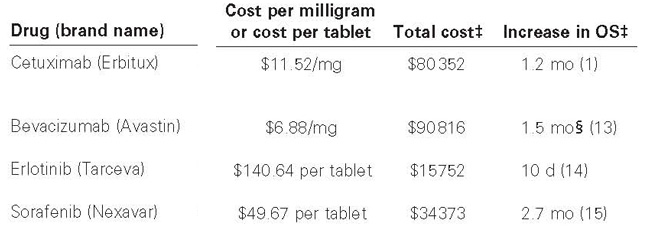
The above is an abridged version of Table 1 in Dr. Fojo & Grady’s paper and these are what they said about cost:

  1. In the United States, Treatment with Erbitux treatment for lung cancer costs an average of US$80,000 (to prolong life by 1.2 months), which translates into an expenditure of US$800,00 to prolong life of one patient by one year.
  2. The median US household income is US$50,233.
  3. The cost of Avastin treatment is US$90,816 and that is said to prolong life by 1.5 months.
  4. The cost of Tarceva treatment is US$15,752 and it is said to prolong life by 10 days.
  5. The cost of Nexavar treatment is US$34,373 and it is said to prolong life by 2.7 months.
  6. Greater than 90% of the anticancer agents approved by the FDA in the last 4 years cost more than US$20,000 for a 12-week treatment.
  7. These examples challenge the oncology community to address some serious questions:
  8. What should count as a benefit in cancer?
  9. What is the minimum amount of benefit needed to adopt a therapy as the new standard?
  10. Is 1.2 months of additional life a “good” in itself?
  11. How much should the quality of that 1.2 months matter? Or the cost?

(Take note: none of these drugs cure cancer. They just prolong life by just a few days or months)

Comments 

It Costs US$350,000 to Die of Cancer in America Today 

By the time you add up the costs of surgery, radiation, chemo, hospitalization, hospice care, etc., it costs about US$350,000 to die of cancer in America.

Of course, the conventional modern medical treatments might work. As Julian Whitaker, M.D., told me, radiation and chemotherapy are dangerous placebos. And placebos sometimes work ~ Frank Cousineau, President, Cancer Victors, Cancer Breakthrough USA.

For more click this link: http://cacare.com/index.php?option=com_easyfaq&task=cat&catid=109&Itemid=39

In concluding their paper, Dr. Fojo & Grady wrote:

  • The all too common practice of administrating a new, marginally beneficial drug to a patient with advanced cancer should be strongly discouraged.
  • In cases where there are no further treatment options, emphasis should be first on quality of life and then cost.
  • For therapies with marginal benefits, toxic effects should receive greater scrutiny.
  • We must deal with escalating price of cancer therapy now.
  • The current condition cannot continue … the time to start is now.

Earlier, Dr. Fojo & Grady also cautioned that: “As oncologists, we cannot go without answering these questions. The moral character of our specialty depends on the answers.”

Indeed, I am really glad that moral value or character is now being suggested here! Let us talk less about money, more of moral values.

——————————————————————————————-

The Economist of 26 May 2011 had an article entitled: The costly war on cancer – New cancer drugs are technically impressive. But must they cost so much? http://www.economist.com/node/18743951?story_id=18743951

The article says:

  • CANCER is not one disease. It is many. Yet oncologists have long used the same blunt weapons to fight different types of cancer: cut the tumour out, zap it with radiation or blast it with chemotherapy that kills good cells as well as bad ones.
  • The snag, from society’s point of view, is that all these drugs are horribly expensive.
  • Not all these new drugs work.
  • In December the FDA said that Avastin’s side effects outweighed its meagre impact on breast cancer.
  •  More generally, some people reckon that new cancer drugs offer small benefits at an exorbitant price.
  • Provenge (for advanced prostate cancer) costs $93,000 for a course of treatment and extends life by an average of four months.
  • Yervoy (for melanoma, a kind of skin cancer) costs $120,000 for three-and-a-half months. Some patients live much longer, which fuels demand for the drugs. But others spend a lot and get little.
  • Who will reform this unsustainable system?
  • Last year Gleevec grossed $4.3 billion. Roche’s Herceptin (the HER2 drug) and Avastin did even better: $6 billion and $7.4 billion respectively.

My comment: At the end of it all – it is about making huge profit at the expense of helpless cancer victims.

Dissecting Chemotherapy Part 3: Contribution of Chemotherapy to Five-year Survival of American Patients

While surfing the net, I came across this article below.

 Improving Health of Cancer Patients

Source: http://royalrife.com/cancer.html

 Richard Loyd, Ph.D.

It is my opinion that in general, cancer is not a medical emergency that requires immediate invasive and toxic interventions. It is a degenerative condition that requires improving of health. There are medical emergencies that require the best medical help you can find. Car accidents with catastrophic injuries or life-threatening burns are examples. In those cases, you need the best emergency room you can find. Cancer can become a medical emergency. If the digestive tract is completely blocked by a tumor so that passage of material is impossible, emergency surgery may be needed. If breathing is becoming impossible due to a tumor blocking the respiratory tract, emergency intervention is appropriate. If a tumor in the brain has grown to the point where there is pressure that is causing damage, surgery may be advisable. It also possible that medical treatment for cancer will cause enough damage that more medical treatment will be required. But in general, cancer is not a condition that requires treatments that actually worsen health.

Many people are trying to recover from cancer with non-toxic therapies. This is an attainable goal and it is often achieved. Patients often spend a lot more money than necessary and take huge numbers of pills, many of which do not have a direct bearing on their problem and may even block progress. More may not be better!

People sometimes tell me that they were perfectly healthy until the cancer suddenly appeared. I point out that they were not really healthy. They had viral infections, toxic metals, parasites, infections in tooth sockets, radiation stress, bowel toxicity, chemical toxicity and probably mold toxicity. There may have been a metabolic imbalance. In other words, the things that cause cancer. The things that have to go away so they can get well.

Anyone with a condition that normally requires the services of a physician is urged to consult one. Ask your physician if this program can be used alongside whatever medical treatment you decide on. This is not a “cure” for cancer. It is a method of becoming healthy. If you are considering chemotherapy or radiation, ask your oncologist if the suggested therapy ever cures your kind of cancer. If the answer is “no”, then THINK ABOUT THIS! Of those who depend on chemotherapy for survival (in other words, the surgeon “did not get it all”), the five year survival rate is only 2.1%. For some cancers the rate is better, but for some types of cancer, it is 0%.

Does this make you feel like chemotherapy is a cruel fraud in most cases? If you do not get that impression yet, please study the chart (Table below) some more!

Our Comments

The above table is taken from the paper published in Clinical Oncology (2004) 16: 549 -560, written by Graeme Morgan (*), Robyn Wardy (**), Michael Bartonz (***), (*) Department of Radiation Oncology, Northern Sydney Cancer Centre, Royal North Shore Hospital, Sydney, NSW; (**)Department of Medical Oncology, St Vincent’s Hospital, Sydney, NSW; (***) Collaboration for Cancer Outcomes Research and Evaluation, Liverpool Health Service, Sydney, NSW, Australia.

Let me highlight what the table tells us.

1. A total of 154,971 Americans underwent chemotherapy for their cancers. After five-years, only 3306 were alive, the others died.  That works out to 2.1% of Americans benefited from chemotherapy. 

2. Different cancers respond differently to chemotherapy – there is no such thing as one size-fit-all for patients. The benefit you get from chemotherapy depends on what type of cancer you have. So beware of this! 

3. Chemotherapy provides benefit in excess of 10% in only four types of cancer. Of these four, two are rare. The most common in this group is Non-Hodgkin lymphoma and the five-year benefit of chemotherapy  is only 10.5%, for cervical cancer it is only 12%.

Cancer

Total number who received chemo

Number patients who survived after 5 years due to chemo

Percentage 5-year survivors due to chemo

Hodgkin’s disease

846

341

40.3 %

Testis

989

373

37.7

Cervix

1825

219

12.0

Non-Hodgkin lymphoma

6217

653

10.5 %

4. Chemotherapy provides only  8.9%, 4.9 %, 3.7%  and 3.4% five-year benefit in four types of cancer.

Cancer

Total number who received chemo

Number patients who survived after 5 years due to chemo

Percentage 5-year survivors due to chemo

Ovary

3032

269

8.9 %

Oesophagus

1521

82

4.9

Brain

1824

68

3.7

Rectum

5533

189

3.4 %

5. Chemotherapy provides less than 2 % five-year benefit in the cancers that most Americans suffer from – breast, lung, Colon, etc.

Cancer

Total number who received chemo

Number patients who survived after 5 years due to chemo

Percentage 5-year survivors due to chemo

Lung

20741

410

2.0 %

Head and Neck

5139

97

1.9

Breast

31133

446

1.4

Colon

13936

146

1.0

Stomach

3001

20

0.7 %

6. Chemotherapy provides zero five-year benefit to the cancers in the table below.

Cancer

Total number who received chemo

Number patients who survived after 5 years due to chemo

Percentage 5-year survivors due to chemo

Pancreas

3567

0

0

Soft tissue sarcoma

858

0

0

Melanoma

8646

0

0

Uterus

4611

0

0

Bladder

6667

0

0

Kidney

3722

0

0

Unknown primary site

6200

0

0

Multiple myeloma

1721

0

0

Prostate

23242

0

0

­­­

Dissecting Chemotherapy Part 2: Contribution of Chemotherapy to Five-year Survival of Australian Patients

The title of this research paper is: The contribution of cytotoxic chemotherapy to 5-year survival in adult malignancies. This study is exactly what patients have been looking for. We are waiting for such an answer. What is the contribution of chemotherapy to overall survival in cancers?

The three authors of the paper are: i) Graeme Morgan, associate Professor and radiotherapist at the Royal North Shore Hospital in Sydney. ii) Robyn Ward, a senior specialist in Medical Oncology and Associate Professor of Medicine at St Vincent’s Hospital, Sydney. She is also a member of the Pharmaceutical Benefits Advisory Committee. iii) Michael Barton, Research Director Associate Collaboration for Cancer Outcomes Research and Evaluation, Liverpool Health Service, Sydney.

Without doubt, these researchers are professionals of great repute. They know what they are saying. Their opinions are just worthy, if not more valuable, than any doctors that you have consulted for your cancer.

They publish their work in the Journal of Clinical Oncology. This is a peer-review well-respected medical journal. Their paper was submitted for publication on 18 August 2003. It was revised and finally accepted for publication on 3 June 2004. What this means is that, the paper has been scrutinized by fellow doctors and has undergone the normal peer-review process. It is not a back-door, arm twisting way to get into the pages of the medical journal.

Given the above, you and I (and even fellow doctors!) should not have any doubt as to the credibility and validity of what they say in their research paper.

Why do they publish such a paper? I cannot give you that answer, but I can only guess. In a radio interview with the Australian Broadcasting Corporation (ABC), Dr. Morgan was asked this question: Is this, I wondered, an in house battle, the revenge of the radiotherapist? Dr. Morgan replied: Well, one can cynically say that but the reason I did was that we were sick and tired of hearing about these new drugs and it wasn’t really cementing into anything. And the reason for my doing that paper was to really show that there hasn’t been any improvement in survival, or the improvement has been very, very modest despite all these new drugs and new combinations and bone marrow transplants.

Albert Einstein said: The world is a dangerous place, not because of those who do evil, But because of those who look on and do nothing. This world is fortunate to have people like Professor Morgan and colleagues to speak their mind. We salute them.

Is there anything wrong with the paper?  There is nothing wrong with the paper and the data presented. Their study was based on data of randomised-controlled trials (RCTs – the gold standard of medical evidence) published from 1 January 1990 to 1 January 2004. Data were also obtained from the cancer registry in Australia and USA. The contribution of chemotherapy to survival of those over twenty years old and who suffered from twenty-two major cancers were studied.

If there is anything wrong at all with this paper, it is because it tells the whole truth about chemotherapy. And the truth hurts. The authors did not “sing the same tune” as the majority of the flock. That is the difference (or the wrong!).

What did they say?  The absolute real-life data that this article carries is most shocking: The overall contribution of curative and adjuvant cytotoxic chemotherapy to 5-year survival in adults was estimated to be 2.3% in Australia and 2.1% in the USA. In short, they said that the contribution of chemotherapy is not more than 3%.

Can this be true? Well, they are the experts. And they said so, loud and clear. Indeed some doctors in Australia were angry. People said the paper was misleading and unhelpful.

The editorial of the Australian Prescriber (The emperor’s new clothes – can thermotherapy survive? 29:2-3. 2006) quoted Professor Michael Boyer, head of medical oncology at the Sydney Cancer Centre, Royal Prince Alfred Hospital, Sydney as saying: The fact is that from a patient’s perspective they are not really interested in how much chemotherapy contributes to the cure of all patients … I don’t think this paper helps from a patient’s perspective.

Medical experts like to claim that they understand patients better than the patients themselves. So they give authoritative pronouncement on patients’ behalf. I beg to differ. I think patients know themselves better. Do you agree that you are not interested to know how much contribution chemotherapy provides to your cancer cure? To me, this is the very answer each and every patient wants to know before he/she is subjected chemotherapy. But unfortunately, no such answer is ever provided. And if patients ask too many questions, they will be scolded or chased out of their doctors’ office.

In the same radio interview with ABC, Professor Michael Boyer was again quoted as saying: the fact is that if you start … saying how much does chemotherapy … the numbers start creeping up …If you pull it altogether that number probably comes up to 5 % or 6%. I guess what’s important is that it doesn’t go up to 50% or 60%. This is indeed mind-boggling. The percentage of 2.3% was disputed. According to Professor Boyer it could be 5% to 6%.

Wah, to split hairs – it is not 2.3%, it should be 6% . Dear Professor, is that a big enough or meaningful difference for us to dispute on?  If you ask any cancer patient what is the difference between a 3 % chance of cure and a 6% chance of cure, most of them may just say it is “nothing, peanuts”. If you tell cancer patients your chemo-treatment is only contributing 3% or 6% to their cure – I would guess MOST patients would just disappear and not see their oncologists ever again!

But to some “tunnel visioned” statisticians and researchers, 2.3% and 6% is a big difference and the difference is significant (to use the scientific jargon).

As an academic myself, I know how we experts “massage” data. For example, if you do chemo-X, you get 2%; if you do chemo-Y you get 4%; and chemo-Z, you get 6%. You can twist the picture and say chemo-Y is 100% better than chemo-X. And chemo-Z, which gives 6%, is three times better than chemo-X. That is how “educated people” massage their data to make it appear and sound good.

What is the “truth” about the contribution of chemotherapy to survival of cancer patients?

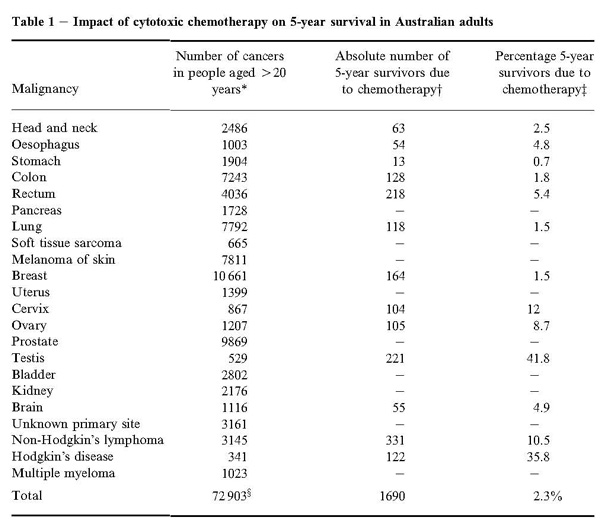
Dr. Morgan et al. provided the table below detailing the effect of chemotherapy on  22 types of cancers.

The table above laid out in clear terms the number of people who had various types of cancers and how many of them survived after five-years after receiving chemotherapy.

The data presented are not “massaged” or “manipulated” in any way. This is the kind of data patients have been looking for and which, before this paper, have been elusive and not forthcoming.

The authors said that their numbers were conservative estimates.

Let us critically “dissect” and examine the table and let me highlight what these numbers tell us:

  1. A total of 72,903 adult patients received chemotherapy, and after five-years only 1690 of them were alive. The contribution of chemotherapy to five-year survivors due to chemotherapy is only 2.3%.
  1. The figures obtained for Australians suggested that a benefit of less than 2.5% is likely to be applicable in other developed countries. Well, I leave it to your imagination of what the success rate is like in Malaysia (Malaysia always boleh!).

Let us examine every cancer studied and see what chemotherapy did to them.

1. Chemotherapy provides benefit in excess of 10% in only four types of cancer. Of these four, two are rare. The most common is Non-Hodgkin lymphoma and the benefit of chemotherapy is only 10.5%, for cervical cancer it is only 12%.

Cancer

Total number who received chemo

Number patients who survived after 5 years due to chemo

Percentage 5-year survivors due to chemo

Hodgkin’s disease

341

122

35.8 %

Testis

529

221

41.8

Cervix

867

104

12.0

Non-Hodgkin lymphoma

3145

331

10.5%

2. Chemotherapy provides less than 9 % benefit in eight types of cancer. These are the common cancers we often encounter.

Cancer

Total number who received chemo

Number patients who survived after 5 years due to chemo

Percentage 5-year survivors due to chemo

Ovary

1207

105

8.7 %

Rectum

4036

218

5.4

Brain

1116

55

4.9

Oesophagus

1003

54

4.8

Head and Neck

2486

63

2.5

Colon

7243

128

1.8

Lung

7792

118

1.5

Breast

10661

164

1.5

Stomach

1904

13

0.7

3. Chemotherapy provides zero % benefits to the cancers in the table below.

Cancer

Total number who received chemo

Number patients who survived after 5 years due to chemo

Percentage 5-year survivors due to chemo

Soft tissue sarcoma

665

0

0

Melanoma of skin

7811

0

0

Uterus

1399

0

0

Prostate

9869

0

0

Bladder

2802

0

0

Kidney

2176

0

0

Unknown primary site

3161

0

0

Multiple myeloma

1023

0

0

Pancreas

1728

0

0

The authors want us to know the following:

  1. The most common cancers like colorectal, breast, prostate, lung cancers, accounted for 56.6% of the total cancers in Australia in 1998. The 5-year survival rate due solely to chemotherapy was only 1.6%.
  1. For stomach cancer, surgery is the only established curative procedure. In Australia there were 1904 cases of stomach and only 13 people or 0.7% of them benefited from chemotherapy, i.e. survived for five years.
  1. For colon cancer, surgery is the only established curative treatment with chemotherapy as adjuvant treatment. There were 7,243 cases of colon cancer in Australia and only 128 people or 1.8% benefited directly from chemotherapy.
  1. For rectal cancer, the main treatment is surgery. Of the 4,036 cases only 218 people or 5.4%, benefited from chemotherapy.
  1. For lung cancer, only 410 out of a total of 20,741 people benefited from chemotherapy. This works out to be 2.0%.
  1. In Australia in 1998, 4,638 women with breast cancer were eligible for chemotherapy. Only 164 women (that is, 3.5%) actually had a survival benefit due to chemotherapy.  In other words, on average, out of 29 women treated only one woman survived more than five years.
  1. Chemotherapy has been OVER SOLD and the responses of the treatment had been EXAGGERATED.
  1. For breast cancer, innovations like bone-marrow transplantation have shown NO benefit.
  1. Addition of anthracyclines and taxanes (the newer drugs like taxol, etc) to the treatment of breast cancer improved survival by about 1% but this is achieved at the risk of cardiac toxicity and neurotoxicity.
  1. It is worthy to note that any response rates below 15% may be due solely to a placebo effect.
  1. Despite the early claims of chemotherapy as the panacea for curing all cancers, the impact of chemotherapy is limited. Even so, any new chemotherapy drug is still promoted as a major breakthrough in the fight against cancer, only to be later rejected without fanfare that accompanied its arrival.

What do we do with such truth? Give it a quick burial! 

There seems to be a bit of hoo-ha in Australia, because the study was done in Australia. But for the rest of the world – in the US, UK, Europe, etc. nobody bothered to know or comment. This NEW truth appears to be of no importance or consequence. The truth, as often done, if it clashes with the Establishment, may just be given a quick burial. Nothing is said even by the so called “independent mass media”.

Certain “enlightened” experts may wish to dispute the above research results. One possible argument would be: “These results were based on “old” drugs. Now we have newer and more effective drugs. We could do better.” If you buy this argument, let me ask you to hang on to your seat tightly! I shall be addressing this issue in the next few articles in this series.

Dissecting Chemotherapy Part 1: Knowledge Empowers

Patients face one well known hazard (but some call that treatment) after being diagnosed with cancer. More often than not they are asked to undergo chemotherapy. The drugs used are cytotoxic. Everyone knows that and that fact cannot be denied – chemo-drugs are toxic to both the good and bad cells.

In fact, chemotherapy has earned a bad reputation among patients. Those who know what chemo is would think a “million times” before they go for chemo (see: Why patients refused to undergo chemotherapy).

Over the years working with cancer patients, I came across many ways how chemo is being “sold” to patients. They are told either one of the following:

a)     You do chemo to kill all the cancer cells. What is not being told is that chemo also kills good healthy cells in the body. Chemo may even damage the vital organs of the body. Even worse, some chemo drugs themselves are carcinogenic, that is to say it causes cancer. Similarly, radiation causes cancer. In short, if patients get to live long enough, they may get a new cancer and this time it could be due to the treatment.

b)   You do chemo to stop the cancer cells from spreading. This is good sales pitch and very attractive indeed. Many patients “buy” this naïve idea. However, after chemo, the body’s immune system is almost wiped out. Your body is so weak that it cannot even ward off germs attacking you. Generally cancer has already spread after it being in your body for a while – before you even know it or it being diagnosed by the doctors. True some cancer cells can be killed but some will remain in the blood stream unharmed – they are the “dormant” or “stem”cells. These survivors will one day wake up and cause problems.

Indeed, it is encouraging to see the lump shrinks after chemotherapy – but this does not mean the cancer is cured! Often shrinkage is only temporary. The tumour often grows back again and this time more aggressively. One lady wrote that she did not get any cure from chemotherapy, she just moved from treatment to treatment! So where is the control of spreading?

c)     You do chemo as an “assurance.” Since cancer cells may be floating around in the blood stream – it is good to get them early! Kill them before they multiply.  Well, don’t we know that some chemo drugs and radiation can cause cancer? Don’t we know that these treatments can weaken the immune system and make the body much more vulnerable to enemy invasion? Is “assurance” not achieved by making the body system stronger and not weaker? Is it not better to boost up the immune system through healthy diet and lifestyle? Oh, NO – that is not proven or scientific, so they say!

Knowledge Is Empowering!

Julian Whitaker, a medical doctor, wrote: I am convinced that the best protection against the evil that lurks among us – and make no mistake that it lurks among us – is information.

There is no doubt at all that having access to knowledge is most empowering indeed. I always like to tell patients over and over again – please read and read, if you can, that is if you are not buta huruf  (in Malay for blind to printed words). Know that this is the only way to protect yourself from danger!

The problem is most people still don’t want to do anything with the knowledge that’s available to them. Either they are too busy and have no time for themselves or they would rather accept “canned” answers from the experts – yes, they trust the experts.

Unfortunately they never realize that some of the answers given by experts could be just “empty platitude” and some may even be self-serving. Dr. Chesnut called that “lying with authority” (the title of his book).

I cannot blame the uneducated patients – forgive them for their ignorance – because they can’t read. But if you are able to read this message, then there is no excuse for you to be ignorant. I would say – serve you right if you still fall in the hazardous trap. From the tone of this sentence, you perhaps know that I am very upset with lazy people who just want information to be served on a silver platter.

Let’s Get Serious

According to the World Health Organization, 7.1 million people died of cancer each year. That works out to 591,666 deaths each month or 19,722 deaths a day due to cancer. Every minute of the day, about 14 people die of cancer in this world. I always tell patients this: We all have to die – irrespective of whether we have cancer or not. I too, even without cancer, can die any time. The important thing is: how we die. Let us pray that while we are alive, we live a happy, pain-free life. When the time for us to go, let’s pray that we go peacefully.

Think hard – in cancer, do we die because there are not enough oncologists around, not enough hospital to go to, and not enough chemo-drugs to treat us? To fight cancer and win, do you think we need to build more hospitals, to have more oncologists, to make chemo-drugs more easily and readily available to patients? Is this the way to help cancer patients find their “cure”?

I have written these words before (and more than once), and I am writing this again.  In the name of fairness, I feel that anyone who is to undergo any invasive treatment procedures MUST be provided with sufficient and honest information so that he would be able to decide for himself what is best for him. Unfortunately, many people who came to see us were ignorant or very much unaware of what they were going in for – the cards were not laid out for them. Sometimes they were even misinformed.

Without any disrespect to any person or profession, I have to point out that one much needed step that has to be taken is to seek the truth about the current treatments of cancer. Let us study all the records available and let us ask these questions and find honest, unbiased answers. For all the surgery, chemotherapy, radiotherapy (and other drugs) that have been administered to patients:

1   How many patients have been cured?

2   How many have benefited from the treatments?

3   What are the benefits and at what cost?

4   How many died?

5   How many survived after one, two, three, five or ten years after the treatments?

6   How many had metastases of the liver, bone, lungs, etc.?

7    Is there any correlation between the treatments they received and the metastases that occurred?

Unfortunately, such answers remain elusive and not forthcoming. Know that the strategy to remain in this lucrative business is to be as non-committal with the real facts. Be as vague and ambiguous as possible in addition to putting up a false front of “I-know-all” image. You patients, don’t ask too many questions. I am the one who know best and you just follow my orders.

Ask your doctors these questions:

  1. What is the contribution of chemotherapy to my cancer cure? Can the chemo you want to give me cure me or not?
  2. What is the chance of me getting a cure?
  3. If it does not cure, what is the chemo supposed to do? Give you a better quality of life? Stop it from spreading?
  4. If it is quality of life – is it not true that chemo makes life “miserable” with all those side effects? Ask what these side effects are.
  5. If chemo is to stop cancer from spreading – is it not true that cancer has already spread before you are even diagnosed with it? Is it not true that by the time you know you get cancer, the cells have already moved out of the tumour and spilled into the blood stream? If the cancer cells are already in your blood stream, can chemo-drug kill ALL of them without killing you too?
  6. If you get these kind of answers:
  • Oh, you have a 50:50 chance! Ask what do you mean by chance? Chance of what – curing or dying?
  • If you don’t go for chemotherapy you get three months, with chemo it is two years. What is the basis of this predication? It is written anywhere in medical journals or text books?

Don’t be afraid to ask even if this is done at the risk that you may get chased out of your doctor’s office (some patients told me that happened to them). It is better to get chased out of his office then to get chased out of this world!

If you seek an easy, ready-made canned-answer, you get an easy and lousy answer. If you are the kind who is seeking for the “instant-noodle” type of answer then you will be disappointed.

In life, I always believe that anything good never come easy. Do you want to know what is the contribution or exact role of chemotherapy to your cancer cure? If you want to know the truth, let me take you on a journey to find that answer. I shall be writing a series of articles under this heading:  Dissecting Chemotherapy. It you take time to follow all the articles I shall be writing, I believe you can learn something substantial and come out more enlightened.

By writing these articles, let me say this clearly and plainly: I am not anti-chemo or anti-doctor. The reason I do this is to empower patients so that you know some facts that can help you make informed (hopefully also wise) decision.  I wish to say too that at times, I did (and do, and will) urge patients to go for chemotherapy if the situation warrants it. But I am skeptical about a cook-book-style of package deal or one-size-fit-all approach.

Why Patients Refused to Undergo Chemotherapy, Part 3

A continuation from Part 1: Why Patients Refused to Undergo Chemotherapy, https://cancercaremalaysia.com/2011/04/19/why-patients-refused-to-undergo-chemtherapy-part-1/

Part 2: Why Patients Refused to Undergo Chemotherapy, https://cancercaremalaysia.com/2011/05/03/why-patients-refused-to-undergo-chemotherapy-part-2/

Case 9: Uncle Died After Chemo

A lady came to see us on behalf of her mother who was diagnosed with cancer. The surgeon said that her mother had to undergo chemotherapy. The family refused chemotherapy.

Why the family refused chemo:  Why did you not want her to do chemo? Because of her age – she is already 75 years old. Her brother, that is my uncle, had lung cancer and he was then only 68 years old. He died – could not take the chemo. He went for chemo – after the first chemo he became very weak. Then during the second chemo, he became unconscious and died.

The first time he was already weak – why continue with the second one? I don’t know la. Within two weeks – the first chemo and the second chemo – only two weeks and he died.

What do you mean? The first chemo was the first week, and the second chemo was one week later.

Within two weeks he died? Ya


Case 10:  Niece Died After Chemo

This lady was diagnosed with Lymphoma and the only treatment available to her was chemotherapy. She refused chemotherapy.

Why she refused chemotherapy:   The daughter of my younger sister had cancer. She had an operation followed by chemotherapy.  She died. My sister pleaded with me: “Sister, please … please listen to me. Do not go for chemotherapy. You will die.” My niece had two or three times of chemo and she was bald. Then she died. My sister told me not to go for chemo. I also do not want to go for chemo. My husband and children also told me not to go for chemo.


Case 11: My Friend Died After Four Cycles of Chemo

This young man is from Indonesia. He was diagnosed with colon cancer two years ago. He was asked to undergo chemotherapy. He refused.

Why he refused chemotherapy:  I do not want chemo! Doctors in Medan asked me to undergo chemotherapy since 2009 (i.e., two years ago). I refused.

Why did you refuse: Because of the adverse side effects!

How did you know the side effects were bad? From friends! One of my friends had colon cancer and another had breast cancer. Both of them had surgery. Then they went for chemo. The one with breast cancer was bad. She died. She received four cycles of chemotherapy and she died never completing the full treatment. The one with colon cancer received two cycles of chemo. Then he gave up. And he is still alive today.

What could have happened if he was to continue with chemo? May be dead by now (laugh). That is why I refused to go for chemo. My friend is alive and alright today. It has been three years now.


Case 12: I saw and I knew that chemotherapy did not cure cancer

Guat had breast cancer for many years.  It started with a small lump in her breat. When the tumour grew bigger (almost half a kilo!), she agreed to go for surgery but refused chemotherapy or radiotherapy.  She kept herself alive doing what she thought was good for her. She took herbs, supplements, etc. and had a very positive outlook of life. She learned to live with her breast cancer for more than ten years. Later, the cancer spread to her lungs and she eventually died.

We had a chance to talk to Guat. She shared her experiences and views about medical treatments for cancer.

Why she refused chemotherapy and medical treatments: I have seen many people with cancer. After chemo they also died in less than two years! I have seen many such cases. They suffered while undergoing chemo but at the end they all died anyway. So why suffer? After my surgery I was asked to go for radiotherapy to prevent recurrence, according to the doctor. I declined. Let it recur first and then we deal with it. I refused to go for chemo. Assuming after the surgery I would die within two years. It’s okay, at least I don’t have to suffer. If I go for chemo, there is no guarantee of a cure.

From what you observed – people who had chemo or radiation, don’t they benefit from the treatments? They suffered so much. I would rather not suffer and prefer to die sooner without   chemo. It is okay for me. I don’t want to suffer. For example, with chemo I would survive for two and a half years, without chemo two years. I would chose two years of quality life. You can take that half a year away. It is okay if I die sooner.

You made all these decisions on your own or were you influenced by others? I made my own decisions based on my observations of what happened to others. Many people tell me many things. I listened to their stories but at the end I made up my own mind. For example when I had a small lump in my breast, I decided to take chances and dealt with it the way I thought was right for me.  The lump grew bigger and bigger. I knew then that there was no hope that it would go away. So I decided to go for surgery. But when the doctor suggested radiotherapy to prevent recurrence, I said no. I told him, if there was to be a recurrence, we would deal with the problem as it occurs, not now. Even with radiation, I have seen many cases of recurrences.

I knew a few patients who had cancer. They underwent chemo – and all of them died, including your own distant relative – you remember?

When you see the doctors, they tell you to go for chemo. But there is no guarantee that chemo can cure. It cost RM 30,000 for the treatment. For a poor patient it is a lot of money. One doctor said this to my friend: “It is your mother, why don’t you want to “save” her? True, even a dog, we also want to save its life let alone a mother. But when the treatment cost so much money, where to find the money? Worse still, there is no guarantee that chemo can cure anyway. Unfortunately, many “village folks” don’t know how to respond to such “scolding” from their doctors. I am not angry, but I think doctors should not talk like that!


Read more about what they say about chemo …

  1. Killer cancer treatment: How toxic chemotherapy kills both cancer cells and cancer patients http://www.naturalnews.com/012727.html
  2. Can you trust chemotherapy to cure your cancer? http://www.ener-chi.com/trustchemo.htm
  3. Questioning Chemotherapy: How chemotherapy does not cure cancer or extend life.  http://www.drheise.com/chemotherapy.htm
  4. Argument against chemotherapy. http://www.canceractive.com/cancer-active-page-link.aspx?n=255


One reader sent us this comment:
My niece passed away this morning.  No, not from cancer! From chemo !!!   Her chemo did not even last her more than two months!! This is why so many holistic doctors say our modern GOLD-CLASS CANCER TREATMENTS kill faster than smoking.   More: http://twitpic.com/4wjd8f

I know of another who died after one and a half years of chemo (stomach cancer). He was barely 25.  And another…they let him have sleeping drugs instead.  He was my uncle… Sleeping drugs killed him in four day (he had advanced cancer in pancreas, liver and lungs).
WHERE IS THE FIGHT AGAINST CANCER?
If a fruit doesn’t cure, they say the person who promoted the fruit is a quack!
But when it comes to cancer medicine and therapy, if it does not work, it is not quackery!
Is there SOMETHING WRONG with our medical industry?  YOU TELL ME!

Note: We have documented 12 cases of why patients refused to do chemo – so, enough is enough?

 “For those who believe, no proof is necessary.

For those who don’t believe, no proof is possible.”

Why Patients Refused to Undergo Chemotherapy, Part 2

A continuation from Part 1: Why Patients Refused to Undergo Chemotherapy, https://cancercaremalaysia.com/2011/04/19/why-patients-refused-to-undergo-chemtherapy-part-1/

Case 5: Mother died after the fifth cycle of chemotherapy for lymphoma

M604 is a 33-year-old male from Jakarta, Indonesia. He was diagnosed with Hepatitis B in 2005 and was put on medication. After six months on the drug, he gave up. In September 2008, he had pains with a bloated stomach. His HBV DNA (real time PCR) was 450,468,000 copies/ml. He was put on medication for three months.  In June 2009, another test showed HBV DNA (real time PCR) was 321,264,000 copies/ml. His ALT on 8 June 2009 was 71 (high). The doctor suggested weekly interferon injection for a period of 48 weeks. The total cost would come to RM 50,000. He refused further medical treatment and came to CA Care on 19 July 2009.

Why he refused interferon injection:  Mother was 55 years old when she was diagnosed with lymphoma. She received five cycles of chemotherapy. In addition, the doctor gave her “Mahtera injection” together with the first four cycles of chemotherapy. After the fifth cycle of chemotherapy, her condition “drop” or deteriorated. She had pains in her liver. The latent Hepatitis B virus in her flared up. Before the chemo treatment she was normal. Mother died while in the ICU in the hospital. The total expenses for her treatment came to about RM55,000.


Case 6:  Sister died in China after one cycle of chemotherapy

The son of M620 came to see us on 23 August 2009. His father, 63-years old from Medan, Indonesia, had difficulty opening his bowels. He also had pain in the back. The doctor in Medan said he had hypertension and prescribed him medication for  that. It was not effective. He came to a private hospital in Penang for further management. A CT scan showed nodules in the lung suspicious of underlying lung carcinoma. Some lymph nodes were enlarged. There were numerous nodules in the liver, ranging from 2 to 20 mm, suggestive of metastatic deposits. The doctor suggested a biopsy but he refused. He was given medication but his health did not get any better. His platelet count was low.

Why he refused a biopsy:  The next logical step after a biopsy is chemotherapy, which he would not want to do. Therefore, doing a biopsy is meaningless in this situation. He was indeed a wise man!

Why he refused chemotherapy: This is what his son said. “My aunty (father’s younger sister) had ovarian cancer. She underwent six cycles of chemotherapy. The tumour recurred after the treatment. She went to China for further treatment.

Before she went to China, she already had her chemo? Yes, six times done in Penang. It was not effective. My father accompanied my aunty to China. In China she received only one chemo and she died.


Case 7: Brother-in-law died after six cycles of chemotherapy

M930 is a 47-year-old female from Indonesia. She had vaginal bleeding in December 2010. There was no pain. Her menses was normal. She went to Melaka and had a biopsy done. The histopathology report dated 17 January 2011 indicated a moderately differentiated squamous cell carcinoma.  The doctor suggested chemotherapy and radiotherapy. She was told that most patients had good results from the treatment (whatever that means!).

Not convinced and not satisfied, she went to Singapore for a second opinion. The MRI of her pelvis indicated a 7.5 x 7 x 7 cm mass bulging down the uterine cervix. It involved the lower third of her uterus and also extended towards the vagina.  The doctor offered the treatment:  thirty-five times of radiation and chemotherapy. The cancer is inoperable. She was told that with these treatments she would have 60% to 70% cure. We asked  – Cure?. Yes, cure.

She was not convinced and refused further medical treatment. Her blood test done on 7 March 2011 indicated CEA = 39.0 and CA 125 = 964.0.

Why she refused chemotherapy and radiotherapy? When asked – Why don’t you want to go for chemo? She replied: No, no I don’t want. My sister in Singapore was really mad at me for not wanting to follow the doctor’s advice. Since childhood, I was skeptical. I have friends who had chemo and they were well for the while, then their conditions “drop” and they were gone. My husband’s brother-in-law (i.e. husband of his sister) had a lump in his neck. After six cycles of chemo, he died. He received the treatment in Penang. His whole body was dark. He was bald and his skin peeled off. Oh, I have seen so many cases like this and I am very afraid.


Case 8: Uncle died six months after operation and chemotherapy for his prostate cancer

M 935 is a 54-year-old female from Sumatera, Indonesia. In July 2010, she had difficulty moving her bowels. She came to Penang for consultation. A CT scan on 22 July 2010 indicated a 4.94 cm x 2.63 cm mass in the proximal sigmoid colon with  severe luminal narrowing consistent with carcinoma. Her tumour makers were elevated: CEA = 211.1 and CA 125 = 91.5.

She underwent an operation. It was a moderately differentiated adenocarcinoma, Duke Stage C. The tumour extended into the mesorectal lymph nodes. Three of five lymph nodes were affected.  She was asked to undergo chemotherapy. However, the oncologist was not able to say if chemotherapy would cure her or not. But she was told that chemotherapy would check the spread of the cancer.  She and her husband was not convinced and refused chemotherapy.

Why she refused chemotherapy:  The husband said: “My uncle, 75 years old, was dead after six months. He had prostate cancer. He underwent an operation followed by chemotherapy. Then he died after six months. He could not stand the treatments – could not eat, could not sleep and every day he had fevers. It was a difficult life for him.

How do you know all these? He is my uncle – my father’s younger brother. He lived just two doors away from my house. His life was really difficult. Money gone and then,  painful and difficult.


Quotation

If we didn’t kill the tumour, we killed the patient ~ William Moloney

Chemotherapy is an attempt to poison the body just short of death in the hope of killing the cancer before the entire body is killed. Most of the time it doesn’t work ~ Dr. John Lee, author of What Your Doctor May Not Tell You About Breast Cancer.

Most cancer patients in this country die of chemotherapy. Chemotherapy does not eliminate breast, colon or lung cancers. This fact has been documented for over a decade. Yet doctors still use chemotherapy for these tumours ~ Alan Levin, professor of immunology, University of California Medical School, USA.

In oncology, even prolonging a patient’s life for three months to a year is considered an achievement. Achieving a cure is like striking a jackpot. Not all cancers can be cured ~ A renowned oncologist of Singapore, The Straits Times, Mind Your Body Supplement, Page 22, 29 November 2006:

Breast Cancer: Ilani’s Message – Learn from my mistake, do not go for chemo

KUALA LUMPUR (Feb 24, 2011): The chairman of the Committee to Promote Inter-Religious Understanding and Harmony, Datuk Ilani Isahak, died today after fighting against breast cancer for the past five years. Ilani, 58, breathed her last at about 6 a.m. at the Universiti Kebangsaan Malaysia Medical Centre (PPUKM).  Source: http://www.sun2surf.com/article.cfm?id=57980

The Star reported: Interfaith Relations Working Committee chairman Datuk Ilani Isahak died after a three-year battle against breast cancer.  Ilani had been in hospital since Jan 23. The entire family was with her when she took her last breath,” her brother Dr Amir Farid Isahak said.  Source:  http://thestar.com.my/news/story.asp?file=/2011/2/24/nation/20110224105738&sec=nation http://www.thestaronline.com/news/story.asp?file=/2011/2/25/nation/8137635&sec=nation

HER BROTHER EXPLAINED

On 2 March 2011, I received an e-mail from Dr. Amir Farid.  I requested Dr. Amir’s permission to reproduce his e-mail (minus his name of course). This was his reply: “Yes you can quote me, with my name. That will provide credibility compared to an anonymous quote.” So here it goes, his e-mail to me. Salam, Thanks for the sharing, and also the many articles which you have written that have been invaluable resource for me. My articles to the Star are censored when it comes to criticizing chemotherapy. Fortunately they cannot censor everything, so some still get thru. I am especially upset because my own sister Dato Hajjah Ilani just died last week after undergoing three years of chemo. She followed everything the oncologist prescribed. Each time, after discussing with me, she would decide “no more chemo”, but after the next visit with the oncologist, she would tell me “the oncologist said it is absolutely necessary that I go for the chemo, so I agreed”. In three years she had many courses of chemo. She also had many doses of Herceptin, which was wrongly given because they later told her that her report was wrong. She had several doses of Avastin, which was withdrawn for use in breast cancer by US FDA in Dec 2010 because the damage outweighed any potential good. You can imagine what devastation all these did to her body. She had chemo till Dec 2010. Only when she was in bad shape in Jan 2011 did she decide no more chemo. By that time the oncologists also decided that she was a hopeless case and good for palliative care only. At her death bed, she told me “learn from my mistake, do not go for chemo”. Do you think Star will ever print if I relate this? No way. Unfortunately, many more will be convinced by their oncologists that chemo is “absolutely necessary”.

Dr Amir

(Note: Dr. Amir Farid Isahak is a senior medical consultant/gynecologist. He is also a Qigong Master and Reiki Master. He was the Founding President of Guolin Qigong Association Malaysia and was also the Vice-President of the Malaysian Reiki Association).

A  RESPONSE FROM A READER

Dear Dr Amir, Sorry to hear about your sister Ilani’s passing.  Having also lost a sister to breast cancer (helped by chemotherapy, of course) I can imagine how you feel … all I can tell you is that it will not be easy for you from now on, especially from your “privileged” position as a doctor who believes in complementary medicine.  And because we are in the “bizness of helping people with cancer” be prepared for being quizzed … How come, you couldn’t help your own sister uh?  Welcome to the club. Personally, I learned a lot from my sister’s experience which I use freely to motivate other cancer patients.  I guess you will be doing the same with your sister’s “amanat”.  They have moved on from their sojourn here on earth and may Allah bless their souls and grant them peace. K

COMMENTS

Thanks Doc. for sharing with us. Dato Hajjah Ilani was not the only person who died after a failed war. There were (and are going to be) many more patients like her.  My only response to this episode is to lift up my hands in despair. But of course, I am not going to give up! Dato Illani’s message was: Learn from my mistake, do not go for chemo. And we are going to tell the world just that! But first let me say this loud and clear: It is not for me or CA Care to tell you, cancer patient, what to do – to go or not to go for chemo. It has to be your own decision. Our responsibility is to provide you with credible information. Read them and then make your own decision. It is your life and it is you and only you who will benefit or suffer from the decision that you have made. This is what it looks like if a chemo-drug spills onto your unprotected hand. What happens when a bottleful of this drug is pumped into your body?

This is what it looks like if doctors “messed” you up.

Picture below: Seventy-three-year-old Indonesia underwent a mastectomy. Three months (not years!) later her cancer recurred. She underwent chemotherapy and radiotherapy. The treatments were stopped half way because she was weak and was unable to walk. Is this the so-called scientifically proven method? Better than snake oil?  What if you just DO NOTHING?

Some of you may tell me: “But you are biased. You only write about the bad things … what about the good side of chemo? “Perhaps you may be right! After all the patients who come and see me are generally the failed cases – after the chemo or radiation could not save them anymore! The successful patients do not come and see me anyway. Excuse me, I get to see only the ugly side of medical treatments.

However, my question is: “Why are there so many bad cases?” Can’t the so-called scientific medicine do better than that? Then again I want to ask: “How wrong or skewed am I – if at all I am biased?”

EVIDENCE AND EXPERT OPINION

I suggest that you visit our website:  https://cancercaremalaysia.com/category/breast-cancer/ before you cast the first stone. Read and hear for yourself what many others with breast cancer have got to say.

Then read books about breast cancer. Let us start off with the following:

In my book, CA Care Experience with BREAST CANCER, I have answered this most important question: How effective is chemotherapy? Let me quote what I wrote:

Graeme Morgan & Associates (Clinical Oncology 16:549-560; 2004) wrote:

  • The overall contribution of curative and adjuvant chemotherapy to 5-year survival in adults was estimated to be 2.3% in Australia and 2.1% in the USA.

In Australia, of the 10,661 people who had breast cancer only 164 people survived 5 years due to chemotherapy. This works out to 1.5% contribution of chemotherapy to survival.

Eva Segelov in an editorial (Australian Presciber 29:2-3; 2006) suggested that:

  • Chemotherapy has been oversold. Chemotherapy has improved survival by less than 3% in adults with cancer.

M. Veroort & Associates (British J Cancer 19:242-247; 204) concluded that:

  • Breast cancer mortality reduction caused by present-day practice of adjuvant tamoxifen and chemotherapy is 7%.

Guy Faguet (The War on Cancer: An anatomy of failure …) wrote:

  • An objective analysis of cancer chemotherapy outcomes over the last three decades reveals that, despite vast human and financial expenditures, the cell-killing paradigm had failed to achieve its objective … and the conquest of cancer remains a distant and elusive goal.
  • Chemotherapy for cancer is based on flawed premises with an unattainable goal, cytotoxic chemotherapy in its present form will neither eradicate cancer not alleviate suffering.

In my book, Understanding Cancer War and Cure, I quoted the following experts:

Dr. John Lee, author of What Your Doctor May Not Tell You About Breast Cancer, wrote:

  • Chemotherapy is an attempt to poison the body just short of death in the hope of killing the cancer before the entire body is killed.
    • Most of the time it doesn’t work.

Alan Levin, professor of immunology, University of California Medical School said:

  • Most cancer patients in this country die of chemotherapy.
  • Chemotherapy does not eliminate breast, colon or lung cancers.
  • This fact has been documented for over a decade.
  • Yet doctors still use chemotherapy for these tumours.
  • Women with breast cancer are likely to die faster with chemotherapy than without it.

In the book, Enter the Zone, Dr. Barry Sears wrote:

  • Everybody knows that our present cancer drugs are lousy ~ Wolfgang Wrasidlo, director of drug development, Scripps Clinic, La Jolla, California, pg. 164
  • The existing treatments for cancer are probably the most barbaric in modern medicine, pg. 166.

Nearer home, a renowned oncologist of Singapore wrote this in the The Straits Times, Mind Your Body Supplement, Page 22, 29 November 2006:

  • Oncology is not like other medical specialties where doing well is the norm. In oncology, even prolonging a patient’s life for three months to a year is considered an achievement.
  • Achieving a cure is like striking a jackpot.
  • Not all cancers can be cured.

For a patient to receive a cure is like striking a jackpot. Get that? But, take a pause and ask: Who is more likely to hit the jackpot first? Patients or oncologists? Read this story: https://cancercaremalaysia.com/2011/03/01/breast-cancer-she-died-even-after-multi-million-dollar-medical-bill/

My final comment, Beware of the Propaganda by the Mass Media

Do you think the newspapers, magazines and TV news reports present medical information fairly and objectively? Think again.

  • Medical propaganda is rampant. Its goal is to mislead, confuse and coerce you into supporting conventional medicine and enhancing the cancer industry’s spoils of war ~ Burton Goldberg, An alternative medicine definitive guide to cancer.

Breast Cancer: She Died Even After Multi-Million-Dollar-Medical Bill

We spent the last weekend of February 2011 in Singapore. Actually the trip was to attend a church wedding ceremony of a friend’s daughter. At the same time we had the privilege of being “pampered” by the hospitality of Im’s brother, who lives in Singapore. He put us in a hotel in Raffles City. We could see the amazing city of Singapore from our room on the 54th floor.  We took time to window-shop. Through the glass windows we could see watches on display. One showed a price tag of S$150,000 a piece! Wow, such an amazing price! In short it is always wow, wow and wow when it comes to Singapore.

Another wow struck me the next morning. The Sunday Straits Times of 27 February has a banner headline: Doctor’s charges: How much is too much?

BACKGROUND  STORY

There is an ongoing case of medical fraud making the headlines of leading newspapers. A well renowned surgeon of Singapore, Dr. Susan Lim, is accused of over blowing the medical bill of a Bruneian patient.

Read more:  Dr. Lim Embarrassed the Medical Fraternity http://topnews.net.nz/content/212192-dr-lim-embarrassed-medical-fraternity

The total medical bills that Dr. Susan Lim charged this special patient are as follows:

  • In 2004 total of $2.8 million
  • In 2005 total of $3.8 million
  • In 2006 total of $7.5 million
  • In 2007 total of $24.8 million

So what is a fair and reasonable fee a renown doctor can charge his/her patient? These are the figures given by the various medical doctors of Singapore:

  • Dr. Hong Ga Sze  said a reasonable daily fee is $1,000 to $2,000 per day.
  • Dr. Tan Yew Oo, oncologist at Gleneagles Cancer Centre said $10,000 to $20,000 per day.
  • Professor Soo Khee Chee, head of the National Cancer Centre said $100,000 a day is fine and agreed that on a day Dr. Susan Lim could have charged as much as $450,00 per day.

Don’t you think these figures are worth many, many, many wows?

It is further reported that for the period from January 15 to June 16, the total bill charged by Dr. Susan Lim amounted to $26 million. It did not include work done by Dr Lim and her team in Brunei in June and July of that year. In early August, Dr Lim, decided to waive some charges effectively halving the amount owed. In November that year, she decided to waive her fees entirely, charging the patient only the third party payments which amounted to slightly over $3 million.

Read more:  http://www.straitstimes.com/BreakingNews/Singapore/Story/STIStory_639428.html

MORE OF THE SUSAN LIM SAGA

That Sunday afternoon we flew home to Penang. I was rather curious about this Susan Lim Saga and started to surf the net for more information. These are some of the information I managed to gather.

Who is the surgeon?

A Brunei online newsportal, Brudirect News, had this report: Singapore Doc Probed For Charging Millions Of $$ From Bruneian. Dr Susan Lim is a famous surgeon who carried out Singapore’s first liver transplant about two decades ago. She has two clinics, Susan Lim Surgery, at the Gleneagles and Mount Elizabeth medical centres. Her clinic’s website lists her also as a transplant surgeon and Visiting Professor at Blizard Institute of Cell & Molecular Sciences, Barts & The London School of Medicine and Dentistry, and a Fellow of the Harvard Stem Cell Institute.

Read more: http://www.brudirect.com/index.php/2010020715483/First-Stories/singapore-doe-probed-for-charging-millions-of-from-bruneian.html

Who is the patient?

Reportedly, the victim was the late Pengiran Anak Hajah Damit, the younger sister of the Queen of Brunei and cousin of the Sultan. She had breast cancer and was treated by Dr. Lim from 2001 until she died in August 2007.

Read more: Doctor bumped up $500 bill to $93,500 AsiaOnline  http://health.asiaone.com/Health/News/Story/A1Story20110224-265072.html

How figures were inflated

An article, Straits Times on 24 February 2011, had this headline: Surgeon inflated $400 bill to $211,000. http://www.straitstimes.com/BreakingNews/Singapore/Story/STIStory_638329.html#

The article said:

  • A specialist who treated surgeon Susan Lim’s patient sent a bill for $400. She marked it up to $211,000 when she billed the Brunei High Commission here.
  • Another doctor charged $500, but Dr Lim bumped that up to $93,500.
  • Yet another bill for $3,000 was raised to $285,100.
  • Shockingly, when the patient got admitted to the intensive care unit, she asked for $450,000 for the first day and $250,000 for the subsequent four days, in the name of “monitoring services”.

Read more: Dr. Lim Embarrassed the Medical Fraternity http://topnews.net.nz/content/212192-dr-lim-embarrassed-medical-fraternity

Online USA News:  Susan Lim Singapore Medical Council http://www.onlineusanews.com/susan-lim-singapore-medical-council-11491.php

WHAT BLOGGERS SAY

1. The Great Singapore Rip off – Medical Tourism and the Dr Susan Lim Saga

With specialists like Dr Susan Lim and some members of her fraternity saying doctors can, when warranted, charge up to S$300,000 a day in fees, Singapore can well forget about emerging as the healthcare destination for those in need of medical attention. Dr Lim has become a symbol of extreme greed. The amount was not just astronomical by any stretch of imagination but was loaded with fraud. For instance, when she brought in a specialist outside of her domain, he charged less than S$1,000. But she produced a bill of more than S$300,000 for the Brunei royal family. I think this involves a combination of greed, criminality and stupidity.

Read more: Joslin Vethakumar http://joslinv.wordpress.com/2011/02/27/medical-tourism-with-specialists-like-dr-susan-lim-singapore-can-forget-about-it/

2. I was also shocked …

I was also shocked to read the testimony by Dr. Soo Khee Chee, head of the National Cancer Center, that a fee of $100,000 a day was fine and, in Susan Lim’s case, it was all right for the fee to be $300,000, without the extras, for a particular day’s consultation. How does the head of a publicly funded speciality center get the impression that this is an acceptable level of fee? No wonder, Singaporeans are “frightened” about their medical bills. They must have heard stories of these astronomical fees. There is an important lesson from this case. After the patient spend $26 million, the patient still died. No amount of money can reverse the inevitable.

For a wealthy family who can afford the high cost, it is all right to spend the money. However, for the vast majority of ordinary families who are not extremely wealthy, they should not be spending $100,000 or more for treatment that have a low chance of success. It is better to let nature takes its course.

Read more: Angry Patient  http://easyapps.sg/sgep/admin/file.aspx?id=58

3. Most doctors doesn’t see anything wrong with Dr Susan Lim’s fees

The problem with Singapore doctors is that they are in the profession for the money. Many medical professionals in other countries are doctors because of a desire to help their fellow human beings. The money, although nice, was a secondary consideration. Many sinkie doctors are also from privileged families, and were told to become doctors so as to be rich and prestigious for their families. Ever seen sinkie doctors do this? They are too busy charging outrageous fees to Indons, Malaysians, etc.

When you go and see a doctor in Singapore next time, ask yourself whether they are in it for the money or really in it for your welfare.

Read more: http://www.singsupplies.com/showthread.php?p=686418

4. Dr Susan Lim: The High Cost of Living … Unwell

  • The infamous doctor in this outrageous case (yes, the news has reached as far as New Zealand–and not just Brunei & Singapore) is a surgeon, Dr Susan Lim. According to her website, she is the first Singaporean & also the youngest Fellow of Trinity College. Oh, and she has a Wikipedia article about her too! I guess all these may lead to the ridiculously high bill?!?!
  • And the sad irony is despite all these fantastic amount of money involved, the patient still died of her breast cancer.
  • Surgeon Susan Lim treated a patient linked to the Brunei palace for seven months in 2007. Her bill: $24.8 million.
  • Dr Lim also charged the patient for cancelling two conferences, on top of treatment fees, with one bill costing $78,000 and the other up to $180,000.
  • She also charged between $35,000 and $45,000 a day when her employees accompanied the patient for radiotherapy sessions at the hospital, the newspaper reported.
  • When the patient was in intensive care for five days in May 2007, she was attended to by the doctors and nurses and for that, Dr Lim charged $450,000 for the first day and $250,000 for the other four days for “monitoring services”, according to Straits Times.

Read more: http://anonymousxwrites.blogspot.com/2011/02/dr-susan-lim-high-cost-of-living-unwell.html

Comments

I was baffled when I saw the $150,000 watch at the poshy shop – who on earth is going to buy such an expensive item? But I am sure there are buyers, otherwise the shop would not have displayed so many of them. Space cost a lot of money in Singapore!  Then I looked at what I wore. I only have a less-than- $50 watch! And I am proud of it. I had it for many years now and I have not missed any of my plane   flights yet – meaning my $50-watch has not failed me at all. I wonder what is the difference between my cheap watch and that expensive one?

Besides the watch, today, I have also learned that medical treatments can be extraordinarily expensive in Singapore. It can amount to millions of dollars. I have heard of many expensive charges before but not as expensive as this one. Some years ago, someone sent his wife for leukemia treatment in Singapore. He spent about RM 1.8Million on her treatments. But, at the end his wife also died. The royal patient incurred millions on her medical bills and she also died.  Not much difference from my $50-watch.

Let me repeat what Angry blogger wrote:  “After the patient spend $26 million, the patient still died. No amount of money can reverse the inevitable. For a wealthy family who can afford the high cost, it is all right to spend the money. However, for the vast majority of ordinary families who are not extremely wealthy, they should not be spending $100,000 or more for treatment that have a low chance of success. It is better to let nature takes its course.”

Perhaps he is right. When we have no money to throw around, it is better to let nature takes its course.

It is not for me to comment on the ethics, morality or the right or wrong of the above saga. I believe each of us lives our life guided by our own moral compass. Fairness, morality, etc. are but perceptions and they reflect our upbringing. I came from a poor family. My mother taught me to be thrifty since I was small. So please excuse me for wearing a $50-watch.

When cancer patients come to see me, I too want to try to save as much money for them – just the way my mother taught me to be thrifty with what I have. I fully understand that patients want the best – but the best may not necessarily be the most expensive. I wonder how much better is a $150,000 watch   compared to my $50-watch? There is a good lesson which cancer patients can learn from this story. When consulting infamous experts ask them these questions:

  1. Can you cure my cancer?
  2. What would be the total cost?
  3. Are there side effects associated with the treatments?

Then make your decision wisely after critically evaluating the answers given.

When we started CA Care in 1995, I was mindful of the “get-rich” temptation that we may encounter as we become more effective and well-known.  After all I am also as educated as those experts. I am a Ph.D. and was a full Professor in the University. I was awarded  a research fellowship by the prestigious Alexander von Humboldt Foundation of Germany and also the Matsumae International Foundation of Japan. So, I am not short of valid credentials.  For the past fourteen years, I have counseled thousands of cancer patients. Sometime I would spend many hours with a patient to help him/her through his/her problem.  I would fly to Kuala Lumpur and stay for two days there helping patients. For all these, I accept NO consultation fees – it is all for free.

To ensure that I would not stray and remain true to our mission, I adopted this prayer for CA Care.

Make us Lord,
An instrument of Your love and a light in the path of darkness.
To those who are lost, help us show a way
To those in despair, let there be Hope
To those in sadness, let there be Joy.

Grant us Lord,
Wisdom to do things rightly,
Strength to humbly help others, and
Courage to resist greed and self-glorification.

Throughout all these years, when I wake up each morning, I would say this short prayer: Today, show me Lord Your way. So help me Lord. And let Your will be done.

P/S  A medical doctor who read this post wrote me this message:

Dr Susan Lim saga – all the riches in the world can’t buy happiness. Her greed will eat her up someday.

Update:

Susan Lim issued bills in ‘arbitrary, opportunistic’ manner

SINGAPORE – The Court of Three Judges, after analysing the bills issued by Dr Susan Lim, said the invoices were issued in an “unsystematic, arbitrary and, ultimately, opportunistic manner”. Dr Lim has lost her battle to overturn her conviction for overcharging a royal patient from Brunei. Dr Lim faced a total of 94 charges of professional misconduct …. found her guilty of professional misconduct over the $24 million bill.

http://yourhealth.asiaone.com/content/susan-lim-issued-bills-arbitrary-opportunistic-manner

Breast Cancer: Fancy Gadget and Half A Million Ringgit Failed to Cure Her – What Now?

May (not real name) is a 39-year-old-female. In mid-2008 she delivered her child. Two months before delivery, she noticed the hardening of her left breast. Ultrasonography did not show anything wrong. The doctor suggested it could be due to the breast being engorged with her milk. Although she breast fed her baby the breast remained hard. There was no problem with her right breast. She went to consult order doctors and all of them came to the same conclusion – no problem!

Utrasonograhy of her breasts on 1 December 2008 indicated diffused inflammatory process. The left nipple was retracted. Conclusion: probably diffuse mastitis. A biopsy is advisable. Subsequent needle biopsy done did not show any malignancy. Not satisfied, a tru-cut biopsy was done on 29 January 2009. The result showed atypical proliferation of cells suggestive of an intra ductal carcinoma. An open biopsy of the breast lump confirmed invasive ductal carcinoma with high grade intra-ductal carcinoma.

May sought a second opinion from a doctor in a private hospital in Singapore. The histology slide was restudied. It was concluded that it was a ductal carcinoma in-situ, intermediate grade with comedonecrosis and infiltrative ductal carcinoma.

CT scan done on 31 January 2009 showed: a)  no metastataic deposits in the liver, b) several rounded sclerotic lesions seen in the thoracic and upper lumbar spine suspicious of metastatic lesions, c) a tiny nodule in the upper lobe of the right lung – probably a solitary pulmonary metastatic nodule. A bone scan confirmed bony metastases at the left scapula, left third rib and sites along the spine.

Histopathology report showed carcinoma cells are immunopositive for oestrogen  rerceptors and progesterone receptors.  HER2 oncoprotein is overexpressed.

May was advised to start chemotherapy immediately. The first chemo-treatment started on 2 February 2009. A pump was fitted to continuously deliver 5-FU. May also received two doses of Navelbine for each 5-FU cycle. In addition, May was given Zometa for the bone.  In total May received 13 cycles of chemotherapy from February 2009 to October 2009.

At this point I asked two questions:

  1. What did the oncologist say about the chances of a cure? The answer was: The doctor said there would be no cure. The treatment was only to control the problem.
  2. You must have spent a lot for this treatment? The answer: Yes, approximately RM 500,000. That is half a million ringgit – right? Yes, it is.

A CT scan on 27 April 2009 showed: a) a solitary pulmonary nodule in the right middle lobe. This measures less than 5 mm. It shows no change from previous examination, b) multiple sclerotic bony lesions. These were already noted in the previous CT scan.

May went to China for another opinion in May 2009. A PET /CT scan was done. The doctors in China concluded that May’s condition had stabilised and there was no need for treatment.

A CT scan done on 12 October 2009 showed the cancer had stabilised. However, throughout the whole month of October 2009, May complained of headaches, pains in the neck and shoulder. The oncologist said the pains had nothing to do with her cancer!

In October 2009, May completed her 13th chemo treatment in Singapore.

In November 2009, May went to India for further treatment using the Cytotron (Cytotron is the trade name of the device developed in India. It looks like a MRI machine that uses Rotational Field Quantum Magnetic Resonance Generator).

May received an hour of Cytotron treatment per day. While undergoing the Cytotron treatment, May continued to receive the 5-FU-Navelbine regimen (the 14th cycle). The treatment was scheduled for a total of 28 days but after the 20th tretment, May developed bad coughs and chest pain.  The doctor thought this was due to pneumonia and she was given antibiotics and cough syrup.  An X-ray indicated left pleural effusion (i.e., fluid in the lung). A week later the pains still persisted and the coughs became bad whenever May moved. A CT scan was ordered and revealed pulmonary embolism (blockage of the arteries in the lungs by blood clots that travel to the lungs from other parts of the body).  May was put on Heparin, an anti-blood coagulation medication.

May returned to Malaysia in mid-December 2009. May started to have pains again. Her shortness of breath also persisted. She coughed wherever she moved. The oncologist in Kuala Lumpur mentioned that the cancer appeared stable and there was no hurry to continue with chemotherapy but the pulmonary embolism had to be resolved first.  May was prescribed Warfarin. Her pulmonary embolism cleared off.

A PET CT scan on 23 February 2010 showed stable results. The oncologist said no further chemotherapy was necessary for the time being. But May had to continue receiving Bonefos (for the bone). In addition May was started on Tamoxifen beginning March 2010.

In June 2010, May’s left breast hardened again. The oncologist did not think chemotherapy was necessary but May was asked to continue with her Tamoxifen and Bonefos.

In July 2010 the skin colour of her left breast turned dark. A PET scan on 29 July 2010 indicated increased FDG avid activity and this could represent an inflammatory process of tumour activity. There was also increased FDG uptake in the thymus. At this point, the oncologist suggested a mastectomy.

On 2 September 2010, May had her left breast removed. There were some wound infections after the surgery and it took two months to recover.  The histopathology indicated invasive ductal carcinoma, grade 2 with a few foci of ductal carcinoma in-situ, high grade. Twelve of the 13 lymph nodes were completely infiltrated by malignant cells with infiltration into the surrounding adipose tissue in 4 nodes.

On 20 October 2010, there was a slight swelling in May’s right breast near the nipple. Ultrasonography of the right breast did not show anything wrong. May was prescribed antibiotics. Since there was no improvement, a needle biopsy was done on 27 October 2010. The right breast tissue showed invasive ductal carcinoma.

The doctor suggested mastectomy of the right breast. This would be followed by radiation treatment  for the left breast. There would also be radiation treatment for the right breast after the wound has healed.  Bonefos would be changed to Zometa.

A PET scan done on 10 November 2010 showed cancer activity in the right breast.The bone lesions which were stable before had now become active. In view of this, the oncologist suggested more chemotherapy.

May underwent 3 cycles of chemotherapy  using a combination of 5-FU, epirubicin and cyclophosphamide (FEC) together with Zometa. The 3rd FEC cycle was completed on 14 January 2010.

How CA Care Got Into the Picture

On 3 November 2010, we received this e-mail:

Hi Chris,

I am Don (not real name) and came across your website while searching for some alternative cancer treatments. My wife was diagnosed with breast cancer stage 4 in February 2009. She had undergone chemo and just recently did a mastectomy of her left breast. Unfortunately now her right breast is also affected. Last week the biopsy shows it is an invasive ductal carcinoma. Doctor is suggesting another mastectomy but we are worried as we don’t think it can help.

Can you help us? How good is your treatment? Can I send you the reports for review?

Hope to hear from you soon.

On 14 January 2011 was another e-mail:

Dear Chris,

I would like to come to Penang and meet you to discuss regarding my wife. I have got the latest scan results with me. What are the days and time convenient for you to see patients?

Actually before these e-mails, Don came to our centre to collect some herbs but did not take them due to lack of confidence. Then she started to receive her first chemo treatment and suffered severe side effects. She had headaches, felt nauseous and was dizzy.

Before receiving her 2nd cycle of chemotherapy, May started to take our Chemo-tea. The side effects of this second chemo treatment were reduced by about fifty percent. This built up her confidence in our herbal teas. When May had her 3rd cycle of chemotherapy, she felt even better.

The War Has Not Ended Yet – perhaps a “surge” is just about to begin

May was scheduled to receive three more cycles of chemotherapy. This time the drugs to be used  are Taxotere plus Herceptin. May is supposed to receive Herceptin indefinitely once every 3 weeks (but at least a year). May is also to receive Zometa once every 3 months.

From March 2010 to end of July 2010, May was on Tamoxifen. According to the oncologist since there was a recurrence, Tamoxifen was therefore not effective. He is of the opinion that May should switch to another drug – the newer generation of aromatase inhibitor. But for the aromatase inhibitor to be effective patient must be in her menopause. So to achieve this menopause, the oncologist suggested removal of May’s ovaries.

Don (husband) came  to our centre in Penang and told us the above story on 18 January 2011.

Video 1: The Breast Cancer War – fancy gadget plus half a million ringgit

Most patients (especially those who never had the experience of having a family member undergone medical treatment for cancer) have the misconception that after surgery / chemotherapy, their cancer will go away. Unfortunately, this is far from being true. Read the following two quotations.

Amy Soscia, a cancer patient said: There is no cure for metastatic breast cancer. It never goes away. You just move from treatment to treatment.

A renowned oncologist in Singapore wrote: Oncology is not like other medical specialties where doing well is the norm.  In oncology, even prolonging a patient’s life for three months to a year is considered an achievement. Achieving a cure is like striking a jackpot.

In a review entitled: In the End What Matters Most? A Review of Clinical Endpoints in Advanced Breast Cancer (Oncologist, January 2011; 16:25-35), Sunil Verma et al, wrote:

  • Many agents are being studied for the treatment of metastatic breast cancer (MBC), yet few studies have demonstrated longer overall survival, the primary measure of clinical benefit in MBC.
  • Of the 73 phase III MBC trials reviewed, a strikingly small proportion of trials demonstrated a gain in overall survival duration (12%, n = 9).

From the very beginning May was told the treatments she received were to only control the situation – and in this case, where is the control? Almost half a million ringgit has been spent but May was not getting any better.  In fact her condition became worse. She is starting the second phase of another battle now that the cancer had spread to the other breast, after one had been removed. The war will go on. Based on the review paper published in The Oncologist a week ago, the overall survival advantage due to chemotherapy could just be an illusion.

Can we not learn a lesson from May’s experience?  Albert Einstein said: Insanity is doing the same thing over and over again and expecting different results.

Video 2: Total Commitment – do you really believe in herbs?

Not all patients who come to seek our help believe in what we do. We are firm in saying that It is not for us to “influence” you to follow our ways. This has to be entirely your choice.

We are fully aware that after spending thousands of ringgit on the so-called scientific, high-tech treatments provided by the best brains in medicine, it is hard to believe that some roadside weeds could help your cancer. To the educated mind it seems like a big joke.  So believing in what we do is an important ingredient for success.  Past statistics showed us that only 30% of those who come are really committed or believe in what we do.

Video 3: Chemo-Tea Helped Her – she gained more confidence

I told Don that I would be writing this story.  Otto von Bismarck wrote:  A fool learns from experience. A wise man learns from the experience of others. So the main aim of writing this story is to share May’s experience with others – perhaps those who wish to learn would not have to experience similar bitterness.

Some patients believe even before they experience, but others need to experience before they can believe. It is a choice.

Video 4: Cancer War – In a war, no one ever wins!

Tragic stories about breast cancer war abounds. But all is not lost. There are some patients who have the guts to say: “Chemo? No thank you!”  Many of them survived to tell their sweet stories. You can visit our website: www.cacare.com / Success Story & Hard Truth or www.CancerCareMalaysia.com / Breast Cancer, for stories of both failures and success.

Let me close by quoting Dr. Bernard Jensen (in Empty Harvest): “While the situation is dire, should fear be the correct catalyst for change? I don’t think so. For fear is a disease in itself – a disease of the mind. Therefore, it is not out of fear, but courage, that mankind will be most effective in restoring health and harmony.”