Healing of Pseudomyxoma peritonei

Part 2: The CA Care Therapy


One month on CA Care Therapy:  Second Visit to CA Care, 14 September 2012

Chris: One month on our therapy, how do you feel?

Patient:  My appetite had improved – I can eat a lot more. Then after food, I do not feel any more pressure in my stomach. I do not feel distended anymore. But my abdomen is still big.

C:  Last month, you said you were tired?

P:  Now I have more energy.

C:  (Looking back at the medical records) Oh, you were asked to go for chemo?

P:  Yes, go for operation and then chemo.

Wife:  No, we did not want that. We don’t want.

C:  It means nothing is removed from your abdomen?

W:  No, nothing was removed.

P:  The only thing I did was the biopsy (done twice in Singapore).

C:  Okay, no operation, no chemo. And you are already one month on our therapy, does the therapy help you? It is important to know this.

P:  Yes, it helped me. Before, whether I ate or not, I always feel tightness (or pressure) in my abdomen. Now, there is no more pressure.

C:  Is your life better now?

P:  Of course. I feel fit (patient laughed loudly. Wife also laughed. This is a stark contrast last month on their first visit. The mood was sober! No laughter).

C:  Now, are you happy with what you are doing or do you want to go and see the doctors and let them operate and chemo you?

P:  No, no I don’t want that. (Wife laughed loudly).

C:  If you don’t want to operate and don’t want chemo, what else can we do?

P:  Before, I ate anything I liked. But now, I am on a strict diet.

W:  Now, it’s a bit difficult. He is now confined to vegetables!

C:  Okay, if you want to eat anything you like, you die faster! That’s all I can say. You die faster! If patients want to die faster, go ahead and eat a lot of what they like!

(Patient and wife laughed loudly)

C:  This is what you need to know. By doing what we teach you, you see it helped you. You are alive and you feel good. If you go for the operation and chemo, you may remain alive but you may suffer – do you want that? What is the point of being alive and then suffer.

P:  No, no (shook head).

C:  But when you come here, you want to get well but at the same time you want to eat anything you like – that is not possible.

Two months on CA Care Therapy:  Third Visit to CA Care, 14 October 2012

Chris:  After taking the herbs, how are you now?

P:  I feel stronger.  I have more energy. I have gone to check my blood. The CEA had gone down.

C:  Ah, today it goes down and you are happy. Tomorrow it goes up and you cry! Don’t worry too much about that. Okay, it is good that it goes down. But what about your appetite now?

P:  Good but the menu is not suitable!

C:  Ho, ho, it is the food now! What do you want to eat? Pork? If you start to eat pork you die! (Wife – laughter) You are indeed very lucky. Before you came here, you stomach was bloated. How is it now?

P:  The same.

Wife:   It has not gone bigger.

C:  The CEA had decreased. The CA 19.9 had also decreased. I am not sure what can happen if you start to take the bak-kut-tea here. Please don’t do that. Okay, you are doing well. Please don’t fool around. Very good. I am very happy.

(Note: Lam stayed on in Penang a week and underwent the e-Therapy. This is provided free-of-charge to our patients who we think could benefit from the e-therapy).

Eight months on CA Care Therapy:  Fourth Visit to CA Care, 12 April 2013

C:  You have been on our therapy for about 8 months now. Does your condition get worse or is it better?

P:  No, it has not deteriorated.

C:  Not deteriorated. Good enough – don’t ask for more. Tell me again, do you feel you have more difficulties?

P:  Oh no, no.

C:  Do you feel better?

P:   Yes.

C:  If you feel better, good enough. What else can we expect? From what I can see, your conditions, compare it with the day you first came here and now, you seemed to be better.
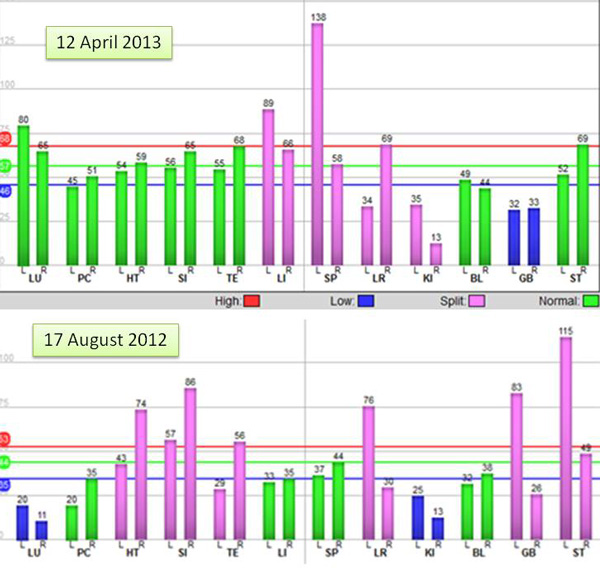
AcuGraph-Aug-vs-April

Note: The AcuGraph on 12 April 2013 (top) showed higher energy and well-balanced qi in most meridians (green bars) compared to 8 months ago, 17 August 2012 (bottom).

P:  At home, I need to move around then I feel more energetic.

C:  You were asked to go for operation and chemotherapy. You did not do all these?

W:  No, no.

C:  Under such situation, where you did nothing and that you have not deteriorated, it is very good indeed. And we must sustain that.

P:  Recently I went for a blood test again, but we forget to bring the results. The CEA had decreased further. It is now at 5, before it was 7.5. The CA 19.9 had also decreased. The first time it was 43.3 and now it has gone down to 22.0.

Blood-test-CEA-CA199

C:  I did not expect that. This shows that your conditions are not getting worse. Whatever it is, it is important to ask yourself. How do you feel? Do you feel better as a person? Compare this to the first time you came here – do you feel you are better or you are getting worse?

P:  No, no. I am not getting worse at all.

C:  Do you feel better?

P:  Yes, appetite-wise I can eat a lot.

C:  Before you felt your stomach was bloated?

P:  Yes, but now I don’t feel bloated anymore. Before, after eating even very little, I felt full. Now I am okay.

C:  I really don’t know what else to say. If you asked me before what to expect, I would say, I give up!

P:   Since the last 2 months,  I felt muscle strain in my neck and shoulder. When I took painkiller, the problem went away. Then it came back again.

C:  When are you going home?

P:  Tomorrow!

My Last Comment

The famous Singapore oncologist wrote:  In oncology, even prolonging a patient’s life for three months to a year is considered an achievement. Achieving a cure is like striking a jackpot. All cancer patients should know this. Better still if they are told this by their doctors before they undergo chemotherapy.  This makes the game fair.

In fact, I found this statement very inspiring indeed. And it has become the gold standard or yardstick by which I measure the outcome of our work at CA Care. If patients who come to CA Care can live a happy life for an additional 3 to 12 months, it would be just GREAT.  As I have told Lam, please don’t ask for more.

Let us forget about trying to strike a jackpot! Cure for cancer is elusive. To me, I don’t see any cure at all. But let us try to prolong life, free of pains and side effects. And also free from excessive financial burden. Perhaps this would be a much better option and is much preferred than the toxic medical treatment? You be the judge. It is your life.

Of course, some people would be upset and unhappy. To be able to give 3 months to a year is not enough. That is not what they want. They want more!

I am reminded of an e-mail I received some days ago. This is a patient who had failed to find a cure for his lung cancer. He had gone through 7 months of chemotherapy but the tumour was getting bigger instead of smaller. The oncologist suggested more chemo but he refused. The wife asked if there is a chance for him to proceed with our treatment. He is going to be 70 years old and he desires to live till 80 and more.  Okay, I understand – everyone wants to live forever if they can. But what can anybody do to help?  This was my reply: Since I am not god and I also don’t want to play god, I really don’t know what I can do to make you live longer. I can just try my best.

Perhaps, cancer patients can learn from other people’s cancer experience.

Dr. Albert Lim was Malaysia’s best known oncologist. He had prostate cancer. Generally when patients come to CA Care with prostate cancer, I would tell them to learn how to live with it – Die with your prostate cancer, don’t let prostate cancer  kill you. From my reading, you still have 10 years to go if you are stricken with this cancer. Dr. Lim was a cancer expert. He was supposed to know everything about cancer and its treatment. After he had cancer, we do not know what he did to himself. But the truth we all know is that he died one year after diagnosis – a bit too soon.

Professor Jonathan Waxman is Professor of Oncology at Imperial College London. He is a clinician who has helped develop new treatments for cancer. In the last chapter of his book, The Elephant in the Room, Professor Waxman wrote about his father – a psychiatrist, who had brain cancer. He consulted Dr. Karol Sikora a well-known cancer expert in London. Professor Waxman wrote: Karol had been asked about treatment for Dad. His advice was that no radiotherapy should be given because Dad’s physical state was so poor that he was unlikely to improve and might worsen with radiation treatment … There would be no way forward except the sour, stumbling path to the grave … My father’s condition deteriorated. His level of consciousness changed, and he sank away from us, falling deeper and deeper into the darkness. Dad went into that dark cave from which there would be no exit.

If ever there is one lesson we can learn from the above of Dr. Lim and Professor Waxman, it is this. It does not matter how much you think you know about cancer. Experiences tell me that if you have to battle cancer, rarely would you come out a winner.

Professor Stroller is an anthropologist at West Chester University of Pennsylvania, USA. He had lymphoma and had undergone chemotherapy. He came out successful after his treatment. Stoller wrote:  Being thrust into a new world that would change my life forever prompted me to think long and hard about my experience among the Songhay people of the Republic of Niger. In time of despair, over and over again, Stoller found comfort in the words and teachings of his long-gone Master, Adamu Jenitongo – a Bushman of primitive Centre Africa. Stoller wrote: If a Songhay develops a serious illness like cancer, he or she is likely to build respect for it. Respect for cancer – or any illness – does not mean that you meekly submit to the ravages of disease.  Illness is accepted as an ongoing part of life. When illness appears, it presents one with limitations, but if it is possible to accept the limitations and work within their parameters, one can create a degree of comforts in uncomfortable circumstances.

In the same spirit, at CA Care, I often tell patients, Instead of fighting the cancer, learn how to live with it. Perhaps you can live longer by doing that.

Living life as a senior, I have learned how to be happy. The key to happiness is to be contented and be grateful for what I am and what I have. Next year I am also going to hit 70, and for what I am today, I remain grateful to God for His wondrous blessing – to me and my whole family. One day, I know I have to go HOME too – be it tomorrow or the next 5, 10 or 20 years. God has that final say. But as long as I am alive, I shall remain relevant and useful for those who need my help.  If you are contented and have this strong sense of gratitude you are not compelled to become unethical and greedy in life. You take each day as it comes.

Back to Lam’s case, I was trying to impart a similar message to him and to others too. This is my message: Now that you are well for 8 months, be grateful and don’t ask for more. Do you best to sustain and maintain what you have already achieved!  I did not expect Lam to do well at all when he first came to see us. And now Lam has regained his health in some ways. Don’t take this blessing for granted or don’t let it slip away. Know this, in the battle against cancer, you will never win! Don’t be complacent!

And do you know what is the next impeding danger? Food of course!  I often tell patients this: When you are dying and come to see me for help, you will listen and do to what I tell you to do. But the moment you get well, I know you will complain – Oh, the food is terrible. I cannot eat what I like anymore. I am not going to war with anyone on this subject. I have written enough and have said enough about this sore subject of food for cancer patients. Suffice for me to end here by saying: It is your life. You decide what you want to do with it.

Pseudomyxoma peritonei: A Rare Cancer that Spreads to the Body Cavity and Fills the Belly With Jelly-like Fluid

Part 1: The Dilemma

Lam (not real name) is a 66-year-old Indonesian. Sometime in early 2012, his stomach started to grow bigger and bigger. There was no pain. The doctor checked his lungs. They were alright. Lam was told that he might have appendix infection or TB. He was on TB medication for a week.

No satisfied Lam went to Singapore for further consultation. A blood test on 27 July 2013 indicated:

C-Reactive Protein: 14.0 (high)

ESR: 54 (High)

CEA: 7.5 (High)

CA 19.9: 43.2 (High)

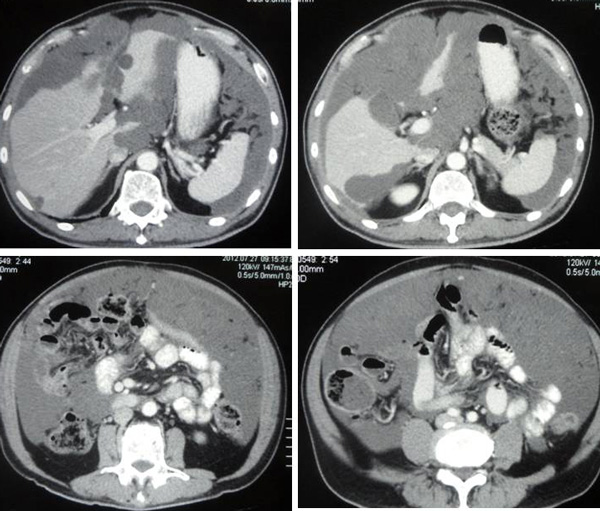
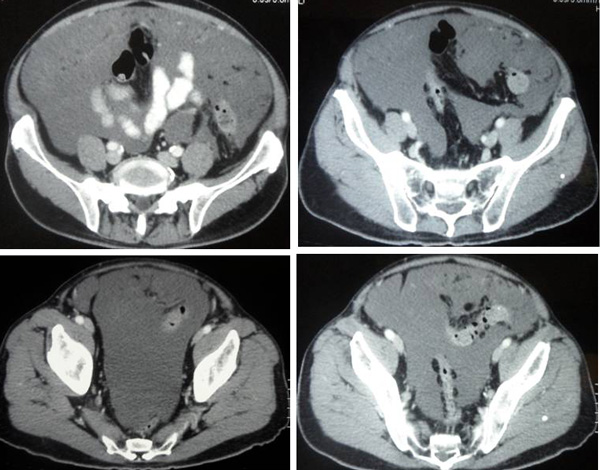
Below is the CT scan report of the abdomen and pelvis on 27 July 2012.

CT-scan-report

The next day, a peritoneum core biopsy was done. The result: Few atypical cells seen! No malignancy is seen. In simple language, the biopsy could not tell what was wrong.

An endoscopy done on 28 July 2012 indicated: Large tumour felt in the Pouch of Douglas.

On 4 August 2012, a second biopsy was performed.  The result confirmed Pseudomyxoma peritonei (omentum and peritoneal tumour).

Note: Pseudomyxoma peritonei is a very rare type of cancer and is often a slowly progressive disease. It usually begins in the appendix as a small growth or polyp. Or, more rarely, it can start in other parts of the bowel, the ovary or bladder. This polyp eventually spread cancerous cells to the lining of the abdominal cavity or the peritoneum. These cancerous cells produce mucus, which collects in the abdomen as a jelly like fluid called mucin. The cause of this type of cancer is not known.

Lam was subsequently referred to an oncologist who recommended 6 to 8 cycles of chemotherapy. Lam refused chemo and sought a second opinion from a doctor in the Singapore General Hospital.  Lam was told to undergo surgery to be followed by chemotherapy. Again Lam refused.

Lam then came to Penang and consulted with a surgeon in a private hospital. The surgeon told Lam not to undergo any surgery because this might further spread the cancer. He was asked to opt for chemotherapy instead. Subsequently, Lam saw an oncologist and was told to undergo 3 cycles of chemotherapy. If chemo did not yield the desired results, then Lam should stop the treatment. The chemo regimen consisted of an infusion and an oral drug which Lam was unable to tell what these are. Lam was told that this would be just a trial – no one would know what the outcome would be.

Lam and his wife were in a dilemma. Lost and unsure of what to do, they came to seek our help on 17 August 2012.


First Visit to CA Care, 17 August 2012 –  The Dilemma

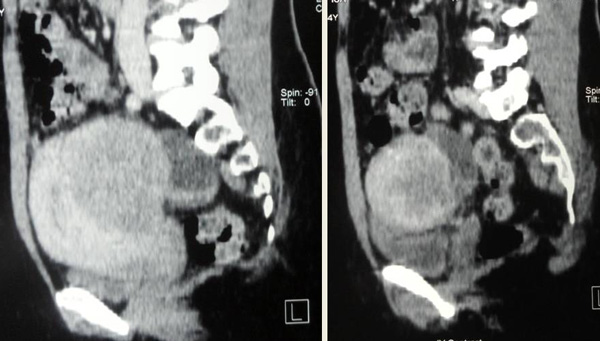
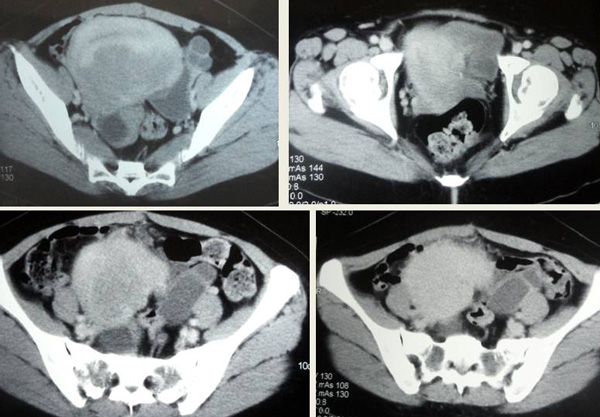
It was a somber encounter indeed. I was dumbfounded after looking at the CT images below.

S-235-a

S-235-b

S-235-c

I have never encountered such a case before – let alone know how to manage it! Lam’s abdomen was distended due to the jelly-like fluid which filled up the peritoneum and omentum. Upper most in my mind that day was – I have to be honest with this patient. I don’t want to mislead him by offering him some “fake” treatment. I say fake because I have never treated such a case.

Listen to our conversation that day. No one smiled, no one laughed! The prognosis was grim. I shook my head in despair. It was a sober occasion. No, never in my wildest dream would I be able to help Lam to get well. But I knew one thing – like I always do. If I am sincere and honest and know only 50 percent – I know that God, the Almighty Healer will bless the patient with another 50 percent to make it whole.  At CA Care, I lived by that principle and therefore would not give up.

During our consultation, I went through the various options with Lam and his wife again. First option –  surgery. But even the surgeon in Penang did not think that this would bring any benefit. It is not likely that all tumours could be removed by surgery. Some may be left behind. Surgery could further spread the cancer. Indeed Lam himself did not wish to take this path.

The second option was chemotherapy. But would it cure? Not likely. The oncologist suggested starting with 3 cycles but if these were not effective, Lam should stop the treatment. This did not sound inspiring at all. However, I told Lam that this would probably be the only option left. Why not try chemo and after 3 cycles he could come back to us for help if chemo really could not help him. Take note and make no mistake, at CA Care we tell you to go for chemo if indeed the situation warrants it.

However, Lam was reluctant to go for chemo. He asked if I could offer him another way out. Can he take some herbs? I understood his predicament –it is like selecting between the Devil or the Deep Blue Sea! Okay, I made this bargain with Lam. He would take herbs and be on our diet for one month. If after one month, his conditions deteriorate then he should go for chemo!

Lam’s wife interjected: Would it not be too late by then?  By that time the cancer would have spread more. My response to that was:  It is already late anyway.  You have this cancer for the past seven or eight months! The cancer has already spread.

Perhaps, cancer patients ought to realize this –you can’t expect to win all the time! That is a kiasu attitude. Lam decided on  the CA Care Therapy path! Then, I told them: Come back and see us after one month!

At this point, let me explain why I agreed to help Lam. It would have been easier for me to send him off somewhere else.

1.  First, know that we don’t play god at CA Care. We ask you to seek doctor’s help. Many people think we are anti-doctor because often we don’t agree with what doctors do. Only mediocre mind think that way. At CA Care, our patients come first. We want you to get the best.  In this case, I even asked Lam to try chemotherapy and he can always come back to us for help if chemo failed him.

Slide1

Let me repeat: The language of love and compassion is about recognizing limitations and exploring opportunities. To condemn others as quacks without basis is not a language of love and compassion.

2.  From my reading, I am fully aware of the limitations of medical treatment for cancer – even more so, when dealing with such a rare type of cancer that Lam has.

Reflect on what medical experts themselves say about their treatment.

Slide2

Slide3

Slide4

Slide5

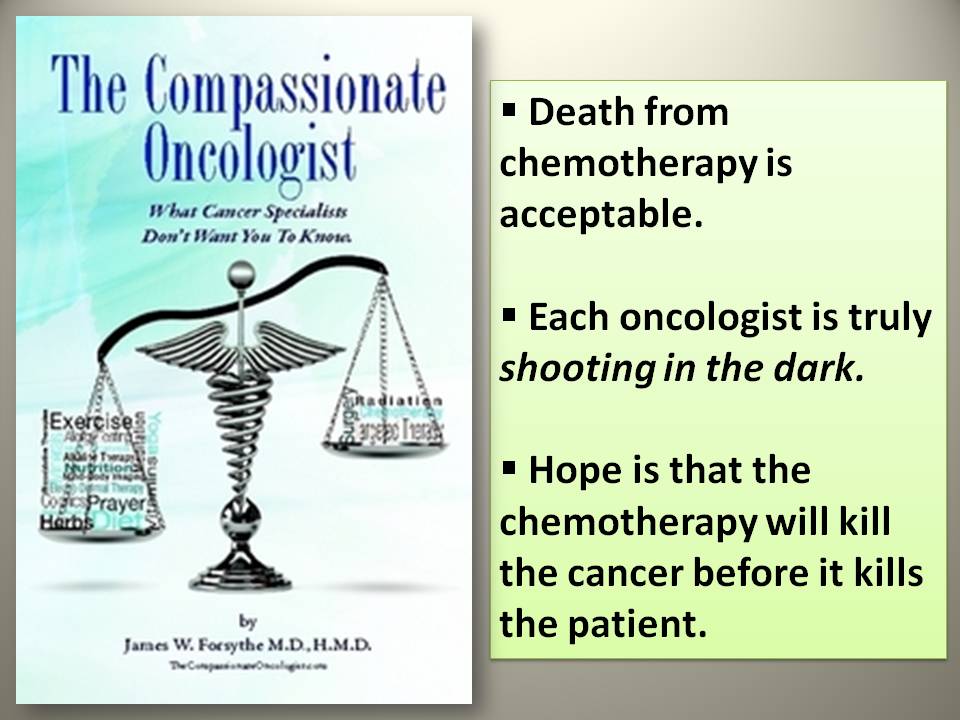
3.  Knowing the limitations that Lam had to face, would I not be able to provide him with another option? How much worse off would Lam be if he was to follow our CA Care therapy? For sure I know Lam would not have to suffer any severe side effects of chemotherapy. The herbs and diet are not going to kill him either. Like Dr. James Forsythe said chemo can kill! Patients have cancer. They die. Some die because of the cancer, but some die because of the treatments. Let us not deny or pretend we don’t know this reality. And because of this, I found it hard to send Lam away. As you can see in the video, I have admitted my desperation. I did not know what to do with him. But my conscience is clear. I was not trying to mislead or exploit him! Cost-wise, herbs are much cheaper than chemo anyway. So, there is nothing much to lose in terms of money, in the event that   our therapy did not give us the desired result.

Based on these premises, I asked Lam for only a month to “gamble” his life with. If Lam’s condition worsen, he should go for chemotherapy! If you are not a kiasu type perhaps this is a fair deal! But it is up to him to decide what he wanted to do. Nothing in this world comes without any risk! And that is the risk Lam had to take. He had to decide for himself.

Liver Cancer: 3 cm Tumour OUT, 8 cm Tumour IN After 9 Months and S$28,000-Surgery

AS (S-357) is a 65-year-old Indonesian. He came to seek our help on 14 April 2013 after having undergone a failed liver surgery in Singapore.

His problem started in late December 2011 when AS felt gastric-like pain in the stomach. An ultrasound at a hospital in his hometown indicated a possibility of gallbladder infection.

Not satisfied, AS went to Jakarta and on 31 December 2011 underwent a cholecystectomy (surgery to remove gallbladder). During the operation, the surgeon also did a liver biopsy for suspicious liver lesions.

In February 2012, AS went to the National Cancer Centre in Singapore for a second opinion. The histology slides from the early surgery and liver biopsy were reviewed. The liver biopsy showed poorly differentiated tumour.

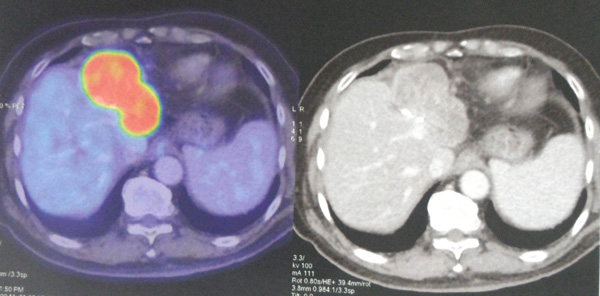
A whole body PET / CT on 2 February 2012 revealed left hepatic lobe mass, measuring 3.2 x 2.6 cm (picture below).

2-Feb-12-before-surgery

On 25 April 2012, AS had another CT scan. The report indicated interval increase in size of the dominant heterogenous  hepatic mass from previous 2.9 x 2.6 cm to currently 0.3 x 3.5 cm. No other new focal hepatic lesion seen. (Note: this report stated a different tumour size compared to the earlier report. A mistake somewhere?).

On 3 May 2012, AS underwent a hemihepatectomy – i.e.  a surgery to remove one-half or a lobe of the liver. The tumour was at the left lobe of his liver. AS was discharged on 9 May 2012. The procedure cost S$28,000.

Liver histology indicated a hepatocellular carcinoma (HCC or liver cancer), 4 cm, Edmondson Grade 3 with 3 satellite nodules. Resection margins were clear. Vascular invasion was present. The 2 diaphragmatic nodules were metastatic HCC. Gallbladder shows chronic cholecystitis with no malignancy seen within.

About three months later, 16 August 2012, AS went back to Singapore for review. A repeat CT of abdomen and pelvis showed NO evidence of recurrent HCC or focal liver lesion.

Unfortunately this euphoria did not last long. Six months later (i.e. about 9 months after the surgery) another PET /CT scan on 11 March 2013, revealed a new recurrent hetergenous hypodense mass in the liver at the resected margin measuring 8.0 x 4.8 cm (picture below).

11-Mar-13-recurrence

On 22 March 2013, AS underwent TACE (transarterial chemo embolization) for his recurrent liver tumour. Unfortunately this procedure failed. The interventional radiologist was unable to access the tumour feeding vessel. So TACE could not be completed and the chemo drug not delivered. In spite of the failure, AS had to pay S$5,000 for the procedure.

AS was discharged on 25 March 2013 and was referred to an oncologist for chemotherapy. AS decided to give up further medical treatment and came to seek our help on 14 April 2013.

While talking to AS, his wife and son I posed this question:  Why don’t you want to go for chemotherapy? After all AS had willingly undergone surgery and TACE – why chicken out now?

The wife replied, We are scared!

AS replied: The doctor did not show any responsibility.

My reply: What do you expect from the surgeon? What more do you want him to do? His job is to cut you. And has cut you and there is nothing more that he can do. He has done his job. Now, he is passing you to the oncologist because he is a surgeon and not an oncologist!

From his reply I fully understand how AS felt – being let down by the surgeon. He was totally disappointed. He came to the surgeon in Singapore believing that he was in the safe hands of the expert. He was willing to pay S$28,000 for the surgery but he did not get what he had bargained for.  Now, he was passed on to another doctor – where is the responsibility then?

Let me tell you – AS is not the only one who felt let down or cheated. There are many, many others who come to us with a similar story. I am reminded of one really pathetic case. A man from Pontianak was pushed into undergoing surgery for his liver cancer (see  A great failure and let down )   He was told that his condition was serious and surgery must be done immediately.  The wife said: The surgeon even hugged me and assured me – Don’t worry, he (my husband) would be well and alright. Oh, it was so sweet of him. Unfortunately after the surgery, the cancer recurred. The patient and his wife tried to seek clarification from the surgeon. They were snubbed. The surgeon did not even want to talk to them. The wife was full of tears when she related this story.

Yes, I fully understand how patients feel after a medical failure.

I told AS and his family that his is a big problem and I am not sure if I could help him. I can only do my best. AS was prescribed Capsule A, B, C and D. In addition he has to take LL-tea, Liver 1 and 2 teas. We sent him for a blood test. The results as of 15 April 2013 showed his alpha-fetoprotein = 1,064.0 and total bilirubin = 25.0. Other liver function enzymes were within normal range.

Question You Should Ask: Can surgery cure me?

I always pose this question whenever a patient comes to see me,  Before you undergo surgery, chemotherapy or radiotherapy, did you ever ask the doctor if the treatment he is giving you is going to cure you?  You will be surprised   most cancer patients don’t ask such question. They take it for granted that they will be cured! 


AS told me. I did not ask that question. I only asked, What is the best way out for me! I told him, That’s the wrong question to ask! If you go to a barber, he will tell you the best option for your head is to cut your hair. If you ask a hammer what all of us look like in this world, the answer would invariably be, You all are nails meant to knocked down! You go to a surgeon he would most likely say, Operate.  That’s his best option for you. Ask the oncologist, he would invariably say, Go for chemo! You have missed the point here. Is the procedure suggested going to cure you? This ought to be the main concern.

By asking the wrong question, you get an answer that brings you elsewhere – perhaps where you don’t want to go. So, my advice to all patients, Ask this all important question – can your treatment cure me? Don’t be afraid, ask.

After you get the answer then use your commonsense to evaluate what the doctor tells you. Does it make sense? Do you believe in the statistics or percentage or whatever claim the doctor gave you? If this is not what you are looking for, go elsewhere. Look for another path.

Likewise, when you come to CA Care and tell me that you want me to cure you of your cancer I would tell you this, Go elsewhere – I don’t have the magic bullet and I cannot cure you! In my many years helping cancer patients I don’t really see any so-called cure for cancer. Cure means the disease goes away and never come back. Generally, the cancer recurs   after some years. My auntie died of metastatic cervical cancer after an apparent cure, 13 years later! Where is the cure?

In the case of AS, surgery did not cure him! After 9 months, the tumour grew back and this time it grew more than twice its original size. Where is the cure?

The next question you probably need to ask is about your diet.  This question will give you some idea about the kind of doctor you are dealing with! His answer shows his perception about health in general. And more important whether he is well read or not. Today the medical literature is replete with information about diet in spite of how important it is in helping cancer patients.  If he says you can eat whatever you like – I am sorry, I am not sure if this is the kind of doctor you should go to! I am fully aware that diet in cancer is a big, sore point between medical doctors and alternative medicine practitioners. Suffice for me to quote what two doctors said about diet (below).  Think hard about what your doctor tells you about diet and come to your own conclusion.  If you are not convinced that he is right, how do you expect him to be able to solve the bigger problem of treating your cancer?

1 deVita

1 Crime-med-ignore-nutrition

Lung Cancer: One Year on CA Care Therapy: Thank you for taking care of me!


SHK is a 84-year-old lady. She came to see us on 21 April 2013 – shook my hand, over and over again and said Thank you, thank you for taking care of me. I am doing fine.  We were glad to see her looking so good. SHK said she did not cough with blood anymore. Her long-standing (10 years plus) pain in the jaw had also improved. Everyone was happy!

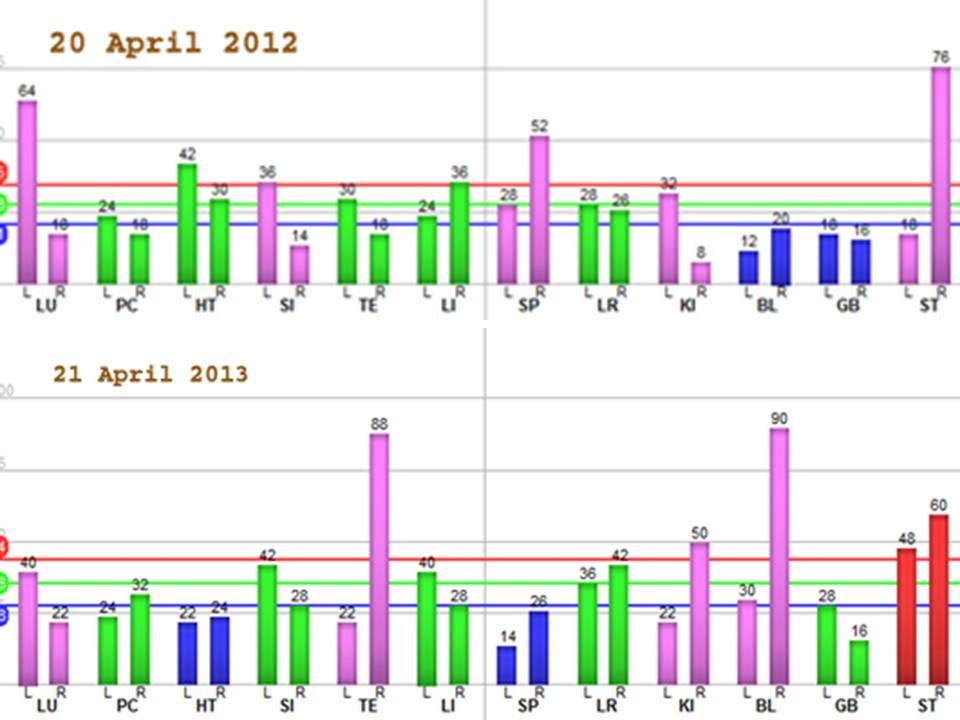
I repeatedly asked SHK if indeed she was feeling well. She responded repeatedly that she was indeed well – no more problems! Below is a comparison of her digital meridian imaging done on 20 April 2012 (top) and 21 April 2013 (bottom). Suffice to say that her health had not deteriorated over the year, and being well and feeling well is not an imagination of her own mind!  And that is all that matters!

Acu Composite

Her Problem One Year Ago

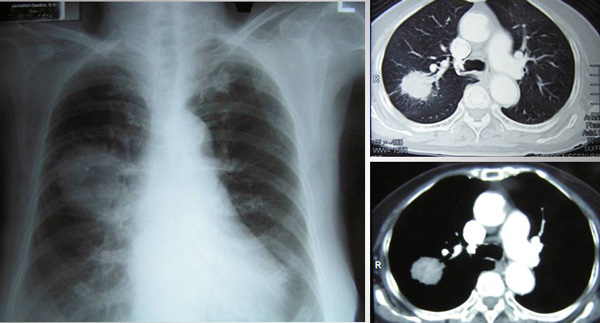
SHK’s problem started in September 2011. She had coughs, producing phlegm with blood. An X-ray on 3 September 2011 indicated a large, fairly well-defined oval opacity, 3 x 4 cm, seen in the right mid-zone. A small central calcification is seen in the opacity. Appearances are in keeping with a pulmonary tumour.

SHK had been smoking for 50 to 60 years. She had since stopped the habit.

Based on the above, the doctor in a private clinic suggested that SHK undergo radiotherapy. Not satisfied, SHK consulted a lung specialist of a private hospital in Penang.

A CT scan on 5 September 2011 indicated a mass in right upper lobe, consistent with bronchogenic carcinoma (T2NoMo). The mass measured approximately  4  x 3.5 cm in diameter. Dot calcification noted within the mass. It is completely surrounded by lung parenchyma. The rest of the lungs are clear. 

Composite-XrayCT

The doctor provided the family with the following options:

  1. Undergo surgery to remove the tumour. According to the lung specialist, surgery can cure her cancer, but because of her advanced age, she might just die with the surgery.
  2. Undergo chemotherapy. Because of her age, she might just die with the treatment.
  3. A biopsy needs to be performed to determine the type of cancer she has. However, the risk is high. There is a 99% chance that she would end up with difficulties. There is only a 1% chance that she will be okay.

The patient’s daughter said, I went dizzy with such suggestions and did not know what to do. The doctor asked me to sign the consent form if we agree to go ahead with the biopsy.

SHK and her family declined further medical treatment.

A repeat X-ray was done on 12 April 2012 and the result showed the mass in the RMZ has increased further in size and now measures 5.5 cm. It is fairly well-defined with lobulated margins and extending to the right hilum. It has a central lucency. Appearances are in keeping with a bronchogenic carcinoma. The rest of the lungs are clear.

Since the tumour had grown bigger, the family decided to do something and came to seek our help on 20 April 2012.

She presented with the following:

  1. There was a bit of pain in her chest.
  2. Appetite was poor.
  3. Stomach wind for the past 30 to 40 years.
  4. She was constipated.
  5. Pain at the back shoulder.
  6. Pain in the jaw for the past 10 years.
  7. If she coughed, there was a bit of blood in the sputum.

Comment

When I first met SHK I said to her, Auntie I am glad that you are already 83 years old. If I can live to your age, I would be most grateful indeed. Then her daughter related the mother’s problems and their encounter with a lung specialist of a private hospital. What to do with the 4 x 3.5 cm tumour in her lung?

Let me ask you. If she was your mother, what would you do? Some may say, go all out to get rid of the tumour. Spend and give her the best that medical technology can buy. On the other extreme, some children of patients would say that since my mother is already old, let’s do nothing. Go for quality of life.

It is not for me to decide what you should do with your mother! You have to make that decision.

Let’s turn to what the doctor said. It is indeed mind boggling. Three possible options were laid out. Go for surgery which she could face the risk of dying from the procedure! Go for chemo and the treatment would probably kill her! But before considering these, it would be good that a biopsy is done to determine what type of lung cancer she has! But even doing a biopsy would put her at risk. She was told there is a 99% chance that she will suffer from the procedure!

Can you decipher the logic of such medical advice? Why do you want to do the biopsy when you can’t offer any chance of treatment let alone cure?

I told the family. I am glad that you did not agree to the biopsy!

In Chapter 6 of my book, Cancer: What Now? I wrote:

Virtue of Doing Nothing

If one has cancer and opts to do nothing at all, he will live longer and feel better than if he undergoes radiation, chemotherapy or surgery ~ Professor Hardin Jones

Our body intelligence knows more than the combined wisdom of all the scientists in the world ~ Frank Remington

It is human nature that once told that we got cancer we go into a frenzy – madly rushing here and there believing that we must get things done quickly. There is no need to behave like that. I always tell patients: Don’t panic. There is no need to rush. You did not get cancer yesterday. The cancer has been with you for years already – only that you don’t know that it was there. So take it easy and calm down.  At CA Care we ask you to relax and reflect to understand what has gone wrong. Then we sit down with you to plot your cancer journey using as much common sense as possible. Many of you may not like to learn this. For certain cases and under certain situations perhaps doing nothing is more logical and humane.

Doing nothing is not about you going home and sitting under a coconut tree waiting to die. It is not about doing NOTHING to help yourself. When you come to CA Care we teach you to live a happy life taking care of yourself – take care of your diet, change your life style and mental attitude, take herbs and seek blessings from Above. All these, somehow, could probably make your remaining time on earth more meaningful. And by doing these you may probably live longer than your doctor’s prognosis.

Perhaps this case is a classical example of doing nothing is better than doing something! Remember also that trying to do something and believing that you are a hero may not bring you anywhere.  Read what Singapore’s well-know oncologist said below:

APT-Oncology-3-to-6-months-

Recently, Malaysia’s most well-known oncologist, Dr. Albert Lim was diagnosed with prostate cancer. He died within a year. Going by the Singapore’s well-known oncologist’s yardstick, surviving a year was an achievement.

In this case, SHK was diagnosed with lung cancer – probably more lethal than prostate cancer. She was coughing blood.  She did not go for chemotherapy or surgery.  She took herbs. And after one year she remained very healthy. Is this not also an achievement?

Acknowledgement: We record our sincere thanks to Dr. Adrian Larsen, President of Miridia Technology Inc., USA, for his generosity in providing a unit of AcuGraph 3 for our research at CA Care. The use of AcuGraph for our patients is free-on-charge.

Menstrual Pain and Bleeding Resolved After Herbs

MM is a 45-year-old housewife. She came to seek our help on 25 January 2013 regarding her recurrent menstrual pain and bleeding. In fact a week earlier she had been hospitalized for this problem.  Listen to her story.

  1. Since 14 years old, MM suffered menstrual pain with blood clot. In our Oriental culture, problem like this is not something that family members would talk about! Furthermore, pain during menses is considered part of being a woman! So the problem that MM had was just left as it was.
  2. In the early 1990s she was told that she had ovarian cyst. She did nothing about it.
  3. In July 1992, she underwent a laparoscopic surgery to remove two ovarian cysts, each 10 cm in size.
  4. In 2006, MM suffered heavy bleeding and underwent another surgery. This time a 7 cm fibroid was removed. According to the doctor, her ovaries were clean.
  5. During the period between 2006 and 2010, MM started on Ayurvedic treatment for her recurrent bleeding problem. At first she received treatment in Kuala Lumpur (costing RM 300 per day). Later she went to Kerala, India for the treatment. According to MM, the treatment in Kerala was cheaper – RM 3,000 for a six-week treatment (inclusive of flight cost).
  6. In 2010, the pains and bleeding became more severe and she went to a university hospital in KL and underwent uterine arterial embolization (UAE). The procedure failed. She suffered severe pain and has to be knocked off by morphine. According to MM, My advice to anyone, never go for AEU! MM had a very high tolerance for pain and had never cried but UAE made her cry in pain!
  7. MM tried acupuncture. This helped. Her problem came on and off. Her periods became regular.
  8. In early January 2013, MM suffered severe bleeding and she was hospitalized. 

CT scan done on 18 January 2013 indicated a large uterus. There is a large posterior wall uterine myoma measuring 6.6 x 8.4 x 8.9 cm with central hypodensity likely to represent necrosis. It causes anterior displacement of endometrial and bladder depression. 

Bilateral ovarian cysts. Right ovarian cyst measures 3.2 x 3.7 cm and left ovarian cyst measures 2.8 x 5.2 cm. There is an suggestion of left hydrosalphinx.

E-53--a

E-53--b

 The doctor suggested that MM undergo a total hysterectomy. It was at this point that MM drove to Penang and sought our help. MM said she suffered pain before and during her periods and this was usually followed by severe bloating of the stomach. Having understood her problem, my reaction on that day was, We shall try our best. 

MM was prescribed PMS Pill, GY-5 and GY 6 teas. In addition, she was asked to take A-Lung-2 and A-Kid-6 tea to balance her meridian disharmony (See another story Nocturia – frequent night time urination resolved by herbal therapy). 

Problem Resolved After the Herbal Therapy 

Two months later, 24 March 2013, a happy MM came to our centre again. Her long standing problems had been resolved. Listen to what she said.

 Chris:  You took the herbs for two months. What happened?

MM:  No more pain and no more bloatedness. My periods were normal – 5 days. No blood clot.

C:  Before taking the herbs?

M:  A week before I came to see you, I had to be hospitalized due to severe bleeding and pain. That was why I did the CT scan.

C:  You mean when you went home and started to take the herbs, all your pain and bleeding were gone?

M: Yes.

C: I really don’t know what to say to you! You will have to continue taking the herbs for a while more.

Did the herbs really help you?

M: Yes.

C:  And you are happy now?

M:   Yes.

C:  Not too bad. You have improved!

Nocturia – frequent night time urination resolved by herbal therapy

MM is a 45-year-old housewife. She came to us for problems of backache and severe pain during her periods (her story in another article). As with all patients we read her meridian energy using the AcuGraph (below).  Only 3 of the 12 meridians were normal (green), 5 meridians were split and 4 meridians were low.

Acu-1-21Jan13 copy

From our experience, those with low or split bladder meridian (BL is blue, arrow) may have problems of frequent urination at night.  (See our previous article: http://ejtcm.com/2011/03/25/low-or-split-bladder-meridian-may-result-in-frequent-urination/). In addition, she also had low KI (kidney) and SP (Spleen) meridian energy.  The significance of this is explained below.

We asked MM if nocturia was also her problem. Her answer was YES – urination 3 to 4 times each night. It is indeed a nuisance having to waking up so often, besides depriving her of a good sound sleep. We suggested that MM take the herbal tea, A-Kid-6, for 2 weeks to try and resolve her problem.

We got to met MM again 2 months later and she told us her nocturia was resolved after taking the herbal tea. Listen to what she said below:

Traditional Chinese Medicine (TCM ) View of Bladder Function

TCM views the kidney and bladder as an interrelated pair that controls water in the body.  The function of the bladder – i.e. storage and discharge of the urine, depends upon Kidney Qi. If Kidney Qi is sufficient the bladder will function normally and urination is well controlled.

If Kidney Qi is deficient the bladder becomes dysfunctional. Disharmony of the Bladder meridian can lead to problems such as difficult urination, incontinence (inability to control proper urination), painful eyes, runny nose, nose bleeding, nasal congestion, pain in the head, neck, back, groin and buttock.

According to Steven Clavey (in Fluid physiology and pathology in TCM) nocturia is due to exhausted kidney yang or spleen and kidney yang deficiency. However, in cases where the symptoms are less severe, nocturia can be due to Bladder qi deficiency.

Acknowledgement: We record our sincere thanks to Dr. Adrian Larsen, President of Miridia Technology Inc., USA, for his generosity in providing a unit of AcuGraph 3 for our research at CA Care.


Foods That Inhibit Angiogenesis

By Yeong Sek Yee And Khadijah Shaari

The concept of angiogenesis is very new. It was only in 1994 that, after Dr Judah Folkman’s key concept of his new theory of cancer was published in the periodical “CELL” that overnight, angiogenesis became one of the principal targets in cancer research. What then is angiogenesis?

Briefly angiogenesis means blood vessel formation. Tumour angiogenesis is the growth of new blood vessels that tumours need to grow and this is caused by the release of chemicals by the tumour. Conversely, angiogenesis inhibitor is a substance that may prevent the formation of blood vessels. In anti-cancer therapy, an angiogenesis inhibitor may prevent the growth of new blood vessels that tumours need to grow.

In “ANTICANCER: A NEW WAY OF LIFE,” Dr David Servan-Schreiber, a clinical professor of psychiatry at the University of Pittsburgh School of Medicine, described Dr Judah Folkman’s various experiments in the late 1960s and 1970s that gave him (Dr Folkman) the first glimmering of a wild inspired hunch. What if cancerous tumours, in order to expand, needed to trigger the growth of new blood vessels to feed themselves? And if that was true, what if a way could be found to stop that growth? Could cancers be starved to death? Experiment by experiment, Dr Folkman built up the key concepts of his new theory of cancer (i.e. angiogenesis). Some main points of Dr Folkman’s theory (see page 52 of ANTICANCER) are:

  • Micro tumours cannot change into dangerous cancers without creating a new network of blood vessels to feed them.
  • To do so, they produce a chemical substance called angiogenin that forces the vessels to approach them and to sprout new branches.
  • The new tumour cells that spread to the rest of the body i.e. metastasis are dangerous only when they are able, in turn, to attract new blood vessels.
  • Large primary tumours send out metastases….but as in any colonial empire, they prevent these distant territories from becoming too important by producing another chemical substance that block the growth of new blood vessels – angiostatin.(This explains why metastases sometimes suddenly grow once the principal tumour has been surgically removed)

Dr Folkman spent 20 years in the wilderness. Nobody believed him. He was scorned, criticised and described as a looney. Other doctors shook their heads at the waste of a great mind, and ambitious young medical researchers were told that accepting a position in Folkman’s lab would be the death of their careers. In “ANTICANCER,” Dr Schreiber described Dr Folkman’s 20 years journey in the wilderness as “Crossing the Dessert” (page 53). This is a classic example of Schopenhauer’s saying:–All great truth goes through three phases. First, it is ridiculed, then violently attacked, and finally accepted as self-evident (page 53). This will probably be the case in the concept of anti-angiogenic foods as described in the ensuing sections.

(NB: Perhaps, if you would like to follow Dr Folkman’s journey “Crossing the Desert,” do read “DR FOLKMAN’S WAR” written by acclaimed science writer Robert Cooke. Reading the forward by Dr Everett Koop, MD, ScD, you will soon realise that the title of the book is not Dr Folkman’s War against cancer but it was a war against the scientific and medical community which took more than 20 years to recognise his concept of angiogenesis).

Today, many drugs similar to angiostatin (such as Avastin, Sutent and Nexavar) have been developed by the pharmaceutical industry. But “their effect on humans when used alone have turned out to be disappointing” (ANTICANCER page 54). This view is also shared by medical oncologist Dr Richard Frank, MD (in FIGHTING CANCER WITH KNOWLEDGE AND HOPE) in which he said that…“although targeted therapies (angiogenesis inhibitor drugs as mentioned above) were developed with the hope that they would be magic bullets that would neatly eradicate cancer through the selective targeting of one critical molecule, in general they have fallen short of their lofty goal” (page180). Anti-angiogenesis drugs have produced more troublesome side effects than foreseen. As a result, they are probably not the long-hoped-for miracle drugs (ANTICANCER page 54).

According to Dr David Servan-Schreiber, as an alternative to waiting for the miracle drug, there are natural approaches that have a powerful effect on angiogenesis without side effects and that can be combined perfectly with conventional treatments (page54). These are:

  • Specific dietary practices (many natural anti-angiogenesis foods have been discovered recently, including common edible mushrooms, green tea, spices, and herbs)..
  • Everything that contributes to reducing inflammation, the direct cause of the growth of new blood vessels.

Anti-angiogenesis foods listed by Dr Schreiber are green tea, olives and olive oil, turmeric and curry, ginger, cruciform vegetables, garlic, onion, leeks, shallots, chives, vegetables and fruits rich in carotenoids, tomatoes and tomato sauce, soy, mushrooms, herbs, and spices, seaweed, berries, plums, peaches & nectarines, citrus fruits, pomegranate juice, red wine, dark chocolate, vitamin D, Omega-3s, probiotics and foods rich in selenium. (For a complete exposure of these foods we urge you to read Chapter 8: The Anti-Cancer Foods. We also urge you to watch the DVD entitled “AntiCancer with Dr David Servan-Schreiber.” Some links are available on YouTube.com as follows:

a)   Dr David Servan-Schreiber’s Remarkable Story:

http://www.youtube.com/watch?v=xfddD6keYq0

b)   Natural Defences in Preventing and Treating Cancer:

http://www.youtube.com/watch?v=XaDt3AJQ98c 

Anti-angiogenis or anti-angiogenic foods? Your doctor/ oncologist will in all probability pour scorn on this concept with the usual comments–not proven, not scientifically tested, etc. But frankly, are all the conventional cancer treatments properly and scientifically and independently tested?

Who else has done research and written about anti-angiogenic dietary factors under the concept of angiogenesis?

In the forefront of such research is Dr William Li MD, the founder of The Angiogenesis Foundation, the world’s first non-profit organisation dedicated to conquering disease using the new approach based on angiogenesis, the growth of new capillary blood vessels in the body.

According to Dr Li, many foods contain naturally occurring inhibitors of angiogenesis. When these foods are consumed and absorbed into the blood stream, the inhibitors act to boost the body’s existing system that suppresses undesirable angiogenesis that can promote or accompany disease.

The following is a list of foods (according to Dr Li) that have innate properties which inhibit angiogenesis, thus working to cut off cancer tumours from blood supplies. These are green tea, berries, citrus fruits, apples, pineapple, cherries, red grapes, red wine, cruciferous vegetables, soybeans, ginseng, mushroom, liquorice, turmeric, nutmeg, lavender, artichokes, pumpkin, sea cucumber, tuna, parsley, garlic, tomato, olive oil, grape seed oil, dark chocolate. (Source: Angiogenesis Foundation Website: http://www.angio.org).

Also we recommend that you watch a video of Dr William Li enlightening you about “angiogenesis,” its impact on the human body, its connection to cancer and how you can deal with it.
To view the video, try the following links: –

a)    http://www.youtube.com/watch?v=C_5Z31mUmtc

  • or just type in Dr William Li on YouTube or on Google 

Dr Judah Folkman’s visionary ideas on cancer treatment served as a starting point and inspired two Canadian cancer researchers to theorise and confirm that “there is some weakness in the armor of tumor cells that might allow us to better our chances of destroying them” (Incidentally Chapter 4 in Dr Schreiber book “ANTICANCER” is entitled “Cancer’s Weakness”) These two researchers Dr Richard Beliveau, PhD and Dr Denis Gingras, PhD worked on the premise that “despite its great power, its versatility, and its enormous ability to adapt to hostile conditions of neighbouring cells, the cancer cells remains extremely dependent upon its energy needs. To grow, a tumour requires a constant supply of oxygen and nutrients. Their studies strongly suggest that certain types of cancers can be prevented by modifying our dietary habits to include foods with the power to fight tumours at the source and thus prevent their growth.

According to Dr Believeau and Dr Gingras, “nature supplies us with an abundance of foods rich in molecules with very powerful anticancer properties capable of engaging with the disease without causing any harmful side effects. In many respects, these foods possess therapeutic properties on par with those of synthetic drugs” (Ha, Big Pharma definitely won’t like this statement)

Some of the specific foods researched by Dr Beliveau and Dr Gingras are: cruciferous vegetables, garlic and onions, soy, turmeric, green tea, berries, omegs-3s, tomatoes, fresh fruits, and dark chocolates.

Dr Beliveau and Dr Gingras distilled their research findings into a simple book for the lay person- “FOODS TO FIGHT CANCER” –the goal of this book is to present a summary of the scientific studies currently available.

Another medical doctor who believes and has written on the subject of angiogenesis is Dr Joel Fuhrman, a board-certified family physician who specializes in preventing and reversing disease through nutritional and natural methods. In this book “SUPER IMMUNITY” Dr Fuhrman touched on angiogenesis in Chapter 3 under the heading, “The Anticancer Solution” The salient points in this section are: –

  • Many plant foods contain natural angiogenesis inhibitors- especially mushrooms
  • Dietary angiogenesis inhibitors are now being investigated as a preventive strategy to “starve” cancers while they are still small and harmless.
  • If our diet contains plenty of angiogenesis inhibitors, it can prevent small tumours from acquiring a blood supply and growing larger and becoming more aggressive or cancerous.
  • Some anti-angiogenic foods/nutrients listed by Dr Fuhrman are allium vegetables, berries, black rice, cinnamon, citrus fruits, cruciferous vegetables, flax seeds, ginger, Grapes, green tea, mushrooms, Omega-3 fats, peppers, pomegranate, quince, resveratrol, soybeans, spinach, tomatoes, and turmeric. (Scientific studies are quoted by Dr Fuhiman in the end NOTES)
  • On the other hand, “there are foods and nutrients that promote angiogenesis–and thus obesity and cancer. These include white-flour based breads and sweets that raise insulin levels, and the high-fat, high-cholesterol, standard, Western diet. These modern, unhealthy foods promote fat storage in addition to having a high-caloric density. They are a double negative, while green, mushrooms, onions, berries and the other foods listed above are a double positive”

In concluding the chapter, Dr Fuhrman laments that… “many people choose to reject new science even when the evidence is overwhelming. This book, SUPER IMMUNITY, may be attacked by people in powerful positions of authority whose livelihood is dependent on competing interests such as “recreational” foods, drugs and medical technology. Does this sound familiar to you?

In “FIGHTING CANCER WITH KNOWLEDGE AND HOPE,” oncologist Dr Richard Frank clearly stressed that:

  • Diet can promote or inhibit the formation of cancer in many ways
  • There are both good and bad foods to influencing the development of cancer
  • More direct links between particular components of food and cancer have been confirmed by some recent studies. A classic link is attached.

Link: http://www.ncbi.nlm.nih.gov/pubmed/17699009

Although “anti-angiogenesis drugs (like Avastin, Sutent, Nexavar) prevent tumours from growing the blood vessels they need to grow, none is perfect” (page 481). This is the view of Dr Keith Block, MD an Integrative Oncologist who explained that “just as tumours can switch to a second growth pathway if their primary pathway is blocked by a chemotherapy drug, so tumour can switch to a backup pathway for growing blood vessels when the first pathway is blocked by an anti-angiogenesis drug”(page 481).

Just as drug cocktails are a hot area of research in mainstream oncology, so combinations of anti-cancer compounds are some of the most exciting advances in integrative care…. there exists natural compounds that target the same growth pathways as leading-edge pharmaceuticals (page 505).

Some of natural compounds that have anti-angiogenic properties are berries (most types) which inhibit production of VEGF, a common growth pathway, and also prevent angiogenesis. The soy compound genistein also inhibits VEGF and angiogenesis which may be one reason soy is associated with lower cancer rates. Other natural compounds that can stimulate cells of the immune system to seek out and identify malignant cells are: aloe vera, acemannan, ginseng, curcumin, green tea polyphenols, resveratrol, mushrooms, grape seed extract, etc. (page 505/507)

All the above comments by Dr Block are contained in his bestselling book “LIFE OVER CANCER” which we recommend that you read the whole book or at least chapter 4 “The Anti-Cancer Diet” In this chapter, you will learn why you should not eat the following when you have cancer: –

  • Animal Protein
  • Bad Fats
  • Refined Carbohydrates
  • Dairy Products

Dr Block strongly believes that diet affects cancer both directly and indirectly. Nutrients directly impact the mechanisms by which cancer cells grow and spread. They indirectly help control the cancer by changing the surrounding biochemical conditions that either encourage or discourage the progression of malignant disease. The bottom line is that what you eat can spell the difference between conquering your disease or having it rage out of control (page 56).

For more information of the book by Dr Block, visit the following links:

a)    http://www.lifeovercancer.com/

b)   http://lifeovercancerblog.typepad.com/

Dr Margaret Cuomo, MD, and a board–certified radiologist wrote the book, “A WORLD WITHOUT CANCER” gave a few tips on “Fighting Cancer with Nutrition and Physical Activity.” Dr Cuomo suggests the following for a Cancer-Prevention Diet: –

a)    Eat more fruits and vegetables – such as berries, cruciferous vegetables, tomatoes, dark green, leafy vegetables (page 205).

b)   Buy organic – The International Agency for Research on Cancer classifies more than 400 chemicals, including those used in pesticides, as carcinogens (page 206).

c)    Eat more Fibre – fibre dilutes the carcinogens in the colon; reduce the time in which they remain there, enhanced anti-oxidant action, or produce bacteria that promote, or produce bacteria that promotes a healthy digestive tract (page 206).

d)   Avoid Red Meat – a growing body of evidence points to an association between beef, pork, lamb, and goat and cancers of the colon, prostate, pancreas and kidney (page 208/209). Carcinogens may also be present in smoked, salted, or cured meat and in meats cooked at high temperatures.

Besides the above, Dr Cuomo also advise cancer patients to eat more fish, drink green tea, increase consumption of resveratrol, flavor food with turmeric and lastly to limit processed foods (page 207-209).

For further reference, read Dr Cuomo’s article:

  • Cancer Prevention Tips from Dr Margaret Cuomo, MD

Link : http://blog.tjmartell.org/cancer-prevention-tips-from-dr-margaret-cuomo/

Another prominent medical doctor, Dr Russell Blaylock, a board-certified neurosurgeon, believes that “nutrients do block angiogenesis” (pages 182/183)….especially the flavonoids from edible plants such as genistein extracted from soybeans, catechins found in grape-seed extracts, apigenin and luteolin which occur in high concentrations in celery. In his book, “NATURAL STRATEGIES FOR CANCER PATIENTS,” Dr Blaylock advised that doing two things will significantly reduce tumour angiogenesis:

  • Correcting your dietary ratio of omega-6 and omega-3 fats,
  • Increasing your intake of vegetables.

Essentially, it means that a diet of omega-3 products inhibits angiogenesis and a diet high in the omega-6 fats powerfully promotes cancer growth and spread. Nicotine also increases angiogenesis.

A prominent cancer researcher and scientific advisor to the University of Texas Centre for Alternative Medicine, D John Boik, PhD is the author of 2 very scientific texts……CANCER AND NATURAL MEDICINE and NATURAL COMPOUNDS IN CANCER THERAPY. In the 2 books, the subject of angiogenesis is extensively covered.

Some of the natural inhibitors of angiogenesis are curcumin, EPA and DHA, garlic, melatonin, resveratrol, plant flavanoids (genistein, apigenin, luteolin, quercetin, green tea catechins such as EGCG). Read Chapter 8-Natural Inhibitors of Angiogenesis. In this chapter, Dr Boik also pointed out that…”eicosanoids derived from omega-6 fatty acids facilitate cancer progression and eicosanoids derived from omega-3 fatty acids inhibit it.”

Finally, we would like to share with you an E-Book or Nook Book that we found and it is written by Dr Hratch Karamanoukian, MD and a prominent cardiovascular and thoracic surgeon who has specialized in minimally invasive cardiac surgery, thoracic surgery, robotic surgery and vein disorders. In 40 FOODS THAT FIGHT CANCER,” he shares his wisdom as follows:

  • Some foods can help you to fend off cancer, while others could actually be increasing your risk of cancer. Knowing the right foods to add to your diet is very important.
  • Choosing the best foods will be able to help you strengthen and build your immune system, which means fighting off diseases is going to be easier. The right foods are going to make your body stronger and increase your overall health

The following are the 40 Foods that Dr Karamanoukian recommends in his book:

  • Eat more vegetables……broccoli, cabbage, cauliflower, kale, mushrooms, seaweed, sweet potatoes, turnip greens, onions, summer and winter squash, spinach, olives and Brussels sprouts.
  • Add more fruits to your diet…..tomatoes, avocadoes, grapefruit, figs, oranges, papaya, raspberries, blueberries, strawberries, pears, grapes and lemons.
  • Spices, beans and other foods to help fight cancer…..garlic, sunflower seeds, oregano, turmeric, red wine, peanuts, ginger, tea, brown rice, black beans, ground flaxseed, quinoa, peppermint and fish.

BESIDES THE ABOVE BOOKS REVIEWED, YOU MAY WISH TO READ FURTHER. WE RECOMMEND THE FOLLOWING LINKS:

a)    THE ANGIOGENESIS FOUNDATION    http://www.angio.org/

On the main page, click on UNDERSTANDING ANGIOGENESIS and then click on DIET, LIFESTYLE AND ANGIOGENESIS. 

b)   EAT TO DEFEAT CANCER  http://www.eattodefeat.org/

On the main page, click on Food to view the list of foods profiled as cancer-fighting foods and then click on Evidence for a list of articles to read.

c)    www.doctoroz.com   http://www.doctoroz.com/videos/stop-cancer-growing

d)   AG SCIENTIFIC BLOG

Part 1: http://info.agscientific.com/blog/bid/132253/Eat-For-Your-Life-Top-Anti-Angiogenesis-Foods-Part-1

Part 2: http://info.agscientific.com/blog/bid/133114/Eat-For-Your-Life-Top-Anti-Angiogenesis-Foods-Part-2 

e)    www.mercola.com    http://articles.mercola.com/sites/articles/archive/2010/06/08/dramatically-effective-new-natural-way-to-starve-cancer-and-obesity.aspx

There are a lot more of other such articles…..just google for either anti-angiogenesis or anti-angiogenic foods.

After you have read this far, you would definitely be able to differentiate between foods that inhibit angiogenesis and foods that promote angiogenesis. Remember, your life is in your hands….not in your doctor’s and the choice is yours to decide. 

NB: If you are still unsure as to what to cook or how to cook, get hold of a copy of HEALTHY COOKING …A Beginner’s Guide to Preparing Healthy Meals by Ch’ng Beng Im Teo. (ISBN NO: 978-983-2590-25-5).

1 Cover


NB: THESE NOTES, COMPILED BY YEONG SEK YEE AND KHADIJAH SHAARI, ARE MEANT STRICTLY FOR YOUR INFORMATION AND NOT INTENDED TO DISSUADE YOU FROM SEEKING CONVENTIONAL CANCER TREATMENTS. THIS HAS TO BE SOLELY YOUR RESPONSIBILITY/DISCRETION.


Kidney Cancer: An expensive and dangerous drug that does not cure

KC (E87) is a 50-year-old male. In late January 2013, he had breathing difficulties and had to be hospitalized.  There was fluid in his lung. Pleural tapping was done. KC’s health was restored after 10 days in the hospital where 4 litres of pleural fluid was tapped out.

A CT scan done on 21 February 2013 indicated the following:

  1. Multiple pulmonary nodules in both lower lobes. Right pleural effusion and enhancing right pleural nodules.
  2. Bilaateral heterogeneously enhancing renal masses in upper pole measuring 7.3 x 6.6 cm (right) and 7.0 x 8.1 cm (left).
  3. Right lobe liver with ill defined lesion in segment IV of liver suggestive of local infiltration.
  4. Multiple enhancing peritoneal nodules in right subhepatic space.
  5. Enlarge retrocrural lymphadenopathy and multiple subcentimeter paraaortic and aortocaval nodes. Mild to moderate ascites.

Impression:  Bilateral renal masses likely renal cell carcinoma with local infiltration and lung pleural and peritoneal metastases.

After the CT scan KC was asked to go home and nothing was done. There was no medication either. No satisfied, KC went to consult an oncologist at a private hospital. Another CT scan was done on 26 March 2013. The results indicated:

  1. Multiple mildly enlarged mediastinal nodes.
  2. There is a small-to-moderate right pneumothorax (a collapsed lung – a collection of air in the space around the lungs. This buildup of air puts pressure on the lung, so it cannot expand as much as it normally does when taking a breath).
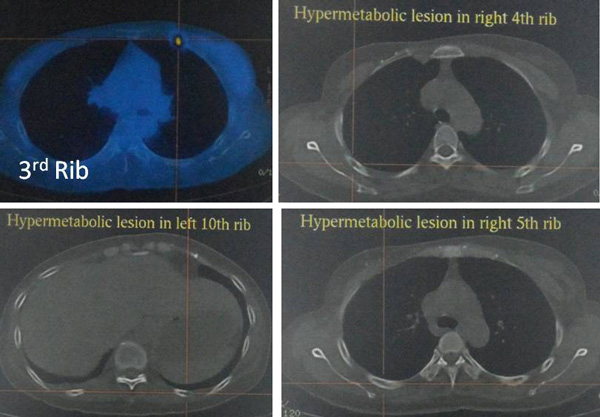
  3. Pleural mass at the right anterior costophenic sulcus measuring 8 x 5.6 x 3.8 cm.
  4. Another large right pleural based mass noted anteriorly underlying the right third rib and it measures 6 x 2.7 x 2 cm.
  5. There is also a fairly large pleural based mass medially abutting the left atrium. It measures 5 x 4 x 3 cm.
  6. Bilateral multiple slightly lobulated pulmonary nodules with two nodules at the left lung apex demonstrating cavitation.
  7. There are bilateral large heterogenous masses occupying the upper half of both kidneys. The right renal mass measures 9 x7.4 x 6.7 cm. The left renal mass measures 8.7 x 8 x 6.6 cm.
  8. There is a peritoneal heterogenous lesion invading segment 6 of the liver, measuring 5.6 x 5 x 5 cm.
  9. There are multiple mildly enlarged retroperitoneal nodes measuring up to 17 mm.
  10. There is biconcave appearance of T3 vertebral body due to compression fracture.
  11. There is deformity at the left iliac crest, due to previous bone grafting.

KC was told by the oncologist that since both his kidneys are infected with cancer, surgery is not indicated. The cancer has also spread to his lungs and liver. The oncologist prescribed Sutent. The total cost of his first visit to the oncologist was RM 7,000. Sutent itself cost RM 5,000 for 9 days consumption. The remaining RM 2,000 was for the CT and RM 300 for consulting the oncologist.

KC came to seek our help on 5 April 2013. The following are excerpts of our conversation.

Chris: Did they remove your kidneys?

KC: No, both my kidneys were infected. They could not remove them.

C: Then you saw the oncologist, what did he do?

KC: He prescribed me this drug (showing Sutent box).

C: How much did this cost you?

KC: RM 5,000 for 9 days of consumption.

C: Did you ask if the drug is going to cure you?

KC: Only to control the spread of the cancer.

C: How long do you need to take this drug?

KC: He cannot tell me. I told the doctor. This drug is expensive, I cannot afford it. He said: How much is your life worth? And when I talked too much he got angry at me. I told him I cannot afford to take this medication. I only earn RM 1,000 plus per month – how to afford it.

C: Did he tell you the adverse side effects of his drug?

KC: ?? No, I told him I cannot afford to take the medication. He asked me: How much is your life worth? And why do you come and see me then?

Comments:  This is indeed a sad and tragic story.  Just reflect on this: How long do you expect a patient who earns RM 1,000 plus per month afford to take drug that cost him RM 15,000 per month?  What is the rationale of asking this patient to take the drug? To cure him or is this for any other purpose?  Patient was to take Sutent so as to stop the cancer from spreading. This unfortunately is the line very often sold to patients to make things attractive. But is that an honest answer based on scientific fact? Read below and you will be shocked!

This is something you need to know that oncologists or those with vested interests, will not tell you!

Sutent-spread-cancer 2

Sutent box

Read more: http://www.dailymail.co.uk/health/article-2088032/Cancer-drugs-aim-shrink-tumours-cutting-blood-supply-actually-help-SPREAD.html#ixzz2PwQx0Tun

  • Cancer drugs that shrink tumours by cutting off their blood supply may end up helping them to spread, a study suggests.
  • Tests on mice showed that both Glivec and Sutent depleted pericytes by 70 per cent while metastasis rates tripled.
  • Glivec, the brand name of the drug imatinib, and Sutent (sunitinib) have both been shown in trials to increase patient survival by a significant degree.
  • Drugs such as Glivec and Sutent reduce the size of tumours but could also make them more aggressive and mobile.
  • As a result tumours find it easier to ‘metastasise’, or spread around the body.

If you just looked at tumour growth, the results were good,‘said lead researcher Professor Raghu Kalluri, from Harvard Medical School in Boston. But when you looked at the whole picture, inhibiting tumour vessels was not controlling cancer progression. The cancer was, in fact, spreading. 

Seventy to 80 percent of cells in breast tumour are non-cancer cells. Are they all bad? Some of them are there to protect us and they’re not all bad.

Indeed  Sutent has been approved by the US FDA for treatment of advanced renal cancer, but the reality is it does not cure advanced or metastatic renal cancer or any cancer at all for that matter. Know that!

Below is the Information obtained from the drug company’s website:  http://www.sutent.com/rcc.aspx

The website said, Sutent has been proven effective in the treatment of advanced RCC (renal cell carcinoma).

A clinical study has proven that Sutent is more effective than interferon alfa (IFNα), another approved treatment option for advanced RCC.

SUTENT results:

  1. SUTENT More Than Doubled Median Progression-Free Survival (PFS) vs IFNα – 11 months vs 5 months with IFNα. 
  2. SUTENT Achieved More Than 2 Years’ Median Overall Survival (OS):  26.4 months vs 21.8 months with IFNα.
  3. FIVE TIMES more people saw their tumors shrink. 103 patients taking Sutent compared to 20 taking IFNα. 

Of course, when you read this information it is very impressive (but don’t fall into the trap of sweetened or massage research data!). Why do I say the message is a sweet camouflage?  Let’s look at the data critically.

  1. If you take Sutent, you have TWO TIMES longer progression-free survival.   Progression-free survival means the length of time from the start of treatment that patients remain alive and their disease does not worsen. The question you want to ask is:, what if you don’t take Sutent – can you also have progression free survival? Of course, but it is shorter a bit. According to the Drug Company, with Sutent the progress-free survival was 11 months compared to 5 months without Sutent. So Sutent gave an advantage of 6 months.Progression-free does not mean cure at all. It is just the disease does not worsen and you are still alive.
  2. Those who take Sutent remained alive. The median overall survival was 26.4 months and then they die. But what if you don’t take Sutent? Patients were still alive but died at 21.8 months. That means by taking Sutent you live longer by 4.6 months.

Take note:  you live longer by only 4.6 months. Is that what you want? Let us look at the economics. To live 4.6 months longer you need to take Sutent for at least 27 months, according to this study. This would cost you about RM 15,000 x 27 = RM 405,000. I am sorry, is my calculator playing tricks on me? Is that not a lot of money to you and me? And spending that kind of money to chase after 4.6 months of extended life? Let us hope that the extra 4.6 months of life is blissful, worth every minute of it. Or is it? There is no free lunch – you may have to suffer severe side effects as listed below.Nowhere in medical literature do I ever come across data showing that Sutent cures your cancer.

3. Five times as many people on Sutent saw their tumors shrink – is this a great achievement? Shrinkage of tumour has NO meaning. It is just a lure or camouflage! And what do you make out of the research led by Professor Raghu Kalluri of Harvard Medical School in Boston which said that Sutent may shrink the tumour but ultimately Sutent  may end up helping cancer spread more aggressively and widely.

The following are warnings given by the Drug Company.

SUTENT may cause serious side effects, including:

  • Serious liver problems, including death
  • Heart problems—include heart failure and heart muscle problems (cardiomyopathy) that can lead to death.
  • Abnormal heart rhythm changes— you feel dizzy, faint, or have abnormal heartbeats
  • High blood pressure.
  • Bleeding sometimes leading to death— these symptoms may include:
    • Painful, swollen stomach (abdomen)
    • Bloody urine
    • Vomiting blood
    • Headache or change in your mental status
    • Black, sticky stools
    • Jaw-bone problems (osteonecrosis)—severe jaw bone problems may happen.
    • Tumor lysis syndrome (TLS)— caused by the fast breakdown of cancer cells and may lead to death. TLS may cause nausea, shortness of breath, irregular heartbeat, clouding of urine and tiredness associated with abnormal laboratory test results (high potassium, uric acid and phosphorous levels and low calcium levels in the blood) that can lead to changes in kidney function and acute kidney failure.
    • Hormone problems, including thyroid and adrenal gland problems— as in the  following signs and symptoms:
      • Tiredness that worsens and does not go away
      • Heat intolerance
      • Loss of appetite
      • Feeling nervous or agitated, tremors
      • Nausea or vomiting
      • Sweating
      • Diarrhea
      • Irregular menstrual periods or no menstrual periods
      • Fast heart rate
      • Headache
      • Weight gain or weight loss
      • Hair loss
      • Feeling depressed

Common side effects of SUTENT include:

  • It may make your skin look yellow. Your skin and hair may get lighter in color
  • Tiredness
  • Weakness
  • Fever
  • Gastrointestinal symptoms, including diarrhea, nausea, vomiting, mouth sores, upset stomach, abdominal pain, and constipation.
  • Rash or other skin changes, including drier, thicker, or cracking skin
  • Blisters or a rash on the palms of hands and soles of feet
  • Taste changes
  • Loss of appetite
  • Pain or swelling in arms or legs
  • Cough
  • Shortness of breath
  • Bleeding, such as nosebleeds or bleeding from cuts

How much is your life worth?

Let me ask you to ponder what Rabbi Harold Kushner said:

11-Kushner-Moral-compass

Perhaps we all should read the article below presented by Drs Tito Fojo and Christine Grady. The first author is from the Medical Oncology Branch of the National Cancer Institute, Bethesda, USA, while Dr. Grady is from the Clinical Center, National Institutes of Health, Bethesda, USA.

Sutent-How-much-is-life-wor

Read more: http://jnci.oxfordjournals.org/content/101/15/1044.full.pdf+html

Read also https://cancercaremalaysia.com/2011/05/27/dissecting-chemotherapy-part-4-how-much-is-life-worth-erbitux-for-lung-cancer/

In their paper, Dr. Fojo & Grady wrote:

  • The all too common practice of administrating a new, marginally beneficial drug to a patient with advanced cancer should be strongly discouraged.
  • In cases where there are no further treatment options, emphasis should be first on quality of life and then cost.
  • For therapies with marginal benefits, toxic effects should receive greater scrutiny.
  • We must deal with escalating price of cancer therapy now.
  • The current condition cannot continue … the time to start is now.
  • As oncologists, we cannot go without answering these questions. The moral character of our specialty depends on the answers.

You may wish to read the following related stories:

  1. Kidney-Lung-Brain Cancer: Sutent = Heart Damage https://cancercaremalaysia.com/2011/09/19/kidney-lung-brain-cancer-sutent-heart-damage/
  2. Sutent for Advanced Kidney Cancer  https://cancercaremalaysia.com/2011/09/18/sutent-for-advanced-kidney-cancer/
  3.  Kidney Cancer Part 2: Two Oncologists Two Different Opinions – Is Sutent indicated in this case? https://cancercaremalaysia.com/2011/09/19/kidney-cancer-part-2-two-oncologists-two-different-opinions-%E2%80%93-is-sutent-indicated-in-this-case/
  4. Die of Cancer But Don’t Die A Bankrupt! https://cancercaremalaysia.com/category/kidney-cancer/

 More:

Perilous Approach: Avastin and Sutent Promote Growth of Breast Cancer Stem Cells

Avastin

(Note: Many patients in Malaysia have been treated with this very expensive drug)

http://badscienceblindtruth.wordpress.com/2013/04/19/perilous-approach-avastin-and-sutent-promote-growth-of-breast-cancer-stem-cells/

Medical Bankruptcy in the US

After reading Steven Brill article, Bitter Pill: Why medical bills are killing us (Time magazine, 20 February 2013) I started to surf the Internet and posed some questions. Let me share with you what I found.

Frederick Allen of Forbes wrote an article: The Reason American Health Care Is Out Of Control http://www.forbes.com/sites/frederickallen/2013/03/05/the-reason-american-health-care-is-out-of-control/

This is what he wrote:

Steven Brill’s Time magazine cover story last week on health care got a lot of attention for its tracking of astronomical costs in American health care back to their sources. But why are those costs so high anyway? Is it because an unfettered free market is not allowed to work when it comes to health and medicine? Quite to the contrary.  It’s partly because an unfettered free market cannot work when it comes to health and medicine … a free market can’t control those costs. It can only distort and encourage them. It makes them worse. And it isn’t even really a free market.

As Steve Brill wrote: Everyone along the supply chain—from hospital administrators (who enjoy multimillion-dollar salaries) to the salesmen, executives and shareholders of drug and equipment makers—was reaping a bonanza.

And the only free-market choice I could make at this point to bring way down my own astronomical medical costs would be the choice that was so famously given to Jack Benny: Your money or your life.

Two readers responded to Frederick Allen’s article:

  • Doctors in the US have a very powerful cartel restricting the supply of new doctors – medical school slots and residency positions are not increasing due to the demographic-driven demand. Mid-level providers (Nurse Practitioners and Physician Assistants) help meet the demand; but the barriers to becoming a doctor can’t help control prices.
  • It is very true that people shall pay anything for preserving life! This very compulsion of a patient, is exploited by everyone in the medical sector where there exists nexus between doctors and insurance companies on one hand and on the other hand another nexus exists between pharmaceutical companies and medical clinics/doctors. In their greed to milk a needy patient, every means is employed to make him pay for extremely exorbitant prices for medicines even though cheaper substitutes could be available. There must be some accountability in such matters. Medical profession has turned out to be an extremely lucrative profession in the present times. If patients are left a choice to shop for buying the prescribed medicines from adjoining Canada or Mexico, they would get exactly same named prescribed medicine, manufactured by the same company, at a much cheaper rate over there. The US. Federal government rather should give a choice to those patients who can procure those prescribed medicines at cheaper rates from Canada/Mexico etc.

I typed this question in Google search: Is the US healthcare cost-effective?

The US healthcare system is one of the least cost-effective in reducing mortality rates; while the United Kingdom is among the most cost-effective, according to a recent study published in the July issue of Journal of the Royal Society of Medicine Short Reports. The study compared the United States, United Kingdom, and 17 Western countries’ efficiency and effectiveness in reducing mortality over a 25-year period. The greatest cost-effectiveness  was found for Ireland, United Kingdom, and New Zealand  and the  least cost effective, were found for Portugal, Switzerland, and the United States.

Read more: http://formularyjournal.modernmedicine.com/news/us-healthcare-system-among-least-cost-effective-reducing-mortality

Umair Haque, Director of Havas Media Labs and author of Betterness: Economics for Humans  wrote:

  • Unless you’ve been living under a rock, you’ve heard by now that, where the majority of developed countries spend between 8–10% of GDP on health, America spends ~16%. Per capita healthcare costs in the States have significantly outstripped costs in other countries.
  • Why has healthcare expenditure exploded? Each component of healthcare spending has grown — but the fastest growth has come from prescription drug spending. Where people in other developed countries spend between $400 and $500, Americans spend almost $900 per capita on pharmaceuticals.
  • Americans receive less care than their counterparts in other developed nations. The US has the lowest number of hospital beds per 1,000 people amongst developed countries. And it has the smallest number of doctor consultations per capita — just 3.8, compared to Canada’s 5.8, or Germany’s 7.4.
  •  Americans pay more for healthcare because they trade more expensive products for less service, realizing poorer outcomes. Why? Because that is what maximizes near-term profits along the value chain.

1-Profit-of-pharma

 Read more: http://blogs.hbr.org/haque/2009/08/how_to_think_constructively_ab.html

I typed this question in Google search: Is the US healthcare compassionate?

Rick Nauert, in an article: Compassion Missing in American Health Care wrote: Compassionate care is defined by the following four essential characteristics:

1. Empathy, emotional support, and a desire to relieve a patient’s distress and suffering.
2. Effective communication at all stages of a patient’s illness and treatment.
3. Respecting patients’ and families’ desires to participate in making health care decisions.
4. Knowing and relating to the patient as a whole person, not just a disease.

Compassion is as important in helping patients manage chronic and acute conditions as it is at the end of life. To improve quality and reduce costs, compassion should be present in all aspects of our healthcare system.

The survey found that only 53 percent of patients and 58 percent of doctors rate the U.S. healthcare system as a compassionate one.  Problems with the U.S. health care system include escalating costs, medical errors, inconsistent results and, according to a new national survey, a lack of compassion.

Read more: http://psychcentral.com/news/2011/09/09/compassion-missing-in-american-health-care/29295.html

Gordon Marino, professor of philosophy at St. Olaf College  wroteThe real US healthcare issue: compassion deficiency. Americans suffer from a compassion deficiency.

Read more: http://www.csmonitor.com/Commentary/Opinion/2009/0813/p09s01-coop.html 

I typed this question in Google search: Is the US healthcare money driven?

There is a movie –  Money-Driven Medicine –  produced by Academy Award winner Alex Gibney (Taxi to the Dark Side, etc.) and inspired by Maggie Mahar’s acclaimed book, Money Driven Medicine: The Real Reason Health Care Costs So Much.  The message of this movie:

  • The U.S. spends twice as much per person on healthcare as the average developed nation,  yet our outcomes, especially for chronic diseases, are very often worse.
  • What makes us the exception? The U.S. is the only industrialized nation that has chosen to turn medicine into a largely unregulated, for-profit business.
  • Dr. Donald Berwick, Administrator of the Centers for Medicare and Medicaid Services, explains: We get more care, but not better care.
  • Medical ethicist Larry Churchill doesn’t mince words: The current medical care system is not designed to meet the health needs of the population. It is designed to protect the interests of insurance companies, pharmaceutical firms, and to a certain extent organized medicine. It is designed to turn a profit. It is designed to meet the needs of the people in power.
  • As the eye-opening ads in Money-Driven Medicine reveal, the more new drugs, surgical procedures, diagnostic devices and hospital beds the health industry can produce, the more they can sell – whether we need them or not. It’s called “supply-driven demand” and it’s possible because a sick consumer can’t say no.

Read more: http://moneydrivenmedicine.org/about-mdm

In another article: 50 Signs That The U.S. Health Care System Is A Gigantic Money Making Scam That Is About To Collapse, the author wrote:

  • The U.S. healthcare system is a giant money making scam that is designed to drain as much money as possible out of all of us before we die.
  • In the United States today, the healthcare industry is completely dominated by government bureaucrats, health insurance companies and pharmaceutical corporations.  The pharmaceutical corporations spend billions of dollars to convince all of us to become dependent on their legal drugs, the health insurance companies make billions of dollars by providing as little health care as possible, and they both spend millions of dollars to make sure that our politicians in Washington D.C. keep the gravy train rolling.
  • Healthcare costs continue to go up rapidly, the level of care that we are receiving continues to go down, and every move that our politicians make just seems to make all of our healthcare problems even worse.
  • In America today, a single trip to the emergency room can easily cost you $100,000, and if you happen to get cancer you could end up with medical bills in excess of a million dollars.
  • Even if you do have health insurance, there are usually limits on your coverage, and the truth is that just a single major illness is often enough to push most American families into bankruptcy.  At the same time, hospital administrators, pharmaceutical corporations and health insurance company executives are absolutely swimming in huge mountains of cash.

Read more: http://theeconomiccollapseblog.com/archives/50-signs-that-the-u-s-health-care-system-is-a-gigantic-money-making-scam-that-is-about-to-collapse

 I typed this in Google search:  Are Americans going bankrupt due to medical bill?

David U. Himmelstein, MD; Deborah Thorne, PhD; Elizabeth Warren, JD; and Steffie Woolhandler, MD, MPH are from the Department of Medicine, Cambridge Hospital/Harvard Medical School, Department of Sociology, Ohio University and Harvard Law School. They published their study: Medical bankruptcy in the United States, 2007 in the American Journal of Medicine, http://www.pnhp.org/new_bankruptcy_study/Bankruptcy-2009.pdf


What did they say? In 1981, only 8% of families filed for bankruptcy due to serious medical problem. In 2001, the author’s study showed that at least 46.2% of all bankruptcies were due to medical problems. In 2007, 62.1% of all bankruptcies were because of medical problems.

The shocking discovery: Most medical debtors were well educated, own homes and had middle class occupations. Three quarters had health insurance.

What has gone wrong? High medical bills directly contributed to their bankruptcy. Many families with continuous coverage found themselves under-insured, responsible for thousands of dollars in out-of-pocket costs. Others had private coverage but lost it when they became too sick to work. Nationally, a quarter of firms cancel coverage immediately when an employee suffers a disabling illness; another quarter do so within a year.

The authors concluded: The US healthcare financing system is broken.

CNN carried this report: Medical bills prompt more than 60 percent of U.S. bankruptcies. This year, an estimated 1.5 million Americans will declare bankruptcy. Many people may chalk up that misfortune to overspending or a lavish lifestyle, but a new study suggests that more than 60 percent of people who go bankrupt are actually capsized by medical bills. Bankruptcies due to medical bills increased by nearly 50 percent in a six-year period,

Read more: http://articles.cnn.com/2009-06-05/health/bankruptcy.medical.bills_1_medical-bills-bankruptcies-health-insurance?_s=PM:HEALTH

Reuters had this report: Medical bills underlie 60 percent of U.S. bankrupts: study. According to this report, medical bills are behind more than 60 percent of U.S. personal bankruptcies … healthcare reform is on the wrong track. More than 75 percent of these bankrupt families had health insurance but still were overwhelmed by their medical debts.

Dr. David Himmelstein of Harvard University said: Unless you’re Warren Buffett, your family is just one serious illness away from bankruptcy…For middle-class Americans, health insurance offers little protection.

http://www.reuters.com/article/2009/06/04/us-healthcare-bankruptcy-idUSTRE5530Y020090604

In the New York Times, Medical Bills Cause Most Bankruptcies, Tara Parket-Pope wrote:  Nearly two out of three bankruptcies stem from medical bills, and even people with health insurance face financial disaster if they experience a serious illness. The U.S. health care financing system is broken, and not only for the poor and uninsured,” the study authors wrote. “Middle-class families frequently collapse under the strain of a health care system that treats physical wounds, but often inflicts fiscal ones.

http://well.blogs.nytimes.com/2009/06/04/medical-bills-cause-most-bankruptcies/

Brennan Keller wrote in his blog: A new study done by Harvard University suggests that more than 62% of all personal bankruptcies are caused by the cost of over-whelming medical expenses. Of the most financially devastating diseases, cancer reigns supreme.

Read more: http://www.giveforward.com/blog/medical-expenses-top-cause-of-bankruptcy-in-the-united-states

Professor of Political Science, University of Missouri-St. Louis, Dr. Kenneth Thomas wrote: Medical Costs Help Drive United States to Highest Bankruptcy Rate in OECD.  A study published in the American Journal of Medicine shows that there was a sharp increase in the proportion of bankruptcies with significant medical causes (defined as debts over $5,000, loss of income due to health problems, or mortgaging of the debtor’s home to help meet medical expenses) between 2001 and 2007. According to their study, 46.2% of bankruptcies in 2001 were medically-related, while by 2007 the level had grown to 62.1%.

1-Bankcrupcy

http://middleclasspoliticaleconomist.blogspot.com/2012/02/medical-costs-help-drive-united-states.html

As expected, in any democratic country, there are always people who would dispute every scientific finding. Sally Pipes in her article: Medical bankruptcy: Fact or fiction?  http://thehill.com/blogs/congress-blog/economy-a-budget/263547-the-myth-of-medical-bankruptcy#ixzz2NHrAoqfD  wrote:

  • This year, a whopping 1.25 million Americans are expected to file for bankruptcy. Ask the president and his allies whom to blame, and they’ll point to healthcare. President Obama has claimed that the cost of healthcare causes a bankruptcy every 30 seconds.
  • But the alleged link between health costs and bankruptcy is about as real as the tooth fairy. The overwhelming body of research shows that medical costs play little or no role in the vast majority of U.S. personal bankruptcies.
  • Proponents of the health-cost-bankruptcy theory tend to cite a Harvard study that blames high medical bills for some 62 percent of American bankruptcies.
  • A study published in the journal Health Affairs reviewed Justice Department data and discovered that among Americans who cited medical debt as a contributing factor in their bankruptcy filing, only 12 to 13 percent of their total debts were medical.
  • The study also found that medical spending was a factor in no more than 17 percent of U.S. bankruptcies.
  • Too many Americans go bankrupt each year. But contrary to the claims … the cost of healthcare is not to blame. 

You can agree or disagree with what Sally Pipes wrote, but let me ask you to read again the article: Are medical bills killing patients?  $83,900 (approx: RM 251,700) the initial cost of a lymphoma treatment, or $902,452  (approx: RM 2.2 million) for treatment of lung cancer for 11 months before the patient died.

With that kind of medical bills, who would not go bankrupt?

As I surfed the internet further, I came across many shocking facts – I asked myself:  How not to go bankrupt with things like this happened?

The tab for medical care can add up quickly. Take a breast cancer diagnosis, for example.

  • A  breast cancer diagnosis bill can easily top $25,000.
  • A bilateral mammogram costs about $270.
  • A biopsy to test a suspicious area costs about $1,070.
  • A total mastectomy would cost about $11,500.
  • If the patient needs chemotherapy, a four-day hospitalization for treatment will run about $13,400.
  • Add another $260 per radiation treatment.

http://www.columbian.com/news/2012/nov/04/medical-bills-lead-many-families-to-file-for-bankr/

here are two interesting comments  in response to Towering Medical Bills Leave Many Americans Bankrupt:

  • This is written in loving memory of a couple I knew for decades. She suffered a lifetime with bi-polar. To pay for the expensive drugs not covered, he re-mortgaged. After retirement he could no longer keep up. The night before their foreclosure, he shot her and their border collie (dog) and out of grief torched their house. He is now serving life. The collie was killed “because he would have died of a broken heart”. Whenever I think of how inhuman our health care non-system is, my heart breaks again.
  • Our 25 year old son could not afford health insurance and it wasn’t provided at the restaurant where he worked. He had a serious accident which resulted in extensive third degree burns on his right hand, arm and leg. He was in the burn unit in Buffalo, NY for two weeks, underwent skin grafts and physical therapy to regain the use of his right hand and fingers. He ran up over 50K of medical bills but did not declare bankruptcy-because of the stigma. Now he is crippled by medical bills, cannot afford a car, his own apartment, or health insurance on his income. I don’t see how he will be able to recover from this and ever afford to have a family. 

Read more: http://www.npr.org/templates/story/story.php?storyId=105193107

  • When a Medicine (Revlimid) “Works” It’s Unaffordable: $132,000/year, $534/pill (This is RM 1,650 per pill) :  After making more than 70 phone calls to 16 organizations over the past few weeks, I’m still not totally sure what I will owe for my Revlimid, a derivative of thalidomide that is keeping my multiple myeloma in check. The drug is extremely expensive — about $11,000 retail for a four-week supply, $132,000 a year, $524 a pill. 
  • While drug companies spend a great deal to develop medications, their costs are inflated and overstated.  Efficiency is simply not on their agenda.  Nor is patient well being, access or for that matter outcomes. It’s the money stupid!  Charging more than twice the median U.S. income for a single drug that patients in life-threatening situation, any single drug, is simple blackmail.  It reflects an industry and economy gone mad. 
  • I had a friend who was on Revlimid for a pre leukemia condition. He was shocked when I told him what the cost was. The drug also has some very nasty side effects. Despite the treatment, he died a few months after starting it. 

Read more: http://medicynic.com/2012/12/09/and-when-a-medicine-revlimid-works-its-unaffordable-132000year-534pill/

  • Cabozantinib: A Miracle Cancer Drug without Survival Benefit:  The FDA recently approved cabozantinib for use in medullary thyroid cancer that has metastasized.  What’s noteworthy about this drug is that it will likely be very expensive and that it does not, repeat does not improve the patient’s survival – No statistically significant difference in overall survival.
  • Cometriq contains a Boxed Warning, telling doctors and patients about the risks of severe and fatal bleedings and perforations and fistula in the colon.
  • Other new miracle agents often have limited efficacy with say two months median survival improvement.  But this is the first such drug being actively promoted, that I can recall, that has no survival benefit. Maybe this is yet another reason we spend more on healthcare than any other country in the world.  

Read more: http://medicynic.com/2012/12/04/cabozantinib-another-miracle-cancer-drug-without-survival-benefit/

Read also: 

  1. The high cost of staying alive in a private hospital  https://cancercaremalaysia.com/2012/11/13/part-1-the-high-cost-of-staying-alive-in-a-private-hospital/
  2. Die of cancer but don’t die a bankrupt  https://cancercaremalaysia.com/2012/12/14/die-of-cancer-but-dont-die-a-bankrupt/
  3. How much life is worth  https://cancercaremalaysia.com/2011/05/27/dissecting-chemotherapy-part-4-how-much-is-life-worth-erbitux-for-lung-cancer/
  4. Money driven medicine  https://cancercaremalaysia.com/2011/09/02/book-review-money-driven-medicine-%E2%80%93-chemotherapy-for-non-responsive-cancers-%E2%80%93-denying-reality/
  5. Avastin does not cure cancer https://cancercaremalaysia.com/2011/05/27/dissecting-chemotherapy-part-6-avastin-does-not-cure-cancer/


Are Medical Bills Killing Patients?

Again please?

Medical bills are killing patients?

Yes, medical bills are killing you!

Do I hear it right?

Medical bills are killing you?

But I am sick! Should it not be the disease that is killing me?

You bet!

Times Magazine of 20 February 2013, carried a lengthy article by Steven Brill: Bitter Pill – Why Medical Bills Are Killing Us. I printed out this article – there are 46 pages in all!

You can read the original article here: http://healthland.time.com/2013/02/20/bitter-pill-why-medical-bills-are-killing-us/#ixzz2MjdpIcGO

These are some mind-boggling things that are happening in the hospitals in America today (passages extracted from the said article).

  • 1. Initial Lymphoma Treatment at MDA: $83,900 (approx: RM 251,700)

Sean Recchi, 42-year-old, was diagnosed with non-Hodgkin’s lymphoma. He went to MD Anderson (MDA) Cancer Center in Houston, Texas.

  • Just to be examined for six days so a treatment plan could be devised:  $48,900 to be paid in advance.
  • Sean’s treatment plan and initial doses of chemotherapy was $83,900.
  • Every time a nurse drew blood, the charge was $36.00, accompanied by charges of $23 to $78 for each of a dozen or more lab analyses performed on the blood sample. In all, the charges for blood and other lab tests done amounted to more than $15,000.
  • An injection of 660 mg of a cancer wonder drug called Rituxan was $13,702.
  •  “ALCOHOL PREP PAD” $7 each. This is a little square cotton used to apply alcohol to an injection area. A box of 200 can be bought online for $1.91.
  • Room charge:  $1,791-a-day.

Sean Recchi’s dose of Rituxan cost the Biogen Idec–Genentech partnership as little as $300 to make, test, package and ship. MD Anderson paid  $3,000 to $3,500 for this medicaton, whereupon the hospital sold it to Recchi for $13,702.

As 2013 began, Recchi was being treated back in Ohio because he could not pay MD Anderson for more than his initial treatment. As for the $13,702-a-dose Rituxan, it turns out that Biogen Idec’s partner Genentech has a charity-access program that Recchi’s Ohio doctor told him about that enabled him to get those treatments for free.

2.  False Alarm due to Indigestion: $21,000 (approx: RM 63,000)

Janice is a 64-year-old former sales clerk. She felt chest pains. She was brought by an ambulance to the emergency room at Stamford Hospital about four miles awa. After about three hours of tests and some brief encounters with a doctor, she was told she had indigestion and sent home. That was the good news. But the bad news were her medical bills …

  • The ambulance ride (four miles) came to $995.
  • $3,000 for the doctor and
  • $17,000 for the hospital.
  • In total she had to pay $21,000 for a false alarm.
  • An “NM MYO REST/SPEC EJCT MOT MUL” was billed at $7,997.54. That’s a stress test using a radioactive dye that is tracked by an X-ray or CT scan.
  • An additional $872.44 just for the dye used in the test.
  • The cardiologist in the emergency room gave Janice a separate bill for $600 to read the test results on top of the $342 he charged for examining her.

The regular stress test patients are more familiar with, in which arteries are monitored electronically with an electrocardiograph, would have cost far less — $1,200.

Stamford probably paid about $250,000 for the CT equipment in its operating room. It costs little to operate, so the more it can be used and billed, the quicker the hospital recovers its costs and begins profiting from its purchase. According to a McKinsey study of the medical marketplace, a typical piece of equipment will pay for itself in one year if it carries out just 10 to 15 procedures a day. That’s a terrific return on capital equipment that has an expected life span of seven to 10 years. And it means that after a year, every scan ordered by a doctor in the Stamford Hospital emergency room would mean pure profit, less maintenance costs, for the hospital. Plus an extra fee for the doctor.

The costs associated with high-tech tests are likely to accelerate. McKinsey found that the more CT and MRI scanners are out there, the more doctors use them. In 1997 there were fewer than 3,000 machines available, and they completed an average of 3,800 scans per year. By 2006 there were more than 10,000 in use, and they completed an average of 6,100 per year. According to a study in the Annals of Emergency Medicine, the use of CT scans in America’s emergency rooms has more than quadrupled in recent decades.

The dynamics of the medical marketplace seem to be such that the advance of technology has made medical care more expensive, not less. First, it appears to encourage more procedures and treatment by making them easier and more convenient.

  • 3. A Fall Cost Her $9,400 (approx: approx: RM 28,200) in Medical Bills

Emilia Gilbert is a school-bus driver.  In June 2008 she slipped and fell on her face one summer evening in the small yard behind her house. Her nose was  bleeding heavily and she was taken to the emergency room at Bridgeport Hospital. Gilbert said: I was there for maybe six hours, until midnight and most of it was spent waiting. I saw the resident for maybe 15 minutes, but I got a lot of tests. In fact, Gilbert got three CT scans — of her head, her chest and her face.

  • The CT bills alone were $6,538.
  • A doctor charged $261 to read the scans.
  • Gilbert’s total bill was $9,418 (approx. RM 28,200).

4. One-Day Outpatient Bill, $87,000 (approx: RM 261,000)

Steve, a blue collar worker, was in his 30s at the time and worked at a local retail store. He spent the day at Mercy Hospital in Oklahoma City getting his aching back fixed. He was told that a stimulator would have to be surgically implanted in his back. The good news was that with all the advances of modern technology, the whole process could be done in a day.

  • The Medtronic stimulator cost  $49,237.
  • Basic medical and surgical supplies was $7,882.
  • Bacitracin cost $108. This is a common antibiotic ointment.
  • His total bill was $86,951 (approx. RM 261,000).

Steve ’s bill for his day at Mercy contained all the usual and customary overcharges.

  •  “MARKER SKIN REG TIP RULER” for $3. That’s the marking pen, presumably reusable, that marked the place on Steve’s back where the incision was to go.
  •  “STRAP OR TABLE 8X27 IN” for $31. That’s the strap used to hold Steve onto the operating table.
  • Yet another item, “BLNKT WARM UPPER BDY 42268” for $32. That’s a blanket used to keep surgery patients warm. It is, of course, reusable, and it’s available new on eBay for $13.
  • “GOWN SURG ULTRA XLG 95121” for $39, which is the gown the surgeon wore. Thirty of them can be bought online for $180.

5. Medical Treatment for Stage 4 Lung Cancer: $902,452  (approx: RM 2.2 million)

This is a case of Steven and his wife Alice. Alice makes about $40,000 a year running a child-care center in her home. In January 2011, Steven was diagnosed with Stage 4 lung cancer. The couple knew that they were only buying time now. The crushing question was: How much is time really worth?

Steven died after 11 months of medical treatment at Seton Medical Centre in Daly, California. His wife, Alice had collected his medical bills totaling $902,452 (approx: RM 2.2 million). Alice said:  [Steven] kept saying he wanted every last minute he could get, no matter what. But I had to be thinking about the cost and how all this debt would leave me and my daughter.

Among the items charged in the bills were:

  • $18 each for 88 diabetes-test strips that Amazon sells in boxes of 50 for $27.85;
  • $24 each for 19 niacin pills that are sold in drugstores for about a nickel apiece.
  • Four boxes of sterile gauze pads for $77 each.
  • Intensive-care unit for two days at $13,225 a day.
  • 12 days in the critical unit at $7,315 a day and
  • Total room charges totaled $120,116 over 15 days.
  • $20,886 for CT scans and
  •  $24,251 for lab work.

As 2012 closed, Alice had paid out part of the bills and still owed $142,000 —I think about the $142,000 all the time. It just hangs over my head, she said in December. One lesson she has learned, she adds: I’m never going to remarry. I can’t risk the liability.  In early February, Alice told TIME that she had recently eliminated most of the debt through proceeds from the sale of a small farm in Oklahoma her husband had inherited.

  • 6.  Pneumonia Treatment for $474,064 (approx: RM 1.42 million)

Rebecca and Scott are both in their 50s. On March 4, Scott started having trouble breathing. By dinner time he was gasping violently as Rebecca raced him to the emergency room at the University of Texas Southwestern Medical Center. Both Rebecca and her husband thought he was about to die, Rebecca recalls.

Scott was in the hospital for 32 days before his pneumonia was brought under control. Rebecca recalls that “on about the fourth or fifth day … the medical bill was over $80,000! When Scott checked out, his 161-page bill was $474,064.

  • The top billing categories were $73,376 for Scott’s room ( at $2,293 a day).
  • $94,799 for “RESP SERVICES,” which mostly meant supplying Scott with oxygen and testing his breathing and
  • $134 per day  for supervising oxygen inhalation
  • “SODIUM CHLORIDE  9%”  cost  $84 to $134. He used dozens of this. That’s a standard saline solution probably used intravenously in this case to maintain Scott’s water and salt levels. (It is also used to wet contact lenses.) You can buy a liter of the hospital version (bagged for intravenous use) online for $5.16.
  • $132,303 charge for “LABORATORY,” which included hundreds of blood and urine tests ranging from $30 to $333 each.
  • $24 per 500-mg tablet of niacin. In drugstores, the pills go for about a nickel each.

7.  Immune Booster Shot That Cost $ 7,346 (Approx: RM 22,000) Every 6 Weeks

About a decade ago, Alan  was diagnosed with non-Hodgkin’s lymphoma. He was 78, and his doctors in New Jersey told him there was little they could do. Through a family friend, he got an appointment with one of the lymphoma specialists at Sloan-Kettering. That doctor told Alan he was willing to try a new chemotherapy regimen on him. The treatment worked.  A decade later, Alan is still in remission. He now travels to Sloan-Kettering every six weeks to be examined by the doctor who saved his life and to get a transfusion of Flebogamma, a drug that bucks up his immune system.

  • Sloan-Kettering’s bill for the transfusion is about $7,006.
  • In addition he had to pay the doctor $340 for a session.
  • Each  visit cost a total of $7,346.
  • Assuming eight visits (but only four with the doctor), that makes the annual bill $57,408 (This is approximately RM 172,224) a year to keep Alan alive.

Two basic Sloan-Kettering charges are $414 per hour for five hours of nurse time for administering the Flebogamma and a $4,615 charge for the Flebogamma.

According to Alan, the nurse generally handles three or four patients at a time. That would mean Sloan-Kettering is billing more than $1,200 an hour for that nurse.

Flebogamma’s Profit Margin:  Made from human plasma, Flebogamma is a sterilized solution that is intended to boost the immune system. Sloan-Kettering buys it from either Baxter International in the U.S. or a Barcelona-based company called Grifols.

  • The Flebogamma dose for Alan — “can’t cost them more than $200 or $300 to collect, process, test and ship.”
  • Sloan-Kettering bought this dose from Grifols for $1,400 or $1,500 and charged Alan $4,615 for it!

These are some questions posed by the author:

  • What are the reasons, good or bad, that cancer means a half-million- or million-dollar tab?
  • Why should a trip to the emergency room for chest pains that turn out to be indigestion bring a bill that can exceed the cost of a semester of college?
  • What makes a single dose of even the most wonderful wonder drug cost thousands of dollars?
  • Why does simple lab work done during a few days in a hospital cost more than a car?
  • And what is so different about the medical ecosystem that causes technology advances to drive bills up instead of down?

Read more: http://healthland.time.com/2013/02/20/bitter-pill-why-medical-bills-are-killing-us/#ixzz2MjdpIcGO

My Last Word

This is American – the land where people have great dreams!  In the 1970s, I did my Ph.D. in that great country with the generosity of the US government. Then my two children went to the US to do their Ph.Ds – also courtesy of the American people.  Thank you!

America is a great country – to study and to work in, but it sadden me to know that it is not a great country for the sick – especially if one is not adequately covered by medical insurance as this article tells us.  In my next article on medical bankruptcy the situation is even more depressing.

You may ask me why I try to poke my nose into the “domestic” affairs of the US.  The reality is, what is happening in the US today can also happen in this part of our world! Better that we know now what is going on and be well prepared for a rude shock!

One patient with pancreatic cancer went to see an oncologist. She spent about 10 minutes consulting him and was charged S$700 (that is RM 1,700 – the pay of an average worker for a month!). What was she told during that ten-minute-encounter? Read her story here: https://cancercaremalaysia.com/2012/05/29/part-1-an-encounter-with-an-oncologist-a-great-disappointment/

But S$700 is already cheap! Read this story: Breast cancer: She died even after a multi-million dollar medical bill  https://cancercaremalaysia.com/2011/03/01/breast-cancer-she-died-even-after-multi-million-dollar-medical-bill/

The question under discussion is, what is a fair and reasonable fee a renown doctor can charge his/her patient? These are the figures given by the various medical doctors of Singapore:

  • Dr. Hong Ga Sze  said a reasonable daily fee is $1,000 to $2,000 per day.
  • Dr. Tan Yew Oo, oncologist at Gleneagles Cancer Centre said $10,000 to $20,000 per day.
  • Professor Soo Khee Chee, head of the National Cancer Centre said $100,000 a day is fine and agreed that on a day Dr. Susan Lim could have charged as much as $450,000 per day.

The husband of a patient spent about 2 billion rupiahs for the treatment of his wife’s cancer without success. During our conversation he told me that he was billed S$120 (RM 300) each time his wife sat on the chair in the clinic to receive the chemotherapy drip.

You can read more stories here:

  1. Fancy gadget and half a million ringgit failed to cure her https://cancercaremalaysia.com/2011/01/29/breast-cancer-fancy-gadget-and-half-a-million-ringgit-failed-to-cure-her-%E2%80%93-what-now/
  2. She almost died after spending two billion rupiahs on chemotherapy in Singapore https://cancercaremalaysia.com/2011/12/27/utero-ovary-lungs-cancer-part-1-she-almost-died-after-spending-two-billion-rupiahs-on-chemotherapy-in-singapore/
  3. Surgery-27 cycles of chemo and S$100,000 did not cure her https://cancercaremalaysia.com/2012/01/11/colon-lung-cancer-surgery-twenty-seven-cycles-of-chemo-and-sgd-100000-did-not-cure-her/

Let me close with this quotation by Daniel Taylor:  Medical tyranny is here, and we can’t say we weren’t warned http://www.oldthinkernews.com/2012/11/benjamin-rush-medical-freedom/  Benjamin Rush, one of the signers of the Declaration of Independence, warned in 1787 that medical freedom needed to be included in the American Constitution. Without this protection, Rush warned that the medical establishment would naturally progress – as many of mankind’s institutions do – into an oppressive dictatorship. His words, echoing from over 200 years ago, ring strikingly true today: The Constitution of this Republic should make special provision for medical freedom. To restrict the art of healing to one class will constitute the Bastille of medical science. All such laws are un-American and despotic. … Unless we put medical freedom into the constitution the time will come when medicine will organize into an undercover dictatorship and force people who wish doctors and treatment of their own choice to submit to only what the dictating outfit offers.

Breaking News

As I was about to post this article, someone sent me the link to this article: 

NY, NJ AREA CARDIOLOGIST ADMITS RECORD $19M FRAUD

NEWARK, N.J. (AP) — A cardiologist with offices in New York and New Jersey has admitted taking part in a scheme that subjected thousands of patients to unnecessary tests and treatment and resulted in $19 million in bogus bills, what authorities call the largest case of health care fraud ever by a practitioner in either state.

Read more: http://hosted.ap.org/dynamic/stories/U/US_CARDIOLOGIST_MASSIVE_FRAUD?SITE=AP&SECTION=HOME&TEMPLATE=DEFAULT


Breast Cancer Went Wild After Surgery, Chemo-Radiotherapy. E-Therapy Helped Relieve Her Pains

Eva (not real name) was 33 years old when she was diagnosed with breast cancer. She underwent surgery at a hospital in Hong Kong in June 2009.

The histopathology reports indicated the following:

1.  Left breast mass at 1 o’clock – excision

Diagnosis: Fibroadenosis, Fibroadenoma.

Right breast mass at 1 o’clock, lumpectomy.

Diagnosis: Infiltrative ductal carcinoma, grade 2. No sentinel lymph node metastasis (0/14).

Tumour size: 1.1 + 0.6 cm.

Resection margins clear.

Positive for estrogen and progesterone receptors, highly proliferative activity. Negative for c-erbB-2 oncoprotein.

2.   Right breast lump at 3 o’clock, lumpectomy

 Diagnosis: Fibroadenoma.

After surgery, Eva received 6 cycles of chemotherapy – 3 cycles using FEC (5FU + epirubicin + cyclophosphamide) and 3 cycles of Taxol. This was done in Hong Kong. She received 30 radiation treatments in Macau. There was no further medication after this.

A follow-up mammogram in 2011 showed everything was clear.

In 2012 (i.e. some 3 years later) Eva started to have back pain. MRI in December 2012 showed some spots in her lumbar.

In January 2013, a PET / CT scan showed extensive bony metastasis. She was prescribed Tamoxifen and Xeloda and pain killers.

Medication

After taking Xeloda she was not able to sit down or walk. She had to be hospitalized for a week and given painkiller injection. She was discharged and had to use the wheelchair.

At the end of February 2013, Eva decided to return to her home in Indonesia.

In late March 2013, she consulted an oncologist in Penang. She was told to undergo chemotherapy again using Carboplatin. She has to take an oral drug, Navelbine.  She has to undergo six cycles of this treatment and each cycle would cost RM 7,000. In addition she needs a monthly injection of bisphosphonate for her bone. This would cost an addition RM 1,700 per month.

Can the treatment cure her? The oncologist said: Not sure!

Eva refused further medical treatment. Eva and her mother (who also has cancer) came to seek our help on 21 March 2013. She presented severe pain and was unable to sleep at night. Her movements were very restricted.

Her CA 15.3 results over the years showed an increase from 12.7 to 246.1

Date

CA 15.3

21 October 2011

12.7

29 August 2012

36.8

5 November 2012

80.1

23 January 2013

246.1

The following are the results of her PET/CT dated 16 January 2013.

  1. There is no hypermetabolic lesion noted in the residual right breast.
  2. There are multiple hypermetabolic lymph nodes seen over the right internal mammary region, right superior mediastinum, right supraclavicular fossa and lever V of right neck.
  3. No hypermetabolic node found in bilateral axillary regions, left supraclavicular fossa or left neck.
  4. The left breast shows normal FDG uptake.
  5. Hypermetabolic nodule noted in the right pectoralis major at the level of 1st anterior rib.
  6. There is physiologic uptake of brown fat in bilateral lower necks.
  7. Physiological FDG uptake seen in the brain parenchyma.

Extensive bony metastasis

  1. Multiple hypermetabolic deposits are present in:
    1.  bilateral pariental bones and left occipital bone,
    2. Right sphenoid body
    3. Clivus,
    4. Left submandibular ramus,
    5. Sternum,
    6. Left scapula,
    7. Right upper humerus,
    8. Right 4th and 5th ribs,
    9. Left 3rd and 10 ribs,
    10. Bilateral iliac bone,
    11. Left ischium,
    12. Bilateral pubis,
    13. Lesser trochanter of right femur,
    14. Left femoral neck,
    15. Extensive involvement of spinal column from cervical spines to sacrum.

The CT images show:

  1. Lytic destruction at the corresponding area,
  2. And soft tissue mass in some of the lisions.
  3. Focal hypermetabolic mass protruding into the spinal canal and compressing the dura sac, including right lateral aspects of C3 level, anterior aspect of T9 and T10 levels, anterior and right lateral aspect of T11 level as well as left anterior aspects of T12 level.

PET / CT scan showed the cancer had spread to some 29 locations in her body as below

Slide1

Slide2Slide3Slide4Slide5Slide6Slide7Slide8

E-Therapy at CA Care

We really felt sorry for Eva seeing her in such severe pain. We decided that Eva should try the e-therapy right away and requested her to postpone her return home. She needed to stay in Penang for an additional 5 days. And here is her story.

In summary after 2 days on the e-therapy, Eva had less pain and was able to sit up and watch the television for 2 hours. This is something she could not do before. She had to lie down in bed most of the time. With the e-therapy she could sit, walk and move around without much difficulty.  We told Eva to come back to Penang for the e-therapy again if her problems recurred.

Someone wrote: The Oncologist Had Prostate-Bone-Liver Cancer. And He Died

After posting the article, Malaysia’s Well Known Oncologist Died of Cancer, some readers wrote to ask what cancer he had and what he did that he died. Unfortunately, I was unable to answer these two important questions. Then out of the blue, someone wrote to fill in the gap. So here it is – the e-mail (reproduced with the kind permission of the writer).

Another question left unanswered. What medical treatments did he receive and he died because of his cancer or his treatment?  We can never know, one day we may get an e-mail from another angel ?

1st April 2013:  Dear Dr Chris Teo,

I am writing this in response to your post (16 March 2013).

It was indeed a shock for me to read in The Star news that Dr Albert Lim Kok Hooi passed away from cancer at age sixty.

Many questions ran through my mind.

  • What cancer did he die from?
  • When did he find out that he had cancer?
  • How did he treat his own cancer?
  • Why did he discover his cancer at such a late stage? 

I surfed the Internet to try to find more details. When I could not find any information, I contacted friends who knew him and his family.

I was informed that Dr Albert Lim had prostate cancer which spread to the bone and liver. Apparently his cancer was diagnosed a year ago. However he kept it from the public. No one in the hospital was allowed talk about it.

If The Star did not publish the cause of his death, we would not have known that Dr Albert Lim passed away from cancer.

Recently, I came across an online article and confirmed that Dr Albert Lim learnt he had cancer a year ago. http://thestar.com.my/health/story.asp?file=/2013/3/17/health/12844733&sec=health

To quote from the article

He also kept his cancer a secret from acquaintances and friends.

He was a private person in many ways. His cancer was something to be dealt with within the family

Now this brings up some interesting issues.

Why did Dr Albert Lim choose to keep his disease a secret?

As a prolific writer in the papers, he shared his knowledge, medical training and experience to raise the level of public awareness on how to prevent cancer, treat cancer and how to cope with cancer.

Was he doing a social service or was he merely writing to boost his image after his six months suspension from the Malaysian Medical Council?

http://thestar.com.my/news/story.asp?file=/2007/2/23/nation/16951173&sec=nation

What had he hoped to achieve by keeping his cancer a secret?

Normally it is the patient’s prerogative whether to keep the disease secret or make it public. However Dr Albert Lim is no ordinary patient. He is a leading oncologist and a respectable authority on cancer locally and internationally. He was actively running a thriving oncology practice. He had cancer patients who made decisions based on trust and confidence in his prescriptions. Had he disclosed his condition, would some of the patients choose different courses of treatment?

It would seem that there is some implied moral duty or fiduciary duty to disclose his cancer as he is an involved party. Steve Jobs was chided for trying to conceal his pancreatic cancer from the Apple Board and investors. Under stock exchange rules, it was material disclosure as the information would have caused some investors to make their decisions differently.

Here, how do you think his patients would feel? Having faith in a doctor and having spent thousands of ringgit on chemo and other treatments, he read in the newspapers that his oncologist passed away from cancer! And the patient had no inkling that his oncologist had cancer!

It would not be unreasonable to conclude that Dr Albert Lim kept his cancer a secret as it is sheer bad publicity for the medical industry. If the Physician Heal Thyself  maxim, does not work, what faith can the patient have in the doctor? Was Dr Albert Lim worried that his business would be affected?

I am not saying that doctors are not human and that they are immune from diseases. Of course an oncologist can also be afflicted by cancer like anyone else. However, when an oncologist dispenses How To advice, we would expect that the probability of him diagnosing himself at an early treatable stage is higher than anyone else. And if he did get cancer, share the journey with others so as to benefit all.

I read a New Straits Time article dated 26 November 2012 that Dr Albert Lim gave media statements endorsing a new chemo drug which offered hope for late stage prostate cancer patients.

http://www.nst.com.my/latest/hope-for-prostate-cancer-patients-1.176963

It would now seem ironical that four months later, Dr Albert Lim died from prostate cancer. At the launch of the new drug, he knew that he was suffering from late stage prostate cancer. Unless he had tested it himself and it worked, it would seem so inappropriate to endorse a highly toxic drug. Chemo drugs are very expensive. It is unfair to sell hope to poor patients, while not proving its efficacy on oneself. Would the drug company have asked him to endorse the launch of the drug had they known the facts?

I got to know Dr Albert Lim nineteen years ago. He was Head Oncologist at KLGH. He treated my father for terminal lung cancer for six months. During that time I got to know him fairly well on a social basis.

Well, when one meets with an oncologist in a social setting and he is not wearing his professional mask, one gets some interesting insight into the medical industry.

Perhaps in those days, chemo drugs were not as advanced as today.

In the course of conversations, I found that oncologists viewed cancer patients, especially late staged ones as quite hopeless cases. The majority of cancer patients who came to seek treatment would die anyway. Whatever the oncologists do will not make much of a difference. It is a matter of time but the cancer will spread. However since patients came with hope and expect the oncologist to do something, he has to administer the prescribed industry treatment protocols whether he believed in them or not, whether he would practice the same treatment on himself or not!

Maybe the chemo drugs today are more powerful in combating cancer and Dr Albert Lim has changed his views after starting private practice. I do not know. After my father passed away I did not keep in touch. I hear of him on and off from some patients and through reading his articles.

Over the years, I had two close friends and my step mother who succumbed to cancer. They had their share of stories when dealing with oncologists.

Dr Albert Lim and most other oncologists are averse to alternative therapies, labeling anything that is not from Western medicine as quackery. I am not denying that there are some cases where cancer patients have benefitted from oncology treatment. My aunt now in her eighties survived breast cancer for forty years. She could only afford minimal cancer treatments from the hospital and nothing else. Another friend now in his fifties has against all odds battled cancer over twenty years with chemotherapy, stem cell replacement, consuming birds nest daily and mainly a strong willed mind.

However in many other cancer cases, the treatments prescribed by the oncologists did more harm than good. Unfortunately many specialists in private practice run their clinics like running a business. They have high overheads and of course, there is always the thrill of making money like any other business. In private practice, everything revolves around money.

I strongly believe in the mind-body model, the intelligence of the body to heal itself and that diet and herbs are Nature’s gifts to mankind. I do not know you but I have been following your work on and off since the publication of your first book.

At that time, my old classmate and dear friend, suffered from Stage 3 NPC. She went to a famous oncologist and was prescribed a course of radiotherapy. At the end of the sessions, he asked her to say AHHH… looked at her tongue and throat and declared her free from cancer. No other tests were done. I asked her to go to your clinic as additional treatment but she refused.

She was jubilant and went round testifying in the churches that God healed her. Six months later, the cancer came back with a vengeance. She sought treatment from a UH oncologist who gave her chemotherapy but it was too late. I saw her two weeks before she died. She held my hand and said the saddest words I ever heard “I was a fool to believe Dr T ” (the first oncologist who declared her cured). Faith is invaluable but we must be realistic.

Last year, my close friend who is a well known corporate figure, died from Stage 4 stomach cancer which spread to bones, pancreas and abdomen. Initially he was given six months to live. He was treated by the best oncologists in Singapore and locally as his company paid the medical bills. After the first six months of chemo treatment and breathing meditation which we encouraged him to learn, the PET scan showed that the cancer had disappeared. The Singapore oncologist said to him, ‘Whatever you are doing, continue with it’!

At that time, I asked him to go to your clinic to get additionally therapy. However he refused saying that he would follow the doctor’s advice. He too was jubilant and immersed himself fully in his hectic work and had no time for his breathing and meditation. Six months later, the cancer came back. He spent the next twelve months with massive chemo treatments, switching from one drug to another when the cocktail did not work. It was sad to see his health and body getting worse with each treatment. He passed away 2 ½ years after he was diagnosed. The company spent nearly RM2 million for the treatments. How many patients can afford to pay such massive sums for cancer treatment?

When friends tell me so-and-so is diagnosed with cancer, I always recommend that they explore your alternative therapy with an open mind. It is up to each to follow his inner guide as to what treatment they should sought. Living and dying are not in our hands. We do what we can to help by telling patients that there are alternatives besides chemotherapy.

I hope this fills up the gap in your blog as to how Dr Albert Lim died.

When I read Dr Albert Lim’s obituary, I wondered how he felt the instant he was diagnosed. It would have been truly useful if Dr Lim had documented his own journey. That would have been ultimate service to humanity.

Did Dr Albert Lim administer the same toxic treatments he recommended to others for himself? Do chemotherapy and other oncology therapies work? Well, it would seem not but we shall never know.  It is very easy to preach but not easy to walk in the patient’s shoes. Anyway, may the good he has done live on.

In closing, since we did not get to hear Dr Albert Lim’s experience, it may be interesting to read how other oncologists wrote about their own cancer journey.

http://www.npr.org/2010/12/14/131760656/a-breast-oncologist-diagnosed-with-the-disease

http://www.nytimes.com/2005/05/24/health/policy/24docs.html?pagewanted=all&_r=2&

http://www.kevinmd.com/blog/2012/02/diagnosis-stomach-cancer-profoundly-oncologist.html

The following article had gone viral but it is a very touching account from Dr Richard Teo (not an oncologist but a plastic surgeon) from Singapore who documented his cancer experience before he passed on. Irrespective of one’s religious beliefs it will be worthwhile to read with an open mind.

http://www.heavenaddress.com/Dr-Richard-Teo-Keng-Siang/424153/379719/content

Wishing you all the best always.

Yim,

Petaling Jaya

My Comment:

Thanks dear writer for giving us your precious time to share your thoughts. You have done your part! Let me conclude with these quotations:

Slide4

Slide5

Slide6

Slide7

Slide8


Comment added: 23 May 2013

“Another question left unanswered. What medical treatments did he receive and he died because of his cancer or his treatment? ”

I have some further information.

Last week, I met a family friend of Dr Albert Lim. She informed me that she only got to know Dr Lim had cancer two months before he passed away.

I asked if Dr Lim administered any treatment on himself. She said that when he was diagnosed with Stage 4 prostate cancer, he started chemotherapy. However after a few treatments, the cancer got worse and he opted to end the chemo treatment. He preferred to let the cancer advance faster. He knew there was nothing more he could do.

I asked why Dr Lim could not diagnose his own cancer earlier. Apparently, he did not have any symptoms and the cancer markers did not pick up the prostrate cancer. His oncologist friend from Europe who visited him while he was ill, commented that he too, has come across a few cases in Europe where the prostate cancer did not show up in cancer markers.

I heard from one of Dr Lim’s patients that Dr Lim was administering chemotherapy to the patient up to a week before he died. She noticed that he looked very tired and old, but he was very very nice to the patient. Of course it came as a shock to the patient to read that her oncologist died of cancer as no one knew that he was suffering from the disease.

The purpose of my writing is not to run down the Doctor or the treatments. What I learnt from this whole episode is.

1) Cancer is not always detectable at an early stage.

2) When diagnosed with cancer, a patient should educate himself on all options of treatment available and make an informed decision himself.

It is not prudent to rely on medical opinion alone.

All doctors are trained and sponsored in some way by Big Pharma. At the end of the day, they will push drugs which may not yield the desired results but because it is standard protocol, they have to recommend the regime to the patient.

The patient end up spending  and suffering unnecessarily.

Over the last four years when I accompanied my step mum for her cancer treatments at UH, I came across patients who spent all their money at private hospitals. With no money left, they came to UH to seek subsidised  treatments. It was so pitiful to talk to them, some mortgaged or sold their homes, some borrowed money and others took loans to find the elusive care.

I hope the day will come when there will be oncologists with conscience, oncologists who will honestly tell patients when all hope is gone, to stop wasting their money and find some other means of natural treatment and palliative care.

Kind regards.

Yim, Petaling Jaya