More on the Questionable Value of Chemotherapy for Terminally Ill Patients

Let us look at more research articles on this often neglected subject of treatment for near death patients.

The effect on survival of continuing chemotherapy to near death

Akiko M Saito, Mary Beth Landrum, Bridget A Neville, John Z Ayanian and Craig C Earle

BMC Palliative Care 2011, 10:14   http://www.biomedcentral.com/1472-684X/10/14

  • Overuse of anti-cancer therapy is an important quality-of-care issue. An aggressive approach to treatment can have negative effects on quality of life and cost, but its effect on survival is not well-defined.
  • We have previously shown that the aggressive use of chemotherapy in patients who are close to death has been increasing over time.
  • In fact, aggressive approach to treatment during the last week of life is linked to psychological and physical distress for advanced cancer patients.
  • Other studies have also shown that chemotherapy use during near death irrespective of the cancer’s responsiveness to therapy has been associated with potentially negative effects, including higher numbers of emergency room (ER) visits, hospitalizations, and admissions to the intensive care unit (ICU), and less hospice service. These results beg the question of whether aggressive care leads to improved outcomes.
  • Using the Surveillance, Epidemiology, and End Results-Medicare database, we identified 7,879 Medicare-enrolled patients aged 65 or older who died after having survived at least 3 months after diagnosis of advanced non-small cell lung cancer (NSCLC) between 1991 and 1999.
  • Receipt of chemotherapy was associated with a 2-month improvement in overall survival. However, based on three different statistical approaches, no additional survival benefit was evident from continuing chemotherapy within 14 days of death.
  • Conclusions: 1. We could not detect a benefit in survival from continuing chemotherapy close to death. Continuing chemotherapy for advanced NSCLC until very near death is associated with a decreased likelihood of receiving hospice care but not prolonged survival.
  • Conclusion 2. Oncologists should strive to discontinue chemotherapy as death approaches and encourage patients to enroll in hospice for better end-of-life palliative care.

Losing “Losing the Battle With Cancer”

Lee M. Ellis, MD; Charles D. Blanke, MD; Nancy Roach

JAMA Oncol. 2015;1(1):13-14.  http://oncology.jamanetwork.com/article.aspx?articleid=2108855

  • Patients with cancer lose many things of importance. As soon as they hear the words “you have cancer,” they lose control over their lives, as medical appointments immediately begin to shape their daily schedules.
  • They may lose the ability to participate in activities that bring them joy, as a result of chronic treatment adverse effects such as neuropathy, bowel issues, or lymphedema.
  • Too many lose their lives.
  • We also commonly hear the statement that a patient has lost “his or her battle” with cancer.
  • Since President Nixon declared a “War on Cancer” back in 1971, many have used some variant of the term battling cancerin describing all sorts of oncologic treatment, from undergoing locoregional therapies such as surgery and/or radiation therapy, to seeking systemic chemotherapies or biologic therapies, and even pursuing alternative regimens.
  • This is particularly common in advertising campaigns for hospitals or oncology programs. Almost daily we experience some written or broadcast news story on a patient wholost his or her battle with cancer.
  • However, we wish to revisit this topic because there is the need to explain that receiving a diagnosis of cancer should not deny anyone their dignity; no one with cancer should be considered a “loser” in any way during the course of neoplastic disease, including those patients who die of their cancer or effects of their therapy.
  • Using the battle metaphor implies that if a patient fights hard enough, smart enough, and/or long enough, he or she will be able to win the war.
  • Unfortunately, and with rare exceptions, patients with metastatic cancer cannot conquer cancer (win the “war”) no matter how hard they fight. We have far too few effective curative treatments and interventions.
  • We can celebrate occasional long-term survivors, but for the most part, we do not know why one person is alive 15 years after the diagnosis of advanced cancer, whereas another dies 9 months after the diagnosis.
  • Patients with “curable” disease are cured because treatment eradicates every last cell, not because the patient did or did not somehow fight valiantly.
  • Once someone receives a cancer diagnosis, especially advanced-stage disease, a journey begins; sometimes the journey requires patience, tolerance, and courage, but at some point, most patients with advanced disease end that journey with loss of life.
  • Although this difficult and tumultuous journey may have come to an end, dying should not be viewed as being defeated in some kind of skirmish.
  • Many patients themselves adopt the battle metaphor when they receive the diagnosis. If one needs to assume a warlike attitude to face the challenges of cancer, so be it; anything goes in helping a patient (and his or her family) cope during this journey.
  • We have all had the experience of patients stating (paraphrased) “I want curative treatment, not palliative treatment, because I’m going to beat this thing.” The litany of imaging, appointments, examinations, blood sampling, pills, infusions, surgery, and radiation treatments can make a patient feel as if he or she has been in a fight.
  • However, thinking about it from a different perspective, the use of the battle metaphor implies a level of control that patients simply do not have.
  • When we talk about the “battle,” we minimize the real issues faced by patients every day. Patientsdeal with and sometimes overcome nausea, pain, fatigue, and weight loss. They suffer the isolation that comes with a diagnosis.
  • For those with potential curative disease, theylive with the fear of recurrence and impact of chronic adverse effects.
  • Unless you have been in their shoes, it is often hard to imagine the challenges faced every day by our patients, and we oftentimes do not fully credit patients for their persistence and resilience in their journey.
  • Let us recognize them for all the challenges that they overcame in their journey. Let us not declare themlosers at the end of this journey.
  • Similarly, the continuous urge to win the battle extends to oncologists, who actively treat patients for too long. The fact is that 8% of patients receive chemotherapy within 2 weeks of dying of cancer, and 62% within 2 months.
  • Late chemotherapy is associated with decreased use of hospice, greater use of emergency interventions (including resuscitation), and increased risk of dying in an intensive care unit vs at home.This all clearly reflects our society’s need to battle until the end.
  • But let us take a closer look at this mentality. Most of our therapies are toxic: they cause depression of the immune system, fatigue, rash, nausea, vomiting, neuropathy, and so forth. In addition, in today’s insurance landscape, many of our therapies can lead to financial toxicity.
  • Patients are willing to deal with these adverse effects as a trade-off for “hope”— but are we honest with them about the true potential benefit of the treatment?
  • For many therapies, there is little evidence that life is substantially prolonged.
  • We have seen patients who are determined to win their battle. As they turn from treatment to treatment, they are not spending time with loved ones; rather, they are chasing the illusive “win,” a path that affects not only them but also their family and caregivers, as well as family finances.
  • There are patients who face their mortality with clear eyes and, yes, courage. They make choices and can opt to die on their own terms: they can choose to die without a drug-induced rash, diarrhea, or fatigue.
  • They may also choose to spend their remaining time doing what they wish, without an intravenous line or infusion port.
  • They may choose not to be confined to weekly infusions and repeated blood sampling and imaging.
  • Or did she choose to control how she spent her final days? We would venture to say that she made an informed, reasoned decision to say “no more”—no more pain, no more marginal treatment, no more treatment-induced adverse effects: no more!
  • Of course, the choice to end one’s treatment and even one’s life … belongs with the patient. The patient’s decision is informed by their health, their family, their belief system, and, from a pragmatic point of view, their location.
  • We firmly believe that health care professionals owe their patients the difficult and honest discussions that come as patients grapple with their mortality.
  • We also believe that patients’ decisions should be honored and supported by their health care team.
  • Let us respect patients who are already suffering from the effects of cancer and cancer-related therapy.
  • Stuart Scott died of cancer at the age of 49 — seven years after his initial diagnosis and aggressive therapy. In July 2014, in the midst of enduring his cancer and therapy, Mr. Scott told the audience, “When you die, it does not mean that you lose to cancer. You beat cancer by how you live, why you live, and in the manner in which you live.”
  • We will all die one day; perhaps the winner … the person who does it under his or her own terms; the person who dies peacefully and not at war. 

Our last words …

Indeed the above are well-written articles by doctors and scientists. Of course, the world view is that if you have cancer, you need all these stuff — surgery, chemo and radiation or other expensive toxic drugs. Other world views are a no, no — unproven and unscientific, quackery, snake oil, etc. etc. But, after having helped hundreds and hundreds of cancer patients over the past 20 years  with our CA Care Therapy, we have enough evidence to show that non-medical ways to manage cancer, in some cases, are just as effective if not MORE effective, MORE humane and MORE cost effective than the present day chemo and radiation. Why don’t we explore these alternatives? A taboo question indeed to the medical fraternity.

At CA Care, we tell patients. Learn to live with your cancer.” Cancer is not your enemy. So there is no need to wage a war. In war, nobody wins.

We also  tell patients, Everybody has to die — it does not matter if you have cancer or not. So, death is not an issue but a certainty. The important point to consider is how you want to die when the times comes. Don’t die suffering, stripped off human dignity. If you can eat, can sleep, can move about and have no pain … consider yourself blessed. Don’t ask for more. We are indeed very glad to know that most of our patients die in peace without suffering. They also don’t die because of “treatment toxicity” and /or “financial toxicity”.
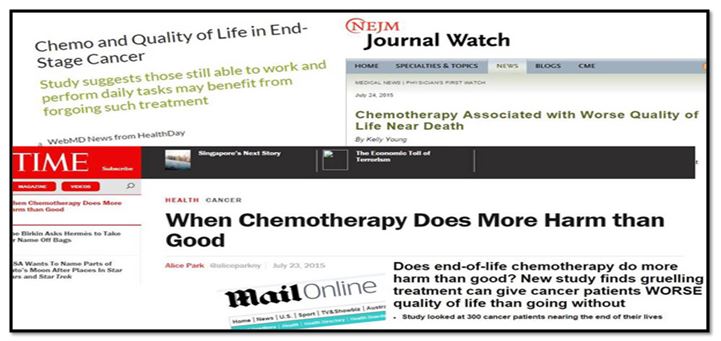


When Chemotherapy Does More Harm than Good

Chemo-MORE Harm than-g

One of the news reports above was written by Alice Park,  Time: 23 July 2015. You can read it here: http://time.com/3968918/when-chemotherapy-does-more-harm-than-good/

Some points highlighted in the article:

  • Latest data suggests that chemotherapy can also do more harm than good for some patients.
  • Holly Prigerson, director of the Center for Research on End of Life Care at Weill Cornell Medical College and her colleagues studied the use of chemotherapy among a group of 312 terminal cancer patients. All had been given no more than six months by their doctors, and had failed at least one if not multiple rounds of chemotherapy. About half were on chemotherapy, regardless of its ineffectiveness, at the time of the study.
  • Despite the common assumption that any treatment is better than none, there is not much evidence that chemotherapy is the right choice in these cases—and it may very well be the wrong one.
  • Prigerson’s analysis showed that these patients experience a drop in their quality of life if they get chemo, and that they are therefore worse off than if they hadn’t opted for the treatment.
  • Prigerson said: “The finding that the quality of life was impaired with receipt of the toxic chemotherapy was not surprising. The surprising part was that people who were feeling the best at the start of the therapy ended up feeling the worst. They are the ones most harmed and who had the most to lose.”
  • In other words, the chemo made the patients feel worse without providing any significant benefit for their cancer.
  • Previous studies have shown that chemotherapy in terminal patients is essentially ineffective.
  • And whatever tumor shrinkage occurred wasn’t linked to a longer life.
  • The decision about how long to continue care, including chemotherapy, is up to each cancer patient.
  • Despite explanations from their doctors, many cancer patients still believe that more rounds of chemo will provide some benefit to them, and are therefore reluctant to stop receiving therapy. But at some point, the data shows, more treatment is not better.
  • For patients with end-stage cancer who are still relatively healthy and not feeling sick, additional chemotherapy will likely make them weaker, not to mention eat up more of the precious time they have left traveling to and from infusion centers.
  • Prigerson … hopes the latest findings at least convince doctors to reconsider how they advise their terminal patients about end-stage chemotherapy.

For those who want to believe only in “scientific papers”, let’s go to the study of Dr. Prigerson et al., published in JAMA Oncology: 23, 2015: http://oncology.jamanetwork.com/article.aspx?articleid=2398177

Chemotherapy Use, Performance Status, and Quality of Life at the End of Life

Holly G. Prigerson, PhD1,2; Yuhua Bao, PhD3; Manish A. Shah, MD4; M. Elizabeth Paulk, MD6; Thomas W. LeBlanc, MD, MA5; Bryan J. Schneider, MD7; Melissa M. Garrido, PhD8,9; M. Carrington Reid, MD, PhD2; David A. Berlin, MD10; Kerin B. Adelson, MD13; Alfred I. Neugut, MD, PhD11,12; Paul K. Maciejewski, PhD1,14

  • Physicians have voiced concerns about the benefits of chemotherapy for patients with cancer nearing death.
  • In 2012, an American Society of Clinical Oncology (ASCO) expert panel identified chemotherapy use among patients for whom there was no evidence of clinical valueas the most widespread, wasteful, and unnecessary practice in oncology.
  • Despite the lack of evidence to support the practice, chemotherapy is widely used in cancer patients with poor performance status and progression following an initial course of palliative chemotherapy.
  • Available data for patients with NSCLC (non-small cell lung cancer) show a response rate of 2% for third-line and 0% for fourth-line chemotherapy.
  • Although many patients with end-stage cancer are offered chemotherapy to improve quality of life (QOL), the association between chemotherapy and QOL amid progressive metastatic disease has not been well-studied.
  • The goal of palliative chemotherapy for patients with incurable cancer is to prolong survival and promote QOL.
  • We have shown that chemotherapy use among patients with metastatic cancer whose cancer has progressed while receiving prior chemotherapy was not significantly related to longer survival but was associated with more aggressive medical care in the patient’s final week and heightened risk of dying in an intensive care unit.
  • The objective of this study was to examine the effect of chemotherapy use on patient quality of life in the last week of life — QOL near death (QOD). Patient QOD was determined using validated caregiver ratings of patients’ physical and mental distress in their final week. QOD scale: 0 (worst possible) to 10 (best possible).

The results of this study showed that:

  • Chemotherapy use was not associated with patient survival.
  • Among patients with good (ECOG score = 1) baseline performance status, chemotherapy use compared with nonuse was associated with worse QOD.
  • Although palliative chemotherapy is used to improve QOL for patients with end-stage cancer, its use did not improve QOD for patients with moderate or poor performance status and worsened QOD for patients with good performance status.
  • The QOD in patients with end-stage cancer is not improved, and can be harmed, by chemotherapy use near death, even in patients with good performance status.
  • Patients receiving palliative chemotherapy with an ECOG performance status of 0 or 1 had significantly worse QOD than those who avoided chemotherapy. No difference in QOD scores was observed by chemotherapy use among those with ECOG performance status of 2 or 3.
  • Given no observed survival benefit in the studied patients with refractory metastatic disease and the observed significant association between chemotherapy use and worse QOL in the final week of life among those with a baseline ECOG score of 1, these results highlight the potential harm of chemotherapy in patients with metastasic cancer toward the end of life, even in patients with good performance status.
  • Chemotherapy use in patients with metastatic cancer with chemotherapy-refractory disease is common. A recent study found 62% of NSCLC patients received chemotherapy within 60 days of death.The trend toward more aggressive care of terminally ill patients is increasing and has been noted as a serious problem in the Institute of Medicine’s 2014 report Dying in America.
  • Our results raise questions about the benefits and use of chemotherapy in patients in the end-stage of their illness regardless of their performance status.
  • Our study does highlight the danger of continuing chemotherapy as patients approach the end of life.
  • Results of this study suggest that chemotherapy use among patients with chemotherapy-refractory metastatic cancer is of questionable benefit to patients’ QOL in their final week. Not only did chemotherapy not benefit patients regardless of performance status, it appeared most harmful to those patients with good performance status.

Let us look at another published article.

Chemotherapy Near the End of Life: First—and Third and Fourth (Line)—Do No Harm

Charles D. Blanke, MD1; Erik K. Fromme, MD.

JAMA Oncol. Published online July 23, 2015. http://oncology.jamanetwork.com/article.aspx?articleid=2398175

  • In reality, only 2 major reasons exist for administering chemotherapy to most patients with metastatic cancer: to help them live longer and/or to help them live better.
  • In exchange for treatment-related toxic effects (as well as substantial time, expense, and inconvenience), chemotherapy can prolong survival for patients with a variety of—though not all—solid tumors.
  • Chemotherapy may also improve quality of life (QOL) for patients by reducing symptoms caused by a malignancy.
  • In this issue ofJAMA Oncology, Prigerson and colleagues report some troubling trial results: chemotherapy administered to patients with cancer near the end of life achieved neither goal.
  • Patients might live longer at the cost of a brief decline in QOL from toxic effects. Patients might also feel better from a reduction of malignancy-related symptoms, even if they do not enjoy improved survival.
  • It is disturbing that this trial demonstrated no benefits of chemotherapy for patients with solid tumors or poor prognosis.
  • And it is disconcerting that oncologists still recommend and use systemic therapy so close to patient death.
  • What does this mean for clinical practice? Must we then just say no to late-line chemotherapy?
  • Patients often want systemic treatment until the bitter end. We have long known a substantial minority of patients with incurable NSCLC would desire chemotherapy, even in the setting of severe toxic effects for a 1-week gain in survival. Similar data exist for patients with breast and large bowel cancers.
  • It is hard to say no to chemotherapy, because doing so could potentially make an oncologist feel they are depriving the patient of all hope.
  • Importantly, this does not mean that the oncologist cannot have a meaningful conversation with most patients about prognosis, especially when there is suspicion that time is limited.
  • These data from Prigerson and associates suggest that equating treatment with hope is inappropriate. Even when oncologists communicate clearly about prognosis and are honest about the limitations of treatment, many patients feel immense pressure to continue treatment.
  • Patients with end-stage cancer are encouraged by friends and family to keep fighting, but the battle analogy itself can portray the dying patient as a loser and should be discouraged.
  • Costs aside, we feel the last 6 months of life are not best spent in an oncology treatment unit or at home suffering the toxic effects of largely ineffectual therapies for the majority of patients.
  • Oncologists with a compelling reason to offer chemotherapy in that setting should only do so after documenting a conversation discussing prognosis, goals, fears, and acceptable trade-offs with the patient and family.
  • Let us help patients with metastatic cancer make good decisions at this sad, but often inevitable, stage. Let us not contribute to the suffering that cancer, and often associated therapy, brings, particularly at the end.


Miracle Healing

Here are some interesting quotes from Miracle Healing, a book written by Harald W. Tietze of Australia.

Miracle healing

Reflex on these words ….

  • I have to say that there is no other medicine, modern or traditional, as powerful as the healer within — the mind.
  • When I talk about old healing methods and get questions such as “where is the scientific proof?”, I only can answer that it is not the patient’s main concern how it works but THAT it works.
  • Ill people cannot wait until science can explain why it works.
  • … about medical treatments of our day, such as cancer treatment with rays and chemicals … A doctor friend said to me, “the healthiest person can’t survive these treatments.”
  • I know hundreds of people given up by modern medicine and sent home …But what happens if that person “gets rid” of the “incurable disease … The answer I often hear is:
  • There was a wrong diagnosis.
  • We do not understand how this could happen.
  • What disappoints me personally is that these professionals showed no interest as to why it happened! Patients tell me quite often that the treating doctors say,
  • Continue with whatever you are doing, but when the patient wants to tell WHAT they do, the doctor is not interested.
  • Fifty to 70 percent of hospital beds are occupied by patients with self-inflicted diseases like “suicides” with fork and knife. Miracle healing can be done by changing the contents of shopping trolley.
  • One method of “miracle healing” for the majority of modern diseases is better EDUCATION instead of Medication.

Medicine Can’t Heal by Professor Dr Janos Pasztorfi

Think and Practise — Change

  • Dear reader! This book was only written for people who can think and practise the same. They belong to a dwindling minority.
  • Your thinking is … indispensable if you want to gain some value from this book.
  • Neither should you read (this book) when you are determined not to change yourself.

Heal Yourself

  • From whom can you expect help in receiving or restoring your health? The book tells you that in this world there is only one person who is both interested and capable of doing this. That only person is you yourself! Medicine does not have that capacity. Quite apart from the fact that such is its job. The task of medicine is to alleviate suffering. Its main concern and its business is illness, not health.
  • You have to look after your own health.
  • Your health or disease is solely your own creation.
  • Are you willing to do something active during healthy times to maintain good health? Almost 80 percent of people … will answer NO to the question.
  • They said: No, I will do something for my health only when I am sick.
  • Why? Because our consumer-society tells us that we can buy health from medical specialists through a pharmacist like we can buy bread and sugar from the grocery store.
  • That is nonsense. Each individual has to work strongly on his own health.

Medicines Can Cause Problems

  • Since there are almost no active medicines which at the same time have no negative side effects, medicines should only be prescribed or taken if it is absolutely necessary.
  • Unnoticed, an industry that was created to heal diseases became a source of new diseases.
  • According to the FDA 1.5 million Americans were treated in hospitals for diseases caused by medications. The death caused by medication are estimated to be from 60,000 to 140,000 in the USA each year.
  • The medical industry thrives on suffering due to disease. If the suffering is lowered, the basis of this industry is threatened.
  • It would be equally foolish for medicine — which is today an industry like any other — to expect protection from disease or cure. One can compare this to companies who produce razor blades that never go blunt.

What Is Health

  • Health is Balance in Mind, Body and Spirit. If we treat only one part of the body, the mind or the spirit, we are not successful in the long-term.
  • I do not know why churches turn their back on facts. For example, in the Bible herbal treatments are mentioned approximately 3000 times. Do, for example, Christians as followers of the Bible, hear anything about health treatments when they go to church …..
  • Or did you, at your last visit to your doctor, get spiritual advice,
  • Or do you get from your psychologist advice on diet and other means of gaining health?
  • How can anyone specializing on one small aspect help a person by overlooking nearly the lot?
  • Health is not only a “clean bill of health” issued by the doctor! Disease starts in the mind and becomes only “visible” after it is manifested and displays symptoms.
  • Treating the symptoms does not heal.
  • For long-term healing YOU have to work for it, nobody else can do it for you.


A Great Pioneer of Nutrition – Prosecuted and Forgotten: Dr. Royal Lee

Do you know who Dr. Royal Lee is? No? I understand. I have never heard of his name either, until a few days ago! Let me share with you what I have read about this great man.

Dr. Royal Lee was the pioneer researcher in the field of whole food vitamins. When Dr. Royal Lee died in 1967, he was hailed as the greatest nutritionist of the 20th century. Yet today his name and work go largely unknown. This is no coincidence. Dr. Lee’s basic message—that the ultimate cause of most modern disease is malnutrition brought on by industrially produced foods—threatened some of our country’s mightiest institutions. These powers actively suppressed Dr. Lee’s message. Dr. Lee would spend his life fighting this suppression. http://www.drroyallee.com/

Lee’s views put him at odds not just with organized medicine and the FDA but also with the food manufacturing industry.  His work threatened the security of these commercial interests.  Due to their prompting (and lobbying monies), governmental agencies like the FDA were assigned to discredit him. Throughout his life, Dr. Lee would endure perpetual legal prosecution and character assassination at the hands of these governmental agencies.  Fortunately for us, Lee did not back down from telling the truth; no matter the cost.  With Americans increasingly consuming heavily processed foods, he carried on his work in spite of the constant lawsuits.  It is easy to find those still vilifying his work online.

Ask anyone who has done it, battling the government and their infinitely deep pockets is almost impossible.  Unfortunately, Dr. Lee lost a lawsuit with the FDA in 1962 and was ordered to stop accompanying his food supplements with literature describing their therapeutic value.  He was also forced to destroy all the educational nutritional literature produced by his companies that the government deemed “misleading.”  Within five years, at age 72, Dr. Lee died from a stress-induced stroke. http://www.doctorschierling.com/blog/the-forgotten-genius-of-dr-royal-lee

Let us reflect on some of the ideas of Dr. Lee

One of the biggest tragedies of human civilization is the precedence of chemical therapy over nutrition. It’s a substitution of artificial therapy over nature, of poisons over food, in which we are feeding people poisons trying to correct the reactions of starvation — Dr. Royal Lee, 1951

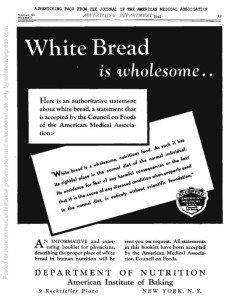
 Candy, all white sugar and its products, and white flour, including its products such as macaroni, spaghetti, crackers, etc., should be absolutely barred from the diet of the child. All these are energy-producing foods that contain no building materials for the body. The consequences of their toleration are susceptibility to infections, enlarged tonsils, carious teeth, unruly dispositions, stunted growth, rickets, maldevelopment, and very often permanent damage to many organs of the body (especially the endocrine glands) that depend on the vitamin supply for their normal function and development — Dr. Royal Lee, 1938., 1938 

Sugar and flour are the first things to throw out in the diet because they are pure calories and don’t contribute anything but fat to the body. Starch goes into fat. Sugar goes into fat. If you want to fatten a pig what do you give them? You feed them a lot of corn, cornstarch — Royal Lee – 1955 

We have drifted into this deplorable position of national malnutrition quite inadvertently. It is the result of scientific research with the objective of finding the best ways to create foods that are non-perishable that can be made by mass production methods in central factories, and distributed so cheaply that they can sweep all local competition from the market. Then, after these develops a suspicion that these “foods” are inadequate to support life, modern advertising steps in to propagandize the people into believing that there is nothing wrong with them, that they are products of scientific research intended to afford a food that is the last word in nutritive value, …and the confused public is totally unable to arrive at any conclusion of fact, and continues to blindly buy the rubbish that is killing them off years ahead of their time —  Dr. Royal Lee June 1943 

In countries where ‘civilized,’ adulterated foods are not used, there is no cancer, no tuberculosis, no pneumonia, no heart disease, no diabetes, no arthritis to speak of…It seems that only a liberal use of white flour and white sugar can cause the extraordinarily high death rate so obvious wherever these foods are common — Dr. Royal Lee, 1958 

A vitamin is: … a working process consisting of the nutrient, enzymes, coenzymes, antioxidants, and trace minerals activators  – Royal Lee “What Is a Vitamin?” Applied Trophology, Aug. 1956

Vitamins are not individual molecular compounds.   Vitamins are biological complexes.   They are multi-step biochemical interactions whose action is dependent upon a number of variables within the biological terrain.   Vitamin activity only takes place when all conditions are met within that environ-ment, and when all co-factors and components of the entire vitamin complex are present and working together.   Vitamin activity is even more than the sum of all those parts; it also involves timing. Vitamins cannot be isolated from their complexes and still perform their specific life functions within the cells.   When isolated into artificial commercial forms, like ascorbic acid, these purified synthetics act as drugs in the body. They are no longer vitamins, and to call them such is inaccurate.

“The Lee Principle of Nutrition states that a vitamin as it appears in nature is never a single chemical, but rather it is a group of interdependent compounds that form a ‘nutrient complex’ so intricate that only a living cell can create it. And just as no single component of a watch keeps time, no single compound in a vitamin complex accounts for the vitamin’s nutritive effect in the body. Only through whole, unprocessed foods can the synergistic effect of a true vitamin be delivered.” — Mark R. Anderson 

“No structure can be any better than its foundation.  Good nutrition is the foundation of health.  What we eat today becomes our body of tomorrow.  The mysterious ailments we develop by reason of carelessness in choosing our food is the inevitable result of our trying to make something out of nothing.  Heart disease, arthritis, cancer, tooth decay, pyorrhea all appear to be end results of our own carelessness and neglect to eat honest food.” 

“The American people have been humbugged into digging their graves with their own teeth!” – Dr. Royal Lee

Digging Your Own Grave

bread

Milk is natural

Cigerattes

Cigerattes 2

Had Three Cancers! Three To 12 Months To Live. Three years on CA Care Therapy still okay!

Sixty-six year-old Ray (not real name) was a smoker since age 17. He stopped smoking when he was 58.

  • In 2004 (61 years old), Ray was diagnosed with stomach cancer and underwent a subtotal gastrectomy followed by 6 cycles of chemotherapy. This was followed by radiotherapy.
  • In 2007, his PSA was at 7.29. TRUS guided biopsy was done which revealed prostate cancer, Gleason 3+3. Ray underwent prostrate surgery.
  • In 2011, Ray underwent another surgery to remove his gallbladder. Biopsy indicated no malignancy. However, in early 2012, Ray had high grade fevers and was jaundiced. His liver function enzymes were elevated — Alkaline phosphatase = 433, AST = 87 and ALT = 161.
  • Ray underwent an ERCP with SEMs placement. Later, a tumour was found in the lower bile duct.

Ray was in a dilemma. The doctors told the family:

  1. There is no medication for him.
  2. Chemotherapy would only provide a 20 percent chance of success.
  3. Cyberknife procedure may be a consideration.

They consulted three doctors. One doctor said Ray have only a few months to live, maximum 7 months. An oncology surgeon said if it is a bile duct cancer, maximum 30 months but if the tumour grows and blocks the duct then he would not last long. The third doctor gave him a year at most.

Ray’s son found CA Care in the internet and wrote us. Later, his son-in-law came to seek our help. Watch this video.

This is the story written by Ray’s son.

My father’s journey with alternative treatments http://www.cancercompass.com/message-board/message/all,71199,0.htm?mid=550843

Hi,

I just wanted to narrate my father’s journey with cancer and our personal experience with alternative treatments.   

Background

My father was first diagnosed with Stomach cancer in 2004 and whilst it was a tremendous shock to us we were a bit ignorant about the cancer (which probably helped us at that time). Anyway, he underwent surgery followed by chemotherapy and radiation treatments.  He was lucky to be a stomach cancer survivor and made changes to his diet and lifestyle (gave up smoking).  He was then diagnosed with prostate cancer in 2007 and again underwent surgery and recovered from that successfully.

Bile Duct Cancer

To our horror he was diagnosed with Bile Duct cancer in March 2012 (albeit he did revert back to a more unhealthy lifestyle in 2011, which included alcohol, meat and fried foods).

In April 2012 the doctors put a self expanding metal stent to alleviate issues of bile flow and subsequently when his condition improved a bit they looked at the possibility of surgery. However, once on the table the surgeon decided that surgery was not possible.  The doctors attending to him had mentioned a prognosis of 3 to 6 months to me.

Without surgery my understanding is that conventional medicine does not offer many solutions and quality of life was a key consideration in our decision. Therefore, as a last resort we turned to alternative medicines.

Our Journey with Alternative Medicines

I spend my time between Australia and India. My focus last year in April was entirely on finding him the best alternative medicines that are available (and with some body of knowledge behind them).

I narrowed down my options to the following

1) Professor Chris Teo from Malaysia who runs CA CARE

2) Natural Supplements

3) Ayurveda treatment from DS Cancer research in India.  Albeit I started Dad on the Ayurveda in Sep 2012 more as an insurance policy.  He was already feeling better before then.

CA CARE

This is run by a botanist in Malaysia called Chris Teo and he has had great success in healing people (he doesn’t believe in a cure) with cancer and Dad has his herbal teas on a daily basis. Protocol is provided by Chris.  Also, he is very focused on diet and red meat, fried food, dairy, alcohol and processed sugar are definitely not allowed.

Dads current situation

My father has a good quality of life (90% of any one of us) and apart from the occasional infection due to the stent, his blood reports (tumor markers have remained down and Liver Function test is mostly in normal range) and scan on his 1 year anniversary has also provided a clean bill of health (i.e. scan said stable disease).

The future is always uncertain but I really wanted to share my personal experience with everyone who might be struggling with this disease and wish you all the best.

Latest update 2015: It has been 3 years plus and this patient is still doing okay. This is an e-mail Ray wrote in June 2015.

Over last three years have lost over 22 kg, current weight 54 kg. I am 5feet 11 and normal weight was in 70s. Doctors looking after my day to day issues including  Bile Duct stents, have been strongly advocating putting on some weight to counter disease plus new developments. My diet is mainly vegy, little fish sometimes, no sugar, salads and fruits of all types. Cooking media is olive oil mainly and sometime a coffee or tea to feel normal.

 UPDATE: 25 December 2015 

Chris,

My father passed away yesterday night as a result of his cancer. He was bed ridden towards the end, however, he did not suffer pain which is associated with the disease and was able to eat and drink small amounts to his last day (including some of your tea).

I wanted to give you a heartfelt thank you as your medicines have certainly provided us with much cherished time with our father. He was diagnosed in March/April 2012 and the time we have had with him has been very precious. Regards, Rahul.

Please take note: Patient was given 3 to 6 months to live but he managed to live a happy life for more than 3 years. This is what we mean by we cannot cure any cancer — neither can anyone on earth!


USD 1,000 per pill for Hepatitis C, anyone?

The title of this article is not a typo! That is what it is, one pill for you to swallow each day would cost you USD 1,000 (or RM 3,796). And you need to swallow that “magic” pill for 24 weeks to be “cured.” That’s a total of RM 637,728 — anyone would like to make a try?

Let us share with you this story.

YL is a 54-year-old lady. She was diagnosed with hepatitis C, Type 3, subtype 3a. Her blood test results on 5 May 2015 are as follows:

Total bilirubin 0.9
Alkaline phosphatase 79
ALT 107
AST 112
GGT 108
Lactate dehydrogenase 366
Alpha fetoprotein 23

YL was offered two options.

1.  Interferon injection. The treatment would last 24 weeks. Each treatment would cost about RM 800 and the injection can be done at home by yourself. However, the doctor said interferon injection is not encouraged because TL’s liver is already hardened.

2. TL may want to try taking a new drug called Harvonis or Sovaldi. That would cost about half a million ringgit for a 24-week treatment. According to TL’s son a 12-week treatment cost USD 80,000.

But the question to ask is: Can this new drug that the doctor suggested,  cure her hepatitis C? The answer was: It’s a new drug.

Comments

This is the first time that we ever heard of Harvonis or Sovaldi. So this is a good experience for us to learn more. Let’s google Harvoni and Sovaldi and let’s see what we can find.

First, let’s start with the USA-FDA website and read what it says about Harvoni and Sovaldi. http://www.fda.gov/NewsEvents/Newsroom/PressAnnouncements/ucm377888.htm

6 December 2013: FDA approves Sovaldi (sofosbuvir) to treat chronic hepatitis C virus (HCV) infection. Sovaldi is the second drug approved by the FDA in the past two weeks to treat chronic HCV infection. On November 22, the FDA approved Olysio (simeprevir).

Sovaldi must be given in combination with other antiviral medications and should not be used alone. Sovaldi is usually given with ribavirin (Copegus, Rebetol, Ribasphere, RibaTab) with or without peginterferon alfa (Pegasys, PegIntron).

Sovaldi’s effectiveness was evaluated in six clinical trials consisting of 1,947 participants who had not previously received treatment for their disease (treatment-naive) or had not responded to previous treatment (treatment-experienced), including participants co-infected with HCV and HIV.

The trials were designed to measure whether the hepatitis C virus was no longer detected in the blood at least 12 weeks after finishing treatment (sustained virologic responseSVR), suggesting a participant’s HCV infection has been cured.

October 10, 2014:  FDA approves first combination pill Harvoni (ledipasvir and sofosbuvir) to treat chronic hepatitis C virus (HCV) genotype 1 infection. http://www.fda.gov/NewsEvents/Newsroom/PressAnnouncements/ucm418365.htm

Harvoni is the first combination pill approved to treat chronic HCV genotype 1 infection. It is also the first approved regimen that does not require administration with interferon or ribavirin.

Harvoni’s efficacy was evaluated in three clinical trials enrolling 1,518 participants who had not previously received treatment for their infection (treatment-naive) or had not responded to previous treatment (treatment-experienced), including participants with cirrhosis. Participants were randomly assigned to receive Harvoni with or without ribavirin. The trials were designed to measure whether the hepatitis C virus was no longer detected in the blood at least 12 weeks after finishing treatment (sustained virologic response, or SVR), indicating that a participant’s HCV infection has been cured.

In the first trial, comprised of treatment-naive participants, 94 percent of those who received Harvoni for eight weeks and 96 percent of those who received Harvoni for 12 weeks achieved SVR. The second trial showed 99 percent of such participants with and without cirrhosis achieved SVR after 12 weeks. And in the third trial, which examined Harvoni’s efficacy in treatment-experienced participants with and without cirrhosis, 94 percent of those who received Harvoni for 12 weeks and 99 percent of those who received Harvoni for 24 weeks achieved SVR.

Beware of Side Effects

The most common side effects reported in clinical study participants treated with Sovaldi and ribavirin were fatigue and headache. In participants treated with Sovaldi, ribavirin and peginterferon-alfa, the most common side effects reported were fatigue, headache, nausea, insomnia and anemia.

The U.S. Food and Drug Administration (FDA) is warning that serious slowing of the heart rate can occur when the antiarrhythmic drug amiodarone is taken together with either the hepatitis C drug Harvoni (ledipasvir/sofosbuvir) or with Sovaldi (sofosbuvir) taken in combination with another direct acting antiviral for the treatment of hepatitis C infection. http://www.fda.gov/Drugs/DrugSafety/ucm439484.htm

Here it goes, according to the above, your virus would disappear within 12 or 24 weeks — that is if you have half a million ringgit to gamble with.

More info from the internet ….

Activists Challenge Gilead’s Patents on Costly Hepatitis C Drug Sovaldi

http://www.newsweek.com/activists-challenge-gileads-patents-costly-hepatitis-c-drug-sovaldi-334768

A group of doctors and patient advocates are putting pressure on Gilead Sciences—maker of Sovaldi, the $1,000-a-day drug for hepatitis C—to release its patents. The Initiative for Medicines, Access & Knowledge (I-MAK), a U.S. nonprofit advocating for improved access to affordable medications, has filed challenges this week against the company in Argentina, Brazil, China, Russia and Ukraine. The organization had previously filed similar patent challenges in Europe and China.

I-MAK said Gilead’s move toward worldwide patents for sofosbuvir (the generic term for Sovaldi) would prevent millions of people from getting the treatment. A full course of the drug for one patient can cost up to $84,000 over 12 weeks of treatment.

The organization argues that the cost of the drug, approved by the U.S. Food and Drug Administration in December 2013, is prohibitive to most patients.

China Rejects Patent Application Of Gilead For $1,000 A Day Hepatitis C Drug Sovaldi http://www.techtimes.com/articles/62222/20150621/china-rejects-patent-application-of-gilead-for-1-000-a-day-hepatitis-c-drug-sovaldi.htm

China has rejected a patent application related to Gilead Sciences’ controversial hepatitis C drug Sovaldi, an advocacy group said, saying that this could pave way for other countries rejecting the patent for the top-selling drug

Gilead has drawn fire for its exorbitant price of $1,000 per pill.

Despite its prices, Sovaldi’s cure rate was over 90 percent, sparking outrage among various patients, government officials and insurers. Gilead has also started to market another hepatitis C drug known as Harvoni, which costs up to $94,500 for a 12-week treatment.

Since it has come under fire because of the price of its drug, the California-based company has agreed to sell Sovaldi at lower prices in 91 developing counties.  The deal that the company offered is however criticized because middle-income countries were not included.

If you don’t have that kind of money, GO for Generic (USD 10 = USD 1,000!)

$10 Copy of Gilead Blockbuster Sovaldi Appears in Bangladesh http://www.bloomberg.com/news/articles/2015-03-08/-10-copy-of-gilead-s-blockbuster-sovaldi-appears-in-bangladesh

$10 version of Sovaldi, the Gilead Sciences Inc. hepatitis C treatment that sells for $1,000 a pill in the U.S., is now available in Bangladesh and could make its way to other parts of the world where the U.S. company doesn’t have patents.

Incepta Pharmaceuticals Ltd. doesn’t have a license from Gilead and its version was launched last month, said Managing Director Abdul Muktadir. The company also aims to sell the drug overseas, including to parts of Southeast Asia and Africa.

Under a World Trade Organization agreement, Bangladesh, as one of the world’s least developed countries, doesn’t have to protect pharmaceutical patents.

Hyderabad-based Natco Pharma Ltd., one of Gilead’s licensees, launched its generic sofosbuvir in Nepal this month. Natco in a statement Monday said it had priced its generic medicine at 19,900 rupees ($318) for a bottle of 28 tablets in Nepal.

The All Important Question: Will you be cured? 

The sustained virologic response (SVR) has become the best indication of successful therapy for HCV infection; SVR is defined as an absence of detectable HCV RNA in the serum with use of an assay with a sensitivity of at least 50 IU/mL 6 months after therapy is completed.

Several studies have addressed HCV infection recurrence after antiviral therapy–induced SVR. The rate of late relapse, defined as reappearance of serum HCV RNA, is extremely low, with the majority of studies showing 0%–1%. Two preliminary studies, from Egypt and Italy showed late relapse rates of 9% and 10%, respectively. http://cid.oxfordjournals.org/content/52/7/889.long

HCV infection is curable. In clinical trials, roughly 95 percent of those who took the newest medications were cured. When HCV treatment is working, the virus will become undetectable in the blood within four to 12 weeks and will remain that way throughout treatment. People are considered cured when they have achieved a continuation of this undetectable status for 12 to 24 weeks after completing therapy. The chances of HCV returning after 24 weeks of remaining clear of the virus are nearly zero.  http://www.hepmag.com/articles/2512_18755.shtml

SVR is the closest you’ll get to “a cure” for hepatitis. … suppress the virus to undetectable levels for an extended period of time. In clinical language, this is called a “sustained virologic response. It means that during the six months after you complete treatment, there is no detectable hepatitis C virus in your blood. Studies have shown that with a six-month SVR  relapse occurred in only 1-2% of patients. So, for every 100 people who finished treatment and attained SVR, the virus will return in only 2 of them. However, for these people, the virus never really left. The medicine was able to eliminate most of the virus (so much that medical tests couldn’t detect it), but after treatment ended, for whatever reason the virus was able to continue replicating itself. http://hepatitis.about.com/od/treatment/f/SVR.htm

Decide for yourself if you can be cured by this medication!

If the virus cannot be detected in your blood, does that mean it is gone forever?

What if just a few are left behind and remain undetected. Sometime later it will multiply and become a problem again?

RM 2,830 lost for not wanting to proceed with radiotherapy

TT was diagnosed with cervical cancer. She underwent an operation to remove her uterus, ovaries and omentum. She was then referred to an oncologist who recommended both chemotherapy and radiotherapy. TT was not at peace at all about undergoing these invasive treatments but she did not have any other choice. She consulted with the oncologist three times and was assured that everything would be okay and that chemo and radiation were her only option — nothing else. During her second meeting with her oncologist, TT was told to pay RM 13,000 as a deposit for her radiation treatment.

Someone told TT about CA Care. TT and her husband decided to forgo further medical treatments. TT went back to hospital and cancelled her appointment for her radiotherapy. What then happened to the RM 13,000 deposit?  Can TT get a refund? Listen to this video.


Gist of what TT and her husband said.

  1. They were angry. Why don’t you want to go for radiotherapy? We are still unprepared!
  2. For your RM 13,000 deposit, we could only refund you RM 4,500. The remaining amount is forfeited.
  3. Why must I lose that much money for just not wanting to go for radiotherapy? We have not started with any treatment yet?
  4. Husband started to take pictures of the person. When I go back to Indonesia, I shall report this to the mass media
  5. Okay, okay be patient. Let me consult.
  6. You have to pay for the oncologist’s fee — RM1,700 and the cancer hospital fee is RM 6,000 plus.
  7. The treatment has not even started yet. Why so expensive? It was only the nurse who made some markings. We did not even see the doctor yet.
  8. TT and her husband was referred to the finance department. They demanded to know: Why must I lose so much money just to cancel the treatment? Your hospital comes to Indonesia for publicity. What I can do is to go home and tell the press about this. Okay, you can have your RM 8000 plus, return me my RM 4,500. It is okay. I am not a poor man. I can come to Penang for treatment means I can afford it.
  9. The hospital called up the cancer hospital and after some discussion said: Hang on for 10 minutes. We have miscalculated.
  10. The actual figure: RM 2,830 to be forfeited to cover the following cost:

HospitalBill Tiu Tjin Tjhin

Question: Do you mean that by just asking a patient to go for radiotherapy the oncologist earned RM1,700 up front?  Even when no treatment was given?

When you saw the oncologist three times for consultation, did you pay him any fee? Yes, of course, we paid him RM 60 for each visit. So, this RM1,700 is over and above his consultation fee.

The hospital earned RM 1,130 for putting marks on my tummy!

Comment

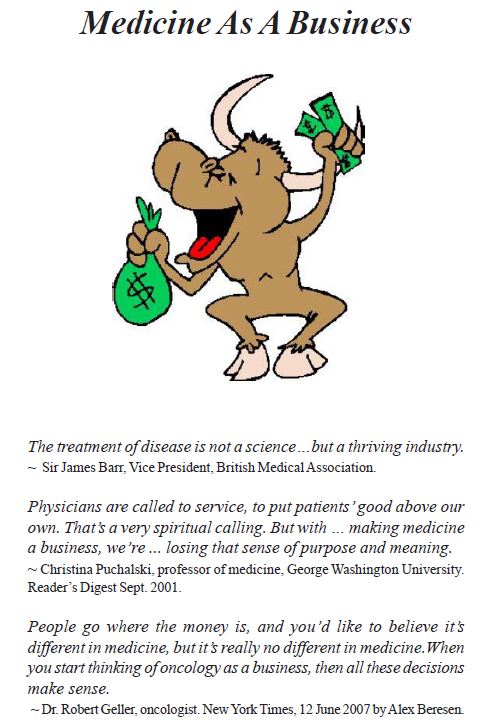
We have nothing much to say about this episode. Just feeling sad. Reflect on the quotations below and perhaps we all can learn something about the present-day “so-called-noble-profession.”

Medicine a business

As I was writing this story, there is this news report … if there is anything we can learn from this story it this: Before you proceed with any treatment, ask these important questions first:

  1. Can the treatment cure me or not?
  2. What are the risks and side effects?
  3. What will that cost me in total — financially and emotionally?

Don’t get caught up with the idea of wanting to only win. Know that you can lose the “battle” badly as well. In this case below: Imagine, daughter had an operation, (did the parents ask — can cure or not? can win?), then she was paralyzed, hospital bills came to more than RM 2 million !!!, parents declared bankrupt (besides the frustration and heartaches). That is not wining at all. So patients, beware.

Penang Adventist Hospital ordered to pay couple RM6 million

FMT Reporters:  July 15, 2015

See more at: http://www.freemalaysiatoday.com/category/nation/2015/07/15/penang-hospital-ordered-to-pay-couple-rm6-million/#sthash.HiQCSfF3.dpuf

The couple were earlier declared bankrupt after they could not pay the hospital RM2.35 million in unsettled medical bills.

GEORGE TOWN: The Penang High Court has ordered the Penang Adventist Hospital (PAH), a private centre, to pay RM6,023,802 in damages to the parents of a 18-year-old paralyzed girl.

The victim’s parents, Kee Boon Suan and his wife Ang Mooi Sim from Nibong Tebal, filed the suit three years ago. The High Court had ordered the couple in 2011 to settle RM2,350,013.85 due to the hospital in unpaid bills. The court order led the couple to be declared bankrupt.

In his verdict on the medical negligence suit here on Tuesday, Judicial Commissioner Nordin Hassan said he found PAH and three doctors had committed medical negligence during a spinal surgery performed on Kee Jun Hui on June 4, 2008.

He said the patient’s parents were also not briefed by the doctors-in-charge on the surgery details.

He said the hospital was responsible for the negligence acts by the doctors-in-charge and nurses, who had breached their duties and duty of care to the patient.

Nordin said PAH orthopedic surgeons Dr. Cheok Chee Yew and Dr. Wong Chung Chek neglected their duties after performing the surgery on Jun Hui.

He said the patient had collapsed several times during the post-surgery recovery period while still under the hospital’s custody.

He said anesthetist Dr. Patrick K. S. Tan neglected his duties and failed to instruct hospital nurses to attend to the collapsed patient after being informed of Jun Hui’s inability to move her limbs.

M.S. Dhillon, Rhina Bhar and K.B. Karthi represented the plaintiffs while Mahindra Singh Gill acted for the hospital.

All three doctors were represented by legal counsel J. A. Yeoh.

Mahindra later told newsmen that PAH would appeal against Nordin’s judgment at the Court of Appeal.

In 2011, PAH originally hauled Kee and Ang to court for failure to settle their medical bill for Jun Hui’s surgery.

In 2012, the couple sued the hospital for medical negligence, as their daughter was paralyzed after the surgery.

The hospital was named the first defendant in the suit followed by Cheok, Patrick Tan and Wong.


Follow your heart not your head when it comes to deciding whether you should go for chemo /radiation or not

TT is 56-year-old Indonesia lady. She presented as a easy going, cheerful lady who takes care of her health rather seriously. One late morning we got a phone call from her requesting to see us immediately. Her urgency was rather understandable since she was to start her radiotherapy on Monday. We waited for her to come, even though our centre was about to be closed for the day!

This is her story.

In 2013, TT had her routine pap smear. According to her doctor, there was nothing, except some kind of fungus infection. She was given antibiotics. She was okay for 6 months. A checkup 9 months later showed fungal infection again. She was on antibiotics again and was better. But her problem persisted after that. TT was not happy and wanted to solve her problem. She was referred to another doctor. She was found to be positive for HPV (human papilloma virus — a virus associated with cervical cancer).

TT was referred to an oncologist who recommended surgery. TT came to a private hospital in Penang and  underwent a radical hysterectomy with bilateral salpingo-oophorectomy (that is the removal of the uterus, cervix, fallopian tubes (salpingo), and ovaries (oophor) and  omentectomy. Histopathology indicated squamous cell carcinoma, Stage 2B with pelvic involvement.

The operation cost about RM 25,000.

TT was asked to undergo follow up chemotherapy. She met up with 2 oncologists in the hospital. One oncologist suggested 6 cycles of chemo and 30 times radiation. Another oncologist offered 4 cycles of chemo and 20 times radiation plus 2 times of brachytherapy, also known as internal radiotherapy. Obviously, TT was drawn to the second oncologist because of less severe treatment.

During our conservation, we asked TT: Did you ask the oncologist if he could cure you with that treatment? She replied: 60 to 70 % chance of cure. When she asked the oncologist if there was any other option, the answer was: No, no other way. Must do chemo and radiotherapy as soon as possible. It you don’t do quickly the cancer is going to spread and will be more serious.

TT agreed to undergo the recommended treatments. She was scheduled to start treatment on 15 June but unfortunately the oncologist was on leave and her treatment was brought forward to 23 June 2015.

TT came back to Penang in mid June. However, TT said she was not satisfied and felt heavy in her heart. She was not sure if these treatments would be good for her or not. She was in a dilemma and went to see the oncologist again. The oncologist said these to her:

  • Don’t listen to what other people say.
  • The dosage you are going to get is only small dosage.
  • Your hair don’t drop.

TT had no choice. She paid RM 13,000 as an advanced payment for the radiation treatment. Then she drove to a cancer hospital to have her “marked.” TT said as she drove to that hospital she felt she was led to the “slaughter house.” When the young technicians removed her clothing to make markings on her body she felt she was being “processed” for a death. But again, she had no other choice.

Then she went back to the hospital where she was supposed to undergo chemotherapy. She met someone who told her: Let us sit down and pray together. After the prayer this someone said: Why don’t you go back and see the oncologist again and ask him again if you can skip chemotherapy. But for radiotherapy, you have already paid for it.

For the third time, TT went to see the oncologist and express her reservation about chemotherapy. The oncologist told her again:

  • Don’t worry I guarantee that you would not loose even 1 kg after the treatment.
  • If you have no appetite, I shall give something to help you with that.
  • If your blood count is low I will give injections to help avoid infection.

TT was not convinced with the above assurance because staying in the same boarding house was a patient who was undergoing chemotherapy. He was once a very strong man but with the treatment he lost 16 kg and lost his appetite and could not eat. He told TT, if I know I have to go through this, I would rather die.

The next day (i.e. Thursday) after meeting the oncologist, TT decided to go shopping — a way to take pressure off her. On Friday morning, while she was preparing food in her boarding house one person told her this:

  • Who is sick? You are not sick. Don’t go for chemo. It would be a disaster.
  • Before you proceed further with your treatment, go and see this Chris Teo first and talk to him.

So, that Friday, late morning we got a call from TT requesting to see us urgently.

At CA Care, we spent almost an hour talking to TT and her husband.

Knowing that TT was under so much stress and jittery about what she was going into, it would not be fair or ethical to put more pressure on her. In situation like this, we know patients are generally vulnerable and we don’t intend be become “vultures” taking advantage of such desperate patients.  So basically our advice to TT and her husband were as follows:

  • Relax and take it easy. Go home and talk to your God. It’s Friday and you still have until Monday morning to listen to what God has to say. God will not shout out loud to answer you but I believe He will touch your heart in one way or another. Listen to your heart.
  • We tell everyone who comes to us, God will answer your prayer if you sincerely ask Him for guidance. And if He does not answer you, in time of desperate need like this, then there is no reason why you should worship Him day in and day out.
  • Go home first and don’t make any decision yet, not until you have done your part. Read these two comic books: Knowing The Truth May Save Your Life And Money and The Treacherous Journey. At least before you ask God to help you, you need to help yourself first. Go home and read. At most you need only 1 or 2 hours to understand the messages in these books.
  • Come and see us again if you decide you don’t want to follow up with your oncologist. But if you decide you want to go ahead with your chemo /radiotherapy, then go ahead.
  • Nobody should decide for you what you should do.
  • Follow what your heart says for that is where God speaks to you.
  • For now, there is no need to take any herbs — why the rush? You do not get cancer only yesterday!
  • There is no need to pay any consultation fee. God bless you and guide you.

TT and her husband understood our message and their facial expressions showed they felt very happy indeed. There was no compulsion, no threat, no sales talk! This has always been our way — to help those who need our help as honestly as we know how.

Monday — TT and her husband came back to see us again. The first word that out of her husband was, God has spoken to us. The husband read the books aloud while TT relaxed and listened. The story of Ella inspired her a lot, No chemo you live only three months, with chemo two and a half years! 

Tuesday — We chatted with TT and her husband to know more of what had happened. Watch this video (in Bahasa Indonesia) to get more details.

TT was determined that she was not going for chemotherapy or radiotherapy as recommended by her oncologist. By reading and knowing more she and her husband felt that there is another option — not radiation or chemo. We make it clear to them that this important (life and death) decision has to be TT’s decision. She had made her choice and she should be prepared to enjoy or suffer the consequences of that decision. TT said, I felt very much relief. Peace! The heavy load in my heart has been lifted away.

You have already paid RM 15,000 as a deposit for your radiotherapy. What has happened to that money? That’s another story to follow.


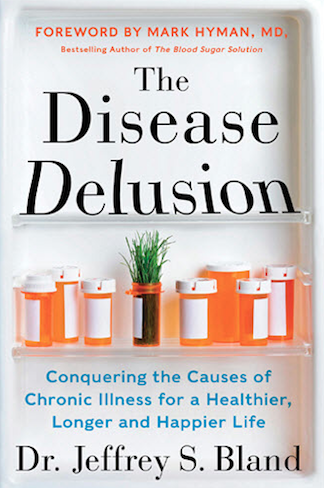
The Disease Delusion – conquering the causes of chronic illness for a healthier, longer and happier life

disease-delusion-


The Author: Dr. JEFFREY S. BLAND, PhD is a biochemist by training. He served as Director of Nutritional Research at the Linus Pauling Institute of Science and Medicine in the early 1980’s, working directly with two-time Nobel Laureate Dr. Linus Pauling, whom he considers his lifelong mentor. Dr. Bland  is a renown leader in  nutritional medicine. He co-founded the Institute for Functional Medicine and is known to many as the “father of functional medicine.” Over the past 35 years, Dr. Bland has traveled more than six million miles teaching more than 100,000 healthcare practitioners in the USA, Canada, and 50 other countries about functional medicine.

In his book, The Disease Delusion, Dr. Bland introduces the reader to the medicine of the 21st century. It is a medicine that is personalized to the specific needs of the person to result in health, not just the treatment of the symptoms of disease.  In Chapter 11 of his book Dr. Bland wrote about A new approach to your health. Here are some quotations.

  • Health, according to the World Health Organization (WHO) “is a state of complete physical, mental and social well-being, and not merely the absence of disease and infirmity.” That’s a great definition and it is a lofty goal — one we all hope to achieve. The question is how.
  • Hippocrates … formulated an answer …. the healing power of nature … the idea that if organisms are provided the right environment, diet and lifestyle support, they can heal themselves.
  • This new approach to health requires “that individual participate fully in managing his/her health. By changing our diet, lifestyle and environment … we can directly affect how our genes are expressed and thus the pattern of our health.

Dr. Bland outlined five basic concepts in the practice of functional medicine.

  1. Our health is not predetermined by our genes. No single gene controls the presence or absence of a chronic disease … but families of genes. The expression of these gene can be influenced and indeed altered by a range of lifestyle, diet and environmental factors — exercise, stress, pollutants, radiation, specific foods, phytonutrients, etc.
  2. Chronic illness is a result of an imbalance in one or more of the core physiological processes. Over time such imbalance resulted in altered function as evidenced by specific signs and symptoms which we call disease. Changes to lifestyle, diet and environment can bring our core physiological processes back into balance.
  3. The absence of illness does not necessarily equate to the presence of wellness. A diagnosis of chronic illness comes after a period of declining function.
  4. Each person’s physiological response to lifestyle, dietary and environmental factor is unique to his /her genetic makeup. What this means, there is no such thing as one size-fits-all formula.
  5. Drugs effective for the management of acute disease may be inappropriate for the long-term management of chronic illness.

Functional medicine focuses on treating the cause of a chronic illness — that is, imbalances in the core physiological processes — not the symptoms and signs that are the effect of the cause. This approach is not new! Practitioners of Traditional Chinese Medicine and Ayurvedic medicine are saying the same thing …”indeed, long before anything was known about cellular biology, genetics or pathology, Eastern medical practitioners, through observation, embraced concepts very similar to those we apply in functional medicine.” 

ALL THREE OF THESE FACTORS — LIFESTYLE, DIET, ENVIRONMENT — PLAY SIGNIFICANT ROLES IN DETERMINING HOW OUR GENES ARE EXPRESSED AND HOW OUR HEALTH IS SHAPED OVER TIME …. this may seem obvious. But it is not. It is a revolutionary concept in medical thinking!

Diet: Too many of us are malnourished — not from eating too little, but rather from eating too much of too little. It is called overconsumptive undernutrition … it is not a deficiency of calories but a surfeit of empty calories. This is the malnutrition characterized by obesity, diabetes, heart disease, osteoporosis, dementia and other chronic illnesses associated with inflammation.

Lifestyle: Smoking kills; alcohol and drug abuse mess up your life very badly— then kill. Exercise is extremely important … a rock-bottom minimum of 120 minutes a week. The standard should be 5 to 6 sessions of at least 20 minutes per session, 5 to 6 times a week. The excuse of not enough time is unwarranted.

No one can avoid stress altogether. What we now know is that it isn’t the stressor itself but rather our response to it that can amplify our cellular communication process to alarm status. The ways to deal with such responses …. through various techniques of relaxation and mindfulness.

Environment: How can an individual control his /her environment? We can do the best we can for ourselves even though we have no control over the bigger issues. At least we try to do the following:

  • eat organic foods as much as possible.
  • avoid excessive sun exposure.
  • drink purified water.
  • use headset with our cell phones.
  • avoid processed foods and personal care products with synthetic ingredients.
  • wash our hands before eating.
  • avoid environments that supports bad health habits.
  • design our own environment to be safe places to live. 

Supplements and pharmaceuticals: Use nutritional supplements as nutraceuticals and medical foods over-the-counter therapies … these are the therapies of choice.

The twelve-week time (3 months) frame:  There is no magic bullet.

  • Years of experience and many clinical studies make it pretty clear that this is the average time it takes to make a real change to your cellular biology and patterns of genetic expression.
  • Some people notice the benefits of personalized changes to lifestyle, diet and environment right away; for others progress is slow in coming. …
  • Changing of your lifestyle, diet and environment is not like taking a drug to cure a specific symptoms (which can be quick or immediate).
  • A program of change is aimed at transforming a pattern of genetic expression and the nature of the control those genes exercise over the physiological network. Such change happens across a sequence of multiple changes –one change deriving from another in a chain of action and reaction — and it occurs over a longer period of time.

In the Foreword of this book, Dr. Mark Hyman, M.D. wrote:

  • As we spend more and more for health care, we get less and less. The answer to this paradox should be obvious to all of us: what we are doing is not working. Our current medical model was constructed to treat acute disease … we identified a single agent for illness — a microbe—and a single agent to treat it — antibiotics. Since then, medicine has pursued a quest — to find a pill for every ill. This quest has failed. We need a different paradigm, a different model for diagnosing and treating this new epidemic of chronic disease.
  • Paradigm shifts are hard, detractors abound, yet the evidence is in and the failure of our current (medical) approach is evident.

Comment 

Read carefully what Dr. Jeffrey Bland wrote! We are glad to say that for the past 20 years since the existence of CA Care, we have been telling patients a similar message! We also tell patients: If you are on our therapy for some 2 to 4 weeks and do not benefit from it, do not take our herbs anymore — please go and find someone else for help. We want to be honest and truthful about this!


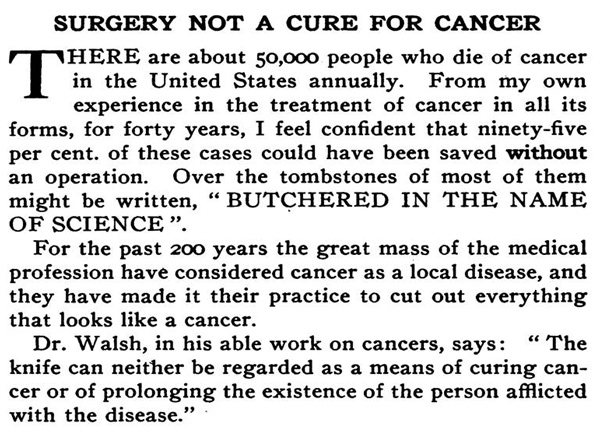
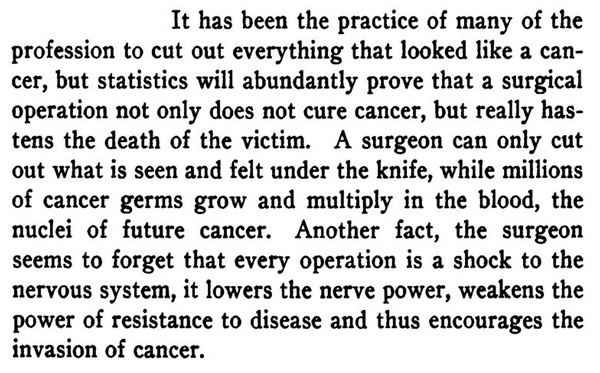
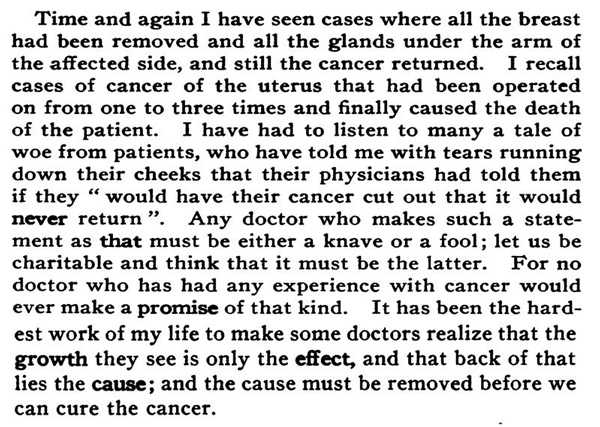
The Good Old Days When They Could Cure Cancer in America: Part 2

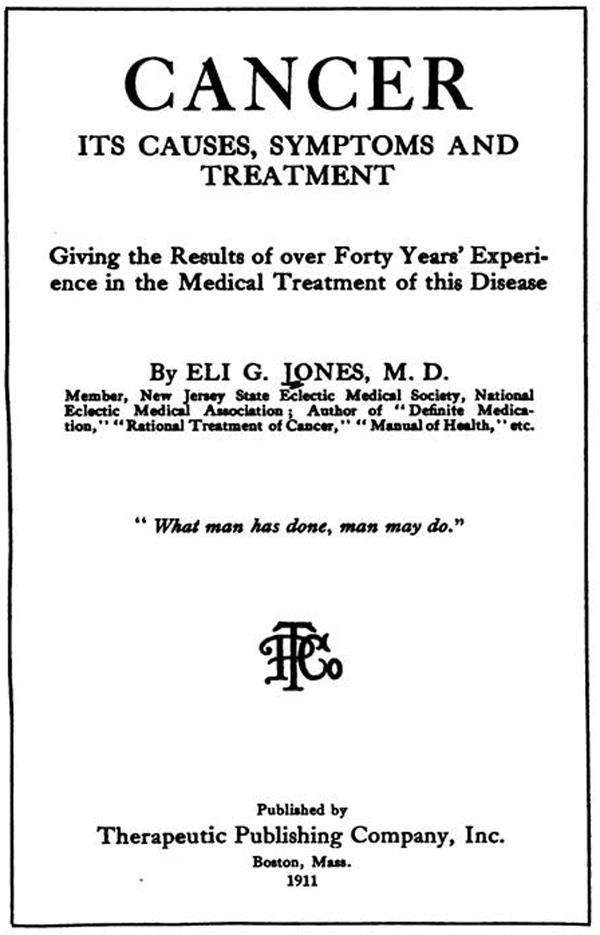
Dr. Eli G. Jones was an Eclectic physician whose main work was published in 1911. Over the course of his long career, he treated 20,000 patients with cancer. He claimed a 95% success rate.

Here are more excerpts from his book, Cancer- Its Causes, Symptoms and Treatment, published in 1911.

a b c d e f g h

What Can We Learn From This 100-Year-Book

One hundred years after Dr. Eli Jones, here are what many people say about cancer treatment!

 1 Doctors sell their soul 2 Doc-cause-more-harm-not-p 3 a Failure-of-modern-medicin 3b We-fought-ca-Cancer-won 4 wrong-war-wrong-bullet 5-remove-tumourno-use 6 Surgery-as-last-resort 7 Surgery-does-not-cure-ca 8 False-security 9 B babara-Radia ation-does-not-c 9 b Chemo-worthless 9 c Chemo kill patient 9 d Chemo-drug-makes-cancer-wor 9 e Chem-spreads-9 e cancer-Fred-Hu 9 f Chemo-is-odd-UK-doctor


Why are we in a limbo up to this day — 100 years after Dr. Eli Jones? Why are we stuck and don’t seem to make much progress?

9 g Misled-by-magic-bullet-of-c 9 h  High-tech-mentality 9 i Sick-Greedy-Medical-profess


The Good Old Days When They Could Cure Cancer in America: Part 1

I first know the work of Dr. Eli Jones after reading an article by Don Yance: The wisdom of Dr. Eli Jones ….

Eli Jones (1850-1933) was an American medical doctor in the 19th-20th centuries. He claimed to be able  cure cancer. Jones studied conventional medicine and practiced for five years before deciding that the medicine of the day was harmful. He then turned to eclectic medicine, which relied upon herbal extracts including those of the Native Americans. He went back to school, graduated, and practiced eclectic medicine for another five years. He decided to learn homeopathy, went back to school, and then practiced as a homeopath.

Here are some excerpts from his book, Cancer- Its Causes, Symptoms and Treatment -Giving the Results of over Forty Years’ Experience in the Medical Treatment of this Disease. This book was published in 1911 — one hundred years ago! Read it … and see if you can learn anything from Dr. Jones experiences!

1 title 2 3 4


Are we winning the war against cancer?5 Cancer Global stat 6 Cancer US stat 7 8 9 a 9 b 9 c


What Can We Learn From This 100-Year-Book

  1. Some people may say: This book is outdated, science today has progressed beyond all those things that were written!

My response: Agreed – the language lacked “scientific flavour” but the wisdom remained intact and valid.  ARROGANCE, PRIDE and EGO stand in the way for some people who don’t want to learn from others or the past.

x a Know-the-past x b Examine-the-past

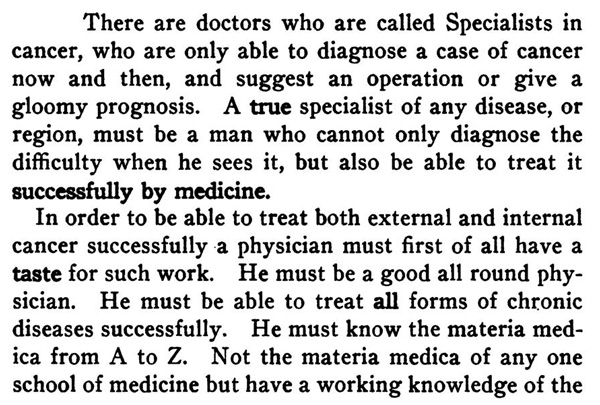
  1. To be a successful cancer specialist, a person must know the materia medica from A-Z …not from one school of medicine but of all Schools. In simple language, if treating is only about cutting, poisoning (chemo) and burning (radiation) – what do who end up with?
  2. No all doctors are suitable to be cancer specialists — many are called but few are chosen! The successful treatment of cancer is the study of a lifetime and should not be attempted by a lazy man, for it means constant study. Can we also add — not only it is not for a lazy man but also men who only go for the money and not for the patients’ wellbeing!

x c Medicine-not-noble-but-self x d Half-truth-and-propaganda x e Oncology-all-about-money

4. Vast sums of money have been expended in erecting cancer hospitals; institutes for “cancer research” Remedies have been lauded time and again as a cure for this disease, yet the people keep on dying in the same old fashioned way. Does this statement sound very familiar — even after 100 years?

x f New-breakthroughs-but-not-r x g High-tech-not-necessarily-g

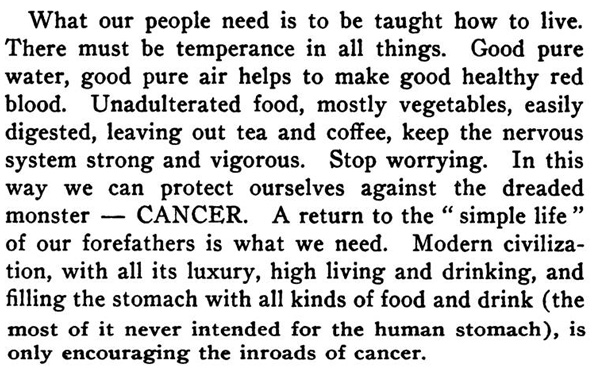
5. What our people need is to be taught how to live … A return to the “simple life” of our forefathers in what we need. Modern civilization, with all is luxury, high living and drinking …. is only encouraging the inroads of cancer.

One hundred years after Dr. Eli Jones, here are what many people say about cancer

9 d Cancer-is-a-man-made 9 e Modern lifestyle cause cancer 9 f You-cause-your-cancer-Paula 9 g Vested-interest-suppress-re


Breast Cancer: Surgery, Chemo, Radiation and Hormonal Therapy Did Not Cure Her. Xeloda made her miserable! Patient, Only You Should Decide What You Want To Do!

Mdm PG was 59 years old when she was diagnosed with breast cancer in June 2009. She immediately underwent a right mastectomy. Histology report indicated:

  • Three lesions of invasive ductal carcinoma.
  • Focal lympho-vascular invasion is seen at the periphery of the 2 small lesions.
  • Resection margins, skin and nipple are not involved by tumour.
  • 4 out of 13 axillary lymph nodes contain metastatic carcinoma, with focal extracapsular spread.
  • pT2N2aMx, Stage 3A

Prognostic factors:

  • Oestrogen receptor –   Moderate reactivity
  • Progesterone receptor –   Moderate reactivity
  • C-erb-B2 –  No reactivity
  • P53 –  Weak reactivity

PG underwent follow up chemotherapy and radiotherapy. She was also on Fermara (for 5 years). At the same time, she started to take herbs. The following is a brief summary of her treatment progress (extracted from the e-mails from her daughter).

May 2013 – almost 4 years after diagnosis

My mum is doing extremely well and I thank God every day for you and His protection over my mum’s life.  My mum recently went for her blood test and check-up again.  The doc said that her bones are getting brittle due to the regular intake of this hormonal pill that she has been taking every day for the past 3 years to keep her condition under control.  It is one of the side effects of this pill.  He is advising her to go through a kind of treatment to strengthen her bones.

I found out the name of the bone strengthener that the doc recommended to my mum.  It’s called “Zometa.”  It is an injection.  The hormonal pills that she has been taking is called ” Femara.”

October 2013

I would like to update you with regards to my mum’s latest blood test.  Her tumor marker is 5.9.  Her usual is 3.5.

January 2014

I would like to give you an update of my mum’s latest tumor marker result.

CEA 7.1  H
CA 125 29.4  H
CA 15.3 24.1  H

Her CEA is out of the normal range and it has escalated from 5.9  last Oct to 7.1 this week.  Both her CA125 and CA15.3 have also gone up even though it is still within the normal range.

The doc is suggesting for mum to go for a pet scan to find out the problem.

My sis and I are personally not so comfortable with her having to go through another cycle of invasive treatment should we find out if there is another growth elsewhere in her body.  We are really hoping that we can help treat mum’s condition with your herbs and diet advise.

February 2014

I’ve attached my mum’s latest report to show it to you.  The doctor said that there is a relapse and the lymph nodes behind her lungs are affected but there is no spreading to her organs which is a good thing.

The doc has changed her oral medication to Tamoxifen because her Fermara  doesn’t work anymore.  She recently went for a jab to protect her bones from turning brittle.

May 2014

Tumor markers on 7 May 2014
CEA 13.5  H
CA 125 64.5  H
CA 15.3 33.5  H

My mum went for her medical appointment yesterday. Result is negative. ..conditions of marker has worsen. Doc said there is a high chance of relapse but he doesn’t know which spot … could be bone, liver or kidney. If my mum does not wish to find out the cause, the doc can’t prescribe proper medication for treatment but he will change her current medication to see if there is any improvement upon her next visit on 19th June.
The doctor explained that the life span of such case if the patient refuses finding and treatment,  usually won’t pull through. The cancer cells will multiply very fast within a year and she will not make it.

Mum’s tumour marker in January this year comparing to now has escalated from  a marker of 7 to 14 now and another two marker have also increased from positive range now all to negative range. She is  physically very well but result has shown otherwise.

Doc suggested mummy to go for PET scan to at least find out what’s the problem so we can seek early treatment since she is still healthy now. And not wait till she turns fragile and can’t proceed with any more treatment.

March 2015

My mum’s cancer marker has apparently gone up quite a bit recently and the doc said that there are tumours growing quite rapidly in her body that explains why the cancer marker is high. The doc asked if my mum has been taking any other medication that is causing interference with his. And he immediately changed my mum’s medication from tamoxifen to Exemestane Aromasin 25mg per tab and he is trying to see if the new medication can help control her tumour  growth.

The nurse warned my mum about all the side effects. My sister advised my mum to stop taking your herbs and see if there is any improvement with the western medication alone because she also believes that there could be that possibility of your herbs clashing with the oncologist’s prescription. I personally am against the idea of my mum stopping your herbs temporarily.

Doc mentioned since last year that cancer has spread to her bones and there are tumours found around her chest outside her lungs and other parts of her body too. He said it was a good thing that it didn’t spread to her organs. I’m a little worried that my mum will eventually feel the adverse side effects of her new medication if she continues with it and not take your herbs. I’m really concerned.. Anyways, no matter what the doctor said and her deteriorating condition, my mum is still in high spirits and her appetite is well and she still goes to church and play mahjong with her friends regularly like a healthy person. Her strong belief in God keeps her in good spirits too.

June 2015

I am wondering if I can bring my mum to come see you on. She has been taking Xeloda for the past one month and the sole of her feet started to turn black since last week.  I am not sure if it is due to Xeloda.  Would love to show you her feet. Blood test also showed that her glucose level is very high.  So I am not sure if she could be diabetic.

Not sure if Xeloda is the culprit? Just read the internet.

Side effects of Xeloda: Hand-Foot Syndrome

Hand-foot syndrome, also called palmar-plantar erythrodysesthesia, is a side effect of some types of chemotherapy.  In mild to moderate hand-foot syndrome, the following symptoms may occur on the palms of the hands and/or the soles of the feet:

  • Redness (similar to a sunburn)
  • Swelling
  • A sensation of tingling or burning
  • Tenderness (sensitive to touch)
  • Tightness of the skin
  • Thick calluses and blisters on the palms and soles

Symptoms of severe hand-foot syndrome include:

  • Cracked, flaking, or peeling skin
  • Blisters, ulcers, or sores on the skin
  • Severe pain
  • Difficulty walking or using the hands

The drugs that may cause hand-foot syndrome include:

  • Axitinib (Inlyta)
  • Cabozantinib (Cometriq)
  • Capecitabine (Xeloda)
  • Cytarabine (Cytosar-U)
  • Docetaxel (Docefrez, Taxotere)
  • Floxuridine (FUDF)
  • Fluorouracil (5-FU, Adrucil)
  • Idarubicin (Idamycin)
  • Liposomal doxorubicin (Doxil)
  • Doxorubicin (Adriamycin)
  • Sunitinib (Sutent)
  • Sorafenib (Nexavar)
  • Pazopanib (Votrient)
  • Paclitaxel (Taxol)
  • Vemurafenib (Zelboraf)
  • Regorafenib (Stivarga)

Not everyone who is treated with these medications develops hand-food syndrome. The severity of hand-foot syndrome can vary from person to person, even among people taking the same medication for the same form of cancer.

Source: http://www.cancer.net/navigating-cancer-care/side-effects/hand-foot-syndrome-or-palmar-plantar-erythrodysesthesia

Lisa Bonchek Adams  was 37 years old when she was diagnosed with breast cancer in 2007. After all the medical treatments in one of the world’s best cancer hospitals (in New York), she died in March 2015.  In her blog, Lisa wrote about her experience with Xeloda:  http://lisabadams.com/2012/11/

… the end of the (chemo) round ended up bringing hand/foot syndrome  from the Xeloda. Hand/foot syndrome is not the same as neuropathy (though it may include some of those symptoms), which many people on chemotherapy experience.Hand/foot syndrome is associated with a few particular drugs, Xeloda is one. The capillaries in your hands and feet leak and/or rupture, causing the chemo to spill into the extremities. This causes them to be extremely red, swollen, painful, sensitive to touch, cracked, peeling, and potentially ulcerating. Numbness and tingling also accompany the condition.For the past month I’ve been trying to keep these effects at bay, but eventually the toxicity builds up. Fine motor activities like tying shoes are hard at the moment, anything that touches/puts pressure on hands and feet. Thankfully I have some shoes with furry insides and cushioning. Socks must be worn 24/7 and slippers at all times. Holding the steering wheel is uncomfortable but doable, thankfully …

Our Meeting and Advice

We got to meet Mdm PG and her daughter in mid-June 2015. GP looked great but she felt miserable inside. She told us that she did not suffer any effects taking Xeloda during the first week. After the second week things started to get worse. She had sores in her mouth, both hands and soles peeled making walking difficult. Then she felt “tired” throughout the day.  She was not able to continue living the “good life” she had earlier on.

The daughter said, “before the Xeloda she was okay. Able to walk about, taking the bus anywhere she wanted to do. She can spend time playing mahjong, etc. Now she can’t do that anymore. She look good and healthy before that. But the doctor said, she was not healthy because the blood test was bad. Now, after the Xeloda her blood result was better, but she was feeling bad.”

PG reminded us that when she was diagnosed with (Stage 3) cancer, the doctor told her that she could last about 3 years if she did all the treatments. Now, it is already 6 years. She believed the herbs did help her. But now living such a miserable life after Xeloda, life has not much meaning anymore.

PG told us that she has 2 daughters – both love her very much and wanted her to live as long as possible. But unfortunately, these  2 daughters  have their own ideas about her treatment. One daughter wanted to strictly the doctor’s treatment while another daughter wanted her to go for herbs and was not happy with all those medical drugs. PG said, they started to “quarrel in front of me and that left me in a limbo — not knowing what to do and who to please!”

Indeed, we have “sensed” this feeling all along when we read the many emails the daughter wrote us. So, this meeting was a good opportunity for us to give our advice frankly and directly. These are what I told PG:

  • You have already understood that nobody on earth can cure cancer. Even with medical treatment the doctor already told you would only last 3 years. Now, it is 6 years. Look at it in a positive way. You have been well blessed. During these years, you did not suffer and have lived a good life (unlike now due to Xeloda). PG responded, I am aware of this. I have been taking your herbs and I felt well. Your herbs helped me a lot.
  • If you can eat, can sleep, can move around and have no pain, please don’t ask for more. Be ever grateful to God for this.
  • No one lives forever, even for those who are supposed to be healthy. One day, I too would return “home.” So let us not fear death because no one can escape this reality. I have read many books of people who have “gone” and saw “heaven” and came back to earth. They said, Up There, it is so beautiful – calm and peaceful, free from all miseries. So why are we so afraid to go there?  Don’t be afraid.
  • We fully understand the dilemma you are in — trying to please both daughters, but each wanting you to take a different path. I am afraid I cannot decide for you and tell you what to do. You will have to make your own decision. Let each of your daughter know what is important for you in life. Tell them how you feel and they must respect your wishes.
  • If you feel that you want to endure all the suffering undergoing more medical treatments, go ahead and tell your daughters you want to do exactly that. If you cannot endure these sufferings and want to just go on herbs, say that out clearly to your daughters. Your daughters should respect and honour your wishes.
  • You need to tell your daughters that what you want to do, is entirely your decision and they should not feel guilty or responsible for whatever the outcome. In this way, there would be “peace.”
  • The last thing — which is a real disaster — to have family members quarrelling among themselves.

23 June 2015

Thank you so much for taking time out to see my mum and I the other night.We are eternally grateful. Words cannot describe how grateful I am. I can never repay your kindness. My sis will still be bringing my mum to see the oncologist the next few days. Hopefully she will make a firm decision and not be swayed by their persuasion. She is recovering well, Dr.

============================================

5 July 2015

Hi Dr Chris,

Guess what?  My mum has decided not to continue with the Chemo treatment anymore.  She told my family and her friends that she will depend solely on your herbs to help stabilise her condition.  Praise The Lord!  She is very diligent in taking your herbs everyday now.

===============================================