Extravasation: Leakage of Chemo-drug

This is an e-mail we received from the brother of a 58-year-old breast cancer patient.

My sister has been diagnosed with breast cancer. The lump on her right breast had been removed on 23 March 2016. Upon strong recommendation by the doctors, first cycle chemotherapy (FEC regimen) was done on 24 April 2016 but due to chemo extravasation, she is now having a deep and large wound with pus on her left arm and needs daily dressing at the hospital, although it is recovering but the rate is slow.

Due to the harsh chemo side effects, we do not want to proceed further with the chemo anymore and decided to consume your herbs. She might not be able to go to Penang for the time being because of the need to do daily dressing for her wound, I am able to see you in Penang if necessary.


The patient’s brother came to seek our help. His sister was supposed to undergo 6 cycles of chemotherapy. But this has to stop because after the first shot of chemo, the injection site in her left forearm developed blisters which later progressed to deep wound (picture) below. It has been more than 2 months and the recovery of her wound has been very slow. Fortunately, the patient did not suffer any pain from the wound.

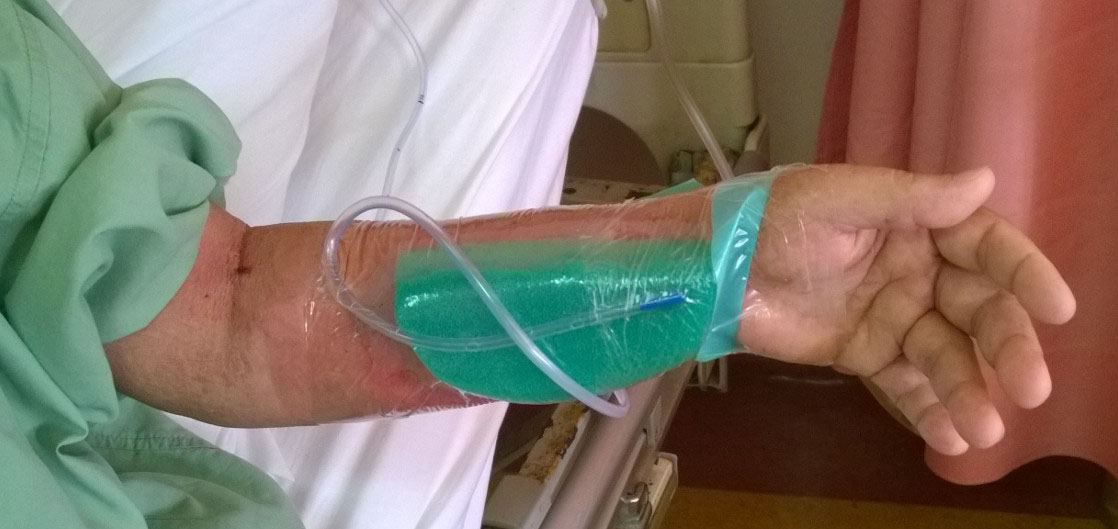
 

select 3

select 1

Comments

It is sad that such a thing ever happened. And I was curious why it could happen! I spent one Sunday afternoon surfing the internet for more information. Problem like this is known medically as EXTRAVASATION.

In my book, Cancer War, I had a picture as below but I would never imagine it could be that bad as the picture above.

chemo swelling

Let us do some serious thinking!

  1. If a little of the chemo-drugs leak out and spill onto your unprotected arm and cause such damage, dare you imagine what is going to happen when the drugs get into your body? Honestly, I dare not imagine and also I cannot understand how such a toxic or corrosive drug can ever cure anything.
  2. Imagine again, just a few ml or drops can cause such damage, what could have happened if you pump in a bottle of such toxic drug.
  3. I am amazed. Our blood vessel must be very, very strong and resilient to be able to withstand such corrosive drugs. Yes, they need to pump the drugs into the vein. Surprising indeed the vein does not “rot away” like the picture above.
  4. From the information below, you will learn why such a catastrophe can happen. And such things should not have happened. Also in the literature we learn that such incidence is rarely reported!

Information from the Internet

  • Extravasationis the process by which any fluid or drug accidentally leaks into the surrounding tissue. In terms of cancer therapy, extravasation refers to the inadvertent infiltration of chemotherapy into the subcutaneous or subdermal tissues surrounding the administration site.

Source: https://en.wikipedia.org/wiki/Extravasation

  • Many cytotoxic agents can cause severe tissue damage if an IV needle or catheter delivers the drug into tissues rather than into the bloodstream. The term extravasation is used when a cytotoxic drug infiltrates into local tissues.
  • To avoid infiltration the larger veins of the arm are used for IV administration.

Source: http://www.rnceus.com/chem/admin.html 

  • Data on the incidence of either extravasation are scant due to the absence of a centralized register of chemotherapy extravasation events.
  • Incidence rates vary greatly. Estimates between 0.01% and 7% are noted in various publications. Some data suggest that the incidence is decreasing probably due to improvements in the infusion procedure, early recognition of drug leakage and training in management techniques.
  • In order to minimize the risk of extravasation, the staff involved in the infusion and management of cytotoxic drugs must be trained to implement several preventive protocols.
  • Should an extravasation occur, it is important to remember that the degree of damage is dependent on the type of drug, the drug concentration, the localization of the extravasation and the length of time a drug develops its potential for damage.

Source: http://annonc.oxfordjournals.org/content/23/suppl_7/vii167.fulldefinitions

Incidence

  • Extravasation is not as rare as many people think, and it may occur even in the most closely monitored situations. A study which investigated extravasation over a five-week period in a UK hospital established an incidence of 39% in adults, almost double that of previously published reports.
  • Extravasation injuries remain uncommon, with an estimated incidence published in the literature of between 0.1% and 6% in patients receiving chemotherapy.
  • The published rate is likely an underestimation, however, as many cases of extravasation go unreported.

Source: http://www.ncbi.nlm.nih.gov/pmc/articles/PMC3664495/

  • The true incidence of chemotherapy vesicant extravasation is unclear since there is no central reporting mechanism. With an increasing awareness of the risks from extravasation, the frequency appears to have fallen.
  • As such, this rate probably underestimates the true incidence of chemotherapy extravasation injury.

Source: http://www.uptodate.com/contents/extravasation-injury-from-chemotherapy-and-other-non-antineoplastic-vesicants


chemo 8

Source: Source: http://www.ncbi.nlm.nih.gov/pmc/articles/PMC2740528/

Cytotoxic agents have the potential of causing destruction of healthy cells. Due to the relatively low number of cancer treatment centres, it is often not possible for a patient to take the complete course at the centre itself because of financial constraints and long distances from their home towns or villages. After the initial one or two courses, many patients find it convenient to take the remaining treatment at their nearest health institution. However, physicians in such nonspecialized centres may not be aware of the local side effects of the drug. Very often, even in oncology hospitals, the work of infusion of cytotoxic drugs is left to a junior house surgeon or an intern, whose inexperience in venupuncture and ignorance of precautions for infusing a cytotoxic drug can lead to extravasation of the drug.

Extravasation of the drug can produce extensive necrosis of the skin and subcutaneous tissue. This not only adds to the misery of the already seriously ill patient, but can also cause serious functional loss, as most often, the forearm and hand veins are used for infusion.

This study was done in the Department of Plastic Surgery of a Medical College in the period from January 2002 to December 2006. There were twelve patients. All the patients were from rural areas and belonged to lower socioeconomic strata. None of the patients was educated beyond middle school.

Mitomycin C was used in seven cases (58.33%), vincristine in two cases (16.66%), 5-Florouracil in another two cases while doxorubicin was responsible for extravasational side effects in one case (8.33%). The size of necrosis ranged from 3.75 cm2 to 25 cm2 with average area of 9.6 cm2 [Picture below].

chemo 9

In terms of the area involved, the dorsum of the hand was involved in five cases (41.66%), the wrist in another five cases (41.66%), and the cubital fossa in the remaining two cases (16.66%).

Extravasation of cytotoxic drugs leads to symptoms which are self-explanatory for this catastrophe. The majority of the patients will complain of excruciating pain and itching in the infusion site. Within a few hours, the extravasation area will show erythema, edema, and induration. Within a few days, these signs and symptoms will increase and the skin will show discoloration and desquamation of the epidermis or blister formation will follow. If a large dose of a cytotoxic drug is extravasated or no intervention is taken at this step, the area will show ischemic changes and ulcer formation will be inevitable.

It is well said, “Prevention is better than cure” and this holds true for extravasation injuries also. Once there is an extravasational injury to the tissue, morbidity is inevitable. Extravasations of cytotoxic drugs further increase the suffering of cancer patients. This catastrophe can only be avoided by vigilance.
chemo 12

Source: http://www.cancerjournal.net/article.asp?issn=0973-1482;year=2015;volume=11;issue=4;spage=835;epage=839;aulast=Salunke

Use of chemotherapeutic drugs is commonly associated with substantial complications. These drugs are infused in veins of dorsum of hand or antecubital fossa.Subcutaneous extravasation is a known complication of intra-venous administration of chemotherapy agents. There are limited cancer centers throughout the globe with properly trained medical professionals. Due to lack of specialized centers and experienced medical professionals, chemotherapy infusions can lead to higher incidence of extravasation injuries. The overall incidence of extravasation injuries varies from 0.1-7%.  It is characterized by drug escaping out of the vessels in subcutaneous tissue plane due to repeated venous punctures and its cytotoxic effect of the chemotherapy drug. The infusion area over dorsum of hand is having minimal subcutaneous fat tissue and so it is more prone for severe damage by extravasation injuries; this injury can damage underlying tendon, joint, and neurovascular structures.The extravasation injuries are difficult to treat due to lower immune status of the patient and complexity of the wound with exposed bone or tendons.

chemo 13

At our center over 3-years period, 32 patients were treated for chemotherapy extravasation wounds. Out of these 32 patients, seven had wound over dorsum of hand. Two patients were treated with chemotherapy for carcinoma lung. Other patients were of Non-Hodgkin’s lymphoma, Osteosarcoma, Breast carcinoma, Oropharanyx carcinoma, and Brain tumor.

Cyclophosphamide was used in four patients (81%), Doxorubicin in three patients (43%), Adriamycin in two patients (28%). Vincristine, Prednisone, Cisplatin, 5 Flourouracil, Adriamycin, Cyclophosphamide, Docetaxel, Procarbazine, Vincristine, Lomustine was responsible for extravasation injury in other patient.


Breast Cancer: She died after three shots of chemo

Mas (not real name) was a 44-year-old Malaysian lady. In May 2015, she felt a lump in her left breast and did not bother about it. About 7 months later, in December 2015, she went for a check-up. Why did you go for a check-up? Just to know what it was. An ultrasound and mammogram confirmed breast cancer. Mas also had pains in her backbone and a CT scan showed the cancer had spread to her bones and liver.

Mas underwent a mastectomy in January 2016.  In February 2016, Mas was started on chemotherapy (drugs: EC). The treatment was scheduled for 6 cycles but after 3 cycles the doctor stopped the treatment because of her deteriorating liver function.  Blood test on  22 March 2016 showed ALP = 455 (high), ALT = 96.1 (high) and AST = 200.4 (high).

Mas and her family came to seek our help in late April 2016. She was prescribed herbs for breast and liver.

Comments

A few weeks later Mas’s cousin to seek our help. At the same time informed us that Mas had passed on about 2 weeks after her visit to us. Mas benefited from taking our herbs. She felt much better.

This is indeed a sad story. But can we learn anything from such a tragedy. Let me quote what others say and leave them there for you to ponder on deeply.

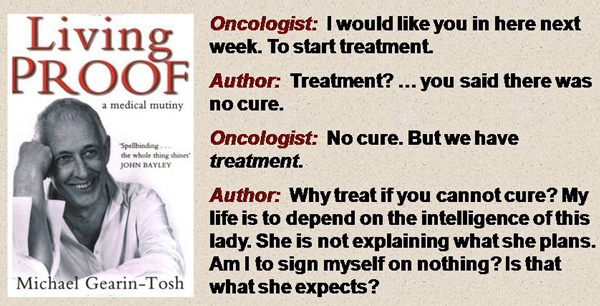
Michael Gearin-Tosh was, for 35 years, a tutor in English at St Catherine’s College, Oxford. But he became famous as the author of Living Proof – A Medical Mutiny (2002) in which he described how he had challenged the medical establishment after he was diagnosed with myeloma (cancer of the bone marrow) in 1994.

He was given six months to live. He was told to undergo chemotherapy.

13 Pull-by-the-nose

Gearin-Tosh discovered that, according to one cancer statistician, chemotherapy brought significant hope of survival to just four per cent of patients with the same cancer, and that many doctors would not prescribe it for themselves. His conclusion was simple: “Touch it, and you are a goner.” Instead he embarked on a series of “alternative” treatments.  Confounding the medical prognosis, he survived a further 11 years and when he did eventually die (on 29 July 2005, at age 65), it was from a blood infection rather than cancer.

Living Proof triggered angry responses from doctors and from patients undergoing chemotherapy. Some accused him of peddling false hopes and ignoring statistics which indicated a higher survival rate for patients given chemotherapy. “If there was anything in this stuff,” wrote one consultant physician, “don’t you think that the medical profession would have grasped these ‘cures’ with both hands years ago?” But for others Gearin-Tosh was living proof that alternative therapies do work, and that it is possible not to be dehumanised by the disease or its specialists.

Source: http://www.telegraph.co.uk/news/obituaries/1495451/Michael-Gearin-Tosh.html

Let’s do some calculation!

Gearin-Tosh was given 6 months to live. He refused chemotherapy and opted for alternative therapies. He went on to live for another 11 years before he eventually died of blood infection (and not cancer).

In May 2015, Mas found  lump in her left breast. Eight months later, she had an operation to remove her whole breast. Even with cancer growing in her, she was still alive but of course with some discomforts and anxiety.

In February 2016, Mas was started on chemotherapy. Three months later, she was dead.

Is it not better to just learn how to live with the cancer and not do anything? Gearin-Tosh reasoned: Why treat if you cannot cure?

Is doing nothing a better option?

Dr. Atul Gawande is a surgeon and professor at Harvard Medical School. He shared his thought as below:

Slide10

Before you folks undergo chemotherapy, do you ever ask what the treatment can do to you?

4 Chemo die OK if follow protocol

30-Chemo-hell-wife-died-of-


Recurrent Pancreatic Cancer Metastatised to the Bone and Lung

GG was 77 years old when she had problems with her pancreas in November 2007. MRI indicated that she probably had an intraductal papillary mucinous neoplasm. In her medical report the doctor wrote: This lesion has malignant potential and should be treated accordingly. GG underwent a distal pancreatectomy in December 2007 in Mt. Elisabeth, Singapore. After the surgery no further medical treatment was indicated.

Nine years later, in 2016, GG started to cough, had fevers, nausea and vomiting.

An ultrasound on 3 May 2016 in Kuala Lumpur showed a solid mass lesion in the region of the body to tail of the pancreas measuring 28 x 33 x 67 mm … suggestive of recurrence. There were multiple cysts in her liver and solid nodules of unknown nature in the neck of the gallbladder. Further examination showed metastasis to the lung and bone.

Her CA 19.9 was at 234 and CEA was at 5.3.

GG is now 85 years old. It was at this point that we received an e-mail from her daughter-in-law.

Dear Dr. Chris Teo,

My name is L and my mother was diagnosed with breast cancer in 2004 and was taking Breast M and Capsules as prescribed by you. She continued with your prescriptions without having major complications i.e., no pain and suffering until she passed away in 2011 due to high fever. We are extremely happy because she did not suffer much and managed to live for another 7 years.

Recently my mother-in-law did an ultra sound and x-ray as she was not feeling well. The results showed her pancreas having cysts and lung having numerous nodules. According to the doctors, cancer is almost positive unless biopsy is done to confirm. She had done surgery to remove part of her pancreas about 10 years ago due to the growth (non-cancerous). She appears to be healthy now with some minor coughing but complained of some phlegm. As she is of advance age i.e. 85, we wish to seek your advice on the best possible treatment for her. Family members are not agreeable to chemotherapy and radiation.

I attached below the medical reports, blood test and results of ultra sound and x-ray for your reference. I am hoping to receive your feedback soon as we are from Kuala Terengganu and are prepared to take her to Penang to consult you if possible. Thank you.

GG was prescribed herbs.

Dear Dr Chris Teo,

My mother-in-law started to take Capsule A-D, M Tea, Bon, Pancrea, Live P, Lun  about two days ago. Each time after about 2 hours of consuming the herbs, she started vomiting the herbs. On the first night of taking the herbs, the phlegm and cough reduced significantly but vomited about 2 hours later. She doesn’t have good appetite now, always belching and feels weak. We seek your opinion whether to continue with the herbs or to reduce the types and amount.  Hoping for your answer soon.

Reply: I expect that. She will have to suffer for the next 1 to 2 weeks to get better. Continue taking the herbs.

Dr. Chris Teo,

Thank you very much for the herbs prescribed to my mother-in-law. I noted that her condition now has improved tremendously … I would like to continue with the herbs. At present, she sometimes feel uncomfortable at her of stomach after taking pain killer. She has been taking pain killer because her outer thigh has been nagging her for more than 20 years. Actually, the pain is due to the disc fracture at the spine as informed by the doctors. I don’t know whether the pain is caused by her spine problem or other reasons. I would like to substitute the pain killers with your herbal remedy.

The son of GG called to say that GG was better. She had more energy and now can sit up. Before she had to lie down.

Comments

We are glad that at least when patients (or doctors) give up medical treatment for advanced cancer, there is still something that we can do to help — to make patients’ quality of life better.

GG is already 85 years old. Do you think subjecting her to chemotherapy or radiation make sense?

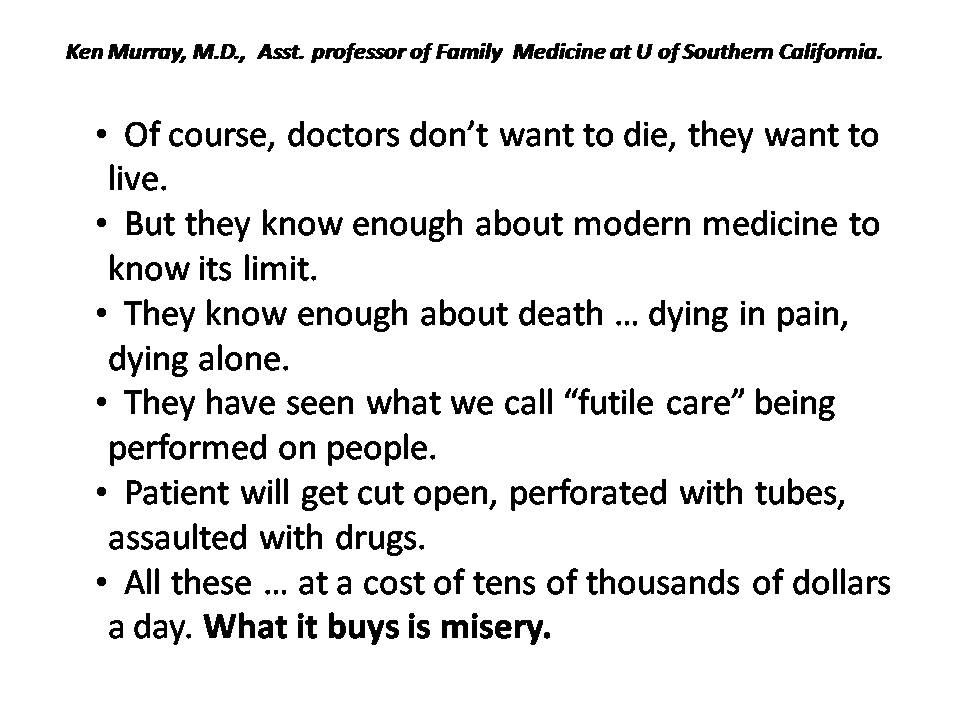
Reflect on this story written by Dr. Ken Murray.

Slide5

Slide6

Slide7

Not too long ago, a man came to our centre on behalf of his 71-year-old father who was in a critical condition in the hospital. His father was semi-unconscious, couldn’t even open his mouth to eat or drink and had to be tube-fed. Looking at his medical condition — lung cancer that spread to his brain — we suggested that it would be better to do nothing than to try heroic acts. A biopsy was done followed by radiation. The question is: What is the purpose — what do you expect to achieve?


If you don’t take care, you will die. Your husband can find a new wife!

Sixty-two-year-old WG is from Indonesia. She came to see us in October 2012. Her problem started after she found 2 lumps in her right breast about 3 years ago. She did not consult any doctor then. She took Chinese herbs for a few months. The lumps grew bigger.

In October 2012, WG came to  Penang and consulted a doctor in a private hospital. The doctor suggested a mastectomy. She was told that the cost of the surgery would come to about RM 4,000 and she has to stay in the hospital for about 5 days.

After seeing the doctor WG came to seek our advice. These are what we told her:

  • Yes, she should go ahead with her surgery.
  • The doctor whom she met was also the “right” doctor. So there is no reason to go “shopping” elsewhere.
  • Tell the doctor not to do any biopsy — just remove the whole right breast right away.
  • After the surgery, she could come back with all the medical reports and we shall then decide what to do.

WG went for surgery as suggested. The total hospital expenses came to RM 4,800 and she stayed in the hospital for 8 days.

The histology report dated 16 October 2012 indicated the following:

  • A well defined solid necrotic tumour measuring 45 x 30 x 30 mm.
  • The subareolar tissue contains a cystic tumour with papillary structures measuring 30 x 30 x 20 mm.
  • One out of 8 lymph nodes shows metastatic deposits of tumour.
  • The tumour is negative for estrogen, progesterone and c-erb-B2 receptors.
  • Stage 3 B — T4bN1 Mx.

WG had a metastatic triple negative cancer. The doctor suggested that WG undergo follow-up chemotherapy. She refused and came back to seek our help. She was started on herbs and was told to take care of her diet.

The following are the blood test results over the years.

table blood test

In April 2016, WG came to Penang for a routine check-up. It has been more than 3 years since her breast surgery. Over the years her blood test seemed to be satisfactory (see table above) We have always cautioned her about her diet — Do not eat anything you like! Take care of your diet. Unfortunately, our plea did not get into her head! She admitted at times she did “curi makan” (eat the forbidden food), but not often.

Since our message did not seem to sink into her, we had to be more blunt but we tried to pass that message in a jovial and joking manner. We are glad that WG and her husband took our message in good spirit. Listen to your conversation that day.

Chris: Your liver function does not look good (table above, April 2016). Did you take care of your diet? Never pantang?

WG: Yes, I ate bad food once a while. If I don’t eat my legs and hands felt numb.

C: Well, I really don’t know what I can do. You have survived more than 3 years now. It is good that you can live that long. Some breast cancer patients would not even last that long. So please take care of yourself. I can’t really do much. So learn how to take care of yourself. Please don’t eat too much of bad food!

WG: Eat also die, don’t eat also die!

C: So, go home and eat what you like and then die faster after that.

WG: Yes, better die sooner so that I don’t have to come and see you anymore.

C: Good, you don’t have to disturb me also. So, go home and eat a lot of bad food and die faster.

GW: I also don’t have to spend any more money.

C: Ah, your husband can find a new wife. Prettier and younger one some more! See, uncle is smiling.

Comments

It is most unfortunate that most cancer patients feel that they are “cured” after being alive and well for 2 to 3 years. They often go back to their own lifestyle and diet. No one likes to know or be reminded that the cancer can recur. Unfortunately, cancer does recur in most cases. A study in Italy showed that the critical year for recurrence is at the 2nd and 5th year. And cancer does not go away even after 15 years!

Breast Cancer Recurrence paattern

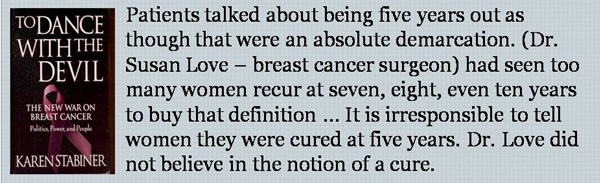
Most patients are being taught to believe that after 5 years they are “cured.” This is NOT true. My aunty died when her cancer recurred 13 years after an apparent “cure”. Last month, a breast cancer patient suffered recurrence after 14 years. Read what Dr. Susan Love has got to say:

1 5-Years-is-not-cure


Breast Cancer: Six years without chemo, radiation or hormone. Happy, happy only!

ES was 49 years old when she was diagnosed with an invasive lobular carcinoma. The lump in her right breast was small, 15 x 10 x 10 mm. ES came to Penang for surgery. The doctor did a wide excision with right axillary sentinel node biopsy. The tumour was cleanly removed with margins clear of tumour. The four sentinel nodes removed from the armpit were also free of tumour.

The tumour was positive for estrogen and progesterone receptors  and negative for c-Erb-2.

Medical reports

Medical reports 2

After the surgery, ES was asked to undergo follow-up treatment of chemotherapy, radiotherapy and oral medication, Tamoxifen. ES flatly refused and opted for CA Care Therapy instead. The doctor was unhappy her. He warned ES, I am your doctor. If you don’t want to go for chemo as I told you, I am responsible if anything happens to you. You take that risk.

ES went back to her doctor every year for check up. For the first two years, the doctor kept insisting that ES should go for chemo. At the third annual visit, the doctor stopped “pushing” ES to go for chemo.

ES went to see her doctor again in April 2016 — six years after the operation. The meeting with the doctor and an ultrasound cost her RM 212.00, The doctor said, Good. He was aware that ES was taking herbs instead of the chemo he had suggested. No, he did not  ask ES about this “alternative treatment.”

Below is our conversation with ES and her husband in May 2016.

Some main points of our conversation:

Chris:  Did the herbs help you?

ES: Yes. My blood pressure became normal, before it was always low, 90/60. I felt healthier.

C: During your six years after surgery, do you experience any problem?

ES: No. Happy, happy only.

C: Now, did you ever worry that the cancer can come back again?

ES: Before in the first two years or so, yes. Now, I have no fear.

C: Some patients are reluctant to take the herbs after some years. What actually is the problem?

ES: Lazy to brew them!

Comments:

What could have happened if ES were to undergo chemotherapy, radiotherapy and took Tamoxifen as suggested by her doctor):  Would her six years after surgery be a “happy, happy only” life?

  1. What would happen if she had chemo and radiation? Surely, she had to spend a lot of money. In addition she would suffer side effects. Seriously or not, no one could predict.
  2. Would she be able to have problem-free life after chemo and radiation? That depends on your “luck” (according to one onco).

Chemo did you ask

Capture 1

3   Recent research result has shown that about 50% of women with breast cancer have been receiving chemo that they don’t need! So, is chemo given to women just as a matter of routine or SOP (standard operating procedure)?

Capture 2


Surgery and Chemotherapy Did Not Cure Their Breast Cancer: Equally A Big Mistake?

Lately, we encountered many breast cancer cases. Indeed pathetic. By sharing these stories with you, we hope that those who come after this unfortunate patients, can learn and understand that cure for cancer is rather elusive.

—————————————————————————————————————

Earlier, we posted about patients who took herbs to “cure” their breast cancer. They ended up in a deep, dark pit. It appears that we have a fool-proof scapegoat to blame. Ah, I told you so, why do such “silly” things taking those unproven and unscientific herbs! Sound familiar right?

But here are patients who did the “right thing” from the very start. They went to see their doctors, did what their doctors wanted them to do — i.e. surgery and chemotherapy. After undergoing all these treatments and having spent so much money besides enduring all the nasty side effects, they also ended up in the deep, dark pit — equally messy and equally dangerous situations like the patients who took the “unscientific” path.

Let us present you these 4 sad cases which we encountered very recently.

Case 1: Jati (not real name) is a 60-year-old Indonesian lady.  She was diagnosed with right breast cancer and underwent a mastectomy. Then she underwent 12 cycles of chemotherapy and 5 sessions of radiation. She was told the cancer had already spread to her lungs. Jati took 2 cycles of Xeloda.

The cancer did not go away. Jati came to a private hospital in Penang and underwent 6 cycles of chemo. Each cycle cost her RM 4,500.

CT scan on 4 May 2016 showed:

  • The mass seen in the right axilla and right retropectoral region appears slightly larger compared with the previous scan on 24 February 2016.
  • The nodules in the right and left lungs are larger and more in number compared with the previous scan.

Blood test on 4 May 2016 showed her CA 125 was at 165 (High, normal 0-35) and GGT at 123 (High, normal 9-36).

The above results showed that the chemo was not effective. Not only that, the cancer had grown to be more serious. The oncologist asked Jati to do more chemo! And more chemo? Actually, Jati had just been hospitalised for 5 days due to severe diarrhea after the chemo.

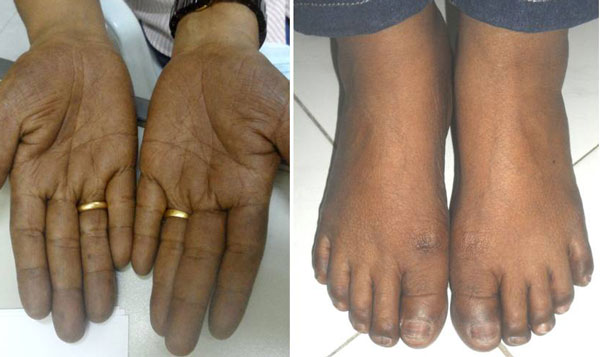
Jati refused further chemotherapy and came to seek our help. Chemo made her skin turn dark like the pictures below:

Composite-Jati

Case 2: Shirley (not real name) is a 53-yer-old Indonesian lady. In 2012, she was diagnosed with Stage 2B, right breast cancer. She underwent a mastectomy. Histopathology confirmed an infiltrating carcinoma, mixed ductal & lobular. The tumour size: 2.4 x 2.4 x 1.5 cm.  One of 12 lymph nodes were positive for tumour cells. The tumour was negative for estrogen receptor, negative for progresterone receptor and negative for Her 2/neu.

Shirley received 6 cycles of chemotherapy. No radiation or medication was indicated since this was a triple negative cancer.

Shirley had regular checkup and everything seemed to be normal. CT scan on 17 April 2015 showed no signs of metastatic process. Upper and lower abdominal organs are within normal ecopattern. But the good news did not last. A few months later, blood test showed the CA 15.3 was rising.

PET scan on 14 August 2015, showed:

  • the cancer had spread to the lymph nodes — left collar bone and arm pit, paratracheal, etc.
  • there is fluid in the lung, probably due to metastasis.
  • there is a lesion in Segment 7 of the liver.
  • metastatic lesions in the bone — sternum and rib bone.

Composite-Shirley

Shirley was asked to undergo chemotherapy again. After 2 cycles of chemo, she was told that the treatment was not effective. Shirley then went to another hospital where she received another 3 cycles of chemo — Brexel (Docetaxel), Epirubicin and Cyclophasphamide. After that Shirley decided to give up.

The following is her blood test results — in spite of the chemo.

  CA 15.3
30 December 2015 41.99
12 February 2016 43.00
30 April 2016 114.10

Having run out of option, Shirley and her husband came to seek our help.

Case 3: Mas (not real name) is a 44-year-old Malaysian lady from Sabah. In May 2015, she felt a lump in her left breast and did not bother about it. About 7 months later, in December 2015, she went for a check-up.

Ultrasound on 4 December 2015, showed:

  • a large ill-defined hypoechoic lesion at 2:00 – 26.9 x 33.0 mm.
  • two ill-defined hypoechoic lesons at 11:00 – 5.5 x 5.4 mm and 8.9 x 8.2 mm.
  • enlarged left axillary lymph node, 1 cm.

A mammogram on 4 December 2015, showed a large ill-defined mass with spiculated margins and architectural distortion at the left upper outer quadrant, 2 o’clock.

Mas complained of pains in her backbone. A CT scan on 15 December 2015 indicated the following:

  • confirmed earlier finding of an irregular mass in the left breast, 2.0 x 3.8 x 3.8 cm in size.
  • multiple hypodense lesions of varying sizes scattered in both liver lobes in keeping with liver metastasis. The largest at segment 8, measuring 3.4 x 3.2 cm.
  • a small hypodense cystic lesion at pancreatic body measuring 0.5 x 0.3 cm, likely benign.
  • multiple lytic lesions scattered in almost entire visualised vertebrae, both iliac bones and sternum in keeping with bone metastasis.

Composite Mas Sabah

Mas underwent a mastectomy in January 2016.  The tumour was ER positive, PR positive and HER2 positive.

After surgery, in February 2016, Mas was started on chemotherapy (drugs: EC). The treatment was scheduled for 6 cycles but after 3 cycles the doctor stopped the treatment because Mas’s liver was badly affected. Mas also suffered side effects of the chemo for the entire 3 weeks after each cycle of chemo.

  1 March 2016 22 March 2016
ALP 308 H 455 H
ALT 153.3 H 96.1 H
AST 228.7 H 200.4 H


Case 4:  Yan (not real name) is a 36-year-old Indonesian. She felt a small lump in her breast in January 2016. The nipple discharged pus. A biopsy indicated cancer. Yan underwent a mastectomy on 26 February 2016 in a private hospital in Melaka, Malaysia. Histopathology confirmed an invasive ductal carcinoma. Fourteen of the 16 axillary lymph nodes showed evidence of tumor metastasis. One lymph node at Level II showed evidence of metastasis.

The tumour was positive for oestrogen receptor, negative for progesterone receptor and positive for C-erbB-2.

PET scan on 23 March 2016 confirmed the cancer had spread to the numerous lymph nodes in the body.

Dwi Jandayani Yan

Yan was referred to an oncologist for follow-up. Based on the above, the oncologist recommend the following:

  1. Chemotherapy – 8 cycles, 3 weeks once. Cost: AC + Gran RM 2,500 x 4 = RM 10,00. Docetaxel + Pegasta RM 5,600 x 4 = RM 22,400. So in total the 8 cycles of chemo would cost about RM 32,400.
  2. Heceptin, total of 17 injections, to start at 5th chemo session. This could take a year at total cost of RM 150,000.
  3. Radiotherapy, 15 sessions, for three weeks. Cost RM 10,000.
  4. Hormonal therapy to take for 10 years. Nolvadix (or Tamoxifen), 20 mg, RM 150 per month.

Did you ask if the above treatments are going to cure you? I never ask! I only asked about the side effects.

What are the side effects? Total hair loss, nausea and onset of menopause.

So what do you want to do now? I don’t want to do any chemo.

A quick addition of all costs: RM 200,400 (besides the surgery).

Can we learn some lesson from all these cases?

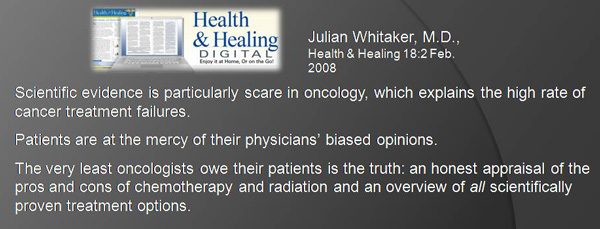
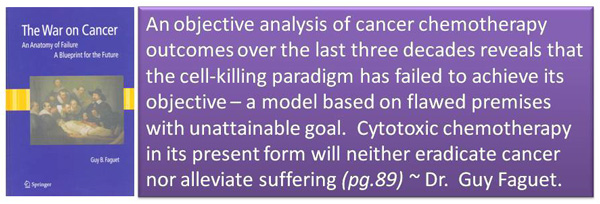
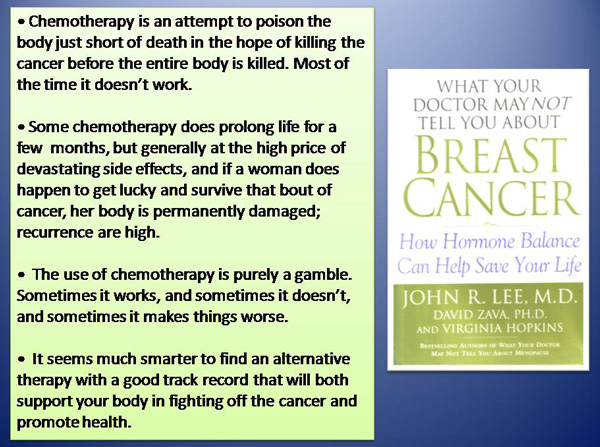
These four patients did the “right thing” from the medical perspective. After all we have been told and made to believe that medicine is scientific and proven. Reflect on the various quotations below, then ask these question: Is the present treatment of breast cancer (or any cancer at all) based on science? Or is it just a guessing game based on biased opinions? Are you being told the truth or being misled?

Why The Current Cancer Treatment Failed

42 Whitaker Treatment-failure

26 Successs-is-an-illusion


37 War-on-Cancer-wrong-concept

Cancer Treatment is a Guessing Game — no one can tell why

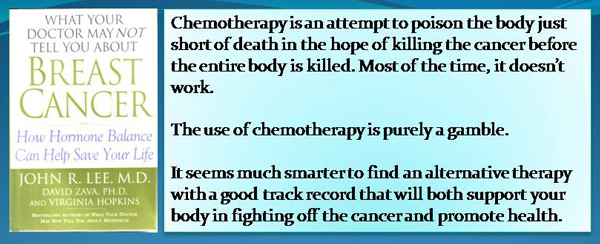
3 Chemo attempt to kill cancer before killing patient JohnLee

Am I Not Told All These?

You are not alone. Even educated people like an army colonel also got trapped. 

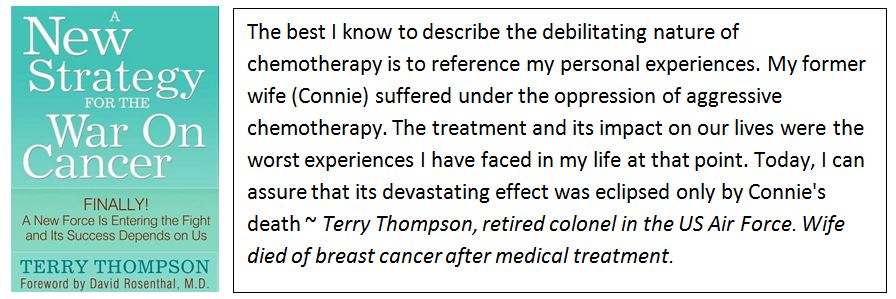
30-Chemo-hell-wife-died-of-

The Cruel, Mad and Greedy World

We really felt sorry for Yan, sitting in front of us not knowing what to do.

Let’s take a closer look at her case. She was 36 years old when diagnosed with breast cancer. After surgery, the follow-up chemo treatments alone would coast her about RM 200,000. That did not take in consideration cost of travel and stay in Malaysia (on and off) for the treatment for about a year. Let’s assume that everything comes to about RM 300,000 for the treatment.

Let us also assume that she will be cured after all these treatments — which may not necessarily be the case. She may die half way through the treatment. She may suffer a relapse after spending that RM 300,000. No one can predict, no one can tell and no one can know for sure.

If there is a recurrence, there will be another pile of medical bills to settle.

If Yan were to start saving right on  the first day when she was born, it would come to about RM 694 per month or RM 8,333 per year. Do that for 36 years to be able to raise that kind of money for her “unpredictable” breast cancer treatment.

Look at it another way. If Yan were to go to the university and started work at age 20, it would mean that each year she has to save RM 18,750 per year or RM 1,562 per month for 16 years to be able to accumulate RM 300,000 to pay for her medical bills.

Indeed, something must have gone wrong in this world today? Is it not about time that someone come out with an cheap but effective option to heal cancer?  Knowing how the world operates that is another illusion! Read these quotations:

1 Medicine-greed-cant-change

3 Treatment-that-makes-money 4 Oncology-all-about-money


After all the staggering cost and believing that there is a cure, here’s the real bomb shell

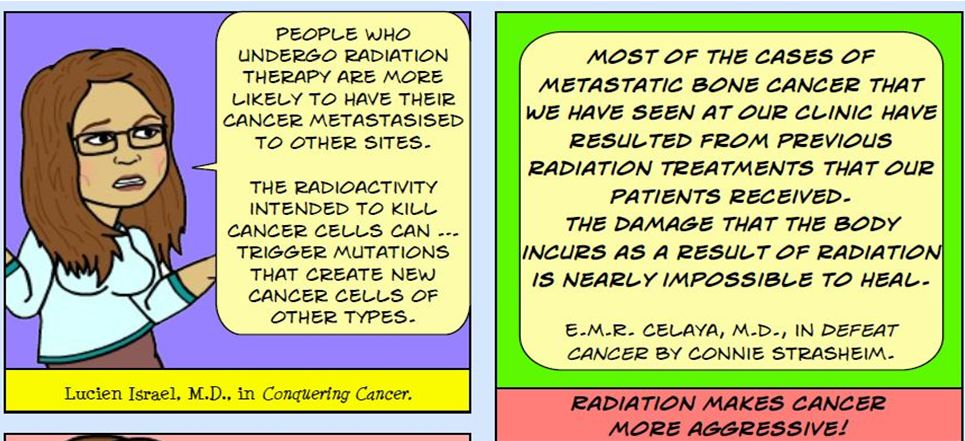
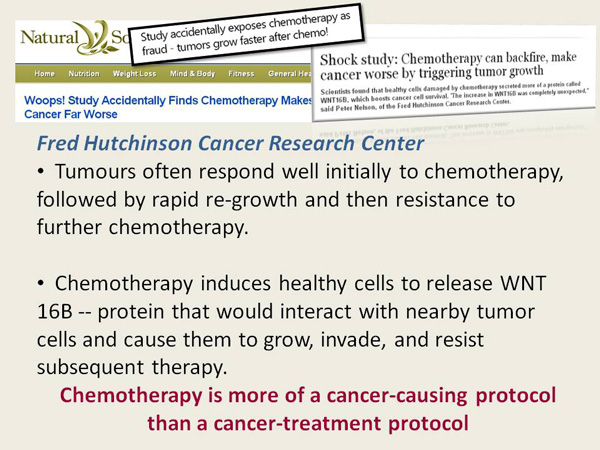
32 Chem-spreads-cancer-Fred-Hu

Related cases:

Listen, there is NO cure for metastatic cancer!

Breast Cancer: Surgery, Chemo, Radiation and Hormonal Therapy Did Not Cure Her. Xeloda made her miserable! Patient, Only You Should Decide What You Want To Do!

Breast Cancer: Surgery did not cure. Recurrence and cancer spread extensively to her lungs. But does she want to live?

Look at the Bigger Picture Part 2. You don’t have to “swallow” everything that they offer you!

2.3 cm Malignant Breast Lump: Surgery, Chemo and Radiation — Disaster

Breast Cancer: Surgery, Chemo, Radiation and Tamoxifen Did Not Cure Them


Bawang Dayak, Soursop leaf and Kunyit putih Did Not Cure Her Breast Cancer: Another Big Mistake

Lately, we encountered many breast cancer cases. Indeed pathetic. By sharing this story with you, we hope that those who come after this unfortunate patient, can learn and understand the “folly” of taking the wrong path.

—————————————————————————————————————

Ani (not real name) is a 31-year-old Indonesia lady. In December 2013, Ani was breast feeding her baby. Her breast swelled. A month later, she felt a lump in her left breast. In April 2014, Ani felt her whole body was uncomfortable. She went to consult a doctor. An ultrasound done did not show anything wrong with her breast.

Ani went back to see her doctor again in May 2014. The lump in her left breast was removed. Unfortunately, this time it was said to be cancerous — infiltrating ductal carcinoma, Grade 3 with microvascular invasion. Ani was asked to have a mastectomy — i.e., removing  the whole breast. She refused. She was also asked to undergo chemotherapy. She also refused.

Ani turned to folk medicines, taking teas made from soursop leaf, kunyit putih, and bawang dayak (also known as bawang tiwai).

Ani started to take bawang dayak from April 2015 until early 2016.  She believed that bawang dayak helped her in spite of the fact that in September 2015 many small lumps appeared in her left breast. These lumps then grown bigger and coalesce into a single big lump.

Ani underwent a second surgery to remove the lump together with a large portion of her breast tissue. Histopathology report dated 4 November 2014, indicated that her breast tumour as negative for estrogen receptor, negative for progesterone receptor and negative for Her2 receptor.

Ani was asked to undergo chemotherapy. Again she refused and continued with her bawang dayak.

Her recipe: She would boil 7 bawang (like onion bulb) and take the tea 3 times a day. One kg of bawang dayak cost IDR 200,000  (about RM 60.00).

Things did not work out well for Ani. In January 2016, CT showed the cancer had spread to her lungs. She was referred to an oncologist who asked her to undergo chemotherapy. Again she refused.

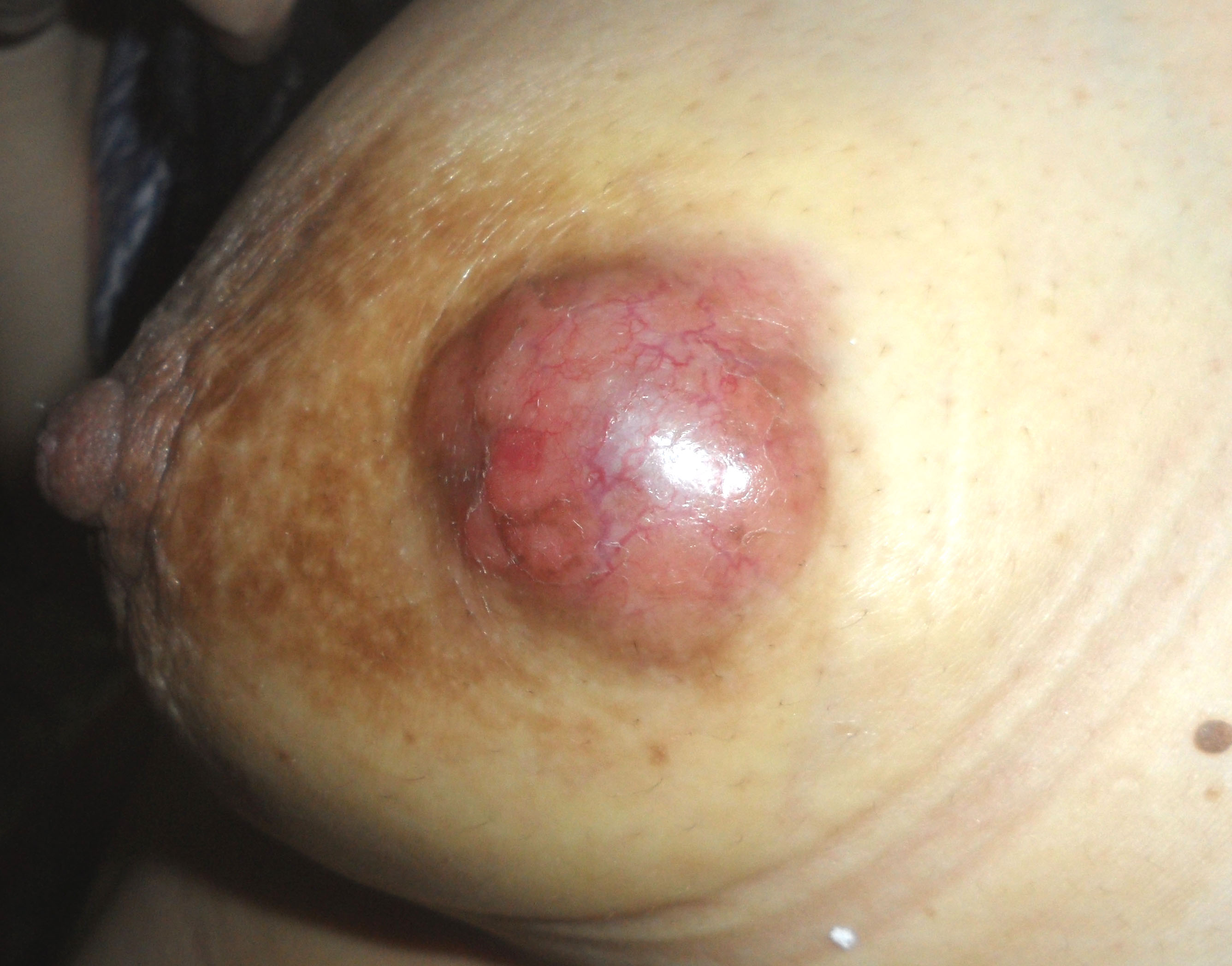
In May 2016, Ani and her husband came to seek our advice. She presented with hot, pulling pains in her left breast. The pain lasted the whole day and night.  She had difficulty sleeping due to the pains. Indeed, as in the picture below, her whole left breast was badly affected by the cancer.

composite

What Do We Do Now?

You may wish to read a similar story — Lucy and her misadventure with bawang tiwai (https://cancercaremalaysia.com/2016/05/08/bawang-tiwai-did-not-cure-her-breast-cancer-a-big-mistake/).

In Lucy’s case as well as this case, we believe it is better to remove the cancerous breast entirely.  Looking at Ani’s breast, unfortunately, the cancer had already spread extensively. No surgeon would want to cut off the breast without first undergoing chemotherapy. The reasoning is …hopefully chemo would shrink the tumour so that surgery can be performed.

Unfortunately again, Ani had a triple negative tumour — a more difficult type of cancer to treat. It tends to be more aggressive than other type of breast cancer.  About 15 to 20 % of breast cancer is the triple negative type. It occurs more commonly in women under the age of 40.

Lesson We Can Learn From This Case

No matter which angle you look at it, if you have a cancerous lump in your breast, it would not go away! From our 20 plus years of observation, the best solution is to have it removed right away after you are told that you have cancer. Why keep that cancerous breast? If you still insist on keeping this cancerous lump in there, know that it will come back to haunt you one day in the future — a dreadful nightmare indeed!

At the beginning, after a lumpectomy confirmed it was a cancer, Ani did not want to undergo a mastectomy. Our advice again: it is better to lose one breast than to lose your life. And along the way, you also have to suffer!

Know also that when the lump is small, it is easier to remove it totally. But when it has grown big and has spread all over the breast, mastectomy is difficult to perform. Even if you agree to the mastectomy at that stage, the chances of removing all of the cancer is very slim indeed. Even worse, you cannot perform the surgery without first undergoing chemotherapy. From the very beginning Ani did not want chemo. Understandable. But when the cancer had gone out of control, she must, whether she likes it or not, submit to chemo.  So, Ani is back to square one.

Seek Reliable Knowledge 

If you are diagnosed with cancer. Our advice is don’t panic and don’t despair. There is still life if you make the right choice. Yes, the key is the right choice.

To know how to make the choice that is right for you, you need to read …. read and read. Nothing comes easy. So take time to be well informed. There are enough information in the internet to help you. But remember that what is written in the internet may just be unsubstantiated “garbage”, fake testimonials, manipulated results, etc. So be careful.

Before you believe anything picked from the internet, please check and recheck your facts. In spite of this hazard, we still feel the internet is the start of your search for knowledge.

Your Ultimate Choice: Devil vs Deep Blue Sea 

After surgery, you have to make an important decision of your life.

The doctor would want you to go for chemotherapy, radiotherapy and hormonal therapy (or any combination of these). That is the standard “medically right” way to go. But you need not follow your doctor’s advice if your heart tells you to take a different path. In another posting, we wrote about how patients who took this route ended up in an equally messy and dangerous situations.

To-day, in the internet, are numerous alternative therapies which claim to be able to “cure” cancer without having to undergo the aggressive, dilapidating medical treatments above. But in this article, you learn about the fallacy of following this alternative route. This does not mean that other alternative therapies are useless. It is up to you to evaluate these therapies and decide what you are comfortable with.

Over the years, we have helped numerous patients heal their cancer — of course not all who came were successful. Many failed miserably too.

We understand many cancer patients are caught in a limbo. They are not accustomed to be in a situation where they have to make a decision for themselves. If possible, they prefer to have others or the experts, to tell them exactly what to do. They just want to follow — swallow hook, line, and sinker. 

Reflect on these quotations below and know that when it comes to cancer, there is no such thing as a right or wrong choice. It has to be your choice. Follow what your heart says!

3 No-right-or-wrong-journey

13-Same-treatment-different

10 Decide-what-is-right-for-yo


Bawang Tiwai Did Not Cure Her Breast Cancer: A Big Mistake!

Lately, we encountered many cases of breast cancer. Indeed pathetic. By  sharing this story with you, we hope that those who come after this unfortunate patient, can learn and understand the “folly” of taking the wrong path.

—————————————————————————————————————


Lucy (not real name) is a 40-year-old female from Indonesia.

An USG of her breasts on 13 July 2013 showed:

  • Anechoic lesions seen in upper side of both breasts, size 2 to 7 mm in diameter, well defined margin.
  • Hypoechoic lesions, unclear border, lying in the skin seen in both axilla, size 3 to 7 mm. Suspected atheroma (an abnormal mass of fatty or lipid material deposited in the inner lining of an artery) in both axilla.
  • No evidence of suspicious abnormal enlarged lymph nodes in both axilla.

Conclusion: Suspected of atheroma in both axilla. Cysts in both breasts.

In January 2014, Lucy felt a lump in her left breast. A mammogram and USG were performed on 30 January 2014 which indicated:

  • An irregular slight hyperdensity lesion in left mammogram with subtle microcalcification, highly suggestive of malignant mass.
  • Breast ultrasound demonstrate malignant and indeterminate solid mass in left breast and bilateral breast cysts.

Fine Needle Aspiration Biopsy concluded a left breast, ductal carcinoma.

Lucy was asked to undergo an operation. She refused. Instead she started to take Bawang Tiwai as a remedy for almost a year. Her problem did not go away.

A year later, January 2015, Lucy sought the help of a herbalist in Surabaya. She was prescribed herbs besides undergoing a tapping treatment. The herbalist tapped certain parts of her body as a treatment. Each tapping treatment lasted about 10 to 15 minutes. This treatment was done once a month for a year.

A PET scan on 12 March 2015, showed swelling of the liver. The cancer had spread to her lymph nodes while the condition of her left breast had deteriorated.

Lucy stopped this herbal and tapping treatments in January 2016, after an USG had shown that Lucy’s breast cancer had worsened.

In May 2016, Lucy and her husband came to seek our advice. We told Lucy to go and consult a surgeon and have her left breast removed. There is no compromise about it! Lucy went to a private hospital for further consultation.

A CT scan on 3 May 2016 showed:

  • An enhanced irregular mass in the left breast measuring 49.8 x 56.8 x 57.1 mm.
  • Multiple small satellite nodules are also seen.
  • Infiltration into the nipple and skin seen, with thickened overlying skin.
  • Multiple enlarged left axillary lymph nodes, largest measuring 38.6 x 51.3 x 53.3 mm.
  • Multiple metastatic lung nodules noted bilaterally.
  • Multiple enlarged mediastinal lymph nodes seen, largest in right paratracheal region measuring 37.3 x 24.8 x 55.0 mm or hilar lymphadenopathy seen.
  • Enlarged left upper paraaortic lymph nodes seen measuring 14.9 x 28.4 x 31.0 mm.
  • Gross hepatomegaly. No focal liver parenchyma lesion.
  • Uterus is anteverted and bulky with a uterine fibroid seen measuring 65.9 x 54.9 x 68.0 mm.
  • Several lytic bone lesions seen in the spine, sternum, liac and ischium.

Conclusion: Metastatic left breast carcinoma.


b

Here are Lucy’s blood test results.

  CEA CA 15.5
6 November 2014 Less than 0.50 17.0
12 February 2016 0.89 234.9  H
3 May 2016 1.1 680.0  H


It is obvious that Lucy’s breast cancer had gone “beyond rotten”. The surgeon would not want to perform a mastectomy for her. Lucy was asked to consult an oncologist and undergo chemotherapy — the treatment which she did not want to undergo.

Lucy and her husband came back to see us again. These are the gist of what I said to them.

Wrong Path

  1. You have taken the wrong path to start with. In January 2014, you had a biopsy. The lump was cancerous. The doctor wanted you to undergo an operation. You refused. You turned to Bawang Tiwai and was taking it for almost a year. Then you turned to a herbalist who gave you some herbs and did some “tapping magic” on you. The cancer worsened.
  1. That was the greatest mistake you have ever made. Why do I say that? In my twenty years dealing with breast cancer, I have learned that a better option is to remove the cancerous lump as soon as possible. In this way you may be able to save your life. To me, surgery is a necessary evil. If you were to come and see 2 years ago, I would NOT prescribe you any herbs — not until you have your cancerous breast removed.

No Need To Find A Scapegoat

  1. I have never heard of Bawang Tiwai before. (This is also known as Bawang Dayak). So last night, I surfed the net and searched for more information. This onion-like herb (Eleutherine palmifolia) is grown in Kalimantan. This is what it looks like (picture from the internet).

BAWANG TIWAI

This herb is supposed to be good for the following (reproduced from: http://www.herbs-medicine.com/2016/01/benefit-eleutherine-palmifolia-treat.html)

  1. Insomnia
  2. Healthful heart Muscle
  3. Support overcome lymph node cancer
  4. Shrink irritation of the tonsils
  5. Treating bronchial asthma
  6. Ulcers
  7. Lowering uric acid
  8. Overcoming piles
  9. Help deal with lung melanoma – Lung
  10. Aid overcome breast melanoma
  11. Support treat uterine cancer
  12. Support overcome colon melanoma
  13.  Support deal with whitish
  14. Aid deal with cysts
  15. Aid overcome cholesterol
  16. Reduces suffering ulcer
  17. 17 Help deal with migraine
  1. As a botanist, I am glad that I get to know this herb. At least I have learned something new. But to say that this herb can cure your breast cancer is altogether another thing. For one year you have put your hope on this plant. Did you cure anything? On the contrary, your breast cancer worsened.
  2. If you were to believe what is being written about this herb (read above list carefully), it is said it can help with lung cancer and fibroid besides breast lump. Now your breast cancer had spread to your lungs, bone and lymph nodes. You also have a 6 cm uterine fibroid. As it is, the herb helps to cure “nothing.”
  3. Maybe other patients may benefit from this herb but NOT you. After a year you found out the “truth” the hard and dangerous way. You stopped taking Bawang Tiwai. In fact, I am going to tell you — on the same day that you came to talk to me, there was another patient who also took this Bawang. She was also in deep trouble.

What to Do Now?

  1. When you came I asked you to go and see a surgeon to have the “rotten” breast removed. Unfortunately, according to his SOP (standard operating procedure) he would not be able to do that. He wanted you to do chemo first to shrink the tumour. If the chemo does not shrink the tumour you will have to go on with more and more chemo. If you are lucky, the tumour shrinks and you can get your breast removed totally.
  2. I understand many patients do not want to go for chemo or radiation. They have heard enough of what these treatments can do to patients. So, I understand the predicament. But as I have said, surgery is a necessary evil — go and have the breast removed! If you don’t want to proceed with the follow up chemo or radiation, that is totally a different ball game.
  3. In your case, since the surgeon did not want to remove your breast before you undergo chemotherapy, I suggest that you go and find some other surgeon who is willing the perform the surgery without chemo. May be there will someone like that. Although we know the chance is very slim. Go home to Indonesia and try to find such doctor.
  4. If you cannot, then you have no choice but to do 1 to 3 cycles of chemo and see what happen. If the tumour shrinks, then you are lucky. But if there is no effect or you get worse, then know that chemo is not going to help you!
  5. And understand this carefully:

3 Chemo attempt to kill cancer before killing patient JohnLee

Role of CA Care

  1. At CA Care, after many years of observation and healing hundreds of cancer patients, We can come to a simple conclusion: Nobody on earth can cure any cancer! Because of this we are out-front with our patients. We tell them the truth that some may not want to hear.
  2. All patients who come to us, hope that we can cure them. That we have “magic” bullets to make the cancer disappear. No, we can’t cure your cancer. To make your life better, probably yes. To make you live longer, may be yes. To give a better quality of life, most likely yes. But cure, NO.

To  put cancer into remission for a while may be possible,  but to make the cancer go away one hundred percent is not possible. The cancer can come back, even after 10, 15 or 20 years. We have patients who relapsed after such long years. So make no mistake about this.

  1. In addition to taking herbs, we ask you to take care of your diet. Eat healthy not junk and toxic food! Go for exercise everyday if you can. Relax and don’t unnecessarily stress yourself. Learn how to let go. And above all, pray that the Almighty God guide you to do what is right for you.

So, our herbs are not magic bullets for your cancer. Unless you are prepared to follow what we have said, don’t waste your time and money trying to follow our therapy.


He Died Of Lung Cancer — Treated by the Best Oncologist in One of the Best Hospitals in the World

It was 3 a.m. when I finished reading the last page of this 224-page-New York Time #1 Bestseller.

When breath becomes air

The Author: Dr. Paul Kalanithi was an outstanding neurosurgeon with very impressive academic credentials. He graduated from Stanford University with a BA and MA in English literature and a BA in human biology. He earned an MPhil in history and philosophy of science and medicine from the University of Cambridge. Later, he went to Yale School of Medicine where he graduated with a cum laude. Paul then returned to Stanford to complete his residency training in neurosurgery.

To Paul, being a neurosurgeon is a noble calling. You can’t see it as a job, because if it’s a job, it’s one of the worst jobs there is.

Unfortunately, fate has it that Paul did not end up being a full-fledged neurosurgeon. Well into his six-year-residency  he was diagnosed with stage 4 metastatic lung cancer. Less than two years (22 months) after the diagnosis he died — just when he was ready to graduate.

I read this book with a heavy heart — sad that such a brilliant and caring doctor like Paul had to leave so soon.  Lucy — Paul’s wife wrote, When I see the hospital where Paul lived and died as a physician and a patient, I understand that had he lived, he would have made great contributions as a neurosurgeon and neuroscientist. He would have helped countless patients and their families.

Such is the sad, cruel reality about life. Lucy wrote, What happened to Paul was tragic, but he was not a tragedy. True indeed. I always believe for anything that happens, there must be a reason if only we look at the bigger picture.

Salute the Neurosurgeon!

Paul did well in life — he studied literature, history and philosophy before doing medicine. With such academic background he was well prepared to become a caring doctor — a cut above others. Here are some quotations of what Paul wrote in his book:

  • As a resident, my highest ideal was not saving lives — everyone dies eventually — but guiding a patient or family to an understanding of death or illness. Where there’s no place for the scalpel, words are the surgeon’s only tool.
  • Our patients’ lives and identities may be in our hands, yet death always wins. Even if you are perfect, the world isn’t. The secret is to know that the deck is stacked, that you will lose, that your hands or judgment will slip, and yet still struggle to win for your patients.
  • Like my own patients, I had to face my mortality and try to understand what made my life worth living. With limited time, Paul wrote this book. He did not get to finish it.

Prognosis and Statistics

As a neurosurgery resident Paul had operated on brain cancer. After surgery it is the standard practice to send patients for follow up chemo and/or radiation. Here doctors often talk about prognosis with their patients and family members.

This is something Paul wanted us to know. He wrote, By this point, I had learned a couple of basic rules. First, detailed statistics are for research halls, not hospital rooms … Second, it is important to be accurate, but you must always leave some room for hope — Median survival is eleven months or You have 95 percent chance of being dead in two years — I come to believe that it is irresponsible to be more precise than you can be accurate. Those apocryphal doctors who gave specific numbers (The doctor told me I had six months to live): Who were they, I wondered, and who taught them statistics?

Limitation of Science

  • Although I had been raised in a devout Christian family …I, like most scientific types, came to believe in the possibility of material conception of reality, an ultimately scientific worldview that would grant a complete metaphysics, minus outmoded concepts like souls, God, and bearded white men in robes.
  • Scientific methodology is the product of human hands and thus cannot reach some permanent truth. We build scientific theories to organize and manipulate the world, to reduce phenomena into manageable units.
  • Science is based on reproducibility and manufactured objectivity.
  • Science … its inablity to grasp the most central aspects of human life: hope, fear, love, hate, beauty, honor, weakness, striving, suffering, virtue.
  • Human knowledge is never contained in one person. It grows from the relationships we create between each other and the world, and still it is never complete. 

Stage 4 Lung Cancer

  • At age thirty-six, I had reached the mountaintop; I could see the Promised Land …. then a few weeks later I began having bouts of severe chest pain … my weight began dropping … from 175 to 145 pounds. I developed persistent cough. Little doubt remained.
  • In May 2013, it was confirmed that Paul had a stage 4 non-small cell EGFR-positive lung cancer. At that time he was in his sixth year of residency — one more year to
  • The irony was that Paul had never smoked.

The World’s Best Oncologist

  • The search was on — to find who was the best lung cancer oncologist (USA). Houston and New York had major cancer cancers …The replies came back quickly and more or less unanimously: Emma (also in Stanford) not only was one of the best — a world-renowned oncologist who served as the lung cancer expert on one of the major national cancer advisory boards — but she was also known to be compassionate, someone who knew when to push and when to hold back.
  • On many occasions when consulting Emma, it was clear that this compassionate oncologist did not “dictate things” to her patient. I could hear Emma’s voice again: You have to figure out what’s most important to you.
  • Emma once told Paul: I’m totally happy for us to make your medical plan together; obviously, you’re a doctor, you know what you’re talking about, and it’s your life.
  • At their initial consultation, Paul wanted to discuss the prognosis — possibly how much time left. Emma evaded the question and said, We’re not discussing that.
  • Two months in, Emma remained vague about any prognostication, and every statistics I cited she rebuffed with a reminder to focus on my values.

Temporary Response

Paul had an EGFR-positive tumour. No intravenous chemotherapy was indicated for the moment. He was put on an oral targeted drug called Tarceva.
His cancer responded to the treatment — My lungs, speckled with innumerable tumours before, were clear except for a one-centimetre nodule in the right upper lobe … there had been a clear, dramatic reduction in tumour burden.

Paul regained strength and he returned to work in late 2013, completing his seventh year of residency.

Relapse — Chemotherapy: Too many cooks spoil the broth?

In spring of 2014, the cancer relapsed. The only option left was chemotherapy.  This was what happened after one of his chemo sessions.

  • I began to deteriorate, my diarrhea rapidly worsening … my kidneys began to fail. My mouth became so dry I would not speak or swallow … my serum sodium had reached a near-fatal level. Part of my soft palate and pharynx died from dehydration and peeled out of my mouth … I was transferred to the ICU. I was in pain …. a pantheon of specialists was brought together to help: medical intensivists, nephrologists, gastroenterologists, endocrinologists, infectious disease specialists, neurosurgeons, general oncologists, thoracic oncologists, otolaryngologist …. 
  • I was acutely aware that with this many voices, cacophony (unpleasant mixture of loud sounds) In medicine, this is known as the WICOS problem: Who Is the Captain Of the Ship? The nephrologists disagreed with the ICU doctors, who disagreed with the endocrinologists, who disagreed with the oncologists, who disagreed with the gastroenterologists. I felt the responsibility of my care… tried to corral all the doctors to keep the facts and interpretations straight.

It is hard to tell laymen, like you and me, to take charge of your own health and treatment when you are in the hospital surrounded by all those experts. But yet, that should be the way it should be!

Chemotherapy took a heavy toll on Paul. He wrote: Withered, I could see my bones against my skin, a living X-ray. At home, simply holding my head up was tiring. Lifting a glass of water required both hands. Reading was out of question.

Chemo Failed – He Died

  • Treatment wasn’t an option — not until I regained some strength.
  • Emma, I said, what’s the next step?
  • Get stronger, That’s it.
  • But when the cancer recurs … I mean, the probabilities …. I paused. First-line therapy (Tarceva) had failed. Second-line therapy (chemo) had nearly killed me. Third-line therapy, if I could even get there, made few promises.
  • You have five good years left, she (Emma) said. She pronounced it, but without authoritative tone of an oracle, without any confidence of a true believer. She said it, instead, like a plea… Doctors, it turns out, need hope, too.

Paul did not live to write the closing chapter of his book. It was left to his wife, Lucy, to document his last hours on earth in the Epilogue. Paul died, two months short of two years (on Monday, 9 March  2015) after his diagnosis. He was 37 years old.

  • In the Epilogue Lucy said, Writing this book was a chance for this courageous … (Paul) to teach us to face death with integrity.

To us who is still living, I also say, Let us learn to embrace death with courage and understanding.

Lessons from Paul’s Experience

As I read this book, I learned many things. And I kept thinking and asking. Let me share my thoughts with you.

Family of Doctors

Paul came from a family of doctors. His father, brother, uncle, wife  are all doctors. Paul was not any ordinary doctor. He was trained in one of the best medical schools in the country. When he had cancer, he had the best oncologist in the world to treat him. Few of us would not have that privilege and opportunity. Perhaps we don’t need the best when it comes to cancer? What difference would that make?

Modern medicine had contributed very much to lighten human sufferings. Let no one doubt about that. But when it comes to cancer and its treatment, perhaps we need to take a step backward, pause and explore more.

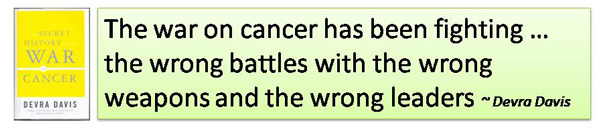
43 Wrong-battle-wrong-weapons

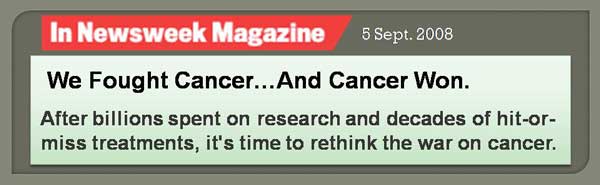
48-We-fought-ca-Cancer-won

Yes, many people wrote about the need to rethink the war on cancer, but there are many others who would strongly defend the status quo. Why change? Why look for something else when the present ways serve the Cancer Industry so well?

When my wife and I started CA Care in 1995, to help cancer patients, I knew absolutely nothing about cancer and its treatment. No, I did not go to medical school. I relied on my Ph.D. and my research experience on plants to do what is right for those helpless and hopeless patients. After 20 years of dealing with cancer patients, I can say this to all and sundry. As far as cancer treatment is concerned, there  are other options than just chemo and radiation. Perhaps by taking the non-conventional path, you could live longer, with less suffering and not having to deplete your life’s saving to pay for the medical bills.
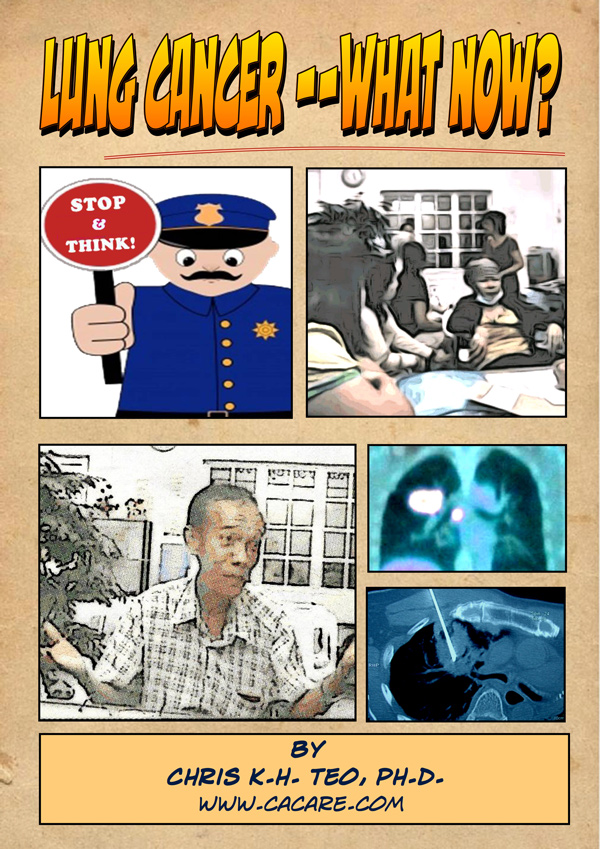
I have written numerous studies in these two comic books.

Title-Page-600

Available at http://bookoncancer.com/productDetail.php?P_Id=75

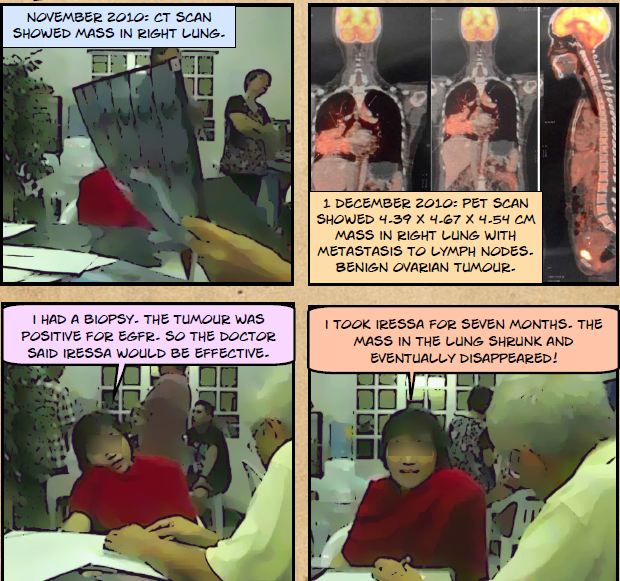
In Lung Cancer – What Now?  I have documented 12 cases of lung cancers – nine of which are about patients who failed to find the cure that they wanted, in spite of spending hundreds of thousands of ringgit on their medical treatments.

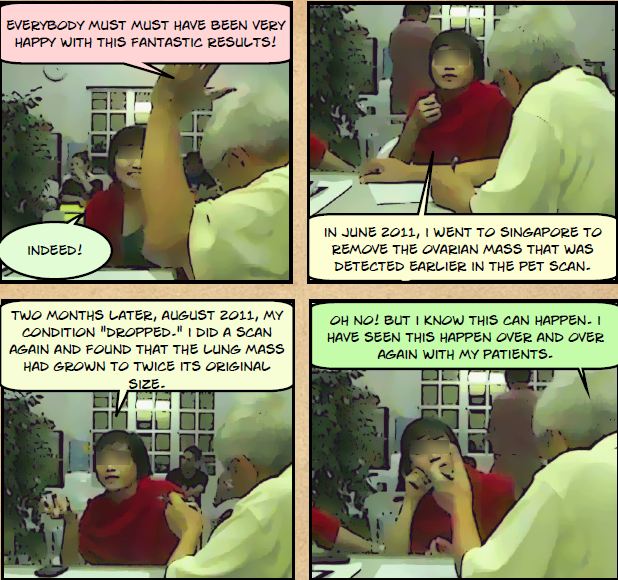
Meaningless shrinkage of tumour by Iressa

1 2

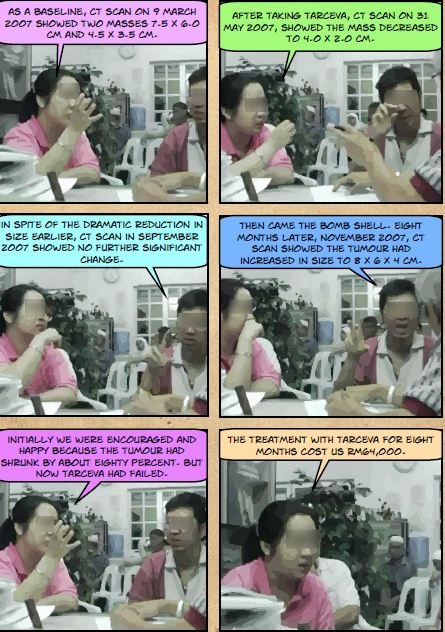
Meaningless shrinkage of tumour by Tarceva

3

These two cases happened with patients in Jakarta (above) and in Malaysia (below). And this also happened some years later with Dr. Paul in Stanford. What can we learn from such cases?

Title-page-600

Available:  http://bookoncancer.com/productDetail.php?P_Id=73

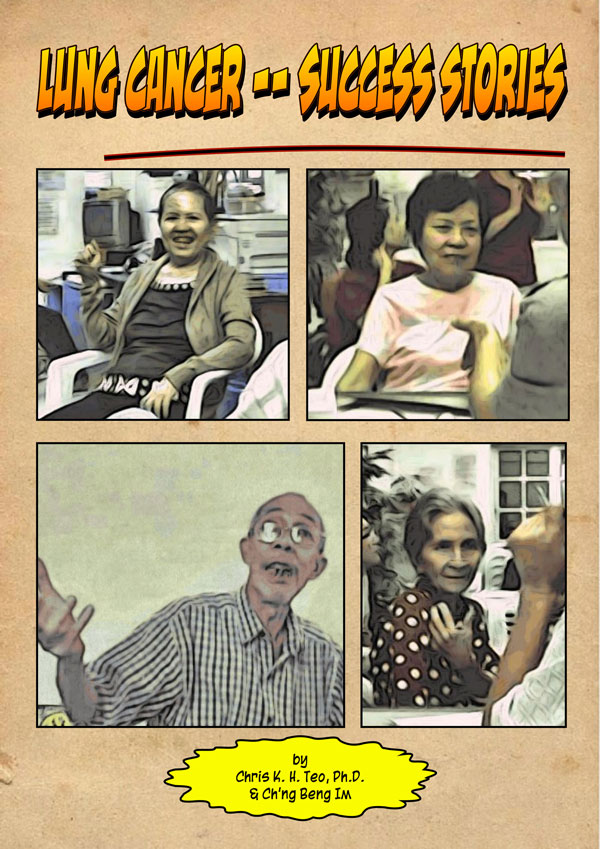
In Lung Cancer – Success Stories, I presented 12 cases of patients who opted for “alternative” treatment for their lung cancer.

Statistics of Lung Cancer Survival

4 5 6 7


Dr. Paul had Tarceva. This drug helped him for about a year. Then the cancer came back again. He then had chemotherapy and died. He survived 22 months after his initial diagnosis. That happened in Stanford under the care of the best oncologist in the world.

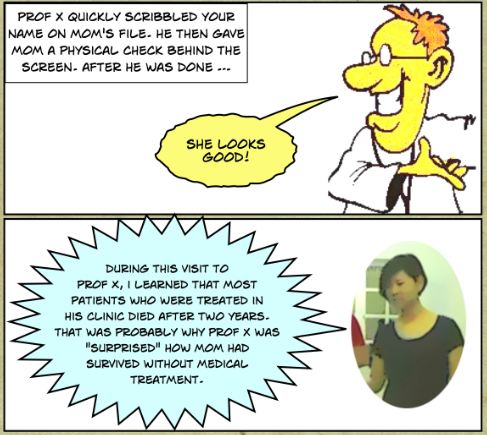
Back in Malaysia, there is also a professor who is the best for lung cancer. According to him, most of his patients who were treated in his clinic died after two years.

The same achievement as in Stanford?

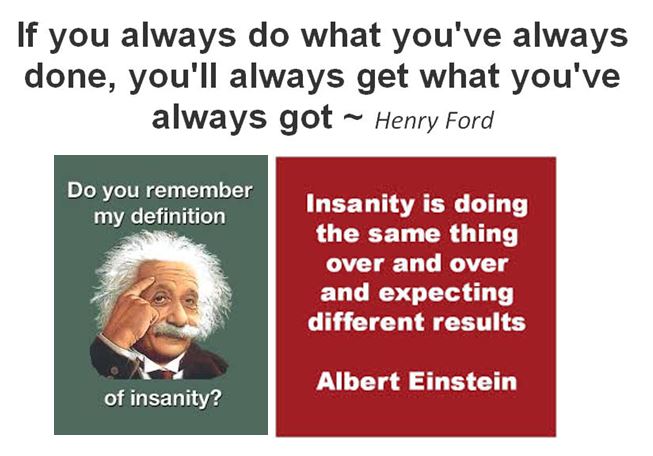
If you do the same thing over and over again. You can expect the same results. Is that not what science teaches us? Remember what Henry Ford and Einstein said.

Insanity both

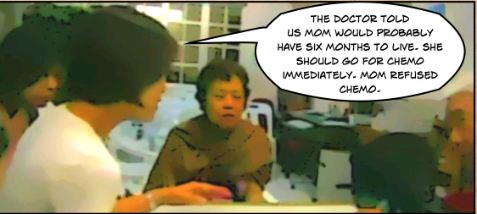
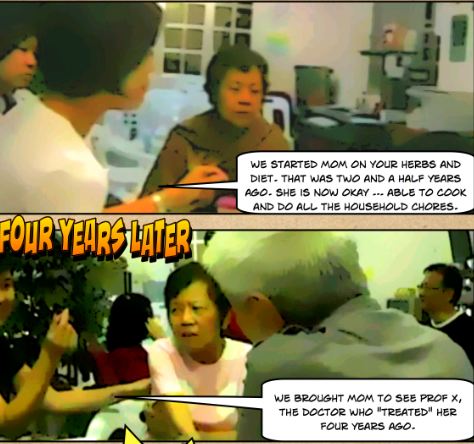
In this story above, mom opted for CA Care Therapy. She declined chemotherapy even though she was told that without chemo she would die within six months. Professor X was surprised how mom had survived for four years without chemo. Is that an achievement or quackery (like many in the medical industry want us to believe)?

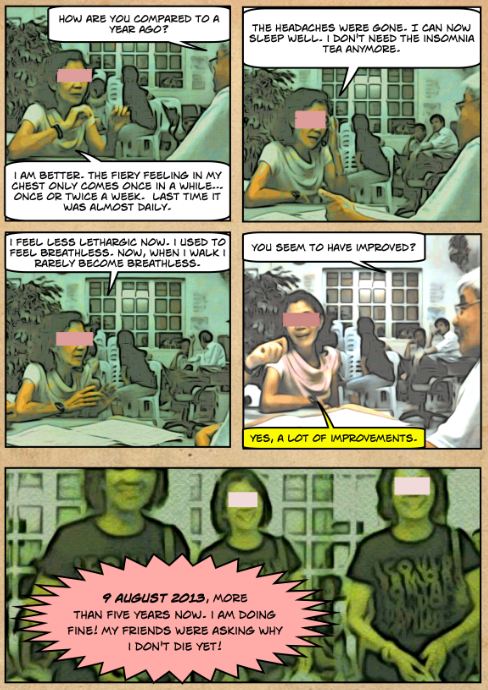
Why haven’t you die yet?

89 10 11

CA Care has been around for about 20 years now.  Like Dr. Paul, my wife and I went into this because it was a “calling” — an answer to my prayer. Looking back, we have no regrets. Instead, we feel blessed to be able to help patients who need our help. They come from far and near.


Breast Cancer: Declined chemo and radiation – alive and healthy. Relatives who had chemo, died.

chem chemo die die

TA, a 40-year-old Indonesian, was diagnosed with breast cancer. This is her story.

  • Sometime in 2013, TA felt a lump in her right breast.
  • For about 3 months, she had pain along the back bone.
  • In November 2013, TA underwent a lumpectomy. Histology report indicated a mixed type  of cancer — papillary carcinoma, DCIS, LCIS, CCL, UDH, intraductal papilloma, adenosis and fibroadenoma.
  • Her case was referred to Singapore and TA was told that it might be a cancer (?).
  • TA came to seek our help and was started on the CA Care Therapy. 

Recurrence – Mastectomy

  • The surgeon did not do a good job of the lumpectomy. A small lump appeared at the operation site.
  • TA underwent a mastectomy in 2014.
  • Five of 10 nodes were involved. TA was asked to undergo 6 cycles of chemotherapy and 30 session of radiation. 

 No to Chemo and Radiation

  • TA’s sister had ovarian cancer and underwent 18 cycles of chemotherapy. She eventually died. So this is the lesson that TA learned about chemotherapy. When told to do chemo-radiotherapy, TA just flatly refused the treatments.

CA Care Therapy vs the deadly chemotherapy

  • TA had been on our therapy since she was diagnosed with breast cancer. After two years, TA came to our centre again – saying that she “missed” us and wanted to keep up.
  • TA told us that a relative in Palembang (Indonesia) also had breast cancer. This was after she (TA) was diagnosed with breast cancer. She shared her healing journey with this relative but unfortunately the patient’s husband did not believe in alternative medicine. This relative had 7 cycles of chemotherapy. After the 6th cycles, she was totally “down.” TA asked her to stop the treatment but her advise was ignored. After the 7th cycle, she went into coma and died. She died less than a year after her diagnosis.
  • TA had another 70-year-old relative in Jakarta. He had liver cancer and was undergoing chemotherapy. Initially the response was good but his condition “dropped” after more chemo. TA recommended that he tried our herbs. The patient agreed but his wife was against taking herbs. She is a rich lady! The patient died after more chemo.

TA took the right path

  • Seated next to her while relating these stories was TA’s husband. Initially, her husband also wanted TA to undergo chemotherapy as advised by the oncologist. But TA went on to search more literature and found CA Care. From then on, TA decided to take a non-medical path.
  • It has been 2 years and TA is still alive and healthy.
  • Our reminder to TA: Take care, don’t stress yourself. And don’t eat bad food! The cancer can come back again and we don’t have any “magic bullet” for you.

 Watch this video.

To those reading this story, just ask what you can learn from TA’s story. This is what we often tell patients: To live or to die is your choice. So, chose wisely! 

Perhaps you may want to soberly ponder these quotations:

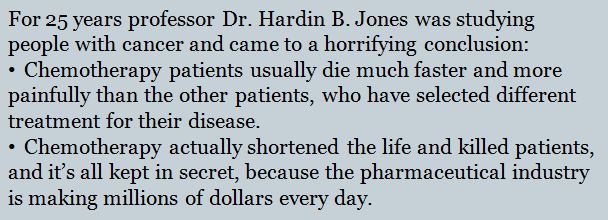
chemo die fast and more painful

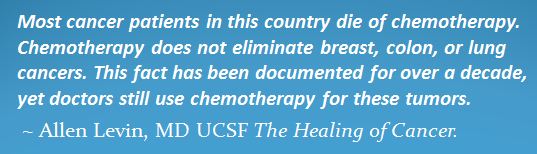
Die of chemo Allen Levin

Chemo kill  Compassonate onco


Huge Kidney & Liver Tumours – No Surgery, No Chemo But Quality Life

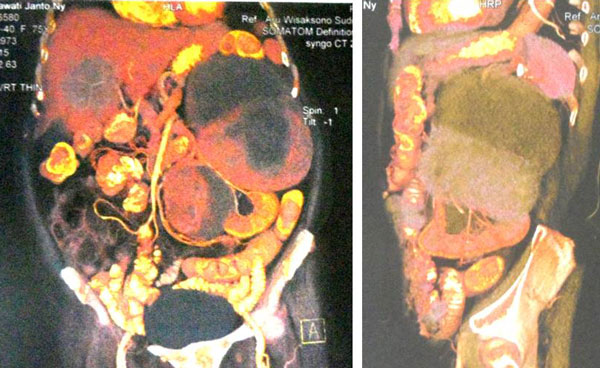
CJ is a 75-year old Indonesian lady.  A CT scan of her abdomen on 10 February 2015 showed:

1) a 17 cm x 13 cm x 15 cm lobulated mass in the left kidney.

2) multiple nodules in the liver, the largest with a diameter of 7.5 cm in the right lobe.

Comnposite-1

CJ and her son came to seek our help. According to the patient, she was already “old” and did not want to undergo surgery or chemotherapy. She requested that we help her in any way we could. Actually, with the CT scan images above, we did not think we could do much for CJ. But we could not send her home without being seen “to do something.” So, we prescribed Capsule A, B, C, and D. We also asked CJ to take Liver and Kidney teas.

The case of CJ was totally “out” of our radar. We did not think she would survive long. But to our amazement, one year two months later, the patient’s son came to our cancer and said “my mother is doing very well” — healthy and able to live a normal life at home.

Excerpts of our conversation:

Son: My mother is getting better!

Chris: Did she go and see the doctor and do chemo?

S: No, we did not do anything — she is now vegetarian, take your herbs and do meditation.

C: Very good.

S: Already more than a year. And she is doing very good.

C: I am indeed surprised. See, we never write anything in her file! When I do that, you know what does that mean? It means “just go home and die. Angkat tanggan — cubacuba saja (Surrender, just try only).

S: But she is better now, much much better. Last year I brought her to Japan to see the sakura flowers.

C: Amazing, just amazing.

S: The medical doctor also said, my mom cannot live more than one year. Now it is more than a year. If you want to see my mom, I can bring her here. She is very healthy. Now she is taking care of my father who has lung problems — asthma.

Watch this amazing healing story!


Comment: One lesson we can learn from this case: Do not play God! For every case that comes to us for help, I should give my “best shot”!


Study finds half of breast cancer patients don’t need chemo

The MINDACT phase 3 clinical trial involved nearly 6,700 women at 111 medical centers in nine countries.

In the clinical trial, researchers sorted breast cancer patients into four groups, based on whether MammaPrint testing or traditional clinical assessment recommended chemotherapy (from a tool that oncologists use called Adjuvant! Online).

The shocking results of the long awaited MINDACT clinical trial are in.

  • Many breast cancer patients have been receiving chemotherapy treatments they didn’t need.
  • And that chemotherapy made no difference in their survival.
  • After surgery to remove their tumors, early-stage breast cancer patients (0-3 positive nodes) with a MammaPrint score recommending against chemotherapy had a 95% survival rate.
  • “That’s very high, and we showed that it doesn’t differ between those who are treated and those who are not treated by chemotherapy,” said van ‘t Veer, leader of the breast oncology program at the University of California, San Francisco Diller Family Cancer Center.

“This study is telling us in a very clear way we can spare many women chemotherapy,” said Baselga, chief medical officer of Memorial Hospital at Memorial Sloan Kettering Cancer Center, in New York City.

  • MammaPrint reduced chemotherapy prescriptions by 46% among the more than 3,300 patients in the trial categorized as having a high risk of breast cancer recurrence based on common clinical and pathological criteria, the researchers said.
  • Further, just over 2,700 patients who had a low MammaPrint risk score but a high clinical risk score wound up with a 94.7 percent five-year survival rate, whether they got chemo or not, the researchers said.
  • “If we can select those patients that don’t need chemotherapy, unneeded treatment can be avoided and we will be one step closer to making sure treatment for breast cancer is tailored to the individual,” said Dr. Stephanie Bernik, chief of surgical oncology at Lenox Hill Hospital in New York City.
  • Young women have been more likely to receive chemotherapy in standard breast cancer care, even though it can destroy their fertility and leave them open to long-term health problems, Vogel said.
  • “In my training, if you had a young woman with breast cancer, she got chemotherapy,” Vogel said. “But now we can be selective, and we know there’s a very large number of young women with small hormone-responsive tumors who do not need chemotherapy.”

Read more: http://www.chrisbeatcancer.com/groundbreaking-study-finds-half-of-breast-cancer-patients-dont-need-chemo/

http://www.msn.com/en-us/health/medical/many-breast-cancer-patients-may-not-need-chemo-study/ar-BBrVgRR?li=BBnbfcL

http://www.cancertherapyadvisor.com/aacr-2016/breast-cancer-mammaprint-test-adjuvant-chemotherapy-treatment/article/490361/


Colon Cancer: Surgery and chemotherapy did not cure. Disease got worse.

SA, a 34-year-old Malaysian lady, was diagnosed with colon cancer in 2013. Her problem started with abdominal distension for about 2 weeks. She was unable to eat or drink and was vomiting.

  • A laparotomy and left hemicolectomy were done on 20 July 2013.
  • Fourteen out of 19 lymph nodes were affected.

CT scan on 16 January 2014 showed:

  • Multiple ill defined hypodense lesions in the liver. The largest at Segment 8 is about 2.9 x 2.3 cm.
  • Large mass in the anterior abdomen which extends into the pelvis, size 9.6 x 9.2 x 9.6 cm. likely to originate from the mesentery.
  • Gross ascites.

Impression: Disease progression.

SA underwent chemotherapy and the following were the results:

  1. From 24 September 2013 to 1 April 2014, SA had 8 cycles of palliative chemotherapy with Xelox (Oxaliplatin and Xeloda).
  2. PET scan on 2 May 2014 showed no local and distant metastasis. All liver lesions completely regressed.
  3. Barely 2 months later, in July 2014, follow up showed increasing trend in CEA level.
  4. PET scan on 19 September 2014 showed a few active lesions in the pelvis and liver. Impression: disease progression.
  5. On 19 November 2014, tapping done to remove the fluid in the abdomen.
  6. On 24 December 2014, SA was again started on palliative chemotherapy with Xelox + Avastin, and then Avastin alone.
  7. Post chemotherapy, SA developed very severe laryngomalacia on exposure to cold.

Note; Laryngomalacia (literally, “soft larynx”) is commonly found in baby in which the soft, immature cartilage of the upper larynx collapses inward during inhalation, causing airway obstruction and breathing difficulties.

  1. Palliative chemo was continued with Xelox + Avastin until 26 March 2015. Progress: Initially before chemo, SA had to have abdominal tapping for ascites almost every week. But after the chemo, the last tapping done was in January 2015.
  2. 2 November 2015, CT scan showed:
  • Abdominal mass measures 10 x 14.1 x 15.9 cm (previously 9.4 x 6.4 x 7.1 cm).
  • Gross ascites.
  • Multiple liver lesions seen in both liver lobes which appears similar in number and size.
  • Hypodense thyroid nodule within the right thyroid lobe, similar to previous study.

In addition to the above treatments (done in a university hospital), SA also received treatments in a private hospital. She had 10 cycles of Ebitux (RM 12,000 per cycle). After the chemo SA developed severe rashes in her face.

Face rashes

SA also had chemo with Irinotecan and she developed cramps of her facial muscles. Her gum bled after brushing her teeth.

In spite of all the above treatments, SA ended up having to go for abdominal tapping once every 4 to 5 days.

The doctor wanted SA to under more chemotherapy. SA and her husband were not keen to receive more chemo. They came to seek our help. Unfortunately after a week on our herbs, her ascites and distended stomach still persisted. She still had to go for tapping. It appeared to us that we could not help her. So we told SA that there was no reason for her to continue taking our herbs.

Comments:  It is indeed a very sad story. Perhaps we can learn a few lessons from this case.

  1. From 24 September 2013 to 1 April 2014, SA had 8 cycles of palliative chemotherapy with Xelox (Oxaliplatin and Xeloda). The results showed all liver lesions had completely regressed. Bravo! Very effective, ya?

But how many people understand that this “victory” is short-lived — just a illusion that happen time and time again? A few months later, the cancer can come back again. That was exactly what happened in SA’s case.

Read what researchers at the Fred Hutchinson Cancer Research Centre in Seattle, USA found out:

Chem-spreads-cancer-Fred-Hu

  1. SA were subjected to many kinds of chemo-drugs. Fist it was Xelox, consisting of Oxaliplatin and Xeloda. Then later, Avastin, Irinotecan and Ebitux were also used. All these drugs are toxic and SA suffered devastating side effects. Surf the net and learn about the side effects of these drugs before you decide to use them.

Below is a long. long list of problems you can expect to encounter if you are treated with Erbitux and Irinotecan. (For the rest of the chemo-drugs you can do you own homework!).

At the end, Raymond Francis concluded that In fact, most people who die from cancer are not dying from cancer, but from their treatments!   

10 conventional med never work Raymond

Erbitux side effects         Source: http://www.rxlist.com/erbitux-drug/patient-images-side-effects.htm

  • an acne-like skin rash or any severe skin rash;
  • redness, swelling, or puffiness under your skin;
  • eye pain or redness, puffy eyelids, drainage or crusting in your eyes, vision problems, or increased sensitivity to light;
  • sudden chest pain or discomfort, wheezing, dry cough, feeling short of breath, coughing up blood;
  • chest pain spreading to your jaw or shoulder;
  • a light-headed feeling, like you might pass out, slow heart rate, weak pulse, slow breathing;
  • symptoms of infection–fever, flu symptoms, mouth and throat ulcers, rapid heart rate, rapid and shallow breathing, fainting;
  • symptoms of an electrolyte imbalance–leg cramps, constipation, irregular heartbeats, fluttering in your chest, extreme thirst, numbness or tingling, vision problems, muscle pain or weakness;
  • kidney problems–little or no urinating; painful or difficult urination; swelling in your feet or ankles; or
  • severe skin reaction–fever, sore throat, swelling in your face or tongue, burning in your eyes, skin pain followed by a red or purple skin rash that spreads (especially in the face or upper body) and causes blistering and peeling.

Common Erbitux side effects may include:

  • mild itching or rash;
  • changes in your fingernails or toenails;
  • dry, cracked, or swollen skin;
  • headache;
  • diarrhea; or
  • infection.

Irinotecan  side effects        Source: http://www.drugs.com/sfx/irinotecan-side-effects.html

More common

  • Anxiety
  • black, tarry stools
  • blood in the urine or stools
  • blurred vision
  • changes in skin color
  • chest pain or discomfort
  • chest tightness or heaviness
  • chills
  • clay colored stools
  • cold hands and feet
  • confusion
  • constricted pupils
  • cough or hoarseness
  • dark urine
  • diarrhea with or without stomach cramps or sweating
  • dizziness
  • fainting
  • fast, slow, or irregular heartbeat
  • fever
  • full or bloated feeling or pressure in the stomach
  • headache
  • increased production of saliva
  • increased tear production
  • itching
  • lightheadedness when getting up suddenly from a lying or sitting position
  • loss of appetite
  • low blood pressure or pulse
  • lower back or side pain
  • nausea or vomiting
  • numbness or tingling in the face, arms, or legs
  • pain
  • pain in the chest, groin, or legs, especially calves of the legs
  • pain in the shoulders, arms, jaw, or neck
  • painful or difficult urination
  • pale skin
  • pinpoint red spots on the skin
  • redness or swelling of the leg
  • runny nose
  • severe headache of sudden onset
  • shortness of breath or troubled breathing
  • skin rash
  • slow breathing
  • slurred speech
  • sore throat
  • stomach pain
  • stopping of the heart
  • sudden and severe weakness in the arm or leg on one side of the body
  • sudden loss of coordination
  • sudden vision changes
  • sweating
  • swelling
  • swelling of the abdomen or stomach area
  • temporary blindness
  • tenderness, pain, or swelling of the arm, foot, or leg
  • trouble with speaking or walking
  • ulcers, sores, or white spots on the lips or in the mouth
  • unconsciousness
  • unpleasant breath odor
  • unusual bleeding or bruising
  • unusual tiredness or weakness
  • vomiting of blood
  • warm, red feeling over the body
  • yellow eyes or skin

Less common

  • Bleeding gums
  • coughing up blood
  • decreased urination
  • difficulty with swallowing
  • dryness of the mouth
  • increased menstrual flow or vaginal bleeding
  • increased thirst
  • nosebleeds
  • paralysis
  • prolonged bleeding from cuts
  • sneezing
  • wheezing
  • wrinkled skin
  • Rare
  • Decreased amount of urine
  • decreased frequency of urination
  • fast, irregular, or troubled breathing
  • hives
  • increased blood pressure
  • puffiness or swelling of the eyelids or around the eyes, face, lips, or tongue
  • rapid weight gain
  • Incidence not known
  • Abdominal or stomach pain and tenderness
  • agitation
  • bloated or full feeling
  • burning, crawling, itching, numbness, prickling, “pins and needles”, or tingling feelings
  • coma
  • constipation
  • depression
  • heartburn or indigestion
  • hostility
  • irritability
  • lethargy
  • muscle pain and cramps
  • muscle twitching
  • pain in the stomach, side, or abdomen, possibly radiating to the back
  • pain or discomfort in the arms, jaw, back, or neck
  • rectal bleeding
  • severe abdominal or stomach cramping or burning
  • severe and continuing nausea
  • stupor
  • swelling of the face, lower legs, ankles, fingers, or hands
  • tightness in the chest
  • unusual tiredness or weakness
  • vomiting of material that looks like coffee grounds

More common

  • Acid or sour stomach
  • belching
  • blistering, peeling, redness, or swelling of the palms of hands or bottoms of the feet
  • cracked lips
  • excess air or gas in the stomach or intestines
  • feeling of constant movement of self or surroundings
  • numbness, pain, tingling, or unusual sensations in the palms of hands or bottoms of feet
  • passing gas
  • right upper abdominal or stomach pain and fullness
  • sensation of spinning
  • sleepiness or unusual drowsiness
  • sleeplessness
  • stomach discomfort, upset, or pain
  • trouble sleeping
  • unable to sleep
  • weight loss

Incidence not known

  • Hiccups


Colon Cancer: Surgery but declined chemo: “My mother is doing good!”

AB is  77-year-old lady from Indonesia. In early 2015, she had pains on the left side of her abdomen. Then she developed constipation. She was brought to a private hospital in Johor. Colonoscopy indicated a 4 cm tumour in the sigmoid colon. A CT scan showed the following:

  • a diffuse circumferential thickenings of the sigmoid colon with narrow lumen.
  • masses in the uterine wall measuring about 2.5 x 2.6 cm and 2.1 x 2.7 cm.

AB was brought to the colorectal department of the university hospital in Singapore where she underwent a surgery on 5 May 2015.

The colon tumour and the uterus and its appendages were removed. Nine of the 27 lymph nodes were with metastatic carcinoma. This was considered a stage 3 cancer.

AB stayed in the hospital for 12 days and the cost of the treatment came to about SGD 28,000.

After the surgery, the doctor suggested a follow-up chemotherapy but AB and her family members refused the treatment. In March 2015, AB’s son came to seek our help.

AB had the following complaints:

  1. Pain at the operation site — scale of 4 out of ten.
  2. Unable to sleep well. Most of the time lying in bed day and night, feeling awake most of the time.
  3. Not much energy.
  4. Poor appetite. After the surgery, suffered intestinal paralysis and was unable to eat.
  5. Bowel movements many times. Always feeling wanting to move bowels but only little came out — soft and watery stools.
  6. Coughs with yellowish phlegm and itchy throat.

AB was started on the herbs for colon and lymph nodes. She also took herbs for appetite. AB’s conditions improved significantly. Her son said, “My mother is doing good!”

AB’s progress was regularly monitored by the following blood tests.

30 May 2015 8 Sept 2015 7 Dec 2015 1 March 2015
CEA 0.97 0.82 0.97 0.88
CA 19.9 6.76 10.50 6.49 9.52
CA 125 38.8 H 5.1 4.9 4.7
Alkaline phosphatase 91 57 69 68
GGT 48 H 19 22 20
SGOT 26 33 H 30 H 21
SGPT 21 39 H 46 H 33

Note: From September 2015, AB took additional herbs for her liver.

Lessons we can learn from this case.

  1. After surgery, AB was asked to undergo chemotherapy. What would you do if this 77-year-old lady is your mother? What could have happened if AB were to go for chemotherapy?

Read what a colonel of the US Air Force and Sara Shane, a movie star wrote about chemotherapy ….

30-Chemo-hell-wife-died-of-

12 Chemo-short-cut-to-make-mon

  1. Herbalists are often called snake oil peddlers, quacks, etc., and herbs are condemned as “unscientific and unproven”. To AB’s son herbs did a lot of good to his mother! What do you want to believe — text-book knowledge or personal experience?

1 Sunday-Star-report-90-go-fo

7 Chemo gamble seek alternat

  1. Often we are told that herbs can cause damage and are toxic to the liver, kidney, etc. This is often the mantra held by the noble profession that only prescribes chemical drugs. Have a close look at AB’s blood test results again. From the beginning after her surgery, certain liver enzyme were elevated — GGT = 48 in May, SGOT and SGPT were elevated in September 2015. What could be the reason? We know that colon cancer can spread to the liver rather soon. Could this be a beginning of liver spread? Or was this because AB took herbs?

Realizing that AB’s liver function was out of range, we prescribed herbs for her liver. Not long afterwards, her liver function enzymes were back to normal. If herbs damage the liver, taking more herbs means more damage done to the liver, right? You don’t need to go to a university to understand this logic. But in this case AB’s liver became better not worse.

9-Alternative-as-valid-even

  1. In May 2015, before taking the herbs, AB’s CA 125 was at 38.8. After taking the herbs, her CA 125 dropped to around 4.7 and 5.1. One would expect that her CA 125 would have risen higher and higher if she was just taking useless “snake oil.” Is this not a simple logic too?

Many years ago this was what I wrote in our book, Cancer Yet They Live.

4 Weeds-by-the-roadside-Joke

Related story: If this is a “happy” story, the next upcoming post is a sad one. A 34-year-old female with colon cancer had surgery and rounds after rounds of chemo. The treatments failed to cure her.


Liver Cancer: Cultivate Gratitude Not Greed — Two years on herbs, okay; 6 months on medical treatments, dead

Jab was a long-standing hepatitis B carrier. He was a rather conscientious person and went for regular medical check-up. Everything was okay. Then in May 2013, CT scan showed a 7 x 6 x 6 cm tumour in segment 7 of his liver, suspicious of HCC (primary liver cancer).  His blood test showed low platelet count (124) but his liver function values were normal. His CEA, CA 125, CA19.9 CA 15.3 and PSA were all within normal range.

Not satisfied, Jab went to Singapore and did MRI. The result confirmed a mass lesion in segment 7 and 6 measuring 6.2x 6.2 x 5.3 cm — consistent with the presence of a large hepatoma.

Composite-1

Jab was still not satisfied and came to consult a doctor in Penang. He was prescribed BARACLUDE (entecavir), a drug commonly given to those with chronic hepatitis B. In addition, Jab was given medication for his heart.

According to the doctors Jab had an option to undergo surgery to remove the tumour. In this procedure 45% of his liver would be cut off. However, Jab was told that the cancer would recur within 2 years after the surgery. The procedure would cost SGD 45, 000 if done in Singapore. If done in Penang, it would cost RM 45,000 (three times cheaper!).

Jab refused surgery and came to seek our help and was started on liver herbs. He was doing fine. He looked fit and healthy. The only complaint he had was not being able to eat anything he liked!

On 18 October 2015  — about two years later, we got an e-mail from Jab’s son.

Dear Dr. Chris,

…. In April 2015, my father had decided to take up treatment in X Hospital in China. Some of the treatment are Interventional Therapy, Cryotherapy … in the last six months. His weight before treatment was 59 Kg, now 51 Kg.

Even though I was against this idea of going to China for treatment, I respected his decision. Currently ascites developed in his body. The doctor … helped to drain the fluid, around 3.5 Litres.

On 23 October 2015, Jab’s son came and told us this sad story.


Report-1-edit Report-2-edit

Feb 23, 2016   Dear Dr. Chris,    

As my father has a very heavy ascites, from October until now already 4 times and the last 3 times are 6.5L, 6.5L and 4.5L (9  days from the third one).

The last 3 times, the liquid has blood color.

At this moment my father cannot walk and very slim, looks like left the skin covering the bones.

His food only in the form of liquid, each time around 100 to 150 ml. Few times a day.

Dr Chris, we truly believe God has plan for all of us but I still believe you can give me advise on what to do. I still can fly to Penang.

My father still can sit with our support and very soft spoken but his brain is still in superb condition and he is a fighter as he keeps trying to live as long as he can.

What can I do Dr. Chris? Any herbs can he take with his conditions?

Thank you.

Reply:  I have given you Ascites and Abdominal Distention teas — these are the only 2 teas I have …but if they are not effective, I really don’t know what else to do.

2  Mar 2016   Dear Dr Chris,

As of today, the doctor installed silicone piping for my father for liquid consumption.
13 March 2016  Dear Dr Chris,

My father has passed on. We want to thank you for your guidance during this time.

Comments 

We often tell patients, To die or to live and get well is your choice. So choose wisely!

This is a sad story. Jab had to spend SGD 60,000 only to suffer and died. He never get what he wanted. But he made that choice himself, even against the advice of his three sons.

Home run strike out Jerome

This is a story with many lessons if we are willing to listen and learn! But,  are patients prepared to learn? We are aware that what we are going to say here is not nice to hear. But for the sake of knowledge and also for the sake of those who want to learn, we are going to say it anyway. And we are going to say it as clearly as we can! No apology.

  1. Jab was with us for about two years and he was well, but this did not mean he was cured of his liver cancer. He led a normal, happy pain-free life. The only thing that he could not do was to eat anything he wanted! He had to abstain from “bad” food. From our experience, we know that when patients are half-dead, they will abide by our advice, but the moment that they become well, more often than not, they will complain about their dietary restriction. They wanted to eat what they like. Jab was no exception. Like most cancer patients, when they became well food became their problem! To make things worse, patients probably are encouraged by relatives, friends and their doctors that they can eat anything they like — after all, they are already well or looked thin, etc. etc.

8-Diet-must-be-integral-par

  1. With a 7 x 6 cm tumour in his liver, Jab ought to know that no one of earth can cure him. The three doctors that he consulted offered to cut off 45% of his liver. But this procedure was not going to cure him — he was told than the cancer can recur within two years. Two years is already a blessing, if indeed what is said is true! We have seen patients suffered recurrence or even died only months after surgery.

5-Patients-die-sooner-if-fo

  1. We understand, Jab was a conscientious person. We wanted the best for himself. He wanted a find cure for his incurable cancer. Unfortunately cancer treatment is more dangerous than going to a casino. In the casino at worse, you lose everything in your pocket. In cancer treatment, you not only lose your entire life’s saving but also your life!


2 Doctor-rob-and-kill-you

  1. It is indeed hard to convince patients to be contented and be happy with what they have or what they are. They always want more and more. All patients who come to us, expect us to cure them! They ask for the impossible. Listen to the advice of this professor.

6 Cancer-incurable-Jew-prof

  1. In cancer healing, we have to learn to be grateful for what we are and what we have. This is probably the only way we can stay happy from day to day. Cultivate gratitude, not greed! It is hard to make patients understand this. To most of them, it has to be fight and fight all the way to the grave. No, at CA Care we never tell you to fight — we tell you to learn how to live with your cancer! We ask you to tell you cancer, If I die, you will die too. So let’s have a win-win situation. You live in there but don’t disturb me and we all live together happily. Of course, many people may think we are talking “rubbish”.  May be true, but what other option do you have?

2 All-die-but-learn-to-live-w

11 Cannot-cure-everything-deat