BOOK REVIEW: THE WOMAN WHO KNEW TOO MUCH: ALICE STEWART AND THE SECRETS OF RADIATION

Woman who knew too much

by Yeong Sek Yee & Khadijah Shaari

This biography illuminates the life and achievements of a remarkable woman scientist who revolutionized the concept of radiation risk.  Written by Gayle Greene, who was the Professor of Women’s Studies and Literature, Scripps College, UK, the book is compelling reading for activists and policy makers.

In the 1950s Alice Stewart began research that led to her discovery that fetal X rays double a child’s risk of developing cancer. It was towards the end of 1955 that Dr. Alice Stewart, head of the Department of Preventive Medicine at Oxford University, first became aware of a sharp rise in leukemia among young children in England. Dr Stewart subsequently discovered that the number of children dying of this cancer of the blood had risen over 50 percent in only a few years. In the United States an increase about twice as large had occurred. One aspect of this rise was extremely puzzling: the leukemia seemed to strike mostly children over two to three years of age.

Dr. Stewart undertook another study to find out. With the assistance of health officers throughout England and Wales, she obtained detailed interviews with the mothers of all of the 1694 children in those counties who had died of cancer in the years 1953 to 1955, as well as with an equal number of mothers of healthy children. By May 1957, the analysis of 1299 cases, half of which involved leukemia and the rest mainly brain and kidney tumors, had been completed. The data showed that babies born of mothers who had a series of X-rays of the pelvic region during pregnancy were nearly twice as likely to develop leukemia or another form of cancer, as those born of mothers who had not been X-rayed.

Subsequently, in a research paper she published in June 1958, Dr. Stewart concluded that the dose from diagnostic X-rays could produce a clearly detectable increase in childhood cancer when given during pregnancy and this was an extremely low dose. However, it took until 1980 before the major American medical groups recommend that doctors not routinely x-ray pregnant women—and even so, 266,000 pregnant women were x-rayed in that year. Dr Stewart believes that “it takes about 20 years…for an unpopular discovery to be digested and you’re lucky if it takes only that long.”

There were a few other very unpopular discoveries made by Dr Stewart and her team of researchers. Some of these are:

  • Radiation is the most powerful mutation known to man, a poison that no one can feel, smell, see, or detect until people drop dead.
  • There is no safe level of radiation…her research clearly debunked the universally accepted “threshold hypothesis” that claimed that there was a threshold below which radiation was safe.
  • Any dose of radiation, however small, is going to have an effect in the bodyany dose has the potential of damaging a cell…low dose may injure cells rather than kill them…and a surviving mutated cell can cause cancer or a birth defect.
  • Lower doses received over time might actually produce more cancer per unit of exposure than a single large dose. Dose fractionation increases the cancer risk.
  • Even more than the cancer threat is the genetic damage—the possibility of sowing bad seeds into the human gene pool…and the danger with recessive genes is that once they are into the gene pool, you can’t get them out.
  • Radiation damage to a cell may show up only after the cell has divided several times, producing a genomic instability that might result in broken or misshapen chromosomes and muted genes and early cell death.
  • Researchers found that children whose fathers were exposed to the highest levels of external radiation were six to eight times more likely to develop leukemia than were the controls…in other words there is a correlation between paternal exposure to radiation and childhood cancer.

As a woman scientist, she faced a significant amount of prejudice and ridicule from the male-dominated scientific community, and other groups who found it hard to accept the findings of her research that radiation was harmful even in low doses to unborn fetuses. Despite all this, she stood by her studies and research and eventually convinced doctors to stop x-raying pregnant women even though it took twenty years to eradicate the practice.

From about 1970, Stewart turned her attention to the underlying issue raised by her work: the serious underestimation, in her view, of the risks of exposure to radiation in nuclear power plants. She again astounded the scientific world with a study showing that the U.S. nuclear weapons industry is about twenty times more dangerous than safety regulations permit. The finding put her at the center of the international controversy over radiation risk.  Dr Stewart became one of a handful of independent scientists whose work is a lodestone to the anti-nuclear movement. In 1990, the New York Times called her “perhaps the Energy Department’s most influential and feared scientific critic.”

With her life time research experience in the field of radiation, Dr Stewart had a firsthand knowledge of the misuses and politicization of radiation science. The radiation field is so politicized, there is so much invested, ideologically and economically, that these scientists just cannot change their mind. They simply cannot say, “We may have been wrong.”

Politicized the field has been, and politicized the field remains. The Atomic Energy Commission had strong vested reasons for downplaying the effects of radiation and maintaining a safe threshold theory and continues to argue that low doses of radiation are negligible.

Marginalized by mainstream British medical research, starved of funding, blackballed, blacklisted, cold-shouldered, she has borne with more than her share of slights, snubs, and rebuffs. In her parting remark in the biography, Dr Stewart said, “If I were GOD tomorrow, I should take every job away from the nuclear physicists”

Dr Alice Stewart died in June 2002 at the age of 95. With her passing, gone are the days of researchers like Alice Stewart.

FURTHER REFERENCES:

LINK: http://en.wikipedia.org/wiki/Alice_Stewart

2)      Early Life Exposure to Diagnostic Radiation and Ultrasound Scans and Risk of Childhood Cancer: Case-Control Study

LINK: http://www.medscape.com/viewarticle/738082

3)      Alice Stewart, 95; Linked X-Rays to Diseases

LINK: http://www.nytimes.com/2002/07/04/world/alice-stewart-95-linked-x-rays-to-diseases.html

The Woman Who Knew Too Much: Alice Stewart and the Secrets of Radiation

    LINK: http://muse.jhu.edu/journals/bhm/summary/v075/75.1more.html

The Unheeded Warning

LINK: http://www.ratical.org/radiation/SecretFallout/SFchp2.html

 The Woman Who Knew Too Much

LINK: http://www.press.umich.edu/16780/woman_who_knew_too_much

Obituary: Alice Stewart … The Guardian

   LINK: http://www.theguardian.com/news/2002/jun/28/guardianobituaries.nuclear

YOUTUBE VIDEOS

1)      YOUTUBE: Alice Stewart: The woman who knew too much

LINK: http://www.youtube.com/watch?v=proyrn2AAMA

2)      YOUTUBE: Dr. Ernest Sternglass on Radiation & Health

LINK: http://www.youtube.com/watch?v=J3ib085o-K0

WHY HAYLEY MILLS QUIT CHEMOTHERAPY AS SHE BATTLED BREAST CANCER

by Yeong Sek Yee & Khadijah Shaari

1 Harvey

Who is Hayley Mills? If you are in your 6-series (in life) you would probably have heard about her. Hayley Mills began her acting career at the age of 12, starring alongside her father John Mills in “Tiger Bay” and at 14; she appeared in “The Parent Trap” and then “Whistle Down in the Wind” in 1961. Her later film “Pollyanna” in 1960 brought her to fame and she was awarded the last juvenile Oscar.

Below is a short story of her encounter with double breast cancer…yes she had cancer on both breasts.

In April 2008, Hayley Mills was diagnosed with breast cancer on both breasts on her 62nd birthday, but she chose to keep her illness private. After undergoing several tests and biopsies, the Pollyana actress had surgery but refused radiation therapy.

However she was persuaded to start a course of chemotherapy which she did.  Subsequently, after 3 sessions she decided to quit chemo and decided to seek an alternative route. Hayley admitted that she found the chemo treatment more daunting than the actual disease. In December, 2012, she revealed why she decided to quit chemotherapy:

“It made me feel awful…I was more frightened of the chemo than the cancer…I could feel it (the chemo) draining me and killing me. I felt I was dying”

Four years later from that traumatic time, she explained how, despite turning down chemo, she is happy and cancer-free. Hayley, now 66, credits her survival to the alternative treatments she used to heal her body. She changed her diet and cut out foods that “feeds the cancer” including sugar, dairy and acid creating foods. And she also embarked on a serious course of exercise and meditation.

In an interview with Mirror (UK), Hayley explained that “a tremendous amount of healing is in your hands. What you can do to boost your immune system and what you can do to keep your mind, body and soul healthy and positive is important”

Hayley also did caution that her decision to go the alternative route may not be for everybody, but there are some fantastic, brilliant doctors out there…and, it doesn’t make sense that there is only one way of dealing with cancer.

If you would like to read more why Hayley Mills quit chemotherapy, just visit the following links:

1)      ARTICLE : “I felt I was dying”: Hayley Mills on why she quit chemotherapy as she battled cancer  Link: http://www.mirror.co.uk/news/uk-news/hayley-mills-why-i-quit-chemotherapy-as-she-battled-1505199#ixzz2mayENo2p

2)      ARTICLE: My secret triumph over breast cancer by actress Hayley Mills Linkhttp://www.express.co.uk/news/showbiz/293433/My-secret-triumph-over-breast-cancer-by-actress-Hayley-Mills

3)      ARTICLE :  ‘I could feel it killing me’: Hayley Mills reveals how she beat double breast cancer after quitting chemotherapy  LINK: http://www.dailymail.co.uk/tvshowbiz/article-2253271/Hayley-Mills-reveals-beat-breast-cancer-quitting-chemotherapy.html#ixzz30qISjH6B

4)      ARTICLE: Hayley Mills describes secret battle with breast cancer LINKhttp://www.telegraph.co.uk/culture/film/film-news/8989623/Hayley-Mills-describes-secret-battle-with-breast-cancer.html

5)      ARTICLE:Hayley Mills quit chemo, used nutrition and alternative therapies to heal breast cancer in 2009  LINK: http://www.chrisbeatcancer.com/hayley-mills-quit-chemo-used-nutrition-alternative-therapies-to-heal-breast-cancer/

If you would like to read the story of Sally Baker, a charity volunteer who did not opt for chemotherapy even after a double breast mastectomy, just visit the following link:  http://www.dailymail.co.uk/health/article-2459756/Ive-refused-chemo-breast-cancer-gain-isnt-worth-pain-After-double-mastectomy-woman-defends-hugely-controversial-choice.html

RADICALLY CHANGING YOUR DIET

Yeong Sek Yee & Khadijah Shaari

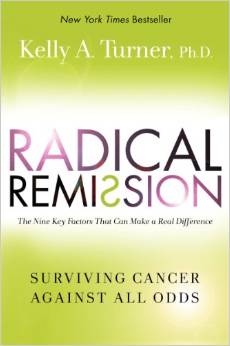
radical remisssion

The above is the title of Chapter 1 of the book RADICAL REMISSION (released March 2014) by Dr Kelly A. Turner, PhD, a researcher and psychotherapist who specializes in integrative oncology. In her doctoral research of over a thousand cases of Radical Remission – people who have defied a serious or even terminal cancer diagnosis – Dr Turner found very similar factors that nearly every Radical Remission survivor employed to defy the overwhelming diagnosis of cancer. The most important factor that consistently comes up over and over again is radically changing one’s diet in order to help heal cancer. What’s more, the majority of the people that Dr Turner studied all tend to make the same 4 dietary changes. They are:

  • Greatly reducing or eliminating sugar, meat, dairy, and refined foods.
  • Greatly increasing vegetables and fruit intake.
  • Eating organic foods.
  • Drinking filtered water.

Much has been researched and written about this radical change in diet and how it has benefitted cancer patients. The first major heading in this chapter is NO SWEETS, NO MEAT, NO DAIRY, and NO REFINED FOODS. This is very much in line with the recommendations of integrative oncologists/doctors like Dr Keith Block MD, Dr John Forsythe MD, Dr Russell Blaylock, MD and cancer survivors like Prof Jane Plant, Dr Anthony Sattilaro MD, Dr Lorraine Day, MD and Dr David Servan-Schreiber, MD. There are just too many to include in this short article.

For this article we shall not delve into the details of the radical diet that Dr Turner has uncovered but suffice to just mention the main points to jolt your memory again: –

  • Sugar just feeds the cancer,
  • Dairy products are cancer promoting,
  • Casein, the main protein in cow’s milk, makes cancer cells grow,
  • Scientific studies have linked regular consumption of meat to many types of cancer,
  • Refined foods, especially refined grains…have a very high glycemic index….this give cancer cells plenty of glucose to feed on and also creates high insulin levels in the blood… another condition strongly linked to cancer

On the other end of the spectrum, Dr Turner found that Radical Remission survivors ate a lot of vegetables and fruits…in fact; the cancer survivors who ate lots of vegetables and exercised regularly lived twice as long. Vegetables and fruits provide the human body with everything it needs: vitamins, minerals, carbohydrates, fiber, glucose, protein, and even healthy fats.

In the Chapter, Dr Turner shared the leading stories of Ginni and John when they were faced with breast and prostate cancer respectively by using the above 4 strategies to heal their cancer. There are many more survivors who have done it using a similar radical change in diet. Some of those are:

a)      Prof Jane Plant—Breast Cancer

Link: https://cancercaremalaysia.com/2014/01/13/book-review-your-life-in-your-hands/

b)      Dr Anthony Sattilaro—Prostate Cancer

Link: https://cancercaremalaysia.com/2014/01/07/book-review-recalled-by-life-the-story-of-my-recovery-from-cancer/

c)      Barry Thomson—Melanoma and Colon Cancer

Link: https://cancercaremalaysia.com/2014/05/14/book-review-defeat-cancerlike-i-did-twice-with-no-chemotherapy-or-radiation/

d)      Ian Gawler—Osteosarcoma

Link: https://cancercaremalaysia.com/2014/01/17/book-review-you-can-conquer-cancer-a-new-way-of-living/

e)      Dr Lorraine Day—Breast Cancer

Link: www.drday.com

Concluding Remarks by Dr Kelly Turner

After researching thousands of Radical Remission cases, Dr Turner is thoroughly convinced that….”Hippocrates was absolutely right: FOOD IS MEDICINE. Eating more organic vegetables and fruits while eliminating sugar, meat, dairy and refined food products can only help your body to heal – and in fact, it may turn out to be the only medicine you need. Hippocrates believed that healthy food and water should be the first medicine given, and surgery and drugs should only be used as absolute last resorts. Two thousand years later, we have somehow managed to turn that order on its head: now we first look to medications and surgery to heal our sick bodies, instead of the powerful medicine we already take three times a day: our food.”

The above statement by Dr Turner reminds us of an ancient Chinese proverb which very aptly describe the above concluding remarks: –

“One quarter of what you eat on your plate keep you alive…the other three quarters keep the doctors alive”

Have you changed your diet radically?

FURTHER REFERENCES:

If you would like to read further on how your diet can enhance your radical remission, we recommend the following books written by medical doctors, a Professor of Nutrition and a cancer survivor.

1) ANTI-CANCER A NEW WAY OF LIFE by Dr David Servan-Schreiber, MD, PhD who was a clinical professor of psychiatry and co-founder of the Center for Integrative Medicine. He passed away in 2011 – after 19 years with brain tumour. Was it Radical Remission? (Read Chapter 8: The Anti-Cancer Foods…in fact, we recommend that you read the whole book)

2) LIFE OVER CANCER by Dr Keith I. Block, MD, Director of Integrative Medical Education at the University of Illinois College of Medicine and Medical Director of the Block Center for Integrative Cancer Treatment in Evanston, Illinois. (Read Chapter 4: The Anti-Cancer Diet and Chapter 5: The Life Over Cancer Core Diet Plan).

3) NATURAL STRATEGIES FOR CANCER PATIENTS by Dr Russell Blaylock, MD and a board-certified neurosurgeon and formerly the Professor of Neurosurgery at the Medical University of Mississippi. (Read the whole book–it is all about nutrition and cancer and also valuable information on how chemotherapy is poisoning you and how radiotherapy is burning you–to death).

4) THE CHINA STUDY by Dr T. Colin Campbell, PhD, who was the Professor Emeritus of Nutritional Biochemistry at Cornell University. (Read the whole book to understand why nutrients from animal-based foods increase tumor development while nutrients from plant-based foods decrease tumor development.)

5) YOU CAN CONQUER CANCER, A NEW WAY OF LIVING by Dr Ian Gawler, a veterinarian and decathlon athlete before his diagnosis, is Australia’s most “notorious” cancer patient and radical remission survivor. (Read Chapters 11-14 to find out that although diet may not be the total answer to cancer, but without a good diet, there is no answer).

There are lots of other such books written by oncologists/doctors/cancer researchers/survivors, etc. However, if you choose to follow the advice of our Malaysian “apa pun boleh oncologists/doctors,” you can only dream of the possibility of a radical remission.

The choice is yours.

WHAT RADIATION THERAPY DOES TO THE BODY (PART 5)

Yeong Sek Yee & Khadijah Shaari

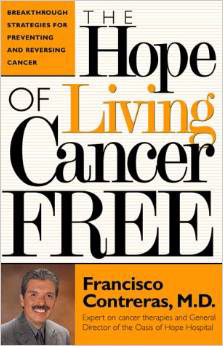
Continuing our journey, we summarize some points mentioned in THE HOPE OF LIVING CANCER FREE, published in 1999 andwritten by Dr Francisco Contreras, MD, the General Director of the Oasis of Hope Hospital in Baja California, Mexico.

Hope-of-living-cancer-free

In this book, we will learn why Dr Contreras described….radiation therapy…has proven to be another medical blunder. Why is this so?

Dr Contreras’s thoughts on the dangers of radiation therapy are summarized as follows:

  • Radiation therapy is the second line of attack. For a short time, total body radiation was used; however, that was stopped when many patients died from extreme toxicity.
  • Now radiation therapy has evolved into a localized therapy in which dosages as well as the size of the fields (areas where the radiation is beamed) have diminished significantly.
  • X-ray type beams are used to actually burn malignant cells. There are adverse reactions to the therapy because, even though the fields are limited, the beam will go (within the field) through benign as well as malignant cells.
  • Radiation therapy, in which we place so much faith a few decades ago, has proven to be another medical blunder. Motivated by the desperation of failure, radiation therapists have dreamed up new ways of applying increasingly aggressive doses to their patients. They have literally “burned” patients, leaving many permanently disabled. Plus, these patients have had to experience the temporary side effects of severe nausea, malaise, loss of appetite and the loss of other functions.
  • Radiation doses have to be specifically measured, and there is an air dose, skin dose and a tumour dose. The calculation has to be done by an expert, many times by the physicist. The radiation therapist does the planning to prevent the burning of the skin. The lighter the skin, the more it will be affected.
  • According to Dr Mario Soto, when the field of entry is large, there will be side effects. For example:
  • If the esophagus is touched during radiation to the chest, esophagitis, or the burning of the lining esophagus, can result.
  • In the case of cancer of the cervix or the uterus, proctittis, or burning of the lining of the rectum, can be caused.
  • In radiation to the head and neck, if radiation is given to the tongue, the salivary glands can be impacted, and the patient will be without saliva.

NB: Dr Mario Soto is the clinical oncologist at the Oasis of Hope Hospital where Dr Francisco Contreras is the Director General.

In a later book “50 CRITICAL CANCER ANSWERS” published in 2013 which Dr Contreras co-authored with Daniel E. Kennedy, M.C., both authors discussed Radiation: A New Era of Precision.

50 critical answers

Although researchers have worked hard to hone in the radiation onto the tumours while shielding the normal cells, there are still limitations to date. These are their comments:

  • Despite the improvements in 3D and 4D image-guided radiotherapy, brachytherapy, and proton therapy to target tumours more precisely, exposure and injury to surrounding tissues and organs with serious and permanent side effects still limits the amount of radiation therapy that can be administered to a patient undergoing cancer treatment.
  • Furthermore, the state-of-the-art technology, developed to increase efficacy and reduce injury, is so complex that human and mechanical error is inevitable due to software flaws, faulty programming, poor safety procedures, or inadequate staffing and training. The problem is compounded by how difficult radiation injuries are to identify.
  • Even with intensity-modulated radiation therapy (IMRT), a serious complication exists. Most tumours “move with us” when we breath, or with peristalsis (the natural movement of our bowels); though this shifting is subtle, high-dose radiation still burns the normal tissue that moves into the beam.
  • Complications due to organ damage and radiation-induced cancers are not apparent for many years, even decades; meanwhile insufficient dosing is impossible to detect or interpreted as failure to respond to treatment.
  • According to the New York Times, accidents are chronically under-reported. In June 2010, a Philadelphia hospital gave the wrong radiation dose to more than 90 patients with prostate cancer, and in 2005 a Florida hospital disclosed that 77 brain cancer patients had received 50% more radiation than prescribed because one of the most powerful and supposedly precise-linear accelerators had been programmed incorrectly for nearly a year. The article’s author concluded, “ Regulators and researchers can only guess how often radiotherapy accidents occur”

According to the authors, ionizing radiation damages cellular molecules in both direct and indirect ways. It splits directly hit molecules into highly reactive fragments known as free radicals. These, in turn, can attack other molecules they encounter in a continuing and damaging chain reaction.

  • One key damage target in irradiated cells is DNA, which acts as a crucial blueprint for cellular function. Severe damage to DNA can induce cell death, and this effect is an important mediator of lethal radiation toxicity.
  • Radiation can attack DNA directly, but more often DNA is damaged by hydroxyl radicals formed when radiation interacts with water molecules in the body. 

CONCLUDING REMARKS:

It is extremely tragic and incomprehensible that the medical (or cancer) establishment still uses ionizing radiation that is clearly proven and known to be carcinogenic (as established by the International Agency for Research on Cancer).

It is also inconceivable that such conventional cancer treatments should cause so much pain, agony and money and then the patient has to suffer another form of cancer, heart disease or disorders to the bones, etc. Hence the cycle of treatment has to be repeated. 

Is this why conventional cancer treatment is referred to as “the Cancer Industry?”  Is this healing or is it “xxxx”? 

We welcome your opinion.

WHAT RADIATION THERAPY DOES TO THE BODY (PART 4)

Liver over cancerYeong Sek Yee & Khadijah Shaari

Our search for answers to what radiation does to your body takes us to review LIFE OVER CANCER written by an Integrative Oncologist, Dr Keith Block, MD who is the Director of Integrative Medical Education at the University Of Illinois College Of Medicine and Medical Director of the Block Center for Integrative Cancer Treatment in Evanston, Illinois.

This is what we found in the book on the dangers of radiation therapy:

  • Radiation therapy delivers a powerful dose of X-rays to kill cancer cells. It is used most in the care of patients with early breast and prostate cancer. But because the intensity of this radiation is many times stronger than that of diagnostic X-rays, it can harm normal cells, too, especially in patients with advanced cancers who are receiving palliative radiotherapy to shrink recurrent tumours. In this case, immune cells (lymphocytes) in particular may become impaired, making the body more vulnerable to other diseases.
  • Other common side effects of radiation include fatigue, eating problems, emotional distress, nausea, vomiting, bloating, discomfort in the neck or throat, and skin changes such as itching, blistering, toughening, and darkening.

The effects of radiation depend on where it is targeted…some main points:

  • Radiation to the abdomen and pelvis can cause radiation enteritis, which is characterized by inflammation of the intestines with severe diarrhea.
  • Radiation to the chest or breast can inflame the esophagus, causing difficulty swallowing.
  • Radiation to the breast can result in a painful skin reaction.
  • Radiation to the head, neck, and mouth can cause fungal infections in the mouth in addition to the usual irritation of the muscous membranes.
  • Radiation to the whole-brain can leave patients with cognitive and physical deficits.
  • Radiation to the lungs zaps so much normal tissue (its breathing and its attendant up-and-down movement of the chest causes healthy tissue to move into the X-rays’ path) that it leads to sometimes irreversible lung damage.

Elsewhere in the book, we gained an insight as to why radiotherapy and chemotherapy may not work for cancer patients:

  • Radiation and many chemotherapy drugs kill malignant cells by generating lethal oxidative stress. That is, they generate an avalanche of free radicals that the cells are destroyed. The problem is that there are always some survivors. Cancer cells that are exposed long-term to free radical levels that are high, but not high enough to kill them, adapt. In a perverse case of Darwinian “survival of the fittest,” some cancer cells may mutate in a way that makes them more and more resistant to treatment. If even a few develop resistance to treatment, all of their descendents have it too.
  • Indeed, cancer’s ability to continually adapt is one reason why chemotherapy and radiation are not more effective against cancer: the treatments also produce free radicals that support the disease process, allowing any cells that survive the barrage of radiation or chemotherapy to thrive.

CONCLUDING REMARKS:

It is extremely tragic and incomprehensible that the medical (or cancer) establishment still uses ionizing radiation that is clearly proven and known to be carcinogenic (as established by the International Agency for Research on Cancer).It is also inconceivable that such conventional cancer treatments should cause so much pain, agony and money and then the patient has to suffer another form of cancer, heart disease or disorders to the bones, etc. Hence the cycle of treatment has to be repeated.

Is this why conventional cancer treatments is referred to as “the Cancer Industry?” Is this healing?

We welcome your opinion.

WHAT RADIATION THERAPY DOES TO THE BODY (PART 3)

by Yeong Sek Yee & Khadijah Shaari

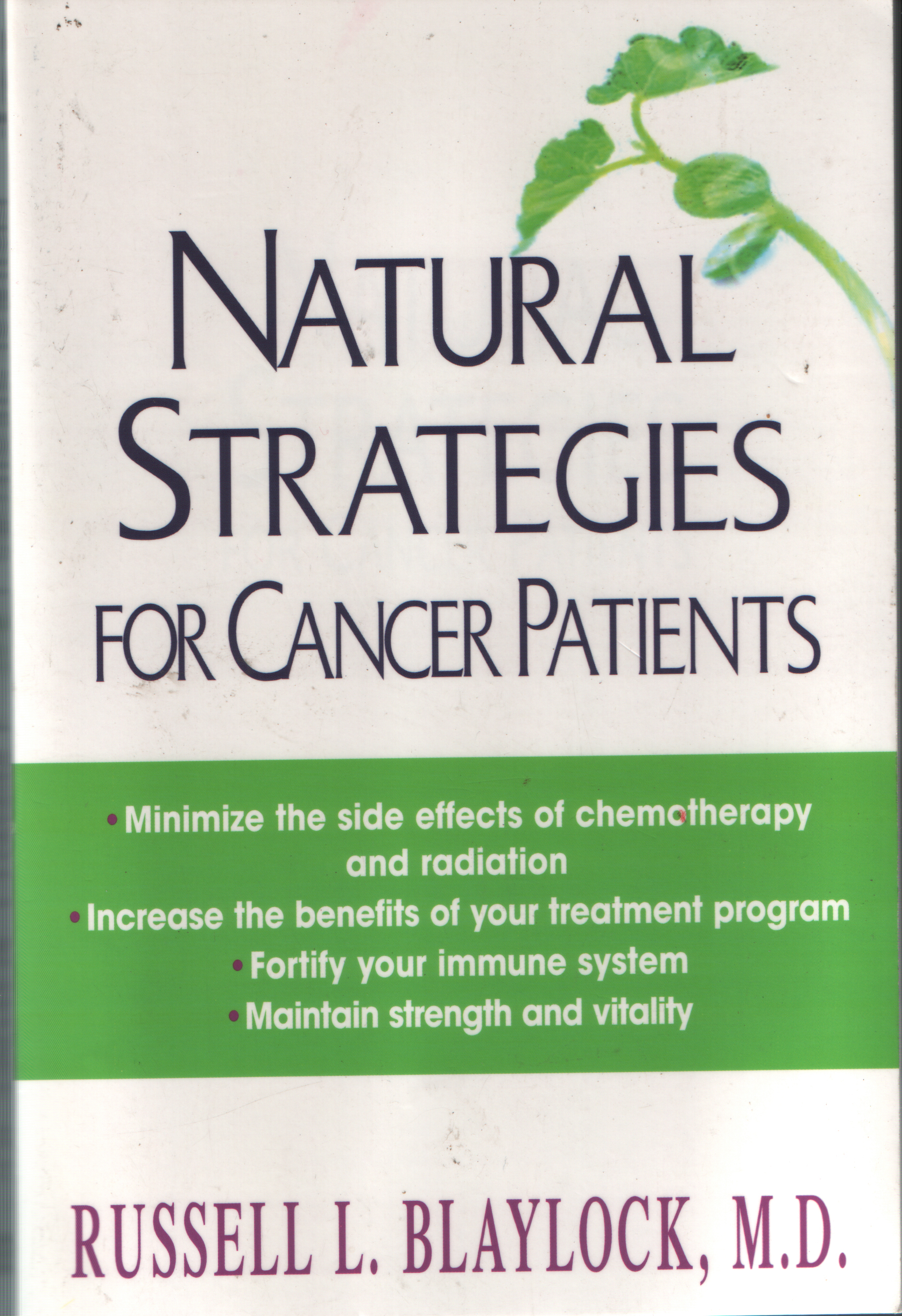
Continuing our search to find answers to what radiation therapy does to the body, we re-read Chapter 4 RADIATION THERAPY: BURNING CANCER found in the best-seller “NATURAL STRATEGIES FOR CANCER PATIENTS” by Dr Russell Blaylock, MD. He was a board certified neurosurgeon and neuroscientist and was the Clinical Professor of Neurosurgery at the Medical University of Mississippi. ( http://www.russellblaylockmd.com/)

Natural Strategies for CA

Dr Blaylock’s comments gave us further insights into the hazards of radiation therapy. Some salient points in the chapter are:

  • Most cancer patients, upon first learning they will face radiation treatments, have an image of lying down under a death ray. Most know that radiation is dangerous and can cause burns, nausea and vomiting, loss of hair, and even additional cancer. Their fears are not unfounded.
  • Authorities in the field of radiation biology do not even agree on the safety of diagnostic X-rays, which involve infinitely lower doses of radiation than radiation therapy.
  • Today, many doctors recommend that their cancer patients undergo radiation treatments following surgery just as a precaution. In my (Dr Blaylock’s) estimation, this is not good science. Despite the fact that we have many sophisticated ways to determine who should have post operative radiation and who shouldn’t, we are not using many of these tools with the majority of cancer patients.
  • X-ray particles could not only kill cancer cells, but also cause cancer. In fact, Marie Curie and her daughter, Irene Joliot-Curie, both died of leukemia caused by their prolonged exposure to radium.
  • Radiation’s harmful effects are accumulative…even when the treatments are fractionated, the damage can accumulate and produce injury to the tissues in the path of the beam. In addition, the beam continues to reflect off hard surfaces, such as bone and surgical implants, with the result being delayed damage.
  • Because no way existed to really concentrate the X-ray beam on the cancer, the result was often a wide zone of damage, including to the overlying skin. The effects of this damage were not always immediate.
  • Often, patients who undergo radiation treatments experience degeneration of tissues months or even years after their treatments end. For example, delayed radionecrosis can occur following penetration of the brain or spinal cord by X-rays. 

The nervous system is not the only tissue that can be damaged by scatter radiation. Most vulnerable are the cells lining the gastrointestinal tract, as well as the cells of the bone marrow, lymph system, spleen, and hair follicles. This is because these are all rapidly dividing cells, easily damaged by radiation.

  • Over half of all our immune cells are found in the gastrointestinal tract. Abdominal radiation treatments, especially when combined with chemotherapy, also can kill off the bacteria in the colon, such as the acidophilus and bifidus organisms. This, in turn, can result in an overgrowth of harmful microorganisms such as Candida albicans and pathogenic (disease-causing) bacteria. When such bacterial disruptions are severe, which is not uncommon, yeast and bacteria can enter the bloodstream, with significant consequences to the immune system.
  • The damage to the cells lining the intestine, colon, and rectum can range from defective absorption (malabsorption) to severe inflammation of the bowel wall with resulting bloody, mucus-filled stools.
  • The cells lining the intestine are very complex and delicate. Damage to these cells can significantly alter the body’s ability to absorb foods, vitamins, and minerals, leading to significant malnutrition, despite a healthy diet. The simple fact is that if food cannot be properly digested and absorbed, a healthy diet does little good. This is especially a problem when chemotherapy is combined with radiation.

One hazard rarely considered, even by radiation oncologists, is the danger of blood vessels injury caused by the radiation passing through blood vessels, from small arterioles to larger arteries. Major arteries course very close to a cancerous tumour, and sometimes they are encased by the tumour. This means that the blood vessels receive a large degree of the radiation dose. The artery most often damaged by the radiation was the carotid artery (the main artery supplying blood to the brain)…another most often injured is the vertebral artery, which supplies blood to the brain stem. 

CONCLUDING REMARKS

It is extremely tragic and incomprehensible that the medical (or cancer) establishment still uses ionizing radiation that is clearly proven and known to be carcinogenic (as established by the International Agency for Research on Cancer). 

It is also inconceivable that such conventional cancer treatments should cause so much pain, agony and money and then the patient has to suffer another form of cancer, heart disease or disorders to the bones, etc. Hence the cycle of treatment has to be repeated. 

Is this why conventional cancer treatments have been referred to as “the Cancer Industry?” Is this healing or is it “legalized” ???? We welcome your opinion.

To conclude this article, we recommend that you read Dr Blaylock’s article which describedHOW MODERN MEDICINE KILLED MY BROTHER…at the following link: http://www.wnho.net/medicine_killed_brother.htm

Dr. Kelly Turner: The Hall Mark Of A Blue Blood Cancer Researcher

Dr. Turner had her first brush with cancer when she was 3 years old. Her uncle had leukemia and died in spite of undergoing chemotherapy. She wrote, “that’s when I learned that daddies could die of cancer.” Then when Kelly was 14, her 16-year old friend died of stomach cancer.  “I would go to his grave site regularly to leave flowers. His death taught me that absolutely anyone could die of cancer, at any time.”

After graduating from Harvard University, Kelly became a volunteer in the pediatric wing of Memorial Sloan-Kettering Cancer Center in New York City. “All I did was play Monopoly with some children who were receiving intravenous chemotherapy, but the depth of meaning I felt by helping them forget about their diseases for a few hours was truly life-changing. I knew I had found my calling.”

Kelly went on to do her Ph.D. at the University of California, Berkley. Her research passion — studying why people recover against all odds without the help of conventional medicine, or after conventional medicine has failed.  She called this Radical Remission. For her research she made a  trip around the world, traveling to ten different countries to interview holistic healers and cancer survivors about their healing practices and healing. She presented the gist of her research in her book, Radical Remission – surviving cancer against all odds.

radical remisssion


I recommend all cancer patients and all those involved with cancer (medical doctors or alternative healers included) to read this no-nonsense book. You can learn many things from her extensive research.

Let me highlight some of the points Dr. Turner wrote in the Introductory chapter that resonate so very well with me (in fact not with me alone but any scientist for that matter).

1. She wrote: “I was reading Dr. Andrew Weil’s book, Spontaneuous Healing when I came across a case of what I call Radical Remission. I froze, confused and stunned. Had this actually happened? If so, why had it not been on the front page of every newspaper? Even if it had happened only once, it is still an incredible event…. Intrigued, I instantly began trying to find other cases of Radical Remission. What I found shocked me. There were over a thousand cases in print.”

2. “The more I dug into this topic, the more frustrated I became.” Doctors were not interested to know about why their patients suddenly “heal” themselves even after all medical treatments failed.

3.  “The final straw for me though, was when a few of the radical survivors told me that their doctors had actually asked them  not to tell any other patients …. about their amazing recoveries. The reason? So as not to raise false hope.”

4. “When I first began studying Radical Remission” I was surprised to find that two groups of people had been largely ignored…. The first group was the radical survivors themselves ….. none of the authors reported directly asking the survivors why they thought they had healed. I found this very odd, given the fact that the survivors may have done something …that helped to heal their cancer… The second ignored group … was alternative healers … I was surprised no one had studied how non-Western or alternative healers treat cancer.”

5. Nine key factors for Radical Remission are:

a. Radically changing your diet.

b. Taking control of your health.

c. Following your intuition.

d. Using herbs and supplements.

e. Releasing suppressed emotions.

f. Increasing positive emotions.

g. Embracing social support.

h. Deepening your spiritual connection.

i. Having strong reasons for living.

….these are not listed in any kind of ranking order. There is no clear “winner” among these factors.”

We started CA Care in 1995 with the following basic approach to the healing of cancer.

25-The-CA-Care-Therapy


Indeed the various key factors that Dr. Turner found important among radical survivors reflect closely with what we have been teaching patients at CA Care for the past 18 years.

When I reflect deeply the work of Dr. Turner, I cannot help but come to the conclusion that in this world there are indeed truly blue blood scientists and there are also pseudo-scientists who believe that they know a lot of science.  These pseudo-scientists would brush off anything that does not conform to their world view as hocus pocus, unproven or unscientific – all in the name of science! Such people may even say, “Don’t tell me what you do to get well. I don’t want to know.” Even worse, some (according to Dr. Kelly) did not want others to know about their patients’ unique healing experience.

Read what Dr. Turner has got to say about this, “… In my first research class at UC Berkeley, I learned that it is a researcher’s scientific obligation to examine any anomalous cases that do not fit into his or her hypothesis …. there is absolutely no scenario in which it is okay to ignore cases that do not fit into your hypothesis…. (It is) scientifically irresponsible to ignore flat-out the people who have cure their cancers using unconventional means.”

To be a blue blood researcher you must have the guts to follow and tell the world where your research data lead you to. Do things based on your love for knowledge and truth, not driven by self-interest. Perhaps many readers are not aware that there are such thing as fake research and fake data. Dr. Sydney Singer reminded us, “Researchers are like prostitutes. They work for grant money … they go to where there is money.” Dr. Samuel Epstein, professor of the University of Illinois Medical Centre told the US Senate Select Committee, “In this country you can buy the data you require to support your case.” Dr. John Braithwaite said, “Data fabrication is so widespread.”

I see the honesty and integrity of Dr. Turner’s work. She wrote, “It is not at all my intention to raise false hope by writing this book… However, keeping silent about Radical Remission cases has led to something far worse, in my opinion, than false hope…. Giving false hope means making people hopeful about something that is untrue or false. Radical Remission cases may not be explainable – at the moment – but they are true.” To Dr. Turner, we just cannot afford to ignore this phenomenon even if we cannot understand and explain why Radical Remission worked in some people and not in others. A truly blue blood researcher would take on the task of expanding boundary and not be contented to be confined to a comfort zone. Sticking out your neck against mainstream thinking has its risk but then remember only dead fish flow with the stream. This world has enough of “Yes” men and women.

Some years ago, I once asked a young man why he wanted to do a Ph.D. His answer shocked me, “I want to have a Dr. in front of my name.” It is indeed sad. Way back in 1973, when I was a Ph.D. student, my professor taught me that Ph.D. means “lover of knowledge.” Make no mistake about this, if you want to be truly a blue blood researcher or scientist, you need to have the passion, commitment and inquisitive mind like Dr. Turner. Just wanting to have a Dr in front of your name will not do.

BOOK REVIEW: RADICAL REMISSION SURVIVING CANCER AGAINST ALL ODDS

radical remisssion


by Yeong Sek Yee & Khadijah Shaari

The author, Dr. Kelly A. Turner is a researcher, lecturer, and consultant in the field of integrative oncology. Her specialized research focus is the Radical Remission of cancer, which is a remission that occurs either in the absence of conventional medicine or after conventional medicine has failed. Dr. Turner has a B.A. from Harvard University and a Ph.D. from the University of California, Berkeley.

While getting her Ph.D. at the University of California, Berkley, Dr. Turner was shocked to discover that no one was studying episodes of radical (or unexpected) remission—when people recover against all odds without the help of conventional medicine, or after conventional medicine has failed.  She was so fascinated by this kind of remission that she embarked on a year-long trip around the world, travelling to ten different countries to interview fifty holistic healers and twenty radical remission cancer survivors about their healing practices and techniques. Her research continued by interviewing over 100 Radical Remission survivors and further studying another 1000 similar cases.

The results of her extensive study, which initially focused on seventy-five factors, were subsequently narrowed down to 9 key factors that Dr. Turner found common among nearly every Radical Remission survivor she has studied. She goes into much more details about these 9 key factors in the book. In fact, each factor has its own chapter, as well as stories of how patients used these factors to participate actively in their healing journey.

Below are the 9 common key factors that these patients with radical remissions employed:

1. Radically changing your diet.

2. Taking control of your health.

3. Following your intuition.

4. Using herbs and supplements.

5. Releasing suppressed emotions.

6. Increasing positive emotions.

7. Embracing social support.

8. Deepening your spiritual connection.

9. Having strong reasons for living.

Out of the above 9 key factors that were associated with cases of remission and healing, only 2 of them were physical – radical diet change, and taking herbs and supplements, but surprisingly, the other seven were mental and emotional factors such as following intuition, releasing suppressed emotions, increasing positive emotions, embracing social support received from friends and family, and having a spiritual practice.

Besides the 9 key factors, Dr Turner identified three main types of cancer patients:

  • Those who chose western medicine and holistic methods to treat their cancer,
  • Those who chose only holistic methods,
  • Those who chose western medicine exclusively and then later turned to holistic methods as a last resort.

The common factor in all these 3 types of patients is that all saw similar and amazing results and all experienced a dramatic shift in their healing.

Dr Kelly Turner’s book, Radical Remission shows that it is possible to triumph over cancer, even in situations that seem hopeless. Encompassing diet, stress, emotions, spirituality, and other factors that profoundly affect our health and well-being, Turner’s discussion of how our choices can cause the seemingly miraculous to happen will open your eyes to what is possible when it comes to lasting healing.

This is a book for those who are in the midst of receiving conventional cancer treatment, who are looking for other options because the present treatment has done all that it can, or who seemingly have no options left but still feel that the future holds the possibility of hope.

If you wish to read more about radical remissions or more of Dr Turner’s work, do visit her website at www.RadicalRemission.com or listen to the following YouTube videos:

1)      Radical Remission Book Trailer with Dr. Kelly Turner

LINK: http://www.youtube.com/watch?v=PX0oeUuKDjU 

2)       Healing Cancer Naturally: Dr. Kelly Turner on Glimpse TV

LINK: http://www.youtube.com/watch?v=AszzdGqSwFw

3)      Radical Remission! Amazing research on how people heal cancer

LINK:http://www.youtube.com/watch?v=YQbJfAPKOqA

4)      Radical Remission from Cancer with Kelly Turner

LINK: http://www.youtube.com/watch?v=wZuUUEpX4yE

5)      Radical Remission Interview with Jeannine Walston (brain cancer)

LINK: http://www.youtube.com/watch?v=ZR2zv8xG4Kw

6)      Radical Remission Survivor Interview: Chris Wark (colon cancer)

LINK: http://www.youtube.com/watch?v=85swYuiFSwQ


If you are interested to read more books on how the mind, body and spirit can heal the body, we recommend the following (there are lots more):

1)      MIND OVER MEDICINE…Scientific Proof That You Can Heal Yourself by Dr Lissa Rankin, MD.

2)      YOU CAN HEAL YOUR LIFE…by Louise L. Hay…book and DVD.

3)      THE BIOLOGY OF BELIEF: Unleashing the Power of Consciousness, Matter, and Miracles by Bruce H. Lipton, PhD.


HAPPY READING!


WHAT RADIATION THERAPY DOES TO THE BODY (PART 1)

by Yeong Sek Yee & Khadijah Shaari

One of the tragedies of radiation therapy, after it had burned your body, is that it may “reward” the cancer patient with  a second cancer and this comes quite commonly in the form of leukemias (including acute myelogenous, chronic myelogenous, and acute lymphoblastic leukemias) or pre-leukemias (myelodysplastic syndrome or MDS).

In this article, we shall concentrate on MDS. A myelodysplastic syndrome is a type of cancer in which the bone marrow does not make enough healthy blood cells and there are abnormal (blast) cells in the blood and/or bone marrow. In a patient with a myelodysplastic syndrome, the blood stem cells (immature cells) do not become healthy red blood cells, white blood cells, or platelets. These immature blood cells, called blasts, do not work the way they should and either die in the bone marrow or soon after they go into the blood. This leaves less room for healthy white blood cells, red blood cells, and platelets to form in the bone marrow. When there are fewer healthy blood cells, infection, anemia, or easy bleeding may occur.

For more general information on MDS, visit the website of the National Cancer Institute (NCI), USA: http://www.cancer.gov/cancertopics/pdq/treatment/myelodysplastic/Patient/page1

Incidentally, the NCI also specified that one of the causes of MDS is… “past treatment with chemotherapy or radiation therapy for cancer.”

What other evidence is there? Let us quote from 3 other sources:

1. In the MDS website (http://www.mds-foundation.org/what-is-mds/), the main cause for MDS  is listed as:

“Radiation and chemotherapy for cancer are among the known triggers for the development of MDS. Patients who take chemotherapy drugs or who receive radiation therapy for potentially curable cancers, such as breast or testicular cancers, Hodgkin’s disease and non-Hodgkin’s lymphoma, are at risk of developing MDS for up to 10 years following treatment. MDS that develops after use of cancer chemotherapy or radiation is called “secondary MDS” and is usually associated with multiple chromosome abnormalities in cells in the bone marrow. This type of MDS often develops rapidly into AML”. 

2. The world famous Mayo Clinic, USA (http://www.mayoclinic.org/diseases-conditions/myelodysplastic-syndromes/basics/causes/con-20027168), clearly states that:

Myelodysplastic syndromes that occur in response to cancer treatments, such as chemotherapy and radiation, or in response to chemical exposure are called secondary myelodysplastic syndromes. Secondary myelodysplastic syndromes are often more difficult to treat.”

3. The American Cancer Society, USA (http://www.cancer.org/cancer/cancercauses/othercarcinogens/medicaltreatments/secondcancerscausedbycancertreatment/second-cancers-caused-by-cancer-treatment-treatments-linked-to-second-cancers)clearly acknowledged that:

“Radiation therapy was recognized as a potential cause of cancer many years ago. Acute myelogenous leukemia (AML), chronic myelogenous leukemia (CML), and acute lymphoblastic leukemia (ALL) have been linked to past radiation exposure. Myelodysplastic syndrome (MDS), a bone marrow disorder that can turn into acute leukemia, has also been linked to past radiation exposure.”

In June 2012, Good Morning America co-anchor announced that she had developed myelodysplastic syndrome (MDS) barely five years after she had “beaten breast cancer.” Obviously, she had chemotherapy and radiation therapies.

(NB: We have seen cancer patients developing leukemias shortly after completing conventional cancer treatment).

In addition to causing a second cancer, radiation therapy also cause heart diseases…you may wish to read the following:

http://www.economist.com/blogs/economist-explains/2013/07/economist-explains-22

http://www.sciencedaily.com/releases/2009/10/091022202710.htm

http://www.sciencedaily.com/releases/2013/10/131028162046.htm

http://www.thehealthyhomeeconomist.com/would-you-ever-use-chemo-or-radiation-for-cancer/

http://www.cardiovascularbusiness.com/topics/practice-management/surviving-cancer-cost-radiation-chemo-induced-cardiovascular-diseases

CONCLUDING REMARKS 

It is extremely tragic and incomprehensible that the medical (or cancer) establishment still uses ionizing radiation that is clearly proven and known to be carcinogenic (as established by the International Agency for Research on Cancer). 

It is also inconceivable that such conventional cancer treatments should cause so much pain, agony and money and then the patient has to suffer another form of cancer, heart disease or disorders to the bones, etc. Hence the cycle of treatment has to be repeated. 

Is this why conventional cancer treatment is referred to as “the Cancer Industry?” Is this healing or what is it that you want to call it? 

We welcome your opinion.

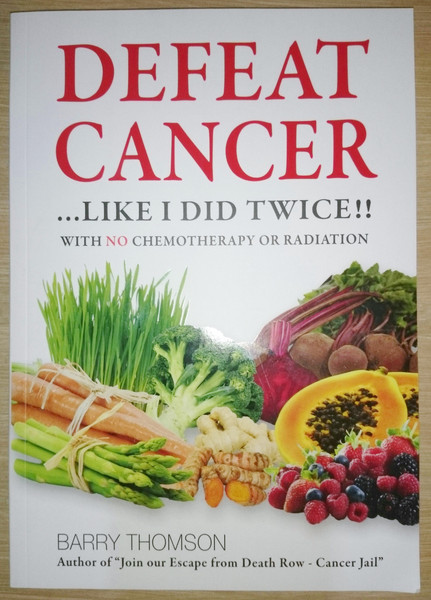
BOOK REVIEW: DEFEAT CANCER…LIKE I DID TWICE WITH NO CHEMOTHERAPY OR RADIATION

defeat cancer like I did twice


Review by Yeong Sek Yee & Khadijah Shaari

At the 3rd Malaysian International Conference on Holistic Healing for Cancer organized by Cansurvive Centre Malaysia (www.cansurvive.org.my) in October 2013, we met an Australian lady who introduced us to the above book written by an Australian cancer survivor, Barry Thomson. The book, for some strange reason is only available from the publisher in Queensland or from the author (www.defeatcancertwice.com).

In April 2003, Barry Thomson, a businessman, was diagnosed with two primary concurrent melanomas. This meant that he had two separate deadly melanomas, each with the potential to spread and develop secondary melanoma. Basically, this doubled his chances of dying from melanoma cancer. His own family doctor twice advised his wife to “sell your business and do anything that you have ever wanted to do.” Clearly he believed that his two melanomas would prove to be terminal. His only chance to beat melanoma was to find his own cure or he would surely die.

Barry was also told by a leading oncologist, that no treatment was available as chemotherapy and radiation are ineffective against melanoma. Barry was grateful to this HONEST oncologist who made him realize that he had to seek healing utilizing natural therapies.

Barry admits that, in 2003 he had (and still have) no medical background or training as he started a frantic search for information that would show him how to use natural therapies to become free of melanoma. His own extensive research, plus information from numerous books by cancer survivors and others, enabled him to compile a cancer fighting regimen which helped him to defeat his melanomas.

This resulted in his first book, “Join Our Escape from Death Row-Cancer Jail” which was publish in late 2007. (Website: www.cancerjailescape.com).

In June 2008, Barry had to battle terminal cancer for a second time. He was diagnosed with bowel cancer (also known as colon cancer) which totally blocked his large bowel. He underwent successful surgery to remove the tumour but, due to twists in the small bowel preventing intake of food, he underwent a second emergency surgery twelve days later. Extremely ill, he spent four nights in Intensive Care and was lucky to survive. He spent a total of 33 nights in hospital.

In March 2009, Barry had a third major surgery to rebuild his stomach and repair an incisional hernia and abdominal muscle separation. Subsequently, Dr. Matthew Carmody, his surgeon, told him that “100% definitely” he had cancer cells in his lymph system. He strongly recommended six months of chemotherapy for a “27% better chance of beating the cancer.” Barry declined and decided to use his experience in overcoming his melanomas in 2003 to eliminate the bowel cancer cells.

Colonoscopies in May 2010 and July 2012 showed NO POLYPS and NO CANCER. In July 2012 Dr. Carmody told Barry “Forget bowel cancer. You have certainly beaten it. See me again in six years for the sole purpose of checking for polyps with a colonoscopy.” It is now more than five years since his original diagnosis of bowel cancer.

After defeating melanoma and bowel cancer, Barry continued his research to find more and more effective natural cancer attackers. He gained a wealth of new and superb cancer-fighting information. In 2010, he felt it would be appropriate to write a second book to share this additional knowledge he had acquired with people fighting cancer.

It is not the intention of this review to discuss  all the natural healing methods that Barry Thomson used to heal his melanomas and bowel cancer except to mention that some of the modalities that he used included hyperthermia, the Gerson therapy, Cantron, the Dr Johanna Budwig Cancer protocol, hydrogen peroxide, Cansema for skin cancer and proper nutrition. The book also lists other natural healing methods that Barry has researched and found useful such as far-infrared saunas, herbal teas, probiotics, juicing, wheatgrass and other sprouts, getting rid of parasites, etc

We do not intend to discuss the merits or demerits of Barry’s healing methods except suffice to mention that when one is diagnosed with cancer (any form of cancer), one has a wide choice of healing methods. The usual so –called “scientifically tested” protocols of chemotherapy and radiation, etc is just one of the many methods to heal cancer. You certainly do have choices just like Barry Thomson and many others.

Do read and investigate further first before you jump into the bandwagon (of conventional cancer treatments). As Barry said…”the true facts of the situation are that, while still in total shock over their cancer diagnosis, patients are very quickly rushed into chemotherapy and/or radiation treatments”

If you would like to read/research further on the other healing modalities for cancer other than chemotherapy and/or radiotherapy or together with chemotherapy and radiotherapy, we recommend that you check out the following books:

1)      AN ALTERNATIVE MEDICINE GUIDE TO CANCER by Dr John Diamond, MD and Dr Lee Cowden, MD with Burton Goldberg. This is a very comprehensive text which tells that cancer can be reversed using clinically proven Complementary and Alternative therapies. NB: The authors also wrote CANCER DIAGNOSIS: WHAT TO DO NEXT which explains clinically proven, safe and nontoxic treatments.

2)      THE DEFINITIVE GUIDE TO CANCER by Lise Alschuler, ND, FABNO and Karolyn A. Gazella…..An Integrative Approach to Prevention, Treatment , and Healing.

3)      FIGHTING CANCER– A NONTOXIC APPROACH TO TREATMENT by Dr Robert Gorter, MD, PhD and Erik Pepper, PhD

4)      CANCER THERAPY by Ralph Moss, PhD…The Independent Consumer’s Guide to Nontoxic Treatment.

5)      OUTSMART YOUR CANCER by Tanya Harter Pierce…Alternative Non-Toxic Treatments That Work.

6)      KNOCKOUT by Suzanne Somers…Interviews with Doctors Who are Curing Cancer.

7)      LIFE OVER CANCER by Dr Keith Block, MD…read about the Block Center  Program for Integrative Cancer Treatment

8)      DEFEAT CANCER by Connie Strasheim…15 Doctors of Integrative and Naturopathic Medicine Tell You How.

9)      COMPLEMENTARY AND INTERGRATIVE MEDICINE IN CANCER CARE AND PREVENTION by Dr Marc Micozzi, MD, PhD…Foundations and Evidence-Based Interventions.

10)  INTEGRATIVE ONCOLOGY by Dr Donald Abrams and Andrew Weil

11)  ALTERNATIVE TREATMENT FOR CANCER by Ping–Chung Leung and Harry Fong…Annals of Traditional Chinese Medicine Vol. 3

12)  HERBAL MEDICINE, HEALING AND CANCER by Donald R. Yance…A Comprehensive Program for Prevention and Treatment.

13)  MANAGEMENT OF CANCER WITH CHINESE MEDICINE by Li Peiwan

14)  INTEGRATING CONVENTIONAL AND CHINESE MEDICINE IN CANCER CARE A CLINICAL GUIDE by Tai Lahans

15)  SUPPORTIVE CANCER CARE WITH CHINESE MEDICINE by William C.S.Cho.

There are a lot more books and websites on complementary/integrative cancer treatments but doctors will invariably brush this aside as “quackery,” “unproven, unscientific,” etc. and they will definitely not recommend you to read them.

If you have been diagnosed with cancer and standing at a big T-junction and not knowing whether to turn left or right, we recommend that you read the following two new books by Dr Chris Teo, the founder of The Ca Care Therapy…visit www.cacare.com

 CANCER: IS THERE ANOTHER OPTION?

 CANCER: WHAT NOW?

Both books will give you an idea of a holistic, herbal option that you may not know about.

To conclude, let us tell you a very little known fact. When President Ronald Reagan was diagnosed with colon cancer in 1985 whilst still in office, he had surgery in the US but he did not opt for chemotherapy/radiotherapy. Instead he opted for some German “unscientific” therapy….read the story at the following link:

https://cancercaremalaysia.com/2014/01/29/how-ronald-reagan-healed-his-colon-cancer

 Remember, you do have choices.

CANCER’S COLLATERAL DAMAGE: PART 2 A PROSTATE CANCER STORY


How we do harm

by Yeong Sek Yee & Khadijah Shaari

Shortly after he turned 70, Mr. Ralph De Angelo, a retired department–store manager in the heart of black America, saw a newspaper advertisement that claimed that prostate cancer screening saves lives. The advertisement also mentioned that 95% of men diagnosed with localized disease are cured.

The following is the tragic story of Mr. De Angelo after his prostate screening and how unnecessary harm can be done to those who go for screening of the prostate, breast, etc. This is a classic example of collateral damage (due to overtreatment) described in the book “HOW WE DO HARM” by Dr Otis Webb Brawley, MD a medical oncologist and Executive Vice President of the American Cancer Society.

In 2005, Mr. De Angelo, after his prostate screening, was diagnosed with prostate cancer, with a PSA reading of 4.3 ng/ml (just 0.3 above what is considered normal). He was urged to have a biopsy. Two of the 12 biopsies show cancer. The Gleason score was 3 plus 3 which is associated with the most commonly diagnosed and most commonly treated form of prostate cancer. There is no way to know whether a patient with this diagnosis will develop metastatic disease or live a normal life unaffected by the disease.

With this uncertainty, Mr. De Angelo was persuaded by his urologist to perform a radical robotic prostatectomy which he (the urologist) thought was the gold standard of care. After the operation, he was told he had a small tumour 5mm by 5mm x 6mm in a moderate size (50cc) prostate. The tumour was all in the right side of the prostate. This means that the tumor didn’t appear highly aggressive under the microscope. Good news? Unfortunately, Ralph realizes that he is now incontinent. Three months later, the incontinence is still there and he has to wear pampers continuously. Besides incontinence, Ralph was also impotent and given Viagra.

With a lingering 0.95 ng/ml (even though his prostate has been removed), a radiation oncologist suggested “salvage radiation therapy” to the pelvis. Four weeks into the radiation, Ralph saw blood in his stool. This was due to radiation proctitis i.e. radiation damage to the rectum. He continued having incontinence, but also developed a burning sensation upon urination. Later, Mr. De Angelo stopped his radiation with one more week to go. For the rectal proctitis, he went to a gastroenterologist, who prescribed steroids in rectal foam that he had to put up his rectum four times a day.

About three weeks after stopping the radiation, Mr. De Angelo realised that whenever he passed gas, some of it comes out of his urethra. He also sensed liquid from his rectum soiling his diapers. He was confirmed having a rectal fistula into the bladder…there is a hole between Ralph’s rectum and his bladder. After several urinary infections and when the fistula didn’t seem to be healing, he had to see a GI surgeon. He performed a colostomy to keep stool off the inflamed rectum and the hole into the bladder. The next step was an ureterostomy, a surgery that will bring urine to the abdominal wall and collect it in a bag, just like his bowel movements.

In Dec 2009, Mr. De Angelo’s daughter called Dr Brawley to inform him that her father had “urinary tract infection” which later progressed to sepsis, a widespread bacterial infection in the blood. On the fifth day of hospitalisation, Ralph passed away (only 4 years from diagnosis). Interestingly…”the death certificate reads that death was caused by a urinary tract infection. It doesn’t mention that the urinary tract infection was due to his prostate-cancer treatment and a radiation-induced fistula….Mr. De Angelo’s death will not be considered a death due to prostate cancer, even though his death was caused by the cure.

In conclusion, Dr Brawley strongly believed that… “the majority of these men, who are treated with radiation or hormones or both, got no benefit from treatment. They get only the side effects (collateral damage) including those that Mr. De Angelo had: proctitis i.e. inflammation and bleeding from the rectum, cystitis, burning sensation on urination and a feeling of urgency, a rectal fistula in which bowels and bladder are connected. The side effects of hormones can be diabetes, cardiac diseases, osteoporosis, and muscle loss.

In the case of Mr. Ralph De Angelo, both the surgeon and the radiation oncologist got paid handsomely. They both likely thought they were doing the right thing. However, Ralph got the side effects, and his quality of life was destroyed (too much collateral damage?).

One parting remark by Dr Otis Webb Brawley which is very relevant to this article:

“Prostate-cancer screening and aggressive treatment may save lives, but it definitely sells adult diapers.”

FOOTNOTE:

On the Malaysian scene, Malaysia’s leading oncologist, Dr Albert Lim passed away on March 8, 2013 due to prostate cancer which had spread to the bones and liver (and possibly lungs as well?) in just less than a year after diagnosis.

Was it overtreatment or was it excessive collateral damage?

Please share with us.

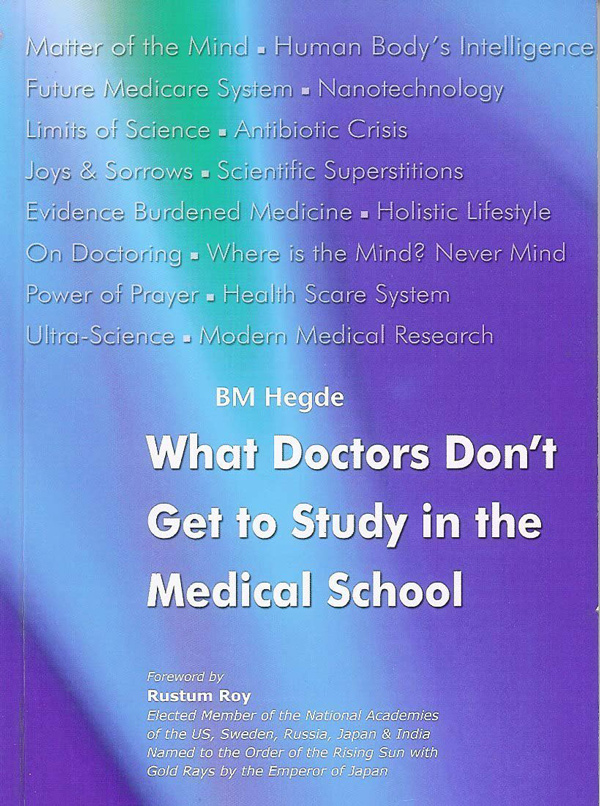
What Doctors Don’t Get to Study in Medical School

What-doctors-dont-get-to-st

This book is written by Dr. B. M. Hegde. He is a visiting professor of Cardiology, the Middlesex Hospital Medical School, University of London; Affiliate Professor of Human Health,  Northern Colorado University, retired Vice Chancellor, MAHE University, Manipal.

In the Foreword of the book, Professor Rustum Roy of the Pennsylvania State University wrote:

  •  I was most  impressed … he spoke from the position of leadership in the hard-core western medicine world, and he spoke from his heart and head at the same time. He is a senior, learned practitioner and researcher and administrator in that world of allopathic medicine. Hence what he says in constructive criticism of the world of current medical practice, carries weight … he called spades, “spades”.
  • The thinking that doctors and hospitals are needed to keep a society healthy is plain rubbish.
  • The USA healthcare system is a terminal patient in the “ICU”.

In this book Dr. Hegde expressed his thoughts very clearly and bluntly. Here are some of what he wrote:

Introduction

  • Medical education needs drastic changes all over the world for doctors to be better equipped to deal with fellow human beings.
  • The present education is disease orientated and not patient orientated. This must change first.
  • Most of what we teach is based on statistical data that does not have a firm basis.
  • Most of the science of medicine is not true science but statistical science.
  • Modern medicine has been completely hijacked by technology and has been taken to the market place … resulting in medicine getting dehumanized and totally mechanized.
  • Modern medicine has become top heavy with technology and consequently, is prohibitively expensive.
  • Medical education, from day one in the medical schools is controlled by the money power of the multinational pharmaceutical giants and the technology manufacturers.

Man and His Problems

  • The graph of cancer death has not shown a tendency to come down … hi-tech modern medicine is far from winning the war against cancer.
  • Modern medicine, for all its breathtaking advances, seems to be slightly off balance like the Tower of Pisa.
  • The short sighted modern reductionist scientific medicine looks at diseases from a narrow point of view …. would be beneficial in an emergency set up, but might even harm man in the long run.
  • It is high time that many of the hi-tech early interventions are properly and meticulously audited in the field before being sold in the market. One would be shocked to know that this does not happen most of the time because of the hype and greed.
  • Newer interventions are touted as the new avatar of life-saving-Gods in technological form and are let loose on gullible and demanding patients.
  • It is better to remember the dictum … it is a crime to intervene in the healthy segment of the population with newer technology or untried drugs, with the fond hope and assurance of averting longer term danger when the latter interventions are not properly audited in that setting.
  • As is the practice in modern medicine … we look for quick fix solutions to all our problems. Problems invariably have deep-rooted causes, which never get corrected with these quick fixes. However, the immediate solutions look good on the surface and deluded us temporarily. The malady recurs with greater intensity sooner than later.
  • We still do not ponder to think of long lasting solutions to prevent sickness. This could only be done through proper education of the future generation. Health of the nation, as the health of an individual, could only be preserved through promotion of a disease-resisting immune system. Healing of any damage has to be ultimately done by the body’s immune system.

Integrity of Medicine

  • Medicine, riding piggyback on technology, has gone to the market place in a big way. This has destroyed medical ethics, making most of us hypocrites swearing by the Hippocratic Oath!
  • Technology has taken medicine to the market place, making the doctor a seller of technology and the patient a buyer.  With the onset of the consumer movement in medicine, the time honoured doctor-patient relationship has all but vanished, resulting in all types of misery. In many areas, doctors have, in fact, become a menace to society!
  • Even research is no longer the measure of honesty and purity.
  • Doctors are being bought over by both drug companies and instrument manufacturers to sell their wares.

On Doctoring

  • Listening to the patient is the most difficult part of a doctor’s life. Learn to listen and you will succeed as a good doctor.
  • Healing is an art. A good doctor should master the art of healing, never becoming so long in the western obsession with objectivity and its emphasis on reproducibility of experimentation. Empirical wisdom could help a good doctor to the same extent, if not more, than the so-called evidence-based medicine.
  • All the improvements in human health has come from economic and sanitary improvements in human dwellings and not from the hi-tech medicine that is being touted as the panacea for all human ills.
  • Many of us have this misconception that modern medicine has increased our life span. Far from it, very, very far. The truth is that modern medicine, if anything, has decreased our life span with many of the newer inventions and interventions!
  • As modern medicine quick fixes are absolutely necessary in emergency situations, many of the chronic illnesses and minor illness syndromes either do not benefit from the top-heavy modern medical establishment, or could do well with very inexpensive but effective alternative systems of medicine.

Medicine and Money Making

  • Money is not the criterion to judge you as a good doctor. Never try and make money in the sick room. Do not be in a hurry to make it big fast: no one has taken money with him while going at the end of life!
  • The gratitude and the smile on the face of a grateful patient are priceless and give you true happiness. One must strive to earn such smiles in abundance.
  • Let them be very clear in their mind that the profession of medicine is not for making money primarily, although money would automatically come.
  • Medicine is a calling, which is very noble, and should never be debased to that of a moneymaking business.
  • Modern medicine has become prohibitively expensive. It is going to be still more so with newer technology invading medical diagnosis and management more and more. Most of these technologies … did not live up to the expectations of their promoters and, in some instances, have even caused more harm than good.

Medical Philosophy

  • I wonder, at times, in real life situations, if we have lost our sense of direction in modern medicine, by relying solely on reductionist science. This kind of logic does not work in any dynamic system, least of all in human being, which is much more than the organs that we are trying to “fix.”
  • Each time we feel that some “things” have gone wrong with the human organs; we try and “do” something, until the patient gets better or he dies. The essence of medical teaching these days seems to be a “do it” and “fix it” attitude.
  • Enormous “progress” have been made in the medical technological field. We live in an age of heart transplants, artificial hearts and kidneys, genetic engineering and even cloning. Daily we wage surgical and chemical warfare on diseases and the bill for it all is skyrocketing … bypass surgery is done more often to fill the coffers of hospitals and surgeons, rather than to help patients. Many studies in this field are being twisted, using all sorts of statistics, to show benefit to the patient, while in essence, the procedures are only helping the doctors and the industry.

First, do no harm

  • The more I learn about our profession the less faith I have in the truth of the Hippocratic Oath. People are after fame, mystery, falsehood, and false prestige and, of course, money.
  • The man, who does genuine hard work, using his own special powers of thinking and comes up with an innovative idea rarely, if ever, gets his due credit. It is the crafty ones that could steal that wisdom and use it to perform “miracles” that get the limelight and all that goes with it. It is not the one whose genius discovers something that gets the limelight but the one who somehow or the other convinces the world about it gets all the benefits. That is life.

Medical Consultation

  • Many doctors and most lay person have a misconception that hi-tech investigations are needed for arriving at a good diagnosis. The truth, however, is otherwise.
  • Lord Platt, wrote in 1949: “If you listen to your patient long enough he/she would tell you what is wrong with him/her.”
  • The time of paternalism in medicine, where the doctor was considered omnipotent, has to be replaced by partnership in medicine, where the final outcome of any illness depends both on the doctor and the patient.
  • The public must also be taught that doctors are not infallible and that they could also make mistakes.

Limits of Science

  • Scientists make the tall claim that science and scientific outlook have take mankind forward in the last one hundred odd years.
  • Rational thinking and scientific outlook have enormous limitations. When you look beyond reason you get an insight into Nature’s functioning better. Nature has its reason always, but our reason cannot explore them many a time.
  • There are a lot of things that one can only feel but cannot see and measure.
  • It would be foolhardy to believe that science is the be-all and end-all of human wisdom. Very far from it.
  • What we know is probably a very small fraction of what there is to know.
  • The genuine rationalist is one who has understood the limitations of reason. Positive sciences, at best, could answer questions like “how” or “how much.” Positive sciences will never be able to answer the question “why.” The answer to the question “why” needs the knowledge of the limits of science.

Medicine, Drug Studies & Statistics

  • All  the drug studies that we swear by have major errors.
  • All the controlled studies are done not longer than 5 years before the drugs is let loose on the gullible public. Many of the unforeseen side effects occur only after 5 years — after the drug has been given to millions of people.
  • Academic medicine seems to be on sale these days with doctors and researchers being offered lavish gifts by the companies. Even textbooks are written with drug company money!
  • Final blow comes from researches trying to confuse the doctors with complicated statistical methods when the data are not convenient to their mentors.
  • Whenever we are stuck with our controlled studies, many leaders take shelter under the umbrella of statistics.
  • Statistics could be used as the whipping boy to get  out of any inconvenient research situation that might not fit with our hypothesis, especially drug studies.
  • The underlying problem is the large amount of money being sunk by drug lords in isolating the power molecule in the laboratory to begin with. When found to be useful in animals they go for human studies hoping to get similar results. If the results are not to their liking, instead of writing off that huge-sum, they get enough people to explain the variance with difficult statistical jargons to confuse the medical team.
  • None of the medical interventions, including drug therapy, is without some danger lurking in the corner. While there is no pill for every ill, in the long run, there certainly is an ill waiting to strike after every pill.
  • One, therefore, needs to weigh the pros and cons of those interventions to become an intelligible partner in one’s own medical care.
  • Today medicine has become a business and the consumer, the patient, has to be an informed customer lest he/she should be led up the garden path to the misty world of  hi-tech medicine.

Progress & Knowledge

  • Progress is looking at the same thing from different angles. If we keep looking at something with the same angle … without questioning them at all, we would never progress. Change is progress and science is change.
  • Let us allow people to think freely and not restrict thinking by our rigid narrow views of science. Condemning anything that does not fit in with our tunnel vision is not right.
  • Wisdom does not belong to scientists only!
  • Man is absolutely certain when he knows very little, with knowledge doubts increase  ~ Goethe.

Resistance to Change

  • Before society loses faith in doctors we have to change for the better.
  • The popularity of complementary systems should not to be taken lightly, despite the fact that we shout from house tops day in and day out that complementary systems are not scientific, people in large numbers opt for those systems. They are not fools to do so.
  • We should remember that a patient could live without we doctors but doctors cannot live without patients. Before we reach that stage let us act wisely and set our house in order.
  • My frustrations with the educational system in the medical schools …. I could not change despite the fact that I had occupied almost all important teaching positions. I failed miserably and got frustrated as, at every level, I had to meet with very stiff opposition for change. Those who keep in touch with medical literature know my efforts in the last four decades.
  • I hope this (book) achieves its goal of making doctors to think. Change comes only when one starts to think.
  • In the present information-loaded medical education …. the student does not get stimulated to think and be creative. This is not encouraged and the student who tries to do that gets left out of the mainstream and has the prospect of being a loser.
  • Doctors start believing in all that they are told and what they get to read.
  • Most of what comes out in the plethora of biomedical journals is fake and doctored, but it is difficult to convince the readers about it.
  • While I have been advocating that for more than two decades my friends have been labeling me a quack of the refined variety!

Comments

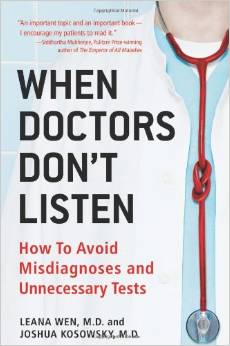
With much respect, it is very hard to become a medical doctor, let alone become a “good” doctor. This is what it takes to be trained as a doctor in the US (in When doctors don’t listen by Leana Wen & Joshua Kosowsky).

When doctors dont listen

 Medical training in the United States is a long and prescribed process. Since all medical schools require a bachelor’s degree future doctors must first complete four years of undergraduate work at a college or university (this is called premedical).

  • They must score well in MCAT exam (Medical College Admissions Test).
  • Medical education is 4 years; consisting of 2 years of preclinical years and 2 years of clinical years.
  • On the day they graduate from medical schools, the students become a medical doctor, an “M.D.” but this M.D. alone does not entitle one to practise medicine.
  • In the US, a new graduate must enter post graduate training called residency in order to be a licensed physician. During the final years of medical school students choose a field of specialization and upon graduation they enter residency training in that field.
  • Residency ranges from 3 to 7 years, depending on the specialty. The first year of residency training is termed internship … the intern year is widely considered to be the most challenging.
  • As the resident progresses through second year and beyond, the level of comfort with patient care increases.
  • After completing residency, one is eligible to sit for additional exams to qualify as “Board Certified” in a particular specialty.

The Results of this Extensive Medical Training? Cookbook Medicine, according to Drs Wen & Kosowsky,

  • Many doctors today (are) trained to think along a cookbook approach.
  • We call it cookbook because it implies there is no deviation from the set recipe even as circumstances change.
  • Cookbook medicine is easy to learn and relatively simple to practise.
  • Doctors order more tests not because this is rationale based on patient in front of them, but because this has become the new “gold” standard in America, the “best” we have to offer … prescription pads fill up with tests, as if tests were cures in and of themselves.
  • It is not difficult to see how the cost of health care adds up exponentially when doctors and patients both depend on tests, without questioning whether the extra tests are necessary, or worse yet, whether they may be harmful.
  • Everyone gets trapped in an increasingly costly and increasingly dysfunctional system.

Confession Medical Heretic

Is this why Dr. Medelsohn made some hard comments below?

Robert Medelsohn, chairman of Medical Licensure Committee, State of Illinois, USA; associate professor at University of Illinois Medical School and director, Michael Reese Hospital, Chicago (in: Confessions of a medical heretic) said:

  • Medical school does its best to turn smart students stupid, honest student corrupt and healthy students sick. 
  • The admissions people make sure the professors will get weak-willed, authority-abiding students to work on. They give them a curriculum that is absolutely meaningless as far as healing and health are concerned.

Bad Pharma

 Medicine is Broken

Dr. Ben Goldacre (in Bad Pharma) came to a sad conclusion: 

  • Medicine is broken. And I genuinely believe that if patients and the public ever fully understand what has been done to them – what doctors, academics and regulators have permitted – they will be angry. 
  • We like to imagine that medicine is based on evidence, and the results of fair tests. In reality, those tests are often profoundly flawed.  
  • Medicine is broken, because the evidence we use to make decisions is hopelessly and systematically distorted.

Health & Healing

Medicine is Devoid of Theory and Concept of Health and Healing

 Andrew Weil, graduate of Harvard Medical School and director, Integrative Medicine Program, University of Arizona in Tucson, Arizona, USA (in: Health & Healing) wrote: 

  • I  find (modern) medicine glaringly deficient in theory and philosophy of any sort … lack of any clear concept of health leading medical doctors to pay more attention to disease.


BOOK REVIEW: WHEN HEALING BECOMES A CRIME

When healing becomes a crime

by Yeong Sek Yee & Khadijah Shaari

Yes, in America, healing is a crime when you do not use the “FDA approved, scientifically tested, and evidence-based” modalities like surgery, radiotherapy and chemotherapy as far as cancer treatment is concerned.

This book by Kenny Ausubel, an award winning author, investigative journalist, and filmmaker documented the horrendous, undemocratic, high-handed way the American Medical Association (AMA), the Food and Drug Association (FDA) and the National Cancer Institute (NCI), hounded Harry Hoxsey and the Hoxsey Clinics from 1924 until he was driven to Mexico in 1963. Hoxsey survived decades of being “hunted like a wild beast” only to see his clinics padlocked without a scientific test.

The author decided to spend 20 years of the prime of his life researching a story that everyone needs to know. In 1976, his father had cancer. Six months later, at age 55, he was dead. Visiting his father in Memorial Sloan-Kettering Cancer Centre in New York, the flagship of conventional cancer treatment, “branded his psyche with the indelible imprint of a medical concentration camp. Hopeless patients in blue smocks hovered like phantoms, their emaciated bodies ravaged by radiation and chemotherapy.”

Kenny started his journey into “the subterranean netherworld of purported cures” after a friend gave him a copy of “You Don’t Have to Die” the self-published autobiography by Harry Hoxsey (apparently, no book publishers dared to accept the script). This journey resulted in this well-documented book and a movie with the same title. The book is not an easy read, with lots of details to follow. After reading this book, the reader will have an increased awareness of the power of the medical profession …or more specifically “the cancer establishment.”

Briefly, Harry Hoxsey’s cancer treatment is one of America’s most documented non-conventional alternative treatments of cancer. Passed down through his family from his great grandfather, this herbal formula peaked in US in the 1950s and flourished into Harry’s 14 cancer clinics across the United States. Harry Hoxsey had the largest privately-owned cancer clinic in the world, seeing more than 10,000 patients in Dallas alone. To this day, his treatment is still available through the Bio-Medical Center at Tijuana, Mexico.

In this review, we shall not delve into the nature and efficacy of the Hoxsey herbal formulas. The persistent harassments by the medical establishment from 1924 to 1963 are sufficient testimony of the effectiveness of the Hoxsey herbal formulas. Why does the medical establishment need to “hunt Harry Hoxsey like a beast?” Because the AMA was adamant in its conviction that only surgery and radiation were able to cure cancer, even though cancer researchers already knew that these treatments were very limited in their effectiveness.

Harry Hosey suffered 40 years of harsh attacks in the press, relentless prosecutions in the courts and persecution by government agencies. Below is a brief summary of what the AMA did to Harry Hoxsey and the Hoxsey clinics:

  • Harry was arrested more times than anyone in US medical history, more than 100 times in Dallas alone. At most of the trials, the Hoxseys were not short of patient witnesses who even came with stacks of cash to bail Harry Hoxsey should he be convicted and jailed. However, he never lost one “AMA quack trial” or “slander” because of the powerful defense from the experience of hundreds of cancer survivors.
  • At each trial that Harry faced, the AMA would strenuously object to Hoxsey presenting patient witnesses to the stand because…”lay people are not qualified to testify to their own medical condition…often times these individuals are not knowledgeable enough in their own health to realize that they’re not the ones to make the best assessment”
  • At one trial, one doctor (from AMA) contended that…”Hoxsey’s reputed cures were either cases of wrong diagnosis or the result of a delayed reaction to conventional treatment.”
  • As a last refuge, the AMA suggested that “any seeming recovery could have been the result of spontaneous remission.” Hoxsey won all major trials (and many others), but the harassments did not end.
  • Each time Hoxsey was arrested and brought to court, he pleaded for a fair scientific test. However the AMA had simply refused to investigate the Hoxsey medicines, disregarding science’s most fundamental question: What is the evidence? Instead, the AMA worked to ban the treatment… eventually outlawing it entirely in the US in 1960.
  • Some of the reasons why the AMA did not want to collaborate with Hoxsey to investigate or conduct trials on Hoxsey’s products: –
  • Organized medicine does know (already) that their (Hoxsey’s) products are worthless. If they had any merit, they (the AMA) would have used it. It’s a rather unfair thing to expect the AMA to waste its time with something that it knew was absolutely useless.
  • The doctors (of the AMA) claimed that they already knew from their medical education that his remedies had no efficaciousness at all, no cure.

Perhaps, the greatest fear of the AMA (and later the NCI and FDA) is to find that…”if a Hoxsey product were to be proven effective, the public will run to it because nobody wants the chemo drug.” Because once one goes through the door, then a lot of others are going through the door and that’s what they are afraid of. If chemo is the only choice, then patients will reluctantly take it, but the minute it is known that there is something nontoxic out there, everybody’s going to want it. (While the FDA has approved more than 40 highly toxic drugs, the FDA has yet to approve a single nontoxic cancer agent or one not patented by a major pharmaceutical company).

Hoxsey unremittingly broadcast his call for a fair investigation while organized medicine tried to disconnect the microphone. In 1954 ten medical doctors from around the country dared to make a three-day investigation of the Hoxsey clinics and subsequently concluded that….”the Hoxsey treatment is superior to such conventional methods of treatment as X-ray, radium, and surgery”

Unable to get patients to testify against Hoxsey, the AMA resorted to other tactics…for example:

  • When Dr. Sam L. Scothorn, a respected osteopath and former president of the American Osteopathic Association took his wife to Hoxsey to treat her ovarian cancer after radiation failed, Dr Scothorn was ordered to appear before the Medical Board to explain why he took his wife to the Hoxsey Clinic. Dr Scothorn refused to appear and felt grossly insulted by the AMA’s letter…”because it smacks  of conspiracy”
  • Medical doctors employed by/or associated with the Hoxsey clinics were warned, isolated and eventually had their medical licenses withdrawn. In 1940, Hoxsey’s pathologist (Dr Marvin Bell) was threatened with the revocation of his medical licence just because he performs biopsies for the Hoxsey Clinic.
  • The FDA stake out Hoxsey’s Dallas clinic parking lot to record license plates to track down patients. FDA agents set wiretaps and had the post office monitor the patients’ mail.
  • The FDA ordered posters to be  mounted in 46,000 U.S. Post Offices…”Public Warning Against Hoxsey Cancer Treatment”….just like posters of wanted criminals.
  • The FDA and AMA even tried to block Hoxsey’s increasing appearances on national TV talk shows and radio broadcasts. They even sought a permanent injunction against Mildred Nelson (Hoxsey’s nurse) from practicing nursing in Utah and Dallas.

After the AMA has lost all the court cases, they offered to buy out the Hoxsey herbal formulas (with the sinister intention to discredit/destroy the reputation of Harry Hoxsey). When Hoxsey refused to sell them (the AMA), organized medicine’s war of technicalities expanded into a bold series of stratagems to get rid of Hoxsey. Some of these are:

  • The AMA used the courts to cite an obscure precedent barring doctors from working for a layperson. In principle, the same law should have put most hospitals out of business, since they are owned and operated by laypeople. However, it was enforced only against Hoxsey.
  • In 1957, in another lateral swipe, the Texas Attorney General declared the 1949 state statute legalizing naturopathy to be unconstitutional, a judgment the AMA had been seeking since 1949. This act negated Hoxsey’s only legitimate credential. Without it, he could no longer operate his clinic.
  • By 1958, the California State Attorney General introduced a bill sponsored by the American Cancer Society to outlaw all unconventional cancer treatments.
  • Under California’s new anti-quackery laws in 1959, it became a crime to treat cancer with anything but surgery, radiation, and the emerging chemotherapy. As the 1950s drew to a close, the government quackdown was nearly complete…the government politicized the courts to determine medical questions.
  • Politicians who had dared to support Hoxsey were systemically driven from office by AMA political action. Doctors suffered professional censure for pointing out the limitations of conventional cancer treatments or suggesting new directions in research. There was simply no room for a difference of medical opinion.

Organized medicine’s scorched-earth campaign to eradicate unorthodox cancer therapies was a success by 1960, when the last tattered vestige of the Hoxsey Cancer Clinic closed its doors forever in the United States.

On May Day 1963, Mildred Nelson, the chief nurse of Harry Hoxsey crossed the border into Tijuana, Mexico and started offering the herbal treatment at the Bio Medical Center. Mildred Bell Nelson applied to the Mexican authorities for a nursing license and married a Mexican to get working papers. Nurse Mildred Zamora was back treating cancer patients again.

When Mildred went into exile in Tijuana, Harry Hoxsey stayed back in Dallas. By then he was a wore-out car. After suffering a heart attack in 1958, he was never fully well again…he later developed prostate cancer and subsequently died in 1974.

Mildred Zamora continued Harry Hoxsey’s mission in Tijuana until she had a stroke which resulted in her death in January 1999 at the age of 80.

Does the Hoxsey herbal tonic really work? There were just too many people using the Hoxsey herbal formula and got well when they weren’t supposed to for it to be accidental or rampant good luck (or spontaneous remissions). Why was the Hoxsey tonic not investigated in the first place seventy-five years ago?  And yet the AMA and NCI can conclude that the nontoxic combination of herb extracts as “worthless tonic for cancer.” Is that based on sound scientific evidence or they just do not want a nontoxic cure to be found?

We invite you to be the judge.

To complete the story, we recommend that you watch the following video on YouTube…..WHEN HEALING BECOMES A CRIME by Kenny Ausubel (Link: http://www.youtube.com/watch?v=G45f8bNgj9w).  A summary of the Hoxsey herbal therapy can be read at the following link: http://true-wellness.com/twmedia/articles/hoxsey_form_can.pdf

If you Google the title of the book, there are a lot more information about “the politics of cancer” to enlighten you.

BOOK REVIEW: YOUR MEDICAL MIND–HOW TO DECIDE WHAT IS RIGHT FOR YOU

Medical mind


by Yeong Sek Yee & Khadijah Shaari


The authors, Dr Jerome Groopman, MD and oncologist together with his wife, Dr Pamela Hartzband, MD and an endocrinologist, are both on the faculty of Harvard Medical School and also on the staff of Beth Israel Deaconess Medical Center, in Boston,USA. They also wrote “HOW DOCTORS THINK.”

This book explores medical decision-making and emphasizes the role of various biases that affect our decisions, usually unconsciously. Even the youngest among us have had to make difficult medical decisions. Perhaps we’ve had to choose between two doctors with very different opinions, or decide whether to treat a condition with a pill or with diet, exercise and natural remedies. Some of us have had to make even bigger decisions and help loved ones do the same.

In a country (US) where medical treatment is seldom free and often expensive, deciding how to treat a health condition can be nearly as taxing as the condition itself. Adding to the pressure is the fact that many of us are seen by doctors who don’t have the time to properly help us weigh our options.

This is further compounded by the fact that, “despite many scientific advances, the unsettling reality is that much of medicine still exists within a gray zone where there is no black and white answer about when and how to treat. Often there are several differing approaches to treatment, each with its own risks and benefits. The best choice for an individual may be anything but simple or obvious.”

The quest of the authors is to shed more light on how our minds approach medicine and, using real patients’ stories, to help us make appropriate choices when it’s demanded of us.  The authors’ own philosophy is borrowed from the early 20th-century physician Sir William Osler, who believed that “when trying to unravel a complex medical diagnosis, you should listen carefully to the patient, because he is telling you the answer.” In other words, Groopman and Hartzband’s desire is for doctors to be more patient, and for patients to be better informed.

According to the authors, the mindset of patients can be divided into the following categories – “believers and doubters; maximalists and minimalists; a naturalism orientation or a technology orientation.”  Briefly, these are explained as follows:

  • Believers approach their options with the sense that there is a successful solution for their problem somewhere. A believer can have strong naturalism orientation, trusting in the healing power of nature and shunning high-tech interventions. Or a believer can have a technology orientation, relying on the promise of modern medicine. A believer who is a maximalist feels that more treatment is the best approach and doing less is shortsighted, whereas a believer who is a minimalist is certain of the opposite strategy. 
  • ·Doubters approach all treatment options with profound skepticism.  They are deeply risk-averse, acutely aware of potential side effects and limitations of drugs and procedures. They question how much benefit a therapy really offers them and whether there might be deleterious consequences. Doubters are typically minimalists.
  •  A naturalism orientation or naturalism bias holds the notion that the body can often heal itself if given the proper environment, harnessing the mind-body connection and supplementing with herbs, vitamins, and other natural products. It is the firm belief that there exists smarter and safer ways to prevent and treat illness without resorting to synthetic solutions.
  • On the opposite end of the spectrum is the technology orientation, the belief that cutting-edge research yielding new medications and innovative procedures holds the answers.

Our backgrounds predispose us towards taking varying general approaches to making decisions, such as:

  • A minimalist who holds to the notion that “less is more,” that risks and unintended consequences may over shadow apparent benefits.
  • A maximalist who believes that more treatment is the best approach and doing less is dangerous.
  • And a pragmatist who chooses from the whole range of treatment options as each particular situation warrants.  

The authors also introduced several other concepts to help patients decide…such as “health literacy, availability bias, framing, numbers needed to treat, number needed to harm, net benefit and best practice.” We shall briefly explain these concepts:

  • “Health literacy” means understanding statistics and the risks and benefits of a treatment.
  • “Availability bias” is the most powerful and prevalent force shaping how patients initially assess their options. Certain tales and testimonials, especially those that are dramatic or unusual, become firmly imprinted in our minds; we remember them easily, and they are readily “available” to us when we ponder difficult choices in anxious moments.
  • “Framing” is a key aspect of health literacy—knowing how the same information can be presented as either positive or negative. For example, stating that 35% of people with a serious illness are cured by a certain treatment has a hopeful resonance, while stating that 65% of people die despite that therapy has a pessimistic sound. But both statements are factually correct and describe the same data. For that reasons, it is always valuable to “flip the frame” in your mind, to view information in both its positive and its negative forms.
  • In the “numbers needed to treat,” patients musk how many people with a condition similar to yours need to receive a therapy in order to improve or cure one person. For example, in A WORLD WITHOUT CANCER, Dr Margaret Cuomo, a radiologist, quoted a study that found that 2,970 women must be screened (mammography) once in order to save one life.
  • Similarly, in the “numbers needed to harm,” how many people typically must receive the treatments in order for one to suffer a side effect, more clearly reveals the risk of the therapy. Decision aids often contain these numbers, or your physicians may give them to you.
  • “Net benefit” means the potential gains from the treatment minus the downsides. After seeing all the data, particularly the “number needed to treat,” patients have to decide whether the net benefit is worth it.
  • “Best practice”….Committees of specialists are convened to draw up guidelines that aim to identify “best practice” for a certain medical condition. The principle is that guidelines should be drawn from the “best” evidence and crafted by the “best” scientific experts in the field. These guidelines are a key component of so called evidence-based medicine, the idea that clinical practice should be based solely on the results of scientific studies. 

Unfortunately, there are a number of pitfalls that Dr Groopman and Dr Hartzbrand advise patients to be aware of:

  • “Best Practice” guidelines aren’t strictly “scientific”….some experts who write guidelines are consultants to drug and device companies. Different groups of experts can disagree significantly about what is best practice.
  • For many treatments there exists a substantial “gray area of indeterminate net benefit”
  • Patients should be aware that doctors and experts may “frame” information in a way that reflects their own preferences. As physicians, we (the authors) have found ourselves at times too quickly telling our patients which treatments we prefer rather than working with them to understand their own thinking. Of course, patients may want, and often ask, what their physicians think is best. But that should occur after information is presented in a neutral way. 

In conclusion, the authors admit and reiterate 2 core fundamentals:

  • We (the authors) believe that all patients should be fully informed about their condition and then asked about their preferences. To be truly informed, patients should be aware of the gray zones in medicine. They must keep in mind that guidelines are not purely scientific and have a significant subjective component.
  • In our role as doctors, our aim is to help patients understand what makes sense for them, what treatments are right given their individual values and goals. We are especially mindful not to impose our preferences about our own health on our patients.

After reading this article, share with us who and where you are—whether a believer or doubter, a minimalist or maximalist in respect to your cancer treatment. Did your doctor guide you or did he frame you?

Watch the 2 doctors explain some of their concepts on YouTube at the following link: https://www.youtube.com/watch?v=qSrJcyeMLB0

HOW DOCTORS (and others) DESCRIBE THE EFFECTIVENESS AND TOXICITIES OF CHEMOTHERAPY DRUGS–PART 1

by Yeong Sek Yee & Khadijah Shaari

As we browsed through various books, publications written by medical doctors and oncologists, patients, etc we were particularly amused but impressed by the courage and the way some of them describe the effectiveness or toxicities of chemotherapy drugs. Some of these descriptions can really stretch your imagination. Below is just a sampling:

A most unique description is made by Dr Margaret Cuomo, MD, a board certified radiologist in her book, A WORLD WITHOUT CANCER, in which she said…..”chemotherapy is like taking a stick and beating a dog to get rid of fleas”

(Comment: How many times do you have to beat the dog to get rid of all the fleas before the dog dies?)

Similarly in TAKE CONTROL OF YOUR CANCER, Dr James Forsythe, MD and an oncologist, described (very imaginatively), the art of choosing chemotherapy drugs for the different types of cancer as….”often it is akin to entering a dark room with a handful of darts and hoping to hit the center of the dart board” Dr Forsythe strongly feels that….without knowledge of the genetic markers for specific tumours to guide them in composing an effective chemo drug protocol (i.e. chemosensitivity testing), an oncologist is truly “shooting in the dark”

(Comment: How many darts do the oncologists need before they can hit the center of the  dartboard?)

NATURAL STRATEGIES FOR CANCER PATIENTS, Dr Russell Blaylock, a neurosurgeon named Chapter 3 of his book as Chemotherapy: Poisoning Cancer (and You). A most apt title because chemotherapy drugs, especially when used in combination, can cause immense injury to numerous organs and tissues such as the liver, gastrointestinal tract, kidneys, lungs and heart—this is described as cancer’s collateral damage.

The concept of cancer’s collateral damage is best articulated by Dr David Levy, MD and former president of the British Columbia Cancer Agency, Canada as summarized below:

  • “In fighting the war on cancer, there is, like in any war, unwanted collateral damage. There is no silver bullet, but in many ways, a refined shotgun, blasting the tumour while pellets hit other vital organs.
  • ·         “The bone marrow, liver, and nervous system get their share of hits, but the heart and vascular system are certainly at risk depending on the weapon used, particularly because the vascular system and blood supply are intimately involved in any treatment delivery.

Link:http://blogs.vancouversun.com/2010/09/25/the-heart-collateral-damage-from-cancer-treatment/

Some doctors feel that the conventional treatment is worse than the disease itself. One such doctor is Dr Keith Block, MD and an integrative oncologist who, in the introduction of the book, LIFE OVER CANCER, posed this question….” What is it about cancer that enables it to survive despite surgery to excise it, radiation to burn it and chemotherapy to poison it?” Additionally, Dr Block also mentioned….”most patients die not from their cancer but from the consequences of the cancer”….meaning the conventional treatments.

Another oncologist and Professor of Medicine, Dr David Agus, MD admitted in his book, THE END OF ILLNESS that….” It’s human nature to want to find magic bullets in medicine, but they happen once in a blue moon, and we may already have had all of our blue moons. We haven’t found many new pills lately that really cure diseases. This is why the pharmaceutical industry is somewhat broken right now; it has run out of low-hanging fruit, a magical chemical that cures the disease. I don’t think we’re likely to find a lot more of these; it seems like a waste of time, money, and resources to keep looking for these magic bullets. We need a new approach—a new model.”

(Comment: Will there ever be a new approach/new model when there is so much at stake  in the present cancer industry?) One baffling statement by Dr Agus in the book is….”Despite chemotherapy’s being a widely used treatment for cancer, nobody has ever shown that most chemotherapy actually touches a cancer cell. It’s never been proven” Can anyone help here?

Although Dr David Servan Schreiber, MD and a neuroscientist, survived 19 years with brain cancer with 3 surgeries and several chemotherapy sessions, he had this to say about chemotherapy in his best seller ANTICANCER—A NEW WAY OF LIFE :

  • “one of the great mysteries of chemotherapy is that sometimes you can make tumours melt away and have very little effect on survival time”

The late Dr John Lee, MD who was an expert on the subject of HRT for women wrote very blunt comments about chemotherapy in WHAT YOUR DOCTOR MAY NOT TELL YOU ABOUT BREAST CANCER. Some of these comments are:

  • Chemotherapy is an attempt to poison the body just short of death in the hope of killing the cancer before the entire body is killed. Most of the time it doesn’t work.
  • The women who agree to try new chemotherapies are guinea pigs for a type of treatment with a notoriously poor track record. Like most other aspects of the breast cancer industry, there’s little agreement about what constitutes chemotherapy.
  • Some chemotherapy does prolong life for a few months, but generally at the high price of devastating side effects, and if a woman does happen to get lucky and survive that bout of cancer, her body is permanently damaged; recurrence rates are high.

(COMMENT: Dr Lee’s comments on breast cancer are equally applicable to other cancers).

In THE WAR ON CANCER: ANATOMY OF FAILURE, A BLUE PRINT FOR THE FUTURE, Dr Guy B. Faquet, a Professor of Hematology and Oncology at Medical college of Georgia and the University of Texas Medical Branch likened cancer treatment as:

”medical treatment of cancer for most of the past century was like trying to fix an automobile without any knowledge of the internal combustion engine or, for that matter, even the ability to look under the hood.”

In his latest book, WHOLE–RETHINKING THE SCIENCE OF NUTRITION, Dr Colin Campbell, PhD (Professor Emeritus of Nutritional Biochemistry at Cornell University) firmly believes that “there is no such thing as a targeted strike when it comes to biochemistry.” So the strategy of using chemicals to treat disease is akin to the infamous Vietnam War strategy of “burning the village to save the village.” Just as in actual war, it leaves in its wake a predictable killing field of collateral damage.

We all know what Russian roulette is….a lethal game of chance in which a person, using a revolver with one bullet, spins its cylinder, points the muzzle at his or her head, and pulls the trigger. Walter Last, a science and health writer described Chemotherapy as Medical Russian roulette. You can read his full comments from his article, HOW SCIENTIFIC ARE ORTHODOX CANCER TREATMENTS? at the following link:

Link: http://www.whale.to/a/last.html

In another article, CANCER THERAPY—A NEW DIRECTION (Link: http://www.health-science-spirit.com/cancerdirection.htm), Walter Last hit the nail squarely on the head when he highlighted at the top of the article that…..”Cancer is so difficult to cure because it is so profitable to treat.”

This reminded us of a comment by a cancer patient recently when he said that….”the current medical set-up does not want cancer patients to get well, nor do they want them to die so soon…that period when they are still alive is their window of opportunity (to rake in the money).”

We have one last quotation that is often touted at scientific conferences………this will definitely prick your conscience…..” the treatment was successful, but the patient died.”

Watch out for Part 2….and learn what is “bottled death”