My mom’s oncologist told us her cancer had recurred and if she does chemo it will extend her life by another six months, and if lucky another twelve months. But the oncologist does not recommend chemo and thought the treatment would make her worse. He suggested waiting until her condition becomes painful or other symptoms appear. He told us chemotherapy does not cure her cancer and it does not make much difference.
I found out about you from the internet. I would like to bring my mom to see you to help treat her.
We are living in Singapore and planning to go to Penang next week to see you. I think we may need to stay in Penang but not sure how many days to stay. Are you able to advise how many days we should stay? I saw the video on healing crisis after taking your herbs. I’m afraid if we just take your herbs and go back, my mom may experience pain, vomiting or has diarrhoea, Then my mom may think the herb is not working and would not like to continue taking the herbs. I think your presence and guidance will give us confidence to face the battle against her cancer.
Here is what I know of my mom’s condition and cancer.
Histology report identified the cancer to be mucinous adenocarcinoma of the iluem which has invaded the muscular wall and peritoneal surface. Conclusion: Pseudmyxoma peritonei, stage 2B.
Surgery was done to remove 10cm of iluem and 7.5 cm of caecum. This was March 2010.
She refused to undergo chemotherapy immediately after surgery.
Subsequently doctor ordered blood tests and PET/CT scan. Her CEA marker has been rising from 5.4 to 6.3, 9.6 and yesterday the oncologist said her CEA was12.9. But the PET/CT did not show any tumour.
My mom easily gets stomach and intestine bloating and discomforts, after she takes cooling food or if it is cold/rainy weather. Even some vegetables make her have loose stools and diarrhoea. Ginger tea helps remove the wind.
Other than that she is losing weight, about 0.5 to 1 kg every 3 to 4 weeks.
She can eat, sleep and has no pain. She has been taking some Chinese medicine to help her but her condition is like above with CEA rising. We do not know what the Chinese medicine contains. Please reply as soon as you can. We pray for God’s help and yours too.
Patient (H-434) and her son came to see us in Penang on 22 October 2010.
e-mail 28 October 2010
Hi Chris,
My mom … is happy and confident about the herbs you prescribed her. She fell asleep Tuesday morning and I didn’t want to disturb her. So we did not come to see you on Tuesday. Please accept my apologies for not turning up Tuesday morning. I’ll keep you updated about her progress via email. Many Thanks and God bless you and Ms Teo.
e-mail 29 October 2010
Thanks for the update —- when she goes home, how is she? Does she feel any better now?
Chris
e-mail 1 November 2010
She feels better after taking the herbs you have prescribed. Thanks for your concern and please take care too.
e-mail 18 May 2011
Hello Dr Chris,
After taking your herbs, her cancer marker came down from 12.9 to 8.8 and the doctor advised her to come back in six months for checkup. My mom feels okay now. I made vegetables and apple juice for her once a week. But she finds them ‘cooling’ and gets diarrhea / indigestion or lots of gas after that. Taking ginger soup helps though.
The patient came to see us for the second time on 21 May 2011. Listen to our conversation that day
Comments
The doctor conveyed this gloomy prognosis:
Since cancer has recurred, patient had only about six months more to live – or at best with luck, a year!
Since human beings are not God, we always tell patients, Believe the diagnosis but don’t believe the prognosis. It is sad that the practitioner of noble profession has come to a point of not realizing what he says is insensitive or damaging to the patient whom he is supposed to help. Telling patients that they are going to die soon is inflicting a nocebo effect.
The oncologist did not recommend chemo and thought the treatment would make her worse. How many oncologists would admit to the fact that there is no cure for metastatic cancers and that chemotherapy will do more harm than good? In most cases and most of the time, chemotherapy seems to be the standard fare “dished” out to all patients – irrespective of age or stage.
Given that this patient has come to the end of the road, there is no option left other than alternative medicine. In spite of that, we often have to remind patients that they have to relax and take it easy. Face the fact squarely and fairly. Do not come expecting us to “dish” out an instant or magic cure. One patient wrote that after taking herbs and the change to vegetarian diet and juices for a month, the tumour is still growing in her colon! What do you expect? Cure cancer with herbs and juice within a month?
Another mistake that caregivers often commit is to over-react. After reading about the purported benefits of juices, raw diet, supplements, etc. they would go over-board feeding their loved ones with all these stuff, sometimes resulting in more problems. In this case, the enthusiastic son thought that juices might perhaps cure his mother. His mother has a yin (cool) body and cannot tolerate raw food and juices. So she ended end up having diarrhea.
Listen carefully to what this patient said if you want to live well with your cancer. She had clearly accepted her lot and has a positive attitude. Relax, be happy and take life easy. Enjoy your days while there is still time to enjoy. You don’t have to give up but at the same time you don’t have to live each day with fear of dying. Go out and smell the flowers.
Update: 27 February 2012
Hello Dr Chris,
My mom is getting better. Just 2 weeks ago she went for medical test and the doctor said he cancer CEA marker has dropped to 5.9. Thank you Dr Chris. And wishing you good health.
Reply: Wah, your mom is doing well and her CEA is 5.9 ? What did her doctor say? Did the doctor ask her why? Did he know that she is taking herbs? And is your mom taking the herbs without stopping?
Yes my mom CEA was as high as 12. She continues to take your herbs. We now add ginger into the C-Tea so that she does not get stomach bloatedness.
Doctor did not even ask why the marker reading is low or ask whether she is taking herbs. All they do is blood tests for cancer marker. Also because her doctor got promoted he now passed my mom to one of the doctor in his team. We only found out on the day of the medical appointment. Also I learned from the nurse that the promoted doctor attends to private patients only. What a surprise to us the way they handled patient.
DL is a 47 year-old-male. Sometime in September 2010, he had uncomfortable feelings in his stomach. He went to see a GP who thought it was a food poisoning or gastric problem. He was told not to worry about it as the problem would just go away in a day or two. Unfortunately it was not to be. The problem persisted and in early February 2011, DL felt there was lots of air/gas in his stomach. In the early morning of 8 February 2011, DL went to see the same GP again. This time the doctor took his blood sample for analysis. An ultrasound was also done.
The blood test results of 8 February 2011 showed ESR = 40 (high), GGT 67 (high) while the cancer markers were all within normal range; CEA = 0.7, CA19.9 = 7.7, and Total PSA = 0.5.
Ultrasound of the abdomen showed “thickened loop of bowel, suggestive of colorectal malignancy”. He was advised to undergo a colonoscopy and CT scan of the abdomen. A follow up CT scan confirmed thickening in the colorectal region.
On 10 February 2011, a colonoscopy was performed. There was a caecal polyp, and ulcerated growths in the transverse and sigmoid colon.
Biopsy report confirmed the following:
Caecal polyp: tubule-villous adenoma with high grade dysplasia, along with suspicious foci of infiltration.
Transverse colon: malignant transformation of a tubule-villous adenomatous polyp with foci of infiltration.
Sigmoid colon: malignant tubule-villous adenoma with foci of infiltration. Grade 2 adenocarcinoma with infiltration.
DL was referred to the government hospital for surgery. A second colonoscopy was done at the government hospital and on 1 March 2011, DL underwent an operation to remove the cancer. According to the pathology report, the descending colon, part of ileum of appendix, caecum, ascending colon and descending colon and mesocolon were resected. Histology indicated:
Mycinous adenocarcinoma, well differentiated, pT3NoMx
Tubular adenoma with invasive adenocarcinoma at caecum, well differentiated.
Intramucosal adenocarcinoma (at caecum) forming small polyp.
Inferior mesenteric lymph node: no malignancy.
DL was in the hospital for seven days. He was told that it was a Stage 2 cancer. DL was subsequently referred to an oncologist in the same government hospital. The oncologist offered chemotherapy and this is what DL was told:
“With chemotherapy, the chance of recurrence would be 17 percent, without chemotherapy the chance of recurrence would be 20 percent.” DL would have to undergo thirty cycles of chemotherapy.
Listen to what DL told us when he came to CA Care on 15 July 2011.
Comments
DL was indeed lucky to have met an honest oncologist who told him the “reality” of what chemo is all about.
In exchange for thirty cycles of chemotherapy, DL would stand to cut recurrence rate by 3 percent.
An equally important point not said but implied is that even with chemotherapy there is no certainty that DL would remain cancer free. There is a 17 percent chance of recurrence.
So in dealing with cancer, no one will know with certainty its ultimate outcome. Patients need to be honestly told the odds against them. The cards must be laid out openly on the table. Patients must be the ones to make the decision since this involves their life.
It is most unfair for those in the know to tell only the “good things” about chemo treatment, downplaying the many “bad things.” Patients are sometime “threatened” and “pushed” or “cheered” into taking a path that they are reluctant to take. We salute DL’s oncologist for being honest with DL. Even more so, when he told DL that should DL decids to do chemotherapy in the future, he is welcome to come back to receive the treatment. Many patients tell us, “If we defy our doctors, we will not be able to go back to the hospital again.” This fear is real and has “cowed” patients into following what their doctors want them to do.
L M Carethers wrote the following in the International Journal of Gastroenterology & Hepatology, Gut2006;55:759-761 doi:10.1136/gut.2005.085274:
The current gold standard for treating patients with advanced colon cancer is chemotherapy with 5-fluorouracil (5-FU) based regimens. This standard is based on compelling clinical trials utilising 5-FU and levamisole, and demonstrating a survival benefit for patients with stage III (Dukes C) colon cancer.
Although there is no set standard for treating stage II patients, some stage II patients do receive 5-FU chemotherapy.
Stage I patients with colorectal cancer do not receive 5-FU as their prognosis is excellent with removal of the tumour.
Stage IV patients may receive 5-FU for palliation (note: this is not cure).
Dissecting the Gold Standard of Colon Cancer Treatment
In 1975, Dr. Charles Moetel, a renowned oncologist of the famed Mayo Clinic in Minnesota, USA, found that the lives of Duke’s C colon cancer patients could be prolonged when treated with a combination of 5-FU and levamisole (a drug used in sheep, swine and cattle to control stomach and intestinal worms and nematode parasite infections).
In this study, 971 patients with Duke’s C colon cancer who had undergone surgery were divided into three groups and given one of the three treatments. The actual median follow-up time is 6.5 years.
Treatment
Number of patients
Number with recurrence
Number died
Surgery only
315
177 (56.19%)
168 (53.33%)
Levamisole
310
172 (55.48%)
158 (50.96%)
Levamisole + 5-FU
304
119 (39.14%)
121 (39.80%)
Benefit of Levamisole + 5-FU over surgery only (no chemotherapy)
Less recurrence by 17.05%
Less death by 13.53%
Source: Moertel, C. G. et al. Fluorouracil plus levamisole as effective adjuvant therapy after resection of stage III colon carcinoma. Annals of Internal Medicine. March 1995. Vol: 122: 321-326. http://www.annals.org/content/122/5/321.full.pdf
The authors concluded that Fluorouracil plus levamisole is tolerable adjuvant therapy to surgery; it has been confirmed to substantially increase cure rates for patients with high risk (stage III) colon cancer. It should be considered standard treatment for all such patients.
The therapy with 5-FU + levamisole: caused nausea, infrequent vomiting, stomatitis, diarrhea, dermatitis, fatigue and mild alopecia. Approximately half of the patients had leucopenia (lowering of the white blood cells).
The unanticipated toxic reaction to 5-FU + levamisole: 40% of the patients had abnormal liver function test results during the course of the therapy. Their toxicity were reflected in elevated alkaline phosphatase levels (which peaked approximately 7 months after onset of therapy), elevated aminotransferase (AST) levels, and elevated serum bilirubin besides causing fatty liver.
Questions:
Does the result show that if you don’t undergo chemotherapy after surgery, you will die?
Does it not show that without chemotherapy 53.3% of patients were dead but even if you have undergone chemotherapy almost 40% died anyway?
Does it not show too that even with chemotherapy 39% of the patients still suffered recurrence?
Would it not be prudent to weigh this advantage against quality of life issues, taking into account the acknowledged side effects of chemotherapy?
From the above data it is clear that chemotherapy reduced recurrence by 17 % and reduced death by 13.5 % but not without side effects which are often brushed off as insignificant.
Chemotherapy is proven to be beneficial by only a slim margin (13% to 17%). Indeed, from the academic point of view, the result is statistically significant. This would please the statisticians and the scientists, but I am not sure if it pleases cancer patients at all. I believe this is not what patients (especially those in the poor developing country) are looking for. They are seeking for a REAL cure (not a MEDISAL CURE either!). If this is not possible, at least they expect a much greater chance of achieving it. I wonder if anything less than 20% benefit is good enough?
Chemotherapy causes severe side effects in most patients. It is not like an “ant-bite” as one oncologist would tell some patients. With less than 20% benefit, is it worth the gamble?
One question comes to mind: Can this slim margin of benefit of chemotherapy not be achieved by some other non-invasive or non-toxic means? For example, does it ever occur to people that by just a change of diet or taking of herbs, perhaps we can also increase our chances of healing colorectal cancer and the result could be better than chemotherapy? At CA Care we have presented many case studies showing that indeed this hypothesis is valid and has merit — herbs and change of diet and lifestyle can prolong meaningful survival better than chemotherapy!
Gold Standard Plus Targeted Therapy
Today, oncologists have a good number of chemo-drug mixes for patients with advanced stage colon cancer. A new generation of “smart bomb” or targeted-therapy drugs can also be added to the mix to help control (ah, not cure?) the cancer. Examples of these regimens are:
FOLFOX (leucovorin [folinic acid], 5-FU, and oxaliplatin)
FOLFIRI (leucovorin, 5-FU, and irinotecan)
CapeOX (capecitabine and oxaliplatin)
Any of the above combinations plus either (not both) Avastin (bevacizumab) or Erbitux (cetuximab)
5-FU and leucovorin, with or without Avastin
Capecitabine, with or without Avastin
FOLFOXIRI (leucovorin, 5-FU, oxaliplatin, and irinotecan)
Irinotecan, with or without Avastin
Erbitux alone
Vectibix (panitumumab) alone
Avastin and Ertibux are now being commonly offered to cancer patients in Malaysia. Vetibix is still unknown here … but soon it will hit our shore. But what do they say about Avastin and Ertibux? Two things are clear: They are expensive. And they don’t cure colon cancer !
Koh/342, was 75-year-old when she was diagnosed with colon cancer in 1997. She underwent an operation. An ultrasound done on 15 July 1997 indicated ill defined masses in the right lobe of the liver. The left lobe appear spared but slight dilatation of the ducts are seen. Conclusion: liver metastasis.
Due to her age, she did not undergo any further medical treatment. Her daughter came to seek our help on 25 July 1997. Koh was started on Capsule A & B and Liver Tea. Her conditions improved. Her pains disappeared. She was able to eat and sleep well. She was able to lead a normal life and could even go marketing every morning.
Seven weeks on the herbs, the daughter told us that a medical checkup showed her condition had stablised. Her doctor told the family: Continue taking the herbs!
On 8 October 1997, Koh’s daughter told us that according to the doctor, the liver nodules had shrunk. Their sizes had become smaller.
On 6 June 2003, the daughter came to collect herbs for her mother. Koh was in good health. This means Koh has lived for already six years.
On 25 March 2011, Koh’s daughter came to collect herbs for her mother. We had a rare opportunity to chat with her. Below is the video recording on that day.
Comments
According to medical literature, up to 70% of patients with colorectal cancer would eventually end up with metastasis to the liver. Unfortunately, chemotherapy does not cure metastatic liver cancer. In general, the mean survival for patients with minimal disease is 16 months, while those with advanced disease it is 3 months. Generally patients who come to us are often told by their doctors that they have only 6 months to live.
In this case, Koh is still healthy for her age. And she is about to celebrate her 90th birthday. It was 14 years ago that she was diagnosed with metastatic liver cancer. She was only on herbs, no medical treatment at all. Indeed this is an unexpected and unbelievable but true story.
In CA Care we often see miraculous cases like this do happen. In fact is this kind of story that makes us “tick” and encourage us to want to continue our work so that many more can also be equally blessed.
Unfortunately we cannot give you more details about this case. This happened 14 years ago and at that time, we just started CA Care. We made no video recording of patient who came to see us, unlike what we are doing today.
There are many factors that contribute to the success of this case.
One, Koh is indeed very lucky to be at 75 years old when she had cancer. Her doctor had the good sense to think that chemotherapy was not going to help her. The scenario would have been different if she was younger. No one is going to take chances! And most probably she might or might not survive the treatment. There is always this rationale – You are young, give yourself a chance and fight your cancer with chemo. In this case, not only the doctor but all family members did not have that will to fight. It turned out to be a blessing for Koh.
Two, there are two kinds of doctors. One kind would take the heroic task of trying to solve problems even if the problem is unsolvable. Fight and fight – change one drug to another, and see what the outcome is. The war only stops when the patient dies. Another kind of doctor is one who sees the bigger picture. For this I must admire Dr. Jerome Groopman, professor and oncologist at Harvard School of Medicine. For this wise professor, pressing for a solution when none is apparent can be the worst course of action – “Picking up a scalpel and cutting can be just the wrong thing” when you don’t see the whole picture. Groopman wrote: “Don’t just do something, stand there”as he counsels against the impulse to jump in and do things.
Three, a nurse told Koh and her family members about CA Care. They believed what they heard! What could have happened if they had just brushed it off (like many do) as hocus pocus?
A lesson to learn from this story: Don’t ever think that the cancer is going to be “cured”, that is to say, permanently eliminated. Doctors normally define “cure” as living past 5 years. This is not cure in its true sense. Koh tried not to take the herbs when she became well. The cancer started to come back. In this instance, it was lucky that she came back to us and started to take the herbs again. Things like this happen often. When patients get well they forget all that we taught them! And the cancer came back.
Poh is a 54-year old female. She had a 14 cm tumour in her distal sigmoid colon. She underwent surgery. The cancer was staged as Duke’s C. About two weeks after surgery, Poh underwent twenty-five times of radiation treatment and at the same time took the oral chemo-drug, Xeloda. Within a week after being on Xeloda, Poh became uncomfortable, her heart beat rapidly and she had difficulty breathing. The doctor stopped her Xeloda and replaced it with UFT. Before Poh could even finish a course of UFT, her legs started to weaken and her entire person lost strength. She could not walk and had to be confined to the wheelchair.
MRI of her brain did not show any evidence of metastasis. There were, however, disc bulges at C5/C6, L3/L4, L4/L5 and L5/S1. This was diagnosed as lumbar spondylosis.
Poh’s husband and son came to seek our help on 4 November 2005. Tears welled up in his eyes as he related his wife’s story. He said: “After the surgery, my wife was alright. She was normal – could walk around perfectly, could eat and do the normal chores in the house. It was only after she started radiotherapy and took the oral chemo-drugs that her condition deteriorated. This happened within about two months after the surgery. Everybody I asked told me to do all these.”
Poh was indeed in bad shape. She was put on morphine and had to lie in bed unable to move by herself. If she gets up, she will feel breathless. At one time, she had to be admitted into the Intensive Care Unit (ICU) for twelve days. The family spent about RM 50,000 for her treatment. With anger and frustration her husband said: “I spent money is okay, but how could she end up like this?”
Poh was then a living vegetable.
After one week on the herbs, Poh was able to wake up from her bed and walked ten steps with the help of her husband! Her daughter said she was thrilled when she was able to stand up. Her case was not be hopeless after all. On 3 February 2006, i.e., three months on the herbs, Poh was able to walk into our centre! As of this writing (a year after being on herbs) Poh is doing fine. She leads a normal, pain-free life.
Tim (not real name) was 86 years old when he was diagnosed with recto-sigmoid cancer in October 1999. There was no evidence of metastasis. He did not undergo any surgery, chemotherapy and radiotherapy – the universal standard recipe of cancer treatment.
His nephew, who is a medical doctor, suggested that Tim sought our help. On 2 April 2000, Tim’s children came to us for help (Tim did not come himself). His condition then appeared to be normal for a person of his age. He could eat, sleep, move around and moved his bowels without problem. However, he had pains when he ate too much. He also had rashes after taking antibiotics.
Tim was prescribed some herbs. And he continued taking the herbs any way he liked. Actually we did not take much notice of his progress after that.
It was not until seven years later that Tim’s case was brought to our attention. His children came on 6 May 2007 to inform us that their father passed out blood in his stools.
An ultrasound done on 25 April 2007 showed the presence of several small cysts in his liver but there was no solid mass. His bowels were filled with gas.
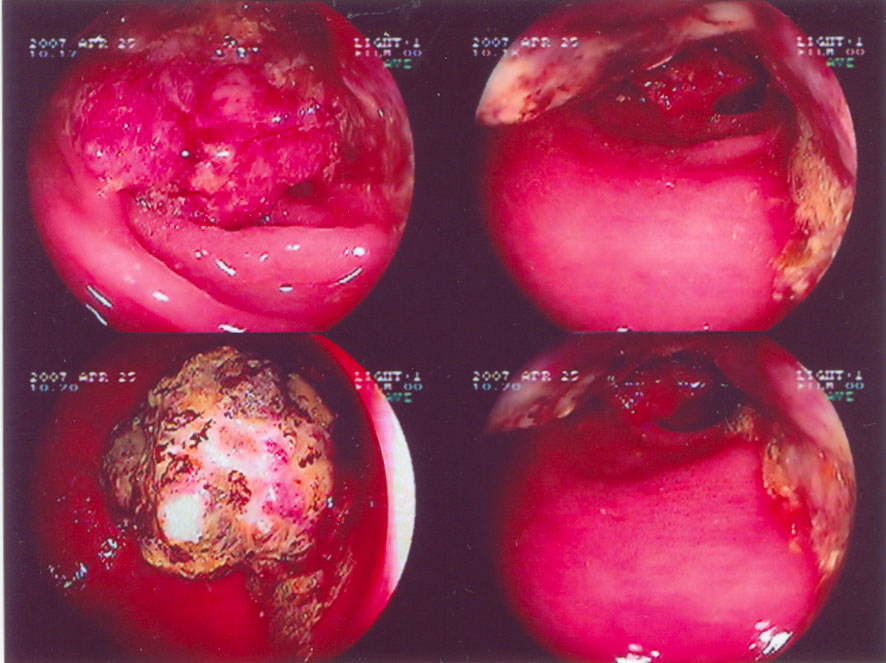
Colonoscopy showed a fungating tumour at 12-15 cm from the anal verge. A biopsy confirmed the clinical diagnosis of an infiltrating, focally necrotizing moderately differentiated rectal adenocarcinoma.
I had a chat with Tim’s children and daughter-in-law and got know more about what was going on. Tim’s wife has died many years ago and Tim is, up to this day, staying alone. He refused to move in and stay with any of his nine grown-up children prefering to live by himself, in spite of his age. He has this “independent” streak in him. With this, we can understand why his children suspected that Tim was not taking the herbs properly after some years of an apparent cure.
The following are excerpts of our conversation on 25 April 2007 which could shed some light as to what had gone wrong.
Chris: Earlier he was talking the herbs regularly?
Daughter-in-law: Regular and after so many years he was already okay.
Chris: It has been 7 years … 2000 until now. He was taking Capsule A, GI tea and C-tea. Later you said he did not take the teas any more and was only on Capsule A. And you said he was alright.
Son: For his colon, I think the last few years I brought him for a check up. It was all clear. I also took his stools for examination. They said there was nothing. Everything was okay.
Chris: This was done in a hospital?
Son: Yes, Metro.
Chris: So this means that 3 or 4 years ago, he was still okay.
Son: He passed out blood in his stools. At first we thought it was piles.
Daughter-in-law: This was already one year.
Son: We went to this surgeon (in the hospital) and he also said it was piles.
Chris: Cannot be, cannot be. Because has a background of colon cancer.
Daughter: Exactly, he has a history of colon cancer!
Chris: Let me explain. Colon cancer cannot go away. There is no such thing as curing cancer. Even when the tumour was cut off, the cancer can still come back. In your father’s case the tumour was still left in there.
Daughter-in-law: At the later stage, he started to take less herbs.
Chris: Oh, the dosage was reduced from 2 capsules three times a day to – what did he do?
Son: One capsule per day!
Chris: He might as well not take the herbs at all.
Son: He (my father) told me: I am already healthy. Why waste money?
Chris: He was not taking the herbs properly. There is no two way about it. The cancer will come back. Okay what do we do now? First I want to ask you: Is he prepared to take herbs again?
Son: Yes. He is prepared to take anything now.
Daughter: Ha, ha, papa is well behaved now – well behaved now!
Chris: Before he was stubborn?
Son: Yes, very, very stubborn.
On 15 January 2009, Tim’s daughter came to our centre to collect more herbs for her father, meaning Tim is still doing fine. Lest we forget, Tim is now 95 years old!
Comments: This is an unbelievable case of healing for the following reasons:
Looking at the photographs of the rectal lesions we know that Tim’s cancer was very serious indeed.
In spite of declining medical intervention, Tim is still alive – more than 9 years now. How could that be? Any doctor would tell us without surgery, the tumour would have grown big and blocked the rectal passage. His colon or rectum might just burst, etc., etc., etc. But this did not happen!
Even more amazing – Tim had not been taking the herbs properly. At the April 2007 meeting with his children, I stressed the importance of taking the herbs properly. After all from 2000 to 2007 his problem was still under control. I honestly do not know if my advice was taken seriously or not. Whatever it is, from 2007 up to this day, Tim seemed to have recovered.
I am aware that this report is very brief. I wish I could present you with more evidence but that is all I have in our file.
Let me pose a few questions for you to ponder:
a) All too often we are told that if there is a tumour in our colon, we must get it out as quickly as possible. This advice seems logical and convincing. But in this case – do you think this logic is applicable, given that Tim was already 86 when he was first diagnosed?
b) If Tim were to have a surgery, what then would be the next requirement? Chemotherapy of course!
c) What could have happened to such a patient like Tim if he had surgery? Would be able to live 10 years after that? Can Tim cope with the colostomy bag – fitted after his surgery – by himself? His life would have been difficult having to live with the stoma through out his life.
d) After surgery, if Tim was subjected to chemotherapy, what do you think such drastic treatment would do to a person of 86?
e) With such a tumour growth, it is amazing that there is no serious liver metastasis. Why is that so?
f) Over the years, we have come across numerous cases of failed colorectal cancer. Patients died a few years later, after having undergone surgery, chemotherapy (and even radiotherapy). Why is it so?
g) Let me quote just one example. Tony Snow was the press secretary of George W. Bush, then President of the USA. In my writing earlier: Case Report 7: Ten Questions About The World’s Most Well Fought Battle Against Colon Cancer, I wrote:
I would imagine that the most powerful man on earth (the President) would be able to do something great to help his beloved staff and fellowman who was in great distress. I believe that Snow would have gotten the best – the best advice, the best doctor, the best drugs and the best hospital – for him to fight his war against cancer. So, to me, this battle against cancer would probably be the most well fought battle ever waged inAmerica – the world’s most powerful nation.
Snow as diagnosed with colon cancer in 2005. He underwent surgery, 6 months of chemotherapy and was well. Then 2 years later cancer recurred and Snow had surgery again in April 2007 followed by more chemotherapy. In July 2008 Snow died about 3 years after his diagnosis.
(Initially medical expert said): This is a very treatable condition. Anyone who looks at this as a death sentence is wrong. What does the life’s reality tell us? Snow died – dead wrong or dead right?
What do you think is the real cause of his death? The recurrent tumour in the abdomen has been taken out. Only some cancer could have been left in his liver. Could this kill Snow? Or was it the treatments used to treat the cancer that killed him?
(Another expert said): This is a treatable disease. What do you think of such a statement? Surely, any disease is treatable but can it ever be cured? Treatable does not mean curable at all.
In June 2007 we received an email from Fil (not real name) from France. He wrote to seek help for his 77-year-old father, Jak (note real name) who had been diagnosed with colon cancer. Five years before his cancer diagnosis the doctor had told Jak that something was not right with his brain. He very often suffered vertigo.
Jak’s problem started with severe bleeding while in the toilet. He was immediately hospitalized and on 1 June 2007 underwent an operation to remove part of his sigmoid colon. In his email, Fil wrote:Today, he is in very poor condition. He tries to get up but walking is very difficult. He needs help. He prefers staying in bed. He has very bad appetite and little hope of healing. He does not want to undergo chemotherapy or radiotherapy. He lost muscles mass and will need training. He wants to live – 5 years more in order to see his little son reach the age of 16.
Jak’s conditions were as follows:
Pain: in pain stomach region. His condition is very poor. He is not strong enough to be on his legs.
Can you sleep? Yes, sleeping is quite okay.
Do you feel tired? Yes, very tired. Almost no strength.
How often is your bowel movement? Difficult and constipated.
How is your appetite? Very little.
Do you have difficulty breathing? No
On 23 June 07, Fil wrote: A few days after the surgery the cancer specialist met my father and said he was far too weak to receive chemotherapy. Last Monday, she came back and found him in a better condition but still wondered if he would be a “good candidate” to follow the treatment. She spoke to me over the phone.
Concerning chemotherapy – to do or not to do, she quoted these figures: WITHOUT chemo, 50% chance to be alive for 5 years and WITH chemo, 65 %. She is scheduled to meet my father for the third time on 3 July. I don’t know what position she will take. However, the doctors in charge of him try to influence the decision by explaining that the operation was well done and it will be more secured to undergo chemotherapy. As a matter of fact, my father seems not ready to go through another bad experience.
On 26 June 07, Fil wrote again: I am working every day on my father’s healing. The last weekend, I had a talk with my father and mother. My father will get back home next Thursday. We made a concrete decision: No chemo, my father will follow your advice on diet and he will take your herbs. Beside that, I am now getting more and more involved in cancer field. Are you ready to work with me and be my coach, teacher, guide, all of that?
This was my reply to Fil: Thanks for your email. Yes, you are indeed an amazing person who wants to learn. Don’t worry I am here to help you and guide you. No problem at all Fil. I like your spirit and your enthusiasm to help your father … wonderful. Sure, if you learn enough and believe in what I do ….help others too.
On 3 July 07, Fil wrote: Chris, I got a phone call of my mother. My father had pains in the stomach region this morning. What do you think about this?
My reply: He started taking herbs on Friday afternoon, which means 4 days of treatment. Generally in the first week, patients may find “life” a bit
difficult … due to the healing crisis. Go into my website and read about the CA Therapy and the healing crisis. I don’t worry too much.
Fil submitted a list of drugs that the doctors prescribed to his father:
1. LOVENOX : treatment against thrombosis.
2. INEXIUM : treatment against gastro-esophagus reflux.
3. AMLOR : against high blood pressure.
4. TAHOR : against cholesterol.
5. OMIX : against prostate hypertrophy.
6. PLAVIX: for patients with recent heart attack, recent stroke, or poor circulation in the legs, known as peripheral arterial disease (PAD).
7. DIANTALVIC: pain (paracétamol + dextropropoxyphène).
8. NUTRICREMAL: nutriment additive with protein vanilia, chocolate.
9. TARDYFERON: mineral additives.
10. FORLAX: for constipation.
11. EDUCTYL NORMACOL: for constipation.
12. Nureflex, Néomercazole.
I wrote him: I counted there are 11 drugs that were prescribed. You mean you father had been feeding on these drugs? Did the doctor tell you what these drugs are for? Find out using the net and let me know. Different countries have different names for the same drugs … this makes things more confused for people. The more confused people are the better… so they become experts!
Fil wrote on 9 July 2007: I visited my father two times this weekend:
A few weeks ago in the hospital, he said that he would like to live 5 years more just to see his little son reach the age of 16.
We found him in a very good shape, very active, asking questions, talking about different subjects, arguing as he always did before. He showed us that he was even able to walk some steps without the walking stick.
I told him: Whoa!! You are very ok, today!! Much better!!
He started to answer that he was still not so good and so on. It was like he could NOT believe he was better. Even more, he refuses to accept the idea, etc…
On Sunday morning, I came alone to visit my parents. It was a different story. My father was in a different mood, no power, face down, almost like he “will not finish the day”. You can see this “up and down attitude”.
What is your opinion about this kind of patient who doesn’t believe they can heal themselves? We have to fight two or three times harder for such person than a person who is positive!!
Not only that, he mismatches any positive comments. It works better on him to say: “You are not GOOD today!! You feel sick don’t you? You won’t succeed in your healing!! After such comments, he will look at you and smile a little bit. So, what can we do?
On 13 July 2007, Fil wrote: The main news about my father. His doctor got the results of his blood analysis today. He called my parents and said:
Several markers are much better!! I don’t understand
Did I give special medicine to your husband?
My mother answered: No, I don’t think so.
Chris, I think we are on the right track! I shall continue to work on the mental blocks of my father and maybe I will be able to find the solutions.
On 19 July 2007 Fil wrote: My father has improved a lot in his “movement” and he is able to walk without a walking stick. However, he still has pains in the stomach area. They did a scope and a scan on him. It was this afternoon and my mother just read me the report over the phone:
hypertrophy of the pancreatic head with necrotic centre with blockage of the mesenteric vein.
cephalic cellular function or inflammation.
On 23 July 07, Fil wrote: This weekend, a daughter of my parent’s friends came to visit my father. She is 47 and got her third cancer: colon, liver and lung. She is undergoing her 3rd chemo. She said: chemo doesn’t work! We talk about alternative therapy. That’s why people go toward herbs and alternative medicines.
On 1 Aug 07, Fil wrote: Sorry to bother you again, but I wanted to share with you my feelings. Indeed, I want to let you know how difficult it is for me to handle the healing of my father and how important it is for me to get support from yourself and Dave (not real name). I need to fight against the doctor, language barrier and comprehension of a new field and the negative thinking of my father. Fortunately, my mother helps a lot in this experience. I hope I don’t bother you too much with my questions, misunderstanding and some panic situations and so on.
On 7 August 07, Fil wrote: I want to share the healing of my father with everyone.
Please, see these 2 videos – before and after herbs. .
29 November 2007, Fil wrote: For my father, some news came after the check up in November.
Blood analysis: the markers are all okay so far.
However, after the last scan, doctors claimed the cancer might have spread out to around the abdomen and lung area (nodules, nodes, etc…)
His doctor said that it is time to start chemo; he did not want to recognize the good effects of herbs because it is an alternative treatment.
He told me: Chemo + Alternative Treatment could be the least decision to make.
My father is ready to choose a new doctor – one with more open mind than this one.
13 June 08, Fil wrote: I got a question from my dad about quantity of teas he has to drink every day. As you know, he had to change his eating habits. It wasn’t that easy for a 77-year-old. In addition, drinking the teas every day make him go to the toilets every 2 hours. Therefore, he has been often asking me: Can I reduce the quantity of drinking in order to avoid urinating less often? I answer to him many times was: “You have to drink teas if you want to survive” and so on. At that point, I believe he really gets tired of going to urinate so often. So, I am asking your opinion. Please, tell me if he can reduce the quantity of liquid per day. Thank you in advance.
14 Jan 2009 Fil wrote: Dear Chris, Happy New Year 2009. Please, find below the links to two short videos taken during Christmas 2008.
Hope these will help you to illustrate my father’s story. Let me know if I can do more. And again best wishes!
Comments: It has been our pleasure to help Fil and his father, Jak. And we are indeed glad that so far his condition has been good despite of not undergoing chemotherapy. The question that patients may wish to note is: According to the doctor, for a patient like Jak, statistics show that there is a 65% of surviving five years with chemo. Without chemo 5-year survival is 50%. In other words, the benefit of chemotherapy is only 15%.
I wonder how many patients would agree to undergo chemotherapy if they are clearly told that the treatment can only increase survival by 15%. Most patients undergo chemotherapy with the full expectation that they will be 100% cured. Or if not a 100%, at least have a much higher chance than 15%.
The number quoted by the French doctor is far cry from what I have heard here. Here, they talk of 95% or 50% chance and without chemotherapy the patients will die. Let us be really clear: there is no statistical data to show that without chemotherapy, colon cancer patients die.
Before Fil wrote us, there was another person in France (Dave) who had undergone surgery and chemotherapy for his colon cancer. Dave came to Penang and decided to try our herbs. We taught him how to boil the herbs, etc. etc. So when Fil wrote us, we found it easier to ask Dave to help explain everything to Fil. Fil’s father continues to take the herbs to this day while Dave dropped out after about three months. He opted for more surgery and more chemotherapy and in early 2009 we received news that Dave had died.
The rationale of chemotherapy, according to the French doctor is to act as a security blanket. There is a strong assumption that chemotherapy can help ensure a higher chance of survival. But what if after chemotherapy patients die? Does this ever happen? Surely it does happen more often than any one care to admit.
On 17 January 2009, Fil replied our questions posed to him:
a) About your father’s treatment: Did he receive any chemo at all? No chemo at all because we just refuse the treatment.
b) The doctor suggested chemo? Why? The doctor said that it is a kind of security not to have the cancer coming back. They even fixed on him a chemo port close to the right shoulder.
c) How is his health condition now compared to before his cancer? Pretty good condition in respect to his age.
d) Did he go back to see his doctor of medical check up? Yes, every 3 months right after the operation and now every 6 months.
e) He was taking the medications for hypertension, prostrate, pain, cholesterol, etc. Is he still on all those drugs? You said he suffered vertigo very often— what happen now? Same? Medication for memory, prostate, stomach and pain. That’s it ! My father has had vertigo for 20 years, it is the same not more.
f) Generally after patients take our herbs, some of these problems disappear — what happen in your father’s case? Rather better condition.
g ) It is one and a half years after his cancer operation – what is his attitude now?
Is he confident about his future? He is pretty confident.
h) When he first started the herbs, did he ever believe it is going to work for him? Frankly not because of his negative attitude and he always has doubts in his mind. My mother and I worked hard to convince him. It was a long process day after day.
i) From the view of your mother, what does she think about his healing? She thinks it is a pretty good situation compared to people who have had cancer and chemo.
j) From your view as a son, what have you to say about this healing? I think that it is really amazing to achieve this healing and I have to tell you that I now become a vegetarian! You can have an idea of my conviction and I even would like to help other people. It is not an easy job, as you know much more than any body else in this world.
k) Do you think you would travel the same road again if you were to do it all over again? EXACTLY THE SAME.
On 27 February 2009, we received an e-mail from Fil
Just few words to share with you:
1. The 47 year-old woman (daughter of my parent’s friends) mentioned above suddenly died last week. She had surgery, chemotherapy and radiotherapy many times during more than 12 years of her disease. I could not convince her to try herbs or even to change a little bit about her diet. I am sad about that and at the same time I consider that I have done my job of “knowledge transmission” even if I know very little about this subject.
2. My dad saw the oncologist last Tuesday. She found him in a very good condition and his cancer markers are okay. They plan to do a colonoscopy in 6 months.
Like at each meeting, she repeated the same words to my parents: Indeed, I wasn’t enthusiastic to start chemo after your surgery because you were very weak at that time! At the same time no words said about what my father did – alternative treatment, nutrition or what ever!
I just can not believe how these doctors can behave like hypocrites. I had to fight against this lady doctor to keep my dad out of the hospital in July 2007. Please, tell all your patients not to give up when facing such powerful medical people! Anyone has the choice to decide to suffer or to continue his life peacefully till the end.
Thanks Fil for your co-operation and willingness to share!
UPDATE: 4 September 2009
My father is doing well. He has very good appetite even too much from my point of view but as you know, old people don’t want to give up foods. However, I suppose he quit eating meat, milk products, eggs from the beginning of the herbs treatment in July 2007.
UPDATE:7 January 2011
Hi Chris,
Happy new year to you and yours. We haven’t been in contact for a while. I just wanted to give some news of my dad. He just came from his oncologist appointment.
She just said everything is Okay, next medical check in 1 year! No question about herbs or whatever.
He is running to 81 this spring ! After his colon cancer in 2007.
Should I remind that he got surgery but no chemo. Thanks to the herbs and your advice for vegetarian diet.
Warmest regards.
Update: 18 June 2013
Chris,
My dad dead a few days ago. He wasn’t able to swallow food more than one month ago, because of alzeimer but not because of cancer.
He has gone in peace and love without any suffer in his armchair. It was THE most important thing to me.
Dass is a 46-year old male. He had problems of irregular bowel movements. Sometimes he had to empty his bowels twice a day, sometimes once every two to three days. The stools were often hard and caused pains. Eventually, he lost his appetite. The food seemed unable to go down the stomach, and even eating a bit of food made him feel full.
Dass had dragged on with this problem for over four years. But the last year was more serious – he suffered pains and the stools were black and bloodstained. Then, one night he had severe stomach pain. He saw a GP who took many X-rays of the abdomen. The doctor advised him to see a specialist immediately. An operation was done the following day.
The surgeon removed a tennis-ball-sized tumor from his colon. After that he underwent chemotherapy. Everything was alright after the treatment. He continued with his routine monthly check-up.
In December 1997, Dass suffered pains again in the abdomen and he coughed non-stop. The doctor told Dass that he had a recurrent cancer. He underwent a second operation. The doctor then told Dass to go for another session of chemotherapy but he refused. He came to CA Care for herbs in January 1998 and was started on herbs.
After one week on the herbs, his appetite improved and he felt better. And up to this day (March 2009), i.e., 11 years on the herbs, Dass is still in good health and doing well. He retired from being a school gardener and now become a driving school instructor.
Comment
Although Dass is not an educated man he is wise and has a great deal of common sense. In the first instance, the chemo-treatment did not cure Dass at all. Many people who would still go for more and more chemotherapy after a recurrence. They consider chemotherapy as a safer path to take.
When Dass suffered a recurrence after just completing his chemotherapy he took a different path. He knew chemotherapy could not help him.
Johnny, 46-years old, was diagnosed with Stage 2B, colon cancer. He underwent a surgery in a private hospital in January 2006. Unfortunately, things did not work out well. Nine days later, Johnny had severe hiccups and he had to undergo a corrective surgery. According to the surgeon, his intestines had to be rearranged. After the second surgery, Johnny was unable to move his bowels for several days and the surgeon suggested a third operation (three operations within a month?). Johnny declined further surgery. He said: I am going to discharge myself and go to the General Hospital. Fortunately, everything worked out well this time and Johnny did not need a third surgery. Subsequently he was discharged from the hospital on 14 February 2006. Johnny was asked to go for chemotherapy. But he declined further medical treatment. He came to CA Care in March 2006, and was started on herbs. It has been more than three years and Johnny remains well.
In October 2006 we talked with Johnny about his cancer experience. The following are excerpts of our conversation.
Q: Are you okay?
A: I am getting better and better. So far I have no complaints. I went to see an oncologist three months after I started taking the herbs. This was the last time I went to consult a doctor. Since then I have not gone to see any more doctors. The oncologist said there was nothing wrong with me but he still insists that I go for chemotherapy. I told him I have no money. Now, I am doing fine. I work eight to ten hours each day – and seven days a week. But I am okay.
The Encounter With The Oncologist
A: My appointment was at 2 o’clock. My number was 2007. Altogether 16 patients were ahead of me. In my heart, I said to myself: I would be asked to go for chemotherapy too? My turn came. I went into the oncologist’s office. The oncologist read out my name and he asked the first question:What car are you driving? This question was followed by: What is your profession?
The oncologist then said: Your cancer is like a Mercedes, BMW, Japanese car or a local car. Your case is Stage 2. So you need to take a good medicine – like a Mercedes medicine to fight … There are many kinds of medicine. There is A – the good one; B which is not so good and C, which is an oral one. So which type do you want?
Q: He asked you to choose the drugs?
A: He asked me to confirm first that I was going to do chemotherapy. He would then tell me which type of medicine he was going to use. But, I asked him for the cost.
Q: In your discussion, did he ever say that whatever drug he is giving you is going to help you or not?
A: No, no. He just told me it was just for prevention. He said that once I got rid of my cancer, there might be some more cancer cells present in the lungs or somewhere else in the body.
Q: So, the whole idea was just for prevention?
A: Yes, and I had to go for chemotherapy.
Q: What made you decide not to have chemotherapy?
A: Because of my experiences in seeing how other people suffered – my friends A, B, C, D and my sister-in-law herself. My sister-in-law underwent chemotherapy and she died after one year and two months.
The Nurse Called And Warned Him About Herbs
A: After I came home from the cancer hospital, the oncology nurse called my home again and again. She talked to my wife. She wanted to know why I did not go for chemotherapy. She told my wife that my cancer was very dangerous and I had to do chemotherapy. My wife told her that I was taking herbs and would not do chemotherapy anymore. The nurse said this to my wife: If you take medicine from outside, it is going to be dangerous. It is not effective and this will make the cancer grow faster and spread more. My wife replied: No, my husband will not go for chemotherapy anymore. He has made up his mind on this.
Comments
Johnny, in our local slang, is a real fighting cock. That is his nature (before cancer). He does not take things lying down! He is aware of what is going on in his surroundings. He knew what had happened to his many friends who had cancer – what they did and where they ended up. When it was his turn to make a choice, Johnny chose the path that he was comfortable with. The nurse called to warn his wife that if Johnny did not go for chemotherapy, it was dangerous. Herbs are not effective and can make the cancer grow faster and spread more, the nurse warned. How does she know? Fortunately for cancer patients, this prediction of doom does not turn out to be true.
There are many reasons why Johnny decided not to undergo chemotherapy after his colon surgery.
Johnny is an observant person with a lot of commonsense. Sitting down in the waiting room, Johnny counted the number of patients who came to see the oncologist. ALL of them ended up having to undergo chemotherapy – no exception. Could this be right?
Johnny remembered the fate of his friends, including his boss who had cancer, many of them dying after undergoing chemotherapy! He was not quite ready to accept the fate that was being handed out by the oncologist – rightly or wrongly.
The consultation with the oncologist turned out to be a confrontation and this had made him even more sceptical about what the oncologist had in store for him.
Note: As of this writing – December 2010 – Johnny is doing fine. It is almost 5 years now.
Alex is a 36-year old male. He and his family enjoy eating meat and rarely eat fruits or vegetables. In May 2000, Alex suffered pains in the left side of his back and started to lose weight. He lost over 10 kilograms within two weeks. A colonoscopy done on 27 May 2000 showed a large tumour, over 37 cm. in size. Three days later, doctors diagnosed it as colon cancer, Duke B. Alex underwent an operation, a left hemicolectomy. Subsequently, he had to undergo chemotherapy once a week for a whole year. Due to the chemotherapy, he was unable to sleep, lost his appetite, felt many discomforts and was very weak. He also lost much of his red blood cells.
On 21 July 2000, Alex came to see us and started taking herbs. On 5 August 2000, Alex said he passed out well-formed stools while previously they were loose and watery. He was more energetic. As a hair stylist, he had to stand all day long at work. After taking the herbs, he was able to work for twelve hours a day without stop and without problems. Previously, he could only work for about six hours a day.
On 30 October 2000, Alex had his third cycle of chemotherapy and this time he took the Chemo-tea. He felt better and he did not suffer any side effects. Alex said that he could sleep well, while previously his sleep was disturbed. He had now changed his diet, taking only fruits, vegetables and a bit of fish. He did not take meat and dairy products. Previously, he and his family were ardent meat eaters, rarely touching vegetables and fruits. Alex had found out that he had more strength now. Again he told us that he could work from 10.30 a.m. till 10 p.m. without problems.
On 20 March 2001, Alex came and told us that he was doing very well. The doctors were surprised at his condition. No one in the hospital seemed to believe he had cancer. He looked so good and healthy. His red blood cell count was excellent. So far, Alex had completed twenty-one times of chemotherapy. That day, I took the opportunity to have a chat with Alex. This interview which took place at about 11 a.m. immediately after Alex was given his chemo-injection. Indeed, he looked well, and he was well. We talked for almost two hours. The following are excerpts of our conversation.
You just came back from the hospital after your chemo-injection. Tell us what happened?
I just had my chemotherapy before I came here. I go for chemotherapy once a week, supposed to be for fifty-two times. Each chemotherapy session lasts for about one and a half hours. The drug is administered using a drip. There’s one solution with the chemo-drug and another without. The one without the chemo-drug is dripped in first, to let the blood vessels get used to it, before the one with the drugs is added in. Before the chemotherapy, I am given an anti-nausea injection, so as to make you dizzy and unable to vomit. But you will definitely vomit! Only after half an hour are the drugs administered.
If I drink the Chemo-tea, I don’t suffer. If I don’t drink the Chemo-tea, it becomes very difficult for me; I can’t eat or sleep for a day. If I take the Chemo-tea, I burp, urinate and clear my bowels often. I feel better. Then I go back home, drink the herbal tea and lots of water. After that I will be urinating and passing my stools often, like I have diarrhoea. Then I will be alright.
So, now as soon I get home, I start working until past 10 p.m. I could even wash my car and polish it too! Right now, I have just completed my chemotherapy session. I woke up at 5.10 a.m. this morning. I took my bath and recited my prayers. The prayers took about an hour and a half. Then I took my car and drove to Penang. When I got to the hospital, the first thing to do is to get my blood count done. This is to ensure that I am fit for my chemotherapy. If the blood is not high enough I can’t go for my chemotherapy.
After talking to you, I shall go home. Work, etc. and etc. Then tonight I am coming back to Penangagain. I go Tanjung Tokong to pray at 9 p.m. So, every week, that is my routine.
OK, this is you and the herbs. Did you see other patients who didn’t take the herbs?
Those who didn’t take the herbs did not look good. I saw quite a lot of them who were very weak. They were so surprised that I could still work. They told me that they could not even wake up and do anything, nor could they sleep. If I didn’t take the herbs, I would not be able to go on!
After four times within four weeks, one person’s hands and veins just turned dark or black. I saw one patient with his veins all black. Wah, it was terrible. He was so shriveled up. His blood level was low, ten point something. When he started, his blood count was 13.75. After four times, it went down to 10.5.
I also had my bone marrow checked. The doctor said: Everything good! Normal. Everything is good! I also went to a blood specialist and he advised me to continue my chemotherapy. I was doing very well.
Did your veins ever turn black?
No, no. They turned a slightly darker shade of green at one point. After that, the colour was back to normal. It wasn’t like that for other people who were not on herbs. They had lines of black running through their arms. Very black lines.
Do you think the herbs helped you at all?
I went for four or five chemotherapy sessions before I started taking the Chemo-tea. It was very bad. I cried and I couldn’t eat. I only started taking the Chemo-tea after the fourth or fifth session.
Oh, you started taking Chemo-tea after the fourth or fifth session How did you feel before you started taking the Chemo-tea?
It felt very difficult. I was nauseous and couldn’t eat. I couldn’t sleep, for a whole night, you know. I could not work. This effect lasted until the following morning, sometimes extending into another whole day.
Wow! It was that bad? After taking the Chemo- tea, how did you feel?
After taking the Chemo-tea, I did not suffer from all these effects anymore. See, I just had my chemotherapy two hours ago. Without taking this Chemo-tea, I would not be able to come here for this interview. I would simply go back home, straight into the bedroom and lie down. But I would still not be able to sleep. For twenty-four hours, I will not be to move nor sleep. It will be very bad, and very painful. Without the help of Chemo-tea, I would just lie on the deck chair, unable to sleep or do anything. With the Chemo-tea, I’d be able to wake up, have breakfast and all, wash the car, polish it and still come back here later tonight! Every Tuesday is always like this. It is my routine.
So are you sure that the Chemo-tea helps?
It would be very difficult without it. True, without the Chemo-tea, it would be very difficult. However much I eat, I would still vomit. And the food couldn’t really go down. Now, I’m hungry. Once I get home, I will eat, bathe, change my clothes and go to work. Just now before coming here, I had a loaf of bread. See, no problems.
Do you take care of your diet?
Yes. I am very careful of what I eat. I dare not eat outside food anymore. The risk is too high. I can’t play the fool.
Before you had cancer, tell us about your dietary habits.
When I was a meat eater, I used to feel lethargic and my body ached. On my non-working days I woke up late, around noon. Since being on the herbs, I wake up early, between 7 a.m. – 8 a.m. By that time I would not be able to sleep already, I had to wake up. I become alert by that time. I couldn’t sleep even if I wanted to. I also sleep easily and I slept very well, too.
When I finish work, I go back home and pray for a while. By then it is around 10 or 11 p.m. Then I go to sleep. It’s now so easy to sleep. I wake up in the same position I went to bed in. Before I had cancer, I barely ate any fruits or vegetables. All that I ate was just meat. All my meals consisted mainly of chicken, beef, pork, etc. I did not eat vegetables at all. Ever since I came to see you and started taking herbs, I stopped eating meat.
Your diet currently consists of fruits and vegetables. How do you feel now compared to the time when you were an ardent meat eater?
I feel more energetic and stronger on the fruit and vegetable diet. No meat no strength is a fallacy. I was feeling sleepy most of the time when I was taking meat.
Now my family members have changed their diet. My wife is very happy as the new diet makes her feel lighter. Even my children don’t eat meat anymore. So also my mother. Ever since my wife and children eat like I do, they have not fallen sick – it has been a year already. Before this, when they were on the meat diet, they fell sick very often. Taking herbs alone is not enough, I must take care of my diet too. Now I do not like to eat out. The food does not taste or smell right anymore. The family complains about outside food: Why is it so salty? Why is it so sweet? Previously, outside food smelled great to me. Even my children don’t really want to eat out now.
Comments
I see a lot of trust, confidence and enthusiasm in Alex whenever he comes to the Centre. It is indeed a great pleasure, and very rewarding, to help a person like him. I feel the healing energy in him. His mental attitude is indeed very positive too. There is no doubt that Alex had benefited tremendously by taking the herbs.
Alex and his family were meat eaters. Now, all of them in the house have turned vegetarian – no more meat! And their health seemed to have improved by that switch of diet. Previously, the children needed to see the doctors very often. Now, there is no need for the frequent visits any more. Initially, Alex’s mother did not like the idea of only taking vegetables because according to her: No meat, no strength.
Let me also emphasise that healing is not only about taking drugs or herbs. This is just a minor part of the cancer remedy. You need to change your diet, your lifestyle and your mental attitude – be positive.
For almost two years, July 2000 to 27 March 2002, Alex was taking the herbs diligently. After that, he disappeared.
He resurfaced on 21 November 2002. It was a great shock for us to see his physical condition. He was thin and looked very sick. The cancer had spread to his liver.
We requested him to tell us frankly what had happened. From March 2002 till November 2002, he stopped taking the herbs but he still continued with his healthy diet. He concentrated on his daily prayers and continued with his meditation. He believed that in life there is always a cause and effect. Therefore, his cancer may be due to a cause or past bad karma. In order to redeem thisevil, he started to do good works by freeing fishes, birds, etc., that are in captivity. He felt good. To him, there was no further need to take any more herbs. After all, spiritual cleansing was all that is needed to liberate him. He took a holiday trip to Bangkok. Everything was fine.
Came September 2002, after his return from Bangkok, he did not feel well anymore. He became tired and felt something growing in his abdomen. His health deteriorated very fast. He could not eat. He vomited and could not urinate. He had pains. He started to take herbs again. He felt better after two weeks. There was less pains but he was still not able to sleep.
He went to see a doctor who told him to go for chemotherapy. He called us and asked for advice. He said he wanted to undergo this treatment as a last resort. We told him we respected his decision. Go ahead and do what you think is best for you. Fortunately or unfortunately, he came down with a fever and the chemo-treatment had to be postponed. On 10 January 2003, he died. There was no time for chemotherapy.
On 29 July 2001, 9.30 p.m., I was on the phone talking to a lady from England. Her Malaysian-born sister had colon cancer sometime in March 1999. She underwent an operation. The doctor in UK said that since the cancer was at its early stage (Duke’s 2), there was no need for her to do any chemotherapy. Not satisfied, she came to Singapore to see another oncologist. Because she was still young (46 years old) the oncologist recommended chemotherapy. This would be safer for her – a kind of insurance policy. So she underwent six courses of chemotherapy in Singapore.
In March 2000, a scan showed a 3 cm mass in the liver. She again came to Singapore. Further investigations by doctors in Singapore showed that there was also a 1 cm mass in the lung. The doctors recommended surgery for the liver and /or the lung. However, when the doctors opened up the abdomen, they saw numerous nodules in the peritoneum. The surgery on the liver-lung was abandoned. The abdomen was closed back. She was again given eight courses of chemotherapy.
After the fourth chemotherapy the tumours decreased in size but subsequent chemotherapy did not bring about any further improvements. In short, chemotherapy did not achieve its
intended purpose. She felt hopeless and decided to quit and return to England.
She started on Gerson Therapy in Liverpool for five months. During that period the tumours had grown to twice their sizes. She then opted to participate in a clinical trial at one of London’s top hospitals. She was again subjected to another eight courses of chemotherapy.
Her sister called on 9 July 2001. The purpose was to seek our help since there seemed to be no other avenues left. Her condition as of 29 July 2001 was rather bad. She had pains. She was tired all the time. She was a wreck emotionally. She needed to take sleeping pills.
Comments
I have often encountered similar cases. Many patients have come asking for help after everything else has failed. Unfortunately they have little faith and belief in what I am doing in the first place. So, sometimes there is nothing much we can do. Their unbelieving attitude prevents them from seeking a new path to their healing.
Indeed, the buying of insurance policy for cancer seems to be a popular idea and sells well indeed. People are naïve because they have not read enough to understand what is happening. I have come to a simple conclusion; it is very difficult to deal with such so-called educated people. Their unbelieving and sceptical personality becomes the main obstacle. It is easier to handle the illness than an unbeliever. In another case report, I wrote about Dass. Both patients are around the same age and both have Stage 2 colon cancer. The main difference is that Dass is probably is less educated than this lady in England. In terms of healing, Dass, however, has more guts! He learnt his lesson fast.
It was some years ago that I last spoke to Juni, a lawyer friend. Then one fine morning in January 2005, I had a surprised call from J. As we spoke she reminded me that her uncle was doing so well on our herbs. To be honest, I have totally forgotten about this case. After the conversation, I decided to write to Bob, the patient’s son to seek for more clarification. The patient is fromSingapore. It was indeed wonderful that Bob was very co-operative and took time to reply to my enquiries. The following is our e-mail communication.
Dear Bob, for my record, may I ask you a few questions:
When did your dad has his cancer? What was his age then?
Bob: Sometime in the end of June 1997. He was then 67 years old.
What cancer? Colon or rectum?
Colon cancer.
He had an operation?
He had the operation in the Singapore General Hospital on 4 July 1997.
After the surgery, did he do any chemotherapy or radiotherapy or both?
He did not do chemotherapy or radiotherapy as advised by myself after reading your book.
After he had the operation, what did the doctor say about the stage of the cancer?
According to him, it was in the early mid-stage. Luckily the cancer was detected early.
Was the cancer confined to the colon or has it spread to any other organs? The cancer was confined to the colon although there was a spot in the left lung. Luckily the cancer did not spread to other organs.
Did the doctor ask him to go for chemotherapy or radiotherapy?
The doctor asked him to go for both therapies but I have discussed with my dad and we decided against it because he was rather weak.
I assume that when he declined all medical treatments, you (not your dad?) came to see me in Penang? Sorry, I can’t remember this case.
We did not get to see you in Penang because my dad was sick. We communicated by faxes and telephones most of the time. My aunt (J, the lawyer above) was the main coordinator during this time.
When did he start taking the herbs?
Yes! He took those herbs that were prescribed by you prior to the operation.
Was he taking anything or doing anything else besides my herbs?
No other medications or herbs were taken.
How is he now?
My father is in good health as he has changed his lifestyle. Walks regularly and practices careful food consumption.
Comments
It has been almost eight years, since Bob’s dad was diagnosed with colon cancer. He was on herbs and changed his lifestyle and diet. It was indeed worth all the efforts. I would not venture to say that Bob’s father took a calculated risk (gamble some may want to say). This is because it has never been a gamble for patients to opt for another path to healing. Or could we turn it the other way round? Could it be a gamble if one were to take the established, popular route?
WC was 58 years old when he was diagnosed with rectum cancer. He had a surgery on 26 December 1995. It was a Duke’s Stage C. Subsequently, he underwent radiotherapy and chemotherapy – a total of 48 sessions of treatment.
Barely a year later, October 1996, he suffered a relapse and this time the growth was found in his pelvis. On 15 October 1996, he underwent another operation. Due to the operation, he was unable to control his urination. Urine flowed out through a tube tied to the leg. He was also unable to have erection.
He came to us on 9 May 1997 and was started on herbs. He improved and was well. We were very happy to see him doing well. He took herbs very regularly. He was one of our star patients.
Almost six years after we first saw him, i.e., 14 March 2003, his wife came with a panic look on her face. She told us that since the last few months, WC had been eating bad food. He feasted on wan than mee, sar-a-fun, lor mee, char bee hoon, etc. These are the famous forms of noodles – the hawker’s delight of Penang. As a result his health started to deteriorate two to three months afterwards. His legs swelled. He had severe back pains.
We prescribed some herbs. His condition improved. His fevers subsided and he was in less pain. The doctor suggested chemotherapy but at that time the hospital had run out of chemo-drugs, so his treatment had to be put on hold for a while. It was with sadness that in June 2003, he died.
Jack (A160), a 53-year old male, passed out watery stools. Later was diagnosed with colon cancer in June 1999. He underwent an operation in which ten inches of his colon was resected. It was a Stage 1 cancer with no metastasis. His surgeon said: You have a 20% rate of success, but you must go for chemotherapy.
He declined chemotherapy, came to see us in August 1999 and was started on herbs. Two weeks later his appetite and sleep improved tremendously. He also felt more energetic.
Jack told us this story. His surgeon who was then at the government hospital had moved to a private hospital. He now had to see another surgeon during this follow up visit. The new surgeon asked him why he did not go for chemotherapy and insisted that he do so. He told the surgeon: I am taking herbs. The surgeon replied: That is not a proven remedy.
About one and half years later, in January 2001, he had a colonoscopy. The doctor said everything was fine. On 28 March 2001 his CEA was at 0.6. Everything was alright and he had put on weight. He had gone to see his surgeon who told him: You are lucky. He reminded his doctor that he was taking herbs. The doctor made a note of this on his medical record and kept quiet.
He continued taking the herbs up to March 2003 and then stopped. He told one of our friends that he was already cured. As of this writing, November 2004, he is still doing fine. It has been more than five years since he first came to see us. He had led a normal life since the day he was diagnosed with cancer.
Lan (A822) was a 73-year old female. She was diagnosed with a Stage 3 sigmoid cancer in March 2000 and underwent an operation. Her family member came to us on 23 April 2000 and took herbs for her – Capsule A, deTox Mt. Guava and GI tea. As I was reviewing and writing this paper, her daughter came to the centre. She told us that her mother has been taking the herbs regularly since April 2000. It has been more than four years now and she was doing very well.
Her mother went for a routine check up every six months and everything was alright. She confirmed that her mother never had any chemotherapy and radiotherapy. Before she left she said this:Actually my nephew is a medical professor. Then I asked: Oh, was he the heart specialist who faxed and asked me to give his mother herbs because he would not want her to go for chemotherapy?She replied: No. He is actually a gastrointestinal specialist!
Note: According to our record, the last time her daughter came to collect herbs from us was June 2008 – that is, she had been taking the herbs for 8 years.

 CANCER STORY
You must be logged in to post a comment.