What really matters at the end of life

At the end of our lives, what do we most wish for? For many, it’s simply comfort, respect, love.

BJ Miller is a palliative care physician at Zen Hospice Project. Listen to what he has to say.

Gist of what Dr Miller said:

  • The American health care system has more than its fair share of dysfunction … I’m a physician … a hospice and palliative medicine doc, so I’ve seen care from both sides. And believe me: almost everyone who goes into healthcare really means well — truly. But we who work in it are also unwitting agents for a system that too often does not serve.
  • Healthcare was designed with diseases, not people, at its center. Which is to say … it was badly designed. And nowhere are the effects of bad design more heartbreaking … than at the end of life.
  • For most people, the scariest thing about death isn’t being dead, it’s dying, suffering.
  • It can be very helpful to tease out suffering which is necessary as it is, from suffering we can change.
  • The former is a natural, essential part of life, part of the deal, and to this we are called to make space, adjust, grow. It can be really good to realize forces larger than ourselves. They bring proportionality, like a cosmic right-sizing.
  • After my limbs were gone, that loss, for example, became fact, fixed — necessarily part of my life, and I learned that I could no more reject this fact than reject myself. It took me a while, but I learned it eventually.
  • Another great thing about necessary suffering is that it is the very thing that unites caregiver and care receiver — human beings. This, we are finally realizing, is where healing happens. Yes, compassion — suffering together.
  • On the other hand, so much of the suffering is unnecessary, invented. It serves no good purpose. But the good news is, since this brand of suffering is made up … we can change it.
  • How we die is indeed something we can affect. Making the system sensitive to this fundamental distinction between necessary and unnecessary suffering … our role as caregivers, as people who care, is to relieve suffering — not add to the pile.
  • Palliative care — a very important field but poorly understood — it is not limited to end of life care. It is not limited to hospice. It’s simply about comfort and living well at any stage. So please know that you don’t have to be dying anytime soon to benefit from palliative care.
  • So much of what we’re talking about today is a shift in perspective. Perspective … turning anguish into a flower.
  • After my accident, when I went back to college, I changed my major to art history. Studying visual art, I figured I’d learn something about how to see — a really potent lesson for a kid who couldn’t change so much of what he was seeing.
  • In my work over the years, I’ve known many people who were ready to go, ready to die. Not because they had found some final peace or transcendence, but because they were so repulsed by what their lives had become — in a word, cut off, or ugly.
  • We know, from research what’s most important to people who are closer to death: comfort; feeling unburdened and unburdening to those they love; existential peace; and a sense of wonderment and spirituality.
  • We need to … set our sights on well-being, so that life and health and healthcare can become about making life more wonderful, rather than just less horrible.
  • I am asking that we make space — physical, psychic room, to allow life to play itself all the way out — aging and dying can become a process of crescendo through to the end. We can’t solve for death.

Comments

We are indeed fortunate to have a medical doctor to share his thoughts about death and dying. Many terminally ill cancer patients come to us hoping to find a “miracle” — hoping us to “cure” their cancer. Don’t be misled, we cannot cure your cancer! To make your life a bit better, may be. As Dr. Miller said, our role as caregivers, as people who care, is to relieve suffering — not add to the pile. Not to add more  man-made misery to the unnecessary suffering.

We always tell patients who come to us:

Be committed to your healing, change your lifestyle and diet and take the herbs. Go home and find peace with your Creator. If you can eat, can sleep, can move about and have no pain — then be grateful for what you are. When it is time to go, “go home” in peace. 

After hearing these words, gladly some patients fully agree with us. Perhaps, for some, the healing process starts if they realise and learn to “accept” the reality of the situation they are in.

TN was a 65-year old lady with lung cancer that had spread to her bones and brain. She had 5 times radiation to her spine and ribs (end of October to early November 2013), 5 times radiation to her brain (January 2015) and another 5 times radiation to her spine, hip and brain in April 2015.

In addition she took Tarceva, starting 15 November 2013 and  stopped in April 2015. The medication cost about RM 8,000 / month. She suffered dry skin and had a black spot on her nose after taking this medication (picture below).

Composite

The oncologist recommended chemotherapy since Tarceva was no longer effective. TN and her family decided not to go for chemotherapy as recommended by her oncologist. They came to seek our help in May 2015. She presented with constipation, breathlessness when walking, swelling of both legs and difficulty in sleeping (had to take sleeping pill). TN was prescribed some herbs and told to change her diet.

The following are two follow up e-mails from  her daughter.

Dear Dr. Chris,

My mom has taken the capsules & herbal teas for a week. Briefly here is her condition:

  1. She has regained some strength – she can walk longer.  Previously she felt breathless after 3 steps of walking.
  2. Appetite slightly improved. (Thanks to the variety of recipes from your wife’s cookbook)
  3. However she finds it difficult to speak more now due to shortness of breath.  Her speech sometimes slur.
  4. Still unable sleep well at night, feel tightness/heaviness in the chest.
  5. No constipation – she passed motion after drinking the constipation tea for three days (3 times).
  6. Stomach & feet remain bloated and swollen.

I have brought my mom to see the oncologist.  This is a follow up visit after the last radiotherapy session on 20 Apr.  The current X-Ray report is unfavourable.  She has a lot of fluid in her lung as compared to the previous X-ray. Oncologist recommended to flush out the fluid from the lung and this to be followed by pluerodesis. This is to give my mom some relief. I am quite concern of this and unsure if this will be beneficial to my mom.

Dear Dr. Chris,

My mother was discharged from hospital on Monday (25.5.15).

  1. The amount of fluids drained from her left lung is about 1.2 litres.  The fluids were mixed with blood.   We were informed by the doctor that was due to the bleeding from the tumour at her lung.
  2. In addition her left lung has also collapsed due to the fluids.  Thus, she is still experiencing shortness of breath when she walks far.
  3. From the x-ray reports, it was found that some of the bones at the spine area have became brittle (osteoporosis).  My mother was give 1 injection of XGEVA to relieve her pain.

Sadly, TN died not long after this. And this is the letter we received from her daughter.

Dear Dr. Chris,

My family and I would like to express our heartfelt thanks and appreciation for your kindness and efforts to help my beloved mother in her journey of cancer illness.

My beloved mother has passed away 2 weeks ago peacefully. I believe the herbal teas . medicinal herbs prescribed by your had helped a lot in making her illness less painful and rough.

Once again thank you for everything you did for my later beloved mother.

Best regards. Daughter of late Mdm TN.

Datukn Haji A was playing golf when he suddenly felt severe abdominal pain.  Subsequent medical check-up showed cancer in the pancreas that had spread extensively to his liver. The doctor told him to go home… no surgery or chemotherapy. Not knowing what to do, Datuk and his family flew to seek our help. Datuk told us, “I understand. The doctor indirectly told me to go home and wait to die.” He presented with severe pains. Indeed his condition was beyond “help.” Anyway, we prescribed him some herbs – at least to lessen his suffering.

The following are some e-mails that his wife wrote:

Fri, Aug 7, 2015

Dear Prof,

My husband hs been in great pain at his tummy & lower back especially in the evening & night till 4a.m. this morning.

This morning he woke at 8a.m., pain reduced.  Now after the superfood pain again. It relieves when  taking gastrovit in warm water. Thank you.

Dear Prof,

My husband’s condition is better today. Less feeling of vomiting, less pain at his tummy & able to do more exercise.  Thank you.

Dear prof,

He is in great pain now. since last night on off pain. Ok. If he can’t bear I’ll give him hospital’s pain killer. He said he will try to bear it till he can’t. He always feel good after gastrovit. Thanks Prof.

Dear prof,

Suddenly he feel much less painful. Can read newspapers. Will this pain subsides after 2 weeks?

Dear Prof,

Of course 2nd week better than 1st week physically (rashes on skin disappear,  energy level better, no vomiting, etc.) except for the pain inside which we don’t know why?

1st week pain was at the tummy. now no more at tummy and had gone to the back and at the bowel area. The pain could be sharp at times. He said, this week energy is better than last week except for the pain.I hope it is not the cancer attacking. Good night.

Dear prof,

The pain is so great he can’t lie down to sleep. Terrible. Backache. So worry. Is this normal?

Good morning Prof,

Last night  was better. This morning pinggang & bowel area not painful but lower abdomen (below pusat) pain & urine not good. Stomach & lower back skin dry. Still Hiccup. What to do? Thank you.

Dear Prof,

He is admitted to hospital. Kaki bengkak & not able to urine (now fix a tube to drain out) & sakit at pinggang & lower tummy. Stomach bloated. Doc injected pethidine.

Yes Prof.  His condition not good.

Thank you.
Sep 6, 2015 at 5:30 AM

Dear Prof & wife,

My husband passed away peacefully on 4th Sept 2015 @ 3.30am. Thank you for everything. The herbs help me a lot at this difficult time. No more discomfort at the tummy area. Thank you.

Let us end this article by highlighting a report in the mass media. Take time to reflect on this.

Survey shows nearly half Malaysian cancer patients go broke a year after diagnosed

See more at: http://www.themalaymailonline.com/malaysia/article/survey-shows-nearly-half-malaysian-cancer-patients-broke-a-year-after-diagn#sthash.rBFWg066.dpuf

A  survey was done in eight Southeast Asian countries, and in Malaysia, had followed 1,662 cancer patients in public and private hospitals through their first year following diagnosis, with 44 per cent of them at 50 years old or younger.

The Asean Costs in Oncology (Action) study by Sydney-based George Institute for Global Health made the following conclusions:

  • 44 per cent of respondents would survive the cancer with no financial catastrophe, while another 11 per cent died.
  • Around 51 per cent will be pushed into “economic hardship” after a year from diagnosis, with 49 per cent of them already used up all their personal savings, while 39 per cent of all respondents could not pay for their medication.
  • Of the respondents, 35 per cent could not pay for medical consultation fees, 22 per cent could no longer pay for their rents and mortgages, while 19 per cent of them just discontinued treatments altogether.
  • “The cost of cancer does not only affect patients, but also their families and society as a whole,” the institute’s Prof Mark Woodward said.
  • The survey found that the median age where Malaysians are diagnosed with cancer is at 52 years, and subsequently died at 59.
  • “Cancer diagnosis at stage III or IV (late stage) makes treatment more costly, less likely to succeed, and reduces chances of survival.”
  • It also found that patients become financially vulnerable from two reasons: high out-of-pocket spending on loans, debts and depletion of assets; and high treatment and medical spending.
  • The Action report said even patients in public hospitals face high out-of-pocket spending for many health services such as chemotherapy, biopsy, biomarker testing, innovative cancer treatments, and palliative care.
  • UM’s cancer epidemiologist Prof Dr Nirmala Bhoo-Pathy said the average cost for breast cancer treatment could reach up to US$15,000 (RM65,000) per year, and those earning less than US$1,100 (RM4,700) per month would have “a very difficult time” to pay for it.

Read more  Are Medical Bills Killing Patients?https://cancercaremalaysia.com/2013/04/11/are-medical-bills-killing-patients/

Question to ask: How do you want your life to end? Leave a hole in the family’s bank account? Many patients from Indonesia had to sell their houses or land before they died. You have a choice!


Ella Found CA Care After Turning Into The Wrong Road

One of our favourite questions we ask patients is: Who ask you to come here? Or, How do you know us? Over the years, we were given many interesting answers. The answers made us believe that in this Universe, we don’t live in isolation. Human beings are interconnected and things happened for a reason.

Ella, is an Australian. Many years ago she came to know about CA Care. Let her tell you what happened that day.


Ella’s mother died in the hospital. She went to pick up her ashes and the container was placed by her side as she drove home. With a heavy heart, probably saddened with her mom’s death, Ella drove into a “wrong” road instead of going straight on home.

Ella ended up at a garden centre. She did not know why she was there. Ella believed that mom is always her guardian angel. She turned to her “mom” and asked, “Are you trying to tell me something?”

Ella walked into the garden centre, eyes still filled with tears. She told Jim, the owner of the centre, that she did not why she was there in the first place. Jim asked Ella, “Are you alright? Do you have cancer?” Ella did not have cancer at that time, but she has a charity that helps cancer patients. Jim led Ella to his office and showed her our CA Care books.

That’s how Ella got to know us! Simple story but it has a lot of implications if you care to ask and reflect on this event.

  1. This happened somewhere in Melbourne, Australia — not Malaysia!
  2. Why was Jim so nice to Ella. She did not even know why she ended in Jim’s garden centre. She was not a prospective customer.
  3. How does Jim know CA Care? Jim is a Malaysian who knew Chris a long time ago. They were both from the Agricultural College.
  4. Why did Ella take the wrong turn to go home? Talking to her mom’s ashes, she asked, “Are you trying to tell me something?”
  5. For most people, the story just ends there. But Ella felt there is something to what had happened. She visited Malaysia in June 2007 and took time to meet Chris in Kuala Lumpur. From then, we kept in touch.
  6. In November 2008, we received a three-page fax from Australia with the following message:

“Here are the results of the tests. I am going in for an operation tomorrow 28 November 2008. I will call as soon as possible. Thank you so much for your support and love. Good health and lots of laughter. Love, Ella.”

  • The medical report indicated, “in the pelvis, the uterus is markedly enlarged with extensive heterogenous soft tissues measuring 7 x 10 cm in maximal diameters, entirely consistent with endometrial tumour.Conclusion: Intrauterine tumour. Poorly differentiated carcinoma favouring uterine origin. No evidence of tumour spread elsewhere.”
  • Immediately, Ella had an operation.
  • She was asked to undergo chemotherapy and radiation. Without these follow up treatments, the surgeon said she would probably have 3 months to live!
  • Ella opted for CA Care herbs and turned down further medical treatment (it is now, 2015 and Ella is doing fine. More of this later).
  1. “Mom, are you trying to tell me something?” Mother has always been a loving and caring person. Even if mom was gone, she is still Ella’s guardian angel.

“Nothing in this world happens without a reason. That we are all exactly where we are supposed to be, and that the pieces of the puzzle have a tendency to come together when you least expect it.”
 Jane Green, The Beach House

Operate Your Tongue — No thank you!

Nur is a 64-year-old Indonesian lady. Her problem started about 4 years ago (2011) when she had a small lesion in the middle of her tongue. She did nothing about it. In 2002, she consulted a doctor who did a  biopsy for suspected tongue cancer. The result did not find any malignancy and the doctor diagnosed it as “glossitis kronis dengan sicatrix” (chronic glossitis with cicantrix).

Note: Glossitis is an inflammation of the tongue that causes it to swell in size, change into different shades of red, and develop a smooth appearance on the surface. Cicatrix is a scar left by the formation of new connective tissue over a healing sore or wound.

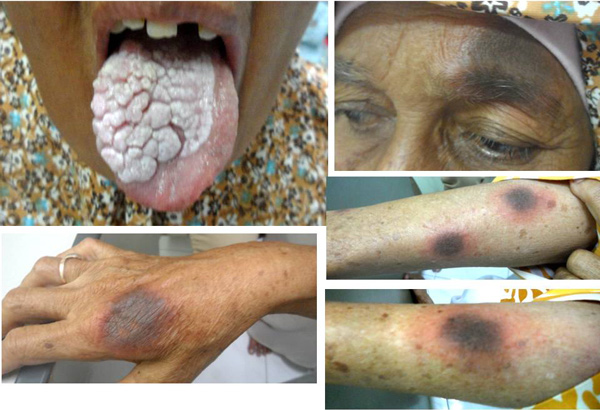
The problem became worse and almost the entire tongue was “infected”. In addition, she had purplish patches on her forehead and hands as shown below.

Composite-1

In 2015, Nur consulted a doctor in Bandung and was told to operate her tongue. Nur and her family refused and came to seek our help.

We told Nur, we were at a loss — we have not seen such a case before. So don’t expect us to cure her. But we can try since Nur did not want to go for medical treatment (note: her daughter is a nurse!).

Listen to our conversation over a period of 7 months on the herbs.


Gist of our conversation.

First visit: January 2015

Patient:  It started off as a small lump. I did not do anything about it. It was only after 2 years that the problem became serious and the lesion started to spread out over the tongue.

Daughter: There were some lumps under the tongue. We went to the doctor and was told it was a fungal infection.

P: I was given medicine to take but it was not effective.

Chris: Then the problem dragged on until 2015?

D: We went to see a doctor in Bandung and was told to operate the tongue.

P: Want to operate but I didn’t want.

C: Operation means to cut off the tongue?

D: The suggestion was to remove the top layer of the tongue and then do a transplant. We did not want to do that.

C: I have not seen such a case like this before. So I don’t know what I can do. I am not sure if it is cancerous or not. I have herbs for the tongue but for your case, I cannot say of the herbs will help you or not. If you want to try — okay. But if after taking the herbs for 2 to 3 months and you do not get better, then you should not take the herbs anymore.

D: According to the doctor in Bandung, he said it could be a slow growing cancer based on what he read from the internet of a similar case like this.

C: It is indeed an exceptional case — rare. I believe the doctor himself has not come across many cases like this.

Daughter No. 2: She is afraid and anxious.

C: Don’t be afraid. Let’s be patient. Even if you are afraid, this fear is not going to cure you.

P: I can’t sleep at night. Worried.

C: If you can’t sleep because you are afraid and worried, this will make you worse. The more you don’t sleep the worse you become. Don’t be afraid. Go home, pray and ask God to help you.

Second visit – 2 months later: March 2015

C: After taking the herbs, how do you feel?

P: I have more strength. I am not tired anymore. Before I was able to work.

C: Now, can you work? Before taking the herbs, can you work?

P: Cannot.

C: Let’s compare the day when you first came here and now, 2 months later after taking the herbs — do you feel better? More confident in what you are doing for yourself?

P: I am better! More confident.

C: Did you feel you get worse?

P: Before I was half dead (with action). Now okay.

Son: Has high spirit now!

Third visit – 7 months later: August 2015

C: Ibu, you were on the herbs for 7 months now. Do you feel better?

P: Good! I can walk far. Half (of the tongue) is already good, only the other half not yet. Before taking the herbs, almost the whole tongue was infected.

Composite-2

C: Wonderful. Any problem now?

P: With respect of the tongue, no problem at all.

C: You feel better?

P: Yes. I have more energy. Before I came here I had to go for “infusion” to boost up my energy — once or twice a week for the whole month. After that I came here.

C: After the “infusion” you were better? More energy?

P: No, still not good.

C: After taking the herbs, you have more energy. Herbs are better than infusion?

P: Ha, ha.

Comment

What is the problem with her tongue? Cancer or not cancer? We don’t know. Let the expert decide what label to give to such a problem (see note below).

What is important to us (and also the patient) is, Nur is well. Before coming to CA Care she was desperate, lost and full of anxiety. Now, with the herbs, she is better — emotionally and physically. Even her tongue has improved.

What more can we ask for?

More healing will come if we learn to cultivate a sense of gratitude in our hearts. Be grateful for what we are each day. With God’s blessing the body gradually heals itself.

Note: Two ENT specialists responded to our enquiry — that is this problem?

One ENT suggested Differential diagnosis: 1. Oral candidiasis – painful? Usually with older immunocompromised patients. 2. Range from Leukoplakia/ hyper keratosis.This one is more of a pre-malignancy.

Another ENT explained: There is a large area of hyperkeratosis of tongue involving the greater part of dorsum and the Right lateral edges. The skin shows purpuric patches extensor surfaces of wrist, forearms  knee, and the Left brow. Smaller flat brown macular spots on the limbs can be part of the purpura or café o la spots. Tongue irritation caused by betel nut, tobacco can cause the leukoplakia. Hairy Leukoplakia due to immune deficiency conditions. HIV, immune suppression can cause it. The problem is how to tie the above to a bleeding diathesis manifested on the skin. Leukoplakia is premalignant. Biopsy is needed.

From the internet we find the following information.

  • Leukoplakia is a clinical termrather than a definitive diagnosis that refers to a fixed white patch or plaque on the oral mucosa, assuming other causes have been excluded.
  • Leukoplakia is an important risk factor for carcinomas of the oral mucosa and patients should be followed closely.
    • Leukoplakia is relatively common with a prevalence ranging from 0.5 to 1 %. It’s the most common pre-malignant lesion in the mouth.
    • The main concern is transformation to malignancy, which can occur up to 20 years later. Malignant transformation may be recognized by changes in the lesion such as local hardening with nodule formation and/or ulceration.
  • Hyperkeratosis is a layered buildup of keratinized cell tissue and is distinctive for its leaf-like appearance and consists of a horny overgrowth of irregular margins on the vocal folds.
  • Both of these lesions are treated as cautionary signs for possible future malignancy.  
  • Treatments for Leukoplakia and Keratosis: Surgery has been the main approach. Some patients seen who have undergone surgical treatment for the removal of these lesions have experienced a return of the growths.


Why do cancer drugs get such an easy ride?

BMJ 2015350 doi: http://dx.doi.org/10.1136/bmj.h2068 (Published 23 April 2015)Cite this as: BMJ 2015;350:h2068

Donald W Light, professor and Joel Lexchin, professor 

Rushed approvals result in a poor deal for both patients and cancer research

Unlike most other diseases, cancer instils a special fear and “is treated as an evil, invincible predator, not just a disease.”

The ability of drug companies to charge very high prices, even when most approved cancer drugs provide little gain for patients, drives much of the research, as desperate patients lead some governments and private insurers to pay whatever companies charge.

Officials within the US Food and Drug Administration are enthusiastic about new cancer drugs. Richard Pazdur, who oversees oncology activities for the FDA says that new cancer drugs are so effective that “We don’t have a lot of questions on [these] drugs because they’re slam dunks. It’s not if we’re going to approve them. It’s how fast we’re going to approve them.”

The methodological weaknesses in oncology trials do not support such enthusiasm.

Trials for cancer drugs were 2.8 times more likely not to be randomised, 2.6 times more likely not to use a comparator (single arm), ….

and to READ MORE ….. Article access for 1 day: Purchase this article for £23 $37 €30 * http://www.bmj.com/content/350/bmj.h2068

If you don’t have the money to pay for a one day access to this article, try “googling” the subject matter, and with some luck you get a “free ride” and enjoy comments from various sources.

From http://www.sciencedaily.com/releases/2015/05/150507135917.htm: Highly priced cancer drugs get rushed approvals despite poor trial methodology and little effect on the longevity of patients, cautions York University Professor Dr. Joel Lexchin in the School of Health Policy and Management.

“Patients and their doctors should demand that regulators require pharma companies to provide clear evidence of clinical effectiveness of the drugs, resulting from rigorous methodology,” suggests Lexchin. “Drug agencies like the Food and Drug Administration (FDA) and the European Medicine Agency (EMA) don’t actually look at whether people live longer.”

In an article in the British Medical Journal, titled “Why do cancer drugs get such an easy ride?,” Lexchiin and co-author Donald Light, a professor in the School of Osteopathic Medicine, Rowan University in New Jersey, note that accelerated approval and shortened review times also make it a smooth sail for cancer drugs.

Lexchin cites earlier research reviewing solid cancer drugs within 10 years of EMA approval to point out that these drugs improved survival by just over a month.

“Similarly 71 drugs approved by the FDA from 2002 to 2014 for solid tumours have resulted in median gains in progression-free and overall survival of only 2.5 and 2.1 months, respectively,” he says adding, “Also, only 42 per cent met the American Society of Clinical Oncology Cancer Research Committee’s criteria for meaningful results for patients.”

From: http://www.yourhealthbase.com/ihn260.pdf: How Effective Are Newer Chemotherapy Drugs?

  • An editorial in the April 23, 2015 British Medical Journal examined the recent accelerated drug approval process for cancer drugs in both the US and Europe. The subtitle was “Rushed approvals result in a poor deal for both patients and cancer research.”
  • This editorial contains some extremely disturbing statistics and information the authors obtained from reviewing the chemotherapy clinical study literature and other papers over the last 8 to 10 years.
  • Between 2007 and 2010, … almost 9000 oncology clinical drug trials were compared with trials for other diseases, the former were 2.6 times more likely not to use a comparator and 1.8 time more likely not be blinded (open to bias from the investigators) … this undermine the validity of the outcomes, it also reflect what regulators will allow. (In lay man language this means bad research. And the regulators — FDA, allows that!).
  • The European Medicine Agency … found that new oncology drugs improved survival by a mean of 1.5 months and a median of 1.2 months.
  • The 71 drugs approved by the US FDA from 2002 to 2014 for solid tumors have resulted in median gains in progression-free survival of 2.5 months and overall survival of 2.1 months. (Pay thousands of ringgit plus suffer side effects and you live 2.5 months longer? Not cured? As you told about this before you started paying though your nose?).
  • Post-marketing changes in the package insert (so-called label) were substantially greater for oncology drugs given priority approval as compared to those going through the much longer standard process, which the authors suggest reflects deficiencies in the accelerated review process. (In layman language it means, quicky, sloppy job — a rush to make quick bucks?)
  • Both the European and US regulators allow companies to test cancer drugs using a surrogate endpoint rather than survival or other more patient-centered outcomes. Tumor size is given as an example of an unreliable endpoint since it is highly variable in predicting overall survival. (In layman language the measure of trial outcome is not reliable. Just making the size of tumor smaller — or tumour shrinkage — may not mean anything. Surely it does not mean the cancer is cured! So, the measure of effectiveness is faulty).
  • In 2013, two peer-reviewed papers appeared where a total of over 100 oncologists protested against the high prices being charged for cancer drugs when 11 out of 12 approved in 2012 provided only small benefits for patients. (Do you realize that chemo drugs are getting more expensive …the prices of the newer drugs are beyond our imagination. But are they effective? Yes, make you live longer by 2 or 3 months????? But patients want a CURE)
  • The authors term the approval process an “Easy Ride” and suggest that this serves both patients and research badly.
  • It can also be argued that the majority of cancer drug development research currently leading to new drug approval is bogged down in merely getting more ineffective drugs approved in the hope that marginal improvements in survival will lead to enhanced profits. (The root of this evil is greed! They go after your cancer or after your money?)
  • … generally priced so high that the choice is between bankruptcy or declining treatment except for the wealthy.
  • The results discussed above are consistent with those presented in 2004 by Morgan et al14. Based on reports from Australia between 1992 and 1997, the contribution of curative and adjuvant cytotoxic chemotherapy to 5-year survival in adults was 2.3% whereas in the US it was 2.1%. These results suggest that over this period in these two countries chemotherapy made little contribution to cancer survival. (Yes, they tell you … chemo will give 60% chance, 99% chance, bla, bla …the Australian showed chemo is only 2 or 3% effective).
  • Furthermore, not much appears to haves changed between 1992 and 2014 from the patient’s perspective. It is important to note that we are talking about cancers that involve solid tumors. (Why change or improve? As it is – the drug companies are happy, hospitals and doctors are happy! And patients believe and trust them!)
  • BOTTOM LINE: When offered one of the new “wonder” chemotherapeutic drugs, it is important to ascertain the actual expected life extension in order to weigh this against the side effects. Trivial life extensions are sufficient to gain regulatory approval and allow patients to be told the treatment will extend their life. Unless carefully qualified, such an approach appears unethical.


When Doctor’s Advice Does Not Add Up

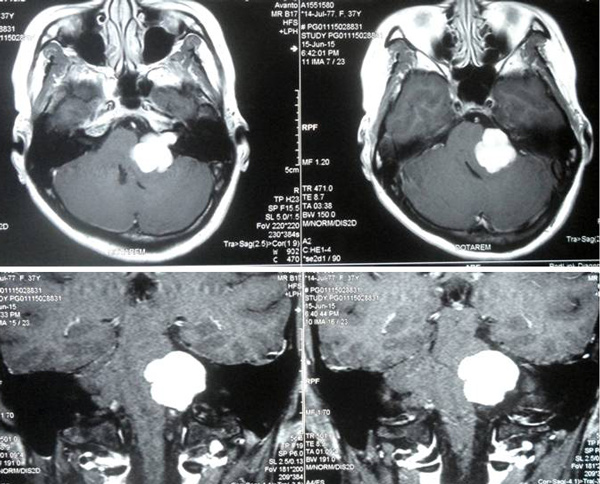
CT is a 38-year-old Indonesian lady. About 3 years ago, she started to lose her hearing of the left ear. Later, pain developed on the left side of her head. In April 2015, the problem became more severe. She could not tell what others were saying around her. Then her left ear became deaf. When she lie down and sleep on her left side, she felt giddy. When standing with eyes closed, she lost her balance. The left arm was weak.

In May 2015, she came to Singapore and consulted an ENT specialist. She was given medication for a month. Her condition worsened. She came back to Singapore again in June and had an MRI.  There was a 3 cm tumour in her brain.

Composite

The doctor told CT to undergo surgery immediately. CT refused. CT and her husband came to seek our help in July 2015. Listen to our conversation that morning.


Husband: We saw a doctor (in Singapore). He told her to have an operation immediately. She refused.

Chris: Can surgery cure her?

H: Of course, can cure 99 percent. BUT have to operate the skull. Two doctors involved. One is ENT specialist and the other a neurosurgeon.

C: Why don’t you want to go for the operation?

Patient: But 5 percent of patients can’t swallow after that.

H: She cannot control her face muscle — muscle dead. Hearing gone, and cannot be restored.

C: How much is it going to cost you to operate?

H: Six hundred million rupiahs, about SGD 60,000.

C: After the operation, did the doctor say you need to go for chemotherapy?

P: No, because the tumour cannot be completely removed, I need to go for radiation.

C; You were told the operation is going to cure you — 99 percent. Now, the doctor said he cannot remove all the tumour. How can this be 99 percent cure when the tumour cannot be removed completely? Any logic?

H: That’s why — no logic!

P: My mom’s friend had the same problem like me. She went for an operation. She was not able to swallow after that. Saliva drooled out of her mouth.

C: What happened to her now?

P: She had improved but her two eyes are pointing inwards, not straight. Her husband said: Don’t go for operation, You will suffer a lot. She also had her operation in Singapore.

C: Are you very sure that you don’t want to go for the operation?

P: No operation. When the doctor said he can cure me, I want it …

H: The doctor said: We do this kind of operation everyday.

P: But the doctor said he cannot guarantee.

H: The doctor was scared of the nerve system.

C: So, it seems that 99 percent cure is not true then? I am aware that all patients want a cure. If I tell them that I can cure them, all will come to me. But I am going to be honest. I don’t want to bluff or mislead patients. Here we want to help you. Even if you take our herbs, don’t expect us to cure you.

Oh, this is a very difficult problem because there is a 3 cm tumour in there. To tell you NOT to go for surgery is not right. But if you don’t want to operate, I would not force you to do that either because I know that you may have to suffer many side effects.

Try to take the herbs — don’t expect us to cure you, but after a month or so, let’s see what happen. May be after this, it can give you an indication and direction — whether what we are doing is correct or not. Ask yourself — After taking the herbs, how do I feel? Better? Less problems? Worse? If better, then be patient and we continue.

We have helped many patients with brain tumour before.

For more read:

Brain Tumour Shrunk With Herbs: https://cancercaremalaysia.com/2010/12/11/brain-tumour-shrunk-with-herbs/

Brain Cancer: She Was in a Coma: https://cancercaremalaysia.com/2010/12/11/brain-cancer-she-was-in-a-coma/

Now, let us try our best to find a way out — to help you. The tumour is not going to disappear. But if you can lead a normal life, please don’t ask for more. After 3 months, if you find that the herbs do not help you, please go for the operation. I can’t help you anymore.

Comment

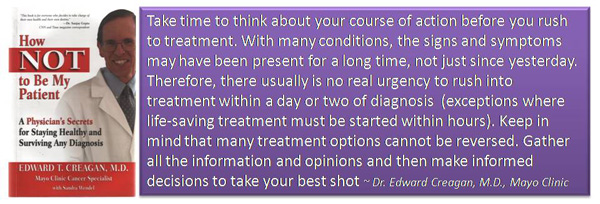
CT was told to undergo surgery immediately! Why immediately? She had been living with her problems for the past 3 years! No need to panic. Take time to evaluate your options.

When making your own decision, perhaps you want to reflect on the following:

10 You-decide-NO-treatment

11 Value-judgment-doc-cant-dec16 Groopman Choice within you17 Take-time-to-decide-no-hurr


Lymphoma Part 3: Digging my own grave with my folk and spoon!

Lymphoma Part 1: Eighty-percent-cure-rate-chemo Failed. No to Bone Marrow Transplant. I don’t want to die before my parents. 

Lymphoma Part 2: Healing in Progress After Two months on CA Care Therapy. Full of fear. But you would not die in December! 

Lymphoma Part 3:  Digging my own grave with my fork and spoon!


Forty-two-year-old Daisy had 6 cycles of chemo for her peripheral T-cell lymphoma. The treatment failed to cure her. The cancer relapsed 6 months after completion of her chemotherapy. She was asked to undergo more chemo and bone marrow transplantation. She refused and opted for CA Care Therapy instead. One year on, Daisy said she was not so worried about her cancer but her diet caused her much distress. I want to eat! 

Listen to this video.


Chris: The only thing that you cannot do is eat any “rubbish” that you like. Is that okay?

Daisy: Hm, hm. I have been tolerating this. I cannot help it. But sometimes I had the urged of wanting to eat …

C: Do you think one day, you would just say: Never mind la — eat and die, that’s okay.

D: Especially when I watched the cooking program on Astro … I felt like I wanted to eat and die, it’s okay.

C: You are already one year and you are not getting worse?

D: But I have been tolerating the food. During Christmas and Chinese New Year (CNY) everyone was eating …turkey, etc. and I could not eat. You know, I cried. They can eat but I cannot eat. I stayed home and cried.

C: So your main concern now is not cancer anymore? Now, food is more important? You worry about your food.

D: When people are alive, they want to eat (anything).

C: The last time when you came, you were so worried that you would die because of your cancer. Now do you still think that you are going to die?

D: No! I know I can live. Last time I was so worried that probably when I go to sleep I would not wake up the next morning.

C:  Ha, ha, is it not better (to die that way)? So today you go to sleep, you know that you would wake up?

D: I know, I know ( I can wake up).

Chinese New Year is coming – be careful with your diet!

C: Chinese New Year is coming. Don’t go and start eating “rubbish” ah.

D: Already two years I cannot eat. Since 2012 until now (2015) cannot eat, you know!

C: But you were supposed to die within four months! Now you’re well — you are healthy, you are okay. What do you want some more?

D: I want to eat. Eat first before I die.

C: Okay, if you want to eat, go and eat a lot. Eat a lot. To eat a piece of chicken and die … not worth it. It’s stupid. Eat a lot and then die. That’s okay.

D: I want to dig my own grave with my fork and spoon.

Gentle Warning: Itchy rashes that took months to go away

D: For two years, I never eat ….

C: What did you eat (during the Chinese New Year, 2015)?

D: I ate 2 kampung chicken eggs .. twice .. some CNY cookies … chocolates .. not much,  plus fish. After that …

Leg2

C: When you came home after eating all these …  any problem? Itchy?

D: No.

C: Before you ate all these, did you have such problem?

D:  No such problem. About one month after taking these CNY food this problem happened. I felt itchy and I started to scratch.

C:  And until today?

D: Yes, it’s already one and half months. It takes a long time to heal. Before I had cancer it was easy to heal.

C: Food is important. If they say you eat anything you like — that’s not true.

Comments

All patients who come to seek our help are always told: Apart from taking the herbs, you have to take care of your diet. You cannot eat anything you like. We would also want to remind everyone, if you can’t take care of your diet, there is not point coming to see us. We would not be able to help you. This is because food  ….

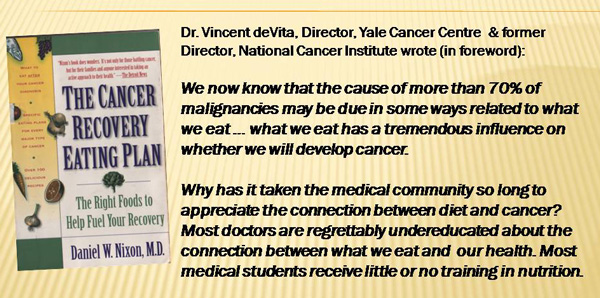
1 deVita

The unhappiness expressed by Daisy in this case, is understandable. Most patients would not want to change. The moment they get well — when they don’t feel that they are going to die anymore  — they will come with all the excuses for wanting to forget what we tell them about food.

One classical example that came to mind now is the case of an Indonesia lady who had lymphoma. She underwent chemotherapy and almost died from the treatment. After the treatment the cancer recurred. There was a hard swelling on her cheek. She was asked to undergo more chemotherapy. She was not prepared to accept that anymore.  She told us that she prayed that God would grant her the strength to come and see Chris Teo in Penang. Then if she died after that she would be satisfied. We took care of this lady for three years and she was well. The swelling in her cheek was gone. Then, the “monster within” started to awaken. She told us that she had been taking the herbs for so long. It caused much strain on her children, etc., etc. We knew what her real problem was! We also knew that if the heart would not want to change there is nothing we can do to help.

Later, we were told she went to Singapore for a holiday. Ate  …. (we did not know what). After she came home to Jakarta, her stomach became bloated. That was when she wrote us for help. Our answer was: Go to the doctor and ask for help. She had chemotherapy. After the second shot of chemo, she died.

This is another lymphoma case. This story is beyond our comprehension. TL was a 59-year-old man. He was diagnosed with lymphoma in September 2012. Like the Indonesian lady above, he had surgery to remove part of his stomach. He was subsequently asked to undergo chemotherapy which he declined.

He came to seek our help in October 2012. From the very beginning we explained to TL that it would be futile to take our herbs without taking care of his diet. In short, he must eat rightly and under no circumstances take junk food.

On many visits, TL asked us about what food to eat and what food not to eat,  giving us the impression that he was eating right!

About 8 months later, TL suffered a relapse.  It shocked us to learn that all along TL had been pretending and  “cheating” on himself as far as his diet was concerned.  Listen to his “confession” that day (4 November 2013).

A few days after this “confession”, TL checked into the hospital, underwent medical procedures and died while in the hospital.
Why did he play such a game and cheated himself?  We cannot understand.

One outstanding lymphoma case is that of Devi. She had radiotherapy and was well. But about a year later, her cancer recurred. She was asked to go for chemotherapy.  She had chemo but at the same time started to take herbs and change her diet and lifestyle. From 1998 to this day (2015) Devi stayed on course and is extremely well.

https://cancercaremalaysia.com/2011/07/05/the-story-of-devi-a-lady-lawyer-about-40-years-old-afflicted-by-non-hodgkin%E2%80%99s-lymphoma/

Chris: Why were you on morphine?

Devi: Because I was in pain. The moment I consumed food, I had very severe pain. I was lying in the hospital for two weeks until one day I went berserk because I had an overdose of morphine…I was not getting any better. I discharged myself (from the hospital)….I went to a clinic that practised chelation therapy and the doctor asked me what sort of diet I was on? I was told to stop taking solid food and to go on fruits, vegetables, semi-solids and fluids. Within two days on the recommended diet, the pain was gone. 

C: Did you take any other medication? 

D: No. I was only on the diet, no medication whatsoever. I was on fruits, vegetables and semi-solids. Within a month, my digestive system was back to normal. 

C: After the radiation, you thought you were cured. Did you go back to your old diet? 

Yes, I went back to my old lifestyle. I forgot about the fruit juices. I had a relapse of the cancer, this time in the abdominal region.

The doctor said radiation was out. I went for six cycles of chemotherapy. 

Devi came to seek our help and was well. 

C: What about your diet?

D: I am more of a vegetarian now, I keep off red meat and sea food except for fish. I eat fruits and vegetables. 

C: Some people say that if I cannot take my favourite food, life if not worth living. What is your comment to that ? 

D: What I have to say to those people is, life is worth more than just your favourite food. It is a very small sacrifice to make. Life is much more that just food. 

C: You were a meat eater before and now you are a vegetarian. Many people say that if you don’t eat meat, you have no strength. What have you got to say about that? 

D: No, not really. In fact, I feel much healthier now that I cut meat out of my diet. I have not lost energy at all. 

Patients, you have a choice — to live or to die. If you wish to live, CHANGE — your lifestyle and your diet.

The choice is yours!

9 Disease-enter-through-the-m

10  Nutriton-stop-growth-spread

8-Diet-must-be-integral-par

Balanced-Yin-and-Yang-food

Capturefood

Lymphoma Part 2: Healing in Progress After Two months on CA Care Therapy. Full of fear. But you would not die in December!

Lymphoma Part 1: Eighty-percent-cure-rate-chemo Failed. No to Bone Marrow Transplant. I don’t want to die before my parents. 

Lymphoma Part 2: Healing in Progress After Two months on CA Care Therapy. Full of fear. But you would not die in December! 

Lymphoma Part 3:  Digging my own grave with my fork and spoon!


Daisy, 42 years old, was diagnosed with peripheral T-cell lymphoma, Stage 2. She underwent 6 cycles of chemotherapy. Six months after the completion of her treatment, the lymphoma relapsed and Daisy was asked to undergo more treatment — 4 cycles of high dose chemotherapy followed by an autologous transplant (BMT — bone marrow transplant).

Daisy felt that she would not survive the BMT procedure. But without BMT Daisy was given the impression that she would also die — within four months. By December she would be gone! Daisy was in a dilemma and came to seek our help. She was started on herbs and was told to take care of her diet.

In  October 2013 — after two months of the herbs  — Daisy shared her anxiety, fear, frustrations and wishful hope! Watch this video.


Lymph nodes grew bigger after 2 months on herbs. Oncologist did not show any concern — Go and continue taking your herbs! 

Two months on our CA Care Therapy, Daisy came back to us. She was full of anxiety and fear. She just went to see her oncologist and was told that the swollen lymph nodes had grown bigger.  Since she did not proceed with the BMT, her oncologist was not interested to talk further with her and instead cynically asked her to go ahead and take the herbs. 

Daisy did a blood test and an ultrasound.

White Cell count 1.71  Low
Lymphocyte 0.44  L
Red blood count 3.55  L
Platelets 160
LDH 254  High

USG on 30 September 2013 indicated:

  • Bilateral enlarged cervical nodes … the largest at the left submandibula measuring 1.7 x 0.7 cm and at the left posterior triangle, 1.4 x 0.5 cm.
  • Enlarged axillary nodes seen bilaterally. The largest node is seen at the left axilla measuring 1.9 x 2.3 cm and 1.8 x 2.2 cm.
  • A hypoechoiec nodule seen within the subcutaneous plane at the left posterior scapular region measuring 1.5 x 0.6 cm.

For the above consultation, the total bill came to RM 774.00 made up of the following:

  1. Lab test RM 202.00
  2. Ultrasound examination RM 480.00
  3. X-ray RM 42.00
  4. Consultation (oncologist) RM  50.00

Like most patients who come and see us, they like to go for a scan after taking our herbs for a month or two! That is unrealistic! Our herbs are not magic bullets. Healing takes time.

The results showed the lumps had gone bigger! We told Daisy, You are just asking for unnecessary problem!

Daisy: What if the lumps grow bigger and bigger? 

Chris: Yes, that is always the concern of patients … and of course ours too. But what can we do? Is there another alternative? 

No! Daisy said she would not go for any chemo, radiotherapy or surgery. She would like to stick on with our herbs.

We told Daisy — we wish we could cure her or promise her a cure but we know we would be dishonest if we do that.

Promising false assurance is cruel and sinful!  We would not be able to ensure any positive outcome even though we have helped so many lymphoma patients before.

The only advice we could give is: Don’t panic, relax. This implies patients need to believe and trust.

Good thing is, Daisy seemed to trust us. She knew what it was like to undergo chemotherapy. The fact that she survived the 6 cycles of chemo earlier was already fortunate. Then, she was told that her CHOP chemotherapy would give her a 80 percent chance of cure. But this is not true! Barely 6 months after the completion of her chemo, the lymphoma recurred.  Where is that 80 percent chance?

After the relapse, the oncologist offered BMT and said the cure rate would be 50 to 60 percent but the procedure would be more drastic, invasive and expensive — RM 100,000.

Daisy had lost confidence with medical treatment. Probably this was the driving force that made her come to seek our help. She said she would rather “gamble” her life with our herbs.

Are you getting worse after taking the herbs? You wouldn’t die in December! 

Even though the lumps had grown in sizes, Daisy did not feel any worse. Actually she was doing fine … except for the knowledge that the lumps were getting bigger! Daisy was given the impression that without BMT she would only have 4 months to live. So by December she would be gone! No, during our discussion in October 2013, Daisy did not show any sign that she was about to die. We told Daisy: You are not going to die in December! 

(Daisy continued to get well and is still alive after 2 years. Most of the lumps that made her worry so much earlier on had almost disappeared!) Question: What if she were to undergo the Bone Marrow Transplant?


Lymphoma Part 1: Eighty-percent-cure-rate-chemo Failed. No to Bone Marrow Transplant. I don’t want to die before my parents

Lymphoma Part 1: Eighty-percent-cure-rate-chemo Failed. No to Bone Marrow Transplant. I don’t want to die before my parents. 

Lymphoma Part 2: Healing in Progress After Two months on CA Care Therapy. Full of fear. But you would not die in December! 

Lymphoma Part 3:  Digging my own grave with my fork and spoon!


Daisy (not real name) was 42 years when her problem started around July/August 2012. She found lumps in her arm pit and groin. The lumps grew bigger. She went to a private hospital. A biopsy was done.  She was told she had peripheral T cell lymphoma, Stage 2.

Daisy underwent 6 cycles of chemotherapy  — CHOP regimen. The treatment cost RM 40,000 — paid for by her insurance company. She suffered severe side effects: nausea, vomiting, mouth ulcers, numbness, loss of appetite, chest pain, constipation and hair loss.

Daisy said she almost died after 3 chemos, but she  managed to complete the scheduled 6 cycles by January 2013.

Chris: Before chemotherapy, did you ask the oncologist if the treatment was going to cure you?

Daisy: The oncologist said, “There is a 80 percent cure rate.” It was just a Stage 2 cancer.

C: You believe that?

D: Yes and I was happy!

Everything went well for Daisy during the initial stage after the completion of the treatment. She went back to work.  Unfortunately, soon afterwards she found a lump in her left arm just above her elbow and also swelling of her axillary lymph nodes,  but she did not tell her doctor. She thought there was nothing to worry about since she had just completed the treatment. However, during the second follow up she told her oncologist about the lump. In July 2013, Daisy had surgery to remove the lump in the arm. Histology confirmed recurrence of the T cell lymphoma.

A whole body CT scan was done on 30 July 2013 and indicated the following:

  • There are bilateral multiple mildly enlarged cervical nodes which are increased in size when compared with the previous scan. The largest node measures 14 mm.
  • Bilateral mild to moderately enlarged axillary nodes have increased both in number and size since the previous scan. The largest node the left axilla measures 13 x 8 mm.

The oncologist told Daisy that she had no other option but to go for  BMT – bone marrow transplant. She would need to undergo 4 cycles of high dose chemotherapy followed by an autologous transplant.

 C: Can BMT cure you? 

D: The oncologist said the cure rate is 50 to 60 percent. 

C: You believe that? Previously he said chemo would give you an 80 percent chance and you had a recurrence.                                                                          

The BMT procedure would cost RM 100,000 and this would be paid for by the insurance company.

C: So, that’s free treatment, why don’t you want to go for it. 

D: I am afraid I would just die. My father and mother are still alive. That’s why, I don’t want to die before them. 

C: I understand, if your father has to bury you … no, I don’t like the idea either. 

C: How many sisters and brothers do you have? 

D: Six. 

C: What did they say? 

D: All of them do not know what to do. 

C: Good to have sisters and brothers like that. At least they don’t fight among themselves for trying to be too smart.

Now, go home and decide what you want to do. After you have made your decision, there will be a lot of people who will say this or that! 

Don’t worry. Learn how to take care of yourself. Go home. Pray that God will tell you what is the right thing for you to do. Don’t eat anything you like. Above all, be friends with your cancer. No need to fight with the cancer. 

For more, watch this video. 


Stomach Cancer: No to surgery and chemo. Why?

EK is a 66-year-old female. About 2 years ago, she felt stomach discomforts after eating. If she had soft diet, then she was okay. She did nothing about this problem. During the Chinese New Year, 2015, she felt something blocking when she took food. Then she vomited. The problem went away after that. In June 2015, she went to a medical clinic and the doctor said she might have thyroid problem. However, an endoscopy and biopsy in July 2015 indicated stomach cancer.

EK and her son came to seek out help after being told that EK had to undergo chemotherapy followed by surgery. EK did not want to undergo these procedures. Why? Listen to our conversation that day.


Summary of our conversation

Chris:  Does your mother know about this?

Patient: Yes. When doing the scope, the doctor told me on the spot that I have cancer. The doctor then asked me to undergo chemo. Must decide immediately. Chemo is to shrink the tumour first. After that, they will operate me, to remove my stomach.

Son: He was trying to convince her to immediately proceed with the treatment. But when I did research on line the chemo does not work so well with diet causing cancer.

C: I understand. You are not the only one. Many others are like you too. You do not get cancer only yesterday. Perhaps it has been there for the past 5 or even 10 years already.

P: Only 2 years ago.

C: Perhaps 5 years ago it was already there but it did not show up and you did not feel anything. Most people do not “listen” to their body. For you, only now it shows up. What do you want to do? You have to decide. Correct, on the one hand you can have it removed and maybe it is gone. Do you want to operate?

P: I don’t want to operate. The doctor told me if I do not operate the tumour will grow. It may cause blockage and  bleeding. And it is going to be very painful.

C: The doctor said you have to do chemo first and then surgery. Did you ask him if these procedures are going to cure you?

P: No doctor would guarantee that.

S: Why I feel not satisfied is every time we discuss with the doctor — he never want to tell us the probability. They don’t know. Depend on patient, this can happen, that can happen. They don’t know and dare not go into this subject.

P: The doctor told me it is going to be 50: 50.

S: They never tell us about the side effects. What can happen after that? I spent about 2 weeks researching (in the internet) I know that there are a lot of (side effects).

C: Okay, take it easy. Relax. Go home and think about it and decide. Listen to your heart and not your head. If your heart says operate, then go for the operation. If your heart says no operation, then don’t do the operation.  Take it easy.

This is a major surgery. The whole stomach has to be removed. Understand this. If the cancer does not spread, then removing it is good. Clean and throw it away and it is gone. But if the cancer has already spread, that is where the problem is. If it has already gone to the liver, what do you do? Cut the liver also? It is hard for us to decide what is the best thing to do now.

After removing your stomach, you can’t eat anything you like any more. You need to adjust your diet. It is going to be a bit difficult.

Then that 50:50 chance — may be it may not end up 50:50 at all — we don’t know.

You can’t blame the doctor because that is all they know.

Then, back to this again. What if you do not do operate? First, the tumour may grow and block (the passage way). You cannot eat and vomit. So, you may have to face these problems.

All these basically mean — you cut, you die; you don’t cut you also die. But everybody also has to die. The question to ask is: How do you want to die? That is the most important thing.

If you go for surgery, you may die on the table. We don’t know.

P: Yes, that was what the doctor told me. If something goes wrong, you die.

C: You also need to know this. If you cut, you also need to suffer later … due to the chemo, etc. Go through all these sufferings and die. May be not worth it. This is one scenario. Another scenario is, now you are still well with no problem. If you can take care of yourself, maybe you don’t have to die sooner, may be you don’t have to suffer so much. But know that one day you have to die. So, which one do you want” Think for yourself.

You come and see us — can we cure you? No, we are not god. But we also know that we have helped a lot of people already. They don’t die that soon. But they have to learn how to help themselves. Learn how to live with your cancer. Tell your cancer — you stay in there but don’t disturb me, and I don’t disturb you. If I die, you (cancer) also die.

If there is blockage, then you have to go for surgery. If not, relax.

We know this is dangerous, we know this is a rare cancer. In one year, we do not see many case like this.

Okay, do you want to go home and think first what you want to do?

P: No, I don’t want surgery. Then go for chemo — no, my whole body would collapse! The doctor also told me that even if I did the operation, he would not be able to remove everything. May be something may be left behind. Because of that, I want to go for natural therapy.

C: Do you understand that it may not cure you? People come and ask us to cure them. Our answer is, No we cannot cure you. Because we know that cancer cannot be cured, but to help you — YES. But you have to want to help yourself first. But how long you want to help yourself is up to you. Some people get well after 6 months — they forget what we taught them after that!

S: Professor. Thanks for reminding us. I know in terms of diet, it is not easy to change.

Comments

EK and her son were desperate. And they need help. The doctor wanted her to go for chemo and surgery for her stomach cancer that had probably spread to the liver, pancreas, spleen and lymph nodes. In simple language, this is an advanced cancer,  where surgery alone cannot cure her.  The cancer cannot be totally removed. That means, the chance of recurrence is very high. In addition EK has to undergo chemotherapy. EK knew what she was asked to go into and decided not to follow the medical way.

EK and her son clearly need help. CA Care was set up to exactly to do this — to help those in need of direction and help. And we are ready to help. But for those who come to CA Care in search of “magic bullet” or any easy way out, then we say you have come to the wrong place. Please go elsewhere to shop for your cure.

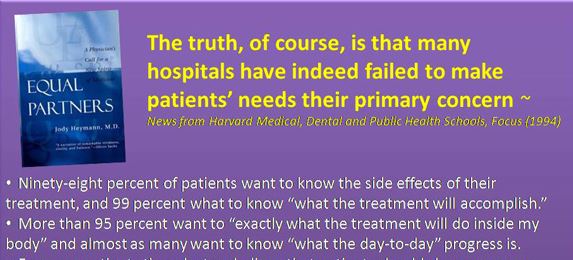
EK’s son took time to browse the internet for more information. He was clearly unhappy that he could not discuss anything with the doctors. Understandable, doctors are busy people and they don’t have the time to explain things to the patients or their family members.  Read what Dr. Heymann wrote:

Doctor visit 12 minutes

It is unfortunate that doctors do not have the time to show much concern about the patients. EK was told right there and then, while doing the scope, that she has cancer and chemo has to be done immediately. The message came like a bomb. No doubt about, the “death sentence” as many like to call it, caused much anxiety and distress not only to the patient but also the entire family. Patients and their family members want to know MORE, but they cannot get much information from the doctor. At CA Care, we try our best to answer your concerns and provide information as honestly as we can — to empower you with knowledge so that you can make informed decisions.

Bill-Henderson-Informatin-i

While in the midst of writing this story, a patient came to our centre. He was diagnosed with pancreatic cancer that has spread extensively to his liver. After the CT scan, the doctor told him: We cannot operate you. We cannot chemo you. Go home, eat anything you like and go and play as much golf as you like. The patient told us, I know what that mean. The doctor virtually told me to go home and wait to die. It was indeed a great let down. We don’t know how he took it, knowing that this man was once the deputy head of a state government, a VVIP.  He and his wife spent about one and half hours at our centre. We answered everything that they wanted to know. No doubt, they were satisfied. They now know what they CAN and NEED to do next.

Read again what Dr. Jody Heymann wrote:

Hospital not concern of patients

Pose this question to the Power-that-Be, Given the above situation, what can we do to improve the situation? Is building more hospitals  the answer? Perhaps we don’t need expensive hospitals but train people who run hospitals with a more “human heart”.

I am fully aware too that during our consultation, I am often very blunt. To most people, may be the mention of the word “death” is a taboo and is very objectionable. But at CA Care, we often bring this subject up with the patients. This is because we want them to understand the bigger picture of the problem. We fully understand, ALL patients want to be cured of their cancer, no matter how advanced their disease may be. Many patients say they want to “fight” to the end. Well said, but do you still want to fight with the SAME weapons,  if you know with almost certainty that you are going to lose the war. In addition, you  suffer as a consequence. Some even leave a “big hole” in their bank account for the next-of-kin to settle. The only winners in the game are the doctors, hospitals and drug companies!

Perhaps you may wish to reflect on these two quotations:

47-Late-stage-cancer-no-tre


Chemo-Suffer-near-death

We are not implying here that patients with terminal cancer should just give up — go home and wait to die like the case of the VVP above. Far from it. Perhaps the question to ask is, If the expensive, scientific medicine cannot cure your cancer, can there be another option? At least another option which can allow patients to live in peace without suffering, even though we all know that cancer cannot be cured.

EK and the VVIP above did not give up. At least they came to CA Care and they found “peace” and a new “hope”.


Better to let the doctors take care of her. We can’t cure her!

HL came to see us on behalf of her 70-yer-old mother who was diagnosed with T-cell lymphoma. Her mother had been in the hospital for the past 2 weeks. She needed blood transfusion every 2 days because her platelets count was down to 1.0 (normal range 150-400). Her red blood count had stabilized at 8.0. For the past 1 week HL’s mother was given steroid injection.

What to do now?

  1. The doctor suggested chemotherapy and this would be a 50:50 chance. The idea is to “control” the cancer.
  2. If the patient does not want chemo, it is okay. But according to the doctor it would be a “hopeless” case. She could stay in the hospital to receive supporting treatment, such as blood transfusion, etc. when needed.

Desperate and not knowing what to do, HL came to seek our opinion. Listen to our conversation that day.


Gist of what we talked about. We hope that all who come and seek our help learn this too.

Part 1

  1. What can we do with her platelets so low. Let her stay in the hospital and let the doctors take care of her. They have all the facilities to assist her.
  2. The doctors did not pressure the family to do chemotherapy — they are open. To do chemo, they claimed it would be a 50:50 chance (of what?) but not to do chemo it would be a case without any “hope”.
  3. The daughter asked the doctor: Her condition is deteriorating, can she stand the chemo? The doctor said it would a modified low dosage.
  4. The question to ponder: Even when you give full dosage, you cannot cure the cancer, what do you expect to get with a low dosage?
  5. The doctor said chemo is just to suppress or control the cancer. To put the cancer cells to sleep.
  6. Daughter was very concerned about the side effects of chemo but someone told her that chemo had to be done to cure the cancer first. Only after the cure, then she can try natural therapy.
  7. Question to ponder: What happen if the chemo kills the patient right away?
  8. With your mother’s condition — platelet = 1, did you ever ask the doctor if your mother is going to be able to survive the chemo treatment? Can it kill her right away or not? Reply: Yes, that’s our worry too.
  9. I would be very happy if the chemo does not kill your mother. But know that nobody can cure any cancer. When you come and see us, don’t ever believe that we are going to be able to cure your mother’s cancer.
  10. 10.Since your mother is now in the hospital, let her stay there and you should follow the doctors’ instructions. Don’t take our herbs. Because if anything goes wrong, after she takes the herbs, you are going to blame us.
  11. Many people are like that. They sent us e-mails asking if our herbs caused these problems or that problems. And their cases were already medically given up. For this type of people I say — Please don’t come and see us.
  12. When you take our herbs, you may feel unwell first (healing crisis) before you start feeling better.

Part 2

  1. Know that everyone has to die. Today, I am not sick but I may also die tomorrow. That is the reality. It is a fact.
  2. With your mother’s condition like that, platelet = 1, what is the chemo going to do for her? Daughter: That is why the oncologist said there is only a 50:50 chance.
  3. You have to decide, she is your mother. Daughter: There is no other solution.
  4. Do chemo, your mother may die, don’t do chemo she may also die.
  5. Let me remind you. If you don’t do the chemo and if your mother dies, people will blame you and you are going to regret. If you do chemo and she died you will also regret. In life you cannot win all the time. And I know, in cancer, most people are going to lose.
  6. So go back, take time and discuss with your two brothers and sister. Decide what you want to do.
  7. You come here wanting herbs, believing that these are going to cure your mother — forget about that. Our herbs are not magic. We cannot cure her cancer. That is why I ask you to go home and think about what you want to do.
  8. Daughter: With my mother’s condition like this, we cannot wait! Aya, always want to win! There is still time.
  9. Daughter: You mean the herbs cannot cure her? Cure cannot — how can? I don’t see how our herbs can help her. You expect the platelets to go up by tomorrow after taking the herbs? No way.
  10. Daughter: Can she just take the herbs for a while? Well, what do you say if she dies?
  11. Daughter: Are there any herbs to strengthen her body now? There is no magic bullet.
  12. Daughter: While doing the chemo, no need for her to take herbs? NO. Because if anything happens, the doctor is going to blame the herbs.
  13. Daughter: Can she take your herbs after her chemo? We will wait and see what happen first after the chemo.

Go home and Pray

  1. You pray to who? Reply: Buddha.
  2. Okay, go home and pray to Buddha. Ask Buddha for an answer — now that my mother is in this condition, Buddha can you help me and tell me what shall I do now? If Buddha says do not go for chemo then you can come back and see me again. But if Buddha says she goes for chemo, then go ahead and do the chemo. This is the only sensible advice I can give you.
  3. There is this lady from Indonesia. She was scheduled to do chemotherapy on Monday. But on Friday she came to see us. She was not happy with chemotherapy. I told her to go back and pray to Jesus (since she is a Christian). Ask Jesus to tell her what she should do — go for chemo or not. We did not give her any herbs yet. On Monday, she came back and said God has given her the answer. She would not go for chemo. Only then we gave her the herbs.
  4. I am telling you to do the same thing. Go home and pray to Buddha and ask for guidance. By doing this, you cannot blame anybody anymore. And you will be at peace with yourself.
  5. We respect all religions. Many people came here and told us that Buddha asked them to come and see us. Some said Kuan Yin asked them to come. And some Christians said God showed them the way to see us.
  6. Let me say again, we cannot answer all the questions you asked. Nobody can answer all the questions either. The One who can answer you is Buddha. So go home and take time to pray to Buddha. Ask one simple question — What do I do now. I am lost. I have been praying to You for so long. Please let me have Your guidance.
  7. Follow your heart, not your brain.
  8. Now, there are millions of people out there. Ask them and you get a million answers.
  9. For now, don’t take our herbs yet. Like your mother I am just as desperate. I am also in the hole. I give you the herbs … that does not seem right. My conscience is not clear. And I also cannot sleep.

Comments

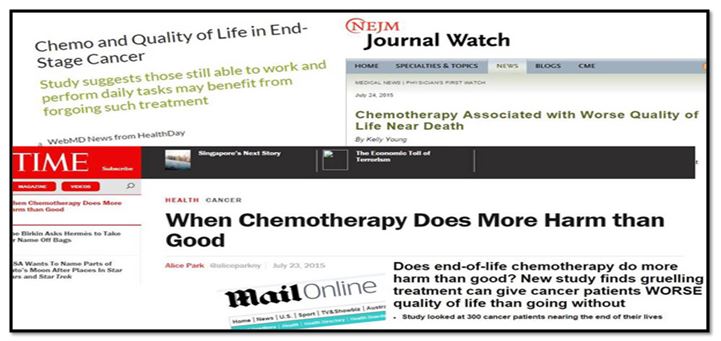
Many patients and their family members are often made to believe that chemotherapy — even if it cannot cure cancer — can prolong life and can control the cancer from spreading. They are also told that chemotherapy can also promote patients’ quality of life. Do you believe all these?

Ask those who have undergone chemotherapy and see what they have to say! Some told us they went through “hell” while undergoing chemotherapy but so far no one has yet tell us that undergoing chemo is a “heavenly” experience. Yes, some patients did say they did not suffer much during their chemo. Some said they could tolerate the chemo. But some others said after one, two or six shots of chemo, their loved ones just died. So, in chemo it is always, to each your own.

To say that chemo would prolong your life or improve your quality of life — as in the case above — may be stretching the imagination a bit too far. Research has shown that these claims are not necessarily true. On the contrary even the American Society of Clinical Oncology acknowledged that in some or most cases, chemotherapy was wasteful and unnecessary, in cases where cancer was too far advanced.

Chemo-and-Prolong-Life


Chemo-and-QOL

Perhaps you may wish to ponder seriously the advice of Drs. Blanke & Fromme below.

Chemo-Suffer-near-death

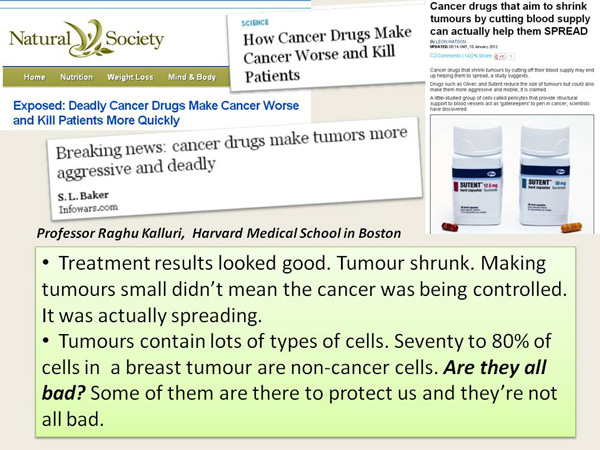
What about the claim that chemotherapy can stop the cancer from spreading or make the cancer cells go to sleep? It is indeed most shocking to know what some cancer researchers tell us.

Read this:  Chemo spreads and makes cancer more aggressive.

Chem-spreads-cancer-Fred-Hu

Chemo-drug-makes-cancer-wor

Our final word 

When patients come and see us. Please show us your commitment and show us that you really believe in what we are doing. Of course, you can come here for “shopping” — just to know what to do, but we want you to go home after that to make your own decision. Please do not ask us to decide if you should go for chemo or not. Also do not come saying my doctor said this or my doctor said that. We know in cancer there is no right or wrong answer. So it is no use commenting of what others say you should do or not do. Know that YOU, and you alone must decide what you want to do with your cancer. We can only provide up to date, honest information, but whatever you want to do after that must be your own decision and your responsibility.

You may also wish to read our earlier postings:

When chemotherapy does more harm than good  

Follow your heart not your head when it comes to deciding whether you should go for chemo /radiation or not

Breast Cancer: Surgery, Chemo, Radiation and Hormonal Therapy Did Not Cure Her. Xeloda made her miserable! Patient, Only You Should Decide What You Want To Do!


More on the Questionable Value of Chemotherapy for Terminally Ill Patients

Let us look at more research articles on this often neglected subject of treatment for near death patients.

The effect on survival of continuing chemotherapy to near death

Akiko M Saito, Mary Beth Landrum, Bridget A Neville, John Z Ayanian and Craig C Earle

BMC Palliative Care 2011, 10:14   http://www.biomedcentral.com/1472-684X/10/14

  • Overuse of anti-cancer therapy is an important quality-of-care issue. An aggressive approach to treatment can have negative effects on quality of life and cost, but its effect on survival is not well-defined.
  • We have previously shown that the aggressive use of chemotherapy in patients who are close to death has been increasing over time.
  • In fact, aggressive approach to treatment during the last week of life is linked to psychological and physical distress for advanced cancer patients.
  • Other studies have also shown that chemotherapy use during near death irrespective of the cancer’s responsiveness to therapy has been associated with potentially negative effects, including higher numbers of emergency room (ER) visits, hospitalizations, and admissions to the intensive care unit (ICU), and less hospice service. These results beg the question of whether aggressive care leads to improved outcomes.
  • Using the Surveillance, Epidemiology, and End Results-Medicare database, we identified 7,879 Medicare-enrolled patients aged 65 or older who died after having survived at least 3 months after diagnosis of advanced non-small cell lung cancer (NSCLC) between 1991 and 1999.
  • Receipt of chemotherapy was associated with a 2-month improvement in overall survival. However, based on three different statistical approaches, no additional survival benefit was evident from continuing chemotherapy within 14 days of death.
  • Conclusions: 1. We could not detect a benefit in survival from continuing chemotherapy close to death. Continuing chemotherapy for advanced NSCLC until very near death is associated with a decreased likelihood of receiving hospice care but not prolonged survival.
  • Conclusion 2. Oncologists should strive to discontinue chemotherapy as death approaches and encourage patients to enroll in hospice for better end-of-life palliative care.

Losing “Losing the Battle With Cancer”

Lee M. Ellis, MD; Charles D. Blanke, MD; Nancy Roach

JAMA Oncol. 2015;1(1):13-14.  http://oncology.jamanetwork.com/article.aspx?articleid=2108855

  • Patients with cancer lose many things of importance. As soon as they hear the words “you have cancer,” they lose control over their lives, as medical appointments immediately begin to shape their daily schedules.
  • They may lose the ability to participate in activities that bring them joy, as a result of chronic treatment adverse effects such as neuropathy, bowel issues, or lymphedema.
  • Too many lose their lives.
  • We also commonly hear the statement that a patient has lost “his or her battle” with cancer.
  • Since President Nixon declared a “War on Cancer” back in 1971, many have used some variant of the term battling cancerin describing all sorts of oncologic treatment, from undergoing locoregional therapies such as surgery and/or radiation therapy, to seeking systemic chemotherapies or biologic therapies, and even pursuing alternative regimens.
  • This is particularly common in advertising campaigns for hospitals or oncology programs. Almost daily we experience some written or broadcast news story on a patient wholost his or her battle with cancer.
  • However, we wish to revisit this topic because there is the need to explain that receiving a diagnosis of cancer should not deny anyone their dignity; no one with cancer should be considered a “loser” in any way during the course of neoplastic disease, including those patients who die of their cancer or effects of their therapy.
  • Using the battle metaphor implies that if a patient fights hard enough, smart enough, and/or long enough, he or she will be able to win the war.
  • Unfortunately, and with rare exceptions, patients with metastatic cancer cannot conquer cancer (win the “war”) no matter how hard they fight. We have far too few effective curative treatments and interventions.
  • We can celebrate occasional long-term survivors, but for the most part, we do not know why one person is alive 15 years after the diagnosis of advanced cancer, whereas another dies 9 months after the diagnosis.
  • Patients with “curable” disease are cured because treatment eradicates every last cell, not because the patient did or did not somehow fight valiantly.
  • Once someone receives a cancer diagnosis, especially advanced-stage disease, a journey begins; sometimes the journey requires patience, tolerance, and courage, but at some point, most patients with advanced disease end that journey with loss of life.
  • Although this difficult and tumultuous journey may have come to an end, dying should not be viewed as being defeated in some kind of skirmish.
  • Many patients themselves adopt the battle metaphor when they receive the diagnosis. If one needs to assume a warlike attitude to face the challenges of cancer, so be it; anything goes in helping a patient (and his or her family) cope during this journey.
  • We have all had the experience of patients stating (paraphrased) “I want curative treatment, not palliative treatment, because I’m going to beat this thing.” The litany of imaging, appointments, examinations, blood sampling, pills, infusions, surgery, and radiation treatments can make a patient feel as if he or she has been in a fight.
  • However, thinking about it from a different perspective, the use of the battle metaphor implies a level of control that patients simply do not have.
  • When we talk about the “battle,” we minimize the real issues faced by patients every day. Patientsdeal with and sometimes overcome nausea, pain, fatigue, and weight loss. They suffer the isolation that comes with a diagnosis.
  • For those with potential curative disease, theylive with the fear of recurrence and impact of chronic adverse effects.
  • Unless you have been in their shoes, it is often hard to imagine the challenges faced every day by our patients, and we oftentimes do not fully credit patients for their persistence and resilience in their journey.
  • Let us recognize them for all the challenges that they overcame in their journey. Let us not declare themlosers at the end of this journey.
  • Similarly, the continuous urge to win the battle extends to oncologists, who actively treat patients for too long. The fact is that 8% of patients receive chemotherapy within 2 weeks of dying of cancer, and 62% within 2 months.
  • Late chemotherapy is associated with decreased use of hospice, greater use of emergency interventions (including resuscitation), and increased risk of dying in an intensive care unit vs at home.This all clearly reflects our society’s need to battle until the end.
  • But let us take a closer look at this mentality. Most of our therapies are toxic: they cause depression of the immune system, fatigue, rash, nausea, vomiting, neuropathy, and so forth. In addition, in today’s insurance landscape, many of our therapies can lead to financial toxicity.
  • Patients are willing to deal with these adverse effects as a trade-off for “hope”— but are we honest with them about the true potential benefit of the treatment?
  • For many therapies, there is little evidence that life is substantially prolonged.
  • We have seen patients who are determined to win their battle. As they turn from treatment to treatment, they are not spending time with loved ones; rather, they are chasing the illusive “win,” a path that affects not only them but also their family and caregivers, as well as family finances.
  • There are patients who face their mortality with clear eyes and, yes, courage. They make choices and can opt to die on their own terms: they can choose to die without a drug-induced rash, diarrhea, or fatigue.
  • They may also choose to spend their remaining time doing what they wish, without an intravenous line or infusion port.
  • They may choose not to be confined to weekly infusions and repeated blood sampling and imaging.
  • Or did she choose to control how she spent her final days? We would venture to say that she made an informed, reasoned decision to say “no more”—no more pain, no more marginal treatment, no more treatment-induced adverse effects: no more!
  • Of course, the choice to end one’s treatment and even one’s life … belongs with the patient. The patient’s decision is informed by their health, their family, their belief system, and, from a pragmatic point of view, their location.
  • We firmly believe that health care professionals owe their patients the difficult and honest discussions that come as patients grapple with their mortality.
  • We also believe that patients’ decisions should be honored and supported by their health care team.
  • Let us respect patients who are already suffering from the effects of cancer and cancer-related therapy.
  • Stuart Scott died of cancer at the age of 49 — seven years after his initial diagnosis and aggressive therapy. In July 2014, in the midst of enduring his cancer and therapy, Mr. Scott told the audience, “When you die, it does not mean that you lose to cancer. You beat cancer by how you live, why you live, and in the manner in which you live.”
  • We will all die one day; perhaps the winner … the person who does it under his or her own terms; the person who dies peacefully and not at war. 

Our last words …

Indeed the above are well-written articles by doctors and scientists. Of course, the world view is that if you have cancer, you need all these stuff — surgery, chemo and radiation or other expensive toxic drugs. Other world views are a no, no — unproven and unscientific, quackery, snake oil, etc. etc. But, after having helped hundreds and hundreds of cancer patients over the past 20 years  with our CA Care Therapy, we have enough evidence to show that non-medical ways to manage cancer, in some cases, are just as effective if not MORE effective, MORE humane and MORE cost effective than the present day chemo and radiation. Why don’t we explore these alternatives? A taboo question indeed to the medical fraternity.

At CA Care, we tell patients. Learn to live with your cancer.” Cancer is not your enemy. So there is no need to wage a war. In war, nobody wins.

We also  tell patients, Everybody has to die — it does not matter if you have cancer or not. So, death is not an issue but a certainty. The important point to consider is how you want to die when the times comes. Don’t die suffering, stripped off human dignity. If you can eat, can sleep, can move about and have no pain … consider yourself blessed. Don’t ask for more. We are indeed very glad to know that most of our patients die in peace without suffering. They also don’t die because of “treatment toxicity” and /or “financial toxicity”.


When Chemotherapy Does More Harm than Good

Chemo-MORE Harm than-g

One of the news reports above was written by Alice Park,  Time: 23 July 2015. You can read it here: http://time.com/3968918/when-chemotherapy-does-more-harm-than-good/

Some points highlighted in the article:

  • Latest data suggests that chemotherapy can also do more harm than good for some patients.
  • Holly Prigerson, director of the Center for Research on End of Life Care at Weill Cornell Medical College and her colleagues studied the use of chemotherapy among a group of 312 terminal cancer patients. All had been given no more than six months by their doctors, and had failed at least one if not multiple rounds of chemotherapy. About half were on chemotherapy, regardless of its ineffectiveness, at the time of the study.
  • Despite the common assumption that any treatment is better than none, there is not much evidence that chemotherapy is the right choice in these cases—and it may very well be the wrong one.
  • Prigerson’s analysis showed that these patients experience a drop in their quality of life if they get chemo, and that they are therefore worse off than if they hadn’t opted for the treatment.
  • Prigerson said: “The finding that the quality of life was impaired with receipt of the toxic chemotherapy was not surprising. The surprising part was that people who were feeling the best at the start of the therapy ended up feeling the worst. They are the ones most harmed and who had the most to lose.”
  • In other words, the chemo made the patients feel worse without providing any significant benefit for their cancer.
  • Previous studies have shown that chemotherapy in terminal patients is essentially ineffective.
  • And whatever tumor shrinkage occurred wasn’t linked to a longer life.
  • The decision about how long to continue care, including chemotherapy, is up to each cancer patient.
  • Despite explanations from their doctors, many cancer patients still believe that more rounds of chemo will provide some benefit to them, and are therefore reluctant to stop receiving therapy. But at some point, the data shows, more treatment is not better.
  • For patients with end-stage cancer who are still relatively healthy and not feeling sick, additional chemotherapy will likely make them weaker, not to mention eat up more of the precious time they have left traveling to and from infusion centers.
  • Prigerson … hopes the latest findings at least convince doctors to reconsider how they advise their terminal patients about end-stage chemotherapy.

For those who want to believe only in “scientific papers”, let’s go to the study of Dr. Prigerson et al., published in JAMA Oncology: 23, 2015: http://oncology.jamanetwork.com/article.aspx?articleid=2398177

Chemotherapy Use, Performance Status, and Quality of Life at the End of Life

Holly G. Prigerson, PhD1,2; Yuhua Bao, PhD3; Manish A. Shah, MD4; M. Elizabeth Paulk, MD6; Thomas W. LeBlanc, MD, MA5; Bryan J. Schneider, MD7; Melissa M. Garrido, PhD8,9; M. Carrington Reid, MD, PhD2; David A. Berlin, MD10; Kerin B. Adelson, MD13; Alfred I. Neugut, MD, PhD11,12; Paul K. Maciejewski, PhD1,14

  • Physicians have voiced concerns about the benefits of chemotherapy for patients with cancer nearing death.
  • In 2012, an American Society of Clinical Oncology (ASCO) expert panel identified chemotherapy use among patients for whom there was no evidence of clinical valueas the most widespread, wasteful, and unnecessary practice in oncology.
  • Despite the lack of evidence to support the practice, chemotherapy is widely used in cancer patients with poor performance status and progression following an initial course of palliative chemotherapy.
  • Available data for patients with NSCLC (non-small cell lung cancer) show a response rate of 2% for third-line and 0% for fourth-line chemotherapy.
  • Although many patients with end-stage cancer are offered chemotherapy to improve quality of life (QOL), the association between chemotherapy and QOL amid progressive metastatic disease has not been well-studied.
  • The goal of palliative chemotherapy for patients with incurable cancer is to prolong survival and promote QOL.
  • We have shown that chemotherapy use among patients with metastatic cancer whose cancer has progressed while receiving prior chemotherapy was not significantly related to longer survival but was associated with more aggressive medical care in the patient’s final week and heightened risk of dying in an intensive care unit.
  • The objective of this study was to examine the effect of chemotherapy use on patient quality of life in the last week of life — QOL near death (QOD). Patient QOD was determined using validated caregiver ratings of patients’ physical and mental distress in their final week. QOD scale: 0 (worst possible) to 10 (best possible).

The results of this study showed that:

  • Chemotherapy use was not associated with patient survival.
  • Among patients with good (ECOG score = 1) baseline performance status, chemotherapy use compared with nonuse was associated with worse QOD.
  • Although palliative chemotherapy is used to improve QOL for patients with end-stage cancer, its use did not improve QOD for patients with moderate or poor performance status and worsened QOD for patients with good performance status.
  • The QOD in patients with end-stage cancer is not improved, and can be harmed, by chemotherapy use near death, even in patients with good performance status.
  • Patients receiving palliative chemotherapy with an ECOG performance status of 0 or 1 had significantly worse QOD than those who avoided chemotherapy. No difference in QOD scores was observed by chemotherapy use among those with ECOG performance status of 2 or 3.
  • Given no observed survival benefit in the studied patients with refractory metastatic disease and the observed significant association between chemotherapy use and worse QOL in the final week of life among those with a baseline ECOG score of 1, these results highlight the potential harm of chemotherapy in patients with metastasic cancer toward the end of life, even in patients with good performance status.
  • Chemotherapy use in patients with metastatic cancer with chemotherapy-refractory disease is common. A recent study found 62% of NSCLC patients received chemotherapy within 60 days of death.The trend toward more aggressive care of terminally ill patients is increasing and has been noted as a serious problem in the Institute of Medicine’s 2014 report Dying in America.
  • Our results raise questions about the benefits and use of chemotherapy in patients in the end-stage of their illness regardless of their performance status.
  • Our study does highlight the danger of continuing chemotherapy as patients approach the end of life.
  • Results of this study suggest that chemotherapy use among patients with chemotherapy-refractory metastatic cancer is of questionable benefit to patients’ QOL in their final week. Not only did chemotherapy not benefit patients regardless of performance status, it appeared most harmful to those patients with good performance status.

Let us look at another published article.

Chemotherapy Near the End of Life: First—and Third and Fourth (Line)—Do No Harm

Charles D. Blanke, MD1; Erik K. Fromme, MD.

JAMA Oncol. Published online July 23, 2015. http://oncology.jamanetwork.com/article.aspx?articleid=2398175

  • In reality, only 2 major reasons exist for administering chemotherapy to most patients with metastatic cancer: to help them live longer and/or to help them live better.
  • In exchange for treatment-related toxic effects (as well as substantial time, expense, and inconvenience), chemotherapy can prolong survival for patients with a variety of—though not all—solid tumors.
  • Chemotherapy may also improve quality of life (QOL) for patients by reducing symptoms caused by a malignancy.
  • In this issue ofJAMA Oncology, Prigerson and colleagues report some troubling trial results: chemotherapy administered to patients with cancer near the end of life achieved neither goal.
  • Patients might live longer at the cost of a brief decline in QOL from toxic effects. Patients might also feel better from a reduction of malignancy-related symptoms, even if they do not enjoy improved survival.
  • It is disturbing that this trial demonstrated no benefits of chemotherapy for patients with solid tumors or poor prognosis.
  • And it is disconcerting that oncologists still recommend and use systemic therapy so close to patient death.
  • What does this mean for clinical practice? Must we then just say no to late-line chemotherapy?
  • Patients often want systemic treatment until the bitter end. We have long known a substantial minority of patients with incurable NSCLC would desire chemotherapy, even in the setting of severe toxic effects for a 1-week gain in survival. Similar data exist for patients with breast and large bowel cancers.
  • It is hard to say no to chemotherapy, because doing so could potentially make an oncologist feel they are depriving the patient of all hope.
  • Importantly, this does not mean that the oncologist cannot have a meaningful conversation with most patients about prognosis, especially when there is suspicion that time is limited.
  • These data from Prigerson and associates suggest that equating treatment with hope is inappropriate. Even when oncologists communicate clearly about prognosis and are honest about the limitations of treatment, many patients feel immense pressure to continue treatment.
  • Patients with end-stage cancer are encouraged by friends and family to keep fighting, but the battle analogy itself can portray the dying patient as a loser and should be discouraged.
  • Costs aside, we feel the last 6 months of life are not best spent in an oncology treatment unit or at home suffering the toxic effects of largely ineffectual therapies for the majority of patients.
  • Oncologists with a compelling reason to offer chemotherapy in that setting should only do so after documenting a conversation discussing prognosis, goals, fears, and acceptable trade-offs with the patient and family.
  • Let us help patients with metastatic cancer make good decisions at this sad, but often inevitable, stage. Let us not contribute to the suffering that cancer, and often associated therapy, brings, particularly at the end.


Miracle Healing

Here are some interesting quotes from Miracle Healing, a book written by Harald W. Tietze of Australia.

Miracle healing

Reflex on these words ….

  • I have to say that there is no other medicine, modern or traditional, as powerful as the healer within — the mind.
  • When I talk about old healing methods and get questions such as “where is the scientific proof?”, I only can answer that it is not the patient’s main concern how it works but THAT it works.
  • Ill people cannot wait until science can explain why it works.
  • … about medical treatments of our day, such as cancer treatment with rays and chemicals … A doctor friend said to me, “the healthiest person can’t survive these treatments.”
  • I know hundreds of people given up by modern medicine and sent home …But what happens if that person “gets rid” of the “incurable disease … The answer I often hear is:
  • There was a wrong diagnosis.
  • We do not understand how this could happen.
  • What disappoints me personally is that these professionals showed no interest as to why it happened! Patients tell me quite often that the treating doctors say,
  • Continue with whatever you are doing, but when the patient wants to tell WHAT they do, the doctor is not interested.
  • Fifty to 70 percent of hospital beds are occupied by patients with self-inflicted diseases like “suicides” with fork and knife. Miracle healing can be done by changing the contents of shopping trolley.
  • One method of “miracle healing” for the majority of modern diseases is better EDUCATION instead of Medication.

Medicine Can’t Heal by Professor Dr Janos Pasztorfi

Think and Practise — Change

  • Dear reader! This book was only written for people who can think and practise the same. They belong to a dwindling minority.
  • Your thinking is … indispensable if you want to gain some value from this book.
  • Neither should you read (this book) when you are determined not to change yourself.

Heal Yourself

  • From whom can you expect help in receiving or restoring your health? The book tells you that in this world there is only one person who is both interested and capable of doing this. That only person is you yourself! Medicine does not have that capacity. Quite apart from the fact that such is its job. The task of medicine is to alleviate suffering. Its main concern and its business is illness, not health.
  • You have to look after your own health.
  • Your health or disease is solely your own creation.
  • Are you willing to do something active during healthy times to maintain good health? Almost 80 percent of people … will answer NO to the question.
  • They said: No, I will do something for my health only when I am sick.
  • Why? Because our consumer-society tells us that we can buy health from medical specialists through a pharmacist like we can buy bread and sugar from the grocery store.
  • That is nonsense. Each individual has to work strongly on his own health.

Medicines Can Cause Problems

  • Since there are almost no active medicines which at the same time have no negative side effects, medicines should only be prescribed or taken if it is absolutely necessary.
  • Unnoticed, an industry that was created to heal diseases became a source of new diseases.
  • According to the FDA 1.5 million Americans were treated in hospitals for diseases caused by medications. The death caused by medication are estimated to be from 60,000 to 140,000 in the USA each year.
  • The medical industry thrives on suffering due to disease. If the suffering is lowered, the basis of this industry is threatened.
  • It would be equally foolish for medicine — which is today an industry like any other — to expect protection from disease or cure. One can compare this to companies who produce razor blades that never go blunt.

What Is Health

  • Health is Balance in Mind, Body and Spirit. If we treat only one part of the body, the mind or the spirit, we are not successful in the long-term.
  • I do not know why churches turn their back on facts. For example, in the Bible herbal treatments are mentioned approximately 3000 times. Do, for example, Christians as followers of the Bible, hear anything about health treatments when they go to church …..
  • Or did you, at your last visit to your doctor, get spiritual advice,
  • Or do you get from your psychologist advice on diet and other means of gaining health?
  • How can anyone specializing on one small aspect help a person by overlooking nearly the lot?
  • Health is not only a “clean bill of health” issued by the doctor! Disease starts in the mind and becomes only “visible” after it is manifested and displays symptoms.
  • Treating the symptoms does not heal.
  • For long-term healing YOU have to work for it, nobody else can do it for you.


A Great Pioneer of Nutrition – Prosecuted and Forgotten: Dr. Royal Lee

Do you know who Dr. Royal Lee is? No? I understand. I have never heard of his name either, until a few days ago! Let me share with you what I have read about this great man.

Dr. Royal Lee was the pioneer researcher in the field of whole food vitamins. When Dr. Royal Lee died in 1967, he was hailed as the greatest nutritionist of the 20th century. Yet today his name and work go largely unknown. This is no coincidence. Dr. Lee’s basic message—that the ultimate cause of most modern disease is malnutrition brought on by industrially produced foods—threatened some of our country’s mightiest institutions. These powers actively suppressed Dr. Lee’s message. Dr. Lee would spend his life fighting this suppression. http://www.drroyallee.com/

Lee’s views put him at odds not just with organized medicine and the FDA but also with the food manufacturing industry.  His work threatened the security of these commercial interests.  Due to their prompting (and lobbying monies), governmental agencies like the FDA were assigned to discredit him. Throughout his life, Dr. Lee would endure perpetual legal prosecution and character assassination at the hands of these governmental agencies.  Fortunately for us, Lee did not back down from telling the truth; no matter the cost.  With Americans increasingly consuming heavily processed foods, he carried on his work in spite of the constant lawsuits.  It is easy to find those still vilifying his work online.

Ask anyone who has done it, battling the government and their infinitely deep pockets is almost impossible.  Unfortunately, Dr. Lee lost a lawsuit with the FDA in 1962 and was ordered to stop accompanying his food supplements with literature describing their therapeutic value.  He was also forced to destroy all the educational nutritional literature produced by his companies that the government deemed “misleading.”  Within five years, at age 72, Dr. Lee died from a stress-induced stroke. http://www.doctorschierling.com/blog/the-forgotten-genius-of-dr-royal-lee

Let us reflect on some of the ideas of Dr. Lee

One of the biggest tragedies of human civilization is the precedence of chemical therapy over nutrition. It’s a substitution of artificial therapy over nature, of poisons over food, in which we are feeding people poisons trying to correct the reactions of starvation — Dr. Royal Lee, 1951

 Candy, all white sugar and its products, and white flour, including its products such as macaroni, spaghetti, crackers, etc., should be absolutely barred from the diet of the child. All these are energy-producing foods that contain no building materials for the body. The consequences of their toleration are susceptibility to infections, enlarged tonsils, carious teeth, unruly dispositions, stunted growth, rickets, maldevelopment, and very often permanent damage to many organs of the body (especially the endocrine glands) that depend on the vitamin supply for their normal function and development — Dr. Royal Lee, 1938., 1938 

Sugar and flour are the first things to throw out in the diet because they are pure calories and don’t contribute anything but fat to the body. Starch goes into fat. Sugar goes into fat. If you want to fatten a pig what do you give them? You feed them a lot of corn, cornstarch — Royal Lee – 1955 

We have drifted into this deplorable position of national malnutrition quite inadvertently. It is the result of scientific research with the objective of finding the best ways to create foods that are non-perishable that can be made by mass production methods in central factories, and distributed so cheaply that they can sweep all local competition from the market. Then, after these develops a suspicion that these “foods” are inadequate to support life, modern advertising steps in to propagandize the people into believing that there is nothing wrong with them, that they are products of scientific research intended to afford a food that is the last word in nutritive value, …and the confused public is totally unable to arrive at any conclusion of fact, and continues to blindly buy the rubbish that is killing them off years ahead of their time —  Dr. Royal Lee June 1943 

In countries where ‘civilized,’ adulterated foods are not used, there is no cancer, no tuberculosis, no pneumonia, no heart disease, no diabetes, no arthritis to speak of…It seems that only a liberal use of white flour and white sugar can cause the extraordinarily high death rate so obvious wherever these foods are common — Dr. Royal Lee, 1958 

A vitamin is: … a working process consisting of the nutrient, enzymes, coenzymes, antioxidants, and trace minerals activators  – Royal Lee “What Is a Vitamin?” Applied Trophology, Aug. 1956

Vitamins are not individual molecular compounds.   Vitamins are biological complexes.   They are multi-step biochemical interactions whose action is dependent upon a number of variables within the biological terrain.   Vitamin activity only takes place when all conditions are met within that environ-ment, and when all co-factors and components of the entire vitamin complex are present and working together.   Vitamin activity is even more than the sum of all those parts; it also involves timing. Vitamins cannot be isolated from their complexes and still perform their specific life functions within the cells.   When isolated into artificial commercial forms, like ascorbic acid, these purified synthetics act as drugs in the body. They are no longer vitamins, and to call them such is inaccurate.

“The Lee Principle of Nutrition states that a vitamin as it appears in nature is never a single chemical, but rather it is a group of interdependent compounds that form a ‘nutrient complex’ so intricate that only a living cell can create it. And just as no single component of a watch keeps time, no single compound in a vitamin complex accounts for the vitamin’s nutritive effect in the body. Only through whole, unprocessed foods can the synergistic effect of a true vitamin be delivered.” — Mark R. Anderson 

“No structure can be any better than its foundation.  Good nutrition is the foundation of health.  What we eat today becomes our body of tomorrow.  The mysterious ailments we develop by reason of carelessness in choosing our food is the inevitable result of our trying to make something out of nothing.  Heart disease, arthritis, cancer, tooth decay, pyorrhea all appear to be end results of our own carelessness and neglect to eat honest food.” 

“The American people have been humbugged into digging their graves with their own teeth!” – Dr. Royal Lee

Digging Your Own Grave

bread

Milk is natural

Cigerattes

Cigerattes 2

Had Three Cancers! Three To 12 Months To Live. Three years on CA Care Therapy still okay!

Sixty-six year-old Ray (not real name) was a smoker since age 17. He stopped smoking when he was 58.

  • In 2004 (61 years old), Ray was diagnosed with stomach cancer and underwent a subtotal gastrectomy followed by 6 cycles of chemotherapy. This was followed by radiotherapy.
  • In 2007, his PSA was at 7.29. TRUS guided biopsy was done which revealed prostate cancer, Gleason 3+3. Ray underwent prostrate surgery.
  • In 2011, Ray underwent another surgery to remove his gallbladder. Biopsy indicated no malignancy. However, in early 2012, Ray had high grade fevers and was jaundiced. His liver function enzymes were elevated — Alkaline phosphatase = 433, AST = 87 and ALT = 161.
  • Ray underwent an ERCP with SEMs placement. Later, a tumour was found in the lower bile duct.

Ray was in a dilemma. The doctors told the family:

  1. There is no medication for him.
  2. Chemotherapy would only provide a 20 percent chance of success.
  3. Cyberknife procedure may be a consideration.

They consulted three doctors. One doctor said Ray have only a few months to live, maximum 7 months. An oncology surgeon said if it is a bile duct cancer, maximum 30 months but if the tumour grows and blocks the duct then he would not last long. The third doctor gave him a year at most.

Ray’s son found CA Care in the internet and wrote us. Later, his son-in-law came to seek our help. Watch this video.

This is the story written by Ray’s son.

My father’s journey with alternative treatments http://www.cancercompass.com/message-board/message/all,71199,0.htm?mid=550843

Hi,

I just wanted to narrate my father’s journey with cancer and our personal experience with alternative treatments.   

Background

My father was first diagnosed with Stomach cancer in 2004 and whilst it was a tremendous shock to us we were a bit ignorant about the cancer (which probably helped us at that time). Anyway, he underwent surgery followed by chemotherapy and radiation treatments.  He was lucky to be a stomach cancer survivor and made changes to his diet and lifestyle (gave up smoking).  He was then diagnosed with prostate cancer in 2007 and again underwent surgery and recovered from that successfully.

Bile Duct Cancer

To our horror he was diagnosed with Bile Duct cancer in March 2012 (albeit he did revert back to a more unhealthy lifestyle in 2011, which included alcohol, meat and fried foods).

In April 2012 the doctors put a self expanding metal stent to alleviate issues of bile flow and subsequently when his condition improved a bit they looked at the possibility of surgery. However, once on the table the surgeon decided that surgery was not possible.  The doctors attending to him had mentioned a prognosis of 3 to 6 months to me.

Without surgery my understanding is that conventional medicine does not offer many solutions and quality of life was a key consideration in our decision. Therefore, as a last resort we turned to alternative medicines.

Our Journey with Alternative Medicines

I spend my time between Australia and India. My focus last year in April was entirely on finding him the best alternative medicines that are available (and with some body of knowledge behind them).

I narrowed down my options to the following

1) Professor Chris Teo from Malaysia who runs CA CARE

2) Natural Supplements

3) Ayurveda treatment from DS Cancer research in India.  Albeit I started Dad on the Ayurveda in Sep 2012 more as an insurance policy.  He was already feeling better before then.

CA CARE

This is run by a botanist in Malaysia called Chris Teo and he has had great success in healing people (he doesn’t believe in a cure) with cancer and Dad has his herbal teas on a daily basis. Protocol is provided by Chris.  Also, he is very focused on diet and red meat, fried food, dairy, alcohol and processed sugar are definitely not allowed.

Dads current situation

My father has a good quality of life (90% of any one of us) and apart from the occasional infection due to the stent, his blood reports (tumor markers have remained down and Liver Function test is mostly in normal range) and scan on his 1 year anniversary has also provided a clean bill of health (i.e. scan said stable disease).

The future is always uncertain but I really wanted to share my personal experience with everyone who might be struggling with this disease and wish you all the best.

Latest update 2015: It has been 3 years plus and this patient is still doing okay. This is an e-mail Ray wrote in June 2015.

Over last three years have lost over 22 kg, current weight 54 kg. I am 5feet 11 and normal weight was in 70s. Doctors looking after my day to day issues including  Bile Duct stents, have been strongly advocating putting on some weight to counter disease plus new developments. My diet is mainly vegy, little fish sometimes, no sugar, salads and fruits of all types. Cooking media is olive oil mainly and sometime a coffee or tea to feel normal.

 UPDATE: 25 December 2015 

Chris,

My father passed away yesterday night as a result of his cancer. He was bed ridden towards the end, however, he did not suffer pain which is associated with the disease and was able to eat and drink small amounts to his last day (including some of your tea).

I wanted to give you a heartfelt thank you as your medicines have certainly provided us with much cherished time with our father. He was diagnosed in March/April 2012 and the time we have had with him has been very precious. Regards, Rahul.

Please take note: Patient was given 3 to 6 months to live but he managed to live a happy life for more than 3 years. This is what we mean by we cannot cure any cancer — neither can anyone on earth!