Breast Cancer: Ilani’s Message – Learn from my mistake, do not go for chemo

KUALA LUMPUR (Feb 24, 2011): The chairman of the Committee to Promote Inter-Religious Understanding and Harmony, Datuk Ilani Isahak, died today after fighting against breast cancer for the past five years. Ilani, 58, breathed her last at about 6 a.m. at the Universiti Kebangsaan Malaysia Medical Centre (PPUKM).  Source: http://www.sun2surf.com/article.cfm?id=57980

The Star reported: Interfaith Relations Working Committee chairman Datuk Ilani Isahak died after a three-year battle against breast cancer.  Ilani had been in hospital since Jan 23. The entire family was with her when she took her last breath,” her brother Dr Amir Farid Isahak said.  Source:  http://thestar.com.my/news/story.asp?file=/2011/2/24/nation/20110224105738&sec=nation http://www.thestaronline.com/news/story.asp?file=/2011/2/25/nation/8137635&sec=nation

HER BROTHER EXPLAINED

On 2 March 2011, I received an e-mail from Dr. Amir Farid.  I requested Dr. Amir’s permission to reproduce his e-mail (minus his name of course). This was his reply: “Yes you can quote me, with my name. That will provide credibility compared to an anonymous quote.” So here it goes, his e-mail to me. Salam, Thanks for the sharing, and also the many articles which you have written that have been invaluable resource for me. My articles to the Star are censored when it comes to criticizing chemotherapy. Fortunately they cannot censor everything, so some still get thru. I am especially upset because my own sister Dato Hajjah Ilani just died last week after undergoing three years of chemo. She followed everything the oncologist prescribed. Each time, after discussing with me, she would decide “no more chemo”, but after the next visit with the oncologist, she would tell me “the oncologist said it is absolutely necessary that I go for the chemo, so I agreed”. In three years she had many courses of chemo. She also had many doses of Herceptin, which was wrongly given because they later told her that her report was wrong. She had several doses of Avastin, which was withdrawn for use in breast cancer by US FDA in Dec 2010 because the damage outweighed any potential good. You can imagine what devastation all these did to her body. She had chemo till Dec 2010. Only when she was in bad shape in Jan 2011 did she decide no more chemo. By that time the oncologists also decided that she was a hopeless case and good for palliative care only. At her death bed, she told me “learn from my mistake, do not go for chemo”. Do you think Star will ever print if I relate this? No way. Unfortunately, many more will be convinced by their oncologists that chemo is “absolutely necessary”.

Dr Amir

(Note: Dr. Amir Farid Isahak is a senior medical consultant/gynecologist. He is also a Qigong Master and Reiki Master. He was the Founding President of Guolin Qigong Association Malaysia and was also the Vice-President of the Malaysian Reiki Association).

A  RESPONSE FROM A READER

Dear Dr Amir, Sorry to hear about your sister Ilani’s passing.  Having also lost a sister to breast cancer (helped by chemotherapy, of course) I can imagine how you feel … all I can tell you is that it will not be easy for you from now on, especially from your “privileged” position as a doctor who believes in complementary medicine.  And because we are in the “bizness of helping people with cancer” be prepared for being quizzed … How come, you couldn’t help your own sister uh?  Welcome to the club. Personally, I learned a lot from my sister’s experience which I use freely to motivate other cancer patients.  I guess you will be doing the same with your sister’s “amanat”.  They have moved on from their sojourn here on earth and may Allah bless their souls and grant them peace. K

COMMENTS

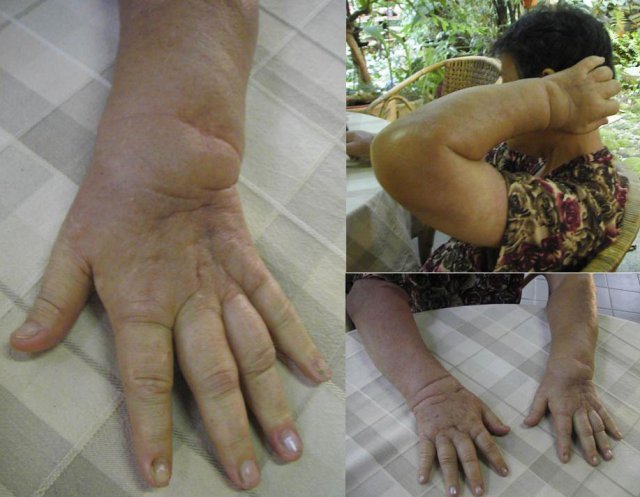
Thanks Doc. for sharing with us. Dato Hajjah Ilani was not the only person who died after a failed war. There were (and are going to be) many more patients like her.  My only response to this episode is to lift up my hands in despair. But of course, I am not going to give up! Dato Illani’s message was: Learn from my mistake, do not go for chemo. And we are going to tell the world just that! But first let me say this loud and clear: It is not for me or CA Care to tell you, cancer patient, what to do – to go or not to go for chemo. It has to be your own decision. Our responsibility is to provide you with credible information. Read them and then make your own decision. It is your life and it is you and only you who will benefit or suffer from the decision that you have made. This is what it looks like if a chemo-drug spills onto your unprotected hand. What happens when a bottleful of this drug is pumped into your body?

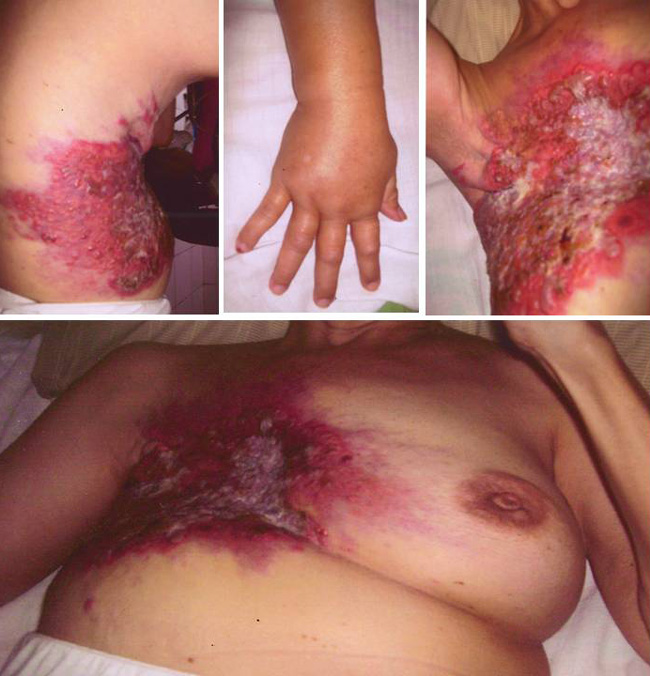
This is what it looks like if doctors “messed” you up.

Picture below: Seventy-three-year-old Indonesia underwent a mastectomy. Three months (not years!) later her cancer recurred. She underwent chemotherapy and radiotherapy. The treatments were stopped half way because she was weak and was unable to walk. Is this the so-called scientifically proven method? Better than snake oil?  What if you just DO NOTHING?

Some of you may tell me: “But you are biased. You only write about the bad things … what about the good side of chemo? “Perhaps you may be right! After all the patients who come and see me are generally the failed cases – after the chemo or radiation could not save them anymore! The successful patients do not come and see me anyway. Excuse me, I get to see only the ugly side of medical treatments.

However, my question is: “Why are there so many bad cases?” Can’t the so-called scientific medicine do better than that? Then again I want to ask: “How wrong or skewed am I – if at all I am biased?”

EVIDENCE AND EXPERT OPINION

I suggest that you visit our website:  https://cancercaremalaysia.com/category/breast-cancer/ before you cast the first stone. Read and hear for yourself what many others with breast cancer have got to say.

Then read books about breast cancer. Let us start off with the following:

In my book, CA Care Experience with BREAST CANCER, I have answered this most important question: How effective is chemotherapy? Let me quote what I wrote:

Graeme Morgan & Associates (Clinical Oncology 16:549-560; 2004) wrote:

  • The overall contribution of curative and adjuvant chemotherapy to 5-year survival in adults was estimated to be 2.3% in Australia and 2.1% in the USA.

In Australia, of the 10,661 people who had breast cancer only 164 people survived 5 years due to chemotherapy. This works out to 1.5% contribution of chemotherapy to survival.

Eva Segelov in an editorial (Australian Presciber 29:2-3; 2006) suggested that:

  • Chemotherapy has been oversold. Chemotherapy has improved survival by less than 3% in adults with cancer.

M. Veroort & Associates (British J Cancer 19:242-247; 204) concluded that:

  • Breast cancer mortality reduction caused by present-day practice of adjuvant tamoxifen and chemotherapy is 7%.

Guy Faguet (The War on Cancer: An anatomy of failure …) wrote:

  • An objective analysis of cancer chemotherapy outcomes over the last three decades reveals that, despite vast human and financial expenditures, the cell-killing paradigm had failed to achieve its objective … and the conquest of cancer remains a distant and elusive goal.
  • Chemotherapy for cancer is based on flawed premises with an unattainable goal, cytotoxic chemotherapy in its present form will neither eradicate cancer not alleviate suffering.

In my book, Understanding Cancer War and Cure, I quoted the following experts:

Dr. John Lee, author of What Your Doctor May Not Tell You About Breast Cancer, wrote:

  • Chemotherapy is an attempt to poison the body just short of death in the hope of killing the cancer before the entire body is killed.
    • Most of the time it doesn’t work.

Alan Levin, professor of immunology, University of California Medical School said:

  • Most cancer patients in this country die of chemotherapy.
  • Chemotherapy does not eliminate breast, colon or lung cancers.
  • This fact has been documented for over a decade.
  • Yet doctors still use chemotherapy for these tumours.
  • Women with breast cancer are likely to die faster with chemotherapy than without it.

In the book, Enter the Zone, Dr. Barry Sears wrote:

  • Everybody knows that our present cancer drugs are lousy ~ Wolfgang Wrasidlo, director of drug development, Scripps Clinic, La Jolla, California, pg. 164
  • The existing treatments for cancer are probably the most barbaric in modern medicine, pg. 166.

Nearer home, a renowned oncologist of Singapore wrote this in the The Straits Times, Mind Your Body Supplement, Page 22, 29 November 2006:

  • Oncology is not like other medical specialties where doing well is the norm. In oncology, even prolonging a patient’s life for three months to a year is considered an achievement.
  • Achieving a cure is like striking a jackpot.
  • Not all cancers can be cured.

For a patient to receive a cure is like striking a jackpot. Get that? But, take a pause and ask: Who is more likely to hit the jackpot first? Patients or oncologists? Read this story: https://cancercaremalaysia.com/2011/03/01/breast-cancer-she-died-even-after-multi-million-dollar-medical-bill/

My final comment, Beware of the Propaganda by the Mass Media

Do you think the newspapers, magazines and TV news reports present medical information fairly and objectively? Think again.

  • Medical propaganda is rampant. Its goal is to mislead, confuse and coerce you into supporting conventional medicine and enhancing the cancer industry’s spoils of war ~ Burton Goldberg, An alternative medicine definitive guide to cancer.

Breast Cancer: She Died Even After Multi-Million-Dollar-Medical Bill

We spent the last weekend of February 2011 in Singapore. Actually the trip was to attend a church wedding ceremony of a friend’s daughter. At the same time we had the privilege of being “pampered” by the hospitality of Im’s brother, who lives in Singapore. He put us in a hotel in Raffles City. We could see the amazing city of Singapore from our room on the 54th floor.  We took time to window-shop. Through the glass windows we could see watches on display. One showed a price tag of S$150,000 a piece! Wow, such an amazing price! In short it is always wow, wow and wow when it comes to Singapore.

Another wow struck me the next morning. The Sunday Straits Times of 27 February has a banner headline: Doctor’s charges: How much is too much?

BACKGROUND  STORY

There is an ongoing case of medical fraud making the headlines of leading newspapers. A well renowned surgeon of Singapore, Dr. Susan Lim, is accused of over blowing the medical bill of a Bruneian patient.

Read more:  Dr. Lim Embarrassed the Medical Fraternity http://topnews.net.nz/content/212192-dr-lim-embarrassed-medical-fraternity

The total medical bills that Dr. Susan Lim charged this special patient are as follows:

  • In 2004 total of $2.8 million
  • In 2005 total of $3.8 million
  • In 2006 total of $7.5 million
  • In 2007 total of $24.8 million

So what is a fair and reasonable fee a renown doctor can charge his/her patient? These are the figures given by the various medical doctors of Singapore:

  • Dr. Hong Ga Sze  said a reasonable daily fee is $1,000 to $2,000 per day.
  • Dr. Tan Yew Oo, oncologist at Gleneagles Cancer Centre said $10,000 to $20,000 per day.
  • Professor Soo Khee Chee, head of the National Cancer Centre said $100,000 a day is fine and agreed that on a day Dr. Susan Lim could have charged as much as $450,00 per day.

Don’t you think these figures are worth many, many, many wows?

It is further reported that for the period from January 15 to June 16, the total bill charged by Dr. Susan Lim amounted to $26 million. It did not include work done by Dr Lim and her team in Brunei in June and July of that year. In early August, Dr Lim, decided to waive some charges effectively halving the amount owed. In November that year, she decided to waive her fees entirely, charging the patient only the third party payments which amounted to slightly over $3 million.

Read more:  http://www.straitstimes.com/BreakingNews/Singapore/Story/STIStory_639428.html

MORE OF THE SUSAN LIM SAGA

That Sunday afternoon we flew home to Penang. I was rather curious about this Susan Lim Saga and started to surf the net for more information. These are some of the information I managed to gather.

Who is the surgeon?

A Brunei online newsportal, Brudirect News, had this report: Singapore Doc Probed For Charging Millions Of $$ From Bruneian. Dr Susan Lim is a famous surgeon who carried out Singapore’s first liver transplant about two decades ago. She has two clinics, Susan Lim Surgery, at the Gleneagles and Mount Elizabeth medical centres. Her clinic’s website lists her also as a transplant surgeon and Visiting Professor at Blizard Institute of Cell & Molecular Sciences, Barts & The London School of Medicine and Dentistry, and a Fellow of the Harvard Stem Cell Institute.

Read more: http://www.brudirect.com/index.php/2010020715483/First-Stories/singapore-doe-probed-for-charging-millions-of-from-bruneian.html

Who is the patient?

Reportedly, the victim was the late Pengiran Anak Hajah Damit, the younger sister of the Queen of Brunei and cousin of the Sultan. She had breast cancer and was treated by Dr. Lim from 2001 until she died in August 2007.

Read more: Doctor bumped up $500 bill to $93,500 AsiaOnline  http://health.asiaone.com/Health/News/Story/A1Story20110224-265072.html

How figures were inflated

An article, Straits Times on 24 February 2011, had this headline: Surgeon inflated $400 bill to $211,000. http://www.straitstimes.com/BreakingNews/Singapore/Story/STIStory_638329.html#

The article said:

  • A specialist who treated surgeon Susan Lim’s patient sent a bill for $400. She marked it up to $211,000 when she billed the Brunei High Commission here.
  • Another doctor charged $500, but Dr Lim bumped that up to $93,500.
  • Yet another bill for $3,000 was raised to $285,100.
  • Shockingly, when the patient got admitted to the intensive care unit, she asked for $450,000 for the first day and $250,000 for the subsequent four days, in the name of “monitoring services”.

Read more: Dr. Lim Embarrassed the Medical Fraternity http://topnews.net.nz/content/212192-dr-lim-embarrassed-medical-fraternity

Online USA News:  Susan Lim Singapore Medical Council http://www.onlineusanews.com/susan-lim-singapore-medical-council-11491.php

WHAT BLOGGERS SAY

1. The Great Singapore Rip off – Medical Tourism and the Dr Susan Lim Saga

With specialists like Dr Susan Lim and some members of her fraternity saying doctors can, when warranted, charge up to S$300,000 a day in fees, Singapore can well forget about emerging as the healthcare destination for those in need of medical attention. Dr Lim has become a symbol of extreme greed. The amount was not just astronomical by any stretch of imagination but was loaded with fraud. For instance, when she brought in a specialist outside of her domain, he charged less than S$1,000. But she produced a bill of more than S$300,000 for the Brunei royal family. I think this involves a combination of greed, criminality and stupidity.

Read more: Joslin Vethakumar http://joslinv.wordpress.com/2011/02/27/medical-tourism-with-specialists-like-dr-susan-lim-singapore-can-forget-about-it/

2. I was also shocked …

I was also shocked to read the testimony by Dr. Soo Khee Chee, head of the National Cancer Center, that a fee of $100,000 a day was fine and, in Susan Lim’s case, it was all right for the fee to be $300,000, without the extras, for a particular day’s consultation. How does the head of a publicly funded speciality center get the impression that this is an acceptable level of fee? No wonder, Singaporeans are “frightened” about their medical bills. They must have heard stories of these astronomical fees. There is an important lesson from this case. After the patient spend $26 million, the patient still died. No amount of money can reverse the inevitable.

For a wealthy family who can afford the high cost, it is all right to spend the money. However, for the vast majority of ordinary families who are not extremely wealthy, they should not be spending $100,000 or more for treatment that have a low chance of success. It is better to let nature takes its course.

Read more: Angry Patient  http://easyapps.sg/sgep/admin/file.aspx?id=58

3. Most doctors doesn’t see anything wrong with Dr Susan Lim’s fees

The problem with Singapore doctors is that they are in the profession for the money. Many medical professionals in other countries are doctors because of a desire to help their fellow human beings. The money, although nice, was a secondary consideration. Many sinkie doctors are also from privileged families, and were told to become doctors so as to be rich and prestigious for their families. Ever seen sinkie doctors do this? They are too busy charging outrageous fees to Indons, Malaysians, etc.

When you go and see a doctor in Singapore next time, ask yourself whether they are in it for the money or really in it for your welfare.

Read more: http://www.singsupplies.com/showthread.php?p=686418

4. Dr Susan Lim: The High Cost of Living … Unwell

  • The infamous doctor in this outrageous case (yes, the news has reached as far as New Zealand–and not just Brunei & Singapore) is a surgeon, Dr Susan Lim. According to her website, she is the first Singaporean & also the youngest Fellow of Trinity College. Oh, and she has a Wikipedia article about her too! I guess all these may lead to the ridiculously high bill?!?!
  • And the sad irony is despite all these fantastic amount of money involved, the patient still died of her breast cancer.
  • Surgeon Susan Lim treated a patient linked to the Brunei palace for seven months in 2007. Her bill: $24.8 million.
  • Dr Lim also charged the patient for cancelling two conferences, on top of treatment fees, with one bill costing $78,000 and the other up to $180,000.
  • She also charged between $35,000 and $45,000 a day when her employees accompanied the patient for radiotherapy sessions at the hospital, the newspaper reported.
  • When the patient was in intensive care for five days in May 2007, she was attended to by the doctors and nurses and for that, Dr Lim charged $450,000 for the first day and $250,000 for the other four days for “monitoring services”, according to Straits Times.

Read more: http://anonymousxwrites.blogspot.com/2011/02/dr-susan-lim-high-cost-of-living-unwell.html

Comments

I was baffled when I saw the $150,000 watch at the poshy shop – who on earth is going to buy such an expensive item? But I am sure there are buyers, otherwise the shop would not have displayed so many of them. Space cost a lot of money in Singapore!  Then I looked at what I wore. I only have a less-than- $50 watch! And I am proud of it. I had it for many years now and I have not missed any of my plane   flights yet – meaning my $50-watch has not failed me at all. I wonder what is the difference between my cheap watch and that expensive one?

Besides the watch, today, I have also learned that medical treatments can be extraordinarily expensive in Singapore. It can amount to millions of dollars. I have heard of many expensive charges before but not as expensive as this one. Some years ago, someone sent his wife for leukemia treatment in Singapore. He spent about RM 1.8Million on her treatments. But, at the end his wife also died. The royal patient incurred millions on her medical bills and she also died.  Not much difference from my $50-watch.

Let me repeat what Angry blogger wrote:  “After the patient spend $26 million, the patient still died. No amount of money can reverse the inevitable. For a wealthy family who can afford the high cost, it is all right to spend the money. However, for the vast majority of ordinary families who are not extremely wealthy, they should not be spending $100,000 or more for treatment that have a low chance of success. It is better to let nature takes its course.”

Perhaps he is right. When we have no money to throw around, it is better to let nature takes its course.

It is not for me to comment on the ethics, morality or the right or wrong of the above saga. I believe each of us lives our life guided by our own moral compass. Fairness, morality, etc. are but perceptions and they reflect our upbringing. I came from a poor family. My mother taught me to be thrifty since I was small. So please excuse me for wearing a $50-watch.

When cancer patients come to see me, I too want to try to save as much money for them – just the way my mother taught me to be thrifty with what I have. I fully understand that patients want the best – but the best may not necessarily be the most expensive. I wonder how much better is a $150,000 watch   compared to my $50-watch? There is a good lesson which cancer patients can learn from this story. When consulting infamous experts ask them these questions:

  1. Can you cure my cancer?
  2. What would be the total cost?
  3. Are there side effects associated with the treatments?

Then make your decision wisely after critically evaluating the answers given.

When we started CA Care in 1995, I was mindful of the “get-rich” temptation that we may encounter as we become more effective and well-known.  After all I am also as educated as those experts. I am a Ph.D. and was a full Professor in the University. I was awarded  a research fellowship by the prestigious Alexander von Humboldt Foundation of Germany and also the Matsumae International Foundation of Japan. So, I am not short of valid credentials.  For the past fourteen years, I have counseled thousands of cancer patients. Sometime I would spend many hours with a patient to help him/her through his/her problem.  I would fly to Kuala Lumpur and stay for two days there helping patients. For all these, I accept NO consultation fees – it is all for free.

To ensure that I would not stray and remain true to our mission, I adopted this prayer for CA Care.

Make us Lord,
An instrument of Your love and a light in the path of darkness.
To those who are lost, help us show a way
To those in despair, let there be Hope
To those in sadness, let there be Joy.

Grant us Lord,
Wisdom to do things rightly,
Strength to humbly help others, and
Courage to resist greed and self-glorification.

Throughout all these years, when I wake up each morning, I would say this short prayer: Today, show me Lord Your way. So help me Lord. And let Your will be done.

P/S  A medical doctor who read this post wrote me this message:

Dr Susan Lim saga – all the riches in the world can’t buy happiness. Her greed will eat her up someday.

Update:

Susan Lim issued bills in ‘arbitrary, opportunistic’ manner

SINGAPORE – The Court of Three Judges, after analysing the bills issued by Dr Susan Lim, said the invoices were issued in an “unsystematic, arbitrary and, ultimately, opportunistic manner”. Dr Lim has lost her battle to overturn her conviction for overcharging a royal patient from Brunei. Dr Lim faced a total of 94 charges of professional misconduct …. found her guilty of professional misconduct over the $24 million bill.

http://yourhealth.asiaone.com/content/susan-lim-issued-bills-arbitrary-opportunistic-manner

An Unbelievable Story: Remove Your Kidney Immediately or Else You Die!

Moi, a 50-year-old female, had problems with her “gassy” stomach.

  1. In October 2002, Moi went to a private Hospital A for a checkup. No problem was detected.
  2. In March 2003, Moi went to another private Hospital B for endoscopy, ultrasound, CT scan and blood test. The results:
  • CT scan on 5 March 2003, showed a 3.3 cm well-defined simple cyst in Segment 1 of her liver. In the upper pole of her right kidney was a 2.4 cm enhancing nodule with exophytic component.
  • USG showed a well distended gallbladder with multiple polyps with an average size of 0.6 cm.
  • Blood test showed all parameters were within normal limits except for an elevated ESR (26 mm/hr) and GGT (40 IU/L).
  1. Not satisfied with the above results, Moi went to another private Hospital C. An ultrasound on 13 March 2003 confirmed the presence of:
  • A 3.4 x 3.3 cm cyst in the right lobe of her liver.
  • A 6.7 mm polyp in her gallbladder.
  • MRI of her abdomen done on the same day confirmed the presence of a 2.5×1.6×2.5 cm, irregularly enhancing mass in the upper pole of her right kidney with features suggestive of an underlying renal cell carcinoma.
  • An upper endoscopy done on the same day indicated gastritis and gastric polyps.

The surgeon in Hospital C suggested a complete removal of her right kidney. Moi was unhappy with this suggestion. She went to consult another surgeon of another private Hospital D. She was given the same advice – “Remove the kidney as soon as possible or else you die.”

Moi defied the doctors’ suggestion and on 14 March 2003, she came to seek our help. She presented with the following:

  1. Numbness of fingers for the past one and a half years.
  2. Pains, two or three times a day. She would have pains if she walks or stands up. There would be no pains if she sits down.
  3. Her sleep, appetite, bowel movements and urination are normal.

We prescribed Moi Capsule A, deTox tea, Kidney Tea and Stomach Function Tea. Surprisingly enough, Moi became well within a week. She continued taking the herbs for about seven months. Her last visit to CA Care, according to our record, was on 21 November 2003. From then on, we never got to see Moi again.

It was with great surprise and gladness that on 10 September 2010, i.e., seven and a half years later, Moi came to CA Care again. This time not for herself but to bring her sister-in-law who had ovarian cancer.

Listen to our conversation that day.

Comments

Do you believe this story? We find it hard to believe. But it is happening right at our centre. How could we not believe it? Perhaps there is something else that we could not believe? It would be an insult to those experts in those many hospitals if we were to say that their scanning machines were not functioning properly or that their opinions were somehow wrong, at least in this particular case. So, we are not going to say that.

There is something that makes us not want to believe it even though it is true! If you are confused with what we say, don’t worry. We are just as confused.

One thing, we would say, Moi was just been plain lucky. If she were to see us earlier and showed us all those scans and reports, we would also “press” her to go for surgery – to save her life in time! In this case, she took six months “hopping” around from hospitals to hospitals. And by the time Moi came to us, she was firm with her decision –  Surgery? No thanks!  So the decision to defy the doctors’ recommendation was entirely hers. She gambled with her life and thus far she had won.

Again, let us talk about opportunity cost. What could have happened if Moi were to passively follow the doctors’ recommendation? One kidney gone, and perhaps her gallbladder too would be cut off since there were many polyps. Then, what about the stomach polyps? What is life like after that?

There is one more thing that made us not believe this story – you mean to say by just taking herbs for a week, her problems were gone? That’s impossible!

During our conversation, Moi raised one interesting point. She said: “I went to the doctors because of my stomach problems – too much wind. I could not figure out why they wanted to remove my kidney.  The doctors were unable to enlighten me what stomach wind has got to do with my kidney?”

She wanted the doctors to solve her stomach problems but they did not offer to do that.

One lesson to learn from this story: You just have to have guts to defy your doctors. Know that human beings are not God and we may not be right all the times. What made them think that Moi is going to die soon if she did not remove her kidney?

As a conclusion, allow us to quote an email that got into our inbox recently. Let us be clear on the onset that we are not sure of the truth of this email. Nevertheless, the message of the mail relates well with this case.

This is what the email says:

“A friend of mine was diagnosed as a having a septic leg and being a diabetic, he was told by the doctors that the leg up to his ankle must be cut since gangrene has already set in. It will cost RM25K just to saw off the leg. I told him to get 2nd opinion … The specialist in YY told him that there is nothing wrong with the leg and gave him antibiotics instead. Today (four years after the incidence), at age 61, he is still working and doing things such as climbing without much problems. What would it be if he had listened to the xxx doctor at xxx? He would be walking with crutches! Poorer by about 25K and without a job to support his family. What a shame these…”

Another email is supposedly written by a medical doctor. It says:

“I am a general surgeon in private practice… An 8-year-old boy was brought to see me by his father after suffering from fever, cough and vomiting for 1 day. He DID NOT HAVE ANY ABDOMINAL PAIN. He was initially seen by a general practitioner who insisted that the father bring him to see ‘Surgeon G’ at a specific private medical centre…  when he brought his son to see ‘Surgeon G’, the surgeon examined his son’s abdomen and pressed so hard that he elicited pain. Then the surgeon told the father that the son had a perforated appendix and insisted that he be operated the same night. The father was baffled because his son did not have any abdominal pain prior to that examination but he reluctantly agreed upon insistence by the surgeon. About 1 hour prior to the surgery, the father suspected that something was not right and he asked for his son to be discharged. He then brought his son to see me. After a thorough examination, I was convinced that the boy did not have appendicitis and definitely not a perforated one.”

The email ended with this message:  “Please circulate this article to your friends and loved ones and let’s hope no one will suffer…”


Lung Cancer: Pain and Sleepless Night after Chinese New Year Dinner

Sujo (M858) is a 58-year-old male from Indonesia. Sometime in August 2010, he complained of breathlessness when climbing the stairs. A check up with a GP in Medan indicated fluid in his lungs.  Sujo came to a private hospital in Penang in October 2010. A CT scan indicated gross left pleural effusion associated with severe lung collapse. There was lytic lesion at T4 vertebral body associated with erosion. His liver showed fatty infiltration.

Two liters of fluid were tapped out of his lung. A pleural biopsy showed a papillary, gland forming malignant neoplasm. According to the HPE report, a possible diagnosis includes:

  1. Papillary adenocarcinoma of pleural origin – malignant mesothelioma, or
  2. Metastatic adenocarcinoma from a primary in the bronchus/lung.

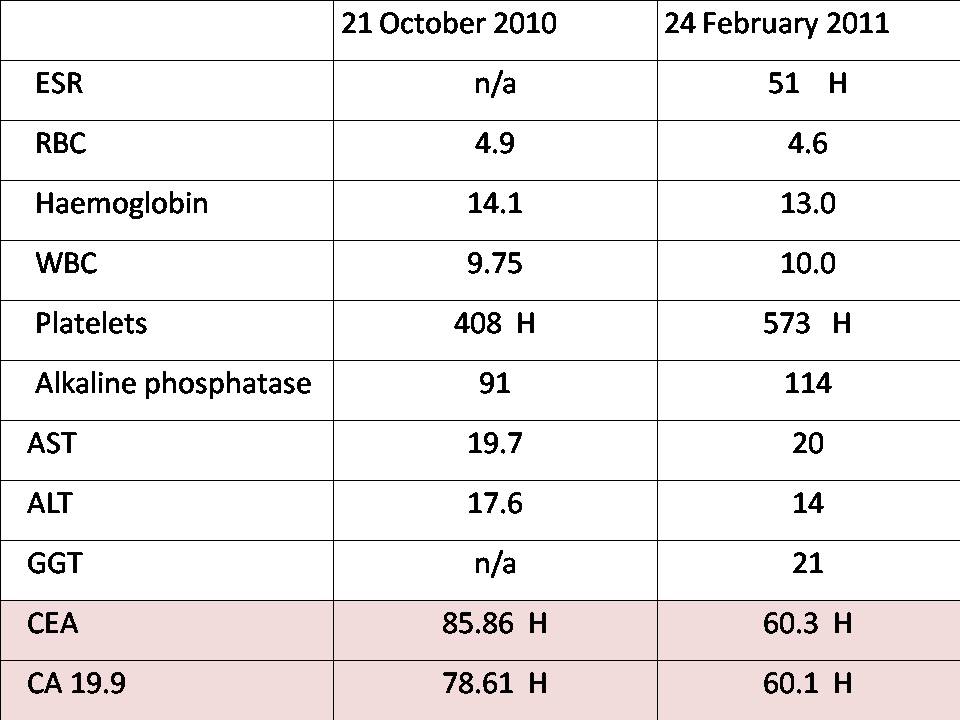
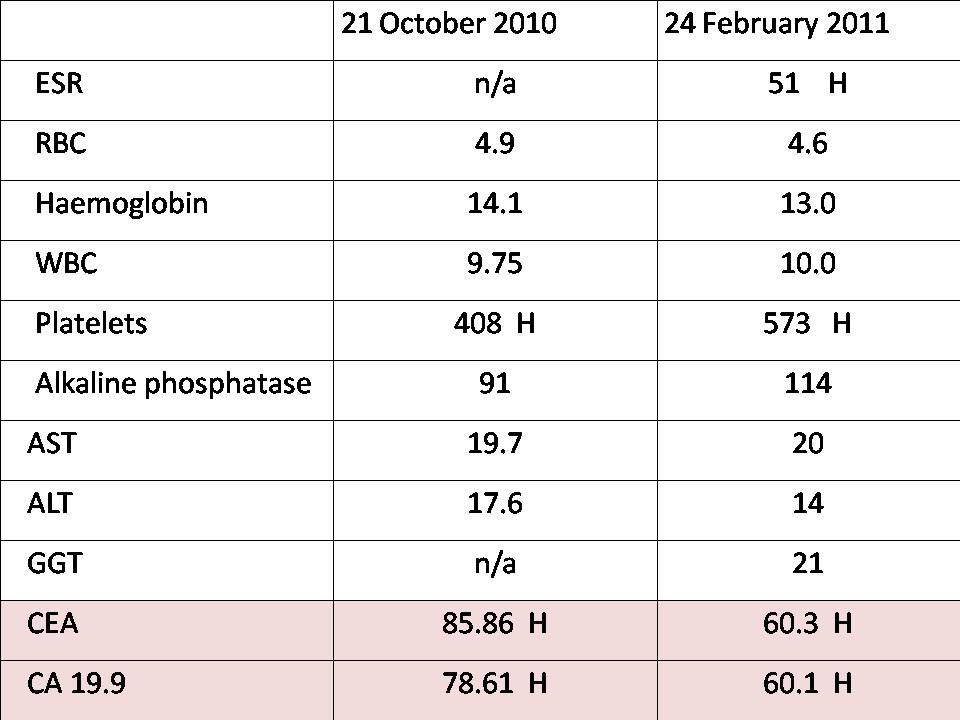
Sujo went to an oncologist at the cancer hospital for a second opinion. His blood test on 21 October 2010 showed CEA = 85.86 and CA19.9 = 78.6. Sujo was asked to undergo chemotherapy, which he promptly rejected.

Instead, on 22 October 2010, Sujo came to seek our help. He had no symptoms and was prescribed Capsule A, Lung 1 and 2 teas, Bone Tea and C-tea. After taking these herbs, Suja came back to see us twice and reported that his health had improved. He was able to eat, sleep and walk distance without any problem. His breathlessness had resolved. His bowels movements were good.

Pain After Chinese New Year Dinner

Sujo and his wife told us that on the eve of the Chinese New Year (2011) Sujo took chicken curry (only the gravy not the chicken). Besides that he also ate steam fish with salted beans (tau chiau). Two days later, on the morning of the second day of CNY, he suffered severe pains.  Sujo said: “I am very tolerant to pain. But this pain was so severe that I cried. I have never cried before in my life.” It was a “pulling pain” and he was not able to lie down. He had to sit upright and the pain lasted from 8 to 9 p.m. until 3 a.m.  Then he would fall asleep for about 2 hours. The pains persisted every day.  Sujo took the painkiller, Tramadol 50 mg – once or twice a day. But the medication did not relieve his pains.

Sujo confirmed that before this dinner, he did not have any pain at all. The pains only came after the dinner.

Sujo came to see us on 13 February 2010. He presented with severe pains in the back and shoulder blade. He had partially lost his voice. Acugraph reading showed his Qi was very low. The past 8 days or so, he was not able to sleep.

Seeing  Sujo’s condition, we put him on the e-therapy right away. See below for the amazing results.

Day e-therapy Response
13 February 2011 – night Detox 2  (34 minutes) Next morning, less pain and was able to sleep whole night.
14 February 2011 – morning Detox 3  (51 minutes)Loss of voice  (32 minutes) Next morning, pain reduced. No problem sleeping. Voice returning – louder.
15 February 2011 – morning Intercostal  (24 minutes) Loss of voice  (32 minutes) Lumbago FS  (20 minutes) Next morning. Pain 70% gone. Pain mainly at “Shingle” area suffered since 4 years ago.         Voice even louder. No problem with sleep.
16 February 2011 – morning Detox 3   (51 minutes)Shingles  (35 minutes) Next morning. Over all condition better than the previous morning.
17 February 2011 Detox 3  (51 minutes)Shingles  (35 minutes) Sujo is going home to Medan tomorrow morning. He looks good – health restored!

Listen to our video conversation:

Part 1: Pain and Bad Food

Part 2: Pain Relieved After e-Therapy

Comments

For most people, an auspicious day (may it be Christmas, Valentine, Thanksgiving, or whatever) generally calls for a celebrative feast. And very often cancer patients find it a good excuse to indulge in the food that they like. Of course, most of them could not get away from such folly after that. Last year, KM – who had colon-liver cancer and had survived for three years, decided to celebrate the 2011 Chinese New Year in style. He ate fried chicken, etc. Almost immediately he landed in the hospital with severe pains, He died after that. Now we have Sujo who did about the same thing like KM. His wife said: “I thought it is okay to eat such food since it is Chinese New Year!” Unfortunately, cancer does not understand Chinese culture!

Some people may wish to dispute that the pains had nothing to do with the dinner! Of course there is scientific proof to substantiate such connection. But common sense and experience tell me so. Let me give you some stories.

My close relative was brought to my house. She was in a semi-concious state with limbs all stiff. Not knowing what had happened the logical thing to do was to send her to the nearest private hospital immediately. She was admitted.  In the meantime, I had the opportunity to find out what had happened. This relative had been eating a few of kilos of “dokong /duku” before the problem. She ended having a bloated stomach and went to see a GP who prescribed certain medication. After this medication, she become semi-concious and her limbs turned stiff.

While we waited around her hospital bed, the neurologist came.  With an air of authority and competence he insisted that a lumbar puncture be done. I humbly tried to suggest to the learned doctor that this could be the result of the drug that she had just taken. No, he would hear it – go for the lumbar puncture. Preparation was underway for the procedure and it was almost mid-night when my relative awakened! She refused the procedure!  The next morning, she was discharged and we became poorer by RM1,500! That was the cost of one night hospitalization without doing anything significant.

There was this man from Medan who had lung cancer. He was supposed to undergo radiotherapy that day, but unfortunately the machine broke down. Since he was free, he walked around the hospital and saw some durians. He and his son feasted on the durian – that was about 3 p.m. By 6 p.m. the man became breathless and had to be admitted into the ICU. A CT scan was done. Nothing appeared wrong on the film! The son asked the doctor if this was due to the durian. The doctor said, NO, nothing to do with the durian!

Bob had liver cancer that had spread to his lungs. His doctors told him there was no treatment and he would just go home and wait for his time. He came to CA Care and was started on the herbs. His health was restored. After being “well” Bob started to eat what he liked. A few days later he came back to us feeling “half dead”. The next day he died. Listen to what he said by clicking this link: http://cacare.com/index.php?option=com_easyfaq&task=view&id=338&Itemid=39

The story of June is worth repeating. June vomited and had to be hospitalized. Two hours before June vomited she was in perfect health. Her problem started after she ate a packet of nasi briyani at 4 p.m. By 6 p.m. the nausea and vomiting started. By about mid-night June was admitted into the hospital. One doctors said: “Based on my experience this is due to her recurrent cancer.” June was asked to undergo chemotherapy immediately. My advice was: “Do nothing! Try to flush out the “rubbish” in her stomach.” Of course the oncologists were upset. Anyway, ten days later June walked out of the hospital – without the chemo of course! Listen to her story by clicking this link: http://cacare.com/index.php?option=com_easyfaq&task=view&id=340&Itemid=39

In the case of Sujo, it is clear that for the past four months he was leading a pain-and-problem-free life. But on the second day of the Chinese New Year his life turned into “hell” – how could that be? He must have done something different or wrong. That was the question I posed to him and his wife.

The pains did not go away, and lasted for about eight days. Tramadol could not help him. When he came to CA Care on 13 February 2011 he was still in pain. But the next morning, 14 February 2011, the pain almost disappeared and he was able to sleep that night.

Okay, ask this question: Could the pains just appear and disappear without any reason? Common sense tells us that something must have happened to trigger the event. In the first instance he ate bad food – hence the pain. In the second instance, he was on the e-therapy for 34 minutes and the pains almost disappeared! Of course all these problems do not show up in a CT scan or MRI. So let us not waste time and money doing these procedures.

While in Penang, Sujo had his blood test done. The results are as follows:

Before receiving his latest results, I was a bit skeptical – not knowing what to expect. But it was indeed a blessing to see that both his CEA and CA19.9 had gone down by about 30% and 24% respectively after 4 months on our therapy.  Impressive results indeed bearing in mind that he did not receive any medical treatment!

Most amazing of all is the healing of his pain. When he came, we told both Sujo and his wife that we expected to solve his problem by about a week. So they should be prepared to stay that long in Penang. Based on experience, we were rather confident that the pain would go away after undergoing  the e-therapy. Apart from our experience, we have no other option! Undergoing the e-therapy at CA Care in Penang is free-of-charge (only for our cancer patients!).  The next morning, we were glad to be able to tell Sujo and his wife that they were really blessed! The e-therapy was effective for his pains and loss of voice. Most important Sujo was able to sleep.  After three days, we were very happy  to be able to tell Sujo and his wife that they  could go home to Medan! Amazing healing indeed!

Liver Cancer: Benefit and Side Effects of Nexavar

Mutu (not real name,H520) is a 48-year-old male. In November 2010 he had coughs with some phlegm. In late December 2010 he was admitted into a private hospital with complaints of right hypochondrial pain (i.e., pain under the rib-cage margin). He was nauseated but no vomiting. He also had post prandial dyspepsia (i.e., a medical term meaning feeling of unusual fullness, nausea, loss of appetite or belching following a meal).

CT scan of the abdomen showed multiple masses measuring 7.3 x 5.1 cm, 6.3 x 6.1 cm and 7.3 x 4.5 cm,   in the right lobe of his liver, suggestive of diffuse hepatocellular carcinoma or liver metastases. A biopsy was performed on 23 December 2010 and confirmed moderately differentiated infiltrating liver cancer.

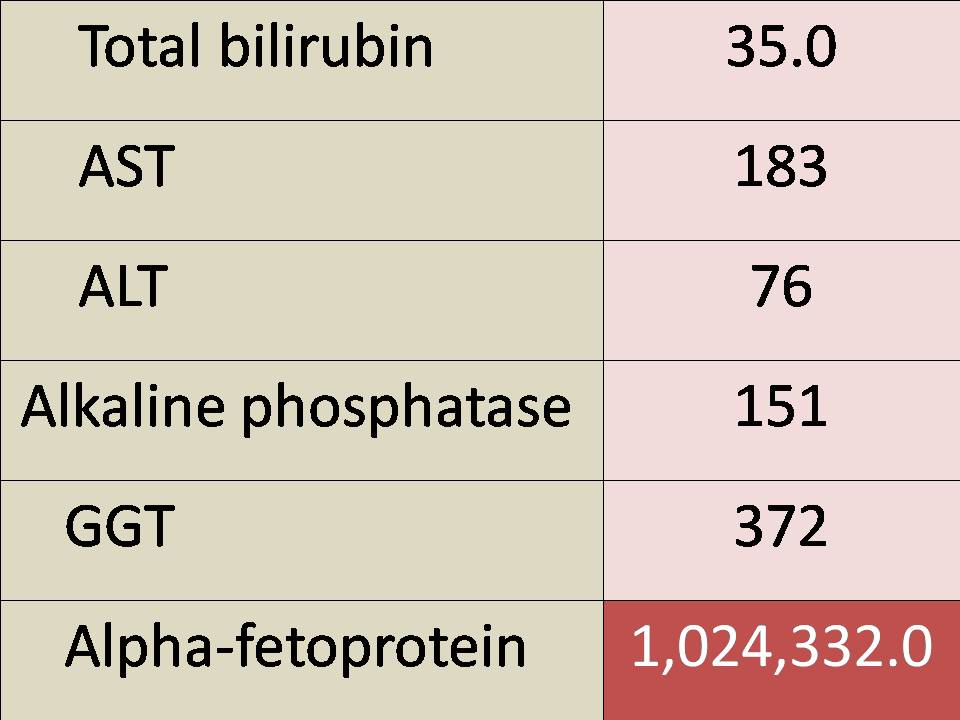
A blood test results, done on 19 January 2011, are as follows:

Mutu was prescribed Nexavar – an oral chemo-drug that cost about RM20,000 per month.  He was told that Nexavar would not cure his cancer. It would only control it (whatever that means, see discussion later).

After taking Nexavar for a week, he suffered the following side effects:

  1. Bloatedness
  2. Shoulder muscle pain
  3. Sleeping difficulty
  4. Nausea and sometimes vomiting
  5. Dizzy when walking
  6. Loss of appetite due to bloatedness
  7. Cramps of fingers and toes
  8. Constipation

Listen to our conversation on 23 January 2011, the day he first visited us.

Comments

Let me highlight some of the important points of this case in a question-and-answer format.

  1. Assuming for a moment that you are a medical expert. I believe you have seen hundreds or thousands of CT scans and blood test results. From your experience, what can you make out of this case by just looking at the scans and blood test results? The images are bad and the AFP (alpha-fetoprotein) exceeded a million points. Honestly, is a biopsy really necessary? So, after a biopsy, what can you offer to “cure” the patient?
  2. It appears that all that modern medicine can offer is Nexavar. Would you as an expert offer this drug to the patient knowing that it cost about RM 20,000 per month and it does not cure? I guess you would if the patient is rich enough to pay for it or if his insurance covers the cost. This is a win-win situation you may say. After all this is what buying a health insurance is for! But hang on. In this case what if Mutu’s total medical cover is limited, assuming it is RM 100,000? That means the insurance pays for only five months’ supply of Nexavar. What happens after that? And within 8 to 11 months patient dies (see point 4 below)?
  3. As an expert, would you admit to your patient that Nexavar cannot cure his cancer? Yes, you did in this case. That is honorable of you.  Obviously not many patients are going to pay that kind of money if there is no cure.  You justified by saying that Nexavar can control it. That sounds good, convincing and heroic  isn’t it? Especially if the patient is desperate and helpless. Such patients need that “last straw”. But what do you really mean by control?
  4. Have you gone into the website of the drug company that sells Nexavar? If you do, you may find this very impressive table with equally impressive so-called “scientific” data.

  • In a study of 602 people … Nexavar helped slow cancer growth and helped extend the lives of patients compared with patients who did not receive Nexavar.
  • Nexavar extended overall survival by 44%.
  • See the diagram below (from: http://www.nexavar.com/scripts/pages/en/index.php. Accessed on 1 February 2011)

For the benefit of those who are not used to reading and interpreting research data, let me explain a bit more. From the diagram above, we know that there were 299 patients taking Nexavar (n= 299) and the  median overall survival is 10.7 months. Compare this to 303 patients who did not take Nexavar (group called Placebo, n = 303) which had a median overall survival of 7.9 months.

The glaring facts of this study showed that:

  • By taking Nexavar patients lived longer by 2.8 months. Take note that they were not cured at all. Eventually patients died. The median survival ranged from about 8 to 11 months, irrespective of whether they take Nexavar or not.

So based on the above experimental data, ask this question. Would you spend RM 20,000 per month and for every month, to live 3 months longer? Again, take note that the price of Nexavar varies –  depending on  where you buy it and whether you pay cash or pay through insurance claim. Obviously the price is higher when your insurance pays for it.

Of course, if this point is crudely presented like I did above, extending life by 2.8 months is not impressive at all!  The educated people deviced a better way of saying things in a nicer, attractive but deceptive way. Another way of saying is:  Nexavar extended overall survival by 44%. Increasing survival by 44% is very impressive indeed.

Mark Twain (of the USA) made famous this phrase:  “There are three kinds of lies: lies, damned lies and statistics.” This phrase is now used to describe “ the use of statistics to bolster weak arguments, and the tendency of people to disparage statistics that do not support their positions”. In simple language, the   statisticians (the experts of numbers) “massage” the data to make what seems ugly to look pretty. Take note also this “manipulation or massage” of data is not wrong – it is academically legitimate!

So take it from me that “Extending life by 2.8 months” or “Extending overall survival by 44%” are both right and academically acceptable. Unfortunately I still cannot figure out how they come up with the 44 percentage figure. I need a bit more time to learn this “art of stretching the truth with numbers.”

With a simple mind like common folks, I would have just do this: I would take 10.7 minus 7.9 = 2.8. Then I would divide 2.8 by 7.9 and multiple by 100 to convert it into a percentage. If I did this, I ended up with only 35%. To avoid having to explain “the confusing concept of statistics”  let us give the benefit of the doubt to the experts and the drug manufacturer and accept what they say: Nexavar extended overall survival by 44%.

But folks let’s concentrate on what matters most.  You can choose between these two “options” below. But know that both mean the same thing!

  • As a patient if you are told that Nexavar can extend survival by 44%, what would be your reaction?
  • On the other hand, if you are told that Nexavar can extend your life by only 2.8 months, what would be your reaction?

Having got over this, what if you are clearly told that the extension of survival by 2.8 months is no free lunch.  Apart from having to pay RM 20,000 per month, there are a variety of side effects you may have to endure. In this case, Mutu suffered eight side effects after consuming Nexavar for a week.

But don’t fault the drug company. You have been forewarned. Patients taking Nexavar may suffer the following side effects (according to the company’s website):

  1. Decreased blood flow to the heart and heart attack.
  2. Bleeding problems. Nexavar may increase your chance of bleeding.
  3. High blood pressure.
  4. A skin problem called hand-foot skin reaction. This causes redness, pain, swelling, or blisters on the palms of your hands or soles of your feet.
  5. Perforation of the bowel.
  6. Possible wound healing problems. You may need to have a surgical or dental procedure.
  7. Birth defects or death of an unborn baby.
  8. Rash, redness, itching, or peeling of your skin
  9. Hair thinning or patchy hair loss
  10. Diarrhea
  11. Nausea or vomiting
  12. Mouth sores
  13. Weakness
  14. Loss of appetite
  15. Numbness, tingling, or pain in your hands and feet
  16. Abdominal pain
  17. Fatigue
  18. Weight loss

Those medically trained may find the following list of side effects more exacting:

Very common: lymphopenia, hypophosphataemia, haemorrhage (incl. gastrointestinal, respiratory tract, cerebral), hypertension, diarrhoea, nausea, vomiting, rash, alopecia, hand-foot syndrome (palmar plantar erythrodysaesthesia syndrome), erythema, pruritus, fatigue, pain (mouth, abdominal, bone, tumour, headache), increased amylase and lipase.

Common: leucopenia, neutropenia, anaemia, thrombocytopenia, anorexia, depression, peripheral sensory neuropathy, tinnitus, congestive heart failure, hoarseness, constipation, stomatitis (including dry mouth and glossodynia), dyspepsia, dysphagia, dry skin, dermatitis exfoliative, acne, skin desquamation, arthralgia, myalgia, renal failure, erectile dysfunction, asthenia, fever, influenza like illness, weight decrease, transient increase in transaminases. Uncommon: folliculitis, infection, hypersensitivity reactions (including skin reactions and urticaria), hypothyroidism, hyperthyroidism, hyponatraemia, dehydration, reversible posterior leukoencephalopathy, myocardial ischaemia and infarction, hypertensive crisis, rhinorrhea, interstitial lung disease–like events (pneumonitis, radiation pneumonitis, acute respiratory distress, etc), gastro oesophageal reflux disease, pancreatitis, gastritis, gastrointestinal perforations, increase in bilirubin, jaundice, cholecystitis, cholangitis, eczema, erythema multiforme, keratoacanthoma / squamous cell cancer of the skin, Stevens-Johnson syndrome, gynaecomastia, increase in alkaline phosphatase, INR abnormality, prothrombin level abnormality.

Rare: QT prolongation. Not known (cannot be estimated from the data available): angioedema, drug induced hepatitis, radiation recall dermatitis.

Date of Revision of the Text: November 2010

5. Solutions?

The lady was indeed sharp. She asked me: “Then, that are the solutions?” I must admit I cannot guarantee any cure. We know that in cancer there is no such thing as a cure (meaning, real cure, not just surviving 5 years). In the case of advanced liver cancer, we all know that survival is only in terms of months. So, we are faced with a difficult case. This is the first time that a patient came in with his alpha-fetoprotein reading well over a million. The highest we have ever seen in 14 years is about half that value.

We have two suggestions for Mutu.

a)      Take care of your diet. He was given a list of food that he can and cannot eat. Unfortunately this list is way off the mark compared to our recommendation.

b)       Take herbs and hope for the best. If a patient has no pain, can eat and sleep – these are about all we can hope for. How long to live is not ours to decide.

It is up to Mutu to decide if he wants to continue taking the Nexavar and reap whatever benefits (and also side effects) that are associated with it. But ask this: Is it worth it?

Some of you may say: Ah, you snake oil peddler – you and your herbs and dietary fad – these are just quackery. They are not proven and not scientific. Hang on, before you cast the first stone, take time to read the following ten stories. Tell us where we go wrong if you think that we are wrong!

1.  Liver Cancer: Two months to live yet still fine after one and a half years!

2.  Liver-Bile Duct Cancer: Herbs Kept Him In Excellent Health

3.  Only On Herbs And She Lives More Than Five Years!

4.  He Declined Medical Treatment

5.  Hepatoma – He Refused Chemotherapy

6.  Healing of Metastatic Liver Cancer

7.  The Story of Tony

8.  Colon-Liver Cancer: Seven Years On The Herbs

9.  The Story of Goh

10. The Story of My Buddy: Colon-Liver Cancer


Liver Cancer: Two months to live yet still fine after one and a half years!

PC, 63-year-old female, had coughs for about three weeks. Then she developed fevers. She went to a hospital but the doctor could not find any wrong with her. She was sent home with a supply of Panadol (paracetamol). Not satisfied, PC went to a private hospital in Ipoh. A chest X-ray showed left pleural effusion (i.e. fluid in her left lung). The fluid was tapped out. An ultrasonography on 23 September 2009 showed a 2.6 cm lesion (suggestive of hepatoma or liver cancer) in the right lobe. In addition, there was underlying liver cirrhosis with portal hypertension and ascites. The spleen is enlarged. Biopsy of the lesion was not advisable in view of ascites, low platelet and the tumour site too deep and adjacent to the portal vein.

PC was asked to go home. There would be no treatment for her. She was also told that she had only two months to live.  Four days later, 27 September 2009, PC came to CA Care for help. She presented with the following:

  • Difficulty sleeping
  • Poor appetite
  • Tiredness
  • A bit of difficulty in breathing
  • Feeling of “muscle pull” in the chest once a while

PC came to see us after being told by one of our patients who had been doing well with our herbs.

We prescribed PC with Capsule A and B, Lung 1 and Lung 2 teas, Liver 1 and Liver 2 teas.  We reminded her that after taking the herbs for a few days, she might feel tired, have diarrhea, etc. This is a healing crisis and there is nothing to worry about – continue taking the herbs.

These are natural herbs with no additives. They have to be brewed. The taste and smell of the concoction are not going to be pleasant. PC replied: “If I want to get well, I have to drink them!”

Two months on the herbs, PC came back and told us that both her sleep and appetite had improved. Similarly her breathing had also improved. There was no more feeling of “muscle pull” in her chest. One year and four months later, on 14 January 2011, PC was still well. Below is the video recording of her visit that day.

Liver Cancer Part 2: One and Half Years and Still Alive

Blood test results done over the past one and half years

19 Oct. 2009 20 July 2010 24 Nov. 2010
ESR 70   H 39    H n/a
RBC 4.1 4.1 4.0
Haemoglobin 13.2 12.8 14.0
Platelet 580  L 67.0 46.0
WBC 4.5 4.0 4.4
Total bilirubin 36    H 39.1 42.0
Alkaline phosphatase 165  H 137  H 193  H
AST 49    H 51    H 44    H
ALT 22 55    H 36
GGT 452  H 357 H 359  H
Alpha-fetoprotein 14.7 n/a n/a
CEA 0.9 n/a n/a
CA 125 19.3 n/a n/a

Comments

After one and half years, PC was doing fine. Her blood test results did not show deterioration of her condition although some numbers are not good. Platelet count is low and we advised PC to take papaya leaf tea for a month or two. After that, go for another blood test. Hopefully her platelets will increase. PC is not keen to drink this tea because of its bitter taste!

Like most patients, PC is more interested to see if she can reduce the daily intake of her herbal teas! As much as we understand that it is really “difficult, bothering or even sickening” having to drink the awful tasting herbal concoctions, we told PC that she has no choice but to continue doing what she is doing. No change!

We have to remind PC of what happened when she went to see her doctors in September 2009. She was told that there would be no treatment for her. Just go home. She has only two months to live. Now PC has survived one and a half years without any problem. She is able to sleep well, her appetite is good and there is no pain. Life has been good all the while. What more can she ask for?  We reminded PC that she must learn to be grateful and thankful for what she is now. Taking “bitter” herbs is a small price to pay for being alive – and good life too!

Our message to PC and to all patients: Be well behaved if you want to live longer! And there is no point being alive if you think that drinking herbal teas is an intolerable chore. And above all, learn to be thankful and grateful for what you have and what you are.

Stomach Cancer: After Three Biopsies She Declined Medical Treatment: Where is the logic?

DS-M906, is a 69-year-old female from Indonesia. Sometime in July 2009, DS had problems with her stomach. She consulted an internist at a private hospital in Medan. A biopsy was performed and the result indicated an adenocarcinoma, i.e. cancer of the stomach. After this examination, DS decided not to do anything. Her problem escalated and she suffered more pains.

In December 2010, DS went to see another doctor in another private hospital in Medan. A biopsy was again performed. The histopathology result indicated a moderately differentiated adenocarcinoma. Not satisfied, in January 2011, DS came to a private hospital in Penang for further consultation. A CT scan did not show any focal lung lesion. Her abdominal organs were normal. A colonoscopy showed simple haemorrhoids while the rest of the bowels were normal.  A biopsy of the pre-pyloric region was performed. The result indicated signet ring-type adenocarcinoma. There was also Helicobacter pylori associated chronic active gastritis. In short, for the third time, DS had been told that she had stomach cancer.


The doctor in Penang suggested two options – DS take medications or undergo an operation. DS declined further medical treatment and came to seek our help on 21 January 2011. Below is the video recording of our conversation.

Comments: Since DS and her children had already made the decision not to undergo any surgery, DS had no other choice but to take our herbal teas. We cautioned her to reconsider her decision to decline surgery. She was adamant that she did not want any medical treatment. One of her children said: “After surgery, she has to undergo chemotherapy. And we know that is not the thing we want to do.”

We posed this question to DS – and for that matter, to all patients. If she has already decided not to undergo surgery after a biopsy, why does she do one biopsy after another? It is understandable if only one biopsy is done – to determine what has gone wrong. But what does she expect to get by doing three biopsies?

This is one peculiarity we often notice among Indonesian patients. They come to Penang – bring all the money that they have. They spend their money on blood test, X-ray, CT scan, PET scan, biopsy, etc.  When they are told that they have cancer and need to medical treatments, some of them just pack off and go home the next day.  Is this not wasting money unnecessarily? Is there any logic in doing such thing?

This is our message to patient: Iif you don’t want to proceed with medical treatments recommended by your doctor, there is no need to do a biopsy. A biopsy is done to confirm if you have cancer, so that you can move to the next step – be it surgery, radiotherapy or chemotherapy. If you did not want to do any of these, why do a biopsy?

Again we say – before doing a biopsy, ask yourself first: If it is cancer, do I want to undergo surgery / chemotherapy / or radiotherapy? If you agree to such treatment, go ahead with the biopsy to be sure that it is really cancer. But if you do not wish to undergo further medical treatment as in the case of DS, why do you spend so much of your money doing the biopsy in the first place?

Granted – some patients say, the medical treatments are expensive and they cannot afford it. Or,  some may say they decline medical treatments because the doctors cannot guarantee a cure.  If these are your concerns, why don’t you ask the costs first or ask for a guarantee first before doing anything?

Breast Cancer: Fancy Gadget and Half A Million Ringgit Failed to Cure Her – What Now?

May (not real name) is a 39-year-old-female. In mid-2008 she delivered her child. Two months before delivery, she noticed the hardening of her left breast. Ultrasonography did not show anything wrong. The doctor suggested it could be due to the breast being engorged with her milk. Although she breast fed her baby the breast remained hard. There was no problem with her right breast. She went to consult order doctors and all of them came to the same conclusion – no problem!

Utrasonograhy of her breasts on 1 December 2008 indicated diffused inflammatory process. The left nipple was retracted. Conclusion: probably diffuse mastitis. A biopsy is advisable. Subsequent needle biopsy done did not show any malignancy. Not satisfied, a tru-cut biopsy was done on 29 January 2009. The result showed atypical proliferation of cells suggestive of an intra ductal carcinoma. An open biopsy of the breast lump confirmed invasive ductal carcinoma with high grade intra-ductal carcinoma.

May sought a second opinion from a doctor in a private hospital in Singapore. The histology slide was restudied. It was concluded that it was a ductal carcinoma in-situ, intermediate grade with comedonecrosis and infiltrative ductal carcinoma.

CT scan done on 31 January 2009 showed: a)  no metastataic deposits in the liver, b) several rounded sclerotic lesions seen in the thoracic and upper lumbar spine suspicious of metastatic lesions, c) a tiny nodule in the upper lobe of the right lung – probably a solitary pulmonary metastatic nodule. A bone scan confirmed bony metastases at the left scapula, left third rib and sites along the spine.

Histopathology report showed carcinoma cells are immunopositive for oestrogen  rerceptors and progesterone receptors.  HER2 oncoprotein is overexpressed.

May was advised to start chemotherapy immediately. The first chemo-treatment started on 2 February 2009. A pump was fitted to continuously deliver 5-FU. May also received two doses of Navelbine for each 5-FU cycle. In addition, May was given Zometa for the bone.  In total May received 13 cycles of chemotherapy from February 2009 to October 2009.

At this point I asked two questions:

  1. What did the oncologist say about the chances of a cure? The answer was: The doctor said there would be no cure. The treatment was only to control the problem.
  2. You must have spent a lot for this treatment? The answer: Yes, approximately RM 500,000. That is half a million ringgit – right? Yes, it is.

A CT scan on 27 April 2009 showed: a) a solitary pulmonary nodule in the right middle lobe. This measures less than 5 mm. It shows no change from previous examination, b) multiple sclerotic bony lesions. These were already noted in the previous CT scan.

May went to China for another opinion in May 2009. A PET /CT scan was done. The doctors in China concluded that May’s condition had stabilised and there was no need for treatment.

A CT scan done on 12 October 2009 showed the cancer had stabilised. However, throughout the whole month of October 2009, May complained of headaches, pains in the neck and shoulder. The oncologist said the pains had nothing to do with her cancer!

In October 2009, May completed her 13th chemo treatment in Singapore.

In November 2009, May went to India for further treatment using the Cytotron (Cytotron is the trade name of the device developed in India. It looks like a MRI machine that uses Rotational Field Quantum Magnetic Resonance Generator).

May received an hour of Cytotron treatment per day. While undergoing the Cytotron treatment, May continued to receive the 5-FU-Navelbine regimen (the 14th cycle). The treatment was scheduled for a total of 28 days but after the 20th tretment, May developed bad coughs and chest pain.  The doctor thought this was due to pneumonia and she was given antibiotics and cough syrup.  An X-ray indicated left pleural effusion (i.e., fluid in the lung). A week later the pains still persisted and the coughs became bad whenever May moved. A CT scan was ordered and revealed pulmonary embolism (blockage of the arteries in the lungs by blood clots that travel to the lungs from other parts of the body).  May was put on Heparin, an anti-blood coagulation medication.

May returned to Malaysia in mid-December 2009. May started to have pains again. Her shortness of breath also persisted. She coughed wherever she moved. The oncologist in Kuala Lumpur mentioned that the cancer appeared stable and there was no hurry to continue with chemotherapy but the pulmonary embolism had to be resolved first.  May was prescribed Warfarin. Her pulmonary embolism cleared off.

A PET CT scan on 23 February 2010 showed stable results. The oncologist said no further chemotherapy was necessary for the time being. But May had to continue receiving Bonefos (for the bone). In addition May was started on Tamoxifen beginning March 2010.

In June 2010, May’s left breast hardened again. The oncologist did not think chemotherapy was necessary but May was asked to continue with her Tamoxifen and Bonefos.

In July 2010 the skin colour of her left breast turned dark. A PET scan on 29 July 2010 indicated increased FDG avid activity and this could represent an inflammatory process of tumour activity. There was also increased FDG uptake in the thymus. At this point, the oncologist suggested a mastectomy.

On 2 September 2010, May had her left breast removed. There were some wound infections after the surgery and it took two months to recover.  The histopathology indicated invasive ductal carcinoma, grade 2 with a few foci of ductal carcinoma in-situ, high grade. Twelve of the 13 lymph nodes were completely infiltrated by malignant cells with infiltration into the surrounding adipose tissue in 4 nodes.

On 20 October 2010, there was a slight swelling in May’s right breast near the nipple. Ultrasonography of the right breast did not show anything wrong. May was prescribed antibiotics. Since there was no improvement, a needle biopsy was done on 27 October 2010. The right breast tissue showed invasive ductal carcinoma.

The doctor suggested mastectomy of the right breast. This would be followed by radiation treatment  for the left breast. There would also be radiation treatment for the right breast after the wound has healed.  Bonefos would be changed to Zometa.

A PET scan done on 10 November 2010 showed cancer activity in the right breast.The bone lesions which were stable before had now become active. In view of this, the oncologist suggested more chemotherapy.

May underwent 3 cycles of chemotherapy  using a combination of 5-FU, epirubicin and cyclophosphamide (FEC) together with Zometa. The 3rd FEC cycle was completed on 14 January 2010.

How CA Care Got Into the Picture

On 3 November 2010, we received this e-mail:

Hi Chris,

I am Don (not real name) and came across your website while searching for some alternative cancer treatments. My wife was diagnosed with breast cancer stage 4 in February 2009. She had undergone chemo and just recently did a mastectomy of her left breast. Unfortunately now her right breast is also affected. Last week the biopsy shows it is an invasive ductal carcinoma. Doctor is suggesting another mastectomy but we are worried as we don’t think it can help.

Can you help us? How good is your treatment? Can I send you the reports for review?

Hope to hear from you soon.

On 14 January 2011 was another e-mail:

Dear Chris,

I would like to come to Penang and meet you to discuss regarding my wife. I have got the latest scan results with me. What are the days and time convenient for you to see patients?

Actually before these e-mails, Don came to our centre to collect some herbs but did not take them due to lack of confidence. Then she started to receive her first chemo treatment and suffered severe side effects. She had headaches, felt nauseous and was dizzy.

Before receiving her 2nd cycle of chemotherapy, May started to take our Chemo-tea. The side effects of this second chemo treatment were reduced by about fifty percent. This built up her confidence in our herbal teas. When May had her 3rd cycle of chemotherapy, she felt even better.

The War Has Not Ended Yet – perhaps a “surge” is just about to begin

May was scheduled to receive three more cycles of chemotherapy. This time the drugs to be used  are Taxotere plus Herceptin. May is supposed to receive Herceptin indefinitely once every 3 weeks (but at least a year). May is also to receive Zometa once every 3 months.

From March 2010 to end of July 2010, May was on Tamoxifen. According to the oncologist since there was a recurrence, Tamoxifen was therefore not effective. He is of the opinion that May should switch to another drug – the newer generation of aromatase inhibitor. But for the aromatase inhibitor to be effective patient must be in her menopause. So to achieve this menopause, the oncologist suggested removal of May’s ovaries.

Don (husband) came  to our centre in Penang and told us the above story on 18 January 2011.

Video 1: The Breast Cancer War – fancy gadget plus half a million ringgit

Most patients (especially those who never had the experience of having a family member undergone medical treatment for cancer) have the misconception that after surgery / chemotherapy, their cancer will go away. Unfortunately, this is far from being true. Read the following two quotations.

Amy Soscia, a cancer patient said: There is no cure for metastatic breast cancer. It never goes away. You just move from treatment to treatment.

A renowned oncologist in Singapore wrote: Oncology is not like other medical specialties where doing well is the norm.  In oncology, even prolonging a patient’s life for three months to a year is considered an achievement. Achieving a cure is like striking a jackpot.

In a review entitled: In the End What Matters Most? A Review of Clinical Endpoints in Advanced Breast Cancer (Oncologist, January 2011; 16:25-35), Sunil Verma et al, wrote:

  • Many agents are being studied for the treatment of metastatic breast cancer (MBC), yet few studies have demonstrated longer overall survival, the primary measure of clinical benefit in MBC.
  • Of the 73 phase III MBC trials reviewed, a strikingly small proportion of trials demonstrated a gain in overall survival duration (12%, n = 9).

From the very beginning May was told the treatments she received were to only control the situation – and in this case, where is the control? Almost half a million ringgit has been spent but May was not getting any better.  In fact her condition became worse. She is starting the second phase of another battle now that the cancer had spread to the other breast, after one had been removed. The war will go on. Based on the review paper published in The Oncologist a week ago, the overall survival advantage due to chemotherapy could just be an illusion.

Can we not learn a lesson from May’s experience?  Albert Einstein said: Insanity is doing the same thing over and over again and expecting different results.

Video 2: Total Commitment – do you really believe in herbs?

Not all patients who come to seek our help believe in what we do. We are firm in saying that It is not for us to “influence” you to follow our ways. This has to be entirely your choice.

We are fully aware that after spending thousands of ringgit on the so-called scientific, high-tech treatments provided by the best brains in medicine, it is hard to believe that some roadside weeds could help your cancer. To the educated mind it seems like a big joke.  So believing in what we do is an important ingredient for success.  Past statistics showed us that only 30% of those who come are really committed or believe in what we do.

Video 3: Chemo-Tea Helped Her – she gained more confidence

I told Don that I would be writing this story.  Otto von Bismarck wrote:  A fool learns from experience. A wise man learns from the experience of others. So the main aim of writing this story is to share May’s experience with others – perhaps those who wish to learn would not have to experience similar bitterness.

Some patients believe even before they experience, but others need to experience before they can believe. It is a choice.

Video 4: Cancer War – In a war, no one ever wins!

Tragic stories about breast cancer war abounds. But all is not lost. There are some patients who have the guts to say: “Chemo? No thank you!”  Many of them survived to tell their sweet stories. You can visit our website: www.cacare.com / Success Story & Hard Truth or www.CancerCareMalaysia.com / Breast Cancer, for stories of both failures and success.

Let me close by quoting Dr. Bernard Jensen (in Empty Harvest): “While the situation is dire, should fear be the correct catalyst for change? I don’t think so. For fear is a disease in itself – a disease of the mind. Therefore, it is not out of fear, but courage, that mankind will be most effective in restoring health and harmony.”

Brain Cancer – Marvelous Technology, Dismal Outcome

As far as cure is concerned, there is no use pretending that brain tumours are truly curable ~ Dr. Jeffrey Tobias and Kay Eaton in Living with Cancer

In the first two weeks of January 2011, we encountered three brain cancer cases at CA Care.

On 1 Janaury 2011, we received this e-mail.

Dear Dr Chris,

We are based in Melbourne and came to know about CA Care through a close family friend in Kuala Lumpur. As we are unable to come there ourselves, the family friend will be visiting the centre with Z ‘s medical reports and scans.

Patient Full Name: Z       Age: 4 years old

Gender: Female              Cancer: Anaplastic Astroblastoma

Medical History:

Z started with headaches and neckaches in early 2010. We only notified the problem when her eyes and mouth cannot move correctly in around March 2010. We had been visiting few doctors, until she started vomiting in the morning, one of the doctor recommended to do a brain CT scan for her. It was done on the 12nd May 2010. Z was referred to Melbourne Royal Children Hospital immediately after the scan. A size of a tennis ball tumor was found in her brain. She had an urgent brain surgery on 15th May 2010. The surgeon and the oncologist suggested radiotherapy and chemotherapy, but we refused to do so. We putted her on Bill Henderson’s cancer free diet since June 2010. Unfortunately her tumor re-grows. Now the surgeon and oncologist recommended the same thing again, surgery and radiotherapy. But we refused to do surgery immediately.

On 13 January 2011, was another e-mail.

Hi Chris,

My name is J. I am contacting you from Adelaide, South Australia. My father has got a brain tumour and has had it since 2004. He has undergone three operations along with radiotherapy and chemotherapy treatments and is now looking for other treatment options. He mentioned to me that he heard that there is other treatment offered in Indonesia and asked me to investigate. What are your thoughts about the treatment you offer and if you think it’ll be beneficial to my father, and what is the process in commencing this treatment.

On 9 January 2011, we received this e-mail.

Hi Dr. Chris Teo,

We are coming to see you from Kuala Lumpur today.  We should reach your office around 7 p.m.

H504, nine-year-old girl came to our centre with her parents as stated in the above e-mail. She had a three-month history of weakness of the right upper limb which progressed to her right hemiparesis (weakness on one side of the body). A MRI scan showed a large solid tumour with cystic areas in the left parieto-temporal lobe extending to the thalamus.

Surgery was done on 15 November 2010. This cost RM 50,000. According to the surgeon only 60 to 70% of the tumour was removed. The histology is that of a sPNET (supra-tentorial primitive neuro-ectodermal tumour). No chemotherapy or radiotherapy was indicated after the surgery.

MRI done on 6 December 2010, i.e. about three weeks after the surgery, still showed a very large residual tumour, 8 x 7 x 6 cm, in the left parieto-temporal lobe extending to the thalamus.

A neurosurgeon in one private hospital was of the opinion that a second surgical resection could safely be done. The parents were reluctant to agree to this.  The treatment plan after the proposed second surgery is craniospinal radiotherapy (CSI) followed by four consecutive courses of high-dose chemotherapy with autologous stem cell rescue (ASCR) each time, i.e. four tandem autologous peripheral blood stem cell transplants over a four to five month period.This procedure would cost about RM 200,000.

The parents were told that there could be a 50 to 70% chance (whatever that means?) if the residual tumour is first removed to about 10% of its size. The procedure carries a risk of causing some degree of handicap.

The parents went to Singapore for a second opinion. They were told by the Singapore surgeon that a second surgery could be done with good chance recovery (whatever that means again!). The operation in Singapore would cost S$60,000.

The Bench Mark: Heroic Acts by an Outstanding Neurosurgeon

Whenever I come across brain cancer cases in CA Care, I cannot help but remember the book, The Scalpel and the Soul written by Dr. Allan Hamilton – a neurosurgeon at the Arizona Health Sciences Centre, USA. Dr. Hamilton wrote a great book and I greatly admire him. Let me highlight some of the brain cancer cases that Dr. Hamilton wrote about. There are many things we can learn from these stories. Let these stories be the bench mark upon which you base your decisions when it comes to brain cancer.

Story 1: Anaplastic Astrocytoma

Taylor was a 18-year-old female and the daughter of Dr. Hamilton’s close friend, Candy. The entire left side of Taylor’s body had gone numb. Dr. Hamilton wrote:

“I was expert at using computer-guidance systems for neurosurgery, so I was not surprised that Candy asked me to do the biopsy procedure.

This kind of biopsy is dangerous – there would be little margin for error.

We would need to enter the brain in a relatively posterior location and then skirt past the motor cortex, where all the muscle coordination for the body lies. Then we’d have to slip seamlessly through millions of motor cell cables and sensory cells to gain access to a structure called the pulvinar. This was where the tumour seemed to have its epicenter. We plotted four different trajectories  … and looked over on the computer.

The team had done hundreds of biopsies together, but this was definitely going to be one of the most challenging cases. There was little doubt we would get the job done, but could we get it done right?

One of the advantages of computer guidance is that you know within a millimeter exactly where you need to drill through the skull. In fact, the incision of this kind of surgery is less than half the width of the nail on your pinky finger. We close it up with a single stitch and cover it with one of those dot Band-Aids, so I could assure Taylor she wouldn’t lose any hair. No one would even be able to see the incision unless she pointed it out.

The news from neuropathology was not good. The tumour was an anaplastic astrocytoma – a high grade malignant brain cancer. And inoperable. We’d to depend on radiation and chemotherapy.”

Chemotherapy-Radiotherapy

“This young woman became bald, bloated and acne-ridden. Taylor was transformed in front of my eyes. It was like being in a horrible fairy tale where a spell is cast upon the beautiful princess.”

Worse news: the tumour did not respond. MRI showed clearly that the tumour was growing ever larger despite all our therapies and best intentions. Taylor died less than two months later.”

Story 2: Malignant Glioma

Alfred was thirteen years old when he felt that his right arm and right leg were not functioning properly. Something must have gone wrong in his brain. A CT scan and MRI showed a large tumour in his brain stem – no doubt a malignant glioma.

Dr. Hamilton wrote:

There are few procedures in neurosurgery more daunting than getting a biopsy of the brain stem – because it’s so full of important neurological functions. We call it “tiger country.” There’s hardly a surgical move that doesn’t hurt the patient. Even a piece of tissue no larger than the tip of a ballpoint pen contains some vital function. There’s no such thing as a safe brain stem biopsy – just a less dangerous one.”

This was what Dr. Hamilton did:

“The patient is affixed to a precisely machined head ring … It’s attached … by four pins directly to the bone of the skull. It must be absolutely unmovable.  The patient then undergoes CT and MR imaging. A sophisticated software program allows the surgeon to pick out the target.

A tiny hole is drilled into the skull at the exact entry point picked up by the computer program. A foot-long probe is slid into postion. It passes down through the substance of the brain stem, almost to the hilt. The patient is awake so that brain stem function can be assessed.

Each time the probe moved into position, Alfred’s speech would become noticeably slurred. From the computer coordinates  … I carefully took a small piece. When I withdrew the biopsy cannula, Alfred’s speech immediately cleared, returning to normal.

Afred was a little groggy when we finally removed the head ring …. treatments in less than eight hours.”

Chemotherapy-Radiotherapy

“Alfred underwent the usual six-week course of radiation treatments. As always, this was followed by a long course of chemotherapy and steroids. His hair fell out. His weight, under the incessant appetite stimulus of steroids, ballooned up to nearly two hundred pounds. He also broke out in a raging case of acne from the steroids. Another brain tumour-induced disfiguration before my eyes.

The tumour resisted everything we threw at it. Alfred lost control of his legs.

Alfred died. He eased into death with a little morphine.”

The only substantive thing I did was to ensure that Alfred’s dog could cuddle next to him in bed. The dog was smuggled into the hospital room in a large shopping bag. When the nurse discovered it, I wrote an order in the chart: “Dog to be at patient’s bedside every nursing shift – no exception.”

Story 3: Glioblastoma multiforme (GBM)

Donald was a twenty-three year old truck driver. He suffered from pounding headache that soon became a daily event. Often the headaches came on with nausea. The sunlight on the road and reflection off the windshield bothered him. CT showed a peach-sized tumour in the back of the brain – in the occipital lobe. The tumour caused a significant amount of swelling and pressure on the brain.

Dr. Hamilton wrote:

“After six hours of surgery, the tumour was removed. He made excellent recovery and was eating breakfast the morning after. He was discharged two days later.

What followed was six weeks of nonstop radiation therapy delivered every single day. I saw Donald lose his hair. I saw the grinding fatigue set it. The circles beneath his eyes.  As soon as the radiation was finished, we launched into an aggressive regimen of chemotherapy for another six weeks. It was a marathon.

One thing I’ve learned over the years is that every tumour is different. Every tumour is nature’s experiment of one.

GBMs are almost never cured. Only five out of five thousand patients with GBM had survived five years or more. The odds of being a long-term survivor were exactly one in a thousand. But the bottom line is that GBMs are usually incurable. You never get to stop the treatments – the only way to hold this tumour at bay was to keep pounding away at it.

Donald was put back on another three rounds of chemotherapy. We also hit the centre of the tumour cavity with the intense single-fraction radiatioin of “radiosurgery.”

For the second year, Donald’s scan appeared reasonably dormant. The tumour seemed to be in remission.

In the third year, however, the tumour did return. With a vengeance. It was like a creature that had been wounded, had gotten up and was now stalking him … the tumour was growing rapidly.

I reviewed the scans. We would need to start a new line of aggressive therapy. We also decided to resect as much of the solid tumour as we could. So once again, I would have to go back into Donald’s brain and attack the tumour surgically.

Following surgery, he threw himself with total concentration into the next round of energy-depleting chemotherapy. Within three months, the tumour’s spread was clogging the flow through the ventricles … we made the decision to take Donald to the operating room and relieve the obstruction.

The operation took an hour and a half. I installed a device called a ventriculoperitoneal shunt (VP-shunt). By the end of the surgery, Donald was wide awake. He was back as bright as a brand-new penny.

Because the tumour was still growing, we turned to more experimental, far-out chemotherapies.

Over the next three months …. the shunt was keeping him out of life-threatening danger. In the spring – on April Fools’ Day – the shunt malfunctioned. It was completely blocked – tumour cells were growing inside it. Donald sank into a coma.

The day after surgery, Donald was already eating and asking to go home. The next morning Donald’s mother called me. She was sobbing. Donald had expired during the night. He was   gone. “

Story 4: Glioblastoma multiforme – A Failure

Sidney (Sy) is Dr. Hamilton’s colleague. He was one of the United State’s outstanding Alzheimer’s disease specialists.  He had a large brain tumour – the dreaded GBM.  Dr. Hamilton described this case was “one of my most public failures in my career as a neurosurgeon.” This is how the story goes.

“The tumour had grown into his speech area. For me, it was paradoxically dreadful. I could end up making things worse. The risk was I might actually destroy his speech capacity in the process of removing the tumour.

Before any big surgery case, I have a ritual. I wake up early. I turn on the shower, steaming hot. I climb in and let the water wash over me for a few minutes. I wash my hair, my body, my face and last my hands. Then I remain under the shower and visualize the whole surgery in my heads. It’s as if I’m already in the OR (operation room). I visualize my OR team there. I watch myself do the operations … the operation seems to roll like a movie behind my closed eyes as I stand there in the shower.”

The Surgery

“It took almost two hours from when we removed the tumour to when we finished reconstructing the skull and closing all the layers of muscle and skin. I wheeled Sydney back to the recovery area.

Sy could process and understand speech perfectly, but he couldn’t utter a single word. My inner state was stark and miserable. I had failed Sy. My skills had failed us both. I didn’t have a choice. I had to sacrifice the small artery along with the tumour wall … I knew that … I might be sealing Sy’s fate. I wondered if we would ever be able to say another word. If not, it would be my doing.

I suppose I could rationalize that I’m not responsible for the patient’s anatomy. But it was my hand.  My agony persisted In silence. Months later, when the tumour reappeared, none of us even mentioned surgery.  Sy lived for another eight months.”

Dr. Hamilton wrote:

“There’s no loneliness like the solitary shadow that comes into a surgeon’s heart when he or she suddenly realize an irreversible error has been committed. You can make a mistake, hurt someone profoundly and not be able to go back and undo your error. The brain simply has no genetic capacity to regrow itself. One mistake and it’s all over. It’s the grace and curse of neurosurgery. “

Two Success Stories

Dr. Hamilton wrote:

“Much of my neurosurgical practice is devoted to brain tumours. I’ve had the honour of taking care of hundreds of patients with astrocytomas, malignant brain cancers. Very few survive for more than a couple of years. As I mentioned, the odds for long-term survival can be a thousand to one. To be cured one needs to be lucky indeed – it’s a real long shot.

Thank goodness every neurosurgeon who deals with astrocytomas has at least some survivors. Without this handful of the lucky few … it would be difficult to keep going. As surgeons, of course we must often resign ourselves to our patients’ unfortunate outcomes.

I have two “home-run” astrocytoma patients.  One’s named Rusty and the other Paul. They are different from each other.”

Story 5: The Story of Rusty

“Rusty was an alcoholic, chain-smoker and a ne’er-do-well  person who attaches himself to women and convince them to live with him. He has brain tumour. Rusty would come into clinic with his latest girlfriend. Usually he reeked of booze and sometimes he was downright obnoxious. When he was drunk, he had a habit of hanging off my shoulder as if he was my best buddy. Or he’d come swaggering down the hall, yelling, “Hey, doc! How ya doin’?

How long do I have? He asked me directly. I can never give a clear answer to that question, because there isn’t one … a surgeon has to be careful not to extinguish the patient’s hope … but the fact was I’d never had a patient survive more than six weeks after an astrocytoma had spread to the opposite hemisphere.”

Rusty was about two years out from the time of his original diagnosis. He had lived with three different girlfriends during that interval.

After thirteen years, in 2003, when I saw Rusty again in clinic, his scan hadn’t changed one bit. He still drank excessively, but he settled down with his mom and became a pretty good cook for the two of them.

His tumour defied all logic. It seemed to have just gone to sleep.”

Story 6: The Story of Paul

Paul was an engineering student who had a malignant astrocytoma.  I resected it a week later. The severity of subsequent radiation and chemotherapy forced him to suspend his studies for an entire semester. The following year, he returned to his master’s degree. On the final scans at the completion of treatment, there was no visibile trace of a tumour. He got married and started working on his Ph.D.

Paul’s scan remained pristinely clean of any recurrent tumour. He’d been able to finish up a very challenging doctoral dissertation. Our whole clinic staff attended his graduation. We threw a small party for him. There were five candles on the “birthday” cake one of the nurses had baked – one for each year he’d survived from his initial diagnosis. He was my first five-year survivor.

In 2003, Paul reached almost fourteen years out from diagnosis. He and his wife had just finished building a little place in the hills. That same year, Paul had a seizure. There was a new spot. It had never been there before.  Paul had to come back and undergo a course of focused radiation, aimed at killing the tumour – now he was haunted by the notion that his tumour was stalking him, lurking among the shadows of his MRIs. Bidding its time. “

On reflection, Dr. Hamilton wrote:

“I have learned that luck, good or bad, can spell the difference between surviving and perishing. It can be the power behind a successful surgery or a frightening complication. We have to just accept it: patient and physician. I still struggle to learn from their examples. But I still experience moments – years after they have passed away – when I cry for some of them. And for myself.  So few home runs.”

Comments

As said earlier, I have great admiration for Dr. Hamilton. I admired his expertise, his humility, his deep sense of connectedness with humanity, his dedication to his noble profession and patient and his compassion towards his patients.  I say this in my heart. If your want to fight and get even with cancer – this would be the man who would help you with the battle of your life. I read again and again the words written by Dr. Hamilton above. I would like to say as loudly as I can: the world needs more surgeons like this great man.

Dr. Hamilton’s book opened my eyes to what modern, high-tech, brain surgery could do.  The techniques and scientific tools are so impressive!

But let us not be caught up with impressive tools and technology.  More importantly, we need a pair of wonder hands who could do things with compassion and love.

Then, ultimately, it is the results that count. At CA Care we too have the privilege to help patients with brain cancer. We do not have those magical tools – ours are primitive by any standard – just drink bitter, smelly herbs.  The tools may be primitive but we too have scored a few home runs!

In our website we have documented the healing of:

Daisy of Indonesia, Sunan of Thailand, CT of Medan,and a twelve-year-old girl from Penang, using only herbs. For details click the appropriate links.

In closing, and when dealing with brain cancer, let us be reminded of what Dr. Hamilton said:

“One of the greatest secrets of surgery, which no mentor can teach, is knowing when to stop a surgical procedure, to call an end to it – when to keep pushing onward and when you’ve gone too far. So often, a surgical outcome depends on where to call a halt.  When to let the patient recover from the intrusion. Because surgery is just that – an intrusion of the body.  Getting out at the right moment is half of a successful surgical outcome.”

Quotation from: The Checklist Manifesto – how to get things right by Atul Gawande

We talk about our great saves but also about our great failures, and we all have them.

The question … to answer was why we fail at what we set out to do in the world.

We have just two reasons.

The first is ignorance – we may err because science has given us only a partial understanding of the world  and how it works.

The second is ineptitude – in these instances the knowledge exists, yet we fail to apply it correctly.

Failure of ignorance we can forgive. If the knowledge of the best thing to do in a given situation does not exist,  we are happy to have people simply make their best effort.

But if the knowledge exists and is not applied correctly, it is difficult not to be infuriated… philosophers gave these failures so unmerciful a name – ineptitude. Those on the receiving end use other words, like negligence or even heartlessness.

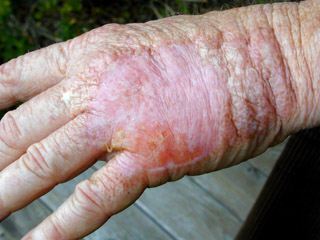
PSA down to 0.3 – Bye, Bye Radiotherapy

Sam (not real name, H328) is 61 years old. He had been enduring urination problems for the past one year plus. Then in March 2010, there was a blockage, prompting him to seek doctor’s help. A tube was inserted and over a liter of urine was removed from his bladder.

A CT scan on 31 March 2010 indicated an irregular shaped prostate, 4.8 x 3.7 x 3.6 cm in size. Few calcification were noted in the prostate gland. The prostatic urethra appeared dilated. The bladder wall was thickened. A right iliac node was about 1.9 x 1.6 cm – indicating lymhphadenopathy.

A TURP (transurethral resection of the prostate) was performed.  This is a common surgical procedure to treat the enlargement of the prostate gland.  The histopathology report of the prostatic tissues indicated a poorly differentiated adenocarcinoma, Gleason grade 4, Total Gleason score: 4+4, Stage T2c. The perineural lymphatics were infiltrated.

His PSA on 31 March 2010 was 47.07.

Sam was prescribed hormonal pill which he took for about a week or two and then stopped. He decided to see another doctor in another hospital.  MRI on 3 April 2010 showed no evidence of bony or intracranial metastasis.

Sam was given two options: One, to receive hormonal injection every three months. Or two, to undergo an orchidectomy – i.e. to remove the testes. On the advice of his doctor friend, he opted for the latter, i.e. removal of both his testes.  After the surgery, his doctor asked him to undergo 35 times of  radiation treatment. This would cost RM 23,000 (the same treatment would cost RM 28,000 in Kuala Lumpur).

The PSA on 5 April 2010 was 33.18.

Sam declined radiotherapy. He came to seek our help on 28 May 2010. He was started on herbs and was asked to take care of his diet.  On 5 November 2010, Sam came back to see us again. His PSA on 20 September 2010 returned a reading of 0.3. He went to see his doctor and was told that there is no further need to do radiotherapy. Another PSA test needs to be done in two months time.

Comments: There are two issues involved in this case study.  One, let us look at the PSA readings again.

Date PSA
31 March 2010 47.07
5 April 2010 33.18
28 May 2010 Started on herbs + diet
20 September 2010 0.3

The question to ask: Is the drastic drop of the PSA due to the removal of his testes or due to the herbs? I went into the net to search for answers.

A paper written by doctors in Brazil said the following:

Most prostate cancers are hormone-dependent; this means that they need testosterone for disease progression. Ninety percent of testosterone is produced by Leydig cells of the testis, whereas adrenal glands account for 5% of this production. The simplest way to get a hormonal blockade is bilateral orchidectomy.

Between January 2001 and December 2001, 32 patients with advanced prostate cancer underwent bilateral orchidectomy at our Hospital. They had the following results:

  • 4 patients required anti-androgens after surgery to control rising PSA.
  • 27 patients had decreased PSA level. The lowest nadir obtained was 0.08 ng/mL.
  • 4 patients showed no PSA decrease 30 days after orchidectomy.

A paper written by doctors in India said:

  • Orchidectomy over the decade has been the most effective tool for lowering the circulating testosterone.
  • Prostate tumor may respond in a variety of ways to castration therapy (orchidectomy).
  • There is no definitive way to predict which patient will respond to orchidectomy.
  • PSA has been used as the clinical marker to monitor the disease.
  • In the present study, we recorded changes in PSA level after orchidectomy and it was evident that maximum percentage changes in PSA are seen in the first three months after orchidectomy.

In another research paper was this information.

  • A bilateral orchidectomy was performed.  In all 3 cases PSA and testosterone levels were reduced following castration, although PSA levels again began to increase within two weeks of orchidectomy in 2 of the 3 patients.

Further reading led me to what patients wrote in the chat rooms. The following are some examples.

One reader wrote:

My father has been recently diagnosed with Prostate Cancer. He underwent orchidectomny a month ago (by a local general surgeon). He is on Zometa on a monthly basis. The PSA before surgery was 160. Few days ago, the blood tests were done and his PSA was about the same, 160. I was wondering how quickly PSA will fall after orchidectomy? If it does not fall, what does it mean to the treatment?

A reader asked this question:

I’ve had an orchidectomy, so my testes don’t produce testosterone. My PSA is rising and my doctor has suggested that I get an injection of Lupron (or Zoladex). Why?

What are the after effects of an orchidectomy?

Orchidectomy causes sudden hormone changes in the body. Side effects from hormone changes include: Sterility, Loss of sexual interest, Erection problems, Hot flashes, Larger breasts (gynecomastia), Weight gain, Loss of muscle mass, Thin or brittle bones (osteoporosis).

Another reader wrote:

Besides the list of side effects that JCR gave you there are also upwards of 20 more. Some of these side effects are loss or reduction of short term memory, loss of strength, loss of body hair, possibility of having pain in joints and back, mood swings–some of which can be anger and/or increased sensitivity to situations that can result in crying.

What to think about.

Removing the testicles is one way to cut down on testosterone and other male hormones. Taking medicine is another way to reduce androgen levels in your body. Some men may prefer surgery over taking pills or having injections. But if you choose to take medicine, you can stop taking the hormone drugs. And the side effects from taking medicine may go away. An orchidectomy is permanent. Some men choose to have reconstructive surgery after an orchidectomy, in which the surgeon replaces the testicles with artificial testicles.

From the above information and discussion, it appears that undergoing orchidectomy makes sense to some people, because removal of the testes deprives the prostate of the hormone it requires. That is provided the patient can come to term with the idea that he is being castrated. As the doctor friend of this patient said – you are already old! But think again, is 61 years old a bit too young to do such a thing?

Another point to note is that not all orchidectomy leads to a drastic drop in the PSA. And also, a drop of PSA does not mean the disease is cured.

The second comment I wish to raise about Sam’s case is the idea of opportunity cost. This is something that I learned   in my economics class in the 1960s. The dictionary definition of opportunity cost is: The cost of an alternative that must be forgone in order to pursue a certain action. Put another way, the benefits you could have received by taking an alternative action.

Opportunity cost is one of the most important and fundamental concepts in decision making. We have to look at what sacrifices we make when we have to make a choice. Cost here implies something is being sacrificed or involves having to give up something.

So, opportunity cost is the process of choosing one good or service over another.  Even though you might not realize it, you use opportunity cost every single day – to make choices about what you do every day.

In Sam’s case, after surgery he was asked to undergo 35 times of radiation treatment at a  cost of RM 23,000. What could have happened if he were to follow his doctor’s advice? The material effect is, he would have to spend RM 23,000 for the treatment. With the treatment comes the various side effects which could be devastating or otherwise. His quality of life would be adversely affected in one way or another.  Then look at another direction. Sam turned to herbs. His PSA dropped to 0.3 and the doctor said Sam need not do radiotherapy anymore. How much good is the advice of doing radiotherapy then?

There is one danger that I can foresee.  Now that the PSA has gone down to 0.3, patient appears to be out of danger! It is hard to convince him that this is not a cure. The cancer might recur. After some months, most patients go back to their old ways again.

e-Therapy Helped With Her Severe Itchiness and Sleeplessness — Two Years After Stomach Surgery Without Chemotherapy

LK (T905) is a 71-year-old female. Sometime in September 2007 she passed out blood. She consulted a doctor in a private hospital and was prescribed ulcer medication. She was on this medication for about a year. Then on 28 September 2008, LK was again admitted into the same private hospital for gastric bleeding. An OGDS (oesophago-gastric-duodeno-scopy) carried out on her on 30 September 2008 revealed a large ulcer at the pylorus of the stomach. A biopsy of the ulcer showed it to be a moderately differentiated adenocarcinoma, intestinal-type.

LK was again admitted into the same hospital on 7 October 2008. After necessary investigation and further blood transfusion, a Bilroth II partial gasterectomy was carried out on her the next day. The specimen was sent for histopathological analysis and it was reported as “moderately differentiated-type carcinoma of stomach, at least Stage 2.”

LK was referred to an oncologist for chemotherapy but she declined the treatment. On 24 October 2008, she and her family came to seek our help instead.

LK was prescribed Capsule A, Stomach1 & 2 teas, C-tea.

She was well up to this day. Since she did not come to see us personally, her case did not attract out attention. Nevertheless, her children regularly came to take herbs for her.

More than two years later, 5 December 2010, LK came to our centre again. For the past six months she had been staying with her daughter in Kuala Lumpur (KL). During her stay in KL  she developed severe itch and this deprived her of sleep every night. Her legs were weak and she had no strength to walk. This was further compounded by her long-standing backaches. She has to use a walking stick.

We immediately put LK on the e-Therapy.

Comments:

LK was asked to undergo chemotherapy after surgery of stomach cancer. She was then 71 years old. She declined the treatment.  What do you think would have happened to this elderly lady if she were to undergo the recommended chemotherapy? Would she have survived the treatment?

I searched the internet to find out about the effectiveness of chemotherapy for gastric (stomach) cancer.

First, ask this question: What is the purpose of chemotherapy after surgery? This is what one website said: This treatment may improve survival time by months and the quality of life. This statement implies that chemotherapy does not cure stomach cancer. It only improves survival time by months.

The statement also claims that it improves quality of life. Do you buy this claim? I really find it hard to swallow. This is because the same website said this: Chemotherapy given to treat stomach cancer may cause the following side effects: sunburn-like skin irritation, nausea, diarrhea, fatigue, nerve damage, low blood counts, hair loss and kidney damage. Another website had this list: skin rash, hearing problems, loss of balance, joint pain and swollen legs and feet.

According to the University of Pittsburgh Medical Centre, Pennsylvania: Chemotherapy given with radiation after surgery:

1. Increases the survival rate.

Patients undergoing 3- year survival rate
surgery + chemotherapy + radiotherapy 50%
Surgery only 41%
Benefit of chemotherapy + radiotherapy 9%

2. Increases the amount of time before recurrence.

Patients undergoing: Relapse /recurrence
surgery + chemotherapy + radiotherapy 43%
Surgery only 64%
Benefit of chemotherapy + radiotherapy 21%

Wang Qilu of the Cancer Institute & Hospital CAMS & PUMC, Beijing, China, said:  Chemotherapy has moderate efficacy for gastric cancer. Chemotherapy or combined therapy can reduce recurrence in the gastric cancer and improve patients’ survival.

Take note, no one claims that chemotherapy and / or radiotherapy after surgery can ever cure stomach cancer. In this respect, we are really glad to see LK doing fine even after two years.

For the past six months, LK developed itchiness of her skin. Besides she has difficulty moving around due to weakness of her legs. Even before her cancer she also had lumbar backache. We did not get to see LK often. In fact LK came to see us on 5 December 2010 on our request. We immediately put her on the e-therapy and within days, her conditions improved. As LK said the doctor’s medication could only helpe her temporarily – the problems recurred.

Herbs are Effective for Pain and Side Effects of Chemotherapy

At the Seminar on Integrative Oncology: Cancer Care Beyond Boundaries, organised by the Department of Nuclear Medicine, Radiotherapy & Oncology, School of Medical Sciences, Health Campus, Universiti Sains Malaysia, Kota Bharu, Kelantan from 20- to 21 August 2008; Chris told the seminar participants that:

  • Herbs can mitigate the side effects of chemotherapy.
  • Herbs are also effective to alleviate pain.

Listen to this video.


Most Amazing Healing of Cancer Pain

Bee (H339) was a 71-year-old female. Sometime in mid-February 2010, she had shortness of breath. Detail examination for about a month at a university hospital did not yield any result. Frustrated the family brought her to another university hospital in Kuala Lumpur. She had fluid in her lungs and this was tapped out. A biopsy on 31 March 2010 confirmed primary carcinoma of the lung. The doctor suggested chemotherapy and radiotherapy. The family declined further medical treatment.

Hopeless and helpless, they sought alternative treatments. Her daughter said: We sought the help of 16 medical and traditional practitioners. After all these, we went into the internet and found CA Care.

Bee and her family came to see us on 16 June 2010. She presented with severe pains in the rib area. She was unable to lie down and sleep. For the past five months she was unable to sleep all night due to pains. Just one treatment with the e-Therapy and herbs, Bee was able to sleep and the pains almost disappeared.

Video 1: Severe Pain, Sleepless Night

Video 2: Recovery After A Day of Therapy

Video 3: Most Amazing Healing of Cancer Pain


Email 23 June 2010

My mother is doing generally quite good since coming back from Penang. Her appetite is quite ok.  Not really good but is able to eat.  Bowel movements also ok – about once or twice a day.  No diarrhea.  Stool is black in color. She has less coughing and less phlegm now.  The phlegm is white color and only in the morning.  No phlegm at night.  There is a slight pain in the upper stomach whenever she coughs. Generally has no problem sleeping except the need to wake up if there are coughing.

Sometimes she has a little pain at the back below the shoulder.  No more tightness in the chest.  Breathing is normal. Occasionally she has stomach wind and feels nauseous.  Is this normal?  Does it caused by herbal which is taken before meal? She felt very tired after going through 2 days of e-Therapy.  Is this normal?  She said she felt better without the therapy. Please advice.

Email on 27 June 2010

Overall her condition is getting better.  Less coughing, less phlegm, more energetic, and look more lively. The problem is she still has pain in the rib area early in the morning.  Around 4 a.m. to 5 a.m.  Another thing is she can’t walk far.  Walking just about 50 meters make her exhausted.  Is this normal?

Email on 2 August 2010

Basically she is getting better.  Except occasionally stomach winds and pain in the shoulder and tightness in the rib area.

Email on 9 December 2010

For your information, our mother passed away peacefully without pain on 6th of December 2010.  Since she was confirmed as lung cancer patient till the last day of her life, she was able to manage the pain very well.  Even Dr. F was shocked at how she managed to go on without pain killer.  She did not even have problem with coughing.  We would like to express our deepest gratitude to you for giving her the “quality of life”.  She was able to talk and smile happily till the last day of her life.  From all of us, THANK YOU VERY MUCH.

Comments

This is indeed an inspiring story – not only for cancer patients but also for me as a healer. The world wants us to believe that herbs and e-therapy are not proven, not safe, not FDA-approved and therefore are not appropriate for cancer patients. Bee has gone to seek the help of 16 doctors and bomohs (shaman) and none could help her. The last stop was CA Care. It is a privilege for us to help Bee in her sufferings. And we are glad that we have succeeded in this effort. It is success such as this that makes us “tick” and persevere to help others – never mind if certain people want to make you believe that we are “quacks”.

It is unfortunate that our conversation was in Kelantanese-Chinese lingo which many people may not be able to understand fully. We have provided you with the subtitles but these could not convey the meaning in real depth – but enough for anyone to understand what is being said. As a Kelantanese Chinese, I could feel the suffering expressed by Bee. Her pains were throbbing, poking like the needles. They tightened up the chest muscle and numbed her. In addition, when in pain the right half of her chest was like an oven – hot and unbearable. The pain lasted throughout the day and night for the past five months before she came to us. The pains deprived her of sleep. She was unable to lie down, needing to be probed up with 4 or 5 pillows to make her sit curled up. She was breathless and the abdomen felt bloated.

All these sufferings almost disappeared after undergoing the e-CA Care Therapy for a day. Could you believe that? None would believe it. But know that miracles do happen. And with God’s grace and mercy such miracle happens very often at CA Care. This is a miraculous story. And this is also a real story. No one is play-acting here. We are grateful to Bee’s children for allowing us to use these videos without having to cover their late mother’s face. With nothing to hide, you can critically study the videos and see for yourself the facial reactions during our conversation. The story is nothing short of real.

We expected Bee to be with us for a week, undergoing the therapy. But it only took three days and we felt Bee could go home after that. We had succeeded to restore her quality of life.

In the subsequent emails, we were happy that Bee’s life was better. A study of her cancer through the scans, would tell anyone that this was a very serious, terminal case. There would be no cure – let there be no elusion about this. The victory is not how long Bee lived. The important thing is her quality of life – minimal pain and being able to sleep. And at the end, as her son wrote: “She was able to talk and smile happily till the last day of her life.” This is the real victory – we could not ask for more.

Surgery and Radiotherapy Did Not Cure Cervical Cancer: Recurrence After Twelve Years

Cervical cancer is one of the most common cancers that affect the female reproductive organs. It occurs at the cervix – the lower part of the uterus that opens into the vagina. About 11,000 women in the United States are diagnosed with cervical cancer each year and nearly 4,000 (or 36.4%) die from it. Worldwide it is estimated that there are 473,000 cases of cervical cancer each year and 253,500 women (or 53.6%) die from the disease.  This makes cervical cancer the number-one cause of cancer-related deaths among women in the developing countries of the world.

In order to detect this type of cancer early, women are asked to take a Pap test regularly. The rationale is that cervical cancer can often be cured if found and treated at its early stage. How true is this statement?

An Tee (not real name) was fifty-five years old when she was diagnosed with cervical cancer. This was in 1996. Fortunately for her, the cancer was at its early stage. Her doctor felt surgery and radiotherapy were adequate to deal with her problem. An Tee underwent to remove the cancer and this was followed by twelve external-radiation treatments. In addition, she received internal-radiation treatment. The latter involved an exposure of radiation-tube implanted in the vagina. An Tee was kept isolated in the hospital for two days while receiving this treatment.

An Tee was asked to visit her doctor every six months for routine check up. Everything was alright. And life went on as usual. Ten years after this “apparent cure” An Tee started to cough since 2005 (i.e., about three years before this relapse). However, her doctor did not consider anything amiss and she was told everything was alright.

In August 2006, i.e., twelve years after her diagnosis, An Tee was told that her kidney was not functioning well. A MAG-3 Lasix Renogram was performed. The results showed that An Tee’s left kidney had normal function but her right kidney was hydronephrotic with reduced size and function and was significantly obstructed. Essentially there was only minimal (ten percent) right renal function.

A CT scan of the chest indicated both lungs were studded with numerous nodular lesions of varying sizes measuring 5 mm to 25 mm. A dominant 3 cm nodule was seen in the right lower lobe. There were also multiple small mediastinal lymphadenopathies in the aorto-pulmonary window and pre-aortic region. In short, the CT scan revealed An Tee had extensive lung nodules in both her lungs that had also spread to the adjacent lymph nodes.

A biopsy was performed resulting in bleeding and An Tee’s stay in the hospital had to be extended. The histology results showed the lung parenchyma was infiltrated by malignant cells. The pathologist concluded that it was a moderately differentiated adenocarcinoma – representing perhaps a metastasis or TB.

An Tee was asked to undergo chemotherapy. She and her entire family refused and opted for herbs instead.

Comments:

  1. From the internet, I learned that lung metastasis due to cervical cancer occur in less than five percent of patients at presentation, 20 to 30 percent at autopsy. This metastatic cancer is staged as 4B – a serious condition indeed.
  2. It is also said that women who survive cervical cancer face a higher risk for developing other cancers in the days ahead. This is even more so in survivors who had been treated with radiotherapy. In this case, besides serious lung metastasis, An Tee’s  right kidney had failed – a side effect of radiotherapy done many years ago.
  3. This case once again demonstrated what we at CA Care have been telling patients: Don’t be complacent. Cancer may recur anytime. Always be on the watch. Listen carefully to what your body is telling you.
  4. In this case, An Tee had been having chronic coughs for the past three years before a CT scan was done.   In spite of consulting her doctors every now and then, none of her doctors ever had the “fore sight” to examine her chest! Perhaps many around her were “blinded”, believing that since she had survived five years, she was “cured” of her cancer. There is no scientific basis for this erred perception. The number “five” is an arbitrary figure. So being able to live past five years does not mean the cancer is gone forever. Patients must not be misled by this untruth.
  5. Dr. David Johnson, deputy director of Vanderbilt-Ingram Cancer Center thinks that: “The five-year benchmark becomes a balm for doctors or patients who find the unpredictability of their situation intolerable. Physicians are reluctant to say cancer might recur, so they would rather us these terms like – OK, in five years you’ll be cure.”
  6. This case highlighted another inadequacy of cancer medical treatment, as articulated by Dr. Barry Boyd, director of Integrative Oncology program, Greenwich Hospital, Yale Cancer Center:“Many doctors don’t bother to counsel their patients after treatment. Once cancer treatment is completed, most patients are left on their own to cope with the rest of their lives. This is what I call falling off the cliff. Patients are left in free fall.” Dr. Boyd went on to say that: “In addition to the best medical care possible, nutrition, exercise and stress reductions are absolutely necessary to make your cancer treatment more effective and prevent cancer’s return.”
  7. An Tee had been on the herbs for the past 9 months. Then at about 7.30 a.m., 15 June 2009, our phone rang. We were told An Tee had just expired. The only daughter in my grandfather’s family was lost to cancer. In spite of this loss, we were glad that at the end, An Tee did not suffer any pains. At the later stage of her illness, An Tee became breathless and she had to use oxygen mask to help her breathe better. That was about the only discomfort she had.
  8. I flew home to be with An Tee’s family during this time of grief. Her face looked sweet and natural. This image remained imprinted in my mind. Above all, everyone in the family remained grateful that she died without any pain or suffering, that is so typical of many cancer deaths.  When her time came, she took two deep intake of air that morning and she passed off.


Metastatic Melanoma-Lung Cancer

Guat (T672) is a 53-year-female. In 2006, she had been coughing out blood for the whole year. In September 2007, Guat underwent an operation to remove her appendix. Her throat was swollen after this operation. MRI of her neck on 7 October 2007 showed normal nasopharynx and thyroid. However, there was an irregular lesion at the right upper lobe of her lung.

A CT scan on 9 October 2007 showed 2 focal cavitating lesions at the right upper lobe and left lower lobe of her lung, suggestive of pulmonary tuberculosis (TB). There was also a small fluid density collection at right iliac fossa probably due to hematoma from previous appendix operation.

A biopsy of the right pulmonary nodule done indicated malignant melanoma. A second opinion was sought and Guat was subsequently diagnosed with malignant tumour metastatic to lung. Possibility of malignant melanoma is very strong.

The doctor told Guat that her condition was very serious. She had a Stage 4 cancer. The doctor also said, In my 15 years of experience, this is the only case that I have seen. According to the doctor this cancer originated from a mole but Guat searched her entire body and could not find any mole. Surgery is not indicated for this cancer. However, the doctor stressed that it is better to start treatment. Without radiotherapy it may spread to her brain. Currently, medicine is much more advanced and Guat might benefit from this treatment. Guat refused and came to seek our help on 2 November 2007.

She presented with the following:

  1. She had been on high blood pressure pill for the past one year and is now suffering from headaches.
  2. There was burning sensation in her chest.
  3. She was unable to sleep well, worried.
  4. She was very tired.
  5. She had coughs with yellow phlegm and sometimes with blood.
  6. Her breathing was not good.
  7. She had wind in her stomach.

After a year on herbs, Guat reported improvements. Her headaches were gone and she felt better. After she took Insomnia Tea, she was able to sleep well. Her breathing was better.

The following are excerpts of our conversation in December 2008.

Chris: It has been more than a year since you first came.

Husband: Yes.

Guat:  When it was about one year, there was fear. And we kept saying, Haven’t died yet, haven’t died yet. (laughing happily). Do I need to go and have a scan?

C: No, there is no need to. What is the point? If it were smaller, you would continue to take the herbs. If it were bigger, what to do? Also continue with the herbs. The important thing is this. How do you feel now compared to one year ago when you came to see me?

G: Better. Last time, I could not sleep well. I do not know how to explain – like there is so much discomfort around this part. Now, I can sleep better.

C: When you first came to see me, you complained of a fiery feeling at your chest. How is it now?

G: Now, I am much better. This feeling comes only once in a while. Last time, it was an almost daily occurrence. Now, I get it only once or twice a week.

C: Can we say it is better by 50%.

G: Certainly, more than 50%.

C: How is your sleep problem?

G: I no longer need to take the Insomnia tea.

C: You used to feel lethargic and breathless.

G: Much less lethargic now. When I walk, only sometimes do I feel this breathlessness.

C: Looks like there is improvement.

H: Yes, there is a lot of improvement.

G: Sometimes the throat feels a bit dry. A few days ago, while I was sleeping, I got a fright and suddenly woke up (due to a fright) and felt a lump at my throat. On clearing my throat, a lump of sticky phlegm with blood came out. It is very sticky – so sticky that it can stick on to the paper. Last time, the blood was thin and appeared fresh. This time it is phlegm with blood.

H: One month before, she also cleared out some. This happens once a while.

G: But this time, it is the most.

C: We had patients who cough out pieces of flesh.

G: No, not flesh. It is just very sticky. I also have small pimple like vesicles on my arm and face at times. If I break it, a liquid with a spot of blood will come out. The scar took a while to disappear. These appear at different places on my body.

As of this writing, April 2009, it is one and half years since Guat first came and was started on the herbs. She is doing well.

Comments

This is the second case of its kind that we, at CA Care, have encountered. However, it is so satisfying to see that Guat is doing well.

The doctor advised Guat to undergo radiotherapy – take note, radiation to her lung. What could such a treatment lead to? As it is now, Guat leads a normal, pain-free life by refusing radiotherapy. She took a right path! The proof that herbs are effective is seen in the face of the patient herself. She is alive and that is all that matters.

As of this writing, April 2009, it is one and half years since Guat first came and was started on the herbs. We could not ask for more.

A search in the internet yielded the following facts about metastatic menaloma.

  • Melanoma is a serious form of skin cancer that develops in the melanocytes, the pigment-producing skin cells.
  • It may spread by the lymph system or the bloodstream to the liver, lung, bone and brain. Pulmonary metastasis occurs in 11% of patients.

Prognosis

  • The prognosis of metastatic melanoma is dismal – a five-year survival rates of 2-3%.
  • The median survival time is 7 months in patients with a single site, 4 months with two organ sites and 2 months with more than two organ sites. Patients with lung metastasis have a longer median survival of 11 months.
  • The one-year survival rate is 36% with one metastatic site, 13% with two organ sites and less than 1% with more than two organ sites.
  • Metastatic melanoma is generally incurable.

Treatment

  • Meaningful therapeutic options are limited in metastatic melanoma.
  • Treatment focuses on shrinking or eliminating the metastatic lesions, preventing further spread of the disease and maximizing patient comfort.
  • The chemotherapy drug often used for melanoma is Dacarbazine (DTIC). Only about 1-2% of patients treated with DTIC sustain long-term complete response. Other chemo-drugs used include nitrosoureas, vinca alkaloids and platinum compounds. They provided similar response rates with few long-term survivors.

Note: As of this day (December 2010), Guat is as healthy as ever – like you and me. She has no complaints. Once day she jokingly told us: My friends were asking me why I did not die yet!