Chemotherapy Spreads Cancer and Makes It More Aggressive: Articles From the Internet

Compiled by Yeong Sek Yee & Khadijah Shaari

1.   Perilous Approach: Avastin and Sutent Promote Growth of Breast Cancer Stem Cells

(Note: Many patients in Malaysia have been treated with this very expensive drug)

The U.S. Food and Drug Administration recently revoked approval of Avastin for treating breast cancer. The reversal was in response to clinical trials showing that the drug’s benefit was short-lived, with breast cancer patients quickly relapsing and the cancer becoming more invasive and metastatic.

Cancer treatments designed to block the growth of blood vessels were found to increase the number of cancer stem cells in breast tumors in mice, suggesting a possible explanation for why these drugs don’t lead to longer survival, according to a study by researchers at the University of Michigan Comprehensive Cancer Center.

While anti-angiogenic drugs do shrink tumors and slow the time until the cancer progresses, the effect does not last, and the cancer eventually regrows and spreads.

The researchers treated mice with breast cancer using the anti-angiogenesis drugs Avastin (bevacizumab) and Sutent (sunitinib). The researchers found that tumors treated with these drugs developed more cancer stem cells, which fuel a cancer’s growth and spread and are often resistant to standard treatment.

Read more: http://www.med.umich.edu/cic/2012-spring/perilous-approach.html

2)      Chemotherapy Can Make Cancers More Resistant To Treatment And Even Encourage Them To Grow

  • Chemotherapy treatment for some cancers may actually encourage tumours to grow, researchers have claimed.
  • The treatment triggers the healthy body cells around the tumour to produce a protein that helps the disease to resist treatment.
  • The surprise discovery suggests that some forms of the cancer treatment are doing more harm than good. 

Read more:  http://www.dailymail.co.uk/health/article-2184277/Chemotherapy-encourage-cancer-growth.html 

3)      Chemo Does Not Cure: Often It Inflicts Damage and Spreads Cancer

  • German investigators from Friedrich-Schiller University in Jena, have shown that Taxol (the “gold standard of chemo”) causes a massive release of cancer cells into circulation.
  • Such a release of cancer cells would result in extensive metastasis months or even years later, long after the chemo would be suspected as the cause of the spread of the cancer. This little known horror of conventional cancer treatment needs to be spread far and wide, but it is not even listed in the side effects of Taxol.

 Read more:  http://www.tbyil.com/Chemo_Does_Not_Cure.htm

4)      Chemo/Radiation “Therapy” May Fuel Cancer Spread

  • Treatment may fuel cancer’s spread
  • Treating cancer with surgery, chemotherapy or radiation may sometimes cause tumors to spread, researchers say.
  • Tests in mice show that using the chemotherapy drug Doxorubicin or radiation both raised levels of TGF-beta, which in turn helped breast cancer tumors spread to the lung.

Read more: http://rense.com/general76/fuel.htm

5)      Chemotherapy Causes Resistance and Spread of Cancer

Peter Nelson of the Fred Hutchinson Cancer Research Center in Seattle co-authored a study and published it in Nature Medicine this month detailing how chemotherapy not only produces resistance to chemotherapy by cancerous tumors but also stimulates its growth and metastasis (spread).  Approximately 90% of people with metastatic cancer become resistant to chemotherapy.  This occurs readily in cancers of the breast, prostate, lung, pancreas and colon.

Read more: http://www.anoasisofhealing.com/the-chemotherapy-cover-up/#axzz2S15t3mvT

6)      Chemo Could Spread Cancer.

new research published in Nature Medicine shows that chemotherapy can actually be extremely counterproductive in treating cancer as it could spur healthy cells to release a compound that actually stimulates cancer growth.

Read more: http://personalliberty.com/2012/08/07/chemo-could-spread-cancer/

7)      Chemotherapy can Backfire and Encourage Cancer Growth

Chemotherapy can backfire by triggering healthy cells to secrete a protein that sustains tumor growth, which could explain why some patients become resistant, a new study suggests.

Read more: http://www.medicaldaily.com/articles/11314/20120806/cancer-chemotherapy-resistance-immunity-nature.htm#BVXeMw9SBDTZpR0W.99

8)      Study Links Cancer’s Ability to Spread with Chemotherapy Resistance

Doctors who treat patients with breast cancer have known that tumors that develop resistance to chemotherapy are also more likely to grow larger and to spread, or metastasize, to other parts of the body.

Read more: http://www.mskcc.org/blog/study-links-s-ability-spread-chemotherapy-resistance

9)       Anti-Cancer Drugs Make Tumors More Deadly

…..new research shows that aggressive treatment (used to shrink or remove even relatively small, slow-growing or encapsulated, harmless tumors) may create a situation where the entire body is riddled with highly aggressive cancers.

This study, published in the January 17, 2012 issue of Cancer Cell,finds that a group of little-explored cells that are part of every primary cancerous tumor likely serve as important gatekeepers against cancer progression and metastasis.

Read more: http://www.ener-chi.com/anti-cancer-drugs-make-tumors-more-deadly/

10)   Anti-Cancer Drugs Make Tumors More Deadly

  • Just imagine you were diagnosed with a cancerous tumor, and your doctor told you that his/her proposed treatment could reduce the size of your tumor by 30 percent, but at the same time increase your chances of developing secondary tumors by a whopping 300 percent!
  • That is exactly what is demonstrated in recent research (at Harvard and MD Anderson Cancer Centers), and published in conventional Oncology Journals! The history of conventional anti-cancer therapies is replete with cases where the treatment turned out to be far more devastating than the disease itself.

Read more: http://hbmag.com/anti-cancer-drugs-make-tumors-more-deadly/

11)   Exposed: Deadly Cancer Drugs Make Cancer Worse and Kill PatientsMore Quickly

  • Cancer drugs, pushed by many drug companies as the only ‘scientific’ method of combating cancer alongside chemotherapy, have been found to actually make cancer worse and kill patients more quickly.
  • The findings come after research was conducted on the cancer drugs at the Beth Israel Deaconess Medical Center in Boston. Sold at a premium price to cancer sufferers, it turns out these drugs are not only ineffective but highly dangerous.

Read more: http://naturalsociety.com/deadly-cancer-drugs-make-cancer-worse-and-kill-patients-more-quickly/

12)   Breaking News: Cancer Drugs Make Tumors More Aggressive And Deadly

…….scientists at the University of Alabama at Birmingham (UAB) Comprehensive Cancer Center and UAB Department of Chemistry are currently investigating the very real possibility that dead cancer cells left over after chemotherapy spark cancer to spread to other parts of the body (metastasis).

·         A study just published in the January 17 issue of the journal Cancer Cell concludes that anti-angiogenic therapies (which shrink cancer by cutting off tumors’ blood supply) may be killing the body’s natural defense against cancer by destroying pericyte cells that likely serve as important gatekeepers against cancer progression and metastasis.

Read more:  http://www.infowars.com/breaking-news-cancer-drugs-make-tumors-more-aggressive-and-deadly/

13)   Woops! Study Accidentally Finds Chemotherapy Makes Cancer Far Worse.


  • A team of researchers looking into why cancer cells are so resilient accidentally stumbled upon a far more important discovery.

While conducting their research, the team discovered that chemotherapy actually heavily damages healthy cells and subsequently triggers them to release a protein that sustains and fuels tumor growth. Beyond that, it even makes the tumor highly resistant to future treatment.

Read more:  http://naturalsociety.com/chemotherapy-makes-cancer-far-worse/

14)   Chemotherapy Backfires – Causes Healthy Cells To Feed Growth Of Cancer Tumors

 This protein,dubbed “WNT16B,” is taken up by nearby cancer cells, causing them to “grow, invade, and importantly, resist subsequent therapy,” said Peter Nelson of the Fred Hutchinson Cancer Research Center in Seattle. He’s the co-author of the study that documented this phenomenon, published in Nature Medicine. This protein, it turns out, explains why cancer tumors grow more aggressively following chemotherapy treatments. In essence, chemotherapy turns healthy cells into WNT16B factories which churn out this “activator” chemical that accelerates cancer tumor growth.

Read more:  http://www.naturalnews.com/z036725_chemotherapy_cancer_tumors_backfires.html

15)          Chemo and Radiation Actually Make Cancer More Malignant

The very treatments may have transformed a relatively slow growing tumor into a rapidly proliferating and invasive one.

Read more: http://www.greenmedinfo.com/blog/chemo-and-radiation-actually-make-cancer-more-malignant

16)         Beating Cancer With Chemotherapy And Better Drugs: Junk Science?

  (1) The Department of Oncology at North Sydney Cancer Centre in 2004 published a report evaluating chemotherapy over the years and concluded that ‘it only made a minor contribution to survival’. The figures they came up with were 2.3% in Australia and 2.1% in America.

(2) The Fred Hutchinson Cancer Center in Seattle that concluded ‘Chemotherapy can cause cancer to return’. They said CAUSE – apparently chemotherapy can cause healthy cells to produce a protein WNT16B and this is taken up by cancer cells – it helps them re-grow and even protects them from the next round of chemotherapy.

(3)  A ‘landmark study’ from their Cambridge Institute showed there were 10 different ‘clusters’ of breast cancer types. ‘No longer does one size fit all’ they cried.

 (4) Three research studies reported on the existence of Cancer Stem Cells at the heart of tumours. A couple of UK cancer centres (Bart’s Hospital and the Blizzard Institute, London) have even isolated these nasty little cells. Apparently, if you don’t kill them off, they can re-grow. In one of the three studies (from the University of Texas South Western Medical Centre), there were statements such as ‘Cancer Stem cells are in charge of tumours’, and the lead researcher, Dr Louis Parada and the other researchers added, ‘In the past we have tried to get rid of the entire stew of cancer cells. But shrinking a tumour by 50% is irrelevant. No current drugs tackle cancer stem cells.

 (5)  Perhaps the final words should therefore go to Duke’s University Medical Centre in Carolina who in their 2012 report concluded that ‘Patients with cancer are largely being mislead into believing that the drug they are being offered is somehow going to cure them’.

Read more: http://www.junkscience.co.uk/2013/04/junk-science-number-50-beating-cancer-with-chemotherapy-and-better-drugs/

Breast Cancer Went Wild After Surgery, Chemo-Radiotherapy. E-Therapy Helped Relieve Her Pains

Eva (not real name) was 33 years old when she was diagnosed with breast cancer. She underwent surgery at a hospital in Hong Kong in June 2009.

The histopathology reports indicated the following:

1.  Left breast mass at 1 o’clock – excision

Diagnosis: Fibroadenosis, Fibroadenoma.

Right breast mass at 1 o’clock, lumpectomy.

Diagnosis: Infiltrative ductal carcinoma, grade 2. No sentinel lymph node metastasis (0/14).

Tumour size: 1.1 + 0.6 cm.

Resection margins clear.

Positive for estrogen and progesterone receptors, highly proliferative activity. Negative for c-erbB-2 oncoprotein.

2.   Right breast lump at 3 o’clock, lumpectomy

 Diagnosis: Fibroadenoma.

After surgery, Eva received 6 cycles of chemotherapy – 3 cycles using FEC (5FU + epirubicin + cyclophosphamide) and 3 cycles of Taxol. This was done in Hong Kong. She received 30 radiation treatments in Macau. There was no further medication after this.

A follow-up mammogram in 2011 showed everything was clear.

In 2012 (i.e. some 3 years later) Eva started to have back pain. MRI in December 2012 showed some spots in her lumbar.

In January 2013, a PET / CT scan showed extensive bony metastasis. She was prescribed Tamoxifen and Xeloda and pain killers.

Medication

After taking Xeloda she was not able to sit down or walk. She had to be hospitalized for a week and given painkiller injection. She was discharged and had to use the wheelchair.

At the end of February 2013, Eva decided to return to her home in Indonesia.

In late March 2013, she consulted an oncologist in Penang. She was told to undergo chemotherapy again using Carboplatin. She has to take an oral drug, Navelbine.  She has to undergo six cycles of this treatment and each cycle would cost RM 7,000. In addition she needs a monthly injection of bisphosphonate for her bone. This would cost an addition RM 1,700 per month.

Can the treatment cure her? The oncologist said: Not sure!

Eva refused further medical treatment. Eva and her mother (who also has cancer) came to seek our help on 21 March 2013. She presented severe pain and was unable to sleep at night. Her movements were very restricted.

Her CA 15.3 results over the years showed an increase from 12.7 to 246.1

Date

CA 15.3

21 October 2011

12.7

29 August 2012

36.8

5 November 2012

80.1

23 January 2013

246.1

The following are the results of her PET/CT dated 16 January 2013.

  1. There is no hypermetabolic lesion noted in the residual right breast.
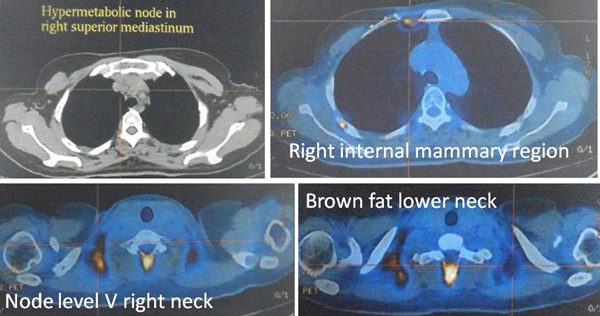
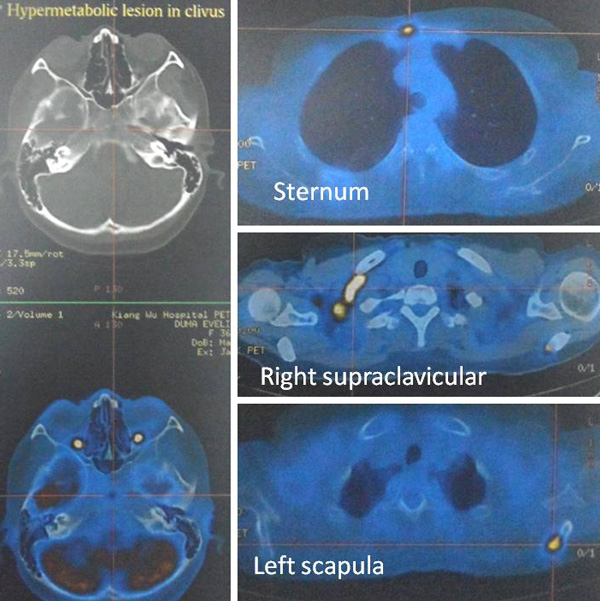
  2. There are multiple hypermetabolic lymph nodes seen over the right internal mammary region, right superior mediastinum, right supraclavicular fossa and lever V of right neck.
  3. No hypermetabolic node found in bilateral axillary regions, left supraclavicular fossa or left neck.
  4. The left breast shows normal FDG uptake.
  5. Hypermetabolic nodule noted in the right pectoralis major at the level of 1st anterior rib.
  6. There is physiologic uptake of brown fat in bilateral lower necks.
  7. Physiological FDG uptake seen in the brain parenchyma.

Extensive bony metastasis

  1. Multiple hypermetabolic deposits are present in:
    1.  bilateral pariental bones and left occipital bone,
    2. Right sphenoid body
    3. Clivus,
    4. Left submandibular ramus,
    5. Sternum,
    6. Left scapula,
    7. Right upper humerus,
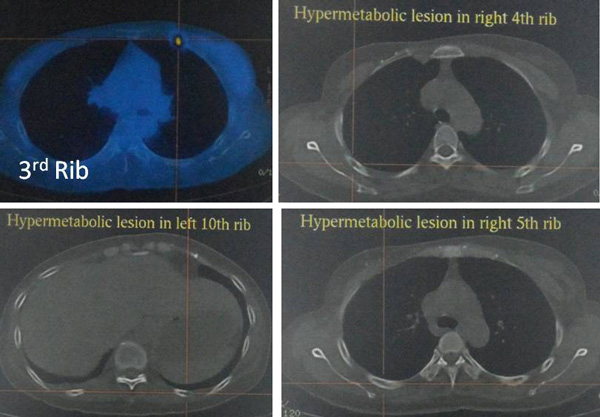
    8. Right 4th and 5th ribs,
    9. Left 3rd and 10 ribs,
    10. Bilateral iliac bone,
    11. Left ischium,
    12. Bilateral pubis,
    13. Lesser trochanter of right femur,
    14. Left femoral neck,
    15. Extensive involvement of spinal column from cervical spines to sacrum.

The CT images show:

  1. Lytic destruction at the corresponding area,
  2. And soft tissue mass in some of the lisions.
  3. Focal hypermetabolic mass protruding into the spinal canal and compressing the dura sac, including right lateral aspects of C3 level, anterior aspect of T9 and T10 levels, anterior and right lateral aspect of T11 level as well as left anterior aspects of T12 level.

PET / CT scan showed the cancer had spread to some 29 locations in her body as below

Slide1

Slide2Slide3Slide4Slide5Slide6Slide7Slide8

E-Therapy at CA Care

We really felt sorry for Eva seeing her in such severe pain. We decided that Eva should try the e-therapy right away and requested her to postpone her return home. She needed to stay in Penang for an additional 5 days. And here is her story.

In summary after 2 days on the e-therapy, Eva had less pain and was able to sit up and watch the television for 2 hours. This is something she could not do before. She had to lie down in bed most of the time. With the e-therapy she could sit, walk and move around without much difficulty.  We told Eva to come back to Penang for the e-therapy again if her problems recurred.

Dr. James Forsythe: Why I Abandoned Conventional Oncology

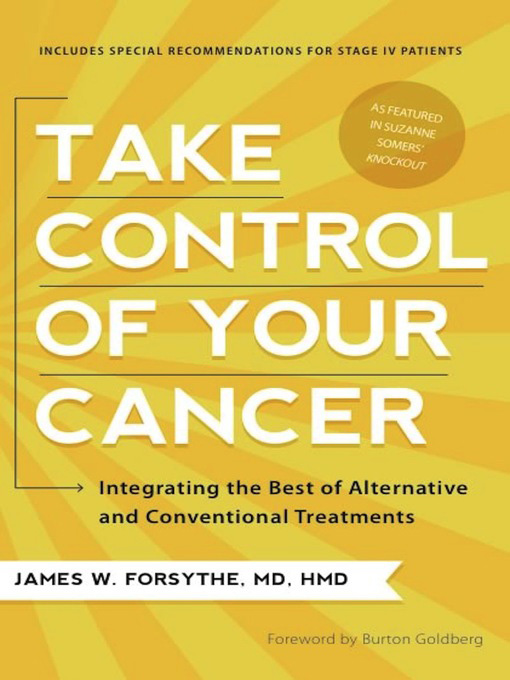
Take-control-of-your-cancer

Who is Dr. James Forsythe?

Dr James Forsythe earned his MD from the University of California at San Francisco. He is a board-certified oncologist and also a board-certified homeopath which makes for an interesting mix of Western and alternative medicines. The combination of the two allows Dr. Forsythe to be extremely creative in his approach to cancer. He is an integrative oncologist providing the best of what both worlds have to offer. Today, Dr. Forsythe enjoys a successful career as a medical oncologist who utilizes alternative treatments

In the Introduction chapter of his book Dr. Forsythe explained why I abandoned conventional oncology. Here is what Dr. Forsythe wrote:

  • Oncologists usually dismiss any anecdotes about miraculous remissions and cancer cures, even though most of them have encountered cases of remission they can’t explain.
  • Not only do conventionally trained cancer specialists not want to hear about (such) case … they are hostile toward any physician (like me) who takes an interest in these anecdotes.
  • We knew that chemo was killing good cells, but we just hope it was killing enough bad cells too.
  • All of the patients became horribly sick from the treatment and most of them relapsed within a few years.
  • It was during my training at UC San Francisco that I discovered how arbitrary the cancer treatment protocols we were learning had become. Someone higher up in the field would get an idea that we should prescribe a particular drug twice a week for this or that cancer and it should be the standard dose.
  • Many times there was no scientific evidence behind what they were saying. Because we were trainees, we had to follow their exact protocol, whether it was evidence based or not.
  • And despite the lack of evidence, these physicians and administrators were declaring the protocol to be an exact science, a sort of gold standard for medical practice. The obvious shortcomings bothered me a lot.
  • When I attended oncology conventions there would be an exercise in which a cancer case would be presented and everyone would vote how they would treat that particular case. There was never a consensus about treatment.
  • Of the specialists present, 60 percent might say one type of drug should be used, while 40 percent voted otherwise.
  • I would think to myself: How can this be? These physicians were all oncologists. They should have been on the same page. But they never were; unfortunately for cancer patients, they still aren’t.
  • More than 100 cancer drugs are out there today (some in use without FDA approval), and there is no consensus on which drugs to use, what dose to  use, how long to give them, or which types of cancer respond best to those drugs.
  • All these decisions are made arbitrarily, turning the patients into virtual guinea pigs.
  • An article written in the Journal of Oncology in 2004 noted … the overall survival rate for patients with Stage 4 cancer receiving chemotherapy was only 2.1% in the United States.
  • This finding showed me that the over-treatment approach and the treatment protocols using so many toxins constituted a failing strategy.
  • Even if you were lucky enough to be one of the two out of a hundred who survived, you would probably have chemo brain symptoms, you might have heart and liver problems, and you would probably experience constant pain and the loss of feelings in your feet and toes. These were just accepted side effects.
  • Oncologists didn’t want to think about this dismal 2 percent survival rate after five years. Understandably, they didn’t want to acknowledge that they were doing any harm to their patients.
  • What further disturbed me was the astounding escalation in patient treatment costs, especially when they were being directed to use toxic or ineffective cancer drugs following surgery.
  • These high-dose drugs are expensive and often problematic. One lung cancer drug was on the market for almost five years and cost patients $25,000 (approximately RM 75,000) a year, based on them taking one pill a day, yet studies found the drug to be no more effective than if the patients had taken a placebo sugar pill every day.
  • This amounted to a royal fleecing of the people who had been rendered vulnerable and fearful by the prospect of a painful death.
  • Those individuals who were lucky enough to survive Stage 4 cancers often suffered from many of the symptoms of toxic chemotherapy …. The quality of their lives, even though they may have survived cancer, was oftentimes dismal.
  • I found myself wondering if survival was worth the price. There was a morbid saying at some of our oncology meetings: We cure the cancer, but the patient died.
  • They labeled my method a pseudo-science, something that isn’t evidence based. Because they didn’t learn about it in medical school, they considered it mere quackery.
  • The bottom line is that they simply didn’t – and many still don’t – have the courage to deviate from Big Pharma’s indoctrination and drug-obsessed dogma.

2 Chemo-is-odd-UK-doctor

1 Chemo-worthless

Chemotherapy SPREADS and MAKES cancer more AGGRESSIVE

Can this statement be true? Is it a hoax? I would NOT dare say or write such a thing about chemotherapy lest I would be accused of trying to scare you away from chemotherapy – the gold standard treatment of cancer today.  That is the way it is with human nature – if you say something not nice about something then you are the enemy of that something – there is no middle ground.

Unfortunately, my daily reading of medical literature makes it difficult for me to keep quiet or play deaf and dumb about what I have read.

When patients go and see their oncologists for their cancer, they generally have high hope but at the same time are just as anxious. Some patients dare ask their oncologists: Can chemo cure me?  Others do not have a clue what to say or ask . They take it for granted that doctors know best – why ask questions? For those who asked, what answers do they get? Probably these:  There is a 95 percent chance; or Let’s see after three cycles of chemo; or Cannot cure, but can control the cancer from spreading; or You must do chemo to make the cancer less aggressive, or With chemo you have better quality of life!

The answers provide much comfort and assurance to patients. Indeed that is what patients want to hear! And then they play along with their oncologists.  But do you ever realize that such an answer is just a PR exercise rather than a statement of fact based on scientific evidence? With each passing day as more and more scientific evidence are being reported, such answers seem to be very leaky.

Let me ask you.

  • If you know that chemo CANNOT cure your cancer, would you still undergo chemotherapy?
  • If chemotherapy can make your cancer worse and makes it spread more aggressively, would you go for chemotherapy? 

Some will say NO. But some will say YES, because what choice have I got? For example, read this e-mail below:

14 June 2012: Dear Chris,

The doctor (looked experienced and kind) suggested Gemzar and Cisplatin for six cycles. He did not recommend radio because it is not solving the root cause of the growth (previous radio sites also growing). Honestly, I’m at loss because I also frightened of chemo after so many awful stories. Finally, we decided to try out 1 or 2 cycles and monitor my husband’s condition, scheduled to start next week. I know this sounds stupid. However, there does not seem to be other avenue to slow down this growth. We still plan to continue with herbs long term- but can we have herbs during chemo? Thanks and regards.

30 January 2013: Dear Chris,

My husband had passed away last November 2012.  After two cycles of chemo, he experienced leg weakness. He stopped chemo after that. Then he was paralysed starting from the legs, and moving upwards to both hands, and finally his breathing muscle was affected. He died due to breathing difficulties. In any case, I would like to thank you for the help rendered. Thanks and regards,

After two cycles of chemo and the patient was dead?  This is what I always tell patients:  It is your life and you have to make your own decision without me having to influence you. My responsibility is to provide honest information. You can ask your oncologists about the pros of chemo. But it is unlikely that they tell you in detail the cons of chemotherapy. Here, we tell you about the dark story of chemo because they are equally important although less talked about. Nevertheless you need to know them if you want to make a wise and empowered decision. But be reminded that by doing this we appear to be anti-chemo. We are not – at times we do urge you to go for chemotherapy.

Dr. Morton Walker (in Cancer’s Cause, Cancer’s Cure) wrote: I was astounded at how distorted the physicians’ presentations were when they discussed the side effects of their treatments. The doctors appeared to become almost like used-car salesmen in a pitch for their surgery, radiation therapy and/or chemotherapy.  I know something about medical practices and oncology from my work as a medical researcher and as a former practicing podiatrist. In my opinion, the information the oncologists gave my fiancee was hardly an honest assessment of the relative benefits and risks associated with the recommended treatments. 

Let me ask you to reflect on the following tragic story and see if you can learn anything from it.

Kathy (not real name) is a 44-year old lady. A CT scan done on 8 November 2010 showed a mass in her right lung. The doctor suspected malignancy, Stage 3B. A biopsy confirmed lung cancer, positive for EGFR (epidermal growth factor receptor), a case where taking oral drug, Iressa is said to be effective. Kathy started to take Iressa for seven months.  With Iressa the mass in her lung started to shrink until the size could not be measured.

In August 2011, Kathy’s condition deteriorated. The lung mass which had apparently disappeared after taking Iressa, had grown back to twice its original size. Kathy was told that her lung cancer was at Stage 4B.

The lung mass was again tested for its sensitivity to Iressa. Unfortunately this time it was negative for EGFR. Iressa would be useless for Kathy this time around. Kathy was asked to undergo chemotherapy.

In November 2011, Kathy went to China for further medical treatment.  Kathy underwent the following treatments:

1. Chemotherapy, a procedure called Transarterial Chemical Infusion (TACI).

2.  Cryosurgery (also called cryoablation).

3. Radioactive iodine seed implantation.

Kathy was told that she had a 60:40 chance of success – 60 percent that she would be cured by the treatments and 40 percent chance that the treatments would fail.

Kathy made a last visit to China in March 2012. She was told she was unable to receive anymore chemotherapy because the tumour had grown in between her ribs.

Kathy was asked to take Iressa (again? But she had taken Iressa before from December 2010 to June 2011). Kathy declined Iressa.

Kathy was asked to return to China for a checkup in June 2012 but she did not return. She did a PET scan in Jakarta. Unfortunately the results showed progressive disease and the cancer had spread to her bones, lymph nodes, liver, etc.

This effectively means the treatments in China had failed.

Back home in Jakarta, Kathy continued to receive radiotherapy to her backbone. She also received chemotherapy. A CT scan in October 2012 showed that the tumour had grown in size. She stopped chemotherapy.

Unfortunately after the radiation to her backbone, her right breast became hard, painful and developed rashes.

Kathy had probably reached the end of the road and did not know what else to do. She said: Now I only take supplements and PRAY.  Through a friend she got to know CA Care and came to Penang on 12 November 2012.

Ask the following questions:

  1. Iressa made the tumour disappear for a while – seven months. Does any cancer patient ever been told or know a complete story? Is there no evidence to show that shrinkage after treatment is just temporary and meaningless? If you have been reading our stories here, you know that there are many similar cases!
  2. Why did the cancer come back after its disappearance? Probably you will get the answer in the later part of this article.
  3. The lung tissue that was once positive for EGFR had then turned negative for EGFR – why? Is this not about the complexity, uncertainty and messiness of life that experts generally fail to see. Probably you will also get a scientific answer to this problem in the later part of this article.
  4. Kathy went for more treatments in China with the prospect that she would have a 60 percent chance of cure, in spite of the earlier failure. But it did not turn they way she or her doctor expected. She had MORE treatments and she ended up with MORE cancer.
  5. Can it be true that chemo and radiation encourage more cancer? Make the cancer more aggressive and spread more? Read further to know. It is up to you to make your own conclusion after that.

Research at the Fred Hutchinson Cancer Research Centre, Seattle, Washington, USA.

A  research report, published in Nature Medicine 18: 1359-1368 (2012) has this title: Treatment-induced damage to the tumour microenvironment promotes prostate cancer therapy resistance through WNT 16B. It was written by Yu Sun et al. – a team of eight researchers led by Peter Nelson of the Division of Clinical Research, Fred Hutchinson Cancer Research. http://www.nature.com/nm/journal/v18/n9/full/nm.2890.html )  From this paper we learn that:

  1. Acquired resistance to anti-cancer treatment is a problem in cancer treatment.
  2. Cancer tissue microenvironments can influence the success or failure of treatments.
  3. WNT 16B in the prostate tumour microenvironment promoted tumour cell survival and disease progression.

Many articles are written in lay language following the release this study. This is to allow you and me understand the implications of the above scientific finding.

Read this article written by Jonathan Benson:  Study accidentally exposes chemotherapy as fraud –  tumors grow faster after chemo! (24 January 2012: http://www.naturalnews.com/038811_chemotherapy_tumor_growth_fraud.html#ixzz2JVhgUwC5)

 The Daily News of 6 August 2012 had this heading, Shock study: Chemotherapy can backfire, make cancer worse by triggering tumor growth (http://www.nydailynews.com/life-style/health/shock-study-chemotherapy-backfire-cancer-worse-triggering-tumor-growth-article-1.1129897#ixzz2JiaJnOox)

Anthony Gucciardi wrote this article, Woops! Study Accidentally Finds Chemotherapy Makes Cancer Far Worse (7 August 2012, http://naturalsociety.com/chemotherapy-makes-cancer-far-worse/#ixzz2JibCe87N).

Let me summarise what these authors wrote.

  • A team of researchers from Washington state had a giant Oops! moment recently when it accidentally uncovered the deadly truth about chemotherapy while investigating why prostate cancer cells are so difficult to eradicate using conventional treatment methods. 
  • Chemotherapy does not actually treat or cure cancer at all, but rather fuels the growth and spread of cancer cells, making them much harder to stamp out once chemotherapy has already been initiated.

Jonathan Benson said:

  • You might call it the smoking gun that proves, once and for all, the complete fraud of the conventional cancer industry. Not only is chemotherapy, the standard method of cancer treatment today, a complete flop, based on the findings, but it is actually detrimental for patients with cancer. 
  • According to the study, chemotherapy induces healthy cells to release WNT 16B, a protein that helps promote cancer cell survival and growth. 
  • Chemotherapy also definitively damages the DNA of healthy cells. 
  • This combined action of healthy cell destruction and cancer cell promotion technically makes chemotherapy more of a cancer-causing protocol than a cancer-treatment protocol. 
  • Avoiding chemotherapy improves health outcomes. For all intents and purposes … the entire process of   chemotherapy is completely worthless, and is actually highly detrimental for cancer patients. Anyone searching for a real cure will want to avoid chemotherapy, in other words, and pursue an alternate route.

Co-author Peter Nelson from the Fred Hutchinson Cancer Research Center explained:

  • WNT 16B, when secreted, would interact with nearby tumor cells and cause them to grow, invade, and importantly, resist subsequent therapy.
  • Completely unexpected – our results indicate that damage responses in benign cells … may directly contribute to enhanced tumor growth kinetics.
  • In cancer treatment, tumors often respond well initially, followed by rapid re-growth and then resistance to further chemotherapy.

Deadly Cancer Drugs Make Cancer Worse and Kill Patients More Quickly

This finding should not come as a big shock really. Just before this discovery, medical researchers have also reported that certain cancer drugs not only fail to treat tumors, but actually make them far worse. The cancer drugs were found to make tumors spread and grow massively in size after consumption. As a result, the drugs killed the patients more quickly.

Vesseline Cooke et al. (and a team of 15 researchers headed by Raghu Kalluri of the Matrix Biology, Department of Medicine, Beth Israel Deaconess Medical Centre and Harvard Medical School, Boston, MA, USA, wrote an article: Pericyte Depletion Results in Hypoxia-Associated Epithelial-to-Mesenchymal Transition and Metastasis Mediated by Met Signaling Pathway. This was published in Cancer Cell . (http://ac.els-cdn.com/S1535610811004478/1-s2.0-S1535610811004478-main.pdf?_tid=dc206a6a-6d05-11e2-b7ac-00000aacb361&acdnat=1359788451_ea0e924ab8a26cdaa5bab696f3a0baf6)

  • Researchers examined drugs such as imatanib (Gleevec, a leukemia drug) and sunitinib (Sutent, a drug for gastrointestinal tumors and kidney cancer) found that these drugs may initially reduce tumor size but afterwards cause tumors to spread aggressivelymeaning  the tumors can come back much stronger and grow much larger than their original size.
  • In the study the researchers induced anti-angiogenesis in mice genetically engineered to have breast cancer. When they induced anti-angiogenesis, they saw a 30 percent decrease in the volume of each tumor over 25 days. But the number of tumors that had metastasized to the lungs tumors tripled compared to untreated control mice.
  • Kalluri and his team performed a previous study in humans that found breast cancer patients with fewer cells called pericytes, which support the walls of veins, were less likely to survive their cancer. It turns out those are the cells damaged by some anti-angiogenesis drugs. 
  • By studying the mice they found that those pericytes are important because without them tumors become weak and leaky. 
  • And that causes cancer cells to launch survival mechanisms: the researchers found a fivefold increase in factors inside the pericyte-lacking cells that promote cell migration and growth.

In an article on 19 January 2012: Exposed: Deadly Cancer Drugs Make Cancer Worse and Kill Patients More Quickly  http://naturalsociety.com/deadly-cancer-drugs-make-cancer-worse-and-kill-patients-more-quickly/#ixzz2JbbnsoG4 Anthony Gucciardi wrote:

  • Cancer drugs, pushed by many drug companies as the only scientific method of combating cancer alongside chemotherapy, have been found to actually make cancer worse and kill patients more quickly.
  • Sold at a premium price to cancer sufferers, it turns out these drugs are not only ineffective but highly dangerous.

Kristen Philipkoski, on 17 January 2012 (http://gizmodo.com/5876919/how-cancer-drugs-make-cancer-worse-and-kill-patients) wrote this article How Cancer Drugs Make Cancer Worse and Kill Patients.

  • You’d think that a tumor shrinking would be considered good news for anyone suffering from cancer. But maybe not. Scientists have found that a type of cancer treatment aimed at shrinking tumors can actually make them spread more efficiently and aggressively and kill patients quicker. 

I spoke to Dr. Raghu Kalluri, one of the study’s authors and chief of the matrix biology division at Beth Israel Deaconess Medical Center in Boston. He said:

  • Focusing on tumor growth, the treatment results looked good. Tumors shrunk. But if you looked at the big picture, making tumors smaller didn’t mean the cancer was being controlled. It was actually spreading. 
  • Whatever manipulations we’re doing to tumors can inadvertently do something to increase the tumor numbers to become more metastatic, which is what kills patients at the end of the day.

I’ve had several family members who died at the hands of cancer shortly after the good news that doctors had shrunk the tumor! Was that tumor shrinkage actually what killed them?

Dr.  Kalluri said:

  • It’s possible. If cancer drugs are used randomly against all kinds of cancer without thinking about all the biology of the tumor, it could lead to a poor prognosis. It’s important for doctors to remember that tumors contain lots of types of cells, and they’re not all bad.
  • Seventy to 80 percent of cells in a breast tumor are non-cancer cells.  Are they all bad? Some of them are there to protect us.
    • Cancer drugs that shrink tumours by cutting off their blood supply may end up helping them to spread.
    • Drugs such as Glivec and Sutent reduce the size of tumours but could also make them more aggressive and mobile.
    • A little-studied group of cells called pericytes that provide structural support to blood vessels act as gatekeepers to pen in cancer.
    • Pericytes are wiped out by some advanced cancer drugs that prevent the growth of tumour-nourishing blood vessels. As a result tumours find it easier to spread around the body.
    • Tests on mice showed that both Glivec and Sutent depleted pericytes by 70 per cent while metastasis rates tripled. They saw a 30 per cent decrease in tumour volumes over 25 days, but also a three-fold increase in the number of secondary tumours growing in the animals’ lungs.

Leon  Watson, on 18 January 2012, wrote this article: Cancer drugs that aim to shrink tumours by cutting blood supply can actually help them SPREAD (http://www.dailymail.co.uk/health/article-2088032/Cancer-drugs-aim-shrink-tumours-cutting-blood-supply-actually-help-SPREAD.html#axzz2Jiz17J7D) explained further:

To see how relevant the findings were to patients, the scientists went on to examine 130 human breast cancer samples.

  • Samples with low numbers of pericytes in tumour blood vessel networks correlated with the most deeply invasive cancers, distant cancer spread, and five and 10-year survival rates lower than 20 per cent.

Lead researcher Professor Raghu Kalluri, from Harvard Medical School in Boston said:

  • But when you looked at the whole picture, inhibiting tumour vessels was not controlling cancer progression. The cancer was, in fact, spreading.
  • Some assumptions about cancer must now be revisited. We must go back and audit the tumour and find out which cells play a protective role versus which cells promote growth and aggression. Not everything is black and white. There are some cells inside a tumour that are actually good in certain contexts. 

S. L. Baker, 19 January 2012, wrote Breaking news: cancer drugs make tumors more aggressive and deadly (http://www.infowars.com/breaking-news-cancer-drugs-make-tumors-more-aggressive-and-deadly/)

  • When natural health advocates warn against mainstream medicine’s arsenal of weapons used to fight cancer, including chemotherapy and radiation, their concerns often revolve around how these therapies can weaken and damage a person’s body in numerous ways. 
  • But scientists are finding other reasons to question some of these therapies. It turns out that while chemotherapies may kill or shrink tumors in the short term, they may actually be causing malignancies to grow more deadly in the long term. 
  • Scientists at the University of Alabama at Birmingham (UAB) Comprehensive Cancer Center and UAB Department of Chemistry are currently investigating the very real possibility that dead cancer cells left over after chemotherapy spark cancer to spread to other parts of the body (http://www.naturalnews.com/029042_cancer_cells_chemotherapy.html). 
  • And now comes the news that a little-explored specific cell type, the pericyte, found in what is called the microenvironment of a cancerous tumor actually may halt cancer progression and metastasis. And by destroying these cells, some anti-cancer therapies may inadvertently be making cancer more aggressive as well as likely to spread and kill.

 These results are quite provocative and will influence clinical programs designed to target tumor angiogenesis, Ronald A. DePinho, president of the University of Texas MD Anderson Cancer Center, said in a press statement. These impressive studies will inform and refine potential therapeutic approaches for many cancers.

An article in http://www.bewellbuzz.com/body-buzz/chemotherapy/ has an article entitled Truth About Chemotherapy. It makes a good conclusion to our discussion.

  • Chemotherapy drugs cannot differentiate between healthy cells and cancer cells, and attack both with the same vigor.
  • Scientists have found that non-cancerous cells that were damaged by chemo drugs release a certain protein, WNT 16B, in high quantities. WNT 16B secreted by healthy cells damaged by chemo drugs interact with nearby cancer cells, increasing their survival rate and, more disturbingly, making them more resilient to other treatments.
  • Studies show that chemotherapy drugs can cause DNA mutations. Scientists suspect that these DNA mutations may be passed to a patient’s future generations as well. In other words, chemotherapy drugs may negatively affect a patient’s entire hereditary line.   
  • Researchers at the Beth Israel Deaconess Medical Centre, Boston, studied the effect of cancer drugs and found that they caused cancer cells to metastasize aggressively.
  • In their findings, scientists noted that cancer drugs, Sutent and Gleevec , caused cancer cells to metastasize. The size of the tumor may initially reduce when these drugs are administered. However, these drugs make cancer cells metastasize aggressively over time.

Is it time we look beyond chemotherapy? Maybe yes. More studies should be performed to better understand the role of natural substances in cancer treatment.

Recent studies show that cancer drugs are not only ineffective in treating cancer, but that they cause the tumor to metastasize aggressively, and, thus, decrease the lifespan of cancer patients. Also chemotherapy is astronomically expensive, leaving many patients or their families financially ruined while the drug companies continue to profit.

Do your research before you commit to being poisoned with chemotherapy.

The Cancer Odyssey: Discovering Truth and Inspiration on the Way to Wellness

Cancer Odyssey

If you are brave enough to leave behind everything familiar and comforting… and set out on a truth-seeking journey, and if you are truly willing to regard everything that happens to you on that journey as a clue,
and if you accept everyone you meet along the way as a teacher,
and if you are prepared … to face … some very difficult realities about yourself …
then truth will not be withheld from you. (From the movie Eat, Pray, Love).


The Author: Margeret B. Bermel, MBA

She lives on Long Island with her husband and cats. She graduated from Marywood University with a B.A. in Psychology and a minor in Music. She is an MBA from Hofstra University, a First Degree Black Belt, and an avid golfer.

In 2009, Margeret was diagnosed with ovarian cancer and her world suddenly changed.  She started to chronicle her discoveries.  She stumbled upon the dirty secret of the cancer industry:  chemotherapy does not work.  As her research progressed to the discovery of the truths about conventional treatment, she also opened up to the inspiration that life offers to us all on a daily basis, if only we pay attention.  She started blogging about her discoveries.  The book unfolded as her journey unfolded.

Her Book

In October 2009, the surgeon leaned over me in the recovery room and shouted, “It was malignant.”  My husband then leaned over me and whispered gently, but with conviction, “We WILL grow old together.”  That day was the start of my journey through the labyrinth of the cancer industry.  The Cancer Odyssey: Discovering Truth and Inspiration on the Way to Wellness chronicles my journey, searching both for truth about the cancer industry, and for inspiration about the purpose of life.  

  • This is a book of survival, a book of encouragement to show others in this situation how to live and how not to die.
  • This book is about how to be brave enough to resist the pressure of the medical “standard of care”, how to explain to well-meaning family and friends that you are going against conventional medicine, how to be open enough to find inspiration in life and to achieve happiness.  This is the only way to survive cancer.
  • This book is a blueprint to help others to overcome the fear of cancer and to return to wellness, by finding their own truth and their own inspiration.
  • This book offers an approach to dealing with cancer from a new viewpoint – to empower people to challenge the medical advice of chemotherapy that most people have unquestioningly accepted as the only option.  It encourages people to question and research, and to take their health care decisions into their own hands, because survival depends upon making the right decision.
  • The author is a survivor by choice, sheer luck, profound faith, and determination.  She is an ordinary person who was called upon to do the extraordinary:  overcome cancer and live to tell the story.

Why She Wrote this Book

  • To raise enough reasonable doubt about the motives and ineffectiveness of the cancer industry in approaching this disease so that people will start to question the “standard of care” treatment—chemotherapy.
  • To challenge the readers to suspend their belief system in the traditional approach to cancer.  At one time or another, everyone will hear a doctor tell them that they or a loved one have cancer and that they need chemotherapy.
  • To help others who suddenly find themselves caught in the same situation that I suddenly found myself in over a year ago:  the cancer trap.
  • My mission is to encourage people to ask questions and receive answers that are satisfactory to them.  I think it is important to both listen to your gut and to learn about various options.  I am not a medical practitioner and I cannot offer any medical advice or recommendations.  I can only encourage people to find the treatment that is right for them.  Although I am a strong proponent of natural treatments, in some circumstances the conventional treatments may be appropriate.  My intention is to help people set their fear aside to enable them to approach this challenge with the strength to ask the questions that need to be asked, in your situation, “How will this treatment help ME?

 The Message She Wants You to Know

  • We must stop going along with the conventional “inside the box” thinking, that chemo is the correct knee-jerk reaction to cancer.  It is not, and we must challenge it.  Chemotherapy is NOT the solution that people believe it is.
  • The cancer industry is complacent. There is no motivation to improve the product line because business is booming.  With ‘early detection’ marketing, more and more people are diagnosed with cancer every day.  People are buying what they think they need.  There is no reason to make “a better mousetrap.”
  • Big Pharma is the driving force behind the millions of futile treatments and resultant deaths … people should finally start asking questions and demand answers, and stop dying.
  • Chemotherapy is the greatest fraud ever perpetrated upon the American public.   The Big Pharma-FDA complex must be exposed as a cartel colluding, not on curing cancer, but on generating profits.
  • Cancer treatment is the Rolls-Royce of the medical profession.  This is where the real money is.  Oncologists are the Rolls-Royce sales team of the cancer industry.  What will it take to get you into this car today?  What will it take to get you to sign up for chemotherapy today?  Very strong sales tactics. A sense of urgency.  Scare tactics.
  • It is not about altruism.  It’s about “show me the money.”  People need to hear this message before making the very real life and death decision about chemotherapy.  The war against the cancer industry is the real “battle for truth, justice and the American way.”  Think of chemotherapy as kryptonite.  It is toxic.  It can harm healthy cells and organs.  It can kill the cancer.  It can also kill the patient.
  • Does chemotherapy work?  Maybe, sometimes, with some specific cancers.  But very often, it does not work. Some cancer cells may die, but the collateral damage is the patient’s life.
  • Approximately 600,000 Americans die each year ostensibly from “cancer”—but are they actually dying from the treatment?  A very provocative question.
  • Everything we thought we knew about chemo didn’t come from data sources, it comes from media sources fed by the pharmaceutical companies selling their wares.
  • Chemotherapy may be the correct choice in a particular situation, but it should be a “choice” and not a “given.”  The choice should be made only after a thorough review of all facts and all options.  The oncologist, much like a salesman, will try to create a sense of urgency in order to make the sale.  Recognize this as a sales tactic and don’t succumb to it.  Insist upon taking the time to do your research.
  • Who is the FDA protecting us from?  If no one was dying in this country from cancer and cancer treatment, then it might be appropriate for the FDA to block other treatments from the marketplace.  We would say that cancer treatment is efficacious.  There would be no need to search for an alternate treatment.  There would be no need for this book.  But 600,000 deaths annually?  These people all took the treatment, and we know that they took the treatment because the statistics don’t track the people who decline treatment.  Something is very wrong here.  It doesn’t add up.  It must be challenged.  The actions of the FDA must be scrutinized.

 Words of Advice

  • Over a year ago, I had major surgery and was diagnosed with ovarian cancer. I wrote the first story on January 1, 2010 … On that date, I was only 2 months out from receiving a diagnosis, and on that date, I stopped reeling from the fear, panic, dread, despair, and anxiety, and took control of my life.  What you are feeling today, I also felt.  It is a scary place to be, but feel that I am holding your hand to guide you through this storm.  You will be able to follow the progress I made by making discoveries about treatment options (what works and what doesn’t work) and discoveries about life options (what we can do to save our own lives).
  • This has been a tremendous effort, a change in lifestyle, a change in eating habits, and a change in mental and emotional patterns–eliminating stress from my life, even in stress-producing situations.
  • The key to recovery from cancer is the awareness of truth; this will lead to making informed choices.  I learned the truth about chemotherapy and so I avoided it.
  • Hopefully, you may find that some of my discoveries will help you through your own process.  My focus is on healthy living, and on natural alternatives to toxic treatments.  In some situations, some type of treatment may be the correct choice; however, it is very important that you ask questions and know exactly what your options are.
  • Find a medical professional who fits your comfort level.  If your gut is telling you something is wrong with what you are hearing, then it probably IS wrong for you.  Don’t be afraid to get a 2nd, 3rd, 4th opinion.  Do not just go along with recommendations without question.
  • Chemotherapy is the big killer, not cancer per se, but chemotherapy.  Chemo is not all that it’s cracked up to be.  Learn everything you can before you or your loved one agrees to it. Choose the right path for you to return to wellness.
  • Listen to your gut, listen to your heart, think this through.  You are your own best resource.  You are your own best healer.  Do your research, read a lot.  Do not panic.  You have time.  Take a deep breath and you will get through this.  Trust.  BE WELL! You can do this.
  • Through my own health circumstances, I was forced to research this issue.  I am grateful every day that I was able to sift through the deception and misleading statistics, and decline the highly toxic “standard of care” which I believe would have led to certain death.  Many people do not do this; they succumb to the scare tactics; they are too afraid not to go along with the conventional recommendation.
  • Read this (book) first before taking chemo.  Once it is understood that the cancer industry is driven by the profit motive, and not by altruism, then you have empowered yourself to ask the questions that need answers.  Find out specifically HOW chemo will help YOU in your specific situation.  Find out if taking chemo will make you BETTER.  This is key.  Most people taking chemo think that if they go through with it, if they take their medicine, that they will emerge healthy.  Many people do not emerge from chemo.  It turns out to be a slow, painful death.
  • The point is: find out exactly what you are getting into, BEFORE you get into it.  Keep an open mind as you read through this.
  • Start to notice what people say at funeral services for family and friends who died from ‘cancer’.  People will whisper in hushed tones that they think that it was the ‘chemo’ and not the ‘cancer’ that killed the deceased.  Pay attention.
  • People are starting to realize that chemo doesn’t work, and that the cancer industry has to come up with something better than this. Demand answers. Demand better options.

More about The Cancer Odyssey click these links:

http://www.thecancerodyssey.com/

http://www.just-say-no-to-chemo.blogspot.com/

https://www.facebook.com/pages/The-Cancer-Odyssey/110880959001636


Get It Right: Can Chemotherapy Really Cure Cancer?

If you are a scientist, and if you have done many scientific experiments / research in your life, and if you have a bit of common sense (never mind about having a Ph.D. — these days you can buy one easily), you will know that something is not right with the current medical way of treating cancer using poisonous drugs.

Well, I am not a medical doctor – in a way, that is a blessing because I can critically “see” that something does not add up.  Why?

But, let me also say this. You don’t need to be a scientist to “see” what I see and to know what I know.  Hear what a broadway playwright and a movie star has got to say:

In this article, I am not trying to tell you how bad or how good chemo is.  I think you have had enough of that. I am going to bring you yet another different but related message.  I hope you can learn many things from what is written below.

The recent website of the Dana-Faber Cancer Institute, Boston, USA, had this headline: Advanced cancer patients overoptimistic about chemotherapy’s ability to cure, study finds

http://www.dana-farber.org/Newsroom/News-Releases/Advanced-cancer-patients-overoptimistic-about-chemotherapys-ability-to-cure-study-finds.aspx

A study was conducted and led by medical researcher, Jane Weeks, who is also a professor of medicine at Harvard Medical School and Professor of Health Policy and Management at Harvard School of Public Health.

Others in the research team are Deborah Schrag, MD, MPH and Paul Catalano, ScD, Angel Cronin, and Jennifer Mack, MD, MPH, of Dana-Farber; Matthew Finkelman, PhD, of Tufts University; and Nancy Keating, MD, MPH, of Brigham and Women’s Hospital.

What Did They Study?

  • The study was conducted by surveying 1,274 patients at hospitals, clinics and treatment centers across the USA. Participants were recruited from geographically diverse populations and health care systems in order to systematically evaluate cancer care delivery in the U.S.
  • Study participants had been diagnosed with metastatic lung or colorectal cancer at least four months earlier and had received chemotherapy for their disease.
  • They studied their records in great detail.

The Results of the Study 

They found that 69 percent of patients with advanced lung cancer and 81 percent of patients with advanced colorectal cancer did not understand that the chemotherapy they were receiving was not at all likely to cure their disease. Their expectations run counter to the fact that although chemotherapy can alleviate pain and extend life in such patients by weeks or months, it is not a cure for these types of advanced cancer except in the rarest of circumstances.

  • Patients with advanced lung or colorectal cancer are frequently mistaken in their beliefs that chemotherapy can cure their disease.
  • Inaccurate expectations about the role of chemotherapy were found among patients from varied backgrounds treated in many different health care settings across the U.S.
  • Surprisingly, patients who rated their communication with their physician highly were the most likely to hold overoptimistic views about chemotherapy’s curative potential.
  • Strikingly, those patients who rated their physicians as worse communicators were more likely to have a realistic view of the potential benefit of their chemotherapy.
  • While there is no doubt that communication about prognosis in advanced cancer is challenging, a sizeable minority of study participants did grasp the incurable nature of their cancers.
  • Dr. Weeks noted: “If patients do not know whether a treatment offers a realistic possibility of cure, their ability to make informed treatment decisions that are consistent with their preferences may be compromised. This misunderstanding may pose obstacles to optimal end-of-life planning.”
  • Dr. Deborah Schrag said: “skilled clinicians can set realistic expectations without their patients’ losing either hope or trust.”

This study was published in the Oct. 25, 2012 issue of the New England Journal of Medicine. The study was funded by grants from the National Cancer Institute and by a grant from the Department of Veterans Affairs

Mass Media Response To The Results Of This Study

  1. Are cancer patients’ hopes for chemo too high? http://www.reuters.com/article/2012/10/24/us-cancer-patients-idUSBRE89N1M220121024 
  • At least two thirds of people with advanced cancer believed the chemotherapy they were receiving might cure them, even though the treatment was only being given to buy some time or make them comfortable.
  • Their expectations are way out of line with reality,
  • Perhaps ironically, the patients who had the nicest things to say about their doctors’ ability to communicate with them were less likely to understand the purpose of their chemotherapy than patients who had a less-favourable opinion of their communication with their physicians.
  • This is not about bad doctors and it’s not about unintelligent patients.This is a complex communication dynamic. It’s hard to talk to people and tell them “we can’t cure your cancer.”
  • Doctors find it uncomfortable to hammer home grim news and patients don’t want to believe it.
  • It was a reminder to doctors to slow down and take some time to realize how hard the issue is.
  • If patients actually have unrealistic expectations of a cure from a therapy that is administered with palliative intent, we have a serious problem of miscommunication we need to address.

Hossein Borghaei, an oncologist at the Fox Chase Cancer Center in Philadelphia said:

  • What are you supposed to do, stand in front of someone with advance disease and argue with them? It’s not productive.

Thomas Smith and Dan Longo of Johns Hopkins University School of Medicine wrote:

  • The results are probably due, in varying degrees, to patients not being told their disease is incurable.
  • Patients not being told in a way that lets them understand.
  • Patients choosing not to believe the message, or patients being too optimistic.
  • Many patients think they are going to beat the odds.

2.      Many cancer patients mistakenly believe chemotherapies will cure them, new study says

http://www.boston.com/dailydose/2012/10/24/many-cancer-patients-mistakenly-believe-chemotherapies-will-cure-them-new-study-says/P4Sv84A5u4syPuWeD9ANUI/story.html

  • A majority of patients with advanced lung and colorectal cancer harbor the fundamental misperception that treatments that can extend life and alleviate pain might also cure them.
  • But the study couldn’t pinpoint where it occurs: whether patients receive unclear information from a physician or fail to fully comprehend what they are told, or whether there is a kind of clinical “collusion” in which the discussion moves rapidly from a dire prognosis to a focus on what can be tried, leaving patients with an inflated sense of hope.
  • The issue here … thinking that a treatment offers a chance of cure when in fact it doesn’t. This deprives these patients of the opportunity to weigh the risks of chemotherapy, including the chance of some rough side effects, against the true benefits, perhaps some symptom relief and a few months longer life but no chance of cure.

Dr. Eduardo Bruera, chair of the Department of Palliative Care and Rehabilitation Medicine at the University of Texas MD Anderson Cancer Center, said:

  • A bearer of good news might be seen in a more welcoming way; that might explain why sugar-coating might make people more liked by their patients.

Dr. Deborah Schrag, a colorectal cancer specialist at Dana-Farber and co-author of the study, said:

  • We had this hypothesis when it comes to giving bad news: Doctors who work at an integrated health care network, they’re not an independent practice, they’re more free to disclose the unvarnished truth, without worrying about the ramifications of, ‘If I’m not super cheerful and positive and optimistic, my patients would not like me.

Dr. David Ryan, chief of hematology/oncology at Massachusetts General Hospital said:

  • You have to provide the information about whether a situation is curable or not curable, and what the odds of doing well are for a long period of time.
  • But you also have to provide hope, and it can be difficult sometimes to convey that difficult information and also provide hope.

Oncologists said it was crucial to find where and why the misunderstanding takes root so that doctors can be sure their patients are making informed decisions.

3. Many Terminal Cancer Patients Mistakenly Believe A Cure Is Possible http://www.capradio.org/news/npr/story?storyid=163572138 

  • A survey finds that the majority of advanced stage lung and colon cancer patients believe chemotherapy might cure them, when it can actually only buy them a few months. Oncologists are worried about how this impacts end-of-life decision making.
  • Doctors are often called upon to deliver bad news to patients, and there isn’t much that’s worse than a diagnosis of an advanced-stage cancer for which there is no cure.
  • A large majority of patients who receive this news don’t fully comprehend it, or perhaps willfully choose to ignore it.
  • When people have unrealistic expectations they’re much less open to discussing end-of-life planning.
  • But patients always want positive news. In the short term, people will be happier if you give them happier news.”

Sandra Swan an oncologist at the Washington Hospital Center said:

  • Ultimately the doctor’s responsibility is to ensure that their patients fully understands what’s happening to them.
  • There needs to be continued communication about the prognosis and it needs to be done early on. I don’t think physicians do it particularly well. … Many physicians just have a very hard time communicating that they’re not going to be able to cure the patient.
  • Doctors need do a better job of helping terminally ill cancer patients let go of false hopes without squashing all hope.
  • You don’t want to take away hope from patients. They’re not going to be cured but it’s not like they’re going to die instantly. So it is a really hard balance to achieve.

4.   Most patients with incurable cancer still think they’ll survive, study finds

http://www.cbsnews.com/8301-204_162-57540242/most-patients-with-incurable-cancer-still-think-theyll-survive-study-finds/

  • Many patients who receive chemotherapy for incurable cancers still believe they can beat the disease, a new study suggests. The researchers behind the study question if patients are simply in denial or doctors are skirting the truth with their patients’ prognoses.
  • The research also highlights the problem of overtreatment at the end of life — futile care that simply prolongs dying.
  • For cancers that have spread beyond the lung or colon, chemo can add weeks or months and may ease a patient’s symptoms, but usually is not a cure. This doesn’t mean that patients shouldn’t have it, only that they should understand what it can and cannot do, cancer experts say. But often, they do not.

Dr. Thomas J. Smith of Johns Hopkins University School of Medicine and Dr. Dan L. Longo, question:

  • Whether patients are being told clearly when their disease is incurable. Patients also may have a different understanding of “cure” than completely ridding them of a disease – they may think it’s an end to pain or less disability.
  • If patients actually have unrealistic expectations of a cure from a therapy that is administered with palliative intent, we have a serious problem of miscommunication.

How should doctors have this difficult conversation with patients?

Smith told CBS This Morning that doctors should operate on an “ask, tell, ask” basis when patients are faced with a life-threatening illness. That means doctors should ask patients up front how many details they want to know about their illness. Then, they should tell patients in understandable terms their prognosis, such as by saying “based on people like you, you may have weeks or months.”

While some patients may have positive attitudes and think they’ll still beat the disease, Smith says he’ll tell patients that doctors won’t stand in the way of miracles, “but we can hope for the best but still need to plan for the worst.”

The study raises concerns about unnecessary but costly medical treatments for dying patients.  Smith said having the difficult conversation with a patient about their end-of-life care may lower these costs because many patients may want to be comfortable at home, and not in a hospital. This really isn’t about saving money, so much as honoring people’s choices.”

Read more on CBS: Doctors unveil “Choosing Wisely” campaign to cut unnecessary medical tests  http://www.cbsnews.com/8301-504763_162-57409204-10391704/doctors-unveil-choosing-wisely-campaign-to-cut-unnecessary-medical-tests/?tag=contentMain;contentBody

Should parents’ belief in miracles trump medical expertise in end-of-life decisions? http://www.cbsnews.com/8301-504763_162-57493154-10391704/should-parents-belief-in-miracles-trump-medical-expertise-in-end-of-life-decisions/?tag=contentMain;contentBody

Truth Is a Bitter Pill – Hard For You to Accept Reality

Chemotherapy Game Changer for Stage 4 Cancer http://www.envita.com/cancer/finally-chemotherapy-game-changer-for-stage-cancer/?UA-29060687-1

  • The current model and approach being used by numerous cancer centers and hospitals is the “germ theory.” This model aims to focus on destroying cancer cells using a “one size fits all” protocol.
  • The doctors at Envita explain that each person’s cancer is unique and cannot be put into one category or group even if patients have the same type and stage of cancer.
  • So why are cancer centers not using this approach to treatment? It is very difficult for large structured institutions and pharmaceutical companies to move quickly with the world’s modern technologies because they have so much invested in the old system.
  • The doctors at Envita noted that when patients were tested, over 75% of them were on the wrong treatments prior to coming to the center. No wonder so many patients are struggling with cancer!

The war on cancer

Back home in Malaysia, this is what Dr. Amir Farid Ishak wrote in his Star column. http://thestar.com.my/health/story.asp?file=/2012/10/28/health/12226744&sec=health 

  • Chemotherapy is not necessarily the best strategy to fight cancer.
  • In several previous articles, I quoted several major reviews on chemotherapy, reported in the top peer-reviewed journals that concluded that chemotherapy only helped 2-7% of the cancer patients, at the cost of so much additional suffering, and enormous financial burden.
  • Oncologists and the medical community in general continue to believe that chemotherapy protocols should be continued despite the overwhelming scientific evidence to the contrary.
  • They then convince cancer patients that chemotherapy is essential if they hope to prolong their lives or recover from the disease. Yet, the scientific studies show that what is believed by the oncologists is not always the same as what is proven by the studies.
  • The most recent comprehensive review of the effectiveness of chemotherapy was published by three oncologists in 2004 in the top cancer journal Clinical Oncology (16:549-560), and the conclusion was that overall, chemotherapy contributes just over 2% to improved survival in all the cancer patients in Australia and the US.
  • In 2004, most of the other oncologists neither refuted nor changed their reliance on chemotherapy despite the conclusive evidence. Now eight years later, although no similar comprehensive review has shown any significant improvement, that review is said to be outdated by some oncologists.
  • What I lament is the painfully slow progress in cancer therapy, such that many are not saved. The US is arguably the most advanced nation medically, yet for 2012, the American Cancer Society expects almost 600,000 deaths from all types of cancer (including 160,000 from lung cancer, 50,000 from colorectal cancer, and 40,000 from breast cancer). One in four deaths in the US is due to cancer. There will be about 1.6 million new cancer cases this year. Those figures certainly show that we are far, far away from winning the war on cancer.
  • Have we won the war? Or have we the lost war?
  • I strongly encourage readers to read War on Cancer – A Progress Report for Skeptics (Feb 2010) by Dr Reynold Spector, clinical professor of medicine at the Robert Wood Johnson Medical School, US (www.csicop.org/si/show/war_on_cancer_a_progress_report_for_skeptics/). His conclusion: “… unlike the successes against heart disease and stroke, the war on cancer, after almost 40 years, must be deemed a failure with a few notable exceptions.”
  • While the oncologists continue to look for the latest chemo and smart drugs, it is my duty to highlight the fact that while the next promising drug will be amply funded to prove its effectiveness, the next promising nutritional therapy is likely to be abandoned because nobody wants to spend money on something that cannot be patented in order to recoup the costs, as well as make a handsome profit.

Comments

For the past 16 years, we at CA Care have been spreading the above message. Now, I am glad to say that cancer experts in the US are saying the same thing. I don’t think I have to add any more messages!  But let me just share with you our frustrations over these years.

  1. Almost all cancer patients who came to us have undergone all medical treatments. Most of them are “medically written off.”
  2. And 70 percent of them come expecting us to cure them – they are seeking the elusive magic bullet. There is nothing wrong with wanting to find hope or not giving up hope, except that they are also the kiasu (only want to win) type . For this group of people, we would rather they go and find help elsewhere.
  3. The kiasus want healing on their own terms.  They only want to hear what they want to hear. They want things easy and cheap. Boiling the herbs to help themselves is a big chore to handle. They don’t want to take responsibility for their own well being. They want a cure but they want to eat anything they like.
  4. Only 30 percent of those who come benefit from our therapy.  They know what they are up against after being told the truth. They are determined to heal themselves and are willing to try. I have great respect and admiration for such patients.
  5. We are fully aware that patients come here to find hope. And telling them that they don’t have any more hope is a disaster. So we know we need to strike a balance. Correct, we cannot cure your cancer, because I believe that no one on earth can cure cancer either! That is the reality. My auntie had cancer. She had surgery and radiation. She thought she was cured. Thirteen years later, the cancer recurred in her lungs and she died. Where is the cure? And do I need to hide that reality to cancer patients?
  6.  Make no mistake, I don’t want to mislead them or cheat them. But by telling patients this, do I deprive them of hope? Yes or No, depending whether you are a kiasu or not! If you are the one who only want to win and would not want to lose, you would not like what I say. You don’t want to face reality.
  7. By telling you the truth – that I cannot cure you, does not mean that you are going to die now! If you have been reading the stories in our CA Care’s website, you will note that those patients were told to go home and die, but they do not die. They continue to live! That is hope! At CA Care we have seen miraculous healing week after week and month after month. But, make no mistake, this healing is NOT cure – the cancer can come back again if you become complacent and irresponsible.  But the unfortunate part is that many patients are just irresponsible. Period.
  8. So, by being honest and asking you to face reality we are not depriving you of that hope – on the contrary we provide you with new path and take you through another journey of hope.  The only problem is this – the journey is not easy to travel and is not meant for the kiasu.  I have enough documented stories to show you that you need not have to die yet if you are prepared to take the responsibility of your own healing into your own hands – you do your best and we do our best. And together we take this journey. Many remain healthy for years. Click on the success stories of our cancer patients and hear them tell you their stories. Just one example –  I like to tell you the story of this sweet lady from Makassar. https://cancercaremalaysia.com/2012/05/05/cervical-cancer-stage-3b-health-restored-after-taking-herbs-and-giving-up-chemo-radiation-treatments/
  9. The kiasus like to hear only things that they want to hear. For example:
    1. Cancer can be treated! Many patients don’t realize that to be treated is one thing. To get cured is another. While writing this article, I have a lady who came for help. She brought her sister for treatment in a private hospital  here and had already spent RM 100,000. A few hours ago, the doctor told the sister to bring the patient home quickly. She was not getting any better – in fact her health had deteriorated. Cancer can be treated for a long as you have the money to pay the bills (and preferable if you have a fat health insurance coverage!)  Read my articles: Part 1: The High Cost of Staying Alive in a Private Hospital. Part 2: One or Two Dozens of Drugs A Day Could Not Help Her?
    2. With chemo, you have a 80% chance of curing your lymphoma!  Patients love to hear that message of hope. And they believe such statistics!  Here is one example. A lady with cervical cancer was told that she had a 98 percent chance of cure with chemotherapy and radiotherapy. She believed her doctor. Four months later the cancer spread to her lungs. And that is cure? I hear this kind of stories very often. https://cancercaremalaysia.com/2012/05/02/cervical-cancer-eighty-nine-percent-chance-of-cure-vanished-with-the-collapse-of-her-right-lung-four-months-after-radiotherapy-and-chemotherapy/

Here is another example. A breast cancer lady underwent chemotherapy, radiotherapy and took Tamoxifen for five years.  Then cancer spread to her bones. She asked the doctor why she was not cured. The answer was:  It is your fate.  But the recurrence has nothing to do with what you eat. It is just your fate. Believe that? Where is the so-called science in cancer treatment? https://cancercaremalaysia.com/2012/05/12/breast-cancer-when-a-so-called-cure-was-not-a-cure/

Let me end with these quotations:

Take note, the author, Dr. Dan E. Chestnut, is a medical doctor of 44 years.

Breast Cancer: A War Lost After Mastectomy, Reconstructive Surgery, Chemo and Radiation

Cellulitis After Breast Reconstruction Surgery and Chemo

The file of EC laid buried on my table for almost four years. At first I thought I wanted to write her story but then perhaps it was not necessary – let her secret go away with her, buried in her grave! But on 13 August 2012, a lady came to our centre for help. She too had breast cancer. And her story resembled EC’s case. This make me think again – I should write this story!

EC – an Indonesia female, was 40 years old when a mammogram on 29 August 2003, showed the following results:

Following further evaluation, EC was diagnosed with breast cancer. She subsequently underwent a biopsy leading to a right mastectomy with axillary clearance. At the same time she had a right breast reconstruction with latissimus dorsi flap and saline implant.

The histology reported a Grade 3 ductal carcinoma measuring 2.5 x 2 x 1 cm. Three of 17 dissected lymph nodes showed metastatic disease. None of the 2 lymph nodes in level 2 showed metastatic disease.

The immunohistochemistry showed the tumour had hormonal receptors as below:

Taking into account of the 3 involved lymph nodes, EC was started on adjuvant chemotherapy with Cyclophosphamide and Andriamycin (A + C) for 4 cycles. Another 4 cycles of taxol was schedule after the AC. However, the use of taxol had to be aborted due to severe reaction and complications as explained by her oncologist’s report dated 6 January 2004:

She tolerated chemotherapy fairly well with growth support using Granocyte. Although she is not diabetic on repeated measures, she unfortunately developed repeated episodes of skin infection following the last dose of Cyclophosphamide and Andriamycin. 

There was substantial celulitis over the implanted right breast. For that reason, EC is finding it difficult to proceed with further chemotherapy with the fear of recurrent flare of cellulitis. 

Since there is a fear of further exacerbation of her cellulitis with ongoing chemotherapy, Tamoxifen  for 5 years was proceeded instead.  As she has already achieved post menopausal status, there is no further recommendation for ovarian ablation at this stage.

EC took Tamoxifen from 2003 to 2005. She received Zometa injection (for bone) ever six-monthly.

Her progress was monitored regularly.

  1. 3 April 2004: Mammogram and ultrasound of her left breast and CT of thorax and abdomen showed everything in order. A bone scan on 5 April 2004 showed no specific evidence of bone metastasis.

21 March 2005:  Mammographic findings are unchanged. On the four-quadrant ultrasound examination, there are two hypoechoic nodules demonstrated within the left breast. These are benign looking lesions. These ultrasound finds are already present in a previous examination dated 3 April 2004 and allowing for technical differences, are essentially unchanged. CT scan of the thorax does not reveal any mediastinal lymphadenopathy or pulmonary nodules. Two hypodense lesions demonstrated in the liver were also seen previously with no significant interval change in size or in character. These may represent small hepatic cysts.  Bone scan showed no specific evidence of bone metastasis.

(Note: Tamoxifen was stopped and changed to Arimidex in 2005 until 2008).

27 March 2006: No suspicious lesion is seen in the left breast. A small cyst is seen at 9 0’oclock position. The other cyst demonstrated previously is not seen today.  Ultrasound of abdomen showed liver is normal in size and there are two small cysts present. These are likely to correspond to the hypodense lesions seen in previous CT scan done in March 2005. No solid mass seen. No pulmonary nodules demonstated. No hilar masses seen. No specific evidence of bone metastases.

5 July 2007: No mammographic evidence of malignancy. Tiny left breast cyst. No focal solid mass lesion is visualised. Ultrasound of abdomen showed a 1.9 x 1.7 x 1.5 cm anechoic cyst in segment 7 of the liver. This appears to have shown slight interval increase in size. The previously noted subcentimetre cyst in segment 6 is no longer seen. No other abnormality is seen.

17 December 2007: Bone scan showed no specific evidence of any new bone metastases. Ultrasound of liver showed no sonographic evidence of hepatic metastases apart from a 1.9 x 1.8 x 1.6 cm anechoic cyst in segment 7 of the liver.

15 January 2008: Due to rising tumour markers, PET was ordered to assess for recurrent disease. The cancer had spread to her brain.

EC underwent a craniotomy or brain surgery to remove the tumour.  Her tumour was consistent with metastatic carcinoma, possibly breast.

Oral drug Arimidex was abandoned and EC was given Aromasin instead. Zometa injection was continued as usual – every six-monthly.

11 February 2008: EC received 5 times of stereotactic radiotherapy to her brain.

17 July 2008: The cyst in her liver seemed to grow bigger.

EC received another 5 times of stereotactic radiotherapy to her brain.

20 October 2008: Her brain surgery and 10 radiation treatment did not cure her brain cancer. The tumour recurred.

24 October 2008: EC and her husband came to Penang to seek our help. EC was prescribed Capsule A, Brain 1 and Brain Brain 2 teas and Breast M, C-tea plus Brain Leaf Tea.

Comments

Unfortunately EC was not able to follow our therapy properly. We always tell patients – our herbal teas are smelly and taste awful. They have to be brewed and this could be a great chore indeed. And if you have undergone chemo and radiation, the chances are that you will suffer when you first start taking the herbs.  Well, but that could not be as bad as the chemo or radiation side effects. Nevertheless, some people are less tolerant when they come to us. The reality is – they expect magic even if medical science has failed them.

We did not get to meet EC and her husband again after their initial visit to us. They had decided to continue with more medical treatments. When nothing worked, EC decided to give up and turned to God for a miracle. She then died.

EC and her husband told us that after the reconstruction surgery and chemotherapy, her breast became red, swollen and painful. I wondered what could have caused this. If you read the oncologist report above, an innocent-sounding terminology was used –cellulitis. What doesthis actually mean? The word cellulitis means inflammation of the cells.  Specifically, cellulitis refers to an infection of the tissue just below the skin surface.

The following are information from the internet when I searched for breast reconstruction and cellulitis,and breast implant infection.

Someone posted this question – Is cellulitis of a reconstructed breast (after breast cancer) common?and she wrote: I have gotten cellulitis of my reconstructed breast three times in the last six months. The first time I was hospitalized for a week. I was very sick and it was very painful. Is this a common occurrence? http://www.medpedia.com/questions/1823-is-cellulitis-of-a-reconstructed-breast-after-breast-cancer-common

The Answers:

  • Cellulitis is an inflammatory reaction involving the skin and underlying subcutaneous tissue. Patients who undergo surgery for breast cancer, whether in the setting of breast conservation or mastectomy, are at risk of developing infection at the surgical site and in soft tissue. Surgical trauma predisposes patients to skin infection. Postoperative skin infections develop after 2%–7% of all surgical procedures. The incidence of surgical site infections is 12.4% following mastectomy with immediate implant reconstruction.
  • Infection following breast implants is an uncommon event. This is somewhat surprising, since the human breast is not a sterile anatomical structure. Treatment of the periprosthetic infection usually involves implant removal, but salvage by systemic antibiotics is sometimes possible. ( http://www.ncbi.nlm.nih.gov/pubmed/2663982)
  • Infection can occur with any surgery. Most infections resulting from surgery appear within a few days to weeks after the operation. However, infection is possible at any time after surgery. Infections with a breast implant present are harder to treat than infections in normal body tissues. Toxic Shock Syndrome has been noted in women after breast implant surgery, and it is a life-threatening condition. Symptoms include sudden fever, vomiting, diarrhea, fainting, dizziness, and/or sunburn-like rash. A surgeon should be seen immediately for diagnosis and treatment for this condition. http://www.lookingyourbest.com/info/breastimplant-complications.php 

Complications of Breast Implants 

  • After having breast implant surgery, about 30% of women will require further surgery within 10 years of their initial operation.
  • Additional surgery may be needed as a result of complications such as capsular contracture (hardening of the scar capsule around the implant, see below), age-related changes to the breast or the shell of the implant rupturing (splitting).
    • If you are having an implant fitted for breast reconstruction following a mastectomy (breast removal) you may have a greater risk of infection and bleeding.
    • Most infections can be treated using antibiotics. But if your breast becomes severely infected, you may need to have the implant removed to prevent further complications developing. You should be able to have the implant re-inserted once the infection has cleared up. http://www.nhs.uk/Conditions/Breast-implants/Pages/Complications.aspx 

Why not solve one problem at a time?

I am fully aware that for some ladies losing a breast is most traumatic. Many patients come to us with rotten breast and they still harbour the hope that I would say herbs can cure their breast cancer. When I suggested removal of their breast, they hesitated. To get the message across I said this: You choose – you life or your breast. In the 16 years dealing with cancer patients, I rarely come across patients who had breast reconstruction after a mastectomy.  I also understand some ladies are very sensitive about their body image. They want their breast replaced immediately after losing one.

One lady told us, she only agreed to undergo a mastectomy after her husband promised that she could go for a breast reconstruction. While writing this article, one lady came. She has just had a mastectomy. I asked her: How is it like – the mastectomy? She replied:  I don’t know. I went in and when I came out I felt one breast was gone. Then I knew that it was cancerous. This lady just laughed after that! To her saving her life comes first. She and her surgeon had made an agreement that she would not want a needle biopsy but rather the tumour be removed and tested immediately. If it was found to be malignant, the surgeon would proceed with the mastectomy right away.

I just wonder – why does someone want to rush into trying to fix problems all at once – immediately? Removal of the cancerous breast is not a cure. The cancer can recur. Would it not be sensible to wait until everything looks promising first before you move to the next problem of the missing breast? If there is a flare up of cellulitis as in the above case, are you not making your problem more complicated? Why not solve one problem at a time?

Breast Cancer: Herceptin and Brain Metastasis

She Might Have Won Many Battles But Ultimately She Lost Her War

The thick file of SA laid buried on my table for the past three years. Perhaps I should write her story. May be some patients can learn some lessons from her tragic experience.

SA’s problem started in 2006 when she felt a pea-sized, painless lump in her left breast.  She went to Singapore for evaluation.

Bilateral mammograms on 6 March 2006 showed an irregular solid mass, measuring 29.4 x 17 x 23.2 mm  with abnormal blood flow within it. Ultrasound of the liver showed normal size, configuration and echnogenicity. No focal lesions seen. Whole body bone scan was normal with no specific evidence of bone metastasis.

SA subsequently underwent a total mastectomy on 10 March 2006. The pathologist report indicated a poorly differentiated invasive ductal carcinoma with lymphatic and vascular infiltration. This was classified as T2NoMx (Stage 2A).

The tumour was negative for oestrogen and progesterone receptors. It was strongly positive for C-erb-B2 and moderately positive for P53.  These imply that the breast cancer is unlikely to show any response to tamoxifen / hormonal therapy.

After surgery SA underwent six cycles of chemotherapy with FEC (5-FU + Epirubicin + Cyclophosphamide).  No radiation or oral medication was indicated.

SA was well after the chemotherapy. She went back to her doctor every six months for routine checkup. Nothing was amiss.  But about two years later SA started to have coughs for about a month. SA went to Kuala Lumpur and underwent a whole body PET CT scan on 28 April 2008,

  • Her brain and neck showed no abnormality.
  • There were multiple nodules in both lungs.  Possibility of lung metastasis.
  • A 2.5 x 2.6 x 3.2 cm FDG-avid lesion was seen in the right lobe, segment of liver. Possibility of liver metastasis.
  • Extensive hypermetabolic nodal involvement in the thorax and left supraclavicular region.

SA was then advised to have chemotherapy but she decided to return to consult with her Singapore doctors.  An ENT surgeon detected vocal cord paralysis.  Another cancer specialist performed a biopsy of her left supraclavicular lymph node on 6 May 2008. It showed metastatic adenocarcinoma consistent with a primary from the breast.  The tumour was strongly positive for HER-2. SA’s Stage 2 cancer had turned into a Stage 4.

SA consulted another oncologist.

Subsequently SA underwent another round of palliative chemotherapy with Herceptin + Vinorelbine and Xeloda.

A repeat CT was done on 9 July 2008. The result showed a reduction in size of the pulmonary and liver masses and resolution of the mediastinal and hilar lymphadenopathy (see below).

SA continued with her chemotherapy, as usual (from 8 May 2008 to 20 October 2008).

SA was again evaluated. X-ray, MRI and PET / CT scan done on 12 November 2008 indicated the following:

  • Chest X-ray showed lungs were well inflated. No focal mass lesion, lobar collapse or consolidation was seen. Normal chest radiograph.
  • CT brain is normal. No intracranial bleed or space-occupying mass lesion.
  • MRI of thoracolumbar spine showed no evidence of enhancing mass lesion in the distal spinal cord and conus medullaris. No bone metastasis was detected. However, there was abnormal soft tissue enhancement seen in the interspinous space from L2-L3 to L4-L5 levels. Mild disc protrusions were present at L3-L4 and L4-L5 levels.
  • PET / CT scan showed:

SA remained well and she continued to receive her Herceptin injections in Indonesia.  However, in the early morning of 2 January 2009, she fainted and was unconscious for a few hours. She was sent to a hospital where she  regained her consciousness.

SA suffered generalised epilepsy with dizziness. She had memory loss, confusion and vomiting. SA went back to her oncologist in Singapore on 12 January 2009. MRI of her brain showed the cancer had spread to many parts of her brain. The biggest of these multiple lesions was 3.5 cm x 3. 5 cm.

MRI Report 13 January 2009

As a result of the above, the neurologist started SA on Keppra (leveticetam) – an anti-epileptic drug to treat seizures. She was also referred to the radiation oncologist for whole brain radiotherapy.

This was what her oncologist wrote:

Impression: Metastatic HER 2 positive breast cancer with multiple brain metastases.

SA was started on Xeloda and Tykerb

Tentative Chemotherapy Schedule  1 April 2009

A PET / CT scan was done on 8 July 2009. Unfortunately the nodules in her lung showed increase in FDG activity. And some of the lung nodules had grown in size.

PET / CT Study  8 July 2009

In July 2009, SA fainted again while at home. This time it took a longer time for her to regain her consciousness. Nevertheless she continued taking her medications.

SA and her husband came to seek our help on 24 August 2009. She was unable to walk straight. She could not focus her eyes and her angle of vision was narrow.

She was prescribed herbs: Capsule A, Breast M, Lung and Brain Teas. Unfortunately, no long after her visit, SA died.

Comments:

SA was diagnosed with Stage 2 breast cancer in March 2006 and about two years later, it progressed to Stage 4 – with metastases in her lungs and liver. How and why could this happen? Perhaps her breast cancer was of an aggressive kind?

Treatment of Stage 4 is just palliative as stated by her oncologist’s report. Do patients understand what palliative means? Perhaps patients need to take note of what Amy Cohen said:

Herceptin and other drugs were used after the discovery of SA’s metastases.  The treatment probably cost a lot of money. And this was just to keep her alive for a while more? Not to cure her, of course. Please understand that!

SA was on Herceptin from May 2008 to December 2008 – a three weekly treatment.  A CT scan of her brain on 12 November 2008 did not show any abnormality.  However, less than two months later, 2 January 2009, SA fainted and was unconscious.  The cancer went to her brain. The multiple lesions in her brain were mind boggling. How could this happen so fast?  Why did the cancer spread to the brain in no time?

I must admit I feel a chill in my spine whenever patients come to me after being treated with Herceptin for their breast cancer.  I have two patients like SA before this.

Fransiska, an Indonesian lady, was thirty-two years old when she found a 1.6 cm lump in her breast. She underwent a lumpectomy in a Singapore hospital in November 2004. Some lymph nodes in her arm pit were also infected. After surgery, Fransiska received 35 radiation treatments. She was well after the treatment. About two years later her cancer spread to her lungs. She underwent chemotherapy and received six cycles of Taxol plus eight injections of Herceptin. A bone scan showed the cancer had spread to her spine. In January 2008, a scan showed a  8 x 7 mm mass in her brain and a 1.4 x 9.0 cm mass in her liver. She was prescribed Xeloda and Tykerb (lapatinib). The last email I received from Fransiska was on 30 October 2008. Soon after this, Fransiska slipped into coma and she died in mid-December 2008 – four years after being diagnosed with breast cancer.  https://cancercaremalaysia.com/2010/12/09/fransiska-died-after-surgery-radiotherapy-chemotherapy-herceptin-tamoxifen-xeloda-and-tykerb/

Yee was 40 years old when she was diagnosed with breast cancer in October 2005. She underwent a mastectomy. It was a Stage 2 disease with no lymph node involvement. The tumour was 3 x 2 x 2 cm in size. After surgery, Yee received six cycles of FAC chemotherapy (5-FU, Andiamycin and Cyclophosphamide). No radiotherapy was indicated. After chemotherapy she was started on tamoxifen. Yee was well for about 9 months. In January 2007, she noted a swelling in the right side of her neck. The cancer had spread to her lungs. Yee was given eight cycles of taxane-based chemotherapy but the treatment was not effective. Yee received more chemotherapy – six cycles of Navelbine + Herceptin. Yee was also on the oral drug, Tykerb. The treatment failed again. Yee received 28 times of radiation treatment while at the same time continuing with Tykerb. A CT scan done on 19 December 2008, indicated multiple brain metastases. Yee diedin early February 2009. https://cancercaremalaysia.com/2010/12/08/yee-died-after-extensive-and-costly-medical-treatments/

Doing the Same Thing and Expecting Different Results?

Study the three tragic cases above. Do you see a common trend?  Fransiska – with Stage 2 breast cancer with some node involvement – underwent surgery and received chemotherapy, radiotherapy, Herceptin, Tykerb and Xeloda. The cancer went to her brain. Fransiska died.

Yee had Stage 2 breast cancer without lymph node involvement. She underwent chemotherapy – FAC,  and later taxane- based drugs, and lastly Navelbine + Herceptin – at different stages of disease progression. She also took Tamoxifen and Tykerb. The cancer spread to her brain. Yee died.

In this case, SA had Stage 2 breast cancer with node involvement. She had chemotherapy, Herceptin, radiotherapy, Xeloda and Tykerb. She too had brain metastases and died.

Einstein once said:  Insanity: doing the same thing over and over again and expecting different results.

Herceptin and Brain Metastasis

The analysis of 231 patients who received trastuzumab as first-line therapy and 61 who did not receive the drug showed that patients who received trastuzumab  (Herceptin) had nearly a threefold higher risk of developing CNS (central nervous system) metastases  compared with patients not receiving trastuzumab. http://www.cancernetwork.com/display/article/10165/61283

A posting in the internet by Gregory Pawelski said: In regards to Herceptin, you might want to note that past studies have suggested a potentially very serious weakness in the drug, the problem with central nervous system (CNS) metastasis. Patients receiving Herceptin as first-line therapy for metastatic disease frequently developed brain metastases while responding to or stable on Herceptin at other disease sites.

Herceptin combined with standard chemotherapy will have as many as 4% of women who take the regimen develop symptoms of congestive heart failure, compared with less than 1% of women given chemotherapy alone. Herceptin has been in use only a few years. We don’t know what will happen 10 or 20 years from now. http://www.medicalnewstoday.com/opinions/10503/

Japanese researchers wrote this: A high rate of brain metastases has been reported among patients with human epidermal growth factor receptor (HER2)-over-expressing metastatic breast cancer who were treated with trastuzumab (Herceptin).

In their research they found that patients with HER2-overexpressing breast cancer treated with trastuzumab had a high incidence of brain metastases (36.3%). http://www.springerlink.com/content/t377q1587m66n0m3/ Brain metastases in patients who receive trastuzumab-containing chemotherapy for HER2-overexpressing metastatic breast cancer.

Brain metastases are increasingly reported as a site of first relapse in breast cancer, particularly among women receiving trastuzumab (Herceptin) for HER2-positive metastatic breast cancer. http://www.uptodate.com/contents/management-of-brain-metastases-in-breast-cancer

This is a write up in the website of City of Hope  (a well known cancer hospital in California, USA):

Physicians know it. Researchers know it. Breast cancer patients learn it quickly after diagnosis. Cancer isn’t one disease with one cure for everyone. That helps to explain why some treatments don’t work against breast cancer, even when they seem like they should.

A patient whose breast cancer is HER2-positive is often treated with the drug Herceptin. But some HER2-positive patients don’t respond to Herceptin. There’s currently no easy way to tell in advance whether the drug will work for each HER2-positive patient. So how can a woman avoid the side effects and cost of the drug if it’s unlikely to work?  http://breakthroughs.cityofhope.org/tag/herceptin/

Look At the Big Picture

After the mastectomy and chemotherapy, SA was well for two years. Ask this question: Even WITHOUT chemotherapy could she not be well for two years? Anyway, let us give everyone the benefit of the doubt (let’s say that you need chemo to live for two years, without chemo you are dead right away). In this round one, SA won a battle.

SA’s cancer recurred and spread to her lungs and liver. Why?

Dr. Barry Boyd (in The Cancer Recovery Plan) said: Once cancer treatment is completed, most patients are left on their own to cope with the rest of their lives. This is what I call falling off the cliff. Patients are left in free fall. I would call this MISMANAGEMENT or BAD MANAGEMENT. Often patients are told to go home – eat anything they like and live the old-lifestyle that had brought about their cancer. In short, patients are not taught to change and live a healthier life.

After the metastasis, more chemos were given. The tumours in her lungs and liver decreased in size. Again another battle appeared to have been won. The idea that after treatment the tumour has shrunk in size is very attractive indeed – to both doctors and patients alike. The point not clearly told to patients is that the shrinkage of tumour may   eventually turn out to be meaningless. Shrinkage may not translate into cure or prolonged survival. It is true in this case – and it is equally true with many other cases that I have seen. A PET scan in July 2009 unfortunately showed that the lung nodules had increased activity and had grown in size. The earlier good and encouraging results are just meaningless.

In the earlier stages of treatment, SA seemed to have won some battles but she lost the war against her cancer. Not long after her apparent victory SA died.

Ovarian Cancer: “After chemo, 99 percent of cancer will be gone!” Do you believe that? How much truth has to be told?

SK came to see us on10 August 2012. This 64-old, Indonesian lady looked frail and timid and did not seem to know what was going on. Her abdomen was distended like a pregnant lady. She handed us her CT scan report (dated 9 August 2012).

  • There is left pelvic mass, measuring 5.3 x 3.6 x 3.6 cm, in keeping with dermoid cyst.
  • There are multilobulated soft tissue lesions in the pelvis – the largest measures 4 x 2.7 cm.
  • There are multiple peritoneal nodules.
  • Impression: Likely ovarian carcinoma with moderate ascities, associated with peritoneal, omental and mesenteric metastases.

The gynaecologist suggested surgery and this costs RM 16,000. SK came to seek our advice. We told SK to go ahead with  the surgery. There is NO way the herbs can help her with such an advanced stage cancer. The tumours have to be removed first, then she can come and take the herbs.

On 24 August 2012, SK came back to see us again, accompanied by her daughter.  SK had undergone a surgery – TAHBSO (Total Abdominal Hysterectomy and Bilateral Salpingo-Oophorectomy ) with omentectomy + appendectomy.  She was hospitalised for five days. She had the surgery at another hospital where the cost of the operation was only RM 12,800.

SK felt better after the surgery. It was a Stage 3B cancer.

SK was asked to return to the hospital on 25 September 2012 for chemotherapy.  She and her daughter consulted an oncologist and below is an account of what happened during their meeting.


Chris: What did the doctor want you to do after the operation?

Daughter: Must do chemo – six times. I asked the oncologist if this can kill all the cancer cells in the body. He replied very confidently – Definitely, 99 percent of the cancer cells will be gone.

C: He said 99 percent will be gone?  You asked him that? And this is his answer? Did he really understand your questions?

D: Yes, he understood me. I asked him if chemotherapy is the only best option for my mother. He said: Chemo is the only option – there is no other way.

C: You asked him in Bahasa Indonesia or in English?

D: In English – the cancer cells will be gone? Will it be 100 percent gone? He said: 99 percent gone.

C: Meaning, 99 percent can cure?

D: Yes.

C: How many times did you ask him this question?

D: Two times. He was so sure about what he said. He said: Yes, you do six times of chemo, 99 percent of the cancer will be gone.

C: When you asked him this question – did he get angry?

D: No, not angry.

C: For six chemos, how much do you have to pay?

D: RM 3,000 each time. I also asked him if the treatment is going to be painful. He said: No, not painful at all.

C: Oh, chemo is not going to be painful? That is going to be good!

D: But he also said there will always be some side effects. There will be loss of hair and nausea. Then mama asked the doctor: Will I be strong enough to withstand the chemo treatment? The oncologist said: Sure, you are strong enough for the treatment.

C: How long did you talk to the oncologist?

D: About 15 to 20 minutes. And he said: Go back home and eat whatever you want – KFC, McDonald and anything.

C: Oh, you can eat KFC, McDonald and also anything?

D: Yes.

C: What else did he tell you?

D: Cannot take herbs while on chemo. You cannot mix – chemo and herbs. Only after completing six times chemo, then we can take herbs if we want to.

C: How much did you pay for talking to him?

D: RM 100.

C: After he said chemo will give you a 99 percent cure and then you can  eat anything you like when you go home, do you believe him or not?

D: I really want to believe him!

C: Go home and think carefully what you want to do now. Did you mother understand what you and your doctor were saying?

(Daughter broke down and cried)

C: Don’t worry. I understand. It is a difficult situation. Everyone who come here are really lost. Don’t worry. It is okay to cry. What is important is that after the surgery your mother feels better now.  The doctor asked you to do chemotherapy – do you want to do that? It is difficult for me to say what you should do – to go for chemo or not to go for chemo.

But what the doctor told you – to eat what you like when you go home – that is not right. My advice is – Don’t eat anything that walks or has legs! Also avoid oil and sugar. Please listen to my advice. Again, other than that, whether you want to do chemo or not, I cannot say anything.

The doctor said you can’t take herbs while on chemo – that is also not true.  Many of my patients take herbs while they are on chemotherapy. They came out better – they felt better. But I am not going to ask you to believe me. If you believe your doctor, go ahead and believe him.

Have you read or really understand what chemotherapy is?

D: I have heard about it from other people.   I saw people going for six times of chemo and they never come back (die).

C: Honestly, tell me – when the oncologist said there is a 99 percent cure after the chemo – do you really believe him?

D: (shaking her head) No.

CA Care Therapy

 C: Ibu (mom), when you go home please take care of your diet. Take time and go for exercise. Don’t just stay home and think too much about your problem. That will not be good for you. Try to be happy always. You are a Christian? Pray to God for help and guidance. God knows that you are sick. Pray that you have the strength to overcome this.

Comments

You may want read a related story: Cervical Cancer: Eighty-nine Percent Chance of Cure Vanished With the Collapse of Her Right Lung Four Months After Radiotherapy and Chemotherapy  This patient underwent radiotherapy and chemotherapy.  She was told that there was a 89 percent chance that she would be cured. However, barely four months later the cancer recurred.

Let me ask you this question: Should patient be told the truth?  Some people would say yes, some people would say no. So, you decide for yourself the acceptable level of truth that you want.  Then, let me ask another question: How much truth can you expect from your doctor? Let me ask you to reflect on the following quotations:

In the case of SK above, her daughter wanted very much to believe what the oncologist them – after six cycles of chemo 99 percent of the cancer will be gone! But will it come back again soon? That is not told! Anyway, the patient and her daughter did not have the peace of mind to believe what they heard. Otherwise they would not have come and sought our help.  At this point let me quote what Dr. Walker wrote about his own experience:

Side effects of Treatment

Some patients suffer seriously from the side effects, others don’t. I wonder if it is all about luck (and not science)? Retired US Air Force Colonel, Thompson wrote:

Read what Rose Kushner said:

Cancer Patients – Eat anything you like! At CA Care we say this is not right! We are not alone in this. Read what some outstanding doctors in the US said about the importance of diet and cancer.

What You Need to Know About Ovarian Cancer

The information and data below are obtained from the internet and oncology text books:

http://emedicine.medscape.com/article/255771-overview#aw2aab6b2b5aa http://www.acancer.net/ovarian_cancer/stage3.php

http://health.nytimes.com/health/guides/disease/ovarian-cancer/chemotherapy.html http://www.webmd.com/ovarian-cancer/features/ovarian-cancer-chemo-options?page=2

http://www.malaysiaoncology.org/article.php?aid=10

  • Around the world, more than 200,000 women are estimated to develop ovarian cancer every year and about 100,000 die from the disease.
  • According to the National Cancer Registry, ovarian cancer is the fourth most common cancer among women in Peninsular Malaysia, making up five per cent of all female cancer cases.
  • Epithelial tumors represent the most common histology (90%) of ovarian tumors. This type of cancer often spreads on the peritoneal surfaces –  e.g.,  undersurface of the diaphragms, paracolic gutters, bladder, surface of the liver,  mesentery and serosa of the large and small bowel, omentum, uterus, and para-aortic and pelvic lymph nodes.
  • Most ovarian cases are diagnosed in an advanced stage and their prognosis is closely related to the stage at diagnosis. Overall, prognosis for advanced-stage patients remains poor. Overall 5-year survival of ovarian cancer is 45 percent. In the case of SK, who has Stage 3B, the 5-year survival is about 29 percent (Table below).
  • As I have always told patients – we don’t have to believe this statistics but we also don’t want to bury our heads in the sand and pretend that everything will be okay. We need to know the reality and then try hard to beat the odds.

Source: DiSaia, P.J & W.T. Creasman. Clinical Gynecologic Oncology, pg. 298, Mosby.

 Treatment:

  • Currently, the standard treatment for stage 3 ovarian cancer consists of both surgery (surgical debulking) and chemotherapy.
  • Unfortunately, less than 40% of patients experience long-term survival following standard treatment.
  • Approximately 60-80% of patients with stage 3 cancer will experience a recurrence of their cancer, even after complete surgical removal of cancer.
  • Nearly all patients with stage 3 disease have small amounts of undetectable cancer that have spread outside the ovary and were not removed by surgery. These cancer cells cannot be detected with any of the currently available tests and are referred to as micrometastases. The presence of micrometastases causes cancer recurrence.

Chemotherapy for Stage 3 Ovarian Cancer

  • The chemotherapy drugs used to treat ovarian cancer are fairly standard. Typically doctors combine a platinum-based drug such as carboplatin or cisplatin with a taxane such as paclitaxel (Taxol) or docetaxel (Taxotere).

Perez, C.P. et. al, (in Clinical Oncology, 8th Edition, Health Science Asia, pg. 489) wrote:  The combination of paclitaxel plus a platinum compound is considered by most to be the first-line adjuvant chemotherapeutic regimen in patients with advanced ovarian cancer.  The pathologic complete response is only 20 to 26 percent (Table below).

Source:   Thigpen, J.T. (in Clinical Oncology Pt.2, 2nd Ed., Harcourt Asia, pg. 2026)

  • Ovarian cancers are very sensitive to chemotherapy and often respond well initially. Unfortunately, in most cases, ovarian cancer recurs.
  • Fewer than 20% of patients treated with a platinum compound and paclitaxel survive without evidence of cancer recurrence 5 years following treatment.
  • Unfortunately, even in patients who respond, the disease eventually becomes resistant to the first-line drugs, and the cancer returns. Some ovarian tumors are resistant to platinum drugs. Once cancer recurs or continues to progress, the patient may be treated with more chemotherapy.
  • Despite the development of several new chemotherapy drugs over the past few years, there is no substantial evidence that any of the treatments have increased the number of women cured of ovarian cancer.
  • Gemcitabine (Gemzar) is also used in combination with carboplatin for women with advanced ovarian cancer that has relapsed. Other drugs include doxorubicin (Adriamycin, Doxil), etoposide (Vepesid), and vinorelbine (Navelbine).

Side Effects of Chemotherapy

  • Chemotherapy can cause side effects during and after treatment. The type and severity of these side effects depends upon which chemotherapy drugs are used and how they are administered.
  • The most common side effects are nausea, vomiting, mouth soreness, temporary lowering of the blood counts, and hair loss.

Surveillance After Treatment

  • At the end of treatment (both surgery and chemotherapy), a patient is considered to have a “complete response” if her physical examination is normal; there is no evidence of cancer on imaging studies (such as a CT scan); and the blood level of the tumor marker like CA-125 is normal.
  • However, even when all of these criteria are met, microscopic amounts of residual cancer (i.e., not visible on imaging studies) can still be present. Growth of these microscopic tumor cells is probably responsible for tumor recurrence at a later date.
  • To monitor for the possibility of recurrence, blood tests, physical examinations, and imaging tests are to be done.

Signs of Recurrence

  • The likelihood of a tumor recurrence is highest in women with more advanced-stage disease at diagnosis, particularly if the initial debulking surgery was unable to remove all visible tumor.
  • The earliest evidence of recurrent ovarian cancer can be indicated by a rising blood level of one of the tumor markers (CA-125)  and symptoms such as abdominal pain or bloating with or without back pain, or presence of pelvic mass.

What Can I Expect After Chemotherapy Treatment?

  • Surgery plus chemotherapy drugs can get rid of ovarian cancer, but often they can’t keep it away forever.
  • Surgery and chemotherapy are usually effective in treating the cancer so it will go away for a while, but in most cases the cancer ends up coming back.
  • Often, the cancer will return within one to two years after treatment is finished. If  the cancer does return, another round of chemotherapy is necessary.

Some Cases of Ovarian Cancer at CA Care

Over the past two years, some patients came to CA Care for help after medical treatments have failed them. Unfortunately, we did not get to see most of these patients after one or two visits. We are not sure what had happened to them. The cases below will portray the reality of ovarian cancer. Compare the facts of these cases with the readily available information found in the internet above.

Case 1:  H297 was a 66-year-old female. She was diagnosed with ovarian cancer, Stage 1C. She underwent an operation followed by six cycles of chemotherapy. Three months later, the cancer spread to her liver. She was asked to undergo more chemo. She refused. 

Case 2: H256, 34-year-old lady, had pains associated with lower abdominal mass in December 2008. She had bilateral ovarian tumours. Her left ovarian tumour invaded the sigmoid colon. There were extensive small nodules all over the peritoneal cavity. The undersurface of diaphragm was also extensively involved by the tumour nodules. She underwent TAHBSO, omentectomy, appendictomy and resection of the sigmoid colon. All significant sized tumour nodules were debulked.

She received six cycles of chemo – carboplatin + paclitaxel. And this completed in June 2009. A repeat CT scan did not show any evidence of recurrent or residual tumour. Her CA 125 which was in the range of 11,000 pre-op normalised after three cycles of chemo and remained below 10 after that.

However, six months later, December 2009, she had severe pains and was hospitalised. There were tumour nodules in her pelvis and she had extensive recurrence of her cancer. Overall her prognosis appears poor. Her surgeon wrote: Nevertheless, I believe we should make one final attempt at chemotherapy. 

Case 3:  H394, 40-year-old lady, underwent an operation to remove a malignant ovarian cyst in 2007. This was followed by a hysterectomy.  It was a Stage 3 cancer. Not satisfied, she went to Singapore for consultation. She was told her cancer was a Stage 4. H294 underwent six cycles of chemotherapy with carboplatin + taxotere. In addition she received 25 radiation treatment and 2 brachytherapy (internal radiation treatment). All treatments were completed in October 2007. She was well for a while.

But two years later, October 2009, her CA 125 started to increase. A CT scan showed the cancer had recurred and spread. She received another three cycles of chemotherapy with cisplatin. The treatment was not effective. Her CA 125 increased further and the tumour grow bigger by 1 cm. She went to China for further treatment. This too was not effective.

Case 5:  H284, 50-year-old lady, had ovarian cancer and underwent a surgery – TAHBSO in February 2006. In addition she received 3 times brachytherapy (internal radiation) and six cycles of chemotherapy. Two years later, in September 2008, CT scan showed lesions in her liver and soft tissue mass in her pelvis. Her CA 125 was in a rising trend.

In April 2009, she felt pains in her abdomen. A PET scan confirmed cancer recurrence. The soft tissue nodule in her pelvis was 2.9 x 2.6 cm in size. Nodule in Segment 6/7 of her liver was 2.2 c x 2.5 cm in size. She underwent 6 cycles of chemotherapy. The pains were gone but three months later, the pains came back. The doctor said more chemotherapy!

Case 6: H813, 54-year-old lady, went for a general checkup. The doctor found something in her uterus. Subsequently she underwent an operation, TAHBSO. It was a Stage 3 ovarian cancer. She underwent 12 cycles of chemotherapy with Gemzar + Carboplatin. All treatments were completed in August 2009. Everything was okay.

About two years later, September 2011, the doctor found lesion in her pelvis. In January 2012, CT scan showed the lesion was still there. A biopsy was done and was found to be malignant. She was asked to undergo another 18 cycles of chemotherapy with Taxol + carboplatin. 

Case 7. Dying In the ICU After Surgery for Ovarian Cancer and Chemo for Lymphoma.Wan went to see a doctor in a private hospital. She was told that she had ovarian cancer and needed an operation. Wan then moved on to another private hospital believing that another doctor was better able to handle her case. On 16 February 2009, Wan underwent an operation to remove her so-called cancer in the ovary. It was a total hysterectomy. But Wan’s condition did not improve in spite of the surgery. Read more of her story here: https://cancercaremalaysia.com/2010/12/11/dying-in-the-icu-after-surgery-for-ovarian-cancer-and-chemo-for-lymphoma/

Success Stories of Ovarian Cancer with CA Care Therapy

Case 1: Siti was 48 years old when she was diagnosed with ovarian cancer Stage 4. She underwent a total hysterectomy in 2005 followed by three cycles of chemotherapy. She gave up chemo. At first Siti and her husband did not believe in what we at CA Care are doing. Many times, they were “pushed” by a friend to come and see us. Eventually Siti and her husband relented and came to Penang. From then on it was no turning back. Siti’s health improved.  It has been seven years now and she is going well.

Read more:  https://cancercaremalaysia.com/2012/01/31/ovarian-cancer-part-1-she-gave-up-chemotherapy-and-turned-to-herbs-still-healthy-after-seven-years/

Case 2: June (not real name) was 42-years old when she was diagnosed with ovarian cancer in December 2006. A TAHBSO surgery was performed. The histopathology report confirmed a bilateral ovarian adenocarcinoma with metastasis to the omentum. June underwent chemotherapy and took herbs. Unfortunately the cancer recurred. The doctors wanted her to undergo more chemo. She refused and continued with the herbs. This time June’s spleen became swollen and caused severe pains. She had no choice but to undergo more chem. She was well up to this day.

Read more: https://cancercaremalaysia.com/2010/12/11/june-regained-her-health-after-8-days-on-e-therapy/

Related Cancer: The Endometrium

Case 3: GS (T791) is a 54 year-old lady.  A cervical biopsy and endometrial curetting indicated a moderately differentiated adenocarcinoma of the endometirum. Subsequently, GS underwent a surgery – TAHBSO at a private hospital. The pathology report confirmed a well differentiated adenocarcinoma of the endometrium, classical endometrioid type, Stage 3B (T2bNxMx), tumour invades into cervical stroma.

Read more: https://cancercaremalaysia.com/2012/02/08/cancer-of-the-endometrium-stage-3b-no-chemo-no-radiation-only-on-herbs/ 

Case 4: Ella was diagnosed with endometrial cancer. She underwent a TAHBSO and resection of the omentum and left and right pelvic nodes. After the surgery, her surgeon told her: No chemo, you have three months. With chemo, it would be two-and-a-half years. She asked: What? Ella was started on herbs right away – and NO chemo of course. As of this writing, it is about four years now and Ella is well and healthy.

Read more: https://cancercaremalaysia.com/2012/01/28/cancer-of-the-endometrium-no-chemo-you-live-only-three-months-with-chemo-two-and-a-half-years-with-herbs-she-is-still-having-fun-after-more-than-three-years/

Let me conclude by quoting a wise man who I have much respect for –  Jewish Rabbi Harold Kushner. His words have always been my moral compass whenever I deal with patients who come to us for help.

Dissecting Chemotherapy 14: Please Tell Patients the Real Truth


Author: Dr. Morton Walker, D.P.M., is the author of 2000 clinical articles and 92 published books. Dr. Walker is the recipient of 23 medical journalism awards and was named, “The World’s Leading Medical Journalist Specializing in Holistic Medicine” by the American Cancer Control Society. (Note: Podiatric medicine is the study of human movement, focusing on the foot and ankle. A doctor of podiatric medicine (DPM) is to the foot what a dentist is to the mouth or an ophthalmologist to the eye).

Why Write this Book? When cancer took my wife, my mother, my sister, and my fiancee who had pledged to spend her last years with me, I knew I had to step up …let the world knows about it.

Fiancee With Pancreatic Cancer: We planned to be married within the early months of 2005, instead, during late fall and early winter of 2004, I frequented the reception areas and consultations of Massachusetts General Hospital … because my fiancee had been admitted to this hospital with pancreatic cancer.

Prognosis:  Such cancer (pancreatic cancer) is an illness with a devastating prognosis … less than 7 percent of cases are detected early. The rest are spotted when pain or other symptoms appear. Some 37,680 new cases of pancreatic cancer occurred in 2008, with a mere 2 percent experiencing a five-year survival rate.

Oncologists and Radiotherapists Push: I was astounded at how distorted the physicians’ presentations were when they discussed the side effects of their treatments. The doctors appeared to become almost like used-car salesmen in a pitch for their surgery, radiation therapy and/or chemotherapy.

I know something about medical practices and oncology from my work as a medical researcher and as a former practicing podiatrist. In my opinion, the information the oncologists gave my fiancee was hardly an honest assessment of the relative benefits and risks associated with the recommended treatments.

My fiancee, her two educated, middle-age sons and I consulted twice with a group of oncological specialists. The decision was made that this 62-yera-old woman, diagnosed with an aggressive pancreatic cancer, required immediate surgery employing the Whipple’s operation triad. The Whipple’s is a very extensive operative procedure that involves the excision of at least three internal organs, including a majority of the victim’s pancreas.

Preoperative radiation was recommended for her, and following operative recovery, postoperative chemotherapy was also mandatory.

Both radiation and chemotherapy oncologists went about selling their separate treatments to the patient, her sons, and me. When I asked about the residual side effects of the typical treatment, her oncologists told us that there were none. My fiancee, her sons and I were astounded. “No side effects? How could that be?” The oncologists were steadfast in their declarations. I knew they were lying.

I observed literally hundreds of bald-headed women waiting in the radiotherapy and chemotherapy hospital areas for commencement of their next treatments. I thought, with no small amount of disgust, “Isn’t the loss of hair with resultant baldheadedness a side effect of one or both of these cancer therapies?” All of us know that it is.

I was opposed to the radiation therapy, but that’s what this patient and her two sons elected for her to do.  When I finally encouraged my fiancee to take Dr. Beljanski’s botanicals … Her two sons, a stock broker and a computer programmer, would have none of my recommendations. Beljanski’s herbals ended up being flushed down the hospital room’s toilet. They considered holistic-type therapies outright quackery.

Condemned by these young men, I was literally ordered to leave the hospital scene. They said, “Get out of my mother’s life!” She died within two months of her sons sending me away.

Comments:  Take note of what other authors said below:


Dissecting Chemotherapy 13 : Experiencing the Harmful Side Effects and Collateral Damage


by Terry Thompson. His wife died of breast cancer, his eldest brother died of lung cancer and another brother died of a rare cancer that attacked his heart. Thompson is a retired colonel in the US Air Force. He was also a staff pastor of a large church. Later he became the GM of a nationally syndicated outdoor sports TV program. He is professor of John Brown University, a private, Christian liberal arts college in Arkansas, USA.

The best way I know to describe the debilitating nature of chemotherapy is to reference my personal experiences. The following account of the three years my former wife (Connie) suffered under the oppression of aggressive chemotherapy.

The treatment and its impact on our lives were the worse experiences I had faced in my life at that point. Today, I can assure that its devastating effect was eclipsed only by Connie’s death. And. of course, my experience was nothing compared to what she had to deal with.

  • Immediately after receiving the first infusion, Connie became nauseated… it usually takes days or weeks before the dosage and anti-nausea supplements can be adjusted to individual tolerance and need.
  • The vomiting and diarrhea were devastating for the first several treatments. She was confined to the beds for days. Hardly anything she ate would stay with her.
  • She continued to have occasional regressive bouts with nausea.
  • When the nausea was in check, lack of appetite still plagued the pursuit of healthy nutrition. Connie had to force herself to eat without any feeling of hunger. The food she was able to eat was virtually tasteless.  Imagine weeks and months looking on any food item with disgust … the smell of food from another room would cause her to gag or vomit. Meals were never a pleasurable experience as long as chemicals were being infused.
  • After several treatments, mouth sores, a common side effect of chemotherapy, made eating a painful experience.
  • Connie had been an athletic person with seemingly boundless energy. Throughout the chemo regimen, she was constantly tired. After the lightest task, she would have to lie down on the couch or recline in a chair for a while before attempting anything else.
  • Social activities virtually ceased, since a few minutes of standing and small talk would exhaust her… just physically drained from the chemical attack on her body.
  • From the beginning of treatment, a weak immune system caused by a low white blood count often kept her from being near other people.
  • The cumulative effect of the chemo began to more severely restrict the immune system.
  • Collateral damage to the body is another serious concern. Many medical procedures are accompanied by risks of injury to otherwise healthy parts of the body. In Connie’s case, the highly qualified surgeon punctured her lung in the process of “chemo” port insertion. This is a rare occurrence, but just one of several anomalies that can violate the body during conventional treatment.
  • Another ever-looming threat of collateral misfortune is that of serious, even deadly, infection. The actual condition that caused the precipitous slide that ended Connie’s life was a bacterial infection so potent that the strongest antibiotics could not faze it. She developed septic condition. Even though the official cause of her death was metastasis of breast cancer, it was an infection, probably from the treatment, that led to the ultimate loss of the battle.
  • For anyone, especially those who love to be around people, conventional cancer treatment is usually accompanied by feelings of alienation, disconnection, loneliness and even guilt. Physical distress, coupled with psycho-social grief is a poor foundation from which to build a healing force to combat cancer.

Chemotherapy Boosts Cancer Growth, Spread and Resistance – Really?

Sue was 39-years (in 2003) when she was diagnosed with breast cancer. Two weeks after her diagnosis she underwent a mastectomy. After the surgery, Sue was referred to an oncologist who recommended that she undergo six cycles of chemotherapy. Sue asked the oncologist: Why? The oncologist replied: In the US, for any tumour above 1.0 cm you must go for chemotherapy.  In England and Europe, it is anything above 1.5 cm.  Since yours is 1.7 cm you must go for chemotherapy.  Sue asked: If I don’t go for chemotherapy, what are the chances of recurrence?  He said: If you go for chemotherapy the chance of cancer not recurring is ninety percent within five years.  If you do not go for chemotherapy after a mastectomy, the chance of no recurrence is eighty-five percent.  So Sue said: Five percent less only?  He said: Yeah.  Sue replied:  I might as well not do it.  I have to go through so much if I do chemotherapy and I may only get a five percent benefit. I can get that extra five percent by doing a lot of other things. Sue opted for CA Care Therapy instead of chemotherapy.

As of this writing, 2012, Sue has been doing very well with no problem along the way!

Johnny was 46 years old when he was diagnosed with colon cancer. He underwent surgery twice in January 2006. Then he was asked to undergo chemotherapy. Johnny was hesitant to see an oncologist. But after much pushing from his surgeon, Johnny agreed to see an oncologist. This was what Johnny told us.

I went into the oncologist’s office. The oncologist read out my name and he asked the first question: What car are you driving? This question was followed by: What is your profession?  The oncologist then said: Your cancer is like a Mercedes, BMW, Japanese car or a local car. Your case is Stage 2. So you need to take a good medicine – like a Mercedes medicine to fight … There are many kinds of medicine. There is A – the good one; B which is not so good and C, which is an oral one. So which type do you want?

Chris: He asked you to choose the drugs?  In your discussion, did he ever say that whatever drug he is giving you is going to help you or not?

Johnny: No, no. He just told me it was just for prevention. He said that once I got rid of my cancer, there might be some more cancer cells present in the lungs or somewhere else in the body.

C: So, the whole idea was just for prevention?

J: Yes, and I had to go for chemotherapy.

C:  Let me ask you this: Before you went to see the oncologist, had you already made up your mind NOT to undergo chemotherapy? Why did you go and see him then?

J: Oh, because the nurse in the hospital (where I had my surgery) had been calling my wife every two to three days. The nurse said to my wife: Your husband has still not gone for chemotherapy. We have made an appointment for him to see the oncologist. But he did not turn up. 

C: How many times did the nurse call you?

J:  As many times as I postponed the appointments to go and see the oncologist.  So, at last, I decided to give it a try.

C: What made you decide not to have chemotherapy?

J: Because of my experiences in seeing how other people suffered – my friends A, B, C, D and my sister-in-law herself. My sister-in-law underwent chemotherapy and she died after one year and two months. 

After I came home from the cancer hospital, the oncology nurse called my home again and again. She talked to my wife. She wanted to know why I did not go for chemotherapy. She told my wife that my cancer was very dangerous and I had to do chemotherapy. My wife told her that I was taking herbs and would not do chemotherapy anymore. The nurse said this to my wife: If you take medicine from outside, it is going to be dangerous. It is not effective and this will make the cancer grow faster and spread more. My wife replied: No, my husband will not go for chemotherapy anymore. He has made up his mind on this. 

As of this writing, 2012 – six years after his cancer diagnosis Johnny is still on our CA Care Therapy. He declined chemotherapy. He is doing well. We get to see Johnny almost every week all these years.

Almost and always, patients are told to undergo chemotherapy after surgery. The reason given by the oncologist in the first example was SOP (standard operating procedure) i.e., based on what people do in the USA or Europe. In the second example, it was chemo for prevention. Then what about the nurse’s threat – If you take herbs, it is going to be dangerous. It is not effective and this will make the cancer grow faster and spread more? This, as you can see is mere speculation or snake oil science! Medically was considered “cured” by herbs after surviving five years.

There are more reasons why patients are asked to undergo chemotherapy, such as:

a)      To kill all the cancer cells left behind in the body after the surgery – a mop up operation of sort!

b)      To stop the cancer from spreading.

c)       To promote better quality of life. 

Over the years dealing with cancer patients, I am well aware that patients go into “fear mode” once they are told they have cancer! They go to their caregivers hoping to find a cure. And they hope or only want to hear what they want to hear – i.e. they can be cured of this dreadful disease. They will swallow any suggestion that resembles or promises a slightest chance of cure. So the above explanations by their caregivers are indeed most welcomed and readily accepted.

But how true or scientific are these reasoning? I am afraid patients are being told half-truths, if not being totally misinformed or misled. If you have been following this website, I believe you know why. But let me not go into another chemo-bashing spree. Let me tell you why I feel compelled to write this article. Over the past few days, two research reports were in circulation in the internet. Read them for yourself. 

1. Chemotherapy can backfire, chemo can boost cancer growth 

“Chemotherapy can actually boost the growth of cancer cells, making the disease harder to fight,” Researchers at the Fred Hutchinson Cancer Research Center in Seattle made this “completely unexpected” finding.

  • They tested the effects of a type of chemotherapy on tissue collected from men with prostate cancer, and found “evidence of DNA damage” in healthy cells after treatment.
  • The healthy cells damaged by chemotherapy secreted 30 times more of a protein called WNT16B which boosts cancer cell survival.  WNT16B, when secreted, would interact with nearby tumour cells and cause them to grow, invade, and importantly, resist subsequent therapy.
  • The researchers said: “Our results indicate that damage responses in benign cells… may directly contribute to enhanced tumour growth kinetics.
  • The researchers said they confirmed their findings with breast and ovarian cancer tumours.
  • About 90 percent of patients with solid cancers like breast, prostate, lung and colon cancers or other metastatic diseases that spread end up developing resistance to treatment.
  • Chemotherapy is often given at intervals so that the body is not overwhelmed by its toxicity, but experts say that breaks in treatments provides time for tumor cells to recover and develop mutations that boost their survival and help them resist treatment. 

Read more:

http://www.channelnewsasia.com/stories/health/view/1218305/1/.html

http://health.usnews.com/health-news/news/articles/2012/08/06/health-highlights-aug-6-2012

http://www.medicaldaily.com/news/20120806/11314/cancer-chemotherapy-resistance-immunity-nature.htm

 http://wap.news.bigpond.com/articles/Health/2012/08/06/Chemotherapy_can_boost_cancer_-_study_780226.html

http://www.nhs.uk/news/2012/08august/Pages/Chemotherapy-encourages-cancer-claims-researchers.aspx

2. Stem cells blamed for cancer re-growth

Three teams of researchers working independently in Holland; Belgium and UK;  and the United States presented evidence that cancer stem cells exist and they may be the starting point for cancerous tumors.

Working with the incurable brain tumours, researchers have found a subset of cells that appear to be the source of new tumour growth after chemotherapy. Luis Parada of the University of Texas Southwestern Medical Center said, “This study serves as a proof of principle that in at least some solid tumours functional cancer stem cells exist”.

Researchers in Belgium and the UK also found a sub-population of tumour cells with stem-like properties in skin cancer.

Dutch researcher Hugo Snippert said: “The hypothesis (that cancer stem cells exist) has been around now for some time. Hopefully these three papers now make an end to the discussion. “

These findings challenged the classical notion that tumours are comprised of masses of cancer cells that are all the same, and all dividing. This study showed that mutated, cancerous cells may develop directly from stem cells. Stem cells therefore act as cancer cell factories.

The existence of cancer stem cells may raise the following implications:

  • “Since the cancer stem cells are so similar to normal stem cells, most treatments also harm the normal stem cells” Snippert said. What does this imply? It means that if you think you can kill the cancer cells by chemotherapy, the chances are you kill the patients too!
  • “It’s no longer valid to evaluate the volume of a tumor and say whether therapy is working or not.  What will be important is to know is how that therapy is affecting the cancer stem cells within the tumor,” Parada said. These stem cells are the drivers of metastasis, the spread of cancer via the blood stream
  • “It’s really essential that you get rid of the cancer stem cells because they are tiny, they are low numbers.  But they are able to grow and to give rise and fuel tumor growth really fast,” Snipert said. Unfortunately, cancer stem cells are particularly resistant to chemotherapy (http://www.research.a-star.edu.sg/research/6493)

Read more:

http://www.channelnewsasia.com/stories/health/view/1217395/1/.htmlhttp://wap.news.bigpond.com/articles/Health/2012/08/02/Stem_cells_blamed_for_cancer_re-growth_778465.html

http://www.worldnewstomorrow.com/?p=2414 

Putting Reality Into Practice 

Read what one unique Medical Center in the USA has to say

While surfing the net to find the information for this article, I “discovered” the Envita Medical Centre, in Scottsdale, Arizona, USA .  According to its website   http://www.envita.com/  this is the only clinic of its kind. The following are   extracts from its website:

  • Our medical centre offers an extensive array of advanced natural treatments from all over the world under one roof.  We combine these treatment options with the best of conventional medicine to offer our patients comprehensive and complete treatment programs.  By bridging the best of what’s available in both natural and conventional medicine, we provide a cutting-edge approach to care that gives our patients the advantage.

Chemotherapy

  • Despite the National Cancer Institute’s forty years of scientific research (which now costs $4 billion annually), stage 3 and 4 chemotherapy-driven cancer treatments have not progressed a whole lot. In fact, the treatments typically do not work… at an alarming rate of 75% being ineffective.
  • The current model used to treat cancer in cancer centers and hospitals is known as “germ theory.” The germ theory approach focuses on destroying foreign cancer cells like an infection by using an aggressive regimen of chemotherapy that not been typed to the patient. Interestingly enough, Envita molecular tests show that standard chemotherapy is about 75% ineffective in patients whose treatments were not typed. That is 75% who get no results yet do great damage to their immune system. How can this be allowed to happen?

The Drawback of Old School Chemotherapy

  • During World War II, a nuclear bomb was dropped on Hiroshima to destroy the enemy; however, the damage was so devastating it resulted in the deaths of many innocent people. Without preliminary testing and targeting, large doses of chemotherapy can wreak similar havoc within a patient’s body. The collateral damage to healthy cells is devastating and often worse than the cancer itself, particularly in regard to the destruction and disabling of the immune system – the one natural mechanism your body normally uses to fight cancer cells every day.
  • One of the most frequent mistakes notably affecting stage 4 colon cancer patients is directly related to using standardized chemotherapy protocols. The approach is widely inappropriate, because ultimately, it’s only 2% effective in stage 4 colon cancer.
  • Many have been faced with the all-to-common dilemma that arises when the oncologist orders a standard regime of chemotherapy to treat their advanced or stage 4 cancers – even after chemotherapy had previously failed. Patients often feel that the course of treatment can be worse than the disease itself. 

Chemotherapy Just Two Percent Effective in Late Stage Cancers

  • Many late stage cancer patients have endured unforgiving chemo treatment regimens only to realize minimal benefits, or worse, to discover their cancer was completely unresponsive.
  • When accepting new treatments, most patients are not aware that chemotherapy is just two percent effective in late stage cancers after a five-year period.

Conventional Chemo May Be Disappointing for Late Stage Patients

  • Despite the National Cancer Institute’s forty years of scientific research stage 3 and 4 chemotherapy-driven cancer treatments have not progressed a whole lot. In fact, the treatments typically do not work.
  • In his book “An Anatomy of Failure: A Blueprint for Future Years” Dr. Guy B. Faguet suggests that chemotherapy has not been shown to assist or advance survival beyond five years in most adults who suffer with advanced and late stage cancers.

Pharmaceutical Chemotherapy – Time to Look Beyond

  • Dr. Guy B. Faguet is not alone in his research-founded belief that chemotherapy is largely ineffective in dealing with advanced cancers or malignancies. Australian specialist Dr. Graeme Morgan shares Faguet’s view that chemotherapy is barely two percent effective in late stage treatment. With such a low success rate, it is time to deeply consider research-derived alternatives.
  • With facts being what they are, it is no longer sufficient or responsible for medical practitioners to rely solely on the traditional, pharmaceutical model to solve such problems. Fortunately, other effective options do exist.

Why Are Ineffective Approaches Still Acceptable to Many Oncologists?

  • By and large cancer growth response, or “shrinkage,” remains the primary focus of cancer treatment. Unfortunately, research demonstrates that such responses do not often correlate to elevated survival in patients. When traditional cancer treatment reports a 20 or 30 percent effect, it simply means that the patient’s tumor shrunk by 20 to 30 percent. This is deceptive because the cancer typically grows back, oftentimes larger, and resistant to the chemotherapy. The real measure is how long life is sustained and its quality therewith.
  • Envita is results oriented and we measure our success in terms of tumor change, as well as the long-term outcomes and quality of life experienced by our patients. This continues to be our driving force for developing and perfecting unique, quality treatments for our patients.

Questioning the Experts May Send You Away Empty

  • When an oncologist explains whether or not a therapy is “working,” the reality might not be so black and white. Such conventional cancer treatment protocols are laden with “let’s wait and see language.” In simple terms, if an individual lives five years or more from the beginning of treatment, than that treatment for cancer was considered a success, or that “it worked.”
  • Standard oncology insists on following typical chemotherapy protocols, despite documentation that indicates ineffectiveness with advanced stage cancers. Why, do you ask?
  • Well, you should know that virtually all cancer centers use fundamentally identical variations of protocol regimens because they follow each other. In fact, the more prestigious the organization the more this occurs. It is not uncommon to attend their respective board meetings and hear the discussion repeatedly return to using the same old non-proven method.
  • Unbelievably, most new and innovative cancer information and treatments are coming from outside the United States. “It doesn’t work,” or “It isn’t proven” seem the popular answers given to patients with alternative curiosities. This is ironic, knowing that research indicates that traditional (meaning medical) treatments ARE regularly being proven to NOT work.

Putting it Together and Reaching Beyond Chemo

Truly successful approaches to cancer must surpass the simple tumor-size analysis, and include:

  • Long-term results from building the immune system
  • Removing causes for example toxins such as cancer-causing carcinogens
  • Stopping chronic inflammation
  • Targeting cancer cells alone, not the human body’s defense system.
  • When such methods are adopted and consistently integrated, only then might we seriously consider cancer care as being effective or successful.

So, how important is Cancer Nutrition?

Proper cancer nutrition is emphasized by Envita’s medical team as it can immediately improve the quality of life while simultaneously enhancing other treatments at the same time. Since the 1970s, there have been more than 280 peer-reviewed studies, involving no less than 50 worldwide human studies, with more than 8,521 patients of whom 5,081 were given nutrients. These studies have definitively shown significant improvement in the following categories:

  • Quality of life
  • Enhanced immunity
  • Healthy tissue protection
  • Assistance to chemotherapy and radiotherapy

There is no question that antioxidants and nutrients, administered properly, do not interfere with conventional treatments for cancer such as chemotherapy and radiation. We recognize this nutrition-based form of cancer therapy to be critical for those in remission, as well as for patients who are working toward prevention.

Metastasis

  • Metastasis is the spread of cancer from one area to other organs in the body. Ninety percent of all cancer patients die because of metastasis.
  • When chemotherapy, surgery and radiation fail, as they commonly do in late stage cancers, metastasis takes off like wild fire.
  • What many people do not know is that metastasis begins on the cellular level, in the very early stages of cancer. This is called micro-metastasis. When micro-metastases begin to invade tissue at a macro level, metastatic cancer occurs.
  • Many cancer patients may have micro-metastasis occurring, yet their oncologists can never really be sure, because they are often undetectable.
  • Many patients are told that the only way to really know if they have received an effective outcome with conventional treatment is to watch and wait and to “allow time to be the best determining factor for a successful treatment” – a statement that has virtually become a “pop oncology” mantra.
  • To further complicate matters, it has been shown that some metastases are active while other forms are dormant in an arrested cell cycle – waiting for messengers to start them up again.
  • There are also forms of metastasis that go untouched or unaffected by chemotherapy as they do not behave as “normal” cancer cells do. The problem with current conventional cancer treatment could not be clearer: the World is in need of a more effective way to combat metastasis. This is the very thought that inspired the founder of Envita to create a truly integrative cancer center.

The Politics of Developing a New Cancer Treatment

  • It would be nice to think that all cancer treatments are based simply on good science, great patient care, and life-saving innovations. In reality, that’s not the case. The FDA issued a warning letter to Envita for not registering the biologics product as a new research drug with IND application.

Don’t Let Cancer Cells Become a Sleeping Giants

  • How tumor cells enter and escape dormant states is yet to be fully understood. Some research has shown that removal of the primary tumor may actually trigger the metastasized tumor cells’ escape from dormancy by releasing growth factors and angiogenic factors as well as by catalyzing a reduction in apoptosis.
  • Researchers are still examining whether dormant tumor cells are in cell-cycle arrest, or whether they are dividing and being killed at the same rate as they’re dividing. One reason these cells may escape chemotherapy is because they are not dividing. Chemotherapy tends to target rapidly dividing cells.

Immunity Deals Best with Dormant Metastasis and Stage 4 Cancer

  • The immune system plays a significant role in keeping metastasized tumor cells dormant. Research shows that suppressing the part of the immune system responsible for adaptive immunity, may result in late development of rapidly growing cancers.
  • On the other hand, cells that are held in a dormant state are under the control of an immune response that prevents further growth and actually programs the cells to kill themselves. For this reason, dormant metastasized cancer cells may indeed be used as a way to prevent cancer recurrence by priming the immune system to respond to such cells and prevent further growth by keeping them dormant. Thus, residual tumor cells may be kept under control through passive and active adaptive immunization.
  • In conclusion, the immune system ultimately serves as both the first and last lines of defense against cancer.

Comments

Let me conclude by saying this: For more than a decade I have been reading numerous books and articles in medical journals about chemotherapy and cancer cure. It is indeed hard for me to comprehend the reason that patients are asked to undergo chemo just because of the so-called SOP (Standard Operating Procedure), or undergoing chemo as a way to prevent cancer recurrence. If you read and understand the above, you know that the reasons given do not make much sense.

Similarly, you undergo chemo because you want to kill all the remaining cancer cells left behind in the body; or to stop cancer from spreading; or promote quality of life. These statements, unfortunately, may be just equally off the mark too! At best it is only half truth.

Read again what doctors at the Envita Medical Center have said. What do you think of Envita’s claim that it is the only one of its kind? Probably right? To me, their doctors are a lot more sensible. If you have the money and have cancer, I suggest you visit Envita. Otherwise, let us all pray that one day – sometime in the not too distant future – similar hospitals can be found in this part of the world.

A Desperate Grandson Searching for Help for Grandpa’s Pancreatic Cancer

Let me reproduce our email exchanges with one grandson who is desperately in need of help. His emails are reproduced as it is, with no editing done.

8 July 2012:  i have problem my grrand father  diagnosis got  pancreas cancer stadium 4 and have spread at liver we have pat ct mri and all and the result my grand father proven got that cancer. now my grandfather at china but  here is still the same  china doctor talk  pancreas  cancer there is no medicine. i have read http://cacare.com/indonesia/component/option,com_easyfaq/task,view/id,212/Itemid,108/  there was a way about  pancreas cancer. so doctor  can help my  grand father?  you have phone or  messenger so we can talk easly.  thx

Reply: No … I cannot help people so far away …there is no cure for pancreatic cancer. Chris

no problem about far  we willl go to your  hospital if  there was a way about pancreatic cancer.no cure? so  why  http://cacare.com/indonesia/component/option,com_easyfaq/task,view/id,212/Itemid,108/  can be heal? sorry doctor im really need the medicine about  pancreas  cancer there was a away? you have phone number or  messenger so we can talk?

Reply: No body can cure pancreatic cancer, that is my experience. Chris

9 July 2012:  what do you mean no cure ?  at your blog cacare.com the testimonial about pancreas cancer can be heal ? http://cacare.com/indonesia/component/option,com_easyfaq/task,view/id,212/Itemid,108/  that is ? LIE ?

Reply: Read this story, Computer Genius, Steve Jobs Died of Pancreatic Cancer – cancer patients can learn from is experience.  Click this link and learn for yourself: https://cancercaremalaysia.com/category/pancreatic-cancer/  Anyway, I don’t treat people via internet or just by writing emails. Come and see me if you think I can help you.

yes i know steve jobs died of pancrearit cancer. yes i know  you cant treatmen  by internet or mailing but i need your suggestion about my grand father heal i read your blog there filiphine  person can be heal by you  on this link http://cacare.com/indonesia/component/option,com_easyfaq/task,view/id,212/Itemid,108/   so, can you  help my grandfather too just that i want to ask doctor 

Reply:  You can learn from these stories: Miraculous Healing of Pancreatic Cancer turned Rotten

yes i have learn its about herbal, about  medicine you give so you can help my grandpa?
 if yes  i will go Penang  from guang zhou tommorow or day after really i neeed medicine to heal my grandpa

Reply: I only see patients on Friday at 3 pm to 5 pm or Sunday at 7 pm to 9 pm. The whole of July I am not free on other days. I cannot cure your grandfather so don’t say that I am cheating you if he dies or do not benefit from my herbs. Or that you are wasting your time or money. There is no cure for pancreatic cancer. That is why Steve Jobs died — he has all the money in the world. He can go to any doctors in the world…but he still died. I must see all the medical reports and scan. No use coming without such data. Chris

10 July 2012:  but i dont know about the testimonial ,  the patient can  heal   by your herbs? but now you say no  medicine about the  pancreatic cancer. please doctor give me the true answer i very need that 

Reply:  I have herbs for pancreatic but they cannot cure —- healing and cure are not the same. Cure means the disease goes away and disappears. That is what you want, I cannot do that. Chris

Comments

Let me relate a case I encountered many years ago.

Peter was a very rich, 59-year-old man from Hong Kong. On 28 June 1999, he was diagnosed with cancer at the head of his pancreas. Subsequently he underwent a pancreatico-duodenectomy. This procedure is also known as Whipple procedure. The surgeon would remove the distal half of the stomach, the gall bladder, cystic duct, the common bile duct, the head of the pancreas, duodenum, proximal jejunum, and regional lymph nodes. You would probably end up with a Mercedes Benz scar in your abdomen after the surgery.

After the surgery, he underwent the following treatments:

August 1999 to September 1999: Peter underwent concurrent chemotherapy with 5-FU and radiotherapy.

14 October 1999: The doctor said there was no solid evidence that the treatment would help.

19 October 1999 to 14 March 2000: Peter had finished a total of 13 cycles of chemotherapy. The drug used was Gemzar. He suffered neutropenia, i.e., low white blood count. The initial Gemzar dosage used was 1400 mg. This was then reduced to 1260 mg, 1000 mg and subsequently settled at 800 mg.

28 June 2000: His CA 19.9 started to rise from 4.67 to 41.3, indicating occult recurrence.

8 September 2000 to 12 February 2001: Chemotherapy using Gemzar was again started. A total of 13 cycles were given until 12 February 2001. The dosages used ranged from 1000 mg, 1400 mg to 1760 mg.

19 February 2001: The result was disappointing. His CA 19.9 shot up to 473.

26 February 2001: Peter underwent chemotherapy again. This time with Gemzar at 1780 mg plus Xeloda, an oral chemo-drug often used for breast and bone cancers. He was on Xeloda for 10 days.

26 March 2001: It was Gemzar plus Xeloda for 14 days.

25 May 2001: Peter had completed 20 cycles of chemotherapy with Gemzar.

28 June 2001: His CA 19.9 was at 586. Peter developed SVCO (superior vena cava obstruction). A CT scan showed the obstruction was due to the mediastinal nodes.

3 July 2001 to 15 August 2001: Peter underwent radiotherapy to take care of the SVCO.

9 October 2001: His CA 19.9 was at 558. Peter decided to take a break and came to find treatment in Malaysia. He again underwent chemotherapy in a private hospital in Kuala Lumpur.

4 March 2002: It was at this point that I met Peter in Kuala Lumpur. He was indeed a jovial man. During our conversation Peter joked that he had told his doctors that with the amount of chemo-drugs being pumped into him, he would die of the drugs rather than the cancer. Indeed, Peter could qualify for a listing in the Guinness Book of Record for having the capacity to endure more than 50 cycles of chemotherapy and numerous radiation treatments and still remained alive.

25 March 2002: Peter underwent chemotherapy again. This time the drugs used were CPT-11 plus oxaliplatin. He suffered intense abdominal pains, nausea and vomiting.

18 May 2002: The doctor confirmed that Peter had suffered metastasis to the bones. Peter underwent 10 times of radiation treatment to the spine and 10 times to the two lumps found on the left neck.

23 May 2002: Peter was admitted to the hospital because of fluid in his lungs. Tapping of lung fluid was done.

20 June 2002: Peter was hospitalized again due to fluid in the lungs. His wife said he was giving up.

1 July 2002: Peter died in a hospital in Kuala Lumpur. He was then still on chemotherapy. I was told that Peter’s brother, who is a medical doctor , flew in from London to be at his bedside when he died.

Comments

This is indeed a classical example of how a war against cancer is being carried out. I am reminded of what John Robbins (in Reclaiming Our Health) wrote:

  • Very often, the effort to “destroy the enemy” at all costs ends up counterproductive.
  • Chemotherapy practitioners do not want to think that the weapons they employ to kill cancer cells are of little or no use to their patients. They want to believe they are helping people.

When we take a closer look at what were used as weapons for this war, I cannot help coming to a conclusion that Peter was made a subject of experimentation. The initial drug used was 5-FU. Since it was not effective, Gemzar was used instead. The dosage of Gemzar used was initially high and was subsequently lowered. This showed that the oncologist was not really sure of what was best for Peter. Since Gemzar by itself did not do any good, the oncologist added Xeloda to the recipe. Even that, it did not work. Then back in Kuala Lumpur, Gemzar and Xeloda were abandoned – why not try something more powerful? So, Peter was given CPT-11 and oxaliplatin.

 Dr. Andrew Weil, a Harvard-trained medical doctor (in Health and Healing) wrote:

  • There is a never ending struggle … Patients are sucked into the same way of thinking … Finding themselves more and more dependent on the system giving one treatment after another.

In the course of the treatment, Peter suffered SVCO (superior vena cava obstruction) and he had to have radiotherapy to alleviate this problem. The superior vena cava is the main vein which drains blood from the head, neck and arms into the heart. It lies in the upper part of the chest. Unfortunately, this vein was blocked in Peter’s case. Why was this so?

When the war was about to be over, Peter had bone cancer and his lungs were filled with fluid. Could this represent the ultimate and fatal side-effects of the aggressive treatments he was subjected to earlier?

After three years, the battlefield was quiet. Death prevailed. Peter found peace in death. It was a medical failure – perhaps from the very start failure was apparent, if we care to objectively evaluate it.

Dr. Jerome Groopman, professor of medicine at Harvard Medical School (in Second Opinions) related his experience with what he thought as medicine being omniscience – doctors having all the answers. This is what he wrote:

  • I wanted an immediate remedy and stubbornly believed I knew what was best. After all, my medical training had been as a student at Columbia, an intern and resident at the Massachusetts General Hospital, and a fellow at UCLA (University of California at Los Angeles). Waiting patiently for nature to heal me seemed passive and paltry. 
  • I finally realised that my desperate belief in a perfect solution was a fantasy. 
  • I also realised that it was up to me, in part, to try to rebuild myself … 
  • But what is the “best” hospital or the “best” doctor? … specialist touted as at the top in his field, based at a prestigious medical center … this distinguished doctor proved far from the best …

Let me conclude this article by quoting what Dr. Martin Scurr wrote in an article: Why MOST doctors like me would rather DIE than endure the pain of treatment we inflict on others for terminal diseases: Insider smashes medicine’s big taboo, in the Daily Mail, UK, 14 February 2012.

  • Should I discover tomorrow that I have advanced, life-threatening cancer, I won’t go rushing to the doctors for a heavily invasive course of medical treatment. No, I will shut up my London surgery, head to my home in Norfolk, stock up on gin and tonic and have a jolly good time until I meet my end. 
  • Like most doctors, I understand that much of the care we offer patients who have serious, life-threatening illnesses is ultimately futile. 
  • Worse, it can involve many months of gruelling treatments that might possibly extend the length of one’s life, but do nothing for its quality.


Breast Cancer: The Story of Two Sisters

On 20 May 2012, RO (B-696) came to our centre. It has been some years since we last saw her.  Anyway, we were glad that RO is still doing fine.  RO came with her blood test results (see table) and we read RO’s meridian using the AcuGraph. Basically the results were alright. RO also felt that she was doing fine without any complaints whatsoever.

We told RO, “There is nothing much to worry about. Do what you are doing and keep it that way!” She had “won” the battle against her breast cancer – without chemotherapy or radiotherapy of course!

The Story of RO

Sometime in 2001, RO felt a lump in her right breast.  The lump was mobile and it came on and off. There was no pain. RO was only 36 years old then. A year later, on 9 October 2002, she went to consult a doctor in a private hospital. An ultrasound indicated an irregular mass with an approximate size of 1.7 x 1.4 x 1.1 cm. Multiple small microcalcification are noted in this lesion, very suspicious of a primary malignancy. A tru-cut biopsy was performed and confirmed an invasive mammary ductual carcinoma, Grade 3.

RO subsequently underwent a right mastectomy. The pathology report dated 16 October 2002 indicated an infiltrating ductal carcinoma with presence of tumour cells close to the deep surgical margin. All six right axillary lymph nodes are free of tumour. The tumour cells are moderately positive for estrogen and progesterone receptors. There is an over expression of P53 in about 40% of the tumour cells. There is focal membrane positivity for c-ErbB2 oncoprotein in the tumour cells.

Comment by Consultant Pathologist:  An ER and PR positive tumour is likely to respond to hormone therapy and is associated with a greater probability of a disease-free survival. ErbB2 (neu/HER-2) is an independent prognostic marker, and overexpression is correlated with a poor prognosis. It is generally associated with a shorter disease-free interval and lower overall survival rate. In some studies, p-53 has been shown to be an independent marker of adverse prognosis.

An ultrasound on 17 October 2002 indicated presence of a 3.4 x 2.5 cm uterine fibroid. There was no evidence of metastatic disease.

RO was referred to an oncologist for further management. Chemotherapy and radiotherapy were suggested. She refused further medical treatment and came to seek our help on 1 November 2002. She was prescribed Capsule A, C-tea and Breast M. In addition she was asked to take GY 5 and GY 6 for her uterine fibroid which she continued to take for a while and then stopped.

Since October 2002 until 2012, we got to see RO once a while. Her blood test results over the years (from November 2002 to May 2012) are as follows:

11 Nov02 12 Nov03 29May04 26Aug06 4Jun08 10 Oct10 8Jun 11 16May12
ESR 22  H 10 4 24 H 2 33 H 22 H 20
RBC 4.6 4.4 L 4.5 4.4 4.6 4.8 5.0 4.0
Haemoglobin 9.4 L 9.9 L 10.4 L 8.9 L 9.6 L 8.9 9.6 L 7.3 L
Platelet 390 332 394 359 385 469 H 487 H 397
WBC

6.1

6.0 8.6 7.2 5.4 4.7 5.2 5.0
CEA 0.1 1.3 0.8 0.2 <0.5 1.1 1.5 1.4
CA 15.3 14.0 11.2 12.1 10.5 7.7 10.9 13.5 11.7
CA 125 n/a 49.1 H 65.3 H 108.4 H 99.9 H 53.5 H 74.3 H 156.6 H


The Story of RA (sister of RO)

In mid-July 2004, we received a fax from RO requesting us to help her sister, RA (T-20), who had just discovered a lump in her right breast. RA was 41 years old then. A biopsy was performed followed by a right mastectomy.  According to the pathology report of 6 July 2004, the tumour was about 4.0 x 30 x 25 mm in size. It was an infiltrating ductal as well as intraductal and comedo type carcinoma. There was lymphatic vascular embolization of tumour with metastases to four out of thirteen right axillary lymph nodes. There was also Paget’s disease of the right nipple.

RA was asked to undergo chemotherapy and radiotherapy. She refused and came to seek our help on 17 July 2004. She was prescribed Capsule A, Breast M and C-tea.  RA took our herbs for more than a year and was doing alright.

1 Oct 04

24 Jan 05

24 Dec05

ESR

6

2

5

RBC

4.4

4.3

4.5

Platelet

193

192

232

WBC

5.9

5.7

7.3

Alkaline phosphatase

65

78

59

AST

21

26

21

ALT

28

27

36

GGT

9

11

11

CEA

20

2.4

1.8

CA 15.3

6.9

4.1

7.1

In 2004 (from July to December) we got to see RA only three times. In 2005 RA came to see us five times. We suspected from then on she defaulted taking the herbs and also did not take care of her diet. Her first visit to us in the year 2006 was in July.  She told us that she felt like there was a “hard bone” in her right breast. We suggested that she go and check it out with her doctor. She was reluctant. We got to see RA again three months later, in October 2006. After that she disappeared from our “radar.”

On 10 June 2007, RA came back to see us again. She told us of what had happened the past one year. The “hard bone” which she told us earlier was actually a recurrence and this occurred at the previous operation scar. But there was also a lump under her right armpit. Since she ignored it for a while, the lump “burst” and left a hole in her breast. She went back to her surgeon and was referred to an oncologist. So from January to May 2007. RA underwent six cycles of chemotherapy. On completion of the treatment RA was awarded a “Certificate of Achievement” below.

The chemo treatment cost  RM 18,000. After the chemo, the lump in the armpit shrunk.  She was then referred to the government hospital for further management. The doctor at the government hospital told her that radiation was not necessary in her case. A bone scan showed that the cancer had spread to her bones. She was put on Tamoxifen and had been taking it when she came to see us.

On 2 December 2007, RA came back to see us again with her CT scan report done on 21 November 2007. The study showed presence of 0.5 and 0.7 cm nodules in the apex of her right lung and a 0.3 cm nodule in the apex of her left lung.  There is a 0.9 cm node seen at the right side of her chest wall which could represent recurrence. There is a 1 cm hypodense cyst in Segment 2 of her liver and multiple hypodense lesions in Segments 3, 4, 5 and 8. These represent liver secondaries. 

RA was told that her cancer was a Stage 4. She had to undergo more chemotherapy. We did not get to see RA again. We came to know from her sister that RA went for more chemotherapy and died after that.

Comments

Perception or Deception – Let’s Get It Right

Our bus pulled over by the roadside and let us down to a shop selling locally made chocolate. The shop is among many orange trees. This being the month of June, most of these trees remain lush with green leaves not bearing any fruit. However, there are two or three trees near the shop that are unique – they have nice oranges on them! And many of us – the tourists – are taking pictures with the trees as the backdrop. I too took a nice picture of this “wonder” tree. But it did not take long for me to figure out that these are “fake oranges.” In short, it was a “deception,” although our human eyes perceive it as real oranges!

This trip to Korea just taught me one lesson – many things in life are all about perception – just that, perception! For many issues if we have time enough to look deeper into it, we may discover it is more than what the eyes can see! Then we can ask, is it just our perception or is it a deception or even a manipulation?

John F Kennedy once said, The greatest enemy of the truth is very often not the lie – deliberate, contrived and dishonest, but the myth – persistent, persuasive and unrealistic.

After I got into the bus again, I recalled a book that I wrote some years ago – Getting it right. 

Actually I call this a book of quotations because it contained statements made by renowned medical experts as found published in established medical journals.  By doing this way, I want to ensure that I get it right and not wrong! Among the questions I asked and attempted to answer in this book are: Is modern medicine the only proven and scientific therapy? Is traditional and complementary / alternative medicine quackery? Are research data always reliable and proven when published in peer-reviewed journals? Are drugs perfectly safe after FDA approval?  Are “they” protecting public safety or safe-guarding self-interest? Can medicine cure cancer?

This orange tree was all forgotten after I came home. But after reading the book, The End of Illness, which my good friend S.Y. Yeong had sent me, “triggered” me to revisit this subject of perception again. Two sentences that Dr. David Agus wrote, awakened me – In the upcoming chapters, I’ll help you to answer that questions because many of these commonly held perceptions are just that – perceptions. I’m going to bust a few of these ideas and show you a different way of considering what’s good for you or not.

What is it that Dr. Agus wanted us to know? I suggest that you read his book for yourself, but let me share with you some of my thoughts.

First, I have high respect for this man. Dr. Agus  is professor of medicine and engineering at the University of Southern California Keck School of Medicine and the Viterbi School of Engineering. He obtained his undergraduate degree from Princeton University and his M.D. from University of Pennsylvania School of Medicine. Dr. Agus did his medical internship and residency at Johns Hopkins Hospital and his oncology fellowship training at Memorial Sloan-Kettering Cancer Centre. He is indeed well qualified to be saying what he is saying.

Second, it is not only his paper qualification that is just attractive, but the attitude of the man that I have the highest respect for.  Dr. Agus related a “trivial” event (for most people!) that changed him. This is what he wrote:

When I walked past my hospital’s gift shop and saw the cover of Fortune magazine proclaiming “Why We’re Losing the War on Cancer, “ … it seemed to be pointing a finger at me telling me how terribly I’d been doing my job. Cancer care has been much criticized over the last several decades, and clearly this article was trying to rip apart my field some more… It left a deep impression on me, for any cancer doctor who comes across such a blunt headline and well-thought-out essay is bound to feel disheartened and failing at his most essential job.

Clifton made remarkable points in the article, the most significant of which explained how we – as a society, but more specifically, within the medical community – have come to look at biology. For the last fifty years, we have focused on trying to understand the individual features of cancer in order to treat it rather than putting our efforts directly into controlling cancer. We have forgotten that curing cancer starts with preventing cancer.

When we reduce science down to the goal of finding the tiniest improvements in treatment rather than genuine breakthroughs, we lose sight of the bigger picture and find ourselves lost.

Is this why we’ve barely budged in our “war” against cancer in the last five decades?  … Gnawing questions like these began to bother me. I am, after all, an oncologist who cannot treat advanced cancer well. Medical science has made extraordinary progress over the past century, but in my field, the progress stalled out decades ago.

But, despite my initial reaction, I did and do believe that this kind of criticism is desperately needed, and I am inspired by the challenge to fix what’s broken.

To me, this is the measure of an honest, thinking man. This is what the wise and the educated should aspire to do. If there is a problem – say it out and more importantly, try to find a solution to it.

What are the problems that Dr. Agus see which do not seem to be right? He wrote:

Limitations of Medical Science

1.  The truth is that some doctors inflict a lot of harm today. The entire notion of “do no harm” has been corrupted; we’ve move into an extreme place in medicine that’s rarely data-driven and is horrendously overrun by false or unproven claims.

2.  A lot is going on in the body at any given moment. Yet we perform medicine in piecemeal – targeting one problem at a time. If you’re diagnosed with pneumonia, then you’ll receive a treatment specific for pneumonia and await your next health challenge. But what happens when you’ve got a system that’s broken down in a way that cannot be explained by any single invader …? Then you’ve got a real problem … because current methods of medicine don’t know what to do with you. The proposed treatment will probably mess with other areas in your system in ways that we may or may not know about. Your doctor will tell you that that treatment is “safe and effective,” but he’s only talking in relation to that one conditions, at that moment in time. He’s not considering everything else that encapsulates you – especially in the long run – because a lot of that knowledge remains to be understood.

3.  Rather than honouring the body as the exceedingly complex systems that it is, we keep looking for the individual gene that has gone awry or for the one “secret” that can improve our health. This kind of short-sightedness had led us far astray. 

The Medical Treatment for Cancer

1.  When Murray (Nobel laureate in physics) said to me point-blank, “Look at cancer as a system,” I really began to rethink everything – about cancer and our approach to treating it; about illness and our approach in medicine in general … I couldn’t help but ask myself: Is our way of looking at cancer keeping us from curing it? Moreover, does this faulty perspective preclude us from treating anything in medicine successfully?

2.   We’ve got a serious problem on our hands if all the intelligence and money currently going toward cancer are doing next to nothing in this so-called war. It’s time to change not only how we think about cancer … We need a radically different way of thinking…

3.   Cancer treatment is the place where we take the most risks in medicine because, frankly, there’s little hope for survival in many cases, and the cure is as evasive today as it ever was. I’m infuriated by the statistics, disappointed in the progress that the medical profession has made, and exasperated by the backward thinking that science continues to espouse, which no doubt cripples our hunt for the magic bullet.

4.  If you come to me for help in treating advanced cancer detected late in the game, your game is likely to be over soon. I don’t say this … to sound insensitive; I say it because it’s the truth … it’s a shame that the technology and innovation in medical research and treatment are so archaic, outdated, and, dare I say, in some cases barbaric.

5.  Despite chemotherapy’s being a widely used treatment for cancer, nobody has ever shown that most chemotherapy actually touches a cancer cell. It’s never been proven. Researchers can perform all this elegant work in tissue-culture dishes – if I expose a cell to this cancer drug, here’s what happens, and so on – but doses in those dishes are nowhere near the doses, nor the environment, that happens in the body.

6.  The death rate from cancer from 1950 to 2007 didn’t change much.  We are making enormous progress against other chronic diseases, but little against cancer. With the more common deadly cancers, including those that ravage the lung, colon, breast, prostate and brain we’ve had an embarrassingly small impact on death rates. The lack of change in the death rate from cancer is truly alarming. How can this be? What did we do wrong in our research?

7.   Doctors such as myself arrive at solutions through plain old trial and error, and therefore we can’t always explain how things work. I can’t always tell you why a certain drug works or how it works other than to say I have seen results proving that it does. I also can’t always give you’re a straight answer as to which course of therapy might work for you. In fact, doctors – myself included – don’t actually know why these drugs kill cancer cells at all! There’s a lot of trial and error in my business. We don’t have the technology yet to precisely predict what medicine you’ll respond to or which one will work best. 

8.   When cancer is exposed to chemotherapy, drug-resistant mutants can escape. In other words, just as resistant strains of bacteria can result from antibiotic use, anticancer drugs can produce resistant cancer cells. The number of mutations shoots up exponentially as a cancer patient is treated with drugs such as chemotherapy, which inherently causes more mutations.   When chemotherapy drugs bind to DNA, they can cause cancer just as radiation can cause cancer by mutating the genome. This helps explain why survivors of breast cancer, for instance, can suffer  from leukemia later in life due to the chemotherapy they received to cure their breast cancer.

9.   It’s human nature to want to find magic bullets in medicine, but they happen once in a blue moon, and we may already have had all of our blue-moon moments. We haven’t found many new pills lately that really cure diseases. This is why the pharmaceutical industry is somewhat broken right now; it has run out of … a magical chemical that cures a disease. I don’t think we’re likely to find a lot more of those; it seems like a waste of time, money, and resources to keep looking for these magic bullets. We need a different approach – a new model.

Many doctors and authors before this have been saying similar things about cancer treatment. Dr. David Agus – one of America’s outstanding oncologist – has decided to join in the chorus. Let the song plays on to full volume!


Related post:  Book Review: The End Of Illness By Dr David Agus, M.D. by  Yeong Sek Yee & Khadijah Shaari https://cancercaremalaysia.com/2012/06/09/book-review-ehe-end-of-illness-by-dr-david-agus-m-d/