Pain After She Ate Chocolate

Jane (not real name) was a 47-year old lady from South Africa. She lived with her husband and their dog in a boat that sailed around the world. The happy family had been sailing like this for the past 15 years. Sometime in mid-2013, they landed in Malaysia. Jane developed breathing difficulty and was subsequently diagnosed with lung cancer. CT scan showed a 3.2 x 4.1 x 6.7 cm mass in her lung.

Jane was asked to go for chemotherapy but she refused. She was in severe pain when she came to seek our help. We prescribed her the lung herbs.

1. After 5 days on the herbs, the pains were gone.

2. On day 5, 6 and  7, she felt great.

3. On day 8, the pain came back! Why?

Listen to what happened to her.


Comments

Very often patients are being told that they can eat anything they like – food has nothing to do with their cancer! Unfortunately, with time such advice has now been showed to be misleading and a bad joke! Over the years, I have seen cases after cases of “disaster” after patients started to take “bad” food.

In this story, Jane learned that sugar is bad for her!

Read more:

Great minds think alike, and fools seldom differ: Eat anything you like! 

Diet for Cancer Patient – Some Doctors’ Illogical Arguments

Refined Sugar is Toxic 

The Sugar-Cancer Connection


Dr. Kelly Turner: The Hall Mark Of A Blue Blood Cancer Researcher

Dr. Turner had her first brush with cancer when she was 3 years old. Her uncle had leukemia and died in spite of undergoing chemotherapy. She wrote, “that’s when I learned that daddies could die of cancer.” Then when Kelly was 14, her 16-year old friend died of stomach cancer.  “I would go to his grave site regularly to leave flowers. His death taught me that absolutely anyone could die of cancer, at any time.”

After graduating from Harvard University, Kelly became a volunteer in the pediatric wing of Memorial Sloan-Kettering Cancer Center in New York City. “All I did was play Monopoly with some children who were receiving intravenous chemotherapy, but the depth of meaning I felt by helping them forget about their diseases for a few hours was truly life-changing. I knew I had found my calling.”

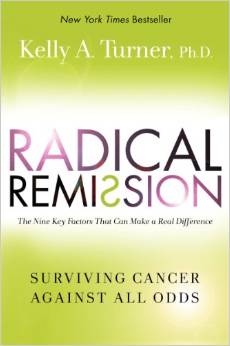
Kelly went on to do her Ph.D. at the University of California, Berkley. Her research passion — studying why people recover against all odds without the help of conventional medicine, or after conventional medicine has failed.  She called this Radical Remission. For her research she made a  trip around the world, traveling to ten different countries to interview holistic healers and cancer survivors about their healing practices and healing. She presented the gist of her research in her book, Radical Remission – surviving cancer against all odds.

radical remisssion


I recommend all cancer patients and all those involved with cancer (medical doctors or alternative healers included) to read this no-nonsense book. You can learn many things from her extensive research.

Let me highlight some of the points Dr. Turner wrote in the Introductory chapter that resonate so very well with me (in fact not with me alone but any scientist for that matter).

1. She wrote: “I was reading Dr. Andrew Weil’s book, Spontaneuous Healing when I came across a case of what I call Radical Remission. I froze, confused and stunned. Had this actually happened? If so, why had it not been on the front page of every newspaper? Even if it had happened only once, it is still an incredible event…. Intrigued, I instantly began trying to find other cases of Radical Remission. What I found shocked me. There were over a thousand cases in print.”

2. “The more I dug into this topic, the more frustrated I became.” Doctors were not interested to know about why their patients suddenly “heal” themselves even after all medical treatments failed.

3.  “The final straw for me though, was when a few of the radical survivors told me that their doctors had actually asked them  not to tell any other patients …. about their amazing recoveries. The reason? So as not to raise false hope.”

4. “When I first began studying Radical Remission” I was surprised to find that two groups of people had been largely ignored…. The first group was the radical survivors themselves ….. none of the authors reported directly asking the survivors why they thought they had healed. I found this very odd, given the fact that the survivors may have done something …that helped to heal their cancer… The second ignored group … was alternative healers … I was surprised no one had studied how non-Western or alternative healers treat cancer.”

5. Nine key factors for Radical Remission are:

a. Radically changing your diet.

b. Taking control of your health.

c. Following your intuition.

d. Using herbs and supplements.

e. Releasing suppressed emotions.

f. Increasing positive emotions.

g. Embracing social support.

h. Deepening your spiritual connection.

i. Having strong reasons for living.

….these are not listed in any kind of ranking order. There is no clear “winner” among these factors.”

We started CA Care in 1995 with the following basic approach to the healing of cancer.

25-The-CA-Care-Therapy


Indeed the various key factors that Dr. Turner found important among radical survivors reflect closely with what we have been teaching patients at CA Care for the past 18 years.

When I reflect deeply the work of Dr. Turner, I cannot help but come to the conclusion that in this world there are indeed truly blue blood scientists and there are also pseudo-scientists who believe that they know a lot of science.  These pseudo-scientists would brush off anything that does not conform to their world view as hocus pocus, unproven or unscientific – all in the name of science! Such people may even say, “Don’t tell me what you do to get well. I don’t want to know.” Even worse, some (according to Dr. Kelly) did not want others to know about their patients’ unique healing experience.

Read what Dr. Turner has got to say about this, “… In my first research class at UC Berkeley, I learned that it is a researcher’s scientific obligation to examine any anomalous cases that do not fit into his or her hypothesis …. there is absolutely no scenario in which it is okay to ignore cases that do not fit into your hypothesis…. (It is) scientifically irresponsible to ignore flat-out the people who have cure their cancers using unconventional means.”

To be a blue blood researcher you must have the guts to follow and tell the world where your research data lead you to. Do things based on your love for knowledge and truth, not driven by self-interest. Perhaps many readers are not aware that there are such thing as fake research and fake data. Dr. Sydney Singer reminded us, “Researchers are like prostitutes. They work for grant money … they go to where there is money.” Dr. Samuel Epstein, professor of the University of Illinois Medical Centre told the US Senate Select Committee, “In this country you can buy the data you require to support your case.” Dr. John Braithwaite said, “Data fabrication is so widespread.”

I see the honesty and integrity of Dr. Turner’s work. She wrote, “It is not at all my intention to raise false hope by writing this book… However, keeping silent about Radical Remission cases has led to something far worse, in my opinion, than false hope…. Giving false hope means making people hopeful about something that is untrue or false. Radical Remission cases may not be explainable – at the moment – but they are true.” To Dr. Turner, we just cannot afford to ignore this phenomenon even if we cannot understand and explain why Radical Remission worked in some people and not in others. A truly blue blood researcher would take on the task of expanding boundary and not be contented to be confined to a comfort zone. Sticking out your neck against mainstream thinking has its risk but then remember only dead fish flow with the stream. This world has enough of “Yes” men and women.

Some years ago, I once asked a young man why he wanted to do a Ph.D. His answer shocked me, “I want to have a Dr. in front of my name.” It is indeed sad. Way back in 1973, when I was a Ph.D. student, my professor taught me that Ph.D. means “lover of knowledge.” Make no mistake about this, if you want to be truly a blue blood researcher or scientist, you need to have the passion, commitment and inquisitive mind like Dr. Turner. Just wanting to have a Dr in front of your name will not do.

BOOK REVIEW: RADICAL REMISSION SURVIVING CANCER AGAINST ALL ODDS

radical remisssion


by Yeong Sek Yee & Khadijah Shaari

The author, Dr. Kelly A. Turner is a researcher, lecturer, and consultant in the field of integrative oncology. Her specialized research focus is the Radical Remission of cancer, which is a remission that occurs either in the absence of conventional medicine or after conventional medicine has failed. Dr. Turner has a B.A. from Harvard University and a Ph.D. from the University of California, Berkeley.

While getting her Ph.D. at the University of California, Berkley, Dr. Turner was shocked to discover that no one was studying episodes of radical (or unexpected) remission—when people recover against all odds without the help of conventional medicine, or after conventional medicine has failed.  She was so fascinated by this kind of remission that she embarked on a year-long trip around the world, travelling to ten different countries to interview fifty holistic healers and twenty radical remission cancer survivors about their healing practices and techniques. Her research continued by interviewing over 100 Radical Remission survivors and further studying another 1000 similar cases.

The results of her extensive study, which initially focused on seventy-five factors, were subsequently narrowed down to 9 key factors that Dr. Turner found common among nearly every Radical Remission survivor she has studied. She goes into much more details about these 9 key factors in the book. In fact, each factor has its own chapter, as well as stories of how patients used these factors to participate actively in their healing journey.

Below are the 9 common key factors that these patients with radical remissions employed:

1. Radically changing your diet.

2. Taking control of your health.

3. Following your intuition.

4. Using herbs and supplements.

5. Releasing suppressed emotions.

6. Increasing positive emotions.

7. Embracing social support.

8. Deepening your spiritual connection.

9. Having strong reasons for living.

Out of the above 9 key factors that were associated with cases of remission and healing, only 2 of them were physical – radical diet change, and taking herbs and supplements, but surprisingly, the other seven were mental and emotional factors such as following intuition, releasing suppressed emotions, increasing positive emotions, embracing social support received from friends and family, and having a spiritual practice.

Besides the 9 key factors, Dr Turner identified three main types of cancer patients:

  • Those who chose western medicine and holistic methods to treat their cancer,
  • Those who chose only holistic methods,
  • Those who chose western medicine exclusively and then later turned to holistic methods as a last resort.

The common factor in all these 3 types of patients is that all saw similar and amazing results and all experienced a dramatic shift in their healing.

Dr Kelly Turner’s book, Radical Remission shows that it is possible to triumph over cancer, even in situations that seem hopeless. Encompassing diet, stress, emotions, spirituality, and other factors that profoundly affect our health and well-being, Turner’s discussion of how our choices can cause the seemingly miraculous to happen will open your eyes to what is possible when it comes to lasting healing.

This is a book for those who are in the midst of receiving conventional cancer treatment, who are looking for other options because the present treatment has done all that it can, or who seemingly have no options left but still feel that the future holds the possibility of hope.

If you wish to read more about radical remissions or more of Dr Turner’s work, do visit her website at www.RadicalRemission.com or listen to the following YouTube videos:

1)      Radical Remission Book Trailer with Dr. Kelly Turner

LINK: http://www.youtube.com/watch?v=PX0oeUuKDjU 

2)       Healing Cancer Naturally: Dr. Kelly Turner on Glimpse TV

LINK: http://www.youtube.com/watch?v=AszzdGqSwFw

3)      Radical Remission! Amazing research on how people heal cancer

LINK:http://www.youtube.com/watch?v=YQbJfAPKOqA

4)      Radical Remission from Cancer with Kelly Turner

LINK: http://www.youtube.com/watch?v=wZuUUEpX4yE

5)      Radical Remission Interview with Jeannine Walston (brain cancer)

LINK: http://www.youtube.com/watch?v=ZR2zv8xG4Kw

6)      Radical Remission Survivor Interview: Chris Wark (colon cancer)

LINK: http://www.youtube.com/watch?v=85swYuiFSwQ


If you are interested to read more books on how the mind, body and spirit can heal the body, we recommend the following (there are lots more):

1)      MIND OVER MEDICINE…Scientific Proof That You Can Heal Yourself by Dr Lissa Rankin, MD.

2)      YOU CAN HEAL YOUR LIFE…by Louise L. Hay…book and DVD.

3)      THE BIOLOGY OF BELIEF: Unleashing the Power of Consciousness, Matter, and Miracles by Bruce H. Lipton, PhD.


HAPPY READING!


WHAT RADIATION THERAPY DOES TO THE BODY (PART 2)

by Yeong Sek Yee & Khadijah Shaari

Essentially, it burns the body. Radiation (or radiotherapy) is designed to kill cancer cells or damage their DNA in a way that keeps them from dividing. The goal may be to destroy a tumour; to shrink the tumour prior to surgery, allowing for a less invasive procedure; or to use radiation after surgery to reach any cancer cells inadvertently left behind. In some circumstances, radiation may also be used to relieve pain, such as by shrinking a tumour exerting on the spine.

However, do the benefits outweigh the risks or side effects? To find answers to this question, we reviewed some books written by prominent medical doctors to help us understand what radiation does to our body. Hopefully with this knowledge, you will be able to make a better judgment when your doctor tells you that…” you must do radiation, you have no choice, it is the standard operating procedure, etc”

In Part 1, we reviewed “A WORLD WITHOUT CANCER” by Dr Margaret Cuomo, a board-certified radiologist at North Shore University hospital in Manhasset, New York. In Chapter 4 Cut, Poison and Burn, Dr Cuomo made some very frank revelations. Some of these are:

  • Research indicates that advising patients to undergo radiation is not always appropriate.
  • Although we have gotten much better at aiming radiation directly at a tumor, we can’t target it with the precision necessary to burn only cancer cells and leave healthy ones intact. That means that this therapy, too, is damaging.
  • Acute side effects caused by radiation can also include skin irritation, damage to the salivary glands, urinary problems (if the abdominal area has been treated), and sometimes nausea. While many of these eventually disappear, some can linger for a long time or become permanent.
  • Months or even years after radiation, chronic side effects can surface. With radiation, as with chemotherapy, the list of potential problems is lengthy.
  • Most troubling is the possibility that other cancers will emerge, often near the original site, long after receiving radiation therapy…children who survived cancer were 15 times more likely to die of a subsequent cancer later in life.
  • Though the young are most vulnerable, secondary cancers can develop as a result of radiation at any age.
  • Breast cancer radiation seems to carry a particularly higher risk, and may be associated with subsequent lung cancer, as well as cancers of the blood vessels, bone and connective tissues.
  • Women who have received radiation for ovarian cancer may be more likely to develop cancers of connective tissues, the bladder, and the pancreas, while radiation for cervical cancer raises the risk of cancers of the colon, rectum, small intestine, uterus, ovary, kidney, soft tissue, and stomach.
  • Men treated with radiation for prostate cancer subsequently have a higher risk of cancers of the bladder, colon, and rectum, compared with men who had surgery. Those same risks, as well as others, are evident after radiation for testicular cancer.
  • Radiation exposure is also associated with leukemia (including acute myelogenous, chronic myelogenous, and acute lymphoblastic leukemias}.

What all this tells us is that, once again, we have a treatment that initially works well for some people some of the time but in the long run fails to deliver a cure and carries significant side effects.

Dr Cuomo concluded the chapter by revealing the comments of Carole Baggerly, a breast cancer patient who was alarmed by the effect of her radiation treatment. Initially hesitant, Carole decided to accept her oncologist’s reassurance that the side effects would be minimal, only to develop a red, oozing burn on her chest and more redness on her back. “It was extremely painful,” she recalls. “The fact that the redness went through to my back was proof that the   x-rays had scattered.”

If you would like to research further on the dangers of radiation therapy, we recommend Dr Cuomo’s hard hitting article, “WHY CANCER TREATMENT IS FATALLY FLAWED “

Link:http://www.huffingtonpost.com/margaret-i-cuomo-md/cancer-prevention_b_1609446.html 

In this article, Dr Cuomo revealed that  Good Morning America co-anchor Robin Roberts announced  that she had been diagnosed with  myelodysplastic syndrome (MDS) — a group of conditions in which the cells in the bone marrow are damaged…just barely having “beaten breast cancer” after having completed treatment involving chemotherapy and radiation which are both risk factors for MDS. In fact, ionizing radiation, according to Dr Cuomo, increases the risk for MDS.

You can read Robin Roberts story on MDS at the following link:

http://www.huffingtonpost.com/2012/06/11/robin-roberts-mds-bone-marrow_n_1586151.html 

CONCLUDING REMARKS

It is extremely tragic and incomprehensible that the medical (or cancer) establishment still uses ionizing radiation that is clearly proven and known to be carcinogenic (as established by the International Agency for Research on Cancer).It is also inconceivable that such conventional cancer treatments should cause so much pain, agony and money and then the patient has to suffer another form of cancer, heart disease or disorders to the bones, etc. Hence the cycle of treatment has to be repeated.

Is this why conventional cancer treatment is referred to as “the Cancer Industry?” Is this healing or what do you want to call it?

We welcome your opinion.

Using Bad Statistics to Mislead

Dr. Ben Goldacre in Bad Science, pg. 186-187, wrote:

  • We can look at how these numbers  and calculations … are repeatedly misused and misunderstood.
  • Numbers … can ruin lives.

Sensationalising

  • Newspapers like big numbers and eye-catching headlines (only newspapers? No, all those with vested interests love to indulge in them too! In fact this is the way they can mislead you and me!).
  • They need miracle cures and hidden scares… small percentage shifts … will never be enough for them to sell readers to advertisers.
  • To this end they pick the single most melodramatic and misleading way of describing any statistical increase …..

Example of How to Massage Data: Reporting of Relative Risk Reduction

Take a hypothetical case. Out of 100 men in their fifties with normal cholesterol, 4 will be expected to have a heart attack, whereas out of 100 men with high cholesterol, 6 will be expected to have a heart attack.

How to make a cholesterol scare?

If you put it in layman’s language (i.e. using the natural frequencies) there is no impact. Among those men with high cholesterol  only an extra of 2 heart attacks per hundred. No big deal, right?  Cholesterol will not scare you.

Here is how the professional of numbers or statisticians play their tricks on us.

It is equally right (mathematically speaking) to say that cholesterol increases the Relative Risk of heart attack by 50 percent!

This is how they massage the same data to make it more dramatic. Four men out of 100 will have heart attack with normal cholesterol, 6 men out of 100 if the cholesterol is high. The increase of 2 heart attacks out of 4.  You can then legitimately say cholesterol increase heart attack by 50 percent!

In chapter 2 of Honest Medicine Dr. Donald Murphy wrote:

  • Let’s consider the aspirin … a hypothetical study.  Researchers found that 10 of 1,000 volunteers who took one aspirin a day had a heart attack. They found that 20 of the 1,000 volunteers who took the placebo (sugar pill) had a heart attack.
  • How will the medical journals and the medial report this difference? How will the scientist and the media emphasize the importance of this finding? They will most likely report the relative risk reduction (RRR).
  • In this example, the RRR is an impressive 50 percent: going from 20 to 10 is a 50 percent change.
  • You get the impression that you can cut your risk of a heart attack in half by taking aspirin.
  • Take a closer look at these numbers. Only 10 out of the 1,000 volunteers taking aspirin benefit from this drug. The study also shows that 980 of the volunteers taking aspirin wouldn’t have a heart attack anyway because 980 of the volunteers taking the placebo didn’t have a heart attack. 10 of the volunteers would have a heart attack whether they took aspirin or not. The other 10 volunteers are the only ones who prevented a heart attack due to aspirin.
  • In this example, going from 2 percent (20 /1,000) to 1 percent (10/1,000) is only a 1 percent change. That is the likelihood that you would prevent a heart attack if you took aspirin — benefit of only 1 percent.
  • “Cut your risk of a heart attack by 1 percent” doesn’t have the punch of the headline as “ASPIRIN CUST RISK OF HEART ATTACK BY 50 PERCENT”.

Do you see how the benefit of 1 percent can be massaged and made to look great by “legitimately” turning into 50 percent relative risk reduction? Again let me emphasize, the stark reality is that out of the 100 people who take aspirin, only 2 people will benefit from it, in terms of preventing heart attack. Data presented in simple, raw form tells the truth more honestly!

A Word about Statistical Significance

When medical journals and the media report important findings, they refer to statistical significance. Statistics are based on probabilities, not on absolutes. A study that is statistically significant may not be clinically significant for you.

If a medical study reports that a finding is statistically significant, it means the finding is probably real and not just a matter of chance … science does not consist of only black and white facts. It is full of gray areas and can be very subjective …facts may not be so factual after all …. and health care is not black and white.

Things Get More Complicated

When prescribed medication or told to undergo chemotherapy, some patients are full of trust, taking for granted that this is best for them.  But some patients are more empowered. They wanted to know the possible outcome of the treatment. The want simple straight forward answers, as below:

For example when undergoing breast cancer treatment, you may wish to ask: For all the surgery, chemotherapy, radiotherapy (and tamoxifen) that you have been told to go for.

• How many patients were cured?

• How many died?

• How many survived after one, two, three, five or ten years after the treatments?

• How many contracted metastases of the liver, bone, lungs, etc.?

• Is there any correlation between the treatments they received and the metastases that occurred?

These questions and their answers are pertinent to all people. You need to know the answers to these basic questions, to be able to make some kind of informed decisions. Unfortunately when you need the medical literature, you will be carried away! Lost in medical or statistical jargons! You don’t get straight answers to the questions above.

Terminology Used to Clinical Trials

Oncologists use the term endpoint to refer to an outcome they are trying to measure with a clinical trial. Understanding endpoints is absolutely critical to understanding the technical medical literature. All journal articles reporting on clinical trials will report the results in terms of the endpoints which were measured. If you don’t understand what they mean, you can’t understand the article.

For example, oncologists frequently use the term “respond” to treatment; or they say, “you are responding to the treatment.”  Do you know what “respond” might mean?

Response

Response is about measuring tumor shrinkage. Response is not used where the primary tumor has been removed surgically since in that case there are no detectable tumors to measure.

There are many kinds of responses:

  • Complete Response (CR): This means all detectable tumor has disappeared. A complete response does not necessarily mean the patient is cured. Even when no tumor can be seen on scans, there can be residual tumor which is too small to detect, and so unfortunately, complete responses may not last. A patient who has had a complete response may be said to be “NED”. NED means “No Evidence of Disease”.
  • Partial Response (PR): This roughly corresponds to at least a 50% decrease in the total tumor volume but with evidence of some residual disease still remaining. Partial responses aren’t usually cures and usually aren’t a long term benefit because significant tumor remains.
  • Minor Response (MR): This roughly means a small amount of shrinkage. Roughly speaking, a minor response is more than 25% of total tumor volume but less than the 50% that would make it a PR. A minor response is not enough to be considered a true response.
  • Stable Disease (SD): Stable disease means the tumors stay the same size or “insignificant” changes. This may include either a small amount of growth (typically less than 20 or 25%) or a small amount of shrinkage.  You may wish to know that some periods of stability are relatively common in some kinds of cancer even without treatment. Therefore, it is difficult to know if stable disease is the result of treatment. Claims of benefit for new treatments involving stable disease should be examined skeptically.
  • Progressive Disease (PD): Progressive disease means the tumor has grown significantly or that new tumors have appeared. The appearance of new tumors is always progressive disease. Progressive disease normally means the treatment has failed and in most cases is the signal that it’s time to try something else (or stop treatment altogether if no good options remain).
  • Objective Response (OR): Objective response means either a partial or complete response (In the literature you’ll frequently see “CR+PR” which means the same thing). When you see an objective response rate be sure to look at how many are complete responses and how many are partial since benefits from complete response tend to be greater. Often news reports and especially press releases by self-interested companies blur this and don’t reveal that the CR rate is low or non-existent. Track down the original source and find out!
  • “Clinical Benefit”: Clinical benefit is an informal term which usually means anything other than progressive disease. Use of this term is suspect, particularly if it is in a press release or news report. It isn’t automatically clear that patients with stable disease are benefiting from treatment since the natural history of cancer can include periods of apparent stable disease and since tumor shrinkage is not equal to clinical benefit to begin with.

Survival

Improvement in survival is generally considered to be the gold standard and is therefore a very important endpoint in cancer trials. It directly benefits patients.

Survival is an unambiguous end point that is not subject to investigator bias or interpretation. It is an end point that can be assessed easily, frequently, and without reliance on tumor measurements of any kind.

Therapies with a high treatment-related mortality might fail to show a survival benefit even if tumor control is substantially better with the new treatment.

Frequently, a big deal is made out of treatments which improve median survival by only a few weeks or months.

The common jargon used is OS, Overall Survival besides the different shades of survival.

Progression Free Survival

Progression Free Survival is the length of time you are both alive and free from any significant increase in your cancer (free from progression).

Disease Free Survival

Disease Free Survival is a special case of Progression Free Survival used as an endpoint in the clinical trials of adjuvant therapy to prevent recurrence after surgery to completely remove all visible cancer. In this case “progression” means the patient has had a recurrence.

Progression free survival and disease free survival can translate to an improvement in quality of life since symptoms from the cancer are delayed – but only if side effects of treatment aren’t worse.

Quality of Life

Quality of Life is supposed to measure how you feel and how you function. Although quality of life is certainly important in the broad sense, unfortunately, there is no unambiguous physical measurement or definable property which corresponds to your “Quality of Life”.

Quality of Life is therefore measured using a brief questionnaire in which patients rate their ability to function in various ways and enjoy life. Patients typically fill out the questionnaire several times during the course of the trial.

Quoted from:  http://cancerguide.org/endpoints.html


Using Emotions of Fear or Hope to Sell Cancer Treatments

Our website, http://www.cacare.com has this opening sentences:

CANCER ! Don’t panic ! Haste is from the Devil ~ Arab saying.

Why do you visit this website? We believe you are seeking information to enable you or your loved ones to make certain decisions about his/her cancer. Our advice is: Read as much as possible. Gather information from different sources. Cast your net wider and read what others from different disciplines have to say about the same subject. Get out of the box and view your problem in a different light.

Often, in the face of fear, hopelessness and panic we forget to use our commonsense. Calm down. A decision made in haste or under pressure is never a good decision. Remember, you don’t get cancer just only yesterday.

When we go to the hospital, we go with full faith and trust. We believe that the doctors have our best interests in their hearts – after all,  medicine is a noble profession! Unfortunately medicine has morphed into something else today!

The treatment of disease is not a science … but a thriving industry ~ Sir James Barr, Vice President, British Medical Association.

Physicians are called to service, to put patients’ good above our own. That’s a very spiritual calling. But with … making medicine a business, we’re … losing that sense of purpose and meaning ~ Christina Puchalski, professor of medicine, George Washington University. Reader’s Digest Sept. 2001.

People go where the money is, and you’d like to believe it’s different in medicine, but it’s really no different in medicine. When you start thinking of oncology as a business, then all these decisions make sense ~ Dr. Robert Geller, oncologist. New York Times, 12 June 2007 by Alex Beresen.

On the morning of 31 May 2014, I woke up to read the following titles in the internet! It is sad. But this is the reality of the medical industry! Please read these …

1. Cancer Ads Focus On Emotion, Not Facts: Are Consumers Being Misled About Treatment Options?

  • Advertisements released by U.S. cancer centers in magazines and on TV may be delivering the wrong message.
  • The grueling battle with cancer is one that many people undergo with little knowledge already at-hand. Popular outlets such as TV and magazines may prove unhelpful in that regard … these ads focus more on emotion than on facts.
  • Consumers gain little information about treatment costs, risks, or even its benefits in concrete, quantitative terms.
  • If the ads were anything to go by, the data suggests that patients would hope for survival rather than evaluate their chances.

http://www.medicaldaily.com/cancer-ads-focus-emotion-not-facts-are-consumers-being-misled-about-treatment-options-284828 

2. Analysis Shows Advertising by Cancer Centers Frequently Evokes Hope and Fear, but Provides Little Information.

  • Advertisements frequently promoted cancer therapy with emotional appeals that evoked hope and fear, while rarely providing information about risks, benefits, costs, or insurance availability. The researchers suggest that the ads may lead patients to pursue care that is either unnecessary or unsupported by scientific evidence.
  • Pursuit of unnecessary tests or treatment may … expose patients to avoidable risks and contribute to increasing costs.

http://www.ascopost.com/ViewNews.aspx?nid=16259

3. Nine of 10 cancer center ads use emotional fluff to attract patients, with little mention of success rates, risks or cost.

Cancer centers and hospitals are competing for your business …. Many cancer charities use the same methods to raise money, which I discuss in my most popular video.

http://www.chrisbeatcancer.com/cancer-center-ads-use-emotional-appeals/

4. Cancer Center Ads Use Emotion, Promise Cure.

  • In their advertisements to the general public, cancer centers in the US use emotional appeals that evoke hope and fear, and rarely provide information about risks, benefits, costs … The approach may lead to unrealistic expectations and inappropriate treatments, it warns.

Emotional appeals were a cornerstone of most ads …. Most stressed survival or potential for cure rather than comfort, quality of life, or patient-centered care.

http://www.medscape.com/viewarticle/825701

5.  Study: Cancer ads tug at heartstrings, leave out caveats.

  • Advertisements for cancer centers are inflated with emotions, but fail to disclose the fine print….
  • A systematic content analysis of these ads found that the content is sharply directed at a would-be patient’s heartstrings:
  • 85% made emotional appeals to consumers
    b.  61% used language about hope, extension of life, or a cure
    c.  52% touted innovative, or advanced technology or treatments
    d. 30% evoked fear by mentioning death, fear, or loss.
  • Noticeably missing from most of the TV and magazine ads is information about the risks, scientific-supported benefits and cost:
  • a.  2% disclosed the risks of the cancer treatment
    b.  5% mentioned cost of treatment
  • Emotion-based advertisement is a powerful means of persuasion and potentially harmful to the consumer.

http://thechart.blogs.cnn.com/2014/05/26/study-cancer-ads-tug-at-heartstrings-leave-out-caveats/comment-page-1/

6. Cancer Center Advertisements Focus on Emotional Appeals. 

MedicalResearch: What should clinicians and patients take away from your report? 

Dr. Schenker: Cancer center advertisements are increasingly common.  I think it is important for clinicians and patients to be aware of the focus on survival and potential cure in these advertisements, as well as the use of emotional appeals.  I would encourage patients to seek more complete and balanced sources of information – and to talk with a trusted physician – when facing important decisions about their cancer care.

http://medicalresearch.com/cancer-_-oncology/cancer_center_advertisements_focus_on_emotional_appeals/5545/

The above comments came about as a result of research conducted by Vater et al and published in the Annals of Internal Medicine, 27 May 2014,  What Are Cancer Centers Advertising to the Public?: A Content Analysis.

A total of 102 cancer centers placed 409 unique clinical advertisements in top media markets in 2012. They found out that the:

  • Advertisements promoted treatments (88%) more often than screening (18%) or supportive services (13%).
  • Benefits of advertised therapies were described more often than risks (27% vs. 2%) but were rarely quantified (2%).
  • Few advertisements mentioned coverage or costs (5%).
  • Emotional appeals were frequent (85%), evoking hope for survival (61%), describing cancer treatment as a fight or battle (41%), and inducing fear (30%).
  • Nearly one half of advertisements included patient testimonials, which were usually focused on survival, rarely included disclaimers (15%), and never described the results that a typical patient may expect. 

The Journal’s editorial weighed in with more comments:

  • In her classic essay, Illness as Metaphor, Susan Sontag suggested that the negative metaphor and myths surrounding cancer increase the suffering of patients.
  • Vater and colleagues ….found that … benefits of advertised therapies were emphasized more often than risks, and specific data were rarely given.
  • Appeals were largely emotional rather informational, sometimes seemed to equate treatment with cure and most often focused on survival rather than comfort or quality of life.
  • The authors suggest that the focus may contribute to unrealistic expectations about treatment benefits among patients with cancer … and may even lead to inappropriate treatments.

Almost every day I have people writing or coming to me asking for help about their cancer. This is my advice, no matter who you go to – medical doctor or alternative practitioner.

If you are asked to undergo any treatment, ask the following questions first (don’t be led by the nose):

a. Can the treatment cure your cancer?

b. If the answer is “Yes”, better think a million times before you take the recommended path! My experience shows there is no such thing as a cure!

c. If you are told you have a 60 percent chance of success, make sure that you understand what this percentage means to you. Know that only 6 out of 10 patient succeed! Success may not mean anything! What is it, cure? Know that that this statistics may not apply to you at all. Six succeeded but how sure that you belong to the 6 and not the 4 who failed?

d. Patients tell me that often they get these answers when they ask about their cancer of cure: Ask God!  or  We shall try and see. Such answers imply that you are in the game of luck, not science anymore.

e. Another favourite answer is, No cure, but can prolong life. Ask, prolong life for how long? Some drugs only prolong life by a few days, a few weeks or a few months, rarely years!

f. Even if the treatment prolongs life, it comes with a great cost in terms of side effects and money. Decide, if the extra time of being alive (but ended up being a vegetable) is worth it?

g. Ask about the side effects of the treatment. Very often the “bad effects” are toned down! Some don’t want to even tell you about them! It is wise to visit the oncology ward of the hospital and see for yourself  (and ask) those who have undergone the treatments. Check about treatment by reading what others say in the internet.

h. Ask about the total cost of the treatment. It is foolish to proceed with the treatment half way and then found later that you don’t have to enough money to complete the journey!

WHAT RADIATION THERAPY DOES TO THE BODY (PART 1)

by Yeong Sek Yee & Khadijah Shaari

One of the tragedies of radiation therapy, after it had burned your body, is that it may “reward” the cancer patient with  a second cancer and this comes quite commonly in the form of leukemias (including acute myelogenous, chronic myelogenous, and acute lymphoblastic leukemias) or pre-leukemias (myelodysplastic syndrome or MDS).

In this article, we shall concentrate on MDS. A myelodysplastic syndrome is a type of cancer in which the bone marrow does not make enough healthy blood cells and there are abnormal (blast) cells in the blood and/or bone marrow. In a patient with a myelodysplastic syndrome, the blood stem cells (immature cells) do not become healthy red blood cells, white blood cells, or platelets. These immature blood cells, called blasts, do not work the way they should and either die in the bone marrow or soon after they go into the blood. This leaves less room for healthy white blood cells, red blood cells, and platelets to form in the bone marrow. When there are fewer healthy blood cells, infection, anemia, or easy bleeding may occur.

For more general information on MDS, visit the website of the National Cancer Institute (NCI), USA: http://www.cancer.gov/cancertopics/pdq/treatment/myelodysplastic/Patient/page1

Incidentally, the NCI also specified that one of the causes of MDS is… “past treatment with chemotherapy or radiation therapy for cancer.”

What other evidence is there? Let us quote from 3 other sources:

1. In the MDS website (http://www.mds-foundation.org/what-is-mds/), the main cause for MDS  is listed as:

“Radiation and chemotherapy for cancer are among the known triggers for the development of MDS. Patients who take chemotherapy drugs or who receive radiation therapy for potentially curable cancers, such as breast or testicular cancers, Hodgkin’s disease and non-Hodgkin’s lymphoma, are at risk of developing MDS for up to 10 years following treatment. MDS that develops after use of cancer chemotherapy or radiation is called “secondary MDS” and is usually associated with multiple chromosome abnormalities in cells in the bone marrow. This type of MDS often develops rapidly into AML”. 

2. The world famous Mayo Clinic, USA (http://www.mayoclinic.org/diseases-conditions/myelodysplastic-syndromes/basics/causes/con-20027168), clearly states that:

Myelodysplastic syndromes that occur in response to cancer treatments, such as chemotherapy and radiation, or in response to chemical exposure are called secondary myelodysplastic syndromes. Secondary myelodysplastic syndromes are often more difficult to treat.”

3. The American Cancer Society, USA (http://www.cancer.org/cancer/cancercauses/othercarcinogens/medicaltreatments/secondcancerscausedbycancertreatment/second-cancers-caused-by-cancer-treatment-treatments-linked-to-second-cancers)clearly acknowledged that:

“Radiation therapy was recognized as a potential cause of cancer many years ago. Acute myelogenous leukemia (AML), chronic myelogenous leukemia (CML), and acute lymphoblastic leukemia (ALL) have been linked to past radiation exposure. Myelodysplastic syndrome (MDS), a bone marrow disorder that can turn into acute leukemia, has also been linked to past radiation exposure.”

In June 2012, Good Morning America co-anchor announced that she had developed myelodysplastic syndrome (MDS) barely five years after she had “beaten breast cancer.” Obviously, she had chemotherapy and radiation therapies.

(NB: We have seen cancer patients developing leukemias shortly after completing conventional cancer treatment).

In addition to causing a second cancer, radiation therapy also cause heart diseases…you may wish to read the following:

http://www.economist.com/blogs/economist-explains/2013/07/economist-explains-22

http://www.sciencedaily.com/releases/2009/10/091022202710.htm

http://www.sciencedaily.com/releases/2013/10/131028162046.htm

http://www.thehealthyhomeeconomist.com/would-you-ever-use-chemo-or-radiation-for-cancer/

http://www.cardiovascularbusiness.com/topics/practice-management/surviving-cancer-cost-radiation-chemo-induced-cardiovascular-diseases

CONCLUDING REMARKS 

It is extremely tragic and incomprehensible that the medical (or cancer) establishment still uses ionizing radiation that is clearly proven and known to be carcinogenic (as established by the International Agency for Research on Cancer). 

It is also inconceivable that such conventional cancer treatments should cause so much pain, agony and money and then the patient has to suffer another form of cancer, heart disease or disorders to the bones, etc. Hence the cycle of treatment has to be repeated. 

Is this why conventional cancer treatment is referred to as “the Cancer Industry?” Is this healing or what is it that you want to call it? 

We welcome your opinion.

THE DARK SIDE OF RADIATION THERAPY

Danger-Ionizing-radiation


The darkest secret of radiation therapy (or radiotherapy), which uses ionizing radiation, is that it does cause cancer or a second cancer. Such “radiation-induced cancers” are mentioned in the website of the American Cancer Society (ACS). You can read the full article “Radiation Exposure and Cancer” at the following link:

http://www.cancer.org/cancer/cancercauses/radiationexposureandcancer/  index?sitearea=mh

Ionizing radiation is high-frequency radiation that has enough energy to remove an electron from (ionize) an atom or molecule. Ionizing radiation has enough energy to damage the DNA in cells, which in turn may lead to cancer. Gamma rays, x-rays, some high-energy UV rays, and some sub-atomic particles such as alpha particles and protons are forms of ionizing radiation. These forms of radiation have different energy levels and can penetrate cells to different extents, but all are capable of causing ionization.

If ionizing radiation passes through a cell in the body, it can lead to mutations (changes) in the cell’s DNA, the part of the cell that contains its genes (blueprints). This could contribute to cancer, or to the death of the cell. The amount of damage in the cell is related to the dose of radiation it receives. The damage takes place in only a fraction of a second, but other changes such as the beginning of cancer may take years to develop.

Ionizing radiation is a proven human carcinogen (cancer causing agent) itself or it causes a second cancer.Some cancer treatments such as chemotherapy and radiation therapy may increase a person’s risk of developing a different type of cancer later in life. Some of the second cancers include Hodgkin’s and non-Hodgkin’s lymphomas, and leukemias or myelodyplastic syndromes (pre-leukemias). Follow the following links to learn more:

Most studies on radiation and cancer risks have looked at people exposed to very high doses of radiation in the settings above. Still, most scientists and regulatory agencies agree that even small doses of ionizing radiation increase cancer risk, although by a very small amount. In general, the risk of cancer from radiation exposure increases as the dose of radiation increases. Likewise, the lower the exposure is, the smaller the increase in risk. But there is no threshold below which ionizing radiation is thought to be totally safe.

The above notes are extracted from the above ACS website.

Who else tells us about the dangers of ionizing radiation?

In the 1950’s Dr Alice Mary Stewart, a physician and epidemiologist specializing in social medicine (at Oxford University) and the effects of radiation on health warned that low-dose radiation is more dangerous than has been acknowledged. She spent more than 30 years studying the effects of radiation on human health. In 1956, Dr Stewart published a landmark paper that concluded that a single exposure to a diagnostic x-ray before birth will double the risk of an early cancer (usually leukemia).  Her results were initially regarded as unsound. Her findings on fetal damage caused by x-rays of pregnant women were eventually accepted worldwide and the use of medical x-rays during pregnancy and early childhood was curtailed as a result (although it took around two and a half decades). For more information on Dr Alice Stewart, read her biography “THE WOMAN WHO KNEW TOO MUCH: ALICE STEWART AND THE SECRETS OF RADIATION” by Professor Gayle Greene, Professor of Women’s studies and Literature at Scripps College.

In the 1960s Dr. Ernest Sternglass, Emeritus Professor of Radiological Physics in the Department of Radiology at the University of Pittsburgh School of Medicine, initially studied fluoroscopy, which “exposes an individual to a considerable dose of radiation.”  Later, he confirmed Dr Alice Stewart’s research findings and in 1963 he published the paper “Cancer: Relation of Prenatal Radiation to Development of the Disease in Childhood” in the journal Science. Dr Sternglass is best known for his controversial research on the health risks of low-level radiation. We recommend that you watch the following YouTube video on Radiation and Health at the following link: http://www.youtube.com/watch?v=J3ib085o-K0

Following the footsteps of Dr Alice Stewart and Dr Ernest Sternglass, Dr John William Gofman, who was the Professor Emeritus of Molecular and Cell Biology at University of California at Berkeley, promoted a linear no-threshold model for the dangers of radiation, suggesting that even small doses over time could prove harmful. Some of his major research/publications are:

  • His 1981 book, Radiation and Human Health expounded on this and gave prediction tables for how much average life expectancy might be affected by radiation.
  • In his 1990 book, Radiation-Induced Cancer From Low-Dose Exposure: An Independent Analysis , Dr Gofman provides the human and physical evidence that carcinogenesis from ionizing radiation does occur at the lowest conceivable doses and dose-rates. This finding refutes claims by parts of the radiation community that very low doses or dose-rates may be safe.
  • In 1996, Dr Gofman’s expose Preventing Breast Cancer: The Story of a Major, Proven, Preventable Cause of this Disease revealed that… “about three-quarters of the current annual incidence of breast-cancer in the US is being caused by earlier ionizing radiation, primarily from medical sources”

In year 2000, the International Agency for Research on Cancer (IARC) based in Paris, lists ionizing radiation as a carcinogen…you can read more at the following link:

  • IARC  Monographs on the Evaluation of Carcinogenic Risks to Humans

            Link:http://www.iarc.fr/en/publications/list/monographs/index.php

In 2005, the National Toxicology Program, US classified X-radiation and gamma radiation as known human carcinogen. Although some scientists challenge this premise, most agree that there is no such thing as a safe dose of radiation. A 2005 National Research Council report confirms this finding, stating that “the risk of cancer proceeds in a linear fashion at lower doses [of ionizing radiation] without a threshold and … the smallest dose has the potential to cause a small increase in risk to humans.” Radiation damage to genes is cumulative over a lifetime. Repeated low-dose exposures over time may have the same harmful effects as a single high-dose exposure.

To read more: http://ntp.niehs.nih.gov/ntp/roc/twelfth/profiles/ionizingradiation.pdf

The European Committee on Radiation Risk (ECRR), in its 2010 Recommendations entitled “The Health Effects of Exposure to Low Doses of Ionizing Radiation” paid tribute to the work and research efforts of Professor Edward P. Radford, a physician and epidemiologist who clearly established that…”there is no safe dose of radiation” (The 2003 Recommendations was dedicated to Dr Alice Stewart as described above). To read the 2010 ECRR Recommendations, follow the link: http://www.euradcom.org/2011/ecrr2010.pdf

As a result of the above glaring hard evidence of the dangers of ionizing radiation currently used in various medical treatments, sensible medical doctors like Dr Russell Blaylock (a neurosurgeon), Dr Margaret Cuomo (a certified radiologist), Dr Francisco Contreras (an oncologist), Dr Keith Block (an oncologist), and many others do have serious reservations about the usage and effectiveness of radiation therapy. Their views/comments will be summarized in our coming review of their books under our series “What Radiation Therapy Does To Your Body”

Meantime, if you would like to read more on the dangers of ionizing radiation and radiation-induced cancers, visit the following links:

1)      Does Radiation Cause Cancer?

Link: http://www.rerf.or.jp/library/update/rerfupda_e/comment/cause.html

2)      Carcinogenesis after Exposure to Ionizing Radiation

Link: http://www.radiology.ucsf.edu/patient-care/patient-safety/ct-mri-pregnancy/carcinogenesis

3)      Diseases associated with Ionizing radiation exposure

Link: http://www.publichealth.va.gov/exposures/radiation/diseases.asp 

4)      Secondary Malignancies after Radiation Therapy

LINK:http://cancergrace.org/radiation/2011/05/09/secondary-malignancies/

5)      State of the Evidence on Ionizing Radiation

        LINK:  http://www.breastcancerfund.org/clear-science/radiation-chemicals-and-                    breast- cancer/ionizing-radiation.html

 SOME YOUTUBE VIDEOS TO ENLIGHTEN YOU:

1)      Dangers of Radiation by Dr. Joseph Maroon

LINK: http://www.youtube.com/watch?v=6dTSgfB5q9s

2)    Uses and Dangers of Radiation (IGCSE Physics)

LINK:http://www.youtube.com/watch?v=VR4jDgiq35s

3)    Radiation-Hidden_Health_Danger.flv

LINK: http://www.youtube.com/watch?v=BrfjvXgtPLY

To conclude, it is just beyond human comprehension why the medical (or cancer) establishment would want to use a proven carcinogen to heal cancer or is it their intention to create more cancers? We welcome your views.

NB: We trust you know the meaning of “a carcinogen”

 The hazard symbol for carcinogenic chemicals in the Globally Harmonized System.

Danger-Ionizing-radiation


Breast Cancer. Part 3/3: What do you expect me to do? Cure you?

SL (E-338) is a 46-year-old lady. She went to China for treatment of her breast cancer and spent more than RM 300,000. She did not get a cure. Instead, the cancer spread to her liver, bone and lung.

Gist of our conversation.

Chris: You come and see me. Let me honestly ask you, What do you expect me to do? Cure you?

SL: No. But I prefer something that is natural. I want to live life to the fullest.

C: So you do not expect a cure?

SL: Of course, I …

C: Of course, everyone wants a cure.

SL: Of course, of course.

C: But then nobody can give you a cure!

SL: Only God knows. I am very clear about that.

C: Okay, we will do the best we can.

SL: For me too, I have to do my best for myself.

Herbs – bitter and awful smell

C: The herbs that we are giving you are going to be bitter and smelly. You have to brew that.

SL: I am quite used to such smell.

Be prepared for healing crisis

C: If you think you just want to take the herbs for just a month and then stop it, then my advice is don’t take my herbs. What for? I am not saying that you must continue with my herbs. What I am trying to say  is, If that is the what you intend to do (mentality), then that’s the wrong attitude. Understand?

SL: After I take the herbs,  I go and check my blood!

C: What do you expect to find? Better? Wrong! I don’t believe that after taking the herbs for a month your blood is going to be good right away. Don’t be fooled by that notion.  I am going to tell you that for the first two weeks when you start to take the herbs, you are going to suffer – Healing Crisis. That is okay, you have to go through this. After that you will get better and better.

If no benefit after a month on herbs, don’t take them anymore. Go find someone else for help

C: If you are not getting better after one month, my advice to you is don’t take my herbs anymore. This is because within a month, you will know if the herbs help you or not. I am saying this because I don’t want to cheat you — selling you an empty promise!

An example

There is this patient, after taking the herbs for 3 months, he came back to take more herbs. I asked him: The first day you came to us and now (after taking the herbs) – are you getting better or not? He replied: Oh, I am far better off. My respond: If you are better, continue taking the herbs and don’t stop. If this patient said he was not getting better, I would have told him to stop taking the herbs and he should go and find someone else for help. Why? Some patients may misunderstand, thinking that I am going to abandon them. No that. Why are you so dumb and stupid, doing something over and over again but it does not help you? Understand? And I know that within a month, generally you will see the effect of the herbs. It is not going to cure you but you will feel something different. In your case, it is going to be more difficult because you have so many problems.

Common sense

C: You see or not, I am just using common sense to help people. I can’t blame them because when they have cancer their world is upside down, they are lost and don’t know what to do. Here we are trying to help you on a long term basis. I am going to give you herbs to help you with your lung, liver, bone, besides your breasts. We are going to take care of 4 problems, not just one.

One month on the herbs

C: You took the herbs for …

SL: One month.

C: I want to ask you one simple question. After taking the herbs for a month, are you getting any better or not? How do you feel?

SL: Ya, I feel more alert.

C: More alert – do you have more energy?

SL: Yes, yes. I moved my bowels many times a day. Every time there were a lot of stools – came out a lot. I have  to flush the toilet twice to clear away the stools. This happened the first 2 weeks after taking the herbs.

Breast Cancer. Part 2/3: Does chemotherapy make sense?


SL (E-338) is a 46-year-old lady. She went to China for treatment of her breast cancer and spent more than RM 300,000. She did not get a cure. Instead, the cancer spread to her liver, bone and lung.

Gist of our conversation.

Chris: First thing, I want to ask you. You have done all these — chemo, iodine-seeds, stem cells …. Before undergoing these treatments did you ever ask if they are going to cure you?

SL: I didn’t ask that question.

C: You did not ask because you were afraid of the doctors? Or because you believed that the doctors can do everything for you?

SL: No, no … I was told it was not curable. For me, I basically trust God to heal me.

C: So, you knew from the very beginning that the doctor could not cure you?

SL: Yes.

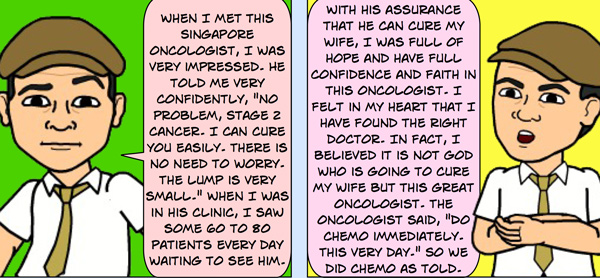
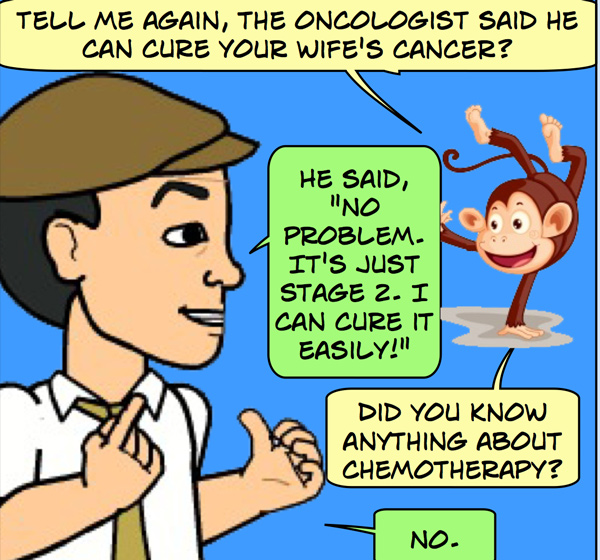
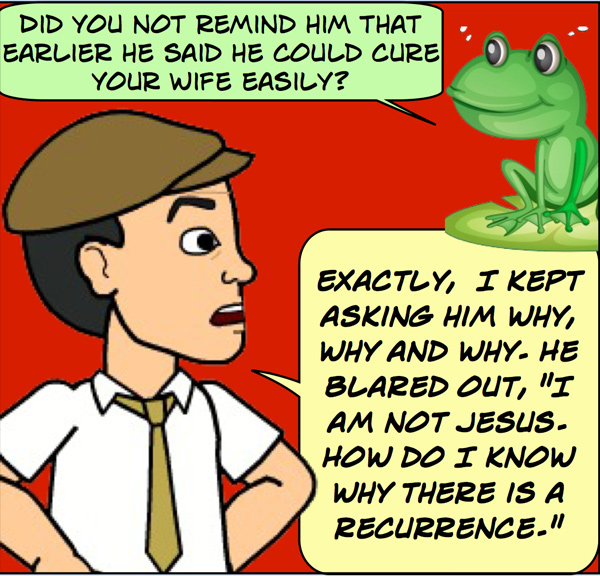
1. Selling Empty Promise

Read this story ….

empty-1 empty2 empty3 empty4 empty5 empty6

 (The above failed treatment in Singapore cost about RM 500,000)

2. I am glad that you have not fallen into the same trap – there is no cure for cancer!

3. All of us have to die. It is a matter of how we die that is of concern. When you are still alive, do not suffer and when you have to go, go in peace without suffering.

4. There is no right or wrong way. There is only one way and that is YOUR way. Do what you think is right. Everyone else does not have a cure for your cancer. There is no cure, you only move from one hospital to another. And along the way you need to spend a lot of money.

5. The only way is look into yourself and try to lead a happy life. One way to live a happy life is to LET GO. Open up. Do not keep anything bottled up inside. Every day when you wake up, be grateful for what you are. You must be at peace with yourself because there is no cure. In your case, the cancer has already gone to bone, lung and liver.

6. Does chemo make sense? This is what you need to know about chemo.

Chemo-spreads-cancer


C: When you ask the doctor about chemo, he would say: Oh,  chemo cannot cure but it can control the cancer. It can stop the cancer from spreading. Ask this question – if chemo can control, if chemo can stop cancer from spreading, why then patients die? Patients should not die if chemo can control the cancer or can stop it from spreading!

Does chemo really not make sense?

Breast Cancer. Part 1/3: Treatment in China @ RM 300,000

SL (E-338) is a 46-year-old lady. Sometime in June 2012, she had back pain after doing some gardening. She was okay after a massage. But the problem recurred. By September 2012, her problem became more serious. On 22 November 2012, she woke up to find her nipple was retracted but there was no discharge.

She consulted a GP who then referred her to a private hospital for USG and mammography. The results:

Bilateral mammogram: 23 November 2012: Large irregular breast lump at 11 o’clock position infiltrating the surrounding tissue.

Ultrasound of both breasts: Irregular spiculated mass at the 11 o’clock position of right breast. It measures 2x2x1.3 cm. Vascular in nature. The skin and posterior muscle wall is infiltrated, surrounding breast tissue are also infiltrated. Multiple smaller satelite nodules adjacent to it.

A biopsy was done. SL was told she had a stage 4 cancer.

A bone scan at the General Hospital indicated multiple bone metastases at T7, T9, L1, L2, T4 and lower lumbar.

Also affected were: right 2nd, 4th, 5th and 7th anterior ribs; right 7th and 8th posterior ribs; left 4th, 5th, 6th and 7th anterolateral ribs, let 7th, 8th posterior ribs, left 11th and 12th paraspinal region, bilateral scapulae, sacrum, both SIJ, right iliac crest and right ISIS; and left ischium.

From December 2012 to June 2013, SL went to China 8 times for further treatment.   In China she received:

1. Radio-iodine seed implantation – 125 seeds.

2. Chemotherapy – 8 cycles.

3. Stem cell – a total of 6 + 3 injections (one injection RM 10,000).

In all, SL spent more than RM 300,000 for her treatment in China.

Towards the end of 2013, her markers began to rise and CT scan in November 2013 showed multiple liver metastases. SL went back to China in December 2013 and was treated with HIFU (high intensity focused ultrasound) and received 3 more injections of stem cells.

CA 15.3 Reading

25 October 2013 56.0
22 November 2013 80.0
24 February 2014 226.0


SL stopped going to China since there was not more treatment for her. She went back to the General Hospital for follow up treatment.  SL was given:

1. Tamoxifen.

2. Zometa injection for her bone metastases. After 4 monthly injections, PET scan showed Zometa was not effective and SL was asked to switch to Denosumab (this cost RM 1,600 per dose).

In addition, SL was given the following supplements:

1. Calcium

2. Vitamin E

3. Vitamin C

4. Folic acid

5. Iron tablets.

The oncologist said Herceptin could be a possibility for her.

PET scan on 18 March 2014 indicated:

1. There is no breast / chest wall / nodal FDG avid tumour recurrence.

2. FDG avid lung metastases.

3. Hypermetabolic bone and liver metastases.

4. There is a large FDG avid focus in the enlarged uterus, about 4.3 cm. Metastases in the uterus has to be considered, rather than fibroids.

SL came to seek our help on 4 April 2014. She was prescribed Capsules A, B, C and D. Breast M, Bone Tea, Liver P, Lung Tea, C-tea and Pain Tea.

One month on our therapy, LS came back and said she felt better – more alert and had more energy.


Comment

Stem cell, targeted therapy, RFA, HIFU – high intensity focused ultrasound, etc. etc., — bombastic words and many patient like them! Yes,  they will pay through the nose to do something new and something high-tech, believing that these are going to cure them.

Before you jump into this, reflect on the following:

2 High-tech-not-necessarily-g 3 Go-for-unending-tests 4 New-breakthroughs-but-not-r 5 New-device-has-risk

Colon Cancer: Oncologists said,” Try chemo.” But one doctor said, “If he is my relative, I won’t put him through the torture.”

TS (E211) is a 58-yer-old gentleman. On 28 January 2013 he went to see a doctor for abdominal pain, distention and bleeding.  His CEA was normal, at 2.5 but his liver enzymes were elevated: AST = 45, ALT = 29 (normal), Alkaline phosphatase = 137 and GGT = 79. His white blood cell count was at 12.9 (high).

A CT scan indicated an irregular mass at the rectosigmoid region measuring about 6.1 cm in length. It caused narrowing of its lumen. “Features are suggestive with carcinoma rectum with local infiltration and liver metastases.”

Rectum tumour biopsy confirmed infiltrating moderately differentiated adenocarcinoma.

TS underwent surgery on 31 January 2013. Due to the cancer infiltrating the small bowel with perforation and intra-loop abscess, TS was fitted with an temporary ileostomy bag.

TS was referred to an oncologist and was prescribed oral drug, Xeloda plus Leucovorin. TS completed two cycles of these without problem. However, after the third cycle, he started to feel the side effects. He had rashes and dry itchy skin. He became tired, had muscle pains and problems with the taste buds.

By the fourth cycle (i.e., in early July 2013) the muscle pains became worse and he was not able to walk. The doctor advised to take a longer break before going for the next cycle. TS decide to stop the drugs.

On 1 August 2013, TS had shortness of breath during the early morning and was rushed to the hospital. He was said to have a heart attack. He responded well to the emergency treatment in the ICU.

On 2 August 2013, a chest X-ray indicated left lung pneumonia and TS was treated with antibiotics. CT scan of the thorax suggested lung metastases.

From 4 to 7 August 2013, TS’s condition worsened day by day. He was short of breath and needed oxygen all day. His mental alertness was sharply reduced, drifting in and out of sleep most of the time. He had no appetite and felt weak and drowsy. Three doctors attended to him. Two doctors suggested TS undergo chemotherapy but another specialist whispered to TS’s wife, “If he is my relative, I won’t put him through the torture.”  Since the family had bad experience with the Xeloda, they decided to give up chemotherapy.

On 8 to 9 August 2013, TS was still on antibiotics and these were the most critical 2 days. His breathing became very difficult and he was not able to eat. His condition deteriorated drastically and the family were expecting the worse. The pastor came to give the last rites. According to the wife, “He was almost gone”.

From 10  to 12 August 2013, by the grace of God, TS’s condition improved and he was discharged from the hospital since there was not the doctor could do after declining chemotherapy. TS was brought home in an ambulance to “rest” .

At home, TS was under the care of Hospice. The Hospice doctor was told that the family wanted to try herbal therapy. The doctor was understanding enough and said, “It is your choice. You can try but I don’t think it will work.”

20 September 2013. TS his wife and daughter came to CA Care, Penang.

Listen and watch the videos below carefully.


On 29 April 2014, TS wrote:
1. My skin peeled off months ago and new skin have grown at least 6 months ago.
2. I am now experiencing pain when I stand up. When walking my legs feel heavy.
3. I feel numb from stomach area downwards.
4. The Hospice doctor told me my nerves are damaged as a side effect from previous oral chemo Xeloda.

I will plan to visit you asap. God bless.

On 1 May 2014, TS wrote again:

I am now into the 8th month of taking your herbs and capsules. Eat ok, sleep ok, bowel movement now 2-3 times a day. When I came back from the hospital last August my weight was 45kg. Now it is almost 49kg. So there is improvement except for the numbness and pain in my soles when I walk.
Comments:

Before  undergoing any treatment, patients should always ask yourself or your doctors!

1. What are the side effects of the Xeloda?

The most common side effects are:

diarrhea,

nausea,

vomiting,

sores in the mouth and throat (stomatitis),

stomach area pain (abdominal pain),

upset stomach,

constipation,

loss of appetite,

and too much water loss from the body (dehydration).

Other common side effects are:

hand-and-foot syndrome (palms of the hands or soles of the feet tingle, become numb, painful, swollen or red);

rash;

dry, itchy or discolored skin;

nail problems;

hair loss;

tiredness;

weakness;

dizziness;

headache;

fever;

pain (including chest, back, joint and muscle pain);

trouble sleeping;

and taste problems.

Patients could have more side effects related to their heart. The cardiotoxicity observed with Xeloda includes:

myocardial infarction/ischemia,

angina,

dysrhythmias,

cardiac arrest,

cardiac failure,

sudden death,

electrocardiographic changes,

and cardiomyopathy.

With the above list of side effects, nobody can tell you what you may end up with if you swallow Xeloda. It’s a matter of your luck – you strike gold or misfortune. So that much about the so-called scientifically proven medicine.

Ask these questions.

1. In August, TS had a “heart attack” after completing 3 cycles of Xeloda a month before that. What triggered that “heart attack”? Cardiotoxicity mentioned above? Was TS warned about this before taking the drug? Or does everyone assume Xeloda is perfectly safe since the doctors prescribe it? This heart episode almost killed TS.

2. When you are told you have cancer, we understand that you are desperate. You don’t know what else to do. You need help – but don’t you think it is wise not to add oil immediately to the burning fire? Don’t you want to hold on for a while so that you can read a bit more rather than blindly follow advice – to be seen to do something immediately?

3. One amusing account is what the “open-minded, understanding” Hospice doctor said. He did not object to herbal therapy, but he weight in and said, “It is your choice. I don’t think it will work, but you can try.” A fair statement. From the view of medical science, herbs are just hocus pocus, unproven snake oil, bla, bla.

But looking at it realistically, for this case and many other cases documented in this website, did TS ever get worse by taking the herbs and NOT doing chemo? If herbs can do what the chemo cannot do, why go for chemo then?

Watch the videos again.

Can you learn something from this case? Or are you still wanting to stick to your biased view that herbs are not effective and unproven? Do you want to still say, “I don’t think it will work”?

THE SIDE EFFECTS OF CHEMOTHERAPY ON THE BODY

THE SIDE EFFECTS OF CHEMOTHERAPY ON THE BODY

Cancer cells divide more quickly than healthy cells, and chemotherapy drugs effectively target those cells. Unfortunately, fast-growing cells that are healthy can be damaged too. There are many different chemotherapy drugs with the potential for many different side effects. These effects vary from person to person and from treatment to treatment.

Chemotherapy in the Blood

Chemo Brain

Mouth Sores

Digestive Distress

The Signature Side Effect 

Balding:

Fingernail and Toenail Trouble

Chemotherapy and Fertility

Chemo in the Kidneys

Swollen Hands and Feet

Anxiety and Depression

Chemotherapy and the Heart

Muscles and Motor Skills

Nausea and Vomiting

Loss of Appetite

Skin in Need of Soothing

Sexual Dysfunction

Fast-Tracked Menopause

Chemo Effect on the Bladder

Chemo’s Long-Term Effect on Bones

Chemotherapy drugs are powerful enough to kill rapidly growing cancer cells, but they also can harm perfectly healthy cells, causing side effects throughout the body.

The Side Effects of Chemotherapy on the Body

Cancer cells divide more quickly than healthy cells, and chemotherapy drugs effectively target those cells. Unfortunately, fast-growing cells that are healthy can be damaged too. There are many different chemotherapy drugs with the potential for many different side effects. These effects vary from person to person and from treatment to treatment.

Factors that play a role in side effects include other ongoing treatments, previous health issues, age, and lifestyle. Some patients experience few side effects while others feel quite ill. Although most side effects clear up shortly after treatment ends, some may continue well after chemotherapy has ended, and some may never go away.

Chemotherapy drugs are most likely to affect cells in the digestive tract, hair follicles,bone marrow, mouth, and reproductive system. However, cells in any part of the body may be damaged.

Circulatory and Immune Systems

Routine blood count monitoring is a crucial part of chemotherapy. That’s because the drugs can harm cells in the bone marrow, where blood is produced. This can result in several problems. Red blood cells carry oxygen to tissues. Anemia occurs when your body doesn’t produce enough red blood cells, making you feel extremely fatigued. Other symptoms of anemia include:

  • lightheadedness
  • pale skin
  • difficulty thinking
  • feeling cold
  • general weakness

Chemo can lower your white blood cell count, which results in neutropenia. White blood cells play an important role in the immune system: they help fight infection and ward off illness. Symptoms aren’t always obvious, but a low white blood cell count raises the risk of infection and illness. People with an immune system weakened by chemotherapy must take precautions to avoid exposure to viruses, bacteria, and other germs.

Cells called platelets help the blood clot. A low platelet count, called thrombocytopenia, means you’re likely to bruise and bleed easily. Symptoms include nosebleeds, blood in vomit or stools, and heavier-than-normal menstruation.

Some chemo drugs can weaken the heart muscle, resulting in cardiomyopathy, or disturb the heart rhythm, causing arrhythmia. This can affect the heart’s ability to pump blood effectively. Some chemo drugs can increase the risk of heart attack.These problems are less likely to occur if your heart is strong and healthy at the start of chemotherapy.

Nervous and Muscular Systems

The central nervous system controls emotions, thought patterns, and coordination. Chemotherapy drugs may cause problems with memory, or make it difficult to concentrate or think clearly. This symptom sometimes is called “chemo fog,” or “chemo brain.” This mild cognitive impairment may go away following treatment, or may linger for years. Severe cases can add to anxiety and stress.

Some chemo drugs can cause pain, weakness, numbness, or tingling in the hands and feet (peripheral neuropathy). Muscles may feel tired, achy, or shaky. Reflexes andsmall motor skills may be slowed. It’s not unusual to experience problems with balance and coordination.

Digestive System

Some of the most common side effects of chemotherapy involve the digestive tract. Mouth sores and dry mouth can make it difficult to chew and swallow. Sores also may form on the tongue, lips, gums, or in the throat. Mouth sores can make you more susceptible to bleeding and infection. Many patients complain of a metallic taste in the mouth, or a yellow or white coating on the tongue. Food may taste unusual or unpleasant.

These powerful drugs can harm cells along the gastrointestinal tract. Nausea is a common symptom, and may result in bouts of vomiting. However, anti-nausea medications given in conjunction with chemotherapy drugs can help alleviate this symptom.

Other digestive issues include loose stools or diarrhea. In some people, hard stools and constipation can be a problem. This may be accompanied by pressure, bloating, and gas. Take care to avoid dehydration by drinking plenty of water throughout the day.

Side effects involving the digestive system can contribute to loss of appetite andfeeling full even though you haven’t eaten much. Weight loss and general weakness are common. Despite all this, it’s important to continue eating healthy foods.

Hair, Skin, and Nails (Integumentary System)

Many chemotherapy drugs affect the hair follicles and can cause hair loss (alopecia) within a few weeks of the first treatment. Hair loss can occur on the head, eyebrows, eyelashes, and body. As troubling as it can be, hair loss is temporary. New hair growth usually begins several weeks after the final treatment.

Some patients experience minor skin irritations like dryness, itchiness, and rash. You may develop sensitivity to the sun, making it easier to burn. Your doctor can recommend topical ointments to soothe irritated skin.

Fingernails and toenails may turn brown or yellow, and become ridged or brittle. Nail growth may slow down, and nails may crack or break easily. In severe cases, they canactually separate from the nail bed. It’s important to take good care of your nails to avoid infection.

Sexual and Reproductive System

Chemotherapy drugs can have an effect on your hormones. In women, hormonal changes can bring on hot flashes, irregular periods, or sudden onset of menopause. They may become temporarily or permanently infertile. Women on chemotherapy may experience dryness of vaginal tissues that can make intercourse uncomfortable or painful. The chance of developing vaginal infections is increased. Chemotherapy drugs given during pregnancy can cause birth defects. In men, some chemo drugs can harm sperm or lower sperm count, and temporary or permanent infertility is possible.

Symptoms like fatigue, anxiety, and hormonal fluctuations may interfere with sex drive in both men and women. So can worrying about loss of hair and other changesin appearance. However, many people on chemotherapy continue to enjoy an intimate relationship and an active sex life.

Kidneys and Bladder (Excretory System)

The kidneys work to excrete the powerful chemotherapy drugs as they move through your body. In the process, some kidney and bladder cells can become irritated or damaged. Symptoms of kidney damage include decreased urination, swelling of the hands and feet (edema), and headache. Symptoms of bladder irritation include a feeling of burning when urinating and increased urinary frequency.

You’ll be advised to drink plenty of fluids to flush the medication from your systemand to keep your system functioning properly. Note: Some medications cause urine to turn red or orange for a few days. This isn’t cause for concern.

Skeletal System

Most people—and especially women—lose some bone mass as they age. Some chemotherapy drugs can cause calcium levels to drop and contribute to bone loss. This can lead to cancer-related osteoporosis, especially in post-menopausal women and those whose menopause was brought on suddenly due to chemotherapy.

According to the National Institutes of Health (NIH), women who have been treated for breast cancer are at increased risk for osteoporosis and bone fracture. This is due to the combination of the drugs and the drop in estrogen levels. Osteoporosisincreases the risk of bone fractures and breaks. The most common areas of the body to suffer breaks are the spine and pelvis, hips, and wrists.

Psychological and Emotional Toll

Living with cancer and dealing with chemotherapy can exact an emotional toll. You may feel fearful, stressed, or anxious about your appearance and your health. Some people may suffer from depression. Juggling work, financial, and family responsibilities while undergoing cancer treatment can become overwhelming.

Many cancer patents turn to complementary therapies like massage and meditation for relaxation and relief. If you have trouble coping, mention it to your doctor. They may be able to suggest a local cancer support group where you can speak with others who are undergoing cancer treatment. If feelings of depression persist, professional counseling may be necessary.

Read more:  http://www.healthline.com/health/cancer/effects-on-body#nervous_and_muscular_systems

Three Options for Chemotherapy After Mastectomy


Mastectomy,  RM 12.000

Must undergo chemotherapy. Offered three options:

Option 1: 17 cycles, one year

4 cycles @ RM 2.000  = RM 8,000

4 cycles @ RM 4.000  = RM 16.000

9  cycles @ RM 11.000 = RM 99.000

Total cost RM 123,000

Option 2: Six cycles of chemo @ RM 7.000 to RM8.000

Total cost RM 45.000

Option 3: Six cycles of chemo @ RM 3.000 – RM 4.000

Total cost RM 20.000

Can chemo cure?

Option 1: Out of 10 patients, 6 were cured.

Option 2: Out of 10 patients, 5 were cured.

Option 3: Out of 10 patients, 4 were cured.

Was this patient told the REAL truth?

Consider these cases below:

Patient 1: Went to China for treatment  – 125 radio-iodine seeds, 8 cycles chemotherapy, 9 injections of stem cell. Total cost RM 300.000.

Result: Cancer spread to her bones, liver and lungs.

Patient 2. Went to China for treatment – radiotherapy,  6 injections of stem cell, 1 cycle of chemo, Tamoxifen and 6 cycles of Xeloda.

Result: Cancer spread to her bone and liver.

Quotations:

There is no cure for metastatic breast cancer. It never goes away. You just move from treatment to treatment ~ Amy Soscia who died after fighting breast cancer for 13 years.

The overall contribution of …chemotherapy to 5-year survival in adults was estimated tobe 2.3 percent in Australia and 2.1 percent in the USA ~ Morgan, Ward & Barton. Clinical Oncology 16:549-560.

Leukemia: Chemotherapy – RM100,000 – Failed


May 2013, bloated stomach – diagnosed as gastric problem.

Gastric drugs did not cure.

Had consulted 7 doctors.

Consulted specialist in a hospital in Jakarta. Diagnosed as leukemia.

Came to Penang, Malaysia – bone marrow biopsy, confirmed Leukemia – AML.

Had chemotherapy – 6 cycles, from June 2013 until February 2014.

Costs almost RM 100,000.

Blood tests on February 11, 2014, fine.

Follow up after 3 months, May 6, 2014, Recurrence, extremely low platelets, only 4.

The doctor said chemo again, try 2 cycles first. Need to pay RM 50,000.

Before undergoing chemotherapy  did you ever ask the doctor these questions:

1. Can chemotherapy cure you?

2. What is the total cost of the chemo treatment?

3. How long would you have to undergo chemotherapy?