Breast Cancer: Do this chemo – 100 percent cure! You believe that?

June (not real name) is a 32-year-old lady. She was diagnosed with breast cancer and had undergo a mastectomy. Histopathology report indicated the tumour was 37 mm in size. No evidence of malignancy seen on the 9 sentinel lymph nodes. The tumour is positive for estrogen and progesterone receptors and HER2.


June was asked to undergo chemotherapy with the following:

1. Four cycles of AC – andriamycin + cyclophosphamide.

2. Twelve cycles of Taxol.

3. One year on Herceptin.

4. Followed by oral drug, Tamoxifen for ten years!

The total costs of the above treatment (excluding Tamoxifen) is approximately SGD 120,000, which is about RM 300,000.

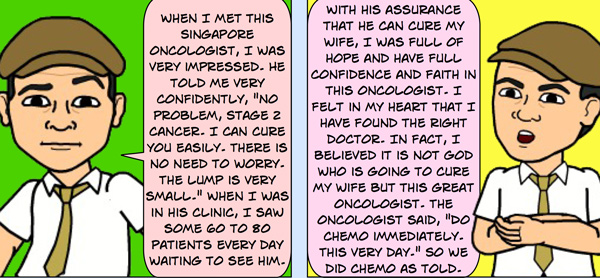
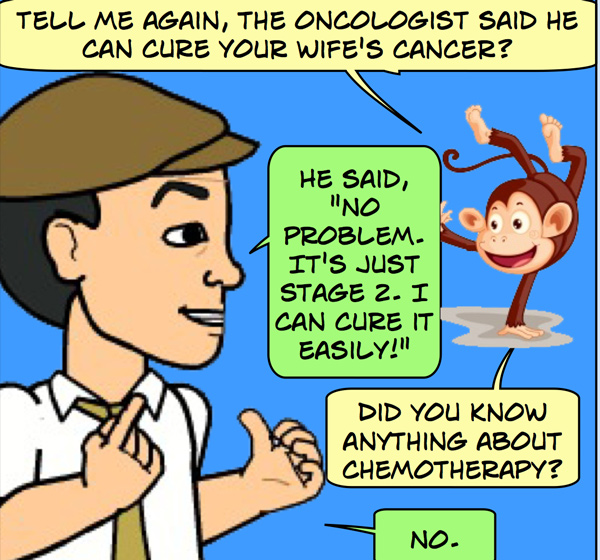
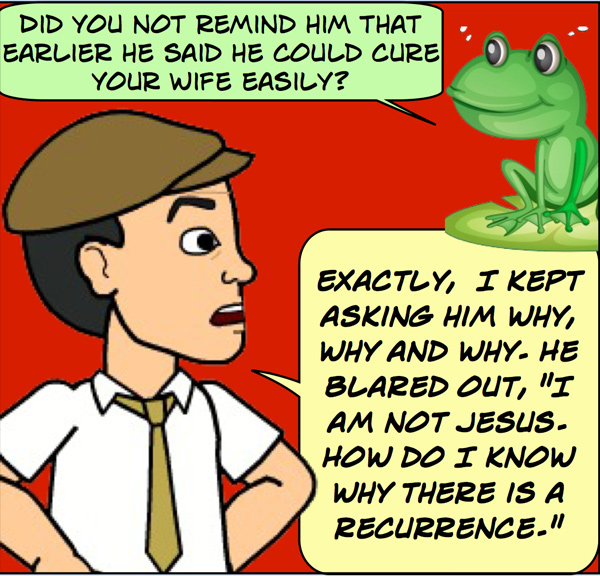
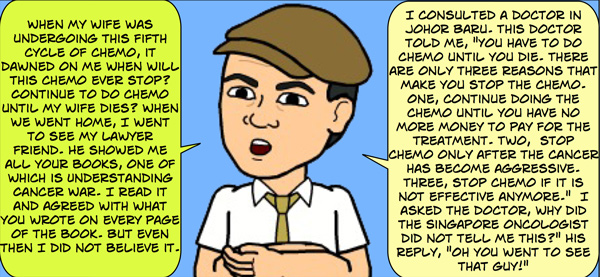
The oncologist told  June that if she did not undergo this treatment her cancer will recur within the next 2 to 3 years. The cancer will be all over the body and she will die! But if June were to undergo chemotherapy as suggested by the oncologist she will be cured – a hundred percent!

I asked June if she believe what her oncologist told her. June replied, “No, because I have done my homework. I know that cancer cannot be cured.”

June came to seek our help on 13 June 2014. She decided to take herbs instead of chemotherapy.

Comments

In the USA, about 39,620 women were estimated to die in 2013 from breast cancer. That means:

  • 108 women were said to die of breast cancer each day.
  • 5 women died of breast cancer per hour.
  • Every 13 minutes one woman in the US died of breast cancer.

Think hard. If the above “recipe” given by this American oncologist practising in Singapore is really true, why must so many women in the US die of breast cancer each year?

I feel sad to hear such a story. In an earlier posting, RP was told that if she undergoes chemotherapy for her breast cancer she would have a 70 percent chance of cure. In this case, June was told that she would have a 100 percent chance of cure after her RM300,000-chemo-treatment.

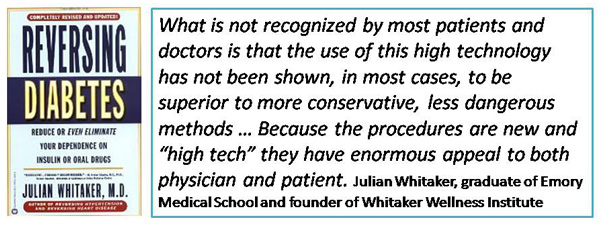
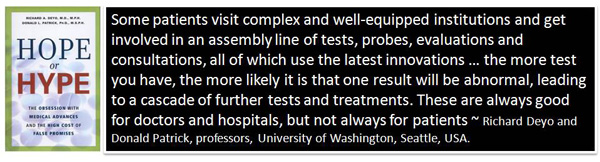
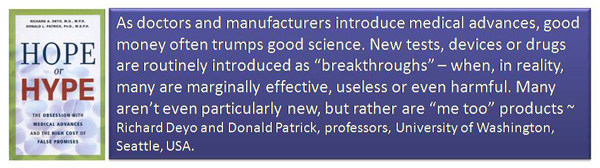
Do you believe the oncologist? June did not believe her doctor! Please reflect on the following.

5  Doc like car salesman 17 Sick-Greedy-Medical-profess 9 Half-truth-and-propaganda

Breast cancer is the number one problem we encounter at CA Care. If you are unfortunate enough to be diagnosed with breast cancer, I suggest that you read these two books to know more about another side of chemotherapy and radiotherapy.

Cover Front Your Breast  Bk1Bk2 RGB

Breast CA HerbalOption


Do chemotherapy, you have a 70 percent chance of cure for your breast cancer! You believe that?

RP is a 44-year-old Indonesia lady. She was diagnosed with breast cancer and had undergone a left mastectomy with axillary clearance. Three out of 5 sentinel lymph nodes were infected with cancer. It was a stage 2A cancer.

RP as asked to undergo 8 cycles of chemotherapy. Each cycle of 5-FU, Cyclophosphamide and Epirubicin cost RM3,000.  After receiving 3 cycles of chemo,  RP was asked to install a chemo-port because her blood vessel was unable to take in the drug. RP also suffered severe bleeding during her menses. She came to seek our help on 13 June 2014.


Chris: Before you did the chemo, did you ever ask if chemo was going to cure you.

RP: The oncologist said chemo can give a 70 percent cure!

C: What happen to the 30 percent?

RP: I did not ask!

C: Did you ask if you belong to the 70 percent cure group or do you belong to the 30 percent failure group?

RP: He told me it is not a 50:50 percent case. I have a 70 percent chance!

Comment

Let me not give my own views about chemotherapy. Reflect on the following:

2 chemo-2-percent benefit

3 Chemo attempt to kill cancer before killing patient JohnLee 4 Chemo die OK if follow protocol

14 Drug-cause-cancer-spread-ag

12 Chemo-short-cut-to-make-mon


WHY HAYLEY MILLS QUIT CHEMOTHERAPY AS SHE BATTLED BREAST CANCER

by Yeong Sek Yee & Khadijah Shaari

1 Harvey

Who is Hayley Mills? If you are in your 6-series (in life) you would probably have heard about her. Hayley Mills began her acting career at the age of 12, starring alongside her father John Mills in “Tiger Bay” and at 14; she appeared in “The Parent Trap” and then “Whistle Down in the Wind” in 1961. Her later film “Pollyanna” in 1960 brought her to fame and she was awarded the last juvenile Oscar.

Below is a short story of her encounter with double breast cancer…yes she had cancer on both breasts.

In April 2008, Hayley Mills was diagnosed with breast cancer on both breasts on her 62nd birthday, but she chose to keep her illness private. After undergoing several tests and biopsies, the Pollyana actress had surgery but refused radiation therapy.

However she was persuaded to start a course of chemotherapy which she did.  Subsequently, after 3 sessions she decided to quit chemo and decided to seek an alternative route. Hayley admitted that she found the chemo treatment more daunting than the actual disease. In December, 2012, she revealed why she decided to quit chemotherapy:

“It made me feel awful…I was more frightened of the chemo than the cancer…I could feel it (the chemo) draining me and killing me. I felt I was dying”

Four years later from that traumatic time, she explained how, despite turning down chemo, she is happy and cancer-free. Hayley, now 66, credits her survival to the alternative treatments she used to heal her body. She changed her diet and cut out foods that “feeds the cancer” including sugar, dairy and acid creating foods. And she also embarked on a serious course of exercise and meditation.

In an interview with Mirror (UK), Hayley explained that “a tremendous amount of healing is in your hands. What you can do to boost your immune system and what you can do to keep your mind, body and soul healthy and positive is important”

Hayley also did caution that her decision to go the alternative route may not be for everybody, but there are some fantastic, brilliant doctors out there…and, it doesn’t make sense that there is only one way of dealing with cancer.

If you would like to read more why Hayley Mills quit chemotherapy, just visit the following links:

1)      ARTICLE : “I felt I was dying”: Hayley Mills on why she quit chemotherapy as she battled cancer  Link: http://www.mirror.co.uk/news/uk-news/hayley-mills-why-i-quit-chemotherapy-as-she-battled-1505199#ixzz2mayENo2p

2)      ARTICLE: My secret triumph over breast cancer by actress Hayley Mills Linkhttp://www.express.co.uk/news/showbiz/293433/My-secret-triumph-over-breast-cancer-by-actress-Hayley-Mills

3)      ARTICLE :  ‘I could feel it killing me’: Hayley Mills reveals how she beat double breast cancer after quitting chemotherapy  LINK: http://www.dailymail.co.uk/tvshowbiz/article-2253271/Hayley-Mills-reveals-beat-breast-cancer-quitting-chemotherapy.html#ixzz30qISjH6B

4)      ARTICLE: Hayley Mills describes secret battle with breast cancer LINKhttp://www.telegraph.co.uk/culture/film/film-news/8989623/Hayley-Mills-describes-secret-battle-with-breast-cancer.html

5)      ARTICLE:Hayley Mills quit chemo, used nutrition and alternative therapies to heal breast cancer in 2009  LINK: http://www.chrisbeatcancer.com/hayley-mills-quit-chemo-used-nutrition-alternative-therapies-to-heal-breast-cancer/

If you would like to read the story of Sally Baker, a charity volunteer who did not opt for chemotherapy even after a double breast mastectomy, just visit the following link:  http://www.dailymail.co.uk/health/article-2459756/Ive-refused-chemo-breast-cancer-gain-isnt-worth-pain-After-double-mastectomy-woman-defends-hugely-controversial-choice.html

Breast Cancer. Part 3/3: What do you expect me to do? Cure you?

SL (E-338) is a 46-year-old lady. She went to China for treatment of her breast cancer and spent more than RM 300,000. She did not get a cure. Instead, the cancer spread to her liver, bone and lung.

Gist of our conversation.

Chris: You come and see me. Let me honestly ask you, What do you expect me to do? Cure you?

SL: No. But I prefer something that is natural. I want to live life to the fullest.

C: So you do not expect a cure?

SL: Of course, I …

C: Of course, everyone wants a cure.

SL: Of course, of course.

C: But then nobody can give you a cure!

SL: Only God knows. I am very clear about that.

C: Okay, we will do the best we can.

SL: For me too, I have to do my best for myself.

Herbs – bitter and awful smell

C: The herbs that we are giving you are going to be bitter and smelly. You have to brew that.

SL: I am quite used to such smell.

Be prepared for healing crisis

C: If you think you just want to take the herbs for just a month and then stop it, then my advice is don’t take my herbs. What for? I am not saying that you must continue with my herbs. What I am trying to say  is, If that is the what you intend to do (mentality), then that’s the wrong attitude. Understand?

SL: After I take the herbs,  I go and check my blood!

C: What do you expect to find? Better? Wrong! I don’t believe that after taking the herbs for a month your blood is going to be good right away. Don’t be fooled by that notion.  I am going to tell you that for the first two weeks when you start to take the herbs, you are going to suffer – Healing Crisis. That is okay, you have to go through this. After that you will get better and better.

If no benefit after a month on herbs, don’t take them anymore. Go find someone else for help

C: If you are not getting better after one month, my advice to you is don’t take my herbs anymore. This is because within a month, you will know if the herbs help you or not. I am saying this because I don’t want to cheat you — selling you an empty promise!

An example

There is this patient, after taking the herbs for 3 months, he came back to take more herbs. I asked him: The first day you came to us and now (after taking the herbs) – are you getting better or not? He replied: Oh, I am far better off. My respond: If you are better, continue taking the herbs and don’t stop. If this patient said he was not getting better, I would have told him to stop taking the herbs and he should go and find someone else for help. Why? Some patients may misunderstand, thinking that I am going to abandon them. No that. Why are you so dumb and stupid, doing something over and over again but it does not help you? Understand? And I know that within a month, generally you will see the effect of the herbs. It is not going to cure you but you will feel something different. In your case, it is going to be more difficult because you have so many problems.

Common sense

C: You see or not, I am just using common sense to help people. I can’t blame them because when they have cancer their world is upside down, they are lost and don’t know what to do. Here we are trying to help you on a long term basis. I am going to give you herbs to help you with your lung, liver, bone, besides your breasts. We are going to take care of 4 problems, not just one.

One month on the herbs

C: You took the herbs for …

SL: One month.

C: I want to ask you one simple question. After taking the herbs for a month, are you getting any better or not? How do you feel?

SL: Ya, I feel more alert.

C: More alert – do you have more energy?

SL: Yes, yes. I moved my bowels many times a day. Every time there were a lot of stools – came out a lot. I have  to flush the toilet twice to clear away the stools. This happened the first 2 weeks after taking the herbs.

Breast Cancer. Part 2/3: Does chemotherapy make sense?


SL (E-338) is a 46-year-old lady. She went to China for treatment of her breast cancer and spent more than RM 300,000. She did not get a cure. Instead, the cancer spread to her liver, bone and lung.

Gist of our conversation.

Chris: First thing, I want to ask you. You have done all these — chemo, iodine-seeds, stem cells …. Before undergoing these treatments did you ever ask if they are going to cure you?

SL: I didn’t ask that question.

C: You did not ask because you were afraid of the doctors? Or because you believed that the doctors can do everything for you?

SL: No, no … I was told it was not curable. For me, I basically trust God to heal me.

C: So, you knew from the very beginning that the doctor could not cure you?

SL: Yes.

1. Selling Empty Promise

Read this story ….

empty-1 empty2 empty3 empty4 empty5 empty6

 (The above failed treatment in Singapore cost about RM 500,000)

2. I am glad that you have not fallen into the same trap – there is no cure for cancer!

3. All of us have to die. It is a matter of how we die that is of concern. When you are still alive, do not suffer and when you have to go, go in peace without suffering.

4. There is no right or wrong way. There is only one way and that is YOUR way. Do what you think is right. Everyone else does not have a cure for your cancer. There is no cure, you only move from one hospital to another. And along the way you need to spend a lot of money.

5. The only way is look into yourself and try to lead a happy life. One way to live a happy life is to LET GO. Open up. Do not keep anything bottled up inside. Every day when you wake up, be grateful for what you are. You must be at peace with yourself because there is no cure. In your case, the cancer has already gone to bone, lung and liver.

6. Does chemo make sense? This is what you need to know about chemo.

Chemo-spreads-cancer


C: When you ask the doctor about chemo, he would say: Oh,  chemo cannot cure but it can control the cancer. It can stop the cancer from spreading. Ask this question – if chemo can control, if chemo can stop cancer from spreading, why then patients die? Patients should not die if chemo can control the cancer or can stop it from spreading!

Does chemo really not make sense?

Breast Cancer. Part 1/3: Treatment in China @ RM 300,000

SL (E-338) is a 46-year-old lady. Sometime in June 2012, she had back pain after doing some gardening. She was okay after a massage. But the problem recurred. By September 2012, her problem became more serious. On 22 November 2012, she woke up to find her nipple was retracted but there was no discharge.

She consulted a GP who then referred her to a private hospital for USG and mammography. The results:

Bilateral mammogram: 23 November 2012: Large irregular breast lump at 11 o’clock position infiltrating the surrounding tissue.

Ultrasound of both breasts: Irregular spiculated mass at the 11 o’clock position of right breast. It measures 2x2x1.3 cm. Vascular in nature. The skin and posterior muscle wall is infiltrated, surrounding breast tissue are also infiltrated. Multiple smaller satelite nodules adjacent to it.

A biopsy was done. SL was told she had a stage 4 cancer.

A bone scan at the General Hospital indicated multiple bone metastases at T7, T9, L1, L2, T4 and lower lumbar.

Also affected were: right 2nd, 4th, 5th and 7th anterior ribs; right 7th and 8th posterior ribs; left 4th, 5th, 6th and 7th anterolateral ribs, let 7th, 8th posterior ribs, left 11th and 12th paraspinal region, bilateral scapulae, sacrum, both SIJ, right iliac crest and right ISIS; and left ischium.

From December 2012 to June 2013, SL went to China 8 times for further treatment.   In China she received:

1. Radio-iodine seed implantation – 125 seeds.

2. Chemotherapy – 8 cycles.

3. Stem cell – a total of 6 + 3 injections (one injection RM 10,000).

In all, SL spent more than RM 300,000 for her treatment in China.

Towards the end of 2013, her markers began to rise and CT scan in November 2013 showed multiple liver metastases. SL went back to China in December 2013 and was treated with HIFU (high intensity focused ultrasound) and received 3 more injections of stem cells.

CA 15.3 Reading

25 October 2013 56.0
22 November 2013 80.0
24 February 2014 226.0


SL stopped going to China since there was not more treatment for her. She went back to the General Hospital for follow up treatment.  SL was given:

1. Tamoxifen.

2. Zometa injection for her bone metastases. After 4 monthly injections, PET scan showed Zometa was not effective and SL was asked to switch to Denosumab (this cost RM 1,600 per dose).

In addition, SL was given the following supplements:

1. Calcium

2. Vitamin E

3. Vitamin C

4. Folic acid

5. Iron tablets.

The oncologist said Herceptin could be a possibility for her.

PET scan on 18 March 2014 indicated:

1. There is no breast / chest wall / nodal FDG avid tumour recurrence.

2. FDG avid lung metastases.

3. Hypermetabolic bone and liver metastases.

4. There is a large FDG avid focus in the enlarged uterus, about 4.3 cm. Metastases in the uterus has to be considered, rather than fibroids.

SL came to seek our help on 4 April 2014. She was prescribed Capsules A, B, C and D. Breast M, Bone Tea, Liver P, Lung Tea, C-tea and Pain Tea.

One month on our therapy, LS came back and said she felt better – more alert and had more energy.


Comment

Stem cell, targeted therapy, RFA, HIFU – high intensity focused ultrasound, etc. etc., — bombastic words and many patient like them! Yes,  they will pay through the nose to do something new and something high-tech, believing that these are going to cure them.

Before you jump into this, reflect on the following:

2 High-tech-not-necessarily-g 3 Go-for-unending-tests 4 New-breakthroughs-but-not-r 5 New-device-has-risk

Three Options for Chemotherapy After Mastectomy


Mastectomy,  RM 12.000

Must undergo chemotherapy. Offered three options:

Option 1: 17 cycles, one year

4 cycles @ RM 2.000  = RM 8,000

4 cycles @ RM 4.000  = RM 16.000

9  cycles @ RM 11.000 = RM 99.000

Total cost RM 123,000

Option 2: Six cycles of chemo @ RM 7.000 to RM8.000

Total cost RM 45.000

Option 3: Six cycles of chemo @ RM 3.000 – RM 4.000

Total cost RM 20.000

Can chemo cure?

Option 1: Out of 10 patients, 6 were cured.

Option 2: Out of 10 patients, 5 were cured.

Option 3: Out of 10 patients, 4 were cured.

Was this patient told the REAL truth?

Consider these cases below:

Patient 1: Went to China for treatment  – 125 radio-iodine seeds, 8 cycles chemotherapy, 9 injections of stem cell. Total cost RM 300.000.

Result: Cancer spread to her bones, liver and lungs.

Patient 2. Went to China for treatment – radiotherapy,  6 injections of stem cell, 1 cycle of chemo, Tamoxifen and 6 cycles of Xeloda.

Result: Cancer spread to her bone and liver.

Quotations:

There is no cure for metastatic breast cancer. It never goes away. You just move from treatment to treatment ~ Amy Soscia who died after fighting breast cancer for 13 years.

The overall contribution of …chemotherapy to 5-year survival in adults was estimated tobe 2.3 percent in Australia and 2.1 percent in the USA ~ Morgan, Ward & Barton. Clinical Oncology 16:549-560.

Breast Cancer: Why I Refused Chemotherapy: Mother died after surgery and chemo


• Diagnosed with breast cancer

• Undergone mastectomy, costing Rupiah 30 plus million.

• Doctor asked to do chemo – I refused.

• My mother had ovarian cancer, Stage 3B. She had surgery and chemothrapy.

• Prior chemotherapy, she was well.

• After chemo cancer recurred, lumps grow again.

• Doctor recommended surgery and chemo again.

• Mother was too weak and declined medical treatment.

• She died within a year.

CANCER’S COLLATERAL DAMAGE: PART 3 A BREAST CANCER STORY

by Yeong Sek Yee & Khadijah Shaari

In this segment on collateral damage, we have decided to feature the late Datuk Ilani Isahak, the Chairman of the Interfaith Relations Working Committee until her passing away on February 24th 2011 after a 3-year battle against breast cancer. On June 12th 2011, Dr Amir Farid Isahak (Datuk Ilani’s brother) recounts his sister’s struggle in an article in The Star entitled “MY SISTER’S CANCER.” Our story below is essentially excerpted/adapted from Dr Amir’s article.

In Dr Amir’s own words, this is his story:

“THIS is not just another sad cancer story, but the story of the struggles my own sister, Ilani Isahak went through, fighting her breast cancer for three years until she succumbed to the disease in February this year (2011). She followed everything the oncologist prescribed. Each time, after discussing with me, she would decide “no more chemo”, but after the next visit with the oncologist, she would tell me “the oncologist said it is absolutely necessary that I go for the chemo, so I agreed”. 

Soon after the initial six courses of chemo and one year of a “smart” drug ended, the cancer came back. The extremely expensive “smart” drug she was given was trastuzumab (Herceptin), which is a monoclonal antibody that targets the HER2 receptors on the breast cancer cells. However, a re-examination of her cancer cells then showed that she was not a good candidate for trastuzumab. The first report had been inaccurate. 

So her oncologist put her again on further chemotherapy. Other drugs were then tried, and there was some response, but internally the cancer was encroaching into her rib cage and onto the lining of the lungs (pleura). Besides hair loss, her fingernails were blackened after the repeated chemo sessions. 

The other “smart” drug she was given included bevacizumab (Avastin), which is also a monoclonal antibody that is supposed to prevent new blood vessel formation (anti-angiogenesis), thus preventing new cancer growth. (However, back in July 2010, the US FDA had evidence that bevacizumab was not suitable for breast cancer. In December 2010, the US FDA officially revoked its approval for the use of bevacizumab for breast cancer, saying that it is neither safe nor effective in breast cancer patients. The available data shows that bevacizumab neither prolonged overall survival nor slowed disease progression sufficiently to outweigh the risk it presents to breast cancer patients). 

Until the last six months of her life, my sister was relatively well, which means she had about two years of reasonably “good quality” life. Then she started to have chronic coughs.

At first, she still managed to do her normal chores, but she gradually deteriorated, and became breathless easily. A pleural effusion (fluid in the space covering the lungs) was diagnosed, but the first attempt to drain the fluid failed to relieve her symptoms.

Exactly one month before her death, she had to be admitted to the hospital, and had permanent drainage tubes inserted into both sides of the rib cage, and she required the oxygen mask continuously. The doctors also decided that she could have palliative care only, with no further active treatment. After one whole month of suffering, she died. 

My sister died because the cancer spread to a vital organ – her lungs. There was copious pleural effusion that repeated and even continuous drainage could not solve it. The effusion meant that her lungs gradually collapsed.

With the reduced oxygen supply, the heart had to work harder, and soon it also succumbed. Although there were discussions to attempt surgery to seal the pleural cavity (thus preventing the formation of the effusion), by that time, her poor general condition made any major surgery unsafe.

At her death bed, she told me “learn from my mistake, do not go for chemo”. 

One of the major lessons about conventional cancer treatment that Dr Amir Farid imparted in his article is that: 

“If the cancer patient is not cured after the first course of chemo, she is unlikely to be cured at all. Cancer cells which are resistant to the first chemo are most likely resistant to further chemo. Although each subsequent chemo may drastically reduce the number of cancer cells, the tough resistant ones will multiply and manifest their presence soon enough.” 

NB: Dr Amir Farid Isahak is a medical specialist who practises holistic, aesthetic and anti-ageing medicine. He is a qigong master and founder of SuperQigong.  

ACKNOWLEDGEMENTS:

The article was excerpted from the sources below which we acknowledge with thanks:

1)   Breast Cancer: Ilani’s Message – Learn from my mistake, do not go for chemo

Link: https://cancercaremalaysia.com/2011/03/11/435/

2)   My sister’s cancer–by Dr Amir Farid Isahak

Link: http://www.thestar.com.my/story.aspx?file=%2f2011%2f6%2f12%2fhealth%2f8879117&sec=health

3)      Ilani Isahak – A true Malaysian….A Tribute by Dr Amir Farid Isahak

Link: http://www.thestar.com.my/story.aspx?file=%2f2011%2f3%2f13%2flifefocus%2f8183426&sec=lifefocus

Breast Cancer: Surgery, Chemo, Tamoxifen and Xeloda failed her!

DK (S-542) is a 63-year old lady from Sumatera Selatan. She found a lump in her right breast. She ignored it for about 3 to 4 years since it did not give her any problem. In July 2008, she started to have pain and the lump grew bigger.

Two years later, in November 2010, DK went to a hospital in Melaka (Malaysia). She was asked to undergo an operation. She was afraid and went home instead. Then she sought alternative treatment.  She went to Central Java and sought the help of a herbalist who gave her herbs to apply and also “massaged” her. The treatment expelled pus and blood from her breast. For the first 6 months, the treatment seemed to help DK.

Since she felt well, DK went to China for a holiday. While in China, she suffered severe pain and her condition deteriorated. On her return to Indonesia she was admitted to a hospital in Jambi. CT and biopsy were performed. DK subsequently underwent 7 cycles of chemotherapy, followed by a mastectomy. After surgery, DK was put on Tamoxifen and Xeloda. She was on these two drugs for about 7 to 8 months. After 2 months on the drug, her  right arm became swollen and a big blister developed (Picture A). She had difficulty bending her fingers (Picture B).

Composite-Breast-S542

DK stopped taking Tamoxifen and Xeloda. She went back to see her doctor again in February 2014. The doctor prescribed painkiller. By this time there was also a swelling in her neck (Picture C). The doctor told her there was nothing he could do to help her. Desperate, DK’s son found us in the internet. On 7 March 2014, DK, her husband and son came to seek our help.


DK was prescribed Capsule A, C and D. In addition she was asked to drink herbal teas: Breast M, Lympho 1, Upper Edema and Pain Tea.

One Month On The Herbs

DK’s son came to report his mother’s progress on 9 April 2014.

1. DK did not seem to have any reaction after taking the herbs for the first 3 days.

2. On day 4 after taking the herbs, DK had severe pain in her right arm. The pain lasted untill 1 or 2 a.m. Her right leg felt sore and numb.

3. She passed out black stools with a lot of mucus. After that she passed out stools with oily discharge.

4. One week on the herbs, the pains in her right arm became less, soreness in her right leg also lessened.

5. Before the herbs, DK was on morphine, 2 tablets per day. After a week on the herbs, she did not need morphine anymore.

6. Two weeks on the Upper Edema tea, the swelling of her right arm improved. It became smaller and soft (previously hard).  But after stopping the Upper Edema tea, the swelling came back.

7. DK was able to sleep well throughout the night. Previously she could sleep for only about 2 hours each night.

8. Her appetite had improved and she could eat rice.

9. She had more energy.


Comments: There are many lessons we can learn from DK’s bitter experience.

1. Ladies, if you have a lump in your breast. it is prudent for you to go and get an ultrasound done and determine if the lump is benign or malignant. If it is malignant, it makes no sense to keep it in your breast. Don’t be fooled by those who want you to believe that their “treatment” can cure you. I have heard of the Kiss Therapy, Leech Therapy, etc. which did not work. There is no reason for you to delay removal of the cancerous breast. The longer you wait the more problems you are going to create for yourself later on. Like in DK’s case, she delayed and delayed but ended up having to remove her breast anyway. By that time it was too late.

2. If you go and see your doctors with a large lump in your breast,  the first thing they would want to do is chemo you! DK had to endure 7 cycles of chemo before a mastectomy was performed. If she was to go and see the doctor earlier she would not need to do the chemo at all – proceed straight to lumpectomy or mastectomy.

3. After the mastectomy, DK was put on Tamoxifen and Xeloda and she was on these drugs for about 7 to 8 months. This is something that blew my mind off. Why Xeloda? Why Tamoxifen? Can someone not learn from simple observation? Learn from DK’s experience (and many others like her) that these drugs  have never been shown to cure cancer! In DK’s case, things got worse, not better.

4. When DK went back to her doctor for more help, she was only given Morphine tablets, nothing else. The doctor told her son, “There is nothing else I can do to help your mother!” At least the doctor was being honest. Perhaps other doctors would suggest, “Do more chemo!” But the question to ask is: Can more chemo cure this metastatic cancer?  Before Amy Cohen Soscia died, she left this remark for the world to learn, “There is no cure for metastatic breast cancer. It never goes away. You just move from treatment to treatment.”

5. As usually, at this “terminal stage” when there is nowhere else to go, patients come to seek our help. In spite of this dire situation, some expect us to cure them — see how absurd or illogical it is! But some patients come hoping that we can help them attain a better quality life with no pain. Yes, this is more realistic and as in DK’s case (and numerous other cases like hers) we are able to help.  So even if your doctors give up on you (like DK), know that there is still another option for you to get well. So don’t give up. That is, if you are prepared to help yourself.

6. Unfortunately, not all patients who come to us  want to help themselves. They expect healing to come easy! Or they want healing on their own terms. Many just want to sit in the comfort of  their home and expect us to “deliver healing via e-mail.”

Let me point out to you what DK and her family had to go through to come to us. They live in a town that takes 7 hours to drive to Jambi. From Jambi they have to take a plane to Jakarta and from Jakarta they have  to fly to Penang. In all, the one way journey from home to Penang takes 2 days!

We often have requests to have phone consultation because patients live “far away and cannot come.” When we ask from where? Ah, the answer is BM, Taiping or Ipoh (just one or two hours ride across the Penang bridge) or even Singapore (one hour and a half by plane). For those who what to find easy healing, our advice is to find someone near your home to help you. It is more convenient for you.

7. Following our healing path is not like going for a honeymoon trip. First, you must take full responsibility for your health. Change your lifestyle. Change your diet. You need to brew the teas and drink the bitter concoctions ( Some people ask, why not have them in capsules?). Probably for a week or two after taking the herbs, you have to go through a “healing crisis.” You may have more pain, more discomforts, etc. After this healing crisis you will probably feel better, as in the case of DK and many others like her. To learn more about healing crisis, click this link: http://www.cacare.com/healing-crisis

8. Most patients who come to us often claim that they are ignorant — “I don’t know.” “We panic, we are confused and don’t know what to do.” “They never tell me all these things.”

In order to educate patients, I have written another book on breast cancer (below):

Cover Front Your Breast  Bk1Bk2 RGB

(Available at http://www.BookOnCancer.com)

This book provides you with all the essential information that you need to know and tell you exactly what to do if you have a lump in your breast, etc. etc. Pleading ignorance is no excuse. You have a choice. And your life is in your hands. Do what is right.

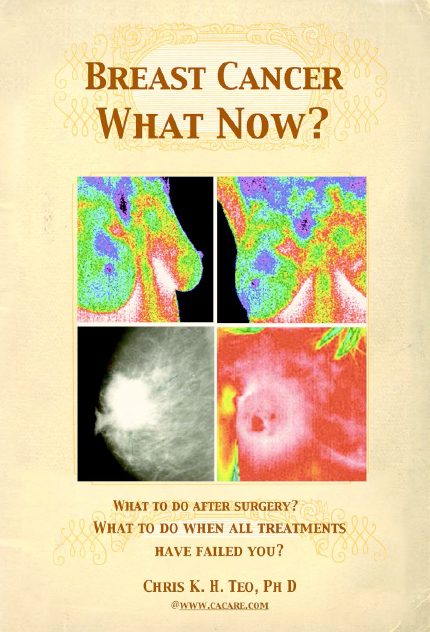
Breast Cancer: What Now?

What to do after surgery? What to do when all treatments have failed you?
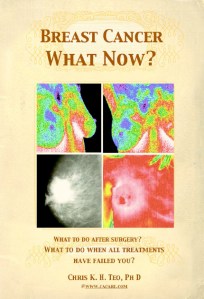
Breast Cancer What Now cover  US$3.99  Click here to buy: http://www.bookoncancer.com/productDetail.php?P_Id=70

 Introduction

This book in a continuation of my earlier book Your Breasts What to do if you find a lump and What to do if it is cancerous. The main problem at CA Care is not dealing with patients with breast lumps. Our main problem is dealing with patients who have already gone to see their doctors, undergone all the necessary medical treatments and failed. Now, they come to us for help.

Chapter 1: Pressure From Those Around You

In my first book Your Breasts – What to do if there is a lump and What to do if it is cancerous, I told the story of Ina, our friend. She had a lump in her breast which later was found to be cancerous. She underwent a mastectomy. After the surgery, her doctor referred her to an oncologist who recommended that Ina undergo chemotherapy and radiotherapy. Ina was also told to take Tamoxifen, a hormone drug, for five years. Ina refused all these and she opted for our CA Care Therapy. Ina had been on CA Care Therapy for the past one year. So far so good. She has been taking life easy, exercises regularly and takes care of her diet. Let me get back to Ina’s case. I knew she was not at ease after the last meeting with her surgeon. So,  I took time to explain one issue after another. 1. Ina is not the only one who opted for CA Care Therapy. 2. Medical treatment is not necessarily the best option. 3. Tamoxifen can cause cancer! 4. Medical radiation can increase cancer risk! 5. Cancer-free or not cancer-free. 6. You are now cancer-free, eat whatever you like! Of all the follies, I told Ina this one is the greatest of them all. Dr. Russell Blaylock (in Natural Strategies for Cancer Patients) wrote: “Oncologists harm their patients by giving them cancer-promoting nutritional advice.” I have learned that if you want to be popular with your patients or make them happy, tell them what they want to hear. Ask them to go back to their old ways of life after you have  treated them. When they get sick again, they will surely come hunting for you. Indeed this is a good way of ensuring that you are always in business.

Chapter 2:  Recurrence

Ina, our friend and our breast cancer patient, has been on our CA Care Therapy for more than a year now. She is doing fine. There is nothing else I can offer her. If she is happy and is doing fine she should continue to do what she is doing and stay on course. I am aware that deep down  in every patient’s heart,  there is the feeling of fear, i.e. the fear of recurrence.  The possibility of recurrence is real. Patients have to learn to live with it. Only time can tell if you are cancer-free or not. At CA Care we do not intend to mislead you. We want you to know that there is no cure for cancer. Living your life chasing after a permanent cure for your cancer could be miserable. We urge you to learn how to live with your cancer. That is more realistic. The only way that I know how to reduce the chances of recurrence is to make sure that you lead a healthy, happy and stress-free life. I tell patients to take care of their diet. Avoid foods that cause inflammation to the body. Of course this advice is not welcomed by many people. But take it from me. Food plays a major role in whether your cancer comes back or not. Very often I can trace recurrences back to bad diet. So you have a choice to help yourself! According to medical literature, recurrence  occurs in the first three to five years after initial treatment. The highest risk of recurrence is said to be during the first two years following treatment. Recurrence is never zero but as time passes the risk goes down.

Chapter 6: Insanity

The only difference between doctors and lawyers is that laywers merely rob you, whereas doctors rob and kill you too

~ Anton Chekhov, Russian physiciain, dramatist and author

 Dr. Jerome Groopman of Harvard Unviersity (in How Doctors Think) wrote: “If you do an experiment two times and you don’t get results, then it doesn’t make sense to do it the same way a third time. You have to ask yourself: What am I missing? How should I do it differently the next time?” “It is much easier both psychologically and logistically, for a doctor to keep treating a serious disease with a familiar therapy even when the disease is not responding.” “How an oncologist thinks through the value of complex and harsh treatments demands not only an understanding of science but also a sensibility about the soul – how much risk we are willing to take and how we want to live out our lives.” Life on earth is a living experience. Let the death of these patients be a useful lesson for many of those who come after them. The Story of Amy Cohen Soscia I learned about Amy Cohen from the Internet. She had breast cancer in 1998 when she was forty-three years old. Amy underwent a mastectomy, reconstructive surgery, chemotherapy and radiotherapy. She received treatments in one of the world’s outstanding cancer hospitals – Dana-Farber Cancer Institute, Boston, USA. In spite of all the treatments, Amy’s cancer spread to her liver and spine. The doctor tried Herceptin on her. Liz Kowlczyk of The Boston Globe wrote, “Miraculously, her cancer began to shrink, and Soscia began to let herself think that she would conquer the disease.” But it was not to be. In January 2003, an MRI showed the cancer had spread to her brain. ”I hate this disease, I was so discouraged that I was on treatment for five years and I still got brain lesions.” Amy had twenty times of radiation to her  brain.  The treatment was exhausting. She lost her hair. The treatment seemed to wipe out one tumour, shrunk another but one tumour grew back. Amy took a new  drug, lapatinib or Tykerb. Amy later stopped taking Tykerb because the brain tumour grew bigger indicating that the drug was not effective. Amy was not the only one who ended up with brain tumour after Herceptin or found that Tykerb was useless for them.  Salvia, Fransiska and Yee also suffered a similar fate. Amy received more treatment with high-intensity beam radiation that focused just on the tumor in her brain.  All said, Amy lost her battle and died on 2 September 2001.

Chapter 7:  Disaster

Doctors are blindly giving chemotherapy  … while the cancer cells smile.

Doctors give chemo, chemo, chemo. And patients die, die, die.

~ Dr. Frank Daudert, Pro Leben Klinik, Austria

 Death from chemotherapy is acceptable.

Each oncologist is truly shooting in the dark.

Hope is that the chemotherapy kills the cancer before it kills the patient.

~ Dr. James Forsythe (in The Compassionate Oncologist)

Reflect on the quotations above and the stories below. Ask yourself – what has gone wrong? 

Chapter 8  Let The Truth Be Told: No Cure for Cancer

 As doctors, we generally don’t tell outright lies. We just don’t speak the truth fully

~ Dr. Allan Hamilton (in The Scalpel and the Soul)

 “I am no longer shocked by his fakery …. Fake science, fake researchers,

fake subjects … is what American medicine has become.

Without actually intending it, we have constructed a medical system

in which deception is often not just tolerated but rewarded …

You can see the same patterns of misconduct emerging again and again.”

~  Carl Elliott, Professor of Bioethics, University of Minnesota, in White Coat Black Hat.

Most of what you have heard over your lifetime about cancer treatments

is not the truth. At the very least, you have received an incomplete picture.

If you believe that propaganda you have been fed when you develop cancer,

it can cost you your life ~ Burton Goldberg


The Story of Rose As I am writing this chapter, Rose, an Indonesian, came to our centre and related her story. Perhaps, we can learn many lessons from her experiences.

 Chapter 9  What Now?

In this book, I present to you real stories of breast cancer patients. It is up to you to learn from their experiences. Dr. Barbara Joseph was also a breast cancer patient. She said in her book, My Healing from Breast Cancer: “Breast cancer brings with it a clear and very personal message. Something is not working in our lives. Something needs to be changed. Let’s not be afraid of this message … just allow yourself to take the message in. Our diagnosis can be a wake-up call, alerting us to alter our diet, our lifestyle, our relationships.” Unfortunately, not all patients realize this. They come to us and they expect us to cure their cancer, and if possible to do it quickly. I am sorry, I cannot do that. Not all patients who come to seek our help find their healing. Our data showed us that only thirty percent benefited in one way or another, the remaining seventy percent do not. I stress, DO NOT. I don’t want to mislead you. There is this quotation, “There is no incurable disease, only incurable people.” By talking to patients for five to ten minutes, I can more or less know whether I can help them or not. How patients present themselves would indicate to me if they can make it or not. Their attitude, facial expression, emotional problem, lifestyle, commitment, family support, etc., all play important roles in helping patients overcome their cancer problems. Healing cannot be found in a “magic bullet.” Patients need to be committed and work hard towards their own healing.

 This book, in pdf format,  is available at US$3.99  Click here to buy: http://www.bookoncancer.com/productDetail.php?P_Id=70
Your Breasts: What to do if there is a lump? What to do if it is cancerous?

Your-Breasts-Cover

Available in either pdf or epub formats for only US$2.99 (approx. RM 10) 

PDF format: http://bookoncancer.com/productDetail.php?P_Id=68

EPUB format: http://bookoncancer.com/productDetail.php?P_Id=69

 What Do You Do If You Find A Lump In Your Breast? 

Since the subject matter of breast cancer involves extensive discussion I propose to write two books on this subject. This first book addresses the concerns of people who have found lump(s) in their breast(s) and what they need to do. Let us tackle the problem one step at a time and get it right from the beginning.

At CA Care we ask you to go and see your doctor and get your problem diagnosed first. And if it is cancerous, we take the position that you need to go for a mastectomy (remove the whole breast) or lumpectomy (remove only the lump). This is exactly what any doctor will also tell you to do. So why do you need to read this book then? You can get it all from the doctors you have consulted! But the similarity ends there.

As a patient you expect your doctor to explain everything you want to know before he/she proceeds to cut you up. But in reality this never happens. At most you are given 10 minutes to consult your doctor. What can you learn in 10 minutes?
Ina, the lady who we shall be talking in great detail in this book went to see an oncologist. She was given 10 minutes. The doctor did not even look up to see her. He looked at the medical report and keyed in some data into his computer and then rattled out some number. Ina was not impressed or happy. Her husband said, “He talked about money first.” Much of the consultation was about the cost involved and Ina was left with little time for questions that she wanted to ask. This consultation cost RM106.

Our distant relative, the late Corrina had pancreatic cancer. She consulted the “best” oncologist in town. The conversation lasted about 10 minutes. The oncologist asked, “Oh, you stay in Sea View. What are you working as? Do you buy health insurance?

Corrina said, ” He asked me to lie down. Checked here and checked there.  He saw the scans. He put on his computer and showed four patients. One was a miracle case – he survived 6 years with no sign of cancer coming back. He said there are 3 types of people that he treated. The one type is completely cured. The second type is in remission and the third type is just wasting his time. He is suggesting that I am type that is wasting his time. He said, “I can’t cure you.” But he asked me to go back and think and decide. He then said, “I can start you on chemo. Chemo is every week, for 8 times. (My husband) asked about the side effects. He replied, “Nothing.”

If you only have 10 to 15 minutes with your oncologist – and have to pay SGD 700 (about RM 1,774) for that – you probably need to be more organized before meeting him – so as to get the most of his valuable time.  Unfortunately, what you want from your oncologist differ greatly from what your oncologist wants from you!

Take it from me, all these information and guidance you need cannot be found in the hospital setting! Over

the years, I have seen how faces full of anguish and fear turned to bright smiles after consulting with us. What is more, we do this without any charge!

Now, I thought I would help many more people if I put my thoughts into a small “how to” guide book.

In this book, I take you through this first part of your cancer journey, one step at a time. In Chapter 1, I tell all patients, “Don’t panic.” Let us go through your problem together.

In Chapter 2, I ask you to go and find out if the lump is benign or malignant. Most of the time, the doctor would want you to do a biopsy first. “Do you need to do a biopsy?” is discussed in Chapter 3. If the lump is big, there is no reason to keep it in your breast – irrespective of whether it is cancerous or not.

In Chapter 4, I explained why you should not keep the cancerous breast anymore. There are situations when you can save the breast by doing a lumpectomy instead of a mastectomy. I explained these procedures in Chapter 5.

In the event that losing a breast is beyond acceptance, you can consider breast reconstruction surgery. Get a plastic surgeon to “make” you a new breast. This is explained in Chapter 6.

I hope the information in the first part of the book would be enough to provide some comfort and guidance on this first part of your journey. Also with this information you are better prepared to face your doctor and would be knowledgeable enough to be able to ask important and sensible questions.

Then in Chapter 7, it is time to put your knowledge into action. I addressed the issues of how to find the “right” doctor – and where? For those who have to pay the medical bills from their own pockets, I teach you how to “save” some expenses. You may benefit from my practical advice. Imagine, a mastectomy done in a certain hospital by a certain surgeon costs 9 times LESS than if you do the same operation in Singapore, or two or three times LESS if you do in other “normal” hospitals.

What comes after surgery is discussed in Chapter 8, the last chapter of the book. Surgery is just one “small challenge” you have to go through. The next “bigger challenge” is yet to come. In Chapter 8, I discuss one possible option which you may wish to consider if you don’t want to go for chemotherapy or radiotherapy. Unfortunately this is a big issue to tackle. Since I intend to make this book small enough for you to be able to read within a few hours, I shall leave the issue of chemotherapy / radiotherapy for my next book.

I am aware that most of you do not have the time to read too much while you are under such a “stressful” situation. So, I have tried to be precise and concise in my advice here.

This book will give you some advice that you need to at least keep you calm and get you through the first step of your cancer journey.

I am also aware that I have to keep up with this age of modern information technology. I have made the book available in both Pdf or ePub formats which can be down loaded into your hand phone (iPhone or Android), iPad, and tablet besides your computer. So this book can be read with just a click of a button wherever you are – even in the waiting room while waiting to see your doctor.

select-iPadThe book in iPad

select-iPhone

The book in your palm using the iPhone

select-Android

The book in your palm, Android handphone

Screenshot

Screenshot from Android

Buy your book at:

PDF format: http://bookoncancer.com/productDetail.php?P_Id=68

EPUB format: http://bookoncancer.com/productDetail.php?P_Id=69

BREAST CANCER — A NINETEEN-MONTH TIMELINE

by Yeong Sek Yee & Khadijah Shaari

Allow us to share with you the sad news of the recent demise of a close relative who was diagnosed with breast in December 2011.  To us, this is a classic case of a lady who did not die because of the breast cancer – she died due to the breast cancer treatments that she diligently underwent since diagnosis.

This 65-year old lady was a very staunch and caring Christian and very much loved and admired by her siblings, relatives and friends.  Perhaps her weak point in her journey with cancer is her unquestioning loyalty to her doctors/oncologist (her son is also a medical doctor).  From Day One, she listened very faithfully to her oncologist who advised her not to consume antioxidants, herbs or other complementary treatments as these will “clash” with her chemotherapy and subsequent radiotherapy, and hence the efficacy of her conventional treatments will be compromised.

Briefly, in December 2011, when she was diagnosed with a 3.8 cm lump in her left breast, she was told by an oncologist (in Singapore) that the lump is too big for surgical removal.  She was then advised to have at least 8 sessions of chemotherapy “to shrink the tumour” before surgery could be performed.  She followed the doctor’s advice and underwent chemotherapy during the whole of 2012 – 6 sessions of EC (Epirubicin + Cyclophosphamide) followed by 5 sessions of docetaxel, which ended in January 2013.

Come January 2013, instead of the tumour shrinking, the condition of her breast became more inflamed, with a few more new lumps appearing at the sides the breast. She was then advised by her hometown oncologist to consider radiotherapy.  So she came to KL for that purpose as the radiotherapy machine in her hometown was not working.  Whilst in KL she consulted with two prominent breast surgeons, who advised that (as at January 2013), surgery was definitely not an option based on the condition of the breast after 11 sessions of chemotherapy. She subsequently did 33 sessions of radiotherapy from January to March 2013, with the intention of shrinking the five lumps.  Again, while she was undergoing radiotherapy she was warned by her oncologist and radiologist not to take any herbs or antioxidants until everything is over.  At the end of the 33 sessions she was referred back to her hometown oncologist, with a report that the cancer has metastasized to her bone.

Back in her hometown, her oncologist recommended a new drug, Eribulin, which was only currently available in Singapore (as at April 2013).  She flew to Singapore and bought 4 doses of the drug from an oncologist there at the cost of S$8,000 per dose.  However, after three jabs, her hometown’s oncologist determined that Eribulin was not suitable for her.  He subsequently recommended Cisplatin + Gemzar and she underwent four cycles of this, the last one being around mid-August, after which she was told that further chemotherapy would not work for her.  She was totally devastated.  However, as some form of hope for her to cling on, she was given oral Xeloda.

All the while during her chemotherapy treatments in 2012, radiotherapy and further chemo in 2013, this tough lady was in pain most of the time and the pain became more and more intense in the months of April through August 2013.   From April 2013 her lungs started accumulating fluids…this is usually a confirmation of metastasis to the lungs. In the month of August till her demise on Sunday, 25th August, she had to be on oxygen most of the time (in addition to morphine).

She did try some herbal treatment off and on in between her chemotherapy/radiotherapy sessions in 2013.  Obviously this could not help her much as by that time her body was a total wreck.  Further, she only changed her diet in 2013. During 2012 she “ate anything she liked” as advised by the oncologist in Singapore and from her hometown.

When I attended her wake on 27th August 2013, the first thing that her eldest son said to me was “Uncle, see – only 19 months!”  Of course her oncologist and other doctors attributed this to her triple negative breast cancer which is supposed to be an aggressive form of breast cancer. Anyway, it is always about the cancer being aggressive, and never about the toxicities and ineffectiveness of the conventional cancer treatments which is always marketed and touted as evidence-based, scientifically tested, etc.

Lately, we noticed a new current trend in breast cancer treatment very similar to this case –more and more patients are advised to have pre-surgery chemotherapy – to shrink the lump before surgery.  We are very perplexed by this – why do you need to shrink the lump first before surgery when the breast, an “external” organ, can be wholly removed by mastectomy?  We know of a lady who recently had a 5 cm lump removed by lumpectomy and is recovering well and she has refused any form of chemotherapy or radiotherapy.

This trend of pre-surgery chemotherapy first is a huge business (if you catch my drift) for the medical/cancer establishment.  This unfortunate lady paid RM80,000 for the EC and Docetaxel in 2012.  Imagine how much the drug companies/and oncologists would make if they can persuade a million ladies to do so annually, world-wide.

It is mind-boggling, and the damage to the body, and the suffering, is also mind-boggling.

Just to conclude, this is the lady’s 19-months timeline summary:

a)    December 2011 – diagnosis

b)    December 2012 – commenced EC x 6 sessions followed by Docetaxel x 5 sessions

c)     January to March 2013 – 33 sessions of radiotherapy + oral cyclosphomide.

d)    April/May 2013 – 3 sessions of Eribulin

e)     July to August 2013 – 4 sessions of Cisplatin/Gemzar.  When Cisplatin/Gemzar was stopped after the 3rd session, she was given Xeloda

f)     25th August 2013 – passed away.

Undoubtedly, she has found peace with the Lord now but you do not have to follow her timeline. Follow Olivia Newton John’s cancer journey….she was diagnosed with breast cancer in 1992, did one year of chemotherapy and complemented her treatments with good nutrition, herbs, homeopathy, acupuncture and practiced meditation and prayer….and Olivia is still very much alive today (22 years later)…..watch out for her more detailed story soon.

Breast Cancer: Does chemotherapy and radiotherapy make sense?

Jane (not real name, H-237) was 43 years old when she found a lump in her right breast in mid-2009. Then the lump “disappeared.”  In October 2009, she “found” the lump again. She went to her GP doctor who examined her and said there was nothing amiss. But to be “safe” she was asked to go and see a specialist.

A mammogram was done – there was nothing. But USG showed a 1.2 cm lump. A biopsy was performed confirming that it was malignant. On 21 December 2009, Jane underwent a lumpectomy in addition to removing 14 of her lymph nodes. No cancer was found in the nodes. It was a Stage 1 cancer. Immunochemistry indicated that the tumour was negative for ER, PR but strongly positive for c-erbB-2. P53 was strongly over-expressed.

Histology-report

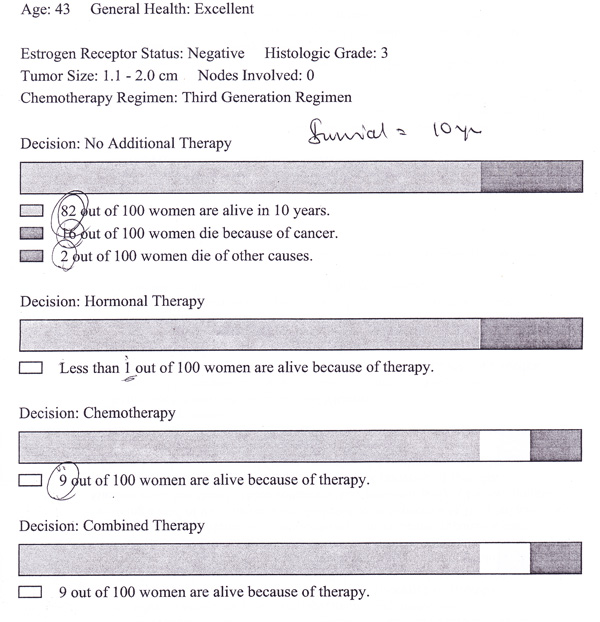
Jane was asked to undergo chemotherapy and radiotherapy. The oncologist handed  Jane a computer handout below:

1.  Recurrence at 10 years

10-yr-Recurrence


 2. Survival at 10 years

10-yr-survival


Jane was told that the benefit of chemotherapy and radiotherapy would be 16 percent – i.e. 16 out of 100 women are alive and without cancer because of the combined therapy.  Jane was told that the package of chemotherapy + Herceptin would cost RM 120,000 while radiotherapy cost an additional RM 35,000.

Jane promptly refused further medical treatments and came to seek our help on 10 January 2010. Jane told us that she refused chemotherapy because she did not want to lose her hair. In addition, her mother-in-law had lymphoma and died after two cycles of chemotherapy.

Jane was prescribed Capsule A, C-tea, Breast M and Breast L tea. Jane continued to take the herbs and in May 2013, I got to see Jane again and reviewed her case. She was doing well and happy. Below is our conversation that day.


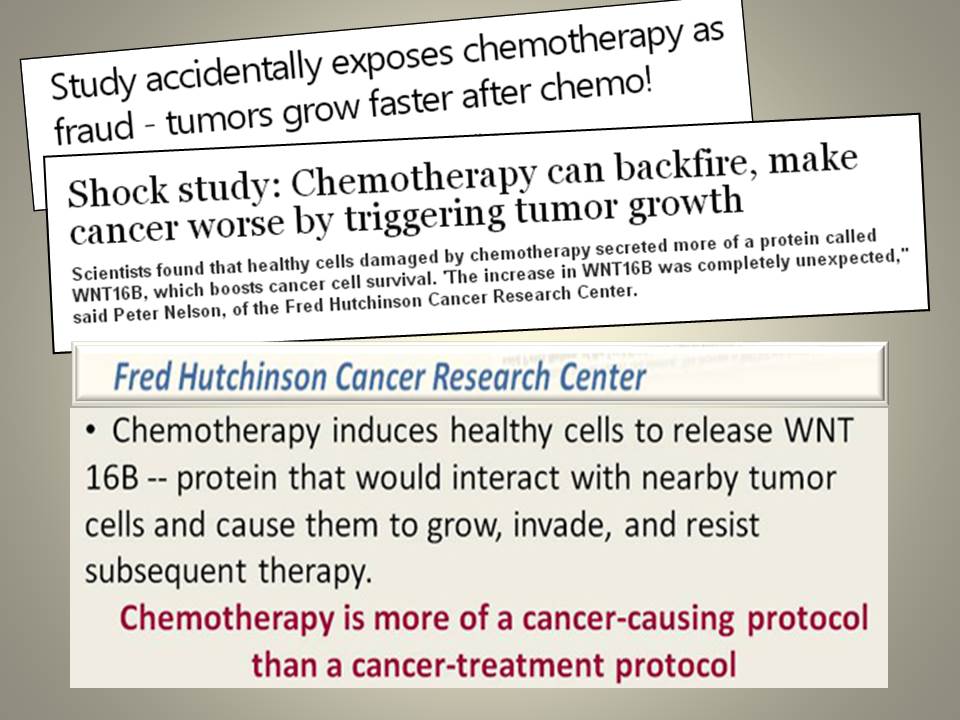
Let me ask you to reflect seriously on the following quotations:

3-Chemo-attempt-to-kill-canSlide9

Slide34

Slide33 

Women with HER2-positive breast cancer who receive adjuvant trastuzumab (Herceptin), have a significant risk for metastases in the central nervous system (CNS) as the site of first recurrence, according to a report published online March 4, 2013 in the Annals of Oncology. http://annonc.oxfordjournals.org/content/early/2013/03/04/annonc.mdt036.short?rss=1

Japanese researchers wrote this: A high rate of brain metastases has been reported among patients with human epidermal growth factor receptor (HER2)-over-expressing metastatic breast cancer who were treated with trastuzumab (Herceptin).

Herceptin combined with standard chemotherapy will have as many as 4% of women who take the regimen develop symptoms of congestive heart failure, compared with less than 1% of women given chemotherapy alone. Herceptin has been in use only a few years. We don’t know what will happen 10 or 20 years from now. http://www.medicalnewstoday.com/opinions/10503/

Related post on breast cancer cases for you to reflect on:

  1. Breast Cancer: Herceptin and Brain Metastasis She might have won many battles but ultimately she lost her war.  https://cancercaremalaysia.com/2012/09/20/breast-cancer-herceptin-and-brain-metastasis/. SA was diagnosed with Stage 2 breast cancer in March 2006 and about two years later, it progressed to Stage 4 – with metastases in her lungs and liver. From May to 2008 she received Herceptin. The cancer spread to her brain. In January 2009, SA fainted and was unconscious. She died.
  2. Fransiska had a 1.6 cm lump in her breast. She underwent a lumpectomy in November 2004 followed by radiotherapy.  About two years later the cancer spread to her lungs. She underwent chemotherapy and received Taxol plus Herceptin. The cancer spread to her spine. In January 2008 the cancer spread to her brain and liver. She died in mid-December 2008 – four years after being diagnosed with breast cancer.  https://cancercaremalaysia.com/2010/12/09/fransiska-died-after-surgery-radiotherapy-chemotherapy-herceptin-tamoxifen-xeloda-and-tykerb/
  3. Yee was diagnosed with Stage 2 breast cancer with no lymph node involvement in October 2005. She underwent a mastectomy and chemotherapy. About 9 months later, the cancer recurred in the right side of her neck. The cancer had spread to her lungs. Yee had more chemotherapy including Herceptin. After all treatments failed she received radiation. Yee died in early February 2009. http://cancercaremalaysia.com/2010/12/08/yee-died-after-extensive-and-costly-medical-treatments/

Reflect seriously on the tragic cases above. Do you see a common trend?  Yes. They had breast cancer and had undergone all the medical treatments recommended by their doctors.  And the results? Disaster.

  • All were dead within 3 to 4 years.
  • While they were alive, they spent time in and out of the hospital, moving from one treatment to another with no cure in sight. And it the process endure the suffering and misery of the treatments.
  • All received Herceptin and all ended with brain cancer. 

Ask this question: Jane had a dangerous type of breast cancer – they call it a triple negative. After surgery she opted for   the CA Care Therapy – taking herbs and change of diet. She refused chemotherapy and radiation. What happen to her now? She is doing fine, leading a happy life. The fibroid and ovarian cyst that had recurred after a previous surgery are gone after taking the herbs. The non-cancerous cysts in her breasts have grown smaller. In short, Jane’s health is good and she does not need to endure any suffering along the way.

Come December 2013, Jane would have lived 4 years of healthy life. Others who took the medical path were dead by then.

Okay, you may want to ask me, if I were to take Jane’s path – would you guarantee me that I would be successful like Jane? Unfortunately no! Healing of cancer is about you – the human being. You have to work for your own healing, YOURSELF. Nobody can take on that responsibility.  And you must be fully committed to what you are doing. And that does not come easy. It is not available on demand either.  No amount of money can buy you healing.  Certainly NOT for those who are only seeking for an easy way out, instant cure or a magic bullet. Take heed of the wise words of Dr. Susan Love.

3 No-right-or-wrong-journey

Breast Cancer: When Work Stress Showed Up As Meridian Energy Imbalances

Jane (not real name, H-237) was 43 years old when she found a lump in her right breast in mid-2009. Then the lump “disappeared.” In October 2009, she “found” the lump again. She went to her GP doctor who examined her and said there was nothing amiss. But to be “safe” she was asked to go and see a specialist.

A mammogram was done – there was nothing. But USG showed a 1.2 cm lump. A biopsy was performed confirming that it was malignant. On 21 December 2009, Jane underwent a lumpectomy in addition to removing 14 of her lymph nodes. No cancer was found in the nodes. It was a Stage 1 cancer. Immunochemistry indicated that the tumour was negative for ER, PR but strongly positive for c-erbB-2. P53 was strongly over-expressed.

Jane was asked to undergo chemotherapy and radiotherapy. Based on the computer output, the oncologist told Jane that the benefit of chemotherapy and radiotherapy would be 16 percent – i.e. 16 out of 100 women are alive and without cancer because of the combined therapy.  Jane promptly refused further medical treatments and came to seek our help on 10 January 2010. Jane told us that she refused chemotherapy because she did not want to lose her hair. Moreover, her mother-in-law who had lymphoma died after two cycles of chemotherapy.

Jane was prescribed Capsule A, C-tea, Breast M and Breast L tea. In additional she was given GY5 and GY 6 tea for her 3 cm functional left ovarian cyst and a small uterine fibroid.

After her first visit in January 2010, we got to see Jane three times in 2010. Then Jane was out of our radar. We did not get to see her again until 24 May 2013, i.e. almost three years later.

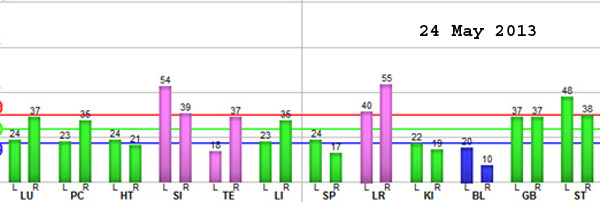
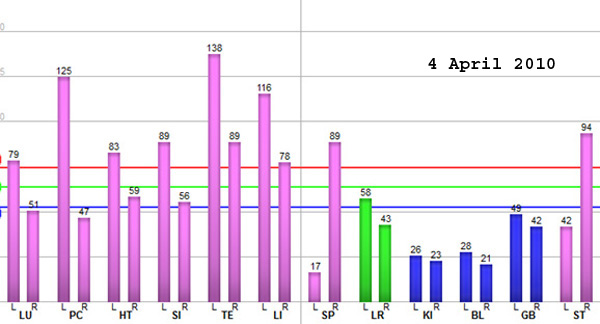
Below are readings of Jane’s meridian energy as measured by the AcuGraph.

4 April 2010

1-JC-4-Apr-2010 copy

 10 September 2010

2-JC-10-Sept-2010 copy

24 May 2013

3-JC-24-May-2013 copy

 Listen to Jane explaining what life was like before, when and after she had breast cancer.


Jane was leading a life of extreme stress. Her AcuGraph readings in April and September of 2010 showed severe energy imbalances and we advised Jane to lead a more relaxed life if she wanted to survive her cancer. Jane got the message and in August 2011 Jane decided to retire from her job. And gone were her work stress and job responsibility phobia. She could sleep well. The AcuGraph reading on May 2013 showed it all.

Acknowledgment: CA Care records its sincere thanks to Dr. Adrian Larsen, President of Miridia Technology Inc., USA, for his generosity in donating a unit of AcuGraph 4 for our research. This enabled us to provide “AcuGraph reading” for our cancer patients without charge.