Lung Cancer: Declined Biopsy and Chemotherapy – Money Gone Then Die


After an X-ray and CT scan, the doctor found a 7 cm tumour in my lung. It was a Stage 2 cancer. I refused to have a biopsy because I don’t want to undergo chemotherapy. I prefer to take herbs.

Why don’t you want to go for chemo?

No, no, it is not successful.

How do you know?

I have many friends – chemo, chemo, and 6 months later die!

One of my friend had lung cancer and he went for treatment in Singapore. He had to sell 2 houses to pay for the medical bills. He had chemo and chemo. Before 2 years were up, he was dead. Each chemo cost a few thousand dollars. He died and property also gone!

CANCER’S COLLATERAL DAMAGE: PART 3 A BREAST CANCER STORY

by Yeong Sek Yee & Khadijah Shaari

In this segment on collateral damage, we have decided to feature the late Datuk Ilani Isahak, the Chairman of the Interfaith Relations Working Committee until her passing away on February 24th 2011 after a 3-year battle against breast cancer. On June 12th 2011, Dr Amir Farid Isahak (Datuk Ilani’s brother) recounts his sister’s struggle in an article in The Star entitled “MY SISTER’S CANCER.” Our story below is essentially excerpted/adapted from Dr Amir’s article.

In Dr Amir’s own words, this is his story:

“THIS is not just another sad cancer story, but the story of the struggles my own sister, Ilani Isahak went through, fighting her breast cancer for three years until she succumbed to the disease in February this year (2011). She followed everything the oncologist prescribed. Each time, after discussing with me, she would decide “no more chemo”, but after the next visit with the oncologist, she would tell me “the oncologist said it is absolutely necessary that I go for the chemo, so I agreed”. 

Soon after the initial six courses of chemo and one year of a “smart” drug ended, the cancer came back. The extremely expensive “smart” drug she was given was trastuzumab (Herceptin), which is a monoclonal antibody that targets the HER2 receptors on the breast cancer cells. However, a re-examination of her cancer cells then showed that she was not a good candidate for trastuzumab. The first report had been inaccurate. 

So her oncologist put her again on further chemotherapy. Other drugs were then tried, and there was some response, but internally the cancer was encroaching into her rib cage and onto the lining of the lungs (pleura). Besides hair loss, her fingernails were blackened after the repeated chemo sessions. 

The other “smart” drug she was given included bevacizumab (Avastin), which is also a monoclonal antibody that is supposed to prevent new blood vessel formation (anti-angiogenesis), thus preventing new cancer growth. (However, back in July 2010, the US FDA had evidence that bevacizumab was not suitable for breast cancer. In December 2010, the US FDA officially revoked its approval for the use of bevacizumab for breast cancer, saying that it is neither safe nor effective in breast cancer patients. The available data shows that bevacizumab neither prolonged overall survival nor slowed disease progression sufficiently to outweigh the risk it presents to breast cancer patients). 

Until the last six months of her life, my sister was relatively well, which means she had about two years of reasonably “good quality” life. Then she started to have chronic coughs.

At first, she still managed to do her normal chores, but she gradually deteriorated, and became breathless easily. A pleural effusion (fluid in the space covering the lungs) was diagnosed, but the first attempt to drain the fluid failed to relieve her symptoms.

Exactly one month before her death, she had to be admitted to the hospital, and had permanent drainage tubes inserted into both sides of the rib cage, and she required the oxygen mask continuously. The doctors also decided that she could have palliative care only, with no further active treatment. After one whole month of suffering, she died. 

My sister died because the cancer spread to a vital organ – her lungs. There was copious pleural effusion that repeated and even continuous drainage could not solve it. The effusion meant that her lungs gradually collapsed.

With the reduced oxygen supply, the heart had to work harder, and soon it also succumbed. Although there were discussions to attempt surgery to seal the pleural cavity (thus preventing the formation of the effusion), by that time, her poor general condition made any major surgery unsafe.

At her death bed, she told me “learn from my mistake, do not go for chemo”. 

One of the major lessons about conventional cancer treatment that Dr Amir Farid imparted in his article is that: 

“If the cancer patient is not cured after the first course of chemo, she is unlikely to be cured at all. Cancer cells which are resistant to the first chemo are most likely resistant to further chemo. Although each subsequent chemo may drastically reduce the number of cancer cells, the tough resistant ones will multiply and manifest their presence soon enough.” 

NB: Dr Amir Farid Isahak is a medical specialist who practises holistic, aesthetic and anti-ageing medicine. He is a qigong master and founder of SuperQigong.  

ACKNOWLEDGEMENTS:

The article was excerpted from the sources below which we acknowledge with thanks:

1)   Breast Cancer: Ilani’s Message – Learn from my mistake, do not go for chemo

Link: https://cancercaremalaysia.com/2011/03/11/435/

2)   My sister’s cancer–by Dr Amir Farid Isahak

Link: http://www.thestar.com.my/story.aspx?file=%2f2011%2f6%2f12%2fhealth%2f8879117&sec=health

3)      Ilani Isahak – A true Malaysian….A Tribute by Dr Amir Farid Isahak

Link: http://www.thestar.com.my/story.aspx?file=%2f2011%2f3%2f13%2flifefocus%2f8183426&sec=lifefocus

Colon-Liver-Lung Cancer: Hunting For The Magic Bullet

A lady school teacher came to see us in early 2012. Her husband is a medical doctor (later, I got to know that her daughter is also a medical doctor).  She did not come with any medical report – she just wanted to tell me her story and based on that prescribe her herbs.

She had colon cancer that had spread to her liver.  She had completed her chemo and had also undergone a RFA treatment (radiofrequency ablation). In spite of that, her CEA was rising.

The first question I asked her, “What do you want me to do? What do you expect to get when you come and see me?”  Her answer, “I want to find a cure.” To that I told her, “No, I am sorry I don’t have anything to cure anybody. My herbs are not magic.”

Then I asked her to read my two books, Cancer – Why They Live and What You Need to Know About Chemos … She would not even look at the books! But she insisted on wanting to try my herbs. My answer was, “No.  For now, I would not prescribe you any herbs. Go home and pray to your god (s) after you have gone through my websites – www.cacare.com and www.CancerCareMalaysia.com

Were we being cruel to send her home without giving her the herbs? Sometimes we need to be “apparently” cruel to be kind and honest. While we fully understand that patients who come to us are helpless, desperate and lost – it is extremely unfair and wrong for us to make them believe that we can offer them a cure for their cancers. Our experience over the past 18 years dealing with cancer patients tells us this fact clearly – No one on earth can cure cancer! You just have to learn to live with your cancer and heal yourself. Saying that the treatment gives you a response does not mean a cure. To achieve a tumour shrinkage after treatment is equally meaningless. Shrinkage generally does not translate into a cure. And saying that if you remain alive for 5 years means your cancer is cured is scientifically baseless.

These are the “truths” that you may have missed out or you have not been told.  Read the medical literature, no one ever talks about cure for cancer. If they do, they generally mean being alive for 5 years. That is not cure! It is only a remission.  We have seen cancer recurring even long after that. My aunty had a recurrence after 13 years. Her cancer spread to her lungs and she died.

So when we sent this lady teacher home to “learn” more we were just being truthful – we cannot cure any cancer. Unfortunately she did not want to learn. She portrayed as a well-informed patient who knew all the medical terms — “after all I am the wife /also mother, of medical doctors.”

Patients who come to us with this kind of “shopping-for-magic-bullet” mentality, are sure to be very disappointed with us. We would send them home without any herbs and ask them to think over.

We understand most patients who come to us are generally medically given up – they have gone though all possible medical treatments and failed. They have nowhere else to turn to for help. I used to jokingly tell patients, “Yes, we are the last one stop.” Given that situation what do patients expect us to do? Cure their cancers? And we, at CA Care, promising them a cure?  Don’t be misled – we cannot cure your cancer. We also do not cure your medical results. At CA Care we want to heal you as a person. Healing is different from cure. Healing happens at all levels – physical, mental and spiritual.

Fast forward, April 2014 – about 2 years later. This same lady teacher came to see us again. I could not recongise her. She was dark (due to too much chemo?). I asked for her medical reports. Again – like before – she did not bring any. And she started to rattle her story below.

P: I was diagnosed with colon cancer in September 2010. I had an operation followed by 8 cycles of chemotherapy. I was okay for about 6 months. After that the tumour marker (CEA) started to go up. The cancer had gone to the liver. I did one time RFA (radiofrequency ablation). After one month, it seemed to be okay but my CEA did not go down. It was still climbing.

I did a PET scan and the result showed 2 tiny lymph nodes (collar bone) was infected, but the liver was okay.

I was started on chemo again – another 8 cycles. The CEA went down. It seemed to be okay. While on chemo, I was also given Avastin. After the chemo was completed, I was still on Avastin as maintenance.

A bit less than 6 months later, I did a PET scan. The doctor said everything was okay. But after the PET scan, the CEA started to go up again.

About a month later, I did a CT scan. There were tiny nodules in my lungs.

The oncologist started me on chemo again. This was the third round and I had 12 cycles. I was also given Erbitux.

After 12 cycles of chemo my CEA went down to 1.7 (normal 5). I continued to receive Erbitux as maintenance.

A scan later showed the nodules in the lung were still there but there were no other additional metastasis.

In October 2013, my CEA started to go up again. It was like 1.9.

My oncologist sent me to see a surgeon, to see if the infected lymph nodes could be removed. But the surgeon asked me to do a PET scan first before considering surgery. I did a PET scan.  The result showed everything was clear except for one nodule in my right lung. This could be an early metastasis. The surgeon was unable to proceed with the surgery because the nodule was too small. So nothing was done.

Today my CEA started to go up again. And all this while I was still on Erbitux.

Just before the Chinese New Year (January 2014) the oncologist started me on 5-FU (chemo again). My CEA was going up and Erbitux was not effective anymore. That was why the doctor added the 5-FU. I received this every week.

Even with the added 5-FU my CEA had gone up to 5 (from 1.7 before October 2013).

I have been going  for the chemo but for a few times now, I started to feel restless 5 or 10 minutes after receiving the drug. I felt restless and did not know where to put my legs, where to put my hands. I could not concentrate. When I talk to you, my eyes cannot focus on you. I am just restless and don’t know what to do. I don’t know whether this is the effects of the drug or it is psychological effect.

Two weeks ago, when they put the drug in, I felt very difficult. They called the doctor in. The doctor wanted to give me steroid (prednisone). But the week before I have asked the oncologist to take off the prednisone because it made me very drowsy. So when they wanted to give this again, I said no!

Last week I went to see my oncologist again. He stopped the Erbitux and said I was already too long on this. So he just gave me only 5-Fu. But I still felt restless even with only 5-FU.

In total I am on chemotherapy  for three and half years. (Note: 3 rounds of chemo with a total of 28 cycles besides the weekly 5-FU, maintenance Avastin and Erbitux).

Chris: To be honest, I am surprised that you are still alive today. I really don’t know what I can do to help you. What do you expect me to do in this situation? Because I don’t believe that by taking the herbs your CEA is going to come down, honestly. Now it is just at 5.

Patient: But I am scared that it will  go up.

C: Why do you worry wanting to get the CEA down – CEA is not going to kill you.

P: But every time the CEA went up, I went for a scan and they found something in there.

C: That is normal. We all know that. Nobody can cure any cancer. That’s my experience. What is more, even when you get cancer, they tell you to eat anything you like.

P: But I did “pantang” (abstain from certain food).

C: But the way you “pantang” is not the way we teach you to “pantang” at CA Care. It is useless if you don’t do it right. Follow what I tell you fully or don’t. No half measure.  Again let me tell you. If you come and see me hoping that your CEA can come down, no, I don’t think that is the correct logic. Honestly, I don’t think it will come down. For three and a half years the doctors could not get it down, and you expect me to do it!

P: It will not come down but I hope it will not go up.

C: I don’t know. You need to know that cancer cells are not the same, they are different. After round and round of chemo, some cancer cells are killed, but some can still remain alive or are not affected by the chemo drugs. Because of that some patients suffer from “more aggressive” cancer after chemo. Researchers have shown that chemo makes cancer more aggressive. That is why chemo does not work.

This is the attitude of patients. When all else have failed they come to us and expect me to do magic. How could I do it? My answer to you is, I am not going to be able to do it – as simple as that.

Other people may say, “Yes take this and take that, your CEA will go down, etc., and etc.” But I am not sure if this is going to be true or not. Why don’t you come back to see us only after you have decided you don’t want to do anymore chemo?

P: I thought of stopping the chemo.

C: It is not a matter of thinking you want to stop chemo. You have to decide – do you still want to continue with your chemo. If you want to continue, go ahead with the medical treatment. You have to be clear about this. I suggest that you go home and continue with your chemo.

Come and see me only after you have decided to give up chemo totally. When you reach that point, and you don’t want to do chemo anymore, and you have nowhere to go, then come and see me. Then we will try the herbs.

For now, don’t take the herbs yet. Go back and when you tell yourself. “I don’t want any more chemo and I have nowhere else to go,” then come and see Chris Teo. Then I’ll give you the herbs.

P: Now, I want to take a break from chemo and I want to take the herbs.

C: Take the herbs for how long?

P: Your wife suggested to try the herbs for one month.

C: You can take the herbs for one month, but I am going to tell you it is not going to give you any significant effects. No way. You have been on medical treatment for three and a half years and it never worked and you can’t expect to take the herbs for a month and it is going to work!

P: Not to go down but to see if it can control it or what.

C: Let me tell you again. When doctors have failed to help you for three and a half years, how can you expect my herbs to help you in a month. No way.

P: But Dr. Teo, I have a friend in Kuala Lumpur. He has lung cancer. The doctor said he only has 3 months to live. He did not go for medical treatment and he took your herbs instead. He is still alive today. It has been one year already.

C: Of course, patients who have not gone for chemo do better with our herbs!

I am obliged to prescribe this patient some herbs. She came back to collect the herbs the next day. She asked my wife:

a) What are the side effects of the herbs?

b) What are these herbs?

c) Some herbs could be dangerous and affect the kidney, etc.

My wife replied: No one has died because of our herbs. And many have been taking these for years. If you are afraid of the side effects or think they are dangerous, please don’t take them!

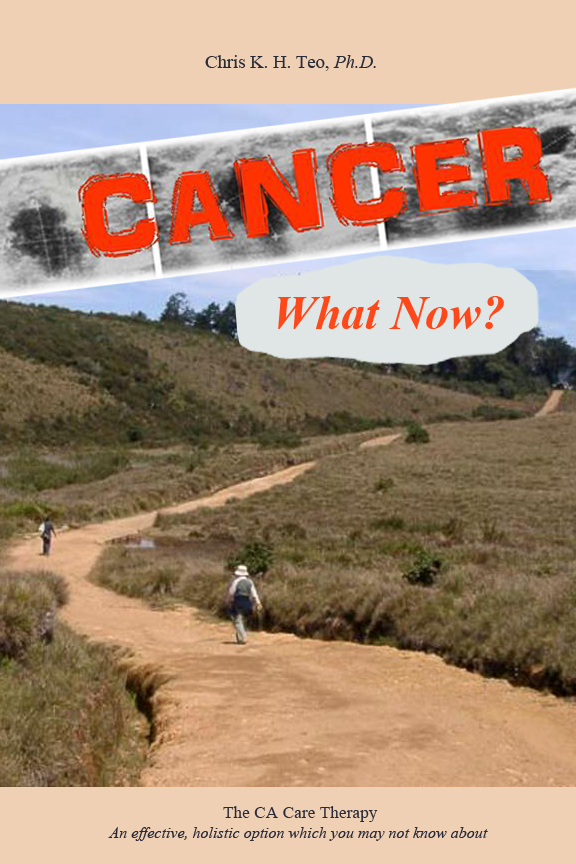
Comments: For those who have cancer and who know how to read, I strongly suggest that you read my recent book, Cancer – What Now?

Cover Front JPGIn this book I have discussed many topics that are important to you and your survival. Going for whatever treatment for your cancer is about you and your choice. Your life is in your hands.  When you get cancer, it is also about you. YOU, the person. It is not just about the tumour or the rising CEA, etc., etc.

I have written many articles trying to let you all know that shrinkage of tumour and decreasing of CEA are often meaningless. It makes you feel good for a few months and the cancer comes back again. Is this not what happened to the lady teacher above? PET scan said okay, all clear but soon something pop up again somewhere! More chemo again. When do you stop chemo?

In Chapter 3 of the book I talked about the types of patients who come to see us and their attitudes – wanting to find a magic cure when there is NONE. Of course, you can go for chemo, surgery, take this supplements and that supplements – beware of the empty promise! In Chapter 6, I wrote about the virtue of doing nothing!

I am aware that my way of dealing with cancer is rather non-conventional and against the commonly accepted norms. If you are following my writing in the websites, you will know that what we do in CA Care do help many patients. It is just whether you want to believe or not!

Look out for another story after this one. This is about a man with colon cancer who was at the point of death in the hospital and was asked to do chemo! His wife preferred to do nothing and brought him home in an ambulance! Like the Chinese say, if you have to die, die at home! This man remained alive at the point of time when I am writing this article.

Two Billion Rupiah, Chemo And Surgery Failed. Oncologist said, “More chemo, you just have to trust me!”

Part 2: Two Billion Rupiah, Chemo And Surgery Failed: Patient said, ” I’ll die not because of my cancer. It is because of the chemo.”

This is an e-mail I received from Alex.

Selamat malam Dr Chris: Saya Alex dari Jakarta. Saya mau minta tolong Dr Chris untuk mengobati papa saya yang kena kanker paru dan setelah kemo dan operasi, kanker tersebut malah tumbuh di liver dan limpa. Saya rencana besok hari minggu, 20 April 2014 berangkat dari Jakarta ke Penang untuk konsultasi dengan Dr Chris … Saya mohon Dr Chris mengobati papa saya. Terima kasih banyak Dr Chris. Salam.

(Good evening Dr. Chris. I’m Alex from Jakarta. I wish to ask Dr. Chris to help treat my father who had lung cancer. After chemo and operation, the cancer spread to his liver and lymph. I plan to fly from Jakarta to Penang for consultation on 20 April 2014. I request Dr. Chris treat my father. Thank you.)

The next day, Alex came to our centre in Penang and related the tragic story of his father’s cancer treatment in Singapore.

Before that, I asked him,  “Who asked you to come here?”  Apparently after 2 years of treatment and spending about 2 billion rupiah (RM 600,000?) Alex’s father ended up with more cancer and suffered badly form the side effects of the treatment. Desperate and lost,someone in Sydney told Alex about a Chris Teo in Penang. He immediately googled “Cris Teo Penang” and found CA Care. He then bought a plane ticket and flew here the next day!

Indeed it is dramatic but this showed us his concern for his father’s health. Alex came with almost a bagful (his luggage) of medical reports and PET scans.  This is his story (all in italic).


I come for my father, he is 62 years old. Yes, I bring all the medical reports and PET scans.

The problem started in March 2012. He went for a routine check up for his heart in Singapore. The CT scan showed a mass in his lung. PET scan was done followed by a biopsy. It was cancer. The tumour was about 3 cm and it had already spread to the lymph nodes.

Composite-1

CT scan report dated 21 March 2012:  Presence of a 3.9 cm spiculated soft tissue density mass in the right lower lobe. A 0.9 cm right hilar lymph node is noted. The liver is normal with no focal nodules.

PET scan report dated: 18 April 1012: Bronchogenic malignancy, 3.5 x 2.6 cm. FDG avid right infra-hilar adenopathy.

The doctor  suggested surgery but my father declined. However, he agreed to undergo chemotherapy. This was started in May 2012. He received a total of 12 cycles. Each cycle consisted of 2 injections. Each cycle started with an injection on day 1 and day 7. Rest for 14 days and then started with the next cycle.

Chris: Did you know what drugs they used on him?

??? Not sure! (later, the son found out that his father was given: Chemo drugs: Gemzar and Cisplain. Others:  Zometa for the bone, Eprex (epoetin A) and Gran – blood boosters).

C: Why did you want to do chemo? Don’t you know that chemo is not good?

We didn’t know that. The only thing I know was that the effects were bad. But the oncologist told us: “If you were a member of my family, I would also ask you to do chemo.”

C: Did you fully believe what he told you?

Yes. But with time I learned from the internet chemo does not cure!

C: Did you ever ask the doctor if chemo is going to cure?

Yes, I did ask him. The oncologist said, ” We need to try first. There would be 30 percent chance of cure, the remaining 70 percent cannot be cured!

C: Which means that you only have a 30 percent chance of success and he asked you to try? Is that reasonable?

After 3 cycles of chemo, the oncologist said my father belonged to the 30 percent success group – can be cured!

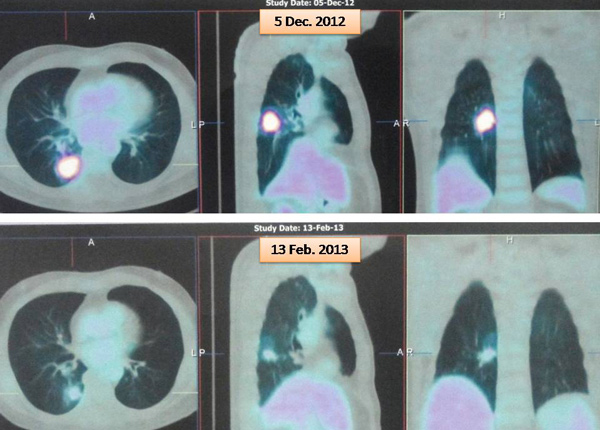
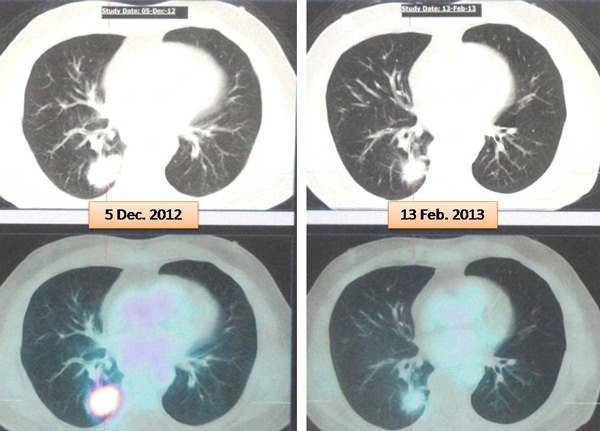
 Composite-2

Composite-3

Study the above. The initial reaction to chemotherapy was significant shrinkage of tumour (but if you know enough this is just an illusion. It may not last – meaningless)

PET scan report on 13 February 2013: Reduction in uptake and size of the mass in the lower lobe of the right lung. Prior size 2.3 x 1.6 cm to 3.8 x 2.6 cm.

C: So you continued with the chemo?

Yes, until 12 cycles. But there was no cure.

C: Did you ask the doctor why earlier on he said you belonged to the 30 percent can-cure group but now he had failed to cure your father? What was his reaction to that?

He said, “You just need to trust me.”

So he asked you to trust him – what does that mean and what could this lead to?

He said, “Do more chemo.”

By then, did you still trust him?

(Shaking his hands negatively).

C: Only after 12 cycles of chemo – only then you realised that you could not trust him anymore?  And did you continue with more chemo?


Composite-4

Composite-5

Study the above and you will note that more chemo does not make any difference now!

PET scan report on 8 October 2013: The previously noted hypermetabolic right lower lobe pulmonary mass appears to be larger. Current size 6.5x 4.2 cm versus prior size of 5.2 x 3.6 cm. There is interval development of a subcentimeter mildly FDG avid lymph node posterior and inferior to the right main bronchus.

From April 2013 (i.e. one year after diagnosis) until October 2013, my father did not receive any treatment. On 9 October 2013, he underwent an operation to remove the tumour in his lung. After the surgery he was not on any medication. On 14 April 2014, my father did a PET scan and there was no recurrence in his lung, but PET scan showed the cancer had spread to his liver and lymph nodes.


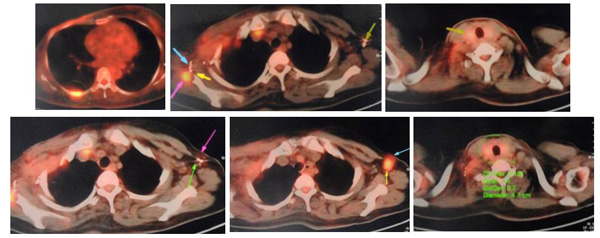
Composite-6

 PET scan report 14 April 2014: Multiple FDG avid lesions in the liver – segments 7 and 8 (size of 6.5 x 3.6 cm); segment 2 (3.0 x 2.4 cm) and segment 5/6 (2.5 x 4.3 cm). No suspicious hypermetabolic pulmonay nodules are detected. Multiple FDG avid lymph nodes in the abdomen – peri-portal regions (size of 2.2 x 2.8 cm); retrocaval (1.8cm) and aorto-caval regioin (1.8 cm).

The doctor asked my father to undergo chemotherapy again or take oral chemo drug. My father refused to do both.

Total Cost of Treatment

The chemo treatment came to about 1.5 billion rupiah (approximately RM 0.5 million). The surgery cost an additional  0.4 plus billion rupiah. So the total cost of 2 years of treatment in Singapore came to about 2 billion rupiah.

Comments

Is this story unique? Not at all. It happened most of the time with lung cancer patients.  Story 5 in our book, Lung Cancer – What Now? tells of a lung cancer patient who underwent similar treatment by the same doctor! The family spent 8 billion rupiah (approximately SGD 1 million). The result: The same, disastrous ending. He died soon after coming to see us.

Over the years dealing with patients, I began to see a very clear pattern emerging in the medical treatment for lung cancer. If you wish to know more, just read the following and learn to become an empowered patient. Perhaps you don’t have to die suffering and at the same time leave a “big hole” in your bank account.

Title-Page-1696

Available: http://bookoncancer.com/productDetail.php?P_Id=75

Title-page-1696

(Available http://bookoncancer.com/productDetail.php?P_Id=73)


DEATH OF A FIRST LADY: JACQUELINE KENNEDY ONASSIS

Review by Yeong Sek Yee & Khadijah Shaari

Jacqueline Kennedy

Jacqueline Kennedy Onassis, just like the late Senator Hubert Humphrey, also died a painful death in May 1994. Jacqueline Kennedy was the wife of the late President John Kennedy, the 35th President of the USA from January 1961 until he was assassinated in November 1963. Jacqueline subsequently married Greek shipping tycoon Aristotle Onassis in 1968 and was later known as Jacqueline Kennedy Onassis.

Mrs. Onassis was healthy until early December1993, when she noticed a swelling in her right groin. A doctor diagnosed a swollen lymph node, and suspecting an infection, prescribed antibiotics. The swelling diminished but did not completely disappear.  While on a boat cruise in the Caribbean over the Christmas holidays in 1993, Mrs. Onassis developed a cough and swollen lymph nodes in her neck and pain in her abdomen.

Subsequently another doctor found enlarged lymph nodes in her neck and in her armpit. A  CAT scan, showed that there were swollen lymph nodes in her chest and in an area deep in the abdomen, the retroperitoneal area.A biopsy of one of the neck nodes showed that Mrs. Onassis had non-Hodgkin’s  lymphoma (NHL).

In early January1994, Mrs. Onassis began receiving the first of four standard courses of chemotherapy for the lymphoma. The therapy included steroid drugs, and the initial treatment led to an apparent remission. But in mid-March 1994, she developed weakness, became confused and  had  pains in her legs. A neurological examination indicated that the cerebellum portion of her brain had been affected. Later, an M.R.I. showed that the lymphoma had disappeared from her neck, chest and abdomen but that it had spread to the membranes that cover the brain and spinal cord.

After the cancer was found  in her brain, Mrs. Onassis received radiation therapy there and to her lower spinal cord for about a month. The treatment relieved her weakness, but she continued to experience pain in her neck, for which she was given pain medications. During this time she received her care at home and as a hospital out-patient.

On April 14, Mrs. Onassis was admitted to New York Hospital-Cornell Medical Center after she developed a perforated ulcer in her stomach, a complication of the steroid therapy. Surgeons sewed up the hole in the stomach that day.

However the cancer in her spinal cord and brain continued to worsen. Although a tube was placed in her brain to deliver an anti-cancer drug, a sophisticated but now standard form of therapy for this condition, the lymphoma in her brain did not respond to any therapy. During this period, she lost weight, her speech slowed; she was less alert and had difficulty walking.

A subsequent CAT scan showed that the lymphoma was in her liver in huge amounts.Doctors said there was nothing else medicine could offer. After consultation with her family and in keeping with the intent of her living will, Mrs. Onassis asked to go home from the hospital.

The above was reported in the New York Times of May 20 1994 (read article at following link   http://www.nytimes.com/1994/05/20/us/death-of-a-first-lady-no-more-could-be-done-mrs-onassis-was-told.html).

Harvey Diamond, in his best seller FIT FOR LIFE, A NEW BEGINNING, was more explicit in his description of Mrs. Onassis’s  battle with lymphoma…the following are excerpts from the book:

…..she was bombarded with drugs. Lots of powerful, virulent, energy-sapping, life-diminishing drugs. The New York Times stated that she “initially responded to therapy, but it (cancer) came back in her brain and spread through her body”

For the unrelenting pain in her neck, Mrs. Onassis received more drugs.  For the acute pneumonia she developed in her weakened state, she received more drugs.  Steroids were part of the mixture in her chemotherapy, which caused a perforated ulcer in her stomach.  In the middle of her ordeal, she had to be operated on to sew up the hole in her stomach.  She went from bad to worse, and as a final assault on her body, she was subjected to even more radiation and chemotherapy, only this time it was shot directly into her brain.  The cancer spread to her spinal cord, her liver, and throughout her body.  She became weak and disoriented, lost weight, developed shaking chills, her speech slowed, and she had difficulty walking.

A POINT TO PONDER

Mrs. Onassis was diagnosed with NHL in January 1994 and she passed away on May 19 1994…just barely 5 months after diagnosis/treatments. Why did she have to die such a painful death? Did the scientifically tested, proven and evidence-based cancer treatments caused the cancer to spread? Or was the NHL too aggressive?

We leave it to you to be the judge.

Cervical Cancer: Oncologist said 70 percent cure if you do chemo and radiotherapy

Part 2: Cervical Cancer: Look Up To God For Guidance

WD (S-536) is a 39-year-old lady from Indonesia. Sometime in May 2013, she had a routine Pap smear and was told that everything was alright. Three months later, she had bleeding after sex. In November 2013, she did another Pap smear. Again WD was told there was nothing wrong! Unfortunately, the bleeding did not go away.

In February 2014, WD came to a private hospital in Penang for further check up. The gynaecologist did a biopsy and the result indicated an invasive non-keratinising moderately differentiated squamous cell carcinoma, large cell variety. It was a Stage 2A cervical cancer.

A CT done on 14 February 2014 (below) indicated cervical carcinoma with no evidence of local infiltration or distant metastasis.

1-Composite

According to the gynaecologist, surgery was not indicated and there was nothing he could offer her. WD was then referred to an oncologist. WD was told she had to undergo 25 to 28 times of radiation treatment and 5 cycles of chemotherapy.  Chemotherapy would cost RM 2,500 per cycle while the total cost for radiotherapy would be RM7,500.

WD came to seek our help on 20 February 2014. The following are excerpts of our conversation that day.

Chris: You have been asked to go for chemo and radiation. Did you ask if these treatments are going to cure you?

WD: Seventy percent cure. The oncologist said, “if you want 100 percent then go to God.” (Pointing up) ha, ha.

C: Did you ask about the side effects?

WD: I shall have menopause. Apart from that there would be no other problems. I would be given “good” medicine that does not cause vomiting or hair loss.

C: It looks like the treatment is not going to cause you any problem then.

WD: Yes, but yesterday after talking to the oncologist, I saw patients in the waiting room. Some of them had difficulties and had to be fed. So I told my  husband I do not want to be like that.

C: You were told you would be okay, but what you saw in the waiting room was a different picture!

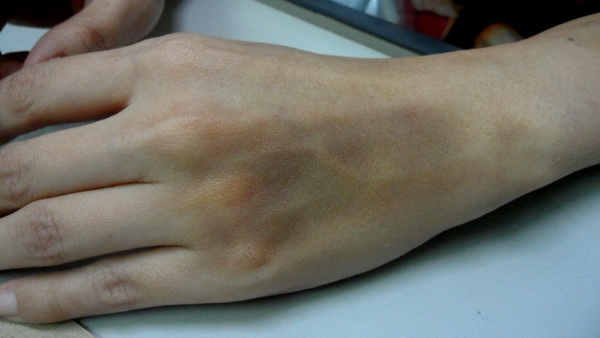
WD: There is another reason why I did not want to go for chemo. Before they did the CT scan for me, they gave me an injection (contrast agent). Look at my hand now – blue black and it has been like this for already a week.

Blue-black-hand

I was not able to eat for 2 days after the CT scan. I had non-stop diarrhoea.

My friend had breast cancer and she went for chemo in Singapore. After 2 years the cancer spread to all over her body. She just died a few months ago.

Comments

WD is a sweet, upbeat lady with a positive attitude. It is indeed sad that she ended up with cancer at 39. When she came to ask for help, I was dumbfounded – wanting to offer her another option but not knowing what the outcome could be. Either way, there is no right or wrong answer. Let me explain my dilemma.

Sweet Statistics:

I started to read Chapter 3 – Invasive Cervical Cancer of the book, Clinical Gynecologic Oncology by Philip Disaia and William Creasman.

  • The cause of cervical cancer is unknown but its development seems related to multiple insults and injuries sustained by the cervix. Squamous cell carcinoma of the cervix is virtually nonexistent in a celibate population.
  • Currently, greater attention is being paid to the human papillomavirus (HPV) infection of the cervix as a link to etiology.
  • Some 85 to 90 percent of cervical cancers are squamous cell and the majority of the remaining 10 percent are adenocarcinomas.
  • The earlier tumors are detected and treated, the better the chances of cure.

How best to treat the patient?

  • The choice of treatment demands clinical judgment …the choice lies between surgery and radiotherapy.
  • In most institutions the initial method of treatment for locally advanced disease is radiotherapy, both intracavitary (cesium or radium) and external x-ray therapy.
  • Of 2,000 patients treated with radiotherapy at MD Anderson Hospital. Fletcher reports the following 5-year cure rates:

Stage 1    –  91.5%

Stage 2a  –  83.5%

Sage 2b   –  66.5%

Stage 3a  –  45.0%

Stage 3b  –  36.0%

Stage 4    –   14.0%

  • Currie reported the results of 552 radical operations for cancer of the cervix.

Stage 1    –  86.3%

Stage 2a  –  75.0%

Sage 2b   –  58.9%

Other stages – 34.1%

  • In general, in early stages, comparable survival rates result from both treatment techniques – surgery or radiation.
  • Among the disadvantages of radiation therapy:

One must consider the permanent injury to the tissues of the normal organ bed of the neoplasm and the possibility of second malignancies developing in this bed.

Many  lesions were not radiosensitive and some patients had metastatic disease in regional lymph nodes that were alleged to  be radioresistant.

  • Among the disadvantages of radical surgery:

Postoperative bladder dysfunction.

Formation of ureteral fistulae and lymphocysts, pelvic infection and hemorrhage.

  • Chemotherapy:

Various regimens have been used. Most of the regimens have been platinum-based combinations, often including bleomycin and vincristine.

Dramatic reductions in the size of the neoplasm have been documented after as little as 3 courses or 3 weeks of therapy.

IT HAS YET TO BE LEARNED WHETHER  THIS TECHNIQUE EVENTUATES IN BETTER SURVIVALS OR IS YET ANOTHER TECHNIQUE THAT DEMONSTRATES GOOD RESPONSE BUT OFFERS NO IMPROVED OUTCOME.

The oncologist told WD she has a 70 percent chance of cure if she was to go for chemo and radiation therapy. What is said is consistent with medical literature … for Stage 2A the 5-year cure rate is 75 to 83 percent. Very impressive statistics indeed except that these figures are based on the results of what others did in other parts of the world. What about the results in Penang hospitals? What is this oncologist’s personal experience? Is it the same? Many cases has he treated and at what success rate?

The oncologist also said that if you want a 100 percent cure rate, you have to turn to God! Oncologist can only cure 70 percent! The oncologist did not tell WD what happened to the 30 percent who did not make it. And more relevant still, is which group WB belongs to … the 70 percent success or 30 percent failed group? Nobody can answer that.  WD may  just belong to the failed group like these cases below.

I started to wonder about the stand taken by the gynaecologist. After the biopsy he sent WD to the oncologist. This is just a Stage 2A cancer yet he did NOT consider surgery beneficial? Why? Medical literature says surgery is as effective as radiotherapy for early stage cervical cancer. Why did he not suggest surgery? Is it because he knows from experience that surgery does not work? My guess is not a “wild guess.” Melissa had only Stage 1B cervical cancer and had surgery at this very same hospital. She followed up with chemo and radiotherapy and it turned out to be a great disaster.

As I am writing this story, there is another case of cervical cancer.  This is a 62-year-old lady. She was diagnosed with Stage 1B cervical cancer and had undergone a radical surgery. Unfortunately the pathology report after surgery showed the cancer had spread to her pelvic nodes, right ovary, myometrium and endometrium.   Ask this question: in this case, is this RM15,000-surgery really beneficial for the patient. It does not appear to be so — perhaps just a futile effort. The daughter asked the doctor, “Can surgery cure her?” The answer given was, “Not sure but it is better to have it removed.” Based on the above statistics, surgery for Stage 1 cervical cancer had a 86 percent chance of cure. Do you believe that?

Let me share with you some of the cases I came across over the years.

1. Cervical Cancer: Eighty-nine Percent Chance of Cure Vanished With the Collapse of Her Right Lung Four Months After Radiotherapy and Chemotherapy

BH underwent radiotherapy. She was told that there was a eighty-nine percent chance that she would be cured. BH had 25 sessions of external beam radiation and 3 sessions of brachytherapy (i.e. internal radiation).  In addition BH received 2 cycles of chemotherapy. BH said she was well after the treatment.  She came back for a check up on 25 November 2011 and was told everything was alright. She “believed” she was cured. However, barely four months later, 15 February 2012, a CT scan showed the cancer had spread to the lymph nodes and lungs.

2. Cervical Cancer, Stage 2B Gone Wild Within Six Months – Why?

Amy (not real name) was a 39 year old lady from Indonesia.  Amy came to a private hospital in Penang for further investigation. Physical examination showed presence of a huge mass arising from the.  The doctor indicated it was a cervical adenocarcinoma, Stage 2B. Amy underwent 25 sessions of radiotherapy and at the same time received 5 cycles of chemotherapy. The drug used was cisplatin given at weekly interval.  Amy   also underwent 2 sessions of brachytherapy (internal radiotherapy). The treatment did not cure her at all – within 6 months the cancer had gone wild!

3.  Cervical Cancer Stage 2A – After Chemotherapy and Radiotherapy, She Died Within 1 year 8 months

Mother, an Indonesian, was 64 years old. She was diagnosed with cancer of the cervix, Stage 2A in December 2000. She underwent 26 times of radiation and 6 cycles of chemotherapy. The cancer recurred after a year. She had radiotherapy again for 11 times. Her health deteriorated and she was in severe pain. Mother died 1 year and 8 months after being diagnosed with cervical cancer.

4. Melisa Abandoned Medical Treatments, After Much Damage Being Done

Melisa was a 44-year old female.  She underwent a hysterectomy for her cancer of the cervix, Stage 1b.  After the operation, she underwent 25 times of radiation treatments and one time of brachytherapy (internal therapy). Melisa ended up having to go in and out of the hospital due to pains, fevers and temperatures. Later, a scan showed there was pus in her abdomen and the cancer had spread to the lungs and liver.  Melisa ended up in a hospital in Singapore – in search for a cure. The doctor at first suggested that she undergo surgery to remove the infected parts. Melisa questioned how surgery could help her when her entire liver and lungs were infected with cancer? She declined surgery but went ahead with chemotherapy. The first shot of chemotherapy was tolerable but the second and third shots were real bad. She preferred to die rather than complete the treatments.

5. The Biggest Mistake I Have Ever Made

Jonathan Chamberlain’s wife, Bernadette, was diagnosed with cervical cancer in 1993. She had surgery, radiation and chemotherapy and was dead exactly a year later. There is no doubt that she died as much from the treatment as from the cancer itself. Looking back, Chamberlain feels that the biggest mistake they have ever made was to do what the doctors advised because Bernadette could not have died sooner if they had done nothing.

In his book: Cancer Recovery Guide, pg. 28, Jonathan Chamberlain wrote: When my wife Bernadette learned that despite all the surgery, radiation and chemotherapy her tumour had returned, she was informed that she had three months to live. She was told this on 17 January. She died on 16 April. Three months  exactly.

In our conversation (Jonathan-Chris, in Penang), Jonathan said: From my own experience with my wife, we were in awe of the doctors …. We were in awe of our ignorance. We assumed that the doctors were best … I realized that was the biggest mistake I have ever made – to do what the doctors advise. You learn the hard way. She (wife) suffered from chemotherapy and it killed her. She died not just from cancer. She died from cancer plus chemotherapy. She died within one year because she did everything that the doctor advised her. 

Based on the above experience, it is hard for me to “encourage” anyone to do what their oncologists want them to do. To all patients I have this to say: Do what you think is right for you. But to WD, I told her: Turn to your God for guidance (read our next article).

Let me end by quoting Professor B.M. Hegde, an internationally recognised cardiologist (in his book, What Doctors Don’t Get to Study in Medical School):

  • Doctors start believing in all that they are told and what they get to read. Most of what comes out in the plethora of biomedical journals is fake and doctored, but it is difficult to convince the readers about it (pg.3).
  • Most of what come out in medical literature is not the truth. Medical literature is doctored, tutored and “sexed up” by the powers-that-be before being allowed to be published (pg.274).

FALSE HOPE IN A BOTTLE

Yeong Sek Yee & Khdijah Shaari

On June 05 2003, The New York Times published a short article written by Tom Nesi, a former director of public affairs at the drug company Bristol-Myers Squibb.  The article was strangely entitled “False Hope in a Bottle.” Curious, we decided to read further. Interestingly, we came across the book “HOPE or HYPE” by Dr Richard Deyo, MD and a Professor at the University of Washington in Seattle who described the story as “Exaggerating Benefits.” The story below is summarised based on the New York Times article and Dr Deyo’s story (read pages 45/46 of the book)

Tom Nesi described his wife, Susan, who was 52 when she was found to have a highly malignant brain cancer. They were told that the average survival with this condition was about eleven months, but they hoped for more. For about a year, Susan had been offered numerous medications, including, in the latter stages of her illness, Iressa, which was just approved by the Food and Drug Administration despite limited data about its effectiveness.

They sought care from a prestigious medical centre that offered several innovative treatments. One, called a Glidel wafer, is a dime-sized wafer that is implanted in the brain when the tumor is surgically removed. The goal was to deliver chemotherapy directly to the tumour site. The Nesis were told that this would extend Susan’s life, on average, about two months.

In the ensuing months, Susan underwent 3 brain operations and 6 hospitalizations. After the third operation, she was almost totally paralysed and unable to speak or eat. In her final months, she required two weeks in a critical care center, a full time home health aide, a feeding tube and electronic monitor, home hospital equipment, occupational therapists, social workers and medication. The costs for her care were around US $ 200,000.

As Susan lived 3 months longer than average; many doctors described the innovative treatment as a success. After the disastrous third operation, her surgeon told Tom: “We have saved your wife’s life….we have given you the ability to spend more quality time with your loved one.” Two weeks later, sustained by the feeding tube, Susan wrote on a notepad, “Depressed…no more…please.”

But according to the medical profession, the experimental treatment had worked. Susan lived almost three months longer than the average patient with glioblastoma. Somewhere in some computer database, Susan’s experimental regimen will be counted a success. She was a ”responder.” And therein lies the terrible truth behind the approval of ”miracle drugs” on the basis of ”tumor shrinkage” or ”extended days.” Susan’s life was extended. But at what cost?

Tom Nesi then faced a decision as to whether to stop the feeding tube and withhold liquids. He concluded his story by noting, “I think we need to ask ourselves whether offering terminal patients limited hope of a few more months is really beneficial. The question is not whether days are extended, but in what condition the patient lives and at what emotional and financial costs”

This is a story of well-meaning doctors (?) and a desperate patient. The presumption of both parties must have been that new technology could only help. As usual, the bias was to do something, to be aggressive. In the end, the treatment may be worse than the disease itself.

In many such cases, doctors tend to see only the good side of their interventions. They often dismiss, discount, or are wholly unaware of the downsides, which often diminish quality of life. And although new treatments often claim great benefits, we need to critically ask what the benefits are, and what we are giving up in order to have them.

FOOTNOTE: To Tom Nesi, chemotherapy is likened to FALSE HOPE IN A BOTTLE but to the late Senator Hubert Humphrey, who had bladder cancer, the chemotherapy that he endured for 1 year before he died was described (by him) as “bottled death.”  When diagnosed, he was treated with radiation after which his physician Dr Wilfred Whitmore, M.D. declared, “As far as we are concerned, the Senator is cured” Despite the cure declaration, they began treating the senator with chemotherapy. Shortly after the treatment started, Senator Humphrey regretted and called chemo “bottled death.” 

(Humphrey was the 38th Vice President of the USA from 1965 to 1969 and passed away in January 1978 at age 66).

We would like to end this article with a very brutal statement by Dr Charles Huggins, MD who was awarded the 1966 Nobel Prize for Physiology/ Medicine. As a physician, physiologist and cancer researcher at the University of Chicago, he is no quack doctor when he described chemotherapy:

  • ”There are worse things than death. One of them is chemotherapy” 

For those who have undergone chemotherapy treatment, please do share with the rest of the world what your thoughts are on this subject.

We welcome your comments.

SOURCES FOR THIS ARTICLE:

1)      HOPE OR HYPE –THE OBSESSION WITH MEDICAL ADVANCES AND THE HIGH COST OF FALSE PROMISES by Dr Richard A. Deyo, MD, MPH and Dr Donald L. Patrick, PhD, MSPH.

2)   HEALING CANCER FROM INSIDE OUT by Mike Anderson

(Read story about Senator Hubert Humphrey and bladder cancer treatment)

3)   THE CANCER ODYSSEY by Margaret Brennan Bermel, MBA,

(Read about Dr Charles Huggins, MD)

4)   TOM NESI’S ARTICLE: FALSE HOPE IN A BOTTLE

Link: http://www.nytimes.com/2003/06/05/opinion/false-hope-in-a-bottle.html

5)   ARTICLE: QUALITY OF LIFE, DIGNITY AT DEATH

Link: http://www.nytimes.com/2003/06/09/opinion/L09DEAT.html

6)   ARTICLE: ARE WE TREATING CANCER, BUT KILLING THE PATIENT?  By Dr. George J Georgiou, PhD, ND, DSc. (AM)

Link: http://curezone.org/forums/am.asp?i=1392406

7)   ARTICLE: WHEN CANCER TREATMENT MIGHT KILL YOU by Theresa Brown, RN. …

Link: http://well.blogs.nytimes.com/2009/05/13/when-cancer-treatment-might-kill-you/

 8)   ARTICLE: HOW CANCER DRUGS MAKE CANCER WORSE AND KILL PATIENTS

Link: http://gizmodo.com/5876919/how-cancer-drugs-make-cancer-worse-and-kill-patients

Given honest answers … about surgery, chemotherapy or radiotherapy … the chances are high that the patients will “run away” from them!

YB is a 52-year old lady. About three and a half years ago she was diagnosed with breast cancer and had a mastectomy in Kuala Lumpur. It was a triple negative tumour. YB went to Singapore for follow up treatments. She received 6 cycles of chemo using FEC. Then she had 12 more cycles of chemo using Taxol and Carboplatin. No radiation was indicated.

When YB started chemo, she also took our herbs and took care of her diet. The side effects she suffered was much less compared to others. She was alright after the chemo treatment.

Unfortunately things did not turn out right. YB took a trip home to Kuala Lumpur (she was staying in Singapore) to visit relatives. She felt dizzy and started to vomit. Her condition deteriorated. Whenever she moved her head, she would feel dizzy or had severe headaches and would start to vomit.  She had to lie down. As long as she did not move her head, she was okay.

YB did a CT scan and MRI. There were tumours in her brain.

YB’s daughter wrote: 11 January 2014.

Dear Dr Chris,

My mother has a relapse of her cancer to the brain. MRI shows 3 lesions in her brain. One of them is approximately 3 cm which caused swelling and subsequently dizziness, vomiting and headache. Meanwhile, she’s been given steroid to reduce the swelling. We are planning to see you right after the full report is out.

12 January 2014::

Dear Dr Chris,

CT scan result is out and it seems that the primary tumor is from the left lung. However, my mom has not suffered any symptoms or difficulties with breathing.

What would you do if she was your mother and given the following details?

1. The neurosurgeon suggested surgery to remove the big tumour in her brain. According to him,  the two small tumours cannot be removed  surgically and YB has to undergo radiotherapy. Surgery would cost SGD6,500 and radiation cost SGD 2,000 to 3,000 (foreigner’s rate. Singapore citizen pay much less).

2. Can surgery cure her brain cancer? The surgeon said, NO, the tumour will recur. Because of that YB has to go for radiation. Whatever  it is the family was told that YB will eventually die.

3. Did the doctor indicate how long your mom could survive? The surgeon said this,

a. If patient does nothing and is only on steroid, she has 2 months to live.

b. If patient undergoes chemotherapy and radiotherapy, she has 6 to 7 months to live.

c. If patient undergoes surgery, chemotherapy and radiotherapy, she has 6 to 7 months plus 3 months.

According to the surgeon these are based on statistics and also on the assumption the surgery goes not well without any complications.

What does the family want to do now? Everybody in the family decided to give up further medical treatment. They would rather go on herbs.

Did the doctor give you such information out front? No. We have to ask questions after questions and we get answers bit by bit. Nothing is laid out neatly like the above.

Comments:

Bravo to patient empowerment!  For you to make a decision you need honest answers. You do not get honest answers if you dare not ask! So patients, learn how to ask questions. Don’t just be satisfied with just an answer! Ask and ask, dig and dig until you are satisfied.  This is because it is your life and you have to bear the consequences of that intervention not your doctors.

After you get the answers, use your common sense to make your decision. Follow what your heart says.

It seems very clear. If doctors give honest answers … about surgery, chemotherapy or radiotherapy … the chances are high the patients will “run away”!

What would you do if you are told that chemotherapy spreads and makes cancer more aggressive?

What would you do if you are told the following about radiotherapy?

  • Radiation makes cancer more aggressive. 
  • Radiation reprogrammed less malignant breast cancer cells into Induced Breast Cancer Stem Cells (iBCSCs). This explains radiotherapy actually enriches the tumor population with higher levels of treatment-resistant cells.  Researchers UCLA Jonsson Comprehensive Cancer Center said radiation treatment killed half of the tumor cells  treated. The surviving cells are resistant to treatment and become iBCSCs. They were up to 30 times more likely to form tumors than the non-irradiated breast cancer cells. 
  • Radiation gives a the false appearance that the treatment is working, but actually increases the ratio of highly malignant to benign cells within that tumor, eventually leading to treatment-induced death of the patient.

HAVE YOU HEARD OF ONCOLOGISTS DEFRAUDING CANCER PATIENTS?

by Yeong Sek Yee & Khadijah Shaari

One night, while browsing the Internet, we came across an article (dated August 2013) that really threw us off the chair. The article that stunned us, but which has not been reported in the mainstream media, can be viewed at the following link:

Cancer doctor gives needless chemo in US 35 m fraud....says prosecutors.

LINK:http://www.today.com/news/cancer-doctor-gave-needless-chemo-35m-fraud-prosecutors-say-6C10913890

As we search further, we came across a more detailed article of the same subject published in MEDPAGE, a medical news portal which can be read at the following link:

Physician Gave Chemo to Patients without Cancer, Feds say

LINK:  http://www.medscape.com/viewarticle/809243

Briefly, in August 2013 Oncologist Dr Farid Fata was arrested for allegedly having scammed US$35 million from Medicare over a two-year period. The following are the main points in the allegations against Dr Farid:

  • Deliberately misdiagnosed patients as having cancer to justify unnecessary cancer treatment,
  • Deliberately misdiagnosed patients without cancer to justify expensive testing
  • Administered chemotherapy unnecessarily to patients who were in remission,
  • Administered chemotherapy to end-of-life patients who will not benefit from the treatment,
  • Fabricated other diagnoses such as anemia and fatigue to justify unnecessary hematology treatments,
  • Unnecessarily distributed controlled substances to patients,
  • Administered chemotherapy to patients who had other serious medical conditions that required immediate treatment before being permitted to go to the hospital.

You can read more of Dr Farid Fata’s case (or verify the authenticity of this article) when you google CHEMOTHERAPY FRAUD or just DR FARID FATA or watch the following videos on YouTube:

1)   Michigan Oncologist Accused of Giving “Unnecessary Chemotherapy to cancer patients”

Link: http://www.youtube.com/watch?v=k4QVqbTTmxU

2)   Cancer doctor deliberately misdiagnoses patients

Link: http://www.youtube.com/watch?v=SjL_OrSkEm4

As at 2 October 2013, Dr Farid Fata is still in prison after his US $ 9 million bond has been revoked pending trial. He faces a 20 year jail sentence.

In December 2012, there was another fraudulent chemotherapy case similar to the above Dr Farid Fata case…read link below:

1)   Oncologist Dr. Meera Sachdeva gets 20 years for Medicare fraud

Link:http://pathologyblawg.com/medical-news/oncologist-meera-sachdeva-20-years-medicare-fraud/

In this case, this is how oncologist Dr Meera Sachdeva defrauded cancer patients at her cancer center –The Rose Cancer Center in Summit, Jordan, USA:

·         Syringes were re-used and different patients’ chemotherapy drugs were drawn from the same bag.

·         Chemotherapy drugs were diluted,

·         Use chemotherapy drugtreatments after their expiration date,

  • Submitted claims for chemotherapy services that were supposedly given while she was out of the country,

Dr Meera has been sentenced to a 20–year jail term. You can read more of Dr Meera Sachdeva by just googling her name or watch the following YouTube videos:

1)   Summit doctor sentenced for cancer drug fraud.

    Link: http://www.youtube.com/watch?v=Nzdzit4NsxI2)

2)   Two plead guilty in chemotherapy fraud case

Link: http://www.youtube.com/watch?v=dqcqNOOAJvo

 And there is yet another chemo fraud case that can blow your brains to pieces….watch the video below:

Chemo drugs diluted

http://www.youtube.com/watch?v=cE6eE0WDxcQ

Concluding comments:

Are these the only “isolated” cases or are these just the “tip” of the iceberg? To be diagnosed with cancer is traumatizing enough…but to be cheated by your oncologist/doctor is like rubbing a ton of salt into a big wound. Don’t you think so?

If you have undergone chemotherapy treatment, you may have some comments/experience to share with the rest of the world. Your comments may help to save some fellow cancer patients.

SOME FURTHER RELATED REFERENCES:

If you would like to blow your brains further, read the following:

1)   How We Do Harm…this book is written by  oncologist Dr Otis Webb Brawley (also chief Medical and scientific officer and Executive Vice President of the American Cancer Society)…the book gives a detail description how cancer patients are mislead and defrauded into unnecessary treatments.

2)   FraudChemotherapy

http://www.mnwelldir.org/docs/fraud/chemo.htm

3)   Chemotherapy Fraud: Is This Fraud Too Big Even For 60 Minutes? http://articles.mercola.com/sites/articles/archive/2012/03/10/chemotheraphy-is-medical-fraud.aspx

4)   Article: The Cancer Business

http://www.theforbiddenknowledge.com/hardtruth/cancer_business.htm

5)   The Cancer Report

http://healthwyze.org/index.php/component/content/article/521-video-the-cancer-report-documentary.html

  • or YouTube at :

http://www.youtube.com/watch?&v=WnaBG177VIw

6)   Burzynski: Cancer Is Serious Business

http://topdocumentaryfilms.com/burzynski-the-movie-cancer-is-serious-business/

7)   National Cancer Institute report admits millions have been falsely

treated for ‘cancer’

http://www.naturalnews.com/042789_National_Cancer_Institute_false_treatments_misdiagnosis_epidemic.html#ixzz2k8yGp8GC

8)     Millions Wrongly Treated for ‘Cancer,’ National Cancer Institute Panel Confirms

http://www.greenmedinfo.com/blog/millions-wrongly-treated-cancer-national-cancer-institute-panel-confirms

ARE YOU SCARED? WE ARE.

BREAST CANCER — A NINETEEN-MONTH TIMELINE

by Yeong Sek Yee & Khadijah Shaari

Allow us to share with you the sad news of the recent demise of a close relative who was diagnosed with breast in December 2011.  To us, this is a classic case of a lady who did not die because of the breast cancer – she died due to the breast cancer treatments that she diligently underwent since diagnosis.

This 65-year old lady was a very staunch and caring Christian and very much loved and admired by her siblings, relatives and friends.  Perhaps her weak point in her journey with cancer is her unquestioning loyalty to her doctors/oncologist (her son is also a medical doctor).  From Day One, she listened very faithfully to her oncologist who advised her not to consume antioxidants, herbs or other complementary treatments as these will “clash” with her chemotherapy and subsequent radiotherapy, and hence the efficacy of her conventional treatments will be compromised.

Briefly, in December 2011, when she was diagnosed with a 3.8 cm lump in her left breast, she was told by an oncologist (in Singapore) that the lump is too big for surgical removal.  She was then advised to have at least 8 sessions of chemotherapy “to shrink the tumour” before surgery could be performed.  She followed the doctor’s advice and underwent chemotherapy during the whole of 2012 – 6 sessions of EC (Epirubicin + Cyclophosphamide) followed by 5 sessions of docetaxel, which ended in January 2013.

Come January 2013, instead of the tumour shrinking, the condition of her breast became more inflamed, with a few more new lumps appearing at the sides the breast. She was then advised by her hometown oncologist to consider radiotherapy.  So she came to KL for that purpose as the radiotherapy machine in her hometown was not working.  Whilst in KL she consulted with two prominent breast surgeons, who advised that (as at January 2013), surgery was definitely not an option based on the condition of the breast after 11 sessions of chemotherapy. She subsequently did 33 sessions of radiotherapy from January to March 2013, with the intention of shrinking the five lumps.  Again, while she was undergoing radiotherapy she was warned by her oncologist and radiologist not to take any herbs or antioxidants until everything is over.  At the end of the 33 sessions she was referred back to her hometown oncologist, with a report that the cancer has metastasized to her bone.

Back in her hometown, her oncologist recommended a new drug, Eribulin, which was only currently available in Singapore (as at April 2013).  She flew to Singapore and bought 4 doses of the drug from an oncologist there at the cost of S$8,000 per dose.  However, after three jabs, her hometown’s oncologist determined that Eribulin was not suitable for her.  He subsequently recommended Cisplatin + Gemzar and she underwent four cycles of this, the last one being around mid-August, after which she was told that further chemotherapy would not work for her.  She was totally devastated.  However, as some form of hope for her to cling on, she was given oral Xeloda.

All the while during her chemotherapy treatments in 2012, radiotherapy and further chemo in 2013, this tough lady was in pain most of the time and the pain became more and more intense in the months of April through August 2013.   From April 2013 her lungs started accumulating fluids…this is usually a confirmation of metastasis to the lungs. In the month of August till her demise on Sunday, 25th August, she had to be on oxygen most of the time (in addition to morphine).

She did try some herbal treatment off and on in between her chemotherapy/radiotherapy sessions in 2013.  Obviously this could not help her much as by that time her body was a total wreck.  Further, she only changed her diet in 2013. During 2012 she “ate anything she liked” as advised by the oncologist in Singapore and from her hometown.

When I attended her wake on 27th August 2013, the first thing that her eldest son said to me was “Uncle, see – only 19 months!”  Of course her oncologist and other doctors attributed this to her triple negative breast cancer which is supposed to be an aggressive form of breast cancer. Anyway, it is always about the cancer being aggressive, and never about the toxicities and ineffectiveness of the conventional cancer treatments which is always marketed and touted as evidence-based, scientifically tested, etc.

Lately, we noticed a new current trend in breast cancer treatment very similar to this case –more and more patients are advised to have pre-surgery chemotherapy – to shrink the lump before surgery.  We are very perplexed by this – why do you need to shrink the lump first before surgery when the breast, an “external” organ, can be wholly removed by mastectomy?  We know of a lady who recently had a 5 cm lump removed by lumpectomy and is recovering well and she has refused any form of chemotherapy or radiotherapy.

This trend of pre-surgery chemotherapy first is a huge business (if you catch my drift) for the medical/cancer establishment.  This unfortunate lady paid RM80,000 for the EC and Docetaxel in 2012.  Imagine how much the drug companies/and oncologists would make if they can persuade a million ladies to do so annually, world-wide.

It is mind-boggling, and the damage to the body, and the suffering, is also mind-boggling.

Just to conclude, this is the lady’s 19-months timeline summary:

a)    December 2011 – diagnosis

b)    December 2012 – commenced EC x 6 sessions followed by Docetaxel x 5 sessions

c)     January to March 2013 – 33 sessions of radiotherapy + oral cyclosphomide.

d)    April/May 2013 – 3 sessions of Eribulin

e)     July to August 2013 – 4 sessions of Cisplatin/Gemzar.  When Cisplatin/Gemzar was stopped after the 3rd session, she was given Xeloda

f)     25th August 2013 – passed away.

Undoubtedly, she has found peace with the Lord now but you do not have to follow her timeline. Follow Olivia Newton John’s cancer journey….she was diagnosed with breast cancer in 1992, did one year of chemotherapy and complemented her treatments with good nutrition, herbs, homeopathy, acupuncture and practiced meditation and prayer….and Olivia is still very much alive today (22 years later)…..watch out for her more detailed story soon.

BLOOD BOOSTING INJECTIONs (ESAs) WHILE ON CHEMO ENCOURAGE TUMOUR TO GROW!

Not many MDs, least of all an oncologist, would dare to break ranks from the rules of the medical establishment and especially from the clutches of Big Pharma in the present day cancer industry. One exception is Dr Otis Webb Brawley, MD, and oncologist and the Chief Medical and Scientific Officer and Executive Vice President of the American Cancer Society.

As we were reading the 2011 best seller in America “HOW WE DO HARM” by Dr Brawley, we were shocked to read in Chapters 6 and 7 that Erythropoiesis-Stimulating Agents (ESAs) causes tumour promotion i.e. the anemia-building drugs seemed to be encouraging tumors to grow.

How we do harm

 What Are ESAs?

Erythropoiesis-stimulating agents are one of the most common drugs used to treat anemia i.e. these are medication that increase the production of red blood cells. For a brief introduction, go to: http://www.anemia.org/patients/feature-articles/content.php?contentid=000379

The doctor would give you ESA or a blood boosting injection if you do not enough blood after a chemo treatment. They use “the red juice” to fight anemia by stimulating red blood cell production and “the white juice” to fight neutropenia, a deficiency of white blood cells.

If these ESAs or “hemoglobin-building” drugs are supposed to perform a useful function in overall cancer treatment, why then is Dr Brawley so vociferous against these drugs? He even mentioned that “these drugs stimulate cancer growth”

Let us examine some of the reasons:

  • The FDA approved the drugs for the treatment of anemia in cancer patients in 1993 based on data pooled from only 6 small studies that altogether enrolled a total of only 131 patients (page 76).
  • The 6 minuscule trials… asked only whether Procrit (one of the ESA drugs) had the ability to prevent blood transfusion. Not a shred of data said anything about “fatigue” or its opposite “strength” (page 77).
  • There were a lot of unanswered questions such as: was their anemia corrected? Did their underlying cancer recur? Did they die sooner? Did they face a higher risk of blood clots? (page 77).

Soon after hemoglobin-drugs were approved, a German radiation therapist named Michael Henke decided to test one of the fundamental tenets of his subspecialty: that patient with higher hemoglobin levels have better responses to radiation therapy. Henke believed in the connection between hemoglobin and response to radiation. However the study’s results didn’t come out the way Henke expected. The result of Henke’s study, which was initiated in 1997, was published in 2003. The study showed that patients who received the hemoglobin-building drug didn’t live as long as those on placebo. Also, the disease progressed more rapidly in patients receiving the drug. Henke concluded that he had encountered a biological phenomenon: the drug seemed to be encouraging tumors to grow (page 81).

In August 2003, researchers had to stop another study, the Breast Cancer Erythropoietin Survival Trial (BEST), when more women died on Procrit than on the control arm. In both the Henke trial and BEST trial, the survival curve showed an increased risk of death from cancer, which suggested something you don’t want to see in patients you are treating for cancer –  tumour growth (page 82).

In other words, pharmaceutical companies were promoting an untested therapy that was supposed to make patients feel better and stronger when, in fact, it caused stroke and heart attacks and in some cases made tumors grow (page 73).

According to Dr Brawley, FDA approved these drugs to reduce the risk of blood transfusion in patients with solid tumours treated with chemotherapy. That’s it. Not a word was said about “tiredness”, not a word about “cancer fatigue”

In Chapter 6, Red Juice and Chapter 7, Tumour Progression, Dr Brawley described how cancer patients are routinely “offered” hemoglobin-building drugs to even borderline anemia, a common side effect of cancer drugs. The drug companies manufactured a medical condition called “cancer fatigue” and nurses were trained to “suggest” “erythropoiesis-stimulating agents (ESA)” to all patients undergoing chemotherapy – “the red juice” to fight anemia by stimulating red blood cell production and “the white juice” to fight neutropenia, a deficiency of white blood cells.

  • With powerful incentives set in motion, many hospitals and oncology practices in the US instructed nurses to ask leading questions about “fatigue” with the intent of expanding sales to a growing number of patients and upping the dosage to each patient. This is referred to as “an ESA treatment opportunity”
  • These drugs are still being prescribed routinely. According to Dr Brawley,” these ESA drugs were not used to cure disease or make patients feel better. They are used to make money for doctors and pharmaceutical companies at the expense of patients, insurance companies and taxpayers “(page 97)
  • Also the disease progressed more rapidly in patients receiving the drug (page 81) i.e. the drug seemed to be encouraging tumors to grow…this compound is a stimulant, a “tumor fertilizer”. A patient with active disease is more likely to suffer tumour progression: the more tumor you have, the more tumor there is to stimulate!! (page 97). 
  • Commenting further on ESA drugs, some doctors didn’t bother to check what the patient’s hemoglobin was and erred on the side of giving the ESA every time they give chemotherapy. Doctors routinely prescribed the drugs for uses in which it had not been studied-such as anemia caused by cancer itself, as opposed to anemia caused by chemotherapy (page 78).

Besides Dr Brawley’s comments in the book, we searched further for sound scientific validation of ESAs causing tumor promotion. These are extracted from prominent sources like the FDA, Journal of Clinical Cancer Research, Annals of Oncology, British Journal of Cancer, PubMed Medline, Journal of Oncology Practice, etc. There are lots more. The following are some of the links you may be interested to read:

1)      THE FOOD AND DRUG ADMINISTRATION (FDA) of the US issued a Drug Safety Communication dated 26/2/2010 under the following title: “Erythropoiesis-Stimulating Agents (ESAs): Procrit, Epogen and Aranesp.”

In the article, the FDA warned that cancer patients using ESAs should understand the risks associated with the use of ESAs. These risks include:

  • ESAs may cause tumors to grow faster.
  • ESAs may cause some patients to die sooner.
  • ESAs may cause some patients to develop blood clots, and serious heart problems such as a heart attack, heart failure or stroke.

http://www.fda.gov/Drugs/DrugSafety/PostmarketDrugSafetyInformationforPatientsandProviders/ucm200297.htm

2)      In July 2011, THE AMERICAN ASSOCIATION FOR CANCER RESEARCH, in its journal, Clinical Cancer Research published an article entitled: The Role of Erythropoietin and Erythropoiesis-Stimulating Agents in Tumor Progression” It reported that:

  • Erythropoiesis-stimulating agents (ESA) are used clinically for treating cancer-related anemia [chemotherapy-induced anemia (CIA)].
  • Recent clinical trials have reported increased adverse events and/or reduced survival in ESA-treated cancer patients receiving chemotherapy, potentially related to EPO-induced cancer progression.

 http://clincancerres.aacrjournals.org/content/17/20/6373.abstract

3)      THE EUROPEAN SOCIETY FOR MEDICAL ONCOLOGY in its journal, Annals of Oncology (2010) published the following guidelines: “Erythropoiesis-stimulating agents in the treatment of anemia in cancer patients: ESMO Clinical Practice Guidelines for use.” The lead author, Professor Schrijvers, although on the Advisory Board of Johnson and Johnson admitted the following:

  • The influence of ESAs on tumour response and overall survival in anemic cancer patients remains unclear. Several randomized trials have demonstrated decreased survival times and poorer loco-regional control or progression-free survival 
  • Other recent meta-analyses showed that ESAs increase and worsened overall survival when given to cancer patients. 

 http://annonc.oxfordjournals.org/content/21/suppl_5/v244.full

4)      In September 2007, THE AMERICAN SOCIETY OF CLINICAL ONCOLOGY published the following article in its Journal of Oncology Practice: “Erythropoiesis-Stimulating Agents: Continued Challenges” in which:

·         The FDA revised both the epoetin alfa and darbepoetin alfa product labels, with new “black box” warnings and expanded information on safety, tumor progression, and survival.

·         Additionally, the new warning states that ESAs are not indicated for patients with active malignant disease receiving neither chemotherapy nor radiotherapy.

 http://jop.ascopubs.org/content/3/5/248.full

5)      In March 2012, THE BRITISH JOURNAL OF CANCER (of the CANCER RESEARCH of UK) published several research studies done on the usage of ESAs and concluded that….”several trials have reported an association between ESA use and increased disease progression and/or mortality” The article is entitled: “Effects of erythropoietin receptors and erythropoiesis-stimulating agents on disease progression in cancer”

 http://www.nature.com/bjc/journal/v106/n7/full/bjc201242a.html

In another book, A WORLD WITHOUT CANCER, Dr Margaret Cuomo, a radiologist also stated that… “even drugs used to treat the side effects of chemotherapy have been linked to secondary cancers”. For example, patients who need medication to raise their white blood cell counts may be injected with granulocyte colony stimulating factor (G-CSF), a substance normally found in the blood. Researchers observed that this doubled the risk of developing myelodysplastic syndrome (MDS) or acute myelogenous leukemia (AML)… (page 69)

READ THE FOLLOWING LINKS FOR MORE INFORMATION ON MDS/AML: 

1)   THE STORY OF ROBIN ROBERTS:

http://abcnews.go.com/Health/robin-roberts-myelodysplastic-syndrome-diagnosis-beat/story?id=16540293#.UZnTWaKLC-U

2)   In 2007, THE NATIONAL CANCER INSTITUTE (US) published the following article in its Journal (JNCI J Natl Cancer Inst Volume 99, Issue 3 pp. 196-205).…. “Acute Myeloid Leukemia or Myelodysplastic Syndrome Following Use of Granulocyte Colony-Stimulating Factors during Breast Cancer Adjuvant Chemotherapy” The article concluded that….”the use of G-CSF was associated with a doubling in the risk of subsequent AML or MDS among the population that we studied”……

http://jnci.oxfordjournals.org/content/99/3/196.short

FOOTNOTE: In Malaysia, these ESAs (and G-CSF) are commonly referred to as “booster” or “booster jabs” and are generally given after the 3rd or 4th cycle of chemotherapy when the patient’s RBC, WBC, Platelets, Hemoglobin, etc are low. These booster jabs are costly…..and that is why patients are warned not to use cheaper and (safer) methods (because it will clash with the chemo drugs!!)

A POINT TO PONDER UPON:

When a patient decides on chemotherapy treatment, he or she expects to be healed and not to have the cancer spread or suffer second malignancies shortly after completion of the scientifically tested and proven treatments. And to be given ESAs or G-CSFs which later promotes tumour growth isn’t it too much for the patients to bear? Is this a double bonus or a double whammy for the patients? (Please note we have not factored in the damaging side effects of radiotherapy into the above scenario).

We welcome your views.

Ovarian Cancer 2: After Recurrence She Again Refused Chemo. Why?

Lucy was asked to undergo chemotherapy after the cancer had recurred. She again declined and came to seek our help on 7 September 2012. We cautioned Lucy to seriously consider undergoing chemotherapy.  After all the cancer had spread and she should not expect much from us. Also, please don’t blame us if things don’t work out the way she wanted!

She was not receptive to chemo. Listen to our conversation that day.

The doctor in the government hospital asked Lucy to undergo chemotherapy immediately. She hesitated and asked for some time to think over it. The doctor also queried why she did not do chemotherapy the previous year after she had the surgery.

Lucy asked the doctor what would happen if she do not want to do the chemo. The doctor said he would not see her again if she declined chemo this time. Next time when it becomes serious, sorry! Don’t come and see me.

In spite of this stern warning, Lucy was adamant and refused chemotherapy. She came to seek our help on 7 September 2012.

Chris: Okay, let me ask you. You have been taking the Sabah Snake Grass – did it help you?

Lucy: If it helped me, I don’t have to come and see you anymore. See, the good of this plant has been published widely in the papers!

C: The problem is just because it is published in the newspapers, you beiieve it all. I never read the newspapers these days.

Surgery did not cure,

Sabah Snake Grass did not cure,

Chemo would not cure,

My herbs would not cure!

Why don’t try chemo then?

Please don’t blame me if things don’t work out the way you want!

This is what I told Lucy:

Lucy was again adamant. She said, Today I come here, of course, I am not going to go for chemo. And of course, I am not going to blame you if something went wrong.

Lucy admitted that before this she had been taking all kind of food. After meeting us, she decided to take care of her diet and change her lifestyle. Yes, this we hope she would do!

Why Do You Not Want to Undergo Chemotherapy?

I did not ask Lucy specifically this question. It was not one year later that I got to meet up with Lucy and learnt the answer to this question.

Lucy had a friend who underwent surgery and then chemotherapy. After the treatment – and after much suffering from the side effects – the cancer came back again. So according to Lucy, why go for chemo if it would not cure? Why go through all these and suffer?

Then probably more relevant was her father’s experience. Lucy’s 60-yer-old father had nose cancer. He underwent radiotherapy and then chemotherapy.  After two cycles of chemo, he was not able to withstand the treatment anymore. The family stopped the treatment. One month later, he died.

To this I told Lucy, I understand you.

Comments

Those who do not know anything about chemotherapy could not understand Lucy. If you have a family member or close friend undergoing this treatment, there is no need for anyone to say much. You know the difficulties and agony.  I too have not gone through such experience but from my readings, I learnt from other people’s experience to be able to know what it is like. Some told me it was HELL.

The following are information and data obtained from the internet and oncology text books regarding ovarian cancer.

What You Need to Know About Ovarian Cancer

http://emedicine.medscape.com/article/255771-overview#aw2aab6b2b5aahttp://www.acancer.net/ovarian_cancer/stage3.php

http://health.nytimes.com/health/guides/disease/ovarian-cancer/chemotherapy.htmlhttp://www.webmd.com/ovarian-cancer/features/ovarian-cancer-chemo-options?page=2

http://www.malaysiaoncology.org/article.php?aid=10

  • Around the world, more than 200,000 women are estimated to develop ovarian cancer every year and about 100,000 die from the disease.
  • According to the National Cancer Registry, ovarian cancer is the fourth most common cancer among women in Peninsular Malaysia, making up five per cent of all female cancer cases.
  • Epithelial tumors represent the most common histology (90%) of ovarian tumors. This type of cancer often spreads on the peritoneal surfaces –  e.g.,  undersurface of the diaphragms, paracolic gutters, bladder, surface of the liver,  mesentery and serosa of the large and small bowel, omentum, uterus, and para-aortic and pelvic lymph nodes.
  • Most ovarian cases are diagnosed in an advanced stage and their prognosis is closely related to the stage at diagnosis. Overall, prognosis for advanced-stage patients remains poor. Overall 5-year survival of ovarian cancer is 45 percent.
  • As I have always told patients – we don’t have to believe this statistics but we also don’t want to bury our heads in the sand and pretend that everything will be okay. We need to know the reality and then try hard to beat the odds. 

Treatment:

  • Currently, the standard treatment for stage 3 ovarian cancer consists of both surgery (surgical debulking) and chemotherapy.
  • Unfortunately, less than 40% of patients experience long-term survival following standard treatment.
  • Approximately 60-80% of patients with stage 3 cancer will experience a recurrence of their cancer, even after complete surgical removal of cancer.
  • Nearly all patients with stage 3 disease have small amounts of undetectable cancer that have spread outside the ovary and were not removed by surgery. These cancer cells cannot be detected with any of the currently available tests and are referred to as micrometastases. The presence of micrometastases causes cancer recurrence.

Chemotherapy for Stage 3 Ovarian Cancer

  • The chemotherapy drugs used to treat ovarian cancer are fairly standard. Typically doctors combine a platinum-based drug such as carboplatin or cisplatin with a taxane such as paclitaxel (Taxol) or docetaxel (Taxotere).

Perez, C.P. et. al, (in Clinical Oncology, 8th Edition, Health Science Asia, pg. 489) wrote: The combination of paclitaxel plus a platinum compound is considered by most to be the first-line adjuvant chemotherapeutic regimen in patients with advanced ovarian cancer.  The pathologic complete response is only 20 to 26 percent (Table below).

Clinal-Trial-of-chemo-for-o

Source:   Thigpen, J.T. (in Clinical Oncology Pt.2, 2nd Ed., Harcourt Asia, pg. 2026)

  • Ovarian cancers are very sensitive to chemotherapy and often respond well initially. Unfortunately, in most cases, ovarian cancer recurs.
  • Fewer than 20% of patients treated with a platinum compound and paclitaxel survive without evidence of cancer recurrence 5 years following treatment.
  • Unfortunately, even in patients who respond, the disease eventually becomes resistant to the first-line drugs, and the cancer returns. Some ovarian tumors are resistant to platinum drugs. Once cancer recurs or continues to progress, the patient may be treated with more chemotherapy.
  • Despite the development of several new chemotherapy drugs over the past few years, there is no substantial evidence that any of the treatments have increased the number of women cured of ovarian cancer.
  • Gemcitabine (Gemzar) is also used in combination with carboplatin for women with advanced ovarian cancer that has relapsed. Other drugs include doxorubicin (Adriamycin, Doxil), etoposide (Vepesid), and vinorelbine (Navelbine).

Side Effects of Chemotherapy

  • Chemotherapy can cause side effects during and after treatment. The type and severity of these side effects depends upon which chemotherapy drugs are used and how they are administered.
  • The most common side effects are nausea, vomiting, mouth soreness, temporary lowering of the blood counts, and hair loss.

Surveillance After Treatment

  • At the end of treatment (both surgery and chemotherapy), a patient is considered to have a “complete response” if her physical examination is normal; there is no evidence of cancer on imaging studies (such as a CT scan); and the blood level of the tumor marker like CA-125 is normal.
  • However, even when all of these criteria are met, microscopic amounts of residual cancer (i.e., not visible on imaging studies) can still be present. Growth of these microscopic tumor cells is probably responsible for tumor recurrence at a later date.
  • To monitor for the possibility of recurrence, blood tests, physical examinations, and imaging tests are to be done.

Signs of Recurrence

  • The likelihood of a tumor recurrence is highest in women with more advanced-stage disease at diagnosis, particularly if the initial debulking surgery was unable to remove all visible tumor.
  • The earliest evidence of recurrent ovarian cancer can be indicated by a rising blood level of one of the tumor markers (CA-125)  and symptoms such as abdominal pain or bloating with or without back pain, or presence of pelvic mass.

What Can I Expect After Chemotherapy Treatment?

  • Surgery plus chemotherapy drugs can get rid of ovarian cancer, but often they can’t keep it away forever.
  • Surgery and chemotherapy are usually effective in treating the cancer so it will go away for a while, but in most cases the cancer ends up coming back.
  • Often, the cancer will return within one to two years after treatment is finished. If  the cancer does return, another round of chemotherapy is necessary.


When Oncologist Gave “Honest” Advice, Patient Survived!

BT (E137) was 44 years old when she was diagnosed with cancer.  CT scan of her abdomen in March 2004 showed an apple core lesion in the rectum area near the rectosigmoid junction. Perirectal fat and lymph nodes were also affected by the cancer. She underwent surgery to remove 13 cm of her colon. She received 28 times of radiation and also underwent chemotherapy – scheduled for 8 cycles but stopped half way.

Why did she give up chemotherapy? No, she did not give it up. It was her oncologist who gave it up! Listen to what she has got to say (this video was recorded on 7 June 2013 – almost 9 years later!).


BT said, I can still quote exactly what the oncologist told me that day: I have to stop the chemo because instead of saving you it will kill you.

Upon facing this dilemma, BT switched to alternative healing methods up to this day. It has been 9 years and BT is still alive! She came to see us in Penang hoping that we could help her further in her healing.

Comment

BT was scheduled to undergo 8 cycles of chemo but along the way she suffered severe side effects and was losing weight which alarmed her oncologist. So instead of being “killed” by chemo, why not let her “go” without chemo! BT changed her diet, etc. and she survived up to this day. Stop and think. Who needs chemo then, because even without chemo patients can survive (minus the side effects of course)?

Is this an isolated case where patients survived better without chemo? Absolutely not!

These Honest Oncologists Saved Them Too!

Tony, 67 years old, was diagnosed with colon cancer in December 1995. The cancer had spread to his liver. His doctor told Tony to go home and live happily and count your days. Let me reproduce what Dr.  Rose wrote:

Colon-Anthony-report

Tony came to seek our help on 24 May 1996 and was put on herbs. He benefited tremendously His CEA dropped from 45.2 to 5.0! And he probably lost count of the many good, healthy and happier days he had before he suffered a relapse due to changes in his diet.

Read more: http://www.cacare.com/colon-liver-story-of-tony

On 16 October 2010, I received an e-mail below:

Dear Dr. Chris K. H. Teo,

My mom’s oncologist told us her cancer had recurred and if she does chemo it will extend her life by another six months, and if lucky another twelve months.  But the oncologist does not recommend chemo and thought the treatment would make her worse. He suggested waiting until her condition becomes painful or other symptoms appear. He told us chemotherapy does not cure her cancer and it does not make much difference.

Surgery was carried out to remove 10cm of iluem and 7.5 cm of caecum. This was in March 2010. She refused to undergo chemotherapy after her surgery. I found out about you from the internet. I would like to bring my mom to see you to help treat her.

Read more: https://cancercaremalaysia.com/2011/09/15/colon-cancer-oncologist-said-chemotherapy-would-not-cure-her-or-make-any-difference-%E2%80%93but-cea-declined-after-herbs/

Comment

Please take note of what her son wrote about the oncologist’s advice:  The oncologist does not recommend chemo and thought the treatment would make her worse. He suggested waiting until her condition becomes painful or other symptoms appear. He told us chemotherapy does not cure her cancer and it does not make much difference.

Think hard and long – do you really need chemotherapy to heal your colon cancer? If you want more such success stories click this link: https://cancercaremalaysia.com/category/colon-rectum-cancer/


Breast Cancer: No chemo or radiation for me!

Two Friends Died After Medical Treatments: Same Cancer, Same Doctor and Same Hospital. 

WC (E112) is a 59-year-old lady. Sometime in December 2012 she discovered a lump in her left breast. A mammogram on 26 April 2013 showed a 2.4 x 3.4 x 5 cm irregular and poorly marginated, hypoechoic mass. The appearance is compatible with carcinoma. Left axillary and left infraclavicular lymphadenopathy noted (size 6 mm – 2.5 cm).

Composite-1

CT scan was done the next day. The result confirmed the presence of  a 4.87 x 3.06 cm mass in the left breast with enlarged left axillary lymph nodes. These are suggestive of left breast malignant lesion with lymph nodes metastasis.

On 2 May 2013, WC underwent a mastectomy.

Composite-2

Histology confirmed an infiltrating ductal carcinoma, grade 3, pT3. Three of eight nodes examined are involved with tumour. Surgical margins are not involved.  Five of nine nodes axillary nodes are involved with tumour. The tumour is negative for both estrogen and progesterone receptors.

WC was asked to undergo 6 cycles of chemotherapy costing about RM 17,000. In addition she had to undergo 21 times radiation treatment. In preparation for chemotherapy, WC was asked to install a chemo-port which cost RM 3,500. WC declined this.

But WC was facing a huge dilemma. Two of her friends also had breast cancer. They saw the same doctor at the same hospital as she. Both of them had undergone the same treatments which she was asked to undergo. Both of them had died of the treatment. WC knew then that the treatment which she was asked to undergo would not cure her. The daughter was very much against her undergoing this medical treatment.

WC had already paid RM 9,000 as deposit for her radiotherapy. WC’s daughter came to know about CA Care and came to seek our help. She told us that her mother was due to start her radiation treatment the next day but after talking to us, she decided to forgo the treatment.

Based on her medical reports, we prescribed WC Capsule A, C and D, C-tea and Breast M. In view of her lymph node involvement she was also asked to take Lympho 1 and 2.

On 31 May 2013, WC, her husband and daughter came to see us again. WC had started to take the herbs without any problem. During this first encounter with WC, I explained to her that based on the report, the cancer had already spread to her lymph nodes. She is at a greater risk compared to others. Why is that that she refused to undergo medical treatment since she had already paid a deposit of RM 9,000? In fact, the hospital refunded her only RM 2,500 for defaulting.

Listen to what WC has got to say.

Chris: Your condition is risky. But are you happy with what you want to do?

WC: I am okay.

C: Why don’t you want to go for radiation and chemotherapy?

WC: Two of my friends died. They had breast cancer, went to the same doctor at the same hospital. They did chemo and radiotherapy and they died. I am so afraid. My daughter told me not to go for the medical treatment. If I have to spend money and then I die, I prefer not to do any treatment. Why spend money, suffer and then die?

C: Are these people your friends?

WC: Yes, my own friends. I saw them. They did everything and they were not cured. So why should I spend money and suffer.

C: Let me ask you. If you do the treatment and you die. If you don’t do the treatment and you die. Which one do you prefer?

WC: I say do nothing is better. In the case of one of my friends, the cancer had spread to her bones. In the other, the cancer went to her brain. Doctors don’t tell you all these. They only ask you to do the treatment. They say the treatment is good for you.

C: Don’t you believe them?

WC: I was not sure and did not know what to do. My daughter told me not to go for the treatment.

C: Did you ask if the treatment was going to cure you?

WC: No, I was afraid to ask that. He would scold me for that. When I did not go for the treatment the doctor even called me at home and asked me to come for treatment. He said I must do the treatment.

Husband: I asked and the doctor said he could not give any guarantee.

C: Relax. Take it easy. Perhaps doing nothing could be a better option for you. You have to learn how to take care of yourself. Take care of your diet. Then exercise. And then don’t think too much after that.

WC: Okay. My children are all grown up. I don’t have to worry anymore.

C: That’s a very good attitude.

Comments

Bill-Henderson-Informatin-i

For sixteen years, since we started CA Care, we too were trying our best to educate people – providing them with information which we thought they need to know. Some people seemed to benefit from our efforts. After reading what we wrote we practise what they know! But for some others, after reading they feel educated but they shy away from doing something for themselves.  They prefer to let the “experts” tell them what to do.

In this case, I am really amazed that WC and her family were willing to lose RM 6,500 rather than going ahead with radiotherapy. To some of us, this could have been a foolish decision. When I met WC, the first question I asked was if she was happy with what she was doing. She must be at peace with herself. Did she make a wrong decision? Read what Dr. Susan Love – one of the world’s most outstanding breast cancer surgeon – has got to say:

3 No-right-or-wrong-journey

Breast Cancer: Finally Death is Her Healing

The file of KT (S346) was on my table. She was a 42-year-old Indonesia lady who had been battling with her breast cancer for about 12 years. I was taking my time wanting to write her story. But today, 29 May 2013, I received this e-mail from her husband.

Dear Madame Beng Im ,  Dr. Chris Teo,
Dengan sedih dan menyesal kami informasikan bahwa  KT sudah meninggal dunia Selasa 21May at 02.55 a.m. (early morning). Dan sudah dimakamkan Kamis 23May, at 11 a.m.

Friday, 17 May  kesehatan drop, makan dikit/tak ada selera , minum obat herb tea juga tidak mampu. Monday 20 May at night, so weak. We carry to hospital. Dokter said that she was in bad condition, no hope.  She just stayed in hospital 1night only. Tuesday 21 May, at 02.55 she was gone / dead. Many thanks for CA Care’s support for my wife.

About two months ago, 22 March 2013, KT and her husband came to seek our help. She stayed in Penang for almost a week.  This was her tragic story.

About one and half years after her second child, KT found a 1.8 cm lump in her right breast. On 16 May 2001 a biopsy was performed and confirmed that it was malignant –  a ductal carcinoma, positive for estrogen and C-cerb-B2 receptors but negative for progestrone.

On 19 May 2001, KT underwent a lumpectomy at a cancer hospital in Jakarta. It was a Stage 1 cancer. From June to October 2001, KT received 6 cycles of chemotherapy, followed by 25 sessions of radiation treatment in November to December 2001. She was not prescribed any medication.

About three years later, 12 July 2004, the cancer recurred at the previous operation site. A biopsy confirmed it was a ductal carcinoma again. USG and bone scan were performed. No metastasis was detected.

On 21 September 2004, a mastectomy of the right breast was performed at another hospital. And this was followed by 20 radiation treatment. The doctor suggested ovarian ablation and more chemotherapy but KT refused the treatment.

About five years later, in 2009, the operation site developed an open wound with recurrence of cancer around the wound.  USG and bone scan on 20 November 2010 did not show any metastasis.

On 3 December 2010, a biopsy was performed of the regrowth and histology indicated lobular carcinoma. The doctor suggested chemotherapy but KT refused the treatment. She did nothing after that.

In June to August 2011, KT went to China for treatment.  PET/CT scan showed the wound was 14 x 12 cm and the cancer had spread to her lymph nodes, lungs and bone. This was a Stage 4 cancer.

In China, KT received the following treatment:

10  June 2011:

  1.  Patient received iodine seeds implantation and cryosurgery in the lung,
  2. Iodine seeds implantation in the axillary fossa metastatic lymph nodes.

17 June 2011: Patient received recurrence tumour resection, dermatoplasty and PDT (photodynamic therapy).

16 July 2011: Patient received re-dermatoplasty in the back ulcerates.

15 June to 23 June 2011: Patient received DC-CIK immunotherapy.

20 September 2011: Patient received re-dermatoplaty in the back ulcerates.

27 September 2011:  Patient received iodine seeds implantation in the scapular region and left costal bone.

KT was again asked to undergo chemotherapy. She again refused the treatment.  But she agreed to take Tamoxifen.

On her return to Indonesia, KT started to seek out alternative therapies. She tried sour sop leaves, Mahkota dewa, benalu kopi, etc. She also tried radiofrequency jacket.

On 22 March 2013, KT and her husband came to seek our help.

1-Breast-wound2-lung345


Comments

When I saw the picture of her breast, I must say I was terribly upset. How could such a thing happen? The first thing that came to mind was, Was this not a work of a bomoh or quack?  After all, too often we read in the newspapers that things like this only happen to patients who go and seek the help of alternative healers. But no, the reality was that she sought medical help from the very beginning after discovering a 1.8 cm lump in her breast. And mind you, it was an early stage cancer – Stage 1. I could not understand how she could end up like this.

What can we learn from this tragic episode? Ask these questions:

  1. Is medical treatment of cancer really that proven or scientific?
  2. When you have cancer – can you really achieve a cure?
  3. What could have happened if she were to take a non-medical route?

Robert G. Wright, founder of the American Anti-Cancer Institute wrote in his book, Killing Cancer Not People:

  • Slash, Poison, Burn. The Big Three. What you probably don’t know is that they have no possibility of healing your cancer. Let me repeat that. They have absolutely no possibility of healing your cancer. They actually cause cancer.
  • The saddest and most tragic part of all is that we’re not only dying of the “disease” now, we’re dying from the treatments. Cancer cannot be cured with drugs, surgery, chemo or radiation; not now, not ever, not possible.
  • When it comes to cancer, your doctor / oncologist will fail you. 

It is up to you what you want to do with the above statements by Robert Wright.  Looking back over the 16 years helping cancer patients, I must say such episode happen often enough. It is NOT unusual or exceptional.