LCC (H412) was a 54-year-old male. He was a welder when young. Later he had his own business – involved in steaming “kuih” (local dessert). Sometime in early 2010 he had mild bleeding from his nose. But by March 2010, the bleeding became serious. Later a lump appeared at his neck.
A CT scan on 2 April 2010 showed multiple lesions in the right and left lobe of his liver. The largest was in Segment 6 measuring 3.1 x 4 cm in diameter. Conclusion: Features suggestive of liver metastases. His cancer was diagnosed as NPC (nasopharyngeal carcinoma) Stage 4.
LCC subsequently underwent 6 cycles of chemotherapy using Gemcitabine + Cisplatin. This treatment cost him RM 6,000 per cycle (total cost RM 36,000).
After the chemo, LCC felt better and his nose block resolved. But this “feel good” did not last and the treatment did not cure him at all. A bone scan on 6 September 2010 – i.e. barely 5 months after treatment – showed extensive bony metastases involving both the clavicles, multiple bilateral ribs, multiple thoracic and lumbar vertebrae, both humeri, both sacro-iliac joints, both ischii, both femurs and both pubic bones.
LCC was asked to undergo more chemotherapy. The oncologist offered three options as below:
LCC agreed to undergo the second round of chemotherapy. Unfortunately this second round proved to be a disaster. His white blood counts dropped, so were his platelet count, red blood count and haemoglobin.
Blood test results on 28 September 2010
Haemoglobin
11.6 Low
Normal 13-18
Red blood cell count
4.1 L
4.5 – 5.9
Platelet count
139 L
150 – 450
White blood cell count
1.9 L
4.3 – 10.5
The doctor told the patient and his family that chemotherapy had to be abandoned because the drugs were not suitable for him. LCC was asked to take oral chemo-drug instead. The total cost of this treatment was going to be RM 83,000.
On 14 September 2010, K the patient’s cousin wrote us an e-mail.
Hi Prof Chris,
My cousin … has just finished his second round of chemo. He is quite weak and needed blood transfusion before they could complete the second course of chemo. He has decided to discontinue the chemotherapy and would like to come up to Penang to meet you at any time convenient to you. They plan to fly up in the morning and back to KL on the same day.
The patient, his sisters and K flew to see us in Penang on 26 September 2010. Below is our conversation that day.
Gist of our conversation
Did you ever ask your doctor if chemo was going to cure you? Never ask. But my brother believed in what the doctor was going to do for him.
Did he believe that the doctor was going to be able to cure him? Yes.
Your Aunty had lung cancer. She did not go for chemo and was doing well.
Patient lost confidence in his oncologist after the chemo did not cure him.
He looked forward to meeting us – CA Care was his last one stop.
Soon after he died. He received his first chemo on 6 April and by 15 October he was dead – within 6 months after chemo.
Acugraph Study
The Agugraph above showed low qi energy – total 23%. His Lung qi was low, while the Heart, Small Intestine, Triple Energizer, Spleen, Liver Bladder qi were split. Those who have undergone invasive medical treatments suffer from such problems. His yin-yang balance was slanted towards yang – 43%.
e-mail 2 October 2010
Thank you once again for receiving us last Sunday out of the normal operating hours. Just to give you an update on cousin’s progress. The herbs are doing wonders for my cousin. He finds much relief from the herbs, especially the Pain Tea. Since taking the teas on Monday, the pain has lessened tremendously. However, this morning, he developed a slight fever. The fever is gone now but in the afternoon, he started to purge – at least seven times thus far. There was no tummy upset though and he was eating his usual meals. He also has a bit of phlegm – there were some traces of “black threads.” Is there any course of concern? Kind regards, K.
e-mail 5 October 2010
On behalf of my family we would like to thank you again for receiving us on that day and we really appreciate your advice. My brother is doing much better after taking those herbs. Best regards, F (sister).
e-mail 9 October 2010
Want to update you on my cousin’s condition. The swelling on his legs has reduced a lot. Brother said he is a little breathless at times and I noticed that too. Prof., is there anything that we could give him to help? Other than this, he said he is doing fine. Thanks and regards, K.
e-mail 15 October 2010
Sorry to bring you this bad news. My cousin passed away early this morning. Although he was eating, he was getting very weak. At least his suffering was short. Thank you both for all assistance. Regards, K.
e-mail: Hi Im and Prof. Chris,
I have just got back from my cousin’s place. My cousin sisters and cousin’s family would like to express their sincere thanks and appreciation for all your help, support and advice given. The herbs really helped to ease his discomforts. He did not suffer much pain towards the end. In fact, he was really high in spirit wanting to fight on and continue with the teas, but the body failed him. Thank you once again for all the help. Kind regards, K.
Comments
Did chemo cure him? Helped him? Or killed him? You make your own conclusion!
He did not believe in herbal therapy, in spite of the fact that his Aunty was doing alright with our herbs and had refused chemotherapy. (Note: His aunty had Stage 4 lung cancer – an open-close case) and was given a few months to live. It has been many years now and she is still alive.) Nevertheless, we respect the patient’s belief and he paid dearly for this belief, in terms of money as well as his life. Most of us have to learn the hard way.
Let us try to look at reality. Is there any “medical or scientific” evidence that chemo can cure a Stage 4 cancer? The patient had spent RM 36,000 for his first round of chemo. What did he get in return? More cancer in his bones! Why was the cancer spreading so widely in his body?
Then the oncologist suggested more chemo after the extensive metastasis. Is there any evidence to show that chemo can give meaningful result? There was another RM 83,000 to spend for the treatment. What could anyone expect that?
How much is life worth? When we first started CA Care in 1995, this is what I wrote in my book, Cancer Yet They Live, pg. 14. Many people would say that “Ah, another quack. This is giving us false hope. Another attempt to extort the last dime from a dying person. If doctors cannot help, do not tell me some insignificant herbs can do any good! … I know we are not medical doctors but we are not money hunters either.” Be careful, some people are just after your money not your cancer! Reflect seriously on what I say!
In the patient’s consent form (which is required to be signed before undergoing chemotherapy) is written: “Cancer drugs such as chemotherapy, hormone therapy, and other biological or genetic treatments, destroy cancer cells. They interfere with the activity of cancer cells such as cell division, metabolism, enzyme pathways, etc and in the process damage or “kill” the cancer cells. Sometimes the goal of cancer drugs is to cure, and when cure is not possible, cancer drugs can often prolong life or improve quality of life …”
Do you see anything “wrong” or half-truths in the above statement? Lenin said, “A lie told often enough becomes the truth.” You get that message?
Dr. Paul Joseph Goebbels, Adolf Hitler’s Propaganda Minister also said, “If you repeat a lie often enough, it becomes the truth. If you tell a lie big enough and keep repeating it, people will eventually come to believe it.”
To know the other untold half of the whole truth of the above consent treatment, what you need to do is simply search for “side effects of chemotherapy” in the internet. You will get some interesting inputs. Just for curiosity I searched this – “death due to chemotherapy”. Interesting enough there was no explicit answer to this all important question from the medical establishment or drug companies. No one talked about that! But ask the family members of cancer patients and many of them can tell you that chemo kills! Click this link and hear for yourself what patients and their family say about chemotherapy: https://cancercaremalaysia.com/category/chemotherapy-2/
1997. Melisa’s problem started when she had severe pains in the shoulder muscles. At night she had muscle cramps in the legs. She went to see a doctor who told her that nothing was wrong and that she had been working too hard. She should take a holiday and relax. Some months later she did her annual pap smear. Her doctor said everything was alright.
A few months later, she suffered severe, heavy bleeding. The blood discharge had clots and it flowed out rather suddenly and wet the entire floor of the bathroom.
October 1998. She went to see a gynaecologist at a private hospital. A biopsy confirmed she had cancer. She underwent a hysterectomy. The pathology report dated 2 October 1998 stated the following:
Hysterectomy specimen: uterus and cervix including short vaginal cuff and parametrium together with both appendages weighing in toto 160 grams.
The cervix showed a whitish fleshy friable tumour invading almost the entire length and thickness of its wall measuring 5 x 2 x 1.5 cm. The ectocervix and lower uterine segment were also found to be invaded. The vaginal cuff and parametrium were grossly free from any tumour invasion.
Interpretation: 1. Adenosquamous cell carcinoma of cervix with micrcoscopic invasion of parametrium but vaginal cuff was clear. Figo Stage 1b. 2. Metastatic involvement of one left internal iliac node.
Remark: altogether twelve right pelvic node and eight left pelvic nodes were received.
After the operation, she underwent radiation treatments in a hospital in Penang.She suffered badly from the radiotherapy. Barely two months afterwards, Melisa ended up having to go in and out of the hospital due to pains, fevers and high temperatures. Later, a scan showed that there was pus in her abdomen. The doctor extracted out the pus. She was well for a while. Then, a scan revealed that the cancer had spread to her lungs and liver.
Melisa ended up in a hospital in Singapore – in search for a cure. The doctor at first suggested that she underwent a liver surgery to remove the infected parts. Melisa reasoned out how surgery could have helped her when the entire liver and lungs were infected with cancer? She declined surgery but went ahead with chemotherapy. The first shot of chemotherapy was tolerable but the second and third cycles were really bad. She preferred to die rather than complete the entire regimen.
One of her employee told Melisa to seek the help of a Dr.Teo. On 19 March 2000, Melisa came to see us. At that time she could hardly walk.
We requested to have an interview with Melisa so that we can share her healing experience with others. She agreed. On 14 June 2001 at 4 p.m. a video-taped interview was conducted. Let Melisa herself tell you of her healing experience.
Tell us about your experience of radiotherapy that you had in Penang.
I underwent 25 times of radiation treatment and one session of “internal treatment”. For this internal treatment, three long probes were inserted into me and I had to lie on the bed for 72 hours in a special room – immobilised. During that treatment the doctor visited me once. This was an experience that I would not wish to go through again.
I suffered badly from the radiation treatments. I had sore mouth, was constipated and the anus bled. Sometimes I had diarrhoea. I felt like having a fire inside me. I could not eat or sleep. I vomited. Every morning when I woke up, I dread the thought of having to go through the radiation treatment again.
After the radiotherapy, were you cured or did you feel better?
No. Barely two months past, I spent time in and out of the hospital. I had pains, fevers and high temperatures. The doctor did not know exactly what was wrong with me. Then later, another doctor in the same hospital took a scan and detected that I had pus in my abdomen. I was hospitalised for eight days and the doctor extracted out some 600 ml of pus from my abdomen. He did it three times. Then I was alright. A few months later, during a follow-up visit, a scan showed that the cancer had spread to both my liver and the lungs.
What did the doctor say about the cancer that had spread? How serious was it?
The doctor told me that both these organs had numerous dots and at least thirty spots were visible. They were the sizes of five, ten and twenty cents coins.
There was nothing the gynaecologist could do for me. I went to consult a doctor at the cancer hospital. He told me that I could do chemotherapy as a palliative measure but in my case there was no hope for a cure. This was the last stage cancer. I was told to go and make out my will. My gynaecologist was a nice person – he tried to find doctors elsewhere for me to proceed further with my treatments. At last, I landed in Singapore.
Tell us about your treatment in Singapore.
The oncologist at first suggested that I had surgery to remove those infected parts. On consultation with my Penang doctor, I asked the oncologist how surgery could remove all those spots in the liver. The oncologist replied: Who is the cancer doctor, I or your doctor in Penang? I refused to have the surgery but agreed to go along with chemotherapy.
Before doing the chemotherapy, were you told what this treatment is all about? The side effects and benefits.
No. I had all along believed that the treatment was to kill and get rid of the cancer cells. I was not told that the treatments would be difficult and I had to suffer such side effects. The doctor did not carry out any further test or diagnosis. The appointment was fixed and chemotherapy started the next day “otherwise the cancer cells would spread more” (that was what the doctor told me). I was scheduled to do six cycles divided into 12 shots, i.e. 2 injections represent one cycle. I did not know what drugs were used on me.
(It is indeed most regrettable that Melisa was not able to produce the scan of her metastatic condition. Her Singapore oncologist kept the medical report and scan films. She requested that these be returned to her. Unfortunately, the oncologist refused telling Melisa that she had not completed her chemo-treatments and that he would not be able to return those films and report. This same oncologist also did not disclose the chemo-drugs used on her (many patients also told similar things about this same doctor. This was not an isolated case experienced by Melisa alone).
Point to ponder: The report and films rightly belong to Melisa. She brought them along to Singapore. How could it become the property of the oncologist? Why did the doctor want to keep her record? We wonder if such conduct is humane/ethical or what? Informed consent means that the doctor is supposed to explain the consequences of the treatment plan to their patients – telling them of both the good and the bad).
Tell us what was it like to be on chemotherapy?
It is very difficult to put in words the sufferings I had to endure.
The first chemo-short was tolerable. I felt sleepy, tired and groggy. I did not vomit but I could not sleep.
The second and third shots were really bad. Everything seemed not right. Sitting down was also not right, standing up was also not right. I could not sleep. In whatever position I was in, I just did not feel right. I could not eat. I felt something was blocked in the chest. The stomach felt bloated and there was wind trying to push out. Sometime I vomited. It was difficult to breathe. My hair dropped off every time I bathe and it blocked the drainage hole of the bathroom. When I stood up I felt like falling down. I could not get into the car – felt giddy and the world spinning around me.
Under such a situation I felt I would rather die. Remaining alive had no meaning any more.
Having got to go through that agony, what did the doctor say about the chances of your cure?
He said it all depends on me. He did not know what my chance was. He saidI should be lucky if I could live for three to six months. If I survive then he would give me more chemos. I came to understand that I was given chemo to prolong my life for three to six months. The doctor also told me that if I die I would not die in pain if I had chemotherapy.
(Point to ponder: Chemotherapy was given to Melisa just to prolongher life for three to six months? And when she dies, she is NOT supposed to die in pain, if she had chemotherapy. Right? Is that logical? What about the sufferings she had to endure while on chemotherapy? Also, if she survived – she would need to have more chemos? Where is the cure? When is the chemotherapy going to stop – when she dies?)
How much did it cost you to get your treatment?
One shot of chemotherapy (given over two times) cost me S$6000, i.e. RM 12,000. In addition I have to pay for other costs – like blood test, hospital, hotel, travel etc. So, all in all, each visit to the hospital cost me about RM 15,000 to 20,000.
After all these sufferings and expenses, did your health improved?
No. I was not better at all. I felt miserable. I could not work. I could not do what I like. I had to stay home. I could not even walk out to the gate of my house for lack of strength. I could not sleep and I could not stand up for long. I felt heaty inside. When I put on the air-con full blast, my head felt cold. When I put off the air-cond, I felt I was on fire. In the middle of the night I stood or sat by the window looking out into the darkness and felt the cool air. I wondered if life is worth living. Life has no more meaning – to be alive like this. I knew I was dying.
Did you gave up chemotherapy?
No. Not yet. Then, one nice worker of mine, who worked in the factory came and told me about CA Care which is right in Penang and which I did not even know about. Since I have NO other avenues – To do chemo also die, not to do chemo also die – I then decided to come and see you.
What happened after you came to see us and took the herbs? This is what happened after I took the herbs that you prescribed.
The first day, nothing spectacular happened. I only started to urinate a lot and felt a bit better. The urine was smelly. Before the herbs the urine was always heaty.
The second day on the herbs, I vomited. Anyway, I kept telling myself. This was to get rid of something in me. I still urinated a lot.
The third day was great. I felt the muscle in the neck had loosened up. I was able to put on my dress and went to my office. Before the herbs I was not able to go to my office. Also I was not able to sit in the car. Now I could do all these. Even my office worker was surprised and asked me if I was already well. I felt elated and confidence grew within me. I knew I was on the right path to healing. From that day on I felt better and better.
Then, did you continue with your chemotherapy?
I felt better with the herbs. I was in a dilemma – not sure if I should continue with the chemotherapy or not. I asked your opinion but you (Dr. Teo) were non-committal. I went to consult my gynaecologist and seek for more information. It was then that I learnt that chemo-drugs are actually poisons. They not only kill the cancer cells, but also kill the good cells and may destroy the vital organs in my body. All along I thought that chemo-drugs kill only the cancer cells and they would cure me. If this was what it is, I reasoned that all these treatments would damage the organs in my body. How could my body recover from the cancer? I could NOT sleep the whole night and was unsure of what to do. My husband also told me that I had to make up my own mind and decide for myself. At last, I came to the decision NOT to continue with the chemotherapy.
When you decided to stop the chemotherapy – were you under pressure to change this decision? Yes. Many people said many things to me. The problem is that all these comments came from people who NEVER experience the sufferings – they did not know what it was like to suffer from those chemo-drugs. Then the nurse from the Singapore oncologist called me THREE times asking me to come back and complete my treatments. In addition, the oncologist personally talked to me TWICE over the phone telling me to come and complete the treatment. They told me that it would be dangerous if I did not complete the treatment. However, I was firm in my decision. In the last conversation with the oncologist, I told him that I have NO MORE MONEY to pay for the treatments. With that, no more calls came from his office. My ploy to get him off my back worked!
After you gave up chemotherapy and were on the herbs – did you take any other herbs as well?
No. I was firm with this. There were many kind-hearted and well meaning people who came and told me about who is good or what is good for me. I listened to them but I was firm on taking your herbs only. Some people commented that I have been taking the herbs for so long and I should change them for something else. There is no reason to. The herbs helped me and l kept taking them.
Now, Melisa – you have been on the herbs for about 1 year 3 months now. Did you at any one time experience any difficulty?
No. I felt better with each day. Before I had cancer I was very active – running around like a horse. Then when I was sick I could not do anything – could not even walk to the toilet. Now, I am back to almost normal like I was before – running around again like the same horse before. I drove by myself to Johor Baru, Kelantan, Trengganu, etc. I flew to Hong Kong. I drove my four-wheel drive into the hills. I visited my durian plantation. I played golf and carried my own golf bag. I worked in my factory and office from morning till night. I felt normal and I did not worry about my illness at all. I know I am alright now.
Did you go back to see your doctor for any check up?
No. I used to meet my doctor and he asked me to go back to the hospital and do a scan every six months. He also called me in the office. I said, yes, yes and smiled. Once, I asked my doctor: what would you do if the scan shows that I have a tumour inside me? He said, wellgo for chemotherapy. No, another chemotherapy is not the answer for me.
Melisa, tell us what do you think is the secret of your healing success?
I believe three factors had contributed to my healing. One – 30 percent was due to my full confidence and faith in the healer. If I have difficulty and if it concerned medical procedures, I went to see my gynaecologist and if I have problems related to my cancer I come to see you (Dr.Teo).
Two – 50 percent, was due to the herbs. They helped me from day one of my taking them. I felt the effects almost immediately. From day three I was able to go to my office. From then on I knew that the herbs were good and right for me. I have no doubt about that.
Three – 20 percent was due to my mental attitude. After I came and see you I knew that I have found my way to healing. I was happy and I did not worry any more. I took life positively. I became well. I look forward to living another 20 years and more. For now, I am hoping to build up my company – bigger and bigger. And I shall continue to take the herbs without fail. In fact, I need to tell you this. I took the capsules A and B five times a day instead of three. I kept the herbs in the office, in the car and by my bed. I took the teas using ten spoonfuls instead of six spoonfuls as you told me to take. I took MORE herbs and never less. Some friends said that the herbs were smelly, tasted so awful and I should look out for better alternatives. I must say I should thank the herbs for helping me. In fact, I figured that I hope to be able to take the herbs for the next twenty years or more. I have my hope. I have my vision and my dreams. I know where I am going.
Melisa related to us two interesting episodes.
A nurse in the gynaecologist’s office called Melisa’s office one day. She discretely asked the operator if Melisa was still alive. Her staff replied that her boss was still around and had gone to Hong Kong. The nurse asked if she went to Hong Kong for medical treatment. No, no….on business.
Melisa told us that many of her friends never believed that she had cancer in the first place! On day, one medical doctor came into her office and asked her husband if there was a lady in his office who had cancer and was supposed to die but had recovered instead. Her husband said it was his wife. At the time Melisa walked into the office and the doctor burst out: Who said that people who had cancer need to die?
Comments
We rejoice in this healing. We pray that God will show Melisa His grace and blessing for many more years to come.
It was with sadness that about two years later, Melisa’s urinary track failed and she had stents installed. She was told that this was caused by her earlier radiation treatment. Then her husband found another woman and this led to a divorce. Melisa died soon afterwards.
Jonathan Chamberlain’s wife, Bernadette, was diagnosed with cervical cancer in 1993. She underwent surgical investigation, radiation and chemotherapy and was dead exactly a year later. There is no doubt that she died as much from the treatment as from the cancer itself. Looking back, Chamberlain feels that the biggest mistake they made was to do what the doctors advised because Bernadette could not have died sooner if they had done nothing.
In his book: Cancer Recovery Guide, pg. 28, Jonathan Chamberlain wrote:
When my wife Bernadette learned that despite all the surgery, radiation and chemotherapy her tumour had returned, she was informed that she had three months to live. She was told this on 17 January. She died on 16 April. Three months exactly.
I had a chance to talk with Jonathan when he visited CA Care in 2009. In our conversation one evening by the beach, Jonathan said:
From my own experience with my wife, we were in awe of the doctors …. We were in awe of our ignorance. We assumed that the doctors were best … I realized that was the biggest mistake I have ever made – to do what the doctors advise. You learn the hard way.
She (wife) suffered from chemotherapy and it killed her. She died not just from cancer. She died from cancer plus chemotherapy. She died within one year because she did everything that doctor advised her.
RAM was a 64-year-old lady from Indonesia. She was diagnosed with cervical cancer in December 2000. According to her daughter, the tumour was only the size of a green pea and was visible. RAM was referred to the cancer hospital for treatment. In January 2001, she was started on radiotherapy. Altogether she had 26 radiation treatments and this was followed by HDR brachytherapy (i.e., internal radiotherapy). She also underwent chemotherapy at the same time.
After the medical treatments, RAM was alright for a while. In March 2002, RAM started to have pains in the backbone and the abdomen. A CT scan done on 13 March 2002 showed the presence of at least three hypodense foci in segment 6 of right lobe of her liver suspicious of either cysts or metastatic deposits. Her uterus was distended with fluid within the endometrial cavity. There was mild thickening of the uterine cervix, post radiotherapy. Multiple sclerotic foci scattered in the lumbar vertebral bodies, iliac bones and right head of femur. These were suggestive of sclerotic bony metastasis.
RAM went back to the same cancer hospital. She again underwent 11 times of radiotherapy. After the treatment, RAM’s health started to deteriorate. Disappointed, she went to another private hospital in Penang. The medical report dated 22 June 2002 stated, “She consulted me for the first time on 17 June 2002 with complaints of severe pain in the back and right side of the face. X-rays confirmed secondary sclerotic lesions in the ribs, clavicles, scapulae, skull vault, upper cervical spine and lumbosacral spine suggestive of metastases”. This meant the cancer had spread extensive to her bones. The doctor prescribed RAM a three-month supply of artificial saliva, amitriptylline, morphine sulphate and maxolon.
RAM stopped coming to Penang for treatment. She stayed home. Her entire right side of the body was in pain. She was not able to eat. She breathed with difficulty. Her daughter came to see us on 30 August 2002.
Comments
A small pea-sized tumour in the cervix had created havoc within a year. Are we made to believe that this is a natural course of event in cervical cancer – a pea-sized monster suddenly becoming ferocious and invaded the liver, ribs, skull and bones all over the body?
How could that be? Think carefully and calmly. Could it be due the chemo-drugs or the deadly radiation? If RAM was to take it easy – if she were to do NOTHING, would she be in her current situation? Would NO treatment at all make her worse off? What could have been worse than the current situation?
Her daughter told us that RAM was a healthy lady and weighed 65 kg when she started with medical treatments. After the treatment she became a vegetable. In June 2002, the doctor told her family that RAM had only THREE months to live. RAM eventually died, 1 year and 8 months after her diagnosis.
Sar (S12) is a 63-year-old lady from Indonesia. She was diagnosed with Stage 3 colon cancer in 2008. Her daughter wrote, “ It was a shocking news. We decided to bring mom to Singapore to get the best possible treatment.”
Sar underwent a laparoscopic anterior resection for localized rectal cancer in April 2008. Four of 15 nodes were infected with cancer. Histopathology report confirmed a moderately differentiated adenocarcinoma – pT2N2. Sar did not receive any chemotherapy after the surgery.
About a year later, in June 2009, during a follow-up, the doctor detected her CEA was rising. Further investigation showed the cancer had spread to her lungs. Sar underwent chemotherapy. The regimen used was Xelox-Avastin (Capecitabine or XELODA +Oxaliplatin + Bevacizumab or AVASTIN). Sar received 6 cycles of this treatment. According to her doctor, the treatment helped stablised her disease. Unfortunately, such “fortune” did not last long. In less than a year, the cancer showed progression.
In January 2010, Sar underwent more chemotherapy. This time the regimen used was FOLFIRI + Avastin (Irinotecan + 5-FU + Lecovorin + Bevacizumab). She received a total of 8 cycles of this chemo. Again, according to her doctor, the treatment stablised her disease. But the doctor also suggested another new drug, Cetuximab (or Erbitux) to be added to the treatment regimen. But Sar could not afford the extraordinary high cost of this drug.
FOLFIRI + Avastin did not help Sar. The cancer continued to progress. In October 2010, a clinical trial comparing Cetuximab (or Erbitux) and panitumumab (or Vectibix) opened at Johns Hopkins Singapore. Sar participated in this trial from November 2010 to June 2011. She received a total of 13 cycles of the treatment at Johns Hopkins. Sar had initial response. But that turned out to be meaningless because later the cancer started to progress.
A PET scan evaluation on 26 July 2011 showed lung metastases as well as lymph node involvement in the mediastinum and para-aortic region. The conclusion: “Overall findings indicate disease progression on comparison with the previous PET study.”
Sar was asked to undergo more chemotherapy. On 29 July 2011, she and her two daughters came to seek our help. We prescribed her some herbs for her colon and lung. Unfortunately we do not get to see them again after this.
The only news we got was what we read in her daughter’s blog, “In total she (mom) has undergone 27 x chemo with three different drugs plus almost a SGD 100,000 loan. The debt is really pressurizing for her and her family who are average income earners. As for mom, she is still surviving in a fairly good condition and now taking herbs since the last chemo had stopped responding.”
Comments
It is indeed sad to hear such a story. Patients and their family went to the “best” for their medical treatment but the “best” failed them. But such a story is not an exceptional story – or is it a norm that happens most of the time? The conclusion is yours to make.
What saddened me most when dealing with cancer patients is their “lack of knowledge.” We can understand if patients are illiterate and therefore have to depend entirely on others – the “experts” to help them deal with their problems. But if you are able to read what I am writing now – then it would be most unfortunate indeed if you still choose to remain “uneducated”, ignorant or “blind”.
Let me pose some questions for you to ponder on.
Her daughter wrote, “We decided to bring mom to Singapore to get the best possible treatment.” The patient received the best treatments alright – and the most expensive treatment as well? But what about the outcome? Did she get the best outcome?
Do you still believe that money can “buy” the cure for cancer? I am reminded of what I wrote in the website earlier. Click this link, https://cancercaremalaysia.com/2010/11/20/the-world%E2%80%99s-most-well-fought-battle-against-colon-cancer/ and you can read about the case of Tony Snow. I gave that article the title – the World’s most well fought battle…Why? This is because the man involved in this battle against colon cancer, Tony Snow, used to walk along the corridor of powerin the most powerful political office on earth. He lost his battle against colon cancer and died. Did he not get the best – the best doctors, the best hospital and the “best” support from the most powerful man on earth? Why did he die? And if you have time, browse through the same website and learn for yourself why many patients who did not get the “best” still survive their colon cancer.
Did it ever occur to you that before you undergo invasive treatment such as surgery, chemotherapy or radiotherapy that you should ask your doctors if these treatments would cure you cancer? Most people don’t ask – they assume that since they get the best, the treatment outcomes would also be the “best”. I always remind patients – ask what the chances of you getting a “cure” are before you undergo any treatment. If you want make sure that you speak the same language like your doctor. Cure means getting rid of your cancer altogether, not just “remission” or buying of time. If the “expert” you are dealing with do not give you a clear cut convincing answer, you might want to seek a second or third opinion from different sources. Weight out the pros and cons before you decide on the path to take.
In this case, Sar was given 6 cycles of Xelox-Avastin. Did it ever occur to you to check with reliable sources what these drugs can or cannot do for patients with lung metastases? Does Avastin ever cure lung metastasis? How effective is the Xelox regimen for metastatic colon cancer?
You can get all these answers if you spend enough time at your computer. Or do you prefer to remain blind and ignorant. For some the easy way out is to be ignorant – after all this is what they often say, ignorance is bliss.
After Xelox-Avastin had failed. Sar underwent more chemo. But this time following the FOLFIRI + Avastin regimen. Is this not doing the same old thing over and over again? Different combination of poisons but the mindset remains the same. This is what Einstein said, “Insanityis doing the same thing over and over again and expecting different results.”
From the internet, information on the effectiveness of Avastin and other expensive chemo-drugs are readily available. To get you started, just click the links below. From there, I wish you a happy journey – go, read more!
“My mom’s oncologist told us her cancer had recurred and if she does chemo it will extend her life by another six months, and if lucky another twelve months. But the oncologist does not recommend chemo and thought the treatment would make her worse. He suggested waiting until her condition becomes painful or other symptoms appear. He told us chemotherapy does not cure her cancer and it does not make much difference.”
Lan (not real name) came to see us on 14 November 2011. She had leukemia and had undergone one cycle of chemotherapy without success. Her doctors wanted her to undergo more chemos with more potent drugs. She declined. Listen to her conversation that day.
After having heard her story, I could not help but remember what Dr. Remen wrote in her book, Kitchen Table Wisdom.
“I have always assumed that a hospital was a healing environment. The first twenty years of my work with sick people was in hospitals, and by the time my training was completed I had worked in hospitals all over the United States.
All hospitals look, feel, and even smell the same. Once you are inside a hospital you cannot tell whether you are in Maine or in Mississippi.
I had always thought that this was an example of high standards and quality control. I now know that it is the reflection of the lack of connection between most hospital environments and the natural world around them.
This sort of disconnection from the natural world weakens everyone.
In 1988, during my last surgery, every plant that anyone brought to me in the hospital died. Day by day I would watch these plants dying all around me and worry: If plants could not seem to make it here, was this a good place for me to be?
One of the most common things people with cancer tell me is that experiences of hospitalization and treatment are profoundly isolating. I suspect that this sense of aloneness may even undermine the will to live.”
Dr Rachel Naomi Remen is one of the earliest pioneers of the mind/body medicine and was one of the first to develop a psychological approach to people with life-threatening illnesses and educate their physicians about their needs. She is cofounder and medical director of the Commonweal Cancer Help Program and is a Clinical Professor of the University of California San Francisco School of Medicine.
The title of her book does not sound “scientific” at all but for sure its content is not intended for house wives who mind the kitchen! Her book is for medical doctors and alternative healers – they should read it. Listen to her wisdom and her perceptions of what a holistic, honest and compassionate medicine is all about.
As a closing remark, let me quote what some doctors say about hospitals.
Hospitals can be dangerous places – protect yourself at all times ~ Edward Creagan, Mayo Clinic cancer specialist (in: How NOT to be my patient).
(Our) perception of a hospital is that it’s a safe place … we are surrendering ourselves to the loving care of substitute mommies in an all-protective environment where we will be treated for a disease and make well again. The reality is that, hospital-related errors in treatment kill an estimated 180,000 Americans each year and injure hundreds of thousands more ~ Sheldon Blau, professor of medicine, SUNY Stony Brook (in: How to get out of the hospital alive).
Robert Medelsohn, chairman of Medical Licensure Committee, State of Illinois, USA; associate professor at University of Illinois Medical School and director, Michael Reese Hospital, Chicago. This was what he said:
This is an interesting e-mail we received on 16 December 2011.
Hi Mr. Chris,
Good Day, I’m H from Tanjung Pinang – Indonesia. I’ve visited you in 2007 when my late father suffered from Liver Cancer. However we did not revisit you since our first visit. Frankly I thank you for your help to heal my father. My father passed away in October 2008. I have faith and believe in you to help cancer patients.
Now my friend’s father suffers from lung cancer. His condition is very weak. According to the doctor, maybe he will only live for six months. Now his family decided to seek your help. And will visit you as soon as possible.
Since his condition is too weak, is there any possibility of not to bring him (patient) to visit you in Penang?
His son will bring his medical report and visit you in Penang. If the patient must come along, we will have to wait until his condition is better and pay you a visit. Now he has no appetite. So the condition is not good.
Hope you can understand our situation and give us your advice.
Thank You & Warmest Regards,
The writer of the e-mail and his friend came to our centre in Penang three days later, on 19 December 2011.
Guan (S-82) is a 58-year-old man from Indonesia. After having coughs for about two months, he went to see a doctor in his hometown. An X-ray was taken. The doctor suspected pneumonia with mass in his lung. Guan then went to a private hospital in Johor for further consultation. A CT scan done on 6 December 2011 indicated cancer in his right lung that had spread to his liver. There were also right pleural effusion and pericardial effusion.
Guan then went to Singapore where a biopsy was performed. This cost him about S$1,500 but the results were not definitive and rather puzzling. This is what the doctor’s report looks like.
After the biopsy, the doctor suggested chemotherapy. He was told that with chemotherapy he would be able to live for another two years. Without chemotherapy, he would only have six months. His family refused to undergo any chemo. And the son said he would not even bother to ask how much the treatment would cost.
Why did the family refuse chemotherapy?
The friend who accompanied the patient’s son said, “My friend’s father also had lung cancer. He was around 50 years old. He underwent chemotherapy in Singapore. He died after receiving one cycle of chemotherapy.”
Chris: What you have done was not right at all. If you have already decided not to go for chemo, why did you go for the biopsy in the first place? The procedure cost you money. It was just a waste of money doing the procedure if you did not intend to proceed to the next step. Also some patients told me that after a biopsy they suffer pains. Besides that some people say a biopsy can spread the cancer further. But for the CT scan, it is okay to do it once to know what is inside.
Friend: “Another friend of mine – he was about 30 years old. He had bone cancer. He went for surgery in China. He received one cycle of chemo. The doctor asked him to quickly go home. One week later he was dead.
Comment
I have only one comment to make in this case. According to the good doctor the patient need to do chemo so that he would live longer – for another two years. Without chemo the patient would probably be dead by six months. But to the family members they have seen what happened to their two friends. Both of them died after just a shot of chemo. Perhaps to live six months without chemo is better than trying his luck on the deadly chemo. How trustworthy is the doctor’s prognosis?
Let me close by quoting what I have read in this book, “Doctors in general should be treated with the same degree of trust as used-car salesman.”
Soon after undergoing chemotherapy in Singapore in December 2011, she ended up in a hospital in Medan. Is this the final destination after a long journey – one and half years of chemo and spending about two billion rupiahs? On 17 December 2011, all family members from various parts of Indonesia flew home to be with her. She was gasping for breath and unable to recognise people around her – her eyes rolled upwards and were not responsive. The doctor told the family members to just pray.
On 18 December 2011, a miracle happened – three days after taking Lung 1 and Lung 1 plus Lung Phlegm. Breathing normalized and she did not need oxygen anymore. On 20 December 2011 she and her family flew to CA Care Penang. For more, read Part 2 & 3 of this story.
Quotation:According to Big Pharma and the cancer industry, death from chemotherapy is acceptable as long as standard chemo protocol has been adhered to ~ Dr James Forsythe, The Compassionate Oncologist, pg. 91.
——————————————————————————————————————–
RJ is a 55-year-old female. She was a tennis champion. Sometime in April 2010 she accompanied her daughter to Penang. Her daughter came for a checkup regarding her pregnancy. RJ ended up undergoing a checkup herself. The gynaecologist suggested that RJ remove an 8 cm tumour in her uterus. So, RJ underwent a THBSO procedure (total abdominal hysterectomy-bilateral salpingo-oophorectomy). There was no mention of cancer after the surgery.
About 3 months later, RJ was asked to do a CT scan and PET scan. It was then that she was told she had cancer. She was asked to undergo chemotherapy. She refused.
Not satisfied, RJ went to Singapore for consultation. A PET scan indicated metastasis to her lungs. RJ underwent chemotherapy — a total of about 20 cycles (not sure, lost count) spread over a period of over one and half years. The drugs used were: Gemzar & Docetaxel and Doxorubicin & Avastin. The family was told with chemotherapy, there was a 40 percent chance of cure.
A PET scan on 16 February 2011 indicated:
Multiple bilateral nodules in the lungs (3.2, 2.1 cm) while the smaller ones are likely below the resolution of FDG PET.
No pleural or pericardial effusion noted.
FDG uptake in the rim of a nodule in the right side of the pelvis, abutting the sigmoid colon and superior to the bladder.
Paraaortic and mesenteric nodules.
The doctor told her that her lungs were clear of cancer. But in spite of that, RJ was asked to take the oral drug, Iressa for 3 months. She suffered severe Itchiness throughout the whole body.
She went back to Singapore again – and this time to another hospital. She was told that her problem was due to Iressa and she should stop taking the medication.
A CT scan on 29 September 2011 indicated:
Nodules of sizes ranging from 0.5 cm to 2.9 cm in both lungs. The largest mass in the lingual lobe measures approximately 7.2 x 5.8 cm. This abuts the adjacent pericardium. There is also small amount of pericardial effusion.
There is also a tiny left pleural effusion.
CT of 29 Sept 2011
A medical report written on 5 October 2011 reads: “Depression Counselling: Cannot accept impending demise. Can’t sleep. Hoping for cure.”
RJ was asked to undergo more chemotherapy. She did as told. She received her last chemo in early December 2011. Two days after returning home from Singapore she started to cough and had fevers. She was hospitalised in Medan on 8 December 2011. While in the hospital her condition deteriorated and she became breathless. In spite of being given oxygen, her breathing was difficult and she was breathing like a fish gasping for air. Her eyes rolled and she was unable to recognize people around her.
At that point, a visitor told her family: “Why don’t you go and see Dr. Teo?” The next day, 14 December 2011, her two daughters flew to CA Care Penang to seek our help. The following is our conversation that day.
Acknowledgment: Permission to use videos and pictures without having to mask the patient’s face is granted by the family.
Cost of Medical Treatment
The daughters told us that in all the treatment cost almost 2 billion rupiahs. Below is the cost to undergo chemotherapy in Singapore (value in Singapore dollars. S$1.00 = RM 2.43, S$1.00 = 6,991 IDR).
Table 1: Estimated cost for chemotherapy with Docetaxel + Gemcitabine.
Table 2. Cost of a cycle of Gemcitabine (Gemzar) + Docetaxel
From the above a cycle of chemotherapy would cost approximately S$5,000. For a regimen of 6 cycles the total cost would be about S$45,000. Plus expenses for scanning etc. add in another S$3,000. So all in all, a patient should expect a total cost of about S$50,000 or RM 120,000 or IDR 350 million for the first round of chemotherapy. But first round may not be good enough. Patients may need more rounds.
Table 3. Cost of a cycle with Avastin was about S$ 12,000 (RM 29,000 or IDR 84 million).
Some questions for you to ponder on
Having spent about one and a half years on medical treatments in addition to a big bundle of rupiahs – what do you think of this case? They say the treatment is proven and scientific – but what is the reality? What is proven?
Do you believe that chemotherapy has a 40 percent chance of cure as claimed by the doctor? What percentage of success would you give in this case? What does the medical literature say about cure for lung cancer?
This is an era of information technology. Check with the internet and ask if chemo-drugs such as Gemzar, Docetaxel, Doxorubicin and Avastin ever cure this kind of cancer? Patients – you should empower yourself!
Often, alternative practitioners are accused of being charlatans, snake oil peddlers and worst of all provider of false hope! In this case, is the pot calling the kettle black? Who is actually giving false hope to patients?
When RJ’s daughters came to us on 14 December 2011, this was what I told them: “In such a situation (mother about to die in the hospital) I really don’t know what to say or do. I can give some herbs and you go home and try them. If she survived, come back again with all the medical reports. Now, what I can say is – just try. If you are lucky and with God’s blessing she might come out of the hospital alive, otherwise I really don’t know.”
This is not the first “about-to-die” case being brought to us. We encounter such cases very often. When nothing else can be done, family members come to us for help. What can I do? Pretending that I am a superman? Or, a god of some kind? Since CA Care’s mission is to help the helpless and the lost, we generally do not turn them away. Make no mistake at all – we do not promise you a cure. We also do not promise we can resolve your problems. What we can do is try our best to help you the way we know how. We understand that you have suffered enough and also have spent enough money on those medical treatments. CA Care is not here to “suck you dry” of your last dime before you die. We have no intention of misleading or cheating you. If we can provide you with some sense of “last” hope, we are here ready to help – often at the “risk” of being labeled a charlatan or quack. Nevertheless, the risk we take sometimes turn out to be a satisfying success – a miraculous blessing as you will see in this case.
Update: We received a sms informing us that the patient died in the early morning of 21 February 2012.
This patient was diagnosed with breast cancer that had spread to her bones. She went to China for treatment – using chemotherapy, cryoablation and radioactive seeding In 2008, she went to China thrice, in 2009, twice and in 2010 once. These treatments did not cure her. Since February 2011, she was unable to walk. The left leg was in pain and swollen. Two months later she had surgery for her leg. But her pains persisted.
Without hesitation, the patient’s husband and daughter-in-law brought her to seek our help the next day, 9 October 2011.
From Despair to Hope
She was wheel chair bound. She had to be carried up into the airplane. She was unable to stand up by herself. She was unable to sleep and had pains in her legs throughout the day and night. After five days on the e-Therapy and herbs, her conditions improved. Her despair turned into hope! On 26 October 2011, her daughter-in-law called to say that the patient (at home in Jakarta) was able to walk by herself with the help of a walking stick. On the day when she returned home, she was able to walk slowly into the airplane – no need to be carried into the plane like the day she came to Penang. Read her full story: https://cancercaremalaysia.com/2011/10/23/breast-cancer-from-despair-to-hope-in-five-days/
From Hope to Healing
About two months later, 7 December 2011, patient and her husband and daughter-in-law came back to see us again. Patient had improved tremendously. She was able to stand up and walk slowly by herself. She was able to talk and smile. Indeed a big contrast from the previous visit when everybody was serious, grim and full of anticipation. This second visit was full of smile and laughter – very relaxed. The only concerns patient has now are the discomforts of her right leg and her lack of strength when walking.
An Acugraph reading showed that her qi level was only 19% (very low). We prescribed her the Energy Tea. After three days on this herbal tea, her qi increased to 31% (see figure below).
Patient also underwent the e-Therapy. The discomforts improved slightly after the treatment. Watch this video and see the unfolding of healing process.
Acknowledgment: Permission to use these video clips without having to close the patient’s face is granted by the family.
This is a brief transcription of our video conversation.
7 December 2011
She stood up and slowly walked by herself. It was wonderful!
Chris: After you went home, I did not know what had happened to you. I only hoped that your condition did not drop (deteriorate).
Daughter-in-law: Her health improved further.
When going into the airplane, could she walk by herself?
DIL: Yes, she walked by her herself (Note: two months ago, she had to be carried into the plane).
Okay, what is her main problem now?
DIL: Pain in the legs – everyday and throughout the day. At night the pains becomes more intense. It is a kind of sore pain.
The first time she came, she had abdominal pain?
DIL: That is gone now – no more pain.
After you went home – that is already two months now – is her condition getting better or worse?
DIL: Yes better – getting to be normal. Now it is only this leg pain that is troubling her – otherwise she is okay. No headache or dizziness, able to sleep well – if there is no pain.
She is still staying in Jakarta?
DIL: No, she went home to Kalimantan for the past five weeks. She just came to Jakarta a few days ago to come to Penang.
Ibu, when you return to your hometown – you got to meet your friends – what did they say?
(Laugh!) Very good.
Happy to see your friends and relatives again?
(Nodding and smiling).
11 December 2011
Okay (after three days on the e-Therapy and herbs) what is the problem now?
DIL: Only her right leg. Now (9 pm) she has no pain but later into the night (after 10 pm) she starts to feel the pain – but the time is not fixed – depends. She also feels the pain in the day time but it is not as intense as at night.
On Wednesday (7 December) we did the e-Therapy. After that you said there was less pain. We continue with the e-Therapy – she felt better.
DIL: Yes – a bit better – able to sleep until the next morning.
When she goes to sleep, does the pain come on again?
DIL: No.
We are talking now (9 pm) and you said she has no pain – when is she going to feel the pain?
DIL: When she has nothing to do at night she begins to feel the pain. If she goes around anywhere, she has no pain (Husband laughed!).
Where she is not doing anything she feels the pain – how long does the pain last?
DIL: Until she feels sleepy and falls asleep. For example the pain starts at 10 pm – it drags on until 12 mid-night or 1 am. Then she falls asleep. No more pain and she goes to sleep the whole night.
What did you do when she had pain?
Husband: Massaged her leg.
Ibu, did you have any problem drinking the herbal tea?
No problem.
Oh, other patients often complained – they felt nauseous or even vomited.
DIL: Mama wanted to k now how long has she got to be on the herbs?
Ha, ha, until you can run around! Why did you ask that question? Are you tired or fed-up of taking the herbs?
DIL: No, no, just wanting to know.
Okay, let me ask you this – before you came to see me and started to take the herbs – and now that you are on the herbs – has you conditions improved?
I felt great – more comfortable!
Now that you are better – do you want to stop taking the herbs? Let’s say I tell you now to stop taking the herbs – do you want to do that?
Oh, no,no, (waving her hand in disagreement). I would not do that.
So my advice is – relax and take it easy. Continue taking the herbs. It is only two months.
DIL: There is a vast improvements.
Let me ask you again. After coming back from China and after the surgery in Jakarta – you did not seek any more medical treatment because these did not cure you. Tell me how did you feel after that – what did your heart say? That is before you came to CA Care.
DIL: We were lost and helpless, not knowing what else to do or where else to go to. We went to see many doctors – bone doctor, cancer doctor, etc., etc., we felt we did not find the “real” doctor who could effectively help her.
At that time, did you feel you wanted to give up>
DIL: Yes, we did not know who else to go to for help. Then a friend of a friend told us about a patient who came to CA Care lately. She was “healed” by your therapy. We called her husband and went to meet him in his office. Two days later, we flew to Penang to see you.
When you heard of that healing story, did you believe what the man, Mr. Tukiman, had told you? You really believe his story?
DIL: Yes, we bought the plane tickets and flew to see you two days later!
Did you really believe what Tukiman said?
DIL: sure, we believed all what he told us.
Husband: Nodding and nodding.
Bapak, you too went to meet Tikuman and you believed what he told you. You were not afraid he was just bluffing you?
(Ha, ha, everybody laughed!).
When you first arrived at our Centre – saw what we did to others. Did you really believe what we were doing?
Husband: Nodding. Yes, I believed.
Okay Ibu, you took the herbs and you got better. At home can you play with your grandchildren now?
Yes, can play with them now.
Before the herbs, could you play with your grandchildren?
DIL: She remained confined to her bedroom.
But now can you walk around.
DIL: Yes, she walked around in the house.
Now, is there hope?
(Everybody laughed!)
Wonderful, wonderful. I feel very happy for you.
DIL: Look at her face. She had improved a lot.
Now you have found the right path. You know how to take care of yourself. Go home and don’t get lost again.
Daughter: My father was diagnosed with liver cancer in August 2011.
The doctor wanted him to do chemotherapy. We did not allow him to do so. I argued with the doctor.
The doctor did not get angry with you? Yes, he was but I did not bother. Since we did not want to go for chemo (injection) he was asked to take an oral drug for his liver. This cost RM 20,000 per month.
Wait, wait. Let’s start from the very beginning. Actually what happened and when? D: My father had winds in his stomach. This was in August 2011. He consulted a doctor who told him that he had a gallstone. His liver had some shadows. The doctor then suggested that my father do a CT scan. He went to do a CT scan and the result showed a Stage 2 liver cancer. The doctor suggested chemotherapy. We told the doctor we wanted to go home first and consult with all the members of the family. After that we went to seek a second opinion from a liver specialist.
The Second Opinion – the Liver Specialist
D: The liver specialist studied the CT scan. He also suggested chemotherapy. This time I accompanied my father to consult with this specialist because I did not want him to undergo the chemotherapy. I told the doctor, “We do not want chemotherapy.” When the doctor saw my father, he encouraged him to get admitted into the hospital. He said, “Uncle get admitted immediately and tomorrow we shall start with the chemo.”
I was not happy. The first doctor we consulted with told us that my father had to stop all his heart medications before undergoing chemotherapy. My father had a heart by-pass before. But this liver specialist did not even consider this. He was pushing my father to do chemo quickly. But I refused.
Okay, you refused chemo. What did the doctor say? D: I argued with him. Then I requested that he do another CT scan for my father. So, a second scan was done.
Did you ask the live specialist if chemo can cure your father of his liver cancer? D: Cannot. I asked him, “Doctor, you want to give chemo to my father – can you cure him?” The doctor could not give me an answer. He just kept quiet – no answer. Then he said. “It all depends on the patient himself.”
What ? It now depends on the patient? D: I asked the doctor further – “ You give my father the chemo, what can happen to him after that?” He answered, “The liver may become hard, the patient becomes yellow (jaundice). And his eyes may become yellow.” I countered the doctor, “Okay doctor, my father currently has no pains, can eat, can sleep, can walk and move his bowels – after the chemo, his health is jeopardised and he may not be able to do all these – what’s the whole idea?
What did he say to that? D: The liver specialist said, “I have found the best oncologist to do the chemo for your father, do you know that? I have already made the necessary arrangements for your father to do the chemo tomorrow. Now you tell me you don’t want to do it.” But I said, “In the first place, we never ever agreed to undergo chemo.”
But he told you, There is no cure and the patient becomes yellow – why do the chemo then? D: I eventually told the doctor very bluntly, “My father doesn’t want to do chemo.” My mother also said, “The patient refused chemotherapy.”
How did he respond to that? D: Okay, if the patient did not want chemo, there is nothing we can do.
Did you ask him how much the chemo is going to cost you? D: No, we never get into that. He did not tell us about the cost and also how many cycles of chemo he was going to give.
Assistant to the Liver Specialist: Patients come in healthy, they go out yellow! Why not try the RM 20,000-per-month oral drug for liver cancer?
D: The second CT scan report was ready after two weeks. I requested to have a copy of the report so that I can bring it to you (CA Care). I went to the hospital and met the assistant of the liver specialist. He is also a medical doctor – a nice person. I asked him, “From your experience giving chemo to so many patients, how many really do well? This nice and friendly doctor answered, “To tell you the truth, patients come in looking healthy, but they go out looking yellow after the chemo.” This is what the assistant told me. Then the assistant said, “If you don’t want to do chemo, why don’t you take the oral drug instead. “ This drug cost RM 20,000 per month. But I told the doctor, “But doc., this drug has so many severe side effects” (Read this post: Benefit and side effects of Nexavar).
My Friend’s Husband Took the Oral Drug for Liver Cancer, He Vomited Blood and Died Within Two Weeks
D: The doctor replied, “ No, no serious side effects – you only feel itchy and have reddish palms.” I told the doctor, “My friend ‘s husband had liver cancer. He took the oral drug that cost RM 200,000 per month. He vomited blood and within two weeks was dead.” The doctor went silent. He kept his cool and smiled. The he asked, “If you don’t want to do chemo for your father, what do you want to do then?” I replied, “I am going to bring my father to take herbs.”
What was his response? D: He said, “Go ahead and try it.”
He did not get angry with you? D: No, he was not angry.
Did you know what is the name of that oral drug? Nexavar? D: I did not take note of that. I only know that it can damage the liver and kidney. I read this on the packaging of the medication.
They Just Want You To Do Chemo – That is the way it is
D: Unfortunately, that is the way it is with doctors today. They just want patients to do chemo. After injecting the chemo into you, the poison is already in the body – if you die, you die. That is your business.
Wife: The doctor told us, my husband is still strong. He will be able to withstand the chemo – he can withstand the chemo. D: No, no, I think he will die.
This is the way our world is now. You need to take care of yourself. You have to be responsible for your own health and wellbeing. If not, it may be like “just jumping into the sea.”
Patient is a 55-year-old female. She had a lump in her right breast and underwent a lumpectomy in June 2011. Unfortunately the job was not done well. The resected margins were not clean. Patient had to undergo another surgery and this time the whole breast had to be removed. The histopathology report confirmed an infiltrating ductal carcinoma, grade 2 with high grade DCIS (more than 25%) with 1/9 lymph nodes shows metastasis. The tumour is ER +, PR + and C-erb-B2: 2+.
After the surgery, the patient was asked to undergo chemotherapy and radiotherapy. The son persuaded the mother not to go for further medical treatments. Patient came to us and was prescribed Capsule A, Breast M and C-Tea.
On 18 October 2011, I had the opportunity to talk with the patient and her son.
You were asked to do chemo? Patient: Yes, but I didn’t want to do it.
Why? P: (Looking towards her son) He did not want me to do it.
Ha, ha, he did not want to do it, not you didn’t want to do it.
How old are you now? P: Fifty-five years old.
Son: I did not have much confidence (in what they did on her). She went for an operation and after that the doctor asked her to do chemo. Before the surgery, I asked the doctor, “What is the reason my mother has breast cancer?” The doctor replied, “No reason. If it happens, it happens.” I don’t think this was a logical enough answer because any illness must have a cause. This doctor is an expert – so famous yet that was the answer he gave me – if the cancer is going to strike you, it strikes you.
Anyway, after my mother had the mastectomy, we were referred to an oncologist. She was told to undergo six cycles of chemo and fifteen sessions of radiotherapy. The doctor said, “You go ahead and do these treatments first. Later I shall inform you what else to do.” I asked the doctor, “She had just undergone an operation, can you confirm if there are still cancer cells in her?” The reply was, “No need to ask. You must go ahead and do these treatments.” I asked him back, “If there are no more cancer cells in her, why must my mother do chemo?” The doctor replied, “Patients overseas do the treatments. We must follow what they do. So your mother has to do the same treatments.” (Son shaking his head) I don’t think we have to follow what others do. It is illogical. As doctors I don’t think they should say such thing – other people do, so we must also follow. After all, all of us are different.
I again asked the doctor, “ If she were to do three cycles only and she is cured – do we still have to continue to do another three?” The answer was, “No, no, you must complete the entire six cycles. We must follow the protocol.”
According to my mind, this is not the right thing to do. I again asked the doctor, “After the chemo and radiation, do we still have to do other treatments.” The doctor answered, “Yes, yes, but let us not discuss that step yet.” I countered the doctor, “Does she need to go on receiving the treatment, one after another until she nearly reach the point when she is about to get into the coffin before the treatment ends?”
With such answers, I told my mother the way she is going does not seem right.
My Friend Died After Chemo for His Liver Cancer
I had a friend – my business partner. He had abdominal pains. A checkup showed liver tumour. The doctor asked him to go for an operation to remove it. He went for a second opinion. Another doctor told him surgery would be very risky. He might not survive. He should not operate. My friend went to seek the opinion of a third doctor. This one said he should undergo chemotherapy. My friend asked the doctor, “But doctor you only see the scan. You did not do a biopsy.” The doctor replied, ”If I do the biopsy, I might break the liver capsule.”
The family finally decided to undergo chemotherapy but they did not have any clue as to what chemo is. After the chemo, my friend’s abdomen bloated up. He could not eat or drink. He died within a few months. I saw with my own eyes what had happened to my friend. So I told my mother, “You don’t know what chemo is and you don’t know about the side effects that the doctor told us. Let us find another path. “
Chemotherapy and Radiation May Not Cure
They asked you to go for chemo and radiation – did you ask if these will cure your mother? Son: No cure. They said the cancer can come back again. They cannot guarantee anything.
Yes, right – no one can give you any guarantee. But I am a bit baffled. Just because others (Westerners) do these, we also must follow – we must do the same thing.
Parents Value Doctor’s Opinion More Than Their Son’s
My father and mother are not well educated. They only depend on the doctors to tell them what to do. As their son, they would not listen to my opinion. They believe the doctors more. There are things I can understand, but old folks do not understand even if you tell them. Sometimes relatives come – they give their opinions too. That complicates things even more. Uncle, auntie, neighbours come and put pressure on us. Until now, some people still come to me and asked me to send my mother for chemo. They said that so and so had chemo and was cured. But everyone of us is not the same.
I have read – there were people who died after chemo and there were people who were cure with chemo. I have read all these and told my parents about these. They responded, “Why go and read all these.” They do not have confidence in themselves.
Oh, they don’t want to learn for themselves? They only want to hear “good things” and only think that they can win? Son: Because they only believe in what the doctors tell them. Actually most old folks behave like this.
It is All About Money First
I checked all the information I got to see if they are true or false. It all boils down to money first. Like in my friend’s case, it is all about money when they discussed his case.
CA Care Website
You visited our website and watched the videos of patients telling their stories in Youtube. Can I ask you one question – do you believe what they said? Son: At least there is something in there – the information in there are better than what the doctor provided. These are real stories of people. I also want to find out if the information is true or false.
I put it to you – how sure are you that the videos are not fakes – made up stories with actors posed as patients? Someone wrote me an e-mail asking how much I paid each patient to talk or act like that? Son: That had never crossed my mind at all. No, no, I don’t have that kind of feeling at all. After all, doctors are also telling the same thing – there is no guarantee about anything. You want to do chemo or anything – there is no guarantee but money must come first. But for the side effects – that not their responsibility.
Advice to Patient
(Turning to the patient) What does your heart say Auntie? P: I never think about this at all.
Your friends or relatives may ask you to go for chemo – are you confused? P: No (shaking her head).
No one can help you except you yourself. So please take care of yourself. This is your illness. We can only guide you as what to do but you must be responsible for yourself. What I tell you may be different from what your doctors tell you. It is up to you to believe me or not. I advise you to take care of your diet. They tell you, you can eat anything you like. In addition I advise you to exercise, take the herbs and be happy – don’t think so much.
Acknowledgment:Permission to use this video without having to hide her identity is granted by the patient.
This is a bitter-sweet story of Le, a 37-year-old female from Indonesia. She came to us on 14 October 2011 after having been diagnosed with breast cancer that had probably spread to her lungs. She presented with aches and pains throughout her body, especially the joints. She could not bend her fingers. She could not sleep well and she had coughs.
1. My 42-year-old friend with breast cancer died after chemotherapy
Le: My friend also had breast cancer like me. She died after two years. She went to Singapore to find the best medicine for her breast cancer. It started with just a tiny tumour. She had it removed and then underwent chemotherapy and radiotherapy. She was okay. Then the cancer spread to her bones. They installed a chemo-port in her and she continued to receive more chemo. She took the best “bird nests” to help her cope with the side effects of chemo. After this chemo, there were spots all over her skin.
Are you sure? Was she you friend? Le: Yes. Even with such effects she continued to receive more chemos. In total she had 38 cycles of chemotherapy. After that she looked okay, okay but her nails were all dark. Then the cancer went to her backbone and spread to her brain. Then she continued with radiotherapy and more chemo in Surabaya. She died.
How old was she? Le: Forty-two.
I fully understand, I understand.
2. Four of my friends already died after medical treatments
Le: Four of my friends already died of cancer. Two of them had breast cancer, one had colon cancer and the other one had cancer of the uterus.
They were all your friends? Le: Yes, they died. They were all below their 50s. And they all had operation and chemotherapy.
They all died, and because of this you decided not to go for an operation and chemo? When did this happen – while you had your cancer? Le: When I had my breast cancer and they also had their cancers.
Oh, at the same time. They took a different road and you took a different path? Le: Yes, exactly.
I understand. I fully understand you. That is the reason why I did not want to push anybody who come here to go for chemo or radiation. The stories you have told me are being repeated over and over.
3. Uncle died after spending 6 Billion Rupiahs
Le: My uncle had lung cancer. He went to Singapore for treatment. In all, he spent 6 miliar (billion) rupiahs. He also died. After so many chemos, even the veins in his arm seemed to disappear. He did not take care of his diet. He ate anything he liked. At the same time, I also had my cancer. He told me to eat what I liked but I refused to listen to his advice.
And your uncle died? Le: Yes, died after three years.
And at the same time, you also had your cancer. And is it because of this that you did not want to go for medical treatment? Le: No, no. There is a feeling inside me wanting to reject chemo. These people did not die because of their cancers. They died because of their chemos. Their haemoglobin, platelets and white blood cells were all down and gone!
I understand you, I truly understand. But what I want to say is we should not totally reject medical treatments. At times we need the doctors to help us. We can use certain things that doctors do to help us. And we can reject those that are harmful to us. This is what I would tell patients.
4. See what happened to me now when I believed the doctor!
Le: I would agree to go to the doctors to check where my tumour is. But if they prescribe medication, I would not take it. See this is what happened to me – this is the evidence! This is the first time I believed the doctor and this is what I get (figures unable to bend and later unable to walk after taking Tamoxifen for a month).
Sent: Tuesday, June 21, 2011 Subject: Neuroblastoma – Stage 3 (from Singapore) – Need help!!!
Dear Sir, I have read your successful story of how a baby of stage 4 neuroblastoma was saved from the terror of chemotherapy. It is only if I could have discovered you and your web site earlier that I might not have sent my son who had been diagnosed with stage 3 neuroblastama for his first round of chemo 3 weeks ago.
My son of 3 years old was discovered to have a mass near the left side of the kidney on the 29th April 2011. Immediately, he was sent to hospital and after all the scans and biopsy, it was confirmed that he had a tumour. But it was not confirmed if it was a ganglioneuroblastoma or a neuroblastoma. However, an operation was scheduled on the 9th May to take out the tumour. After which, dissection of the tumour has discovered that 7 out of 15 lymph nodes are positive for metastatic tumour. It was confirmed that my son was having neuroblastoma, Stage 3.
As a parent, I was totally depressed, lost and confused at that moment, and tried all ways to save my son. Left with limited choices and no perfect knowledge, my son was sent to the first round of chemo therapy on 1st June 2011. My son was admitted to the hospital for a MIBG scan again last week. It was good news that the body is clean. However, I was also told that the MIBG can only pick up images that are visible to the eyes. We are back at home today. The next chemo is scheduled for 29th June.
Yes, my son is currently seeing a Chinese physician. He is taking some Chinese medicine and herbs. I cannot really tell but my son seem to still able to eat a good meal and no fever so far. I can bring along the Chinese herbs list by the TMC because I cannot read Chinese.
Chris, I really need your advice and please help me. If possible, I would like to make an appointment with you by flying down to Penang from Singapore. I will bring along all the necessary medical reports of my son for your perusal. Best Regards. DK
Hi Chris,
Thank you so much for your reply. In the meantime, I shall send my son’s medical report for your perusal. He has stage 3 neuroblastoma. I hope that you are able to help him. Also, I hope that you are able to help him to prevent the “poison” of chemotherapy. However, my son scheduled to get into the hospital again on 29th June again for 2nd chemo. I will try my best to push them again. I look forward to see you in July. Thank you so much. Good day! DK
15 Sept 2011
Hi Chris,
How are you? If you remember that in June this year I sent you a letter that I intend to visit you, but you were in USA. You told me that you will be back in July but unfortunately that my son is in and out of the hospital, and also my wife had given birth to our second child that I was really not able to make it.
I have stopped my first child for chemotherapy as he could not take it anymore. I really need to talk to you as I knew you have successfully treated a child with neuroblastoma before. As such, I intend to fly to Penang next Wednesday to meet you up. Please highlight to me how can I arrange to meet up with you.Will appreciate very much.
I will bring along all medical reports and CDs . Also, just to inform that my son is presently also under Chinese TMC medications. Hope to hear from you as soon as possible. Thank you very much. Best regards. DK, Desperate parent.
Dear DK,
Since your son is already on TCM medication, I suggest that you continue with it. No use coming to see me. Let him rest from the destructive effect of the chemo. Even if you come and see me, I am not sure what I can offer you. Your TCM could be just as good as what I am doing. It is also very, very hard for me to care for little children. Chris.
16 September 2011
Hi Chris,
Thank you so much for your kindness to give me the chance to meet up with you. At least I am more at ease. I shall book a fright now to Penang and try to reach on time in the Wednesday morning. If I cannot reach on time on Wednesday (21.09.11) morning due to flight schedule, I will see you on Thursday (22.09.11) morning, staying one night in Penang on Wednesday. Thank you very much. Best regards. DK
6 October 2011
Hi Chris,
Thank you for giving me the chance to see you in person two weeks ago. My son has already been taken your herbs for about two weeks. I can see that he has good energy improvement except that the first few days, he has “rough” voice, could be due to heat, I don’t know.
Thank you very much of everything. Finally, just want to refer you to a blog below by a mother whose daughter is having a neurobalstoma for 2.5 years, and fighting for her last moment now. I totally drop on the chemo treatment, partly after I read this blog. The blog: http://ourfeistyprincess.blogspot.com/
Her daughter is suffering tremendously after the chemo. I am pointing you to this blog because you have success in treating neuroblastoma case before. I just hope that more children will be able to be treated successfully by your herbs rather than the killing chemo. So, please continue to review any medical cases of baby and young children referred to you. God bless. DK
Medical Records
3 May 2011: A well-defined, lobulated mas – 5.0 x 7.6 x 4.8 cm in the left retroperitoneal / paraventerbral lumbar region, likely a neuroblastoma. There is no extension into the spinal canal.
5 May 2011: Image-guided biopsies – ganglioneuroblastoma, intermixed. Bone marrow, trephine biopsies – no metastatic neuroblastic tumour.
DK came to see us on 22 September 2011. The following is our video-taped conversation that morning.
Comments
This is a case of a desperate father who has to live through the agony of seeing his 3-year-old son undergoing surgery and then chemotherapy. The treatment plan was 7 cycles of chemotherapy, followed by radiotherapy and BMT (bone marrow transplantation). The parent was told, Without chemotherapy the cancer will come back within 6 months. With this intensive treatment the chances of cure is 40 to 50 percent.
The treatment sounds excellent if your son is alright, but what if you have to see your son suffering from the side effects of the chemo? As parent, you have to decide if the agony is worth it. There is this often quoted phase, The treatment is worse than the disease!
Dr. Jerome Groopman of Harvard University (in How Doctors Think) wrote, Understandably, people want the home run. But often in oncology what we achieve is less than that. And the risk is, by going for the home run, you can strike out. In crude simple language it just means this – Yes, all patients hope to achieve a cure, after spending so much money and having to endure all the sufferings, but how many realized that in the quest to find that cure you might just die half way?
Specifically in this case, let us assume that the aggressive chemo, radiation and bone marrow transplantation was a success (note – 40 to 50% chance only) the question that has never been addressed is, What could happen after that? Will the child grow up normally? How much would the trauma that he had undergone undermine his well being as he grows up? Will he get another cancer again sometime in the future? It cannot be denied, the likelihood of another cancer striking him is real.
What Others Say
Prof Raymong Tallis, in his article, The ultimate aims of medicine and the future of old age, http://www.hkag.org/Publications/AJGG/v1n3/p157-SP-27.pdf, wrote, Medicine, it seems to me, has two broad aims: to postpone dying due to disease and to mitigate the suffering (pain, disability, anguish) disease may bring. Despite the continuing remarkable triumphs of science-based medicine, some recent developments have prompted questions about whether these two aims may be coming into conflict.
From the perspective of a Buddhist, Eric Tsang, (in an article, Prolong life = prolonging pains http://www.etsang.net/article/art013.htm) brings into focus some hard truth we need to face. He wrote, Advancing technologies and medication may be good, but not good enough to conquer maturity and death. New drugs create hopes, but at the same time they create suffering and frustration as hopes vanish. As hospitals are increasingly bureaucratized, the patient is no longer a person in the hospital but turning into a case, a number or a file. In other words, hospitalization has become a process of dehumanization. Dehumanization, however, rationalizes the dilemma of prolonging life of the dying patients at the expenses of extra unnecessary pains and suffering … drugs and equipment can only prolong the life of the terminal patients artificially, rather than curing them … prolonged life promises nothing but endless pain and suffering, not only to the patients but also the loved ones, the friends, families and the health care personnel.” Tsang further added that, “The endless strife on new technologies and novel drugs, at the end of the day, reflects human greed and ignorance. The greed is for knowledge, desire, controls, powers, glories, admiration, satisfaction, etc., and the ignorance of the mystery of life and nature.
From a professional perspective, Dr. Bernie Siegel (in Peace, Love & Healing) wrote, Our profession can be incredibly cruel in its relentless focus on keeping people from being dead no matter what the consequences. We have to learn that death is not pathological; it’s a natural part of living, which we doctors have rendered as unnatural.
Dr. Jerome Groopman of Harvard University (in How Doctors Think) wrote,
When a physician and patient make decisions about treatment, they should be mindful of the benefits and risks, the needs and goals they share. Their choices should be free of the influences of financial gain and the biases introduced by corporate marketing.
Occasionally people with advanced cancers are “flogged,” a distasteful term used in clinical medicine to describe continued toxic therapy with no real point. There are some oncologists who seem to believe that it’s wrong for someone to die without receiving every possible drug.
People really wouldn’t want to be treated this way if they truly understood what the likelihood of benefit was.
If you do an experiment two times and you don’t get results, then it doesn’t make sense to do it the same way a third time. You have to ask yourself: What am I missing? How should I do it differently the next time?
… because it is much easier both psychologically and logistically for a doctor to keep treating a serious disease with a familiar therapy even when the disease is not responding.
How an oncologist thinks through the value of complex and harsh treatments demands not only an understanding of science but also a sensibility about the soul – how much risk we are willing to take and how we want to live out our lives.
Let me close by quoting Dr. Robin Kelly (in Healing Ways – a doctor’s guide to healing),
It is understandable that many cancer specialists are truly concerned when patients, especially children, forsake orthodox therapy in favour of alternative therapies …. Because of the overwhelming side effects, despite of the doctor’s prognosis of a possible cure from such treatment … As a parent I tried to place myself in his patients’ position; how would I react to watching my child suffer as a result of the side effects of this powerful treatment?
The crying, the hair loss, the nausea. How much would this conflict with my own instincts to protect my child from the toxic effects of the world? Who would I really be doing this for? How much was this to do with my own fear of dying? These are questions born out of love.
There is, I’m sure, a better way. Fear of dying must not dominate over the love of living.
Baby is a 2-month-old female. Sometime in May 1999, the doctor felt swelling in her abdomen. She was however, not in pain or showed any symptoms. On 27 May 1999, an ultrasound was done and the radiologist report was as follows:
There are multiple hypodense lesions in both lobes of the liver of varying sizes. The liver is enlarged.
Conclusion: This features are suggestive of multiple metastasis. Patient would need further CT abdomen or an MRI examination.
A blood test was done and the report dated 28 May 1999 is as follows:
Total protein
58
Albumin
33
Globulin
25
A/G ratio
1.3
Total bilirubin
22.5
Alkaline phosphatase
272 H
SGOT
134 H
SGPT
176 H
Alpha fetoprotein
187.0 H
The MRI report done on 28 May 1999 is as follows: The liver is enlarged measuring about 9 cm. Multiple rounded lesions measuring 0.5 to 2 cm are seen involving both lobes of the liver. These lesions appear hypointense on T1W and hyperintense on T2W images. This indicates that the lesions are unlikely to represent haemangioma or cysts. There appears to be a 2x3x4 cm hypointense mass seen anterior to the left kidney. There is a 1 cm lesion seen in both suprarenalregions. These probably represent adrenal masses.Impression: Multiple rounded lesions are seen in both lobes of the liver which are not typical of haemangioma or cysts. These are probably metastatic lesions. A possible mass is seen anterior to the left kidney. Smaller 1 cm masses are noted in both supra-renal regions. Neuroblastoma is a possible daignosis. Suggest a biopsy of the liver lesion to assess these.
A biopsy was done on 29 May 1999 and the report is as follows:
Specimen consists of several slender cores of brownish tissue measuring in aggregate 19x5x1 mm. Interpretation: Liver biopsies show metastatic small round cell neoplasm with feactures suggestive of metastatic Neuroblastoma. On this report is scribbled: Stage IV. Prof S … (S’pore).
The doctor suggested that Baby undergo chemotherapy. The mother was told that she only has three to six months at most to live. The mother refused and the doctors scolded her, You money or your baby’s life?
It was one June morning of 1999, when Chris received a phone call from one desperate lady who wanted to see him. Chris said this to her: I don’t know what I can do to help you … especially if she is only two months old … but if talking to you will be of help … then, come to my house immediately. Baby’s mother, father and grandmother came. Chris was stunt and numb-folded to see those liver lesions shown by the MRI. The mother was full of tears and as we talked for almost two hours. Things got better after that. At the end, every one smiled. Chris suggested taking AB powder and no oil, meat, milk, salt, sugar in the diet. Live on carrot juice – even for this two- month old baby. It is a hard advice to swallow. But what else can we do? The parents decided to leave Baby alone without any further benefit of medical intervention.
17 November 1999. The mother told us that the doctor did an ultrasound and said that there was no more swelling of the liver. The liver was softer and it had shrunk in size. Chris expected the worse and this was real great news.
23 August 2000. Baby and her parents came to our house. She is now 1 year 5 months and has not given any problems up to this day. She is a very active baby – and smart too! It is indeed a great joy to see her so well.
We can not understand what had happened – or do we need to understand what had happened? Do we need an answer? To us, we lift up our eyes to the heavens and give thanks. The Almighty is Great and Merciful and He has blessed this baby — why? We don’t know that either, and we may never know. So, be it – let His will be done.
The mother told us that Baby’s head smells of carrot! Yes, friends let the carrots go into your head and let you smell of carrots – so what, for as long as you are well. As for Baby’s family, everyone is happy and Baby now has a younger sister!
EXACTLY ten years later, a lady and a young girl walked into our centre! It was Baby and her mother.
Watch this video of Chris presenting this case. He was was invited to speak at the 2nd International Nursing Conference organized by the Ministry of Health Malaysia, Kuala Lumpur, 2 August 2010: What It Takes To Heal Cancer
Message 3: The use of commonsense in decision making is just as vital as the treatment itself.
Baby was only two-months old when she was diagnosed with neuroblastoma, Stage 4. Chemotherapy was recommended but her parents declined. She was put on our therapy. Exactly ten years later, her mother brought Baby to see us – with tears of gratitude rolling down her eyes for this miraculous healing. Would you subject your two-month-old baby to chemotherapy?
The questions to ask: What could have happened to Baby if she was “chemoed” when she was at two months old? What could have happened if her mother did not go against the doctor’s advice? It is not a poor judgement on the part of the doctor to insist that Baby undergo chemotherapy – even for a 2-month-old?
What is Neuroblastoma?
It is the second commonest childhood cancer. About 75% of such cancer occur before the age of four. This curious tumour arises from a group of cells called neural crest. Their development is related to the following:
A certain kind of nerve tissue anywhere in the body. But more generally it is associated with the nerves in the chest or abdomen.
Most commonly to the adrenal glands, located above each kidney,
The other sites of development can be: lymph nodes, skin, liver (in which case it causes an enlargement) and rarely does a neuroblastoma originate in the brain.
The tumour can spread widely giving rise to secondaries in the bone, bone marrow and liver. Rarely does it spread to the lungs.
Diagnosis & Symptoms
According to Dr. Victoria Dorr, the diagnosis of neuroblastoma can be difficult. The most common symptom of neuroblastoma is the swelling or presence of a large mass in the abdomen area. This may be accompanied by some pain or is painless. In cases where the cancer has already spread and affected the bone marrow, it may cause the reduction of the red blood cells, causing the child to be anemic. If the platelets are affected it gives rise to easy bruising, and in case where the white blood cells are lowered, the child has lowered resistance to infection. The cancer can spread to the skin and in which case it produces nodule. If the cancer has spread to the spinal cord it can cause a rare combination of symptoms such as sudden, uncontrollable eye movement, poor coordination, rigidity, spasm and weakness of muscle in the body, arms and legs.
About 90% of neuroblastoma produce hormones such as epinephrine, which can increase heart rate and cause anxiety.
Prognosis & Medical Treatment
Children under one year old and with small tumours have a very good chance of cure. If the cancer has not spread yet, surgery offers the best option of cure. If the cancer is large and has already spread, then chemotherapy and/or radiotherapy are indicated. The chemo-drugs that may be used are vincristine, cyclophosphamide, doxorubicin and cisplatin. Relief of symptoms can be obtained by the use of corticosteroids, such as prednisone.
HG is a 53-year-old male from Singapore. In November 2010, he had a slight headache. His blood pressure was elevated. The doctor prescribed him medication for a month but this was not effective. His problem developed into double vision. An eye specialist could not found anything wrong with his eyes. HG was referred to an ENT. A brain MRI was performed. There was no indication of anything wrong. A nasal endoscopy done also did not reveal anything wrong. Nevertheless the ENT performed a biopsy.
A biopsy report dated 9 November 2010 indicated a non-keratinising, undifferentiated nasopharyngeal carcinoma of the left post-nasal space.
The doctor suggested radiation or chemotherapy. HG declined the treatment, believing that this is too invasive.
In February 2011, GH consulted another ENT in private practice. A nasal endoscopy was again performed. Again, nothing was found. A biopsy was again done. The result confirmed previous finding of an undifferentiated nasopharyngeal carcinoma.
HG was told by the oncologist that the nerves affected his eyes, hence the double vision. The treatment would take about one year and during this period he would not be able to work. HG was also told, “The chemo would be able to cure, but you may go blind. And if you don’t do chemo you also go blind.” HG asked himself, “What kind of a quality of life is that?”
HG was in a real dilemma when he came to see us on 22 July 2011. He wanted to try the herbs. HG was prescribed Capsule A, deTox tea, NPC 1 and NPC 2 teas, Brain Tea and Pain Tea. For his frequent urination he was given A-Kid-6 tea.
We reminded HG that we would not promise any cure at all. If after taking the teas for a few weeks and there was no positive indication, then HG should consider finding someone else or something else to help him.
We suggested that GH consult another doctor. He shook his head violently and said, NO!


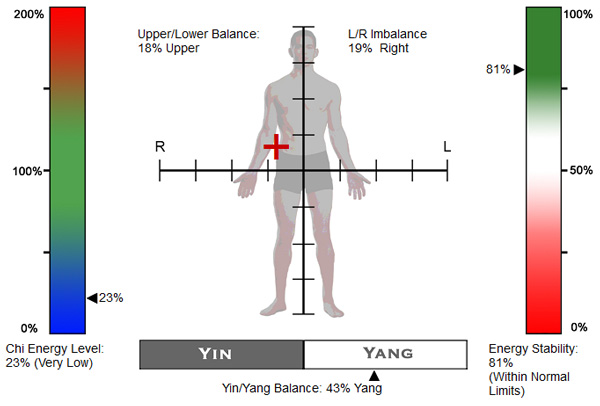
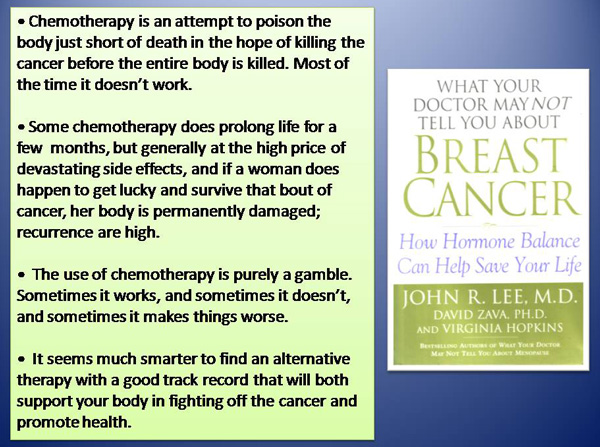
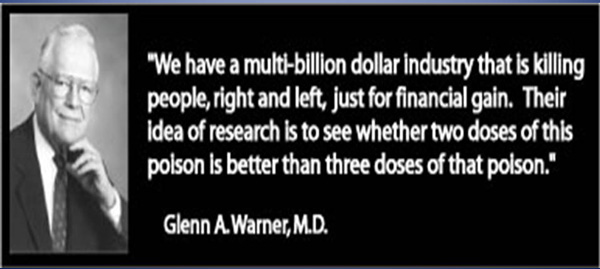


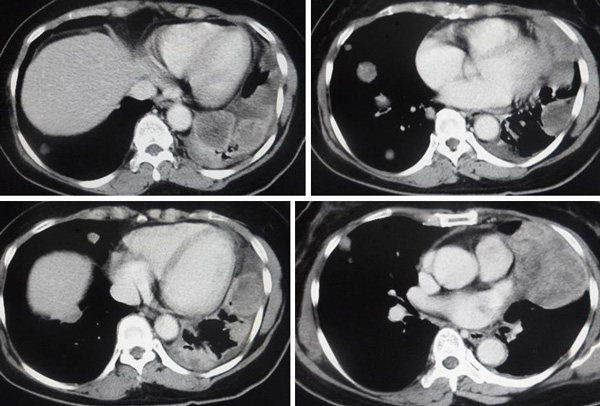

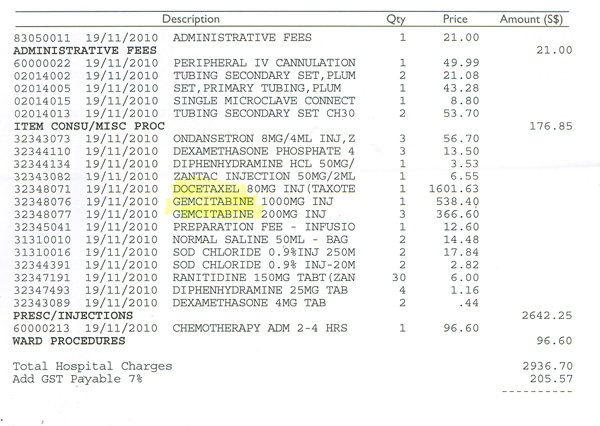



 CANCER STORY
You must be logged in to post a comment.