Xeloda for Liver Cancer: Is that the best treatment possible? What do you expect to achieve?

KDL is a 55-year-old Indonesian lady. For the past 10 years she had been having problems of “wind” in her abdomen. She consulted doctors for this problem and was prescribed medications. Unfortunately these did not solve her problems.

Eventually in June 2014, KDL went to a hospital in Johor. The doctor did a scope and found nothing! She was again prescribed medications but they were not effective.

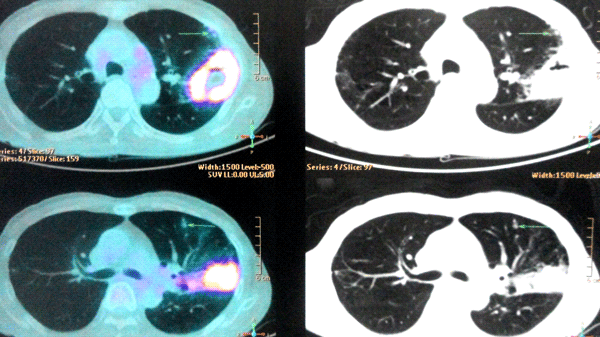
In November 2014, KDL went to a private hospital in Melaka. A CT scan was done. The findings were:

  • Multiple liver nodules in both lobes, predominantly right lobe. The largest is 3.3 x 3.4 cm in segment 8.
  • Extensive intra-abdominal adenopathies involving porta, coeliac and para-aortic nodes — largest being 1.2 x 1.6 cm, in retropancreatic region.
  • Normal gallbladder configuration is not demonstrated. Hetergenous wall thickening seen.

Conclusion: CT features of gallbladder raises the possibility of GB malignancy with metastatic liver nodules and intra-abdominal adenopathies.

No surgery was indicated. KDL was prescribed an oral chemo-drug, Xeloda. This cost her RM 2,400 per cycle. A cycle consisted of taking 5 tablets per day for 2 weeks followed by a week of rest.

One year later, 27 July 2015, a CT scan was done and the result showed:

  • Several heterogenous hypodense nodules in bilateral lobes — largest is 4 x 4 x 3.5 cm in segment 8. (note: this has grown bigger).

An X-ray of the chest showed:

  • Several ill defined lung opacities of sizes from a few mm to 15 mm.
  • A 2 cm right hilar opacity also seen.

Impression: Suspicious of lung and right hilar secondaries.

Blood test showed:

CEA 135.0 (High)
CA 125 388.0 (High)
CA 19.9 179.0 (High)


KDL said that after a year of taking Xeloda her condition became worse!

  • She developed sleeping difficulties.
  • Her stomach was very uncomfortable, with “wind” moving around.
  • Her backbone felt numb / sore.

Comments

This is indeed a very sad story — and is this also a story of bad management?

Why bad management?

  • KDL has been having “wind” problems for the past 10 years. Why was her problem not correctly diagnosed in spite of her consulting the doctors even at an early stage?
  • One lesson we can learn from this case is, If you go to your doctor and was told that there is nothing wrong — please know that you may be in trouble later! That is, if after taking the doctor’s medication the problem still persisted. Again, don’t take “NO problem” as a good answer. Go and find 2 or 3 more doctors who may be able to do a better job.
  • Her stomach “wind” problems could be an early sign that something serious was coming. Could it be problems related to the pancreas? stomach or colon? or ovary? But, at the early stage, no one bothered to properly diagnose her — only prescribing drugs after drugs which did not work.
  • KDL’s problem was left to simmer for too long. Then 10 years later, someone decided to do a CT scan. Why wait for 10 years to do a scan? By that time it was too late, it was already a disaster.

Liver composite

After the CT scan the doctor could not do much, except to offer KDL Xeloda, which she faithfully took for a year. Xeloda made her worse off — physically and financially!

The question we may want to pose is: What can Xeloda do for KDL? Realistically, what do you expect to achieve from consuming Xeloda? Would Xeloda do more harm than good?

Would it not be better if the doctor just send KDL home without any medication? To most people —  patients, their family members and doctors — this suggestion may sound ridiculous, “madness” and unacceptable. But hang on, read this article and see if you can learn anything from it.

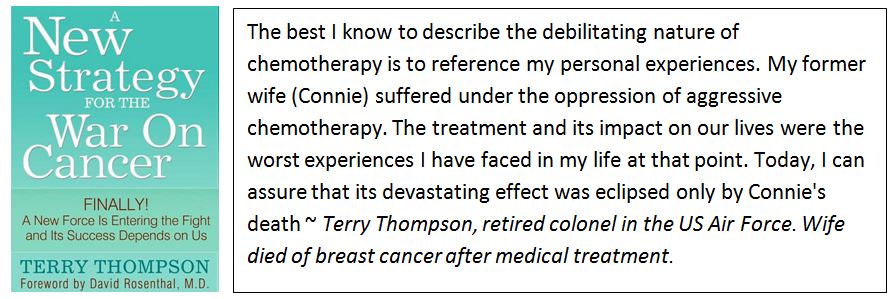
People die from chemo

Source: http://www.weeklyhealthylife.com/horrifying-professor-from-berkely-college-says-people-do-not-die-from-cancer-people-die-from-chemotherapy-and-in-terrible-pain/

For 25 years, the professor was studying the effects of chemotherapy and came to a horrifying conclusion!

The cancer industry is just an industry after all! Doctors, hospitals, pharmaceutical companies and other stakeholders in this industry profit whenever a patient accepts the toxic treatment that is chemotherapy, radiation or surgery …. despite the claims from the medical industry that chemotherapy does not work in the fight against cancer.

Dr. Hardin B. Jones, a former professor of medical physics and physiology at the University of California, Berkeley, has studied the life expectancy of cancer patients for more than 25 years, when he concluded that chemotherapy does not work.

He testified that chemotherapy patients often die a horrible death. They also died much faster and more painful than patients who opted for a different approach. What he found was that chemotherapy actually shortened the life and killed patients, and everything is kept secret because of the millions of dollars in play!

“People who refused chemotherapy treatment live an average of 12 and a half years longer than the people who are receiving chemotherapy,” Dr. Johns said in his study published in the New York Academy of Sciences. “People who accept chemotherapy die within 3 years, and many just a few weeks after starting the treatment.” “Patients with breast cancer who reject conventional therapy live four times longer than those who follow the system. This is something you will not hear in the mass media that will continue to spread the myth that chemotherapy is the best medicine to fight cancer!”

Modern medicine hides the truth about cancer therapy. One treatment costs 300000-1000000$! That is why it continues offering chemotherapy to cancer patients. Chemotherapy does not remove cancer nor extend the life. It just burdens the body so much that the patients eventually die from it.

After putting full faith in the doctors, KDL and her family finally realised that it was a big mistake. KDL stopped taking Xeloda. KDL’s son started to surf the net and found CA Care. Then the family came to Penang in late October 2015 to seek our help.


When KDL came into our centre, I asked if she had a “stroke” before. She said, No. But since the past 2 weeks, she was not able to lift up her left arm. She walked dragging her left leg. Her walk was unstable. One question came to mind, Has her cancer gone to her brain? An X-ray on 27 July 2015, showed lung metastasis. Or, could Xeloda have caused a blood clot leading to a stroke — could this be the reason why she presented as such?

We discussed the possibility of a brain metastasis. To know for sure, a CT or MRI of the brain may be indicated. But, what is the use of spending more money just to know if there is something in the brain? Okay, after the scan, can anyone cure her? There are enough tumours in KDL’s liver and lungs to worry about anyway.

Since herbs are not poisonous like chemo-drugs, KDL was given teas for her liver, lungs and brain. We told her: Let’s see what happen after a month.

Lack of Knowledge

When KDL and her family came to see us, we understood why she was “neglected” and left in such a limbo. She and her family were not educated. They trusted their doctors and have full faith in them. They did not know how to ask questions. They were clueless about their problem. They believed KDL was given the “best” treatment.

Indeed we felt very sorry for KDL and her family.

Let us repeat what we have always said to patients. Please read and learn. If you choose to know nothing about your health and put your full belief and trust that others can help you, know that you may end up “a dead duck.” So, patients, please empower yourself. But in KDL’s case, we understood. She was not educated. She was helpless and naive. She needed help. 

Another case: Xeloda did not stop recurrence of colon cancer 

As we were dealing with KDL case, a friend dropped by our centre. He is 70 years old and was diagnosed with rectosigmoid cancer in October 2014. He underwent a surgery and the histopathology report indicated a Duke Stage B cancer with no spread to the nodes or other parts of the body. The patient was given Xeloda which he took faithfully.

Barely a year later, October 2015, the cancer recurred. The patient underwent another surgery. The histopathology report confirmed a moderately differentiated adenocarcinoma of the colon, recurrent in the abdominal wall.

This patient took Xeloda, but was Xeloda useful for him? It did not stop the cancer from coming back. Our friend decided not to undergo further chemotherapy and came to us for help. 

What is Xeloda?

1

This is the “in thing” drug of today, being prescribed to patients with various cancers. Let me give you what they say about Xeloda in the net.

Xeloda is its brand name.  Its generic name is Capecitabine. It is used to treat advanced metastatic breast cancer, colon cancer, and many other cancers.

Xeloda is taken as a pill and when inside the body is converted to 5-FU (5-fluorouracil). Since 1957 – 1980s researchers and doctors were experimenting and treating cancer with 5-FU. Therefore 5-FU is actually an old drug, used to treat colon and rectal cancer, breast cancer, anal, esophageal, pancreas and gastric (stomach) cancer, head and neck cancer, liver cancer, ovarian cancer, etc. This is given as injection, not taken orally like Xeloda.

So it reality, 5-FU is an old drug. But Xeloda is considered a “newer drug” although it is the same old thing. So can we say that Xeloda is like an old wine packed in a new bottle?

Another drug which is like Xeloda is UFT (tegafur plus uracil). UFT is not popularly prescribed yet but perhaps one day someone may decide to make it as popular as Xeloda and push it for cancer treatment.

Why is Xeloda popularly prescribed?

I think it is because it is easy to use. Just send patients home and ask them to swallow the pill and you get 5-FU inside the body. Before Xeloda, drug like 5-FU, had to be given as an injection. So there is a lot of hassle. Also, chemo-injection has already earned a “notorious” reputation of causing adverse side effects. So, giving patients a new “form” of the same drug perhaps would be a better strategy. Most patients may not even know that Xeloda is a chemo-drug anyway!  So, the treatment  would not sound as scary as the dreaded “chemotherapy.”

The one most important question to ask is, Can 5-FU or Xeloda cure cancer?

Well, if it is effective people would not die of cancer then.

We got to know 5-FU since the 1990s. Two of our patients who had colon cancer were treated with 5-FU. They died. Even today, as you can see from the above stories, patients who took Xeloda did not get any cure. 

Side effects of Xeloda` 

  • Fatigue
  • Diarrhea
  • Hand -foot syndrome -skin rash, swelling, redness, pain and/or peeling of the skin on the palms of hands and soles of feet. Usually mild, start as early as 2 weeks after start of treatment.
  • Nausea and vomiting
  • Dermatitis
  • Elevated liver enzymes (increased bilirubin levels)
  • Poor appetite
  • Abdominal pain
  • Low white blood cell count.
  • Low red blood cell count (anemia)
  • Low platelet count.
  • Mouth sores
  • Numbness or tingling of hands or feet
  • Swelling of the feet and ankles
  • Fever
  • Constipation
  • Eye irritation (watery eyes, inflammation of the eyelids, redness).
  • Shortness of breath
  • Headache
  • Chest, back, muscle, joint, bone pain
  • Dizziness
  • Insomnia (sleep disturbances)
  • Excessive sleepiness, confusion, very rare seizures
  • Dehydration
  • Cough
  • Blood clots (Blood clots rarely can lead to pulmonary embolus or stroke)
  • Loss of balance
  • Nail changes, darkening of the skin
  • Taste changes

(Reflect on what happened to KDL after taking Xeloda for a year. Take note of the side effects written in red)

Yes, doctors who prescribe Xeloda would say this drug will do you a lot of good. So, go ahead and believe them and hope for the best!

Here are other views on Xeloda that I got from the internet.

 Xeloda killed my mother: http://www.rxlist.com/script/main/rxlist_view_comments.asp?drug=xeloda&questionid=fdb7906_pem

  • Xeloda killed my mother. She died on December 27th, 2007, ten weeks after starting a Xeloda regimen. She was 83, and she was in very good shape before beginning her treatment, in spite of the presence of secondary liver cancer (breast cancer metastasis). The drug destroyed the lining of her digestive system, and allowed a combination of bacterial infections to attack and kill a portion of her small intestine. She was within hours of death when emergency surgery repaired her intestine on 11/24/07. It appeared as though she would recover from her surgery, but she contracted pneumonia while hospitalized, and her system was too weak to fight back. I am heartbroken. I don’t want my mother’s death to prevent others from seeking proper treatment, but everyone should be aware of the dangers presented by bacterial infections that could cause major damage while this drug is being administered. James W. Moore jim@ed2c.com

Side effects of Xeloda

  • I have been taking Xeloda for over 6 months. My side effects began with very much pain in every part of my body … I have developed hand-foot syndrome. I’ve lost all the skin of the bottoms of my feet and I’m now my hands are peeling. My feet and hands are very sensitive to anything with a texture. I even have trouble opening a water bottle. Sometimes I want to stick my feet in buckets of ice! …. I just recently developed severe eye irritation which I brushed off as bad contacts or pollen in my eyes. I finally went to my eye doctor and he found severe eye irritation and swelling in my cornea. After speaking with a corneal specialist, he determined it was the result of taking Xeloda.
  • I have been on Xeloda for 3 years. I have the cancer cells in my left lung and spine, hip and left leg bones. Stage 4. Some new growth in the bones but no new growth in the left lung and no fluid build-up. I also have the hand and foot symptoms and sometimes I cannot walk and my hands are so smooth and sore I can’t even hold an envelope. Wear gloves most of the time and us a cane. BUT, life does not stop and neither should you. I still travel air, sea and land. And I have lots of praying friends and family. I have also changed my diet. NO SUGAR and very little meat mostly vegetables and fruit, organic if I can. Go till the Lord calls you home.
  • Xeloda is sort of an odd drug. For most people, it is viewed as an “easy” drug which is quite effective.  For others, including me, it is more problematic.  Usually, side effects start appearing in 7 – 10 days.  For me, they start getting bad on about day 10 and it lasts through day 21, getting slightly better, but never going completely away, depending on the particular side effect.
  • The most common side effect is … hand and foot syndrome … Hand and foot syndrome with Xeloda is the redness and tenderness of the hands and feet. With me, I slough off skin, bit sheets of skin on my hands and feet.  They become tender, and have a burning sensation.  In addition, they swell and feel tight. It is not unusual for the heels, toes and sides of the feet to develop deep fissures or cracks. Up to 60% of the patients taking Xeloda suffer from this, and it varies in severity.
  • When I first started taking the correct dosage of 4,000 mg a day … two weeks on and one week off, I had massive issues. I had diarrhea, gas, nausea, and constipation (yes, even while I had the diarrhea), dehydration, dry eyes, dry mouth (cotton mouth), cramping, stomach pain, loss of appetite.  It was severe enough that the oncologist backed it off to 3,000 mg. a day That took care of the most severe problems–the nausea, and diarrhea and stomach pain.
  • With 3,000 mg. a day, I still have: periodic constipation, hand and foot syndrome, vision changes (dry eyes which makes things sort of hard to focus on), dry mouth/cotton mouth, lack of taste, toxicity rash (the rash you see in the bottom picture which can also blister and tear easily…I call them my toxicity evening gloves), thinning hair (boy is this one annoying! I just got hair back and then I started to lose it again!), sensitivity to the sun, higher blood pressure than I usually do, discoloration of my nails and the worsening of a nail fungus, fatigue, anemia, heart burn. My feet also often get little blood blisters, which my onc says is probably because my skin is so thin…you bump it, and then you get a blister.  Fortunately, I only had mouth sores (stomatitis) once.
  • I had breast cancer in 2000 which had spread to my spine in one of my vertebrae. I was prescribed Xeloda by my oncologist. Despite the severe side effects of hands and feet going red, blisters in my mouth and skin disorders, the oncologist insisted on this drug. I decided to terminate the use within 11 weeks. I am now experiencing numbness in both my hands, swelling and stiffness in all the joints of my hands. I believe patients should be warned about these side effects so that they understand the risks involved in taking such severe treatments. These side effects may take six months or even a year to appear.

Source: http://www.webmd.com/drugs/drugreview-7906-Xeloda+Oral.aspx?drugid=7906&drugname=Xeloda+Oral

http://www.cancernetwork.com/review-article/infusional-5-fu-historical-evolution-rationale-and-clinical-experience#sthash.qo9g7xhu.dpuf

To round up, here are the links to stories of some patients who came to us after taking Xeloda.

  1. Breast Cancer: Surgery, Chemo, Radiation and Hormonal Therapy Did Not Cure Her. Xeloda made her miserable! Patient, Only You Should Decide What You Want To Do!

 2. Breast Cancer: Surgery, Chemo, Tamoxifen and Xeloda failed her!

  1. Leo was not convinced that Xeloda would do him any good. He had fevers and diarrhea. In addition he vomited and had pains around the colostomy stoma after taking Xeloda. https://cancercaremalaysia.com/2013/12/25/dissecting-chemotherapy-15-couldnt-afford-avastin-gave-up-xeloda/


Bye bye Ovarian Cyst and Bye bye Repeat Surgery

This is an e-mail, we received on 21 August 2013:

Dear Mr Chris,

I am happy to know through my friend about your nature cure herbal medicines. I would like to consult you for my wife fibroid problem at Ovarian and Uterus .

We did laparoscopy and removed the cyst last year, but still we suspect it’s growing up again. Recently we didn’t take any treatment or  medication (allopathic). The doctor(in Singapore) didn’t prescribe any medicine and advice her to take birth control pills regularly to suppress the Hormone. But she stopped taking as it shows some side effects like tiredness and general weakness.

Now she has no other symptoms except severe hair loss and her stomach looks bloated.

Reading your website I understand there is a fibroid tea for to cure the cyst , how to get the medicine. We are Indian Nationality currently residing in Singapore. Do you have any clinics in Singapore or nearby or shall we need to visit you personally?

Kindly advice us where to buy the medicine if taking medicine is enough.

Best Regards
R

Reply: Better that you come and see me personally with all the medical reports and scan …then we take it from there.


This patient was out of our “radar” for quite a while after her visit. Then on 13 November 2015, we received this e-mail:

Dr Chris,

Since that day we met, my wife taking herbs Utero-Ova and GY6. It works amazingly and recent studies on her medical report shows very good improvement and she is getting better. Thanks for your advice and consultation.

However , hearing the so many news of people suffering from Cancer, she is very much worried and She want to take some other herbs that could prevent Cancerous cells affecting her well being. Is there any? Especially for Breast Cancer and Colon Cancer (for Male /Female) , if there is,  can you prescribe that.

Waiting for your advice. Regards.

Reply:  Thank you very much for your email. I am real glad that your wife benefited from the herbs — yes, many others like her also had similar good effects. Can you share with us why you say your wife is getting better? She went to see the doctor and what did the medical report say? Health wise — how is she now compared to before taking the herbs — in what way is she better?

Regarding, cancer prevention. No, I don’t have any magic bullet for that. You need to take care of your diet, be happy and excercise always …if you like to use the e-therapy machine for health maintenance .. it may help you. For that you need to come and see me again and we discuss. Take care.

Good Morning Dr Chris,

At that time of consultation she was under English Medication and suggested surgery to remove her cyst, earlier she had lap. surgery in Singapore to remove the cyst. After sometime it grew back to around 7 cm., and the same treatment and Surgery was prescribed in Singapore and Surgery was advised  to be  repeated, whenever it grow.

After taking the Herbs for six months, the size reduced to 4cm and we continued taking for two years, last month she had the scan and the report shows only less than 5 mm cysts and nothing more … Regards.

Medical reports 

  1. 2011 – pains during menses (severe dysmenorrhea). Blood discharge with clots. Scan showed chocolate cysts in both ovaries.
  1. Prescribed painkiller and hormone pill (progesterone).
  1. More pain during every menstrual cycle.
  1. Doctor suggested operation.
  1. Patient went back to India for further management.
  1. Scan in India in June 2011, showed bilateral ovarian cysts.

Right ovary: mass about 4.7 x 8.4 cm with both solid and cystic components seen. Ovary not seen separately.

3-Right-ovary

Left ovary: mass about 8.5 x 5.2 cm with both solid and cystic components and ovary could not be visualised separately.

left-ovary

  1. MRI on 17 June 2011 showed enlarged left ovary with cystic components and suggestion of bleed displacing the uterus to the right side. Possibility of endometriosis needs to be considered. The lesion measures about 9.7 x 6.0 cm.
  1. Fluid removed from cycts. IUD placement. No medication. Waited for few months.
  1. Return to Singapore. May 2012. Laparoscopic bilateral ovarian cystectomy, adhesiolysis and hydrotubation. Diagnosis: benign endometriotic cysts.

2-Laparoscopic-surgery

  1. Unfortunately, the cyst recurred. Again 8 cm in size.
  1. Started on GY 3 and GY 6 from CA Care. Now, cyst almost gone, 5 mm. 

Comments

Ladies if you have problems with your periods, uterus and ovary, we suggest that you listen to this video careful. There are many things that you can learn from our conversation. Perhaps your doctors would not ask you such questions that we asked.

Before you rush to have your ovaries or uterus removed, please read the following:

In What Doctors Don’t Tell You, Lynne McTaggart wrote:

  • Hysterectomy outranks all others when it comes to the most unnecessary of surgical procedures.
  • Three-quarters of all hysterectomies are performed on women under 50 for highly dubious reasons.
  • In abdominal hysterectomies, side-effects can occur in more than 40 percent of operations. These side-effects include bowel problems, incontinence, risk of fatal blood clot.
  • One-third to nearly one-half of all women report a decrease in sexual response.
  • If a woman’s ovaries are removed at the same time, she will experience severe menopausal symptoms.

In The Hysterectomy Hoax, Dr. Stanley West, M.D.; wrote:

  • More than 90 percent of hysterectomies are unnecessary.
  • Only 10 percent of all hysterectomies are done for cancer. Unless you have cancer, it is unlikely that you need a hysterectomy.
  • Hysterectomy can have long-lasting physical, emotional, and sexual consequences that may undermine your health and well-being.
  • It is no secret that many women develop serious health problems after hysterectomy. Depression, fatigue, urinary disorders, joint aches and pains, and unwelcome changes in sexual desire are the most common complaints.
  • No man would agree to have his sexual and reproductive organs removed for anything short of life-threatening illness.
  • The fact that women allowed this to happen (to themselves) attest to their lack of knowledge about the consequences of hysterectomy and about the availability of alternatives to surgery.
  • I understand why doctors want to perform hysterectomies better than I understand why women agree to them.
  • Hysterectomy is a relatively easy operation. It does not require the surgical finesse need to perform … many of the other alternative procedures. Many gynecologists simply do not have the experience to do all of the other operations that can be substituted for hysterectomy when surgery is needed.
  • Gynecologists are surgeons. We make our living by performing operations. If hysterectomy is the operation a surgeon knows best, it is the one he or she will recommend and perform most often.
  • Clearly, many doctors have an economic incentive to recommending hysterectomy.
  • Your reproductive system is a beautifully crafted apparatus powered by the ebbs and flows of a variety of hormones.
  • It is time for women to recognize hysterectomy for the threat it is and to refuse to have the surgery except when their lives are at stake.

(Who is this author, Dr. Stanley West? He wrote: At this point, you must be wondering who I am and why I am opposed to hysterectomy. I am a gynecologist … chief of reproductive endocrinology and infertility at St. Vincent’s Hospital, one of New York’s most prestigious medical institutions … I have helped hundreds of women avoid hysterectomy. I didn’t set out to crusade again hysterectomy. In medical school, I believe what I was taught: that hysterectomy is good for women. Then and now, prevailing medical wisdom holds that the uterus is a disposable organ that serves no useful purpose once a woman has all the children she wants. What’s more, it is regarded as something of a nuisance.)

In Sex, Lies & the Truth About Uterine Fibroidsthe author Carla Dionne asked: Do physicians lie to their patients? Some do. Most don’t. Some aren’t aware that incomplete information is construed as a “lie” by their patients. Some simply don’t keep up-to-date on the latest medical information.

This is  our message: Ladies if you have problems with your menses – excessive bleeding, severe pain, cyst, fibroid, endometriosis, premenstrual syndrome, menopause, etc., know that you don’t need hormone pills or surgery! Herbs can help resolve your problems.

Read more here:

1.  Ovarian Cyst & Fibroid Gone After 3 Months on Herbs

2. My 6.9 cm Ovarian Cyst Disappeared !

3. Nur with Ovarian Cysts Refused Surgery. Conceived, Caesarean Birth, Cysts Disappeared!

4. Ovarian Cysts Unable to Conceive Took Herbs, Pregnant and Gave Birth

5. Endometriotic Cyst Disappeared After Three Months on Herbs

6. Hot Flashes Gone After Three Months on Menopause Pills

7. Menstrual Pain and Bleeding Resolved After Herbs


Colon Cancer: When Medical Treatments Did Not Cure Them

The past few weeks, many patients came to us with problem of colon-rectal cancer. Let us share with you some of the cases. We hope the experiences of these patients could provide us some lessons. Perhaps we don’t have to travel the same road that they took!

Case 1: Stage 4 Colon Cancer – surgery and chemo. Kidney problem and told to go for more chemo?

Dear Dr Teo,

My name is SL, aged 50 this year and I am from Singapore. I am writing to you in hope that you can provide me with medical advice regarding my condition.

I was diagnosed with stage 4 colon cancer in April 2015. Since then, I have gone through an operation to have a stoma attach to my stomach and had received 8 chemotherapy sessions. The first 6th treatment, I was still able to take the side effects, but the 7th chemo treatment onward, I felt relatively weak.

After the last treatment and a CT scan, the oncologist told me that there is a swelling on my left kidney and was referred to the urologist. The urologist told me that the disease has pressed on my urinary tract which require an operation to have a permanent stoma bag for my urine. I am not comfortable with that idea as I am currently having a stoma bag for my solid waste, which has caused me a great due of stress. I told him that I will observe and monitor my situation first. The oncologist has also advise me to go for 2 more chemo treatment again with a different drug as my cancer marker had increase from 40 plus to 60 plus. The initial scan shows 1000 over and has significantly decrease to now. I am dishearten that I would need to go through chemotherapy again.

I am stuck at a crossroad now and I am seriously considering my next medical approach to recovery. I was introduced and recommended by one of a church member with regards to the medical services you provide at your center. I wish that it can be possible for me to receive treatment from you but I would like to hear from you first of your views to my condition.

I look forward to your reply. Thank you. Yours Sincerely. 

Reply:  Sorry SL, it is indeed very, very hard for me to say anything. The chemo has done a lot of damage to your body and your kidney. It is difficult for  me to repair such damage. Honestly, I really don’t know what to say. To go for more chemo?  — for what? But to tell you not to go for chemo is also not right. I suggest that you pray and ask God for guidance. Let Him guide you. And then follow what God tells you in your heart. If you want to know more about what I do, go to www.CancerCareMalaysia.com

Dear Dr. Teo,

I  have read up on the herbal therapy done at your clinic. After praying about it, I feel that it would be best for me to visit your clinic. I will be able to show you my medical reports and I hope you can advise me if I am suitable to receive treatment from you or not. If it’s possible, I would like to arrange for an appointment with you. Thank you.

Reply: Yes, you are welcome to come and see me Monday to Friday at about 11 a.m. You can come in the morning and return in the evening /afternoon. Let me know.

Case 2:  Meaningless Decline of CEA and Shrinkage of Liver Tumour After Chemotherapy
Patient 2 (P2) is 67 years old. His problems started in October 2014, when he had constipation and later passing out stools with blood. A colonoscopy was done which showed that he had colon cancer.

P2 underwent surgery.  Unfortunately, the cancer had spread to his liver. P2 had 5 cycles of chemotherapy with Oxaloplatin. At the same he also took Xeloda for 5 cycles.

After chemotherapy, the CEA dropped and the tumour in his liver shrunk. Bravo!

But this great news did not last long. Soon afterwards, the CEA climbed up again and there were more and bigger tumours in his liver and other parts of the body.

Date CEA
8 January 2015 61.5 H – before chemotherapy
2 March 2015 38.2 H – while on chemo
4 May 2015   8.8 H
13 July 2015 10.7 H  – did more chemo!
19 October 2015 87.0 H  – more chemo, change drugs
CT scan 8 January 2015 – before chemotherapy 27 April 2015 – after 5 cycles of chemotherapy 11 August 2015 – before going for 2nd round of chemotherapy
1. There are hepatic hypodensities see in segments 6/7.

2. Largest is in segment 6 measuring 3.8 x 2.4 cm.

3. A new segment 7 lesion seen.

4. There is a nodule in the left inguinal canal.

5. There is a soft tissue mass present between the left 10th and 11th rib, suspicious of a metastatic deposit.

6. There is NO soft tissue thickening at the anastamotic site and laparotomy scar to suggest local recurrence.

1. Hypodensisties in segments 6 and 7 of the liver are all smaller. These are suspicious of metastases. No new lesion is seen.

2. A metastatic nodule to the right intercostal node is also smaller.

3. Left inguinal soft tissue suspicious for peritoneal spread of disease is also smaller.

4. No recurrence is seen at the bowel anastomic site.

  1. Interval increase in the number and size of liver hypodense lesions.

2. New hypodense lesions in segment 8/6, segment 4a/8, and segment 6/7.

3. Small left inguinal hernia with stable enhancing peritoneal thickening, suspicious for peritoneal metastasis.

4. No enhancing mass at the bowel anastomosis to suggest local recurrence.

Since surgery and the first round of chemotherapy did not cure P2, the doctor suggested more chemotherapy! Starting in August 2015,  P2 received another 3 cycles of chemotherapy with Oxaloplatin + oral Xeloda.  Unfortunately, these treatment was not effective. The CEA started to climb higher, from 10.7 in July to 87.0 in October 2015.

The doctor decided to change to another chemo regime. This time, P2 received Irinotecan + oral Xeloda. The doctor was not sure how many cycle P2 had to undergo with this regimen.

P2 said after the chemo:

  • The first week, he had no appetite and was tired.
  • The second week. he regained 50 percent of his wellbeing.
  • The third week, overall regained 80 to 90 percent of his health.

Since P2 showed during his consultation with us that he was still going to chemotherapy, we suggested that he goes home first and do not take any of our herbs.

Later, we received this e-mail from P2.

In your book you mentioned that those undergoing chemo can take capsule A and B to reduce the side effects.
Can I do that now ? I am more tired and the nausea lasted longer than before

Reply: If you want to continue taking the chemo — go ahead and complete your chemo first. When they cannot do anything else for you, then come and see me again. No use trying to make your own combination of treatment. Either you follow your doctor or you follow me.

Case 3: Surgery, chemo, radiation – the cancer spread to his lung 

In May 2014, I received an email below:

Dear Dr Teo,

Thank you very much for your kindness in helping the cancer patients.

My colleague (57 years old) had just underwent rectal tumour operation and he is very worried that he might have to go for chemotherapy or radiotherapy. For your information he is diagnosed with rectal cancer stage II. We would like to go to Penang to get consult you.

We met P3 and prescribed him with herbs. We also told him to take care of his diet, change his high-pressured-lifestyle and take it easy. During our meeting, P3 also told us that he was going to undergo dendritic cell therapy to be administered with a doctor whom he knows. The treatment originated from Japan and the whole treatment would cost something like RM 65,000.  Although I did not object to what he wanted to do, I told him about another patient who had similar treatment. He had lung cancer. Started the dendritic cell therapy in Singapore – it was a failure. He then flew to Japan and continued with more dendritic cell therapy. He died.

P3 apparently took our herbs and took care of his diet. Initially we saw P5 two or three times but after that he “disappeared from our radar.”

Later, we received this email.
Dear Prof. Dr. Chris Teo,

My blood test result is bad and is increasing daily

  • 19 May 2014 before undergoing dentritic cell therapy my CEA was 1.4.

I started consuming herbal medicine given by CA Care.

  • 4 July 2014 after completion of 6 X 4 jab (24 jabs) of dentritic cell therapy my CEA was 11.3
  • 9 July 2014 go for second opinion CEA was even higher 13.4 

This is very worrying and I am very concerned about metastatic spread. Please help.  How to stop the CEA to increase soonest.

I’ve just done my colonoscopy again this afternoon and the surgeon told me that the intestine is joining up well at my rectum and tomorrow morning at 11 am he is going to do the surgery by rejoining the intestine to my stomach and seal the hole. Expected to be admitted for a week. Best Regards.

P3 was again out of our radar, not until November 2015.  This is the email.

Dear Dr Teo,

It has been 15 months that since we last wrote to you.  How are you Dr Teo?  I wish that you are always in good health.  I still read your stories, write-up on your web-site.  Your kindness in helping the patients is greatly appreciated.

Patient  has been doing chemotherapy since August 2014 and has been monitored by the doctor closely.  However, recently he was informed by the doctor that the cancer cell had spread from the rectum (stage 4) to right lung.

We do not know what to do now as we think that he has been in the good hand all this while. Dr Teo,  please let us have your advice. Thank you very much.  

 Note: Chemotherapy since August 2014:

  • From 5-August 2014, chemo drugs used: oxaliplatin + 5FU + Avastin.
  • 13-10-2014, done IMRT (Intensity-modulated radiation therapy) for 6 weeks.
  • After IMRT, continued with chemo — Avastin, 5FU. Still ongoing.
  • 28-9-2015, had needle radiotherapy (radiofrequency ablation) because of 2 tiny spots on the right lung.
  • 19-10-2015, oxaliplatin was introduced again and 5 FU still on.

Since August 2014 the CEA was always higher than normal range and CEA dropped to within normal range in May 2015.  But for the past two months, the CEA was going up again.  His recent CEA was 14.7. 

Awaiting your comment please.

Case 4: Surgery and Xeloda did not stop this colon cancer from recurring

As we were dealing with many cases of colon cancer, a friend (P4) dropped by our centre. He is 70 years old and was diagnosed with rectosigmoid cancer in October 2014.

Chee LSeng Colon

P4 underwent a surgery and the histopathology report indicated a Duke Stage B cancer with no spread to the nodes or other parts of the body. After the discharge from the hospital, P3 was given oral chemo-drug, Xeloda which he took faithfully.

Barely a year later, October 2015, the cancer recurred. P4 underwent another surgery. The histopathology report confirmed a moderately differentiated adenocarcinoma of the colon, recurrent in the abdominal wall.

Now, what is P4 going to do now? He had two options: Go back to his doctor and undergo chemotherapy. Or, he come to us and opt for non-medical management of his cancer. P3 decided not to undergo further chemotherapy.

Let me ask you to reflect on these two quotations:

Insanity both

7 Repeating-error-over-and-ov

Let me end by sharing with you one case which fortunately seldom happen at CA Care — a patient who does not want to share his story.

P5 is a man in his early 50s. He flew in from Singapore to seek advice about his colon cancer. As he sat down to talk, he requested that this consultation should not be video-taped. I assured him that there is no need to worry — we would not stop our video-tapping but we would not use “his” video conversation with us.

I casually asked him: How do you come to know about us?

His answer: I went into your website and read the articles your wrote. I also watched the videos you put up in the You Tube!

My response: Oh you know about us because other patients would not mind sharing their stories, and I wrote their stories and used their videos in the website. But when it comes to your turn, you would not want to allow others to know about you!

P5 started to tell his story. Basically, he had problems of his bowel movements which he ignored for some time.  When things got worse, he decided to go to the hospital for help. Colonoscopy showed a big tumour in his colon. The doctor wanted him to undergo radiotherapy and chemotherapy first. These have to be done with the hope of shrinking the tumour first before proceeding with surgery.

P5 was not happy with the doctor’s suggestion. He would not want to go for chemotherapy or surgery. After learning about us, he decided to fly all the way from Singapore to see us. He was hoping to take our herbs and the tumour will go away. My answer to him: That is wishful thinking and “madness.” I have no such magic bullet. Go home and see your doctor. Let him remove the tumour first. After your surgery, you can come back again if you think I can help you.

Before leaving, P5 asked, How much do I have to pay for this consultation? I responded:  Pay nothing!

Having documented these cases, we have two other colon cancer stories to share with you. These two patients are unique in their own ways. And they are the kind of patients who made our day! Watch out for them:

  1. Conversation with a 34-year-old with colon cancer.
  2. Conversation with a 82-year old with colon cancer.

Liver Cirrhosis (& problems with the pancreas?): Two Years On, Still Doing Fine

SS (s-406) is a 61-year-old Indonesian. Sometime in 2011, he had to be hospitalized. Something was wrong. Fluid accumulated in his abdomen and this had to be tapped out.  In 2012, he landed in the hospital again, twice. In February 2013, he again had to go into the hospital to have fluid tapped out of his abdomen.

In July 2013, SS came to seek our help. Since then, he need not go to the hospital anymore!

What was wrong with SS?

An utrasound on 16 May 2013 showed a 8.9 x 6.6 cm mass in his pancreas.  And he had fatty liver.

A follow-up CT scan the next day showed liver cirrhosis with:

  • ascites (accumulation of fluid –usually serous fluid which is a pale yellow and clear fluid — in the abdominal (peritoneal) cavity. Ascitic fluid can have many sources such asliver disease, cancers, congestive heart failure, or kidney failure).
  • cholecystitis (inflammation of the gallbladder).
  • cholangitis (infection of the biliary tract with the potential to cause significant morbidity and mortality), and
  • pancreatitis (inflammation of the pancreas).

Composite


The report said: tidak terlihat nodul /massa atau lesi fokal (no nodule or mass seen).

So, how can we make out of this case with two conflicting imaging reports?

SS was prescribed herbs for his liver and pancreas and was told to keep to a healthy diet.

Listen to the video clips below.


April 2014: Almost a year on CA Care Therapy, SS said he was far better off than before!

September 2015: According to his niece, SS is doing find fine up to this day. Since on CA Care Therapy he need not have to go back to the hospital anymore. SS had just came back from a holiday in Bali. Chris: Thank God for this!


Medical Treatments Did Not Cure Prostate Cancer. The newly created “drugs” are expensive — extremely expensive, just that!

During the past month, many prostate cancer patients came to CA Care. Let us highlight three cases.

Patient 1

PS is a 73-year-old man from Indonesia. His problem started in 2011 when his urine flow was not good. His urination was also frequent. A check with the doctor in July 2011, indicated prostate cancer — PSA = 41.9 and Gleason’s score 9 (5+4). PS underwent TURPT.  In addition he was started on Tapros injection – once every three months. PS continued to receive this injection, a total of 15 injections, until January 2015.

His PSA initially decreased from 41.9 (June 2011)  to 0.47 (in October 2013). But after that it started to increase again. Within one and half year, January 2014, the PSA started to increase to 4.4 (see Table below).

Note:  1. TURPT or Transurethral Resection of Prostate Tumor is a surgical procedure used to remove part of an enlarged prostate. This procedure is a less invasive option to an open prostatectomy and is used in cases where the prostate is not large enough to necessitate complete removal. During TURPT, an instrument is inserted up the urethra to remove a section of the prostate.

  1. Tapros (leuprolide acetate) injection is used to treat advanced prostate cancer. It is not a cure but to slow or stop the growth of cancer cells and helps relieve symptoms such as painful/difficult urination. Most types of prostate cancer need the male hormone testosterone to grow and spread. Tapros works by reducing the amount of testosterone that the body makes.

In February 2014, a bone scan showed the cancer had spread to his bone. PS was given Zometa injection. The doctor stopped Tapros injection for a while, and replaced it with Casodex 50 — an oral drug.

PS continue to received Zometa injection (total of 12 injections) and Casodex until September 2015.

Even with these treatments the PSA from 4.4 (January 2014) started to increase to 32.3 in February 2015.

Since the drugs were not effective, PS underwent an orchidectomy (surgery to remove the testes). After the surgery, his PSA dropped from 32.3 to 11.3 (June 2015). But again, the PSA started to increase. By September 2015, his PSA was 28.7

The doctor recognised that the treatments were not effective. PS was asked to undergo chemotherapy — 6 cycles. The family declined chemo and PS’s son came to Penang to seek our help. About a month on the herbs, his PSA continued to increase to 39.7 in October 2015.

Table 1

Patient 2

PL is a 62-year-old Malaysian. His problem started in May 2012 when a routine health check showed an elevated PSA of 33 plus.

In June 2012, PL was started on a three monthly Zoladex injection (received a total of 10 injections). Initially the PSA started to decrease from 33 to 3.9 (on 14 January 2013). After that it started to increase to 10.9 (3 September 2013).

Casodex caused a temporary drop of PSA from 10.9 to 1.5 within a month. But after that the PSA started to rise again. In April 2014, the PSA was 15 plus. The doctor stopped Casodex and replaced it with Diethylistilberstrol 1 mg.  This replacement drug was not effective. The PSA rose to 22 plus.

The doctor again changed to another drug, Ketoconazole 200 mg. It was also not effective. The PSA shot up to 41 plus (14 August 2014).

A bone scan on 4 September 2015, confirmed bone metastases involving both iliac crests and left sacro-iliac joint.

From 24 September 2014 to 5 March 2015, PL underwent 8 cycles of chemotherapy using Docetaxel.  After 3 cycles of chemotherapy, the PSA decreased from 41 plus to 20 plus (3 December 2014). After the completion of the 8th chemo, the PSA decreased to 6 plus (31 March 2015).

PL was again started on Casodex and Lupron injection. But it was not to be. From 14 April 2015 to 25 August 2015, PL received a total of  five  Lupron injections while still taking Casodex. His PSA shot up from 6 plus to 400 plus.

The doctor suggested that PL undergo chemotherapy again. He declined and started to find alternative therapy.

PL went for ozone therapy. Before the treatment his PSA was 499.8. After 6 ozone treatments his PSA went up to 617. The treatment costs RM3,800.

It was at this stage that PL and his family came to seek our help and PL was started on herbs.

Note: 1. Zoladex or Goserelin acetate is a man-made hormone used to suppress production of the sex hormones (testo sterone and estrogen), particularly in the treatment of breast and prostate cancer.

  1. Diethylstilbestrol(DES) is a syntheticestrogen, first synthesized in 1938. DES was given to pregnant women in the mistaken belief it would reduce the risk of pregnancy complications and losses. In 1971, DES was shown to cause clear cell carcinoma, a rare vaginal tumor in girls and women.
  2. Ketoconazole. This is a broad spectrum antifungal agent but is used for patients with advanced prostate cancer.
  3. Lucrin or Lupron (leuprorelin acetate) reduces the amount of testosterone in men or estrogen in women. It treats only the symptoms of prostate cancer and does not treat the cancer itself.

Table 2

Patient 3

RS is a 67-year-old Malaysian.  A routine screening procedure in September 2012 detected his PSA was elevated at 14.7. A biopsy done confirmed cancer of the prostate, Gleason’s score 3+4. Bone scan did not show any bony metastasis.

RS went to Singapore and underwent a robot assisted radical prostatectomy in January 2013. After this surgery, RS did not receive any further treatment or medication. He only monitored this PSA over the years.

After the prostate surgery, his PSA dropped from 14.7 to less than 0.03 and remained around that level for about a year. In February 2014, his PSA started to increase to 0.07. Later that year in June / September the PSA increased further to 0.18 / 0.23. This results showed that the cancer is coming back and RS felt that he should do something about this.
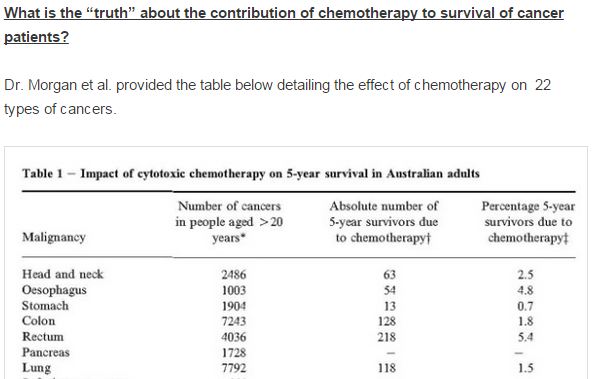
Table 3

Comments

What can we learn from the above cases?

  1. It is obvious that chemotherapy or surgery did not cure them. The cancer comes back sooner or later.
  2. For Patient 1 — the hormonal injection kept the PSA down for about two years. Removal of testes caused a drop of PSA for about 4 months. After four years of hormonal injection and oral drug, Patient 1 decided to find an alternative path, turning down chemotherapy.
  3. For Patient 2 — hormonal injection and various oral drugs kept him happy for about two years. Then bone scan showed the cancer spread to his bone. Eight cycles of chemotherapy with Docetaxel kept his PSA down for a few months, then the PSA started to increase aggressively. From September 2012 to September 2015 — within three years, his PSA at 33 plus shot up to 617, in spite of 15 hormonal injections, 8 cycles of chemo and taking of oral drugs — Casodex, etc.

It appears that for Patient 2, the more aggressive the treatment, the more aggressive the cancer become!

  1. Patient 3 — opted for surgery instead of Watchful Waiting (i.e. wait and see and do nothing) or Hormonal therapy. From September 2012 to September 2015 — three years, his PSA was kept down from 14.7 to 0.23. There is no immediate danger yet, so there is no reason to panic. Nevertheless, the sign is not good. Surgery did not remove his cancer totally. The gradual rise of PSA is telling us that the cancer is coming back slowly NOT as aggressive as the two other cases above.

Surgery or removal of the prostate is only indicated when the cancer is still confined and not spread anywhere else. However, the long term side effects of surgery are: 1 — Erection problems. Seven out of 10 men become impotent. 2 — Urine leakage or problem controlling the flow of urine (incontinence) because of swelling or damage to the muscle that holds urine in your bladder.

The question in this case is, What if you do nothing — wait and see? Or find an alternative healing path instead of surgery? Patients have a choice!

Prostate Cancer Statistics

  • Prostate cancer is the most common cancer in American men.
  • It is the second leading cause of cancer death in American men, just behind lung cancer.
  • About 1 man in 38 will die of prostate cancer.
  • About 1 man in 7 will be diagnosed with prostate cancer during his lifetime.
  • Prostate cancer occurs mainly in older men. About 6 cases in 10 are diagnosed in men aged 65 or older, and it is rare before age 40.

Source: http://www.cancer.org/cancer/prostatecancer/detailedguide/prostate-cancer-key-statistics

Do you have money to buy time?

Lately, many new drugs are being released to treat advanced prostate cancer.  The rich may want to try! But make no mistake, like the chemos and drugs used by the two patients above, these new, expensive drugs don’t cure you either! They are said to prolong your life for a few weeks or months.

  1. Provenge — approved by the FDA in April 2010 costs US $93,000 or RM 406,251 for a standard course of three treatments. In a study involving 512 patients with advanced prostate cancer, Provenge increased median survival from 21.7 months to 25.8 months.

“To charge $90,000 for four months, which comes out to $270,00 for a year of life, I think that’s too expensive,” said Tito Fojo of the National Cancer Institute. “A lot of people will say, ‘It’s my $100,000, and it’s my four months.’ Absolutely: A day is worth $1 million to some people. Unfortunately, we can’t afford it as a society.” http://www.washingtonpost.com/wp-dyn/content/article/2010/11/07/AR2010110705205.html

  1. Enzalutamideapproved in August 2012, sold under the name Xtandi. A typical eight-month treatment costs nearly US$60,000 or RM 262,098. Enzalutamide was assessed in 1,199 patients with advanced prostate cancer who had previously received chemotherapy. Survival with enzalutamide was 18.4 months on average, compared with 13.6 months for men receiving a placebo. This means Enzalutamide extends life by just five months. http://www.dailymail.co.uk/health/article-2465570/New-prostate-cancer-drug-approved-use-NHS-offers-month-lifeline.html#ixzz3nlnYiWGw
  2. Cabazitaxel — a new form of chemotherapy, approved in June 2010, and sold under the name Jevtana. The typical six cycles cost about US$50,000 or RM 218,415.

5. Abiraterone — approved in April 2011, and sold under the brand name Zytiga. An    eight-month course of treatments costs about US$47,000 or RM 205,310.

3 Cancer Drugs Expensive

Being alive and healthy is not good enough, he wanted a “CURE”

Jack (not real name) is a 69-year-old Indonesian. Some 20 years ago, he was told he had hepatitis B. For all these years he did nothing about it. And he did not have any symptom.

In May 2013, he went to a private hospital in Melaka for a checkup.

  • Blood test — tumour markers and liver function enzymes — were all within normal range, except for a slightly low platelet count.
  • Ultrasound of upper abdomen showed a heterogenous solid lesion in segment 7 measuring 5.7 x 6.8 cm. There are multiple cysts in both lobes of liver measuring 7 to 12 mm in size. Multiple cysts in left kidney, largest 2.9 x 4.9 cm and a large right renal cyst, 8.4 x 10.1 cm.
  • CT scan of abdomen confirmed a 7 x 6 x 6 cm tumour in segment 7 of liver. This is suspicious of HCC (liver cancer).

Not satisfied, Jack went to Singapore for second opinion.

  • MRI on 4 June 2013 confirmed the presence of a large enhancing mass lesion in segment 7 and 6, measuring 6.2 x 6.2 x 5.3 cm. The right kidney cyst was 10.3 x 6.8 cm in size.
  • There was no MRI evidence of extrahepatic metastatic disease.

 Composite-S-396-Liver

 Jack came back to Penang again. Blood test done in a private hospital on 12 June 2013, showed everything was normal. Two days later, he and his family came to seek our help. Listen to our conversation that day.


Chris: You have consulted three doctors. What did they ask you to do?

Son: All the three doctors suggested surgery, remove 45 percent of the liver.

C: Did you ask if doing this can cure?

S: There is a high chance that the cancer would recur after 2 years.

C: How much is it going to cost you?

S: If done in Singapore it is SGD 45,000. If in Malaysia it is RM 45,000.

C: So, what do you want to do? Go for surgery?

Patient: If possible, I want to avoid that.

Jack was prescribed liver herbs. On 30 April 2014, almost a year later, Jack’s son wrote:

Dear Dr. Chris: My father shows no sign of pain and has good appetite. He lost a lot weight but has since maintained at around 59 kg. Apparently last month he went for USG on his own without us knowing. The result showed slight increase in the size of the tumor.

One month later, May 2014, Jack and his son came to our centre.

Chris: How are you doing?

P: Fine, except that the food is not delicious. Because I cannot eat meat.

C: Okay, you can go home and die!

Listen to this story: https://cancercaremalaysia.com/2011/12/24/liver-cancer-better-to-become-a-full-stomach-ghost-than-a-hungry-ghost/  This patient who was medically given up told us that he would like to eat what he liked because he did not want to die with an empty stomach and turned into a hungry ghost! One year 8 months later, he died.

P: I am growing thinner.

C: Why do you want to grow fat? You are not a pig or a cow — to be sold by the kilos. Being alive and healthy, with no pain, can eat, can walk, can sleep — what else do you want?

Comments

Unfortunately, most patients are like Jack. When they feel well — the first problem they encounter is their diet. Cannot eat this, cannot eat that. This is the most common complaint!

Read this story and listen carefully to the video: https://cancercaremalaysia.com/2015/08/07/lymphoma-part-3-digging-my-own-grave-with-my-folk-and-spoon/

Not long ago, I received an email from the daughter of a patient with medically-given-up pancreatic-liver cancer. She wrote:  Doctor, my father getting fed up eating food without oil. Is it ok if we use small amount of oil or ghee to cook his food? 

To that, I replied:  Let him die if that is what he wants. Go eat what he likes and see what happens. I am not god to give patients permission to eat this or eat that. I am telling you, if you eat bad food you die. As simple as that.

Apart from the diet, another problem facing patients like Jack is the sheer ignorance or the lack of wanting to know the reality of their illness. Three doctors have told Jack that 45 percent of his liver had to be cut off. Does that not sound serious to you? Spend SGD 45,000 or RM 45,000 (take your choice) but within two years, the cancer is expected to come back! Giving you two years is rather generous indeed! You could be dead after the surgery!

Read these stories:

  1. Liver Cancer: 3 cm Tumour OUT, 8 cm Tumour IN After 9 Months and S$28,000-Surgery
  2. Cancer Recurred Three Months After Surgery
  3. And this story — the mother of all disasters, A Great Failure and Let Down. Sam was operated on in October 2008 and by April 2009 he was dead. That was just six months after his liver surgery.

Apart from the sad experiences above, here are what the experts said about liver cancer, like the one that Jack has.

  • Hepatocellular carcinoma is an aggressive cancer that frequently occurs in the setting of chronic liver disease and cirrhosis. It is typically diagnosed late in the disease course, often precluding curative surgical therapies. http://www.ncbi.nlm.nih.gov/pmc/articles/PMC3421475/
  1. A total of 850 patients with hepatocellular carcinoma were seen during the last 8 years.
  2. The median survival of 229 patients who received no specific treatment was 1.6 months — 0.7 month for Stage 3 patients, 2.0 months for Stage 2, and 8.3 months for Stage I.
  • From January 1999 to December 2010; 320 out of 825 consecutive patients with a diagnosis of HCC and not appropriate for curative or palliative treatments were followed and managed with supportive therapy. The median overall survival was 6.8 months, corresponding to 33% of the patients being alive at one year. http://www.ncbi.nlm.nih.gov/pmc/articles/PMC3468702/

For the above data, it is clear that patients with HCC or liver cancer would not be able to survive long — average 6.

When Jack came back to see us ONE year later, he was well — only on herbs and change of diet, without any medical drugs. What was not well with him was his dissatisfaction of not being able to eat what he likes — our suggested diet was not delicious enough!

We have many liver cancer patients who are like Jack. They were on our therapy and lived much longer than 6 months. That is if they take care of their diet.

Read these stories:

  1. 8 cm Liver Tumour Shrunk After 8 Months On Herbs. Still Alive and Well After 2 Years
  2. Liver Cancer: Two months to live yet still fine after one and a half years!
  3. Only On Herbs And She Lives More Than Five Years!

So, to patients like Jack we ask: Being alive and healthy, with no pain, can eat, can walk, can sleep — what else do you want?

Unfortunately, we know that some patients, even if they are getting better, they do not have a sense of gratitude — to appreciate and be grateful for what they are blessed with. They demanded more — they wanted a total cure! They wanted to eat what they like. They want to go back to their old way of life.

Jack’s story did not end yet. After two years of being alive and healthy, he courted disaster!

Disastrous Ending?

In October 2015, we received an e-mail from Jack’s son.

Dear Dr. Chris,

In April 2015, my father had decided to take up treatment in X Hospital, China. Some of the treatments are interventional embolism therapy, cryoablation therapy — in the last six months. His weight before treatment was 59 kg, now 51 kg.

Even though I was against this idea of going to China for treatment, I respected his decision. Currently, he developed ascites in his body. The doctor helped to drain the fluid, around 3.5 litres. From your website, I understand that you have herbs for ascites. Could you prescribe for my father?

Jack and his family made 3 trips to China and spent about SGD 60,000 for treatment there. According to his medical report these were what the doctors did for him:

  • Interventional embolization with LOHP + 5FU + Lip.
  • Immunotherapy.
  • Cryoablation.
  • He was given Genoderma lucidum (Linzhi) capsules to take on discharge.

Jack’s son came to Penang and sought our help again. Listen to what Jack’s son had got to say that day.


Chris: Your father. Already two years. How is he now?

Son: As I mentioned in my e-mail. Six months ago he decided to go to China.

C: What did they do to him there?

S:  Interventional embolization, immunotherapy and cryo-therapy!

C: Wah, how many times did you go there and how much did it cost you?

S: Three times, costing about SDG 60,000.

C: Why did he want to go to China?

S: Before going there, we had a family discussion. I told my family. Dr. Chris is not a saint but what he said is very logical. It is about quality of life. I told my father, perhaps after you got to China may end up worse off. It turned out to be true. There are four of us, and three of my brothers were against him going to China.

C: There is this man from Medan. He too went to China (same hospital). He spent almost IDR 3 billion! And he did not find any cure — became worse. I asked him: Why do you come and see me? He replied: I have no more money! This man also told me that he know about CA Care even before he went to China but he did not want to come here because he did not want to follow our recommended diet. So I asked: Now you are here, do you want to follow our diet?  He said yes. I told him if you want to eat what you like, you better leave. I cannot help you.

S: My father said Dr. Chris’ herbs cannot block the growth of the tumour. But I told him you only follow 90 percent of his recommended diet. Cannot.

C: Yesterday, one patient with liver cancer was here. He was told he had only 9 months. Now with the herbs and proper diet, he is still alive and healthy after one year! He can play golf and walk long distance. Then he told me a friend sent him a video which said he must not eat rice but eat a lot of meat and eggs instead. I told him, Okay, go home and eat these. Be prepared to die after one month!

S: When we were in China, the doctor there also said it is not right NOT to eat meat and eggs. I didn’t want to argue with the doctor because I was not able to speak Chinese. Two weeks ago, my father’s stomach was bloated with fluid inside. We had to go to the doctor (in our hometown) to tap it out. But the doctor said the fluid can come back again.

C: Before going to China, did you ask if the treatments they are going to give, is going to cure your father’s liver cancer?

S: They cannot! I already told my father. In the website they never ever mentioned cure. They only say they may be able to extend his life. I said told my father, Dr. Chris already extended your life for 2 years, what else do you want!

C; That is what I mean by people not being thankful. They do not acknowledge and thank God for what is good. They only want what they want. This is the problem with many cancer patients. Okay, you went to China many times. Did your father get better and better — after spending all that money?

S: Weaker …. one time my father asked the doctor why after coming here (China) he became weaker. The doctor did not answer!

C: Does he know that he is not getting better?

S: Now he knows he is not good!

In summary, for patients who come to seek our help, we would like to tell you these once again — frankly and bluntly.

  1. Read and Learn. Know what your cancer is all about. Know what you are up against. Don’t depend entirely on others to tell you what t do. Learn and heal yourself. Know that there is no cure for cancer but you can find healing. If you don’t want to read or know, you may end up being a “dead duck”!
  2. Be grateful for what you are each day. To be able to live — free of pain, being able to eat, sleep and move around, etc. Thank God for each day that you have. But if you are always asking for the impossible, you will never be able to be happy and satisfied. You will never find healing with such an “ungrateful” attitude.
  3. To heal, you need to accept the hard reality that you MUST change — change your attitude about life, change your lifestyle and change your diet.
  4. Know that your health is your responsibility. Others around you may be able to help but they cannot cure you. You need to help yourself and heal yourself. And make no mistake, you cannot find healing on your own terms.


Remove your healthy uterus and ovaries to prevent cancer, anyone?

Mei (not real name) came to see us on behalf of her sister who has just been diagnosed with ovarian cancer. Mei also told us that her mother died of the same cancer many years ago. That put Mei in a very precarious position — would she end up having the same problem? After all, according to the doctor this evil trait runs in the family! I told her, No!

Mei is only 40 years old. But to her, the future is rather scary. She went to see a gynaecologist  who did a Pap Smear and examined her. Everything was normal. But due to her family history, the doctor suggested that Mei remove her healthy ovaries as a preventive measure!

During our conversation we thought Mei has PMS (premenstrual syndrome) problems which can be easily taken care of by taking PMS pill and Utero-Ovary tea.

If you say “YES” to many of the questions below, the chances are you have PMS problems.

  1. Do you have blood clots in the menstural discharge?
  2. Do you suffer any of the following before the periods?
  • Breast pain / sensitive?
  • Backache?
  • Bloatedness of the stomach?
  • Mood swing?
  • Craving for certain food (e.g. chocolate, sour food, etc.)

Listen to this video

Okay ladies, do you want to take the Angelina Jolie’s pathway? Have all your female organs removed because you are afraid of getting breast or uterine/ovarian cancer.

The following are some medical terminologies you may come across relating to the removal of the female reproductive organs.

  • Hysterectomy is a surgical procedure that removes the uterus.
  • Oophorectomy is a surgical procedure to remove one or both of your ovaries.
  • Bilateral Salpingo-oophorectomy (BSO) refers to the surgical removal of both ovaries and the tubes.
  • Radical hysterectomy refers to the excision of the uterus en bloc with the upper one-third to one-half of the vagina. The surgeon usually also performs a bilateral pelvic lymph node dissection. Removal of the ovaries and fallopian tubes is not part of a radical hysterectomy; they may be preserved if clinically appropriate.
  • TAH/BSO means total abdominal hysterectomy with bilateral salpingo-oophorectomoy.

Angelina Jolie removes female organs after cancer scare

http://www.app.com/story/life/family/parenting/shari-puterman/2015/03/26/angelina-jolie-less-woman-hotter-ever/70513236/

http://www.usnews.com/news/articles/2015/03/24/angelina-jolie-goes-public-on-decision-to-remove-her-ovaries

 Why I disagree with Angelina Jolie’s mastectomy decision 

  • When I heard about her double mastectomy, my heart sank for her because I’m sure she was paralyzed by fear. After all, nobody wants to hear the “C” word leave their doctor’s lips. Her decision was based on the doctors she trusts, but I disagree with it. She’s supposedly removing her ovaries next.
  • Preventive breast removal is a disturbingly popular trend that is being hailed as a reasonable, if not celebrated, choice. Angelina’s story makes me admire Suzanne Somers even more. She was diagnosed with breast cancer years ago and was forced to make a life or death decision. She chose well. The author of “Bombshell” still thrives today and is as vivacious as her old character of Chrissy from TV’s “Three’s Company.”
  • Mastectomies and breast implantation generate trillions of dollars for surgeons, radiologists, hospitals, pharmacies and drug companies. Lifestyle factors, diet, persistent organic pollutants, vitamin or mineral deficiencies and your body’s innate ability to detoxify poisons all play a role in developing cancer.
  • Common sense will tell you that if remove your breasts, or ovaries, or whatever … you’re still a delicious host to cancer in your lungs, uterus, pancreas, wherever.
  • It’s a dangerous trend. Don’t remove body parts to prevent cancer, instead make your body an inhospitable host!

http://articles.sun-sentinel.com/2013-05-23/health/fl-suzy-cohen-052613-20130523_1_breast-cancer-brca-1-mastectomy 

Removal of Ovaries, Fallopian Tubes Wrong Anticancer Option for Most 

  • Removing the ovaries triggers menopause and all of the symptoms that come with it. For women under 45, removing the ovaries can also result in bone thinning and increased risk of heart disease because of reduced estrogen levels. Women who have the procedure often have to undergo hormone therapy to reduce these effects. And although having a salpingo-oophorectomy does reduce the risk of developing cancer, it does not remove it completely. 

http://www.scientificamerican.com/article/removal-of-ovaries-fallopian-tubes-wrong-anticancer-option-for-most/ 

Below are quotations from books written on hysterectomy. They can shed some light on the problems facing women today. 

In What Doctors Don’t Tell You, Lynne McTaggart wrote:

  • If you are a woman in America, you’ve got a one in three chance of losing your womb by the time you’re 60.
  • Hysterectomy outranks all others when it comes to the most unnecessary of surgical procedures.
  • Three-quarters of all hysterectomies are performed on women under 50 for highly dubious reasons.
  • In abdominal hysterectomies, side-effects can occur in more than 40 percent of operations. These side-effects include bowel problems, incontinence, risk of fatal blood clot.
  • One-third to nearly one-half of all women report a decrease in sexual response.
  • If a woman’s ovaries are removed at the same time, she will experience severe menopausal symptoms.

In The Hysterectomy Hoax, Dr. Stanley West, M.D.; wrote:

  • More than 90 percent of hysterectomies are unnecessary.
  • Only 10 percent of all hysterectomies are done for cancer. Unless you have cancer, it is unlikely that you need a hysterectomy.
  • Hysterectomy can have long-lasting physical, emotional, and sexual consequences that may undermine your health and well-being.
  • It is no secret that many women develop serious health problems after hysterectomy. Depression, fatigue, urinary disorders, joint aches and pains, and unwelcome changes in sexual desire are the most common complaints.
  • No man would agree to have his sexual and reproductive organs removed for anything short of life-threatening illness.
  • The fact that women allowed this to happen (to themselves) attest to their lack of knowledge about the consequences of hysterectomy and about the availability of alternatives to surgery.
  • I understand why doctors want to perform hysterectomies better than I understand why women agree to them.
  • Hysterectomy is a relatively easy operation. It does not require the surgical finesse need to perform … many of the other alternative procedures. Many gynecologists simply do not have the experience to do all of the other operations that can be substituted for hysterectomy when surgery is needed.
  • Gynecologists are surgeons. We make our living by performing operations. If hysterectomy is the operation a surgeon knows best, it is the one he or she will recommend and perform most often.
  • Clearly, many doctors have an economic incentive to recommending hysterectomy.
  • Your reproductive system is a beautifully crafted apparatus powered by the ebbs and flows of a variety of hormones.
  • It is time for women to recognize hysterectomy for the threat it is and to refuse to have the surgery except when their lives are at stake.

(Who is this author, Dr. Stanley West? He wrote: At this point, you must be wondering who I am and why I am opposed to hysterectomy. I am a gynecologist … chief of reproductive endocrinology and infertility at St. Vincent’s Hospital, one of New York’s most prestigious medical institutions … I have helped hundreds of women avoid hysterectomy. I didn’t set out to crusade again hysterectomy. In medical school, I believe what I was taught: that hysterectomy is good for women. Then and now, prevailing medical wisdom holds that the uterus is a disposable organ that serves no useful purpose once a woman has all the children she wants. What’s more, it is regarded as something of a nuisance.)

In Sex, Lies & the Truth About Uterine Fibroids, the author Carla Dionne asked: Do physicians lie to their patients? Some do. Most don’t. Some aren’t aware that incomplete information is construed as a “lie” by their patients. Some simply don’t keep up-to-date on the latest medical information.


Breast Cancer: Cut out your healthy ovaries and add 2 to 3 percent to your survival

Thirty-six-year-old Lisa and her husband flew from a distant country to tell us this pathetic story.

Sometime in 2013, Lisa felt a small lump in her left breast.

  • Bilateral mammography and ultrasound of both breasts on 12 April 2013 showed suspicious lesion in the left breast at 12 o’clock axis.
  • Ultrasound of whole body on 13 April 2013, showed no significant abnormality.
  • MRI on 16 April 2014 showed multi-focal malignancy in the left breast. The lesions noted in the right breast at 12 and 1 o’clock axis, have low suspicion of malignancy.

A FNAC biopsy indicated highly suspicious for malignancy.

Lisa underwent left breast conservation surgery with reconstruction on 22 April 2013.

Histopathology reports showed invasive ductal carcinoma, multi-focal Nottingham grade 1, left breast, regional lymph nodes showed reactive changes (0/17), pT1pNoMo.

ER / PR postive and Her-2-Nue Negative (1+) (Please take note of this statement).

Her case was discussed in tumour board and planned for External Beam Radiotherapy to left breast. Lisa received 32 radiation treatments starting from 17 October 2013. Lisa also received 6 cycles of chemotherapy using FEC — 5-FU + Epirubin + Cyclophosphamide.

Discharge medications after chemotherapy were:

  1. Tab Crocin, Tab wysolone before Peg-grafeel injection
  2. Peg-grafeel once — 24 hours post chemotherapy.
  3. Cap Aprecap, once daily for 2 days.
  4. Hafooz Cream – apply locally.
  5. Ointment Thrombophobe – apply locally.
  6. Tab Graniset, twice daily for 5 days.

For vomiting:

  1. Tab Emeset
  2. Tab Domstal

For Indigestion:

  1. Tab Pantocid
  2. Syp Digene

For Fever:

  1. Capol / crocin

In case of loose motions:

  1. Cap Imodium / Tab Lomotil one every 5 hours
  2. Plenty of oral fluids
  3. R.S. / electral powder

In case of constipation:

  1. Syp Cremaffin

In case of pain:

  1. Tab Crocin

In case of ulcers:

  1. Tab Forcan for 5 days
  2. Boroglycerine with Tab Dexona – crushed and mixed together to be applied in mouth, thrice a day.

After all these treatments, Lisa was started on Tamoxifen. She has to take this drug for 5 years (aya, outdated! The new guideline is 10 years!). So Lisa has been taking Tamoxifen for the past one and half years, when she came to see us.

Routine medical checkup showed Lisa was doing alright. Her CA 15.3 on 16 September 2015 was at 6.2. Ultrasound of her abdomen showed no evidence of any anomaly. Her uterus showed normal echotexture.

However, Lisa complained of tiredness. She felt irritated easily. She still has per periods but during menses she had pains and her stomach was bloated. The doctor suggested that Lisa undergo an ovarian ablation! This procedure would add 2 to 3 percent to her survival.

While her husband and family were agreeable to this surgery, Lisa was not happy and wanted to have a second opinion. So she and her husband flew to Penang to seek our advice!

Listen to her conversation that day.


Comments

In premenopausal women, most of the estrogen in the body is made by the ovaries. Because estrogen makes hormone-receptor-positive breast cancers grow, reducing the amount of estrogen in the body or blocking its action can help reduce the risk of hormone-receptor-positive breast cancers coming back (recurring). Ovarian shutdown with medication or surgical removal is only for premenopausal women.

There many ways to shut down the ovarian function.

There are three different ways to stop the ovaries producing oestrogen:

  • surgery to remove the ovaries
  • hormonal therapy to ‘shut down’ the ovaries (ovarian suppression)
  • radiotherapy to stop the ovaries working.

Premenopausal women who had their ovaries removed and took Tamoxifen for 5 years after breast cancer surgery had a lower risk of the breast cancer coming back and better survival rates compared to premenopausal women who didn’t have their ovaries removed and took tamoxifen after surgery. While this is considered aggressive treatment because it puts you prematurely and permanently in menopause, it may be a good treatment option for women who don’t want to have any more biological children.

Side effects

Women whose ovaries are removed will have an early menopause straight away. The symptoms of this can start suddenly and may be more intense than the symptoms of a natural menopause.

Ovarian ablation using hormonal therapy or radiotherapy happens over a period of weeks or months and is a more gradual change.

The menopause can cause symptoms such as:

  • hot flushes
  • dry skin
  • vaginal dryness
  • lowered sex drive
  • psychological effects.

These symptoms can vary from being mild to severe. This can be difficult for women to cope with, especially when they’re already dealing with breast cancer and its treatments.

Deciding to have your ovaries shut down with medicine or surgically removed requires a lot of careful thought and discussion.

Source: http://www.breastcancer.org/treatment/hormonal/ovary_removal

http://www.macmillan.org.uk/Cancerinformation/Cancertypes/Breast/Treatingbreastcancer/Hormonaltherapies/Ovarianablation.aspx

Our advice to Lisa is simple: Follow what your heart says! Others around you — may have all the best of intentions — but they may NOT understand the trauma that you have gone through and would need to go through gain. At the end of it all, the consequences of such treatment will only be borne by you, and one else.

Think carefully, by undergoing ovarian ablation Lisa stands to benefit only 2 to 3 percent in terms of added survival time! Note, survival does not mean cure. Is the added survival worth it or is it just an added misery?

Professor Gershom Zajicek, of The Hebrew University of Jerusalem, Israel, wrote about a seemingly healthy lady, once diagnosed with cancer, would be given a CANCER mask to wear. And with that mask on you are expect to take on your new role – act and behave like a cancer victim. Never mind even if you are healthier than you grandmother!

Professor Zajicek said:

  • Yesterday, a woman felt healthy. Today, she discovers a small lump in her breast. Suddenly she becomes ill, realizing that she carries an evil disease. The lump is her death sentence. In reality, she is healthy. The lump does not pose an immediate threat to her. Nevertheless she panicked. It is not cancer that causes her misery, but society and doctors that promote this fatalistic perception.
  • Now this woman is alarmed and rushes to her doctor the next day. She undergoes a mammography and biopsy and is told she has cancer. The doctor tells her that she is very ill. Her world turns upside down.
  • Before detecting the swelling, this woman is otherwise a healthy person not until she is given the cancer mask to wear. Her doctor is now preoccupied with her cancer mask. Fear is generated. Everything needs to be done quickly and urgently to fight and save her life from this evil disease – the tumour! So this woman has to act, to conform to the roles of the mask that she wears. She now acquires a new disease called the mind-cancer. From then on she sinks into the abyss of misery, believing that she will die rather soon.
  • Ask these questions: Before the discovery of the lump, and before consulting her doctor – what was her life like? She was as fit as a fiddle, wasn’t she? The sudden change of fortune befalls her just because she had discovered a lump in her breast. What is the real cause of her misery? The lump in her breast or the perception of evilbeing spun by society and the medical establishment?

(Read more: https://cancercaremalaysia.com/2012/05/18/new-thinking-about-cancer-and-its-treatment/)

When Lisa felt a lump in her breast, she went through a series of traumatic experiences. She rushed to the doctors and underwent:

  1. Ultrasound
  2. Mammogram
  3. MRI
  4. Biopsy
  5. Surgery to remove the breast lump
  6. Reconstructive surgery
  7. Chemotherapy
  8. Radiotherapy
  9. Tamoxifen
  10. After all these, the game was not over yet. She was asked to remove her healthy ovaries.

From the above, it looks like the SOP for cancer was strictly adhered to.  Do you think all these are necessary? Can’t we skip a step or two?

All the imaging machines in the hospital were put to use — ultrasound, mammogram and MRI before a biopsy was ordered.

Then came the treatments — everything was thrown in. And many kinds of medications were prescribed to take care of the side effects — vomiting, indigestion, fever, loose stools, constipation , pain and ulcers! Indeed, Lisa was really sick!

But after all these treatments. was Lisa guaranteed of a cure? No one can be sure! 

Again, read what Professor Gershom Zajicek wrote:

  • Modern medicine fails to cure cancer. Medicine is in a conceptual deadlock … the basic tenets of cancer treatment are false.
  • After being diagnosed with cancer your mission is to train yourself to live with cancer in peace and harmony. The message your body is giving you is that your life needs to take a new course, with a new mission. It does not matter whether you were cured by surgery or not.
  •  Start a new life which is devoted to tilt the balance between cancer and your body in your favor.
  • You may turn to your doctor for advice on alternative approaches.  He may just look at you, laugh and say:  Who tell you all this nonsense? Don’t believe in such unscientific and unproven baloney!  For medicine it is inconceivable that other ways are better than their cut, burn and poison approaches.
  • You will have to trot this difficult path on your own. Medicine ignores its limitations and views what are being said by alternative healers as nonsensical.


Breast Cancer: You want a 100 percent chance of cure, right?

Fay (not real name) is 44-years-old. In July 2015, she found a lump in her left breast.

  • Mammogram showed a cluster of subtle heterogenous microcalcifications in the left breast, suspicious of malignancy.
  • Ultrasound confirmed the presence of a 1.5 x1.0 x 1.3 cm irregular lobulated hypechoic mass lesion at 2 o’clock of left breast.
  • A fine needle biopsy confirmed a ductal carcionoma.

Fay proceeded to have a mastectomy in September 2015. Histopathology of the left breast and axillary lymph nodes indicated:

  • Invasive micropapillary carcinoma, grade 3 with in situ carcinoma.
  • Lymphatic and vascular invasion by malignant cells seen with metastasis to 3 of 12 lymph nodes.
  • Nipple and excised surgical margins are free of neoplasia.
  • Receptor status: Tumour cells are positive for ER, PR and c-erb-B2.

The total cost of the operation was about RM 13,000 (inclusive of RM 2,000 surgeon’s fee).

Fay was asked to see an oncologist for further management. The breast surgeon told Fay that she did not have to do radiotherapy but chemotherapy is a must.  The surgeon said:

  1. If no chemo, the chances of survival is 57 percent.
  2. With Tamoxifen (take for 5 years) the chances of survival is 68 percent.
  3. With Tamoxifen and Chemo, the chances of survival is 81 percent.
  4. With Tamoxifen + Chemo + Herceptin, the chances of survival is 88 percent.

After being told the above, Fay decided not to go and see the oncologist. She also decided NOT to undergo chemotherapy. She came to Penang to seek our help instead.

Why did Fay come and see us?

  1. She had a friend who had breast cancer, similar like her cancer. She did not go for chemo and opted for alternative therapy. She remained well for many years. So Fay knew alternative therapy is effective.

2. Fay came to see us with her best friend whose sister-in-law is our patient. Let’s call this patient, Jane. Jane had breast cancer. The tumour was ER and PR negative and c-erb-B2 positive. She was asked to go for radiotherapy and chemotherapy with Herceptin. Jane refused after seeing her mother-in-law died after 2 cycles of chemo. Today Jane  is still very healthy — more than 5 years now after her diagnosis.  Breast Cancer: Does chemotherapy and radiotherapy make sense? https://cancercaremalaysia.com/2013/06/10/breast-cancer-does-chemotherapy-and-radiotherapy-make-sense/

  1. Fay also knows that her best friend’s father had prostate cancer. He also refused medical intervention and was on our herbs. He is still doing fine — almost two and half years now.

Why did Fay refused chemotherapy?

She knew about the side effects of chemotherapy. Fay said before coming to CA Care, she and her family had already decided that she would NOT go for chemotherapy! Why? Fay said even after doing all these treatments, as suggested by her surgeon, there is no guarantee of a cure!

Let us try to fully understand what the doctor told Fay.

  • If Fay does not go for chemo after the surgery, her chances of survival is 57 percent, or something like 50:50. So not going for chemo does not mean that she is going to die because of the cancer. She can still live a healthy life. Or, if she does not get it right, she dies. Her chance is like flipping a coin, head or tail.
  • If Fay takes Tamoxifen for 5 years, the chances of survival is bumped up to 68 percent. This means Tamoxifen provides only 11 percent benefit. But this comes with a price. Fay is aware that Tamoxifen has many side effects — and the greatest fear is getting another cancer! Read these:

1 Babara-Tamoxifen-does-not-c 2 Jane-Plant-No-to-tamoxifen

5 Sellman-Tamoxifen-initiate-

3 John-Lee-Tamoxifen-more-har

Ask yourself, are you happy to go ahead and take Tamoxifen with the hope of getting 11 percent benefit but exposing yourself to the many risks above?

Hang on. Read this: Breast Cancer: Do this chemo – 100 percent cure! You believe that? https://cancercaremalaysia.com/2014/07/30/breast-cancer-do-this-chemo-100-percent-cure-you-believe-that/

Now, they are asking women to take Tamoxifen for 10 year instead of 5 years! That means a longer exposure to side effects and risks?

  • If Fay takes Tamoxifen and undergo chemotherapy, the chances of survival is 81 percent.
  • If Fay takes Tamoxifen + Chemo + Herceptin, the chances of survival is even higher, 88 percent.  Take note, the addition of Herceptin to chemo provides a 7 percent benefit. But at what cost? Money wise, it is going to cost RM 150,000 for 1 year of Herceptin injection. In addition Herception has side effects. Check the internet if you want to know more about this. But here are some examples:  it can cause flu-like symptoms in 40 percent of patients. This include fever, chills, muscle aches and nausea.

WP can tell you what it is like after receiving Herceptin: https://cancercaremalaysia.com/2015/09/28/metastatic-breast-cancer-she-found-her-healing/

One danger which you may not be told is, Heceptin can damage the heart and its ability to pump blood effectively. This risk has ranged between 5% to 30%. The risk of severe heart damage is greater when Herceptin is given along with other chemotherapy drugs that are known to cause heart damage. Adriamycin is an example of a chemo-drug that can cause heart damage.  http://www.breastcancer.org/treatment/targeted_therapies/herceptin/side_effects

  • So you have to decide if getting an extra 7 percent benefit from Heceptin is worth it! Remember, you have to spend RM 150,000 in addition to enduring the side effects. Game for this?

Can chemotherapy cure breast cancer?

Fay was told that if she takes Tamoxifen and undergo chemotherapy, the chances of survival is 81 percent. So this cook-book treatment provides a 24 percent benefit over not undergoing chemo + Tamoxifen.

Are you happy with this 24 percent benefit? Fay said NO, because even if she does nothing after surgery, she still have a 57 percent chance of survival. So the benefit of 24 percent due to chemo + Tamoxifen is not good enough.  She wanted a 100 percent chance of cure, which unfortunately Fay knows no one can offer her!

Fay also knows that going for chemotherapy is not like going for a “honey moon.” It can be a hellish experience. If you are unlucky, you may be dead even before the schedule treatment is completed.  Just read this:

3 Chemo attempt to kill cancer before killing patient JohnLee


Read these stories:

2.3 cm Malignant Breast Lump: Surgery, Chemo and Radiation — Disaster. https://cancercaremalaysia.com/2015/04/25/2-3-cm-malignant-breast-lump-surgery-chemo-and-radiation-disaster/

Breast Cancer: Surgery, Chemo, Radiation and Tamoxifen Did Not Cure Them https://cancercaremalaysia.com/2015/03/22/breast-cancer-surgery-chemo-radiation-and-tamoxifen-did-not-cure-them/


We can’t cure Fay either!

When Fay came to see us, she and her husband have already decided what road to take — no more medical treatment after the mastectomy. She wanted  an alternative route. Let us be clear. When you come to us we would not tell you to go or not to go for chemo. That has to be your decision, not ours.

Of course, if you need to know more about chemo, radiation or Tamoxifen, we shall provide you with as honest information as possible. But do not make us a scapegoat if something goes wrong along the way.

Dr. Barbara Joseph is a medical doctor and she too had breast cancer. This is her advice to those who have cancer.

6 Babara-ASK

Dr. Susan Love is one of the world’s most outstanding breast cancer surgeon. Listen to what she has got to say below:

3 No-right-or-wrong-journey


A Doctor’s Wife With Breast Cancer — How to help? A Dilemma

Mary (not real name) came to our centre with her parents and son. Sometime in September 2015, she found a cancerous  2.5 cm lump in her left breast. A lumpectomy was done and the histopathology report confirmed invasive ductal carcinoma, Grade 3. The lymphovascular permeation by tumour cells are frequently seen. The tumour was positive for estrogen and C-erB-2 receptors but  negative for progesterone receptor.

In view of the above results, Mary was asked to undergo the following treatments.

  1. a) Chemo – 12 cycles. The first three cycles, once every three weeks and the remaining nine cycles every week.
  2. b) In addition, Herceptin will be required for one whole year. This costs about RM 120,000.
  3. c) Radiotherapy, 20 sessions.
  4. d) Hormone therapy — to take Tamoxifen for 10 years (now, upgraded from 5 years!)
  1. Why did Mary come and see us?

She was not “happy” with the above treatment package. But she said since she is the wife of a medical doctor, these are the required treatments that her husband believe in.

Mary’s father said,  Since I knew that she was reluctant to undergo these treatments, I told her to come and see you. I know you from a friend who came to see you because of his wife’s cancer. But it was too late, she died.

  1. Can these treatment package cure your breast cancer?

Mary said, NO! It is only to prolong life.

Since doctors sometimes admit and sometimes do not admit that chemo / radiation are NOT able to cure patients, the next best thing to say it is done to prolong life! Making you live longer, never mind if it is like going through “hell” or otherwise.

Read what Dr. Levin said about chemotherapy.

Chemo die sooner Levin

  1. Chemo and radiation prolong life at what cost to Mary — emotionally, physically and financially?

Since Mary is a doctor’s wife, maybe paying hospital bills would not be a problem. After all, her husband doctor is working in the same hospital and the rest of the cancer doctors are his friends.

Patients differ in their response to chemo-drugs and radiation. You would not know how “good” or “bad” the side effects can be not until you have gone through the treatments yourself.

Reflect on what these authors wrote about chemotherapy:

30-Chemo-hell-wife-died-of- 12 Chemo-short-cut-to-make-mon

In Your Breast (pg. 175-189) I have documented some cases of women who had undergone similar treatment package which Mary is about to undergo! The results were disastrous.  You can also read these in our website: https://cancercaremalaysia.com/category/breast-cancer/

Many people would say that I am just being biased in trying to write only about failures.  Why so negative? Surely, there are patients who are “cured” by these treatments! Agreed, but unfortunately no one can tell you if you are going to succeed or fail with these treatments. If you fail, you may end up miserable or dead. Take you chance.

  1. No herbs for now. Bring your family — husband included, to see us.

I must admit I am in a difficult situation. I am sure Mary is also in a difficult position.

Yes, we have given herbs to doctors who had cancer before. We have given herbs to parents of doctors who had cancer. We have given herbs to nurses, radiographers and pharmacists. We had given herbs to a doctor’s wife after her medical treatments did not “cure” her. We had no problems doing that. So what is so special about this case that we have to share with you?

Before Mary’s case, there was a doctor’s wife who came to us. She had breast cancer. She came on the behest of her brother-in-law who had cancer and was “cured” by our herbs. Unfortunately, after meeting us she said she had to continue doing what her husband wanted her to do — chemo, radiation, etc.  She died.  So, here is Mary. Is she going down the same road?

We could foresee problems coming! Even though Mary might not want to go for medical treatments, she would be under tremendous pressure if she follows our therapy.  How does her husband feel about this? Will he give her full support in whatever she wants to do? Will he agree with the diet change that may eventually affect him and the children?

If Mary is under pressure — frustration, fear or emotional trauma — while undergoing our therapy then it would be a futile effort. Our therapy would fail.  Our therapy is not about killing the cancer cells or waging a war inside you with toxic drugs or radiation. It is about healing the whole person — body, mind and soul. This approach is a total opposite of medical modalities. So, can Mary find peace under this situation?

The only solution which is fair to all is to ask all members of the family to come together and we discuss what is best for Mary. In this meeting, we need to let go of our ego and entrenched beliefs. Neither should we try to put each other down. There is no room for saying my way is right or yours is wrong;  scientific or not scientific, proven or not proven. The meeting is not meant to be a confrontation. This meeting is about trying to help someone make a wise decision, so that she is at peace with herself, following what her heart wants.

Because of that, my advice to Mary was, Go home. Take time to read what we have written. Discuss with your husband what you think is best for you. I am not going to give you any herbs yet. There is no hurry to do that.

  1. As a compromise, Mary asked, Can I undergo all these chemo & radiation and take Tamoxfen while at the same time take your herbs?

It is not wise. Why don’t you go and do all these medical treatments first. If you need help later on, after these procedure are done, then come to us. We shall then help you. A person putting each leg on each sampan will not be able to sail down the river! At the core of this decision is FULL COMMITMENT. Half measures will not do.

Our herbs are not magic bullet that can cure your cancer. In addition to herbs, we ask you to change your diet and lifestyle. All these need full commitment — not only your commitment but also the support and commitment of the entire family. Any doubts or even negative comments can be demoralising and toxic.

  1. No wrong or right path to take

Dr. Susan Love is one of the world’s most outstanding breast cancer surgeon. Listen to what she had got to say.

3 No-right-or-wrong-journey

Dr. Kent Osborne of Baylor College of Medicine,  acknowledged the outcome of “scientific” breast cancer treatment by this statement:

13-Same-treatment-different

Since the end result of the game is uncertainty, we always ask patients to go home and pray to their God. Speak to the Almighty Healer and ask for guidance. Then follow what the heart says!

9 Do-what-is-right-for-you 10 Decide-what-is-right-for-yo

  1. An Alternative View about Cancer Treatment

An alternative view of cancer treatment is NOT to regard the cancer as your enemy — the lump in your breast is just a manifestation of what has gone wrong within you. Therefore cutting out the lump, chemo or radiation may not be the answers to your cancer. Reflect on these quotations:

Cancer is not a disease

4-remove-tumourno-use

4 Holistic-therapy-benefit

Experts are dangerous Marcus

2 Natural-med-cheap-and-effec


Lung Cancer: Two Out Of Three Patients Cured By Chemo! True? False? Okay, Just Believe La

Johnny is a 65-yer-old Indonesian. He had been smoking for about 30 years but since the past 15 years had stopped this destructive habit.

Johnny’s problems started in mid-20015 when he had coughs with blood. He went to a doctor in Jakarta and an X-ray was done. The doctor said Johnny had TB (tuberculosis) and was given TB medication for 2 months. His condition worsen. He could not sleep at night.

Not satisfied Johnny came to a private hospital in Penang. An X-ray was done and the lung specialist concluded that Johnny also had TB. But Johnny told the doctor that he had been on TB medication for 2 months and this was not effective. This made the doctor request for a CT scan.  The CT scan results showed a tumour in his lung.

The lung specialist suggested that Johnny undergo surgery. Johnny lost faith in the doctor and told him that he would need time to consider his suggestion. Johnny flew off to Singapore for a second opinion.

In Singapore, Johnny did a PET scan.

Composite-1 Composite-2

  • PET scan showed an intensely FDG-avid 50 mm cavitated lung mass in the left upper lobe with several small nodules. This lung mass is suggestive of a lung primary while the small nodules are suggestive of metastatic disease.
  • The FDG-avid left hilar nodes and bilateral mediastinal nodes are likely metastatic nodes.

A CT guided left upper lobe lung biopsy was performed and confirmed  a moderately differentiated squamous cell carcinoma.

Johnny was asked to undergo chemotherapy but he hesitated and decided to seek our help instead.

Listen to our conversation that day.


In Penang Hospital

Patient: After the CT scan he (lung specialist) asked me to undergo surgery.

Chris:  Operation?

Wife: Yes, within this 2 weeks.

C: Did you go for the operation?

W: No!

P: I did not want the operation.

C: Why did you not want to operate?

P: I am doubtful. We then flew to Singapore.

In Singapore Hospital

C: What did the Singapore doctor do?

P He asked me to do a PET scan.

C: You did the PET scan?

P: Yes.

W: We also requested him to do a blood test.

C: What did the doctor say after the PET scan?

P: There is tumour in my my lung and has “germ” but he was not sure what germ that was.

W: Not sure what kind of tumour. The doctor said it we want to be sure, we must do a biopsy.

C: Did you do the biopsy?

W: Yes this is the result: MODERATELY DIFFERENTIATED SQUAMOUS CELL CARCINOMA.

C: What did he want you to do after this?

W: He asked to go for chemo.

P: I did not want to do the chemo, so we flew to see youright away.

C: Did you ask how many chemos he wanted to give you?

W: Six times.

Can Chemo Cure You?

C: Did you ask if the chemo is going to cure you?

W: I asked. The doctor said, THREE persons did the chemo, TWO had “hasil” (results) but ONE person did not have result.

C: What do you mean by two people have “hasil”?

W: When three persons had undergone chemo, TWO persons will be cured. A majority were cured.

C: Can cure?

W: Yes, that’s what the doctor said. For most people.

C: Is this what you understand by two people had “results”. You understand it as being cured?

W: Yes, That is what the doctor said.

C: Really, can cure?

W: Yes.

C: Two had chemo and got cured, only one did not cure? And you don’t want that?

W: We don’t want.

C> Hey, this is better than gambling. Even gambling does not give you that chance! Please go and do the chemo because two out of three are cured — you better go for chemo. If this is true it is very good chance indeed.

Do You Believe This Statistics?

W: That is it. I did not believe (what they doctor said). That is why we come and see you.

C: Very smart indeed – that you don’t believe. That is why I ask patients to ask their doctors. One, can the chemo cure or not? Second, how much does it cost?

W: The doctor said the first shot of chemo cost SGD 12,500.

C: And you need to do 6 cycles?

W: Yes.

C: You need to pay quite a lot of money. Do you have to sell your house for this?

P: No, no, we never ask him what the rest of the treatment would cost. I told the doctor, I want to go home and to think about it first. My body cannot take the treatment!

Comments

Johnny, his wife and daughter came to CA Care. I must admit, when I first saw them, they appeared clueless (never judge the book by its cover!) but as I heard his story, I must admit this is what all patients should be — empowered and know what you want from your doctor! Don’t be led by the nose believing that you will find a miracle cure.

There are many lessons we can learn from this story.

  1. Many patients are often misdiagnosed — TB for cancer. And they were made to take TB medication for months before their doctors realized that it was a wrong diagnosis. So patients take note of this. If you are not satisfied with your diagnosis, go find another doctor to figure out what is wrong with you.
  2. After taking TB medication for 2 months, Johnny’s condition deteriorated. Do you want to continue taking the medication? Or is it time for you to find out what is actually wrong with you? Johnny took a wise move, he came to Penang to seek a second opinion. In fact, when you come to CA Care, we also tell you clearly and bluntly. If you follow our therapy for two weeks or a month and don’t get better, please go and find someone else for help.
  3. In Penang, Johnny was again told that he had TB — again a misdiagnosis. Johnny did not keep quiet. He told the doctor about the earlier misdiagnosis. It was wonderful that this doctor listened to Johnny (some doctors don’t listen to their patients!). The CT scan picked up a tumour in Johnny’s lung. Just imagine if Johnny took it as it is — go home with more TB medication from Penang, even though the TB medication in Jakarta was useless. So the lesson here is: Patients, speak up if you think the doctor is not doing it right!
  4. The lung specialist in Penang suggested surgery — to be done within 2 weeks. Unless it is an emergency, be careful about being pushed to do things immediately. Patients need to be give space and time to think things over or given a chance to seek a second or third opinion. Why the rush? Johnny was right again on this score. In his mind, the same doctor had misdiagnosed him and now this same doctor is rushing to “cut” him up. Johnny was doubtful and ran off to Singapore.
  5. In Singapore Johnny’s problem was more defined — PET scan and biopsy confirmed lung cancer. This time the doctor did not want to “cut” him up, he wanted to chemo him! Do you learn anything from this? If you go to the barber, know that he will snip your hair. If you go to the surgeon, no matter what, you will end up on the operating table. If you go to a radiologist know that his answer is radiation — they say “burn” you. And in the case of Johnny, he went to an oncologist who main job is to chemo you — or “poison” you. And if you come to us, we cannot do all these. So we ask you drink some herbs and take care of your diet. So what treatment you get depends to who to go to. Who is right, you want to ask. No one has the monopoly of being right. So pick your choice.
  6. The oncologist in Singapore suggested 6 cycles of chemo — the first cycle cost SGD 12,500. The remaining expenses, Johnny was not interested to know! Why? Because he did want to undergo chemo. We always remind patients to ask about the cost of the treatment so that you are aware of what you are going into. Don’t die a bankrupt! Many patients did tell us that they have to sell their house or land to pay for the medical bills. One lung cancer patient spent SGD 1 Million for his 2-year treatment. And he died.
  7. The most important question that patient should ask the doctor is, Will the treatment cure me? Some patients do not dare ask the doctor this, but some do. We wonder — why are you afraid to ask this question? If the doctor is not prepared to answer this question, then do you still want him to put the “poison” into you? Go find someone else who can do the same job but who is more caring. Also when you ask the doctor this question, look into his / her eyes and see how he /she react. See if he/she is being truthful in answering this question. One lesson to learn. Some doctors give honest answers but some give less than honest and biased answers.

Johnny was told that with chemo his lung cancer has a great chance of being cured. Out of THREE patients who have undergone chemo, TWO showed results. Obtaining results is understood by Johnny and his wife as being cured. We do not know how true it is but we again emphasize to Johnny that indeed if 2 out of 3 can be cured by 6 cycles of chemo, then he must go for it. That would be a great achievement. Our concern is that Johnny and his wife misunderstand the doctor — result does not necessarily mean  cure! Results can mean anything — dead, half dead , sufferings or half cured.

Below are some examples of what some oncologists told their patients about the “success” of their chemotherapy.

1

https://cancercaremalaysia.com/2015/05/04/npc-chemo-80-percent-cure-no-thanks-mom-died-after-5-cycles-of-chemotherapy/

2

https://cancercaremalaysia.com/2012/09/08/ovarian-cancer-after-chemo-99-percent-of-cancer-will-be-gone-do-you-believe-that-how-much-truth-has-to-be-told/

3

https://cancercaremalaysia.com/2014/07/29/do-chemotherapy-you-have-a-70-percent-chance-of-cure-for-your-breast-cancer-you-believe-that/

  1. We asked Johnny. Why didn’t you want to go for chemo? His wife replied, I did not believe (what they doctor said). As said earlier, here was a couple in front of us — they appeared “uneducated and naive.”  What make them so empowered to dispute the doctor?  We have no answer to that question.

Over the years, we did come across very educated patients but they appeared to being led by the nose — believing everything that is being fed to them. Yet, there are some others who appeared “naive” but they have a mind of their own and they know what the “truth” is!

Let us end this case story by asking you to ponder the documented facts about chemo treatment of lung cancer as we know today.

Lung survival rate Lung survival rate2Lung survival rateAustralia

Lung survival rate3


Metastatic Breast Cancer: She Found Her Healing

WP is a 45-year-old lady. Within a period of LESS than a year, all these happened.

  • In November 2014, WP had a lump in the right arm pit. A mammogram showed multifocal clusters of micro-calcification. A surgeon did a bad, piecemeal excision of the lump. Test confirmed it was an infiltrating ductal carcinoma with DCIS margins involved.
  • A week later, another surgery was done to remove the other remaining half of the lump.
  • WP consulted an oncologist in Singapore. She was asked to do a PET scan.
  • PET scan results showed:
  1. Small focal areas of mildly increased FDG uptake seen in the right breast — foci of satellite tumours have to be considered.
  2. There are several hypermetabolic lymph nodes noted in right axilla and in the pre-carinal region of the mediastinum. These findings are suspicious of metastatic nodal disease.
  3. No definite scan evidence of FDG avid hepatic, pulmonary and skeletal metastasis is noted.
  • WP was told she had a Stage 4 cancer and needed chemotherapy. She received her first shot of chemo in Singapore — AC regimen costing SGD 6,000 per cycle.
  • Not happy with the first oncologist, WP decided to seek another oncologist.
  • She did a total of 6 cycles of chemotherapy in Singapore. Since her cancer was Her-2 positive, WP was given Taxol + Heceptin. One injection of Herceptin cost SGD 4,000.
  • All treatments were completed in April 2015. Another PET scan was done. The results showed:
  1. The foci of increased FDG uptake in the right breast have resolved.
  2. The FDG-avid lymph nodes in the right axillary region and precarinal region of the mediastinum show interval metabolic resolution.
  3. No new suspicious FDG-avid lesion is detected.
  • In layman’s language the first round of chemo was a great success! But this success did not last long.
  • Six weeks later, a lump was again found in WP’s right breast. FNAC confirmed cancer.
  • The oncologist wanted WP to continue receiving Herceptin. Each treatment cost SGD 4,000 and WP will need to continue receiving Herceptin for life!
  • CT scan was done and it showed lung nodules.
  • In simple layman language the first round of chemo was a failure. It did not cure her.
  • WP was referred to a lung specialist who suggested a surgical removal of the infected nodes.
  • WP consulted a breast specialist in Kuala Lumpur and had a mastectomy (total removal of right breast).
  • A PET scan was again done on 11 August 2015. The results showed:
  1. There is interval development of several FDG-avid lymph nodes in the lower cervical, right supraclavicular, left internal mammary and medistinal regions. A consideration would be nodal metastases.
  2. A stable subcentimetre subpleural lung opacity without FDG-avidity in the right lower lobe is non-specific.
  • The breast specialist suggested more chemotherapy — the same advice as the oncologist in Singapore.
  • 18 August 2015, the breast specialist wrote: “The consensus on treatment from our Tumour Board was for her to complete her Herceptin and have radiotherapy to the chest well … radiotherapy to include the SCLN and Mediastinal LN as well as continuation of Herceptin and Perjeta in combination.”

After a month on CA Care Therapy, WP returned and said she was happy, confident and looked prettier! Listen to her.


Knee and joint Pains Gone After e-Therapy

WP suffered two side effects after her medical treatment.

  • After her surgery and axillary lymph nodes removal she felt numbness in her right arm. This is a very common problem suffered by patients.
  • After the chemo with Herceptin she had pains in her knees, ankles and joints.

Since WP planned to stay in Penang for 3 days, we took the opportunity to put WP on our e-Therapy.

After 3 sessions of the e-Therapy (each session lasted less than an hour) the numbness and pains were gone! Let WP tell you her experience.


Comments

Many cancer patients came to see us after all their medical treatments have failed them. We are their “last one stop”.  We also reminded them: Don’t expect us to cure you! We don’t have any magic bullet. You learn how to heal yourself. In this case, we are indeed glad to know that we can help WP in many ways — If you can eat, can sleep, can move and have no pain, don’t ask for more! Be grateful and be happy. WP had demonstrated to us that she had found her way to healing!

We always tell patients to ask two questions before undergoing any treatment (medical or alternative).

Before undergoing chemotherapy (radiation or surgery), did you ask the oncologist if the chemo is going to cure you?

WP did not ask this question when she met the first oncologist. But the second oncologist did tell WP that chemo would cure her cancer — saying, Many of my patients lived for 5 years.  To the doctors, surviving 5 years or more means cure, which unfortunately is not true.

I learned about Amy Cohen Soscia from the internet. She had breast cancer when she was 43-years old. Amy underwent a mastectomy, reconstructive surgery, chemotherapy and radiotherapy. She received treatments in one of the world’s outstanding cancer hospitals in the United States. In spite of the aggressive treatment,  Amy’s cancer spread to her liver and spine. She also received Herceptin. The cancer spread to her brain. More chemo drugs and radiation but these did not help her. Before she died, she wrote:

Capture2

In this case, WP had chemo with Herceptin. The treatment did not work. So, the oncologist’s respond was more chemo and top it up with radiation.  For the chemo, there is a new but expensive “bullet.”  This is the first time we heard about Perjeta.  What is it? Perjeta (chemical name: pertuzumab) is approved by the U.S. Food and Drug Administration (FDA) to be used in combination with Herceptin (chemical name: trastuzumab), another targeted therapy medicine, and Taxotere (chemical name: docetaxel), a type of chemotherapy, to treat HER2-positive, metastatic breast cancer  (Perjeta was called Omnitarg in earlier studies).

Can Perjeta cure cancer? How much does it cost?

Perjeta helped patients with HER2-positive breast cancer live significantly longer. But how long is that?  According to a study rolled out at the European Society for Medical Oncology meeting, Perjeta helped half of patients live at least 15.7 months longer than patients in the control group, the study data shows. In the world of metastatic, HER2-positive breast cancer, that’s a whopping result.”We’ve never seen anything like this before,” lead author Sandra Swain of MedStar Washington Hospital Center told The New York Times. “It’s really unprecedented to have this survival benefit.” Perjeta’s U.S. list price is about $5,900 per month, and it’s used in tandem with Herceptin, which costs $5,300 per month. Source: Roche’s Perjeta helps breast cancer patients live a record-setting 15.7 months longer

“Most patients will take the combination of Perjeta and Herceptin until their disease worsens, which is about 18 months,” the spokesperson said. “The estimated cost for a course of treatment … for 18 months is approximately $188,000.” Source: FDA approves Roche’s pricey new Herceptin partner, Perjeta.

Put this in the context of a patient in Malaysia. You need to spend RM 827,200 (current exchange rate of 4.4) to live for 18 months. The treatment does not cure you — does it prolong your sufferings?

Not too long ago, a friend whose wife had breast cancer was told by a renown oncologist: If you have a million or so, this is the time to spend your money, to show your concern for your wife. But the big question is, Can the treatment cure her? The answer is NO. My friend told me, It was a disgusting advice! We never went to him again.

One Indonesian cancer patient asked her oncologist if he could consider giving some discount for her chemo treatment. After all she had been receiving so many cycles of chemo from him but he could not cure her. The oncologist replied, Ask your husband to go and rob the bank to pay me.

Read more about medical cost: https://cancercaremalaysia.com/category/medical-costs-technology/

Reflect on the wisdom below:

Capture1

WP came to see us a month ago. She decided to believe in her own body in wanting to get well. She did not want to go for anymore medical treatment. Would you regret for making this decision? WP said she is now happier, healthier and prettier! Will she make it to another two years without having to spend a million bucks? Time will tell.

Ella was told without chemo she had only three months and with chemo she would live for two and a half years (no cure!). Ella forgo chemo and made it to seven years. And today she is still healthy! At CA Care, we have seen many Ellas (and you don’t have to rob the bank!). Praise God, the Almighty Healer.

Click on this link to browse through the many cases of breast cancer that we wrote about https://cancercaremalaysia.com/category/breast-cancer/


Ella Survived Two Cancers Even Without Chemo or Radiation

Ella is from Australia. Many, many years ago, Ella was diagnosed with stomach cancer. She was told to undergo chemotherapy. She refused, turned to herbs and cured herself.

Later, Ella started a mission to help cancer patients in Australia. One day, while driving home from the hospital after collecting her mother’s ashes , Ella took a wrong turn and the road led her to a garden centre. Ella met Jim who introduced her to CA Care. https://cancercaremalaysia.com/2015/09/08/ella-found-ca-care-after-turning-into-the-wrong-road/

Ella wrote us and later we got to meet Ella in Kuala Lumpur. From then on we kept it touch. Fate has it that 7 years ago, Ella was down with another cancer — endometrium cancer. She underwent surgery to remove the large tumour.  She was asked to go for chemotherapy. Her surgeon said, Without chemo you have three months. With chemotherapy, you have two and a half-years. This means even with chemotherapy, Ella would not be cure! Ella promptly refused chemotherapy and opted for CA Care Therapy.

One year later, Ella and her friend visited Penang. At that point in time, Ella had proven her doctor’s prognosis wrong! We wrote about Ella’s story then. https://cancercaremalaysia.com/2012/01/28/cancer-of-the-endometrium-no-chemo-you-live-only-three-months-with-chemo-two-and-a-half-years-with-herbs-she-is-still-having-fun-after-more-than-three-years/

Let us admit, then — surviving only a year — we were also too sure! Could she continue to live two and half years and again prove that her doctor was wrong? The odds were stacked against us! For how long can an Australian continue to take the bitter, awful tasting herbs? Will she give up after a while? What about her diet? Can she eat healthy? Forgo the steak, turkey, ham, beacon, milk, etc., etc.

October 2015 – seven years later: It was indeed a privilege and blessing to be able to meet Ella again in Penang. Ella and husband, Peter stayed in our home for three nights en route to Scotland. In 2008, Ella told us, the surgeon said she would have only two and half years to live, even with chemotherapy. But now she has lived three times longer than predicted and still going on strong.

Let Ella tell you her story.

Her survival against two cancers.

What does it take to win?

No two ways about it, if you want to survive and succeed, you need to change your diet and take the herbs, have peace of mind and a strong desire and determination to live.

Lastly, we spoke to Ella about how to keep healthy and going!

Ten ways how doctors in India cheat patients

Someone in India sent us the link to this article. Thanks for sharing!

A renowned physician Dr B M Hegde has shown how a large number of doctors working in five-star hospitals shortchange  patients in order to keep their management happy and enrich their own pockets.

Capture

Prof. B. M. Hegde, MD, FRCP, FRCPE, FRCPG, FRCPI, FACC, FAMS. Padma Bhushan Awardee 2010.Editor-in-Chief, The Journal of the Science of Healing Outcomes, Chairman, State Health Society’s Expert Committee, Govt. of Bihar, Patna.Former Prof. Cardiology, The Middlesex Hospital Medical School, University of London, Affiliate Prof. of Human Health, Northern Colorado University, Retd. Vice Chancellor, Manipal University, “Manjunath”Pais Hills, Bejai. MANGALORE-575004. India.

He said:

  • To a man with a hammer, every problem looks like a nail. Surgeons like to solve medical problems by cutting, just as physicians first seek solutions with drugs. So, if you take your medical problem to a surgeon first, the chances are that you will unnecessarily end up on the operation table. Instead, please go to an ordinary GP first.

Read more …  http://www.indiatvnews.com/news/india/-ways-how-doctors-in-india-loot-patients-17628.html

1)      40-60% kickbacks for lab tests.
When a doctor (whether family doctor / general physician, consultant or surgeon) prescribes tests – pathology, radiology, X-rays, MRIs etc. – the laboratory conducting those tests gives commissions. In South and Central Mumbai — 40%. In the suburbs north of Bandra — a whopping 60 per cent! He probably earns a lot more in this way than the consulting fees that you pay.

2)      30-40% for referring to consultants, specialists & surgeons.
When your friendly GP refers you to a specialist or surgeon, he gets 30-40%.

3)      30-40% of total hospital charges.
If the GP or consultant recommends hospitalization, he will receive kickback from the private nursing home as a percentage of all charges including ICU, bed, nursing care, surgery.

4)      Sink tests.
Some tests prescribed by doctors are not needed. They are there to inflate bills and commissions. The pathology lab understands what is unnecessary. These are called “sink tests”; blood, urine, stool samples collected will be thrown.

5)      Admitting the patient to “keep him under observation”.
People go to cardiologists feeling unwell and anxious. Most of them aren’t really having a heart attack, and cardiologists and family doctors are well aware of this. They admit such safe patients, put them on a saline drip with mild sedation, and send them home after 3-4 days after charging them a fat amount for ICU, bed charges, visiting doctors fees.

6)      ICU minus intensive care.
Nursing homes all over the suburbs are run by doctor couples or as one-man-shows. In such places, nurses and ward boys are 10th class drop-outs in ill-fitting uniforms and bare feet. These “nurses” sit at the reception counter, give injections and saline drips, perform ECGs, apply dressings and change bandages, and assist in the operation theatre. At night, they even sit outside the Intensive Care Units; there is no resident doctor. In case of a crisis, the doctor — who usually lives in the same building — will turn up after 20 minutes, after this nurse calls him. Such ICUs admit safe patients to fill up beds. Genuine patients who require emergency care are sent elsewhere to hospitals having a Resident Medical Officer (RMO) round-the-clock.

7)      Unnecessary caesarean surgeries and hysterectomies.

Many surgical procedures are done to keep the cash register ringing. Caesarean deliveries and hysterectomy (removal of uterus) are high on the list. While the woman with labour -pains is screaming and panicking, the obstetrician who gently suggests that caesarean is best seems like an angel sent by God! Menopausal women experience bodily changes that make them nervous and gullible. They can be frightened by words like ” cysts” and “fibroids” that are in almost every normal woman’s radiology reports. When a gynaecologist gently suggests womb removal “as a precaution”, most women and their husbands agree without a second’s thought.

8)      Cosmetic surgery advertized through newspapers.

Liposuction and plastic surgery are not minor procedures. Some are life-threateningly major. But advertisements make them appear as easy as facials and waxing. The Indian medical council has strict rules against such  misrepresentation. But nobody is interested in taking action.

9)       Indirect kickbacks from doctors to prestigious hospitals.

To be on the panel of a prestigious hospital, there is give-and-take involved. The hospital expects the doctor to refer many patients for hospital admission. If he fails to send a certain number of patients, he is quietly dumped. And so he likes to admit patients even when there is no need.

10)  “Emergency surgery” on dead body.
If a surgeon hurriedly wheels your patient from the Intensive Care Unit to the operation theatre, refuses to let you go inside and see him, and wants your signature on the consent form for “an emergency operation to save his life”, it is likely that your patient is already dead. The “emergency operation” is for inflating the bill; if you agree to it, the surgeon will come out 15 minutes later and report that your patient died on the operation table. And then, when you take  delivery of the dead body, you will pay OT charges, anaesthesiologist’s charges, blah-blah-Doctors are humans too. You can’t trust them blindly.

Related articles:

On top of consultation fee, she had to pay RM1,700 to the oncologist —  referral fee for radiation! https://cancercaremalaysia.com/2015/07/19/rm-2830-lost-for-not-wanting-to-proceed-with-radiotherapy/

What Doctors Don’t Get to Study in Medical School by Professor B.M. Hegde

https://cancercaremalaysia.com/2014/05/08/what-doctors-dont-get-to-study-in-medical-school/


Chemo Kills

Dr. Russell L. Blaylock, a neurosurgeon and author of Excitotoxins: The Taste That KillsHealth & Nutrition Secrets to Save Your Life and Cancer Strategerieshttp://www.russellblaylockmd.com) wrote an article: How Modern Medicine Killed My Brother.

Let me quote some of what he wrote:

  • Earlier this month, I traveled to Monroe, La., to bury my dear older brother, Charles. Charles, unfortunately, began smoking when he was in law school, something I warned him about repeatedly.
  • After misdiagnosis after misdiagnosis, Charles was eventually diagnosed with lung cancer. Once the diagnosis was made, an oncologist was naturally called, who wanted to start a complete course of chemotherapy drugs.
  • I advised my brother against it, knowing the cancer would not respond and the toxic drugs would dramatically increase his breathing difficulties, hastening his death. He took my advice.
  • Then, a radiation oncologist suggested radiating the tumor to shrink it. I wasn’t supportive of this treatment, but my brother wanted something done. Soon afterward, he started five and a half weeks of radiation treatment.
  • The oncologist told Charles he was losing too much weight and he needed to eat more bread, pasta and even sweets to gain weight. …I told him that losing the weight would make it easier for him to breath. I had given him a copy of my book on the nutritional treatment of cancer and told him it was critical he follow the advice exactly.
  • Unfortunately, Charles decided he didn’t like the taste of the blenderized vegetables and would do what the oncologist suggested. He began to eat ice cream, cookies and other items that cancer patients should never eat. Once he finished the radiation treatments, he developed fever, severe shortness of breath and had to be admitted to the hospital… he had to be intubated and placed on a respirator.
  • The practice of medicine has changed drastically in the world, especially in this country.
  • The new breed of doctor, like my brother’s doctors … are convinced this “cookbook” medicine is superior and their elite journals and medical associations know best… they are mere cogs in the wheel …They are unable to think for themselves.
  • Unfortunately, doctors, like those who killed my brother, are being turned out of medical schools all over the country like robots.

Read carefully what Dr. Blaylock wrote and you will soon realize that such tragedy can happen anywhere and everywhere; over and over again. And yet no one seems to learn.

Let it be known, this is how the world operates — misdiagnosis after misdiagnosis; surgery, chemo or radiation if it is  cancer; eat anything you like, etc. etc. It is all the same in every hospital you are in no matter where you are. Then the patient may eventually dies! For those who can afford, not before spending a pile of money. Yes, the family feels good for putting up a great fight — heroic act, so to say, in trying to save their loved one.

I can fully understand how frustrated Dr. Blaylock felt having to go through the experience he had described — seeing first-hand how modern medicine killed his brother but being unable to do anything to help even though he himself is a medical doctor.

Chemo Kills

I decided to write this article to share with you my own experience, which is somewhat similar to Dr. Blaylock’s.  No, it did not happen to my own brother or sister, but a very close dear relative, two years younger than me.

Not too long ago (June 2015) this dear relative was diagnosed with a recurrent cancer. Unfortunately the cancer had spread to her liver which had ruptured, spilling fluid in the abdomen and pelvis. The cancer could have infiltrated the pancreas as well. The right lung was filled with fluid and the cancer could have also spread to her lungs.

Her CA 125 = 775.6; CA 15.3 = 234.5; and CA 19.9 =171.2

No doubt, to anyone who knows something about cancer, this is a very serious case with no chance of a cure. Her doctor wrote: she is not a candidate for surgery due to the advanced disease and also her poor general condition. However, she may perhaps benefit from systemic therapy. In simple language, she had to undergo chemotherapy (what else?).

I was not involved in any decision that the family made — rightly, this is what it should be.  Everyone in the family should have a say but no outsider involved!

Perhaps, as a matter of “courtesy”,  I received a call informing me that she was going for chemotherapy as advised by the “best oncologist in the best hospital” in the country.

On hearing this, I did my part — not to object to chemotherapy but to explain what chemo is (even if I am aware that the family consists of medically educated members). It took me more than an hour to deliver my simple but crude message: Chemo is going to kill her.  My estimation was she would not go pass three rounds of this poisonous treatment. She will die.

Round one of chemo caused much misery.

Round two of carboplatin resulted in an almost total disaster. She had to be hospitalised — she was weak, unable to walk, was very fatigued and had very poor appetite. All along, she was on morphine due to severe pain.  Her blood was low and she needed blood transfusion. Fluid had to be tapped out of her right lung.  At last, the doctor’s recommendation —  supportive cares, no further chemo.  In simple layman language they gave up on her after two shots of chemo.

It was at this point that the family went into a frenzy and started to call me for help. Needless to say, I was glad that the doctor had come to realise the folly of giving chemo to terminally ill patient. Chemo had been shown to add misery to the already miserable patient.

My advice to the family were:

  1. Let her stay in the hospital for a while more to stablize her condition after all the damage done.
  2. Okay, put in the blood because she is anemic.
  3. Take care of the diet …no rubbish food.
  4. Bring the house maid to our centre so that we can teach her how to cook “healthy food.”
  5. Drink juices. But can take porridge BUT no meat, egg, sugar, oil, etc. … a bit of fish okay.
  6. Once she is stable then we can slowly give her the herbs.
  7. From the medical reports, she needs a lot of herb teas but I am not going to be too ambitious or aggressive because after the chemo had destroyed the stomach lining, she may react badly to the herbs.
  8. Slowly, later, I shall replace the morphine with Pain Tea. But for now she can still take the painkiller because of the pain.

We need herbs for her liver, pancreas, lymph nodes, lung (even fluid in the lung) and abdominal distension / ascites. I have herbs for all these problems … but as I have said let her recover from the chemo damage first otherwise she would throw out all these.

Please let me know how she is recovering after the transfusion. Be sure that I am ready to do my best to help in whatever way I can.

Sadly, a day after I wrote the e-mail, a message came through that this dear relative died.

I took this news with a heavy heart but I expected this tragic end all along. I was sad at the same time angry because I felt helpless.

Nevertheless, after seeing deaths like this happen a hundred and one times, it dawned on me that the ultimate and  true healing for any terminal cancer patient is death. If possible, let death comes without pain or any added man-made sufferings.  Let us die with  dignity surrounded by our loved ones. Let us not die as a rotten vegetable. That is what I would want it to be — for me.

Do you really know what chemo is?

Onco dont tell the truth about chemo

Chemo one poison combination

Chemo kill  Compassonate onco Chemo kill patient

Chemo-MORE Harm than-g

Chemo-drug-makes-cancer-wor

Chemo drugs 3 percetn effective

 Chemo-and-Prolong-Life

Ang Peng Thiam

Chemo-Suffer-near-death

Wrong

Lies-Damned-Lies-and-Medica

Let me end by asking you to reflect on what Henry Ford and Albert Einstein said:

 Insanity both

To my dear relative. Now that you are gone, rest in peace with the Lord.

Heaven is such a beautiful place. In the not too distant future, we shall meet again.

Related articles:

What really matters at the end of life

The Cold Hard Facts About the US Cancer Program, Part 2: Misguided and Ineffective

Dissecting Chemotherapy 11: No Chemo for Dad’s Liver Cancer – Wisdom of a Daughter

Using Emotions of Fear or Hope to Sell Cancer Treatments