Perception or Deception – Let’s Get It Right

Our bus pulled over by the roadside and let us down to a shop selling locally made chocolate. The shop is among many orange trees. This being the month of June, most of these trees remain lush with green leaves not bearing any fruit. However, there are two or three trees near the shop that are unique – they have nice oranges on them! And many of us – the tourists – are taking pictures with the trees as the backdrop. I too took a nice picture of this “wonder” tree. But it did not take long for me to figure out that these are “fake oranges.” In short, it was a “deception,” although our human eyes perceive it as real oranges!

This trip to Korea just taught me one lesson – many things in life are all about perception – just that, perception! For many issues if we have time enough to look deeper into it, we may discover it is more than what the eyes can see! Then we can ask, is it just our perception or is it a deception or even a manipulation?

John F Kennedy once said, The greatest enemy of the truth is very often not the lie – deliberate, contrived and dishonest, but the myth – persistent, persuasive and unrealistic.

After I got into the bus again, I recalled a book that I wrote some years ago – Getting it right. 
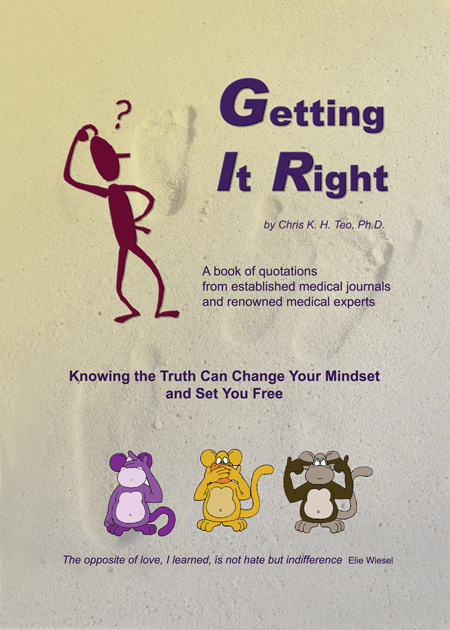
Actually I call this a book of quotations because it contained statements made by renowned medical experts as found published in established medical journals.  By doing this way, I want to ensure that I get it right and not wrong! Among the questions I asked and attempted to answer in this book are: Is modern medicine the only proven and scientific therapy? Is traditional and complementary / alternative medicine quackery? Are research data always reliable and proven when published in peer-reviewed journals? Are drugs perfectly safe after FDA approval?  Are “they” protecting public safety or safe-guarding self-interest? Can medicine cure cancer?

This orange tree was all forgotten after I came home. But after reading the book, The End of Illness, which my good friend S.Y. Yeong had sent me, “triggered” me to revisit this subject of perception again. Two sentences that Dr. David Agus wrote, awakened me – In the upcoming chapters, I’ll help you to answer that questions because many of these commonly held perceptions are just that – perceptions. I’m going to bust a few of these ideas and show you a different way of considering what’s good for you or not.
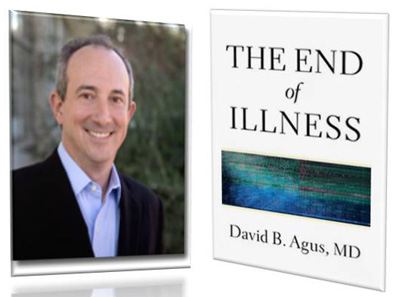
What is it that Dr. Agus wanted us to know? I suggest that you read his book for yourself, but let me share with you some of my thoughts.

First, I have high respect for this man. Dr. Agus  is professor of medicine and engineering at the University of Southern California Keck School of Medicine and the Viterbi School of Engineering. He obtained his undergraduate degree from Princeton University and his M.D. from University of Pennsylvania School of Medicine. Dr. Agus did his medical internship and residency at Johns Hopkins Hospital and his oncology fellowship training at Memorial Sloan-Kettering Cancer Centre. He is indeed well qualified to be saying what he is saying.

Second, it is not only his paper qualification that is just attractive, but the attitude of the man that I have the highest respect for.  Dr. Agus related a “trivial” event (for most people!) that changed him. This is what he wrote:

When I walked past my hospital’s gift shop and saw the cover of Fortune magazine proclaiming “Why We’re Losing the War on Cancer, “ … it seemed to be pointing a finger at me telling me how terribly I’d been doing my job. Cancer care has been much criticized over the last several decades, and clearly this article was trying to rip apart my field some more… It left a deep impression on me, for any cancer doctor who comes across such a blunt headline and well-thought-out essay is bound to feel disheartened and failing at his most essential job.

Clifton made remarkable points in the article, the most significant of which explained how we – as a society, but more specifically, within the medical community – have come to look at biology. For the last fifty years, we have focused on trying to understand the individual features of cancer in order to treat it rather than putting our efforts directly into controlling cancer. We have forgotten that curing cancer starts with preventing cancer.

When we reduce science down to the goal of finding the tiniest improvements in treatment rather than genuine breakthroughs, we lose sight of the bigger picture and find ourselves lost.

Is this why we’ve barely budged in our “war” against cancer in the last five decades?  … Gnawing questions like these began to bother me. I am, after all, an oncologist who cannot treat advanced cancer well. Medical science has made extraordinary progress over the past century, but in my field, the progress stalled out decades ago.

But, despite my initial reaction, I did and do believe that this kind of criticism is desperately needed, and I am inspired by the challenge to fix what’s broken.

To me, this is the measure of an honest, thinking man. This is what the wise and the educated should aspire to do. If there is a problem – say it out and more importantly, try to find a solution to it.

What are the problems that Dr. Agus see which do not seem to be right? He wrote:

Limitations of Medical Science

1.  The truth is that some doctors inflict a lot of harm today. The entire notion of “do no harm” has been corrupted; we’ve move into an extreme place in medicine that’s rarely data-driven and is horrendously overrun by false or unproven claims.

2.  A lot is going on in the body at any given moment. Yet we perform medicine in piecemeal – targeting one problem at a time. If you’re diagnosed with pneumonia, then you’ll receive a treatment specific for pneumonia and await your next health challenge. But what happens when you’ve got a system that’s broken down in a way that cannot be explained by any single invader …? Then you’ve got a real problem … because current methods of medicine don’t know what to do with you. The proposed treatment will probably mess with other areas in your system in ways that we may or may not know about. Your doctor will tell you that that treatment is “safe and effective,” but he’s only talking in relation to that one conditions, at that moment in time. He’s not considering everything else that encapsulates you – especially in the long run – because a lot of that knowledge remains to be understood.

3.  Rather than honouring the body as the exceedingly complex systems that it is, we keep looking for the individual gene that has gone awry or for the one “secret” that can improve our health. This kind of short-sightedness had led us far astray. 

The Medical Treatment for Cancer

1.  When Murray (Nobel laureate in physics) said to me point-blank, “Look at cancer as a system,” I really began to rethink everything – about cancer and our approach to treating it; about illness and our approach in medicine in general … I couldn’t help but ask myself: Is our way of looking at cancer keeping us from curing it? Moreover, does this faulty perspective preclude us from treating anything in medicine successfully?

2.   We’ve got a serious problem on our hands if all the intelligence and money currently going toward cancer are doing next to nothing in this so-called war. It’s time to change not only how we think about cancer … We need a radically different way of thinking…

3.   Cancer treatment is the place where we take the most risks in medicine because, frankly, there’s little hope for survival in many cases, and the cure is as evasive today as it ever was. I’m infuriated by the statistics, disappointed in the progress that the medical profession has made, and exasperated by the backward thinking that science continues to espouse, which no doubt cripples our hunt for the magic bullet.

4.  If you come to me for help in treating advanced cancer detected late in the game, your game is likely to be over soon. I don’t say this … to sound insensitive; I say it because it’s the truth … it’s a shame that the technology and innovation in medical research and treatment are so archaic, outdated, and, dare I say, in some cases barbaric.

5.  Despite chemotherapy’s being a widely used treatment for cancer, nobody has ever shown that most chemotherapy actually touches a cancer cell. It’s never been proven. Researchers can perform all this elegant work in tissue-culture dishes – if I expose a cell to this cancer drug, here’s what happens, and so on – but doses in those dishes are nowhere near the doses, nor the environment, that happens in the body.

6.  The death rate from cancer from 1950 to 2007 didn’t change much.  We are making enormous progress against other chronic diseases, but little against cancer. With the more common deadly cancers, including those that ravage the lung, colon, breast, prostate and brain we’ve had an embarrassingly small impact on death rates. The lack of change in the death rate from cancer is truly alarming. How can this be? What did we do wrong in our research?

7.   Doctors such as myself arrive at solutions through plain old trial and error, and therefore we can’t always explain how things work. I can’t always tell you why a certain drug works or how it works other than to say I have seen results proving that it does. I also can’t always give you’re a straight answer as to which course of therapy might work for you. In fact, doctors – myself included – don’t actually know why these drugs kill cancer cells at all! There’s a lot of trial and error in my business. We don’t have the technology yet to precisely predict what medicine you’ll respond to or which one will work best. 

8.   When cancer is exposed to chemotherapy, drug-resistant mutants can escape. In other words, just as resistant strains of bacteria can result from antibiotic use, anticancer drugs can produce resistant cancer cells. The number of mutations shoots up exponentially as a cancer patient is treated with drugs such as chemotherapy, which inherently causes more mutations.   When chemotherapy drugs bind to DNA, they can cause cancer just as radiation can cause cancer by mutating the genome. This helps explain why survivors of breast cancer, for instance, can suffer  from leukemia later in life due to the chemotherapy they received to cure their breast cancer.

9.   It’s human nature to want to find magic bullets in medicine, but they happen once in a blue moon, and we may already have had all of our blue-moon moments. We haven’t found many new pills lately that really cure diseases. This is why the pharmaceutical industry is somewhat broken right now; it has run out of … a magical chemical that cures a disease. I don’t think we’re likely to find a lot more of those; it seems like a waste of time, money, and resources to keep looking for these magic bullets. We need a different approach – a new model.

Many doctors and authors before this have been saying similar things about cancer treatment. Dr. David Agus – one of America’s outstanding oncologist – has decided to join in the chorus. Let the song plays on to full volume!


Related post:  Book Review: The End Of Illness By Dr David Agus, M.D. by  Yeong Sek Yee & Khadijah Shaari https://cancercaremalaysia.com/2012/06/09/book-review-ehe-end-of-illness-by-dr-david-agus-m-d/

Part 2: Conversation with Chris Teo in Penang

Corinna is a 51-year-old Singaporean lady. On 5 May 2012 she was diagnosed with cancer of the pancreas. From the pancreatic tail the cancer has also spread to her liver and also the posterior aspect of her stomach. The surgeon who did the biopsy told Corinna that medical treatment would not be able to cure her. Nevertheless she was asked to seek further opinion from an oncologist.

After waiting for one and a half hours, Corinna got to meet her oncologist. Consultation with him was a great disappointment. After paying SGD 700 and talking for about 10 to 15 minutes, Corinna ended up more depressed, helpless and devastated. Whatever hope and expectation she had after her cancer diagnosis were dashed by this oncologist.

It was at this time that we got a phone call from our sister-in-law in Singapore. Corinna is her sister and she requested for us to talk to Corinna and her husband. So on 17 May 2012, Corinna,her husband, daughter and sister flew to Penang. We sat down to talk with the family for about two and half hours.

The following are recordings of our conversation that day.

Acknowledgement:  Thank you Corinna for your permission to share this story without having to hide your real identity.

At CA Care we take hours to talk to patients and explore ways as to how we can help them the best we can. We learn nothing from patients if we only talk for 10 to 15 minutes! Questions such as:  where you live, what car you drive, what job you have or do you have any health insurance, are not in our scope. These questions may turn out to be cruel! What if the patient is poor? It is okay if he/she is rich – the answer may inflate his/her ego but a poor man may be intimidated by such questions. Then, what would be the reaction of the healer. Would I treat the poor differently from the rich? Where is the compassion in this so-called noble, healing profession?

We would rather spend time with you explaining what you can do to heal yourself. We want you to be able to ask sensible questions. We know you are “fighting” the battle of your life and you have to bear the final consequence of that decision. It is our duty to provide you with honest and balanced answers to enable you to make informed decisions.

  • In the case of Corinna. She had seen the oncologist. He suggested chemotherapy even though she was placed in the “hopeless” category, where only a miracle can save her. So my first question after hearing her story was: What is it now that you want to do? You have to make that decision.
  • Our CA Care Therapy is not an easy path to take – go for chemo if you want it easy.
  • If you decide to follow our CA Care Therapy you need to be fully committed, you need to change your diet, lifestyle and mental attitude.
  • We encourage you to seek peace in Spirituality. In addition, exercise and have time for yourself.
  • You need to take herbs – but know that herbs by themselves are not magic. There is no instant cure either.
  • Healing takes time and before that can happen, you will initially experience a “healing crisis” or some difficulties first. Are you willing to go through that?
  • So reflect on these requirements and decide for yourself what you want to do for yourself.
  • Be forewarned again that our healing path is not easy to travel. Not everyone who comes to us can find healing – only 30% do, the rest don’t.
  • However those who persist, benefited. At CA Care we often see miracles happen – much beyond our expectation.
  • CA Care does not promise you a cure. We believe no one can cure cancer anyway. Because somehow and sometime later, the cancer could strike again.
  • As cancer survivors, you need to learn to be grateful for what you have and what you are. Thank God for whatever blessing that comes your way each and every day.
  • And above all, learn to live with your cancer. No one wins in a war!

Her full story:


Part 1: An Encounter with an Oncologist – A great disappointment

Part 2: Conversation with Chris Teo in Penang

Part 3: She found Hope in CA Care 

Meaningless Shrinking of Tumour by Chemotherapy

YHC (H856) is a 68-year-old man. In November 2011, he had a swelling in his right collar bone region. A biopsy was done and the doctor suspected it was cancer. YHC went to another hospital for a second opinion. A CT scan of his brain and neck was performed on 14 December 2011. The results indicated:

  • Normal examination of brain.
  • Right supraglottic soft tissue (upper part of the larynx, the area above the vocal cords) prominence raises the possibility of a tumour.
  • Bilateral supraclavicular and superior mediastinal nodes are in keeping with metastatic nodes. The largest seen on the left measuring 3.5 cm.

YHC underwent chemotherapy. The first cycle of chemo almost “knocked” him off. The side effects came six days after the treatment. He had to be hospitalised because of fevers, vomiting and diarrhea. Because of this the oncologist reduced the dosage of the subsequent chemo. So YHC went through the second to sixth cycles of chemo without any problem. However, after the sixth chemo, YHC had to be hospitalized again due to pneumonia. He was in the ICU for a week and this treatment alone cost him RM 30,000.


Study the results below.

CT scan on 27 January 2012

Comparison made with previous CT dated 14 December 2011,

  1. The prominence of the right supraglottic soft tissue is reduced when compared with the previous scan.
  2. Bilateral supraclavicular enlarged nodes are partially regressed.
  3. A small pericardial effusion is present.
  4. There are confluent nodes in the mediastinum which compress the superior vena cava. There are also confluent right hilar nodes. The approximate size of the confluent nodes is 6.4 x 4.8 x 3.7 cm.
  5. There is mild thickening of the gastroesophageal wall.

CT scan on 5 March 2012

  1. There is further regression of prominent right supraglottic soft tissue.
  2. Bilateral supraclavicular modes are still present.
  3. The anterior mediastinal soft tissue mass due to confluent nodes is smaller, measuring 4.2 x 3.4 x 3.3 cm. It still compresses the superior vena cava. Confluent right hilar nodes also appear smaller. There are discrete nodes overlying the aortic arch which are also slightly reduced in size.
  4. There is a new finding of bilateral pleural effusion, larger on the right, associated with right lung basal ateletasis. There is also partial collapse-consolidation of the right upper lobe.

CT scan on 28 March 2012

  1. The mediastinal mass of confluent nodes has increased in size. The paratracheal component of the mass is 5.0 x 3.5 x 5.4 cm severely compressing the superior vena cava.
  2. The anterior mediastinal lymph nodes have also increased in size, measuring up to 1.5 cm.
  3. A right pleural effusion is noted.

Impression:  Bronchogenic carcinoma with mediastinal lymph nodes increased in size from the previous examination.

Comments

This case really baffled me. YHC was first told that he probably had a lymphoma. Because of that, the oncologist only looked at his brain and the neck when they took the CT scan.  The medical report on 27 January 2012 indicated … “lymphadenopathy likely due to metastatic nodes with differential diagnosis of lymphoma.”

However, when all the chemos were done, the report on 28 March 2012 – for the first time, mentioned “bronchogenic carcinoma with mediastinal lymph nodes.”

Does this mean that after all the chemos were completed, “someone” decided that his cancer was actually a lung cancer? So, was he treated correctly in the first instance? YHC’s biopsy report was given the oncologist who later misplaced or lost it. Imagine such thing can happen in a private hospital!

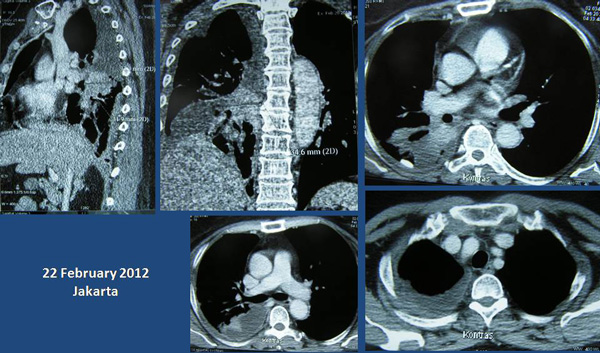
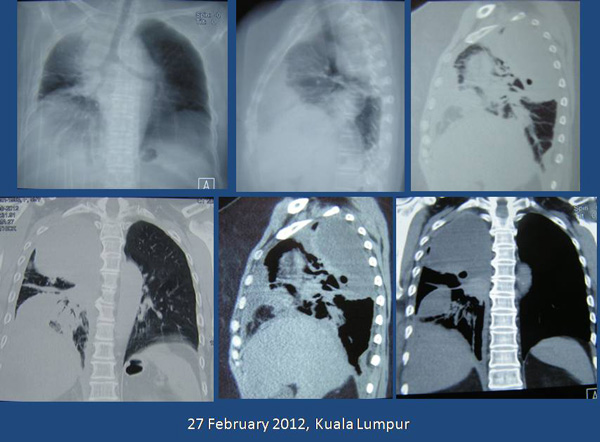
The second fact was just as equally baffling. Let us look at the condition of his lungs before and after the treatments. His lungs were getting worse after chemotherapy!


One important lesson we can learn from this case is that shrinking of tumour or mass after chemotherapy is meaningless   – indeed, it is misleading and has no meaning.  Let me highlight the important points again. After the first few chemos the mass became smaller and smaller as evidenced by the CT scan. So everybody was happy – the patient was happy, his family members were happy and the oncologist was equally happy. But do we (especially those who see this happen every day) not realize through experience that this shrinking of tumour is meaningless? Experience shows that the mass would grow in size again soon afterwards. The previous gain is often lost after more chemos. Is this not what happened most of the time?

Let us go back to the CT scan reports again:

26 January 2012: Right supraglottic soft tissue is reduced in size. Bilateral supraclavicular nodes are partially regressed.

5 March 2012: There is further regression of right supraglottic soft tissue.

28 March 2012:  The mediastinal mass has increased in size. Anterior mediastinal nodes have also increased in size.

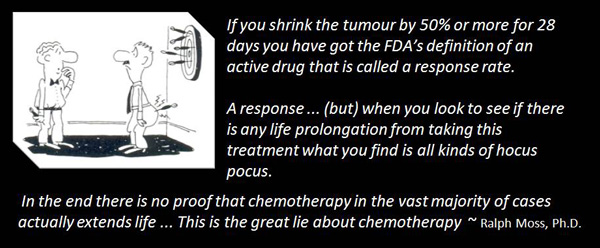
One would want to believe that with more and more chemotherapy, the mass will go on reducing in size until it disappears. No, this did not happen! And this phenomenon occurs often!  Read what Dr. Ralph Moss said below:


Chemotherapy did not cure him. In fact the treatment made him worse. But the doctor told YHC to continue with more chemo and radiotherapy.  YHC refused further medical treatment saying, “I would have to do more and more chemo and eventually “bye, bye!” He had spent more than RM 100,000 and was not going anywhere. Even the oncologist told him, “more chemo is not going to make him better. His condition would turn from bad to worse.” Why do more chemo then?

To me, the crucial point is not whether the tumour shrinks or not, but rather can the cancer be cured by the treatment.  If the treatment cannot cure, then shrinking of tumour is meaningless. I would prefer to advise patients to be happy and just be contented if they feel better after the treatment rather than place their hope on a shrinking tumour that brings them nowhere.


Colon-Liver Cancer: Strong Faith in God Brings Peace of Mind

On 25 April 2012, I had the privilege to meet GS. He had colon cancer that had spread to his liver. Seven of 12 lymph nodes were also affected.  His problem started when he passed out loose stools with blood, otherwise his health was fine.


A colonoscopy confirmed a tumour in his sigmoid colon. Subsequently GS underwent a surgery. This operation cost him RM 27,000. After surgery he was told that his cancer had spread to his liver – making it a Stage 4, or terminal. Nevertheless GS was asked to undergo chemotherapy, which was to cost him about RM 60,000.

Did you ask your doctor: If I were to undergo chemotherapy, can this cure me? Of course chemotherapy would not cure. Without chemotherapy, GS was told that he had only 6 to 8 months to live. GS decided not to undergo chemotherapy. He came to seek our help instead and was started on Capsule A+ B, LL tea, GI 1, GI 2 and Liver 1 and Liver 2 teas.

Why did he not want to undergo further medical treatment?  He said, “The doctor said this is serious case – fourth stage cancer because it has spread to the liver. But deep in my heart, I said – because I am a Christian – I reject it in the name of Jesus. After that my confidence level remained as normal … I just take it as it is. My fate is in the hands of the Lord. That is it, as simple as that. Even when I went for the operation, everything went on smoothly – 2 days in the ICU, 8 days in the normal ward. On the fifth day they remove my drip. I really thank my God for giving me His hand of healing.”

With full trust in his Lord, GS felt at peace.  He did not worry any more.  Soon after his surgery he came to seek our help and turned down chemotherapy.  Since then GS has been consistent in taking our herbs and he changed his lifestyle and diet. He had no problem. However, he realized that our herbs would not cure him but he was and is contented and happy.

His blood test done on 15 November 2011 and 2 March 2012 showed a slight increase in his tumour markers. In spite of that GS took it calmly – he was aware of his condition. After all, his doctor said he would only last 8 months at most, and GS had already survived 7 months and he is still doing fine – leading a normal life.  His strong faith in God had given him peace of mind.


15 November 2011

2 March 2012

Alpha-fetoprotein

117

189

GGT

92

146

SGOT

37

46

CEA

71.8

190.3

CA 19.9

3,698.0

3.849.5


I often tell patients this:  Believe in the diagnosis but don’t believe in your doctor’s prognosis! Indeed after performing a scan and biopsy and if you were told that it was cancerous, by all means go for a second opinion, but don’t try to deny the diagnosis. Cancer is common these days and most probably what your doctor told you is correct. Some patients go into a self-denial mode and do all sorts of things trying not to “believe” the diagnosis.  However, since doctors are not gods, don’t believe their prognosis. How long you live or when you die is not for your doctor to determine.  Based on experience or research results we may be able to predict the ultimate outcome but it is not necessarily true. You may beat the odd if you do things right.

In my conversation with GS,  I have pointed out what happened to some of our patients.  There was this lorry driver in Kuala Lumpur. He had colon-liver cancer. Without chemo, his doctor said he had only 6 months. He did not have the money to pay for his treatment and came to us for help. He survived for more than 3 years and then died. But he died due to his own foolishness. I was in Kuala Lumpur at that time and saw him. I asked him what he did wrong. His reply, “During the Chinese New Year I ate fried chicken.”  He suffered severe pains and his stomach bloated. Since he came to us he did not take such “forbidden” food – why now? Perhaps he was tired and bored of living?

There was a 49-year-old lady in Penang. She was diagnosed with terminal stage liver cancer. The tumour in her liver was 8.7 x 6.6 x 10.0 cm in size. The doctor in the general hospital sent her home – there was no treatment.  This lady came to seek out help and took our herbs. After 5 years, she is still alive.

At CA Care we see enough of doctor’s prognosis gone wrong! So, don’t believe your doctors if they say you are going to die soon. Indeed, a person who understands healing would refrain from “playing” God. Such words do great harm to patients.


I have an opportunity to share some thoughts with GS about cancer and life.

  • There is no cure for cancer

As much as anyone wants to say that you do this or you do that you can cure cancer, our 16 years dealing with cancer tells me that there is no cure for metastatic cancer. Cure means total elimination of the disease, not just surviving for 5 years as defined by your doctors. Amy Soscia (deceased) aptly put it this way:


Many patients come to CA Care wanting to find the “magic bullet” for cancer. There is none. What is even more unrealistic is that most of the patients who came to us have undergone all the possible medical treatments and failed. Yet when they came to us, they expected us to “cure” them. “I am not god” is my answer to such people.  However, that does not mean that I cannot help them – yes, we can within our humanly limit.


  • Accept your reality

Accept the reality that cancer is now a common disease.  Many patients who came to us have spent thousands and thousands of dollars to find a cure for their cancer in modern medicine. At the end, many were let down – desperate and felt helpless. Besides they found a “big hole” in their pockets or bank account.  Ask your oncologist before undergoing your cancer treatment: Can you cure me? See what answer you get.  You may get these responses: The treatment can prolong you life.  Oh, it will stop the cancer from spreading. Cure – no guarantee! Also ask, What are the side effects? Unfortunately some of the answers given are misleading and less than truthful.


  • Are you happy being on our Therapy? Did you benefit from our herbs?

No, we are not going to be able to cure GS of his cancer. But the more important question to ask is, Is he happy with what he is doing? If our herbs help him, be grateful. Praise God for this blessing.  At CA Care we teach you to live with your cancer, not to fight your cancer.

GS benefited from our therapy. Since coming to us he did not have to take medications for his high blood pressure and also uric acid. He lives a normal, happy, pain-free life. What more can anyone ask for? Be grateful for what you have and what you all. Most people forget this.  They want a complete cure – being able to go back to their old ways of life and anything short of this will not make satisfy them.


  • Death is the Ultimate Healing
Let me end with this message to all cancer patients:


Lung Cancer: The Meaningless Decrease and Increase of Tumour Markers After Chemotherapy

HK (S97) is a 57-year-old man from Indonesia. Blood test showed that his CA 19.9 was elevated.  A CT scan on 15 March 2011 in Singapore revealed a small right pleural effusion and small nodules in his right lung.

A PET scan done on 17 March 2011 indicated:

  1. Hypermetabolic primary tumour at the right lung apex.
  2. Smaller subcentimeter nodules (below the resolution of PET) in the right lung, suspicious for intrapulmonary metastases.
  3. Right pleural effusion with multiple FDG-avid pleural nodules.
  4. FDG-avid left supraclavicular, subcarinal and right paratracheal nodes, suspicious for nodal involvement.

HK underwent chemotherapy as below:

Date

Procedure

CEA

CA 19.9

19 March 2011 Biopsy at a hospital in Kuala Lumpur.    
22 March 2011 Lung cancer confirmed.    
24 March 2011 Chemo – first cycle, day 1 – Gemcitabine + Cisplatin    
30 March 2011 Chemo – first cycle, second injection 12Apr 11 = 85.5 12Apr 11 = 435.9
20 April 2011 Chemo – second cycle, day 1 – Gemcitabine + Cisplatin    
26 April 2011 Chemo – second cycle, second injection    
28 April to 1 May 2011 Fevers  < 38 C, admitted to hospital    
11 May  2011 Chemo – third cycle, day 1 – Gemcitabine + Cisplatin 11May11 = 123.5 11May11 = 291.6
18 May 2011 Chemo – third  cycle, second injection    
31 May 2011 PET scan – results showed improvement 30May11 = 90.5 30May11= 220.3
1 June 2011 Chemo – fourth cycle, day 1 – Gemcitabine + Cisplatin    
8 June 2011 Chemo – fourth  cycle, second injection    
22 June 2011 Chemo – fifth  cycle, day 1 – Gemcitabine + Cisplatin    
29 June 2011 Chemo – fifth cycle, second injection    
13 July 2011 Chemo delayed due to lack of blood    
20 July 2011 Chemo – sixth cycle, day 1 – Gemcitabine + Cisplatin    
27 July 2011 Chemo – sixth cycle, second injection    
11 August 2011 PET scan – results showed no changes or further improvements 10Aug11 = 64.2 10Aug11 = 164.8
13 August to 17 Nov. 2011 Three months on Tarceva – Rashes in the face and legs. 14 Sep11 = 130.3

12 Oct 11 = 217.7

14 Sep11 = 85.7

12 Oct 11= 114.1

17 November 2011 PET scan – results showed cancer  was more aggressive 16Nov 11 = 523.0 16Nov11 = 438.2
26 November 2011 Chemo – first cycle of Alimta    
16 December 2011 Chemo – second cycle of Alimta 4 Jan 12  = 666.5 4 Jan 12 = 4,422.0
5 Jan12  to

1 Feb.12

Chinese herbs    
3 February 2012 Started on CA Care herbs  – Caspsule A + B, Lung 1 and Lung 2, Pain, Liver Tea 1 Feb. 2012

=737.5

1 Feb. 2012

= 3,917.0

  While on CA Care’s herbs 10 Mar 2012

 = 629.8

10 Mar 2012

= 3,609.0


Comments

Study carefully the rise and fall of his CEA. From 85.5 it increased to 123.5 and then decreased to 64.2 after which it started to climb to 130.3 to 737.5. After CA Care’s herbs it went down to 629.8.

Study carefully the rise and fall of his 19.9. It started with 435.9. With chemotherapy it decreased to 291.6, 164.8 and eventually 85.7. However with more treatment the CA 19.9 started to increase to 114.1, 438.2 and eventually 4,422.0. After CA Care’s herbs it went down to 3,609.0.

When the CEA or CA 19.9 went down after chemotherapy, patient and his family were happy and the doctor surely is similarly happy and “believes” that the treatment has done the trick. But there is no cause for celebration because the decrease of CEA and CA 19.9 are just meaningless. It happens often – only that those concerned never want to see reality. They want to believe that chemotherapy is going to cure their cancer!

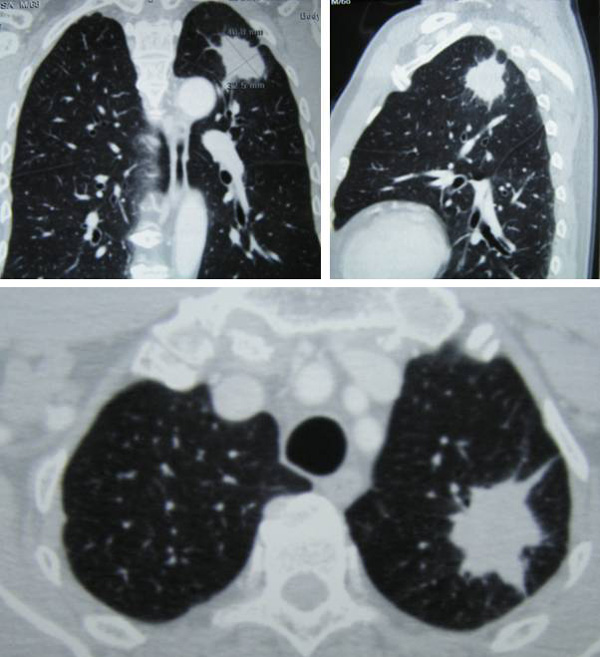
In the case of HK above, again I say, the increase and decrease of his tumour markers is meaningless. At the end of the day, this is what his lung looked like. No use and no cure.


Increase or decrease of CEA and CA 19.9 after chemotherapy is meaningless when the end results of the treatment are like these!

This Is What We Often Encounter – Failed Medical Treatment, Healing Crisis after Herbs, Bad Diet and Family Problems

Part 1: Failed Medical Treatment

CE is a 56-year-old lady. She lives in Penang, down the road where our centre is.  Sometime in March 2010 she was diagnosed with Stage 4 breast cancer. No operation was indication. A doctor in a private hospital tried RFA (radiofrequency ablation) for her tumours.  She received two treatments with RFA – one to her breast lump and another to her bone.

Unfortunately, by August 2010 the tumour recurred in the same left breast.  She underwent 6 cycles of chemotherapy at a government hospital.  The treatments were completed in May 2011, by which time all the lumps in her breast were gone.

Six months later, in December 2011, CE developed breathing difficulties. Her lungs were filled with fluid. A month later, in January 2012, she had severe headaches for 2 weeks. The cancer had spread to her brain. She underwent 5 sessions of radiotherapy to her head. She was given painkiller medication.

In February 2012, she had breathing difficulty again. She had pains in her left leg. The cancer had spread to her bones. The doctor at the government hospital gave up on her. She was referred to the Hospice. She was prescribed morphine.  There was no hope.

Part 2: Healing Crisis After Taking Herbs but She Was Better

CE and her daughter came to seek our help on 17 February 2012. She was prescribed Capsule A, teas for her Bone, Lung, Brain and Pain.

24 February 2012: One week on the herbs, her condition improved. Her intake of painkiller was reduced by fifty-percent. Previously she needed to take 4 tablets a day, and after the herbs this was cut down to 2 tablets per day. She felt more energetic. Her facial expression was better.

CE (patient):  First day, I moved my bowels. Second day, I had diarrhea. Third day I had more diarrhea.

Chris: The first few days of taking herbs, patients generally go through a “healing crisis” – a cleansing process. There could be more pain, you become more tired or you have diarrhea, etc. These are good. Do not take any medication, the problems will resolve by themselves. I have a patient who moved  her bowels ten times a day after taking the herbs. Take it easy.

Daughter: She had five bowel movements!

C:  Oh, ten times would be better!  Take it easy and be patient. Now, do you still have diarrhea?

CE:  I have no more diarrhea.

C:  This is what I am telling patients. You may have pain after taking the herbs, then the next day more pain and perhaps more pain for some more days. Then the pain becomes less and less and eventually it will be gone. Everyone has to go through this difficulty or “healing crisis.”

D: She does not need to take so much pain medication now. Before she took four times of medication a day.

CE: After take the herbs, I only took painkiller twice a day. Today I only take one time.

C: No need to take four times a day anymore? You need to take the pain medication if there is pain. It is no use to suffer. Take the pain killer if the herbs do not help you. You need to relieve the pain. Only thing is we don’t want to take too much of pain medication and be dependent on it.

Okay, you took the herbs for a week now. Are you getting any better?

P: I am more “cheng sin” (more alert).

D: I don’t know if she has improved or not from the inside, but looking at her facial expression, certainly she is much better now.

C: Patient should be able to know if she is “improving” or not. She should be able to “feel” the improvements. I too would be able to “see” if patients are getting better or not by looking and talking to them. And I tell every patient who come here – if you take our herbs for two or three weeks and you don’t feel any better, then stop coming to see me. The herbs are not good for you. Better that you go and see someone else for help.

Part 3: Bad Diet and Family Problems

2 March 2012: Unfortunately her health deteriorated. She did not look healthy. Both her legs were swollen. After some questioning, she admitted to eating “outside food” the whole week.

Daughter: Both of her legs are swollen!

Chris:  Last week when you came, were the legs swollen?

D: No.

C: Do you still have pain?

CE (patient):  Yes.

D:  Her pain medication intake had increased to twice a day. This week she is less energetic. Last week she looked much better.

C: Did she take care of her diet? Or did she start to eat anything she liked?

D: This week I was not able to cook for her. My son was sick and so I was not able to take care of her (mother).

C: So, the whole of this week she had been taking “outside (hawker) food”?

D: Yes. The first week, I cooked her food.

C: This is the problem.

D: It was difficult for me.

C:  Are you the only daughter at home?

D: I live with my family (husband, son and in laws) in Batu Ferringgi (about an hour’s drive away) but my mother lives in Batu Lancang (near our cancer centre). She lives with my sister and brother.  But all of them are working so they have no time to take care of her.

C: What about you? Are you working?

D: Yes. But in the afternoon, I come to my mother’s house to cook for her. But this week my son was sick and I had to take care of him. So I did not have the time to cook for my mother.

C: I understand. But in cancer, diet is very important. As you notice, the first week she was doing much better with no swollen legs. But this week her legs swelled due to bad diet. It is all about “bad” food.

Indeed, there is nothing we can do really. Like they say, “A mother can take care of ten children, but ten children cannot take care of one mother.”  I understand your situation.

Comments

1.  Most patients come “shopping” for magic potion. They expect us to cure them even after medical treatments have failed them. This is unrealistic. We are only human and we can only do that much and no more. This case is not an exceptional case. Read my blog, www.ADayWithChrisTeo.wordpress.com and you understand what I mean.

2. Our path to healing is not a “honeymoon” trip. After taking the herbs or change of diet, there will be a ‘healing crisis”. You will probably have more pains, more coughs, more bowel movements, etc.  (Read more: Healing Crisis). Do not do anything to stop this cleansing process. The problem will solve by itself after a little while. No medication please. Remember that “healing crisis” is a law of cure. Without this happening there shall be no healing.

3.  Diet is the most sore point among patients. When patients start to get well, they want to eat what they like. And after they have eaten all the “bad food” they write us asking why their tumour markers, like CEA, CA 125, CA 19.9, etc., had increased? What can we do? You reap what you sow! It is okay, if patients admit to their mistakes like in the case above. At least we can teach them to do it right the next time. But the worst cases are those who would not want to admit their mistakes and keep on denying that they followed our dietary advice to the letter. Well, there is nothing to be upset or dispute. Winning over this matter does not benefit anyone. For these patients, our advice is – Stop our herbs and find someone else to help you.

4.  As said in the beginning of this article, cancer is not about a tumour in your body, it is about you as a human being. Many patients come and go, unfortunately never recognizing this important aspect – to them cancer is only a misery or disaster in life! Such people die or suffer in vain. They believe that their problems are due to outside factors. They don’t look into themselves to know what have gone wrong. Most cancer patients carry with them a load of unresolved personal baggage – bitterness, hatred, lack of love, family problems, etc. Unfortunately, no chemo, radiation or herbs can help in such matters.  This is what I mean when I said in the beginning of this article, After talking to you for about five minutes I would probably know if I can help you or not. Your personality and problems show up during our conversation. And it is hard to change a patient’s attitudes and lifestyle – it has to be the person himself/herself who wants to change. Without change, no healing can ever take place.

Meaningless Shrinking of Tumor While on Tarceva

Mark (not real name) is a 34-year old male. Sometime in September 2006 he had coughs which led to the diagnosis of lung cancer. A CT scan on 18 December 2006 showed a 5 x 5 cm mass at the right upper lobe of this lung. The right lung also had fluid (pleural effusion). In addition, there were several metastatic lesions in the partially collapsed right mid and lower lobes of the lung. The left lung was clear. Unfortunately the cancer had already spread to the fourth and sixth ribs. A core biopsy of the lung mass indicated a moderately differentiated papillary adenocarcinoma. 

Chemotherapy Failed

From December 2006 to February 2007, Mark underwent chemotherapy with Gemzar and cisplatin. Two cycles were given each month and he received a total of six cycles. The cost of each cycle was around RM 4,000. The oncologist told him that there would be no cure but the size of the tumor could be reduced by the treatment.

After the chemotherapy was completed, a CT scan on 7 March 2007 showed right lung severely collapsed with a mass lesion measuring 6 cm over the hilum. Mark had to undergo a procedure to re-inflate his lung.

Oral Drug Tarceva

Mark was told that chemotherapy was not effective. He was asked to take the oral drug, Tarceva which cost RM 270 / pill. The progress of the treatment responses are as follows:
1.  CT scan on 9 March 2007 showed a 7.5 cm x 6 cm mass and a daughter nodule measuring 4.5 cm x 3.5 cm.

2.  CT scan on 31 May 2007 showed a mass measuring 4 cm x 2 cm, a significant reduction in size of the right lung mass. 

3.  CT scan on 13 September 2007 showed no significant change compared to the previous CXR. 

4.  CT scan on 13 November 2007 showed a larger mass measuring 8 x 6 x 4 cm. There was fibrosis in the right apex and the right lung base. There was destruction of one of the lower left rib suggestive of bony metastasis.

While on Tarceva, Mark was told that initially the tumour had shrunk to about eighty percent of its initial size. Unfortunately this shrinkage did not last. After eight months of Tarceva (costing him approximately RM 64,000) it was clear that the treatment had failed.

Mark was told the disappointing news that the tumour had grown bigger again. Tarceva was not effective.

Bony Metastasis – Bonefos

In addition, the bony metastasis got worse. Mark was on Bonefos since his diagnosis and this medication cost about RM 400 per month.

Mark and his wife came to see us on December 2007. They wanted to know if by taking the herbs the tumour would shrink and how long would it take for the herbs to be able to do this. Honestly and frankly my respond was: I am sorry I don’t know. 

Comments

Mark and his wife came to us to seek an assurance that herbs can help him. We have lung cancer patients who were told by their doctors that they only had six months to live, but after taking the herbs they went on to lead a normal life for another two to three years before they eventually succumb to the cancer.

A man with bone cancer was told: Go home and prepare your will. You only have six months to live. He declined Bonefos medication, took herbs and is still alive to this day – almost seven years now. However, it is absolutely wrong on our part to claim that herbs can cure cancer. Unfortunately when Mark came to see us, I was unable to provide him the guarantee that herbs can cure anything if that was what he and his wife came to see me for. I told them, we could only do our best to help.

I am reminded by what Randall Fitzgerald said (in The Hundred Years Lie):

  • For many people who grew by and dependent on technology and the laboratory drugs of Western medicine, breaking free of that paradigm or even considering the use of strange-sounding treatments from other cultures, requires a leap of faith.  
  • For many of us, before we can discover natural healing alternatives, we must first experience the desperation of having exhausted the entire range of synthetic chemical remedies offered by modern medicine. 

However, for some people even the experience of failure does not bring any message. The sad truth about advanced stage lung cancer is that there is no cure for it – not even with chemotherapy or Tarceva.

Stephen Spiro and Joanna Porter in an article: Lung cancer– where are we today? (American J. Respiratory and Critical Care Medicine. 166:1166-1196, 2000), wrote that although chemotherapy may be a logical approach, there is virtually no evidence that it can cure NSCLC (non-small cell lung cancer).

Ronald Feld et al. (in Lung. Clinical Oncology. 2nd ed. Harcourt Asia) summed up the present scenario: Despite this large patient base for clinical trials, the role of systemic chemotherapy in the management of NSCLC remains one of the most controversial issues in medical oncology today.

Dr. Jeffrey Tobias and Kay Eaton (in Living with Cancer) were more explicit when they wrote

  • For patients with NSCLC …(treatment) in truth is likely to be more valuable for palliation of symptoms rather than a treatment with a real prospect of cure… a cure couldn’t realistically be attempted.
  • the early dramatic  response to chemotherapy is rarely beyond a year or two … perhaps six months later (there is) clear evidence of the return of the cancer. 

What is Bonefos?

Bonefos is used in some cancers to reduce bone destruction that could result in bone pain and fractures. Its chemical name is Clodronate disodium belonging to a class of drugs called bisphosphonates. It stops the calcium from coming out of the bone which makes it weaker and hence increasing the risk of fractures and pain besides increasing calcium blood levels.  Nowhere is it stated that it cures bone cancer. And in this case, Bonefos was not effective. 

What is Tarceva?

Go into the website and find some hard truth about this oral drug. According to the earalier company’s website,  (http://www.tarceva.net/survivalresults.aspx), Tarceva is the first and only oral HER1/EGFR tyrosine kinase inhibitor proven to significantly prolong survival. It significantly increased overall survival by 37% and demonstrated significant symptom benefits by prolonging the time to progression of symptoms.

This write-up is very impressive. But as always, let me caution patients to read information using some common sense. Ask what does increased survival by 37%  means in real term? The data presented by the company are as below:

  1. Median survival was 9.5 months with Tarceva versus 6.7 months with placebo.  In real terms Tarceva only increased survival by 2.8 months. Mathematically it is very correct to say that the increased survival due to Tarceva is 41.8%. Definitely 41.8% increased survival sounds very attractive indeed.
  2. Tarceva significantly prolonged progression-free survival (PFS) by 82%. The actual figures are: PFS 3.6 months with Tarceva versus 1.8 months with placebo.

Nowhere in the medical literature is there a claim that Tarceva cures lung cancer! Patients need to decide if it is worth spending RM 8,000 each month on medication that was shown to only prolong life by 2.8 months. In this case, Mark had already spent RM 64,000, and found out that Tarceva had failed him.

Lung Cancer: Why do a biopsy when you don’t want to go for chemotherapy?

SK (S123) is a 59-year-old lady from Indonesia. On 11 November 2011 she came to a private hospital in Penang for a general wellness check-up.  She did not have any symptoms. She was given a “booklet” containing the data of her health screening and was told by the doctor that she was healthy – no problems. The following are some of the information for us to study carefully.

  • The chest X-ray report showed both lungs are clear.
  • Ultrasound of abdomen indicated fatty liver.
  • Blood test results are as follows:

Parameters

ESR 42     High
Platelet 102   Low
Free T4 (ng/dl) 1.5    High
Free T4 (pmol/L) 19.3  High
Alanine transaminase 52      High
GGT 31
AST 37      High
Alkaline phosphatase 136

SK went home to Jakarta feeling satisfied and happy after being given a clean bill of health by the doctor. However, about three months later, SK developed fevers and breathing difficulties. She consulted a lung specialist in Jakarta and was hospitalized. There was fluid in her lungs. Pleural tapping was done. Four liters of fluid were tapped out of her lungs during the 5 days in the hospital. The doctor suggested a biopsy to be followed by chemotherapy or take an oral chemo-drug, Tarceva. SK refused. She was afraid of the side effects. The total cost for this hospital stay came to about 30 million Indonesian rupiahs.

SK came to a private hospital in Kuala Lumpur for a second opinion.  She was hospitalized for a week where a  CT scan and biopsy were performed. During that time too, another 700 ml of fluid was tapped out of her lungs. The report of the biopsy of her lung dated 28 February 2012 indicated a moderately differentiated adenocarcinoma.

SK refused chemotherapy.  The doctor gave up and she was asked to go home. The total medical expenses in Kuala Lumpur came to RM 10,500.

On 28 February 2012 we received this e-mail.
Dear Mr. Chris,

My name is S. The doctor in Jakarta said my aunty has lung cancer stage 4. At the moment, we are in Kuala Lumpur (hospital). The result of biopsy will come out on Thursday or Friday, but the doctor said it’s seems advanced cancer. We would like to seek your help. Can we come to Penang without result or should we wait for the result? Your prompt reply will be highly appreciated

Thank you, best regards.

Reply:  Wait for the results and bring all the medical reports. No need to hurry. Come on Friday if you can, or Sunday night. See my website: www.cacare.com

Comments

Over the years, I have noticed a peculiarity about cancer patients, especially those from Indonesia.  They come to hospitals in Malaysia for a second opinion after being told that they have cancer by doctors in their home country. They undergo all the test, scans, biopsy, etc. Again they are told they have cancer. They refused treatment and pack their bags and go home. I cannot understand such behavior. If you do not want to do follow up treatment why do you proceed to do the biopsy? SK spent RM 10,500 and then she decided to go home without any treatment. Actually, even the CT scans done in Jakarta were indicative enough of her lung cancer. Why go the extra step and then quit half way? As I have said earlier, this happens very often!

Health or wellness screening is another phenomenon. Do you see the flaw of going for such check-up?  I wonder how helpful is such a screening procedure?  SK was told her health was in perfect condition in November 2011 after the check up. I, however, would disagree with that.   Her ESR was high, plantlet count was low and two of her liver enzymes were elevated. Her health was not perfect. There was something wrong somewhere? But the doctor said she was in perfect health! Can you believe that? What the doctor said might not be correct!

Three months later SK’s lungs were filled with fluid. The irony was three months earlier an X-ray showed her lungs were clear. How could that be? Are we to say that within three months from “nowhere” her lungs have grown so many tumours? Another question is  –  what could have caused her lung cancer? Could it be a metastasis from somewhere? I was curious and tried to find out more. SK told me that some eight years ago she had an operation to remove a 10-cm fibroid. I wondered aloud. Could that be cancerous, and she was not told about it? And now the lung cancer is actually a metastasis?  SK had been having coughs on and off for many years. Is this not an early sign of metastasis? My aunty also had chronic coughs for two years before a CT showed that her cervical cancer had metastatised extensively to her lungs. Unfortunately, SK is not educated and could not read much – she did not have any clue of what was happening to her.

Lung Cancer: Death is Not a Failure. He did not take a wrong healing path either!

On the night of 9 February 2012, we received this e-mail.

Dear Dr. Chris and Aunty Beng Im,

I want to inform you that my father, Mr. LS from Indonesia, had died on Thursday, 16 February 2012. I want to thank you for all your treatment to my father during his sickness. Until his last days, he still took your herbs and did the e-therapy. I believe that your herbs and the therapy do bring goodness to him. He died without suffering (no pain and no difficulty in breathing, and he died in his sleep). I believe that he is already happier right now, free from his sickness and rest in a peaceful place.

Thank you for remembering my father among your patients. We, as a family, are happy to know you also. You gave a medication, with a personal touch, that we hardly find anywhere else. We learn a lot from you about healthy life style.

Reply:  Dear K, A few minutes ago, after dinner, I asked my wife to write you and find out about your father. And now I have this news. Thank you for informing us. Please extend our sincere condolence to your whole family. Yes, sometime it is better to die and end all these sufferings and pain. Thank you again ~ Chris

Case History of LS

LS was a 71-yer-old man from Indonesia. In 2007, a chest X-ray showed a spot in his left lung. He did not do anything about it. In November 2010, LS did another chest X-ray and the spot was still there. He came to Melaka and did a CT scan on 15 November 2010. There was a speculated soft tissue lesion in the apex of the upper lobe of his left lung. It was 4.0 x 3.3 cm in size and was consistent with a lung carcinoma. A CT guided FNA biopsy was performed and confirmed that it was cancerous.  LS was asked to undergo chemotherapy and radiotherapy. He refused.   LS went to Singapore for a second opinion in February 2011. Another CT scan was done. The tumour had grown bigger to 40 x 35 x 45 mm. He refused further medical intervention and came to seek our help on 13 March 2011.

LS was subsequently prescribed herbs – Capsule A, Lung 1 and Lung 2 Teas.  In view of the cysts in both of his kidneys, LS was also prescribed Kidney Tea.

After his first visit, we got to see LS again in May and July of 2011. When he came he did not have any pains.  The only thing outstanding thing about him was that he was addicted to coffee. So we asked him to drink black coffee (without sugar!).  His daughter updated us about his condition via e-mails, example as below.

10 December 2011

Dear Aunty Beng Im,

Thank you very much for your kind reply. I appreciate very much for your suggestion about foods that will help my father. The doctor here is so amazed about my father’s condition, how he still can walk by himself (without wheelchair) and do the daily activities by himself (eat, shower, exercise, etc). They said in my father’s case, the patient cannot survive within a year. My father was first diagnosed in November last year (2010). We still believe that taking the herbs and the food controlling brings benefit to him, beside God’s care of course.

Here I give you a photo of my father (I captured it last week). He was writing Chinese calligraphy. My sister asked him to do it so he has something to do at home and he does not think about his disease. He has more spirit right now, even his both legs are swelling (because the albumin level is low).

Thank you once again for your care aunty. Please send our regards to Dr. Chris. So sorry we still cannot go to Penang, because my father still cannot travel far. Please support us in prayer aunty. Warm wishes ~ K and family.

Comments

1. Did LS take the wrong path for his healing? Or do you know of a better path?

LS died and he did not want to undergo the standard medical treatment. Perhaps some critics would say that he should have followed what his doctor recommended – go for chemotherapy and radiotherapy. I would have loved to ask LS what he would have done if he were to live his life again!

As I am writing this story, I remember  another case of lung cancer. This man – THK – is 57 years old and he was diagnosed with lung on 22 March 2011. The tumour was 20 x 24 x 22 mn in the upper lobe of his right lung (Note; LS had 40 x 35 x 45 mm) THK underwent 6 cycles of chemotherapy with Gemzar + Cisplatin (total cost about RM 50,000).  The treatment did not cure him. In fact the cancer became more aggressive. He was switched to oral chemo – Tarceva for three months. The PET scan showed further deterioration. He was asked to undergo 6 cycles of chemotherapy with the latest or newest drug, Alimta at RM 9,000 per cycle. THK received 2 cycle of Alimta and gave up. The tumour makers kept rising in spite of the treatment. On 4 January 2012, his CEA was at 666.5 and CA 19.9 was 4,422.0.  In short, the treatment failed miserably. THK concluded he was on the wrong path and came to seek our help on 3 February 2012.


2.  Can chemotherapy and radiotherapy cure your lung cancer? The following are the answers.


3.  They say do nothing is better than spending a lot of money to do something and get no meaningful result!


Ben Died, My First Lesson from Heaven – Death is not a failure!

The first patient who took our herbs was Ben. He had colon cancer that had spread extensively to his liver. This happened way back in July 1995. Ben wrote, “There would be no medicine for me. I was advised to prepare my will as soon as possible. I was stunned for a moment. My wife, Cindy and I broke down. I thought I am going to die.“

Ben underwent palliative chemotherapy and at the same time started to take herbs, starting 20 July 1995.  His health turned for the better.  Ben and Cindy came to our house every week to help take care of other cancer patients, as more and more patients came to seek our help.  For Ben to be able to live a quality life was an inspiration for us. At that time, we knew “nothing” about cancer. So through Ben we started to learn many things about cancer.

In the early morning of 29 October 1996, Ben passed away, rather unexpectedly.  According to Cindy, Ben asked for an extra pillow. As she went to take it from the cupboard, Ben put his hands together and went home peacefully. According to the doctors, most parts of his liver had stopped functioning months before.  It was a great wonder that he could still continue to live for more than a year. According to Cindy, one of the doctors commented that, Someone Above was helping him along!

I was at Ben’s grave site, a broken person.  When they buried Ben, I felt as if half of me also followed Ben into the grave.  It was a sad day indeed.  My heart mourned and cried out “I want to give up Cancer Care.  There is no point for me to carry on … Ben had lost his battle against cancer … I have failed!  What is the point of going on? Indeed this failure was a big blow to my ego! I was naive then. But, later I learnt that I was not the only healer who feels this way. These  two famous doctors also felt likewise.

However, in this time of grief, it dawned upon me that I have erred terribly … Chris Teo,  are you playing God?  No one lives forever.  No mortal on earth can decide who lives or who dies or for how long.  Life is God’s prerogative.  He gives and He takes away.  I soon realized that instead of abandoning what we had built, we should instead build upon it.  We should take note of how Ben had benefited from the herbs and count those blessings.

Death comes sooner or later to everyone, to the healthy as well as the sick.  Death is never the issue. Life is. To live is a challenge. It needs determination, courage and wisdom.  Someday, when you are tired, sore or bored with life, death becomes a healing.

As we begin to take account of the blessings in Ben’s case, we realize again that there is no reason for grief.  The doctors gave Ben two months to live but Ben lived one year, three months and eighteen days.  However, it is not the length of time that mattered.  What is more important is the quality of life Ben had.  Ben lived a full happy life.  He did not take life for granted.  He anticipated and made preparations for his departure.  He enjoyed whatever time he had with Cindy, having daily picnics and enjoying Penang’s natural spots under those shady trees.  Ben even designed his own grave!  He taught Cindy how to manage the chores of daily life without him like paying utility bills, taking care of the car, etc.  When he departed, it was neither a sudden good-bye nor a slow painful death. Perhaps on this point alone, we take consolation that many people who were on the herbs died without much pain and their death came easily and peacefully.

From our experience with Ben, we realize that having only herb capsules A and B is not adequate to help the cancer patients.  We need to do more research and find herbs that can alleviate pain, coughs, and a host of other problems that often afflict cancer patients.  On this point, as I was writing this passage, the phone rang.  It was from a lady who had come to see me the previous week.  Her father had a severe stabbing pain in the back. The doctor prescribed pain killers but they were not effective. He took the Pain Tea only twice and the pain disappeared.  There was no need for any pain killer drug!  She called to relay her father’s thank you.

Unfortunately, Ben did not live long enough to benefit from this discovery.  Many after him benefited.  But we all owe it to Ben, our experiences with him widened our vision and understanding of the needs of cancer patients. One fact that amazed Cindy very much was that Ben never before believed in taking herbs! He was so particular that he would not even touch any medicine unless it was prescribed by his doctor.  And then we had this same Ben taking herbs given by a complete stranger. When a friend from his church suggested our herbs he immediately agreed to take them without any hesitation.  In retrospect, we always believe the Almighty God works in ways we cannot understand or foresee. When Ben completed his mission, he left us for Eternal Rest, his ultimate healing.

We now realize that we are not alone if we feel miserable or like a failure.  Such feelings are normal but we must not allow these “failures” to affect us because there are actually not failures!  Dr. Barbara Joseph said this:

The Spiritual Side of Healing Cancer

To us, we believe that patients’ recovery and survival are more than just medical or herbal success. It is God’s grace.

Science does not believe in the mind, hope, faith, spirit, and grace – for the basic reason that we are all supposed to be an equivalent to a super machine. What we cannot see, measure or analyze do not exist and do not count. Those who associate with them are thus branded unscientific or spiritual fanatics!

We wish to view healing from a different perspective.

  • Man comes into this world with a purpose. He is not just a machine but also a spiritual being. When we fall sick, often we yelled out GOD, WHY ME? It is as if God hates us or does not favour us. Some go to the extent and reasoned that we get sick because we are being punished. Not so.
  • In this world, each of us is given the liberty to choose – to exercise our rights to live life the way we want it. Some people live wisely while some others live foolishly. So, we reap what we sow – we are responsible for our actions.  Through our own ignorance, we violate Nature’s Law of Health – so we get sick, irrespective of whether how pious we are.
  • Ask a scientist, why is there such a thing as pain? Pain is not meant to torture us. Pain is nature’s early warning signal to the body that something is not right within it.  Unfortunately, many choose to ignore the signal by “cutting” off that warning signal. Instead of taking a pause and ask what has gone wrong, we prefer to take the easy way out – take pain killers. We cut off or deaden the alarm system. We allow things to continue to go to go wrong without us having to know about it as long as it does not bother us. Ultimately, too much painkillers may land you on your back in the hospital to nurse a more severe damage. Who is punishing who now – your own foolishness or someone else?
  • Illness too, can be viewed as a blessing – as a signal in our body for us to do some accounting and reflecting of what we are doing, who we are and where we are going.
  • Many people are too busy on their feet chasing after their gods. Perhaps being forced to sleep on our back and staring at the blank ceiling above can spur some ”consciousness” into us and bring us back to our Living Creator? After all, those material gods that we have been chasing after all this while cannot help much in terms of cancer cure.
  • There is a now a new and growing belief that every cell, tissue and organ in the body is conscious and has innate intelligence. They have the capacity to heal. Curing a disease, aiming only at the malfunctioned organ is inadequate and would not bring about healing.  To achieve complete healing we need to heal the whole body – the physical at all levels, the mind and the spirit or soul.
  • If we cannot heal the mind then we cannot heal the body. It is for this reason that we spend time with you asking you to let go of your bottled-up emotional stress such as anger, hatred, fear, etc. When the mind and the soul find peace within, the physical healing starts within you. Taking herbs is NO magic unto itself – it cannot heal any one until you have that frame of mind that wants to heal.
  • One lady came to see us and said because of chronic diarrhea she had for the last twenty years. And for the last twenty years she had been on antibiotics and all kinds of drugs. Nothing cured her. The moment she stepped into the Cancer Center until she left, there was nothing that she could say but complaints. The fear of what the herbs can do, the antibiotics that she is taking, the side effects, the possible bitter taste of the herbs, the difficulty of cooking the herbs, etc., etc.  Chris told her this: Nobody on earth can cure your sickness. If your mind is already too loaded with such stressful burdens, there is no need to take any drugs or herbs. It is not going to work. Even herbs, assuming that they have ears to hear like human beings, would be just as bothered or reluctant to impart their healing properties to such difficult people. Too, bad – no cure. At CA Care Centre we tell all helpers – when we prepare the herbs, do it with a feeling of love. That feeling is an important “ingredient” for the healing of the sick.
  • If illness has a purpose then it means that you can hope to stimulate your body to heal itself after having found that purpose. Of course many people do not wish to believe this. And of course some people do not want to know or find that purpose. Ingrained in their mind is the feeling of anger, frustration, revenge, unhappiness, hatred etc. – why ME? I have been so good, etc., etc. why ME?
  • A lady with breast cancer came. She had her breast removed, did all the required radiation and chemotherapy. And she came through all these very well, unlike others who did not take the herbs. Chris told her that: you are indeed very fortunate. She turned around and asked:  What is so fortunate about it?  I already got cancer. Unfortunately, that is the position taken by most patients. Chris told her. Look at your arm they are not swollen. There were no adverse side effects of chemotherapy or radiotherapy on your body. This morning, I had two phone calls, informing me that two cancer patients had just died. One of them was a distant relative. She had breast cancer and after undergoing treatments like you the cancer spread to the bone and then the liver. I have also seen breast cancer patients whose arms were swollen like solid rock after such treatments. Are you not lucky that these do not happen to you?
  • Those who can “see and experience” changes in their minds and souls experience real healing. One yogi who had cancer wrote, There is pain but there is no suffering. Physically, patients may not be cured of their cancer, but spiritually healing can take place. When the mind is healed so will the physical body – so be patient for this takes time.
  • Having a purpose in life is important. It becomes more meaningful if we can share our tears –  and our joys –  with others. Unfortunately, in our society many people look inwards, and are reluctant to open up and share. When someone got cancer – he coils up inside himself, not wanting to share that burden with others. Some women even hide it from their husband – let alone their friends or relatives. Is it shameful to tell others that we got cancer? What is so special about that, since cancer is so common nowadays? There is nothing to lose but is everything to gain by sharing.
  • Unfortunately, some people would ask for help but would not give or wish to share their joys. When they got well from their cancer, they prefer not to talk about it – wanting to forget the trauma or ordeal that they have gone through. For some, perhaps refusing to share stems from the fear that misfortune or soi may befall on them again if they talk about their well being. One incident that we could not forget happened many years ago. There was this young lady who called to thank Chris for helping her mother who had terminal bone cancer and had died. The family was grateful because she died in peace with no pain. Then this lady told Chris she knew of one place where the rodent tuber was found growing naturally. Chris asked if she could show him the place, since we were always in need of these plants to help others as we had helped her mother. True to the nature of any busy executive, she said she could not spare the time to show Chris the place. It is more blessed to give than to receive. We wonder how many people do realize this or know this virtue. By giving your heart to others, you heal yourself.
  • If you find the above comments strange or if you disagree with what we say – we respect the right for you to have your own opinion. You are endowed with the power of choice and responsibility. Follow your heart and mind, and live accordingly. It is after all your life.


Not All Cancers Are the Same

It looks like I am really dumb trying to write an article with such a title. Everyone knows that there are many different types of cancers. Some people have breast cancer, others have lung, liver or brain cancer. Who doesn’t know that all these are different cancers? Yes – you are right on this score, at least on the first level. However, know this – that the more you know, the more you don’t know! Let’s see what you may not know when we start to “dig in” deeper .

  1. Cancer is not a single disease. Cancer has one name, but many illnesses. It is not a single disease but probably a mix group of more than 200 different diseases. By definition, a disease is called cancer when the cells have lost their ability to control their rate of duplication. Secondly, a cancer has an abnormal ability to spread to distant sites. 
  2. Different cancers in different organs are different. For example, skin cancer is different from liver cancer. Everyone should know this!
  3. Not all cancers that develop in the same area of the body are the same. This is what I mean by “not all cancers are the same”. For example, not everyone with breast cancer has exactly the same type of cancer, meaning not all breast cancers are the same. Similarly, not all cancers in the brain are the same and not all lung cancers are the same.

The following two statements are very important aspects of cancer which we all need to know.

     4.  Not all cancers have the same growth rates – some are fast growing while others grow slowly.

     5.  Not all cancers eventually grow out be become full blown cancers that can kill us.

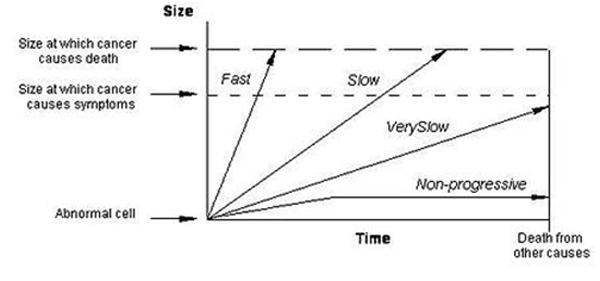
The above statements can best be explained by the diagram below:

Source: Gilbert Welch, Should I Be Tested for Cancer? pg.55

  1. The arrow labeled “Fast” represents a fast growing cancer. This type of cancer can quickly cause problems and kill us fast.  No treatments can save us from this type of cancer.  No matter what we do, we will die.
  2. The arrow labeled “Slow” represents a slow growing cancer. It takes some years to cause us problems and eventually kill us. With treatment we may be able to influence or modify the path and outcome of disease. This is the type of cancer we hope can be helped by treatments – be it medical or alternative therapies.
  3. The arrow labeled “Very Slow” represents a cancer that never causes problems because it grows very slowly. This cancer grows slowly enough that we may just die with the cancer (not die because of the cancer). We may die of other reasons, such as heart attack, diabetes, accident, etc.
  4. The arrow labeled “Non-progressive” represents a cancer that NEVER causes problems because it is not growing at all. In other words, they are only cellular abnormalities. The “experts” say we have something that meets the pathologic definition of cancer. Such “cancer” may even stop growing or perhaps even shrinks or disappear later in our life. We don’t have to treat such harmless “cancer.”

From the above it is clear that all cancers are not created equal. Some grow rapidly and invade other tissue, others grow slowly and remain non-invasive, and some don’t grow at all or may even recede. Unfortunately doctors will not be able to know with absolute certainty which cancer belong to which type although they do carry out some tests to try and differentiate them.

I am indeed glad that I got to read and understand this idea in Dr. Gilbert Welch’s book, Should I Be Tested for Cancer?    

Implications for Treatment of Cancer

Now we have a few more things “on our plate” and let us think critically.

  1. Not all cancers are the same – agreed? Some need to be treated aggressively some need gentle treatment while others may not need treatment at all (i.e. just wait and see!)
  2. In the same way, can we say that not all cancer patients are the same? Different people will react to treatment differently.
  3. In more of the same way, can we say that not all cancer doctors are the same? Yes? Different doctors do and also tell us different things about a cancer. Different doctors offer different approaches to solving the same problem. No?

Where do these statements lead us to then?

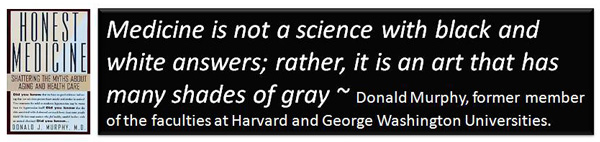
  • First, it appears to me the appropriate word to describe the situation is UNCERTAINTY – in cancer, nothing is predictable – there is no black or white answer. Every cancer is a different shade of gray.  Is it not chaotic, having to deal with different cancers, different doctors and different patients all at the same time? It is like going into a race, each fighting for his / her own survival.

  • Second, a cancer treatment that works for one patient need not necessarily work for another patient. And yet we are being taught that modern medicine is proven and scientific. They give you a one-size-fits-all-treatment. No?

I often wonder and ask myself.

Patients ask their doctors if the chemo-drugs that they are about to receive for their cancer are going to be effective or not. Often the answer given is, “There is no guarantee! Just try and it all depends on the person.” Such answer sound rather odd, primitive and even unscientific!  Why do I say this? Oncologists administer chemo to hundreds of patients everyday or every month. And they have been doing this for years. In other words, they have been administering this treatment for years to thousands and thousands of their patients.  I would want to believe that in their hearts, they can sense (and know for sure) that what they are doing is going to be effective or not. After all they have the blood test results, CT scans, MRI or/and PET images to guide them.  I am sure there must be a certain “feeling” in them  or their sixth sense, to say that based on their vast experience what they are about to do is going to be helpful or not. But in spite of that, patients often get this standard answer, “I am not sure. I cannot guarantee. Let’s try.”

I understand why oncologists provide evasive answers. Initially I thought they have to safe guard their rice bowls.


But now I understand. Their answer reflects the reality of the complex situation. How can anyone know the exact outcome of the treatment when the cancer is actually different even if it is given the same name called cancer? To make things more difficult, the patients are also different – they react differently to the treatment.  Doctors treating the disease are also different.  The only same thing is the poisonous chemo-drug.

Because of complex variables involved we see that some patients survive while some patients die even before the cancer is done with; some are “cured” while for others the cancer spread to other organs.

Unfortunately, no one is able to predict with absolute certainty what is going to happen after the treatment is administered to a patient.  No one is sure of the real “ingredients” that make good successful treatment. One patient was told, “It depends on the One Upstairs!”  Now, they say it all depends on God!


Don’t be misled – Surviving Five Years Does Not Mean Cure

Patients are often told that if they can survive five years after their treatment, it means they are cured of their cancer! What an untruth! My Aunty had cervical cancer and she received all the necessary medical treatments. She survived thirteen years, then the cancer struck back and went to her lungs and she died.  Where then is the cure? One lady had breast cancer. She survived for some nine years and when she was about to attend the hospital “Survivors Celebration for Life” gathering she had a swollen arm. The cancer had spread to her brain. She received radiation but could not complete the course. She became a “vegetable” and died. Again – where is the cure?

Over the years, we have encountered many cases like the above. Let me present another case for you to contemplate on.

1 February 2012

Dear Dr. Chris,

A friend gave us your Website. I am a lung cancer patient, diagnosed with Advance Non Small Cell Lung Carcinoma, have been and still going through chemotherapy for more than a year. Last week I had fluid drained from my right lung.

My husband and I decided to consult you for treatment. We are from Singapore and do not know how far is your clinic from the airport. How much do you charge for your fee and medication? Do I need to stay at your clinic during the treatment?

Reply: Since you are still on chemo and also have been on chemo for that long … I am not sure if you really need my help. If there is still fluid in the lungs, it just means the chemo is useless. But I am not going to ask you to stop what you are doing. It is your choice. My only problem is, the chemo can kill. But when patients take my herbs and die they will blame my herbs not the chemo. Because of that I would rather you finish with all your medical treatments first. And when you have nowhere else to go after that, then come and see me.   

5 February 2012

Dear Dr. Chris Teo,

Thanks for your prompt reply. My last chemo (the 8th Chemo) was on 26th January 2012. After this, 8th February I shall go for PET scan, then on the 9th Feb consult Dr. This 2nd doctor we consulted said he is going to surrender if the tumor continues to grow. After the 4th chemo, the PET scan showed the tumor was growing. The doctor increased the chemo dosage and included Iressa. And I was hospitalised one month later due to very fast heart beat, 251/min, Electrolytes were replaced. The chemo drugs I was given wereTaxotere, Cisplatin and Iressa.

As what you said, it is my choice, I find no meaning, here protein and booster jab, there chemo. I will not hold anyone responsible for my life and commit everything to God’s hand.

I will make photocopies of my medical results when I get it from the doctor this Thursday. My husband and myself had booked a flight to Penang … we would plead with you whether you could help to see another patient that evening. I am having aching, coughing, body, fingers, toes cramps, head ache and extreme tiredness. This is like an everyday affair after chemo.

9 February 2012

Dear Doctor,

Thanks for your reply. Appreciate your advice and concern. I was hospitalised on Monday due to fast heart beat. Doctor said electrolytes not balanced. Last night, my heart beat went up again to 240/min. I am not discharged yet so I wouldn’t be going to Penang tomorrow.

On 12 February 2012, patient’s husband came to CA Care with details of her medical history.

  1. In 1993, patient underwent a hysterectomy for menorrhagia (abnormally heavy and prolonged menstrual period).
  2. In 2001, she was diagnosed with breast cancer. A mastectomy was done. Subsequently she underwent 12 cycles of chemotherapy and 25 times of radiation treatment. She also took Tamoxifen for 5 years.
  3. In October 2010, patient had a swelling (lymph node) in her neck during a routine medical examination. She was investigated and was confirmed to have a metastatic lung cancer – an adenocarcinoma.
  4. From 23 October 2010 to 11 May 2011, patient underwent chemotherapy consisting of Gemcitabine + Carboplatin for 12 treatments.
  5. From 3 June 2011 to 10 August 2011, she received 4 cycles of Taxotere.
  6. From 12 September 2011 to 12 October 2011, she received 2 cycles of Alimta.
  7. From 10 November 2011 to 8 December 2011, she received 4 cyles of Taxotere plus Cisplatin.
  8. From 22 December 2011 to 26 January 2012, the dosage of Taxotere plus Cisplatin was increased by 20 percent. She had two cycles of this increased dosage. Since CT showed that the tumour was still growing, patient was given Taxotere + Cisplatin + Iressa for the next 2 cycles.
  9. She ended up in the hospital because of:
  • Rapid heartbeat.
  • Shortness of breath.
  • Fevers.
  • Severe coughs with white phlegm.
  • Pain in the shoulder and neck.
  • Swelling of the jaw.
  • Slow to talk.
  • Pale and very tired.
  • When she coughed too hard, her urine flowed out (stress incontinence).

This was when the patient wrote to us, “This 2nd doctor we consulted said he is going to surrender if the tumor continues to grow. After the 4th chemo, the PET scan showed the tumor was growing.” According to her husband, she is going to stop chemotherapy.  Below is what her latest PET scan showed.


Comments

In 2001, the patient had breast cancer. She underwent a mastectomy, chemotherapy and radiotherapy.  She then took   Tamoxifen for 5 years. That basically is all what modern medicine can offer any breast cancer patient.  But is she cured? Yes, by the “common medical definition” because she had survived 5 years.  But about 9 years later, October 2010, the cancer recurred in a form of a swelling in her neck and this was later confirmed as lung metastasis.

Is such story a unique and rare occurrence? No. This happens very often. What has gone wrong? Reflect on the quotations below.


The conclusion from this case is – medical treatment did not cure her breast cancer! She got lung cancer after 9 years. So, to say that surviving for 5 years is considered a cure is simply not true. It is another big lie! Or, half truth. And this half truth is dangerous. Misleading statement or advice like this could lead you to your grave. Patients often are overjoyed after hitting the 5-year mark and they are often thrown off guard and become complacent. Most go back to their old lifestyle. Then cancer strikes back! As in the case of this lady and my Aunty.

I was curious as to who came out with this idea of “living for five years and you are considered cured”. I searched the internet for a possible answer. This is what I got.

  • The number five used is an arbitrary figure. There is no scientific basis of choosing this number.
  • Dr. David Johnson, deputy director of Vanderbilt-Ingram Cancer Center thinks that: The five-year benchmark becomes a balm for doctors and patients who find the unpredictability of their situations intolerable. Physicians are reluctant to say you might recur, so they would rather use these terms like: “OK, in five years, you’ll be cured.”
  • According to Dr. Karrison, patients need to survive for 20 to 25 years before we can say they are cured. To ask patients to wait this long may be bad for business!

From much reading, I have come to understand that numbers and statistics are often sweet and deceptive – they cannot be trusted and must be viewed with skepticism. Scientific data can be and are often massaged and manipulated to make things look good. Patients like to hear “good news.” They are ready to swallow everything when they hear what they want to hear – what more when it comes from “scientists”! 

What now after the metastasis? 

In this case, patient was given chemos after chemos –  and the combination of cytotoxic drugs changed and changed.  In total this patient had 26 cycles of chemotherapy for her lung cancer. Alimta is the “newest” bullet used. But the “heroic” effort failed. The doctor told the patient that he was about to surrender. Patient landed in the hospital.

When everything else failed, CA Care comes into the picture! So, that’s the reason why I wrote, My only problem is the chemo can kill. But when patients take my herbs and die they will blame my herbs not the chemo. 

That’s the way it is.

Reflect on  the following quotations.


Healing Takes Time – No Such Thing As Instant Cure

Cancer does not strike like a thunderbolt. In the book, What You Really Need to Know about Cancer,Dr. Robert Buckman estimated that it takes about two and a half years for a simple cancer call to grow into a lump, the size of a small grape which is visible to the naked eye. If it takes that much time for a lump to form, it is logical to expect that it may take that much time for the lump to regress and disappear through the process of natural healing.

Most of the patients who come to CA Care are in the advanced stages of cancer. After taking the herbs for a week or two, they usually experience some relief and this raises their expectation that healing should come immediately. Such high expectations is indeed regrettable and unrealistic. Cancer patients should be patient for healing takes time.

Even more tragic is that, after regaining some health and doing rather well, some patients even go further and take additional herbs touted by others in the hope that their healing comes even faster. This is indeed the wrong thing to do! We know of many cases where patients die soon after taking such instant healing herbs. Cancer patients cannot afford to make any more mistakes because this will cost them their lives.

Healing Crisis

It is possible that after taking the recommended herbs, you may experience discomforts such as diarrhea, fatigue and even intense pain. Your condition seems to be worse than before. If this is what you experience, DO NOT WORRY. What you are experiencing is called healing crisis. CONTINUE TAKING THE HERBS! However, if the problem continues for too long and you are getting worse each day, it is advisable to stop taking the herbs first and seek advice. Generally, after a few days, the intensity of such discomforts decreases with each day. You will gain strength and your condition will improve after some days.

A healing crisis occurs as a result of the body engaging in the process of eliminating the toxins that it has accumulated over the years. Now the toxins are being liberated from their storage places within you and they are affecting the body in full force, resulting in rashes, boils, itchiness, swelling, phlegm and even intense pain. When the process of elimination has been sufficiently accomplished, your health improves.

During this detoxification process, do not take any drugs or medication to suppress the symptoms. Allow the healing process to proceed without hindrance. For example, you may experience diarrhea for three days. You should allow this to happen and take more fluid to aid the cleansing process. Perhaps on the fourth day, the diarrhea may just stop automatically. Of course you must not be too complacent as well. If your health deteriorates with each day or the problem persists for too long, then stop taking the herbs and seek professional advice or see your doctor immediately.

The healing crisis is recognized in all systems of natural healing. In traditional Chinese medicine, it is known as the law of cure.