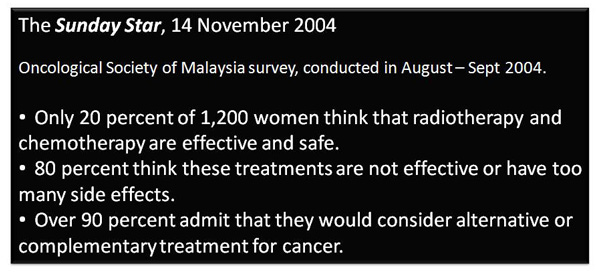
Get It Right: Can Chemotherapy Really Cure Cancer?

If you are a scientist, and if you have done many scientific experiments / research in your life, and if you have a bit of common sense (never mind about having a Ph.D. — these days you can buy one easily), you will know that something is not right with the current medical way of treating cancer using poisonous drugs.

Well, I am not a medical doctor – in a way, that is a blessing because I can critically “see” that something does not add up.  Why?
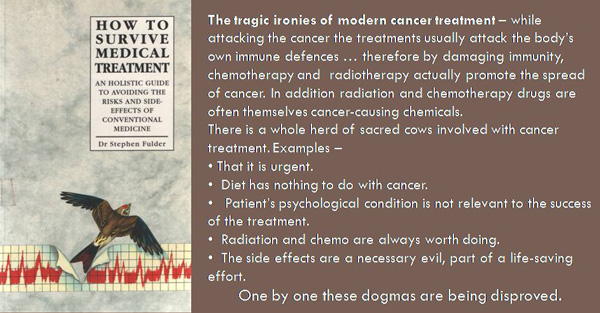
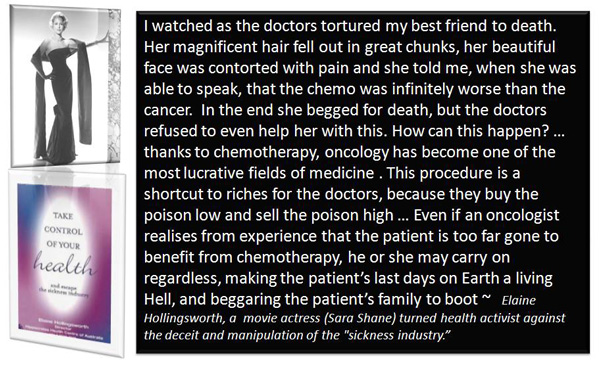
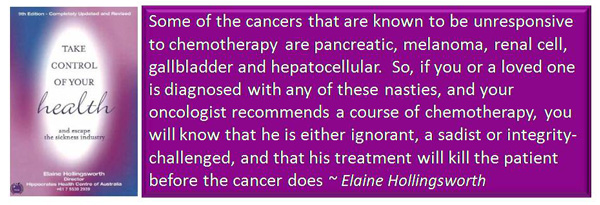
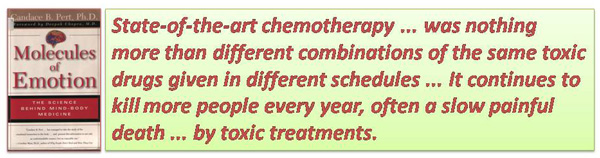
But, let me also say this. You don’t need to be a scientist to “see” what I see and to know what I know.  Hear what a broadway playwright and a movie star has got to say:

In this article, I am not trying to tell you how bad or how good chemo is.  I think you have had enough of that. I am going to bring you yet another different but related message.  I hope you can learn many things from what is written below.

The recent website of the Dana-Faber Cancer Institute, Boston, USA, had this headline: Advanced cancer patients overoptimistic about chemotherapy’s ability to cure, study finds

http://www.dana-farber.org/Newsroom/News-Releases/Advanced-cancer-patients-overoptimistic-about-chemotherapys-ability-to-cure-study-finds.aspx

A study was conducted and led by medical researcher, Jane Weeks, who is also a professor of medicine at Harvard Medical School and Professor of Health Policy and Management at Harvard School of Public Health.

Others in the research team are Deborah Schrag, MD, MPH and Paul Catalano, ScD, Angel Cronin, and Jennifer Mack, MD, MPH, of Dana-Farber; Matthew Finkelman, PhD, of Tufts University; and Nancy Keating, MD, MPH, of Brigham and Women’s Hospital.

What Did They Study?

  • The study was conducted by surveying 1,274 patients at hospitals, clinics and treatment centers across the USA. Participants were recruited from geographically diverse populations and health care systems in order to systematically evaluate cancer care delivery in the U.S.
  • Study participants had been diagnosed with metastatic lung or colorectal cancer at least four months earlier and had received chemotherapy for their disease.
  • They studied their records in great detail.

The Results of the Study 

They found that 69 percent of patients with advanced lung cancer and 81 percent of patients with advanced colorectal cancer did not understand that the chemotherapy they were receiving was not at all likely to cure their disease. Their expectations run counter to the fact that although chemotherapy can alleviate pain and extend life in such patients by weeks or months, it is not a cure for these types of advanced cancer except in the rarest of circumstances.

  • Patients with advanced lung or colorectal cancer are frequently mistaken in their beliefs that chemotherapy can cure their disease.
  • Inaccurate expectations about the role of chemotherapy were found among patients from varied backgrounds treated in many different health care settings across the U.S.
  • Surprisingly, patients who rated their communication with their physician highly were the most likely to hold overoptimistic views about chemotherapy’s curative potential.
  • Strikingly, those patients who rated their physicians as worse communicators were more likely to have a realistic view of the potential benefit of their chemotherapy.
  • While there is no doubt that communication about prognosis in advanced cancer is challenging, a sizeable minority of study participants did grasp the incurable nature of their cancers.
  • Dr. Weeks noted: “If patients do not know whether a treatment offers a realistic possibility of cure, their ability to make informed treatment decisions that are consistent with their preferences may be compromised. This misunderstanding may pose obstacles to optimal end-of-life planning.”
  • Dr. Deborah Schrag said: “skilled clinicians can set realistic expectations without their patients’ losing either hope or trust.”

This study was published in the Oct. 25, 2012 issue of the New England Journal of Medicine. The study was funded by grants from the National Cancer Institute and by a grant from the Department of Veterans Affairs

Mass Media Response To The Results Of This Study

  1. Are cancer patients’ hopes for chemo too high? http://www.reuters.com/article/2012/10/24/us-cancer-patients-idUSBRE89N1M220121024 
  • At least two thirds of people with advanced cancer believed the chemotherapy they were receiving might cure them, even though the treatment was only being given to buy some time or make them comfortable.
  • Their expectations are way out of line with reality,
  • Perhaps ironically, the patients who had the nicest things to say about their doctors’ ability to communicate with them were less likely to understand the purpose of their chemotherapy than patients who had a less-favourable opinion of their communication with their physicians.
  • This is not about bad doctors and it’s not about unintelligent patients.This is a complex communication dynamic. It’s hard to talk to people and tell them “we can’t cure your cancer.”
  • Doctors find it uncomfortable to hammer home grim news and patients don’t want to believe it.
  • It was a reminder to doctors to slow down and take some time to realize how hard the issue is.
  • If patients actually have unrealistic expectations of a cure from a therapy that is administered with palliative intent, we have a serious problem of miscommunication we need to address.

Hossein Borghaei, an oncologist at the Fox Chase Cancer Center in Philadelphia said:

  • What are you supposed to do, stand in front of someone with advance disease and argue with them? It’s not productive.

Thomas Smith and Dan Longo of Johns Hopkins University School of Medicine wrote:

  • The results are probably due, in varying degrees, to patients not being told their disease is incurable.
  • Patients not being told in a way that lets them understand.
  • Patients choosing not to believe the message, or patients being too optimistic.
  • Many patients think they are going to beat the odds.

2.      Many cancer patients mistakenly believe chemotherapies will cure them, new study says

http://www.boston.com/dailydose/2012/10/24/many-cancer-patients-mistakenly-believe-chemotherapies-will-cure-them-new-study-says/P4Sv84A5u4syPuWeD9ANUI/story.html

  • A majority of patients with advanced lung and colorectal cancer harbor the fundamental misperception that treatments that can extend life and alleviate pain might also cure them.
  • But the study couldn’t pinpoint where it occurs: whether patients receive unclear information from a physician or fail to fully comprehend what they are told, or whether there is a kind of clinical “collusion” in which the discussion moves rapidly from a dire prognosis to a focus on what can be tried, leaving patients with an inflated sense of hope.
  • The issue here … thinking that a treatment offers a chance of cure when in fact it doesn’t. This deprives these patients of the opportunity to weigh the risks of chemotherapy, including the chance of some rough side effects, against the true benefits, perhaps some symptom relief and a few months longer life but no chance of cure.

Dr. Eduardo Bruera, chair of the Department of Palliative Care and Rehabilitation Medicine at the University of Texas MD Anderson Cancer Center, said:

  • A bearer of good news might be seen in a more welcoming way; that might explain why sugar-coating might make people more liked by their patients.

Dr. Deborah Schrag, a colorectal cancer specialist at Dana-Farber and co-author of the study, said:

  • We had this hypothesis when it comes to giving bad news: Doctors who work at an integrated health care network, they’re not an independent practice, they’re more free to disclose the unvarnished truth, without worrying about the ramifications of, ‘If I’m not super cheerful and positive and optimistic, my patients would not like me.

Dr. David Ryan, chief of hematology/oncology at Massachusetts General Hospital said:

  • You have to provide the information about whether a situation is curable or not curable, and what the odds of doing well are for a long period of time.
  • But you also have to provide hope, and it can be difficult sometimes to convey that difficult information and also provide hope.

Oncologists said it was crucial to find where and why the misunderstanding takes root so that doctors can be sure their patients are making informed decisions.

3. Many Terminal Cancer Patients Mistakenly Believe A Cure Is Possible http://www.capradio.org/news/npr/story?storyid=163572138 

  • A survey finds that the majority of advanced stage lung and colon cancer patients believe chemotherapy might cure them, when it can actually only buy them a few months. Oncologists are worried about how this impacts end-of-life decision making.
  • Doctors are often called upon to deliver bad news to patients, and there isn’t much that’s worse than a diagnosis of an advanced-stage cancer for which there is no cure.
  • A large majority of patients who receive this news don’t fully comprehend it, or perhaps willfully choose to ignore it.
  • When people have unrealistic expectations they’re much less open to discussing end-of-life planning.
  • But patients always want positive news. In the short term, people will be happier if you give them happier news.”

Sandra Swan an oncologist at the Washington Hospital Center said:

  • Ultimately the doctor’s responsibility is to ensure that their patients fully understands what’s happening to them.
  • There needs to be continued communication about the prognosis and it needs to be done early on. I don’t think physicians do it particularly well. … Many physicians just have a very hard time communicating that they’re not going to be able to cure the patient.
  • Doctors need do a better job of helping terminally ill cancer patients let go of false hopes without squashing all hope.
  • You don’t want to take away hope from patients. They’re not going to be cured but it’s not like they’re going to die instantly. So it is a really hard balance to achieve.

4.   Most patients with incurable cancer still think they’ll survive, study finds

http://www.cbsnews.com/8301-204_162-57540242/most-patients-with-incurable-cancer-still-think-theyll-survive-study-finds/

  • Many patients who receive chemotherapy for incurable cancers still believe they can beat the disease, a new study suggests. The researchers behind the study question if patients are simply in denial or doctors are skirting the truth with their patients’ prognoses.
  • The research also highlights the problem of overtreatment at the end of life — futile care that simply prolongs dying.
  • For cancers that have spread beyond the lung or colon, chemo can add weeks or months and may ease a patient’s symptoms, but usually is not a cure. This doesn’t mean that patients shouldn’t have it, only that they should understand what it can and cannot do, cancer experts say. But often, they do not.

Dr. Thomas J. Smith of Johns Hopkins University School of Medicine and Dr. Dan L. Longo, question:

  • Whether patients are being told clearly when their disease is incurable. Patients also may have a different understanding of “cure” than completely ridding them of a disease – they may think it’s an end to pain or less disability.
  • If patients actually have unrealistic expectations of a cure from a therapy that is administered with palliative intent, we have a serious problem of miscommunication.

How should doctors have this difficult conversation with patients?

Smith told CBS This Morning that doctors should operate on an “ask, tell, ask” basis when patients are faced with a life-threatening illness. That means doctors should ask patients up front how many details they want to know about their illness. Then, they should tell patients in understandable terms their prognosis, such as by saying “based on people like you, you may have weeks or months.”

While some patients may have positive attitudes and think they’ll still beat the disease, Smith says he’ll tell patients that doctors won’t stand in the way of miracles, “but we can hope for the best but still need to plan for the worst.”

The study raises concerns about unnecessary but costly medical treatments for dying patients.  Smith said having the difficult conversation with a patient about their end-of-life care may lower these costs because many patients may want to be comfortable at home, and not in a hospital. This really isn’t about saving money, so much as honoring people’s choices.”

Read more on CBS: Doctors unveil “Choosing Wisely” campaign to cut unnecessary medical tests  http://www.cbsnews.com/8301-504763_162-57409204-10391704/doctors-unveil-choosing-wisely-campaign-to-cut-unnecessary-medical-tests/?tag=contentMain;contentBody

Should parents’ belief in miracles trump medical expertise in end-of-life decisions? http://www.cbsnews.com/8301-504763_162-57493154-10391704/should-parents-belief-in-miracles-trump-medical-expertise-in-end-of-life-decisions/?tag=contentMain;contentBody

Truth Is a Bitter Pill – Hard For You to Accept Reality

Chemotherapy Game Changer for Stage 4 Cancer http://www.envita.com/cancer/finally-chemotherapy-game-changer-for-stage-cancer/?UA-29060687-1

  • The current model and approach being used by numerous cancer centers and hospitals is the “germ theory.” This model aims to focus on destroying cancer cells using a “one size fits all” protocol.
  • The doctors at Envita explain that each person’s cancer is unique and cannot be put into one category or group even if patients have the same type and stage of cancer.
  • So why are cancer centers not using this approach to treatment? It is very difficult for large structured institutions and pharmaceutical companies to move quickly with the world’s modern technologies because they have so much invested in the old system.
  • The doctors at Envita noted that when patients were tested, over 75% of them were on the wrong treatments prior to coming to the center. No wonder so many patients are struggling with cancer!

The war on cancer

Back home in Malaysia, this is what Dr. Amir Farid Ishak wrote in his Star column. http://thestar.com.my/health/story.asp?file=/2012/10/28/health/12226744&sec=health 

  • Chemotherapy is not necessarily the best strategy to fight cancer.
  • In several previous articles, I quoted several major reviews on chemotherapy, reported in the top peer-reviewed journals that concluded that chemotherapy only helped 2-7% of the cancer patients, at the cost of so much additional suffering, and enormous financial burden.
  • Oncologists and the medical community in general continue to believe that chemotherapy protocols should be continued despite the overwhelming scientific evidence to the contrary.
  • They then convince cancer patients that chemotherapy is essential if they hope to prolong their lives or recover from the disease. Yet, the scientific studies show that what is believed by the oncologists is not always the same as what is proven by the studies.
  • The most recent comprehensive review of the effectiveness of chemotherapy was published by three oncologists in 2004 in the top cancer journal Clinical Oncology (16:549-560), and the conclusion was that overall, chemotherapy contributes just over 2% to improved survival in all the cancer patients in Australia and the US.
  • In 2004, most of the other oncologists neither refuted nor changed their reliance on chemotherapy despite the conclusive evidence. Now eight years later, although no similar comprehensive review has shown any significant improvement, that review is said to be outdated by some oncologists.
  • What I lament is the painfully slow progress in cancer therapy, such that many are not saved. The US is arguably the most advanced nation medically, yet for 2012, the American Cancer Society expects almost 600,000 deaths from all types of cancer (including 160,000 from lung cancer, 50,000 from colorectal cancer, and 40,000 from breast cancer). One in four deaths in the US is due to cancer. There will be about 1.6 million new cancer cases this year. Those figures certainly show that we are far, far away from winning the war on cancer.
  • Have we won the war? Or have we the lost war?
  • I strongly encourage readers to read War on Cancer – A Progress Report for Skeptics (Feb 2010) by Dr Reynold Spector, clinical professor of medicine at the Robert Wood Johnson Medical School, US (www.csicop.org/si/show/war_on_cancer_a_progress_report_for_skeptics/). His conclusion: “… unlike the successes against heart disease and stroke, the war on cancer, after almost 40 years, must be deemed a failure with a few notable exceptions.”
  • While the oncologists continue to look for the latest chemo and smart drugs, it is my duty to highlight the fact that while the next promising drug will be amply funded to prove its effectiveness, the next promising nutritional therapy is likely to be abandoned because nobody wants to spend money on something that cannot be patented in order to recoup the costs, as well as make a handsome profit.

Comments

For the past 16 years, we at CA Care have been spreading the above message. Now, I am glad to say that cancer experts in the US are saying the same thing. I don’t think I have to add any more messages!  But let me just share with you our frustrations over these years.

  1. Almost all cancer patients who came to us have undergone all medical treatments. Most of them are “medically written off.”
  2. And 70 percent of them come expecting us to cure them – they are seeking the elusive magic bullet. There is nothing wrong with wanting to find hope or not giving up hope, except that they are also the kiasu (only want to win) type . For this group of people, we would rather they go and find help elsewhere.
  3. The kiasus want healing on their own terms.  They only want to hear what they want to hear. They want things easy and cheap. Boiling the herbs to help themselves is a big chore to handle. They don’t want to take responsibility for their own well being. They want a cure but they want to eat anything they like.
  4. Only 30 percent of those who come benefit from our therapy.  They know what they are up against after being told the truth. They are determined to heal themselves and are willing to try. I have great respect and admiration for such patients.
  5. We are fully aware that patients come here to find hope. And telling them that they don’t have any more hope is a disaster. So we know we need to strike a balance. Correct, we cannot cure your cancer, because I believe that no one on earth can cure cancer either! That is the reality. My auntie had cancer. She had surgery and radiation. She thought she was cured. Thirteen years later, the cancer recurred in her lungs and she died. Where is the cure? And do I need to hide that reality to cancer patients?
  6.  Make no mistake, I don’t want to mislead them or cheat them. But by telling patients this, do I deprive them of hope? Yes or No, depending whether you are a kiasu or not! If you are the one who only want to win and would not want to lose, you would not like what I say. You don’t want to face reality.
  7. By telling you the truth – that I cannot cure you, does not mean that you are going to die now! If you have been reading the stories in our CA Care’s website, you will note that those patients were told to go home and die, but they do not die. They continue to live! That is hope! At CA Care we have seen miraculous healing week after week and month after month. But, make no mistake, this healing is NOT cure – the cancer can come back again if you become complacent and irresponsible.  But the unfortunate part is that many patients are just irresponsible. Period.
  8. So, by being honest and asking you to face reality we are not depriving you of that hope – on the contrary we provide you with new path and take you through another journey of hope.  The only problem is this – the journey is not easy to travel and is not meant for the kiasu.  I have enough documented stories to show you that you need not have to die yet if you are prepared to take the responsibility of your own healing into your own hands – you do your best and we do our best. And together we take this journey. Many remain healthy for years. Click on the success stories of our cancer patients and hear them tell you their stories. Just one example –  I like to tell you the story of this sweet lady from Makassar. https://cancercaremalaysia.com/2012/05/05/cervical-cancer-stage-3b-health-restored-after-taking-herbs-and-giving-up-chemo-radiation-treatments/
  9. The kiasus like to hear only things that they want to hear. For example:
    1. Cancer can be treated! Many patients don’t realize that to be treated is one thing. To get cured is another. While writing this article, I have a lady who came for help. She brought her sister for treatment in a private hospital  here and had already spent RM 100,000. A few hours ago, the doctor told the sister to bring the patient home quickly. She was not getting any better – in fact her health had deteriorated. Cancer can be treated for a long as you have the money to pay the bills (and preferable if you have a fat health insurance coverage!)  Read my articles: Part 1: The High Cost of Staying Alive in a Private Hospital. Part 2: One or Two Dozens of Drugs A Day Could Not Help Her?
    2. With chemo, you have a 80% chance of curing your lymphoma!  Patients love to hear that message of hope. And they believe such statistics!  Here is one example. A lady with cervical cancer was told that she had a 98 percent chance of cure with chemotherapy and radiotherapy. She believed her doctor. Four months later the cancer spread to her lungs. And that is cure? I hear this kind of stories very often. https://cancercaremalaysia.com/2012/05/02/cervical-cancer-eighty-nine-percent-chance-of-cure-vanished-with-the-collapse-of-her-right-lung-four-months-after-radiotherapy-and-chemotherapy/

Here is another example. A breast cancer lady underwent chemotherapy, radiotherapy and took Tamoxifen for five years.  Then cancer spread to her bones. She asked the doctor why she was not cured. The answer was:  It is your fate.  But the recurrence has nothing to do with what you eat. It is just your fate. Believe that? Where is the so-called science in cancer treatment? https://cancercaremalaysia.com/2012/05/12/breast-cancer-when-a-so-called-cure-was-not-a-cure/

Let me end with these quotations:

Take note, the author, Dr. Dan E. Chestnut, is a medical doctor of 44 years.

Dissecting Chemotherapy 14: Please Tell Patients the Real Truth


Author: Dr. Morton Walker, D.P.M., is the author of 2000 clinical articles and 92 published books. Dr. Walker is the recipient of 23 medical journalism awards and was named, “The World’s Leading Medical Journalist Specializing in Holistic Medicine” by the American Cancer Control Society. (Note: Podiatric medicine is the study of human movement, focusing on the foot and ankle. A doctor of podiatric medicine (DPM) is to the foot what a dentist is to the mouth or an ophthalmologist to the eye).

Why Write this Book? When cancer took my wife, my mother, my sister, and my fiancee who had pledged to spend her last years with me, I knew I had to step up …let the world knows about it.

Fiancee With Pancreatic Cancer: We planned to be married within the early months of 2005, instead, during late fall and early winter of 2004, I frequented the reception areas and consultations of Massachusetts General Hospital … because my fiancee had been admitted to this hospital with pancreatic cancer.

Prognosis:  Such cancer (pancreatic cancer) is an illness with a devastating prognosis … less than 7 percent of cases are detected early. The rest are spotted when pain or other symptoms appear. Some 37,680 new cases of pancreatic cancer occurred in 2008, with a mere 2 percent experiencing a five-year survival rate.

Oncologists and Radiotherapists Push: I was astounded at how distorted the physicians’ presentations were when they discussed the side effects of their treatments. The doctors appeared to become almost like used-car salesmen in a pitch for their surgery, radiation therapy and/or chemotherapy.

I know something about medical practices and oncology from my work as a medical researcher and as a former practicing podiatrist. In my opinion, the information the oncologists gave my fiancee was hardly an honest assessment of the relative benefits and risks associated with the recommended treatments.

My fiancee, her two educated, middle-age sons and I consulted twice with a group of oncological specialists. The decision was made that this 62-yera-old woman, diagnosed with an aggressive pancreatic cancer, required immediate surgery employing the Whipple’s operation triad. The Whipple’s is a very extensive operative procedure that involves the excision of at least three internal organs, including a majority of the victim’s pancreas.

Preoperative radiation was recommended for her, and following operative recovery, postoperative chemotherapy was also mandatory.

Both radiation and chemotherapy oncologists went about selling their separate treatments to the patient, her sons, and me. When I asked about the residual side effects of the typical treatment, her oncologists told us that there were none. My fiancee, her sons and I were astounded. “No side effects? How could that be?” The oncologists were steadfast in their declarations. I knew they were lying.

I observed literally hundreds of bald-headed women waiting in the radiotherapy and chemotherapy hospital areas for commencement of their next treatments. I thought, with no small amount of disgust, “Isn’t the loss of hair with resultant baldheadedness a side effect of one or both of these cancer therapies?” All of us know that it is.

I was opposed to the radiation therapy, but that’s what this patient and her two sons elected for her to do.  When I finally encouraged my fiancee to take Dr. Beljanski’s botanicals … Her two sons, a stock broker and a computer programmer, would have none of my recommendations. Beljanski’s herbals ended up being flushed down the hospital room’s toilet. They considered holistic-type therapies outright quackery.

Condemned by these young men, I was literally ordered to leave the hospital scene. They said, “Get out of my mother’s life!” She died within two months of her sons sending me away.

Comments:  Take note of what other authors said below:


Dissecting Chemotherapy 13 : Experiencing the Harmful Side Effects and Collateral Damage


by Terry Thompson. His wife died of breast cancer, his eldest brother died of lung cancer and another brother died of a rare cancer that attacked his heart. Thompson is a retired colonel in the US Air Force. He was also a staff pastor of a large church. Later he became the GM of a nationally syndicated outdoor sports TV program. He is professor of John Brown University, a private, Christian liberal arts college in Arkansas, USA.

The best way I know to describe the debilitating nature of chemotherapy is to reference my personal experiences. The following account of the three years my former wife (Connie) suffered under the oppression of aggressive chemotherapy.

The treatment and its impact on our lives were the worse experiences I had faced in my life at that point. Today, I can assure that its devastating effect was eclipsed only by Connie’s death. And. of course, my experience was nothing compared to what she had to deal with.

  • Immediately after receiving the first infusion, Connie became nauseated… it usually takes days or weeks before the dosage and anti-nausea supplements can be adjusted to individual tolerance and need.
  • The vomiting and diarrhea were devastating for the first several treatments. She was confined to the beds for days. Hardly anything she ate would stay with her.
  • She continued to have occasional regressive bouts with nausea.
  • When the nausea was in check, lack of appetite still plagued the pursuit of healthy nutrition. Connie had to force herself to eat without any feeling of hunger. The food she was able to eat was virtually tasteless.  Imagine weeks and months looking on any food item with disgust … the smell of food from another room would cause her to gag or vomit. Meals were never a pleasurable experience as long as chemicals were being infused.
  • After several treatments, mouth sores, a common side effect of chemotherapy, made eating a painful experience.
  • Connie had been an athletic person with seemingly boundless energy. Throughout the chemo regimen, she was constantly tired. After the lightest task, she would have to lie down on the couch or recline in a chair for a while before attempting anything else.
  • Social activities virtually ceased, since a few minutes of standing and small talk would exhaust her… just physically drained from the chemical attack on her body.
  • From the beginning of treatment, a weak immune system caused by a low white blood count often kept her from being near other people.
  • The cumulative effect of the chemo began to more severely restrict the immune system.
  • Collateral damage to the body is another serious concern. Many medical procedures are accompanied by risks of injury to otherwise healthy parts of the body. In Connie’s case, the highly qualified surgeon punctured her lung in the process of “chemo” port insertion. This is a rare occurrence, but just one of several anomalies that can violate the body during conventional treatment.
  • Another ever-looming threat of collateral misfortune is that of serious, even deadly, infection. The actual condition that caused the precipitous slide that ended Connie’s life was a bacterial infection so potent that the strongest antibiotics could not faze it. She developed septic condition. Even though the official cause of her death was metastasis of breast cancer, it was an infection, probably from the treatment, that led to the ultimate loss of the battle.
  • For anyone, especially those who love to be around people, conventional cancer treatment is usually accompanied by feelings of alienation, disconnection, loneliness and even guilt. Physical distress, coupled with psycho-social grief is a poor foundation from which to build a healing force to combat cancer.

Chemotherapy Boosts Cancer Growth, Spread and Resistance – Really?

Sue was 39-years (in 2003) when she was diagnosed with breast cancer. Two weeks after her diagnosis she underwent a mastectomy. After the surgery, Sue was referred to an oncologist who recommended that she undergo six cycles of chemotherapy. Sue asked the oncologist: Why? The oncologist replied: In the US, for any tumour above 1.0 cm you must go for chemotherapy.  In England and Europe, it is anything above 1.5 cm.  Since yours is 1.7 cm you must go for chemotherapy.  Sue asked: If I don’t go for chemotherapy, what are the chances of recurrence?  He said: If you go for chemotherapy the chance of cancer not recurring is ninety percent within five years.  If you do not go for chemotherapy after a mastectomy, the chance of no recurrence is eighty-five percent.  So Sue said: Five percent less only?  He said: Yeah.  Sue replied:  I might as well not do it.  I have to go through so much if I do chemotherapy and I may only get a five percent benefit. I can get that extra five percent by doing a lot of other things. Sue opted for CA Care Therapy instead of chemotherapy.

As of this writing, 2012, Sue has been doing very well with no problem along the way!

Johnny was 46 years old when he was diagnosed with colon cancer. He underwent surgery twice in January 2006. Then he was asked to undergo chemotherapy. Johnny was hesitant to see an oncologist. But after much pushing from his surgeon, Johnny agreed to see an oncologist. This was what Johnny told us.

I went into the oncologist’s office. The oncologist read out my name and he asked the first question: What car are you driving? This question was followed by: What is your profession?  The oncologist then said: Your cancer is like a Mercedes, BMW, Japanese car or a local car. Your case is Stage 2. So you need to take a good medicine – like a Mercedes medicine to fight … There are many kinds of medicine. There is A – the good one; B which is not so good and C, which is an oral one. So which type do you want?

Chris: He asked you to choose the drugs?  In your discussion, did he ever say that whatever drug he is giving you is going to help you or not?

Johnny: No, no. He just told me it was just for prevention. He said that once I got rid of my cancer, there might be some more cancer cells present in the lungs or somewhere else in the body.

C: So, the whole idea was just for prevention?

J: Yes, and I had to go for chemotherapy.

C:  Let me ask you this: Before you went to see the oncologist, had you already made up your mind NOT to undergo chemotherapy? Why did you go and see him then?

J: Oh, because the nurse in the hospital (where I had my surgery) had been calling my wife every two to three days. The nurse said to my wife: Your husband has still not gone for chemotherapy. We have made an appointment for him to see the oncologist. But he did not turn up. 

C: How many times did the nurse call you?

J:  As many times as I postponed the appointments to go and see the oncologist.  So, at last, I decided to give it a try.

C: What made you decide not to have chemotherapy?

J: Because of my experiences in seeing how other people suffered – my friends A, B, C, D and my sister-in-law herself. My sister-in-law underwent chemotherapy and she died after one year and two months. 

After I came home from the cancer hospital, the oncology nurse called my home again and again. She talked to my wife. She wanted to know why I did not go for chemotherapy. She told my wife that my cancer was very dangerous and I had to do chemotherapy. My wife told her that I was taking herbs and would not do chemotherapy anymore. The nurse said this to my wife: If you take medicine from outside, it is going to be dangerous. It is not effective and this will make the cancer grow faster and spread more. My wife replied: No, my husband will not go for chemotherapy anymore. He has made up his mind on this. 

As of this writing, 2012 – six years after his cancer diagnosis Johnny is still on our CA Care Therapy. He declined chemotherapy. He is doing well. We get to see Johnny almost every week all these years.

Almost and always, patients are told to undergo chemotherapy after surgery. The reason given by the oncologist in the first example was SOP (standard operating procedure) i.e., based on what people do in the USA or Europe. In the second example, it was chemo for prevention. Then what about the nurse’s threat – If you take herbs, it is going to be dangerous. It is not effective and this will make the cancer grow faster and spread more? This, as you can see is mere speculation or snake oil science! Medically was considered “cured” by herbs after surviving five years.

There are more reasons why patients are asked to undergo chemotherapy, such as:

a)      To kill all the cancer cells left behind in the body after the surgery – a mop up operation of sort!

b)      To stop the cancer from spreading.

c)       To promote better quality of life. 

Over the years dealing with cancer patients, I am well aware that patients go into “fear mode” once they are told they have cancer! They go to their caregivers hoping to find a cure. And they hope or only want to hear what they want to hear – i.e. they can be cured of this dreadful disease. They will swallow any suggestion that resembles or promises a slightest chance of cure. So the above explanations by their caregivers are indeed most welcomed and readily accepted.

But how true or scientific are these reasoning? I am afraid patients are being told half-truths, if not being totally misinformed or misled. If you have been following this website, I believe you know why. But let me not go into another chemo-bashing spree. Let me tell you why I feel compelled to write this article. Over the past few days, two research reports were in circulation in the internet. Read them for yourself. 

1. Chemotherapy can backfire, chemo can boost cancer growth 

“Chemotherapy can actually boost the growth of cancer cells, making the disease harder to fight,” Researchers at the Fred Hutchinson Cancer Research Center in Seattle made this “completely unexpected” finding.

  • They tested the effects of a type of chemotherapy on tissue collected from men with prostate cancer, and found “evidence of DNA damage” in healthy cells after treatment.
  • The healthy cells damaged by chemotherapy secreted 30 times more of a protein called WNT16B which boosts cancer cell survival.  WNT16B, when secreted, would interact with nearby tumour cells and cause them to grow, invade, and importantly, resist subsequent therapy.
  • The researchers said: “Our results indicate that damage responses in benign cells… may directly contribute to enhanced tumour growth kinetics.
  • The researchers said they confirmed their findings with breast and ovarian cancer tumours.
  • About 90 percent of patients with solid cancers like breast, prostate, lung and colon cancers or other metastatic diseases that spread end up developing resistance to treatment.
  • Chemotherapy is often given at intervals so that the body is not overwhelmed by its toxicity, but experts say that breaks in treatments provides time for tumor cells to recover and develop mutations that boost their survival and help them resist treatment. 

Read more:

http://www.channelnewsasia.com/stories/health/view/1218305/1/.html

http://health.usnews.com/health-news/news/articles/2012/08/06/health-highlights-aug-6-2012

http://www.medicaldaily.com/news/20120806/11314/cancer-chemotherapy-resistance-immunity-nature.htm

 http://wap.news.bigpond.com/articles/Health/2012/08/06/Chemotherapy_can_boost_cancer_-_study_780226.html

http://www.nhs.uk/news/2012/08august/Pages/Chemotherapy-encourages-cancer-claims-researchers.aspx

2. Stem cells blamed for cancer re-growth

Three teams of researchers working independently in Holland; Belgium and UK;  and the United States presented evidence that cancer stem cells exist and they may be the starting point for cancerous tumors.

Working with the incurable brain tumours, researchers have found a subset of cells that appear to be the source of new tumour growth after chemotherapy. Luis Parada of the University of Texas Southwestern Medical Center said, “This study serves as a proof of principle that in at least some solid tumours functional cancer stem cells exist”.

Researchers in Belgium and the UK also found a sub-population of tumour cells with stem-like properties in skin cancer.

Dutch researcher Hugo Snippert said: “The hypothesis (that cancer stem cells exist) has been around now for some time. Hopefully these three papers now make an end to the discussion. “

These findings challenged the classical notion that tumours are comprised of masses of cancer cells that are all the same, and all dividing. This study showed that mutated, cancerous cells may develop directly from stem cells. Stem cells therefore act as cancer cell factories.

The existence of cancer stem cells may raise the following implications:

  • “Since the cancer stem cells are so similar to normal stem cells, most treatments also harm the normal stem cells” Snippert said. What does this imply? It means that if you think you can kill the cancer cells by chemotherapy, the chances are you kill the patients too!
  • “It’s no longer valid to evaluate the volume of a tumor and say whether therapy is working or not.  What will be important is to know is how that therapy is affecting the cancer stem cells within the tumor,” Parada said. These stem cells are the drivers of metastasis, the spread of cancer via the blood stream
  • “It’s really essential that you get rid of the cancer stem cells because they are tiny, they are low numbers.  But they are able to grow and to give rise and fuel tumor growth really fast,” Snipert said. Unfortunately, cancer stem cells are particularly resistant to chemotherapy (http://www.research.a-star.edu.sg/research/6493)

Read more:

http://www.channelnewsasia.com/stories/health/view/1217395/1/.htmlhttp://wap.news.bigpond.com/articles/Health/2012/08/02/Stem_cells_blamed_for_cancer_re-growth_778465.html

http://www.worldnewstomorrow.com/?p=2414 

Putting Reality Into Practice 

Read what one unique Medical Center in the USA has to say

While surfing the net to find the information for this article, I “discovered” the Envita Medical Centre, in Scottsdale, Arizona, USA .  According to its website   http://www.envita.com/  this is the only clinic of its kind. The following are   extracts from its website:

  • Our medical centre offers an extensive array of advanced natural treatments from all over the world under one roof.  We combine these treatment options with the best of conventional medicine to offer our patients comprehensive and complete treatment programs.  By bridging the best of what’s available in both natural and conventional medicine, we provide a cutting-edge approach to care that gives our patients the advantage.

Chemotherapy

  • Despite the National Cancer Institute’s forty years of scientific research (which now costs $4 billion annually), stage 3 and 4 chemotherapy-driven cancer treatments have not progressed a whole lot. In fact, the treatments typically do not work… at an alarming rate of 75% being ineffective.
  • The current model used to treat cancer in cancer centers and hospitals is known as “germ theory.” The germ theory approach focuses on destroying foreign cancer cells like an infection by using an aggressive regimen of chemotherapy that not been typed to the patient. Interestingly enough, Envita molecular tests show that standard chemotherapy is about 75% ineffective in patients whose treatments were not typed. That is 75% who get no results yet do great damage to their immune system. How can this be allowed to happen?

The Drawback of Old School Chemotherapy

  • During World War II, a nuclear bomb was dropped on Hiroshima to destroy the enemy; however, the damage was so devastating it resulted in the deaths of many innocent people. Without preliminary testing and targeting, large doses of chemotherapy can wreak similar havoc within a patient’s body. The collateral damage to healthy cells is devastating and often worse than the cancer itself, particularly in regard to the destruction and disabling of the immune system – the one natural mechanism your body normally uses to fight cancer cells every day.
  • One of the most frequent mistakes notably affecting stage 4 colon cancer patients is directly related to using standardized chemotherapy protocols. The approach is widely inappropriate, because ultimately, it’s only 2% effective in stage 4 colon cancer.
  • Many have been faced with the all-to-common dilemma that arises when the oncologist orders a standard regime of chemotherapy to treat their advanced or stage 4 cancers – even after chemotherapy had previously failed. Patients often feel that the course of treatment can be worse than the disease itself. 

Chemotherapy Just Two Percent Effective in Late Stage Cancers

  • Many late stage cancer patients have endured unforgiving chemo treatment regimens only to realize minimal benefits, or worse, to discover their cancer was completely unresponsive.
  • When accepting new treatments, most patients are not aware that chemotherapy is just two percent effective in late stage cancers after a five-year period.

Conventional Chemo May Be Disappointing for Late Stage Patients

  • Despite the National Cancer Institute’s forty years of scientific research stage 3 and 4 chemotherapy-driven cancer treatments have not progressed a whole lot. In fact, the treatments typically do not work.
  • In his book “An Anatomy of Failure: A Blueprint for Future Years” Dr. Guy B. Faguet suggests that chemotherapy has not been shown to assist or advance survival beyond five years in most adults who suffer with advanced and late stage cancers.

Pharmaceutical Chemotherapy – Time to Look Beyond

  • Dr. Guy B. Faguet is not alone in his research-founded belief that chemotherapy is largely ineffective in dealing with advanced cancers or malignancies. Australian specialist Dr. Graeme Morgan shares Faguet’s view that chemotherapy is barely two percent effective in late stage treatment. With such a low success rate, it is time to deeply consider research-derived alternatives.
  • With facts being what they are, it is no longer sufficient or responsible for medical practitioners to rely solely on the traditional, pharmaceutical model to solve such problems. Fortunately, other effective options do exist.

Why Are Ineffective Approaches Still Acceptable to Many Oncologists?

  • By and large cancer growth response, or “shrinkage,” remains the primary focus of cancer treatment. Unfortunately, research demonstrates that such responses do not often correlate to elevated survival in patients. When traditional cancer treatment reports a 20 or 30 percent effect, it simply means that the patient’s tumor shrunk by 20 to 30 percent. This is deceptive because the cancer typically grows back, oftentimes larger, and resistant to the chemotherapy. The real measure is how long life is sustained and its quality therewith.
  • Envita is results oriented and we measure our success in terms of tumor change, as well as the long-term outcomes and quality of life experienced by our patients. This continues to be our driving force for developing and perfecting unique, quality treatments for our patients.

Questioning the Experts May Send You Away Empty

  • When an oncologist explains whether or not a therapy is “working,” the reality might not be so black and white. Such conventional cancer treatment protocols are laden with “let’s wait and see language.” In simple terms, if an individual lives five years or more from the beginning of treatment, than that treatment for cancer was considered a success, or that “it worked.”
  • Standard oncology insists on following typical chemotherapy protocols, despite documentation that indicates ineffectiveness with advanced stage cancers. Why, do you ask?
  • Well, you should know that virtually all cancer centers use fundamentally identical variations of protocol regimens because they follow each other. In fact, the more prestigious the organization the more this occurs. It is not uncommon to attend their respective board meetings and hear the discussion repeatedly return to using the same old non-proven method.
  • Unbelievably, most new and innovative cancer information and treatments are coming from outside the United States. “It doesn’t work,” or “It isn’t proven” seem the popular answers given to patients with alternative curiosities. This is ironic, knowing that research indicates that traditional (meaning medical) treatments ARE regularly being proven to NOT work.

Putting it Together and Reaching Beyond Chemo

Truly successful approaches to cancer must surpass the simple tumor-size analysis, and include:

  • Long-term results from building the immune system
  • Removing causes for example toxins such as cancer-causing carcinogens
  • Stopping chronic inflammation
  • Targeting cancer cells alone, not the human body’s defense system.
  • When such methods are adopted and consistently integrated, only then might we seriously consider cancer care as being effective or successful.

So, how important is Cancer Nutrition?

Proper cancer nutrition is emphasized by Envita’s medical team as it can immediately improve the quality of life while simultaneously enhancing other treatments at the same time. Since the 1970s, there have been more than 280 peer-reviewed studies, involving no less than 50 worldwide human studies, with more than 8,521 patients of whom 5,081 were given nutrients. These studies have definitively shown significant improvement in the following categories:

  • Quality of life
  • Enhanced immunity
  • Healthy tissue protection
  • Assistance to chemotherapy and radiotherapy

There is no question that antioxidants and nutrients, administered properly, do not interfere with conventional treatments for cancer such as chemotherapy and radiation. We recognize this nutrition-based form of cancer therapy to be critical for those in remission, as well as for patients who are working toward prevention.

Metastasis

  • Metastasis is the spread of cancer from one area to other organs in the body. Ninety percent of all cancer patients die because of metastasis.
  • When chemotherapy, surgery and radiation fail, as they commonly do in late stage cancers, metastasis takes off like wild fire.
  • What many people do not know is that metastasis begins on the cellular level, in the very early stages of cancer. This is called micro-metastasis. When micro-metastases begin to invade tissue at a macro level, metastatic cancer occurs.
  • Many cancer patients may have micro-metastasis occurring, yet their oncologists can never really be sure, because they are often undetectable.
  • Many patients are told that the only way to really know if they have received an effective outcome with conventional treatment is to watch and wait and to “allow time to be the best determining factor for a successful treatment” – a statement that has virtually become a “pop oncology” mantra.
  • To further complicate matters, it has been shown that some metastases are active while other forms are dormant in an arrested cell cycle – waiting for messengers to start them up again.
  • There are also forms of metastasis that go untouched or unaffected by chemotherapy as they do not behave as “normal” cancer cells do. The problem with current conventional cancer treatment could not be clearer: the World is in need of a more effective way to combat metastasis. This is the very thought that inspired the founder of Envita to create a truly integrative cancer center.

The Politics of Developing a New Cancer Treatment

  • It would be nice to think that all cancer treatments are based simply on good science, great patient care, and life-saving innovations. In reality, that’s not the case. The FDA issued a warning letter to Envita for not registering the biologics product as a new research drug with IND application.

Don’t Let Cancer Cells Become a Sleeping Giants

  • How tumor cells enter and escape dormant states is yet to be fully understood. Some research has shown that removal of the primary tumor may actually trigger the metastasized tumor cells’ escape from dormancy by releasing growth factors and angiogenic factors as well as by catalyzing a reduction in apoptosis.
  • Researchers are still examining whether dormant tumor cells are in cell-cycle arrest, or whether they are dividing and being killed at the same rate as they’re dividing. One reason these cells may escape chemotherapy is because they are not dividing. Chemotherapy tends to target rapidly dividing cells.

Immunity Deals Best with Dormant Metastasis and Stage 4 Cancer

  • The immune system plays a significant role in keeping metastasized tumor cells dormant. Research shows that suppressing the part of the immune system responsible for adaptive immunity, may result in late development of rapidly growing cancers.
  • On the other hand, cells that are held in a dormant state are under the control of an immune response that prevents further growth and actually programs the cells to kill themselves. For this reason, dormant metastasized cancer cells may indeed be used as a way to prevent cancer recurrence by priming the immune system to respond to such cells and prevent further growth by keeping them dormant. Thus, residual tumor cells may be kept under control through passive and active adaptive immunization.
  • In conclusion, the immune system ultimately serves as both the first and last lines of defense against cancer.

Comments

Let me conclude by saying this: For more than a decade I have been reading numerous books and articles in medical journals about chemotherapy and cancer cure. It is indeed hard for me to comprehend the reason that patients are asked to undergo chemo just because of the so-called SOP (Standard Operating Procedure), or undergoing chemo as a way to prevent cancer recurrence. If you read and understand the above, you know that the reasons given do not make much sense.

Similarly, you undergo chemo because you want to kill all the remaining cancer cells left behind in the body; or to stop cancer from spreading; or promote quality of life. These statements, unfortunately, may be just equally off the mark too! At best it is only half truth.

Read again what doctors at the Envita Medical Center have said. What do you think of Envita’s claim that it is the only one of its kind? Probably right? To me, their doctors are a lot more sensible. If you have the money and have cancer, I suggest you visit Envita. Otherwise, let us all pray that one day – sometime in the not too distant future – similar hospitals can be found in this part of the world.

Perception or Deception – Let’s Get It Right

Our bus pulled over by the roadside and let us down to a shop selling locally made chocolate. The shop is among many orange trees. This being the month of June, most of these trees remain lush with green leaves not bearing any fruit. However, there are two or three trees near the shop that are unique – they have nice oranges on them! And many of us – the tourists – are taking pictures with the trees as the backdrop. I too took a nice picture of this “wonder” tree. But it did not take long for me to figure out that these are “fake oranges.” In short, it was a “deception,” although our human eyes perceive it as real oranges!

This trip to Korea just taught me one lesson – many things in life are all about perception – just that, perception! For many issues if we have time enough to look deeper into it, we may discover it is more than what the eyes can see! Then we can ask, is it just our perception or is it a deception or even a manipulation?

John F Kennedy once said, The greatest enemy of the truth is very often not the lie – deliberate, contrived and dishonest, but the myth – persistent, persuasive and unrealistic.

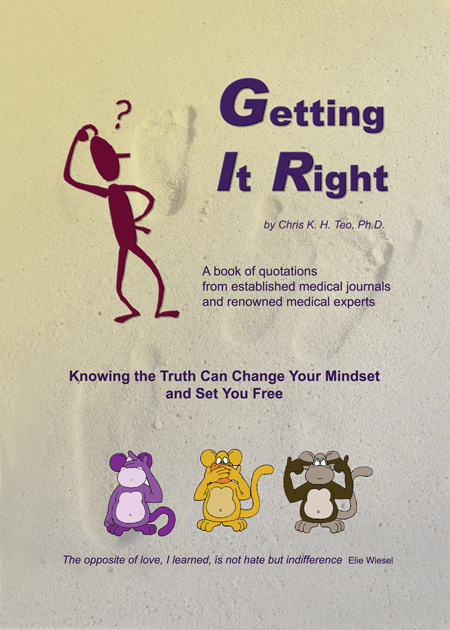
After I got into the bus again, I recalled a book that I wrote some years ago – Getting it right. 

Actually I call this a book of quotations because it contained statements made by renowned medical experts as found published in established medical journals.  By doing this way, I want to ensure that I get it right and not wrong! Among the questions I asked and attempted to answer in this book are: Is modern medicine the only proven and scientific therapy? Is traditional and complementary / alternative medicine quackery? Are research data always reliable and proven when published in peer-reviewed journals? Are drugs perfectly safe after FDA approval?  Are “they” protecting public safety or safe-guarding self-interest? Can medicine cure cancer?

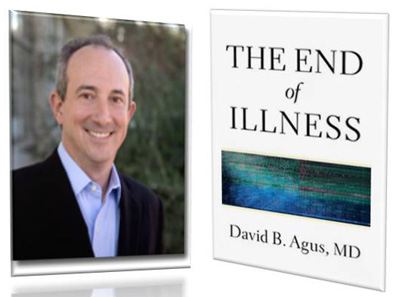
This orange tree was all forgotten after I came home. But after reading the book, The End of Illness, which my good friend S.Y. Yeong had sent me, “triggered” me to revisit this subject of perception again. Two sentences that Dr. David Agus wrote, awakened me – In the upcoming chapters, I’ll help you to answer that questions because many of these commonly held perceptions are just that – perceptions. I’m going to bust a few of these ideas and show you a different way of considering what’s good for you or not.

What is it that Dr. Agus wanted us to know? I suggest that you read his book for yourself, but let me share with you some of my thoughts.

First, I have high respect for this man. Dr. Agus  is professor of medicine and engineering at the University of Southern California Keck School of Medicine and the Viterbi School of Engineering. He obtained his undergraduate degree from Princeton University and his M.D. from University of Pennsylvania School of Medicine. Dr. Agus did his medical internship and residency at Johns Hopkins Hospital and his oncology fellowship training at Memorial Sloan-Kettering Cancer Centre. He is indeed well qualified to be saying what he is saying.

Second, it is not only his paper qualification that is just attractive, but the attitude of the man that I have the highest respect for.  Dr. Agus related a “trivial” event (for most people!) that changed him. This is what he wrote:

When I walked past my hospital’s gift shop and saw the cover of Fortune magazine proclaiming “Why We’re Losing the War on Cancer, “ … it seemed to be pointing a finger at me telling me how terribly I’d been doing my job. Cancer care has been much criticized over the last several decades, and clearly this article was trying to rip apart my field some more… It left a deep impression on me, for any cancer doctor who comes across such a blunt headline and well-thought-out essay is bound to feel disheartened and failing at his most essential job.

Clifton made remarkable points in the article, the most significant of which explained how we – as a society, but more specifically, within the medical community – have come to look at biology. For the last fifty years, we have focused on trying to understand the individual features of cancer in order to treat it rather than putting our efforts directly into controlling cancer. We have forgotten that curing cancer starts with preventing cancer.

When we reduce science down to the goal of finding the tiniest improvements in treatment rather than genuine breakthroughs, we lose sight of the bigger picture and find ourselves lost.

Is this why we’ve barely budged in our “war” against cancer in the last five decades?  … Gnawing questions like these began to bother me. I am, after all, an oncologist who cannot treat advanced cancer well. Medical science has made extraordinary progress over the past century, but in my field, the progress stalled out decades ago.

But, despite my initial reaction, I did and do believe that this kind of criticism is desperately needed, and I am inspired by the challenge to fix what’s broken.

To me, this is the measure of an honest, thinking man. This is what the wise and the educated should aspire to do. If there is a problem – say it out and more importantly, try to find a solution to it.

What are the problems that Dr. Agus see which do not seem to be right? He wrote:

Limitations of Medical Science

1.  The truth is that some doctors inflict a lot of harm today. The entire notion of “do no harm” has been corrupted; we’ve move into an extreme place in medicine that’s rarely data-driven and is horrendously overrun by false or unproven claims.

2.  A lot is going on in the body at any given moment. Yet we perform medicine in piecemeal – targeting one problem at a time. If you’re diagnosed with pneumonia, then you’ll receive a treatment specific for pneumonia and await your next health challenge. But what happens when you’ve got a system that’s broken down in a way that cannot be explained by any single invader …? Then you’ve got a real problem … because current methods of medicine don’t know what to do with you. The proposed treatment will probably mess with other areas in your system in ways that we may or may not know about. Your doctor will tell you that that treatment is “safe and effective,” but he’s only talking in relation to that one conditions, at that moment in time. He’s not considering everything else that encapsulates you – especially in the long run – because a lot of that knowledge remains to be understood.

3.  Rather than honouring the body as the exceedingly complex systems that it is, we keep looking for the individual gene that has gone awry or for the one “secret” that can improve our health. This kind of short-sightedness had led us far astray. 

The Medical Treatment for Cancer

1.  When Murray (Nobel laureate in physics) said to me point-blank, “Look at cancer as a system,” I really began to rethink everything – about cancer and our approach to treating it; about illness and our approach in medicine in general … I couldn’t help but ask myself: Is our way of looking at cancer keeping us from curing it? Moreover, does this faulty perspective preclude us from treating anything in medicine successfully?

2.   We’ve got a serious problem on our hands if all the intelligence and money currently going toward cancer are doing next to nothing in this so-called war. It’s time to change not only how we think about cancer … We need a radically different way of thinking…

3.   Cancer treatment is the place where we take the most risks in medicine because, frankly, there’s little hope for survival in many cases, and the cure is as evasive today as it ever was. I’m infuriated by the statistics, disappointed in the progress that the medical profession has made, and exasperated by the backward thinking that science continues to espouse, which no doubt cripples our hunt for the magic bullet.

4.  If you come to me for help in treating advanced cancer detected late in the game, your game is likely to be over soon. I don’t say this … to sound insensitive; I say it because it’s the truth … it’s a shame that the technology and innovation in medical research and treatment are so archaic, outdated, and, dare I say, in some cases barbaric.

5.  Despite chemotherapy’s being a widely used treatment for cancer, nobody has ever shown that most chemotherapy actually touches a cancer cell. It’s never been proven. Researchers can perform all this elegant work in tissue-culture dishes – if I expose a cell to this cancer drug, here’s what happens, and so on – but doses in those dishes are nowhere near the doses, nor the environment, that happens in the body.

6.  The death rate from cancer from 1950 to 2007 didn’t change much.  We are making enormous progress against other chronic diseases, but little against cancer. With the more common deadly cancers, including those that ravage the lung, colon, breast, prostate and brain we’ve had an embarrassingly small impact on death rates. The lack of change in the death rate from cancer is truly alarming. How can this be? What did we do wrong in our research?

7.   Doctors such as myself arrive at solutions through plain old trial and error, and therefore we can’t always explain how things work. I can’t always tell you why a certain drug works or how it works other than to say I have seen results proving that it does. I also can’t always give you’re a straight answer as to which course of therapy might work for you. In fact, doctors – myself included – don’t actually know why these drugs kill cancer cells at all! There’s a lot of trial and error in my business. We don’t have the technology yet to precisely predict what medicine you’ll respond to or which one will work best. 

8.   When cancer is exposed to chemotherapy, drug-resistant mutants can escape. In other words, just as resistant strains of bacteria can result from antibiotic use, anticancer drugs can produce resistant cancer cells. The number of mutations shoots up exponentially as a cancer patient is treated with drugs such as chemotherapy, which inherently causes more mutations.   When chemotherapy drugs bind to DNA, they can cause cancer just as radiation can cause cancer by mutating the genome. This helps explain why survivors of breast cancer, for instance, can suffer  from leukemia later in life due to the chemotherapy they received to cure their breast cancer.

9.   It’s human nature to want to find magic bullets in medicine, but they happen once in a blue moon, and we may already have had all of our blue-moon moments. We haven’t found many new pills lately that really cure diseases. This is why the pharmaceutical industry is somewhat broken right now; it has run out of … a magical chemical that cures a disease. I don’t think we’re likely to find a lot more of those; it seems like a waste of time, money, and resources to keep looking for these magic bullets. We need a different approach – a new model.

Many doctors and authors before this have been saying similar things about cancer treatment. Dr. David Agus – one of America’s outstanding oncologist – has decided to join in the chorus. Let the song plays on to full volume!


Related post:  Book Review: The End Of Illness By Dr David Agus, M.D. by  Yeong Sek Yee & Khadijah Shaari https://cancercaremalaysia.com/2012/06/09/book-review-ehe-end-of-illness-by-dr-david-agus-m-d/

Meaningless Shrinking of Tumour by Chemotherapy

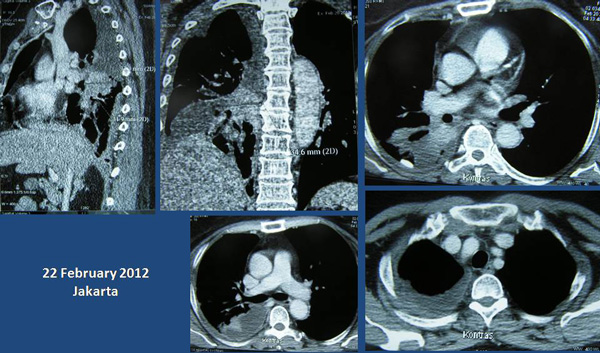
YHC (H856) is a 68-year-old man. In November 2011, he had a swelling in his right collar bone region. A biopsy was done and the doctor suspected it was cancer. YHC went to another hospital for a second opinion. A CT scan of his brain and neck was performed on 14 December 2011. The results indicated:

  • Normal examination of brain.
  • Right supraglottic soft tissue (upper part of the larynx, the area above the vocal cords) prominence raises the possibility of a tumour.
  • Bilateral supraclavicular and superior mediastinal nodes are in keeping with metastatic nodes. The largest seen on the left measuring 3.5 cm.

YHC underwent chemotherapy. The first cycle of chemo almost “knocked” him off. The side effects came six days after the treatment. He had to be hospitalised because of fevers, vomiting and diarrhea. Because of this the oncologist reduced the dosage of the subsequent chemo. So YHC went through the second to sixth cycles of chemo without any problem. However, after the sixth chemo, YHC had to be hospitalized again due to pneumonia. He was in the ICU for a week and this treatment alone cost him RM 30,000.


Study the results below.

CT scan on 27 January 2012

Comparison made with previous CT dated 14 December 2011,

  1. The prominence of the right supraglottic soft tissue is reduced when compared with the previous scan.
  2. Bilateral supraclavicular enlarged nodes are partially regressed.
  3. A small pericardial effusion is present.
  4. There are confluent nodes in the mediastinum which compress the superior vena cava. There are also confluent right hilar nodes. The approximate size of the confluent nodes is 6.4 x 4.8 x 3.7 cm.
  5. There is mild thickening of the gastroesophageal wall.

CT scan on 5 March 2012

  1. There is further regression of prominent right supraglottic soft tissue.
  2. Bilateral supraclavicular modes are still present.
  3. The anterior mediastinal soft tissue mass due to confluent nodes is smaller, measuring 4.2 x 3.4 x 3.3 cm. It still compresses the superior vena cava. Confluent right hilar nodes also appear smaller. There are discrete nodes overlying the aortic arch which are also slightly reduced in size.
  4. There is a new finding of bilateral pleural effusion, larger on the right, associated with right lung basal ateletasis. There is also partial collapse-consolidation of the right upper lobe.

CT scan on 28 March 2012

  1. The mediastinal mass of confluent nodes has increased in size. The paratracheal component of the mass is 5.0 x 3.5 x 5.4 cm severely compressing the superior vena cava.
  2. The anterior mediastinal lymph nodes have also increased in size, measuring up to 1.5 cm.
  3. A right pleural effusion is noted.

Impression:  Bronchogenic carcinoma with mediastinal lymph nodes increased in size from the previous examination.

Comments

This case really baffled me. YHC was first told that he probably had a lymphoma. Because of that, the oncologist only looked at his brain and the neck when they took the CT scan.  The medical report on 27 January 2012 indicated … “lymphadenopathy likely due to metastatic nodes with differential diagnosis of lymphoma.”

However, when all the chemos were done, the report on 28 March 2012 – for the first time, mentioned “bronchogenic carcinoma with mediastinal lymph nodes.”

Does this mean that after all the chemos were completed, “someone” decided that his cancer was actually a lung cancer? So, was he treated correctly in the first instance? YHC’s biopsy report was given the oncologist who later misplaced or lost it. Imagine such thing can happen in a private hospital!

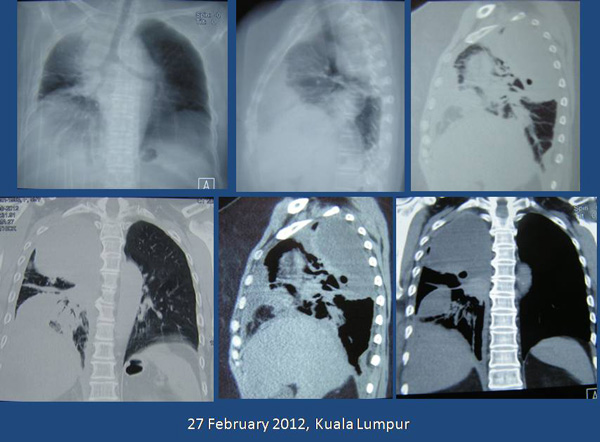
The second fact was just as equally baffling. Let us look at the condition of his lungs before and after the treatments. His lungs were getting worse after chemotherapy!


One important lesson we can learn from this case is that shrinking of tumour or mass after chemotherapy is meaningless   – indeed, it is misleading and has no meaning.  Let me highlight the important points again. After the first few chemos the mass became smaller and smaller as evidenced by the CT scan. So everybody was happy – the patient was happy, his family members were happy and the oncologist was equally happy. But do we (especially those who see this happen every day) not realize through experience that this shrinking of tumour is meaningless? Experience shows that the mass would grow in size again soon afterwards. The previous gain is often lost after more chemos. Is this not what happened most of the time?

Let us go back to the CT scan reports again:

26 January 2012: Right supraglottic soft tissue is reduced in size. Bilateral supraclavicular nodes are partially regressed.

5 March 2012: There is further regression of right supraglottic soft tissue.

28 March 2012:  The mediastinal mass has increased in size. Anterior mediastinal nodes have also increased in size.

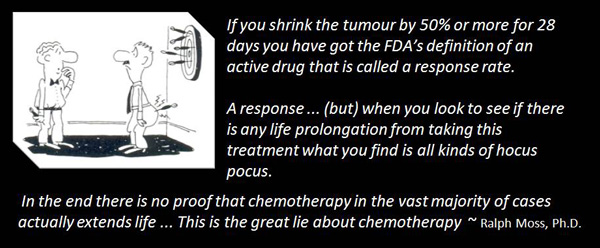
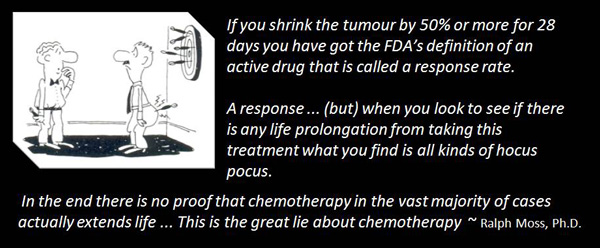
One would want to believe that with more and more chemotherapy, the mass will go on reducing in size until it disappears. No, this did not happen! And this phenomenon occurs often!  Read what Dr. Ralph Moss said below:
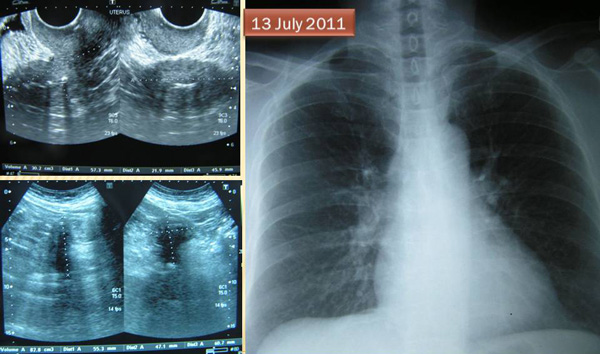


Chemotherapy did not cure him. In fact the treatment made him worse. But the doctor told YHC to continue with more chemo and radiotherapy.  YHC refused further medical treatment saying, “I would have to do more and more chemo and eventually “bye, bye!” He had spent more than RM 100,000 and was not going anywhere. Even the oncologist told him, “more chemo is not going to make him better. His condition would turn from bad to worse.” Why do more chemo then?

To me, the crucial point is not whether the tumour shrinks or not, but rather can the cancer be cured by the treatment.  If the treatment cannot cure, then shrinking of tumour is meaningless. I would prefer to advise patients to be happy and just be contented if they feel better after the treatment rather than place their hope on a shrinking tumour that brings them nowhere.


Cervical Cancer Stage 3B: Health Restored After Taking Herbs and Giving Up Chemo-radiation Treatments

The Ai Hoa (TAH) is a 78 year old lady from Indonesia. In May 2008 she had chocolate-coloured vaginal discharge. She consulted a gynaecologist and was told there was nothing wrong. In February 2009, the discharge recurred. She consulted another gynaecologist and was again told the same story – nothing was wrong.

Her daughter brought TAH to Singapore for further consultation. A PAP smear done on 16 March 2009 indicated high grade squamous intraepithelial lesion (HSIL) / CIN 3.

A biopsy of the cervical tissue was performed and indicated microinvasive squamous cell carcinoma.

A PET-CT scan on 23 March 2009 indicated a hypermetabolic FDG avid cervical mass with diffusely increased uterine avidity which was inseparable from the uterus and the upper part of the vagina. There was multiple FDG avid left iliac, aortocaval, recto-caval and bilateral paraaortic lymph nodes consistent with metastasis. There was no evidence of peritoneal or liver metastases.

Blood test results on 24 March 2009 showed normal hemogram with an ESR of 25 mm/hr. The renal and liver function tests were normal but LDH was 210 (normal <190). Her CEA was 6.9 (n<5) and CA 125 was 124 (n<35). HBsAg was reactive.

TAH was referred to another doctor for evaluation of her elevated CEA and HBsAg. She underwent endoscopy of her GI tract on 26 Match 2009. The result showed normal oesophagus but antral gastritis was noted. She was tested positive for Helicobacter pylori. Colonoscopy showed numerous small sessile polyps in the rectum. On biopsy it showed hyperplasic / metplastic polyps.  She was started on Baraclude (entecavir) for her hepatitis B (carrier).

Bone scan on 28 April 2009 showed increased tracer uptake in the midline of the upper sacrum as well as the left sacral ala, most probably due to degenerative changes, unlikely due to bony metastasis.

On 25 March 2009, TAH underwent concurrent chemo-radiation. TAH received 28 times of radiation treatment and 3 times of brachytherapy (internal).  Each chemo treatment was repeated weekly. The drugs used were cisplatin and 5-FU. After four doses of chemo (to receive a total of 8) TAH developed significant myelosuppression (lowering of white and red blood cells).  Chemotherapy was suspended temporarily.

Cost of Treatment

Not counting other costs, TAH had to pay a total of at least S$ 24,700 for her treatments in Singapore. The breakdown is as follows:

Radiation                                              S$17, 000

Brachytherapy (internal radiation)         S$  4,500

Chemotherapy                                      S$  3,200

Health Worsened After Treatments in Singapore

Chris: When did she complete all her treatments in Singapore?

Daughter:  16 May 2009 and we went home to Indonesia.

With the treatment, was she getting better? Better than before?

No. She felt nauseous and tired. She was not able to sit up for long and had pains in her back.

Before the treatment in Singapore how was mom’s condition? Good or bad?

She was healthy.

Before her treatment and after her treatment – was there any difference?

Yes, different. She was worse off after her treatment in Singapore.

You spent all the money and what happened then?

She was more tired.

What’s the whole meaning then?

Mom did not want to continue with the treatment any more. But the doctor said, “No, no, you cannot stop. You need to add more blood.” So we were confused.

Did you think mother would die if she was to continue with the treatment?

Most probably!

What happened during the chemo? Did she suffer?

It was difficult. She felt nauseous, she had difficulty eating. She had no strength to talk.

She was already 75 years old. I would not do that if she was my mother.

The radiologist in Singapore told us, “If she was my mother I would also give her the radiation.”

Oh yes, of course. If you go to a barber he will definitely tell you to cut your hair!

I did tell the radiologist that mom was already old but he kept insisting that if mom was his mother, he would do the same. Because he is a doctor, we believed him. But when I went home, I started to look for alternatives. That was when I found your book. In fact, the radiologist said that when we return to continue with the chemo, most probably mom would need to undergo another 20 times of radiation if the lymph nodes were still swollen. No, mom did not want to return to Singapore for treatment anymore.

Every half-hour Juice Therapy – almost fainted

On her return to Indonesia, TAH went on a 21-day-JuiceTherapy offered by an alternative practitioner. She had to drink all kinds of juices every half an hour. She almost fainted while on the therapy and gave this up.

Found CA Care

Her daughter read our book, Kanker: Mengapa Mereka Hidup (the Indonesian version of Cancer: Why They Live).  This led her to CA Care. She obtained herbs from Pak Teddy in Jakarta. After four weeks on the herbs TAH felt better.  Her facial expression improved, frequency of her urination lessen. She could sit in her daughter’s bread shop for one whole morning. Previously she could not do so even for half an hour and had to go upstairs and lie down.

Her daughter flew to see us in Penang on 19 July 2009. Below is the video recording on that day.


4 April 2010 – TAH and her daughter came to Penang

After taking the herbs for about ten months, TAH came to visit us for the first time, accompanied by her daughter.  She presented with the following problems:

  1. She felt “heaty” inside her abdomen.
  2. Her urination was very frequent – 7 to 8 times per night and this disturbed her sleep.
  3. She had incontinence.
  4. She had cramps in her legs if standing for too long.
  5. The soles of her feet felt “thick”.
  6. She had pains in the joints of her fingers.
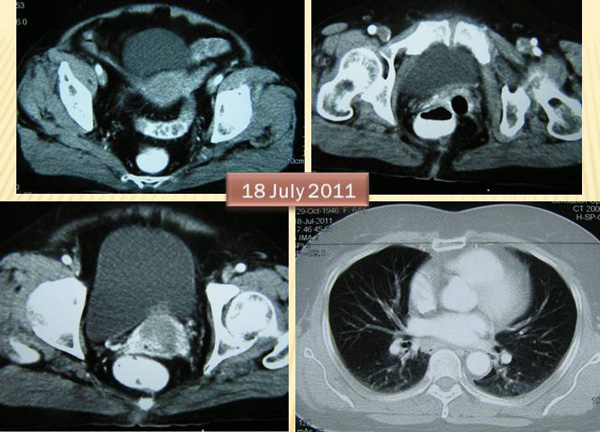
  7. Her stomach felt bloated and this caused discomforts.

Mama, how did you feel after taking the herbs?

D: Most people who saw her were saying she looked better.

TAH: I felt my backbone was better after taking the Bone Tea. I took care of my diet – I do not take fish, any meat or chicken. Do I have to keep to this diet until I die?

I am not sick but I also take care of my diet. I don’t want to wait until I get sick before I start to take care of my diet.

D: But she is not putting on weight?

Do you want to put on weight? Many Indonesians who come here are like that – complaining about not being able to grow fatter! But I tell them – You are not a pig or a cow. If you need to sell yourself by the kilos then go ahead and become fat. What is important to you is that you are healthy – with no problem. If you can eat, can sleep, can walk or move around and have no pains – what else do you want? You will put on weight later but it takes time. Be patient. You are already 76 years old now and you look good. Take it easy.

TAH: You have helped so many people!

Now, let me ask. There is this patient in the same place that you come from. Many patients came to see me because of her – she is doing well. She has a bread shop or something like that.

D: Yes, that is us – we have a bread shop. After our treatment in Singapore, mama always felt nauseous and tired. She had to sleep upstairs. Now, she is able to help take care of the shop.

Comments

Let me ask you to reflect seriously on the following:

  1. With all the modern technology of medical science – PAP smear, biopsy, CT scan, PET scan, bone scan, endoscopy, colonoscopy, radiotherapy, brachytherapy and chemotherapy – how did TAH ended up?  Indeed these procedures may or may not be necessary, but do you ever wonder if all these are the answers to her problem? Well, she even ended up being prescribed Baraclude for hepatitis! What does that tell you?
  2. TAH was already 75 years old – if she was your mother and if you were an expert in radiotherapy and chemotherapy – would you subject her to such treatments? The Singapore radiologist said yes! Do you buy that?

3.  Before undergoing chemotherapy and radiotherapy do you want to know what the side effects of these treatments are?  If you want to know – why don’t you ask the doctors? But whatever they say must always be counter checked with the information found in the internet. After having gone through the list of side effects then use your commonsense and ask this question – Do these treatments make sense to you?

What are the side effects of radiation (external) and brachytherapy (internal radiation)?

In the cancer forum, many ladies wrote about their experiences. Here are some examples:

  • My mom had 2 brachytherapy treatments. A couple of weeks after the treatments she was complaining of some discomfort in her back.
  • I had 3 brachytherapy sessions and the side effects I had were – some bleeding for a few days after each session, lack of energy and needing to sleep more than usual.
  • Despite being told of the possible side effects of my radiation treatment, I found I wasn’t truly prepared. I was told I would experience issues with my bowels. I did and still do, one and one-half years later. I first experienced “loose” bowels about four weeks into treatment. For months after radiation I had lower back and leg aches. No one could truly offer an explanation for it, but I sense that much of what I felt was nerve and tissue damage. Bending or squatting down was especially painful.
  • I also had three days of internal radiation and that contributed to what is called ‘stenosis’ or vaginal scarring.
  • I found my tummy was upset in the beginning. About eight months after treatment, I had rectal bleeding and feeling of ‘blockage’ that turned out to be chronic inflammation due to radiation.
  • During the last two weeks of my external radiation treatments, I experienced diarrhea, loss of appetite, and fatigue. I had occasional vaginal itchiness. I have developed a problem with stress incontinence (urinary leakage when sneezing, coughing etc). My radiation oncologist told me the radiation has damaged the sphincter.
  • I feel that the side-effects were definitely minimized, almost to the point of lying. I can understand that they don’t wish to scare you with all sorts of rare complications, but I would rather have been “given the straight goods”, so to speak, on the more likely ones. I was told that the internal radiation treatments would probably cause some temporary and mild bladder and bowel problems. I started experiencing minor bladder irritation immediately after the first radiation treatment, and also had mild diarrhea. Five years after the treatments, I still have “funny” bowels – when I have to go, I usually have to go *NOW*, sometimes several times a day, and “normal” seems to be everything from loose to constipated. I didn’t realize this was after-effects from radiation until I found other women on the internet who’d also had radiation and were having the same symptoms. I felt tired and “draggy” for a couple of months after my treatments. I also underwent menopause, at age thirty-four. Symptoms of menopause, especially hot flashes, inability to concentrate, and moodiness, increased in intensity for several months until I finally realized what was going on. The radiation also caused some scarring in my vagina.

Side Effects of Brachytherapy

  • Nausea
  • Digestive disorders like loose stools, stomach upset.
  • Urinary incontinence.
  • Dryness in the vaginal canal, vaginal soreness and bleeding etc.
  • There are also many side effects that can cause permanent damage to the reproductive organs such as the vaginal canal becomes very narrow because of the radiation treatment. The length of the vaginal cavity is also shortened due to the procedure, rendering sex very painful and uncomfortable.
  • Menopause too is sometimes accelerated as a result of brachytherapy.
  • Another important side effect of brachytherapy is loss of bone density. 

Side Effects of Cisplatin

  • Increased risk of getting an infection from a drop in white blood cells.
  • Tiredness and breathlessness due to a drop in red blood cells.
  • Bruising more easily due to a drop in platelets.
  • Fatigue during and after treatment and feeling or being sick.
  • Cisplatin can cause kidney damage.
  • Hearing loss, especially with high-pitched sounds.
  • Ringing in the ears.
  • Loss of appetite.
  • Loss of taste or a metallic taste.
  • Numbness or tingling in the fingers and toes resulting in difficulty with fiddly things.
  • Allergic reactions such as skin rashes, itching, feeling hot, shivering, redness of the face, feeling dizzy, headache, shortness of breath, anxiety or a sudden need to pass urine.
  • Muscle cramps.
  • Fast heartbeat (during or shortly after a dose)
  • Lower back or side pain accompanied by fever or chills
  • Joint pain
  • Blurred vision

Side Effects of 5-FU

•  Sore mouth.
•  Taste changes.
•  Diarrhoea.
•  Eye problems.
•  Skin changes.
•  Risk of infection, bruising and bleeding due to low blood counts.
•  Tiredness or fatigue.
•  Feeling sick or nausea and vomiting.
•  Hair loss.
•  Nail changes.
•  Sun sensitivity.
•  Soreness and redness of palms of hand and soles of feet.
•  Chest pains and tightening across the centre of chest.

Reflect on the quotations below:

We wish to thank TAH and her family for giving us the permission to tell her story and use the videos above. And this is Ai Hoa at age 78! At this time she is doing well indeed – and her health is reflected in these pictures. She has been almost three years on CA Care’s herbs.

Cervical Cancer: Eighty-nine Percent Chance of Cure Vanished With the Collapse of Her Right Lung Four Months After Radiotherapy and Chemotherapy

BH (S108) is a 65-year-old lady from Indonesia.  An ultrasound of her pelvis showed her cervix was enlarged with a focal bulge over the posterior part. This bulge or mass measures about 23 x 12 mm.

A chest X-ray on 13 July 2011 showed no significant abnormality see in the lungs and heart.

A biopsy was performed on 14 July 2011 and confirmed malignant cells infiltrating deep into the cervical parenchyma.  BH was referred to a cancer hospital for further management.

A CT scan was done on 18 July 2011. It showed a bulky uterine cervix measuring 4.9 x 3.7 cm with a hypodense lesion seen within.  This is in keeping with carcinoma of the cervix. No metastatic disease is evident in the abdomen.

BH underwent radiotherapy. She was told that there was a eighty-nine percent chance that she would be cured. BH had 25 sessions of external beam radiation and 3 sessions of brachytherapy (i.e. internal radiation).  In addition BH received 2 cycles of chemotherapy. All treatments were completed by 12 October 2011.

BH said she was well after the treatment.  She came back for a check up on 25 November 2011 and was told everything was alright. She “believed” she was cured.

However, barely four months later, 15 February 2012, a CT scan showed:

  • Uterine cervix was unremarkable.
  • Presence of retrocrural, hilar and mediastinal adenopathy in keeping with nodal disease.
  • Collapse of her right upper lung, with a heterogeneous ill-defined mass lesion at the right pulmonary hilum approximately 4.6 cm, compressing the ascending bronchus and pulmonary artery.
  • A 2.4 cm, irregular soft tissue lesion present in the superior lingual left lung, likely indicating metastasis.

BH was asked to undergo more chemotherapy – 6 cycles and in addition 5 sessions of radiotherapy. She declined further medical treatment. She came to seek our help on 17 February 2012.


Did you ask if this additional treatment is going to cure you?

No guarantee to cure but the treatment might shrink the tumour.

In July 2011, when you had your first treatment – radiotherapy and chemotherapy – did you ask if the treatment could cure you?

For the first treatment, the doctor said there was 89 percent chance of cure. And she was “cured” after the treatment.

How could you say she was cured when barely four months later the cancer had spread to her lungs?

But the doctor said she was well after the first treatment!

It was not a cure! My aunty’s cervical cancer recurred in her lungs 13 years after an apparent “successful” treatment.

Did you suffer from your first chemo treatment?

It was difficult. My head was pounding (bursting), my vision was blurred, I vomited (the night after the chemo). I don’t want any more chemo.

Comments

  1. Many patients went to see their oncologists and were given impressive statistics of success. Patients felt reassured (never mind if the promise did not turn out to be true). In this case BH was told that she had eighty-nine percent chance of cure after chemotherapy and radiotherapy. But the reality was, barely four months later the cancer struck back and went to her lungs.
  2. Do you ever wonder why the cancer had spread so fast? Before the treatment in July 2011 her lungs were clear – no sign of cancer at all. The message is simple – in cancer, nothing is certain. The only thing that is the uncertainty of  the nature of cancer. It is unpredictable and anyone who promises you something good may not be able to keep that promise.
  3. When someone tells you — Your have 89 percent chance of cure – Do you really understand what he means? In this video the patient and his family believed that she was cured. She was alright for four months. Surely being well for four months does not mean cure at all.
  4. This case reminded me of another case of a lady from Kuantan. She came to CA Care on behalf of her 88-year old mother who had inoperable colon cancer (meaning the tumour was still in her colon). Her mother took herbs for just a  month. Her CEA decreased from 19.9 to 17.3, CA 125 decreased from 37.4 to 20.9 but her CA 19.9 increased from 51.6 to 313.5. The daughter, (a bank manager) wrote: I just trusted the wrong DR quack.  Another relative (brother?) wrote: How irresponsible a “doctor” you claimed to be. When patients come to CA Care we never promise anyone a cure at all – what if we were to say you have 89 percent chance of cure? What would you call such a person then?

Lung Cancer: The Meaningless Decrease and Increase of Tumour Markers After Chemotherapy

HK (S97) is a 57-year-old man from Indonesia. Blood test showed that his CA 19.9 was elevated.  A CT scan on 15 March 2011 in Singapore revealed a small right pleural effusion and small nodules in his right lung.

A PET scan done on 17 March 2011 indicated:

  1. Hypermetabolic primary tumour at the right lung apex.
  2. Smaller subcentimeter nodules (below the resolution of PET) in the right lung, suspicious for intrapulmonary metastases.
  3. Right pleural effusion with multiple FDG-avid pleural nodules.
  4. FDG-avid left supraclavicular, subcarinal and right paratracheal nodes, suspicious for nodal involvement.

HK underwent chemotherapy as below:

Date

Procedure

CEA

CA 19.9

19 March 2011 Biopsy at a hospital in Kuala Lumpur.    
22 March 2011 Lung cancer confirmed.    
24 March 2011 Chemo – first cycle, day 1 – Gemcitabine + Cisplatin    
30 March 2011 Chemo – first cycle, second injection 12Apr 11 = 85.5 12Apr 11 = 435.9
20 April 2011 Chemo – second cycle, day 1 – Gemcitabine + Cisplatin    
26 April 2011 Chemo – second cycle, second injection    
28 April to 1 May 2011 Fevers  < 38 C, admitted to hospital    
11 May  2011 Chemo – third cycle, day 1 – Gemcitabine + Cisplatin 11May11 = 123.5 11May11 = 291.6
18 May 2011 Chemo – third  cycle, second injection    
31 May 2011 PET scan – results showed improvement 30May11 = 90.5 30May11= 220.3
1 June 2011 Chemo – fourth cycle, day 1 – Gemcitabine + Cisplatin    
8 June 2011 Chemo – fourth  cycle, second injection    
22 June 2011 Chemo – fifth  cycle, day 1 – Gemcitabine + Cisplatin    
29 June 2011 Chemo – fifth cycle, second injection    
13 July 2011 Chemo delayed due to lack of blood    
20 July 2011 Chemo – sixth cycle, day 1 – Gemcitabine + Cisplatin    
27 July 2011 Chemo – sixth cycle, second injection    
11 August 2011 PET scan – results showed no changes or further improvements 10Aug11 = 64.2 10Aug11 = 164.8
13 August to 17 Nov. 2011 Three months on Tarceva – Rashes in the face and legs. 14 Sep11 = 130.3

12 Oct 11 = 217.7

14 Sep11 = 85.7

12 Oct 11= 114.1

17 November 2011 PET scan – results showed cancer  was more aggressive 16Nov 11 = 523.0 16Nov11 = 438.2
26 November 2011 Chemo – first cycle of Alimta    
16 December 2011 Chemo – second cycle of Alimta 4 Jan 12  = 666.5 4 Jan 12 = 4,422.0
5 Jan12  to

1 Feb.12

Chinese herbs    
3 February 2012 Started on CA Care herbs  – Caspsule A + B, Lung 1 and Lung 2, Pain, Liver Tea 1 Feb. 2012

=737.5

1 Feb. 2012

= 3,917.0

  While on CA Care’s herbs 10 Mar 2012

 = 629.8

10 Mar 2012

= 3,609.0


Comments

Study carefully the rise and fall of his CEA. From 85.5 it increased to 123.5 and then decreased to 64.2 after which it started to climb to 130.3 to 737.5. After CA Care’s herbs it went down to 629.8.

Study carefully the rise and fall of his 19.9. It started with 435.9. With chemotherapy it decreased to 291.6, 164.8 and eventually 85.7. However with more treatment the CA 19.9 started to increase to 114.1, 438.2 and eventually 4,422.0. After CA Care’s herbs it went down to 3,609.0.

When the CEA or CA 19.9 went down after chemotherapy, patient and his family were happy and the doctor surely is similarly happy and “believes” that the treatment has done the trick. But there is no cause for celebration because the decrease of CEA and CA 19.9 are just meaningless. It happens often – only that those concerned never want to see reality. They want to believe that chemotherapy is going to cure their cancer!

In the case of HK above, again I say, the increase and decrease of his tumour markers is meaningless. At the end of the day, this is what his lung looked like. No use and no cure.


Increase or decrease of CEA and CA 19.9 after chemotherapy is meaningless when the end results of the treatment are like these!

This Is What We Often Encounter – Failed Medical Treatment, Healing Crisis after Herbs, Bad Diet and Family Problems

Part 1: Failed Medical Treatment

CE is a 56-year-old lady. She lives in Penang, down the road where our centre is.  Sometime in March 2010 she was diagnosed with Stage 4 breast cancer. No operation was indication. A doctor in a private hospital tried RFA (radiofrequency ablation) for her tumours.  She received two treatments with RFA – one to her breast lump and another to her bone.

Unfortunately, by August 2010 the tumour recurred in the same left breast.  She underwent 6 cycles of chemotherapy at a government hospital.  The treatments were completed in May 2011, by which time all the lumps in her breast were gone.

Six months later, in December 2011, CE developed breathing difficulties. Her lungs were filled with fluid. A month later, in January 2012, she had severe headaches for 2 weeks. The cancer had spread to her brain. She underwent 5 sessions of radiotherapy to her head. She was given painkiller medication.

In February 2012, she had breathing difficulty again. She had pains in her left leg. The cancer had spread to her bones. The doctor at the government hospital gave up on her. She was referred to the Hospice. She was prescribed morphine.  There was no hope.

Part 2: Healing Crisis After Taking Herbs but She Was Better

CE and her daughter came to seek our help on 17 February 2012. She was prescribed Capsule A, teas for her Bone, Lung, Brain and Pain.

24 February 2012: One week on the herbs, her condition improved. Her intake of painkiller was reduced by fifty-percent. Previously she needed to take 4 tablets a day, and after the herbs this was cut down to 2 tablets per day. She felt more energetic. Her facial expression was better.

CE (patient):  First day, I moved my bowels. Second day, I had diarrhea. Third day I had more diarrhea.

Chris: The first few days of taking herbs, patients generally go through a “healing crisis” – a cleansing process. There could be more pain, you become more tired or you have diarrhea, etc. These are good. Do not take any medication, the problems will resolve by themselves. I have a patient who moved  her bowels ten times a day after taking the herbs. Take it easy.

Daughter: She had five bowel movements!

C:  Oh, ten times would be better!  Take it easy and be patient. Now, do you still have diarrhea?

CE:  I have no more diarrhea.

C:  This is what I am telling patients. You may have pain after taking the herbs, then the next day more pain and perhaps more pain for some more days. Then the pain becomes less and less and eventually it will be gone. Everyone has to go through this difficulty or “healing crisis.”

D: She does not need to take so much pain medication now. Before she took four times of medication a day.

CE: After take the herbs, I only took painkiller twice a day. Today I only take one time.

C: No need to take four times a day anymore? You need to take the pain medication if there is pain. It is no use to suffer. Take the pain killer if the herbs do not help you. You need to relieve the pain. Only thing is we don’t want to take too much of pain medication and be dependent on it.

Okay, you took the herbs for a week now. Are you getting any better?

P: I am more “cheng sin” (more alert).

D: I don’t know if she has improved or not from the inside, but looking at her facial expression, certainly she is much better now.

C: Patient should be able to know if she is “improving” or not. She should be able to “feel” the improvements. I too would be able to “see” if patients are getting better or not by looking and talking to them. And I tell every patient who come here – if you take our herbs for two or three weeks and you don’t feel any better, then stop coming to see me. The herbs are not good for you. Better that you go and see someone else for help.

Part 3: Bad Diet and Family Problems

2 March 2012: Unfortunately her health deteriorated. She did not look healthy. Both her legs were swollen. After some questioning, she admitted to eating “outside food” the whole week.

Daughter: Both of her legs are swollen!

Chris:  Last week when you came, were the legs swollen?

D: No.

C: Do you still have pain?

CE (patient):  Yes.

D:  Her pain medication intake had increased to twice a day. This week she is less energetic. Last week she looked much better.

C: Did she take care of her diet? Or did she start to eat anything she liked?

D: This week I was not able to cook for her. My son was sick and so I was not able to take care of her (mother).

C: So, the whole of this week she had been taking “outside (hawker) food”?

D: Yes. The first week, I cooked her food.

C: This is the problem.

D: It was difficult for me.

C:  Are you the only daughter at home?

D: I live with my family (husband, son and in laws) in Batu Ferringgi (about an hour’s drive away) but my mother lives in Batu Lancang (near our cancer centre). She lives with my sister and brother.  But all of them are working so they have no time to take care of her.

C: What about you? Are you working?

D: Yes. But in the afternoon, I come to my mother’s house to cook for her. But this week my son was sick and I had to take care of him. So I did not have the time to cook for my mother.

C: I understand. But in cancer, diet is very important. As you notice, the first week she was doing much better with no swollen legs. But this week her legs swelled due to bad diet. It is all about “bad” food.

Indeed, there is nothing we can do really. Like they say, “A mother can take care of ten children, but ten children cannot take care of one mother.”  I understand your situation.

Comments

1.  Most patients come “shopping” for magic potion. They expect us to cure them even after medical treatments have failed them. This is unrealistic. We are only human and we can only do that much and no more. This case is not an exceptional case. Read my blog, www.ADayWithChrisTeo.wordpress.com and you understand what I mean.

2. Our path to healing is not a “honeymoon” trip. After taking the herbs or change of diet, there will be a ‘healing crisis”. You will probably have more pains, more coughs, more bowel movements, etc.  (Read more: Healing Crisis). Do not do anything to stop this cleansing process. The problem will solve by itself after a little while. No medication please. Remember that “healing crisis” is a law of cure. Without this happening there shall be no healing.

3.  Diet is the most sore point among patients. When patients start to get well, they want to eat what they like. And after they have eaten all the “bad food” they write us asking why their tumour markers, like CEA, CA 125, CA 19.9, etc., had increased? What can we do? You reap what you sow! It is okay, if patients admit to their mistakes like in the case above. At least we can teach them to do it right the next time. But the worst cases are those who would not want to admit their mistakes and keep on denying that they followed our dietary advice to the letter. Well, there is nothing to be upset or dispute. Winning over this matter does not benefit anyone. For these patients, our advice is – Stop our herbs and find someone else to help you.

4.  As said in the beginning of this article, cancer is not about a tumour in your body, it is about you as a human being. Many patients come and go, unfortunately never recognizing this important aspect – to them cancer is only a misery or disaster in life! Such people die or suffer in vain. They believe that their problems are due to outside factors. They don’t look into themselves to know what have gone wrong. Most cancer patients carry with them a load of unresolved personal baggage – bitterness, hatred, lack of love, family problems, etc. Unfortunately, no chemo, radiation or herbs can help in such matters.  This is what I mean when I said in the beginning of this article, After talking to you for about five minutes I would probably know if I can help you or not. Your personality and problems show up during our conversation. And it is hard to change a patient’s attitudes and lifestyle – it has to be the person himself/herself who wants to change. Without change, no healing can ever take place.

Lung Cancer: Why do a biopsy when you don’t want to go for chemotherapy?

SK (S123) is a 59-year-old lady from Indonesia. On 11 November 2011 she came to a private hospital in Penang for a general wellness check-up.  She did not have any symptoms. She was given a “booklet” containing the data of her health screening and was told by the doctor that she was healthy – no problems. The following are some of the information for us to study carefully.

  • The chest X-ray report showed both lungs are clear.
  • Ultrasound of abdomen indicated fatty liver.
  • Blood test results are as follows:

Parameters

ESR 42     High
Platelet 102   Low
Free T4 (ng/dl) 1.5    High
Free T4 (pmol/L) 19.3  High
Alanine transaminase 52      High
GGT 31
AST 37      High
Alkaline phosphatase 136

SK went home to Jakarta feeling satisfied and happy after being given a clean bill of health by the doctor. However, about three months later, SK developed fevers and breathing difficulties. She consulted a lung specialist in Jakarta and was hospitalized. There was fluid in her lungs. Pleural tapping was done. Four liters of fluid were tapped out of her lungs during the 5 days in the hospital. The doctor suggested a biopsy to be followed by chemotherapy or take an oral chemo-drug, Tarceva. SK refused. She was afraid of the side effects. The total cost for this hospital stay came to about 30 million Indonesian rupiahs.

SK came to a private hospital in Kuala Lumpur for a second opinion.  She was hospitalized for a week where a  CT scan and biopsy were performed. During that time too, another 700 ml of fluid was tapped out of her lungs. The report of the biopsy of her lung dated 28 February 2012 indicated a moderately differentiated adenocarcinoma.

SK refused chemotherapy.  The doctor gave up and she was asked to go home. The total medical expenses in Kuala Lumpur came to RM 10,500.

On 28 February 2012 we received this e-mail.
Dear Mr. Chris,

My name is S. The doctor in Jakarta said my aunty has lung cancer stage 4. At the moment, we are in Kuala Lumpur (hospital). The result of biopsy will come out on Thursday or Friday, but the doctor said it’s seems advanced cancer. We would like to seek your help. Can we come to Penang without result or should we wait for the result? Your prompt reply will be highly appreciated

Thank you, best regards.

Reply:  Wait for the results and bring all the medical reports. No need to hurry. Come on Friday if you can, or Sunday night. See my website: www.cacare.com

Comments

Over the years, I have noticed a peculiarity about cancer patients, especially those from Indonesia.  They come to hospitals in Malaysia for a second opinion after being told that they have cancer by doctors in their home country. They undergo all the test, scans, biopsy, etc. Again they are told they have cancer. They refused treatment and pack their bags and go home. I cannot understand such behavior. If you do not want to do follow up treatment why do you proceed to do the biopsy? SK spent RM 10,500 and then she decided to go home without any treatment. Actually, even the CT scans done in Jakarta were indicative enough of her lung cancer. Why go the extra step and then quit half way? As I have said earlier, this happens very often!

Health or wellness screening is another phenomenon. Do you see the flaw of going for such check-up?  I wonder how helpful is such a screening procedure?  SK was told her health was in perfect condition in November 2011 after the check up. I, however, would disagree with that.   Her ESR was high, plantlet count was low and two of her liver enzymes were elevated. Her health was not perfect. There was something wrong somewhere? But the doctor said she was in perfect health! Can you believe that? What the doctor said might not be correct!

Three months later SK’s lungs were filled with fluid. The irony was three months earlier an X-ray showed her lungs were clear. How could that be? Are we to say that within three months from “nowhere” her lungs have grown so many tumours? Another question is  –  what could have caused her lung cancer? Could it be a metastasis from somewhere? I was curious and tried to find out more. SK told me that some eight years ago she had an operation to remove a 10-cm fibroid. I wondered aloud. Could that be cancerous, and she was not told about it? And now the lung cancer is actually a metastasis?  SK had been having coughs on and off for many years. Is this not an early sign of metastasis? My aunty also had chronic coughs for two years before a CT showed that her cervical cancer had metastatised extensively to her lungs. Unfortunately, SK is not educated and could not read much – she did not have any clue of what was happening to her.

Stomach Cancer: Fainted and In ICU After One Chemo, Now Surgeon Said Go For More Chemo

Lisa (not real name, M805) is a 35-year-old Indonesian lady. In October 2009 she passed out black stools. She came to Penang for a medical check-up. An upper endoscopy showed acute gastric ulcer but the rapid urease test was negative for H. pylori.  Her blood test showed low levels of haemoglobin (8.3), red blood cell (2.9) and high platelet count (431). She was prescribed medication for gastritis and was told to come back for further observation after a month.

On 3 December 2009, another endoscopy was performed. It showed an almost completely healed ulcer.  A repeat rapid urease test again was negative for H. pylori. A gastric biopsy was also performed and indicated an adenocarcinoma, diffuse type.  A CT scan on 11 January 2010 showed a thickening of the gastric antral wall consistent with the clinical finding of carcinoma. The diffuse hypodensity of the liver parenchyma was in keeping with fatty liver change. No mass lesion was seen in the liver. There was no evidence of any focal lung lesion or lymphadenopathy.

Lisa underwent an operation to remove her stomach. The histopathology dated 12 January 2010 confirmed a diffuse type adenocarcinoma of stomach, T3N1M1, Stage 4. Lisa was asked to go for chemotherapy.  She returned to Jakarta and received one cycle of chemotherapy. The treatment was a disaster.  She fainted and had to be admitted to the ICU. She was discharge after four days but could hardly remember many things. She only recovered after a month.

Lisa returned to Penang for a follow-up examination with her surgeon. A CT scan on 21 July 2010 showed no evidence of pancreatic, splenic or renal mass lesion. There was no evidence of any lymphadenopathy. There was no obvious recurrence in the surgical bed.

Lisa and her husband came to seek our help on 23 July 2010 as she was not prepared to go for any morechemotherapy. She was prescribed Capsule A, Stomach 1 and Stomach 2 teas and C-tea.

Sometime just around the Chinese New Year (end of January 2012) Lisa felt a small lump in her stomach. She returned to Penang on 20 February 2012. A CT scan showed the following:

  1.  Fatty liver change.
  2. Mild to moderately dilated intrahepatic ducts.
  3. Ill-defined enhancing soft tissue around the pancreas and common bile duct which extends inferiorly along the right retroperitoneum, right paracaval and ilio-psoas down to the right inguinal and upper anterior thigh region. This has infiltrated the right upper ureter. Features are suspicious of tumour/metastatic deposits.
  4. Moderate to gross hydronephrosis of the right kidney with diffuse cortical thinning.
  5. Mild ascites.

Blood test showed elevated liver function enzymes:

Alkaline phosphatase 188.74   H
GGT 102.44   H
ALT 48.1
AST 47.77     H
CEA 1.23
CA 19.9 36.2

Lisa and her husband met with the surgeon. The surgeon said it was not possible to undergo further surgery. She was told to go for chemotherapy. That was the only option left.

The following is the transcript of our video-taped conversation on 22 February 2012.

Wanting a cure, whatever it may cost

Husband: January 2011, she had the surgery.

Chris:  Her stomach was removed. Before the surgery, did you ask the surgeon if the operation could cure her?

H:  He told us after the removal of her stomach, she would be okay. Then we need to go for chemotherapy.

C: Did you explicitly ask if after the surgery, she will be cured?

H:  He did not answer that question. The surgeon explained that after the surgery, everything would be clean. The cancer would not spread anymore.  We believed whatever he said. The reason why we went to him was because we wanted to find a cure.

C:  Yes, I understand – all patients who come here (from Indonesia) are searching for a cure. So whatever answers you get or what the doctors said, you all would believe them. And also pay whatever it may cost. What you all want is a “cure.” I understand that. So, after the operation, how long was she in the hospital?

H:  About two weeks.

Health worsened after the surgery

C:   How was her health before and after the surgery?

H:  After the surgery she became weaker – she was worse off. Before the operation, she was okay- okay, normal and there was nothing wrong.

C:  Why did you go for the surgery then?

H:  She was okay, she could eat – there not nothing wrong with her. She was told that she had cancer and we were afraid that disease would spread.

C (to patient):  Can you tell me – before the operation, you were okay?

Patient: Nodding vigorously.

H:  Nothing wrong with her except she passed out black stools. Then they did a biopsy after a scan and said it was cancer.

C:  That was all?

H:   Nothing – no pain, nothing. If she had pains it would it would have been a different matter. But she was able to eat well.

C:  And when the doctor asked you to operate, you went ahead with the surgery? And after the surgery, she was not getting better?

H:  No, not better.

Surgery – a RM 20,000 adventure

C: How much did the surgery cost you?

H. About RM 20,000.

First Chemo – she fainted and four days in ICU

C:  After the surgery, she had chemo?

H:  Three months later, she had chemotherapy in Jakarta. There was no problem on the first day after the chemo. The night of the second day, she had a seizure and her hands were shaking vigorously and she fainted.  She was admitted into the ICU and was there for four days.

C (to patient):  Did you remember anything when you were in the ICU? Did you remember going off or flying away somewhere?

P: No (shaking her head).

H:  After coming out of the ICU she could not remember things – memory loss. She could only recognize me. But gradually her memory started to come back. It took about a month for her to become normal again.

C:  Did the doctor want you to continue with the chemo after this episode?

H:  At first he said she had to do 3 cycles of chemo, but after seeing what had happened, the doctor did not ask her to continue with her chemo anymore.

No more chemo for me

C (to patient):  If you were asked to go for more chemo – do you want to do it again?

P:  No, I don’t want any more chemo.

After extensive recurrence – the only solution is chemotherapy

H:  Now, the only solution is chemotherapy.

C:  You went to talk to the surgeon. He told you she should go for chemotherapy. Did he know what had happened to your wife after the first chemo?

H:  He knew. But he did not have any more words to say. He told us, there was nothing else he could do except chemotherapy. But how are we to go for chemo after such a bad experience? We are afraid. She is going to lose her hairs and what not.

C:  Loosing hair is not a problem at all – it will grow again. But what we need to worry is if she would “fly away.”

Next-bed-patient became blind after two chemo and died after three

C:  You told me earlier that there was another patient in the next bed. She also had chemo when your wife was having hers.

H:  After the chemo, she became blind. Her eyes could not see anymore.

C:  What? Before the chemo, were her eyes okay – could she see?

H:  Yes, her eyes were normal. After two chemos her eyes could not see anymore. She died after the third chemo.

C:  What? She died after the third chemo? After the second she became blind – why did she continue with the third chemo then?

H:  Her husband made that decision. Because of what I have seen, I would not want her to do any more chemo.

C:  Did you really talk to her husband?

H:  Yes, I talked to him.

C:  Even after becoming blind, the husband still wanted her to continue with the chemo?

H:  Yes, he wanted to continue with the treatment.

C:  Did he tell you why he wanted to do that?

H:  No and I did not ask.

Comments

1. Lisa passed out black stools, otherwise she was okay. What could have happened if she did nothing? Do no surgery or chemo? How bad could she be?

2. Lisa and her husband asked the surgeon if surgery would cure her. The answer was rather evasive – He told us after the removal of her stomach, she would be okay. Then we need to go for chemotherapy. We believed whatever he said. We would like to believe that whatever doctors say or do, it is always for the best interest of their patients. But let’s not be naïve. At time it is good to be reminded of what Dr. Mendelsohn  said:
3. Lisa had her first cycle of chemotherapy and she fainted and lost her memory.  Her next-bed fellow patient was blind after two chemos and was dead after the third. This clearly shows that chemo is not for everybody.
4. The story of Lisa clearly showed that surgery did not cure her cancer.  She expected a cure but she was short-changed. In fact she became weaker and was worse off.
5. As it is now, after two years, the cancer had metastatised extensively – could her cancer be worse than this if she did nothing?

Dissecting Chemotherapy 12: Almost ‘chopped off’ by CHOP-R for Her Lymphoma

Pat (not real name- SY216) is a 72-year-old lady. Sometime in mid-2010, she was on TB medication for six months. Her legs, abdomen and hands were swollen.  A CT scan done on 22 December 2010 showed a 12.1 x 10.7 x 5.6 cm mass in the para-aortic region and there are multiple masses involving the left kidney and bilateral adrenal glands.  CT chest shows cardiomegaly with mild pericardial effusion. The likely diagnosis is lymphoma.

A biopsy done on 16 February 2011 confirmed diffuse large B cell lymphoma.  Pat underwent chemotherapy. The regimen used was CHOP-R, consisting of Cyclophosphamide + Andriamycin + Vincristine + Prenisolone + Rituximab.

The first cycle that Pat received on 24 February 2011 was of low dosage. Pat received the second cycle on 4 March 2011. This second cycle was a full dose. About a week later, Pat suffered severe side effects and her husband said, “She was almost “chopped off” by CHOP-R.”

Pat and her family decided to give up further chemotherapy. She and her family came to seek our help on 23 April 2011. She presented with “bad” liver (see table of blood test of 13 April 2011). Pat was prescribed Capsule A + B, Liver-P, LL-tea for her liver and Lympho 1 and Lympho 2 teas for her lymphoma.

On 17 October 2011, Chris had a chance to meet up with Pat and her family. Listen to our conversation that day.


13 April 2011 23 April 2011 27 July 2011 12 Oct. 2011
Albumin

31    Low

Started on herbs

40

34

Alkaline Phosphatase

261  High

77

81

AST

 42    High

28

28

ALT       59

12

15

GGT

185   High

46

30

Pat has been taking our herbs very religiously and she is doing well after giving up her chemo. As of this writing, 15 February 2012, Pat is doing fine. According to her daughter, Pat went to Singapore for her Chinese New Year Holiday (end of January 2012).

Comments

Pat suffered badly after her first cycle of CHOP-R. She could not take it anymore. Ask this question – what could have happened if Pat were to persist and continued with her chemo? Assuming she was able to complete a course of six cycles, what could have been the benefit?

Pat gave up and turned to our herbs. Did she die of her lymphoma even after giving up the chemo?  The next important question is, can her lymphoma recur? Yes. It does not matter if she had completed her full course of chemo or not.

The late Dr. Stephen Schneider, was a world famous professor at Stanford University. He was diagnosed with lymphoma in 2001. He was treated by Dr. Sandra Horning, a leading expert on lymphoma – “the best person in the world for treating what you have”. Dr. Horning is also from Stanford and is a professor of medicine. Schneider received the “new” Stanford’s chemotherapy regimen using CHOP + R. After three cycles of CHOPR-R, CT scan showed that the lumps had disappeared. Schneider continued with chemotherapy and in total had six cycles. Although in remission Schneider was told that the cancer cells might still be hiding somewhere in the body – perhaps the bones and behind the eye balls. To be sure, Schneider had to undergo a bone marrow transplantation (BMT). Sandra said, “We never use the word ‘cure’ just remission. We’re very hopeful you will have a long and strong remission.”

It is sad to say that in spite of all the best efforts, Dr. Schneider died on 19 July 2010, after an apparent heart attack on an airplane while en route to London from a scientific conference in Stockholm. He was 65. In short, Schneider survived for nine years after his cancer diagnosis and treatment.  Did medicine really cure his cancer? Does this sound familiar?  The operation is a success but the patient died of complications?   Cytoxan (one of the chemo drug used on Schneider) has its harmful effects.  Schneider received a lot of that drug and he knew the odds when it wrote “it was known to deteriorate heart and lung condition, the cost-benefit calculus was not going to see me getting away scot-free.”

Let me end by asking you to reflect on the following quotations:


Lymphoma: Chemotherapy Failed, Life Was Miserable But Herbs and e-Therapy Revived Her

Acknowledgment: The patient granted her permission to use this video without having to mask her face.

1.  A Long Journey From Home to Penang

MN (S-81) is a 56-year-old lady from Indonesia.  She and her husband came to a private hospital in Penang to search for an alternative treatment for her Non-Hodgkin’s Lymphoma.  But there was none. She was given the same option – undergo chemotherapy again.

They live in Labuan Batu, a town south of Medan. Coming to Penang is a long journey indeed. From home, first they had to travel for 9 hours by bus (or 6 hours by train) to  Medan. After an overnight stay in Medan, they took a plane to Penang.

2.  Non-Hodgkin’s Lymphoma

Sometime in early 2011, MN felt lethargic. Her stomach was painful. She had profuse sweating, specially her head . For the past one year she had been coughing. Doctors were unable to cure her coughs.

In May 2011, MN was diagnosed with non-Hodgkin’s lymphoma. She underwent six cycles of chemotherapy with CHOP.

After the completion of the chemo treatment the cancer recurred in the form of a small swelling at her left collar bone – at the same spot where she did a biopsy earlier. MN was asked to undergo another round of chemotherapy. She refused and came to Penang looking for alternative medicine.

(Note: CHOP regimen consists of four drugs – Cyclophosphamide, Doxorubicin (or Adriamycin), Vincristine and Prednisolone. The first three drugs of the CHOP chemotherapy regimen are usually given as injections or infusions in veins on a single day, while prednisolone is taken as pills for five days. Each cycle is repeated every 3 weeks for 6 to 8 cycles).

MN received her treatment in a government hospital in Medan. Each treatment required a two-day stay in the hospital.

 3.  Life was Difficult During and After Chemotherapy

The first five chemos seemed to help MN. Her health seemed to improve. However, the sixth chemo was “bad”. Her health deteriorated – “dropped”. She had no strength and was not even able to climb out of bed by herself. She had to be hospitalized for two weeks. After being discharged from the hospital, she regained some strength. She was able to walk for about 10 metres and had to stop. At home she was not able to do anything. Her husband had to do all the house chores.

She said, “I walked a bit, my feet felt numb. My hands felt numb. I felt difficult, nauseous. I was bald.”

After chemo, her stomach pains disappeared but her one-year-old problem of coughs and profuse sweating persisted.

4.  Recurrence

One and a half months after the completion of her chemo, a small lump appeared at the collar bone – the same site where she first had her biopsy. The doctor in Medan confirmed it was a recurrence. She was asked to undergo a second round of chemotherapy.

5.   More of the Same Advice in Penang

MN said, “I do not want any more chemo. That is why I come here.”

MN and her husband came to a private hospital in Penang in December 2011 in the hope of finding an alternative treatment to chemo. But she was told to do more of the same thing – undergo more chemotherapy!

Husband: “No point. If we wanted to do chemo, we could have stayed back in Medan (treatment was given free-of-charge because he was an ex-government staff). In Penang, I have to pay for the treatment.”

The oncologist suggested two options. The first option is to use drugs that cost RM 7,000 per cycle. This means, the six-cycle-treatment would come to about RM 42,000. The oncologist told them that this treatment will cure her cancer. The second option is to use cheaper drugs costing RM 3,000 per cycle. But the effectiveness is uncertain.

Chris: Well, that means you have to sell your house to pay for the treatment?

MN: “No, we have no house to sell. Even to come here now – the expenses are provided by our children.”

Chris: Do you believe what the oncologist told you  – that the expensive chemo can cure you?

MN and Husband: “No, we never believe what he said.”

MN: “I refused to do more chemo. I can’t stand chemo any more. I can’t walk, I can’t eat. I am still bald now.”

6.  Disappointed – But Later They Found CA Care

MN and her husband were disappointed. They did not find the alternative treatment they wanted from the hospital. They did not know what to do next. However, a day later a lady told them about CA Care.

Chris: So you came to see us (on 18 December 2011).

MN: “Actually my son also asked me to find for an alternative way. He said I should find that herbalist in Penang. But he did not know who.”

7.   CA Care’s Herbs and e-Therapy Restored Her Health

MN was prescribed Capsule A, Lympho 1 and Lympho 2 teas, C-tea and Cough No 3, 5 and 11 for her problems. She was also told to take care of her diet.

Husband: “Her health improved within three weeks.”

Chris: Yesterday you told us that before you first came to Penang (in December 2011), all your friends who saw you cried. Why did they cry?

Husband: “They looked at her – her health was so bad. She was so weak. When we went home all her friends were smiling. She looked better.”

MN: “ I was so full of hope after meeting you, doctor.”

Chris: Are you sure that after taking the herbs for three weeks you are really better?

MN: “Yes.”

Husband: “Now she can walk for some distance without any problem. Before she had difficulty after walking 10 metres.”

MN: “My husband had to massage my legs every day.”

Husband:”Every time after she walked I had to massage her legs. Now I don’t have to do that anymore. She had not recovered 100 percent yet but her health has recovered by some 75 percent now.”

MN:”I had coughs for a year. I did X-ray three times and I saw all these doctors. The cough persisted. I took your herbs for four days and the coughs were almost gone!”

Chris: Praise and be thankful to God for this blessing.

MN: “When I first came here in December and was in the hospital, there was this patient who also came from Medan. She came to my room and help massaged my legs. She felt sorry for me. My legs were numb. That was before I came to see you. After I took your herbs there was no need for anyone to massage my legs any more.”

Chris to Husband: Ho, ho, you don’t have to do any more work! Very good, very good.

NM and husband returned to Penang after taking three weeks of herbs. This was in January 2012. She underwent three days of treatment with the e-Therapy.

MN:”My health improved further. I don’t feel numb or tired anymore. Instead it is my husband who felt tired when we walked this morning.”

Chris: Oh no – I have to take care of your husband too?

8.  You are Blessed! 

Chris: You are indeed blessed. After seeing the oncologist in the hospital you all were disappointed because you could not find what you wanted from the hospital. You did not know where else to turn to. But a day later – after you prayed – an “angel lady” appeared and told you about CA Care.

Husband:”We were ready to go home “empty handed.”We did not have the funds to pay for such expensive treatment which we did not come for anway.” 

Chris: Indeed it was a blessing from God. I fully understand the situation you are in. 

9.   Go Home and Be Careful – Take Care of Yourself

Chris: I am so happy that I am able to help you. This is my advice – please go home and take care of yourself well. Take care of your diet, exercise and take the herbs. My herbs are not magic but I believe they do help you.

MN and her husband returned to CA Care on 8 January 2012 and underwent the e-Therapy.

Watch this video.

After three weeks of herbs

She reported her health had improved:

  • Her coughs were almost gone – now she coughs once a while. Previously it was continuously.
  • She had more energy.
  • Her appetite improved.
  • The “heaty” feeling in the left side of her abdomen comes once in a while. Previously it was often.
  • Profuse sweating in the head was much less. Previously it was soaking wet and happened often, day and night.
  • She slept well. Before it was difficult.
  • Numbness of her fingers was gone but the numbness of her legs persisted although there was improvement.
  • She had more strength to walk. She could walk 100 metres without feeling tired. Previously even doing 10 or 20 metres was difficult.
  • The only problem she has now is a feeling of “ discomfort /numbness” in her right shoulder.

After first session of e-Therapy

  • She felt real good.
  • The body felt lighter.
  • Numbness of the legs was much less.

After second session of e-Therapy

  • She felt better.
  • Numbness of her legs had improved further.
  • Urination and bowel movements were better.
  • She had more energy.
  • She had no more coughs.
  • Discomfort in the left shoulder still persisted.

After third session of e-Therapy

  • The discomfort in the left should was gone.

Comments

Many Indonesian patients who come to seek our help need to travel from afar.  We empathize with them. This is indeed a test of their commitment and a testimony of their real desire of wanting to help themselves. In contrast, we have phone calls and e-mails from patients who live just a few miles away and yet they complained that it is difficult to come and see us. They prefer consultation over the phone. Similarly we have patients from Sarawak, Sabah or Singapore who only want us to help them through the phone or internet. Unfortunately, we cannot help such patients. It is better that they go and seek help from herbalists nearby their homes. Life is easier that way – for them and also for us.

But for those like MN, who have travel so far to come and seek help, we pray that we never let them down. We shall do our utmost best to help them. Indeed this case is an example of a wonderful and rewarding effort that makes our day real great. We thank God for His  blessings – and hope many more cases like this will continue to come by our way.

Ovarian Cancer: Part 3 My Experience With Chemotherapy and Your Herbs


When you underwent chemotherapy, you were told that you had Stage 4 cancer. Did the oncologist tell you whether the chemo was going to cure you?

H: This was what the doctor told us after the surgery, “Remember you must go for chemo. You need to go for six cycles.” I still remember this was what he told us. Then he added, “You have Stage 4 cancer – you must go for chemo. Remember that.”

Did you ask him if the chemo can cure her?

H: At that time my impression was chemo would be able to cure her.

Did you suffer while undergoing chemotherapy?

Yes. I couldn’t sleep. Vomited and had pains until the bones.

H: On top of it, she was bald.

Becoming bald, that is a normal thing! Every three weeks you have one cycle of chemo. How long did your suffering last after each chemo.

One week of suffering. After I regained my strength I went in for another shot. I couldn’t eat and my body felt very tired. During that time I felt like dying. I could not carry anything and I was drained off my energy. After I recovered I have to go for another bang.

You had three cycles of chemo. Which is the more difficult – the first one or the second one?

The second was worse than the first one. But for the third cycle I was alright – that was after I started to take your herbs.

Oh, you started taking the herbs after your second chemo and just before your went for the third one?

Yes, before the third chemo. I took your Chemo Tea and also the Upper Pain Tea.

H: I still remember what you told me, “I am not pushing you to go for chemo. But I also do not tell you to stop the chemo. I don’t want the blame. But if you want to go for chemo then take the Chemo Tea. “ So she took your teas and went for her third chemo.

Did you suffer any side effects after that?

Very little.

H: I observed her. There was difference this time. Before the herbs she had to sleep and was in pain. After taking your herbs there was no more problem. That was what I observed – there was this difference.

Siti: One more thing doctor. During the first chemo and the second chemo, the doctor said my blood was not good. After taking the herbs for about a month or so, the doctor said my blood was good. That was what the doctor in the government hospital told me. But he did not know that I was already on your herbs. I have another problem when I was on chemo. I tend to forget things. I boiled water for hours and I did not remember that. When I boiled the herbs and then went upstairs, I had to pray and pray that I did not forget what I did.

That was what they called, “chemo-brain”. Now, it has been five years since you have chemo – do you still have this chemo brain?

Yes, once a while. I still tend to forget things.

H: But this problem was not as bad as previously. Before it was severe.

Who said you had Stage 4 cancer?

The surgeon who operated on me said so. I just met her last month (after five years).  This is what she told me, “Patient who had cancer like you, ought to be sleeping on the bed and not able to walk around.” She was implying that I ought to be dead by now.

That was what she told you?

Yes, the specialist who operated on me.  One day, my son was also admitted into the same hospital for his appendix problem. I was in the hospital and happened to meet the surgeon. She said, “ Siti, you are well?” Her tone and reaction showed me that she was really surprised that I am still alive. She then phoned another doctor and said (I hear her conversation): “You still remember Siti – a patient some four to five years back. She is still around!” Imagine what she said, I am still around and alive! Then she told me, “Siti, come back and let’s have a CT scan.” She persuaded me to come back to the hospital and do the scan. After thinking about it, I thought I should do the scan.

I went to do the CT scan. I was trembling at that time – very concerned if they would find something inside me. After the scan, the surgeon stared at me and said, “Congratulations – I could not find anything in there – not even a scar.”

Did the doctor ever ask you what you have been doing?

She did not ask much. She looked at me. I guessed she wanted to ask me something but was reluctant. I was not sure if she was shy or was ashamed or what.

But did she know that you are taking herbs?

Yes, I told her about that but she did not ask me for more details.  After I was told of the CT scan result I said to her, “I want to go and tell Dr. Chris about this.” She asked me, “Who is Dr. Chris.” I replied, “The herbalist from Penang.”

You are indeed blessed. If you asked me then what I could do for you, I must admit I would not know what to answer. But let me remind you that even after surviving five years you are not cured yet. To the doctors surviving five years is considered “cure”. That is not true at all. Even if you survive ten years, it is still not a cure.

I want to thank you so much for helping me. I pray that your will continue to do this good work forever and ever to help our society.

Let us all praise God and be grateful to Him for his blessing. He gave me the knowledge to help others.

Comments

Read her full story:

Part 1 She Gave Up Chemotherapy and Turned to Herbs – Still Healthy After Seven Years

Part 2 Initially We Did Not Believe in What You Are Doing

Part 3 My Experience With Chemotherapy and Your Herbs