Colon Cancer: My Chemo Experience

Jaya is a 48-year-old Indonesian. He was hospitalised from 18 October 2014 until 3 November 2014. He underwent a laproscopic anterior resection on 22 October 2014 and implantation of venous cathther (installation of chemo-port) on 1 November 2014.

Histopathology confirmed that Jaya had an adenocarcimona – well differentiated, T3N8X. It was a stage 2 colon cancer.

After the surgery, Jaya had 2 cycles of chemotherapy with FLOFOX 6 regimens (Eloxatin (oxaliplatin) + Leucovarin + 5-FU).  The first chemo was on 16 November 2014 and the second on 30 November 2014. Jaya was scheduled for 10 cycles of chemo every 2 weeks. The first chemo treatment cost IDR 45 million. Chemotherapy was done in a hospital in Jakarta.

Unfortunately after the second chemo, Jaya developed serious infection. He was rushed to Singapore and was hospitalised for 17 days for Staphylococcus aureus infection (because of chemo-port infection).  While in the hospital he remained unconcious for 3 days. The doctor had asked the family members to “get ready.” Fortunately, Jaya recovered from this ordeal. The treatment is Singapore cost him SGD31,118.

After being discharged from the hospital, Jaya and his wife flew to Penang to seek our help. Jaya did not want to continue with his chemotherapy anymore although his wife insisted that he follows the doctor’s advice.

Listen to his story.


The Wrong Prescription: Wisdom of a medical doctor

TheWrongPrescription

Medical doctor, Dr. Manoj Kapoor of India wrote an interesting book, sharing with us his experiences and wisdom. Here are some of the quotes which you may wish to ponder on. Is this something that is happening today, not only in India but also in other countries (no matter where you are)?

  • This is a book about doctors by a practising doctor who honestly did not want to be a doctor. Strange, isn’t it?
  • … my father said that he wanted me to … study medicine. I submitted to his wishes …. I succeeded and became a doctor. I completed an M.S. in Surgery … I practise in the field of gastrointestinal surgery … and set up a rudimentary kind of hospital in 1991. It took seven years of struggle to get reasonable results.

Reality of Present-day Medicine

  • All doctors do not treat all patients successfully all the time.
  • Medicine is a tough, demanding profession, but God has created a machine which has an in-built auto-healing processes. Human race is older than …. (modern) medicine. Patients survived then and will continue to survive and live.
  • Medicine still remains an art in applied common sense while treating most ailments. The moment we leave reasoning and correlation out and start applying modern technology advances, we get trapped in misdiagnosing.
  • A clinical diagnosis is followed by technology to prove that we are on the right track. After diagnosing correctly, the treatment modality may vary from conservative through wildly flamboyant to utterly nonsensical. Example: They used an AK-47 to kill a fly rather than something lighter like a plastic spatula.
  • Patients are the best teachers. All successful clinicians are first excellent history takers.
  • Science has progressed by leaps and bounds. A paradigm shift has happened. It is ” I treat and I cure”. However, the irony is that a cure for diseases like the common cold has still not been found.
  • Science has fantastic treatments for all the symptoms, but the disease has not been eradicated…. and new ones are emerging.

Four Kinds of Doctor

  • What kind of a doctor would you like to consult? The directory of doctors is akin to …. four types of eating outlets.
  • At the top of the category come the ones which serve the best food and are famous because of that.
  • The second … consists of the ones which are famous because of their marketing and business skills and not necessarily the …food they offer.
  • The third … comprises of the ones who serve fantastic cuisine and are authentic in taste but are not famous.
  • The fourth category …which neither serve good food nor are famous.
  • Take your pick. If you can get and afford those who are famous and also good, you are lucky. And if you get any of the other three categories without knowing, God be with you.

Drug Company and its Sales or Medical Rep

  • The focus of the pharmaceutical industry … is definitely growth and profit.
  • It should be admitted that a multinational and national company official knows more about … drugs than the doctors themselves who profess to treat patients.
  • Good reps teach doctors about the molecule, its pharmacology, its powers, its side effects and the indications for using it.
  • The marketing guys are very reticent about the side effects of a molecule. They try to avoid any adverse comment till a new more advanced molecule of the same family of medicines in launched. The older molecule is dumped because it had limitations, they then venture to say.

Reality of Life

  • I realised that brilliance in one’s subject, honesty and hard work need not translate into success always. We are good doctors but not marketing experts.
  • Survival of the fittest is the order of the day in the profession of healing.
  • The need to earn is there in every profession and every business.
  • To-day’s world is fast-paced and everything is materialistic … but the greed for luxury and the lust for earning a lot of money to feed that greed is driving sane people towards insanity.
  • Experience has taught me that free counsel is least appreciated and rarely acknowledged.
  • The definition of a successful person in today’s world is “one who has money and knows how to flaunt it.”
  • Somebody wrote … Money can buy a house, but not a home; money can buy amusement but not happiness; money can buy medicine but not health.

Rabbit, Tortoise and Fox Ways of Earning Money

  • There are numerous ways of earning money and getting rich … the way of the rabbit, the way of the tortoise and the way of the fox.
  • Who these quick foxes are in something that is largely known to the medical fraternity, but there has been a tendency in the profession to close ranks and, in effect, shield such persons.
  • An effective system of checks and balances has to be evolved to see that patients are not exploited for the purpose of earning more money. If a reasonable option is available, the patient should be told about it.
  • The quick foxes may be an outcome of the system which is slowly being taken over by money-minded, non-medical businessmen and administrators.
  • The rich businessman and entrepreneur create the best working places and employs good professionals. As the doctor gets trapped in working at the best places where the elite of society come, he is forced to adopt the tricks of the trade.
  • The quick money game is run in the name of these credulous doctors. These naive brethren of the fraternity end up being puppets in somebody else’s hands. Professionally competent people who know nothing beyond patient welfare get exploited.
  • Targets are given to these main doctors who become the power lobbies and earners of the hospital. Little does this gullible set of doctors realize that it is their reputations which is at stake.
  • The administrators patronized and promote the ones who toe their line. No doubt a good earning potential is realized and a hand in glove policy gets initiated.

Honesty and Ethics

  • Do we knowingly mislead those who do not know what we know?
  • Does the professional get away with it all because everything has several answers and multiple angles?
  • … if any decay has set in, then we need to acknowledge collective responsibility – society, governance machinery, the socioeconomic milieu, the increasingly competitive medical industry, all have contributed to the way things are.
  • I count myself as a part of the entire system. I blame the system and not the individual who falls prey to it. All I want to do now is to wake up and work together with my medical brethren, unite for a clean and ethical medical fraternity.
  • … the appeal is not to make it a money-spinning machine at the cost of fellow human beings’ sufferings.

A living problem is better than a death certificate

How many of us understand the above wisdom? We don’t. Let Dr. Kapoor explain what that means!

A rich and famous person woke up in the middle of the night complaining of chest pain. One of the best physicians … was summoned to his bungalow. The patient’s blood pressure and electrocardiogram (or ECG — a test that checks for problems with the electrical activity of your heart)  turned out to be normal. He was given anti-acidity medications with a sleeping pill. He slept well.

However, in cardiology, protocols of chest pain investigation are such that any pain in the chest is considered to be heart related until proven otherwise.

The patient visited the hospital as per the advice.

A repeat cardiogram was normal. Blood enzyme studies … was normal. He was nonetheless asked to get an echocardiography done (a sonogram of the heart.  This  is not abbreviated as ECG. Echocardiography uses standard two-dimensional, three-dimensional, and Doppler ultrasound to create images of the heart. Echocardiography has become routinely used in the diagnosis, management, and follow-up of patients with any suspected or known heart diseases).  It turned out to be normal.

…. Stress test or TMT was requested by the doctors … this too was absolutely normal.

Nonetheless, angiography was advised (Note:  Angiography is an X-ray exam of the arteries and veins to diagnose blockages and other blood vessel problems. During the angiogram, the doctor inserts a thin tube into the artery through a small nick in the skin. Contrast agent (X-ray dye) is injected to make the blood vessels visible on the X-ray).

In those days (in India) angiography could itself lead to complications. It is after all an invasive procedure.

Unfortunately, the patient died after this procedure.

The dividing line between valid investigations and unnecessary investigations with commercial motive … is difficult to draw. To what extent does an action by a doctor in the course of treating a patient qualify under the fox category?

After All Else Failed They Came to CA Care. Case of Pulmonary Artery Sarcoma

Within the first three weeks of March 2015, six patients came to seek our help. Each had his/her own tragic story to tell. By documenting this story it is our hope that you or your loved ones can learn something more than just “going to the doctor or healer” to seek treatment.

John (not real name) is 28 years old. His problem started sometime in August 2013. He felt dizzy while cycling and wondered what went wrong. He had another episode in May 2014 after he exerted himself. Otherwise, John was a very active person who did a lot of running and cycling.

A chest CT angiogram on 25 May 2014 showed clotting and extensive blockage of the arteries in his lung. The next day John underwent an operation. Unfortunately “the tissue appeared to be organised and adherent to the vessel wall, that was difficult to remove the “clot” in the right pulmonary artery. Histopathology report showed thromboembolus, without evidence of neoplasia.”

(Note: Pulmonary embolism is a blockage in one of the pulmonary arteries in the lungs. In most cases, pulmonary embolism is caused by blood clots that travel to the lungs from the legs or, rarely, other parts of the body. This is then referred to as deep vein thrombosis).

John went home, after his hospitalization, with nine types of drugs: Warfarin, Lasix, Hydrochlorothiazide, Digoxin, Sildenafit, Pantoprazole, Enoxaparin and Xarelto. Everything went well for a while.

Some months later, problems cropped up again. Could it be a heart problem? In December 2014, on the recommendation of a close relative who is a medical specialist, John went to a renowned hospital in the US for further treatment.

On 2 January 2015, John underwent surgery again.  A large amount of proximal tumor was resected but some residual gelatinous material could not be removed. Intraoperative pathology was consistent with a sarcoma.

Two days after the operation, John developed fevers and remained critically ill in the ICU with right heart failure, acute kidney failure, liver failure and DIC (Disseminated Intravascular Coagulation … characterized by systemic activation of blood coagulation … leading to microvascular thrombi in various organs).

Fortunately, with aggressive supportive care John recovered and by the 13th day he was out of the ICU.

John was referred to an oncologist who suggested adjuvant chemotherapy with AIM (dexorubicin, ifosfamide and mesna).

The total cost of John’s US medical treatment was about USD 100,000.

John returned to Malaysia and went to a cancer hospital. He was similarly told that he would need chemotherapy, initially 3 cycles to see how he would respond to the treatment.

Somehow, John and his parents end up at CA Care Centre in early March 2015.

Our Advice

  1. Sarcoma is a rarely seen case at CA Care and it is difficult to handle. And sarcoma of the pulmonary (lung) artery is something we have not seen before. So, as far as CA Care is concerned, this is the first case.
  2. Make no mistake, we cannot cure any cancer. We may be able to help patients find their own healing. So we told John that if he is here and expect us to cure his cancer then this is not a right place to come.
  3. During our conversation, we were told that John’s close relative is a medical specialist. He was the one who made all the necessary arrangements for John’s medical treatment in Penang and the US. John himself is working in a medical-related profession.
  4. We posed one question: Since your close relative is a medical doctor, does he agree that you come here to seek our therapy? The answer was: No, he did not believe in alternative medicine!
  5. Our final advice: Please go home and discuss with all your family members what you want to do. We cannot cure your cancer. If you come here believing that we can offer you a cure then it is a mistake. But if you think that we can help you in any way, then you can come back again. Take time to think. There is no need to rush to make your decision.

Comment

This is indeed a hard case to handle. If you believe in medical treatment, then we would think the logical thing to do is go for chemotherapy — irrespective of whether you like it or not, or whether chemo would cure you or not!

It is “dangerous” for us to tell patients to take our herbs and follow our diet therapy if patients and their family members come to us wanting to find the “magic bullet.” We don’t have any magic bullet.

Let us pose one question here: What … after following our therapy, the cancer does not go way?” Are we going to be blamed — held responsible and made a scapegoat? After all, to most people, alternative medicine is unproven, unscientific and just quackery!

Our core belief in handling cancer is that: We cannot cure you. You cure yourself.  We guide and provide you with the tools for your healing journey. But ultimately you are responsibility for your own healing. We know this is something not all patients who come to us understand or are looking for. They want us to cure them!

We tell John up front that this is the first time we hear of lung artery sarcoma. Such confession would be enough to make most patients run away! It is better to be crystal clear from the start that we are here to help you, not to mislead you.

However, let us share with you one success story — another equally rare sarcoma case which we had seen for the first time.

Capture 1

Capture2 Capture3 Capture4 Capture5

Comic available at: http://bookoncancer.com/productDetail.php?P_Id=73

We are indeed surprised that we could help this lady. It has been almost 3 years now and she is still doing fine. During the last visit, she came to our centre with three medical doctors. One of them is her sister! I asked the patient in front of her sister: When you first came to see us, you refused chemotherapy and opted for herbs. Did you sister ever objected to you following our therapy? Her answer: Yes, she strongly objected.

Seeing and experiencing it is to believe. Now, her sister and two other medical doctors came to seek our help because they believed in what they saw!

Why are we able to help this patient? When the patient first came to seek our help, she was helpless. Deep in my heart I felt hopeless but I kept that to myself. I told the patient, I cannot cure your cancer. I can only do my best to help you. Did she run away upon hearing this? Most patients would but not this patient. She knew what she did not want to do — I don’t want chemo! She wanted to follow our therapy. No two ways about that. She did not doubt what she wanted. She was determined and committed to find healing for herself. She did not come to seek the non-existent magic bullet. Let us celebrate and praise God for this wonderful blessing. She had found her healing.

Capture6

Breast Cancer: Surgery, Chemo, Radiation and Tamoxifen Did Not Cure Them

Three ladies, one after another, came to seek our help in early March 2015. All of them had breast cancer. They had undergone medical treatments. And now they needed help because modern medicine did not cure them. By writing their stories, perhaps others may learn some lessons?

Patient No: 1.  Mary (not real name) is 52 years old. She is a medical doctor.  Her hair was thick, straight black. Actually it was a wig.

In September 2011 (47 years old then) Mary was diagnosed with breast cancer — an invasive ductal carcinoma. The tumour was 3.5 cm in size. She underwent a mastectomy. Eight of 12 lymph nodes were involved.  It was a triple negative (negative for estrogen, progesterone and Her2) cancer, Stage 3A (pT2N2Mo).

Mary had 8 cycles of chemotherapy using Doxorubicin and Paxus (Paclitaxel). In addition, she received 25 sessions of radiotherapy.  May was well.

Two years later, December 2013, the cancer recurred. There were many nodules, 0.3 to 8 cm in diameter, in the previously cancerous breast. There was a 1.5 cm node at the arm pit.

Mary again had 6 cycles of chemotherapy using Taxol and Gamzar. Unfortunately this second chemo treatment did not cure her! The cancer came back again.

Mary received another 6 cycles of chemotherapy using cisplatin. The treatment was completed sometime in February 2015.

In March, came to see us with one of our patients (who had refused chemotherapy for her cancer and now doing well).

Patient No: 2. The next day, Sally,  a 59-year-old lady, came to seek our help.  She had left breast cancer 6 years ago and had a mastectomy. She declined chemotherapy and radiotherapy. She took Tamoxifen for 5 years. Actually, Sally came to see us earlier and was started on the herbs for a while and then “disappeared”.

Sally said she saw her doctor every six months for routine checkup. Everything was okay, until 11 March 2015 when a CT scan showed the cancer had recurred.

  1. There was an enhancing left axillary lymphadenopathy seen measuring 10.8 x 18.9 x 13.4 cm.
  2. There were several ill-defined hypodense lesions seen in the left lobe of the liver measuring about 10 mm.

Blood test on 10 March 2015 indicated CEA = 14.8 (H) and CA 15.3 = 173.6 (H).

The doctor asked Sally to go for chemotherapy to be followed by removal of the tumour in her liver by surgery.

Sally declined further medical treatment and came to ask for herbs.

Patient No:3.  The next day, 44-year-old Amy (not real name) came to our centre. She did not look good at all.

Sometime in March 2011, Amy had a small lump in her left breast. A mastectomy was done. It was a Stage 2 breast cancer. This was followed by 6 cycles of chemotherapy and 30 sessions of radiotherapy. Amy took Tamoxifen for 2 years.

Barely two years later, December 2012, the cancer spread to her liver. Amy had 6 cycles of chemotherapy again. In addition, she received 15 radiation treatments to her liver.

Amy took 10 cycles of oral Xeloda (one cycle means 2 weeks of Xeloda with one week rest). Her CA 15.3 which was 4,000 plus started to decline to 900. But the cancer did not go away.

A CT scan in May 2014 showed more nodules in her liver (pictures below). The cancer had also spread to her bone. Amy received bonefos injection for her bone metastasis.

In January 2015, Amy developed ascites (fluid in the abdomen). She went for tapping twice to remove the fluid – once in January and once in March. On 28 February 2015, her CA 15.3 was at 958.8. The day before we met Amy, we received this e-mail.

Good afternoon Dr Chris,
Saya  dari Jakarta. Adik saya didiagnosa sakit kanker hati sekunder. Perutnya membesar setiap hari,isinya cairan. Dan dia merasakan sangat nyeri di dada. Malam ini kami terbang ke Penang. Apakah masih ada kesempatan untuk konsultasi dengan anda hari Jumat? We are really need your help. 

(I am from Jakarta. My sister was diagnosed with metastatic liver cancer.  Everyday her stomach swelled and is filled with fluid. She had pains in her chest. Tonight we are flying to Penang. Do I have a chance to consult with you on Friday (tomorrow)? We really need your help.)

Comments

If the 3 stories above are not good enough, let me share with you 3 more stories to make it half a dozen!

Patient No 4. About the same time I was writing this article, I received this e-mail below.

Hello Dr Chris,

…. I would like to update you and seek and advise from you with regards to my mum’s health report recently.

My mum’s cancer marker has apparently gone up quite a bit recently and the doc said that there are tumours growing quite rapidly in her body. That explains why the cancer marker is high.

The doc asked if my mum has been taking any other medication that is causing interference with his. And he immediately changed my mum’s medication from tamoxifen to Exemestane Aromasin 25mg per tab and he is trying to see if the new medication can help control her tumour growth.

How is this new medication different from tamoxifen? The nurse warned my mum about all the side effects. My sis advised my mum to stop taking your herbs and see if there is any improvement with the western medication alone cos she also believes that there could be that possibility of your herbs clashing with the oncologist’s prescription.

I personally is against the idea of my mum stopping your herbs temporarily.

Doc mentioned since last year that cancer has spread to her bones and there are tumours found around her chest outside her lungs and other parts of her body too. He said it was a good thing that it didn’t spread to her organs.

I’m a little worried that my mum will eventually feel the adverse side effects of her new medication if she continues with it and not take your herbs. I’m really concerned.

Anyways, no matter what the doctor said and her deteriorating condition, my mum is still in high spirits and her appetite is well and she still goes to church and play mahjong with her friends regularly like a healthy person. Her strong belief in God keeps her in good spirits too. Do you think it’s time to bring her to come see you soon and it’s time to re-evaluate her herbs?  God bless.

(Note: This patient had breast cancer. She underwent a mastectomy followed by chemotherapy and radiotherapy. In addition she took Tamoxifen. To play safe, she also took our herbs. Both medical treatments and herbs did not physically  cure her … her cancer spread. However, “emotionally” she seemed alright and could live a normal life).

Patient No 5. Earlier we have posted this story in our website, Breast Cancer: Do this chemo – 100 percent cure! You believe that?  June (not real name), a 32-year-old, was diagnosed with breast cancer and had a mastectomy. She was asked to go for chemotherapy: 4 cycles of andriamycin + cyclophosphamide, 12 cycles of Taxol, one year of Herception plus taking oral Tamoxifen for 10 years!

The total costs of the above treatment (excluding Tamoxifen) is approximately SGD 120,000, which is about RM 300,000.

The oncologist told  June that if she did not do this recommended treatment, her cancer will recur within the next 2 to 3 years. The cancer will be all over the body and she will die! But if June were to undergo chemotherapy as suggested by the oncologist she will achieve a 100 percent cure!

We asked June if she believed what her oncologist told her. June replied, “No, because I have done my homework. I know that cancer cannot be cured.”

We leave it to you to draw your own conclusion about “professional experts”. Are they after your money or your cancer? Do they tell you the whole truth or do they behave like what Dr. Mendelsohn had warned us:

5-b--Doc-like-car-salesman-

Patient No 6. This story is also posted in our website, Breast Cancer: When a so-called “cure” was not a cure  In this case, due to a thumb-sized lump, MT had a mastectomy followed by 6 cycles of chemotherapy and 30 radiation treatments. She took Tamoxifen for 5 years.

MT was told by her doctor that her breast cancer was at an early stage and that she had a 90 percent chance of complete cure with the treatments that she had undergone. MT believed her doctor and did exactly as what was told. Each year she came back to her doctor for routine checkup. At every visit she was told that she was fine.

After 5 years, MT was told to stop Tamoxifen because she was already cured.

But barely a year later, in April 2011, MT started to have pains in her tail bone and shoulder blade. Then her legs started to hurt as well. She became breathless and was unable to walk far. MT returned to her doctor and was told that  her cancer had recurred in her bone and lung.

MT asked her doctor why the cancer recurred. The doctor’s answer,  “ I do not know why. But don’t blame yourself. It is your fate.  Also the recurrence has nothing to do with what you eat. It is just your fate.”

The recurrence was just due to her luck? It is like saying “Up-There Someone” was running a casino. The destiny of mankind down-here was determined by the rolling of a dice. It seems  more acceptable for the educated to promote this theory than admitting that “scientific medicine” had failed her.

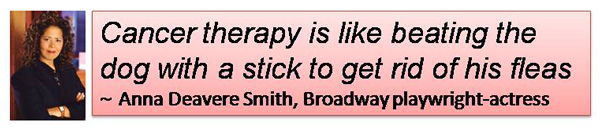
But here are some rare, honest but blunt opinions which you may wish to ponder on: 2 Beating-the-dog

24 Same-treatment-diferent results 25 Some-body-must-be-iying

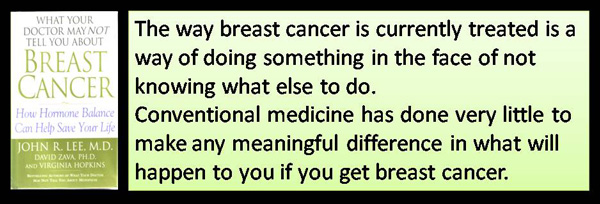
1 Breast-Treatmen not effective

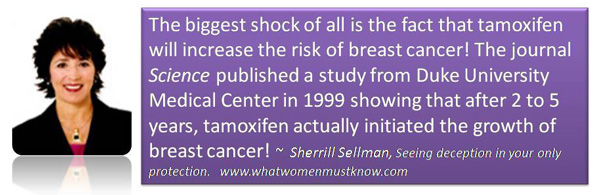
4 Sellman-Tamoxifen-danger 5 Sellman-Tamoxifen-initiate-

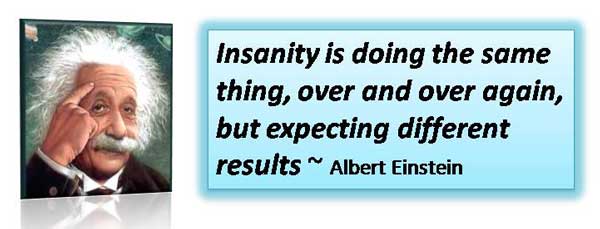
Let us end by reflecting on what one of the world’s greatest minds has got to say:
1 Insanity-by-Einstein

Colon Cancer: Take Care of Your Diet if You Want to Live

Paul is a 53-year-old from Indonesia. In 2012, he had diarrhoea. An endoscopy indicated rectal cancer. Paul immediately underwent an operation at Pondok Indah Hospital in Jakarta. Histopathology report confirmed a “well differentiated adenocarcinoma of the rectum, suspected that distal margin still contain tumour cells.” The doctor said it was a Stage 2 cancer.

As a follow-up treatment, Paul underwent 30 sessions of radiation at Gatot Subroto Hospital in Jakarta.

A CT scan after the radiation treatment showed rectosigmoid thickening “perhaps caused by inflammation after radiation, residual tumour still present.”

Paul consulted a doctor in Graha Kedoya Hospital and was prescribed an oral drug, Futraful. And a biopsy in March 2013 indicated residual adenocarcinoma.

In April 2013, Paul consulted a doctor in Medistra Hospital. A PET/CT scan was done at MRCCC Hospital. The result indicated “hypermetabolic lesion at anastomosis site suspect of residual malignancy.” There was no spread to the lymph nodes and other organs.

MRI done in May 2013 at Gading Pluit Hospial indicated mucosal wall thickening in the post operative rectal tumour area. The doctor suggested colonscopy and rectal biopsy.

In June 2013, Paul went to Singapore for further consultation. He underwent an immediate surgery at Mt. Alvernia Hospital on 18 June 2013. A diverting ileostomy was created. The histopathology report confirmed a recurrent adenocarcinoma at the rectal stump.

Paul returned to Jakarta and was started on chemotherapy with Oxaliplatin + oral Xeloda. He received a total of 8 cycles of chemo at 3-weekly interval at Medistra Hospital. All treatments were completed in February 2014.

In March 2014, Paul started to use the electrical capacitive cancer treatment apparel (terapi rompi).

In April 2014, Paul was again on Xeloda.

PET / CT scan done at MRCCC Hospital in Jakarta indicated “suspected regional recurrence.” Paul went back to Singapore to consult his previous surgeon at Mt. Alvernia, He was asked to undergo 3 cycles of chemotherapy using Forfiri + Ebitux. The doctor said if the chemo could shrink the tumour, then Paul need not have to undergo any operation. If the treatment did not shrink the tumour the Paul ad to undergo another surgery again.

Paul refused further medical treatment. He returned to Jakarta and consulted a doctor who practised traditional medicine. He was started on herbs and followed a healthy food regimen. Paul also had liver detoxification.

In July 2014, Paul went back to Singapore again and this time consulted with a doctor in NUH. He was given the same advice as the doctor at Mt. Alvernia.

In August 2014, Paul came to seek out help and was started on herbs. He felt better after taking our herbs. His liver function results showed improvements.

4 Aug 2014 27 Oct 2014 15 Jan 2015 26 Jan 2015
ESR 30 45 30
Alk. phosphatase 165 139 98
AST 109 74 50
ALT 149 79 58
GGT 184 150 128
CEA 3.9 2.3 n/a 8.62
CA 19.9 17.6 25.3 n/a
CA 125 3.6 2.8 n/a

In late January 2015, we got this email from Paul.

Dear Dr. Chris,

Today I am very surprise that I got CEA test with 8,62. This is the highest value I have, and even higher than when the first time I got (2,35 before operation in 2012).

I still discipline to eat all capsules and herbal tea until now. I also still have vegetarian diet.

Just for your information, during end of last year I have vacation to Kuala Lumpur and I ate Chinese food but without meat. And last week, 24 Jan, I also ate Yamien noodle. Is that all the reason?

Dr. Chris, please help advise me what to do. From now I will strictly do my vegetarian diet. Do you think that my CEA may down again? Do I need more dosage capsule or herbal tea? Dr Chris, please advice, and thank for your help.

Reply: This man is from Jambi and you are from Jakarta …same problem la…..read this story carefully. 

8 cm Liver Tumour Shrunk After 8 Months On Herbs. Still Alive and Well After 2 Years 

Again let me repeat what I told this patient that night was very clear, crude and blunt. When patients are “half dead,” they would follow our advice without protest. But when they get well, most of them will “misbehave.” That is normal.  This advice also applies to  all cancer patients.

  • To live or to die is your choice.
  • There is no need to be upset about the patient’s choice. If he wants to die, let him die.
  • My experiences have shown that if a patient eats anything he/she likes, this “good time” would probably last about 2 months. After that the cancer would recur and he/she cannot “enjoy” food anymore.
  • I also told AS, Perhaps it is time you stop taking the herbs. Go home and eat a lot of what you want to eat and “go” faster.
  • AS had lived for almost 2 years. He should be grateful that he is still alive – healthy and without pain. What more do you want? Be grateful for what you are now!

Dear Dr. Chris,
I still want to live, and my choice is back to your way of life. Hopefully it is not too late, and I believe I can do my diet strictly. Thanks for your advice.

Reflect on the following seriously.

9 Disease-enter-through-the-m 10  Nutriton-stop-growth-spread 8-Diet-must-be-integral-par


Brain Tumour: Operation, you have an 80 percent chance of cure! Do you believe that?

Siti is a 59-year-old lady from Indonesia. Sometime in 2014, she had problems with her speech. A doctor in Medan said there was a tumour in her brain. Siti was prescribed some medications and was told to undergo surgery. There was no other option except surgery. Siti refused because of the risks associated with the procedure. The surgery in Medan would cost her IDR 60 million.

Not satisfied, Siti came to Penang for a second opinion. Again she was told that surgery was her only option. This would cost RM 25,000. Again Siti refused the treatment.

Siti-Aiasha-Brain

MRI 7 January 2015 – tumour size 6.2 x 4.5 x 6 cm

Siti returned to Indonesia and did nothing. She did not have much problems.

In February 2015, she came to seek our opinion. She presented with weakness in both legs, headaches on and off and her right leg felt heavy.

You may be able to learn something from our brief conversation below:


Chris: Can the operation cure your cancer?

Siti’s sister: The doctor said if she did not go for the surgery, she would be blind, may have seizures and probably may not be able to move. If she were to undergo an operation, she would have an 80 percent chance of cure. However, the procedure has risks. There could be severe bleeding. She might have a stroke or end up in a coma.

C: Do you believe that the operation can give you an 80 percent chance  of cure?

SS: No.

C: Why not?

SS: I don’t believe because I have many friends who are doctors in Indonesia. They all told me that at best she would have only a 50:50 percent chance.


Ovarian Cancer: Refused chemotherapy but still healthy after three plus years!

A few days before the Chinese New Year, 2015;  SLK, her husband and daughter visited our centre. It was indeed a pleasant surprise for us. SLK walked in and cheerfully greeted us but we could not recall who she was. However, we could faintly remember her husband.

The last time we saw SLK was about three and half years ago, November 2011. Now, here in front of us was SLK again – smiling and saying that she was doing great all these years. Listen to our conversation that day.


Chris: When did you come to Penang.

SLK: Two days ago.

C: How long are you staying in Penang.

S: Till 23 February and going home on 24 February.

C: Why did you come to Penang this time?

S: I miss Penang. In Penang I want to come and see Dr. Chris.

C: You first came to see us in October 2011. It has been …

S: Three and a half years ago.

C: I am indeed very surprised … I don’t believe this!

S: Why don’t you believe?

C: Well, when you first came you had a swollen leg after being discharged from the hospital and you could not walk. The doctor gave you Warfarin and then asked you to go for chemo. You refused. What did the doctor say when you refused chemo?

S: I never went back to see the doctor again.

C: Did he tell you, if you don’t do chemo you might die?

Husband: No, he did not say that.

C: For your swollen leg and pain, the doctor gave you medication.

S: The doctor’s medication did not help. I took your herbs instead.

C: After that you did the e-Therapy. A few days later, you could walk, no pain. You then went home (to Indonesia) Now, you are back here after three and a half years.

S: I took your herbs for nine months.

C: Did the herbs help you?

S: Yes, I got better. The swelling of my leg subsided.

C: Did you take any other medications besides our herbs?

S: No, only your herbs.

C: Did you take care of your diet?

S: Yes, I followed your dietary guideline.

C: Did the doctor say you must go for chemotherapy?

S: Yes, must do chemotherapy. But I refused.

C: Did he not get angry?

S: I never went back to see him again!

C: Did you consult with any doctor in Indonesia?

S: No, no doctor.

Praise God

C: You can eat, can move around, no pain — what else can you ask for? Praise God for this. God helped you. But remember, if you ask God to help but you do not want to help yourself first, then it is useless. Help yourself first and then ask God to help you. It is indeed amazing.

S: Thank you very much doctor for helping me.

C: Yes, we need to thank God for this.

S: When we arrived in Penang, I told myself “I want to go and see Dr. Chris”.

C: Praise God. I am real happy to be able to help you. Take care.

Her Earlier Story

SLK was 49 years old then. She had  a 19 x 16 x 7 cm right ovarian cyst with nodules within it. She underwent a hysterectomy at a private hospital in Penang. Histopathology report confirmed a clear cell adenocarcinoma and endometriosis.

She was in the hospital for 8 days and things did not turn out right for SLK.

  • After being discharged from the hospital, SLK suffered cramps and muscle pull in her left thigh. She had to be hospitalized again. This time it was for 6 days.
  • Unfortunately the pains and discomforts in her leg did not go away. The doctor told her that he had done his best and could not offer any more help.
  • The next day, on 20 October 2011, a desperate SLK and her family came to CA Care. They wanted us to help SLK with the pain in her leg. Unfortunately there were no medical reports and we did not know what had happened. We told the family to go back to the doctor and ask for all the medical records.
  • SLK came back to Penang again and saw her doctors (the surgeon and blood specialist-oncologist) on 18 November 2011. The oncologist asked her to continue taking the Warfarin for another six months and this time with an increased dosage. The doctor said she would be cured after six months.  In the meantime, SLK was asked to undergo chemotherapy for her ovarian cancer.
  • SLK refused chemotherapy. She also did not want to take the Warfarin anymore.
  • On 23 November 2011, SLK and her husband came to see us again with all her medical reports.
  • SLK was prescribed herbs and at the same time underwent the e-Therapy.
  • After three times of e-Therapy, SLK could walk. The swelling of her leg subsided. SLK said, “Previously if I walked, my left leg became swollen. I could now walk to the market and also travel by bus. I felt lighter when I walked. Before coming to CA Care I could not walk like I do now.”
  • Husband, “Now she can walk so far – from Gurney Park to Pulau Tikus market – with no problem. Before your treatment, we had to take a taxi to come and see you. Now we just take the bus and walked wherever we want to go.”

We did not get to see SLK again after that … until February 2015!

For more details: We have written about SLK’s e-Therapy experience earlier, https://cancercaremalaysia.com/2011/12/18/ovarian-cancer-after-surgery-left-leg-swollen-painful-and-uncomfortable-herbs-and-e-therapy-helped-her/


Advanced Bile Duct-Liver Cancer: Doctor’s prognosis three months — Now one and half years, still alive!

Joe is a 75-year-old Indonesian from Medan. Sometime in 2010 he suffered from heart problems and was on a blood-thinner drug. Then in September 2013 he was severely jaundiced. The doctor in Medan inserted a biliary (plastic) stent into the left hepatic duct and CBD. Two weeks after this procedure his blood pressured dropped drastically. Both his arms and legs and abdomen were swollen. He was semi-unconcious and was unable to walk.

Laid on a stretcher, his family flew him to Penang. This medical emergency trip on Sriwijaya Air cost he family RM 8,000 (the normal flight ticket is about RM 150 to RM 200).

In a private hospital in Penang, Joe had MRI on 9 September 2013. The results:

  1. Lesions scattered in the liver ranging from 0.5 to 1.8 cm in size, suspicious of metastatic deposits.
  2. There was a lobulated irregular mass at the portal of the liver measuring 3.5 x 3.9 x 5.6 cm. It has infiltrated the portal of the liver.
  3. Enhancing soft tissue lesions in the right subdiphragmatic, right subhepatic, around the right kidney, crus of both diaphragms with encasement of the vessels anterior to the aorta.
  4. Right kidney was displaced anteriorly.
  5. Mild ascites.

Impression: Features are suggestive of advanced cholagiocarcinoma with local infiltration and liver metastasis.

Joe underwent an endoscopic retrograde cholangio-pancreaticogram (ERCP). The plastic stent, previously installed in Medan, was removed and an self expandible metallic biliary stent was inserted into the left intrahepatic ducts.

Joe remained in the hospital for 2 weeks and his conditions improved. All swellings and jaundice were gone. The treatment in the hospital cost him about RM 16,000.

Joseph-M441-ercp

Joseph-s-441-liver-met

Joe was asked to undergo chemotherapy. With chemo his life would be prolonged (no months mentioned) but without chemo the doctor said he would not last more than 3 months. The family refused chemotherapy and his two sons (without the patient) came to seek out help on 20 September 2013. Joe was started on herbs.

After 2 months on the herbs, we were told that Joe was doing very well, in spite of not undergoing  chemotherapy! His appetite had improved and he was more energetic. The family did not tell Joe that he had cancer!

One Year Five Months Later

In February 2015, one of Joe’s son came to our centre. Listen to our conversation.

The following are the results of Joe’s blood test

Date CA 19.9
6 Aug 2013 1,000
8 Sept 2013 More than 12,000
Installation of stent in bilary duct and started on CA Care herbs on 20 Sept 2013. No chemo.
11 Dec 2013 11,335
4 Feb 2015 454
5 Feb 2015 Blood test: Low in Sodium, Albumin and Haemoglobin. Ask to go for transfusion.


Breast Cancer: No chemo or radiation. Only on CA Care herbs

Eda – 49-year-old female from Indonesia – had a lump in her right breast. USG and mammography showed an irregular isodenesity radioopaque lesion (9×7 mm) in the upper outer quadrant of right breast with spiculated sign, highly suggestive of malignancy. Enlarged lymph nodes were seen in both axilla, the right axilla being 10 mm in size.

Eda came to a private hospital in Penang in May 2010. A whole body CT scan showed no metastatic spread. Eda immediately underwent a lumpectomy. The right breast lesion was 15 x 10 x 10 mm. It was an invasive lobular carcinoma, Grade 2. The surgical margins were not involved. Eda underwent a second round of surgery to remove the right axilla sentinel nodes. These were cancer-free.

The tumour cells were positive for estrogen and progesterone receptors but negative for P53 and e-Erb2.

On  follow up, a few weeks later, Eda was asked to undergo chemotherapy and radiotherapy. She promptly refused and came to seek our help.


Almost five years later, January 2015, Eda met up with us and said that she was doing fine!

The blood test results over the years are as follows:

ESR Platelet CEA CA 15.3
25 Oct 2010 19 317 0.9 2.5
3 May 2011 23 H 316 0.7 1.7
5 May 2012 12 352 1.0 3.4
14 May 2013 15 321 Less than 0.5 4.5
25 April 2014 10 316 Less than 0.5 4.8
31 Jan 2015 18 322 1.6 3.3


Lessons we can learn from Eda

Lesson 1:  Eda underwent surgery twice but refused chemotherapy or radiotherapy as recommended by her surgeon. Even if her tumours were positive for estrogen and progesterone she was not on Tamoxiffen. She was taking a great risk, as far as medical believers are concerned. But does it mean that after surgery, chemotherapy and/or radiotherapy and Tamoxifen she will be cured of her cancer? Not necessarily. Read this sad story. Breast Cancer: When a so-called “cure” was not a cure  In this case, due to a thumb-sized lump, MT had a mastectomy followed by 6 cycles of chemotherapy and 30 radiation treatments. She took Tamoxifen for 5 years. MT was told by her doctor that her breast cancer was at an early stage and that she had a 90 percent chance of complete cure with the treatments that she had undergone. MT believed her doctor and did exactly as what was told. Each year she came back to her doctor for routine checkup. At every visit she was told that she was fine.

After 5 years, MT was told to stop Tamoxifen because she was already cured. But barely a year later, in April 2011, MT started to have pains in her tail bone and shoulder blade. Then her legs started to hurt as well. She became breathless and was unable to walk far. MT returned to her doctor and was told that  her cancer had recurred in her bone and lung. MT asked her doctor why the cancer recurred. The doctor’s answer,  “ I do not know why. But don’t blame yourself. It is your fate.  Also the recurrence has nothing to do with what you eat. It is just your fate.”

Here is another tragic story. Breast Cancer Went Wild After Surgery, Chemo-Radiotherapy. E-Therapy Helped Relieve Her Pains

Ask yourself this question, what could have happened to Eda if she were to undergo chemotherapy as recommended by her doctor? Will she suffer the same fate as these unfortunate patients?

To rub salt to the wound, MT was told by her doctor that recurrence was just due to her luck. It is like saying “One-Big-Fool” was running a casino “Up-There.” The destiny of mankind down-here was determined by the rolling of a dice. It seems  more acceptable for the educated to promote this theory than admitting that “scientific medicine” had failed her.

Dr. Lorraine Day was Chief of Orthopedic Surgery at San Francisco General Hospital. She had invasive breast cancer and had a lumpectomy. But the tumour soon recurred and became very aggressive. She decided to break rank and refused chemo or radiation …”because those therapies often lead to death.” Dr. Day cured her cancer by rebuilding her immune system through natural therapies. Read her story here, http://drday.com/

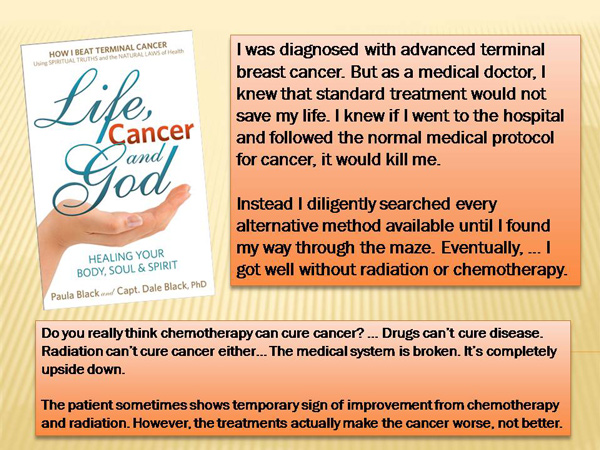
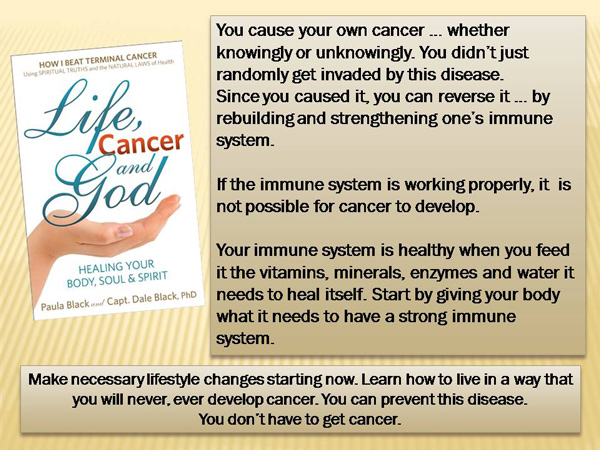
Paula Black, followed Dr. Day’s foot step; she had an aggressive breast cancer. Without chemo and radiation, the doctor said Paula would have only 3 to 6 months (maximum) to live. Paula had a double mastectomy but refused chemo or radiation. She went on to cure herself through natural therapies. Read her story, https://cancercaremalaysia.com/2015/01/19/advanced-breast-cancer-part-2-to-die-or-to-heal-is-your-choice/

Dr.-Day

Chemo-does-not-cure

You-cause-your-cancer-Paula


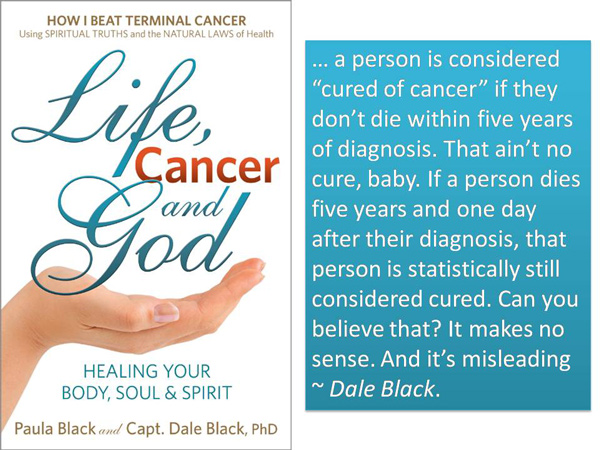
Lesson 2: It is now almost 5 years since Eda was first diagnosed with breast cancer. Is she cured of her breast cancer? We told Eda, NO! Don’t be fooled by believing that cancer is cured after surviving 5 years. When patients go to their doctors or when they come to us, they WANT a cure for their cancer. Cure means it is gone and never come back again. Unfortunately, this never happens in the real world of cancer. Our aunty’s cancer recurred after 13 years and she died. A member of our church had breast cancer and she survived 9 years before the cancer spread to her brain. She had radiation and died.

We tell Eda (and also all patients who come to us). Stay on the course, don’t go back to your old lifestyle again. Continue with what you are doing that made you well – why change?

Cure-medical-defination-Dal

 Cure-no-basis600


Chris Beat Cancer dot com

Chris Wark is a American. He was diagnosed with stage 3 colon cancer in 2003, at 26 years old. He had surgery, but refused chemotherapy. Instead we opted for nutrition and natural therapies to heal himself. By the grace of God, Chris is very much alive and kicking to-day, and is cancer-free!.

The great thing about Chris is that he is actively sharing his experience with everyone.

That’s the way — please share your experience so that others too may benefit from your healing!

You can visit his website:  http://www.chrisbeatcancer.com


Chris Wark’s Chemo-Free Colon Cancer Survival Story

Chemo-free Survivor Chris Warkof Chris Beat Cancer 


3 Reasons Why I Refused Chemo for Cancer: Chris Wark 

Chris Wark explains the Chris Beat Cancer Diet


What every cancer patient needs to know


Cancer Diagnosis – Do Your Homework. No need to rush to get things done!

Naturopath and nutritionist David Getoff discusses some things you should and should not do when they get a diagnosis of cancer. He says it's important to do your homework and look at your options before deciding on a treatment. 

Don't be pushed into a panic mode! Four different experts give you four different answers. Your doctor may not be right.

Cancer — The Forbidden Cures

Today we got an email from:

Bill Henderson, Cancer Coach
Author, “Cure Your Cancer” and “Cancer-Free”
http://www.Beating-Cancer-Gently.com

This is his message:

…if you have time watch this (video)…..Warning:  It is an hour and a half long.

……you’ll have the best documentation I’ve seen in 17 years of looking.  It is a wonderful description with actual live videos of the history of corruption in our medical system regarding the treatment of cancer.
If you want your loved ones to avoid a cancer in their future and overcome the fear they have of it, PLEASE get them to watch this video.  It’s not selling anything.  It is simply a wonderfully put together history of cancer treatment and it’s corruption during the last 100 years.  It is called “Cancer — The Forbidden Cures.”  Here it is:


Success, True Happiness and Freedom

Donald R. Yance, Jr., is the author of Herbal Medicine, Healing & Cancer and Adaptogens in Medical Herbalism: Elite Herbs and Natural Compounds for Mastering Stress, Aging, and Chronic Disease. I have read both of his books and have high respect for his ideals.

Yance is an internationally recognized expert in botanical and nutritional medicine and a Certified Nutritionist and Clinical Master Herbalist. He devoted his life to developing a unique approach to health and healing. An article in his website, http://donnieyance.host01.cfdynamics.com/ is entitled Reflections on a Spirit-Filled Life. Let me share with you what he wrote.

  • There isn’t a day that goes by that I don’t ask myself these two questions: “Where am I, and who am I?” These may seem simplistic, when considered as superficial queries. But my inquiry is rooted within the context of relationships: My relationship to my inner being and outer self, to others, to nature, to the universe, and to God, whose existence is found in all of these.
  • When we understand the interconnectedness of all of our relationships, we have the opportunity to experience a harmonious balance of spirit, heart, mind, and body.
  • All too often, we ignore spirit and heart and focus instead on the physical aspects of life, and the mind only as it relates to the goals of the material world.

What Is A Successful Life?

  • If something negative or tragic has occurred to us, it can draw us closer to God if we allow it to do so. I’ve often observed that a significant illness such as cancer rearranges priorities in life, and compels an individual to go within, to ask the important questions in life, and to find true balance.
  • Or it may be that we have experienced a sense of failure or disappointment. This can be a great means to true humility, which can also bring us closer to God.
  • My vision of success is to devote myself to healing; to facilitate union, harmony, and understanding; and to live by the light of respect and love for all.
  • In my quest, I humbly surrender myself to God. I desire to live in His presence and to be filled with Divine Love at all times. I have turned my life totally over to God, for He alone will I trust.

The Wise Use Of Freedom

  • We are given freedom so that we may make choices that will unite us with the Divine.
  • I must develop and use this freedom always to do what is good.
  • With the freedom to choose, I am always free to do more good and to bring myself closer to God, while serving and loving all of creation.
  • Our freedom to choose makes us susceptible to all types of false-self motives of purpose.
  • Our purpose must be the right purpose. Our conscience must teach us the right purpose. Conscience is the face of the soul, and the light that teaches and helps us to interpret the will of God in our lives.
  • I can only make good choices when I cultivate maturity, patience, and a wise conscience, so that I may have an accurate account of my motives, my intentions, and my moral acts. This is why a discipline of daily prayer is so essential. This is why reading the Gospels is so necessary.
  • In this way, we find ourselves truly happy knowing that our “doing” in life reflects our “being,” and that our being is a result of the freedom to pursue union with God. This is the fundamental purpose of life, to find God and to respond to God.

Happiness Comes From Letting Go

  • Most of us live our entire lives believing that happiness revolves around three main biological objective needs: (1) security and survival, (2) power and control, and (3) affection and esteem. But because the experience and presence of God is not found in these strivings, where do we go to find true happiness?
  • Most of us live either in our emotions or our intellect; … people who want power will always want power and will always want to dictate what is going on …
  • But if we put God at the center of our lives, and do our best to live in His light, we will find true peace and joy.

God also speaks to us through Nature. The more we learn about Nature, the more we learn about God. This is what St. Francis discovered and is what brought him such joy.

I’ve observed that most people carefully and quietly fit God into their lives, not allowing God to disrupt or alter in any way their strivings for what they believe will bring them happiness. But the simple truth is that there can be no true happiness unless we are willing to give ourselves completely and honestly to God. This requires us to let go, which few are willing to do.

Have a new liver anyone?

Can do, if you have RMB 1 million

In July 2014, two patients came to seek our help. Patient One is 63 years old. Patient Two is 51 years old. Both are Indonesian males. They knew each other while staying in a hospital in China. Both had liver cancer and they went to China to undergo a liver transplantation procedure. Unfortunately both did not find a cure after spending RMB 1 million (per person) for their treatment. Both came to us after their cancer recurred.

Medical history

Patient One: He had hepatitis about 15 years ago. In 2010, he was diagnosed with liver cancer. He went to Singapore and had TACE (Transcatheter arterial chemoembolization). Unfortunately the treatment did not help him.

In 2012, he underwent a liver transplantation in China. He waited for a month to get a donor. In total, Patient One stayed in the hospital for 90 days. The procedure cost him RMB 1 million. As a follow-up, he was given immune suppressing drugs, not chemotherapy or radiotherapy.

Patient One was well for about 6 months. Unfortunately, on his third follow-up in October 2013, he was told the cancer had spread to his lungs. Patient One went to Singapore for help and was prescribed Sorafenat (a genetic Sorafenib or Nexavar). He was on this drug for about 6 months. In the first month on Sorafenat, he had blisters on his head.

In February 2014, Patient One came to Penang for more opinion. He was again told by the doctor to take Nexavar and at the same time do a biopsy. He refused.

Patient One came to seek our help in July 2014.

Patient Two: He was told that he had hepatitis B in 1985. He received about 100 injections of interferon every 3 weeks. Unfortunately, the treatment failed. By 2011, his hepatitis developed into liver cirrhosis and full blown cancer. He underwent TACE and RFA (radiofrequency ablation) in Singapore. Both treatments failed.

Patient Two went to China in March 2012 and underwent a liver transplantation procedure. He stayed in the Chinese hospital for 90 days.

In November 2013, on follow-up, Patient Two was told everything was fine. But in January 2014, his alpha-fetoprotein started to increase and was 49.9. Follow up CT/MRI/PET scan in Singapore showed a tumour in his liver and another tumour near his heart. In short, his cancer had recurred and even spread to his heart.

In February 2014, he underwent RFA again for his liver lesion.

In May 2014, he underwent a surgery to remove the tumour on the surface of his heart.

In July 2014, CT scan revealed 2 new lesions in his liver and the tumour near the heart had infiltrated into the heart muscle.

His alfa-fetoprotein had increased from 49.9 to 110 plus and then to 159.6. In August 2014, it was at 161.5. The doctor told Patient Two that he could not do anything more.

On his own initiative Patient Two continued to take these drugs: Prograf, Everolimus, Baraclude and the generic Nexavar from India. After taking the Indian “Nexavar” for 2 months he had diarrhoea and his skin peeled.

Patient Two started to take herbal teas and herbal tablets. He also tried the “Terapi Rompi” for 5 months. In July 2014,  he came to Penang to seek our help. 

Sweet Statistics from the Net

We made a google search using this phase, liver transplantation survival rate. Here are some of the results.

Survival rates after liver transplant

  • Four thousand consecutive patients who underwent liver transplantation between February 1981 and April 1998 were included in this analysis and were followed up to March 2000. The overall patient survival for the entire cohort was 59%. Between 1967 and 1980, 170 liver transplants were performed at the University of Colorado, with a 1-year survival rate of 30%.Between 1968 and 1983, 138 liver transplants were performed in Cambridge (UK), with similarly poor outcomes.  http://www.ncbi.nlm.nih.gov/pmc/articles/PMC1421181/

Transplant Patients with Hepatitis or Cancer

  • For patients with hepatitis C, recurrence of the hepatitis causing damage to the new liver is the most common reason for the new liver to fail. This can happen over many years, but in rare cases, it can also occur within the first few months.
  • Patients withliver cancer can experience recurrence of the cancer after transplant, even if the initial cancer was small. Small tumors (micrometastases) may be present outside the liver at the time of transplant that are not visible on imaging tests. These can grow and cause symptoms later. Fortunately, recurrence is uncommon after transplantation (there is about a 30 percent risk of recurrence) if patients have early-stage liver cancer (Stage I or II).
  • Patients with hepatitis B can also experience recurrence, but much less commonly than with hepatitis C. http://www.montefiore.org/gastroenterology-liver-center-transplant-longterm-success

Who Are Not Candidates for a Liver Transplant?

  • Not all patients are appropriate candidates for liver transplantation … patients with cirrhosis and decompensated liver disease and those with cancer that has spread outside of the liver. http://transplant.surgery.ucsf.edu/conditions–procedures/liver-transplantation.aspx
  • Liver transplantation definitively cures a patient of HCC, provided that the tumor has not spread beyond the liver. http://transplant.surgery.ucsf.edu/about-us.aspx
  • Not all liver cancers can be treated by liver transplantation. Only small, early tumours have an acceptable chance at success. Liver transplantation is not suitable for everyone, so all potential transplant patients must be carefully assessed.
  • Can there be a recurrence of the original disease in the transplanted liver? Often, the original disease can return and cause similar liver damage. For example, a liver transplant for hepatitis C does not eradicate the illness. In many cases, the virus will re-affect the liver within one year. http://www.liver.ca/liver-disease/liver-transplants/how-do-transplants-work/

We started to refine our search to: liver cancer and  liver transplantation success rate. The rosy statistics started to become more bleak and blur!

  • The numbers below come from the National Cancer Institute’s Surveillance, Epidemiology, and End Results (SEER) database, and are based on patients who were diagnosed with liver cancer (hepatocellular type) between 2003 and 2009.
Stage 5-year Relative Survival Rate
Localized 28%
Regional 7%
Distant 2%

Dr Vinay Kumaran, Head of the Liver Transplantation and Hepatobiliary and Pancreatic Surgery at the Kokilaben Dhirubhai Ambani Hospital, Mumbai tells us all about liver transplants. 

Are there many cases where a transplant cannot be done even if a patient needs one? 

A transplant cannot be done unless there is a donor. In most cases there is a living donor from the family who volunteers to undergo an operation to remove part of the liver which is transplanted into the patient. Occasionally, the family of a brain dead patient agrees to donate the organs but this is quite rare.

Can liver be taken from cadavers too like the eyes?

Yes, in a very specific situation. The cadaver should be a person who has died of brain damage (head injury, stroke, etc) and is on a ventilator at the time of death. The heart continues to beat for some time after brain death and we can continue to ventilate the lungs and give medicines to maintain blood pressure and nutrition. As long as adequate blood flow and oxygen delivery can be maintained to the other organs of the cadaver, they can be removed and transplanted with the permission of the next of kin.

What is the rate of success of a liver transplant?

A liver transplant can be said to be successful when the patient returns to a normal productive life. The success rate is about 85-90% at one year after transplant and about 75% 5 years after transplant. Some patients will have a recurrence of their disease, side effects of the medicines, complications of the transplant etc. hence the difference.

What are the side/after effects of getting a liver transplant? What is the rate of rejection? 

The patient has to be on medicines to prevent rejection for the rest of their life. This increases somewhat their risk of getting infections and such infections have to be recognized and treated. There is also a higher than usual risk of cancer over their lifetimes, predominantly skin cancers. The medicines have side effects including a risk of kidney problems, diabetes and blood pressure over the years at a higher rate than the normal populations. In general, the life of a liver transplant patient is similar to that of a patient with a chronic but controllable medical condition like high blood pressure in that periodic (once in 3 months long term) checkups and adjustment of medication is required. Episodes of rejection occur in 10 to 30% of patients who have undergone a liver transplant.

http://www.thehealthsite.com/diseases-conditions/liver-transplants-frequently-asked-questions-answered-by-a-renowned-liver-transplant-surgeon/

Lessons to Learn

Patient One told us, “I had to sell one house to pay for my medical bills.” We asked him, “Did you ever ask the doctor if the liver transplantation would cure your cancer?” No, he did not ask that most important question!

By sharing this story with you, it is our hope that patients can learn some lessons from the experiences of others. You need not have to travel the same road that they did!

So, Lesson One: Patients, know what you are doing – ask where you are going? What are your chances? You don’t want to do things just to end up being a looser later.

Lesson Two, don’t be misled by deceptive sweet statistics. Read a bit more and learn. When we started reading, it was great to know that survival of liver transplant patients could be up to 80 to 90 percent! Fantastic! But hang on, is that for patients with liver cancer? According to the SEER database, survival for those with distant metastasis is only 2 percent! So ask, is liver transplantation suitable for you?

Lesson Three: Your chance of success is only good if you have early stage liver cancer – which has not spread anywhere. In the above two cases, what do you think are their chances? If you were one of them, would you go for a liver transplant?

Beware and reflect on these quotations.

5 High-tech-mentality

4 Oncology-all-about-money

Pancreatic Cancer: No chemo, only on herbs. Still fine after 4 years

In 2011, we documented the story of Bak, Pancreatic Cancer: Severe Itch Disappeared and Health Improved After Herbs and the e-Therapy.

Briefly this was what happened:

  1. Bak was told he had a tumour in his bile duct in 2011.
  2. CT scan in April indicated a pancreatic head and uncinate process carcinoma with common biliary duct obstruction.
  3. Bak was asked to undergo an operation. He refused. However he consented to do an ERCP – endoscopic retrograde cholangiopancreatography (a specialized technique to clear off the bile duct obstruction).
  4. After the ERCP, Bak was asked to undergo chemotherapy. He promptly refused.
  5. Immediately after being discharged from the hospital, Bak came to seek our help and was started on herbs.
  6. Bak had to return to Penang every 6 months to change the plastic stent (tube) that the doctor inserted.
  7. Surprisingly Bak recovered and was well after taking the herbs. His doctor who once “pushed” him to do chemotherapy had stopped asking Bak to consider chemo since his recovery was so good. Bak told the doctor that he was on our herbs. The doctor just smiled.

To our surprise, in January 2015 – i.e. almost 4 years later, Bak’s wife came to our centre. Our first question to her was, How is Bak doing now? Is he okay?

Listen to what she told us.


Chris: How is he (your husband) doing now? Good and healthy?

Wife: Thanks be to God. He can drive around, everywhere.

C: Before he came here, was he able to drive?

W: No, I was the one driving.

C: So, he is healthy, really healthy?

W: Yes, healthy.

C: Has he gone back to see his doctor?

W: Yes. The stent has been removed and there was no need to replace it anymore.

C: How many times did he change the stent?

W: Every 6 months, change a new stent. So twice a year.

C: And it has been 4 years now. Amazing. Thank God indeed for this blessing. Okay, when was his last visit to the doctor to remove the stent?

W: August 2014. The doctor said no need to put in a new stent. If he is jaundiced, then we need to come back to the hospital immediately.

C: All these years, didn’t  the doctor ask him to do chemo?

W: We told the doctor that he (my husband) was on herbs. I asked the doctor if this was okay. He replied, “I don’t know” and he just smiled. The doctor know that my husband was taking your herbs.

C: Generally such cancer (pancreas) is very difficult. Indeed this is a miracle. Since the removal of the stent (ca. 5 months ago) did he encounter any problem?

W: No problem. He is healthy.

C: Very good indeed. Praise God for this.