The Gift of Cancer – A Miraculous Journey To Healing

Gift-of-Cancer

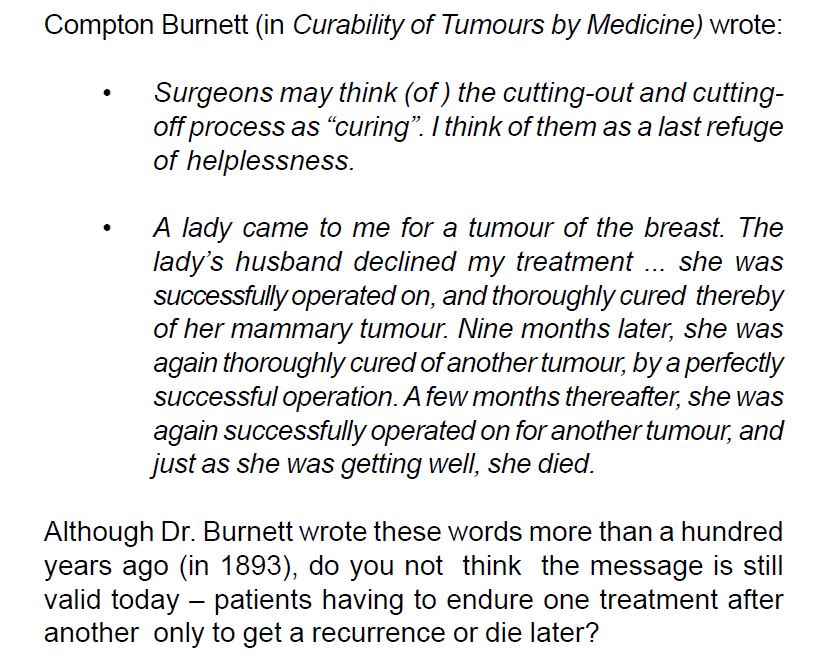
I once told a breast cancer patient, ” Indeed you should consider yourself very lucky.” She retorted, “What is so lucky? I have already got cancer!”  I went on to explain that I have many patients who really suffered because of their cancer – they were in pain, had swollen arm after surgery, radiotherapy and chemotherapy. For her, she looked fine and good without any problems. Is that not really lucky? What if you were to know that Brenda, the author of this book, The Gift of Cancer, had to battle with three cancers over 14 years, and she considered cancer, after all that she went through, as a gift! Where is the logic?

Why Cancer is a Gift

After her third cancer diagnosis, Brenda realized that her cancer was more than just a physical threat.

  • Deep in my heart I suspected there was a purpose to my illness. Seeking that purpose became my quest. When I was finally able to see cancer as my teacher, not my enemy, I began the difficult journey of healing from the inside out.
  • My survival depended on my letting go of old patterns that had opened the possibility of cancer to emerge. The cancer had come as a messenger to let me know if I didn’t change, I was going to die. Without changing anything but my perception, I turned the cancer into a helpful messenger, a gift.
  • Having cancer taught me the hard way that healing negative, limiting beliefs, misperceptions and denied emotions is the most important thing we can do if we want health and wellbeing in our lives. This is authentic healing … mind, body and spirit coming into harmony to create optimum health.

Letting Go and Letting God

  • I uncovered a valuable insight … My need to be in control coupled with my attachment to results was hindering me in countless ways.
  • Once I was willing to let go … I found peace. I started to appreciate the power of letting go and allowing God’s help in solving my problems. That’s when my life began to flourish.
  • Before the cancer, I was consumed by fearful thoughts of self-pity and feelings of lack. I processed everything in my life from a foundation of negativity and looked for what was wrong with me and everyone else. It never occurred to me to look for what was right and wonderful.
  • My cancer was a gift … it had come to propel me toward my spiritual growth, assisting me in transforming my negativity into life-affirming perspectives and beliefs.
  • I began to understand that by loving my cancer, I was actually loving myself. As long as I battled against it, it would battle against me.

Follow My Advice Or You Die, I  Am The Expert!

In pages 94-95, Brenda related her meeting with her oncologist. This was after being diagnosed with her third cancer.

Oncologist: Brenda, I know we’ve had our differences about some of your treatment, but I would be remiss if I didn’t give it to you straight. It is my best professional opinion that within one to three years, and let me stress that three years is stretching it, there is a very good probability your cancer will metastasize.”

Brenda: What does that mean exactly?

Oncologist: What it means, exactly, is that it will spread to your bones, brain, or lungs. Please understand, this is not a big stretch. It is a very predictable prognosis for many women who have had breast cancer. Let me add, Brenda, if that happens, there is a very high probability that at that point, chemotherapy won’t be much help. On the other hand, if you do chemotherapy right away, you will have a chance of living at least five years, maybe more.

Brenda (thinking to herself:  This is my prize? Maybe five more years? Five more years of being sick? Five more years of feeling like hell? Five more years of waiting for the other shoe to drop? Was this the best I could hope for? The best modern medicine had to offer?): Can you guarantee me at least five years if I do your protocol?

Oncologist: I am afraid not, Brenda. No one can give you a guarantee. And let me add this: if you refuse this treatment, the probability of your cancer metastasizing within a year is high. And if that happens, you probably won’t make it. I urge you to make your decision quickly. It is imperative that you begin treatment right away.

Brenda wrote, As I listened to his words of doom, my worst fears came to the surface, once again I began to questions myself.

As I read through  Brenda’s conversation with her oncologist, I could not help but ask, Is this not the same, fear-instilling script being played over and over again — in American, here and many other parts of the world?

After that she said “no” to chemotherapy, even if she was told that her life was a risk without it. Breda chose alternative treatment instead.  To her, the path to true healing is to find the connection of the mind, body, and spirit. Twenty-four years later I am healthy. Grateful for the road travelled and eager to help others awaken to their heart-centered power and purpose.

Brenda had this message for all of us:

  • Doctors do not cure anyone.
  • Throwing drugs at a problem is just adding more poison to an already poisoned system.
  • We understand how toxins enter the body through the food we eat, the air we breathe and the water we drink. But there are other equally threatening toxins that can affect our wellbeing … emotional and mental toxicity … also creates imbalance and ultimately leads to disease.

Patients, heal yourself

  • Listen to our inner voice, trust our intuition, and look at the true source of healing.
  • When we are willing to look deep within and take responsibility for our choices, we have the power to alter the course of our lives in miraculous and unexpected ways.
  • Giving power to an outside source, regardless of who or what that source is, renders one powerless to change any existing circumstance.
  • There are no quick fixes or magic bullets.
  • Not everyone survives this disease.
  • We each hold the key to our own healing. We cannot heal someone else.
  • Patient must have a deep desire to heal.

Spirituality

  • We are raised in a society where we learn to trust in experts and things outside ourselves. I would be considered crazy for going against expert advice. But my decision was not about being logical or going with the status quo. My decision was about seeking a higher guidance and honoring that guidance to the best of my ability.
  • Everything that occurs in life exists by divine orchestration. Nothing is a mistake. There are no accidents and we are not the victim of any circumstances or person. I believe everything that happens in our lives happens for a reason.
  • There is no right or wrong choices on this journey. Each choice is made for a reason … Every experience is meant to teach something, while simultaneously bringing us closer to our spiritual selves.
  • The body is always talking to us. Sometimes the conversation is subtle and sometimes, the conversation is not subtle but communication is always happening. It merely requires that we listen.
  • Forgiveness is essential to heal not only our bodies but also enhances our spiritual growth.
  • Healing isn’t exclusively a physical tenet. We must address our emotional and spiritual bankruptcy as well.

Change

  • I’d like to wrap up with one of the most difficult pills to swallow. Change….even when faced with a life-threatening situation, we are still resistant to change. Change brings up fear. Even when the habits and patterns of our lives are destructive, we tend to stay stuck in those patterns.
  • Change, as difficult as it seems, is what life is all about. To resist it is to create a life filled with pain and struggle.


Breast Cancer: It is all about you — your human nature and attitude

SM was 53 years old when her CA 15.3 was elevated (on 15 October 2009). Follow up examination indicated left breast cancer. SM underwent a mastectomy. The histopathology report indicated:

“a Stage 2 (T2NoMx, 5 cm tumour, resected margins, areola and nipple free (of cancer). Left axillary lymph nodes Sinus histiocystosis (7/7).”

SM did not go for any chemotherapy or radiotherapy. She came to seek our help and was started on herbs. She was told to take care of her diet. But it was not to be. SM thought it was easier to follow her doctor’s advice — she took Tamoxifen instead. Preparing and taking herbs was too much of a hassle. Not being able to eat what she liked did not make life that “meaningful.”

Every 6 months, SM came back to her doctor for routine check up. Everything was okay.

Year 2010

On 7 May 2010, her CA 15.3 was at 13.4 (normal). Ultrasound of left axilla on 24 May showed:

“an ill defined 17 x 17 x 23 mm hypoechogenic area and another 18 x 14 x 11 mm well defined hypoechogenic area in the left axilla. Conclusion: metastatic deposit and lymphadenopathy.”

(Note: The first sign of trouble coming. Human nature: Why bother? You are not dying yet!)

Year 2012

On 19 June 2012, SM’s CA 15.3 still remained normal, at 13.7

(Note: Human nature: Nothing serious! Normal. So far so good. This is what you want to always hear!)

Year 2014

On 18 November 2014, SM’s CA 15.3 increased to 76.4. For the first time her CEA also increased, to 7.9. Previously her CEA was always below 5.0 (normal).

Since her CA 15.3 had risen so much, SM was told to stop taking her Tamoxifen.

In spite of her worsening CA 15.3, mammogram of her right breast showed “no evidence of malignancy.” Unfortunately no imaging was ever done on the left side.

USG of abdomen showed everything was fine.

(Note: Human nature: Nothing serious! Mammogram showed no cancer in the breast (but was it the wrong breast that they checked?).  Anyway, this is what you want to hear!)

Year 2015

SM came back to see her doctor in March 2015 — another routine check up.

Her CA 15.3 on 10 March 2015 had increased to 173.6. Her CEA also increased to 14.8.

CT scan indicated:

  • Enhancing left axillary lymphadenopathy, measuring 1.8 x 18.9 x 14.3 mm.
  • Several ill-defined hypodense lesions seen in the left lobe of liver measuring 10 mm. Conclusion: Left axillary lymphadenopathy and liver metastasis.

In view of the above, the doctor suggested that SM undergo chemotherapy. She refused and came to seek our help instead.

Why did SM stopped taking the herbs? She preferred to follow her doctor’s advice. She took Tamoxifen. According to her it was easier — no need to cook the herbs, no need to take care of her diet. So while on Tamoxifen, SM ate what she liked — based on the usual standard medical advice.

Like many others, SM came to us after things got worst. In March 2015, SM was started on herbs. Barely 2 months later, 4 May 2015, her CA 15.3 was 135.4 (reduced from 173.6) and her CEA was at 4.8 (reduced from 14.8).

Comments

Often we tell patients. Cancer is about you — your nature and your attitude towards life. We also say, Your life is in your hands. Decide what you want to do. We need to understand that we cannot eat the cake at the same time keep it. You can decide what you want to do but unfortunately, you cannot determine the outcome of your choice.

SM’s cancer showed sign of progression one year after her mastectomy, in 2010. The USG result showed he cancer had spread to her arm pit. She did nothing about it. After all it was not an emergency.

In 2014, her CA 15.3 increased to 76.4 and her CEA increased to 7.9. What did SM do? Nothing. Perhaps the alarm bell was not loud enough.

It was only in 2015, after the cancer had spread to her liver and when the doctor wanted her to go for chemo that she “ran” to us for help. That too is an understandable human attitude!

After talking to SM for a while, I knew in my heart the kind of person I had to deal with. She only wanted to win by the easy way — not prepared to “sacrifice” if she can have her way. That was why she came to us after reaching the “dead end” of her path.

SM took the herbs for about 2 months. Her CEA and CA 15.3 dropped. To patients it is already lucky if the markers do not increase or stabilize. The markers drop? That’s a great blessing. What else do you want?

What say you about the effectiveness of the herbs in this case? Still quackery? Still hocus pocus?

One last note. There is nothing to celebrate here! The drop of CEA and/or CA 15.3  would not last forever. These markers will rise again, if you decide to “misbehave.” So SM is not out of the woods yet.

What have you got to say about these quotations?

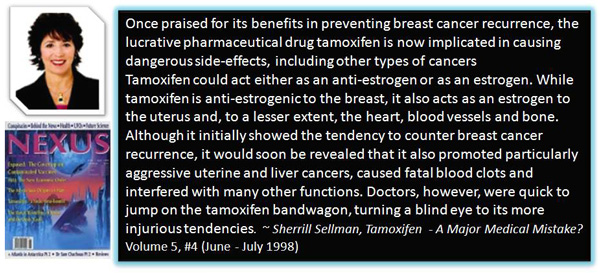
1 Babara-Tamoxifen-does-not-c 2 Jane-Plant-No-to-tamoxifen 3 John-Lee-Tamoxifen-more-har 4 Sellman-Tamoxifen-danger 5 Sellman-Tamoxifen-initiate-


Lung Cancer: Chemo prolongs life? Why do a biopsy if you don’t want chemo?

KB is a 67-year old Indonesian — with a history of heavy smoking for some 50 years. About 3 months ago, he had fevers and started to cough; sometime with white phlegm and sometimes just dry cough. He also lost a lot of weight.

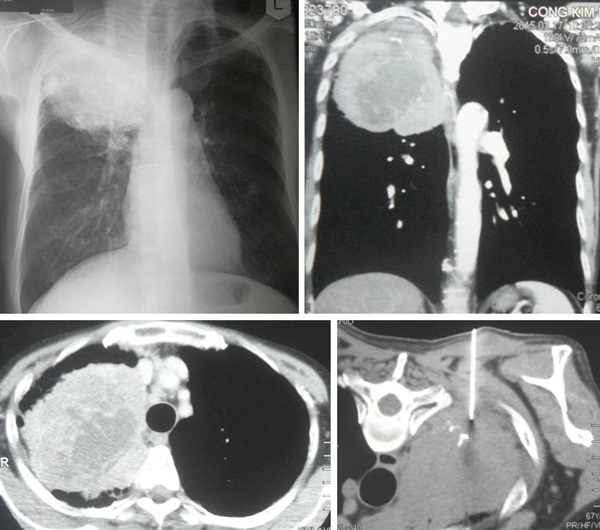
He went to see a doctor in a private hospital. X-ray and CT scan indicated:

  • a 9.8 x 11 cm mass in the right upper lobe.
  • a non calcified 1.2 cm nodule in the left lower lobe.
  • small (1-1.5 cm) mediastinal lymph nodes.

A FNA of the right lung mass done on 17 March 2015 confirmed lung cancer, likely an adenocarcinoma, Stage 4.

Composite

Chemo does not cure stage 4 ca


KB was asked to undergo 8 cycles of chemotherapy. The total cost of the treatment is about IDR 120 million.

Chris: Did you ask the doctor if chemo is going to cure your father’s cancer?

Daughter: Can only extend his life.

C: So what do you want to do now?

D: No, we don’t want to do chemo.

Questions to ask

The above are the standard questions I often ask patients when they come to seek our help. Almost all patients were told that in spite of their terminal cancer, they should undergo chemotherapy to either stop the cancer from spreading or to prolong their life. Chemotherapy is also said to improve quality of life.

Frankly, I find these justifications rather hard to swallow.

Ask these questions:

  1. Can chemotherapy really prolong life? Many patients told me that they would not go for chemo because their relatives, friends, parent, etc. had chemo and died. To these people chemo did not prolong life.

Nose (NPC) Cancer: Chemo and He was Dead Six Months Later – Why?

Dissecting Chemotherapy Part 7: Avastin + Alimta Nearly Killed Me (after saying this, the patient died).

Of course, some patients benefited from chemotherapy and remain alive but NOT without enduring severe side effects.

I googled “does chemotherapy prolong life” and here are some interesting answers I got.

One person asked: Does chemo work? I don’t think it will prolong my life, and most likely kill me? He got the following responses.

  • I was a cancer chemotherapy specialist doctor for twenty years.I treated thousands of people with various combination chemotherapy regimens. I don’t think I killed any of them with the treatment – though over two thousand died from their cancers. I often thought it would be better to not use chemotherapy in situations where no cure had ever been achieved with drugs – pancreatic cancers, advanced non-small cell lung cancers, many brain malignancies, etc. I spent a great deal of time trying to talk some patients out of taking chemotherapy. In the USA, many people will not accept the ‘supportive care only’ option no matter how carefully it is explained that chemotherapy has never cured some types of advanced malignancies.
  • Nobody can or will give you any guarantees with chemotherapy.Why do you think it will most likely kill you? What evidence are you basing this on? … Some people conclude that the treatment is worse than the disease, and myths about people being killed by chemo bolster this belief. It isn’t always effective. But in those cases it is the cancer, not the treatment, that kills the patient – they have died in spite of treatment, not because of it. Distressed relatives sometimes look for something or someone to blame, and some conclude that it was the treatment that killed the person. People with aggressive and advanced cancers who agree to chemotherapy aren’t duped; they do so in the full knowledge of these facts because they have a life-threatening disease and this is their best chance. Chemo and other cancer treatments are not perfect, very far from it.
  • No, if chemo worked there would be fewer people dying, and in most cases it’s the “therapy” rather than the cancer that killed the patient. The drug severely damages the liver and ravages the immune system.
  • Wow, what a question. It’s a personal choice. You should research it very carefully, all positive and negative opinions about it.I know that I would never choose chemo. I would be willing to have surgery, and I’m not sure about radiation, but chemo, never. We are all going to die anyway, and we should die the way we want to and not let others tell us how. Chemo would take away my will to live, so what’s the point?

Another person asked: Will Chemo buy me more time ?? Anyone, Ideas? I was diagnosed 6 weeks ago with stage IV non small cell lung cancer with a tumor in left lobe, 1 brain tumor and several swollen lymph-nodes. I was told today I could expect to live 1 year. Beyond 12 months will be in God’s hands. I had targeted radiation on the brain tumor. I have started chemo and it has made me feel horrible. I’m short of breath and I little tired. But when I take the Chemo I feel like it’s speeding up my clock. What I mean is I cannot help but wonder if the side effects of the chemo will steal more days of my life than this dreaded cancer. Close friends and family are telling me to stop killing myself with chemotherapy!!! Has anyone out there been thinking the same way? I’m so afraid of losing the ability to function normally daily.

The following are some comments from readers.

  • My mother struggled with this decision when she was diagnosed with leukemia. Hers was a very aggressive form that didn’t respond well to treatment. Her doctor then wanted to start her on a very aggressive chemo regimen called CVP, which has tons of nasty side effects (it is one of the regimens they give when getting patients ready for bone marrow transplants). She was torn with the decision of what to do. I had already told her that if I had to choose between quality and quantity, I would rather have her feeling good for a month, than a year of her being miserable. When the decision came, she asked me what she should do (I am an only child). I told her there was no way I could answer that. It was her decision, her body, her life. I told her that I would love her and support her in whatever decision she made. She went to church regularly, so I told her to pray about it and she would find the answer. In a few days, she told her oncologist that she wanted to suspend her treatment. She never started the aggressive chemo, and I cared for her until she passed away.

    Now as I watch my husband go through chemo for lung cancer, and see how he suffers with it, I can even more clearly see how my mom made the right decision for her. My husband is a different personality, therefore he has a different approach. No one can blame you for the choice you make at this point. It is yours to make. I know you will make the right choice for you, and I pray you find peace as you make that choice.

  • I’m sorry that this disease as come in to your life, yes it SUCKS!!! I pray that you will feel better soon. My dad is 55yrs old and was diagnose just about a year ago, and yes they told him he’s terminal and only had 6 months to a year to live. Is going to chemo worth it?? That just depends on YOU ….
  • My wife, 53 years of age, was diagnosed in May 2011 with two tumours in the lung and three brain mets. We were told ‘months rather than years’! Decided on no radiation treatment as there is no conclusive proof that it extends life. Began chemo at the end of June (Cisplatin and Pemotrexed). The first two scans on the lung showed a reduction in the tumour size each time. The third lung and brain scan in December showed that the lung tumours were continuing to shrink and one of the brain mets had disappeared completely. The oncologist told my wife ‘that without this treatment you wouldn’t be here now’. My wife has had a pretty horrid time with nausea and vomiting … Fatigue is another problem, along with a sore mouth but she hasn’t lost her hair. She’s been working in our garden, and has considered going back to work but I think the constant need to have naps might prevent that. Overall, very happy with the way things are going.
  • It’s definitely your choice. Chemo is doable and not everyone has a horror story to tell about it. For me the worst part was the fatigue. Maybe I’m fortunate that I have no long term side effects. No doctor should be telling you that you only have a year to live, as they’re not God and don’t know how you’ll respond to treatment.
  • My husband, Jerry, was diagnosed with stage IV lung cancer the last week of Jan. 2011. When his oncologist saw him for the first time he said “I can’t cure you, but I can give you an extended amount of time, and a better quality of life”. After 7 weeks of chemo and radiation the tumor that was the size of an orange is now the size of a pea and is inactive. The other four active spots in his other lung are gone as is the spot on his lower neck and lower spine. His oncologist now is saying he can have surgery to remove the dead tumor (we have till Jan. 26 to decide if he wants to go through surgery as he is 74 years old). Please don’t believe everything your doctors tell you. With your own determination, the help of all medical options, and with prayer, anything is possible.
  • My sister just passed from non-small cell lung cancer (BAC). She was on Alimta as her chemo drug. As soon as the dr. gave her a time frame of life expectancy she went downhill. We had her on supplements, vitamins, etc. There are tons of alternative treatments if you just type in alternative cancer treatments you will find tons of treatments. Most of the alternative treatments you can do at the same time as chemo. I believe all green is the way to go – I could not get my sister to try that.
  • The first line of chemo can be very difficult – I won’t sugar-coat it. But they should know pretty quickly if it’s working or not, and may be able to adjust your dosage if the side effects are too hard. When I got the first scan back that said the chemo had shrunk my tumor by almost half, I decided I could handle it for awhile longer. It was worth it. The second line of treatment was much, much easier My hair grew back, the side effects were only 2 or 3 days and very manageable. That chemo worked so well that all signs of active cancer have disappeared, and I was able to stop chemo and do a watch and wait. I am now 2 1/2 years past my Stage IV diagnosis, and doing great.
  • If only we could clone ourselves, try various treatments, then pick the one that worked best.
    I was diagnosed in August with stage IV NSCLC with a dozen mets to ribs femur pelvis, skull, and spine.
    I had 2 week radiotherapy to the skull, which was effective in stopping progress, and headaches.
    I cancelled my scheduled Chemo after testing showed I had no identifiable mutations, So was not eligible or targetted therapy. I have adopted a strict vegetarian diet, I meditate and do Gigong. I have 5 fresh vege juices a day, and take a few supplements. A herbalist specialising in traditional medicine has made me a tonic I take 3 times a day. This is my alternate chemo.
    My latest scan showed no new cancer and a mild progressive enlargement of the existing ones.
    I feel fine, no one would suspect I was ill. Apart from the 2 weeks Radio I have spent VERY little time in the hospital environment
    I had chemo 30 years ago for leukemia, so it does not worry me. I do not believe chemo offers me much advantage. It will also do a huge amount of damage to my own defense system.
    Maybe I am just fortunate to have a slow growing cancer, or maybe what I am doing is right. I will never know. But I am so happy i gave my body a chance to figure this out for itself before embarking on toxic intervention. Chemo might be the right thing for me down the track, but for now my body’s immune system has a chance to catch up to the disease and maybe stop it. Myself, my wife and my oncologist are very happy with my situation and see no reason to change, at this stage.

Many thanks to each of you who took the time to give me your opinions. I will re read your notes and think carefully. My Dr was intent on me starting chemo full speed ahead. To be honest I wonder if money is a driving force in the push for so much random chemotherapy. I wonder how they select a drug for each person. I would like be sure it’s not eny meney miney mo —- let’s try this one to see if it will help her. They gave me so little information I have had to hunt the internet for details … Poison is poison —- and poison kills right?

  1. If chemo prolongs life, don’t you want to ask ” prolong by how long or how much” – – days, weeks, months or years?
  2. Next question, Prolonging life at what cost — in terms of suffering and money?

Drs Tito Fojo and Christine Grady in the USA appear to swim against the current too. They wrote an interesting paper: How much is life worth: Cetuximab, non-small cell lung cancer and the $440 billion question. The first author is from the Medical Oncology Branch of the National Cancer Institute, Bethesda, USA, while Dr. Grady is from the Clinical Center, National Institutes of Health, Bethesda, USA.

This is what Dr. Fojo & Grady wrote in their paper:

  1. In the United States, Treatment with Erbitux treatment for lung cancer costs an average of US$80,000 (to prolong life by 1.2 months), which translates into an expenditure of US$800,00 to prolong life of one patient by one year.
  2. The median US household income is US$50,233.
  3. The cost of Avastin treatment is US$90,816 and that is said to prolong life by 1.5 months.
  4. The cost of Tarceva treatment is US$15,752 and it is said to prolong life by 10 days.
  5. The cost of Nexavar treatment is US$34,373 and it is said to prolong life by 2.7 months.
  6. Greater than 90% of the anticancer agents approved by the FDA in the last 4 years cost more than US$20,000 for a 12-week treatment.
  7. These examples challenge the oncology community to address some serious questions:
  8. What should count as a benefit in cancer?
  9. What is the minimum amount of benefit needed to adopt a therapy as the new standard?
  10. Is 1.2 months of additional life a “good” in itself?
  11. How much should the quality of that 1.2 months matter? Or the cost?

(Take note: none of these drugs cure cancer. They just prolong life by just a few days or months)

In concluding their paper, Dr. Fojo & Grady wrote:

  • The all too common practice of administrating a new, marginally beneficial drug to a patient with advanced cancer should be strongly discouraged.
  • In cases where there are no further treatment options, emphasis should be first on quality of life and then cost.
  • For therapies with marginal benefits, toxic effects should receive greater scrutiny.
  • We must deal with escalating price of cancer therapy now.
  • The current condition cannot continue … the time to start is now.

For more read:

1.  Dissecting Chemotherapy Part 4: How Much Is Life Worth? Erbitux for Lung Cancer

2.  Are Medical Bills Killing Patients?

3.  The cost of cancer drugs 

What about the side effects?

Read this research paper on chemo-radiation. http://www.oncologynurseadvisor.com/chemoradiotherapy-prolongs-life-for-older-patients-with-lung-cancer/article/245291/

Median overall survival for the chemoradiotherapy group was 22.4 months, compared with 16.9 months for the radiotherapy-only group. This means chemotherapy prolongs life by 5.5 months.

Although chemoradiotherapy was well tolerated, grade 3 and grade 4 hematologic toxic effects were more prevalent among those patients:

  • Leucopenia occurred in 63.5% (61) of the chemoradiotherapy participants, but in none of the radiotherapy patients;
  • neutropenia in 57.3% (55) of the chemoradiotherapy patients and none of the radiotherapy patients; and thrombocytopenia in 29.2% (28) of the chemoradiotherapy patients and just 2.0% (two) of the radiotherapy patients.
  • Grade 3 infection also was more common with chemoradiotherapy (occurring in 12.5%, or 12 patients) than with radiotherapy (4.1%, or four patients).
  • Incidences of grade 3 and grade 4 pneumonitis and late lung toxicity were similar between groups.
  • Seven treatment-related deaths occurred, in three chemoradiotherapy patients (3%) and four radiotherapy patients (4.0%).

No thanks to chemo

In this case, KB decided not to go for chemo. The choice is easy to make. The treatment is going to cost him IDR120 million or RM 33,171 — to prolong life with no cure. Then there are the side effects to contend with. The daughter said, My father would not be able to stand it.

Yes, chemotherapy can make you feel nauseated and make you throw up. It can make your hair fall out. It can temporarily depress the immune system. It can cause bleeding complications, such as GI bleeding. It can cause kidney damage. It can cause heart damage. It can cause lung damage. it can cause nerve damage. It can make you lose weight. It can even result in your death from complications. In short, it is not something to be taken lightly. Unfortunately, the disease it’s meant to fight is a formidable foe indeed. It is your own cells, and often the difference between the toxicity of chemotherapy against the cancer and against normal cells is all too often not that great. http://scienceblogs.com/insolence/2009/05/20/chemotherapy-versus-death-from-cancer/

  1. Does chemo really improve quality of life?

Chemotherapy is the primary treatment approach for metastatic … lung cancers. Although the treatment can prolong life—by weeks or months—it is not likely to produce a cure. While chemotherapy may prolong life and provide some relief from symptoms of disease, it is also associated with substantial side effects. Patients facing incurable cancer must weigh the risks and benefits of a treatment that will not cure their disease, but could prolong their life. Unfortunately, the reasons for choosing chemotherapy treatment in the face of incurable disease may be unclear to patients. http://news.cancerconnect.com/patients-with-advanced-cancer-may-have-inaccurate-expectations-of-chemotherapy/

Our advice

  • As you can see from the above, different people have different perceptions about chemotherapy –confusing indeed. Eventually it boils down to, It is all about your own choice! Do what you feel comfortable with… follow your heart! There is no definite answer, we are each different and for some chemo works and for some others it does not.
  • Referring to this case (and many others like this), I have this advice: If you don’t want to do chemo, why do a biopsy?

Read more:

1.  Lung Cancer: Why do a biopsy when you don’t want to go for chemotherapy?

2.  The Truth About Biopsy


Medicinal Mushrooms: Are they any good?

My grandmother used to collect mushrooms that grew out of the ground. She would cook it and I had a chance to eat it. That was when I was a young boy. I also learned that we just cannot collect and eat any mushroom from the wild — it could be poisonous and some people die because of eating the poisonous mushrooms. That was all that I knew about mushroom.

When I grew up and was teaching in the University, I made many visits to Japan. There I used to see people selling mushrooms by the roadside around the railway station. I was told this was expensive but delicious to eat. I did not buy it even though I cooked my own meals while in Japan.

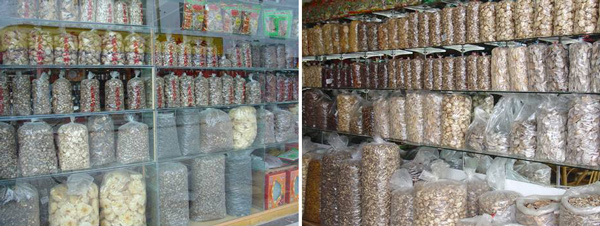
After my retirement from the university, my wife and I visited China. On one of our visits, we went to the northwestern part of Fujian province. On the first night at Wuyishan we ate many kinds of mushroom for dinner. I was amazed how delicious these mushrooms were. As a botanist, I was even more amazed at the many species of mushrooms that they had to offer. In the shops, they sell many, many types of dried mushrooms. I was impressed and up to this day I said to myself, if I can, I would like to go back to Wuyishan again to take a closer look at these mushrooms.

Composite-1 Composite-2 Composite-3

Last year, 2014, I crossed path with mushrooms again when my daughter brought home two books on mushroom; Medicinal Mushrooms by Christopher Hobbs and Healing Mushrooms by Georges Halpern.  Well, this time I was hooked! I spent many months reading about mushrooms and their medical benefits.

While surfing the internet, I stumbled into a website by Dr. Alla Kiroshka from New Zealand, http://medimushrooms.com/info/about-dr-alla_11  She has a very interesting personal experience to share with us.

Alla was born in Moldova, one of the ex-Soviet Union republics. In 1983, Alla became a qualified Medical Doctor (M.D.) specialising in Facial-Reconstructive Surgery. Dr. Alla wrote:  

Despite my love for surgery and my skill in the operating room, fate had other plans for me. After a good few years of being in practice, I developed an allergic condition that prevented me from continuing my career as a surgeon. 

Though I had access to the very best medical doctors and resources, traditional medicine failed me. No one could pinpoint what exactly I was allergic to and none of the usual treatments were working. 

I became so ill that I spent most of my days in bed. I had tremendous difficulty walking and talking. It got to the point that I was finding it very hard to breathe. I could feel my life slowly slipping away from me. 

Then, a family friend – professor of medicine in China – learned of my condition and suggested that I try some medicinal mushrooms since traditional allergy treatments were not working for me. He recommended three varieties of medicinal mushrooms – Reishi, Maitake and Shiitake. 

Unfortunately, these products were not available in the Soviet Union, and it was not possible to obtain them via the usual channels. So, our family friend devised an innovative way to get them to me. 

One day I received a package from him in the mail. It was a 500-page medical reference book. When I opened it, what I initially assumed to be dust flew out of the pages. However, I quickly realised that this was no ordinary ‘dust’ – it was the powdered version of the recommended mushrooms. No instructions had come with the powdered medicinal mushrooms. So, I devised my own dosages and began taking them. 

Within 2 or 3 days, I started seeing small improvements – my appetite and strength were returning. By day 10, I was up and about. The results I was experiencing were nothing short of miraculous! Each day the symptoms were diminishing and eventually were totally gone. 

Today, many years later, medicinal mushrooms are a regular part of my health regimen. The benefits are so great that I have no desire to stop taking them. 

From Being Healed to Helping Others:  Rather than return to the operating theatre, I decided to pursue another lifelong dream of mine – having my own business. In 1990, I started one of the first privately owned medical enterprises (i.e. clinics) in Moldova. I began my research on medicinal mushrooms. Unfortunately, political restrictions continued to prevent me from being able to import them and share them with others. 

 I immigrated to South Africa, where I lived for over 15 years in magnificent Cape Town at the foot of Table Mountain. It was there that I was finally able to realize my desire to help others experience the healing effects of medicinal mushrooms. After a visit to New Zealand in 2006, I fell in love with this beautiful country. So, in 2007, I moved there with my family …. opened Organic Health Centre in Christchurch where I offered health consultations and sold my line of medicinal mushrooms.

In life, I like to believe what others say or write about. But I would not swallow everything blindly. So for the past many days while writing this article, I have been eating many kinds of mushrooms! I made my own mushroom mix (powder) and added them into the fruit juice or soup for my breakfast. I cannot claim that they heal me of anything (because I am healthy!) but one thing I know they don’t kill me like what my grandmother told me some sixty years ago! Some patients are also taking them. Are they any good? We will know the answer very soon!

Let me quote what I have read.

In the introduction of his book, Christopher Hobbs wrote:

Mushrooms have been valued throughout the world as both food and medicine for thousands of years. Throughout the world, many people enjoy hunting for wild mushrooms, delighting in the variety of shapes, sizes and colours … In Japan, pushcart vendors on the streets still sell medicinal mushrooms to the average citizen who uses them to maintain health and protmote longevity. Some Japanese people have even been said to travel hundreds of miles in order to collect wild mushrooms. Likewise, for over 3,000 years the Chinese have used and revered many fungi (mushrooms) for their health giving properties, especially tonics for the immune system.

Georges Halpern, M.D., Ph.D. wrote in his book:

Many claims are made for medicinal mushrooms. Sometimes out of sheer enthusiasm and sometimes for commercial motives, authors make exagerated claims. A few of these claims border on the outlandish ….Throughout this book, I present scientific studies on medicinal mushrooms, their immune-modulating capabilities and their curative properties. Most of these studies were done in the East — in China, Korea and Japan. Western science has been slow to catch up to the benefits of medicinal mushrooms…. Some in the West have been quick to criticize scientific data from the East, but I believe that this criticism is unwarranted. No medicinal mushroom is cure-all and no mushroom can make the body unassailable to disease. What mushrooms can do is stimulate the immune response, giving a powerful boost to the functions of the body that are already in place for preventing and fighting disease. 

Mushrooms are excellent for your health ….Mushrooms can make you healthy in many different ways, but they do so chiefly by awakening the immune system and making it more alert…Mushrooms can promote good health by strengthening the immune system. Problems in the immune system come in two varieties. When the immune system is underactive, it make you susceptible to infections, cancer and other illness. When it is overactive, it may create allergies and autoimmune reactions. Autoimmune means the immune system is over stimulated and mistakenly attacks the body…. As more research has been conducted on medicinal mushrooms, it has become evident that some of them are immunoregulators, substances that can quiet or activate the immune system, depending on the particular circumstances.

In his book, Dr. Halpen presented fascinating facts and stories about healing mushrooms;

  1. Maitake or dancing mushroom. traditionally used in Japan as a tonic to boost the immune system and increase vitality … supposed to prevent cancer and high blood pressure…. ability to lower cholesterol levels. Beta-glucan from maitake may haveuse as an alternative therapy for prostate cancer. Maitake can help protect the liver against the effects of bad nutrition.
  2. Shiitake or forest mushroom. The Japanese Health & Welfare Ministry approved Lentinan (from shiitake) for treating many kinds of cancer. Lentinan triggers the production of T cells and natural killer cells. Lentinan is the third most widely prescribed anticancer drug in the world. LEM from shiitake is believed to be helpful against hepatitis B.
  3. Reishi or Lingzhi. This is the king of herbal medicines! Reishi is considered a tonic … used to treat a variety of ailments, including chronic fatigue syndrome and diabetes. It is believe to detoxify the liver and help cure hepatitis. In Traditional Chinese Medicine (TCM) it is used to treat asthma, gastric ulcers, insomnia, arthritis and bronchitis. In Chinese art, reishi is a symbol of good health and long life. Chinese women take reishi for beutification of the skin. In Japan it finds its way into hair loss formulas.  Reishi inhibits angiogenesis (development and growth of blood vessels that feed the cancer) and is used for prostate cancer.
  4. Cordyceps. The wonders of Cordyceps have been known in China for at least 1,000 years …. a national medicinal treasure … used to increase energy and vitality. It is used to treat liver diseases, cancer, angina pectoris, cardiac arrhythmias, bronchial problems, anemia, jaundice, infertility and sexual dysfunction.
  5. Agaricus or Mushroom of the God. This mushroom is from Brazil. In clinical studies, it seems that Agaricus polysaccharides can inhibit tumors from growing besides stimulating the white blood cells to kill malignant cells. Preliminary findings also show that Agaricus has a potential in treating inflammatory and allergic conditions.
  6. Trametes or Turkey Tails. The Japanese have long used this mushroom as a folk remedy for cancer. In Japan this is made into an anticancer drugs called Krestin.The drug is almost always prescribed to cancer patients who have had a tumour removed and are undergoing chemotherapy and radiotherapy. It is often prescribed for colon, lung, stomach and oesphageal cancer. In TCM it is used to treat lung infections, excess phlegm and hepatitis.
  7. Hericium or Lion’s Mane or Monkey Mushroom. In TCM it is prescribed for stomach disorders, ulcers and gastrointestinal ailments. Polyscaccharides from this mushroom may help against stomach, oesophageal and skin cancer. Extract of this mushroom has been shown to stimulate the immune system which in turn helped to control and reduce the burden of sarcoma tumour.
  8. Chaga. This is a mushroom from Poland, Siberia and North America. Chaga is a Russian folk remedy for cancers, including inoperable breast cancer, lip cancer, gastric, parotid gland, pulmonary, stomach, skin and rectal cancers and Hodgkin’s disease. Russians also use Chaga to treat ulcers and gastritis.

Below is a summary of what people say are the benefits of these mushrooms. Ask me if these mushrooms really have all the “magic” cures? I must admit, I don’t know. But I take the position that if you don’t try you will end up not knowing. If you don’t want to know, you will forever remain “under the coconut shell.”  If these mushrooms are not harmful or don’t kill you, then why not? I know one thing — I have been taking these mushrooms and I am still alive to write this article!

Documented to help in the following Cordyceps Reishi Maitake Agaricus
Anti-aging / longevity Yes Yes
Anti-inflammatory, decrease susceptibility to colds / flu Yes Yes
Anti-oxidant Yes Yes Yes
Circulatory problem Yes
Detoxification – chemical and heavy metal Yes
Diabetes Yes Yes Yes
Digestive problems Yes
Energy and vitality, endurance and stamina Yes Yes
Heart function Yes
Hepatitis  and Cirrhosis Yes Yes
Immune system – improves, modulates and regulate Yes Yes Yes Yes
Improve memory Yes
Insomnia / restful sleep Yes Yes
Kidney disease / function Yes
Liver –  detox and regeneration Yes Yes Yes Yes
Lower blood pressure Yes Yes Yes
Lower cholesterol Yes Yes Yes Yes
Lung: asthma & respiratory problems Yes Yes
Muscle strength Yes
Nerve function Yes
Osteoporosis Yes
Radiotherapy side effects Yes
Rheumatoid arthritis (RA) Yes
Sexual function for men Yes
Stomach disorder, ulcer, gastrointestinal (GI), Yes
Stress – emotional and physical, fatigue Yes Yes Yes
Weight loss / obesity Yes
For cancer Hepatitis, liver cirrhosis. Tumours, anti-angiogenesis, side effects of radiation, skin, liver Prostate, bladder, liver, adjunct to chemo. Liver, tumors, induce apoptosis, anti-angiogenesis, preventive.


Documented to help in the following Chaga Lion’s Mane Shiitake Turkey Tail
Acid reflex, IBS Yes
Allergy Yes
Alzheimer’s disease Yes
Anti-aging / longevity Yes
Anti-inflammatory, decrease susceptibility to colds / flu Yes Yes
Anti-oxidant Yes
Detoxification  – chemical and heavy metal Yes
Diabetes Yes Yes
Edema – water retention Yes
Energy and vitality, endurance and stamina Yes
Gum disease Yes
Hair loss Yes
Heart function Yes
Hepatitis  and Cirrhosis Yes Yes
Hormonal imbalance (menopause) Yes
Immune system – improves, modulates and regulate Yes Yes Yes
Improve memory Yes
Insomnia / restful sleep Yes
Kidney disease / function Yes
Kidney stone Yes
Liver –  detox and regeneration Yes
Lower blood pressure Yes Yes
Lower cholesterol Yes Yes Yes
Lung : asthma & respiratory problems Yes Yes
Lymph node- – swelling Yes
Muscle strength Yes
Nail – brittle, crack Yes
Nerve function – calm Yes
Pain – muscle, joints Yes
Psoriasis Yes
Radiotherapy side effects
Rheumatoid arthritis (RA) Yes
Skin injury / rashes Yes
Stomach disorder, ulcer, gastrointestinal (GI) Yes Yes
Stress – emotional and physical, fatigue Yes
Varicose veiin Yes
Weight loss / obesity Yes
For cancer Breast, uterus, ovary, cervix, prostate, lung, stomach, liver. bone, lymphatic, rectum, skin, melanoma, leukemia,  brain, spleen, thymus, parotid gland. Stomach, oesophagus, skin and sarcoma Anti-cancer drug in Japan. Production of T and natural killer cells. Product: LEM and lentinan Breast, stomach and oesophagus.Product: PSK (krestin) and  PSP.


NPC: Chemo — 80 percent cure! No thanks. Mom died after 5 cycles of chemotherapy

Ju (not real name) is 36 years old. Her problem started with severe headaches. Then both sides of her neck became swollen, making it difficult for her to turn her head. She had to take painkiller everyday.

Ju consulted an ENT specialist in a private hospital. She was told that she had either NPC (nose cancer) or lymphoma. Whatever it was, Ju was asked to undergo six cycles of chemotherapy. She would probably have to undergo radiotherapy as well. The doctor told Ju that with the treatments she would have a 80 percent chance of cure. Ju promptly rejected medical treatment and came to seek our help.

Gist of our conversation.

Chris: What did they want you to do?

Ju: Chemo (6 times) and radiation (did not ask how many times).

C: Did you ask if chemo and radiation are going to cure you?

J: Eighty percent chance of cure.

C: Eighty percent?

J: Yes.

C: What happen if you don’t do the treatment?

J: May be die la! No, I did not ask.

C: Do you believe that success rate is 80 percent?

J: No!

C: Why don’t you believe the doctor?

J: Because of bad past experience. My mother also had chemotherapy for her lymphoma. She was 63 years old then. She was supposed to do 6 cycles of chemo but she died after finishing 5 cycles.

C: She died?

J: Yes.

C: Where did she do the chemo?

J: In Penang (the same oncologist that Ju went to). That was 5 years ago, in 2010.

C: So you know that chemo does not cure cancer but can also kill.

J: She was bald.

C: She had 5 cycles and that means about 5 months of treatment.

J: Yes. Each cycles cost IDR 5 million.

C: So for 5 cycles it cost IDR 25 million. Money gone, mother also died. I understand. It is very hard for me to push you to go for chemotherapy. It is difficult. You are still young — 36 years old. And now they tell you to go for 6 cycles of chemo.

J: No, I don’t want chemo. That’s why I am here.

Comments

In the internet chat room, one doctor wrote:

  • I was a cancer chemotherapy specialist doctor for twenty years.I treated thousands of people with various combination chemotherapy regimens. I don’t think I killed any of them with the treatment – though over two thousand died from their cancers.

I am going to ask the same question that I asked Ju: Do you believe what this “great” cancer doctor said?

One reader wrote this.

  • Nobody can or will give you any guarantees with chemotherapy.Why do think it will most likely kill you? What evidence are you basing this on? … Some people conclude that the treatment is worse than the disease, and myths about people being killed by chemo bolster this belief. It isn’t always effective. But in those cases it is the cancer, not the treatment, that kills the patient – they have died in spite of treatment, not because of it.

So now, the logic is …. it is the cancer that kills you, not the poisonous chemo! That is what they want  you to believe. Another good selling point.

Read what some other people said:

22 Toxci-MelGraves

4 Chemo die OK if follow protocol

30-Chemo-hell-wife-died-of-

12 Chemo-short-cut-to-make-mon


Liver Cancer: You are still around? It’s a miracle

Ben (not real name), 65-year-old Indonesian, first came to see us in 2013. This is what was written in his medical report dated 13 August 2013.

The above named gentleman first came to see me at Z Hospital on 12 August 2013 with a presenting history of abnormal liver enzymes. Of note, he is a known case of chronic hepatitis C infection (since 2000), diabetes mellitus, hypertension, hyperlipidaemia, old stroke and post cholecystectomy. He also has allergy to penicillin.

Laboratory investigations, ultrasound abdomen and CT scan abdomen were done for further evaluation.

Ultrasound Abdomen dated 13 August 2013

  1. Finding suggestive of liver cirrhosis, associated with multicentric hepatoma. The large mass in right lobe liver is 8.4 x 7.2 cm. There are also multiple smaller nodular lesions in right lobe liver, which are about 1.0 cm to 2.0 cm. A calcification in right lobe liver.
  2. The spleen is enlarged, 14.5 cm.
  3. Small right renal cysts.

CT Abdomen and Pelvis dated 13 August 2013

  1. Multiple enhancing masses seen at the liver. The largest one measures 6.9 cm x 7.4 cm.
  2. Liver cirrhosis with portal hypertension.
  3. The spleen is enlarged measuring 14.8 cm.
  4. Small right renal cyst, 0.9 cm x 1.5 cm.
  5. Prostate is enlarged measuring 4.9 cm x 6.1 cm with no focal lesion seen.

Composite

Mr. Ben was diagnosed to have the following medical problems:

1) Chronic hepatitis C infection with chronic active hepatitis, liver cirrhosis and portal hypertension (splenomegaly, thrombocytopenia and trasaminitis).

2) Multicentric hepatomas.

3) Post cholecystectomy.

4) Right renal cyst.

5) Diabetes mellitus.

6) Hypertension.

7) Old stroke.

He is currently on the following medications:

1) Legalon

2) Propronolol

I have advised him to seek early treatment from Consultant Oncologist in view of further treatment of his multi-centric hepatomas (i.e. TACE or RFA).

Based on the above, the doctor told Ben the following:

  1. Liver transplantation would be impossible due to his age.
  2. Liver surgery may be an option.
  3. He needed to undergo chemotherapy.

Ben refused further medical treatment and came to seek our help.

One Year Seven Months Later

Ben came to see again in late April 2015, one year seven months later.  He had gone to see his doctor and did a CT scan.

CT Abdomen and Pelvis 28 April 2015

  1. There are multiple enhancing masses seen at the right lobe of the liver. The largest one measures 10.5 cm x 15.4 cm seen at segment 6 of the liver. There are two small calcifications seen at the left lobe of liver.
  2. Spleen is enlarged with greatest diameter measures 14.5 cm.
  3. Prostate is slightly enlarged with greatest diameter measures 4.3 cm x 6.2 cm.

With much “satisfaction” in his face Ben told us:

  • Ben: When I saw my doctor yesterday, he shook hands with me twice!
  • Wife said: The doctor commented, “You are still around?” (implying that Ben should have been dead by now). According to the doctor, among his patients, in cases like this, the longest survival time was only 9 months.
  • B: Generally by 3 to 6 months they were gone. When I first saw him almost 2 years ago, I was given only two months to live.
  • Chris: Does he know what you are doing.
  • B: I told him I am on herbs.
  • C: Was he angry because you were taking herbs?
  • B & Wife: No, no. He said, “Good, go on with the herbs.”
  • B: The doctor said, “It is a miracle.”
  • C: Yes, at CA Care we see miracles every week! This is NOT something unusual. Thank God for this blessing.

Listen to our conversation that day.

Comments

Ask these questions.

  1. Almost two years now, Ben is still alive and well. Why? He was entirely on the herbs — no chemo at all (that was the only option he had). What does that tell you? Herbs are not proven? Hocus pocus?
  2. What about those who did medical treatment? Maximum of 9 months and they were dead? Even from Ben’s own experience, his many friends were gone after medical treatment. Ben told us he has a doctor friend (trained in Germany) who was very impressed with his progress. The doctor even asked for CA Care’s address!
  3. Sometimes, we tend to think that people who go for herbs and forsake scientific medical treatments are dumb fools, deficient in knowledge and uneducated. NO, that is a wrong presumption! Generally those who come to CA Care are well educated people. Like the case of Ben, he was once the President of a university! He knew what he was going into.


Mediastinal Germ Cell Tumour: Nonosrugery, Chemotherapy and Hyperthermia Failed to Cure Him

Ali (not real name) is 24 years old. This is his story.

In November 2011, Ali noticed “floating” veins in his chest. His face was swollen. He was admitted to a private hospital. A CT scan showed a mass in his chest. A biopsy confirmed a mediastinal germ cell tumour.

Ali subsequently undergo 4 cycles of chemotherapy using BEP regimen (Bleomycin + Etoposide + Cisplatin).

His AFP (alpha-fetoprotein) decreased following the treatment. In spite of that, the surgeon was unable to operate on Ali because the tumour was found to grow around his heart. Instead of surgery, Ali had to do 30 sessions of radiotherapy. Unfortunately, radiotherapy did not help much.

In March 2014, Ali went to London to undergo a nanosurgery. According to the English doctor, this procedure would help Ali. Indeed after the surgery, the AFP decreased, but later the AFP increased again.

Ali returned to Malaysia and underwent another 4 cycles of chemotherapy using TIP (paclitaxel + ifofamide + cisplatin). TIP regimen is a second-line salvage chemotherapy for patients post-BEP.  His AFP decreased after TIP but the size of the tumour remained the same — 4.3 cm. The tumour size before any treatment was about 8 cm.

Ali consulted another oncologist. Since nothing much could be done, the doctor recommended that Ali go to Germany for hyperthermia + chemotherapy treatments. Ali stayed in Germany for about a month undergoing that treatment which cost about RM 80,000.

Ali returned to Malaysia and continued with the hyperthermia and high dose chemo. He had been on this treatment for almost a year now. His AFP decreased but the size of the tumour stubbornly remained the same.

Ali again started with another round of chemotherapy using Avastin + Gemzar + Taxol and Oxaliplatin. This treatment made Ali real sick. He needed a blood transfusion. In addition, he started to cough out blood. His AFP shot up to 24,591, as on 5 February 2015.

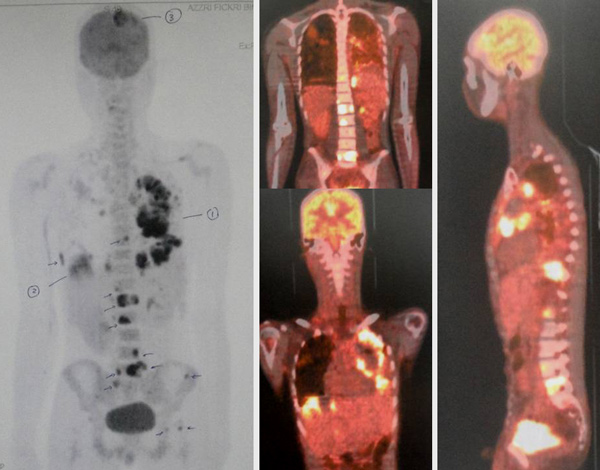
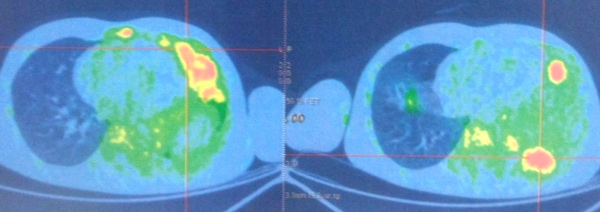
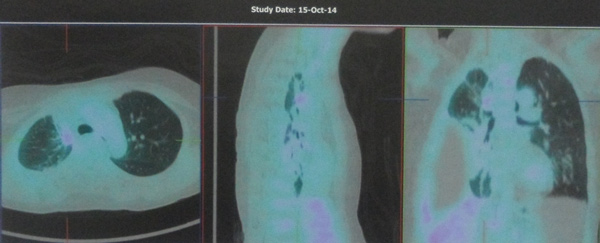
A PET scan on 6 February 2015 indicated:

  • extensive malignant lesions present in the left lung, less in the right lung.
  • several metastases present in the bones.
  • a large nodule about 4.5 cm in the right lobe of his liver and a few small ones.
  • a lesion about 4.0 cm in the parietal region of his brain.

Composite-1-overall2-Brain 3-Lungs

In March 2015, Ali and his parents came to seek our opinion.

I felt empathy sitting in front of this young man listening to his sad story. I admitted that there is nothing much I could do. It would be wrong to believe that our herbs could solve his problem. Even more so, after all that modern medicine could offer had failed.

In writing this story, I am reminded of what Drs. Jerome Groopman and Pamela Hartzband wrote in their book, Your Medical Mind about the many types of patient’s mindset.

Naturalism vs Technology

  • Some are naturalism orientated believing that the body can often heal itself if given the proper environment, harnessing the mind-body connection and supplementing with herbs, vitamins, and other natural products.
  • On the opposite end of the this spectrum is the technology orientated believing that cutting-edge research yielding new medications and innovative procedures holds the answers. 

Maximal vs Minimal Treatment

  • Some people are profoundly proactive about their health, believing that more is usually better.
  • In contrast, those with a minimalist mind-set aim to avoid treatment if at all possible, and if not possible, they try to use the fewest medications at the lowest possible doses or to select the most conservative surgery or procedure. Minimalists hold to the notion that “less is more. 

Believers vs Doubters

  • Believers approach their options with the sense that there is a successful solution for their problem somewhere.
  • Doubters approach all treatment options with profound skepticism. They are deeply risk-averse, acutely aware of the potential side effects and limitations of drugs and procedures.

If patients come to see us hoping to find some kind of magic bullet, then it would be most disappointing to know that we have none. We try to help you the best we know how but we need your commitment to help yourself first. You need to have the right kind of mindset first.

It was indeed sad to note that he had submitted to the last round of chemo with Avastin + Gemzar + Taxol and Oxaliplatin., resulting him to cough out blood. One wonder, what did you expect to get from such treatment when earlier treatment did not work? Then, the bleeding. What caused this?

Click this link: http://www.avastin.com/patient. Most serious side effects: GI perforation: A hole that develops in your stomach or intestine. Symptoms include pain in your abdomen, nausea, vomiting, constipation, or fever. Wounds that don’t heal: A cut made during surgery can be slow to heal or may not fully heal. Avastin should not be used for at least 28 days before or after surgery and until surgical wounds are fully healed. Serious bleeding: This includes vomiting or coughing up blood; bleeding in the stomach, brain, or spinal cord; nosebleeds; and vaginal bleeding. If you recently coughed up blood or had serious bleeding, be sure to tell your doctor.

BY DOCUMENTING THIS STORY IT IS OUR HOPE THAT YOU OR YOUR LOVED ONES CAN LEARN SOMETHING MORE THAN JUST “GOING TO THE DOCTOR OR HEALER” TO SEEK TREATMENT.

2.3 cm Malignant Breast Lump: Surgery, Chemo and Radiation — Disaster

This is a tragic story which I find it real hard to “understand.” WF is 32 years old. In early 2014, WF felt a lump in her left breast. At that time she was pregnant and was about to deliver her baby. So nothing was done until after the birth of her baby.

On 14 March 2014, WF had an ultrasound of her breasts. “There is a 17 mm x 9.6 mm lesion at 2 o’clock position of left breast, 4 cm from the nipple.” A FNAC (Fine needle aspiration cytology) done in a Taiping private hospital showed “benign breast lesion.”

WF did another FNAC in April 2014. This time it was done in a private hospital in Penang. Unfortunately, the result showed “atypical cells … Highly suspicious of an infiltrating duct carcinoma.”

A trucut biopsy was done on 12 April 2014 confirmed an invasive ductal carcinoma.

WF consulted another doctor in another private hospital.

25 April 2014Ultrasound of Both Breasts Irregular hypoechoic lesion between 1-2 o’clock. It measures 23 x 18 x 12 mm. Some microcalcifications seen. In keeping with a neoplasic lesion.

Based on the above, WF had surgery. A wide local excision of the left breast mass was done (lumpectomy). The tumour removed was 23 mm in size. Two of the axillary lymph nodes were involved. All resection margins were free of malignancy. Immunohistochemical study indicated a triple negative tumour: ER negative, PR negative and c-erb-B2 negative. It was a Stage 2B cancer.

9 May 2014Ultrasound of Thyroid Multiple tiny nodules seen on both thyroid lobes, likely benign.

WF subsequently had 6 cycles of chemotherapy. Neither she nor her husband knew what drugs were used. Anyway, each cycle cost RM 6,000. WF lost her hair, felt tired and nauseous during her treatment. Chemotherapy was completed by October 2014. Then WF received 20 sessions of radiation and this was completed in November 2014.

About a month later, in late December 2014, the cancer spread to WF’s brain. There were 3 lesions in her brain. WF received 2 sessions of radiation to her head in January 2015.

Two months later, March 2015, CT scan showed the cancer had spread to her lungs, bone and liver.

WF was again asked to undergo 4 cycles of chemotherapy. WF did one cycle after which she and her husband came to see us and decided not to proceed with the treatment.

Chris: Did you ever ask the doctor if surgery, chemo and radiation were going to cure your cancer?

Husband: The doctors said there is a  80 percent chance of cure?

Chris: Did you ever ask what happen to the remaining 20 percent?

No reply.

Study the numbers of her blood tests.

Date CEA CA 15.3 (normal 0-32)
5 June 2014 Less 0.5 12.3
18 Nov 2014 0.4 9.7
10 Feb 2015 Less 0.5 13.2
10 March 2015 n/a 20.3
24 March 2015 n/a 37.0
7 April 2015 n/a 96.1
22 April 2015 1.4 142.6

In March 2015, WF was started on chemotherapy again because her CA 15.3 started to rise, indicating that the earlier chemotherapy had failed. Therefore, the answer is more and more chemo?

The following are results of her CT scan and MRI.

  1. Before chemotherapy
9 May 2014CT scan of Brain, Neck, Chest, Abdomen and Pelvis Recent wide local excision of left breast carcinoma and left axillary clearance.Brain: There is no shift in the midline structures of the brain. No mass or abnormal enhancement. No extracerebral fluid collection.Lymph nodes: There are no enlarged supraclavicular, axillary, internal mammary, mediastinal or pulmonary hilar nodes.Lung: There is no pulmonary nodule or other significant pulmnary abnormality.

Liver:  Liver parenchymal density is normal. Two small hypodense lesions in segment 8, both measuring 4 mm and another two hypodense lesion in segment 7, both measuring 3 mm. Likely represent small cysts.

Bone: no significant lytic or sclerotic bone lesion seen.


  1. After chemotherapy
9 January 2015MRI of brain Bilateral cerebral metastases.Left frontal cortex – 21 x 16 x 15 mm well defined multilobulated massLeft basal ganglia – 9 x 8 x 9 mm.Occipitotemporal cortex – 8 x 8 6 mm.

Lesions also associated with perilesional oedema.

10 January 2015CT scan Neck, Thorax and Pelvis There is no evidence of local recurrence.Interval development of a few small lung nodules within the right lower and left upper and lower lobes. They are too small to characterise but may represent secondary deposits.Apical region of left upper lobe – 3 mm noduleRight lower lobe – 3 mm nodule

Basal segment of left lower lobe – 4 mm nodule.

10 February 2015MRI of brain Partial regression of bilateral cerebral metastases.Left frontal cortical lesion – 11 x 8 x 10 mmLeft basal ganglia – 7 x 6 x 5 mmRight occipitotemporal cortex – 6 x 5 x 4 mm

There is no associated perilesional oedema.

No new nodule seen.

24 February 2015MRI of brain Cerebral metastases increased in size.Left frontal cortical lesion – 17 x 11 x 15 mmLeft basal ganglia – 8 mmRight occipitotemporal cortex – 9 mm

Perilesional oedema has also increased.

24 March 2015MRI of brain Cerebral metastases minimally increased in size. Reduced perilesional oedema. There are likely post radiation changes.Left frontal cortical lesion – 16 x 13 x 16 mmLeft basal ganglia – 8.3 x 8.0 mmRight occipitotemporal cortex – 9 x 9 mm
7 April 2015CT scan Neck, Thorax and Pelvis Increased size of pulmonary metastases. Interval development of hepatic and skeletal metastases. And mild retroperitoneal lymphadenopathy.Lung: Apical region of left upper lobe – 4 mm nodule with central cavitation.Right lower lobe – 4 – 5 mm noduleBasal segment of left lower lobe – 4 – 5 mm nodule.

Liver:  Numerous small hypodense lesions inn both lobes of liver. Larger lesions measuring up to 15 mm.

Lymph nodes: Multiple mildly enlarge para-aortic lymph nodes – measuring up to 12 mm. Smaller lymph nodes are present along the aortocaval space.

Bone: There is an irregular poorly defined lesion in the manubrium sterni eroding the bony cortex. There is also suggestion of similar lesions in the lower cervical spine.

We need to acknowledge that the oncologist did a “good” job of taking the base line of WF’s health before chemo and radiation were started. Yes, before the treatments, WF’s brain, lymph nodes, lung, liver and bone were all clear! Meaning at that point in time, her cancer did not spread anywhere! So the doctor confidently told WF and her husband that there was a 80 chance of cure!

Then chemotherapy and radiotherapy were started.

Barely a month after treatments were completed, problems started to show up.

First, the brain. There were 3 metastatic spots in the brain. There was no such tumour before right?

Radiation was given to the brain.  The tumours shrunk a bit —  by just a bit — and then started to grow again.

By end of March 2015,  WF’s CEA started to increase telling us that chemotherapy / radiation had failed.

Then, more chemo was suggested. WF had one cycle of this second-round chemo.

In April 2015, CT showed the cancer had spread to her lung, liver, lymph nodes and bone, besides the brain.

1-Mouth-sores

Sores causing difficulties to eat

2 Compo-Brain-Lng

Brain and lung

3 Compo-Liver

Liver

Ask these questions.

  1. April 2014 she was diagnosed with a 2 cm malignant breast lump. A year later, April 2015, the cancer had spread to her brain, lung, liver, lymph nodes and bone. She did surgery, chemo and radiotherapy as dictated by the doctors. How could this be? Why do the treatments when the cancer cannot be contained or cured?
  2. Dare you ask, what if WF were to do nothing? Just leave the lump as it is. Would she end up the way she is now – with more cancer all over in the body?
  3. Is WF’s case unique or exceptional? There are many more tragic stories like this. Here is another example, click this link: Does chemotherapy make sense?
  4. When asked if the treatment would cure her cancer, WF was told, There is a 80 chance of cure. Do you believe this prognosis? Listen to another story: Breast Cancer: Do this chemo – 100 percent cure! You believe that?
  5. In WF’s case, what made the cancer so aggressive? Do you dare ask this question? Read this: Chemotherapy SPREADS and MAKES cancer more AGGRESSIVE,

Is The Present Day Cancer Treatment Based on Faulty and Inadequate Science?

  1. Some people may wish to say this is a triple negative cancer. So it is an aggressive type! Some people may say it is just your luck! My response: Many patients live a healthy life by making a CORRECT choice! It is your life.

Paula Black was given 3 to 6 months to live after being diagnosed with breast cancer. She declined chemotherapy!  Read more https://cancercaremalaysia.com/2015/01/15/advanced-breast-cancer-part-1-you-need-not-have-to-die/ and https://cancercaremalaysia.com/2015/01/19/advanced-breast-cancer-part-2-to-die-or-to-heal-is-your-choice/

Jane had a 1.2 cm lump in her right breast. Like WF above, she did a lumpectomy. Her tumour was a double negative type — negative for ER, negative PR but strongly positive for c-erbB-2. P53 was strongly over-expressed.

Jane was told to undergo chemotherapy. The package of chemotherapy + Herceptin would cost RM 120,000 while radiotherapy cost an additional RM 35,000. Jane was told that the benefit of chemotherapy and radiotherapy would be 16 percent – i.e. 16 out of 100 women are alive and without cancer because of the combined therapy.

To Jane the benefits of chemo and radiation did not make sense. She promptly refused further medical treatments and came to seek our help on 10 January 2010.

Jane told us that she refused chemotherapy because she did not want to lose her hair. In addition, her mother-in-law had lymphoma and died after two cycles of chemotherapy.

It is now 2015 (five years plus),  Jane is still doing fine. Yes, your life is in your hands – to stay healthy or to die is your choice! More about Jane: https://cancercaremalaysia.com/2013/06/10/breast-cancer-does-chemotherapy-and-radiotherapy-make-sense/


After All Else Failed They Came to CA Care. Case of Intracranial Malignant Melanoma

Hui is a 9-year old girl. At birth she had many birth marks/moles ( medically referred to as naevus or naevi).  Over the years, these marks became itchy. Other than that Hui had no problem until September 2014, when she was 8 years old. Hui started to vomit, had headaches and seizure. MRI done on 11 September 2014 indicated “a solid mass lesion in the right thalamus measuring 40 x 42 x 43 mm.”

Where is the Thalamus?

 Thalamus

The thalamus is a small structure within the brain located just above the brain stem between the cerebral cortex and the midbrain and has extensive nerve connections to both. The main function of the thalamus is to relay motor and sensory signals to the cerebral cortex. It also regulates sleep, alertness and wakefulness. http://www.news-medical.net/health/What-is-the-Thalamus.aspx

A biopsy was done and the result showed “features are more in favour of malignant melanoma… in view of the presence of pigmented skin lesions.”

Hui underwent an operation  (crionotomy and EVD insertion) on 2 October 2014. “An attempt to debulk the tumour was abandoned as the tumour was very vascularised.” However, tumour debulking was finally done on 3 October 2014. Histopathology report confirmed malignant melanoma.

A follow up MRI on 11 November 2014 showed “no evidence of residual tumour or tumour recurrence.”

Barely 3 months later, MRI on 30 December 2014, showed tumour recurrence, “it measures approximately 3.1 x 2.3 x 3.7 cm. It appeared to be progressively increasing in size.”

At this point, the parents refused to have further medical treatment as they wanted to try alternative treatment.

On 1 February 2015, Hui had headaches again and started to vomit. She was rushed to the emergency. An urgent CT scan of the brain showed “a dense tumour measuring 5.3 x 3.5 x 5.9 cm with evidence of intratumoural hemorrhage” (internal bleeding).  A left front EVD was inserted to drain the hemorrhage. (EVD: external ventricular drain extraventricular drain; or ventriculostomy. A plastic tube is placed by neurosurgeon to drain fluid from the brain).

A skin biopsy was done over the right giant naevus (birthmark). The result showed “benign intra-dermal naevus”.

Hui underwent another operation – “right re-crionotomy and tumour debulking” on 12 February 2015.  The father said the  tumour was cut out but unfortunately the tumour expanded and the skull could not be put back. Hui was discharged and went home with her head without the “sawn off” skull. However, she was alright and was able to move around.

Unfortunately Hui developed persistent vomiting. A repeat CT scan on 27 February 2015 showed increasing hydrocephalus (fluid) and 2 VP shuntswere inserted. “A revision of the shunt was performed on 3 March 2015 as it was not properly placed.

Her doctor wrote, ” She was quite well since then,  and was discharge on 6 March 2015. We are greatly sorry for not being able to do MRI brain for her as our machine was broken down and her unstable conditioin.”

Hui was referred to KLGH for radiation. The parents were undecided whether to undergo radiotherapy or not and came to seek our advice. According to her parents, Hui was very weak.

Comments

It is indeed a hard case for us to handle. Should Hui undergo radiotherapy? We cannot provide that answer. The parents will have to make that decision.

We have seen many “disastrous” results after a brain operation.

2 Surgery-as-last-resort

4 When not to operation

Dr. Jeffrey Tobia and Kay Eaton (in Living with Cancer) wrote: As far as cure is concerned, there is no use pretending that brain tumours are truly curable.

5 Ssurgery come back again

Update:

This is a message we received on 18 August 2015, from the monk who brought Hui to see us.

On a sad note, the young girl with the brain melanoma passed away on Thursday morning after lapsing into unconsciousness for a week. After we saw you, she underwent the Gamma knife therapy in KL the following week and a couple more VP shunts. The tumours re-grew in about a week in different areas of the brain.

What to do now? Do we have to give up? Here is a sweet story that crossed our path – a melanoma case that had spread to the lungs.

Capture 1

Capture2

Capture3

Comic available at: http://bookoncancer.com/productDetail.php?P_Id=73

 Information from the Internet

Metastatic Intracranial Melanoma

  • Melanoma is a malignancy of melanocytes, which are pigment-producing cells derived from the neural crest. This condition constitutes 3% of all cancers diagnosed in the United States; it is the most lethal form of skin cancer and the third most common malignancy that causes central nervous system (CNS) metastases, after lung and breast cancer. The primary tumor may occur at any location on the skin or, less commonly, on the mucus membranes or other locations. http://emedicine.medscape.com/article/1158059-overview
  • Malignant melanoma (MM) is often reported as the third most common cause of intracranial metastasis after carcinoma of the breast and lung. Most patients with advanced MM will have widespread extracranial disease, but the majority will die from intracerebral spread. http://www.ncbi.nlm.nih.gov/pubmed/7834426
  • 7% of patients diagnosed with melanoma subsequently developed intracranial metastasis. The prognosis of cerebral metastatic melanoma is dismal. Without treatment, the average survival time from the beginning of neurologic symptoms was 65 days in one study . Even with chemotherapy and radiotherapy, the survival time has only been extended to a range of 4 months to approximately 2 years. http://radiopaedia.org/articles/intracranial-metastatic-melanoma-2
  • Primary intracranial melanoma is uncommon and accounts for only approximately 1% of all cases of melanoma. http://www2.cmu.edu.tw/~mtjm/full-text/7%282%29p118-123.pdf
  • Central nervous system (CNS) metastases occur in 10 to 40% of patients with melanoma. http://www.ncbi.nlm.nih.gov/pmc/articles/PMC3197072/

Treatment

  • Disseminated metastatic disease, including brain metastases, is commonly encountered in malignant melanoma. The classical treatment approach for melanoma brain metastases has been neurosurgical resection followed by whole brain radiotherapy. Traditionally, if lesions were either too numerous or surgical intervention would cause substantial neurologic deficits, patients were either treated with whole brain radiotherapy or referred to hospice and supportive care. Chemotherapy has not proven effective in treating brain metastases.

Prognosis

  • Metastatic melanoma patients overall have a median survival of only 6–10 months and a 5-year survival of less than 10% .There has been virtually no improvement in survival of those patients in the past several decades. http://www.hindawi.com/journals/jsc/2011/845863/


After All Else Failed He Came to CA Care Case of Soft Tissue Sarcoma: He believed “science” would cure him

BY DOCUMENTING THIS STORY IT IS OUR HOPE THAT YOU OR YOUR LOVED ONES CAN LEARN SOMETHING MORE THAN JUST “GOING TO THE DOCTOR OR HEALER” TO SEEK TREATMENT.

Alex (not real name) is 63 years old. His problem started about 3 years ago, in 2012 while visiting Australia he had severe pain in his right forearm. He was admitted into a hospital. An X-ray showed a growth in his lung.  On returning home, Alex had a biopsy and was told that he had a high-grade undifferentiated soft tissue sarcoma in the right chest. The tumour was lodged behind the sternum but had spread onto the first rib. It was stage 3 cancer.

Alex underwent chemotherapy in December 2012. The regime used was Doxorubicin and Ifosfamide.  The tumor shrank a bit. Then Alex had a surgery. This operation was done in a heart hospital in early 2013. During this surgery the doctor also did a by-pass for his heart. (Note: Alex underwent an angioplasty in the same hospital in 2004).

After the surgery, Alex had 36 sessions of radiotherapy.

A small tumor on the first rib was not removed during the surgery and this started to grow again. Alex underwent another surgery in June 2014. This time the surgery to remove the first rib and part of second rib was done in  Singapore. After the surgery, Alex received another 36 sessions of radiation in October 2014 in a Malaysian hospital.

Hardly 2 months later, the tumor spread to the right lung membrane, spewing fluid into three-fourth of his right lung. Alex had to be hospitalised and fluid was tapped out. This happened  in late in November 2014.

On 11 December 2014, Alex was started on a new sarcoma drug called, Pazopanib. Alex wrote, I did suffer side effects such as , nauseating, vomiting, developing  blisters on my fingers and feet, tender skin, pains in my right forearm and coughing out blood which I was had to be hospitalized.  

A CT scan in mid-March 2015, showed no improvement  and the drug treatment was stopped on 26 March 2015.

Alex said, All this while, I was treated in the hospital and I have not started any herbal treatment.  Only when I was discharged recently did I start to drink some (black faced General) herbal drink and some root herb, which name I don’t know (to show you when we meet).

Comment

The next day after receiving an e-mail with the above story attached, Alex with his wife and 3 children (lawyer, engineer and allied health-professional) showed up at our cancer. What did this mean? We felt he was desperate and wanted us to help him. The entire family sat down and listen to what we have got to say. Then we asked them to take a break, sit down among themselves and make their own decision, what to do next.  

The first message we gave to the entire family. We cannot cure your cancer! Any person with any common sense will know that saying otherwise is not being truthful. Surgery (twice), chemotherapy, radiation (twice) and brand-new oral chemo drug could not help, what do you expect when you come to CA Care? We do our best to help but we would not be able to promise any positive outcome in anyway.

There are three points which we would like to share to you. Perhaps you may learn something from these.

  1. The Working of So Called Scientific Mind & Why I came to see you!

Alex told us that he was a student at USM doing chemistry. Alex said he believes in science and everything to be done must be “scientific.”

Naturally when Alex had cancer, he turned to scientific medicine; fully believing that science has the answer to his problem. Hence, surgery after surgery, radiation after radiation and chemo after chemo. Unfortunately the god called science did not deliver its promise.

After science failed, Alex turned to so the called “unproven and unscientific ” remedy. He took herbs, probably learned through friends or “newspaper cuttings.”  That was indeed a reversal of “being scientific.”

Then Alex stumbled into CA Care website. He said, “I went through what you wrote and found it to be organised and “scientific” in your presentation.” On top of that Alex said that he knew about Chris Teo while he was a student at USM. So that attracted him to come and see us.

  1. My World View as a Biologist

I told Alex, if he was doing biology in USM , he would have been my student.  I also told Alex that I would not blame him for believing is science. I understand science is the present god of modern day innovation. After all, this is what they teach students in school anyway.

I recall one USM student who wrote me. He wanted to come and work with CA Care. I asked him what he wanted to do? He said he wanted to extract the herbs and find the active ingredients — the stuff that make the herbs effective. I told him, “But I don’t believe that is the way to go. In herbal medicine we don’t talk about active ingredient like they teach you in chemistry or pharmacy.” Then he asked me to explain why. I replied, “I cannot explain this. You have learned the wrong things in school for years, how to make it right in just an e-mail?”

I told Alex this. As a chemist, you see 1 + 3 = 4. There is no two ways about it. It is definite, it is correct, any other answer is wrong. I understand you, for you are trained that way. Unfortunately, in biology 1 + 3 may turn out to 0 or 8 or 10 not necessarily 4 like you think. It is hard to explain this — you need to be wise and have some “scientific” experience to understand this.  Taking herbs A + X + Y will do good for some patients. But giving the same herbs to the next person with the same cancer can result in a total failure. Why? Because biology is about life! I have often told patients, Healing cancer is about you — your attitude, your lifestyle, your mind. All these imbalances or things that go wrong in you do not show up in the CT scan or PET scan.

Starting a war in your body “sounds scientific.” But cutting, poisoning and burning does not guarantee you win the war. My observation about the world is this — nonbody wins in a war. The generals don’t get killed, only the helpless civilians. The same applies to the war on cancer in your body. It is better to learn how to live with your cancer. Cancer is not something you “catch” like the germs. It is the result of something that has gone wrong within your body, probably even caused by your own doing.

As I was writing this, I remember a lady who cried yesterday. She has breast cancer. I told her, You make your own cancer. She broke down and cried and said, Doc, you are correct! (That needs another article to explain that).

So my view on cancer is “opposite” of the medical views. You are welcome to accept or reject it.

So I told Alex, if you want to heal yourself, you need to realize that health is your responsibility. No one can heal you except you, yourself. To do that you need  to initiate changes in your life.

By all means stick to your “science.” The next time your computer breaks down, fix it “scientifically.” But if your body breaks down due to cancer, I am afraid, you need more than science to fix it.

  1. Work for Your Healing – If you want to eat anything you like, there is no need to come and see us.

To follow the CA Care Therapy is not easy. The herbs have awful smell and lousy taste. There are several herbal teas to be brewed a day. This becomes a difficult chore if you don’t like to work in the kitchen. But the most difficult is, You must take care of your diet. You have been advised to take 10 or 30 eggs a day, or eat a lot of meat to boost your energy, etc. etc. We are sorry, we tell you the opposite. None of these! If you don’t want to take care of your diet, there is no point coming to see us. You cannot eat anything you like.

Let me end by sharing with you what I read from the medical literature.

In Your Medical Mind, by Dr Jerome Groopman and Dr. Pamela Hartzband, the authors wrote about Decision Analysis Meets Reality. They related a patient who used his scientific analytical knowledge to make decisions about his medical treatment. I am a scientist. I understand how research is conducted, what statistics show and don’t show. I was well aware of all the garbage that’s out there on the Internet. So I decided to go with top-tier journal, well-accredited papers, authored by specialists who are at recognized institutions.

After experiencing the medical system himself this patient suddenly came to this conclusion.

Clinical medicine is an area that moves away from clarity, an area that I think of as having higher uncertainty. You can’t really make rational decisions in this world. Doctors like to have what I call a “badge of rationality,” because it gives them authority, and they try to appear competent for the patients … even if the situation is highly uncertain, they go out of their way to appear certain, to ooze rationality?

They told me I had a 50 percent chance of getting graft-versus-host disease, with a 10 percent change of it affecting my liver, a 40 percent chance hurting my intestine, a 30 percent change involving my skin. I have no way to understand what all that means.

Dr. Manoj Kapoor, in The Wrong Prescription, wrote:

  • Medicine still remains an art in applied common sense while treating most ailments. The moment we leave reasoning and correlation out and start applying modern technology advances, we get trapped in misdiagnosing.
  • Science has progressed by leaps and bounds. A paradigm shift has happened. It is ” I treat and I cure”. However, the irony is that a cure for diseases like the common cold has still not been found.
  • Science has fantastic treatments for all the symptoms, but the disease has not been eradicated…. and new ones are emerging.

Reflect on these quotations and ask, Where is the science?

13-Same-treatment-different

3 No-right-or-wrong-journey    15 Groopman Choice within you


Thyroid Cancer

Candy was diagnosed with stage 3 thyroid cancer in 2011, at age 28. After surgery and radiation, it spread.

Then she adopted a radical diet (mostly fruit), changed her life, and her body healed.

She recently made internet headlines, but the tabloid version of her story that went viral is not accurate. She was misquoted, her story was oversimplified, and some of the facts are just plain wrong.

Classic internet.

For more: http://www.chrisbeatcancer.com/how-candice-marie-fox-healed-advanced-thyroid-cancer-it-wasnt-just-pineapples/?inf_contact_key=9e7e41b11ffd53bfe1855f9e14e5c1f221f5e0f1dffbedc3fb8c20482432d445

How To Decide What Is Right For You

by JEROME GROOPMAN, M.D. AND PAMELA HARTZBAND, M.D.

Jerome Groopman, is an oncologist who guides his patients through life-or-death decisions. His wife, Pamela Hartzband is a noted endocrinologist and educator at Harvard Medical School who helps patients make critical decisions about their long-term health.

The authors wrote:

  • In our role as doctors, our aim is to help our patients understand what makes sense for them, what treatment are right given their individual values and goals. We are especially mindful not to impose our preferences about our own health on our patients.

 Your-medical-mind

We are drowning in information, while starving for wisdom ~ E.O. Wilson

Making the right medical choices is harder than ever. Whether we’re deciding to take a cholesterol drug or choosing a cancer treatment, we are overwhelmed by information from all sides: our doctors’ recommendations, dissenting expert opinions, confusing statistics, conflicting media reports, the advice of friends, claims on the Internet, and a never ending stream of drug company ads.

Some assert that you need more — more tests and more treatment. Others insist that you need less.

There are many facets of human nature.

Naturalism vs Technology

  • Some are naturalism orientated believing that the body can often heal itself if given the proper environment, harnessing the mind-body connection and supplementing with herbs, vitamins, and other natural products.
  • On the opposite end of the this spectrum is the technology orientated believing that cutting-edge research yielding new medications and innovative procedures holds the answers.

Maximal vs Minimal Treatment

  • Some people are profoundly proactive about their health, believing that more is usually better.
  • In contrast, those with a minimalist mind-set aim to avoid treatment if at all possible, and if not possible, they try to use the fewest medications at the lowest possible doses or to select the most conservative surgery or procedure. Minimalists hold to the notion that “less is more.

Believers vs Doubters

  • Believers approach their options with the sense that there is a successful solution for their problem somewhere.
  • Doubters approach all treatment options with profound skepticism. They are deeply risk-averse, acutely aware of the potential side effects and limitations of drugs and procedures.

Understand the numbers behind the words

  • Stating that 35 percent of people with a serious illness are cured by a certain treatment has a hopeful resonance, while stating that 65 percent of people die despite that therapy has a pessimistic sound. But both statements are factually correct and describe the same data.
  • Stating that a drug works “in the majority of patients” sounds quite different from specifying that 51 percent of people responded to the treatment, yet both are accurate.
  • To clearly understand the true benefit of a treatment, try to learn the “number needed to treat,” how many people with a condition similar to yours need to receive a therapy in order to improve or cure one person.

The authors related a patient who used his scientific analytical knowledge to make decisions about his medical treatment. I am a scientist. I understand how research is conducted, what statistics show and don’t show. I was well aware of all the garbage that’s out there on the Internet. So I decided to go with top-tier journal, well-accredited papers, authored by specialists who are at recognized institutions.

After experiencing the medical system himself this patient suddenly came to this conclusion.

  • Clinical medicine is an area that moves away from clarity, an area that I think of as having higher uncertainty. You can’t really make rational decisions in this world. Doctors like to have what I call a “badge of rationality,” because it gives them authority, and they try to appear competent for the patients … even if the situation is highly uncertain, they go out of their way to appear certain, to ooze rationality?
  • They told me I had a 50 percent chance of getting graft-versus-host disease, with a 10 percent change of it affecting my liver, a 40 percent chance hurting my intestine, a 30 percent change involving my skin. I have no way to understand what all that means.

Who is the best doctor

  • We are often asked who is the “best doctor” to treat a particular condition. One criterion is a physician’s knowledge about your condition and its treatments, his or her command of the scientific data, so-called evidence-based medicine.
  • But we believe the best doctors go one step further and practice “judgment-base medicine,” meaning they consider available evidence and then assess how it applies to the individual patient.
If medicine were an exact science like mathematics, there would be one correct answer for each problem …. But medicine is an uncertain science.

How do you know what is right for you? The answer often lies not with the experts, but within you.

You can choose the right treatment, the one that fits your values and way of living. Understanding your preferences begins with reflecting on your mind-set.

Dr. Groopman’ Experience

…the culture of my upbringing and the trauma of my father’s death made me a believer in modern medicine, is power and is promise …. My mentors at UCLA were maximalists in treatment, firmly committed to doing everything all the time.

And it was that maximalist mind-set that resulted in the signature medical mistake of my life. One Sunday morning in Los Angeles, feeling fine, I stood up from a chair and nearly collapsed from excruciating back pain. The pain persisted for weeks, and the doctors I consulted had no ready explanation for it.

But I was sure that medical science could pinpoint the cause of my pain. There had to be a fix somewhere in the universe of physicians and procedures.

I lacked the patience to wait. I was headstrong, intolerant of the lack of explanation for my misery. And I didn’t believe that my body would heal itself …. I underwent the most aggressive operation, a spinal fusion …..disastrous consequences: worsening pain and increased debility.

The aggressive and unsuccessful surgery was a hard lesson …. it now seems self-evident … mistakes are often necessary to bring insights. I learned to pay more attention to risk, to take time to consider side effects.

Read more: http://jeromegroopman.com/your-medical-mind.html

After All Else Failed They Came to CA Care: Cases of Prostate Cancer

BY DOCUMENTING THESE STORIES IT IS OUR HOPE THAT YOU OR YOUR LOVED ONES CAN LEARN SOMETHING MORE THAN JUST “GOING TO THE DOCTOR OR HEALER” TO SEEK TREATMENT.

Case 1: FYC is a 67-year-old man. In 2012, his PSA was at 19.0. A biopsy confirmed prostate cancer with a Gleason score of 4+5. FYC was given two options. One, go for surgery or two, undergo hormonal therapy.

FYC opted for the latter. He was given Zoladex injection at 3 monthly interval. In addition took oral Casodex.  His PSA dropped to below zero. All was well. However, 2 years later, his PSA started to increase again.

FYC underwent 6 cycles of chemotherapy using Taxotere. He did not suffer any side effects. A bone scan in February 2014, showed bony metastasis. The cancer had spread to his 2nd rib, thoracic and lumbar vertebrae, sacrum, right sacroiliac joint, both ischii and lesser trochanter.

FYC received 10 sessions of radiotherapy. His backaches were resolved after the treatment. FYC was alright for about 8 months.

In November 2014, FYC had severe back pain again. Bone scan showed extensive metastases. FYC had 5 cycles (scheduled for 6 cycles) of chemotherapy using carboplatin + cabazitaxel. One cycle of this chemo cost RM 15,000.

His PSA readings from November 2014 to February 2015, were as below.

25 November 2014 22.5
26 December 2014 52.8
16 January 2015 58.4
5 February 2015 64.1
26 February 2015 72.7

FYC had no other option and came to see our help.

Case 2: Tom (not real name) is 76 years old. About 7 years ago he had blood in his urine. His PSA in July 2007 was 15.7. By December 2007 this had risen to 33. He consulted a urologist on 17 January 2008 and underwent a prostate biopsy. MRI and bone scan proved normal but biopsy confirmed a Gleason score 3+4 cancer.

Tom proceeded to have an open radical prostatectomy with bilateral pelvic nodes dissection on 25 January 2008. Histology unfortunately confirmed extensive cancer and there were a couple of positive nodes bilaterally. The margin was positive.

Tom was immediately started on Lucrin and proceeded with radiotherapy from 24 March to 15 May 2008. His PSA dropped to 0.01 — 0.03. He was on Lucrin for 2 years after his radiation. His PSA crept up to 1.4 one year after his Lucrin was stopped. On this basis, he went back on Lucrin again. His PSA responded by falling to 0.1 in February 2011 but by November 2011 it has risen to 0.3 and 0.5 by May 2012 and rose to 2.0 by August 2012.

At this point, Tom was started on Casodex. Test showed that Tom was predisposed to osteoporosis. So the doctor started him on Fosamax. Tom was on Casodex for about 4 years. Then his PSA started to increase to 14 plus.  The urologist advised  orchidectomy (removal of the testes).

His PSA did not decrease at all even after the surgery. Instead, it went up to 22 then 35. A CT scan in July 2014 indicated sclerosis of the T6, T 10, L4, L5, sacrum and coccyx. Compression of L3 vertebral body was noted. There were multiple nodules in both lungs, indicating metastases.

Tom  consulted a few oncologists and decided to go for chemotherapy. Tom completed 6 cycles of chemo with Taxotere (docetaxel) in December 2014. His PSA then was 15. While on chemotherapy, TH suffered the side effects such as: total loss of hair, loss of appetite, lack of strength, etc.

Since he had pain in his lower back bone, 10 sessions of radiation were given to him in February 2015. His PSA shot up to 264 in February 2015 while he was undergoing radiotherapy. A month later, March 2015, his PSA increased to 531.

The oncologist suggested that Tom  go for another round of chemo either with Jevtana or oral drug  Zytiga (abiraterone acetate). Zytiga cost RM 12,000 per month.

Tom did not think that he was fit enough to take another hit from chemo drug.

His overall health condition and energy level had deteriorated rapidly since January 2015. He lost 6 kg in one month. He has no appetite, he has numbness in his feet, weakness in his legs, wet cough that seems to worsen over the week, and he constantly has hyponatremia (low sodium in blood).

Tom’s daughter wrote: We also learned that he has drug-induced diabetes after chemo. We hope that our father will receive an effective alternative treatment from you after reading the information from your website.

His PSA reading from July 2014 to March 2015 showed a rather drastic increase.

9 July 2014 30.3
12 August 2014 33.0
28 October 2014 16.5
18 December 2014 15.5
February 2015 264
3 March 2015 531

Tom, his wife and daughter came to seek our help.

Chris:  Did you ask if all the treatments they gave you were going to cure you?

They answered: No, the doctor said no guarantee!

C: Who ask you to come and see us?

Tom: My doctor. I went to his clinic and he told me right away that I should seek your help.

C: Is he a medical doctor?

T: Yes.

C: That’s a surprise!

Comment

Two prostate cancer patients from two different places, treated almost the same way by different doctors in different hospitals, achieved almost the same FAILED results.

I wonder if Einstein was joking when he said:

1 Insanity-by-Einstein

What You Need to Know About Carbazitaxel (Jevtana)

This is the first time, we have heard of Jevtana, cute name indeed.  This chemo-drug was approved by the US FDA for the treatment of hormone-refractory prostate cancer on 17 June 2010 … thus making it a rather new drug. But click on this link to know what you are up against. http://www.jevtana.com/advanced-prostate-cancer/default.aspx

The following a extracts from the company’s website:

JEVTANA may fight tumors that have become resistant to docetaxel, so it may help you even if docetaxel is no longer working.

IMPORTANT SAFETY INFORMATION FOR JEVTANA® (CABAZITAXEL) INJECTION 

  • JEVTANA may cause serious side effects, including low white blood cells … can cause you to get serious infections, and may lead to death. People who are 65 years or older may be more likely to have these problems. JEVTANA should not be given to patients with low white blood cell counts. Do blood tests regularly to check your white blood cell counts during your treatment with JEVTANA
  •  JEVTANA can also cause severe allergic reactions. Severe allergic reactions can happen within a few minutes after your infusion of JEVTANA starts, especially during the first and second infusions. Symptoms of severe allergic reactions may include rash or itching, skin redness, feeling dizzy or faint, breathing problems, chest or throat tightness, swelling of face.
  • JEVTANA can cause severe stomach and intestine problems, which may lead to death. Vomiting and diarrhea can happen when you take JEVTANA. Death has happened from having severe diarrhea and losing too much body fluid or body salts with JEVTANA.
  • JEVTANA can cause a leak in the stomach or intestine, intestinal blockage, infection, and bleeding in the stomach or intestine. This can lead to death.
  • Kidney failure may happen with JEVTANA, because of severe infection, loss of too much body fluid (dehydration), and other reasons, which may lead to death.

Common side effects of JEVTANA include:

  •  Low white blood cell count
  • Low red blood cell count. Anemia include shortness of breath and tiredness
  • Low blood platelet count leading to bruising or bleeding
  • tiredness
  • nausea
  • constipation
  • weakness
  • blood in the urine
  • back pain
  • decreased appetite
  • fever
  • stomach (abdominal) pain
  • change in your sense of taste
  • cough
  • joint pain
  • hair loss
  • numbness, tingling, burning or decreased sensation in your hands or feet

Read carefully and prayerfully. Decide for yourself what is good for you. Your life is in your hands.

To know more about healing of prostate cancer, read this book.

Prostate CA  Cover

Available at: http://bookoncancer.com/productDetail.php?P_Id=57

Lung Cancer: Meaningless Temporary Drop of CEA After Iressa

In September 2013, Liz – a 54-year-old Indonesian – has pains around her right rib-cage. An USG indicated fluid in her lungs. Liz was referred to a lung specialist who thought she had tuberculosis (TB). Liz was prescribed TB medication for three months.

After three months, there was again fluid in her lungs. About 1.3 litres of fluid was tapped out. Liz was told to continue taking her TB medication.

Liz went to Jakarta and  consulted another doctor. Pleural tapping was again done and 0.6 litre of fluid was removed from her lung. Liz was again asked to continue with her TB medication.

Not satisfied Liz went to Singapore. Blood test, CT and PET scan were performed (note: no CT or PET scan were ordered by doctors in Indonesia).

Blood test results, 14 April 2014

Alkaline phosphatase 188 (H)
AST/SGOT 84  (H)
ALT/ SGPT 83  (H)
GGT 100  (H)
CEA 44.3  (H)
CA 125 26.6  (H)
CA 19.9 4.6
AFP 6.4


CT Scan of the Thorax, 14 April 2014

  • A large right -side pleural effusion is seen involving the upper lobe of the right lung and extending to involve the middle lobe.
  • Suspicious of a nodular mass more than 2 cm in size present in the upper lobe of the right lung.
  • Presence of a small nodule in the left lung in the lower lobe, 6 mm in size. This is suspicious of a possible metastatic lesion.

Cytopatholoogy report of right pleural fluid, 14 April 2014

  • pleural fluid negative for maligancy.
  • pleural fluid is haemorrhagic with few inflammatory cells and an occasional mesothelial cell.

PET/CT Study on 15 April 2014

  • Hypermetabolic mass in the upper lobe of the right lung is consistent with pulmonary malignancy.
  • Mildly hypermetabolic paratracheal and precarinal nodes are suspicious of nodal metastasis. Multiple nodules scattered in both lungs are suspicious of pulmonary metastasis.
  • Hypermetabolic lytic lesions in the thoracic vertebra and left ischium are compatible with metastases.

Cytopathology report – FN lung biopsy, 17 April 2014

Malignant cells present consistent with infiltrative moderately differentiated pulmonary adenocarcinoma.

MRI Brain

No MRI imaging evidence of intracranial metastatic disease is detected.

Liz was not able to walk by herself and had to use the wheel chair. She received 10 sessions of radiation treatment. After radiotherapy, she was able to walk. But she still had cramps and numbness in her legs. Liz told us that this leg numbness and cramp developed after 2 months on the TB medication.

For her lung cancer, the oncologist prescribed Iressa, costing SGD 3,500 per month. 

Meaningless temporary decrease of CEA after taking Iressa

April 2014 Started on Iressa, CEA = 44.3
11 June 2014 X-ray chest: Slight interval improvement. CEA = 18.7 (decrease from 44.3)
13 August 2014 X-ray chest: Stable lobulated opacity seen. CEA = 31.2 (started to increase)
14 October 2014 X-ray chest: No significant change. CEA = 36.0 (slight increase)
20 January 2015 X-ray chest: Right pleural effusion is stable. CEA = 47.6 (increase from initial value)


Meaningless improvements of PET scan images after taking Iressa (Study of April 2014 versus October 2014).

April-2014-bad

(Top: April 2014 after Iressa bottom: October 2014)Oct-2014-improve

(Left: April 2014 after Iressa right: October 2014)Meaningless-bone

Iressa did not help Liz. The oncologist offered two options:

  1. Stop taking Iressa and go for chemothrapy.
  2. Or continue taking Iressa for another 2 months and see what happen.

Liz decided to stop further medical treatment and came to seek our help.


Health is your responsibility. How responsible are you?

Seventy-four-year old LAE suffered stomach bloating sometime in December 2014. She did not tell anyone in the family about her problem. Then around Chinese New Year 2015 time (February), she became really sick. LAE was brought to a private hospital. A CT scan on 20 February 2015, showed, “large lobulated matted lymphadenopathy in central mesenteric-para-aortic region measuring 118.3 x 109.5 mm. There is also adjacent thickened mid ileal wall segment which is adherent to this lymphadenopathy. Extensive surrounding omental and mesenteric streakiness seen.”

LAE’s problem was subsequently diagnosed as Non-Hodgkin’s lymphoma, B phenotype.

She had ascites (fluid in the peritoneal cavity) and pleural effusion (fluid in the lung cavity). LAE was breathless and needed oxygen. The doctors in the hospital could not do anything for her, because of her old age – 74. So no chemo, no medication. LAE could not eat anything since the last one plus month. Her lips and the inside of her mouths are full of sores.

LAE remained in the hospital for 2 weeks and then requested to go home. But the doctor said if her oxygen was removed she would go into a coma and die within the next 24 to 48 hours.

LAE nevertheless decided to go home. However, she did not die as predicted. LAE remained alive at home, just like she was in the hospital, for 2 weeks.

On 27 March 2015, two ladies came to seek help and related the story above.

They asked: What can you do to help?

Our reply: We are sorry, there is nothing much we can do. According to the doctor LAE could die anytime or by now should have been dead without the oxygen support. What do you expect me to do?

I turned to one of the lady: What do you want me to do? Give her herbs? And what will you say if after taking  the herbs she dies the next day? Will you blame me?

She could not answer. She looked towards the other lady — hoping to get some response from her. The other lady was equally dumb founded — unable to say a thing.

I sensed something was amiss. I asked the lady: Who is this patient — your mother? Both ladies said LAE is their mother-in-law.

Who many children are there in the family?

Answer: Three sons.

Where are the sons? Why are they not here?

The ladies fumbled again. Later, I came to understand that the three sons do not see things eye-to-eye, hence leaving things to their wives to handle.

I told the ladies. As daughters-in-law, you all CANNOT make any important decisions. Your husbands or LAE’s sons need to make whatever decisions for their mother, not you – the daughters-in-law. If anything goes wrong with LAE one of the sons will blame you — the woman in the house! If not even one son can have time or make the effort to come and see me personally to ask for help, I don’t see how I can help their mother.

After further explanation, the two daughters-in-law understood my message. Go home and discuss what I have said with your husbands.

Two day later, another lady came to our centre. Her mother is 89 years old and was diagnosed with pancreatic cancer that had spread to her liver in mid-January 2015. She was hospitalised for 10 days.

Her problem started with high fever and she was jaundiced. She had some blue-black marks on the skin. The doctor installed stunt to relieve the blocked bile duct. The jaundice was resolved. Mother recovered.

Unfortunately her hospital stay had to be extended (for more three days) because on the 7th day, she contracted a serious  infection. The doctor told the family it as an ESBL infection. As a result Mother had to be quarantined ( placed in an isolated room by herself).

The daughter learned from the internet that ESBL infection is caused by a certain strain of  drug resistant bacteria. Many types of antibiotics are not effective for such infection. Though the doctors would not admit it, the daughter suspected this infection was due to  the poor hygiene in the hospital. The total hospital bill for a 10-day stay was RM31,000.

Mother was discharged from the hospital but the doctor was not able to do anything for her pancreatic-liver cancer. Therefore, her daughter came to seek our help.

Chris: Who is she, your own mother?

Daughter: Yes.

C: How many of you are in the family?

D: My mother has 7 daughters but one passed away. And I am the youngest.

C: Did your other 5 sisters know that you are coming to see me?

D: Yes, we are a close-knit family. I have discussed this with my other sisters. In fact my sisters have two friends who are your patients. So they know about you.

C: Do they agree that your mother undergo our therapy?

D: Absolutely.

C: The herbs are bitter and have awful smell. Can your mom take them?

D: No problem. She likes to take Chinese herbs.

C: Now, what would you say if after your mom takes the herbs and she dies?

D: We all know that.

C: You are not going to blame me for that?

D: Absolutely not. We understand that. We want you to help Mother. Let her have a quality life – can eat, can sleep and no pain. We do not expect you to cure her. We all understand that.

C: It seems that you have been reading what I wrote in the website?

D: Yes.

C: Okay, let’s try. I would not prescribe too much herbs for now. We will introduce the herbs slowly and observe what happen after two weeks.

Comments

In my book, Cancer what now? I wrote this:

  • Over the past 16 years or so, since we started CA Care, we learned a lot about cancer, about people who get cancer and how they respond to their problems … So here we are, having to deal with a diversity of personalities besides having to deal with many different cancers. It is hard and often a frustrating task indeed.
  • Over the years dealing with cancer patients, it dawned on me that cancer is not just about a tumour in your breast, lung or liver. It is about you as a human being. 
  • Not all people who come to seek our help will benefit from our work. Only 30 percent of them benefited in one way or another, the remaining 70 percent did not. Why? I also tell you this: By talking to you for five to 10 minutes, I can more or less know whether I can help you or not. How patients present themselves would indicate to me if he/she can make it or not. His/her attitude, facial expressions, emotional problems, lifestyle, commitment, family support, etc., are observed and noted – all these enable me to assess and figure out the REAL person we are dealing with. No two ways about it, it shows!

Let us stress again. Many come to us hoping to find a cure … hoping that we have the magic bullet to make their cancer disappear. They are disappointed when told that, “I cannot cure your cancer. You cure yourself.”

We also know from our statistics, only 3 out of 10 who come are serious in wanting to heal. The remaining 7 are just “shopping.” Many come to dump their problems onto us and expect us to solve their problems. It is very frustrating indeed. The stories above illustrate what I mean. But at least these people did make an effort to come to our centre and talk to us. At least, we will take time to explain (without any consultation fee).

Don’t get me wrong. You have the right to “shop” — as the saying goes, “Go ahead and shop till you drop dead.” I have no problem with that. In fact, to help you I have posted hundred of articles, videos and e-mails that people wrote to me. In addition, I have written more than a dozen books. I have done my part to provide vital information that you need to know. But you need to do your part. Just read them! Is that so diffocult? Unfortunately, some people don’t want to read or search the information for themselves. They just abuse that “privilege” of writing us because they have easy access to us.  Why waste our time? Spare us the time to help others who really  need our help. To the “shoppers” — we say, please find other shops.

The most “frustrating”  are those who use e-mails to find quick fixes … expect us to read their medical reports, read their long winded emails and then answer their long list of questions. No, we do not provide consultation through emails or phone. Sorry about that.  If these people do not see the need to come and see us personally, we suggest that they go and find someone nearby to help them. There are many other “doctors” who can help and can cater to their wishes and mindset.

Don’t get me wrong. Some people do need help through e-mails. We understand that. And we do answer them.  But know this, what can I do by sitting in front of the computer? Act like god and play god? 

As I am writing this article, two e-mails came in. Here is the short one. Let’s not bother about the long, winded e-mail.

On Sun, Mar 29, 2015 at 11:56 PM.

Dear Dr Chris

Please help me. My husband is diagnosed with liver cancer.  The doctor has give only 30% chance of recovery.  He is currently hospitalized.  Underwent chemo on Friday.

I am confused, don’t know what is happening.  He’s on catheter to drain the liquid from his liver, yellowish green liquid.

Please help me.  My children are young and still studying. We live in Singapore.

Are there any treatment you can suggest? Thank you

Reply: Let the doctor take care of him … after all he is doing the chemo already. What can I do now?

For more of such e-mails go to: https://adaywithchristeo.wordpress.com/ There are over 600 such e-mails.

For those who write me e-mails … this is the reply you will get. Come and see me with all your medical reports. Period.

Don’t be surprised. The next day or a few days later, these people show up at our centre. No, they just don’t come from Butterworth or Taiping or Ipoh or Kuala Lumpur or Singapore. Some of them take 2 days to fly to reach Penang. Such people deserve our utmost attention and help.

And for those who want to know if we can cure them by writing e-mail, this is the answer they will get: I cannot cure your cancer. Over the years, we have learned that no one of earth can cure any cancer. So we give this honest answer which we know many patients don’t like to hear. Some even shot back at us. So why have CA Care then? Tell you the truth that no others may not tell you. Make your life better, perhaps! But cure you? There is not much to boast about.

Let me end by saying this. Health is your responsibility. Your are responsible for your own health. If you think we can help you in anyway come and see us. There is no quick fix, no magic bullet. And sitting in front of the computer expecting me to help you? Forget about that too. I am not God and I also don’t play God.

Notice: Consultation by appointment only, Monday to Friday at 10.30 am to 11.30 a.m.(NO more consultation on Friday afternoon or Sunday night).