Cervical Dysplasia Regressed After Two Months on Herbs

Lan is a 48-year-old lady. About a year ago she bled when having sex. In addition, for the past 5 to 6 years she had  white (and sometimes yellow) discharge. She had regular Pap smear in Singapore. But on 13 September 2011, the result showed she had low grade squamous intraepithelial lesion, encompassing mild dysplasia (CIN 1).  The cellular changes presented were consistent with Human Papilloma Virus. The doctor suggested that Lan perform a biopsy. She refused.

Lan came to seek our help on 25 November 2011. She was prescribed herbal teas – Cervical 1 and Cervical 2; GY3 – Leuko for her white discharge and Yellow Discharge tea. She was asked to take the herbal concoction every day.

On 9 March 2012, we received an e-mail from Lan.

Kepada Yth: Dr. Chris,

Bersama dengan email ini saya lampirkan hasil pap smear saya kepada Dr. Chris. Saya melakukan pap smear pada tgl 14 February 2012 di Singapore. Hasil pap smear mengatakan bahwa semuanya normal. Berarti CIN1 saya telah sembuh. Terima kasih kepada Tuhan Yesus dan juga kepada dr. Chris. Saat ini sudah tidak ada pendarahan semasa seks. Keputihan juga sudah tidak ada. Sekian dan terima kasih. God Bless You.

(Translation:  With this email I am sending the Pap smear results to Dr. Chris. I did my Pap smear on 14 February 2012 in Singapore. The result was “normal”, meaning my CIN 1 has been cured. Thank you Lord Jesus and also to Dr. Chris. Also, I do not bleed anymore during sex. My white discharge has also resolved. Thank you and God bless you.)

Pap Smear Report 15 February 2012 – Parkway Laboratory Services Ltd.

Cervical smear: Benign cellular changes. Fungal organisms morphologically consistent with Candida species. Cellular changes present consistent with inflammatory effects. Negative for intraepithelial lesion or malignancy.

Information from the Internet

Sources:

http://www.nlm.nih.gov/medlineplus/ency/article/001491.htm

http://www.mjbovo.com/Women/Dysplasia.htm

http://www.gynalternatives.com/cervical.htm

Women are asked to go for regular Pap Smear. One of the worrying result from this exercise is dysplasia, which means abnormal cell growth (dys means abnormal, plasia means growth).  A diagnosis of cervical dysplasia does NOT mean you necessarily have cancer. This condition is generally regarded as precancerous or “moving towards” cancer when it occurs in the female reproductive system. So dysplasia is/can be a precursor to cervical cancer.

There are two different systems for classifying dysplasia.

1.  The Bethesda or SIL (squamous intraepithelial lesion) System. There are four degree of cell abnormality:

a)      ASCUS – atypical squamous cells of undetermined significance.

b)      AGUS or AGCUS – atypical glandular cells of undetermined significance.

c)       LSIL – low grade squamous intraepithelial lesion.

d)      HSIL – high grade squamous intraepithelial lesion.


2.  CIN (cervical intraepithelial neoplasia) System.

a)      CIN I – corresponds to mild dysplasia or LSIL.

b)      CIN 2 – corresponds to moderate to marked dysplasia or HSIL.

c)       CIN 3 – corresponds to severe dysplasia, sometimes also referred to as carcinoma in situ (CIS).

Occurrence

Between 250,000 and 1 million American women between ages 25 to 35 are diagnosed with CIN annually. CIN can start in any of the three stage, and can either progress, or regress.  About 70 percent of CIN-1 will regress within one year, and 90% within two years even when left untreated. About 50% of CIN 2 will regress within 2 years without treatment. Progression to cancer typically takes 3 to 40 years (average of 15 years).

Treatment

The treatment depends on the degree of dysplasia. If you suffer from dysplasia, you may only need careful observation by your doctor with repeat Pap smears every 3 – 6 months. Hopefully it goes away. But if this does not go away or get worse, treatment is necessary. Treatment for higher grade CIN involves removal or destruction of the neoplastic cervical cells by cryocauteryelectrocauterylaser cauteryloop electrical excision procedure(LEEP),or cervical conization.

It’s Not Cancer, Why Treat it?

While dysplasia is not cancer, it can develop into cancer of the cervix.  Mild cervical dysplasia (CIN I) sometimes goes away without treatment, but most doctors will still treat it at this very early stage to prevent it from progressing to a more advanced form of dysplasia.  We simply do not know nor do we have a way of predicting CIN I cells will become normal again and which ones will progress to CIN II and eventually cervical Cancer.

Do I Need Tests After Treatment?

Yes, because dysplasia can recur, It is therefore essential to have regular follow-up Pap Smears every three months for the first year and then every six months thereafter.

Comments

Lan benefited from the herbs in three ways:

  1. She did not have to undergo any biopsy. She would not know what could have happened after a biopsy.
  2. Her dysplasia problem disappeared after taking the herbs.
  3. Her problem of white (or yellow) discharge was also resolved.

Over the years even women with CIN III and cervical cancer benefited by taking our herbs. And Lan’s is not unique or exceptional at all. We expect that to happen.
 

Breast Cancer: This is how they do it in the Philippines!

To our surprise, on 1 March 2012, JA and her daughter showed up at our centre – without any prior appointment. They flew in from Manila, Philippines, to present his wife’s case (let’s call her Jo). I must say this is the first time that we have someone who came personally from the Philippines – generally we helped patients from Philippines via e-mail, which is quite unsatisfactory.

Jo is a 78-year-old lady. Sometime in 2001, she discovered a thumb-sized lump in her right breast. She went to consult a doctor who palpated her breast and said she had a Stage 2 breast cancer. No ultrasound, no mammogram or biopsy was done. Right away the doctor prescribed the following:

  1. Tegafur – once daily
  2. Endoxan – once daily
  3. Tamoxifen – 20 mg, once daily
  4. Ferrous femarate – thrice daily
  5. Lysozyme chloride – twice daily
  6. Restor F

In addition to the above oral medications, Jo received Doxorubicin injection once every month for six months from March to September 2011.

Doxorubicin injection was discontinued after September 2011 and Jo continued with her oral medications. She was due to go back to see her doctor in March 2012 for review.

On 17 February 2012, we received an e-mail from JA (Jo’s husband) below.

Dear DrChris Teo, 

I read about you, the way you treat people with cancer.  My wife is sick. She has stage II breast cancer. She has undergone 6 months of chemo (last session was August 2011) but the mass is still there. And now the doctor said she will have another chemo and that worries me because it seems like she’s going nowhere.  Can you help us? Should I go there and visit you for instructions and pick-up medicines. 

Please reply immediately. Thank you.  JA, Philippines   

Reply:  Thanks for your email. It is hard for me to help people through the email. Cancer is not about just taking herbs or doing chemo. Even your former president died of colon cancer after doing all the chemos. Cancer is about changing of lifestyle, diet, attitude etc. besides taking herbs and avoiding poisonous drugs. If you think I can help your wife, you can come and see me personally in Penang. Bring all the medical reports and scans. I can tell you what to do and you can collect the herbs back for her to try. Regards.

JA came to us with only four pieces of paper – these are supposed to be the medical reports. And the above are all the relevant information I could get – no films, no blood test, no biopsy report, etc. According to JA, after some months on the medication, the doctor said the lump in his wife’s breast was smaller (Note: He did not use ultrasonography to monitor, just palpated the lump with his bare hand, very subjective indeed). The treatment costs about 15,000 pesos per month (USD 375 or RM 1,200). According to JA, his wife’s treatment caused hair loss, altered taste and she became thin.

Comments

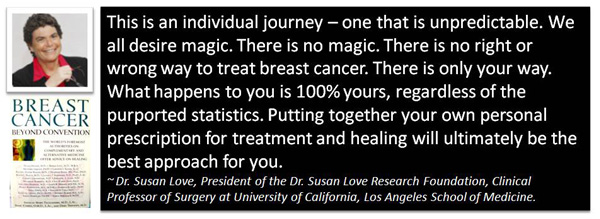
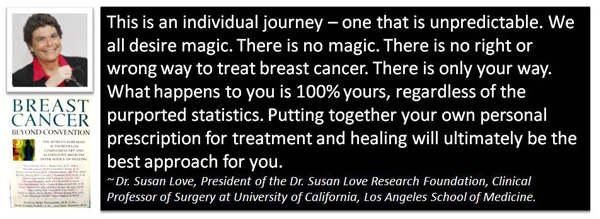
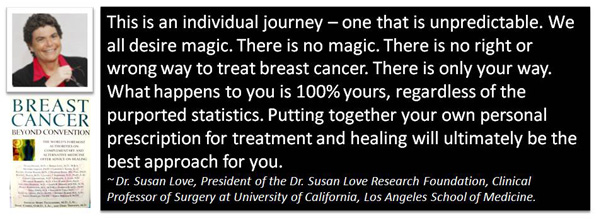
In making comments on this case, let us be reminded of what Dr. Susan Love said:

The way Jo’s doctor treated her is different from the way doctors treat their patients in Malaysia. Generally patient with a breast lump has to undergo the following:

  • An ultrasound and / or mammogram is to determine the nature and size of the lump.
  • If suspicious of malignancy, a biopsy is done to confirm if it is malignant or benign.
  • Sometimes, a whole body CT scan is done to see if the cancer has spread to other parts of the body.
  • Generally, the lump is removed by either a lumpectomy or mastectomy.
  • Depending on the pathology report, patient is asked to undergo chemotherapy and/or hormonal therapy.
  • The common chemo regimen for breast cancer is FAC – a combination of 5-FU (fluorouracil), Andriamycin (Doxorubicin) and Cyclophosphamide. FAC is administered through intravenous injection.
  • In addition to FAC, patients are given anti-vomiting medication, etc. to minimize the side effects of the toxic chemo-drugs.

In this case Jo was only given Doxorubicin as an injection. The rest of the drugs were given in oral form.

1)      Tegafur is a 5-FU prodrug synthesized in 1967. When metabolized, it becomes 5-fluorouracil. According to the FDA, this drug is useless and is toxic. Actually an injection form of 5-FU is more effective. (Note: I wonder why Tegafur is still around in developing countries?)

Source: http://www.fda.gov/ohrms/dockets/ac/99/slides/3540s1c/sld004.htm

1)      Endoxan is cyclophosphamide. It comes in the form of a 50mg tablet.

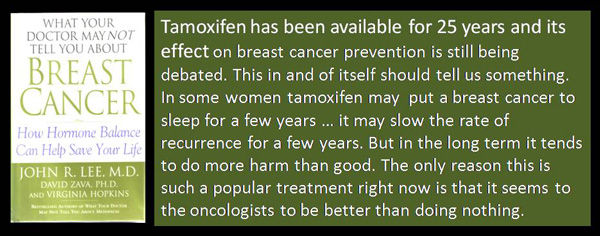
Jo was also given Taxmoxifen. In addition, to help take care of the side effects of the medication, Jo was asked to take

  • Ferrous fumarate, an iron tablet for anemia or lack of blood.
  • Lysozyme chloride, a natural enzyme extracted from egg white. It has anti-infectious activity.

So the way they treat breast cancer in the Philippines is different from what is normally done in Malaysia, Indonesia or Singapore. The question that bugs me is, Is the treatment effective? By doing what she did, I am not sure what actually is the realistic goal of her treatment – to make the tumour disappear? To cure the cancer?

I suggested that JA and his daughter go home and bring his wife / her mother to see a surgeon. If possible have the lump removed – either by lumpectomy or mastectomy. This is the easiest and surest way to make the tumour disappear. But surgery does not necessarily cure her breast cancer. I have written two articles earlier why it would better for the lump to be removed – peace of mind being the main reason.
After Jo has the lump removed from her breast, she can take our herbs, take care of her diet, exercise and live a stress-free happy life. Pray! She is already 78 years old! She does need to endure the severe side effects of chemotherapy!

On 18 March 2012, I received an e-mail from JA.

Dear Dr. Teo, 

This is JA from Philippines and my wife is your patient. I suggested to her that she remove that cancerous breast. 

When she returned to her doctor as scheduled, she mentioned about removing of the infested breast but the doctor is reluctant because he said the cancer may scatter. The doctor gave her a new prescription and she is inclined to follow whatever the doctor wants. The doctor said she will return after 3 months for re-evaluation. Can I give her the herbs as she continues the new prescription? Your suggestion will help me a lot.  Thank you.

Note:  The so-called new prescription does not differ much for the first one, which consisted of 6 drugs including Tamoxifen. This new prescription also consisted of 6 drugs where Tamoxifen is dropped and replaced by Letrozole (also known as Femara) scribbled on a small piece of paper.

I just wonder – can the world learn something from this Filipino doctor or can this Filipino doctor learn something from the world?

Stomach Cancer: Fainted and In ICU After One Chemo, Now Surgeon Said Go For More Chemo

Lisa (not real name, M805) is a 35-year-old Indonesian lady. In October 2009 she passed out black stools. She came to Penang for a medical check-up. An upper endoscopy showed acute gastric ulcer but the rapid urease test was negative for H. pylori.  Her blood test showed low levels of haemoglobin (8.3), red blood cell (2.9) and high platelet count (431). She was prescribed medication for gastritis and was told to come back for further observation after a month.

On 3 December 2009, another endoscopy was performed. It showed an almost completely healed ulcer.  A repeat rapid urease test again was negative for H. pylori. A gastric biopsy was also performed and indicated an adenocarcinoma, diffuse type.  A CT scan on 11 January 2010 showed a thickening of the gastric antral wall consistent with the clinical finding of carcinoma. The diffuse hypodensity of the liver parenchyma was in keeping with fatty liver change. No mass lesion was seen in the liver. There was no evidence of any focal lung lesion or lymphadenopathy.

Lisa underwent an operation to remove her stomach. The histopathology dated 12 January 2010 confirmed a diffuse type adenocarcinoma of stomach, T3N1M1, Stage 4. Lisa was asked to go for chemotherapy.  She returned to Jakarta and received one cycle of chemotherapy. The treatment was a disaster.  She fainted and had to be admitted to the ICU. She was discharge after four days but could hardly remember many things. She only recovered after a month.

Lisa returned to Penang for a follow-up examination with her surgeon. A CT scan on 21 July 2010 showed no evidence of pancreatic, splenic or renal mass lesion. There was no evidence of any lymphadenopathy. There was no obvious recurrence in the surgical bed.

Lisa and her husband came to seek our help on 23 July 2010 as she was not prepared to go for any morechemotherapy. She was prescribed Capsule A, Stomach 1 and Stomach 2 teas and C-tea.

Sometime just around the Chinese New Year (end of January 2012) Lisa felt a small lump in her stomach. She returned to Penang on 20 February 2012. A CT scan showed the following:

  1.  Fatty liver change.
  2. Mild to moderately dilated intrahepatic ducts.
  3. Ill-defined enhancing soft tissue around the pancreas and common bile duct which extends inferiorly along the right retroperitoneum, right paracaval and ilio-psoas down to the right inguinal and upper anterior thigh region. This has infiltrated the right upper ureter. Features are suspicious of tumour/metastatic deposits.
  4. Moderate to gross hydronephrosis of the right kidney with diffuse cortical thinning.
  5. Mild ascites.

Blood test showed elevated liver function enzymes:

Alkaline phosphatase 188.74   H
GGT 102.44   H
ALT 48.1
AST 47.77     H
CEA 1.23
CA 19.9 36.2

Lisa and her husband met with the surgeon. The surgeon said it was not possible to undergo further surgery. She was told to go for chemotherapy. That was the only option left.

The following is the transcript of our video-taped conversation on 22 February 2012.

Wanting a cure, whatever it may cost

Husband: January 2011, she had the surgery.

Chris:  Her stomach was removed. Before the surgery, did you ask the surgeon if the operation could cure her?

H:  He told us after the removal of her stomach, she would be okay. Then we need to go for chemotherapy.

C: Did you explicitly ask if after the surgery, she will be cured?

H:  He did not answer that question. The surgeon explained that after the surgery, everything would be clean. The cancer would not spread anymore.  We believed whatever he said. The reason why we went to him was because we wanted to find a cure.

C:  Yes, I understand – all patients who come here (from Indonesia) are searching for a cure. So whatever answers you get or what the doctors said, you all would believe them. And also pay whatever it may cost. What you all want is a “cure.” I understand that. So, after the operation, how long was she in the hospital?

H:  About two weeks.

Health worsened after the surgery

C:   How was her health before and after the surgery?

H:  After the surgery she became weaker – she was worse off. Before the operation, she was okay- okay, normal and there was nothing wrong.

C:  Why did you go for the surgery then?

H:  She was okay, she could eat – there not nothing wrong with her. She was told that she had cancer and we were afraid that disease would spread.

C (to patient):  Can you tell me – before the operation, you were okay?

Patient: Nodding vigorously.

H:  Nothing wrong with her except she passed out black stools. Then they did a biopsy after a scan and said it was cancer.

C:  That was all?

H:   Nothing – no pain, nothing. If she had pains it would it would have been a different matter. But she was able to eat well.

C:  And when the doctor asked you to operate, you went ahead with the surgery? And after the surgery, she was not getting better?

H:  No, not better.

Surgery – a RM 20,000 adventure

C: How much did the surgery cost you?

H. About RM 20,000.

First Chemo – she fainted and four days in ICU

C:  After the surgery, she had chemo?

H:  Three months later, she had chemotherapy in Jakarta. There was no problem on the first day after the chemo. The night of the second day, she had a seizure and her hands were shaking vigorously and she fainted.  She was admitted into the ICU and was there for four days.

C (to patient):  Did you remember anything when you were in the ICU? Did you remember going off or flying away somewhere?

P: No (shaking her head).

H:  After coming out of the ICU she could not remember things – memory loss. She could only recognize me. But gradually her memory started to come back. It took about a month for her to become normal again.

C:  Did the doctor want you to continue with the chemo after this episode?

H:  At first he said she had to do 3 cycles of chemo, but after seeing what had happened, the doctor did not ask her to continue with her chemo anymore.

No more chemo for me

C (to patient):  If you were asked to go for more chemo – do you want to do it again?

P:  No, I don’t want any more chemo.

After extensive recurrence – the only solution is chemotherapy

H:  Now, the only solution is chemotherapy.

C:  You went to talk to the surgeon. He told you she should go for chemotherapy. Did he know what had happened to your wife after the first chemo?

H:  He knew. But he did not have any more words to say. He told us, there was nothing else he could do except chemotherapy. But how are we to go for chemo after such a bad experience? We are afraid. She is going to lose her hairs and what not.

C:  Loosing hair is not a problem at all – it will grow again. But what we need to worry is if she would “fly away.”

Next-bed-patient became blind after two chemo and died after three

C:  You told me earlier that there was another patient in the next bed. She also had chemo when your wife was having hers.

H:  After the chemo, she became blind. Her eyes could not see anymore.

C:  What? Before the chemo, were her eyes okay – could she see?

H:  Yes, her eyes were normal. After two chemos her eyes could not see anymore. She died after the third chemo.

C:  What? She died after the third chemo? After the second she became blind – why did she continue with the third chemo then?

H:  Her husband made that decision. Because of what I have seen, I would not want her to do any more chemo.

C:  Did you really talk to her husband?

H:  Yes, I talked to him.

C:  Even after becoming blind, the husband still wanted her to continue with the chemo?

H:  Yes, he wanted to continue with the treatment.

C:  Did he tell you why he wanted to do that?

H:  No and I did not ask.

Comments

1. Lisa passed out black stools, otherwise she was okay. What could have happened if she did nothing? Do no surgery or chemo? How bad could she be?

2. Lisa and her husband asked the surgeon if surgery would cure her. The answer was rather evasive – He told us after the removal of her stomach, she would be okay. Then we need to go for chemotherapy. We believed whatever he said. We would like to believe that whatever doctors say or do, it is always for the best interest of their patients. But let’s not be naïve. At time it is good to be reminded of what Dr. Mendelsohn  said:
3. Lisa had her first cycle of chemotherapy and she fainted and lost her memory.  Her next-bed fellow patient was blind after two chemos and was dead after the third. This clearly shows that chemo is not for everybody.
4. The story of Lisa clearly showed that surgery did not cure her cancer.  She expected a cure but she was short-changed. In fact she became weaker and was worse off.
5. As it is now, after two years, the cancer had metastatised extensively – could her cancer be worse than this if she did nothing?

Lung Cancer: Death is Not a Failure. He did not take a wrong healing path either!

On the night of 9 February 2012, we received this e-mail.

Dear Dr. Chris and Aunty Beng Im,

I want to inform you that my father, Mr. LS from Indonesia, had died on Thursday, 16 February 2012. I want to thank you for all your treatment to my father during his sickness. Until his last days, he still took your herbs and did the e-therapy. I believe that your herbs and the therapy do bring goodness to him. He died without suffering (no pain and no difficulty in breathing, and he died in his sleep). I believe that he is already happier right now, free from his sickness and rest in a peaceful place.

Thank you for remembering my father among your patients. We, as a family, are happy to know you also. You gave a medication, with a personal touch, that we hardly find anywhere else. We learn a lot from you about healthy life style.

Reply:  Dear K, A few minutes ago, after dinner, I asked my wife to write you and find out about your father. And now I have this news. Thank you for informing us. Please extend our sincere condolence to your whole family. Yes, sometime it is better to die and end all these sufferings and pain. Thank you again ~ Chris

Case History of LS

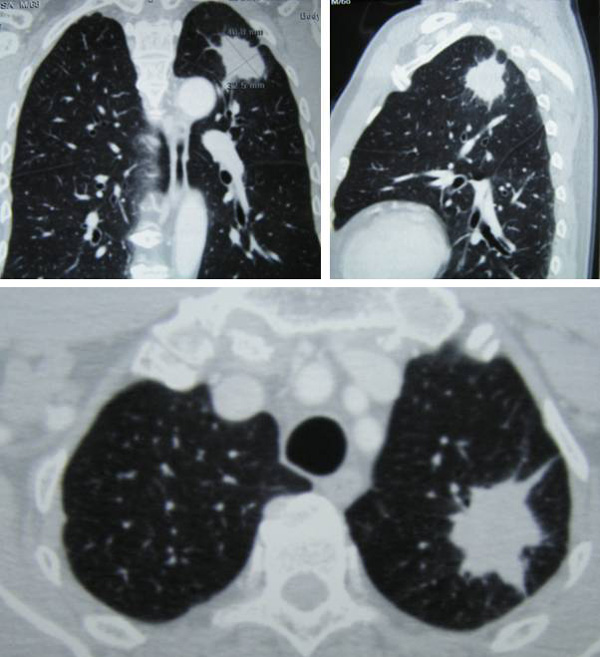
LS was a 71-yer-old man from Indonesia. In 2007, a chest X-ray showed a spot in his left lung. He did not do anything about it. In November 2010, LS did another chest X-ray and the spot was still there. He came to Melaka and did a CT scan on 15 November 2010. There was a speculated soft tissue lesion in the apex of the upper lobe of his left lung. It was 4.0 x 3.3 cm in size and was consistent with a lung carcinoma. A CT guided FNA biopsy was performed and confirmed that it was cancerous.  LS was asked to undergo chemotherapy and radiotherapy. He refused.   LS went to Singapore for a second opinion in February 2011. Another CT scan was done. The tumour had grown bigger to 40 x 35 x 45 mm. He refused further medical intervention and came to seek our help on 13 March 2011.

LS was subsequently prescribed herbs – Capsule A, Lung 1 and Lung 2 Teas.  In view of the cysts in both of his kidneys, LS was also prescribed Kidney Tea.

After his first visit, we got to see LS again in May and July of 2011. When he came he did not have any pains.  The only thing outstanding thing about him was that he was addicted to coffee. So we asked him to drink black coffee (without sugar!).  His daughter updated us about his condition via e-mails, example as below.

10 December 2011

Dear Aunty Beng Im,

Thank you very much for your kind reply. I appreciate very much for your suggestion about foods that will help my father. The doctor here is so amazed about my father’s condition, how he still can walk by himself (without wheelchair) and do the daily activities by himself (eat, shower, exercise, etc). They said in my father’s case, the patient cannot survive within a year. My father was first diagnosed in November last year (2010). We still believe that taking the herbs and the food controlling brings benefit to him, beside God’s care of course.

Here I give you a photo of my father (I captured it last week). He was writing Chinese calligraphy. My sister asked him to do it so he has something to do at home and he does not think about his disease. He has more spirit right now, even his both legs are swelling (because the albumin level is low).

Thank you once again for your care aunty. Please send our regards to Dr. Chris. So sorry we still cannot go to Penang, because my father still cannot travel far. Please support us in prayer aunty. Warm wishes ~ K and family.

Comments

1. Did LS take the wrong path for his healing? Or do you know of a better path?

LS died and he did not want to undergo the standard medical treatment. Perhaps some critics would say that he should have followed what his doctor recommended – go for chemotherapy and radiotherapy. I would have loved to ask LS what he would have done if he were to live his life again!

As I am writing this story, I remember  another case of lung cancer. This man – THK – is 57 years old and he was diagnosed with lung on 22 March 2011. The tumour was 20 x 24 x 22 mn in the upper lobe of his right lung (Note; LS had 40 x 35 x 45 mm) THK underwent 6 cycles of chemotherapy with Gemzar + Cisplatin (total cost about RM 50,000).  The treatment did not cure him. In fact the cancer became more aggressive. He was switched to oral chemo – Tarceva for three months. The PET scan showed further deterioration. He was asked to undergo 6 cycles of chemotherapy with the latest or newest drug, Alimta at RM 9,000 per cycle. THK received 2 cycle of Alimta and gave up. The tumour makers kept rising in spite of the treatment. On 4 January 2012, his CEA was at 666.5 and CA 19.9 was 4,422.0.  In short, the treatment failed miserably. THK concluded he was on the wrong path and came to seek our help on 3 February 2012.


2.  Can chemotherapy and radiotherapy cure your lung cancer? The following are the answers.


3.  They say do nothing is better than spending a lot of money to do something and get no meaningful result!


Ben Died, My First Lesson from Heaven – Death is not a failure!

The first patient who took our herbs was Ben. He had colon cancer that had spread extensively to his liver. This happened way back in July 1995. Ben wrote, “There would be no medicine for me. I was advised to prepare my will as soon as possible. I was stunned for a moment. My wife, Cindy and I broke down. I thought I am going to die.“

Ben underwent palliative chemotherapy and at the same time started to take herbs, starting 20 July 1995.  His health turned for the better.  Ben and Cindy came to our house every week to help take care of other cancer patients, as more and more patients came to seek our help.  For Ben to be able to live a quality life was an inspiration for us. At that time, we knew “nothing” about cancer. So through Ben we started to learn many things about cancer.

In the early morning of 29 October 1996, Ben passed away, rather unexpectedly.  According to Cindy, Ben asked for an extra pillow. As she went to take it from the cupboard, Ben put his hands together and went home peacefully. According to the doctors, most parts of his liver had stopped functioning months before.  It was a great wonder that he could still continue to live for more than a year. According to Cindy, one of the doctors commented that, Someone Above was helping him along!

I was at Ben’s grave site, a broken person.  When they buried Ben, I felt as if half of me also followed Ben into the grave.  It was a sad day indeed.  My heart mourned and cried out “I want to give up Cancer Care.  There is no point for me to carry on … Ben had lost his battle against cancer … I have failed!  What is the point of going on? Indeed this failure was a big blow to my ego! I was naive then. But, later I learnt that I was not the only healer who feels this way. These  two famous doctors also felt likewise.

However, in this time of grief, it dawned upon me that I have erred terribly … Chris Teo,  are you playing God?  No one lives forever.  No mortal on earth can decide who lives or who dies or for how long.  Life is God’s prerogative.  He gives and He takes away.  I soon realized that instead of abandoning what we had built, we should instead build upon it.  We should take note of how Ben had benefited from the herbs and count those blessings.

Death comes sooner or later to everyone, to the healthy as well as the sick.  Death is never the issue. Life is. To live is a challenge. It needs determination, courage and wisdom.  Someday, when you are tired, sore or bored with life, death becomes a healing.

As we begin to take account of the blessings in Ben’s case, we realize again that there is no reason for grief.  The doctors gave Ben two months to live but Ben lived one year, three months and eighteen days.  However, it is not the length of time that mattered.  What is more important is the quality of life Ben had.  Ben lived a full happy life.  He did not take life for granted.  He anticipated and made preparations for his departure.  He enjoyed whatever time he had with Cindy, having daily picnics and enjoying Penang’s natural spots under those shady trees.  Ben even designed his own grave!  He taught Cindy how to manage the chores of daily life without him like paying utility bills, taking care of the car, etc.  When he departed, it was neither a sudden good-bye nor a slow painful death. Perhaps on this point alone, we take consolation that many people who were on the herbs died without much pain and their death came easily and peacefully.

From our experience with Ben, we realize that having only herb capsules A and B is not adequate to help the cancer patients.  We need to do more research and find herbs that can alleviate pain, coughs, and a host of other problems that often afflict cancer patients.  On this point, as I was writing this passage, the phone rang.  It was from a lady who had come to see me the previous week.  Her father had a severe stabbing pain in the back. The doctor prescribed pain killers but they were not effective. He took the Pain Tea only twice and the pain disappeared.  There was no need for any pain killer drug!  She called to relay her father’s thank you.

Unfortunately, Ben did not live long enough to benefit from this discovery.  Many after him benefited.  But we all owe it to Ben, our experiences with him widened our vision and understanding of the needs of cancer patients. One fact that amazed Cindy very much was that Ben never before believed in taking herbs! He was so particular that he would not even touch any medicine unless it was prescribed by his doctor.  And then we had this same Ben taking herbs given by a complete stranger. When a friend from his church suggested our herbs he immediately agreed to take them without any hesitation.  In retrospect, we always believe the Almighty God works in ways we cannot understand or foresee. When Ben completed his mission, he left us for Eternal Rest, his ultimate healing.

We now realize that we are not alone if we feel miserable or like a failure.  Such feelings are normal but we must not allow these “failures” to affect us because there are actually not failures!  Dr. Barbara Joseph said this:

Breast Cancer: Surgery and Hormonal Therapy Did Not Cure Her

SH (H785) is a 67-year-old lady. She was diagnosed with breast cancer in January 1998. A left mastectomy was performed. The histopathology report of 13 January 1998 indicated two malignant nodes. No residual tumour in her breast. Axillary fat and lymph nodes were free of tumour.

No chemotherapy or radiotherapy was indicated. But SH was put on Tamoxifen. She took this drug for 6 years.

SH said she was well all these years and her progress was monitored by her doctor. About 10 years later, in early 2009, SH developed shortness of breath. She could not lift her left arm. She was tired and lost her appetite.  A chest X-ray indicated large left pleural effusion. SH had the fluid in her lung tapped out. A CT scan on 7 January 2009 indicated several subcentimeter nodules in her left lung. The lymph nodes in the left axilla and aortopulmonary window were enlarged. Impression: left pulmonary and pleural metastasis.

SH sought a second opinion from another oncologist at a university hospital. Another CT scan was performed and it also confirmed a metastatic breast cancer with left pleural effusion with small benign liver cysts.

A bone scan done on 29 January 2009 indicated multiple skeletal metastases in the sternum and two ribs on the left side.

SH was prescribed Arimidex – another oral chemo-drug for breast cancer. She was on this drug for 2 years.

In August 2011 SH developed shortness of breath again.  A CT scan on 4 August 2011 confirmed presence of mild left pleural effusion. Fluid was tapped out of her lung again.

The doctor told SH that Arimidex did not work for her. She was prescribed yet another oral drug – Aromasin. SH was on this drug for about 3 months now. At the same time SH received Zometa injection (for her bone) every 6 weeks. Each Zometa injection cost RM 1,200.

A bone scan done on 18 March 2011 indicated “sclerotic bone metastases in manubrium showing activity.” SH was told that if Aromasin did not work for her, she would have to undergo intravenous chemotherapy.

The following are her CA 15.3 readings throughout the years.

Date CA 15.3
17 January 2009 149.0
4 March 2009 230.0
8 July 2009  30.0

Year 2010 fluctuating values under 30.0

26 April 2011 51.0
22 June 2011 66.0
4 August 2011 67.4
27 October 2011 164.5
24 November 2011 227.0
23 December 2011 231.7
31 January 2012 477.0

SH and her family came to seek our help on 5 February 2012.

Below is her AcuGraph reading on 5 February 2012 which indicated a rather unbalanced internal energy.

Comments

Why did you take tamoxifen? To prevent recurrence, so you are told. Some patients are also often told this – if you survive 5 years, you are cured of your cancer! What a great lie. Did tamoxifen cure cancer in this case? It must have since his patient had survived for 5 years. That, “medically” is defined as a cure. But, you never ask – what if she does not take tamoxifen? She may also survive 5 years! Anyway the cancer came back after 10 years. This time it struck the lungs and the bones. Where then is the so called cure?

Reflect on the quotations below:

Second-Line Treatment: Arimidex

Arimidex (anastrozole) is indicated for the treatment of advanced breast cancer with disease progression following tamoxifen therapy.

Side Effects:  Patients receiving Arimidex had a mean decrease in both lumbar spine and total hip bone mineral density. Patients should be informed that Arimidex lowers the level of estrogen. This may lead to a loss of the mineral content of bones, which might decrease bone strength. A possible consequence of decreased mineral content of bones is an increase in the risk of fractures. Arimidex may also cause heart disease.

Effectiveness:

 Pooled Efficacy Results of Second-line Treatment

Source: http://www.rxlist.com/arimidex-drug/clinical-pharmacology.htm

Final results of the Arimidex, tamoxifen, alone or in combination (ATAC) trial, presented at  the San Antonio Breast Cancer Symposium and published simultaneously in The Lancet, found that, compared with tamoxifen, anastrozole (Arimidex) improved disease-free survival by 13% and increased time to recurrence by 21% ,however, there was no statistically significant improvement in breast cancer survival or overall survival. (Note: be skeptical when reading figures like such percentages – they could be manipulated to bring out only the positive message.)

Some researchers questioned whether use of Arimidex was justified in light of its higher cost ($6.56 per day for Arimidex versus $1.33 per day for generic tamoxifen) and lack of a demonstrated survival benefit (Source: Journal  National Cancer Inst (2005)97 (2): 86-87)

There are 197 comments by women taking Arimidix (as of 27 February 2012) in the website below: http://www.webmd.com/drugs/drugreview-4511-arimidex+oral.aspx?drugid=4511&drugname=arimidex+oral

Below are some examples.

Comment 1: Have not had bothersome side effects from this med so far, but am experiencing hair thinning. Some aches in a hip and knee, lack of sex drive, minor hot flashes …So far this med has not bothered me.

Comment 2: I am 63 and found I had breast cancer at 60. Had lumpectomy, 6 chemos over 7 months (carboplatin, docetaxol, nausea med, Herceptin IV’s, and a Neurlasta shot), followed by 8 more IV’s of Herceptin over 8 months, along with 31 radiation treatments, at last one 1miligram Arimidex  I’m to take for 5 years daily. My complaint is that I was completely bald all over…I had started daily Arimidex  about June 2010. A month ago, I was looking at some old pics made in May2011, and it started to hit me that my hair was thicker with more coverage than NOW (Jan. 2012). It was heartbreaking, it was becoming thinner and patchier on top front where you want it the most. I accidentally happened on a site, read that 40 or more women sharing this experience, and most believed it was the Arimidex. I tried Femara for 2 mo. with no improvement. I have aches and pains and feel “aged from the inside out” … I might just drop the Arimidex, take no “cancer” pill, and pray it won’t come back.

Comment 3: Taking this med for approx. 2 months. Extreme lower back pain 2 weeks after started, brushed it off. At this point just using my arms is very painful. My shoulders are in extreme pain. Talked to oncologist nurse and am changing to another but as of today I just want to cry I am sick of all this pain. Did not have any of this before!! I am in no way a baby, and can handle pain but even I have reached my limits. Hope this helps someone else who is experiencing the same issues with this drug.

Comment 4: I used this drug for 3 years and 4 months thinking I was doing fine on it. Suddenly I felt like my crotch was on fire. It took another 2 months of doctor appointments and medical procedures before I had a doctor that made the connection. Vaginal dryness given as a side effect is a huge under-statement. I’ve been free of this drug for 10 weeks and on estrogen cream for 4 weeks and am still miserable.

Comment 5:  Constipation, depression, lack of motivation,  muscle weakness One plus sleeping 6 hours a night instead of 5.

Comment 6: I thought I had it made …no symptoms except a little weight gain… Now my thumb is locking up and I had no idea it was from the Rx until reading the other reviews. I am achy after sitting for a short time and have really sharp pain in the back of my hand sometimes when I pick something up, even a cup of coffee.

Second-Line Treatment: Aromasin

Aromasin (exemestane) is indicated for the treatment of advanced breast cancer in postmenopausal women whose disease has progressed following tamoxifen therapy.

There are 99 comments from patients  taking Aromasin http://www.webmd.com/drugs/drugreview-17966-Aromasin+Oral.aspx?drugid=17966&drugname=Aromasin+Oral. The following are some examples:

Comment 1:  I have been on this medicine for 4 1/2 years. The past few months have been the worst. Every joint in my body hurts, night sweats and sleepless nights. It takes all I have to get out of bed in the morning.

Comment 2:  Shortly after starting the drug (04/2010), I developed a cough, which I still have. Had a dose of sinus infection, sore throat, worse coughing just before Christmas. Chose to let my immunity fight it off instead of antibiotics. Took 3-4 weeks to get over it, but I did it on my own. Still have the cough. Tried arimidex first-made my hands, feet and face swell. Satisfied with aromasin except for cough.

Comment 3:  I had a forced menopause after the 2nd cycle of chemo for my stage 2A BC. Never taking tamoxifen, was prescribed Femara for 2 months and then switched over to Aromasin following the chemo and radiation therapies. It has been 6 months since taking Femara and Aromasin. First experienced severe back and knee pains then had hand surgery for my Carpel Tunnel syndrome and now the pains has extended to all bones and joints, mostly in my hands and wrists. Memory loss and attention deficit is getting obvious. Hot flashes and insomnia is concerned. Without having daily walk and exercise and Melatonin Plus for sleep support, I would be miserable with all the side effects from the drugs.

Comment 4: After 20 days on arimidex I was suicidal, had severe bone pain, severe insomnia. I switched to aromasin and have found it easier to tolerate if I take meds for the side effects. I take ambien to sleep, percocet for pain, wellbutrin for depression. It’s either treat the side effects or I have a 70% chance of cancer recurrence. I will give it six months because sometimes the side effects do get better and I don’t want to die at age 63. But there does come a point when quality of life wins out – however short it may be.

Comment 5:  Have had major side affects with it. Tried Arimadex first, then was prescribed this one; a little more manageable, but still have trouble. Joint pain, sweats, muscle cramps and renaud’s syndrome.

Comment 6: I was prescribed aromasin by my doctor after the other 2 AIs had adverse side effects. I took it for 3 yrs and 3 months. I could not tolerate the lack of quality of life.

Lung Cancer Stage 4, Open-Close Surgery. Six Months to Live. She Refused Chemo and Took Herbs for Three and Half Years Now

SC (H222) was 68 years old when her problem started. She is a non-smoker. She started to have coughs for the past six months. There were no other symptoms apart from the right scapular (shoulder blade) pain she experienced.  A CT scan on 4 September 2008 showed a  3.0 x 4.75 x 3.0 cm opacity in the lateral segment of the right middle lobe of her lungs, suggestive of a neoplastic mass.

Bronchial brushings showed moderately large neoplastic cells. Her blood test was normal, apart from a mildly elevated CEA (8.0).

SC underwent a CT scan of her brain and abdomen and these were normal. Her bone scan was negative for metastasis.

Her doctor suggested surgery since this was regarded as an early stage lung cancer, Stage 1B. Surgery was done on 29 September 2008 but it was aborted – an open and close case. The cancer had spread to the back of the chest wall and was now considered a Stage 4 lung cancer.

The doctor suggested chemotherapy and said that without this treatment she would only have six months to live. SC declined chemotherapy. Her sister died one year after undergoing surgery, chemotherapy and radiotherapy for her breast cancer.

SC came to seek our help on 18 October 2008 and was started on Capsule A, Lung 1 and Lung 2 teas.

Listen to what her daughter told us after a year (6 December 2009) on the herbs.


We were in constant contact via e-mail with patient’s daughter.

13 December 2011

Hi Im, Prof Chris,

I am at my wits end trying to see how else to ease Mom’s pain.   We are trying acupuncture currently, three sessions so far but she said the pain is still as bad.   Last week she had a very bad palpitation which lasted for almost 7 hours.   And it happened again today though not as long as the previous time.   The pain must have been really bad as she is talking about dying.

7 February 2012

Prof Chris,

Apart from the pain and lack of strength, Mum looks okay and can eat moderately. Should I bring Mum up to see you again?

Reply:  Do you think you can persuade mom to try the machine again. If you can come and stay for a few days we can use the machine for pain. See this website www.PainAndWellness.org . This website concentrates on pain cases. We seem to be having good results but I don’t know why mom is reluctant to use it. There must be a reason for this fear? I really don’t have any other way to help with her pain besides the Pain Tea. If she agrees, why not give a try again. But it all depends if she agrees to use it or not.

Thanks Prof Chris,

I talked to Mom again about coming up to Penang to do the e-therapy again.  She did not resist the idea.  When would it be convenient to you for us to come up to see you?

Patient came to Penang to receive six days of e-therapy (from 13 to 18 February 2012). She benefited from the treatment! Her improvements could be seen in her face! We are glad that she took the challenge to come to Penang and try the e-Therapy.


Permission to use this video without having to mask her face is granted by her daughter.


Comments


The Spiritual Side of Healing Cancer

To us, we believe that patients’ recovery and survival are more than just medical or herbal success. It is God’s grace.

Science does not believe in the mind, hope, faith, spirit, and grace – for the basic reason that we are all supposed to be an equivalent to a super machine. What we cannot see, measure or analyze do not exist and do not count. Those who associate with them are thus branded unscientific or spiritual fanatics!

We wish to view healing from a different perspective.

  • Man comes into this world with a purpose. He is not just a machine but also a spiritual being. When we fall sick, often we yelled out GOD, WHY ME? It is as if God hates us or does not favour us. Some go to the extent and reasoned that we get sick because we are being punished. Not so.
  • In this world, each of us is given the liberty to choose – to exercise our rights to live life the way we want it. Some people live wisely while some others live foolishly. So, we reap what we sow – we are responsible for our actions.  Through our own ignorance, we violate Nature’s Law of Health – so we get sick, irrespective of whether how pious we are.
  • Ask a scientist, why is there such a thing as pain? Pain is not meant to torture us. Pain is nature’s early warning signal to the body that something is not right within it.  Unfortunately, many choose to ignore the signal by “cutting” off that warning signal. Instead of taking a pause and ask what has gone wrong, we prefer to take the easy way out – take pain killers. We cut off or deaden the alarm system. We allow things to continue to go to go wrong without us having to know about it as long as it does not bother us. Ultimately, too much painkillers may land you on your back in the hospital to nurse a more severe damage. Who is punishing who now – your own foolishness or someone else?
  • Illness too, can be viewed as a blessing – as a signal in our body for us to do some accounting and reflecting of what we are doing, who we are and where we are going.
  • Many people are too busy on their feet chasing after their gods. Perhaps being forced to sleep on our back and staring at the blank ceiling above can spur some ”consciousness” into us and bring us back to our Living Creator? After all, those material gods that we have been chasing after all this while cannot help much in terms of cancer cure.
  • There is a now a new and growing belief that every cell, tissue and organ in the body is conscious and has innate intelligence. They have the capacity to heal. Curing a disease, aiming only at the malfunctioned organ is inadequate and would not bring about healing.  To achieve complete healing we need to heal the whole body – the physical at all levels, the mind and the spirit or soul.
  • If we cannot heal the mind then we cannot heal the body. It is for this reason that we spend time with you asking you to let go of your bottled-up emotional stress such as anger, hatred, fear, etc. When the mind and the soul find peace within, the physical healing starts within you. Taking herbs is NO magic unto itself – it cannot heal any one until you have that frame of mind that wants to heal.
  • One lady came to see us and said because of chronic diarrhea she had for the last twenty years. And for the last twenty years she had been on antibiotics and all kinds of drugs. Nothing cured her. The moment she stepped into the Cancer Center until she left, there was nothing that she could say but complaints. The fear of what the herbs can do, the antibiotics that she is taking, the side effects, the possible bitter taste of the herbs, the difficulty of cooking the herbs, etc., etc.  Chris told her this: Nobody on earth can cure your sickness. If your mind is already too loaded with such stressful burdens, there is no need to take any drugs or herbs. It is not going to work. Even herbs, assuming that they have ears to hear like human beings, would be just as bothered or reluctant to impart their healing properties to such difficult people. Too, bad – no cure. At CA Care Centre we tell all helpers – when we prepare the herbs, do it with a feeling of love. That feeling is an important “ingredient” for the healing of the sick.
  • If illness has a purpose then it means that you can hope to stimulate your body to heal itself after having found that purpose. Of course many people do not wish to believe this. And of course some people do not want to know or find that purpose. Ingrained in their mind is the feeling of anger, frustration, revenge, unhappiness, hatred etc. – why ME? I have been so good, etc., etc. why ME?
  • A lady with breast cancer came. She had her breast removed, did all the required radiation and chemotherapy. And she came through all these very well, unlike others who did not take the herbs. Chris told her that: you are indeed very fortunate. She turned around and asked:  What is so fortunate about it?  I already got cancer. Unfortunately, that is the position taken by most patients. Chris told her. Look at your arm they are not swollen. There were no adverse side effects of chemotherapy or radiotherapy on your body. This morning, I had two phone calls, informing me that two cancer patients had just died. One of them was a distant relative. She had breast cancer and after undergoing treatments like you the cancer spread to the bone and then the liver. I have also seen breast cancer patients whose arms were swollen like solid rock after such treatments. Are you not lucky that these do not happen to you?
  • Those who can “see and experience” changes in their minds and souls experience real healing. One yogi who had cancer wrote, There is pain but there is no suffering. Physically, patients may not be cured of their cancer, but spiritually healing can take place. When the mind is healed so will the physical body – so be patient for this takes time.
  • Having a purpose in life is important. It becomes more meaningful if we can share our tears –  and our joys –  with others. Unfortunately, in our society many people look inwards, and are reluctant to open up and share. When someone got cancer – he coils up inside himself, not wanting to share that burden with others. Some women even hide it from their husband – let alone their friends or relatives. Is it shameful to tell others that we got cancer? What is so special about that, since cancer is so common nowadays? There is nothing to lose but is everything to gain by sharing.
  • Unfortunately, some people would ask for help but would not give or wish to share their joys. When they got well from their cancer, they prefer not to talk about it – wanting to forget the trauma or ordeal that they have gone through. For some, perhaps refusing to share stems from the fear that misfortune or soi may befall on them again if they talk about their well being. One incident that we could not forget happened many years ago. There was this young lady who called to thank Chris for helping her mother who had terminal bone cancer and had died. The family was grateful because she died in peace with no pain. Then this lady told Chris she knew of one place where the rodent tuber was found growing naturally. Chris asked if she could show him the place, since we were always in need of these plants to help others as we had helped her mother. True to the nature of any busy executive, she said she could not spare the time to show Chris the place. It is more blessed to give than to receive. We wonder how many people do realize this or know this virtue. By giving your heart to others, you heal yourself.
  • If you find the above comments strange or if you disagree with what we say – we respect the right for you to have your own opinion. You are endowed with the power of choice and responsibility. Follow your heart and mind, and live accordingly. It is after all your life.


Lung Cancer from USA – Repairing the Unrepairable?

LCG was a 46 year-year-old lady from New Jersey, USA. Let us call her Irene. Irene’s problem started with a cough some five years ago and this was diagnosed as due to lung cancer in late September 1997.  At that time the right upper lobe of the lung had numerous tumours which had spread to the nearby lymph nodes and mediastinal.

From January to April 1998 she had chemotherapy – taxol and carboplatin, for five times. The tumour disappeared almost totally. In November 1998 the tumour reappeared. She underwent monoclonal clinical trial using PNU but it was not successful. Then she had chemotherapy again and this time with “Gemzar” once a week. The right lung collapsed and she had difficulty breathing.

5 August 1999. Irene’s brother came to see Yeong  and presented her  conditions as follows:

  • had an average of 6 hours sleep a day.
  • felt tired, especially when taking a short walk.
  • the CEA was 26.7
  • had coughs with clear, sticky white foam in the morning and night, and also when moving around or walking.
  • there was fluid in the lungs causing a choking feel – unable to climb.
  • had pain in the right shoulder, spinal cord and ribs when coughing too much.

She was prescribed Capsule A, deTox, Lung, Cough 5 and Ascites.

e-mail 27 August 1999 to her brother:

  • have started taking the herbs.
  • seems to feel pretty good – more energy.
  • my pain seems to have reduced a little.
  • I am also able to breathe better.
  • I am pretty weak but am not giving up hope yet. I know God knows what He is doing and when to take me home. I am ready and know where I will go.
  • Do write and I will try to write back as long as my energy permits me to do so.

e-mail 2 September 1999 to her brother:

  • The herbs that Dr. Teo gave me seems to work pretty good for me. I do not have much side effects from the chemo.
  • I have stopped taking the Noni Juice and Spess since I started taking Dr. Teo’s herbs.
  • Saw my oncologist yesterday – he said I looked good.
  • Started to put on some weight – Now I am up to 85 lb instead of 80 lb.
  • I am still coughing a lot and still have fluid in my lungs – it covered my whole right lung.
  • I wish I could get rid of it so that I can make a trip home to see you all. At this moment, I am advised not to travel (in the plane it will cause the fluid to move around and choke me to death).
  • I am also able to breathe better and sleep better.
  • I pray each day and night to get better to allow me one last chance to go home and see you guys.
  • Will be going back for chemo again on Monday. Feel better about the chemo now cos the herbs help me to cope with the side effects and I don’t feel so bad after each chemo.

e-mail 10 May 2000 to Chris:

  • My CEA was around 28 and later went up to 69. Just last week my CEA was 4.1. The value gradually decreased since the last couple of months.
  • My right lung was originally filled with fluid (no shadow at all!) and also collapsed.
  • My last CT scan about two months ago showed a shrinkage in my tumour size from 12/6/4 cm to 2×3.5 cm. Praise the Lord for this miracle.
  • At present I weigh about 110 lb. I was down to 75lb (actually 80 lb ?) when I first took the your herbs but gradually my appetite increased and I began to gain weight.
  • I volunteered as a Patient Support in the American Cancer Society here in New Jersey. I visit cancer patients at their homes and the hospitals. Praise the Lord for giving me this opportunity. Being a volunteer since my diagnosis helps me a lot. It gives hope and also (the comfort that) I am not alone. I promised myself to make a difference in someone’s life each day!

e-mail  10 July 2000 to Chris:

Just to update you a little. I have lately been travelling a lot. Been to New York for the annual cancer society meeting, on vacation to London, Holland, Niagara Falls, etc. Trying to make the best out of whatever time God has given me. Really enjoy myself, not even thinking I was sick at all. Put on a wig and nobody even knows I do not have hair or I am sick whenever I am out travelling.

The next few months I will be very busy with my lung cancer support group. This new lung cancer support group that I formed will meet every month where patients shared info, tears, joy, laughter and latest treatments on lung cancer both conventional and alternative.

Our comments

When I eceived the first visit form from Irene, my heart bled. How to help in this case – almost beyond repair? Then, to us – of all the female names in the world, the most beautiful is: Irene… our daughter is also named Irene!

Despair, however, did not last that long – slowly but surely the good Lord changes the equation. Irene began to feel well and her last e-mail was the ultimate. Hi there, Irene – you are having fun now!

Our advice to Irene: Make the best of life, but stay on course – do not make the mistake of changing your life style, away from the one that brought healing to you. Don’t be misled that everything is all over. Another mistake can be fatal. We always believe: it is excusable to be foolish once but not twice. 

Friends, what do you think is the reason behind Irene’s healing? Medically, this is a touch and go case. We are not sure of the truth in this statement but we were told that the doctor expected her to live for only three months!  But since it is God who decides not man, Irene got to live much longer than expected – to tell her own story to the world. Is it the chemo – the gemzar (gemcitabine) that cured her? You are welcome to your own opinion.

Not All Cancers Are the Same

It looks like I am really dumb trying to write an article with such a title. Everyone knows that there are many different types of cancers. Some people have breast cancer, others have lung, liver or brain cancer. Who doesn’t know that all these are different cancers? Yes – you are right on this score, at least on the first level. However, know this – that the more you know, the more you don’t know! Let’s see what you may not know when we start to “dig in” deeper .

  1. Cancer is not a single disease. Cancer has one name, but many illnesses. It is not a single disease but probably a mix group of more than 200 different diseases. By definition, a disease is called cancer when the cells have lost their ability to control their rate of duplication. Secondly, a cancer has an abnormal ability to spread to distant sites. 
  2. Different cancers in different organs are different. For example, skin cancer is different from liver cancer. Everyone should know this!
  3. Not all cancers that develop in the same area of the body are the same. This is what I mean by “not all cancers are the same”. For example, not everyone with breast cancer has exactly the same type of cancer, meaning not all breast cancers are the same. Similarly, not all cancers in the brain are the same and not all lung cancers are the same.

The following two statements are very important aspects of cancer which we all need to know.

     4.  Not all cancers have the same growth rates – some are fast growing while others grow slowly.

     5.  Not all cancers eventually grow out be become full blown cancers that can kill us.

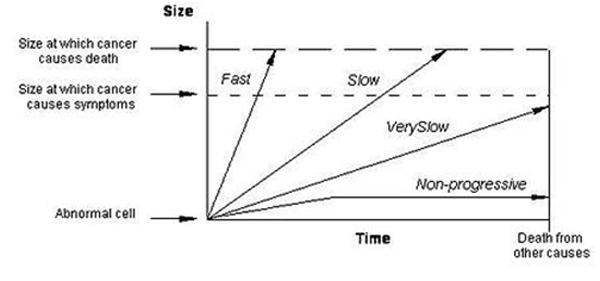
The above statements can best be explained by the diagram below:

Source: Gilbert Welch, Should I Be Tested for Cancer? pg.55

  1. The arrow labeled “Fast” represents a fast growing cancer. This type of cancer can quickly cause problems and kill us fast.  No treatments can save us from this type of cancer.  No matter what we do, we will die.
  2. The arrow labeled “Slow” represents a slow growing cancer. It takes some years to cause us problems and eventually kill us. With treatment we may be able to influence or modify the path and outcome of disease. This is the type of cancer we hope can be helped by treatments – be it medical or alternative therapies.
  3. The arrow labeled “Very Slow” represents a cancer that never causes problems because it grows very slowly. This cancer grows slowly enough that we may just die with the cancer (not die because of the cancer). We may die of other reasons, such as heart attack, diabetes, accident, etc.
  4. The arrow labeled “Non-progressive” represents a cancer that NEVER causes problems because it is not growing at all. In other words, they are only cellular abnormalities. The “experts” say we have something that meets the pathologic definition of cancer. Such “cancer” may even stop growing or perhaps even shrinks or disappear later in our life. We don’t have to treat such harmless “cancer.”

From the above it is clear that all cancers are not created equal. Some grow rapidly and invade other tissue, others grow slowly and remain non-invasive, and some don’t grow at all or may even recede. Unfortunately doctors will not be able to know with absolute certainty which cancer belong to which type although they do carry out some tests to try and differentiate them.

I am indeed glad that I got to read and understand this idea in Dr. Gilbert Welch’s book, Should I Be Tested for Cancer?    

Implications for Treatment of Cancer

Now we have a few more things “on our plate” and let us think critically.

  1. Not all cancers are the same – agreed? Some need to be treated aggressively some need gentle treatment while others may not need treatment at all (i.e. just wait and see!)
  2. In the same way, can we say that not all cancer patients are the same? Different people will react to treatment differently.
  3. In more of the same way, can we say that not all cancer doctors are the same? Yes? Different doctors do and also tell us different things about a cancer. Different doctors offer different approaches to solving the same problem. No?

Where do these statements lead us to then?

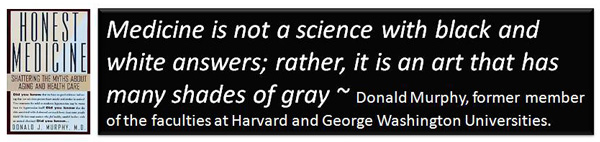
  • First, it appears to me the appropriate word to describe the situation is UNCERTAINTY – in cancer, nothing is predictable – there is no black or white answer. Every cancer is a different shade of gray.  Is it not chaotic, having to deal with different cancers, different doctors and different patients all at the same time? It is like going into a race, each fighting for his / her own survival.

  • Second, a cancer treatment that works for one patient need not necessarily work for another patient. And yet we are being taught that modern medicine is proven and scientific. They give you a one-size-fits-all-treatment. No?

I often wonder and ask myself.

Patients ask their doctors if the chemo-drugs that they are about to receive for their cancer are going to be effective or not. Often the answer given is, “There is no guarantee! Just try and it all depends on the person.” Such answer sound rather odd, primitive and even unscientific!  Why do I say this? Oncologists administer chemo to hundreds of patients everyday or every month. And they have been doing this for years. In other words, they have been administering this treatment for years to thousands and thousands of their patients.  I would want to believe that in their hearts, they can sense (and know for sure) that what they are doing is going to be effective or not. After all they have the blood test results, CT scans, MRI or/and PET images to guide them.  I am sure there must be a certain “feeling” in them  or their sixth sense, to say that based on their vast experience what they are about to do is going to be helpful or not. But in spite of that, patients often get this standard answer, “I am not sure. I cannot guarantee. Let’s try.”

I understand why oncologists provide evasive answers. Initially I thought they have to safe guard their rice bowls.


But now I understand. Their answer reflects the reality of the complex situation. How can anyone know the exact outcome of the treatment when the cancer is actually different even if it is given the same name called cancer? To make things more difficult, the patients are also different – they react differently to the treatment.  Doctors treating the disease are also different.  The only same thing is the poisonous chemo-drug.

Because of complex variables involved we see that some patients survive while some patients die even before the cancer is done with; some are “cured” while for others the cancer spread to other organs.

Unfortunately, no one is able to predict with absolute certainty what is going to happen after the treatment is administered to a patient.  No one is sure of the real “ingredients” that make good successful treatment. One patient was told, “It depends on the One Upstairs!”  Now, they say it all depends on God!


Dissecting Chemotherapy 12: Almost ‘chopped off’ by CHOP-R for Her Lymphoma

Pat (not real name- SY216) is a 72-year-old lady. Sometime in mid-2010, she was on TB medication for six months. Her legs, abdomen and hands were swollen.  A CT scan done on 22 December 2010 showed a 12.1 x 10.7 x 5.6 cm mass in the para-aortic region and there are multiple masses involving the left kidney and bilateral adrenal glands.  CT chest shows cardiomegaly with mild pericardial effusion. The likely diagnosis is lymphoma.

A biopsy done on 16 February 2011 confirmed diffuse large B cell lymphoma.  Pat underwent chemotherapy. The regimen used was CHOP-R, consisting of Cyclophosphamide + Andriamycin + Vincristine + Prenisolone + Rituximab.

The first cycle that Pat received on 24 February 2011 was of low dosage. Pat received the second cycle on 4 March 2011. This second cycle was a full dose. About a week later, Pat suffered severe side effects and her husband said, “She was almost “chopped off” by CHOP-R.”

Pat and her family decided to give up further chemotherapy. She and her family came to seek our help on 23 April 2011. She presented with “bad” liver (see table of blood test of 13 April 2011). Pat was prescribed Capsule A + B, Liver-P, LL-tea for her liver and Lympho 1 and Lympho 2 teas for her lymphoma.

On 17 October 2011, Chris had a chance to meet up with Pat and her family. Listen to our conversation that day.


13 April 2011 23 April 2011 27 July 2011 12 Oct. 2011
Albumin

31    Low

Started on herbs

40

34

Alkaline Phosphatase

261  High

77

81

AST

 42    High

28

28

ALT       59

12

15

GGT

185   High

46

30

Pat has been taking our herbs very religiously and she is doing well after giving up her chemo. As of this writing, 15 February 2012, Pat is doing fine. According to her daughter, Pat went to Singapore for her Chinese New Year Holiday (end of January 2012).

Comments

Pat suffered badly after her first cycle of CHOP-R. She could not take it anymore. Ask this question – what could have happened if Pat were to persist and continued with her chemo? Assuming she was able to complete a course of six cycles, what could have been the benefit?

Pat gave up and turned to our herbs. Did she die of her lymphoma even after giving up the chemo?  The next important question is, can her lymphoma recur? Yes. It does not matter if she had completed her full course of chemo or not.

The late Dr. Stephen Schneider, was a world famous professor at Stanford University. He was diagnosed with lymphoma in 2001. He was treated by Dr. Sandra Horning, a leading expert on lymphoma – “the best person in the world for treating what you have”. Dr. Horning is also from Stanford and is a professor of medicine. Schneider received the “new” Stanford’s chemotherapy regimen using CHOP + R. After three cycles of CHOPR-R, CT scan showed that the lumps had disappeared. Schneider continued with chemotherapy and in total had six cycles. Although in remission Schneider was told that the cancer cells might still be hiding somewhere in the body – perhaps the bones and behind the eye balls. To be sure, Schneider had to undergo a bone marrow transplantation (BMT). Sandra said, “We never use the word ‘cure’ just remission. We’re very hopeful you will have a long and strong remission.”

It is sad to say that in spite of all the best efforts, Dr. Schneider died on 19 July 2010, after an apparent heart attack on an airplane while en route to London from a scientific conference in Stockholm. He was 65. In short, Schneider survived for nine years after his cancer diagnosis and treatment.  Did medicine really cure his cancer? Does this sound familiar?  The operation is a success but the patient died of complications?   Cytoxan (one of the chemo drug used on Schneider) has its harmful effects.  Schneider received a lot of that drug and he knew the odds when it wrote “it was known to deteriorate heart and lung condition, the cost-benefit calculus was not going to see me getting away scot-free.”

Let me end by asking you to reflect on the following quotations:


Some Women Gamble With Their Breasts

Breast is the number one problem we encountered at CA Care. According to statistics by the American Cancer Society (ACS), the chance of developing invasive breast cancer at some time in a woman’s life in the United States  is 1 in 8 (12%).

The 2012 ACS’s estimates for breast cancer in the United States are:

  • About 290,170 new cases of breast cancer (invasive and carcinoma-in-situ) will be diagnosed in women.
  • About 39,510 women (i.e. 13.6%) will die from it.

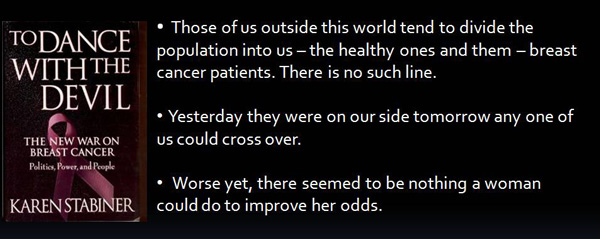
I wish science can tell us why women’s breasts are so susceptible to cancer attack. As it is now, in spite of our amazing scientific progress, women are just left in a limbo – uninformed and clueless. According to Karen Stabiner, a woman’s life is a roulette, when it comes to breast cancer.

In the first two weeks of February 2012, many women with breast cancer came to us for help. The most pathetic cases are those who gambled their lives with their breasts.  Let me give you some examples that I we saw the past two weeks.

Case 1:  SD (H788) is a 67-year old lady. Sometime in January 2012, she felt a lump in her left breast. She went to a doctor for an ultrasonography and mammography.  The mammogram report on 12 January 2012 indicated “an irregular opacity with microcalcification in the left breast at inner midline quadrant.”

A biopsy was performed and it was confirmed an infiltrating ductal carcinoma. SD was asked to undergo a mastectomy – to be followed by chemotherapy and radiotherapy. She refused and came to seek our advice on 5 February 2012.

Our advice: Go and get the cancerous breast lump removed.

Her response:  She was disappointed. She expected us to prescribe her some herbs and make the lump disappear! Unfortunately, we cannot do that. We sent her home without any herbs. Come back to us after the surgery if you need our help.

Case 2:  JL (S99) is a 37-year-old lady.  About ten months ago, she felt a lump in her right breast. She did nothing about it. The lump grew bigger and began to hurt. Then she came to Penang for consultation. A biopsy was performed and confirmed a Grade 2 infiltrating ductal carcinoma. Because of its large size, JL was asked to undergo a few cycles of chemotherapy to shrink the tumour. After that she needs a mastectomy.

Our advice:  As much as chemotherapy is difficult, you have no choice. Go for the chemo and have the breast removed after chemo has shrunk the breast.

Her response:  She agreed.

Case 3: BM (S107) is a 66-year-old Indonesian lady. Two years ago she had a big lump in her left breast. She did not consult any doctor and took upon herself to solve her problem. She took Linzhi and various supplements. The lump grew bigger. Only then did she go to see a doctor who asked her to go for chemotherapy. She refused.  She turned to herbs and this time took “Sarang Semut”. After one and half months, her breast developed open wound and discharged a lot of blood. She came to seek our advice.

Our advice:  Go and see a surgeon and have him/her remove your breast. The surgeon would probably ask you to go for chemo first to shrink the tumour before he/she could do anything. But you have no choice.

Her response:  She would probably follow this advice.

Case 4: Zar (H805) a 40-year-old lady. In February 2011, she felt a lump in her left breast. She went to seek the help of the “bomoh” (local traditional healer or shaman). She was given “something” to drink. The lump did not go away but grew bigger instead. When she came to seek our advice the lump in her breast was large and hard.

Our advice: Go to your doctor and have your whole breast removed. The lump is too big. My herbs is not going to make it disappear.

Her response:  She agreed to the surgery.

Why do these women let this happen to their breasts?

Study the pictures below. Why do these women above allow this to happen to their breasts? Could it be that they are ignorant?  Can it be that they have so much fear or are in denial mode and are not prepared to face reality? Or are they just being plain dumb. I cannot answer that question. They should know better than me. But my job is to help them understand and go through this trauma before it is too late.

We can learn two lessons from the stories of these women.

One, it is best to get your breast lump removed when it is still small. Don’t wait until it gets bigger as you will end up with more problems like the picture above.

Two, some women want to believe that doing nothing or going for alternative is better. My experience tells me otherwise.  If the mass is cancerous –  getting it out is the only sensible option. There is no way that herbs or supplements can make the mass go away. Don’t be fooled or misled by those “snake oil peddlers.”

OK, if taking herbs or supplements makes you feel good – I could agree for the sake of satisfying your curiosity. You can test your luck for a few weeks and see what happens. If the tumour persists and starts to grow, that means what you are doing is not effective. Why be so dumb not see the truth?  The longer you wait, the bigger the tumour will become – why allow it to grow so ugly like in the pictures above? “Abandon ship” quickly and look for a surgeon.

Many patients come to us with their “bad” breasts hoping that our herbs can make the tumour (s) disappear. This is indeed an unrealistic dream. They come to us because they have the impression that CA Care is anti-doctor and that we would never advise them to go to the doctors.   Let me say this very clearly – CA Care is not anti-doctors. At CA Care we ask you to do whatever with your best interests in our hearts. We are not dogmatic or an alternative medicine fanatic with a fixed ideology. We ask you to go for treatment that (in our experience) would help you best.   I know some women are disappointed after we tell them what they don’t want to hear – they only want us to tell them only what they want to hear.

In my earlier article, Breast Lump: Get It Out  I have given two reasons why  I thought the tumour has to be removed surgically. One,  is a psychological reason. When the lump is physically gone, you don’t see or feel it in your breast anymore. Two, the herbs, change of diet, exercise, prayer, supplements, etc., cannot make a malignant tumour disappear. The bigger the tumour, the chance of it disappearing is even more remote.

Surgery may not cure cancer

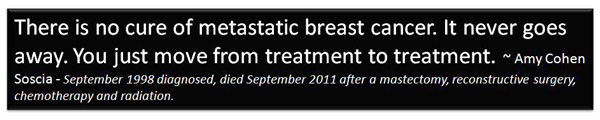
Make no mistake, surgery may not cure your cancer. In cases where the mass is still small and the cancer has not spread elsewhere, the chance of “cure” is very high. But if the lump is already big, it is most likely that the cancer has already spread or metastatised.  Amy Soscia died after fighting a battle with her breast cancer for 13 years.

One would assume that with the advancement of science and technology, the media hype, proliferation of experts, cutting edge hospitals, a common disease such as breast cancer can be cured easily.  The impression is the medical experts have all the answers to your problem! Unfortunately, you might be unfortunate enough to learn through the hard way that it may just be a dream.  Ponder on the reality of what Karen Stabiner wrote:

The journey has just begun

After the surgery, the standard protocol of the doctor’s comprehensive treatment package is to ask you to undergo chemotherapy, radiotherapy and hormonal therapy (depending on your hormonal status). Unfortunately these invasive treatments have earned bad reputation. Many women dread to go through such treatments. This is where I differ with the established medical way. Doctors claim that what they offer is scientific and proven.  At CA Care I have helped breast cancer patients using non-invasive holistic method of healing. This works. Read my book, Breast Cancer – the Herbal Option, if you want to know more.  Generally women who have failed to find “cure” after undergoing all their medical treatments would come to us as a last resort. I tell them this, I am not god – I can only do that much. But I shall try my best to help.  Make no mistake. I don’t claim I can cure your cancer or I have a magic bullet for your cancer.

Almost all patients who come to us have gone through medical treatments and they cannot find a cure. So to me, only a fool would claim that he can cure cancer. My experience tells me no one on earth can cure any cancer. What I mean is advanced stage cancer – the ones we often encounter at CA Care.

So why is CA Care around then? Over the past 16 years, we have helped many cancer patients find their healing – “hopeless” patients regained their health and could lead a normal life in spite of being told by their doctors that they only have 3 or 6 months to live. Take time to read the healing stories in our website: www.cacare.com and www.CancerCareMalaysia.com and you know what I mean. Understand that healing is different from cure. Reflect on the quotations below.

In my earlier article, My Journey of Ignorance, I asked Le – a breast cancer patient who initially refused to go for any medical treatment, some questions:

Chris: Let me ask you this question – if you were to start all over again from 2009 when you felt the lump in your breast – what would you have done? 

Le: I would come to see you. I would not want to go for medical treatments.

When you had that small lump, you went to see the doctor but why did you not want him to do something for you? 

Le: I went to see a “sinseh”. He told me I had this disease because of my sins. What kind of “sinseh” was that?

What I wanted to know is, do you know that if you have a cancerous lump in your breast, the best option is to have it removed by the doctor? 

Le: If I were to have met you then, it is most likely that I would follow your advice and have the lump removed. Because after that I can take the herbs, okay – that I would agree. But I don’t want to go for chemotherapy or radiotherapy after the surgery. Unfortunately, I did not know about you then.

I fully understand why many women are scared stiff to consider undergoing such protocol – The treatment is worse than the disease! When we started CA Care we “pushed” patients to go for chemo and radiation after their surgery. In short, do what their doctors want them to do. However, over the years I have seen many failures and disastrous outcomes of these invasive treatments.  I have realized that I was wrong to have abetted patients to go fully the medical way. I have since learnt my lesson and changed my stance. Now I would not actively urge patients to go for any invasive and poisonous treatments. It must be the patient – and the patient alone – who makes that decision if she wants to undergo chemotherapy and/or radiotherapy. I would NOT oppose or urge anyone going towards that direction.  Whether to go for chemo or radiation must be your own decision. Please don’t ask me what to do. I cannot answer you that.

My responsibility is restricted to providing patients with honest and unbiased facts about these treatments based on my reading of medical literature. I believe in evidence-based medicine. With that I need real evidence and not biased, academic or theoretical perceptions. To me, there is no meaning in saying: The treatment is a success but the patient died of complications, or the patient tolerated chemotherapy well.  I take seriously the wisdom that the test of the pudding is in its taste. When a patient dies or is not cured, it is a failure (of your claim to cure)  – no more, no less. And why can’t we learn to accept failures and be honest about them?

Ponder on the quotations below:

Let me end by asking you to watch this video and revisit this article:  No Chemo for Mom’s Breast Cancer – Wisdom of a Son

Don’t be misled – Surviving Five Years Does Not Mean Cure

Patients are often told that if they can survive five years after their treatment, it means they are cured of their cancer! What an untruth! My Aunty had cervical cancer and she received all the necessary medical treatments. She survived thirteen years, then the cancer struck back and went to her lungs and she died.  Where then is the cure? One lady had breast cancer. She survived for some nine years and when she was about to attend the hospital “Survivors Celebration for Life” gathering she had a swollen arm. The cancer had spread to her brain. She received radiation but could not complete the course. She became a “vegetable” and died. Again – where is the cure?

Over the years, we have encountered many cases like the above. Let me present another case for you to contemplate on.

1 February 2012

Dear Dr. Chris,

A friend gave us your Website. I am a lung cancer patient, diagnosed with Advance Non Small Cell Lung Carcinoma, have been and still going through chemotherapy for more than a year. Last week I had fluid drained from my right lung.

My husband and I decided to consult you for treatment. We are from Singapore and do not know how far is your clinic from the airport. How much do you charge for your fee and medication? Do I need to stay at your clinic during the treatment?

Reply: Since you are still on chemo and also have been on chemo for that long … I am not sure if you really need my help. If there is still fluid in the lungs, it just means the chemo is useless. But I am not going to ask you to stop what you are doing. It is your choice. My only problem is, the chemo can kill. But when patients take my herbs and die they will blame my herbs not the chemo. Because of that I would rather you finish with all your medical treatments first. And when you have nowhere else to go after that, then come and see me.   

5 February 2012

Dear Dr. Chris Teo,

Thanks for your prompt reply. My last chemo (the 8th Chemo) was on 26th January 2012. After this, 8th February I shall go for PET scan, then on the 9th Feb consult Dr. This 2nd doctor we consulted said he is going to surrender if the tumor continues to grow. After the 4th chemo, the PET scan showed the tumor was growing. The doctor increased the chemo dosage and included Iressa. And I was hospitalised one month later due to very fast heart beat, 251/min, Electrolytes were replaced. The chemo drugs I was given wereTaxotere, Cisplatin and Iressa.

As what you said, it is my choice, I find no meaning, here protein and booster jab, there chemo. I will not hold anyone responsible for my life and commit everything to God’s hand.

I will make photocopies of my medical results when I get it from the doctor this Thursday. My husband and myself had booked a flight to Penang … we would plead with you whether you could help to see another patient that evening. I am having aching, coughing, body, fingers, toes cramps, head ache and extreme tiredness. This is like an everyday affair after chemo.

9 February 2012

Dear Doctor,

Thanks for your reply. Appreciate your advice and concern. I was hospitalised on Monday due to fast heart beat. Doctor said electrolytes not balanced. Last night, my heart beat went up again to 240/min. I am not discharged yet so I wouldn’t be going to Penang tomorrow.

On 12 February 2012, patient’s husband came to CA Care with details of her medical history.

  1. In 1993, patient underwent a hysterectomy for menorrhagia (abnormally heavy and prolonged menstrual period).
  2. In 2001, she was diagnosed with breast cancer. A mastectomy was done. Subsequently she underwent 12 cycles of chemotherapy and 25 times of radiation treatment. She also took Tamoxifen for 5 years.
  3. In October 2010, patient had a swelling (lymph node) in her neck during a routine medical examination. She was investigated and was confirmed to have a metastatic lung cancer – an adenocarcinoma.
  4. From 23 October 2010 to 11 May 2011, patient underwent chemotherapy consisting of Gemcitabine + Carboplatin for 12 treatments.
  5. From 3 June 2011 to 10 August 2011, she received 4 cycles of Taxotere.
  6. From 12 September 2011 to 12 October 2011, she received 2 cycles of Alimta.
  7. From 10 November 2011 to 8 December 2011, she received 4 cyles of Taxotere plus Cisplatin.
  8. From 22 December 2011 to 26 January 2012, the dosage of Taxotere plus Cisplatin was increased by 20 percent. She had two cycles of this increased dosage. Since CT showed that the tumour was still growing, patient was given Taxotere + Cisplatin + Iressa for the next 2 cycles.
  9. She ended up in the hospital because of:
  • Rapid heartbeat.
  • Shortness of breath.
  • Fevers.
  • Severe coughs with white phlegm.
  • Pain in the shoulder and neck.
  • Swelling of the jaw.
  • Slow to talk.
  • Pale and very tired.
  • When she coughed too hard, her urine flowed out (stress incontinence).

This was when the patient wrote to us, “This 2nd doctor we consulted said he is going to surrender if the tumor continues to grow. After the 4th chemo, the PET scan showed the tumor was growing.” According to her husband, she is going to stop chemotherapy.  Below is what her latest PET scan showed.


Comments

In 2001, the patient had breast cancer. She underwent a mastectomy, chemotherapy and radiotherapy.  She then took   Tamoxifen for 5 years. That basically is all what modern medicine can offer any breast cancer patient.  But is she cured? Yes, by the “common medical definition” because she had survived 5 years.  But about 9 years later, October 2010, the cancer recurred in a form of a swelling in her neck and this was later confirmed as lung metastasis.

Is such story a unique and rare occurrence? No. This happens very often. What has gone wrong? Reflect on the quotations below.


The conclusion from this case is – medical treatment did not cure her breast cancer! She got lung cancer after 9 years. So, to say that surviving for 5 years is considered a cure is simply not true. It is another big lie! Or, half truth. And this half truth is dangerous. Misleading statement or advice like this could lead you to your grave. Patients often are overjoyed after hitting the 5-year mark and they are often thrown off guard and become complacent. Most go back to their old lifestyle. Then cancer strikes back! As in the case of this lady and my Aunty.

I was curious as to who came out with this idea of “living for five years and you are considered cured”. I searched the internet for a possible answer. This is what I got.

  • The number five used is an arbitrary figure. There is no scientific basis of choosing this number.
  • Dr. David Johnson, deputy director of Vanderbilt-Ingram Cancer Center thinks that: The five-year benchmark becomes a balm for doctors and patients who find the unpredictability of their situations intolerable. Physicians are reluctant to say you might recur, so they would rather use these terms like: “OK, in five years, you’ll be cured.”
  • According to Dr. Karrison, patients need to survive for 20 to 25 years before we can say they are cured. To ask patients to wait this long may be bad for business!

From much reading, I have come to understand that numbers and statistics are often sweet and deceptive – they cannot be trusted and must be viewed with skepticism. Scientific data can be and are often massaged and manipulated to make things look good. Patients like to hear “good news.” They are ready to swallow everything when they hear what they want to hear – what more when it comes from “scientists”! 

What now after the metastasis? 

In this case, patient was given chemos after chemos –  and the combination of cytotoxic drugs changed and changed.  In total this patient had 26 cycles of chemotherapy for her lung cancer. Alimta is the “newest” bullet used. But the “heroic” effort failed. The doctor told the patient that he was about to surrender. Patient landed in the hospital.

When everything else failed, CA Care comes into the picture! So, that’s the reason why I wrote, My only problem is the chemo can kill. But when patients take my herbs and die they will blame my herbs not the chemo. 

That’s the way it is.

Reflect on  the following quotations.


Pancreatic Cancer: Severe Pains and Died After PET Scan

Yoke (not real name, H-469) was a 54-year-old female. Sometime in October 2010, she had on and off pains in her abdomen. Later, the pains extended to her lumbar region. The pains deprived her of sleep. Yoke went to a private hospital for a checkup. Ultrasound, CT scan and blood tests were carried out.

Blood test showed CEA = 38.3 (high); CA 19.9 = 40,003.44 (high); Total bilirubin = 4.6 (low) and GGT = 72 (high).

Ultrasound done on 22 November 2010 showed: “hypoechoic lesion in the pancreatic body … measuring 5.8 x 4.4 x 2.6 cm. There are multiple, well-defined hypoechoic nodules in the liver – the largest seen in the right hepatic lobe, measuring 2.5 cm. Impression: pancreatic body hypoechoic mass is likely a neoplastic lesion with metastases in the liver.”

For confirmation, a CT scan was performed the next day, 23 November 2010. The report indicated: “hypodense mass on the body / tail of the pancreas – measuring approximately 6 x 3 cm. The second hypodense nodule … is also seen more distally in the pancreatic tail. There are a number of hypodense lesions in the liver – the largest lesions are in segment 8, measuring 2.5 cm each. Other lesions are in the caudate lobe, segment 7 and segment 5.

Impression: Carcinoma of the body and tail of pancreas with infiltration of the splenic vein, encasement of the roots of the portal vein and multiple hepatic metastases.

Surgery was not indicated in this case, since the cancer had already spread to her liver. The only option left was to undergo chemotherapy. Yoke was told that she needed to receive seven weekly cycles of chemotherapy. With such treatment, Yoke was told there would be a sixty percent chance of suppressing the cancer (whatever that means?). The oncologist also said that the smaller tumours would not spread after the chemo-treatment.

Yoke refused chemotherapy. She came to seek our help on 20 November 2010. She presented with the following:

  • Pain in the abdomen and lumbar region. She had to take the painkiller, Tramadol.
  • Unable to sleep if there were pains.
  • A bit tired.

She was prescribed Capsule A and B, LL-tea, Liver 1 and Liver 2 teas, Pancreas 1 and Pancreas 2 teas, and Pain Tea.

A week on the herbs: Yoke felt more “cheng sin” (more energetic). Her sleep improved. In the first four days taking the herbs, Yoke suffered the healing crisis. She had intense pains. But the pains gradually subsided and by the fifth day the pains were gone.

Two weeks on the herbs, 10 December 2010: Yoke informed us that she had totally stopped taking the Tramadol prescribed her doctor.  She did not have any more pains but she continued taking the Pain Tea. Her sleep was good. Her appetite improved.

Three weeks on the herbs, 17 December 2010: Yoke stopped taking the Pain Tea. And she did not suffer any pain. She said she was always felt hungry after taking the herbs. Our answer to this “problem” –  go ahead and eat!

Yoke appeared to be doing well with the herbs. She was then busy making arrangements for her daughter’s wedding. We did not get to see much of Yoke for some months even though we knew that she still continued taking our herbs.

About six months later, May 2011: Yoke came to our centre and she was in severe pains. Why and what had happened?

Yoke said her friend encouraged her to go for a PET scan in order to know what was going on inside her. After all she had been doing well. So Yoke went for a whole body PET/CT scan without seeking our advice. This procedure cost her RM 4,662.

Immediately after the procedure, Yoke suffered severe pains in her abdomen and lumbar region. It was back to the same old problem again.

Let Yoke explain what had gone wrong.

Our conversation

Chris: You went to do a PET scan?

Yoke: Yes and the doctor asked me to eat meat for two days.  I was told not to eat rice, fruits, juices and vegetables. I must eat only meat, egg, mushroom and porridge. I was asked to eat these for two days before I went for the scan.

Did he tell you why you need to do that?

So that the pictures would come out clearer.

Did you suffer after taking all these food?

Yes after I took meat, I started to have pains – more pains.

How much did you have to pay?

I put in RM 5,000 and I got back RM 338 (so the cost of her PET scan was RM4,662). If I knew  all these, I would not have gone for the scan. They asked me to eat meat for two days – damn it!

But why did you go and do it in the first place>

I have a group of cancer friends. They too went for PET scan. They told me CT scan is not clear and PET scan is clearer – you will know if the cancer is active or not.

So, you follow their advice?

Yes, I was real dumb and went for it.

There is no” meaning” for you to do that!

As you had said. I had pains after that and they could not “repair” me. I had more pains and I was also not able to sleep. More problems for me.

Daughter: They said the cancer had spread to the liver.

Yes, we already knew that anyway. And they asked you to take meat?

That was why the cancer became more active.

They Asked Me to Go for Chemotherapy

They asked me to go for chemo.  But the doctor said this was not going to cure me – only maintain. The doctor also said only 25 percent of patients who had chemo lived for two years. So I asked what happened to the remaining 75 percent – “went off”?  When the cancer recurs, I would need to do more chemo.  No, no – I told the doctor I do not want any chemo. When I told him that, he ignored me – not interested to talk to me anymore.

Let me ask you this – let’s assume that you have two years to live with chemo, and you only have one year if you take herbs. Why one would you choose?

I want to take herbs. May be I might just die sooner with the chemo. I told the doctor, “I might just die while undergoing chemotherapy.” He said, “No, no such thing. I would give you the drug bit by bit.” But I did not want to hear from him anymore.

She Died Soon Afterwards

After the PET scan, Yoke had pains and these got worse by the day. She was unable to sleep or walk by herself, and became weaker. Her stomach was bloated and she was in severe pain. Finally she died not long afterwards.

Information about PET scan from the Internet

  • X-ray, CT scan and MRI show the anatomy and structure of the organs examined. In contrast, PET scan reveals the metabolic activity and function of the organs. So, X-ray. CT and MRI scans assess the size and shape of different organs in the body. They do not assess function. While a PET scan looks at the body or organ function.
  • When we go for an X-ray, x-rays are generated from a machine and these rays go through our body and an image is formed on a film. In PET scan a radioactive material, called a radiopharmaceutical or radiotracer, is injected into our bloodstream. The commonly used radiotracer is fluorodexoyglucose (FDG). This is a glucose molecule which has been tagged with a small amount of radioactive element. The radioactive glucose is taken up by cancer cells. Tissues that are active accumulate a large amount of the radiotracer and they show up as “hot spots.” Thus, hot spots indicate high level of chemical or metabolic activity. Less intense areas, or “cold spots,” indicating a smaller concentration of radiotracer and less chemical activity.
  • PET scan is now considered a new technology. It helps doctors to locate the presence of cancer/infection anywhere in the body. Because cancers are multiplying and require energy for growth, PET scan is designed to detect any mass that is growing fast. The PET scan can also detect the spread of cancer in other parts of the body.

Do you learn any lesson from Yoke’s story?

Yoke learnt her lesson the hard way. Unfortunately it was too late. But can you learn any lesson from Yoke’s experience?

Ask these questions:

  1. The doctor asked Yoke to eat meat, eggs, etc., so that the “picture” will come out clear and nice? Do you know the reason for this after reading the information above? Was he not trying to “wake up the sleeping cancer cells” to make good pictures? It is good for him but this caused more harm to the patient.
  2. What is the “useful” purpose of doing the PET scan anyway – in this case?
  3. To have supportive friends is great but some can lead you to your doom. So before you embark on something, read first. If you cannot read – ask those who really know! 

Reflect on the quotations below:

When the Results of PET and CT Scans Do Not Tell the Same Story

About a year ago, a lady from a neighbouring country urgently flew to see me. She came to discuss the CT scan results of a VIP (very important personality).  The CT scan clearly stated that this VIP had tumours in his lungs and liver. His doctor suggested immediate surgery. This lady wanted my advice.

Just to be on the safe side, I suggested that it might be a good idea to know the extent of possible metastases – if at all there is any spread – before undergoing surgery. Towards this end, I suggested that he goes for a PET scan. At that time, my impression was that the PET is the state-of-the-art imaging procedure. It is more accurate and reliable than the CT scan.

After a few days, I was informed by phone that the PET done did not show any malignancy – no cancer!  Nevertheless, I hesitated to believe the result. At that time, I “interpreted” the message differently. I had the impression that this VIP wanted to avoid any dealing with me and therefore the only polite “save face” strategy was to tell me that there was no cancer. So he does not need my help anymore!

Some months later, I got to know through another person that this VIP had undergone a liver surgery. This planted the first seed of doubt in my mind about the reliability of PET scan.

Patient from Kelantan

In October 2011, I received a fax from a patient in Kelantan.  This 47-year-old male patient did a CT scan on 22 August 2011. The results indicated:

  • Three well-defined heterogenously hypodense small liver lesions in segments 2, 7 and 8. The largest in segment 2 measuring 0.7 x 1.0 cm. Foci of non-enhancing calcification seen in segment 8 with no mass effect, likely to represent old infection.
  • Small, well-defined lung nodule seen in the anterior segment of right upper lobe of 0.3 cm in diameter. A small pleural-based nodule is also seen in the posterior segment of left lower lobe measuring 0.3 cm in diameter.
  • Well-defined small sclerotic bony lesions see in at right acetabulum, left ilium and left neck of femur likely to represent bony island. Multilevel degenerative of the visualized spine.

Impression: Known case of sigmoid colon carcinoma with liver and lung metastases.

This same patient went to do a PET scan in Kuala Lumpur on 5 October 2011. The PET scan result indicated the following:

  • There is normal uptake in all the organs examined, in particular the colon, liver, lungs, lymph nodes, spleen, pancreas, kidneys, adrenal glands, brain and bones. There is no pleural effusion or ascites.

Impression: No malignant lesion is detected.

This was the second alarm bell. However, I did not take this episode to heart because the patient did not come to see me personally and I did not get to see the images of both the scans. As such I do not have any “solid” evidence to back up what I say – although I did have the faxed reports of both the procedures.

Patient from Penang

The third alarm bell – on 5 February 2012. A man came to our Centre with the medical reports of his wife who has ovarian cancer. She underwent surgery – TAHBSO (Total abdominal hysterectomy with bilateral salpingo-oophorectomy) – on 15 September 2010. This time I had the opportunity to examine the images of both the PET and CT scans.

Six months after the surgery, a PET scan was done at a private hospital in Selangor on 19 April 2011. 

Technique: PET scan was performed from the vertex of the skull to the thighs after intravenous administration of 8.5 mCi of F-18 Fluorodeoxyglucise (FDG). Oral gastrograffin, oral bromazepam and intra-venous lasix were given. Fasting blood glucose – 6.9 mmol/l/

Findings:

  1. Head – There is normal physiological localization of the FDG in the cerebrum and the cerebellum. The uptake and the distribution of the radiotracer in the posterior nasopharyngeal tissue, salivary gland and tonsils are within normal physiological limits.
  2. Neck –The thyroid gland displaces normal FDG upake. There is no FDG avid cervical lymphadenopathy. 
  3. Thorax – Normal FDG uptake is seen in both breasts. There is no FDG avid axillary lymphadenopathy, bilaterally. There is no FDG avid mediastinal lymphadenopathy. Thre is no pleural effusion seen.
  4. Abdomen – There is no suspicious FDG avid lesion see in the liver. U[take and distribution of the radiotracer in the gallbladder, spleen, adrenals, pancreas, kidneys and bowels are within normal physiological limits. There is no FDG avid abdominal lymphadeopathy. Ascites is not present.
  5. Pelvis – TAHBSO noted. There is no definite abnormal FDG lesion seen in the pelvic floor and vaginal stump. There are some superficial subcentimetre size non-FDG avid inguinal nodes which are likely to be reactive nodes. There is no FGD pelvic lymphadenopathy.
  6. Musculoskeletal – There is symmetrical FDG avid activity seen in the acromioclavicular joints bilaterally, probably due to imflammation. There is no suspicious FDG avid lesion seen in the visualized skeleton.

Conclusion;

  1. There is no evidence of residual hypermetabolic disease in the vaginal stump and pelvic floor.
  2. There is no evidence of hypermetabolic loco-regional or distant metastatic disease at present.
  3. Although there is no evidence of macroscopic disease at present, the presence of microscopic disease cannot be excluded.

The above report was signed by the Consultant Nuclear Medicine Physician.

Three months later, 25 July 2011, this same lady did an ultrasound of her abdomen and pelvis at the same private hospital in Selangor. The results indicated:

  • Mild ascites is seen.
  • A thick layer of lobulated parietal pleural masses are seen subdiaphragmatically, around the liver edges superiorly and laterally.
  • It measures up to 6 x 3.5 cm around segment 8 of the liver and 4.5 x3.7 cm superior to segment 2.
  • Intrahepatically, a hypoechoic nodule measuring 15 mm is noted in segment 3.
  • There are also intraperitoneal mesenteric deposit, measuring up to 3.6 x 2.8 cm in the right lumbar territory.
  • The uterus and ovary absent.

Impression: Extensive intraperitoneal metastases with ascites. Significant progression of the metastasis is seen.

On 16 November 2011, a CT scan of this same lady was done at a private hospital in Penang. The results indicated:

  • Extensive lobulated hypodense mass noted in the peritoneum and mesentery of upper abdomen.
  • The mass measured approximately 25 to 65 mm in diameter each.
  • The mass creep in between the diaphragm and the dome of the liver with marked subcapsular compression of liver.
  • Masses also noted in the lesser sac and the para-splenic space.
  • Moderate ascites.
  • Previous hysterectomy.

Impression: In view of the clinical history, features are consistent with relapsed of carcinoma of ovary with extensive peritoneal and omental metastasis.

Let me end with another story. There was this man who had stomach cancer. After surgery he came to seek our help and was started on the herbs. According to him, he felt good. He liked gardening and used to bring a lot of hot “cabai burung” whenever he came to our centre. He knew that I like hot chilly. One day this patient came and told us that he just had just done a scan and his doctor told him he had no more cancer – everything was clean. So he did not want to take any more herbs – after all the doctor said he was already cured! Although I did warn him that there is no such thing as a cure! No, his doctor’s words were more powerful and after all this was what every cancer patient wants to hear anyway.

A few months later, someone showed me his obituary in the newspaper. Besides learning that he was dead, I also learned that this man was a Datuk – a titled, respected personality in the community.

From the above stories, I learned that we can cause grave danger to patients by telling them things that they only want to hear. Or sending them for test that can give results that they are looking for –  of course, the more high-tech the equipment involved, the more convincing it would be.  So danger is not only confined to giving them the “wrong kind” of medication – the more toxic the more dangerous.

In this case the lady patient above had a choice – to believe that she had NO cancer after her surgery. What a great relief and welcoming news when the high tech state-of-the art technology similarly confirmed this belief. The lady also had another choice – to believe that surgery did not in any way cure her cancer and actually there were a lot more of the cancer cells left behind after the surgery! High tech gadget was unable to detect that but intuition and plain old-fashion experience is able to decipher that possibility.

Incidentally, while writing this article, I was also reading this humorous, oft-quoted all-time favorite book written by Dr. Oscar London, M.D., the pseudonym of an internist practising in Berkeley, California.